

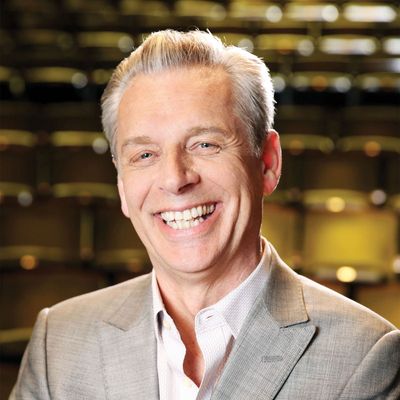
Center Theatre Group’s Artistic Director Michael Ritchie hosts “30 to Curtain,” a podcast featuring 30-minute interviews with some of the theatre artists creating work across the stages of the Ahmanson Theatre, Mark Taper Forum, and Kirk Douglas Theatre in Los Angeles... Read More
From the show: 30 to Curtain
Guests
Featured Shows
About
Center Theatre Group’s Artistic Director Michael Ritchie hosts “30 to Curtain,” a podcast featuring 30-minute interviews with some of the theatre artists creating work across the stages of the Ahmanson Theatre, Mark Taper Forum, and Kirk Douglas Theatre in Los Angeles.
For this special live edition of “30 to Curtain,” you’re invited to join us for an event we held in celebration of Broadway’s “Come From Away,” which arrives at the Ahmanson Theatre November 28, 2018 through January 6, 2019. Our friends at the Official Residence of Canada in Los Angeles hosted us for a panel discussion with the creators of this hit show and two people that are part of the real-life story behind the musical. Moderating this live episode of “30 to Curtain” is friend of Center Theatre Group and celebrated Canadian actress Nia Vardalos.
For more on Center Theatre Group, its programs and upcoming productions, visit CenterTheatreGroup.org.
Transcript
This transcript was automatically generated and might contain errors.
[0:00] Michael Ritchie: Welcome to 30 to Curtain, a Centre Theatre Group podcast. As one of the country's most influential non-profit theatre companies, we produce and present the work of most of the leading theatre artists of our time. We do this across all three of our stages, the Ahmanson Theatre, the Mark Taper Forum, and the Kirk Douglas Theatre, as well as in educational outreach and community programs. I'm Michael Ritchie, Artistic Director of the Centre Theatre Group. For each episode of this podcast, we'll talk with some of these talented artists from both on and off the stage, so that you can learn more about them, their process, and their work. For this special live edition of 30 to Curtain, you're invited to join us for a recent event we held in celebration of Broadway's Come From Away, which plays at the Ahmanson Theatre, November 28 through January 6, 2019.
Our friends at the Official Residence of Canada in Los Angeles hosted us for a panel discussion with the creators of this hit show, and two of the people who were part of the real-life events behind this musical. Come From Away tells the story of how the town of Gander in Newfoundland welcomed thousands of stranded airline passengers on September 11, 2001. Moderating this live episode of 30 to Curtain is friend of the Centre Theatre Group and celebrated Canadian actress Nia Vardalos. I hope you enjoy the conversation, and I look forward to seeing you at the theatre.
[1:35] Nia Vardalos: Joining us tonight are Claude Elliott, now retired, but at the time, the long-time serving mayor of Gander. Hello. Captain Beverly Bass, one of the pilots who landed in Gander that fateful day. Yeah. Is it too much? Okay. Beverly. And the dynamic duo who created Come From Away, David Hine and Irene Sankoff. Thank you. Thank you so much. Welcome, everyone. We are going to start with some questions. On 9-11, as you know, all planes in U.S. airspace en route to various destinations were ordered to land. Thirty-eight planes landed in Gander, Newfoundland. That's 7,000 visitors to a town, a city with approximately a population of 10,000. So Mayor, Mayor Claude Elliott, can you tell me, what was your reaction when you heard about the Come From Away's coming?
[2:39] Claude Elliott: Bring them on. It's nothing new for us. It's something that we've been doing for quite a long time. So we knew we'd have some visitors, and we just wanted to make their stay as comfortable as possible while they were staying with us.
[2:57] Nia Vardalos: That is very sweet and lovely. Captain Beverly Bass, you were a pilot for American Airlines and traveling from Paris to Dallas. Can you tell us what was your first impression upon arriving in Gander, Newfoundland?
[3:06] Beverly Bass: Oh, my goodness. I can still remember the days so well. And we had left Paris on our way to Dallas. We got word that we were going to be diverting when we were right over the middle of the North Atlantic. And so off we go to Gander. And most airline pilots will spend their entire career knowing about Gander, but not ever landing there, and certainly not staying for five days. So we landed, and we had actually been flying for about seven hours when we touched down. And the Gander folks came on the airplane as soon as we parked, and they said, you will not be getting off the airplane till tomorrow. So that meant we were on the airplane for 28 hours. It was a long stay, but we knew as soon as we exited and walked into the terminal that we had landed in a very special place, because we got off the airplane about 7:30 on the morning of September 12th. And when we walked into the terminal, it was lined with tables of food, anything that we wanted. So they had actually stayed up all night long. And the logistics was unimaginable.
[4:36] Nia Vardalos: That's incredible. As you might know from the documentary known as My Big Fat Greek Wedding, I come from a large Greek family. And what Greek moms are known for is when the family drops over, and that's 27 first cousins, they're known that they're able to create a full course meal out of what's in the pantry, a can of tuna and a bag of licorice. But this was an incredible feat. How, Mayor, how were you prepared? How did you have the food?
[5:06] Claude Elliott: Well, I guess as Captain Bass already alluded to, the amount of time that they stayed aboard the aircraft gave us time to prepare, to get ready for when they came off. Because first, when the planes landed, we were told they may be only there for three or four hours. Then it became six or seven hours. Then it might be there for eight or nine hours. So we just said, look, we have to prepare for the worst-case scenario. And the worst-case scenario, those people are going to come off. And they've been aboard that plane for a long time. They're hungry. They're tired. They're hangry. And we had to do something. So let's prepare for the worst-case scenario. And then we mobilized 450 volunteers to go to the airport.
And they made up 7,000 lunchboxes to have. So when the people started coming off the plane and went through customs and came in, each person was given a lunchbox with a glass and a hug. Because we figured that they needed compassion just as much as they needed food.
[6:07] Nia Vardalos: You're going to applaud for everything these two say.
[6:12] Nia Vardalos: I know. As the pilot of an aircraft, Captain Bass, my question to you is, it comes from the mayor's question. How do you deal with a plane load of passengers who are learning about what happened at the Twin Towers, about the incidents of September 11th? You are a pilot. You are a mother. You are a wife. And you are also now a counselor, are you not?
[6:41] Beverly Bass: It did become that way. But we actually knew very little about what was going on because during that time, most of us did not carry cell phones. Certainly the crew members did not because on an international trip, it would cost about $100 a minute to use your cell phone. So we didn't have them. There were a few first-class passengers that had cell phones. And they were actually getting some information from their offices and from their families. So we were able to learn a little bit about what was happening. But honestly, we went probably, I guess, about 30 hours before we ever saw a visual on TV as to what had really occurred. We did get a little bit of news from the BBC that was coming across our aircraft radio, but nothing from the U.S. So we were getting London's version of what was happening in our country.
So it was very disjointed and I must say my passengers were very well behaved. I only had a problem with one French lady. She claimed that she was claustrophobic and she could not be on that airplane any longer. And if she was, she needed to be in first class. And I told her that everybody on the airplane would like to sit in first class, but they couldn't. And so she did bother the flight crew. So I ended up having to call the Mounties and they came on the airplane and they told her that if she caused us any more problems, she was going to find out what it was like to be claustrophobic. Because the cell that they were going to put her in was about four by four and a whole lot smaller than the massive triple seven she was sitting in. And we didn't have any more problems after that. So my passengers were actually very well behaved.
[8:51] Nia Vardalos: David and Irene, you are Canadian and you were living in New York City on September 11th. I can't imagine that this story was calling out to every creator. And no one else heard, ah, this is a musical. And yet, the two of you dove head first into the situation. Will you tell us how you came to write Come From Away?
[9:22] Irene Sankoff: Sure. A friend of ours was starting a program at a college in Ontario called the Canadian Music Theatre Project. And he had actually approached about, I think he said five other writing teams, which he still won't disclose to this day. And they all turned him down. They all said, no, we're not writing a musical about that. But I think for David and I, having been in New York and seeing the reaction of not only the New Yorkers and, you know, having experienced waiting for David's cousin to contact us, she got out of the towers that day, waiting for our housemates in the university residence we were living in to return home. We really felt very sensitive about, oh, there's my accent, it's back, about the idea of approaching this.
But at the same time, in this residence we were living in, it was students from 110 different countries. And I remembered us all coming together and taking care of each other. And some of them were refugees and some of them were lifelong New Yorkers. And everyone was just trying to figure out what was going on and how to take care of one another. And so hearing the story in Gander sort of felt like something that was familiar to us. And David had grown up on Newfoundland music. So I took some convincing, but David was like, no, no, no, you have to understand Newfoundland is music. So there needs to be a musical.
[10:51] David Hine: Yeah. We got a grant from the Canadian government because the Canadian government is awesome. And we got to go out on the 10th anniversary. We found out there was going to be a commemoration ceremony happening there. And all of these come from a ways, these people who had been diverted there 10 years earlier, including Captain Bass, were returning there. And it's a hard place to get out to. And so 10 years later, it was an amazing testimony to the power of the friendships that had been created there, that people wanted to return there to commemorate the kindness they had seen. We traveled out there for, we got a grant to stay out there for, I think, three weeks. And we got to stay out there past a month because the people there wouldn't let us stay in hotels.
They kept saying, ah, don't be spending your money on that. Come stay with us. And then they literally gave us the keys to their house and they'd say, we'll see you later. And they'd say, just feed the cats. We stayed in the small town in Gambo, about half an hour outside of Gander. And this couple said, now in the morning, you might want to lock the doors just in case someone drops by for tea. And we were like, all right, let's lock the door. But apparently we hadn't locked all the doors because in the morning we came down and there was some random man sitting in that house that wasn't ours. And he said, oh, good, you're awake. I thought I'd give you a tour. We heard you were here. So we had this extraordinary experience out there seeing the same kindness that the passengers saw getting welcomed into each other's homes, hearing story after story. We interviewed everyone we possibly could, including these two, for hours at a time. Because we had no idea what we were doing. And we just liked talking to them.
[12:41] Nia Vardalos: So when you went there, did you have in mind the narrative?
[12:45] Nia Vardalos: Marc, the moment, the insight. Obviously we know what the inciting incident is, but did you have anything in mind or did you just go with a clean palate and let the story tell you what it was?
[12:55] Marc: I think we really just thought it was an incredible story. I mean, partly it resonated with us from our experiences in New York, the kindness that we had seen there on the streets in response. But also, every story we heard was better than the last one. And there's all of this press out there looking for these five-second sound bites from everyone. And we just wanted to hear every story. And so, I think we talked to you for like four hours at a time. And I have, you know, you had no idea who we were or what we were doing, but everyone was...
[13:25] Unknown Speaker: We thought you were crazy.
[13:30] Marc: But we knew we were falling in love with the people and the stories. And that was enough for us to go on and then try to tell, you know, almost 7,000 stories of the people who landed there and 9,000 stories of the people who were there. And so, we tried to tell 16,000 stories in a 100-minute musical.
[13:49] Nia Vardalos: What was incredible about the musical is I got to see it on Broadway. And now, then it opened in my hometown, Winnipeg, and now it's in Toronto. And it's going around the world. It's going to be an incredible, incredible experience for you for the rest of your lives. It's just going to keep opening doors of kindness to you. What I found so incredible is an actor on stage would be one character. They would turn, put on a hat, and be another character. It was incredible how you put 7,000 people on a stage and only paid nine actors.
[14:24] Unknown Speaker: Canadian theater.
[14:25] Unknown Speaker: Yeah, that's Canadian theater.
[14:26] Unknown Speaker: We are used to a budget.
[14:29] Unknown Speaker: We got a barn we can put on a show.
[14:31] Nia Vardalos: Yes. Yeah, it was incredible to see how you did it. You told so many stories. And sometimes I would be watching an actor, and then he would react to something else that this woman would say. And I would forget that this woman had just played an incredibly emotional scene. And a moment later, she was funny. How did you find these people?
[14:52] Marc: So the casting process is wonderful, not only because you dive in. And first of all, people have to be able to sing the show, and they have to be able to play the show. But they also have to be playful and be able to jump from character to character. One of the things that was important, I mean, it's not only theatrically wonderful and what our director and our cast do is this amazing magic trick of turning on a dime with a hat or with a jacket or something like that. But it's also, it's a metaphor that we found along the way for each of us being able to be in each other's shoes. Everyone plays a come from away and everyone plays a local. And in any instance, we found that you could be in either situation.
You can either be welcoming or be welcomed. And so that was important to us. And so the casting process extends beyond what happens in the room. We then talk to people who have worked with them. One of our cast members, Kendra, is here and is a huge testament to this. Yeah, Kendra Kassenbaum. And so we ask, you know, are they good people? Are they going to be part of our company? Are they going to help us spread this message of kindness and responding with kindness? And are they going to be good to one another because they are stuck on the stage together for a hundred minutes and rely on each other for props and for chair moves. And if we get word back, even from like a monitor, that there's like a problem in the waiting area, you know, during the audition process, we're like, we do not have room for that.
[16:19] Unknown Speaker: Yeah, that's what it's like trying to get into private school in Los Angeles. The same, the same, you guys, the same. So but how long did it speaking of Kendra, who I know has has been with the production for a while and we're going to get to hear her say in a sec. But tell me how long it took you from the beginning of the first kernel of the idea to getting to Broadway. How long was that process?
[16:44] Marc: So it was the summer before the 10th anniversary. So it was 2011. So we've been working on it for seven years now and we've had this extraordinary journey of first developing it in Canada, but then partnering with producers, our producers, Junkyard Dog Productions are here tonight and they they came out to Newfoundland, got screeched in, which is becoming an honorary Newfoundlander and but then also plotted out this amazing journey for us, starting at the La Jolla Playhouse in San Diego, where we got to take the show about Newfoundland to the as far away as you could possibly get on the opposite side of the continent and see how the story resonated there and then bringing it through Seattle to Washington, D.C. to a town where that was that was directly affected by 9-11, bringing it back to Gander.
We had an amazing benefit concert performance there with all the proceeds going back to local charities to Toronto where it was first developed and then to Broadway. So it's it's been extraordinary and it's been really wonderful to share the story.
[17:46] Nia Vardalos: Six years till Broadway.
[17:51] Marc: Six years.
[17:51] Nia Vardalos: And Irene's background is in screenwriting and David's background, obviously, with Gander. I found that you were the perfect marriage, no pun intended, because you are married, in fact, but that your background, it's almost there was nobody better to write this because you brought your love of words and you brought your love of music. It is a kitchen party watching everyone play. Does everyone know what a kitchen party? Mayor, will you tell us in Gander a kitchen party is?
[18:18] Unknown Speaker: About 500 people in your living room drinking, eating your food and dancing and probably spend the night.
[18:27] Nia Vardalos: I would like to tell the Consul General that we're doing that tonight.
[18:33] Unknown Speaker: Yeah. Yeah. Everybody brought their pajamas.
[18:42] Marc: What's amazing about that that inspired us was it's it's the community. Everyone plays an accordion out there. Everyone plays a fiddle out there. Everyone. Music is part of the DNA of the people of Newfoundland. But but also it's how you come together as a community. It's how you get through your winters. They've got 36 centimeters of snow out there right now. And you get together in your living room and you drink and you tell stories and you sing songs and you come together. And that's and that's what we wanted to do with the show. We wanted to bring everyone into a kitchen party and say, you have a story as well. We're going to tell our story. But but it's it's been a really amazing experience.
See the seeing the audience track their experience on that day as one of the storytellers as well. The there's a line in the materials about the show which really resonated with me. And it says on 9-11, the world stopped on 9-12. Their stories moved us all. It's clear to me that this is the takeaway from this horrific event. You have made something beautiful. You have shown us ourselves. It made me so proud to be Canadian and also so proud to be human. Maybe you want to do something good. Thank you. You've been listening to 30 to Curtain, a Center Theatre Group podcast. You can find out more about Come From Away, our organization and upcoming productions on our website at centertheatregroup.org. And as a special treat, we'll leave you with an exclusive acoustic performance from our event, the song Me in the Sky by original Broadway cast member Kendra Kassenbaum with guitar by David Hine, who co-wrote the musical with his writing partner and wife, Irene Sankoff.
[20:33] ♪ Musical number: "Me in the Sky" — performed by Kendra Kassenbaum with guitar by David Hine ♪
© Broadway Podcast Network, All Rights Reserved