

Center Theatre Group’s Artistic Director Michael Ritchie hosts “30 to Curtain,” a podcast featuring 30-minute interviews with some of the theatre artists creating work across the stages of the Ahmanson Theatre, Mark Taper Forum, and Kirk Douglas Theatre in Los Angeles... Read More
From the show: 30 to Curtain
Guests
About
Center Theatre Group’s Artistic Director Michael Ritchie hosts “30 to Curtain,” a podcast featuring 30-minute interviews with some of the theatre artists creating work across the stages of the Ahmanson Theatre, Mark Taper Forum, and Kirk Douglas Theatre in Los Angeles.
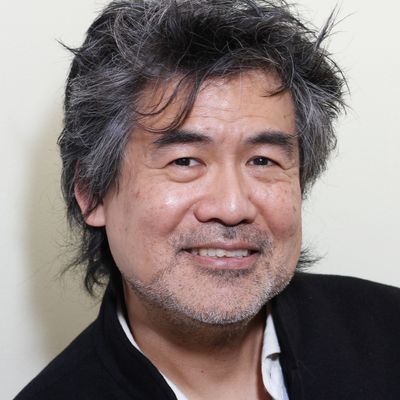
For this episode of the podcast, we’re looking back at a conversation Michael had with playwright David Henry Hwang shortly before “Soft Power” made its World premiere at the Ahmanson Theatre in 2018. “Soft Power,” which began as a project we commissioned as part of our 50th Anniversary season, became a remarkable piece of theatre that is now making its New York premiere in a co-production with the Public Theater.
For more on Center Theatre Group and its upcoming productions, visit CenterTheatreGroup.org
Transcript
This transcript was automatically generated and might contain errors.
[0:01] Michael Ritchie: Welcome to 30 to Curtain, a Center Theatre Group podcast.
[0:06] Michael Ritchie: I'm Michael Ritchie, Artistic Director of Center Theatre Group.
[0:10] Michael Ritchie: For each episode of this podcast, we talk with some of the talented artists working across our three stages.
[0:17] Michael Ritchie: The Amundsen Theatre, Mark Taper Forum, and Kirk Douglas Theatre.
[0:22] Michael Ritchie: For this episode of the podcast, we're looking back at a conversation I had with playwright David Henry Hwang shortly before Soft Power made its premiere at the Amundsen Theatre in 2018.
[0:34] Michael Ritchie: Soft Power began as a project commissioned as part of our 50th anniversary season and ultimately became a remarkable piece of theatre that is now making its New York premiere in a co-production with the Public Theatre.
[0:48] Michael Ritchie: Here now is my conversation with David Henry Hwang on the genesis and evolution of Soft Power with Center Theatre Group.
[0:58] Michael Ritchie: All right, let's start right from the beginning when you and I sat down about two and a half years ago in New York and talked about this. Can you characterize where the conversation was then?
[1:15] David Henry Hwang: Right, so first of all, thank you all for coming here. This is a fantastic turnout and I really appreciate your support. So Michael met me at the now defunct Edison Cafe and maybe this amazing offer that any playwright would be thrilled to get, which is that he wanted to commission a piece from me. And not only that, but there was a slot open and so the piece was sort of guaranteed to be produced. So really, who can say no to that? Particularly because I have a relationship with this town. As Michael mentioned, I'm an Angeleno. I was born here and grew up in San Gabriel back when there weren't really... Yay! Table 10. You know, and there weren't actually a lot of Asians in San Gabriel when I grew up.
So, you know, we transformed that, so yay. In any case, I grew up going to see shows at the Taper and at the Music Center. It always represented the kind of peak of theatrical experience to me even long before I thought of ever going into this profession. So I talked to Michael and what I was interested in at the time and which has continued to remain the seed for the show that's become Soft Power were two things. Number one, China's quest for soft power. So what is soft power? There's hard power. It's in terms of economic and international relations. Hard power would be things like your economy, your military strength. Soft power is your intellectual and cultural influence. So if you think about Britain, for instance, Britain is a country that at this moment maybe doesn't have so much soft power, still quite a bit, doesn't have that much hard power, still quite a bit of soft power in terms of we watch their movies and their scholars are important.
China is a nation that increasingly has a lot of hard power. Certainly economically, militarily not as much, but growing. And most people kind of feel that China is likely to be the other major superpower, if not the superpower of the 21st century. And China has this desire to gain soft power. And I began to experience it because I would get a lot of meetings with Chinese producers and Chinese theaters since they want to create a Broadway show to end up on our Broadway. And I happen to be the only even nominally Chinese person who's ever written a Broadway show. So I end up getting a lot of these meetings and nothing ever came of them. But it was interesting to me that you had a system which wants international artistic and cultural influence, yet is very top heavy where it comes to authoritarian power and content restrictions.
And are those two things increasingly at odds? So there's one thing. And the second thing was just, you know, I had seen the revival of The King and I, the recent one, and I've always loved The King and I, you know, and it's been a show that has moved me since I was a kid. And as I've gotten older, I've started to go, you know, there's a lot of things in the show that are like kind of sus. And so there's this complicated feeling like when you're watching something that, you know, is kind of inauthentic and is sort of making a political point subtly and kind of reinforcing cultural dominance of the West. But it's done so beautifully that by the end of it, I'm still like in tears. Because all the King's dying and, you know, his son's going to take over. So those two things were the where the foundation of what's become soft power.
[5:41] Michael Ritchie: Right. So the first time we met and we talked about the commission was probably about two and a half years ago. And we knew at that time we were talking about the Mark Taper Forum, part of our 50th anniversary season. And this being the final show of that season. And we were going to do revivals of other shows leading up to another whole season changed completely as we got closer to it. But the idea was that we would do some significant, significant shows from the first five decades of our history. And then we'd finish with this new play that looked forward on our second meeting, though, when we sat down for breakfast. You had an expanded idea of what you wanted to do with this play. So can you describe what happened in the interval between our first breakfast and our second one?
[6:39] David Henry Hwang: And I paid for both breakfasts and that wasn't the last cost that was involved in this. Right. Michael's been impressively just whatever we asked for, he has paid for, which is great for us. Sorry to sign up for you, board members. But anyway. So, yeah. So by the time we had our next meeting, I have these two initial seeds had come together. And I thought, you know, what I want to do is a play that becomes a musical. So that the first 20 minutes of it or so would be a contemporary comedy. And then that comedy becomes the source material. It's been becomes mythologized. And 50 years down the road, it becomes the source material for a beloved East-West musical in China. And so we are then watching a Chinese musical based on the incident that we saw.
And that seemed to me to bring together a lot of sort of a twist on The King and I. And also this exploration of what would it mean for China to gain soft power? And how does how would soft power manifest itself in arts and entertainment, specifically in the musical form? And so I said, Michael, I kind of want to do a musical.
[8:03] Michael Ritchie: Can you do an impression of my face?
[8:07] David Henry Hwang: And so he had a big smile on all the acting doesn't take place on stage. Sometime the best acting takes place in a diner. No, I was actually I have to say I was completely intrigued by it because he gave me that run up to it in terms of framing it. When he finally got to the idea that it was a musical. And I grew up on musicals. And in fact, I grew up on The King and I. And it is a particularly unique art form and one that I deeply, deeply love. So I was very intrigued and excited by the idea. And then you mentioned someone you were thinking of working with on it.
[8:52] David Henry Hwang: Right. So the person who it was my dream that we could work with the composer, Janine Tesori, who most recently at that point, I guess, had just won the Tony for Fun Home. Because I felt, you know, this is a kind of project. It's hard. It's complicated that it tonally to sort of pull this off to create something which doesn't which projects a set of values that's generally different from our own today and gets a lot of things wrong about the United States in 2016. But also completely works as a musical. So that, you know, my thought was, if we pull this off, you should have that same feeling that you do at the end of King and I, where it's oh, that's kind of not true, but it's so beautiful. And so the person I thought of was Janine because she is like she's a fantastic composer, of course, but she's also kind of a scholar of musical theater.
She understands the form so well. And I run the MFA playwriting program at Columbia. And I had hired Janine on to teach musical theater because I respect her so much in that regard. And I felt like if we could get Janine on this very difficult, ambitious project, then I would feel like, you know, Churchill, the day that he learns the Americans are going to enter World War Two. I would feel like, oh, we can we can make this happen.
[10:32] Michael Ritchie: A little sidebar. You worked on another musical here at the Mark Taper Forum, another Rodgers and Hammerstein musical. And you adapted or revisited the book and the story, which may have a little link to what we're doing today. And the fact of that was a musical that wasn't as well adored as many of the other R&H musicals, but is certainly a wonderful musical, but became very dated as the years went past. So can you talk about Flower Drum Song?
[11:09] David Henry Hwang: No, I mean, I had the great experience to get to do Flower Drum Song here at the Taper, actually. And Gordon Davidson had been a big supporter of that. I felt at that point like Flower Drum Song had this kind of complicated history in that it was another thing that I saw as a kid and I liked it. And then over the years we decided we didn't like it. But, you know, it remained the only Broadway show, the only Broadway musical ever in history about Asian-Americans. There have been Broadway shows about Asians in Asia, but not Asian-Americans. And when we did it in when we redid the show here at the Taper in 2001 and then on Broadway in 2002, Flower Drum Song remained the only Broadway show ever about Asian-Americans until Allegiance, which was a couple of years ago and is currently running at East Swiss Players. So, you know, the relationship, again, is to kind of look at the kind of golden age of American theater or American musicals and understand it through the lens of today.
[12:27] Michael Ritchie: Let's give sort of a broad brushstroke of the.
[12:34] David Henry Hwang: The plot, to the extent that you can and desire to give them an idea of what the basis of the plot are on the show.
[12:44] David Henry Hwang: Right. So the any of you who saw Yellow Face here at the Taper. Thank you. And, you know, that was a play. That's that's so nice. Thank you. So that's a play in which I had an autobiographical character named DHH and who was sort of the butt of most of the jokes. And this play also has a character named DHH, although in in a sort of secondary role. And the contemporary play is about the relationship between a DHH who's trying to and a Chinese film executive. And my character is trying to.
[13:30] David Henry Hwang: Get the Chinese film executive to approve his pilot script to shoot in China. And so we have kind of a comedy about the sort of content restriction issues in trying to get things done in China nowadays. And then they go to a political fundraiser, because it's 2016, here at the Music Center, on the plaza, and they go see a performance of The King and I. And the Chinese film executive has always wanted to meet Mrs. Clinton, and they have an offstage meeting. But we also find out that the film executive is having an affair with an actress, a younger woman, here in L.A., a white American woman. And then my character gets stabbed in the neck. All right, now stop there for a second. Stop there for one second, okay?
Because obviously that brought peals of laughter, and rightly so, because of your delivery. But can you put that in context? Right, so a lot of you know that I did get stabbed in the neck about two years ago, about two and a half years ago. Well, this was between the play and the musical idea, actually. I believe that happened between our two meetings. That's true. So I already had this idea, but it didn't have the stab in the neck part. So yeah, so I was stabbed, and I had an artery severed, and walked to the hospital, walked to the ER near our house, and everything turned out fine. But I was, you know, I was incredibly lucky. So in the show, in Soft Power, when DHH gets stabbed, then the whole show goes into the future.
And basically we tell the story of a Chinese film executive who has been sent to America, but in this kind of Fantasia-like setting, because it was this musical that we're watching has now been written about 50 years from now. And it's been written by Chinese composers, and it has a Chinese point of view, looking through the Chinese lens, as it were, at America in 2016. And he ends up also having an affair, having a romance, and the musical celebrates, from a Chinese point of view, how China steps in to rescue the world after America collapses after a post-2016 election. And that's the basic idea of the show.
[16:34] David Henry Hwang: Now one of the things that I find most intriguing about it is that it's not a mirror to The King and I, but it certainly follows, not the plot points, but some of the impulse in that The King and I was a true story about a woman who had gone to Thailand, hired as the nanny for the king's children, of which he had many. And I had always loved that show and seen it through the lens of being in the theater and experiencing the art and craft of the piece. And it wasn't until I sat with you at that breakfast and you reframed it for me through your eyes that I realized that The King and I is actually demeaning to an entire country and a culture where the basic plot is that a white woman comes to this country and saves itself from its own stupidity by teaching the king how to dance and be nice to his children. And that is part of the plot there.
[17:47] Michael Ritchie: Yeah, I mean this idea that it takes a white nanny to come into Siam or Thailand and teach the king how to bring his nation into the community of civilized countries is, you know, that's not that great. But it's very much, I mean it's a trope that exists consistently in Western stories about the East. I wrote the first drafts of the movie that eventually became Seven Years in Tibet. And you know, that's another one. Anytime you get like a white person in an Asian country who writes a memoir, somehow they end up becoming the advisor to the ruler. Because I remember meeting with His Holiness, and I think His Holiness kind of remembered Heinrich Harrer, but it's not like Heinrich Harrer was like his surrogate dad.
So anyway, so that trope exists. And the question is, okay, when we talk about issues like appropriation, how do you express that? How do you replicate that feeling for a general American audience? Because generally, you know, an American audience will, or a white American audience or whatever, will be like, yeah, you know, it doesn't bother me if Japanese people dress up like cowboys. I mean, what's so... And I think because you have to experience it within a larger power dynamic. So if we look at appropriation within a power dynamic in a future where China is dominant over the US, then I think we look at appropriation and begin to perceive that in a different fashion, because we understand the sort of power context. And that's what the show's trying to do, among other things. So another complicated thing for a musical to try to achieve.
[19:42] David Henry Hwang: All right, let's talk about the development of the show. So we sat there and we had this second breakfast and the idea that it would be a musical and that we both agreed Janine was the perfect composer for this and reached out to her and very happy that she signed on for it. So now, at that point now, the calendar pages are turning. We're getting closer to spring of 2018. It's gone from a play to a musical. How do you get started on this to create it, to get it to the point where it's ready to go into rehearsal and onto the stage? So a musical is having... I've gotten to write a few musicals and also, of course, a number of plays. And I find an important difference between the forms is who's the decider, who's in charge.
So usually in any form, you have one artist who holds the primary creative vision and everybody else supports that. So if it's a play, then I hold the vision. If it's a movie, it's usually the director. If it's a TV show, it's the showrunner. But in a musical, you have to have three or four, sometimes five people who do a mind meld and kind of are equally responsible for the show. And that's why I think musicals are so hard. So I can write the play part of it, which I did. And of course, that continues to be rewritten to this day as plays are wont to do. But then the musical part of it, we really needed to kind of develop together. And what that means is my coming up with an outline because somebody's got to go first.
And then everybody kind of jumps in. I like this idea. I don't like this idea. I could write the song. And that went back and forth for a while. And then eventually, as we started, as we settled on a structure, I began to write a book. And then there's the whole question of tone. I think tone has been a real challenge and one of the exciting things about this piece. Because if you make it too silly, like too satirical, like, oh, the Chinese are just getting everything wrong about America in 2016. That's fun for about three or four minutes. But then it doesn't sustain any emotional power because then you just don't believe in it anymore. I mean, even if you think of like Book of Mormon, which is very satirical in some sense, but it really has a heart. Like you really care about those characters. And so that question of tone has been, I think, one that we have been working to refine throughout the whole process.
[22:18] David Henry Hwang: There's another. So you've mentioned, you know, the politics of the piece. There's also a terrific love story in it. And is that something is a love story important to this piece or is it important to a musical writ large? Is it a part of the canon of musicals that the love story drives the plot for? I mean, I think it's fair to say that if you just go through your mind right now and think about musicals that you love, the vast majority, if not all of them, will have a love story. And of course, the old Oscar Hammerstein rule is that, you know, people sing when words are no longer sufficient. And oftentimes love is the best. Musical is a great vehicle for conveying love. Now you have your exceptions. You know, 1776 is famously, well, there's a little love story in there with Jefferson and Martha. Basically, that's not a love story. But just about everything else that you can think of that's a major show has one.
[23:22] David Henry Hwang: Let's talk just a bit about the music itself. Janine's style of the conversations you had about how the music should come across and what you're trying to achieve through the piece musically. So Janine has this term delivery system and she says that musicals, and now incorporate this into the play. So you will see it in the play also that musicals are an incredibly powerful delivery system for a message because it's so seductive. And if you want to say that the, you know, that Mrs. Anna teaches the king to be civilized through shall we say, the king to be civilized through shall we dance, then the fact that it comes through a song and the song is so great and the dance is so straight, you just kind of let the idea seep into your heart and accept it.
So which means that in a show like this, the music has to be as kind of rich and seductive and reminiscent of classic Broadway as possible. And Janine sort of set out to write her most beautiful score, which I think she has. And now, you know, people sometimes who, as we've been talking about this, go, well, is it, you know, she trying to write in a kind of Asian or Chinese vein? And I would say not so much because if you think about there's a Chinese form of pop music, which is the sort of pop music that came out of Shanghai between the 20s and the 40s. And to our ear, it does not. It's like Rose Rose, I Love You was an example of that that became an American pop hit. And to our ear, it doesn't do that kind of pentatonic scale thing.
It doesn't, you know, try to feel kind of exotically Asian. It just tries to be kind of beautiful. And also, if you look at K-pop today, I mean, K-pop is not really trying to incorporate sort of Korean motifs. So I think we're going for the idea that China 50 years from now really appropriates the American musical form. And there's a panel. There's a brief kind of scene where there's a panel where they bring on the kids of the people who wrote the musical who talk about how it's a sort of uniquely Chinese form and how the Chinese invented the musical, basically. I don't know how many of you have ever worked on a musical before, but there is nothing better in the world than working on a new musical.
This has been a real treat for us to be a part of. And I think you're going to love the production when it gets here. And I just want to not only thank you for coming, but thank Michael and thank CTG and all of you board members and people who contribute because, you know, it's this Michael really kind of committed to this project, this huge project, when we really only had a title. So thanks so much for your faith.
© Broadway Podcast Network, All Rights Reserved