

Center Theatre Group’s Artistic Director Michael Ritchie hosts “30 to Curtain,” a podcast featuring 30-minute interviews with some of the theatre artists creating work across the stages of the Ahmanson Theatre, Mark Taper Forum, and Kirk Douglas Theatre in Los Angeles... Read More
From the show: 30 to Curtain
Guests
Featured Shows
About
Center Theatre Group’s Artistic Director Michael Ritchie hosts “30 to Curtain,” a podcast featuring 30-minute interviews with some of the theatre artists creating work across the stages of the Ahmanson Theatre, Mark Taper Forum, and Kirk Douglas Theatre in Los Angeles. Perfect for the drive to the show—or really any time—“30 to Curtain” allows audiences to hear from some of the leading theatre artists of our time and discover how their work made it to Center Theatre Group's stages.
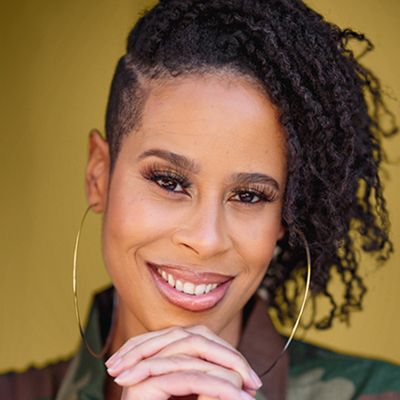
The first guest on “30 to Curtain” is playwright Dominique Morisseau. Morisseau—the acclaimed, award-winning playwright best known for her three-play cycle The Detroit Project and hot off a stint writing for the Showtime series Shameless—wrote the book for “Ain’t Too Proud—The Life and Times of The Temptations,” onstage at the Ahmanson Theatre August 21 – September 30, 2018.
For more on Center Theatre Group, its programs and upcoming productions, visit CenterTheatreGroup.org.
Transcript
This transcript was automatically generated and might contain errors.
[0:00] Michael Ritchie: Welcome to 30 to Curtain, our new podcast from the Center Theater Group. As one of the country's most influential nonprofit theater companies, we produce and present the work of most of the leading theater artists of our time. We do this across all three of our stages, the Ahmanson Theatre, the Mark Taper Forum, and the Kirk Douglas Theatre, as well as in educational, outreach, and community programs. I'm Michael Ritchie, Artistic Director of the Center Theater Group. For each episode of this podcast, I'll talk with some of these talented artists from both on and off the stage so that you can learn a bit more about them, their process, and their work before arriving at the theater. I hope this podcast helps to further enhance your experience, whether you are a first-time patron or a long-standing supporter.
[1:02] Michael Ritchie: Our first guest on 30 to Curtain is playwright Dominique Morisseau. Dominique wrote the book for Ain't Too Proud: The Life and Times of the Temptations, on stage at the Ahmanson Theatre, August 21st to September 30th, 2018, before it heads to Broadway. She's a playwright who has been a member of our LA Writers Workshop, which is one of our artistic development programs that supports local artists. I hope you enjoy the conversation, and we look forward to seeing you at the theater. Dominique, first, congratulations on the opening of Ain't Too Proud: The Life and Times of the Temptations.
[1:36] Dominique Morisseau: Thank you. It was quite a night, wasn't it?
[1:41] Michael Ritchie: Yeah, man, it was really awesome. Yeah, it's a lot of good people. Everybody was really jazzed. I haven't quite seen it. I haven't quite had an opening like that.
[1:52] Dominique Morisseau: I have to say, neither have I, and I don't know all the elements that go into it because there was a great generosity of spirit from the audience walking in. I think there were high expectations.
[2:03] Michael Ritchie: Yeah, that's right. And then when I think the expectations get met collectively, there's a reaction that was pretty stupendous throughout the show, but particularly at the end at the call. I've rarely seen anything like that, so I imagine for you sitting there, it must have been just waves washing over you.
[2:17] Dominique Morisseau: Yeah, a pride for the team, really. I really like watching those guys and women on stage get their glory. They kind of really deserve it. They just give 150 percent to this from the beginning, and when that happens, I feel like we made a promise to them that that was exciting.
[2:48] Michael Ritchie: Now, there's going to be a level of satisfaction that comes with that, I guess, of realizing all the work that had gone into it before then was paying off for everybody that was involved.
[3:00] Dominique Morisseau: Yes, that's right. That's what it is because I always feel, I mean, I think I might take this on too much as an artist, and I think it's also because I come from acting. I come from participating in other parts of the field, and so I really take on the burden of making sure that everybody feels fulfilled in the process, that it's going to be that this is like belief work, that we're not just, this is not just a gig or a job, that this is going to fulfill your life right now.
[3:39] Michael Ritchie: Okay, well, that's fascinating. That's actually fascinating, so I know you started out early on as an actress, and I hope that's something you still do or will pursue.
[3:45] Dominique Morisseau: It is. But what spurred the writing? At what point did you feel like you wanted to put stories down on the page?
[3:52] Dominique Morisseau: Well, I always wanted to put stories on the page because I was a kid. I mean, I grew up reading, and my mother was a teacher, and she used to read me stories every night, and I really, she read me poetry every night, and I just, I became a writer, you know, really young. But what made me want to be a playwright was different. When I wanted to, I always wanted to be as a kid an actor and a writer, but I thought it was like, I'm going to act in movies and in plays, and then I'm going to go write novels. Do you know what I mean? I didn't know how they met yet. I didn't really understand that connection.
[4:31] Dominique Morisseau: When I was in college, and there was, I was studying theater as a performer, and there just was not, we were not studying a lot of diverse writers, or any really, in our major curriculum, and then the writers that were getting produced on our main stages, maybe there'd be one a year of color, and I was really relegated to like side roles or back roles, and so I just, I personally was not feeling fulfilled. So I wanted to write for myself and the two other African American women in our department at the time, so that we could sort of have something that reflected our cultural canon. That's where it started for me.
[5:14] Dominique Morisseau: What happened in response to that was something I could not have imagined, you know, kind of like that opening night thing, where it just, the way that the student body responded to the work, sort of told me, oh man, no, I got to keep doing this. You know, like they really came out in droves, and they were not really, most of the student body was not supporting work in the theater department. So when this happened, it was like we had a whole, like bevy of folks just coming from all walks of student life to come see the show, and so that made me realize like I'm filling a voice somewhere that people are hungry to hear, and I need to keep doing that.
[5:56] Michael Ritchie: And some of it, certainly some of your plays, well, you're from Detroit, you've written a Detroit trilogy of plays. I have to imagine that some of that is distinct memories, some of it is imaginations, desires for what could have been, or what should be, or what will be coming. So when you sit down to write a play that is a fictional story, what is, where do you begin from? Is the inspiration a character? Is it an idea? Is it something that is sociopolitical? Or is it just the craftsmanship that comes with doing something over and over? Do you sit down and start writing, and the story comes?
[6:49] Dominique Morisseau: Oh, no. Whatever it is, I know it's not the craftsmanship thing. I definitely, I think a lot about things in the world, and when something keeps itching me, then I know I want to write about it, but I don't, I never necessarily know where I'm going to start. Sometimes I do, you know. With my Detroit cycle, it came to me as three plays about Detroit. That's what I want to do. I like the number three, I always have. I'm born in March, so I'm a three girl. I'm 313, that's my birthday. And that's also the area code for Detroit, so I'm very Detroit. But I also, I knew that there were three particular eras that I wanted to tell stories in. I was like, okay, I heard about Paradise Valley. So many elders talk about that.
I don't know anything about that. That seems like a fun era to play around in, and something major happened in that era. I want to talk about, I want to look at these major eras and see that. So I knew the macro, like these major eras with change happened in our city. And then when it starts to get trickled down to very specific, I go, okay, I know the era, or I know the world I want to explore. Now I need to figure out what's the set, or what's the place, what's the location, who do I want to tell this story on the skin of? And so then I go, okay, if I'm doing Paradise Valley, there was all these clubs and nightclubs and jazz spots. And we know Detroit from Motown, but we don't know it for jazz.
I want to go into the world of jazz. I'm going to a jazz club. And then the people come to me. But I know where I want to go. I want to go into the factory. These are going to be workers. I think there have to be multiple kinds of workers. Or we're going to go, I think for Detroit 67, it was really interesting because I go, in the 60s, there was all these red light parties, and Motown is obviously the setting. I'm like, where can I hear Motown and get the setting of a red light party and deal with the Detroit riots? And it was like, oh, they raid these parties in the 60s. So this is a great way I can put that kind of world on stage.
[9:03] Michael Ritchie: So starting from the outside, working in, but then in a case like that of Detroit 67, how much research do you want to do or do you want to be accurate when you sit down to write a play?
[9:21] Dominique Morisseau: I do want to be accurate. Not everyone around me wants me to be as accurate as I want to be. Even with the making of this musical, with Ain't Too Proud, I want to be way more truthful to events in time. But as I'm writing, I realize that sometimes the truth, the facts get in the way of the truth, I say. Because facts will make me a slave to this day and this moment, but I won't actually get underneath it and get to what the heart of that moment was really about. And so for me, even with working on Ain't Too Proud, with working on all my stories now, I've developed the mantra, I am not a slave to the facts, I'm a slave to the truth. And those aren't necessarily hand to hand. So with something like Detroit 67, I go, well, this is what the spirit was at the time.
I'm going to have to play with it a little bit so I can capture the truth of what was going on at the time. I'm going to have to play with the facts in order to fully get the story out. And I think the same thing with this, with working on this musical. I was like, well, okay, maybe it really happened on a Tuesday, but Tuesday doesn't work for our story. So we're going to put it on Friday and make it all happen on the same day so it can hit at the same time we can feel that emotion. And then we can go back and freaking Wikipedia and go, oh, that wasn't that, you know, and then.
[10:46] Dominique Morisseau: But it really was the spirit and that's the thing that that's my job.
[10:50] Michael Ritchie: Right. Well, I think you did it incredibly well in that there is a journalistic story to tell about the Temptations, where they started from, who they were, where they went, that is somewhat documented. You certainly had a reference material that you were working from. And was that new for you to have sort of a story laid out in front of you and you were adapting it, you were delivering it, you were massaging it in some way to create the theatrical event?
[11:29] Dominique Morisseau: Maybe. I mean, I feel like on some level, I feel like all the stories that I've told always come from something else. Maybe not like someone's like exactly written story, but it might come from like an event that just happened like this. And these were the spirit. And I can take moments of that and incorporate it into my own fiction. I think with this, because it is really, I am really focusing on one man's vantage point of his life. Having a biography to read really helps me to do that and being able to talk to that living man himself. Because then I could build it on his skin honestly, as opposed to just trying to string together different versions of people's memories and facts. Which could be very complicated.
And in some ways, everybody's perspective is their own story, their own truth of what happened. So, there is some clarity. And also, not only did Otis write the book that you were using as a reference point, he created the story of the Temptations. So, to have a source like that, what was it like walking in the room the first time knowing you were going to meet him? What was it like?
[12:50] Dominique Morisseau: Like a little kid? Yes. I mean, even more so a little kid, because I feel like I'm meeting my mommy and daddy's hero. Right? I know, right? Right? It's just like, oh my God. This is like if my kids came along and met. Actually, Stevie Wonder is one of my heroes. So, you know what I mean? So, it's like me meeting Stevie. But it's also like if my kids came along and met, like Lauryn Hill or something. You know what I mean? It's like, oh my God, you're getting a personal relationship with somebody that I grew up on loving. That's crazy. So, I felt that. And I also felt like, I got to earn this man's trust in like five minutes. Right? I know. Right? Like in five minutes. You're going to tell, you're going to take his story and you're going to tell it to a really wide audience.
A really wide audience. Right? I got to get this man to trust me in five minutes. When you walked out, clearly you succeeded, but when you walked out, who did you call? Who did you write to? Was it one of those moments where you're like, I got to tell you, I got to tell you. Guess what I just did?
[13:46] Dominique Morisseau: Well, you know, it's funny. Daz and I, Daz McAnuff, the director and I, we just, we have a different recollection of some things that happened early on. But we both remember leaving the first encounter with Otis Williams and Shelly Berger. And like they gave us a lot of fun stories, but I remember leaving them feeling like we walked out of, it was at Otis's home. And when we left Otis's home, we both looked at each other like, I don't think we have a play yet. I don't have it. Whatever I'm supposed to write, I don't have it yet. You know what I mean? I have a bunch of fun stories, but I don't have like, I don't have the glue. I don't have the soul. I don't have the soul because he, you know, maybe didn't necessarily trust me yet, you know, liked me, you know, I was cool enough, but he didn't like, you know, it wasn't like he's about to tell me his big dark secrets per se, or be emotionally vulnerable with me.
And it was the second, it was the second meeting that we were like, okay, and now I know where this, I know where his soul lives, you know. And then that time I called my mother like, oh my God, I think I made Otis Williams upset. I got him upset, you know, because we got emotionally vulnerable in that, that conversation. I'm like, oh Lord, I'm going to be real in trouble here with my mama and my daddy if I, if I somehow blow this. So anyway.
[15:13] Michael Ritchie: Well, that's nice to know that, you know, you were able to gain his trust. And I think it comes through in the piece itself, which I find fascinating from a narrative perspective. The structure of it is you are dealing with something that is somewhat journalistic, a story that is being told that we know happened over a period of time. You are doing some interpretations of it. You're telling it from one person's point of view, you're theatricalizing it. And then imposed upon all of that is this incredible music that lives inside virtually everyone alive today. That music is, I'm, I, you know, I grew up in the, the, I was born in the late fifties, sixties, seventies, anyone that's 20 or 30 years older than me, it was their music as well.
Anyone 20 or 30 years older than me, it's still there and still reaching them, which I, I, I find so powerful. But then after you have all those stories that you have in the basic stories, then you've got to deal with the music. Are you using that to, to tell the story journalistically, just having the Temptations perform the songs? Do they become underscoring to the greater themes that are in the story? Do they, do you have to use the music in the order that it was recorded as you're moving forward? So how do you deal? That's a whole different level that was new to you. How did you have that conversation the first time? Did you know what to ask?
[17:13] Dominique Morisseau: That was with Des and I, and we sat at his house and while we were there, you know, we just, we went through like what would be like approved songs from the catalog and we started listening to all the approved songs, you know, we're like, okay, I like this one because of this, or, you know, this is my song right here, or this really has a great thematics, you know, we could really change the meaning of this one, you know, and so we did that and as we went through it, you know, I had strong ideas for how I felt like certain songs could be used and I was like, this is going to go out of order because that was my concern, like, oh man, am I going to stay in chronological order? That's not going to be thematically interesting for me and also, but amazingly, their catalog is so amazing.
It may not be like 64, 65, 66, that clean, but it is, like, the era stayed true to the, you know, to the story really and so we could really, you know, build that story on the skin of, build the music on the skin of, like, this is sort of where we were in the world when this music was being made, you know, and the things that they were singing about, how that would change throughout time when the world was becoming more political, it just naturally tells its own story, like, the music, their music tells its own chronological story in a way that's really exciting and so then for, we could do that, we could also make it performative, but make performance be necessary to the story so it's not just a musical review, right, and then it was like, and how do we flip some of the meaning of these songs?
And for me, I was, I got very jazzed on several ways, I mean, I remember we were doing Runaway Child, we would listen to that and Dad didn't, it was like this, I don't know about this one, you know, like, wasn't sure we could find a place for it and I was like, wait, you know, but doesn't, doesn't his story begin with this, you know, and so we kind of, we got jazzed on that kind of stuff or for Cloud Nine, I remember how we, you know, just the multiple meanings of how we could use some of these songs. Ball of Confusion for me is one of my favorites of how we, but Ball of Confusion and I'm Losing You, Ball of Confusion and I Wish It Would Rain, those are my three that I was really excited about how we, how we found ways to add like 10 meanings into those songs.
[18:58] Michael Ritchie: What's the full title of the show?
[19:04] Dominique Morisseau: The full title of the show is Ain't Too Proud, The Life and Times of the Temptations. Okay, now did you have anything to do with creating the title?
[19:11] Dominique Morisseau: Yes, yes, lots. And then let me ask you because this is something that for me was a nice gut punch in sitting down to see the show. It's not about, or it's not just about the Life of the Temptations, it's about the times they lived and you are able to take what is an entertaining story that one can tell about this group, even with the ups and downs that they have, but put a foundation under it of the time. So you set out to do that very thing. If you were creating that title, whether it came before you had written a word or after you had written a word, that was your intention?
[20:07] Dominique Morisseau: Yeah, I mean it was definitely our intention to capture what we would call the macro and the micro of this group coming into their legend, you know? And for me personally as an artist and I think I appreciated about Des and I working together was I was very, you know, my thing was always, now you've read my work, you know what I do. So you can, you must want me to do what I do. And I just, I can't tell a story that doesn't have gravitas or that doesn't have, you know, some greater way of connecting to the social, sociopolitical narrative of the world. That's just how I think. And that's just, it's sort of unavoidable for me as an artist. And that's pretty much what I want to be doing. And Des was really on board with that too.
And so then our producers were excited about that. And that was what was most rewarding for me working on this was how much we get to keep digging into making this a story, not just about then, but about now. How much we can reflect and be a mirror for society and how much we can like really question some, I think, things that artists are still and people are still wrestling with right now and really seeking some, you know, some context for, and I think this story helps to give context.
[21:18] Dominique Morisseau: I think it really does for me. Look, I'm happy going to the theater and having an entertaining evening. It's for me, there's, there's nothing wrong with that. And, you know, at times those two hours in the dark are a relief from other things that are going on.
[22:03] Dominique Morisseau: So you're playing here in Los Angeles right now. You've played in Berkeley. You've played in D.C. Yeah. Any differences in the audiences or any difference in you were working, you know, in Berkeley, you were opening it up. You had different things to deal with yourself. So I don't know what you were paying attention to the audience, but is this capturing people? Man, I think, you know, I speak not just for myself, but for my team. LA is sort of blowing our minds right now. I have to be honest, I didn't expect this kind of enthusiasm, you know, from Los Angeles. I just figured, you know, in these performing cities, everybody's too cool. Do you know what I mean? Because we all do this. So we're very uneasily impressed with each other, you know, and it's just a drag sometimes.
But it is, it is very, I have to say it is, they have defied my expectation of audience. I thought that, you know, other cities might've been a little more appreciative. This one is taking the cake right now. And I think it's just the, I think it is because this is such a town of like an industry of art and story that there's actually a great appreciation for the gifts and the talents involved in this project. I think that has a large part to do with it. It's as I said to you before, it's that opening night and other nights as well. The reaction has been so consistent and so strong. I've been impressed with the LA audience since I got here. I was in New York for almost 20 years before I moved out here.
And I had some questions if not concerns about what the LA audience was. What I found out was that there is a very knowledgeable audience here and there isn't a casual audience here. There aren't any tourists. There aren't people that are killing a night. If someone's going to the theater here, they've made a definite choice and it takes real effort. And they want to do it. I mean, they want to fight that traffic and get here. They're going to spend whatever time it takes to get here to do all of those things. And if you deliver for them, and their standards are high, but if you deliver for them, they react.
[24:20] Michael Ritchie: While you were here, just before we opened, it was announced that the show is going to Broadway. Congratulations.
[24:22] Dominique Morisseau: Thank you.
[24:23] Michael Ritchie: The Imperial Theater, which I think is the perfect theater for this show. So very awesome. One of the most notable houses on Broadway. I don't think any dates are set yet, but I do know that it's on its way and obviously exciting. But let me ask you this, between now and then, do you want to go back into the body of the show and make changes to work? Are there things that you've already decided or mulling or willing to open yourself up to? When does the process end? When do you stop?
[24:55] Dominique Morisseau: Oh, I think it'll probably—
[24:56] Michael Ritchie: When do you give birth?
[24:57] Dominique Morisseau: Yeah.
[24:58] Dominique Morisseau: When do you actually give birth? I mean, listen, for other plays, long before this moment here, long before Broadway. I think every time you're about to open something on Broadway, I would imagine everybody's got to go back in, because that's going to really define your show, right? And for the rest of the world, that will be the one. So absolutely, I absolutely am going to go back in, and I know we all are. You know, Des and I have already started talking. I watch the show. Every time I watch the show, I go, oh, okay, I'm not going to mess them up right now, but I really could do something with that. You know? And I did. We did throw something, what I love about my cast, we threw something at the right before we opened here.
I was like, sometimes I have an epiphany in the middle of the night. Do you know what I mean? I wake up like Des. We got to change this line, you know? And I'll go, you know, I'm not going to be there, but I text the guys, like, listen, you're about to get some new stuff. If you need to know anything, call me, you know?
[25:54] Michael Ritchie: I know that, because the night before we opened, I came backstage to see you, and you and Des were sitting in the green room, and I stood outside the green room for about 15 minutes while you guys were talking notes. I know, and I thought, wow, okay, those guys are working. They're paying attention. It impressed me. It impressed me a lot. I finally had to move. My feet were going to sleep. And the guys handled it with, like, such expertise. They were telling me afterwards, I was like, you guys, that looked like it was easy, and they all looked at me like, no. We were sweating bullets until the show started. I said, oh, I'm so sorry. You made it look very easy. You made it. I was like, oh, I'll just do another one. You guys got that. They got it.
[26:44] Dominique Morisseau: Your life as a writer is, you've made a choice. Some of it is behind closed doors alone. Some of it is collaborating. This obviously is a major collaboration when you're working on a musical, more than writing a play or delivering a play to an audience. But you also have peers that are writers, playwrights or screenwriters. Do you have a way of keeping in touch with your peers? Is there a way that you're helping each other navigate these waters? Because I can imagine being a writer can be a lonely venture when you're first starting.
[27:19] Dominique Morisseau: I feel like I come from a strong and ever-expanding village of playwrights and artists. I love playwrights. And being out here in LA, I think I had mentioned this to you before, but being a part of the writers group here, the Center Theater Group writers group, allowed me to get back in conversation with playwrights in a way that I hadn't been since I've been in LA. And that just always restores me, always. There's the Lark Play Development Center in New York. Sometimes they come out here and they gather the playwrights in LA out here. Lark LA, I really want this to happen. That is also restorative to me. And we just get to support each other and stay abreast of each other's endeavors. And then I just also feel like, in general, I feel like there's a moment we are in as playwrights, and especially those of us who feel like we come from marginalized spaces, however you find yourself in the margins.
Because it could be via race, it could be via gender, via gender identity, socioeconomically. It could be however you identify. But I think we feel very excited when we collectively have some space and some voice somewhere. So we pay attention to each other in that way. And I feel really awesome to have a vast and wonderful community of playwrights that I stay in touch with.
[29:00] Michael Ritchie: That's good. We're finding that a lot of playwrights have moved to Los Angeles for multiple reasons. I think that the writing that's going on right now, particularly in television, is so smart, so strong, so wide ranging. There's so many avenues for that to be expressed now. Did you come out here knowing that you were going to be working? Were you hired to come out here? Or did you come out here looking?
[29:25] Dominique Morisseau: No, I promised myself never to come to LA to look. I said the same thing. It seems too hard. I don't know. New York's hard, so whatever. But no, I came out here because I had an opportunity. And people that know this in TV know the opportunity is high. I liked your thing on Friday. Can you start on Monday? Can I just uproot my entire life in two days? Absolutely, sure. No problem, TV. And that's what we do. I think people do it because it's the thing you have to do to break in. But I don't think it's all economic driven.
[30:07] Michael Ritchie: I totally agree.
[30:11] Dominique Morisseau: I don't think you're going to get all these writers if it wasn't also artistically driven.
[30:15] Michael Ritchie: I totally agree. And I think that's to everybody's benefit. And one of the things, clearly, as someone who's only done theater in his life and his career, for everyone that's coming out here that are writers, actors, designers, directors that are of the theater but are practicing their craft in other fields of entertainment, we certainly want to keep them close to the theater. And so it's been, for me, an unbelievable treat and treasure that we were able to bring you back inside the walls of a theater and then put on this show.
[31:01] Dominique Morisseau: And do you feel like you get all the writers that you know that are playwrights writing in television, is that sort of the same thing, that they get to stay close?
[31:09] Dominique Morisseau: Yes, they stay close. People don't take a television course when they're in high school. They take a drama course. They put on the high school play. And when they're introduced to this form of storytelling, it's usually through the theaters, their first experience with it that inspires them. So it's wonderful to be in this town where there is such a great focus on television, film, music, but to know the theater is a leg of that stool that's an important leg and that people can move fluidly back and forth. So I'm really happy you're here.
[31:46] Michael Ritchie: It won't be the last time you're within these walls. It'll make me very happy to have you back the next time.
[31:52] Dominique Morisseau: I hope it's soon.
[31:58] Michael Ritchie: Yes, thank you. You've been listening to 30 to Curtain, a Center Theater Group podcast. You can find out more about our organization, programs, and upcoming productions on our website at centertheatergroup.org.
© Broadway Podcast Network, All Rights Reserved