

Center Theatre Group’s Artistic Director Michael Ritchie hosts “30 to Curtain,” a podcast featuring 30-minute interviews with some of the theatre artists creating work across the stages of the Ahmanson Theatre, Mark Taper Forum, and Kirk Douglas Theatre in Los Angeles... Read More
From the show: 30 to Curtain
Guests
About
Center Theatre Group’s Artistic Director Michael Ritchie hosts “30 to Curtain,” a podcast featuring 30-minute interviews with some of the theatre artists creating work across the stages of the Ahmanson Theatre, Mark Taper Forum, and Kirk Douglas Theatre in Los Angeles.
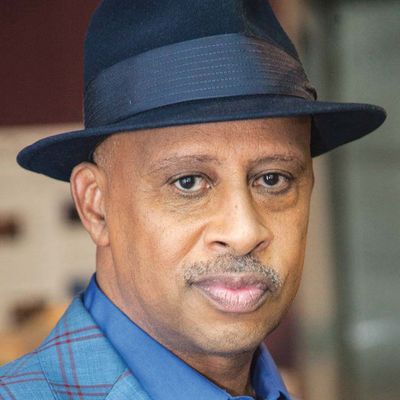
For this episode of the podcast, director Ruben Santiago-Hudson joins Michael in conversation about the Tony Award-winning production of August Wilson's "Jitney," which is onstage at the Mark Taper Forum November 22 – December 29, 2019. For nearly 30 years, Center Theatre Group has celebrated Wilson’s work, whether it be through productions at our theatres, educational programming, or assisting with his development process on the road to Broadway. We're now going full circle in bringing the Broadway production of “Jitney” to the Taper—the final play of Wilson’s American Century Cycle to appear on Broadway.
For more on Center Theatre Group and its upcoming productions, visit CenterTheatreGroup.org
Transcript
This transcript was automatically generated and might contain errors.
[0:00] Michael Ritchie: Welcome to 30 to Curtain, a Center Theatre Group podcast. I'm Michael Ritchie, Center Theatre Group's Artistic Director. As one of the country's most influential nonprofit theater companies, we have the great opportunity to work with some of the theater's leading artists across our three stages, the Ahmanson Theatre, Mark Taper Forum, and Kirk Douglas Theatre. And on this episode of the podcast, I'll be talking with one of those great artists, Ruben Santiago-Hudson. I've known Ruben for many years, and I've been looking forward to working with him here at Center Theatre Group for quite some time. I was thrilled to have him bring his deeply personal one-man play, Lackawanna Blues, to the Taper last season.
And now he returns as the director of his Tony Award-winning production of August Wilson's Jitney, on stage at the Taper, November 22nd to December 29th. For many years, we served as one of the regional theaters that presented Wilson's works during their pre-Broadway development process. It feels like we're going full circle now in bringing the Broadway production of Jitney to the Taper, the final play of Wilson's American Century Cycle to appear on Broadway. I hope you enjoy this conversation with Ruben Santiago-Hudson.
[1:26] Michael Ritchie: Before we get into Jitney, let's talk a little bit about Lackawanna, because that, for me, I was revisiting that show after 20 years, having first seen it and done it with you up at Williamstown, and then bringing it back to the Taper. And I had such fond memories of the Williamstown production. And when it came to the Taper, it somehow exceeded that, which I didn't think that it could. I don't know if I had changed, if the show had changed, if you had changed, if the room was different, but my experience was definitely even better than I could have imagined it could be. Did you feel any of that coming back to the show after years?
[2:11] Ruben Santiago-Hudson: Well, it's the immediacy of the moment that always makes the impact more powerful. Plus, you have changed, and I have changed. And then we're talking about coming from a huge auditorium, basically, to an intimate, beautiful theater. So everything, you know, but more than anything, I think it's the immediacy of the moment that it happened at that time. If you were to go back to the, you would probably be, I would just be filled with the same excitement and the same impact it would have on me, I'm sure.
[2:44] Michael Ritchie: Well, it's also, it's a story about your life. So now your life has evolved and changed over time between when you first wrote it and first performed it. So I guess my next question would be, do you think you'll ever do it again? Is it something that will come back to you? Is it something you have there that you want to explore again in 10, 12, 15 years?
[3:09] Ruben Santiago-Hudson: I don't know about 10, 12, 15. I'm aiming for Broadway in the next two years. So that's been my goal, and that's what I'm working toward. It looks like I'm getting some bites, so we'll see.
[3:23] Michael Ritchie: All right, good, because I would love to see that happen. We talked about that when you were here. Nothing would make me happier.
[3:28] Ruben Santiago-Hudson: Or London, or both.
[3:29] Michael Ritchie: Or both.
[3:30] Ruben Santiago-Hudson: Yeah, so, but I'm aiming at that.
[3:33] Michael Ritchie: Good. Let's talk about Jitney and August and your relationships and all of that. But let's start with this specific production. You've done it before. So tell me how the idea came to you, how you got it to Broadway, and why that was so important to you, I think, and to us as well.
[3:55] Ruben Santiago-Hudson: Well, it started with a conversation between August and I when August was ill. He called me one day, and he was wound up because he was telling me, he started out the conversation saying I was going to do something with that play. And I said, which one? Jitney? Because I'd like to get it to Broadway. He said, no, How I Learned What I Learned. I need you to do that. And I'm like, oh, I want to do Jitney on Broadway because it's never been on Broadway. He said, yeah, do that. I need you to get that done. But first of all, I got to do How I Learned. I promised it to Jim Houghton, and I want to get that done. I'm not going to be able to do it. So I want you to do it. I said, well, did you call three other actors?
He said, no, I'm calling you. I said, well, August, I'm a little intimidated by it. I can't play you. He said, don't play me. Tell my story. So I told him, OK, and then we'll get Jitney. So it took me eight years to get around and get myself together enough and to be confident enough and yet put myself in a place emotionally that I could do How I Learned. So I did that. And then all along, I was fighting for Jitney as well. In 11 years, it took me to get Jitney to Broadway. And I just kept knocking on doors and people telling me no and laughing in my face and saying, do I have stars? Do I have Denzel? Do I have Sam Jackson? And I didn't. But I said, I have August Wilson and I have myself, you know, and I think we're a formidable duo.
And people didn't believe it. And then I just had to I sat back, got really down about it, you know, really questioned whether I was in the right business, because if I can't get an August Wilson play done on Broadway and he had had nine of his ten done, then I was wondering whether I was really, to be honest with you, wondering whether people really appreciated me in this business and was I in the right place. So I went home and moped over it. And my wife listened and finally just said, do you want a glass of wine? And after that glass of wine, I thought about it and said, you know what? I never gave up anything. I just have to do a different strategy. And so my strategy was who wants me? And then I tell them how to get me.
And so I waited. And Manhattan Theater Club kept saying, we want you here. We want you here. We want you here. And I said, well, you can get me here right now. I'll say yes if you do Jitney. 18 months later, they said yes. And the rest is history after the Tony.
[6:22] Ruben Santiago-Hudson: No, I know. There's a moment where you say, see, I told you. But my mother wouldn't let me say, see, I told you. I know. So I just have to say I just have to smile on my face. You know, it's not gloating. It's sort of a satisfaction that your instinct and your intentions were right. I didn't know the depth of how long it was. I did know that this was something that you were determined to get to Broadway for a lot of different reasons. And I don't think any selfish reasons. I don't think this was about you. This was about August and the tribute that he deserves and the legacy that we're passing on to others. This was, in fact, I think the only one of August's 10 plays that I hadn't seen because most of my experience had been in the Broadway productions.
I was living in New York when he was writing. I was working on Broadway when he was writing. And they were making their move through places like Center Theatre Group and then eventually coming to Broadway. But Jitney, I hadn't seen.
[7:25] Ruben Santiago-Hudson: Well, I'll tell you, you're absolutely correct in saying it wasn't selfish. It was I wanted August to have this accomplishment, 10 batting a thousand, wrote 10 on Broadway. But because I could have been on Broadway earlier, I had offers to do Broadway plays. And I said the first one I do is going to be Jitney. And then I'm at your disposal. And, you know, the powers that be always say, no, you do what I say do. And then we'll take that. And I said, no, I just I made a vow. I wanted this to be my first play. And I wanted August to have this accolade that no one had batted a thousand. I mean, people have written more plays obviously, but not all of them had gone to Broadway. Brilliant writers, Albee and Arthur Miller and Eugene O'Neill, we can go on and on. But no one had every play they had written. So I said, let me give this, let me give this a shot and see if I can make this happen for August. And through the grace of God, it happened.
[8:24] Ruben Santiago-Hudson: And then it very deservedly won the Tony Award for the best revival, clearly hands down for me. And in fact, in that season, I think could have beaten any of the new plays as well in terms of what the production was. And if it were described as a new play on Broadway simply because it was the first time on Broadway, I think it still would have swept.
[8:43] Ruben Santiago-Hudson: Well, it could have, you know, politically people decide where they want things to go, as you well know. And so I had no, I knew the work that we had done, whether we'd win anything, I didn't know. I knew we were worthy of it, whatever accolades we received. And so I just said, well, do it what you want. You know, well, should we try to fight for this or that? I said, fight for what you want. I'm trying to make the best production. Just get it up there. Right. Yeah. And then thankfully it gets recognized along the way.
[9:09] Michael Ritchie: How did your relationship with August start?
[9:16] Ruben Santiago-Hudson: I first saw Ma Rainey in '84. And then that's when I fell in love with the work and the people and the characters. It was so familiar to me. I chased him, I pursued him and I also pursued Lloyd because I wanted to be in the room with him. I wanted to be a student of Lloyd's. They finally called me into the room for Two Trains Running. I got down to the wire and they gave it to another young actor named Lawrence Fishburne who won a Tony. But they remembered me. And August invited me into the room for Seven Guitars when Rocky Carroll decided he didn't want to do theater at that time, he wanted to do movies, which was a blessing. And I still shake Rocky's hand every time I see him. When I went in the room, I was determined as I, nothing unusual, I'm always determined to do my best work.
I won the role and I never let August go after that and he never let me go. He wrote a couple more roles for me, which we argued about because I didn't play him. But I did come and play Caesar when no one would play Caesar for him. And so we, you know, we stayed very close. And to this day, he remains a large part of my career, a large part of my life. Unfortunately, he's not here. So I'm dealing with other elements, not him. I had straight communication with him. Now I'm dealing with a lot of other elements and it's getting tiring again. So I'm back to nose again because I want to do another.
[11:12] Ruben Santiago-Hudson: If it was any other writer, in my opinion, I can be wrong, but this is the way I see it being in the business over 40 years. If it was any other writer and this guy takes his play and gets a Tony, I think the writer would say, what do you want to do next? Where's our next opportunity to fight for another hit? I didn't receive that. And matter of fact, I went and said, let's go again. And all I got was a wall. So right now I'm back to where I was 10, 11 years ago, 12 years ago. But the difference is now is, you know, I've accomplished what I really set out to do. So if I don't get my hands on another August Wilson.
[11:24] Ruben Santiago-Hudson: So be it. I'm 63 years old. Sunday, I'll be 63. And that's what it's been good. You know, so I just don't understand that right train of thought. And I just really don't understand that. It's interesting. I'm the same age as you. So I've been around New York theater and Broadway since the 80s, the early 80s as a stage manager. And I did both commercial Broadway and I did institutional theater, Circle in the Square and Lincoln Center being the two primary ones. But even in the institutional theaters on Broadway, there is a mentality of commercial success that I don't think I can, I'm not in it, running one of those things. So I can't damn anyone for that. But it seems that Broadway for the health of it, it needs a wide variety of what it's presenting and not simply the most popular thing or finding the actor who's most known to play a part.
And the richness of theater is the connection between the artist and the audience. And it seems to be lacking in some thought in that environment on Broadway. And I love to be on Broadway, but I love to be on Broadway on I think the same terms that you want to be on it. It's about the work. That's the satisfaction for us. And it may be a dull satisfaction. But that's the satisfaction. It's not about the awards. It's not about the money, because quite honestly, the money isn't even that great. It's, you know, it's about the work. And I think I know you fairly well now after 20 years. I know what drives you. I think Jitney is a perfect example for me, of who you are, as an artist and who you are as a man.
You state your case, you're clear about what your desire is and what you want. I think people seeing this show are going to see not only the production, I hope they see the intent behind it and the driving force, which is you. So I can't wait to revisit it again. I'm in fact, I'm going to New York tomorrow, I'm getting on a plane at seven o'clock on Friday morning, so I can fly back to watch the first preview to come back two days later to watch the opening and my guests from having seen the show, I'll end up seeing it five, six, seven times in its fullness over the course of its run, and probably snippets of it beyond that.
[14:10] Ruben Santiago-Hudson: Well, I think you're going to be pleasantly surprised with this particular iteration of it. It's a great, great cast, wonderful actors, great team, they take care of each other very well. I'm very picky about who I put in the room and who's going to balance, who's going to take care of who, when they need it, and who's going to need the most, when I'm not there, who's going. And we have that, we have a great balance. And they're very excited about this theater, and being in LA, particularly at this time, you know, not I don't mean just weather-wise, I mean, with the political climate, social climate. August's plays are always about the same thing that all great theater is about. But the difference is, in every August Wilson play, people of color dominate the plays, that's who it's about.
And they're all fighting for the same thing: freedom, justice, and equality. Things that other people in other great plays aren't necessarily fighting for. They fight for their families, and they fight for their job and their integrity. But we're fighting for equality, and justice, and harder than anybody. And so I always talk to my cast about that. I said, this isn't a random day, this isn't a random play. This is about things that are matters of life and death. These are things that you want to die and have ownership of, your integrity, your dignity. And if I didn't learn anything from the salt of the earth people that raised me in a rooming house, all of them had dignity. All of them couldn't read.
All of them didn't have great jobs. All of them didn't have the best of anything. But the one thing that was universal there was dignity. They didn't want to be mistreated. They wouldn't allow you to mistreat them. And they always strive to be fair. That was one thing I always said, just be fair. And so I was like, wow. You know, so that brings true in August's plays, and particularly when they're in the right hands. Now, unfortunately, I've seen August in the wrong hands. I'm not saying I'm the only one who can do it. But it's the worst thing you can do to me is stick me in a room and somebody's maligning that work. Just doesn't understand the rhythms, understand the kind of people that make the people clowns.
You know, when they make them clowns, you take a person, a character like Fielding, who's an alcoholic, and I'm clear with Chisholm that he's an alcoholic. He's not a drunk. It's a different thing. Does he get drunk? Yeah. But is he a drunk? No, he's an alcoholic. He's a person that needs alcohol every day to function, and he functions well under that. So it's a difference. And I draw a fine line, just in that performance, but in every performance, in every character, I bring to them, I make them think about the things that the writer didn't write. Because anybody can play what the writer wrote. Anybody that went to any school has to play. I said, tell me something else about this character.
You know, like Becker and his son, Booster. And I say, we know you're mad. You don't have to be mad. He knows you're mad. You didn't go see him for 20 years in jail, three miles down the road. That was the strongest statement you could ever make. Now what else do you want to say to him? Yeah, that's what I'm interested in.
[18:00] Michael Ritchie: Yeah, it's fascinating for me. I've always been on the sidelines, watching productions develop and watching the artistic conversations and seeing people navigate paths towards what is the full representation of a character or a story. And I think with August, it's so fully fleshed out his stories. But I think even more than that, the idea of writing 10 plays that cover the African American experience in America over the 20th century, one in each decade, there's something stunning about the intent to do that, the desire to do that. But then the execution of it in the end, the fullness of it is it puts that body of work up there with the greatest literature of time, not just of our time. But one of the things I was thinking about just the other day, because I think, as you know, we do the August Wilson monologue competition for high school students, where the Southern California based theater that runs it, and it's a national competition.
And a lot of these students 15, 16, 17 years old are being introduced to August Wilson for the first time. And they're going into depth on characters that are much older than they are. But one of the things that I realized that I had never thought of until recently was, you and I lived through four decades of what August was writing about, you know, the 60s through the 90s, and had some knowledge of the two decades before that from people we were interacting with. So I think of myself having an understanding of post World War Two America, at least from my perspective, all the kids that are doing these monologues, they have no relation to that, any of those times. So it fascinates me not only that they can find a way into a character that's completely different from they are in age, or in location, but the timeframe, they have no real personal reference.
And when I see some of these kids perform these monologues, they're nailing it from some place deep inside of them. And I think that proves beyond anything else, the richness of the writing, that someone like that can dive in and create something that makes an audience really feel something deeply.
[20:01] Ruben Santiago-Hudson: You're talking about human issues, right? We're not, you know, let me tell you, you talk about living through eras. If you look at Two Trains Running, which is the 70s, those are 40s and 50s people. Those aren't 70s mentality, right? August doesn't get into the people of the time until probably King Hedley, right? Hedley, Radio Golf, right? Those aren't... Hedley has some old school people in because he has Elmer. Elmer's old school, Elmer's 40s, 1940s, 50s. So you still get the cross-pollination of different generations. And the thing that I always, the reason why I teach August Wilson style every year to a new group of students at a Black Arts Institute that I teach at, that I started with Felicia and Stephen McKinley Henderson, Michelle Shea, I teach it because I'm that generation that's right next to those that came up from the South, right?
Everything that they brought up from the South, they dropped on me. It's like, I'm not one removed from them. I'm the person that they dropped their recipes on and drank moonshine with them and learned how to play Pinochle and Kunkan with them. Those games, you mentioned those games, these young people, people don't know what Kunkan is, or Pinochle. You know, so I learned to play that with wine heads and sharecroppers and people groomed horses and railroad workers and hobos. I mean, people don't, you talk about hobos, people think that's a mythological figure. I know hobos, people that jumped on trains with a sack on their back and came from Florida to Buffalo to try to find a job. So it's like, I know this stuff.
So when I read August's work, it's very intimate to me. And you know, I know the smells of the people there. I know how their breath smells, you know, how many teeth they had, you know, it gets very specific. And so you can't generally do August and I see it done so generally so many times. And when you see this Jitney, you see the rhythms, you see when the ebbs and flows, you see when I let it breathe and how long I let it breathe when I let it breathe. Because usually it's moving, moving, moving, breathe. Moving, moving, moving, moving, moving, moving, moving, breathe. Moving, breathe, moving, moving, breathe. You know, it's never nothing. It's like, it's like good basketball. It's never just throw the pass, just throw the pass, pick and then roll.
Two, three things happen. Nothing happens only once. One thing. And when it happens, just one thing, then you gotta let it breathe. You know, and it'd be like, oh, because the audience has to have an opportunity to feel a beat.
[22:35] Michael Ritchie: That's I totally agree with you. That's when theater really works. The audience is a partner as it moves along. And that's what I've always felt when I've walked into a rehearsal that I felt was off.
[22:48] Ruben Santiago-Hudson: It's usually about the beats. It's not that the intention isn't there or that the work hasn't been put in or that someone's completely wrong in their characterization. It's more about where does the audience meet with the performance? It's like any craftsman. Listen, if you take a butcher, give him a knife and throw him into a room with a bunch of meat, he gonna start cutting. He's not gonna start looking at meat. He's gonna do what he's trained to do. Carpenter, anybody, an actor, first thing they wanna do is start acting. What I do as a director is start pulling it off of him. Stop, stop, stop, stop all this acting because that's what he's been trained to do. She's been trained to do. So it's like you go to what's natural.
You know, a lion sees a lamb. He's like, you know what? That's what I'm supposed to give him. But then when you see that, that's why it's a big deal when the lion lays down with the lamb because that's not what they're supposed to do. So for an actor to really not start chewing up stuff, it's hard and fortunately because I've had a career, people kind of trust me when I say, do we need that? Because most of the time I don't tell him what to do. I ask him a question, does that help the play? Do we need that? Are we better for you adding that? Because what I really wanna say is what the hell is that? Don't do that. But to me, that's not helpful because it doesn't empower the actor. So I said, do we need that?
What did that mean? And then they'll answer right there. You're right, you're right. They didn't even tell me what it means. They know what I'm saying. It's not clear. It's not good storytelling. And you wanna tell a clear story, a concise story. You wanna tell a story that's written through your instrument. And as you see in Lackawanna Blues, I give everybody their weight. I allow them to have a moment, but I don't delve on it. I'm not gonna make a meal out of this character or that character. I give them his time, her time, then I gotta go because somebody else is knocking on the door saying, give me, let me in, let me in.
[24:56] Michael Ritchie: In terms of your directing, what began your thought process about becoming a director? You started out and was trained as an actor and clearly had the beginnings of a career that still continues to play out. So where did directing fall into your mindset?
[25:13] Ruben Santiago-Hudson: I was a director a long time ago. I mean, all the way back to in high school, I was directing. I stopped directing when I was directing a musical, Raisin, in 1982. That might've been the first musical I ever saw on Broadway. Well, I was directing it in Battle Creek, Battle Creek Civic Theater. Way to go. And I had a wonderful actor, or wonderful dancers, but he couldn't really act and was afraid to act this scene with Mama. And I was trying to get him there and I didn't know how to get him there. And I kept saying, he said, you keep giving me the note. Just show me, just show me. And I said, no, no, no, you have to do. He said, no. He just walked off the stage and he sat down. You gotta show me.
And I jumped on stage and I did it. I sang it and I acted it. And he left the theater, never came back. Just walked out of the theater and never came back. So I had to open up the show. Wow. And I said to myself, I should never be a director if I can't help him get to where he needs to go without me doing it, because I can probably do things. God blessed me with a gift that I probably could do things most actors can't, at least I think I can. And that damaged him as an actor. That killed him, you know? And so I didn't direct anymore. I didn't direct from '82 all the way in the '90s. So I stopped, 16, 17 years. And then August said to me, you know, we were sitting in the back. And I had been a little disturbed about the directors that I'd been working with, a lot of them.
The way they talked to actors, they didn't know how to help the actors. They didn't know how to elevate performance. They didn't understand anything. It was so superficial. Most of them, I'm telling you the truth. And I was saying, and this guy is a Tony Award winner or this person is an allotted director. We need some directors. So one day I was watching, I was in a rehearsal, I won't name the play. And I'm watching this director struggling with this scene. And I'm saying to myself, damn, that's simple. Break this down and blah, blah, blah, blah in my mind. And August is going back and forth smoking cigarettes. He comes back and he's standing in the back of the theater in tech, just sitting in the last row in the dark.
And he's leaning over the wall and he says, man, how are you going to fix this? I said, well, how do you want to know? I got like three ways to fix it. I can fix it A, B, or C. He said, A. And I told him how to fix it. He said, go tell the director. I said, no, I'm not going to tell the director. I'm an actor on this. But when I directed, he said, when are you going to direct it? I said, when I'm on the list. He said, you're on the top of the list. Then he walked out. And three months later, I was directing one of his plays.
[27:52] Michael Ritchie: That is great. That's the truth. You know, I've never directed because I don't have that language. I always feel like I could be a good shepherd to get a show onto the stage.
[28:02] Ruben Santiago-Hudson: And you have been a great shepherd. Directing-wise, I knew as a stage manager, the same thing. I watched both some really great directors and some really poor directors. And I knew that I didn't have the innate imagination, nor did I have the skillset or the language to guide the company. The company of actors, the designers, right from the beginning. And then all the way right up until the end. I didn't have that in me.
[28:31] Ruben Santiago-Hudson: Well, it's interesting. I've had directors who were great leaders, but bad directors. And I've had directors who were really good directors, but bad leaders. I take pride in being both because I want to be a good leader. I want to be somebody that you trust and that will give you just as much as he's asking for. So that's why my whole team calls me coach or chief or something like that. No one calls me boss. I hate that. But like I'm the leader. And when I bring them together, like for instance, I remember the day it was the anniversary of the day that the four girls were bombed in Birmingham, Alabama. And you're not thinking about it. You're trying to go do a show. And I walked in in a circle, we gathered a circle, and I said, let's do it for them today.
I said, this is the anniversary of that horrific, horrific, heinous crime. And so let's not forget them. And they were representative of a whole generation that went through the most horrible, you know, things that happened to them. And we are poets and we have a song, a beautiful song that's written and we're allowed to sing it. So today we go out and we sing that song and make sure that the memory of all these people is a part of that song. The beauty of the song is through all the pain that was endured and still fortified us. So they went out, they're crying and everything. They go out there and the show is like, almost bust the ceiling out of the theater. And they still remember things like that.
And that's just one example. And that's not a big deal. I mean, every day I'll go in, sometimes I say simple things, like the last show in Detroit, we gathered around. I said, it's a simple thing today, y'all, joy. Somewhere in this moment, you have to stop and say to yourself, it's okay if you leave your character for a moment, I'm having fun. So I let them go and they messed around and many things, I could have took 400 notes, but they were having so much fun. I didn't get one note. You know, I left, you know, and just, you know, but sometimes you just gotta let it go like that, you know, anyway.
[30:45] Michael Ritchie: Well, I actually think that that's a perfect way to wrap up. I have to tell you, I am, if we weren't doing the show, if we hadn't gotten the chance to do this production, I would have traveled to Detroit or to DC to see it. I mean, this to me, it was, I've now seen thousands of shows over, you know, the past 40 years, at least hundreds and hundreds of shows, but maybe thousands of them. There were a few that stick out for me. And certainly this was one production. I remember walking into that theater, sitting down, seeing it for the first and only time so far. And it's just, it's a blessing that we're able to get this play and this production. I think it's just terrific. And I think it's a blessing that you had the determination to get it mounted, that you succeeded at it.
And it's not only played on Broadway, you've now brought it out into the world and certainly here to Los Angeles. Where knowing the audience here, I know that they'll embrace this, the show. So thank you.
[31:51] Ruben Santiago-Hudson: The last day I was in Detroit, a gentleman had come to me earlier on at intermission and was just saying, man, I love this show. I love this show. So I saw him at the end, after the show, and he walked up to me, a little younger than me, but he's in his fifties. And he was, he told me he was, he was, he worked for the city, like in a pretty high position, you know. And he said to me, he was crying. And he said, my father, who was a Tuskegee airman, and there's one line in it. He said, my father worked his entire life hard, less labor when he got out. And he said, the line that Booster says about his father, he never got out of life what he deserved, what he put into it. And he said, I thought about my dad and I couldn't stop crying.
He said, that's such a true line. And that's the thing about August. He's authentic. He's real. This is not superficial things he's talking about. Even when he talks about people being arrested like a seven guitars for worthlessness. These are charges that were developed to give black people. Uselessness, worthlessness. I mean, I have looked at documents where somebody had to pay a $5 fine, get locked up for three days for uselessness. So when he says this, a lot of people from different cultures may rub their face and say, man, he's so creative. We're talking about life. These are things that are true. And so that rings true with so many people, not just African-Americans, but a lot of immigrants and people that came to this country and just basically worked themselves to death. A lot of times they didn't get out of life what they put into it. But it's just, I'm just glad to be here and that we could share this.
[33:51] Announcer: You've been listening to 30 to Curtain, a Center Theatre Group podcast. For more episodes of our podcast and to learn about Center Theatre Group's programs and productions, visit our website at centertheatergroup.org.
© Broadway Podcast Network, All Rights Reserved