

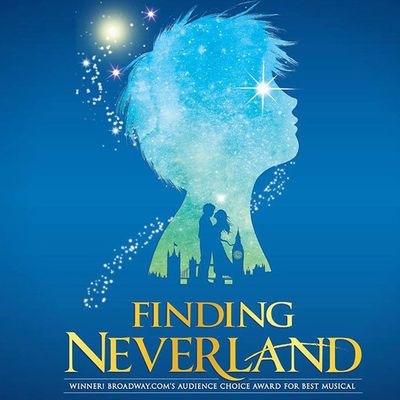
What better time to delve into the musical FINDING NEVERLAND than when "the world is upside down?!" Guest, and host of "The Musical Man" podcast, Jon Pernisek joins us for a conversation about this unique show that has its heart in the right place..... Read More
From the show: A Musical Theatre Podcast
Featured Shows
About
What better time to delve into the musical FINDING NEVERLAND than when "the world is upside down?!" Guest, and host of "The Musical Man" podcast, Jon Pernisek joins us for a conversation about this unique show that has its heart in the right place... and then you remember Harvey Weinstein was behind it all. Not to worry, though, we also have a message from Broadway and National Tour cast member Cameron Bond to keep us focused on the power of the piece.
You can find Jon's The Musical Man podcast at https://podcasts.apple.com/us/podcast/the-musical-man/id1448322171
Follow "A Musical Theatre Podcast" wherever you may be listening and share us with your friends!
Join us on Instagram, TikTok and X for more great content. For bonus episodes, subscribe to PATREON! for only $1 a month. And don't forget about our TeePublic Store, our proceeds from which we donate to Broadway Cares/Equity Fights AIDS.
Above all, thank you for being part of this wonderful podcasting community.
Transcript
This transcript was automatically generated and might contain errors.
[0:00] Jon Pernisek: Do you think that we can just blame Harvey Weinstein for all of the problems in this show? I think it's kind of the easiest thing to do in our current society is just blame everything on him. Yeah, I don't think it's an unfair target because it just seems like the show changed a lot for the sake of change, and that smells like Harvey Weinstein. And if you're not interested in changing it, then maybe you're not the right person for this job. Yeah, maybe we can replace the entire writing team and start from scratch. Now, Patti LuPone is known for quoting a joke by Larry Gelbart, which is that if Hitler were still alive, his punishment should be to go on the road with a show in trouble, a Broadway musical in trouble.
And the problem with Harvey Weinstein is that I think that he would think that that's a great punishment. Yeah, because he just wouldn't stop fiddling with this thing. That being said, are there any musicals in trouble, quote unquote, that you would be happy to spend the rest of eternity with? Are these shows that in your mind have been through the meat grinder again and again? Yes. And maybe they never quite reached fruition, but you're like, ooh, if I could have an eternity with that one, I could really help it to get there. Yes. I think I feel that way in regards to a lot of Frank Wildhorn shows. The show that comes to mind, though, from his canon is Jekyll and Hyde, because that has, what, six cast albums?
And it has sort of cemented itself, and yet we keep making cast albums. No matter who sings it perfectly, we still have to have yet another cast album. Yeah. It's not even a matter of the order of the songs changing. And when I saw it in Chicago, when it came through, they were doing that Deborah Cox version of the show, and it was- Oh my gosh. Oh goodness. It was her, Ianopolis, is that his last name? From American Idol? Yeah, Constantine Maroulis. Maroulis, Ianopolis. I don't know what I'm doing. I'm just making up. It's great. Come on. But that's what I would go with.
[2:17] Jon Pernisek: That's a great choice. For me, I think I got to go with The Mac and Mabel. I know that everybody wants to fix that show, but I just really want that show to succeed so much. It's Jerry Herman, it's tap dancing. It's a fantastic score. That overture, that overture deserves to be in a show that's considered a hit. And then I think the frustration has to be that more people don't see it as that, or it's a blind spot for many people and you sort of want to throttle them. Or you fall in love with the cast album and then you see it on stage and you're like, well, that didn't work.
[3:12] Jeffrey Scott Parsons: Welcome everybody to A Musical Theatre Podcast where we discuss the cultural and emotional impact of some of our favorite musicals in theatre history. My name is Jeffrey Scott Parsons. You can call me Jeff. Today we are talking Finding Neverland because it was a listener request from both Rachel and Sylvia. Thank you, ladies. Today I have on as my guest, Mr. Jon Pernisek.
[3:35] Jon Pernisek: Yes.
[3:35] Jeffrey Scott Parsons: Hi, Jon.
[3:36] Jon Pernisek: Hello. Thank you for having me.
[3:37] Jeffrey Scott Parsons: I'm so grateful you're here. Jon is the star and host of his own wonderful podcast called The Musical Man. How long have you been doing the show now?
[3:47] Jon Pernisek: Since January of last year. So we're nearing, we're edging into episode 60 as of this recording where I'm about to start research for The Scarlet Pimpernel, which will be our 60th episode.
[4:00] Jeffrey Scott Parsons: That's fantastic. Congratulations. I know that your show focuses on musicals that were either nominated or won the Tony Award for Best Musical, right?
[4:09] Jon Pernisek: Yes. So I'm operating off of a list of 257 shows at this point.
[4:15] Jeffrey Scott Parsons: Which makes you a perfect guest for this show because this show will never be on your podcast.
[4:20] Jon Pernisek: Goodness gracious. No, it was absolutely. They closed the barn door.
[4:25] Jeffrey Scott Parsons: The Tonys literally closed their eyes, turned the other way and said, Finding Neverland did not exist this Broadway season.
[4:31] Jon Pernisek: And yet what's so strange considering that is they absolutely performed at the Tonys.
[4:42] Jeffrey Scott Parsons: They performed! And my question is, why would you do that to everyone? There are so many years on the Tony Awards in which there wasn't enough time for performances from the actual shows that were nominated for Best Musical. So the fact that Finding Neverland got a full four minute production number and wasn't nominated for anything, it puzzles me beyond all comprehension.
[5:07] Jon Pernisek: It's a really good point. A really long performance and a ceremony that could have stood to probably give that time to other productions in some form or fashion.
[5:19] Jeffrey Scott Parsons: Yeah. Yeah. And I mean, look, the audience went crazy for it. So who am I to say that it wasn't worth it? I'm just saying, I don't know what those talks were that made it happen, but it sounds like there was a lot of money doing the talking, in my opinion.
[5:31] Jon Pernisek: Yeah. Correct me if I'm wrong, but you do have to, as a production, you have to pay your way in, right? You have to pay to play at the Tony Awards.
[5:38] Jeffrey Scott Parsons: Oh, really?
[5:39] Jon Pernisek: I believe. I've never done the hard work of actually rooting through all of that nonsense. It's probably the most Byzantine political-based craziness. But I have a feeling that if that is the case, and you always do have to sort of pay to play, I have a feeling that Harvey Weinstein approached someone or some group or body, and they were like, fine, but you're going to pay twice as much as anyone else. Because he talked in the press. There's a Hollywood Reporter article, I think, from 2014, or right after the Tony nominations had come out, and they hadn't received a single nomination. And he was very annoyed with the entire process, because I think he was so used to getting his way when it comes to the Academy Awards.
He was very annoyed, and he used the word spanked. He was like, we've been spanked by the Tonys. And he blamed it on the fact that the year prior, he had paid, presumably, to have Jennifer Hudson and three random kids and a woman dressed as Peter Pan come out at that year's Tony Awards and sing a song from a show that had in no way been completed yet and was a full year away from premiering on Broadway. And he was using the Tonys as a movie trailer, essentially. He wanted everybody to get real excited for this show. And in his mind, the community sort of balked at that idea.
[7:01] Jeffrey Scott Parsons: So that is crazy. Not only did they perform on the Tony Awards in the season in which they received no Tony nominations, but they performed on the year before when the show hadn't even opened. That's bizarre. And you never see anything like that. I can't think of another example of a show doing that.
[7:17] Jon Pernisek: Well, that's not even, I think, some of the craziest stuff that has happened with the creation of this musical. In case you didn't already know, Finding Neverland was kind of the brainchild of Harvey Weinstein. It is a musical based on the film also titled Finding Neverland, which came out in what, 2000?
[7:37] Jeffrey Scott Parsons: 2004.
[7:42] Jon Pernisek: Starring Johnny Depp, Kate Winslet, Julie Christie, and the story concerns J.M. Barrie, who was, of course, the author of Peter Pan. We covered Peter Pan in our Peter Pan episode, so this might be a fun companion piece to go back and revisit that episode of the podcast. The film is really well-received. It gets nominated for a lot of Academy Awards, winning one. It, I believe, cost $25 million to make, but grossed over $100 million, so it was a huge, huge financial hit. I think it was very successful. I remember watching it and loving it.
[8:20] Jeffrey Scott Parsons: Do you remember seeing the film?
[8:24] Jon Pernisek: I saw it long after the fact. This would have been in my last apartment, so it would have been around 2014 when I actually got around to it. I feel like I had a lot of the same feelings that I had while watching the musical online. The thing is, all of this stuff is technically based on a play called The Man Who Was Peter Pan, but I have a feeling the musical had zero interest in going back to that source material. It seems like at a certain point they just decided, no, it's the movie. We're doing the movie. The movie's the base.
[8:54] Jon Pernisek: Yes, everyone, we agree. I didn't know that it made $100 million. That is truly a very obvious success, so they wanted to clearly build on that.
[9:04] Jeffrey Scott Parsons: Yeah. Film in general, because it's Hollywood, just started trying to replicate this formula to hit that same Finding Neverland success. You got Miss Potter, I believe, which is a Renee Zellweger film about the woman who wrote Peter Rabbit, is that right?
[9:22] Jon Pernisek: Peter Cottontail, Beatrix Potter, I believe.
[9:24] Jeffrey Scott Parsons: Peter Cottontail, that's right. Then you got Tolkien with Eddie Redmayne. Anyway, there are so many of these films that became a fantasy lens looking at what it's like to be an artist and create quite possibly the most profound and important piece of your career.
[9:48] Jon Pernisek: I've never seen Miss Potter, but the movie that came to mind was The Man Who Invented Christmas, which came out a couple of years ago. I think what ties all of these movies together, potentially, having not seen Miss Potter or The Man Who Invented Christmas, is they keep interacting with the characters that they are going to create. They keep seeing visions of their art in the moment. That's the big stylistic component that we're throwing into the mix with all of these stories.
[10:19] Jeffrey Scott Parsons: Absolutely. I wonder if one of the things that hurt Finding Neverland the musical was that we have kind of exhausted this way of storytelling in a very big public sense. So then to start it all over again with a stage adaptation, I don't think hit the zeitgeist as hard as they were hoping it would.
[10:45] Jon Pernisek: Yeah. I feel like that is the big question that anyone would have to ask themselves when they're adapting a big movie like that into a musical. No matter how long it's been since the movie premiered, the danger might be that you've waited too long. The danger might be that you haven't waited long enough. I believe, in the end, Finding Neverland ran for something over 500 performances or so.
[11:10] Jeffrey Scott Parsons: Yeah, almost 600. Technically, it's not a flop if you look at it just in terms of the number of performances.
[11:18] Jon Pernisek: But I don't think it's going to stick. I think it's a show that was a blind spot for me for a while. And that's why you offered up to me a list of suggestions from your listeners of shows that people wanted you to talk about. And Finding Neverland stuck out to me because, in my mind, despite having run for so long, in my mind, it is kind of a stinker. I just sort of assumed that it was this show that didn't exist, essentially.
[11:47] Jeffrey Scott Parsons: That didn't catch.
[11:48] Jon Pernisek: Yeah. And after listening to it and diving in, I still feel that way. What is crazy—and this speaks to just the profound nature of the source material, and by that I mean Peter Pan—is that there are still emotional parts of the story that I find hold so much truth. And so there's a lot to enjoy about it, but I don't necessarily enjoy it, if that makes sense.
[12:18] Jeffrey Scott Parsons: Well, the thing about Peter Pan just on its own, what's so funny is that deep into Act 2, they basically tell the entire Peter Pan story in seven minutes. And you realize, oh, that's right, people really like Peter Pan. And Peter Pan is much more artful and much more graceful and classy in the way that it lays all that stuff out and just trusts that children will one day grow into adults that pick up on all that stuff. It trusts the process of what it means to digest art over the course of a life. And Finding Neverland, it feels like there's no time. We don't trust you. There's no time. We have to give you everything. All of the subtext will become high text.
[13:00] Jon Pernisek: Interesting. There are two moments that stick out in my mind from the film that, to this day, when I think about them or see them, it gives me chills. The first is when Kate Winslet's character dies, and she's escorted into Neverland. Are you kidding me?
[13:18] Jeffrey Scott Parsons: I'm sorry. In the movie, does Peter Pan take her into Neverland like he does in the musical?
[13:24] Jon Pernisek: I think maybe he does, but I can't remember. I remember these soft pastel watercolors, and it's just this like warm glow that she's being led into, and you see the mermaids, and it's just so epic.
[13:37] Jeffrey Scott Parsons: Okay. Because the way they sort of handle that in the show, and this moment is actually in a lot of the press materials, to the extent to where after I'd seen it a few times, I realized, oh, that's the moment where she is dying, and she's being... Like that's the epic moment.
[13:53] Jon Pernisek: Yeah. They do this effect where she is surrounded by this sort of cyclone of glitter, and it's this very striking image, but then through this double window frame, Peter Pan appears and leads her into the darkness essentially, and it's a very spare, very minimal image, and it's very good. I would argue that it has to be a very powerful moment for audiences, much like you were affected by the film version of that moment.
[14:22] Jeffrey Scott Parsons: Yeah. Yeah. Totally. The other scene that I will always remember is the opening night of Peter Pan. You have all of these stuffy high art people coming to the theater, and J.M. Barrie has made sure that there are orphans scattered throughout the house, so that they can inspire these grown-ups to see the show through.
[14:49] Jon Pernisek: And that was just so sweet and such like a great vehicle for remembering that we who sometimes grow to love art to the point of critiquing it can often miss the boat when we do so.
[15:06] Jeffrey Scott Parsons: Yeah, they don't include that in the musical. They, the orphans, the orphans are absolutely alluded to this idea that we will have orphans in the audience, but we never see them on stage and I guess it would have been kind of tough to pull off that same moment where you see the audience have that experience, that communal experience together.
[15:27] Jon Pernisek: But I wonder if they ever considered trying to figure that out. Like, can we make that work? Because you're right, that is, that is very obviously a crucial part of why the show succeeded. And if he had not had that idea, who knows what the overall effect would have been.
[15:44] Jeffrey Scott Parsons: Because you're right, when you become an adult, and you've spent however many years sort of processing art again and again and again, I think your hackles go up pretty easily. Especially in the face of real genuine, unironic sentiment and play, you don't see a lot of that anymore.
[16:06] Jon Pernisek: Even Finding Neverland, there are some jokes within the book that are surprisingly meta. In the Jeremy Jordan version, they make some joke about, oh, can you imagine us performing in front of an audience? And then they look out at us. And I'm like, what is it?
[16:23] Jeffrey Scott Parsons: Just like a, just a full take to the audience.
[16:27] Jon Pernisek: I'm like, is this Spamalot? Or is this like, is this something rotten? Are we, are we sort of folding theater on itself at this point? Oh, goodness.
[16:35] Jon Pernisek: Ham-handed, man. Let's go to the origins of the musical. In 2011, La Jolla, down in San Diego, announces that they're going to be presenting a production of Finding Neverland, written by Frankel and Corey, who are a composing team best known for Grey Gardens. They also wrote Far From Home, is that right?
[16:58] Jeffrey Scott Parsons: Far From Heaven.
[16:59] Jon Pernisek: Far From Heaven, thank you.
[17:01] Jeffrey Scott Parsons: They're definitely a film adaptation team to a certain extent. And then they also did War Paint.
[17:05] Jon Pernisek: Yes, yes, exactly. It was, it was to be directed and choreographed by Rob Ashford, who is, of course, well known, and had a book written by Alan Nee, who had adapted Little Women into its stage musical.
[17:22] Jeffrey Scott Parsons: And he's, he's the playwright behind the man who was Peter Pan.
[17:27] Jon Pernisek: Oh, really?
[17:28] Jeffrey Scott Parsons: And he brought him on to adapt his own work. And then they got rid of him.
[17:32] Jon Pernisek: And then promptly fired everyone. So that didn't even happen. It was announced and then, and then canceled.
[17:39] Jeffrey Scott Parsons: Oh, it was outright, it was outright canceled.
[17:41] Jon Pernisek: Yeah, it never even happened.
[17:42] Jeffrey Scott Parsons: Yeah, because the press video that I sent to you, that is so insane, because like, they obviously, it seemed like they were hitting the ground running. And you even get a little bit of that Frankel-Corey score. And this is, I think, the only video you can find of what this was originally meant to be. But that score seems very old fashioned by comparison.
[18:04] Jon Pernisek: Yes. Well, here's the thing. Frankel and Corey, I believe, know musical theater very well. What they don't do incredibly well, though, is they don't really create hit songs that can then be performed by Zendaya.
[18:18] Jeffrey Scott Parsons: Yes. Hit songs that can be performed for anniversaries, weddings, birthdays, bar mitzvahs. I can't get over the how generic the song Something About This Night is and how it's so obviously written for any occasion. What are you celebrating?
[18:35] Jon Pernisek: It seems that that was Harvey Weinstein's aim in getting together a new creative team. They get James Graham to redo the book. It's an all UK team. They get Gary Barlow, who is one of the members of Take That. Do you remember Take That?
[18:53] Jeffrey Scott Parsons: I absolutely do. I didn't realize that he was a member of that. I am aware that there are two Take That jukebox musicals. They thought to themselves, we got to go to Bat again.
[19:05] Jon Pernisek: Take That was a 90s boy band, essentially from the UK. They were incredibly talented. The members of that group spawned their own careers. Robbie Williams came from that group, but also Gary Barlow. He also writes with Elliot Kennedy. They worked together on the score. Elliot Kennedy had worked with the Spice Girls a lot.
[19:30] Jeffrey Scott Parsons: So you go from Frankel and Corey, you go from Grey Gardens to Spice Girls. You could not have a bigger leap in terms of artistic approaches to this story.
[20:00] Jon Pernisek: They really just set fire to the cornfield. They just said, we'll wait until next season. We'll harvest at that time.
[20:30] Jeffrey Scott Parsons: They did the Pippin revival, which I know many people is the most favorite thing they've ever seen, as well as the revivals of Hair. Oh, Waitress. She did Waitress.
[20:40] Jon Pernisek: Just like overall, she's got a nice range of, you know, Pippin was such a big production. And then you compare something like that to, I've never seen Waitress, you know, in person, but I view Waitress as a very like, that's almost like a unit set play, like a very like comparatively intimate show. So she's definitely run the gamut. And Finding Neverland is trying to arguably maybe tread a line between those two.
[21:04] Jeffrey Scott Parsons: Play both sides a little bit. Then they get choreographer Mia Michaels, who is probably most well known for So You Think You Can Dance. She is one of the most well known modern contemporary choreographers in the country. She did, I believe, Celine Dion's Vegas show.
[21:24] Jon Pernisek: She comes up with some pretty incredible movement. And especially in the first seasons of So You Think You Can Dance, just blew my mind with the way that she choreographed the human body. I've also heard that she's kind of the meanest person in the world.
[21:42] Jeffrey Scott Parsons: Well, you know, sometimes you trade one for the other. We have to have her.
[22:13] Jon Pernisek: But when everybody moves in this way, it makes me think of Matilda, which from just like a conceptual place, Matilda is a very stilted world, right? There's nothing realistic about it. So the fact that they are kind of jerky and don't necessarily move like normal humans, but move with such emotional clarity makes sense. I don't think it really makes sense in the show.
[22:41] Jeffrey Scott Parsons: I never thought about it in this way. But having watched the Tony Yazbeck version on YouTube, you're exactly right. Everybody moves in this very liquid, modern style. And there are moments where it really pops. The Believe number that takes place in Kensington Gardens is very active and very buoyant. And there's a lot of inventiveness there.
[23:06] Jon Pernisek: And I didn't know that there was a So You Think You Can Dance connection, but that really makes sense. It's very showy. But then you have moments where J.M. Barrie and Sylvia, is their big ballad an act to what you mean to me?
[23:20] Jeffrey Scott Parsons: Yes.
[23:21] Jon Pernisek: Okay, so that's the number they sing in the empty theater with the ghost light. And when I first started watching clips of this song, I just had the exact moment of, wait, why is this so stylized? Why are we, because there's that moment where they lean in to kiss each other, and then they both sort of sway back as if they've been overwhelmed by this big burst of emotion.
[23:45] Jeffrey Scott Parsons: Yeah, no, it's very much like if you take modern dance class in college, which I don't want to call me a Michael's Basic. Oh my gosh, don't come for me.
[23:54] Jon Pernisek: She's right behind you.
[23:56] Jeffrey Scott Parsons: Right? But yeah, that whole idea of where is your sense of gravity? Oh, it's in my head. And now it's forcing me to go backward and my body has no choice but to respond.
[24:07] Jon Pernisek: What's that song that everybody would have performed as part of their dance trip in college, including my own? Hide and Seek? Who would have done that?
[24:14] Jeffrey Scott Parsons: Oh, Image and Heap.
[24:16] Jon Pernisek: Yes. That is very much, everybody was stealing that choreography from, I think, So You Think You Can Dance.
[24:23] Jeffrey Scott Parsons: Probably.
[24:24] Jon Pernisek: Where everybody was sort of, yes, leading from the upper body. It was your head goes first and then your shoulders and then the rest of your entire skeleton.
[24:32] Jeffrey Scott Parsons: And then everything follows.
[24:34] Jon Pernisek: And everybody's in muslin, just like light muslin materials, and we're all just throwing ourselves into it.
[24:40] Jeffrey Scott Parsons: But that's very much, when this show gets melodramatic, I guess, for the lack of a better word, that's where it goes. It's very interpretive, as you said.
[24:51] Jon Pernisek: OK, so that whole new team is announced in 2013. In 2014, there's a fully mounted production of it at A.R.T. in Massachusetts, where Diane Paulus, I believe, is artistic director.
[25:03] Jeffrey Scott Parsons: That one stars Jeremy Jordan, as you've mentioned. And what's fascinating is that when you look at the A.R.T. version, the Broadway version and the tour version, there are significant changes in all three.
[25:18] Jon Pernisek: OK, so that A.R.T. production gets revised, opens on Broadway in 2015, just in time for Tony season, like we said. The Tonys want nothing to do with it.
[25:30] Jeffrey Scott Parsons: Oh, like just in time, like right under the wire. I think it's literally April 15th.
[25:35] Jon Pernisek: Yeah, right. Exactly.
[25:36] Jeffrey Scott Parsons: It's crazy.
[25:37] Jon Pernisek: But the PR juggernaut continues. I remember around this time, I was still watching Project Runway.
[25:44] Jeffrey Scott Parsons: OK.
[25:45] Jon Pernisek: And I remember there was an entire episode dedicated to Finding Neverland, in which the contestants went to see the show and then designed a costume based on the magic of, you know, whatever, whatever.
[25:56] Jeffrey Scott Parsons: And I remember thinking, wait, I thought Finding Neverland wasn't doing very well. But here's an entire episode on a successful television show dedicated to this. What's going on?
[26:07] Jon Pernisek: I didn't know at the time that it was on Lifetime. Lifetime's owned by Weinstein. You know what I mean?
[26:12] Jeffrey Scott Parsons: Like it just it's all it's all connected. And the juggernaut just kept chugging along, trying to make this thing a hit.
[26:18] Jon Pernisek: And it hangs on for, like we said, almost 600 performances, but never recoups its investment.
[26:25] Jeffrey Scott Parsons: It goes back into rehearsals in order to make a national tour of it.
[26:30] Jon Pernisek: Once again, another crazy twist of events is that a show that wasn't very successful gets a national tour to try it again.
[26:41] Jeffrey Scott Parsons: Yeah. I don't know where we were in 2015. It feels like it was a million years ago, but I wonder if we were at a point already where no matter how well you did, you're going to do some sort of tour.
[26:53] Jon Pernisek: And I always am surprised.
[26:55] Jeffrey Scott Parsons: I don't think so, because I really remember a lot of hoopla surrounding non-equity tours and equity. When was Kinky Boots?
[27:05] Jon Pernisek: Oh, I mean, right around that time, right? Like maybe 2014 or something like that.
[27:10] Jeffrey Scott Parsons: Yeah. Like the fact that Kinky Boots had won the Best Musical Tony Award and was some sort of really low tiered contract.
[27:19] Jon Pernisek: OK.
[27:20] Jeffrey Scott Parsons: Then here's something else that's just as bonkers. A musical that wasn't even nominated for Best Musical gets a full touring contract.
[27:28] Jon Pernisek: I'm interested to know if you know anything about that third version of the show, the touring version. I assume it's much more scaled down, but I'm also wondering if they cut any songs or if there was any like Frank Wildhorn-esque restructuring of scenes or anything like that.
[27:43] Jeffrey Scott Parsons: I know that they went back into rehearsals and into kind of a workshop setting for the tour. And the reason I know that is because one of my buddies, Cameron, who I recently did a show with, was in the national tour and was in those workshops working with Diane Paulus and everybody to fix the show again.
[28:04] Jon Pernisek: Wow.
[28:05] Jeffrey Scott Parsons: And so I asked him to send me a voice memo about something that he felt like the show really got right, because I know that there's a lot of question marks that we have in looking at the show from the outside. But I wanted to hear something positive that he had from the inside.
[28:22] Cameron Bond: Well, hello, Jeffrey Scott Parsons. This is Cameron Bond. I had the honor of being in the Broadway and touring production of Finding Neverland. I got to work with the awesome team of Diane Paulus and Mia Michaels. Female dominant, hell yes. Unfortunately, that is rare. My story is lucky to have been a part of both productions. I originally went in for the first national tour and I was in for the track to cover J.M. Barrie. And I was cast as Mr. Turpin, Captain Hook, understudy J.M. Barrie for the tour. And I was ecstatic. I found out, I remember where I was when my agent called me. The following day, I got another call from my agent asking if I was available immediately. The Broadway production was still running, although it had a set date of when it was going to close, it was still running.
And they wanted to know if I could go into rehearsals that week and go into the Broadway show and then start the tour. And I was like, let me think about it, of course. And so, change of events, I got to have my Broadway debut without even knowing I was auditioning for my Broadway debut. Alfie Bowe was the J.M. Barrie when I was hired. Unfortunately, he got injured. He hurt his back and then Tony Yazbeck stepped back in and I got thrown out.
[29:38] Jon Pernisek: And quickly learned the show and started doing my track. I was the worst case scenario to go on for J.M. Barrie, and the standby for J.M. Barrie was Kevin Kern, who is amazing. He's a tank. And he was on vacation for two weeks, and Tony Azbeck had to film a TV show, and so I got to go on for J.M. Barrie, which no one ever thought would happen. And it was awesome. I was so nervous, like literally the most nervous I've ever been in my life. While they were getting ready for the tour, they wanted to make some changes from the Broadway show. I think that's actually a cool thing about art is they say there's a show where a piece of art is never finished. You just kind of run out of time. And so they used this opportunity to reevaluate the things that they thought were working well in the show and things that they wanted to storytell differently for a tour.
Tour audiences tend to be slightly different. They're larger theaters. They're more family-based shows, even more than Broadway. And so they realized in the Broadway production, the show kind of started off slow. And for the tour, they wanted to hit off from the bang that this is a musical, this is family-friendly. They essentially combined those scenes from the Broadway production and made it into one song called Welcome to London. And so it's a bit more boppy, kind of a Beatles vibe to it. And J.M. Barrie kind of paints the picture for the audience of everyone in the show. So that was really fun. We got to do a two-week workshop where we all went in with me and Michaels and Diane Paulus and the writers, both music and book.
And we basically trial and errored this new song and scenes of how we could storytell this. And they were still trying to cast the J.M. Barrie for the tour during this time. Broadway was still going and the tour was already cast, except for J.M. Barrie. And so they asked me to be the J.M. Barrie for the workshop, which I was very nervous, but also excited. So I did have a special hand in recreating these opening numbers, which I do think work better, all things considered. It worked a lot better.
[31:52] Jon Pernisek: Yeah, some of the things that I think Finding Neverland did right was a good amount. I loved the movie. I loved the story. It's authentic. It's true, for the most part. I really think they captured the heart of J.M. Barrie and what he was trying to do in the time that he was trying to do it. There wasn't any children's entertainment back then, whereas today, Disney and DreamWorks and there's so much content for kids that literally did not exist. There was no children's theater. There was no children's stories. There's children's books. And even then, those were just like Grimm Tale, fairy tales type of books. So for him to create a play for children and for adults alike was monumental. And I think the work the show does up until the last 20 minutes is so crucial because the last 20 minutes, everyone says is the best part of Finding Neverland, but that's because of the work everyone's done prior to that.
You learn the backstory to all this. And so when the last 20 minutes you see it come together, you just have a new appreciation of what Peter Pan is and how it was written. And I think that moment into her death of the glitter vortex is some of the best moments in musical theater that you can ever find. It was so cool to be on stage in this massive circle with everyone. You just performed Peter Pan. And then as Sylvia is passing, there's in this circle, there's this automatic like these little fans pop up from the stage automated, and they're all angled to the left slightly so that when the wind blows, it literally creates a vortex. And it was so cool to watch. I never zoned out. You just have to watch.
It's so beautiful, and it worked every time. But it was just so beautiful. And Peter chucks glitter in and is just doing this playful dance all around in a circle. All of us are singing her off. I think that is the moment that just seals the deal of beautiful theater.
[33:47] Jeffrey Scott Parsons: Thank you, Cam. Thank you for sending that in. That was really great to hear. I didn't see the national tour, though, did you?
[33:54] Jon Pernisek: No, I didn't. I will say in a fit of, I think, Thursday mania, I watched all 54 videos on the Finding Neverland YouTube channel.
[34:05] Jeffrey Scott Parsons: God bless you, Jon.
[34:12] Jon Pernisek: Oh, man, what has quarantine done to you? It's done A-N-U-M-B-E-R on me is what it's done. But when you press play all on a playlist like that, it doesn't start at the beginning. It starts at the end and goes backwards.
[34:26] Jeffrey Scott Parsons: Oh, shoot. So you were doing some like last five years.
[34:30] Jon Pernisek: Oh, yes.
[34:31] Jeffrey Scott Parsons: That's hilarious. Okay, can we go through the show real quick?
[34:35] Jon Pernisek: Yes.
[34:36] Jeffrey Scott Parsons: Let's do the Broadway version because that is the version that is preserved in the recording. That way, if our listeners want to follow along, they can.
[34:47] Jon Pernisek: In the Broadway version, it starts with If the World Turned Upside Down, which you said is kind of J.M. Barrie doing Will Coleman to us, welcoming us to the theater.
[35:02] Jeffrey Scott Parsons: Yeah, it fits in the story structure. But if you take it out and you just look at those lyrics, it doesn't really seem like it's explicitly about this story. You could say that about any of these songs, though, to be totally fair about it.
[35:17] Jon Pernisek: Now, I said that one of the reasons I feel that the show didn't catch hold was maybe because we had exhausted this formula in the film world. But I also do have to say that while I don't think the score is bad, it's enjoyable to listen to. Every song reminds me of something that already exists, and none of those things are acceptable for this story and or setting.
[35:47] Jeffrey Scott Parsons: I don't think the game they're trying to play, this sort of Baz Luhrmann anachronistic thing they're trying to play of, it's a period piece, yet we're going modern. Go with it. It'll be fun. It doesn't necessarily click.
[36:03] Jon Pernisek: I'm right there with you. The score is not some travesty. It's not unlistenable. I wouldn't even—
[36:06] Jeffrey Scott Parsons: No, there are songs that I will listen to when I'm at the gym.
[36:10] Jon Pernisek: Sure.
[36:11] Jeffrey Scott Parsons: For sure. When I can go to the gym again, of course.
[36:14] Jon Pernisek: Sure. When we're all released. I wouldn't even necessarily slap the word mediocre on it because it seems like such a throwaway, dismissive, hand-waving word to apply to it. There's a professionalism here from these two guys from this pop music world that they're applying. It seems like they're very eagerly applying their craft and their skills to this. But you're right. Every song just made me think, I could be watching The Greatest Showman right now.
[36:40] Jeffrey Scott Parsons: I think that there is a polish and—
[36:43] Jon Pernisek: That's a good word.
[36:43] Jeffrey Scott Parsons: Specifically with the recording, it's a big fat sound that you don't often hear in typical theater orchestrations or recordings that's actually quite enjoyable to listen to.
[36:57] Jon Pernisek: One of the big problems that I have is that the idea that it's trying to be modern, it's not that modern. It's actually very 90s.
[37:04] Jeffrey Scott Parsons: Yes.
[37:04] Jon Pernisek: Because that's where these guys are from. They're from the 90s pop world.
[37:08] Jeffrey Scott Parsons: Yep.
[37:09] Jon Pernisek: So it ends up not sounding modern to me in the way that Pasek and Paul does. And yeah, it's not fresh, but God knows my taste in mainstream music is the exact opposite of fresh. And so that's why I kind of get swept away by stuff like The Greatest Showman, which is just the most like cotton candy. I mean, I say it with love, but it's nonsense. But I listen to it and I go, yes, yes, please. I'll have another helping of it.
[37:40] Jeffrey Scott Parsons: Please, sir. I'd like some more.
[37:41] Jon Pernisek: Yum, yum, yum.
[37:44] Jeffrey Scott Parsons: Okay. So then we go from this introduction to the opening of his show.
[37:51] Jon Pernisek: It's the society sequence from Jekyll and Hyde where everyone around J.M. Barrie is just a sycophant. And the only person who can speak to truth is J.M. Barrie.
[38:03] Jeffrey Scott Parsons: But he doesn't know how he's stuck. Oh, it's so frustrating.
[38:06] Jon Pernisek: Oh, dear.
[38:07] Jeffrey Scott Parsons: To be a white man with a pen in his hand, but a blank page, the most insufferable situation to be in.
[38:15] Jon Pernisek: I want to take a moment here to call out Teal Wicks, who is an actress and she has the thankless job of playing his wife in the Broadway version. And she has a little bit to sing in here. What's crazy is that she was also in that production of Jekyll and Hyde that you saw with Deborah Cox. She played Emma, the thankless wife in that one, too.
[38:37] Jeffrey Scott Parsons: Yes.
[38:38] Jon Pernisek: If we can please, like, hashtag justice for Teal, can we please get somebody to create this woman a musical in which she shines? Because she is so talented. She's an incredible, incredible performer and so rarely gets the chance to be in a musical that allows her to do so.
[38:59] Jeffrey Scott Parsons: That is information that I needed and I didn't have. So thank you for giving it to me. And now that I have it, that is really awful because it's a cartoon. She may as well be hitting J.M. Barrie in the head with a frying pan.
[39:12] Jon Pernisek: Yeah. So we love Teal Wicks. Girl, we got your back. So now he is, you know, J.M. Barrie's so upset because his show isn't going well. So he goes to the park with his dog and he comes upon these boys playing.
[39:26] Jeffrey Scott Parsons: Yeah.
[39:26] Jon Pernisek: And it turns out that they are all brothers and they're playing pirates and he gets to know them and they all start playing together. Their mother shows up, who we learn is a widow, and her name is Sylvia Llewellyn Davies.
[39:46] Jeffrey Scott Parsons: On Broadway and I guess really in all of the productions, this role was played by Laura Michelle Kelly. And she is probably best known for originating Mary Poppins in London. And she she's a wonderful performer as well. She didn't do it in New York for some reason. I don't know what the drama about that was, but she did bring this to Broadway and also replaced Kelly O'Hara in The King and I. She's a really terrific performer and does a great job with this kind of small role, but incredibly pivotal.
[40:21] Jon Pernisek: Like I said, one of my favorite moments in the story involves her.
[40:26] Jeffrey Scott Parsons: Now, we learn that Sylvia lost her husband and, you know, there's this impending illness that she has that she knows will take her as well. So it seems that as a parent, the thing she is trying to instill in her children the most is imagination and creativity, because the inevitabilities of life will force your children to grow up. So let's make sure that we spend plenty of time focusing on the other because life will take care of the rest.
[41:01] Jon Pernisek: Yeah. And what's so funny about the show is that they make that clear by focusing on really just one of the four children. The other three kids don't get much in the way of development. They're all just varying shades on a goofy kid who likes to play. They seem to arguably be dealing with the death of their father quite well. It doesn't seem like they have a problem. It alludes to the idea that Sylvia is doing a great job as a mom, given this really horrible circumstance. And the son that they do focus on the most is named Peter.
[41:37] Jeffrey Scott Parsons: Planting that seed, obviously. J.M. Barrie really connects to this sense of play and imagination. And so they sing one of the big bops of the show called Believe, which is fun and sweet, whatever. They performed that at the White House. I learned that while watching all 50 videos.
[41:54] Jon Pernisek: They performed that at the White House and they did that ballad, What You Mean to Me.
[42:00] Jeffrey Scott Parsons: Now, they spend so much time together that J.M. Barrie and his wife decide to have them over for this dinner party that his wife is throwing and she wants it to be perfect.
[42:13] Jon Pernisek: Sylvia's mother comes along, who is named Mrs. Du Marier. Is that right?
[42:20] Jeffrey Scott Parsons: I'm sure.
[42:22] Jon Pernisek: Played, of course, by Carolee Carmelo in yet another flop musical. God bless Carolee Carmelo. They all come over. It's a very stuffy, boring dinner. So soon the children and J.M. Barrie create chaos with their imaginations, ruining the party. And the wife is very upset.
[42:43] Jeffrey Scott Parsons: Yeah, that's a strange number. We Own the Night. Is that what it's called?
[42:48] Jon Pernisek: Yes. And which sounds much darker than it should be.
[42:53] Jeffrey Scott Parsons: Yeah. And the little hook that they have for that is odd. It sounds a little bit more, I guess they're going for like Rapscallion mischief, like mischievous. It's this tango, like when has one of children ever danced to a tango that sounds like a 90s song.
[43:11] Jon Pernisek: Come on and dance with me, my baby, which is actually a Jerry Adler song from Pajama Game.
[43:19] Jeffrey Scott Parsons: Oh, well, yes.
[43:21] Jon Pernisek: Hernando's Hideaway.
[43:22] Jeffrey Scott Parsons: Sure.
[43:23] Jon Pernisek: So I think they may have accidentally been copying a pop song and inadvertently been copying a musical theater song. That We Own the Night sequence is confusing because when you see the full production, it technically takes place within this imaginary realm where everybody's frozen on stage except the kids and J.M. Barrie and their mom. So she's joining in on this very rambunctious play. But when we snap out of it back to reality, we find out that actually everything they did was real. It's just that nobody noticed it until the song ended. And then when they're allowed to literally live again and not be frozen as mannequins, they're like, what happened? Our party has been ruined. And I'm like, I don't understand.
[44:11] Jon Pernisek: So the children go home with Sylvia and her mother, and her mother is, of course, so embarrassed that her daughter and her grandchildren have behaved in that way. But
[44:26] Jon Pernisek: Sylvia knows what matters most, and so she sings a song called "All That Matters," which she sounds great on and is a fun song to listen to, but sounds like a 90s Celine Dion song that would be at the end of a film. Yeah, like during the credits. Once again, I hate to just keep repeating myself like a little parrot, but it's very Frank Wildhorn. It's very in his eyes. And it's not staged in a way that, I mean, it's very old-fashioned. What they do, they just have her go down to the apron and she's in a spotlight and she just sings it to park and bark. Oh, yes, yes, yes. And if you know you're into that and you want that sort of just very simple image, that's one thing. But if you're going to put somebody in a spotlight and have them be at the apron and have them park and bark, you got to make sure that song is like it's your only big solo, right?
True. Yeah. In terms of having the stage to yourself and really singing a song, this is it. And while it's totally singable, I'm not entirely sure it's actable. In the Jeremy Jordan version, they give the mom like a fake song. Her mom, they're folding laundry after Jane Berry has left. And this poor woman has to essentially be Mrs. Peru from "The Music Man." She basically has to be like, "Oh, oh, dear, don't you understand that I need you to have a husband? And if you don't have a husband." So she sings that for like 40 seconds and then they transition to "All That Matters." Suffice it to say that the relationship between these children and J.M. Berry keeps growing. And because of that, the relationship between J.M. Berry and Sylvia grows as well.
They share in the joy of their similar beliefs by singing "Neverland." And this is very Celtic sounding. It's pretty though. The book scene leading up to "Neverland" is crazy because he explains to her how his brother died. His brother died on a frozen lake. And he literally says, "Oh, my brother was my mom's favorite. And after he died, she was inconsolable and she cried every day." So one day I dressed up in my brother's clothes and I went to my mother and she was so happy. And in my mind, I'm like, "Wow, this is a picture that is, it's got some psychosexual themes to it that I don't think we're willing to explore." Complex. Yeah, it's pretty dark for, again, a musical comedy as we keep insisting that this show is.
But it speaks to J.M. Berry's like maybe darker side a little bit. It's one of the few moments in the show where they're willing to admit that maybe J.M. Berry is a little bit more troubled beyond the sketch that we have presented. Yes, he's a guy with writer's block, but we are willing to admit that there's a reason why he is invested in Peter, who has been affected by the death of his father more than his brothers. And it's because he views himself in Peter. So it's a quick little emotional connection that we can draw. That's great. I love that. All the meanwhile, J.M. Berry has been told to write a new play, write a new play. Nothing's coming. Nothing's coming. His teal wicks, I'm just going to start calling her teal wicks.
Teal wicks is very upset that he's not coming up with anything. And, you know, also that he's spending so much time with this other family that she up and leaves him, right? She has a straight-up affair. She has an affair with this count that was at the dinner. He's actually the guy that got his toupee taken off. You know how relationships really blossom when the first time you meet someone, it's at a dinner party where a child steals their toupee and you think, "I got to be with that person." Do you know what? It's like everything's out on the table. Literally, we're good to go now. Yep. And is this sort of your lead up to "Circus of Your Mind"? Yes. The goofiest, weirdest sequence in the show by far.
Can you take us through it? It has some interesting visuals for sure. It absolutely does. I mean, it's not entirely untrue either. I think we can all feel this way as artistic people sometimes. In what way as it relates to this song? Just feeling like you're your own worst enemy. Oh, sure. Yeah. Beating yourself up while it kind of seems like everybody is either trying to wring you dry of creativity just so they can profit off of it, or you're hurting the people in your life that don't care about that. They just want you to be a person. They want you to maybe put that away for a little bit. "Circus of Your Mind," though, it's this three-part structure where we have Kelsey Grammer. Have we even said his name yet?
No. How have we gone this far? My gosh. We've been talking so long and we have yet to mention Kelsey Grammer. So again, speaking to this idea of the producer, this character that he plays has to be played by this heavy. Jason Alexander played him at one point in an earlier version of the show. But yeah, Kelsey Grammer yells at J.M. Barrie and he's like, "Ah, what's wrong with you? This play is not finished. You don't even have a villain." And in that moment, he threatens J.M. Barrie a little bit with his umbrella and the hook of the umbrella handle inspires J.M. Barrie in that moment. And the audience goes, "Yes, we get it. I love it. I'm here for it. I love it." That's got to be in the movie too, right?
I have to assume that's something. Yes, absolutely. So we do that verse. We do his wife yelling at him because she's leaving him. And then the third verse is Sylvia's mother who says, "Stop interacting with these children. Stop interacting with my daughter. You're so weird. I cannot deal with you anymore." And actually jumping back to Kelsey Grammer, there's a line that's very telling. But Kelsey Grammer as the producer says, "You know, a lot of people are talking about your relationship with this woman because obviously you're married and she's a widow and it's very strange." But the line that comes right after that is, "And there are a lot of questions about your relationship with the boys."
And it's delivered in this very pointed way. And in both versions of the show, the character just waves it off. J.M. Barrie goes, "I don't know what you're talking about." No, it's unsingable. And I do not blame them for that. It is in the film. They have like a mini scene about this that's of course boiled down to like four lines in the musical. But it's actually one of the things that I really admire about the film and particularly Johnny Depp's performance in it, because Johnny Depp can very easily go creepy, Willy Wonka in "Charlie and the Chocolate Factory." But even when they bring it up, even when they bring it into our minds while watching as an audience, while watching that film, it never feels creepy.
And the fact that someone would even insinuate it almost offends us as an audience because everything is presented so genuinely. And that's actually quite impressive. And that is the line. I think they give J.M. Barrie a response that boils down to, "I don't understand why nothing can be good in this world. Why can't it just be that I very obviously just care for these kids who are having a hard time? I care for the mom because, you know, God forbid, I just be like a person who is..." But it's also interesting because when it comes to like the emotional affair he's very obviously having with this woman, he seems to have that attitude too. They both seem to be in denial of, "Oh no, like we're not attracted to each other.
That would be crazy." But of course they are. So there's no moment where the character has to sort of own up to, well, that's not true. He does sort of own up to the fact that like, "Maybe I've taken advantage of your hospitality." But beyond that, it's just sort of the character of J.M. Barrie is largely not very complicated. He's just a guy who's trying his best and then he writes a really nice play. And at the end, everybody likes it. I don't know if this was how it was directed or if it was maybe Matthew Morrison's approach to the role, but it does seem that he is very, I don't want to call one note because I feel like that's actually a criticism I don't want to make, but he's very even and he lets everyone else around him be the contrast.
That is how everybody seems to be approaching it. I think they're really relying on, do you find this particular actor handsome? Do you find him to be charming? Do you find his voice to be entertaining? Like, do you think he has skill? Yeah, pleasing is a very good word. He has to be a pleasing person on stage. And I think you're exactly right. Everybody else just stands in contrast to him because he's the playwright, he's the author. And when you're a writer, to a certain extent, I think you're seen as like an empty vessel through which, and you get filled up by other things. You're inspired by other things, not necessarily your own life story, but he is very even keeled. So I think that's a good way of looking at it.
But in a very roundabout way, just to sort of nip the butt of "Circus of Your Mind," it does go into, again, we go into this very Lewis Carroll Wonderland aesthetic. At a certain point, I loved it. It's insane, but it makes no sense. These people come on stage with giant batons, like these giant sticks that like have a luminescent sort of black light quality to them. And they're stomping these canes and they're borderline grim reapers, but they're also like manifestations of like father time almost. And it is just so ridiculous. And one of the reasons why the sequence is so long, I think, is because the very next number is "Live by the Hook." And Kelsey Grammer has to get in full makeup, full wig, and full costume as Captain Hook.
Oh, you're so right. I didn't even think about that. Because the song, the sequence makes its point about halfway through, but then they have J.M. Barrie running through. It's a cool stage picture. It's the three doors. And they have a set of three doors that the ensemble is sort of moving in this very cyclical, circular fashion. And he's just, it's a very simple thing. He's running through all of these doors. And do you need it? No, not from an artistic standpoint, but from a practical standpoint, Kelsey is not ready yet. So let's just, let's have something happening. That's so true. It is kind of a perfect conceit that this quote unquote evil producer, in his creative mind, becomes the villain, right?
He materializes and says, "I know you're trying to create this story based on imagination and all of these experiences that you're having with this family, but what your story really needs is a villain. And here I am." Yeah. And I represent you. I am you. Somewhere within you is me. Yeah. This darker side. So out of "Live by the Hook," we have to come to an intermission. At some point. I mean, right? Yeah. Which means that J.M. Barrie has to pull up his big boy pants and realize that he can do this. I mean, that's kind of what I'm getting from "Stronger," which is the first act closer. It has a little bit of "He Lives in You" from "The Lion King" meets the score of "Gladiator." The amount of time that those poor ensemble members swing on ropes.
I was like, every time I watched that sequence, I'm like, they're literally just thrashing for four minutes. It's a lot on your neck for sure. Okay. So after intermission, Act Two starts and now the play has been written and they're in rehearsals. And there are two moments in this song, "The World is Upside Down," that I want to bring focus to. The first one is when the actress playing Tootles, the lost boy, is inquiring about her character. And J.M. Barrie says, "He's a lost boy. He's lost. Have you ever been lost before?" And she's like, "You mean like now?" Yeah, which is such a funny actor moment, trying to figure out their character and feeling completely lost. Specifically, when you look at it from our 2020, but literally our vision is 2020 in knowing what "Peter Pan" is and they have no idea.
Yeah, there's a lot of resistance that they write into the actors, the producer. I'm not even sure if the producer is also doubling as the director in this context. They don't seem to have a director from what I can recall. But it's hilarious. I think I always thought J.M. Barrie was the director. Oh, yeah. That would make sense too, because he's giving them a lot of notes. But it's just funny to me that they write the actors as just a bunch of jerks who get on board. They eventually figure out that they choose to like the material, but the way they talk to him and the way they talk to the producer, I'm like, "I know you're under contract, but you know, the contracts can just be sort of ripped up, right?
To all of the listeners out there who may be young in their careers, do not talk to the writers of your shows like these actors do at the beginning of Act Two of 'Finding Neverland.' The end." The other thing I really want to talk about in this number are the last two bars of the entire song in which some soprano sings the last line like two octaves higher. If you just listen to the very end of the song, she stretches those vocal cords so thin. I have no idea how she gets so high. It's pretty amazing. Oh, man. You know that there was probably some conversation of like, "You don't have to do that." And she was like, "No, no, no, I think I've got it." Okay, all right. After this is the scene between J.M. Barrie and Sylvia, in which they kind of accept the fact that they mean a lot to each other.
And they sing this song, which for the longest time I was trying to figure out what this one sounded like. "Second star to the right, only by the morning light." And I realized once again, from the 90s, it's Desiree's "You Gotta Be." You gotta be bad. You gotta be bold. Listen to what the future holds. Trying to keep your head up to the still. They do a lovely job of it and go enjoy it on Spotify. So the next big song is "Play," which is this. It's very, it's a very simple song. But I
[59:15] Jeffrey Scott Parsons: You know, I do think that there is something incredibly profound about it. And for anyone who listens to this podcast, they know that one of my big things is revealing the emotional impact and cultural impact of these shows. And when I was listening to this song, a lot of Brené Brown came to mind. She's a wonderful researcher of basically humanity and trying to bring a scientific approach to feelings. And one of the things that she talks about a lot is the importance of play in our lives. And so I brought up an article that has a couple quotes from her that I wanted to talk about. And because I feel that this is one of the things that the musical is trying to tell us about. And it may be successful or unsuccessful, but I still think it's important.
She says, "A few years ago, I noticed in my research that wholehearted people, which is my term for men and women with the courage to be vulnerable and live their lives all in, shared something else too. They goofed off. They spent time doing things that to me seemed frivolous, like gardening and reading. I couldn't really wrap my head around it. Were they slackers? Then one day while I watched my kids jump on the trampoline in our own backyard, it hit me. Wholehearted adults play." There's this doctor named Stuart Brown, and he describes play as time spent without purpose, which I think is so interesting. Doing something that has absolutely no purpose other than it's enjoyable. This kind of research has been put into practice in Silicon Valley and huge corporations like Pixar, where they realize that creativity and play are completely connected, especially when it comes to productivity.
It's one of the things that I've really tried to do more because I tend to be someone who's like, if I'm not busy, then I'm not worth anything. It's something I've set a goal for myself to do more, which is to fill up that tank, connect to what I used to do as a child, which was use my imagination and truly play, and fill up that well so that inspiration can come from it. When it comes to theater, that's what you see directors trying to foster, I think. In any production that is worth its salt, there will be an attempt to assure everyone that the space is safe. That word gets thrown around a lot, but that feeds into this idea of you're going to need to be a little bit less reserved, which is so vulnerable and so open-hearted, and it can feel embarrassing to a certain extent.
That's what the characters are dealing with in that scene. Thinking of it that way, it is much more interesting because they are having to shake these people out of their skepticism and their cynicism and their malaise. They're just trying to say to them, look, whether or not you think this is important material, you can't be above it because it's never going to work. If these characters didn't have any courage in their artistic convictions, then that play would have been a disaster.
[1:02:44] Jon Pernisek: Ooh, halleloo. I love it. Yay, that makes me happy. All right, let's go ahead and skip to something about this night. Needless to say, the show comes to fruition. Peter Pan is ready to open, and so the producer and basically the whole cast is singing this exciting song about opening night. It's called "Something About This Night," and it sounds like if Billy Joel's band was playing a song from The Chipmunk Adventure.
[1:03:07] Jeffrey Scott Parsons: Wow. Yes, as someone who's seen that film way too many times. You know what I'm talking about? Like, hey, don't you know that we're off to see the world?
[1:03:15] Jon Pernisek: Oh boy. Yes, goodness gracious. It's very Oliver and Company, too.
[1:03:18] Jeffrey Scott Parsons: Oh, yes.
[1:03:29] Jon Pernisek: It's very Huey Lewis.
[1:03:30] Jeffrey Scott Parsons: Oh my gosh, you're so right. And it's maybe it's the song that, I mean, not maybe, it's the song that sticks out the most. Like, we're not even pretending anymore that we're interested in writing a period piece. Man, I love it. All right, Out of "Something About This Night" is the actual show itself, and in the process of six minutes, they go through the entire show of Peter Pan. It's fun how they do it, because the producer steps forward to the apron of the stage, and he's talking to the audience for opening night of Peter Pan. But then when the curtain rises, we're in the bedroom of Sylvia's family.
[1:04:05] Jon Pernisek: Oh, cute.
[1:04:14] Jeffrey Scott Parsons: And it looks exactly like every Peter Pan production you've ever seen, but we've already seen this set a few times, so you're familiar with it, so you're a little confused. You're thinking, is this Peter Pan, or are we in the location that we've already come to know? And at that point, J.M. Barrie comes into the scene with Sylvia and her kids, and he's with Peter, because she's too sick to go. She cannot go to the opening night performance. So the boys decide that Peter is going to go with J.M. Barrie as a representative of the family. But J.M. Barrie and Peter bring the cast back to the house.
[1:04:50] Jon Pernisek: Oh, that's right.
[1:04:51] Jeffrey Scott Parsons: They tell Sylvia that the real opening night for them and their hearts is performing for her and the rest of the kids. So they do this. It's a very cool thing. It's very sweet. It's this impromptu, very do-it-yourself DIY production that they put on. And Peter, I think, is the one who does most of the narrating. And yeah, we're just sort of going through the major beats of the story. And there's a good joke. I think it's on the CD where her mom says, I hope I'm not the crocodile, because she just assumes that she's somewhere in this play, and she's just seeing all the worst parts of it and going, that's me, isn't it? They do a really nice job with her in the final scenes because they do the work of making her recognizable as a human being and not just another nagging woman who is standing in a man's way, which I appreciate. I'm glad that they threw that in there.
[1:05:45] Jon Pernisek: And then at the end of them performing the piece is when Peter takes Sylvia to Neverland.
[1:05:51] Jeffrey Scott Parsons: Yes. It's this very quick transition. There's not any book scene of them saying goodbye to her. They just go directly out of this narration of Peter Pan into her standing in that sort of cyclone effect of stardust, essentially. And yeah, Peter just sort of takes her away. And then when we move into the next scene, she has passed and they've already done the funeral. And we sort of just go from there. There's not like a big final number. I think they just do when your feet don't touch the ground again. Yeah, it's a very small reprise of the song. There's a nice image at the end of the show where the whole cast comes out, they're singing this reprise. And all the kids and J.M. Barrie, and I believe the mom, Sylvia's mother, the elderly mother, they all step forward and they have Tinkerbell effects in their own hands.
They each one get to step forward and this light appears in their hand, and they throw the light up. And that's when Peter appears above the entire cast and throws glitter all over them. I don't know if it's confetti or like, God help them if it's glitter, it has to be like just paper confetti or something.
[1:07:02] Jon Pernisek: No, it's confetti. But it's a very nice, like just, it's a very like, yep. And then this is what the whole show was and is. They don't, oddly enough, they don't bring back Sylvia on stage. They allow her to just sort of be gone. We're not pulling a Rent, where like everybody comes back in white or anything.
[1:07:18] Jeffrey Scott Parsons: No day but today.
[1:07:19] Jon Pernisek: Yes. We're not taking that extra step forward, which I actually appreciate. I like the idea of if you're going to let a character pass away, let them.
[1:07:27] Jeffrey Scott Parsons: Right. And I could see that you could get to the end of your evening in the theater and experiencing the last 15 minutes of the show thinking that was completely worth it. It's actually a really great symbol for life in that sometimes we have moments that make it all worth it. And even if these kids who had experienced so much loss and had to continue on living, maybe, maybe just maybe some of these moments made it all worth it.
[1:08:03] Jon Pernisek: Yeah. In that moment, they are finding something to literally hold on to. And it's a matter of what do you hold on to? What do you let go? And by letting go, are you like helping yourself in that process? And by releasing these sort of Tinkerbell lights into the sky, it really is like they are, they're letting their mother go and sort of be at peace while at the same time vowing to never forget her, which is a very like, I'm surprised that the show didn't run longer, considering that a lot of these themes are like beyond universal.
[1:08:38] Jeffrey Scott Parsons: And obviously, that's why Peter Pan keeps getting turned into different projects and more and more musicals. We just had two more this year.
[1:08:47] Jon Pernisek: What were those? I'm very interested to know what those are.
[1:08:50] Jeffrey Scott Parsons: One was called Fly that played at La Jolla Playhouse, or was it the Old Globe? Anyway, it was San Diego right before coronavirus started. And then another one was called Peter and Wendy, which I think was in Washington, D.C.
[1:09:07] Jon Pernisek: So yeah, Peter Pan, we are never going to let that go. There are some properties that we just cannot let go.
[1:09:13] Jeffrey Scott Parsons: And honestly, before recording this episode, I would have said that I am completely burned out and I'm not interested in seeing anything. And now we just talked through the story and got to the end. And I'm like, I'd totally go and see Finding Neverland.
[1:09:27] Jon Pernisek: Yeah. I mean, it's funny how you have your initial reaction and then you sort of analyze it and then you realize, oh, but does that matter? Like you kind of have those moments where you're like, yeah, that doesn't work. It doesn't matter.
[1:09:37] Jeffrey Scott Parsons: Nah, I'll still go.
[1:09:41] Jon Pernisek: Yeah. I mean, every musical could improve its book for the most part.
[1:09:45] Jeffrey Scott Parsons: Yeah, for sure.
[1:09:46] Jon Pernisek: Yeah. I mean, again, you could spend an infinite amount of time tinkering with something.
[1:09:51] Jeffrey Scott Parsons: You could. The only other thing that I wanted to bring up of interest is, so this show through Weinstein would have been produced under Weinstein Live Entertainment. Money that went towards this show's production budget. Did you see that?
[1:10:05] Jon Pernisek: Yeah, this is not good, guys.
[1:10:12] Jeffrey Scott Parsons: So from what I understand, and correct me if I'm wrong, is that these different productions were funded by money that he raised to give to an AIDS research organization.
[1:10:25] Jon Pernisek: Yes. The Foundation for AIDS Research was meant—
[1:10:29] Jeffrey Scott Parsons: Which is one of the oldest.
[1:10:31] Jon Pernisek: Yes.
[1:10:31] Jeffrey Scott Parsons: Yeah. And so he had raised this money, it was supposed to go to them, and then it actually ended up paying for some of these productions. And when you find that out as a person who was involved in a show, especially the original Broadway production of it, because that's where the money directly went to, I would just feel so turned around and so backwards at that point. I would just think like, oh, so we were getting paid essentially in money that was never meant for us. It's the most obvious conclusion to make. But the guilt that you would feel like it's not their fault, obviously, but you would feel residual guilt.
[1:11:12] Jon Pernisek: For sure, for sure.
[1:11:13] Jeffrey Scott Parsons: A lot going on here.
[1:11:14] Jon Pernisek: Oh, man. Harvey, Harvey, Harvey.
[1:11:19] Jeffrey Scott Parsons: Jon, thank you so much for doing this with me.
[1:11:21] Jon Pernisek: Oh, you're welcome. Thank you for inviting me.
[1:11:23] Jeffrey Scott Parsons: I love talking to you. We could probably talk for another two hours. As always, if you have any recommendations for shows that you would like to hear on a musical theater podcast, you can email me at amusicalpodcast at gmail.com. Make sure to follow us on Instagram and Twitter at amusicalpodcast for more great content. Check out our TeePublic store where we have lots of great designs based on favorite moments from podcasts, past and present. Jon, how can we follow you and what you're up to?
[1:11:53] Jon Pernisek: Before I say anything, I was just going to say I love the logo for this show. I think it's arguably the best out of all the musical theater podcasts out there. It really is.
[1:12:02] Jeffrey Scott Parsons: It's a delightful. Now, did you design that? Did someone else design that?
[1:12:06] Jon Pernisek: My man, Michael, who is actually a guest on the show a couple of weeks ago, he did graphic design in high school. I was like, hey, would you help me design something? He's like, yeah, what do you want to do? I pulled out the I Can Get It For You wholesale album and was like, what if we did something like this? Then he created the font to look exactly like the CD.
[1:12:30] Jeffrey Scott Parsons: It looks exactly like it.
[1:12:32] Jon Pernisek: It's incredible. He did such an amazing job.
[1:12:34] Jeffrey Scott Parsons: It really is. It's pitch perfect. It's a level of uncanniness where you're just like, it seems like you would just pull that out of a box of records. So yeah, it really is. In terms of the show that I host, it's called The Musical Man. We are not available through Spotify because I learned way too late that Spotify does not accept MP4 files.
[1:12:56] Jon Pernisek: Oh, no.
[1:12:58] Jeffrey Scott Parsons: So to the people, the very few people who have persistently asked me about that, I just don't think that's going to happen because, goodness gracious, that would be a lot of work. So it's available through Apple Podcasts. It's on Stitcher. It's through Podbean as well. So that's musicalmanpod.podbean.com if you just want to stream it through a desktop or a browser or something like that. And then we have a Patreon as well. So that's patreon.com slash musicalmanpod. So yeah, there's two avenues there. If you like The Musical Man, you can get more material through the Patreon.
[1:13:33] Jeffrey Scott Parsons: Oh, that's so great. That's awesome. Well, thank you again. Everybody, remember to schedule some time to play. How about that?
[1:13:42] Jon Pernisek: Yes.
[1:13:43] Jeffrey Scott Parsons: Play it is. All right. Bye-bye, everybody.
© Broadway Podcast Network, All Rights Reserved