

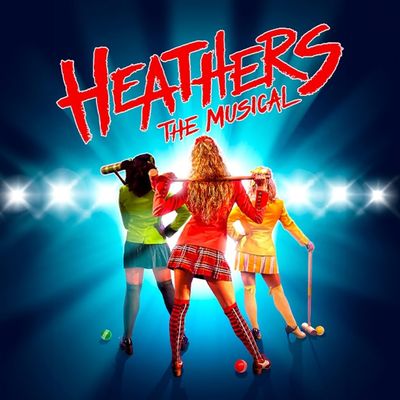
Hate 'em or secretly wanna be 'em, this week we're talking about the HEATHERS with special guest and original cast member Rachel Flynn. Join us for a conversation about this dark and satirical take on the high school experience with plenty of laughs and brains to accompany all the murder... Read More
From the show: A Musical Theatre Podcast
Featured Shows
About
Hate 'em or secretly wanna be 'em, this week we're talking about the HEATHERS with special guest and original cast member Rachel Flynn. Join us for a conversation about this dark and satirical take on the high school experience with plenty of laughs and brains to accompany all the murder.
You can learn more about Rachel and her career on Instagram and Twitter @radiofreerachel
Follow "A Musical Theatre Podcast" wherever you may be listening and share us with your friends!
Join us on Instagram, TikTok and X for more great content. For bonus episodes, subscribe to PATREON! for only $1 a month. And don't forget about our TeePublic Store, our proceeds from which we donate to Broadway Cares/Equity Fights AIDS.
Above all, thank you for being part of this wonderful podcasting community.
Transcript
This transcript was automatically generated and might contain errors.
[0:00] Jeffrey Scott Parsons: Is it just me, or have we suddenly become obsessed with high school in musical theater? Just within the past 10 years, we've had Mean Girls, Heathers, Clueless. There was a Clueless musical. Jawbreaker Musical was going around for a little bit. Freaky Friday was in high school. Dear Evan Hansen, thank you. What's going on?
[0:24] Rachel Flynn: What's going on is amazing. I love this question. Yes, we're obsessed. I think that there are a lot of different reasons. It's very funny. My partner, Dustin Sullivan, is also a fantastic actor and also a writer. He's a lyricist. We did not meet on Heathers, but we both did Heathers together in New York very shortly after we initially started dating. We've been together seven years now, which is shocking, but I had said that I was going to go talk about Heathers. It's just a funny thing to revisit. You still feel kind of like a teenager when you're in your 20s doing musical theater in New York. I think a lot of us didn't have the best high school experiences.
[1:08] Jeffrey Scott Parsons: That's a fair point. I think this is probably different now, post-high school musical, post a lot of different things, but I think that the cliché that musical theater people really shine after the high school experience is true. I do think that this is such a fraught emotional time because our brains have not caught up with our hormones, and so we're experiencing everything 500%. There's a huge overlap there for musical theater experience more broadly, because that's when people sing is when they're experiencing things 500%. I do think that there's logic to it, but part of that is because I'm now revisiting this at 33, where I'm like, I have no idea why we don't do so many high school musicals.
I want more musicals about 33-year-old women who have sourdough starters. Why not that? I can't wait for the sourdough musicals that are just going to start flooding the market in about six to eight months. It's going to be extraordinary. That's what Broadway loves, right? We just love female narrative so much. I'm sure it won't take long.
[2:26] Jeffrey Scott Parsons: Welcome everybody to a musical theater podcast where we discuss the cultural and emotional impact of some of our favorite musicals in theater history. My name is Jeffrey Scott Parsons. You can call me Jeff. Today we are talking Heathers. To join me in this conversation is Miss Rachel Flynn.
[2:46] Rachel Flynn: Hi.
[2:47] Jeffrey Scott Parsons: Hi, Rachel. How's it going? I'm so glad to be here.
[2:49] Rachel Flynn: I'm so grateful that you are here, because to be totally honest, this show is not my jam.
[2:58] Rachel Flynn: I love that so much. What a good setup for an interview. I love that. You know the piece incredibly well, because you were a part of it from very early stages, at least in terms of Los Angeles and New York.
[3:14] Rachel Flynn: Yeah, I initially heard about the piece because I was doing some early demo work for Lawrence O'Keefe and Kevin Murphy, who wrote it. Occasionally one of the ways that I get to play around with craft and also make a little bit of money is doing demos and readings and things for Larry and for Kevin at this point. So I was doing some demos on the first couple songs that came out, and then they ended up doing their out-of-town workshop production in Los Angeles. And I got tapped to go out and join the ensemble of that, which was very exciting. And after that production closed, I came back and about six months later, re-auditioned. All of us re-auditioned, I believe. Maybe Barrett did not, and Katie, I don't recall, but joined the Off-Broadway cast.
And yeah, that was the majority of the time that I got to spend on the piece, was rehearsing it in New York and then performing it in New York through the end of that summer. It was like a six-month run. It wasn't crazy long.
[4:21] Jeffrey Scott Parsons: Oh, really? Was it only six months? Wait, I'm literally, I'm going to shout out to my partner who's in the other room. Dust! When did we open, Heathers?
[4:33] Rachel Flynn: Yeah, it was like the end of March we went into previews, middle of March, end of March we went into previews, and then we closed by August. Yeah.
[4:42] Jeffrey Scott Parsons: That is so surprising to me. So it wasn't even that long of an Off-Broadway run. And yet, Rachel, this is the thing. I go and do presentations in a lot of different high schools here in Los Angeles as part of a group that I'm a member of called Musical Theater Guild. Anyway, these high schools will sometimes have drama programs. Sometimes they have zero art programs. It's just how LA Unified is structured, where you can have an arts magnet school and then literally a mile and a half away, people who have never heard of a musical. And what's interesting is in every classroom I go to, and I'm talking about the art form and asking for examples of musicals they may know, there's always at least one student who brings up Heathers, which is crazy.
[5:31] Rachel Flynn: It is crazy.
[5:32] Jeffrey Scott Parsons: Isn't that insane? The fact that these kids in high schools that have zero exposure to the arts somehow have found Heathers the musical, which didn't have a very successful Off-Broadway run.
[5:47] Rachel Flynn: No. Yeah, 100%. Especially if you're talking, well, I guess it depends how you're defining successful for just that reason, right? Financially, no, I would imagine not, although I wasn't in on the books, because it's a very big musical. I think there were 19 of us in the cast, including two swings. Two swings. We had a swing, a male swing and a female swing off stage, and that was the only coverage. Terrifying. Everybody stay healthy. Literally.
[6:15] Rachel Flynn: Yeah, everybody stay healthy. We have some great stories about split tracks and fun that we had throughout the run, but it was truly, truly a blast. Crazy, crazy, crazy. And so many of us were so young. It was a very young cast. I was 25 or 26 and I was one of the older members of the cast by a lot. And of course there were some really amazing mainstays. We had Tony Crivello was in the cast. We had the extraordinary Dan Cooney, the unbelievable Michelle Duffy, who I will talk about for the rest of my life. Just like incredible performers who really knew what they were doing. And then like the rest of us, many of whom had never done eight a week in New York before. And we got to do so many of the things that I associate with like, oh my God, a show in New York.
We got to sing in Broadway and Bryant Park, and we rang the NASDAQ bell. We were doing all the like press. So all the stuff that makes, you know, we had a big opening night party in Midtown, all the stuff that makes you feel like, oh my God, like those were like, wow. I'm a New York actor. I'm a New York performer.
[7:16] Rachel Flynn: Yeah, yeah, yeah. Very exciting. The subway ads were the day that I was like, oh my God, those monochrome skirts, they're on the subway. I was so excited. They weren't even my skirt. It was a cartoon. But so yeah, from a financial perspective, it was like this huge unwieldy thing, but it left an impression, you know what I mean? This cult following, which is very apropos, I think, for the Heathers franchise. I hate saying brand, but like the Heathers, like the core of Heathers is this idea that like people fall in love with this very special little idea and then share it with others. And then that, of course, sort of belated in the process, but put out this cast album, and that came out right around the time that we announced closing.
So all of a sudden, we were in this very, we were sort of in this weird position where we announced closing, and then we started selling out because people started listening to the soundtrack. But of course, people had other jobs. So we eventually closed. But then it, you know, it created this licensed high school version, then the West End cast, you know, that it's had this additional life is very thrilling, I think, because it's a great story. And it deserves to have this continued life.
[8:39] Jeffrey Scott Parsons: Speaking of the Heathers brand. So let's go back in time to 1989, which is when the film came out, right?
[8:45] Rachel Flynn: Yes, it was written by Daniel Waters. And from what I understand, he, you know, during the 80s, we had all of the John Hughes films, 16 Candles, Pretty in Pink, Breakfast Club, all of those films that are exploring human pathos through high school through the high school experience. And while Heathers is certainly not a parody of those films, it is definitely using high school to create a satire and criticism of some of those pathos in the John Hughes films. From what I understand, Daniel Waters was so intent on creating this satirical masterpiece that he had wanted Stanley Kubrick to direct Heathers. When you think about that, poor Kubrick passed away before he was able to direct Heathers.
[9:41] Rachel Flynn: Yes, that's, that's the reason it's a tragedy.
[9:48] Jeffrey Scott Parsons: Yeah, that's exactly, exactly. But I wanted to take a second, specifically, since you're a dramaturg and talk about the differences between satire and parody, because I think we use them interchangeably, and they're actually qualitatively different. From what I understand, parody is exaggerating a specific writing style or genre for the purpose of comedy, whereas satire is using exaggeration as a form of criticism.
[10:17] Rachel Flynn: Yeah. Where do you think Heathers lives?
[10:24] Rachel Flynn: Heathers is satire for me, and I cannot speak for the writers, but I think that they would agree to that. And I do think that one of the dangers in the high school musical genre is parody, because I think parody requires that you throw the thing you are discussing under the bus for the purposes of comedy, and I think sometimes that's of value and super fun. But I don't think Heathers would work if you threw Heathers the movie under the bus. I would certainly not enjoy that story, because I think it has an important story to tell. And I don't think you get to that by saying, aren't these people dumbasses? Which is, I do think, at its heart, at least a piece of what parody does. So I think it's firmly in the land of satire, for me. I don't know. Do you think that it has more parody in it than I'm giving it credit for?
[11:13] Jeffrey Scott Parsons: No, not at all, especially the film. I think the film is strictly satirical, if for no other reason than sometimes satire leaves character development out the window as a trade for harsher criticism. We have one goal in mind, and so there are people in Heathers the film that don't act like human beings.
[11:28] Rachel Flynn: Yeah, well, they can't.
[11:32] Rachel Flynn: Yeah, they're too busy being in a shadow play, right?
[11:38] Jeffrey Scott Parsons: Yeah, right, right, exactly. Whereas, and I think this then speaks to the power of musical theatre, that when you add music and people expressing themselves through music to a story, it inevitably reveals more emotionality and more depth of character. And so, Heathers as a musical is less satirical, for sure. I also think it's really difficult to do satire as musical theatre because you can fall into the trap of parodying musical theatre in order to do it.
[12:08] Rachel Flynn: Yes, which, you know, has its own place in the pantheon. I don't particularly find it very interesting. I don't find, like, send-up of the concept of musical theatre. Yeah, I just, it doesn't hit me where I live, right? There's nothing resonant. I, like, love a cultural touchstone as much as anybody else, but, like, I love musical theatre for the purpose of storytelling. I didn't grow up on it in the way that maybe a lot of other practitioners do, and that's to my detriment. I really, like, I've had to spend a lot of time catching up as a result and falling in love with things that a lot of people already showed up in New York knowing.
[12:42] Rachel Flynn: So, I think that for the purposes of functionality, you can't have a character sing something they have no emotional interest in for very long without the audience being bored to tears or pissed off.
[13:01] Jeffrey Scott Parsons: Completely turned off, absolutely.
[13:06] Rachel Flynn: Yeah, there's no point in a character opening their mouth to sing about something they don't care about. You can't do it. You can't buy it. Audiences don't want it. People don't want it. It doesn't make any sense. Nobody would do that. So, if you're going to put a villain on stage, they need to have a want. They need to have a desire and a thing to do.
[13:21] Rachel Flynn: All of a sudden, there's dimension there.
[13:24] Jeffrey Scott Parsons: Amen. Amen. I totally agree. I love talking with you. This makes me happy.
[13:29] Rachel Flynn: Oh, I'm so glad. This is fun.
[13:31] Jeffrey Scott Parsons: So the musical has music written by Lawrence O'Keefe, and who you know very well. I will say, as someone who doesn't know him, that what he does, like, talk about making a hat where there was not a hat. He makes musicals out of things I would think would never need to be musicalized. Every single project that he comes out with, Night of the Hunter, Bat Boy, Legally Blonde, Heathers, I wouldn't have considered any of those to be ripe for musicalization. And yet, he gets his hands on them and honestly changes my mind in every case.
[14:04] Rachel Flynn: Oh, I am so glad to hear that because I agree with it so wholeheartedly. And I would double that praise for Kevin Murphy, who wrote it with him, because I think the two of them are such really extraordinary writers of really rare thoughtfulness. And that's what I think enables them to do that.
[14:24] Jeffrey Scott Parsons: That's so great. Now, Kevin Murphy, who did the lyrics and book, also did Reefer Madness. I also know that Kevin Murphy was head writer on Desperate Housewives, I believe, which is very cool.
[14:36] Rachel Flynn: And this son on AMC, like he's a really extraordinary writer. Yeah, very cool TV writer. I mean, between Heathers, Desperate Housewives, and Reefer Madness, he has been around the block in terms of satire.
[14:52] Jeffrey Scott Parsons: Yeah, yeah, he's familiar with the genre. Yeah, absolutely. I think that they both did a beautiful job in it. And I think that they really thought themselves into something very interesting with Heathers. They've all heard me talk about this, so I don't think it's a huge shock. But I also think that there's something very interesting about when Heathers happened, because it was six years ago, at this point, maybe a little six years ago, at this point, that's changed even between now and then, where, and I'm going to walk a careful line on this one, because I mean no disrespect to the process. But even in those six years, I don't think now you would have a show on Broadway or off Broadway, about a group of teen girls or women, with no women involved in the writing of the show.
And I think that's a very good thing. And I think that they think it's a very good thing. But it was a slightly different time with that representation. And they had been involved in this process for a long time, Dan can write what he wants to write about, and he did. So it was truly one of those things where this group of people came together, and it just so happened that they were all white men. But there's something very interesting in about two things. One, that usually pisses me off to an extraordinary degree. And I do think it's something that we have a real responsibility for, where we are in theater right now, to fight at all levels at all times, because it won't change accidentally.
And I am very thankful for being a part of that process, because I do feel that while I hope that future projects about women get women involved, I feel very thankful for their thoughtfulness and their ability to think themselves into women characters so fully, because I do feel that the characters in that show were created in a way that made me feel not angry. I think Larry and Kevin thought about Veronica and thought about these women as humans. And that doesn't always happen on all male creative teams. So I'm thankful, given all of that, that they did so as thoughtfully as they were capable of.
[16:54] Jeffrey Scott Parsons: Well, otherwise, you know, Martha Dumptruck becomes a sight gag.
[16:57] Rachel Flynn: Exactly. Yeah, 100%. That's awesome. Let's go ahead and go through the show a little bit. Is that all right with you?
[17:05] Jeffrey Scott Parsons: Oh, for sure. So the musical begins with 17-year-old Veronica Sawyer. She's got a head on her. She's emotionally evolved, but she's also a teenager with lots of feelings. And I haven't seen the show in the original staging. Is she writing in a journal? Because she certainly is talking as though she is.
[17:26] Rachel Flynn: Yeah, she is. It's the device that lets us into where her thought process is and also where her moral compass is pointing, because it spins so wildly throughout the show. Yeah, but she starts in a spot September 1st. And her best friend since, say, elementary school is this girl named Martha, right? Who is kind of a piranha. Is that the word?
[17:49] Jeffrey Scott Parsons: A pariah, but I do that all the time.
[17:57] Rachel Flynn: I do it all of the time. That's the most embarrassing thing ever.
[18:01] Jeffrey Scott Parsons: No, are you kidding me? That is enough to turn me into a pariah. So yeah, she's a cannibalistic fish. In many ways, all of us were piranhas in high school, so, you know.
[18:18] Rachel Flynn: Amen. Which, I guess, actually leads me to this question. Thank you. What was your high school experience like?
[18:22] Jeffrey Scott Parsons: Oh, sure. I loved school. I loved school. Shocker. I loved to read. Yeah, yeah. I loved to read. I would not call myself popular or cool, but I don't remember being, you know, ostracized. I was pretty weird. I do remember being pretty bored because my high school wasn't particularly, the curriculum wasn't particularly rigorous. So while I loved academics, I wasn't doing very much schoolwork most of the time, so mostly I just wandered around, like, in chorus and voice studio and theater class and the musical rehearsal and, like, not much else. Like, I remember wandering around that wing of the school for, like, many hours a day. But I wouldn't call it, like, my happiest time in the world, but it was fine.
My high school experience was kind of painless, and I think it's one of the reasons why this musical is not my jam is because right out of the gate, we have Veronica painting the picture of this science experiment of social nature where her best friend is, you know, horribly bullied by these jocks named Ram and Kurt, and kind of the rulers of the school are the three Heathers who are the, you know, the namesakes of the show. You have, help me out, you have Heather McNamara, and she's like, she's kind of like a sheep.
[19:44] Rachel Flynn: Yeah, yeah, sweet little sheep. Heather Duke is sort of like the scheming Iago number two, who, like, has no mind of her own and kind of spineless. And then you've got Heather Chandler, the musical calls her the Almighty, you know, so she's this, like, alpha, she's the Regina George analog of the Heathers story.
[20:01] Jeffrey Scott Parsons: Yeah, the, like, most beautiful, most rich, most popular. What do you think the biggest differences are between Heathers and Mean Girls?
[20:16] Rachel Flynn: I don't think the differences are qualitative. I think that there are, I think that the significant differences for me are our thesis statements. Like, I think they have very different and it is funny, I used to know this better right after Heathers, but there is a family connection between Mark Waters, who directed, wrote, not wrote, that's Daniel Waters. Well, so Dan Waters wrote Heathers, Mark, his brother, I believe, either directed or produced Mean Girls.
[20:50] Jeffrey Scott Parsons: Wait, what?
[20:51] Rachel Flynn: Yeah, I'm gonna not fuck this up on your, oh, sorry, can I drop an F-bomb on your podcast? I apologize.
[20:56] Jeffrey Scott Parsons: Yeah, no, I mean, Heathers is pretty adult, it's gonna get the E.
[21:00] Rachel Flynn: Yeah, fair enough, fair enough, fair enough. That kind of blows my mind, I had no idea.
[21:06] Jeffrey Scott Parsons: Yeah, he directs, so Mark Waters directed Mean Girls, and he's the brother of Dan Waters, who wrote Heathers.
[21:11] Rachel Flynn: Wrote Heathers.
[21:13] Jeffrey Scott Parsons: Yeah, yeah, yeah. So, obviously, there's a lot of, there are common threads, but with Mean Girls, you get a little bit more of, you know, it was more mainstream, I think, for a reason. I do think it has, like, a lens of optimism over a lot of it, whereas with Heathers, you get this, it's incredibly dark, you're killing children throughout it, but Mean Girls doesn't live in a land of satire in the same way, in the same world at all.
[21:43] Rachel Flynn: Now, within this whole opening number, which is called Beautiful, we not only meet everybody, but we actually go through the process of Veronica being taken in by the three Heathers and made popular, and that is because she's really good at forging people's handwriting or signatures, and so she gets them out of, like, this detention thing, and they're like, all right, you're one of us now.
[22:07] Jeffrey Scott Parsons: One of the other clear things that happens is, like, oh, she's taken in because she's good at forging signatures, and it's like, yes, and that's what's on the page in the musical, but also it's because she's secretly hot. It's because she's, like, it's insane to me that these are, like, subtextual in musical theater, and that's why gender, I think, representation is so important, is, like, this idea that it's like, oh, she can get us out of trouble. It's like, yeah, that's great, but she's also skinny and hot, and when you take away her monocle and her bad clothes, they realize they might have a fourth skinny hot girl. That's why Katie Heron gets into the Mean Girls. That's what happens, right?
They find a secret skinny hot person and put better clothes on her. If Martha Dunstock could forge signatures, that's the end of the musical. They say thanks for the forge signature, and it's the end of the musical, right? And that, to me, feels like an incredibly resonant and important part of the story, right? Is, like, they also notice that she has incredibly good bone structure.
[23:09] Rachel Flynn: Yeah. Everybody loves a makeover, including the three Heathers, and they're like, oh, wait, let's do her hair and curl those eyelashes and look what we made.
[23:27] Jeffrey Scott Parsons: Yeah, and you know, you know, you know, this could be beautiful mascara, maybe some lip gloss, and we're on our way. So all of that is great, but if she had been an unfortunate looking girl with braces at 16, as so many of us are, and they put mascara and lip gloss on her, she still wouldn't have been a Heather afterwards. And I do think that that sort of aesthetics, that conversation of aesthetics, is really important for this musical, right? It's like, that's a deep value in the hierarchy of the school system.
[23:53] Rachel Flynn: Well, and that's so true, because throughout, I mean, a good portion of this musical is Veronica's sexual awakening, and being attracted to, you know, this guy who may or may not be a psychopath. And would that have come about if she wasn't the hot girl now?
[24:13] Jeffrey Scott Parsons: Sure. And would it have come about if the guy quoting, you know, Nietzsche, or whatever, I forget what he's quoting, but he's quoting something that, Balzac, I don't remember what, but like, something highfalutin, like, is that as effective if like, the dude quoting, like, shitty nihilism in the trench coat isn't also like, smoking hot?
[24:33] Rachel Flynn: Kinda hot.
[24:34] Jeffrey Scott Parsons: Right? Yeah, yeah, yeah. And I do think that those things are, you know, they fluctuate, they're relative, but they're also very important to this story, right? It's like, these two hot people. And it was an interesting conversation, I think, with casting, I would imagine, but like, that's true in musical theater, no matter what, right? We do idealized versions of the stories that we're telling. And lots of people who go into theater, partially got into theater, because they're like, a good looking human who can like, make a living being good looking on stage. And while Ryan McCartan and Barrett Wilbur Weed are more than just good looking on stage, they're two of the strongest actors and singers that I've ever gotten to work with.
They're also, you know, really statuesque. They're both tall and thin. And like, there's this like, really idealized version of like, yeah, they're also dark, like they get to be both. That's why I think it's so funny. I'm fully tangenting. But like, it is why I think it's so funny that Dan Waters, who, you know, I didn't get to know super well in this process. So I hope he won't be offended by this. But like, talk so much about this being a response to the John Hughes movies, because like, Winona Ryder and Christian Slater are not ugly ducklings. Like, yeah, maybe they're weird. And one of them is a psychopath. And one of them has a monocle. But like, they're hot people. They're hot, skinny people who get to be dark at the same time.
[26:14] Rachel Flynn: Do you know that when Winona went into her audition, and they didn't think that she could pull off the whole Heather's thing. So then she went to the mall and full on got a makeover at, you know, Top Clips or whatever it was called in 1989. And then went back to the audition to prove like, she wasn't just the Beetlejuice girl, she could also be super, super pretty.
[26:30] Jeffrey Scott Parsons: Couldn't she write an entire thesis about the aesthetics of that story? Like, like, she's also like, it's not like her natural bone structure was unfortunate, right? She's a beautiful woman. So the idea that we think of popularity and that aesthetic, that sense of beauty as being very separate. Yeah, it's interesting to me, because I'm not sure it totally is. But yeah, that's fabulous. That's fantastic. I honestly don't want to talk too much about the differences between the film and the musical. But here's one that is interesting, since we're talking about.
[26:43] Rachel Flynn: You know, this opening. In the film, Veronica is already friends with the Heathers. We don't see any sort of journey as to how she became one of the group. Why do you think they inserted that into the stage version? I think that you need to, and again, I'm speaking dramaturgically on a process that I wasn't involved creatively on. I was, you know, creatively in the show, but it's much easier to like a Veronica when we see her make the decision to sell her soul to the devil. You know, this moment of decision making, but also recognizing what she came from, where that need was. If only I was X, Y, Z, they would leave me alone and I could eventually just keep my head down and go to college. So if we see her being truly weird, truly monocle, very strange clothing, like quoting very strange kind of verse like things.
If we see her trying desperately to claw out of that, we understand why she's making this kind of Faustian bargain. Yeah. I mean, this incredibly complex musical opening, which is a scene. It's not just a musical number. It's a scene. Explains and explores a lot of that, but also lets the audience know this isn't just a vapid piece of theater. We spent some time crafting this puppy.
[28:00] Rachel Flynn: Oh, sure. Yeah. I mean, I think it's very highly structured and that's thrilling. I mean, we love to watch that when it happens, you know, in a Sondheim piece or things like that. And that's the amount of craft that goes into most musicals. But I think that there is a tendency to want to hide the strings a little bit more in contemporary musical theater. And I don't particularly find that I don't think it's required. I don't think it's necessary to have to be like, let's just pretend this came out of a hard space. It's like, no, there's a real craft to songwriting for the stage. And they know how to do it really well. So you can see that set up, which is exciting. The Heathers decide that because they have this new club member who has this great handwriting forging talent, that they're going to use her to humiliate Martha.
And so they make her write a love letter to Martha from one of the jocks named Ram in order to just kind of devastate Martha Dump Truck. Yeah. And this girl being Veronica's, you know, dearest friend, this is definitely a Faustian should I, shouldn't I? They sing, you know, to her promising the candy store, as it were. And she agrees. Right at the top, though, we see that she's already second guessing everything, every piece of involvement with this group. Yeah. And commenting on all of that is the appearance of this new kid named JD. JD seems like, you know, like you said, hot kid who's also wearing a trench coat, which by the way, I just remembered in my high school, there was a kid who wore a trench coat and it smelled terrible because you know, he'd wear all the time. And he would, he would carry around a briefcase and it had Play-Doh in it.
[30:00] Rachel Flynn: 100%. Yeah. With a what? What did he have in it? Play-Doh. Oh, that we didn't have that. That's, that's new. That's, it's an interesting little detail. And now that I think about it, like, he was nice and cool. And I talked to him a couple of times, but now I'm like, that kid is fascinating. And I want to, I want to know, like, what he was doing with the Play-Doh. You know, like, there's just so many questions. Yeah. Well, I want that kid's musical. Thank you. You know, yeah, absolutely. So now JD wins her affections by fighting the jocks, right? Yes. All of a sudden she's attracted to him, not only because he's standing up to the jocks, he's standing up to her for betraying her friend. He seems kind of like this moral compass that she is absolutely lacking because of her new friends.
And, and it's causing all of the Twitter-pated feelings in her hoo-ha. Yeah. Well, and also somebody coming in and being like weird and nihilistic and like, you know, this doesn't matter. And like quoting Marx at you, like when you're 15, like, that's going to be exciting. That's going to be like, even if you're like, that's kind of dark and bad for humanity, like you might be like really psyched about it. In a way you probably wouldn't be at 32, you know?
[31:10] Jeffrey Scott Parsons: Yeah, exactly. Yeah. No, you're, you're, you're totally right. For some reason, I, please, as a woman talk to me, have you ever been really excited when guys get in a fight? Like, like, is that impressive to you at all?
[31:25] Rachel Flynn: Um, no, no, it's not. Um, but I also think that there's something about that moment that is played in parody. The very first couple of lines, why when you see boys fight, does it look so horrible yet? Feels so right. Like is funny, but then it doesn't go into, God, I love their rippling muscles. Cause I will say, I said no multiple times. My favorite movie is the 300. The 300 is my favorite movie in the whole world. And it is mostly a movie watching people oiled up, um, hacking at each other with swords. So there might be something really lovely and satisfying about watching these two guys who never get what's coming to them, get a little of what's coming to them. But the heart of that is not, yeah, beat the crap out of them, baby.
I love watching it. I think the heart of it is like, wow, you're beating the crap out of people who deserve to be taken down a notch. I wonder if you could be a person who would battle demons for me or, or come to my aid. So I think that there's a really lovely quiet moment there couched in this moment of parody of like, Ooh, yeah, baby hit him, you know, like, uh, which I really enjoy.
[32:37] Rachel Flynn: Now everybody's going to this, uh, this homecoming party at, I believe one of the Jock's houses. On the way, they go, is it, this is when stoner chick really shines. I mean, she stoner chick hands the joint in the middle and then goes back to dancing in her combat boots, which for a non-dancer was not my favorite moment because they were very heavy and I'm not a good dancer, but yeah. So my big dance number. Yes. Continue. Fantastic. Before they get there, they stopped by seven 11. Of course, because it's the eighties and boy, oh boy. Did I love a slurpee from seven 11 growing up? Uh, still do not gonna lie. Yeah. Every July 11th, you get a free slurpee. Did you know this? It's incredible.
[33:22] Jeffrey Scott Parsons: I did know that it was part of our marketing, so I knew it very well.
[33:28] Rachel Flynn: Oh yeah. There you go. You said that that PR machine was tight. It's true. You would not believe the free corn nuts I got.
[33:33] Jeffrey Scott Parsons: Really?
[33:33] Rachel Flynn: Oh yeah. Tons of free. Everyone gave us corn nuts at every moment. It was very exciting. And I'm from New England. We don't really do corn nuts. So I was like, what is this? And everyone was very, I don't think anybody really does corn nuts anymore.
[33:46] Jeffrey Scott Parsons: Those in bugles, I feel like have dropped by the wayside.
[33:51] Rachel Flynn: Oh, the bugle. So they're at seven 11 and Veronica sees JD and they're kind of, you know, flirting at the slurpee machine. And I think this is one of, one of my two favorite moments of satire in, in the piece, which is he sings about quieting your pain, right? Which, you know, bear, what does that show bear a something opera, a pop opera, a pop opera. Thank you. Like they deal with actual cutting as being like a way to escape from your feelings. And I know that that's a real thing. And I know that people suffer from it. However, this musical uses the number freeze your brain, which is drinking slurpees as fast as you can. And then you get a brain freeze and like that being this tormented, beautiful experience as a teenager.
I love it so much. And it actually is also emotionally resonant for the characters. It's really great. It's really great writing. Beautiful writing. Some of those lyrics are just, I also love a lot of that song for me lives in a place of, um, the setup talks about the fact that he's moved a lot, but there's a seven 11 everywhere. And that is extraordinary. That's a wonderful examination of trauma, right? Like this kid has had a traumatic youth and everywhere he goes, he knows where to go to numb his pain, right? To distract himself from existential pain with temporary physical pain.
[35:22] Jeffrey Scott Parsons: Absolutely.
[35:22] Rachel Flynn: Yeah. And in my opinion, it should always be like three fours, Coca-Cola slurpee within just like a little bit of cherry on top. I wouldn't, this is fascinating to me. I can't imagine somebody ever giving me an option to put soda in something and turning it down, but I recognize the appeal of the cherry. I really do.
[35:41] Jeffrey Scott Parsons: Thank you. I see, I feel seen and heard.
[35:43] Rachel Flynn: So now they're at, uh, the homecoming party and it's this big number called big fun, which is interesting because big fun is the name of the group that had the song about teenage suicide in the eighties.
[36:00] Jeffrey Scott Parsons: Yeah. And in the LA production.
[36:06] Rachel Flynn: Oh, did, was the number in the LA production? Yeah. There was a, uh, was it an assembly? It couldn't have been an assembly. One of our brilliant, brilliant actors, AJ, uh, would get up on stage in like full flock of seagulls wig and sing this song. And it wasn't an assembly because it just ended up being, I think, too hard to navigate what that was for because it's kind of a dance number, but it's an assembly where we're all supposed to not think it's cool. So what ended up happening is everyone on stage would be like, like doing their best high school sneers of like, dude, this is stupid. And then partway through being like, I love the beat though. And doing like a whole dance. And then at the end being like, but whatever, that was stupid. So it just like didn't, unfortunately it didn't work. Um, like within the context of the entirety, which was such a bummer because the moment itself was played so beautifully.
[36:54] Rachel Flynn: Now this whole, you know, it's one of those teenage parties that didn't exist where I come from where everybody gets drunk and high. And I believe it culminates with Veronica puking on Chandler. Yep. Yeah. Now that means of course that you've pissed off the queen bee and she's going to ruin your reputation forever, which now means for Veronica, she has been mean to her childhood friend for nothing because by aligning herself with these girls, she's still going to have this terrible reputation. Uh, she's upset. And so she runs to JD and sings this song dead girl walking, which is really explicit. I love this song. This musical moment makes so much sense to me because there is something very 16 year old to me about like everything in my life is wrong.
I better have sex about it. Like there's something so hormonal where your brain is so deeply crosswired and bad at problem solving and stress management that your brain is going fritzing. And then it's like, your brain's like, Oh, you probably need sex, you know? And it's like, that's wrong and bad. And I'm feeling brave and I'm drunk. Like, yeah, a hundred percent. And then it's very explicit. You're absolutely right. Now, did they change the lyrics for the, the high school version that has come out since? Because like, you can't do that in high school.
[38:21] Rachel Flynn: Uh, I think they still hook up. I don't know what the staging looks like. Are there any, am I being terrible? What are the explicit lyrics? Oh no. Yeah. I guess there are a lot of explicit lyrics in the song. Um, my major, I'm hot and pissed and on the pill, such a good lyric. That is a great lyric though. I'm hot and pissed on the pill bow down to the will of a dead girl. Walking is like, that's a good lyric. Good job. Um, my favorite memory, and I've told this story, but, um, what truly one of my favorite memories of the show is it was, you know, a very off Broadway space and we didn't have a ton of room backstage. And at the end of that number, as Veronica and JDR dozing, Veronica has a stress stream where Heather Chandler is like talking to her and it's like, and now you're having sex with this guy.
Like, I'm going to ruin you. And the stress dream in the off Broadway version was facilitated by the rest of the cast, like rising up behind them in choir robes and 3D glasses singing ominously, like, Ooh, behind them. But because there wasn't a lot of space, it meant that we all had to crawl into a crawl space, like 16 of us crawl into a space. And so when we crawled in, we had to like have our choir robes and our glasses on, um, our like 3D glasses. So you couldn't see anything. And we were directly behind and next to where the two of them were having sex, belting their faces off. So we were inches from them for the entire song, just messing with them as much as we could. It was just a ridiculous, just one of my favorite memories of just like 16 grown adults watching two other.
[40:04] Rachel Flynn: Having sex, pressed into each other in a little cubby hole, waiting to like slowly rise to our feet in like a creepy red queue. Just magic of theatre. When else are you going to do that? Never again. And I got paid for it! What a good job. I love theatre. So good.
[40:22] Jeffrey Scott Parsons: That's amazing.
[40:23] Rachel Flynn: So yes, shouldn't they have sex explicitly? After it all. Explicitly. As opposed to the other kinds of sex, which is very not explicit.
[40:31] Jeffrey Scott Parsons: Yeah, yes. Very, very.
[40:33] Rachel Flynn: The next day, Veronica decides to go and apologize to Chandler for puking on her shoes. JD goes with her, and they start making this like hangover elixir for her. And I don't know why JD would think this is funny, but he puts a toxic Drano cleaner in his mug. Now, like, how is he selling this to her? Because we know he's a psychopath. But how is he selling it to her?
[41:01] Jeffrey Scott Parsons: She's basically creating this prairie oyster, which is apparently a thing. Maybe that was before my time. I have no idea. But this like gross hangover elixir in Chandler's kitchen while Chandler's like lounging in her bedroom. And because JD is there, kind of as a bit, but kind of just to be like provocative. Maybe he pulls out the Drano and he's like, look, like you could give her this. And Veronica basically is like, all right, funny, funny. Shut up. Like, it's not funny. We're not like she's an asshole. We're not going to kill her.
[41:34] Rachel Flynn: And then Veronica turns to bring the elixir up to Heather and grabs the wrong mug. OK, and so he did put it into one mug and then she just accidentally took the wrong one. And then right as she's leaving, he goes, Veronica. And she goes, what? He goes, nothing. And so she makes the mistake. And then he because he's like, you know, a trauma human who makes a very bad decision. You can see him playing with like what's allowed, what's acceptable. And so Veronica doesn't know she's poisoning another human.
[42:10] Jeffrey Scott Parsons: Right. JD does and kind of like wants to play the tape to the end. And after she's dead, after she drinks it and dies, JD goes into this manipulative emotional campaign right off the bat of like she was evil anyway. She was terrible. We did. Yeah. Maybe we did more net positive, net good here than that bad. And it's not all that different than him beating up the jocks. If we're being totally honest. Right. I mean, yes, it is very different because someone died instead of not. In his brain, morally, it's not different.
[42:36] Rachel Flynn: Yeah, exactly. Exactly. Yeah, absolutely. He's doing something that he starts to think of himself as as God. Yeah. Retributive justice. Right. But also he's looking at through the lens of an immature child's brain and hormones and also is like a cracked, broken psyche from the traumas of his childhood. So like this is not the arbiter of justice we want. Anybody wants even if it worked that way.
[43:01] Jeffrey Scott Parsons: I will say one thing, which is that one of my favorite things in examining what's acceptable and what's not acceptable in musical theater, we would frequently get giant school groups. And this was before anyone knew what Heather's was. Right. So it didn't have the cult following. High school certainly weren't doing it. There was no high school version. It was a very explicit, raunchy musical, even though it wasn't in parody. We got most of our walkouts during dead girl walking and dead gay son, but not when someone was being murdered, not when a child was being murdered.
[43:41] Rachel Flynn: And we would get people who came to talk backs being like, this show is disgusting. It's smut. You have children having sex with children. And never were people like you have children killing children because they were like, well, that's the story. But it was such an interesting experience to see these like theater groups with these teachers who were horrified that there was sex on stage. When to my mind, if we're looking at the moral fabric of the show, teen murder is probably pretty high up on the number of sins. And I'd never failed to crack me up that it was like, all right, I guess you're all leaving during this song about consensual sex. Like, OK, have fun. Wow. Try to try to get into Mamma Mia, I guess, like enjoy New York.
[44:26] Jeffrey Scott Parsons: Well, but people, you know, they process their discomfort different ways. Some people drink slurpees really fast and some people walk out of Heather's.
[44:34] Rachel Flynn: I will say I will say I'm being very broad strokes here. I shouldn't you get to walk.
[44:39] Jeffrey Scott Parsons: No, no, no. But I get it. It's happened to me in shows that I've done full Monty or, you know, even Rent or Cabaret.
[44:49] Rachel Flynn: Oh, which speaking of Prairie Oyster, also in Cabaret.
[44:55] Jeffrey Scott Parsons: Oh, yes, it is. Yes, it is. See, my lack of musical theater knowledge. But see, we're all learning. I'm learning so much from you.
[45:01] Rachel Flynn: That means so Chandler's dead. Yeah, but not gone because she continues to haunt Veronica throughout the rest of the show. In order to cover things up, here comes her handy dandy handwriting skills again. She writes a suicide letter from Chandler's perspective and saying that the only reason she was mean was because she was so deeply unhappy. And so she had she drank, you know, this to kill herself and which then, I mean, makes her even more popular than she ever was because she's this like sacrificial lamb.
[45:34] Jeffrey Scott Parsons: After that, tell me if I'm wrong. It seems like everybody gets over these deaths real quick.
[45:41] Rachel Flynn: Mm hmm. Yes. Musical theater. What do you want? Yeah, sure. If we did the whole show in mourning, it would be a very different, I think, tonal experience for sure.
[45:53] Jeffrey Scott Parsons: Fair enough. But also it plays to the satire of it, which is that everybody, every time somebody dies in the show, everyone makes it about themselves. And which all it does is prove that this society is filled with people who are only looking out for themselves. So now Veronica goes to hang out with one of the other heathers. I forget which one it is. Is it both of them?
[46:17] Rachel Flynn: It's both in the graveyard. Yes. Yes. They're both in the graveyard. So the other two heathers are hanging out with the two jocks. The jocks are essentially trying to sexually assault them, right?
[46:29] Jeffrey Scott Parsons: Yeah. Not even essentially just trying to sexually assault them. Uh huh. Wow. And does that happen before or after the blue song?
[46:35] Rachel Flynn: That is the blue song.
[46:38] Jeffrey Scott Parsons: So the blue song, which is a comedy song, is sexual assault. Is that a fair assessment?
[46:45] Rachel Flynn: Yeah. And I'm really glad you brought it up. So a couple of thoughts. One, it played really well. So who am I to say? People would either leave and be like, that blue song, or they'd be like, oh my God, you know what made me laugh so much. And you'd be like, all right, theater man. Two, the song blue has been replaced in the show.
[47:06] Jeffrey Scott Parsons: Oh, interesting.
[47:08] Rachel Flynn: It was initially replaced for the high school version, which makes good sense to me because it's literally about blue balls. And that's tough to do at the, you know, Paramus High School spring musical.
[47:18] Jeffrey Scott Parsons: Fair enough. But the thing that it was replaced by is still very much about a sexual assault and is less funny. And I think that is great. What is the name of the song? I think it's called You're Welcome. I did demos for it after or before the high school version. And the reason that she winds up in the graveyard is they call and say, we need you, please come help us. And when she shows up, they say, well, we promised them if we could get you here that they promised that they would leave us alone.
[47:46] Rachel Flynn: So basically they say, like, we're going to leave and we promised that they couldn't sexually assault you.
[47:51] Jeffrey Scott Parsons: Oh, my gosh.
[47:53] Rachel Flynn: Yeah. Which is horrible. Surprise. And the new song, it used to be like, you can't leave me here because my balls are too blue and you're too tall. And that used to be the joke. Right. And it's like, boop, boop. And that to me is where it lives in parody. And some people really love that because some people love parody. But the new version is called You're Welcome. And the lyrics are something to the effect of we've chosen you. You're hot now. And as a result, you get to have sex with us. You're welcome.
[48:24] Jeffrey Scott Parsons: And so it makes them. It makes them. That's great.
[48:28] Rachel Flynn: Yes, it's great. I'll tell you what else it does. Veronica gets to sing and talk in it and gets to plan her way out of getting away from these drunk assholes. So we get to see this wonderful agency from this woman. We get to experience the very real scary threat that she's under. And we get to see her triumph and get out of that scary situation. I'll tell you what else. They're less lovable. Because the next thing you're going to go through in the script is we're about to kill these two. Spoiler.
[49:06] Jeffrey Scott Parsons: Yeah.
[49:08] Rachel Flynn: If you kill two lovable people who in a very 1980s way are technically singing about sexual assault, but really they're just singing about their poor blue balls. We think like, oh, these dumb little high school boys, boop, boop, boop. And then boys will be boys. Right. Right. Right. But when you really peel off that layer, that veneer of this doesn't really matter. It's not really assault. This sort of Brett Kavanaugh esque-ness of like we were all just drunk having fun. And you have to look at it as an attempted assault. It's still an immoral act. You shouldn't kill people. But we understand the through line of Veronica now going to JD immediately afterwards and saying they hurt me and I want to hurt them. This more premeditated act of she doesn't say I want to hurt them, but she wants to scare them and he wants to kill them.
[49:46] Jeffrey Scott Parsons: And I think that through line works better narratively, but also I don't think that if you have a sexual assault on stage in the year of Our Lord 2020, it should be just a joke. You can make as many jokes as you want, but it has to be in service of something else. And so I think that there's a really incredible shift on their part. I also think that tonally, it takes it back more to satire, to be honest, because by forcing us to look at the situation for what it is, boy, that's confronting.
[50:14] Rachel Flynn: Uh-huh. And I'll tell you what else I think the satire for me lives in. This is one of the perks. You became a Heather and one of the perks now is sex with me. Right? Like the horror is this is what you wanted, babe. Like this is one of the good parts. And that's satire. That's that. And because it's also still really horrifying. And it's incredibly challenging and very, a very nuanced line to try and figure out. And I'm glad they didn't stop trying to find where that is.
[50:45] Jeffrey Scott Parsons: Yeah, that's really pretty awesome to me that they didn't.
[50:49] Rachel Flynn: They could have just said, like, this is a hit now, like we're keeping it. And they did it. And I think that's really cool.
[50:56] Jeffrey Scott Parsons: Agreed. So because of this whole horrible situation, Veronica gives them more and more alcohol until they pass out and she escapes. However, she doesn't actually escape because the next day when she goes to school, they have told everyone that they basically tag teamed her. And she did everything that she actually escaped from, which, of course, pisses her off.
[51:17] Rachel Flynn: It pisses me off. She tells J.D. that and they decide to get revenge. And the revenge is she is going to lure them into the cemetery and say, hey, like, I didn't realize like that was what you wanted to do. Now that I hear about it, that's always been one of my fantasies. Let's let's do it. I actually want to do it. And then while they're there, they'll have them strip off their clothes and then they'll shoot them with tranquilizers. So it looks like they're dead. They'll leave a suicide note confessing their love for each other. They're like gay love that they've been in this relationship. And then by the time they come out of the tranquilizer, the whole school will know and they'll be humiliated and they'll have their revenge. You know, that old prank.
[52:02] Jeffrey Scott Parsons: Because if that wasn't even crazier, J.D. has these tranquilizers from like World War Two from his grandfather. They're called Ich somethings.
[52:10] Rachel Flynn: Ich Luge. And the reason I like that is because he says to her they're called Ich Luge bullets. And Ich Luge is German for I'm lying.
[52:21] Jeffrey Scott Parsons: Is it really?
[52:23] Rachel Flynn: Yeah. Isn't that great?
[52:25] Jeffrey Scott Parsons: That's great. I had no idea.
[52:27] Rachel Flynn: You heard it here on a musical theater podcast. So they go through the prank. It works perfectly except for a surprise. They're not tranquilizers. They're bullets. And now the two jocks are dead. Veronica is horrified. J.D. feels alive and sings this song called Our Love is God, which is a direct line from the movie. And it's how the first act ends.
[52:53] Jeffrey Scott Parsons: Okay, so act two starts.
[52:56] Rachel Flynn: And we're now at the funeral of these two jocks. Now who the entire town thinks were having a gay love affair and killed themselves because of homophobia. This leads Tony winner Anthony Crivello to sing a song. Now the surprise in this number is that the jocks dads have also been having like some weird Brokeback Mountain relationship as well.
[53:26] Rachel Flynn: I think that the surprise for the entirety of the song is that they are supportive, and I like that piece of it very much. I like that the idea is that they are imperfectly supportive, that you expect this to be about deep shame, but actually it's about how proud and full of love these two are for their sons. And then it does have the moment at the end where the reveal is they're supportive because they're also having a gay affair. What was your experience of that as a person watching and listening to it?
[53:59] Jeffrey Scott Parsons: Uh, no me gusta?
[54:01] Rachel Flynn: Yeah, sure, sure, sure. In what way? Can you talk about that a little bit?
[54:06] Jeffrey Scott Parsons: Yeah, I couldn't tell. Once again, so much of the show is in terms of tone for me. I didn't understand the tone of at a funeral going into this revivalist type song. It felt a little too much like we needed an upbeat number to start the second act.
[54:23] Rachel Flynn: Yeah, I don't disagree with that. I don't even mind the moment. I think you have a couple of things here. One of them is it's an incredibly famous moment from the movie, which is the line itself, "I love my dead gay son," is shouted at the funeral. And that moment itself is surprising because I think the joke is, oh, really wasn't expecting him to say how much he loved his son. The joke is about our expectations of bigotry. The joke is not about homosexuality in the movie.
[54:53] Jeffrey Scott Parsons: Yeah, the musicalized version doesn't always stay in that place. Some of the joke becomes don't be bigoted because you might be gay. Hard to tell. I don't know totally what that was. And I also think like it gets to live that that number lives a little bit more in parody land for me.
[55:09] Rachel Flynn: Yeah, me too. And I think I, as a queer cast member, I think I had some awareness of what that was while it was happening. And similar to Blue, people would either audiences loved it, loved it. And listen, of course, Tony Crivello is extraordinary. Dan Cooney playing the other dad extraordinary, fun and silly and revivalist. People love that tone. People love that sound. People love that idea. It seems joyful. And I think it is joyful in a lot of ways. And I do believe that the writing of it was done joyfully.
[55:47] Jeffrey Scott Parsons: Yeah. And so great. I do wonder if this number would have been written differently in 2000 and now even versus when it was written, which was probably in like the 2010s, right? Early 2010s.
[56:01] Rachel Flynn: Right. Because I do think it was done joyfully.
[56:08] Jeffrey Scott Parsons: Yeah. Yeah. No, for sure. And I do love I do love it in the movie as well. And especially when you think of 1989 and the AIDS crisis and what's going on at that point. And yeah, but that whole funeral scene in the movie is really immaculately done because you're both talking about the gay situation for the father. And then at the same time, you see how the teenagers couldn't care less.
[56:33] Rachel Flynn: Yeah. Like they're given equal weight. And I really appreciate that. And you can't and we and you can't do both in the middle of an uptempo musical number.
[56:41] Jeffrey Scott Parsons: Of course. And so they didn't. Yeah. Yeah. Full stop.
[56:46] Rachel Flynn: Larry's gonna kill me for this conversation.
[56:51] Jeffrey Scott Parsons: I hope not. I hope that there's enough like deep love coming through here because I really do think it's an unbelievable score and show. I really do.
[56:56] Rachel Flynn: It is. It is. It is. And I've actually we'll talk about this later on. But like I said, the show hasn't been my jam, but I definitely have taken a big right turn into Appreciation Land. And I can't wait to talk about that. So that's coming up.
[57:12] Rachel Flynn: So after the funeral, you know, JD believes that all of these deaths are for good because, look, now we have one less bigot because he or actually maybe two less bigots because their sons have died and it has allowed them to be truthful about themselves. You have the entire school learning something from Chandler's quote unquote suicide. But Veronica, you know, can't go on with this freaking Bonnie and Clyde lifestyle. So she just pleads and gives him an ultimatum. Give up this murdering stuff or you lose me. And they sing a song called "17," which is my other favorite satire moment in the show because it has all of the huge big emotions of what it means to be an adolescent. Right? Like of that big power ballad moment with their hormones raging and feeling like the stakes are super high and yet the stakes are super high. And then on top of all of that, the sound of the song is actually kind of dark and dangerous and in a subconscious sort of way, letting us know that being 17 is a dangerous thing.
[58:22] Jeffrey Scott Parsons: Oh, yeah. Particularly in this story.
[58:28] Rachel Flynn: Yeah, that's my you hit it right on the head, which is I love this song because it's two people singing a love song, but the stakes are not love me or I'm so joyful. One person singing, I think I know what you mean. I'm having trouble accessing my emotions. And the other singing, please choose me over murder. Like, please, please choose me over not killing. Yeah. Stakes don't get higher than that. And that's beautiful satire. And then the song is such a gorgeous, gorgeous. It is for like childhood. I love that. I love any song that is that complex and beautiful and references also chili fries. Like, yeah, that's the way because that's what being 16 is, you know, and I think that that's 17. I think that's very exciting. Yeah, it's one of there's a reason it's as popular as it is.
[59:15] Rachel Flynn: After the song, they reconcile. Now, let's go ahead and skip to the school where Mrs. Fleming is. She's kind of like a what like a therapeutic type of soul who wants to help all of the teenagers get in touch with their feelings that have come from all of this trauma. And so she went to an ashram.
[59:29] Jeffrey Scott Parsons: Absolutely. So she sings this song called "Shine a Light," urging everybody to shine a light on those fears and insecurities. And what she ends up doing is kind of taking over and allowing herself to shine a light on all of her fears and insecurities. And it's really, really funny. And it is a great moment to show that sometimes we as adults take out all of our stuff on the youth of our society. And how bad we are at providing support for these adolescent issues.
[1:00:03] Rachel Flynn: And I love that. I think one of the most I think it's one of the most successful aspects of satire in the show is how bad parents and teachers are at helping, but also accessing their remembered understanding of what it was like to go through these things like so bad. They compound the problems every time they show up. It's and you're like, yeah, I remember that for sure. Hundred percent. That's true. It's and when you blow it up to this extreme, when you have Veronica's mom saying, look, I know you think that I don't understand what it's like to be you right now, but I do. And we're all sitting in the audience going like, no, you don't. You you super don't. Yeah. She's been killing people. You really don't know. And yet that is something that every parent says and every teenager refutes just because of feelings. And now it's actually true. It's really smart. It's great.
[1:00:57] Jeffrey Scott Parsons: Great. Now, why does McNamara sing "Lifeboat"?
[1:01:04] Rachel Flynn: Because everything we just talked about, about how it like doesn't make sense and it's so stupid and this woman is like not connecting to us is completely untrue for McNamara. McNamara is deeply, deeply moved by this encouragement to shine a light on her fears and pains and makes the ultimate high school faux pas and reveals her own emotional insecurity and emotional underbelly in front of everybody because she's like hypnotically moved by this idea of shining a light on the pain. And she is in pain. So she sings this song, which is my favorite in the show called "Lifeboat," about the experience of isolation and also of this sort of doggy doggedness that like you are constantly about to be destroyed by those around you who are grasping for survival.
And it is so beautifully done, I think. And then Ally McLemore, who originated Heather McNamara, truly, truly one of my favorite performers I've ever gotten to work with. Such a big fan, extraordinary comedian, extraordinary comedian and wonderful actress, great singer, and also the size of a tiny little pixie. She's a full Polly Pocket. So when she shows up in this spotlight in the middle of the stage with her eyes big as saucers, she's shaking like a whippet throughout the whole thing. And you just see that this woman has never, she has never spoken up like this before. It is. Yeah, she's always, she's always been the sheep of the Heathers. And unfortunately, because of this teacher, she's doing it in the worst possible scenario.
[1:03:39] Jeffrey Scott Parsons: Yeah, this is not an entire school. That's so sad. And then she's crucified for it. They immediately make fun of her. The other Heather, the other living Heather, Heather Duke, mocks her and now she's destroyed and wants to die as well, right?
[1:03:58] Rachel Flynn: So she's the first legitimate suicide attempt in the show.
[1:04:01] Jeffrey Scott Parsons: Right. And Veronica is the one who stops her. I can tell you that the pills were popcorn jelly beans. Interesting. You're welcome. I covered Heather McNamara and it was the grossest thing because you have to get a mouthful of pills and then they get knocked out of your mouth and fall out. And so it was a mouthful of popcorn jelly beans. Yeah, it was.
[1:04:24] Rachel Flynn: Jelly bellies. That's a very specific color that they needed.
[1:04:27] Jeffrey Scott Parsons: Very specific color. Thank you for letting me share that.
[1:04:31] Rachel Flynn: No, I'm glad. I will never eat a butter popcorn jelly belly ever without thinking of you.
[1:04:37] Jeffrey Scott Parsons: Thank you. Thank you. Solidarity. Now there's this whole blackmail scheme between JD and Heather Duke, who's kind of taken over as the Queen Bee. And how does he blackmail her?
[1:04:45] Rachel Flynn: Originally in the movie, he discovers that Heather Duke was friends with Dump Truck and threatens to reveal that if she doesn't go and get all of these signatures for this petition. And is that true, too? Like Heather Duke used to be friends with Dump Truck in the musical?
[1:05:03] Rachel Flynn: In the musical version, they were friends in kindergarten. She says it was kindergarten ancient history.
[1:05:09] Jeffrey Scott Parsons: Oh, OK. OK, so yeah, then that's the same. So then Heather Duke is terrified of that information coming out. So she starts going and getting all of these signatures for this petition that is actually a collective suicide note that JD has created. And in collecting all of the signatures, he's going to blow up the pep rally. Yeah. And kill everybody. This is musical comedy at its best.
[1:05:44] Rachel Flynn: Meanwhile, Martha Dump Truck, who I just keep calling Dump Truck. I'm so sorry. Her name's Martha. She's wonderful. She's mourning, you know, the jock who she had had a crush on. Not to mention, you know, she's lost Veronica. Things aren't looking great for her. Here comes yet another suicide attempt in the show. She's on top of a bridge and she sings this gorgeous song called "Kindergarten Boyfriend." Favorite song in the musical. Hands down. So great. Favorite, favorite, favorite. She jumps off the bridge. Luckily, she survives. She only gets some bumps and bruises. Veronica goes to the hospital to see her. Things are just spiraling out of control and Veronica can't keep up. This Greek chorus of all of the dead people kind of rises up to taunt and haunt Veronica throughout all of this action.
She goes home and then JD like breaks into her bedroom. And so then she goes and hides in the closet because like she's done with this. He's obviously a crazy killer. He's asking, begging her to come out, begging her to come out. When he finally gets the closet door open, she's there hanging and looks like she has hung herself. All of the suicides. Good gravy. Like this is so dark and it's one of the reasons why it just isn't my jam because like it's even talking about it. I'm like a 16 year old girl hanging in the middle of our act two big 11 o'clock thing.
[1:06:19] Jeffrey Scott Parsons: Yeah. So he's grief stricken. And in doing so, he reveals his big plan to destroy everybody. And he runs off to go blow up the school. Then we realized that she, Veronica is actually alive, that the news was like some secret contraption that allowed her to only look like she was killing herself.
[1:06:47] Rachel Flynn: A voice scout is a skill that like is never discussed or explained.
[1:06:51] Jeffrey Scott Parsons: You are absolutely correct.
[1:06:55] Rachel Flynn: It's terrific work, Veronica. Good job.
[1:06:59] Jeffrey Scott Parsons: So having faked her suicide, she races to stop this whole plan from happening. He's in the boiler room getting ready to set off the bomb. She goes down there and they have this whole confrontation where he kind of reveals that yes, he is very damaged. Like she somehow gets to him.
[1:07:19] Rachel Flynn: I'm sorry. This was probably an oversight on your part, but you did skip past the part where Stoner Chick does some cheerleading.
[1:07:27] Jeffrey Scott Parsons: Oh my gosh. I am so sorry.
[1:07:31] Rachel Flynn: It's okay. I just don't want your listeners to be confused about the narrative focus.
[1:07:39] Jeffrey Scott Parsons: Absolutely. Before the bomb goes off at school, there is the incredibly important sequence of cheerleading from Stoner Chick.
[1:07:47] Rachel Flynn: Yeah, there's a brief creepy cheerleading moment. Well, to be honest, there's cheerleading from the rest of the cheerleading team, but most people are dead at this point and there aren't that many women left who aren't ghosts. So it's Heather McNamara, one of the Veronica covers, and Stoner Chick in full camo palms doing a cheerleading routine. And it was the moment I considered quitting and going to law school. But anyway, that happens.
[1:08:19] Jeffrey Scott Parsons: And then go on to your part. They have a big confrontation.
[1:08:23] Rachel Flynn: Thank you. And then there's this song called "I Am Damaged," which was inspired by what you said after you learned the cheerleading choreography.
[1:08:35] Jeffrey Scott Parsons: True.
[1:08:39] Rachel Flynn: Anyway, they have this kind of weird heart-to-heart and he volunteers ultimately to take the bomb outside and go into the football field when it detonates, killing him and him alone.
[1:08:55] Jeffrey Scott Parsons: I don't totally understand why it has to go there, although I do recognize that there's a filmic sense or even just a storytelling part in Fast Rule that he has killed a lot of people. He's definitely the villain. He probably can't survive and be redeemed.
[1:09:11] Rachel Flynn: It definitely makes a little bit more justice sense. It isn't super clear to me why he can't just throw it into the football field and run away and then deal with the consequences of his life, but maybe he doesn't want to do that anymore.
[1:09:27] Jeffrey Scott Parsons: That tracks for me as chaotic and trauma-affected as that character seems to be. That tracks for me, I guess. I don't totally know why Veronica's okay with it, but whatever.
[1:09:43] Rachel Flynn: Right. She's like, good for you. Go for it, bud.
[1:09:51] Jeffrey Scott Parsons: She sings, "Say hi to God."
[1:09:55] Rachel Flynn: He witnessed his mother committing suicide, we find out. It's implied that the mom committed suicide in part to make sure that the father could watch.
[1:10:07] Jeffrey Scott Parsons: Yeah, yeah, yeah.
[1:10:11] Rachel Flynn: Every psychopath has a story. John Wayne Gacy and all of these murder, crime docuseries that we watch, you learn about these people and you're like, well, that makes sense. At the same time, lots of people who go through those traumas don't become John Wayne Gacy, so you do end up having this really interesting discussion that is much more nuanced than musical theater will ever be capable of about the responsibility for actions versus this immature brain chemistry, all these things. Also, he's not a real person. You get to enjoy the justice a little bit of like, yeah, that feels right. You're the person who needs to die in a way you would never in a realistic way. Then you get to be like, well, now Veronica gets to live and not be responsible, I guess, for the pain she's definitively caused.
[1:11:03] Jeffrey Scott Parsons: What she tries to do with it, I hand it to her as a character, she tries to take all that trauma and take it out on a red scrunchie, which is the symbol of mean power at this school. She takes the scrunchie from the Queen Bee and ends this era of, quote unquote, mean girls. She then invites both Martha and lifeboat Heather McNamara to hang out and they're going to pop popcorn and rent a movie and maybe just be 17.
[1:11:39] Rachel Flynn: Then there's this reprise of "17," which is just as expertly used at the end of the show as it is when it is originally.
[1:11:47] Jeffrey Scott Parsons: I'm so glad you think so. I agree. It's one of my favorite reprises in terms of its utility because that ends up being the mission statement. One of the things that I learned about writing, I learned from another one of my favorite people in the theater community who I hope she won't mind that I count her as a mentor, but the extraordinary Susan Booth, who runs the Alliance Theater down in Atlanta, once was talking about how you structure a musical and with the ending song, she said, at the very beginning of your show, you throw a ball up in the air. With your ending song, if that's the ball you spike down, if that's the ball you catch, then you've succeeded. That's the mission statement. You want to make sure you throw up the ball that you intend to spike with the rest of the show.
[1:12:31] Rachel Flynn: I think "Can't We Be 17" is the most well-articulated mission statement. It's the ball they throw up in the air at the beginning. It is incredibly satisfying for what seems to me like a very unsatisfying topic of teenage suicide.
[1:12:51] Jeffrey Scott Parsons: I think that this is where I was so anti the show in general because I worry sometimes that by creating these pieces of art, are we just in fact living out our fantasy to be horrible people?
[1:13:07] Rachel Flynn: Sure, 100%. That's a valid concern. In doing so, making light of some incredibly serious things that, in all honesty, keep getting worse. Teenage suicide is as bad now as it has ever been.
[1:13:23] Jeffrey Scott Parsons: I don't know if you'd mind, but I pulled up this statistic. I pulled this up today. The last big thing that the CDC had was in 2017. In those findings, it showed that teenage suicide, particularly among older teenage boys, is as high, if not higher, than what was reached during the 80s during the AIDS crisis when just so many gay boys were killing themselves.
[1:13:51] Rachel Flynn: This woman who is quoted in this LA Times article that I was reading. I'm sorry, I don't have her name in front of me. She says, "Parents, teachers, and peers should be particularly attentive to the distress of teens and young adults who are socially isolated, number one, who don't get enough sleep, often because their digital lives interfere, and number three, who are stressed by the world's problems."
[1:14:15] Jeffrey Scott Parsons: That seems kind of crazy in 2017, but then to put it within the context of 2020 quarantine. Are you kidding me? That makes me honestly a little scared.
[1:14:27] Rachel Flynn: There's a huge concern about this, both for the population at large. There's a real self-harm concern globally, and that's just among adults. There's deep concern about any number of things that we don't understand in terms of social isolation on adolescent brains.
[1:14:43] Jeffrey Scott Parsons: I hear you on needing to take this seriously, and I don't think that means that there is no humor in these things. I think one of the things you find the second you encounter anyone who has been through a traumatic experience is that humor doesn't go away.
[1:14:55] Rachel Flynn: One of the things I will say in defense of how... I think your critique is incredibly well-articulated and valid, and one of the things that I think is redeeming about this piece for me is this piece is incredibly life-affirming. I don't think by the time you get to the end, you can see in any reasonable way, I don't think, that it is in any way even winkingly advocating for self-harm.
[1:15:23] Jeffrey Scott Parsons: Absolutely not. But I do think that the life-affirming nature of where they land on this show is a bit of a bomb for me in terms of that concern.
[1:15:31] Rachel Flynn: For me. Yeah. And I think that that is what has taken me on a ride to see this show through these high school kids' eyes that I keep running into. When I finally heard from the mouth of some young people who said, look, there were teenagers in Thousand Oaks who said, we have been through shootings within the last year in our community. We're the ones who are parts of these statistics in terms of teenage suicide. And we need to get on stage and work it out in a safe way. We need a safe space to explore these anxieties.
[1:16:07] Jeffrey Scott Parsons: Wow.
[1:16:19] Rachel Flynn: And I was like, holy shit, I'm old. You are absolutely right. I never went to high school and thought about it as a graveyard for a mass shooter to come in and take advantage of. I never had social media to weigh down in terms of social pressures and anxieties. You have a lot to go through. You have a lot you're going through. And the fact that something this dark is speaking to you, by all means, wholeheartedly take it and use that art to explore whatever you need to. I totally get it.
[1:16:51] Jeffrey Scott Parsons: And I'll tell you, there's something kind of magic about that to me because you and I are of a generation and so it doesn't hit us about the same things or in the same way. It was written by a set of Gen Xers who never intended it to be therapeutic or to be a way for anyone to work through anything. In fact, I don't think that would be a thing that any of those gentlemen would cop to as a desire of theirs, maybe at all. I just don't think that that's why those guys make theater as they make it for other really wonderful reasons.
[1:17:19] Rachel Flynn: Fair enough.
[1:17:23] Jeffrey Scott Parsons: But being interpreted by this group of Gen Xers who are using it in a way for which maybe it wasn't even intended therapeutically for their own experience. That's great. I love it.
[1:17:31] Rachel Flynn: That's me really psyched for theater.
[1:17:35] Jeffrey Scott Parsons: And I will say one of my favorite things that's happened in the last couple of years is as I get a little older, it's been really thrilling to see my sensibilities and my understanding of the world expanded and challenged by Gen Xers. I love the things that I just assume. I consider myself like a progressive lady. I consider myself like a lot of... I try to do the work. I try to read the things. I try to be a person willing to expand. And there are just things about how this generation is growing up that question things that I always assumed that is so exciting.
[1:18:11] Rachel Flynn: To that end, their utilization of this theater, which maybe wasn't intended for that, is thrilling for me. Because there are things they just won't fucking tolerate that I just never even questioned. And I always thought of myself as a questioning, tough human. And I think that's so cool that they get to make their own determination of how useful this is.
[1:18:39] Jeffrey Scott Parsons: By our students we are taught, Mr. Hammerstein.
[1:18:43] Rachel Flynn: See? Usefulness. You just teach them Hammerstein. That's what you need to do.
[1:18:47] Jeffrey Scott Parsons: Thank you so much, Rachel, for doing this.
[1:18:51] Rachel Flynn: Oh my gosh. This was such a pleasure. I'm sorry to keep you so long. I can talk forever about any of this stuff.
[1:18:55] Jeffrey Scott Parsons: I'm grateful that you had a wonderful experience with it and that it has given birth to something that maybe you all hadn't even anticipated.
[1:19:03] Rachel Flynn: Oh, for sure. Yeah, yeah. It's exciting to see what's next on it. Thank you so much for having me today.
[1:19:07] Jeffrey Scott Parsons: Of course. As always, if you want to recommend or make suggestions for shows that we cover here on A Musical Theatre Podcast, you can always email me at amusicalpodcast at gmail dot com. Be sure to follow us on Instagram and Twitter at amusicalpodcast for more great content. Rachel, how do we follow you?
[1:19:23] Rachel Flynn: On social media, Twitter, Instagram, everything. It's at Radio Free Rachel, R-A-C-H-E-L.
[1:19:31] Jeffrey Scott Parsons: Awesome. I honestly don't know what the near future of theatre is, but I hope I get to see you on stage one day.
[1:19:39] Rachel Flynn: Oh, thank you so much. I hope so, too. Give me a call next time we're allowed on airplanes and can hang out in New York or LA.
[1:19:43] Jeffrey Scott Parsons: Fantastic. Thanks, everybody, for listening.
[1:19:47] Rachel Flynn: And don't kill yourself, please.
[1:19:53] Jeffrey Scott Parsons: See you next time.
© Broadway Podcast Network, All Rights Reserved