

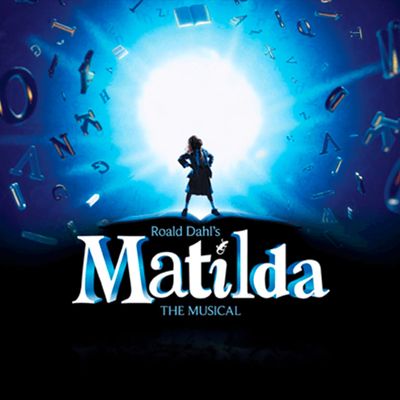
MATILDA (aka the rubik's cube) is an intricately crafted show put together by geniuses about a genius. And once you hear this week's guest Cassie Silva (Broadway and 1st National Tour "Mrs Wormwood") explain why, you'll be a believer... Read More
From the show: A Musical Theatre Podcast
Guests

Featured Shows
About
MATILDA (aka the rubik's cube) is an intricately crafted show put together by geniuses about a genius. And once you hear this week's guest Cassie Silva (Broadway and 1st National Tour "Mrs Wormwood") explain why, you'll be a believer. Enjoy our journey through the world of Roald Dahl, childhood journals, and "British accents for American audiences."
Follow Cassie on Instagram @cassiemsilva for a daily dose of gratitude and fierceness.
Take one moment to follow "A Musical Theatre Podcast" wherever you may be listening and share us with your friends!
Join us on Instagram, TikTok and X for more great content. For bonus episodes, subscribe to PATREON! for only $1 a month. And don't forget about our TeePublic Store, our proceeds from which we donate to Broadway Cares/Equity Fights AIDS.
Above all, thank you for being part of this wonderful podcasting community.
Transcript
This transcript was automatically generated and might contain errors.
[0:48] Jeffrey Scott Parsons: Welcome everybody to A Musical Theatre Podcast where we discuss the cultural and emotional impact of some of our favorite shows in musical theater history. My name is Jeffrey Scott Parsons, you can call me Jeff. Today we are talking about Matilda because it was a listener request from Jakari. So shout out to Jakari, I want to actually read his message that he sent us. Hi Jeffrey, my name is Jakari and I am a huge musical theater nerd. I am so fortunate to attend a school in Muskegon, Michigan that puts on Broadway-style shows every year. I know that may sound cliché coming from a high schooler but the shows we put on are really spectacular. The next show you should cover is Matilda. This show has a special place in my heart because it is one of the shows that got taken away from me when the pandemic hit.
I truly hope you consider covering this brilliant piece of art. Yes Jakari! Yes Jakari! So this one's for you and for all of those kids who I know had many of their productions canceled this year. We love you and musical theater is much older than any of us and it's certainly much older than COVID so we have a lot to look forward to. To make Jakari's dreams come true, I have one of my like ride or dies, like Cassie you're one of my besties. I've had a lot of great friends and a lot of people that I'm very honored to call either professional or personal acquaintances on the show but like we've known each other for 14 years. Very long time. A long time. I'm feeling so honored that you just said that. That's true though. You're one of my faves. This is uh everybody it's Cassie Silva. Hello!
[2:29] Cassie Silva: Hi!
[2:30] Jeffrey Scott Parsons: Cassie you starred in Matilda both on Broadway and on the national tour where you originated the role of Mrs. Wormwood and I got to see you in it at the Amundsen and sitting in the audience watching you oh I was so just exhilarated for you and so proud of you and I think it's the type of feeling that I'm supposed to feel for myself when I'm like you know performing or having a great opportunity but I just remember beaming and I felt like I was walking on clouds for the next two days oh my goodness thinking about you doing loud it was you were so wonderful thank you I really appreciate you saying that thank you what does Matilda mean to you I mean I can guess but what do you what do you think has it become part of your DNA?
[3:27] Cassie Silva: I think it is definitely part of my DNA. I remember when I first saw that show hilariously I was auditioning for the show and I just went and I bought one of the super cheap seats I was up in the very last row so far back in the audience that they brought me a fold-out chair oh yeah and and because I had just decided on a whim because you know I got the audition and then I thought I should just catch the next show before I have this audition tomorrow so I'm sitting there in this fold-out chair and I didn't have my glasses and so I'll never forget sitting and watching the show blurry and how well put together it was physically which I also really appreciate about it I think that Matilda the musical is a work of genius I think it was created by geniuses I think it's about a genius and I'll never forget understanding it because of the way that they physically you know placed themselves around the stage that I didn't necessarily need to see faces or things like that and the story still completely came through and I remember watching it and thinking I have to do this show like this show seems so above me and so far ahead of me creatively I want to know what that is I want to know what what's happening there I want to know I want to know what they're doing in their rehearsals I want to know how they're getting this type of performance out of not only young people but older people as well like what are they what's in the water right and it very much felt like I'm leveling up this is elevating me this is challenging me in ways that creatively I haven't had the opportunity yet and so it was really really special to me because as I continued to become successful and achieve things within that company I could really feel the growth as a performer as well and a professional too because working with children is not a joke seriously.
[5:23] Jeffrey Scott Parsons: When did you come into the whole process then how long had the show been open?
[5:31] Cassie Silva: So the show had been open for a year when I came into it they had just performed at the Tony's and I came in as a replacement for Betsy Struxness who went to do a little show at the time called Hamilton no big deal and what was also fun is that all of the original Matilda's or perhaps it was the second round of Matilda's were all getting ready to go out so I came in with a round of Matilda's.
[6:04] Jeffrey Scott Parsons: Oh I see so one of the things that Matilda is known for people would ask like oh you know what show are you in or whatnot I'd say oh I'm in Matilda and they would say oh my gosh I hear they are always rehearsing they're always in rehearsal and that was very true we we were in rehearsal a lot and um a lot of that had to do with just the upkeep of the show some of it had to do with a lot of the turnover in the show working with children but also a big component to Matilda is a lot of the magic means a lot of risk so there's a lot of work done for safety specifically so there's a lot of rehearsal so it's very back and forth having gone in for the first time with a set of Matilda's going in and out but then also being with the show for two years and having Matilda's go in and out it's like you know one moment you're in complete loss and grief over this child that you have grown some sort of you know creative attachment to and also celebrating them and their ability to now sort of like be unleashed back into the wild of their life and like third grade whatever it is but then also in the same moment you have to turn around and show face and completely pull yourself together and welcome in a new child who has bright eyes and an open heart and like an alien brain and here they are to completely hold a show and fun fact Matilda they timed it once and they said that Matilda the role speaks and now this doesn't have to do anything with blocking or dancing or anything like that she speaks verbally for 45 minutes straight wow yeah and the Matilda's average in age from 8 to I think 11 is the oldest can you imagine my gosh I can't even imagine it's incredible so imagine standing up next to a child that's holding an entire show speaking for 45 minutes plus dance plus you know full scenes singing plus they're doing stunts they're doing you know what I mean and you try to say that you're tired that day you know right you try to have like an attitude exactly yeah because they just they're they're just machines they're incredible and you know what's so great is that they're so stinking present they look really straight in the eye it's as if they're really in it.
[8:23] Cassie Silva: Oh yeah one of my um I mean they're all my favorite they they really are I've learned to to accept that each of them is my favorite Matilda but for totally different reasons but there's one Matilda my favorite um no just why I loved her was that she had such a positivity and she would come off stage this is months after playing the role and she would come off stage she would jump up and down she would say I really felt it tonight I felt like I was I was really moving stuff I was doing magic with my eyes oh come on with that that is so profound that by creating a magic trick for an entire audience of strangers you have created magic that might as well be real for this child who's actually the one doing it like brilliant magic yeah yeah so you can imagine to to release those ones into the wild is just like oh it's they hold such a precious place in your heart because I think also in addition to them being really present part of that is that they just their creative will their artistic will is infinite so they're able to tap into that you know imaginary world they're able to tap into the magic of it and it does and it can become very real for them and so when I did Wormwood such a dichotomy within myself because I personally love children they're one of my callings in this life and Wormwood hates children like loathes them they make her gag and then to look them in the eyes and to completely play with them and to yell at them and scream at them and berate them and abuse them and sometimes they would wink at me or like sometimes they would like they just are so in on it we know right they're just so sweet I loved working with with all of the children they're all my favorite.
[10:18] Cassie Silva: I'd love to talk a little bit about the protocols and the safeties at Matilda specifically with the children it felt very important to Matthew Orchis who is the director that the children remain children at all costs and that he wanted it to be as if they were being dropped off at the theater like you would drop a kid off at soccer practice and then they would be picked up as if they were picked up from gymnastics class and it shouldn't really vary from their normal life and so we had to follow a lot of protocol of like you know no no picking the children up no distracting them let them focus no autographs right no autographs they had their own entrance and exit from the theater so that they didn't meet fans and such I know that some people have said well they've done such amazing work shouldn't they get that accolade but I really stand behind just letting a kid do what a kid does and for those kids the caliber that they were performing at was normal to them it really was their soccer lesson or their gymnastics class yeah they would do six months to a year you know most of them six months because they grow and also they don't want them to be trapped in a theater they want them to have a childhood.
[11:51] Jeffrey Scott Parsons: Wow that's incredible you put that up against the horror stories of Annie you know with yeah with poor Andrew McArdle going to Studio 54 at 12 years old or whatever and probably being introduced to and I mean this is all you know allegedly but like well known enough to know that those sorts of boundaries hadn't been put in place so it's commendable if nothing else.
[12:05] Cassie Silva: Yeah.
[12:06] Jeffrey Scott Parsons: The show Matilda is of course based on the children's book Matilda which was written by Roald Dahl Roald Dahl also known as the number one storyteller in the world based on all of his books and stories that he wrote for youth including James and the Giant Peach Charlie and the Chocolate Factory Matilda of course the BFG The Witches Fantastic Mr. Fox though I mean the list goes on and on I didn't realize what a long career this guy had oh yeah you know James and the Giant Peach hits at like 1961 and of course Charlie and the Chocolate Factory the movies so on and so forth Matilda doesn't get released until 1988 so usually people hey hey hey and thus the Matilda magic begins but most of the time writers have their greatest successes early in their life and then it's a matter of well how do I keep a career going but the fact is is that as the years have gone by Matilda which is one of his very last works that he does nearing 70 years old is now outselling many of his earlier works it's incredible that the popularity of Matilda has just grown and grown and grown did you read Roald Dahl stuff growing up?
[13:09] Cassie Silva: Oh yeah oh yeah.
[13:10] Jeffrey Scott Parsons: I did not you did not it was probably a little too stilted and scary for my household not that we like avoided it but just simply that it wasn't.
[13:21] Cassie Silva: Disney so it didn't really find its way into my house. What were your faves? My first chapter book was the BFG. What really? Yeah and I loved it so much. How cute. I also loved at the time they had just come out with the Angelica Houston film The Witches and so. Own it. So I really loved that one. Matilda was also one of my first chapter books. I loved Matilda. I in like a really real way I really resonated with Matilda and so I really I just loved it because it helped me sort of get into my imagination and work through some stuff and all of them have pretty much been made into some form of film so I also got really into those because I had enjoyed the literature so obviously then I became a fan of the films and the you know adaptations.
Actually did you know that Anne Hathaway is coming out with a brand new Witches? I can't wait. Yes which I'm actually really excited about. Apparently Roald Dahl washed his hands of the original because it changed the ending which I didn't realize. I didn't either. In the original film of The Witches the little boy gets turned back into a boy because at some point he becomes a mouse and then at the end of the movie he gets turned into a boy and I don't believe that's how the book ends so this new one is going to be a more faithful adaptation of the original story. Oh I'm excited. Which I think is one of the true hallmarks of his stories. The endings are always somewhat I don't want to say unsatisfying they're always surprising and they don't always tie everything up in a bow in the way that Hollywood likes to.
Yeah he's dark. He's a twisted sister. Yeah I remember reading his biography and just being astounded. He went through some stuff. Well sometimes you read his stories and you think does he even like children? It's questionable right? Where does he stand on that? I honestly don't think that he wrote for children. I think he really wrote for adults and that's what they said about Matilda the musical is that it was written for adults with children in mind and that there are children in it but it's not a children's show and sometimes I would even say to families they're like oh there's kids in it it must be such a family show. I'm like you know it is but honestly it's going to be more so for the parents than it is for the kids because it's dark.
He does not shy away from the dark and I was like I was a pretty sensitive kid and I didn't like I've said this like so many times on the podcast I always left the room when King Triton destroyed Ariel's grotto and it when Mufasa died like I always needed to remove myself. I didn't like Disney movies for those reasons. There were too many feelings. Yeah I spent many Disney movies in my mother's like little shoulder hole. Yeah forget it. So if that was too much for me like Roald Dahl was advanced out of control like are you kidding me? Terrifying but that being said I appreciate the darkness now. I appreciate the opportunity to sit with art and learn how to process scary things because my life was a privileged one on a farm with a loving supportive family and a lot of those things did not enter my life and without the children's literature the children's art that I did consume I'm not sure that it really would have until I was an adult and then and then what kind of psychological mess do you find yourself in?
Right. You know which brings me to this article I found. There was a professor from the University of Texas who has authored or co-authored a lot of papers on the cognitive development of children. Oh I love it. And he says there is some discussion about whether it's appropriate for preschool aged kids to be exposed to scary content whether that's stories or movies and the general consensus among researchers at least within the developmental psychology realm is that there is some value to exposure within reason. These movies and stories might expose children to important life lessons may help deal with negative emotions including fear anger envy jealousy and I would include anxiety which in 2020 has you know come to even greater heights and and I think it's uncomfortable for parents because I can imagine being a parent or an uncle with a kid who's like scared by the movie and crying and I think this has been the worst experience I upset the child but maybe maybe just maybe the experience of them dealing with something scary in a safe place where I am right there to give them a hug and tell them no it's okay is the victory right to be able to use it as a tool to induce safety and security and camaraderie well camaraderie is not the right word but like the connection the connection right I I totally understand what that means so I appreciate the Roald Dahl goes there with it and I also appreciate that the musical goes there with it even more so than the movie version which I also love had you seen the did you see the Danny DeVito film oh yeah I loved it very much I mean it's a great movie yeah but it's not it's it's far for me though like it's sort of like a detached version it seems like to me that filmmakers have a hard time adapting faithful interpretations of the source material right the musical just an FYI was not written after the film has nothing to do with the film didn't even watch the film yeah and you can tell yeah I had heard that they went through many different forms to adapt it not only accurately but appropriately for an audience so they tried things like puppets adults no children all children only puppets like uh the role of the trunchbull is traditionally done as a man in drag that also was part of that experimentation where they had done it with a woman and it just didn't hold the same gravitas and like danger that for whatever reason a man could and so also they needed something that could be so big right so like most trunchbulls are very tall people and then they would put them in these like huge costumes which would make them look otherworldly and part of like those original illustrations right yes exactly like the original illustrations and then also part of that was that they needed something that people could dissociate from so they needed they needed something that was so scary and they would get the effects of this terrible abusive larger than life character but also wink wink nudge nudge we know that's a guy in there so you sort of can digest so much of Matilda for that reason because when it's a man in drag screaming at a small child it's funny you can break up the discomfort with laughter exactly that's so good and all of that was experimented on a lot I always talk about Matilda as a Rubik's Rubik's Rubik's cube because like I said I think that it was created by geniuses and it's about a genius but everything from the amount of people on the stage to what they're wearing to where they're standing is all completely calculated and so when you go to something broader like the casting or the costuming or things like that all of that is extremely calculated as well it's incredible now when they decided to make it a musical in the 2000s it was commissioned by the Royal Shakespearean Company they were not trying to just create some fluffy children's musical this is the Royal Shakespearean Company y'all that probably wanted to have a cash cow but also has a really high mark in terms of artistic integrity so in putting together this show they get a director like you mentioned Matthew Warchus how would you describe him Matthew Warchus is fascinating you can just see so many clocks ticking at one time and it all gets siphoned into a man of very few words and so it's like a sentence from him would just be like for my brain and I would have to go and like think about it I feel so lucky that I was able to be under his direction a lot of his work was in plays he won the Tony Award for God of Carnage and I don't know if this was a first time musical but it was definitely a departure for him yet it almost seems like it was a perfect fit for how his brain works I agree it just goes to the Rubik's Cube analogy yeah yeah the writers were Dennis Kelly he was the one who adapted the book and did an amazing Matilda has such a great script right yes and so often a good musical sometimes weighs too much on the music and the book just kind of like Matilda two years after doing it words would hit me music lyrics would hit me and I would be like wait what Rubik's Cube Rubik's Cube Rubik's Cube I mean it's so deep there's so much density in it yeah I mean I'm gonna be honest Matilda when I saw it on top of like walking on cloud nine because of you the other thing that sometimes I felt was like can I get subtitles yeah you needed a few times in order to get a lot of it there are so many words there are all the words and in melodies that are often so complex that I would go an entire verse and not be able to tell you anything that was said oh yeah it's brilliant it's and I don't know if that's a good thing or a bad thing but it just is I don't either look I'd like to say something controversial at this point Matilda the musical is a British show we brought it over from the west end it was up against Kinky Boots for best musical yes and Kinky Boots won over Matilda the musical I think it was robbed I think there's no comparison and I'm a Kinky Boots fan I love Kinky Boots I just think that there is there's no comparison maybe it's because I've been on the insides of it but overall it's a work it's a masterpiece I don't disagree with you I would say that the first act of Kinky Boots is almost perfect I believe you since we are talking about the Tony Awards let's just go ahead and talk about them okay this was 2013 on Broadway because the Matilda originally opened I believe in 2011 in London was a huge hit won more Olivier Awards than any musical prior and then it opened on Broadway for the 2013 Tony season it was nominated for best musical along with Kinky Boots bring it on the musical and A Christmas Story the musical interesting group of musicals there yeah wide array Kinky Boots wins the one that makes me really upset I feel personally offended is the choreography oh how Matilda did not win best choreography with how hurts my feelings exact and interesting and innovative all of that movement and staging was is beyond me because here's the thing that I will say about Matilda in terms of writing it is absolutely terrific but so much of the ingenuity of the staging and choreography to me play to the success of the show meaning I'm not sure without all of those wonderfully creative ideas it stands up as well as maybe should I don't know I don't know because it was just so inventive yes every single number yes was every single move was like I said calculate it's like a Rubik's Cube this show is built by geniuses about a genius and I think that is also part of why you take one thing out and it doesn't quite work and it doesn't work because you need all sides of the cube exactly right um wow yes yes yes this is so true okay so I'll say it here because you're my ride or die dancer first okay I don't say it very often but you've known me since like literally day one so dance is something that I've had to stick in my back pocket going into musical theater because I've been pegged a lot as a dancer so to get to pull it out for something like Matilda and to say actually I really I'm a strong dancer dance is my first language this show blew my mind blew my mind and there would be points where I would be sitting you know like three theater seats away from Peter Darling during like a run or something choreographer Peter Darling choreographer Peter Darling and I would literally be thinking to myself I'll never forget I'm getting flushed and I have no idea why but I would just look at him like creepishly and I would just think you thought this up like you
[26:43] Cassie Silva: You are the human being in this world that literally just was like sipping tea and you were like, I think we're gonna put blocks through a gate. And then you thought that they have like letters, and then you were like, let's get some swings. And like, you thought of that, like, you just like thought it for breakfast. That's just like something you did for funsies. Right? Like, so the opening number "Miracle" is like 10-15 minutes. So it'd be one of those things where we'd like literally say goodbye to each other. You know, at the top of the show, we'd be like, see you in an hour, you know, because the other side, yeah. It all is so good. Oh my gosh, I love talking about this. There's so many pieces of that number.
And it's, of course, brilliantly put together. If you can't tell, I'm just a huge fan of Matilda in general. I can't even believe that I got to do the show. But there's a piece that I'm thinking of within the opening number "Miracle," where the kids all roll out from underneath this table. And they go into this like scene where each couple of parents has a child and they're supposed to be at a birthday party. And it's like watching each parent's personality, these couples and how they react and respond to the child at the party.
[28:00] Yes.
[28:00] Cassie Silva: Even though it's an ensemble number?
[28:02] Yes. And the choreography of this, one hand out of place, one angle, two degrees off, completely alters the results of the end. It's just so beautiful. And there's like, there's cameras involved. And the parents are like handing the camera back and forth to each other. The child is fighting over wanting to have their picture taken or not. And like the parents are either fighting with each other or getting along. It is so hilarious. It's such an epic display of what choreography can do within a show.
[28:38] And so transportative.
[28:41] Cassie Silva: Transportative. That's a really great word for it. Transportative. Because from the get-go, this movement in "Miracle" is so stilted, and so unique, that you almost are taken into a children's storybook in the way that those illustrations, and I need to look up the original illustrator because he worked with... Oh man, I'm totally spacing on it right now, but I used to know it.
[29:09] Okay. Sir Quentin Saxby Blake.
[29:12] Yes. Quentin Blake. Amazing.
[29:14] Yes.
[29:15] Cassie Silva: The way his illustrations take you into the story is the way that that opening number takes you into the story. Now, Peter Darling, choreographer of Billy Elliot as well. He's given us some incredible choreography and musical theater already, and I can't wait to see what else he does. The music and lyrics were written by Tim Minchin. Is that how you say his name?
[29:37] Another genius. Yes. Tim Minchin. Writer and comedian.
[29:39] Who is Australian.
[29:41] Yes.
[29:41] Cassie Silva: Right? How would you describe him? Musician, comedian?
[29:45] He's a kook.
[29:46] Cassie Silva: He kind of did his own thing with not cabaret the musical, but cabaret the art form. A little bit of standup comedy, a little bit of musical theater. And when asked about it, this is a quote from him that I feel like really sheds light on who he is. I'm a good musician for a comedian, and I'm a good comedian for a musician, but if I had to do any of them in isolation, I don't know.
[30:12] He has like kind of frizzy red hair.
[30:15] Mm-hmm.
[30:15] Cassie Silva: Betty Ratz, and then tons of eyeliner. The warmest, loveliest, most charismatic human being, I think.
[30:23] That's great to hear.
[30:24] Cassie Silva: Yeah. And also a deep soul, because when you get into the show and you see how unexpected some of the musical choices are, and we can talk about that coming up, you see, oh, you're not just a kook. You're like a kook with a soul.
[30:39] Oh yeah, absolutely. And I think that's also one of the great things about Matilda the Musical, is that for as cerebral as it is, it also has such a wild imagination and such a deep understanding of play. When you really look at art as play, there's so much of that happening within the show. And you hear it a lot within the lyrics, within the music.
[31:02] I love that.
[31:03] Cassie Silva: Let's talk through the show, shall we?
[31:05] Yeah, totally. I was going to add that the quote that you read, the Tim Minchin quote, very much feels like my career. That describes me and my talents. I was talking about dancer first.
[31:12] I don't know that I can do one without the other.
[31:21] Cassie Silva: That's how I always feel, absolutely. I always want to go into a singing call and be like, but wait till you see me dance. And then I want to go to a dance call and be like, but wait till you hear me sing.
[31:29] Yes.
[31:31] Cassie Silva: Yeah. And then you're like, but throw me a set of sides.
[31:36] My cold read is on point.
[31:39] It's frozen.
[31:40] It's stone cold.
[31:42] It's on ice. Triple Lutz.
[31:46] Triple Lutz.
[31:48] Okay, talk through the show?
[31:49] Yeah, let's talk through the show.
[31:51] Cassie Silva: Now, Roald Dahl said that a lot of Matilda came from his experiences at boarding school as a young person. And right from the get-go, at the beginning of Matilda the Musical, with this "Miracle" Number, we're kind of painted two versions of life. You have the version of life in which you are kind of a spoiled child, adored by your parent and told that everything that you do is perfect.
[32:16] Yes, it's a miracle.
[32:18] Cassie Silva: Everything's a miracle, right? And it will soon be juxtaposed by the time in which you go to school and are told that everything you do is exactly the opposite of that.
[32:29] Right.
[32:29] Cassie Silva: Right? These are like two necessary evils that are always pushing up against each other, when in reality, maybe it should be a more evenly dispersed experience across the board. But even more of a juxtaposition to these families is the birth of Matilda herself, who is born to these parents who, from the get-go, loathe her.
[32:55] Yes.
[32:56] Cassie Silva: Her dad doesn't like her because it turns out she's a girl.
[32:59] Right.
[33:00] Cassie Silva: And her mom, Mrs. Wormwood, was not even aware that she was pregnant. In fact, she was on her way to the... Biannual International Amethyst Salsa and Ballroom Dancing Championship in Paris.
[33:14] That was not perfect. That was not a perfect British accent, unfortunately.
[33:18] Cassie Silva: Mrs. Wormwood is absolutely ridiculous. How much does that wig weigh?
[33:23] 8 to 11 pounds. And the microphone batteries are in it.
[33:27] Oh my gosh. Crazy. So, I mean, you are playing a drag queen, essentially, because you have so much makeup on.
[33:35] Yes.
[33:35] Cassie Silva: You've got this incredibly heavy wig.
[33:38] Yes. Which I would argue is part of how I was even able to pull off the role. Because I'm typically, like for a typical Wormwood, far too young. I still am too young.
[33:51] Right. Right.
[33:51] Cassie Silva: But I think because of sort of the cartoon feature, I was able to have that opportunity.
[33:56] True. True facts.
[33:57] Cassie Silva: On Broadway, it was played by Leslie Margarita, who is kind of a freak of nature unto herself, right? Hilarious, over the top. And when you listen to her section of "Miracle" on the cast album, all I can think of is she really did that eight times a week. And maybe as a freak of nature, she was. But then what it did was kind of set up an almost impossible track for someone like you to play.
[34:25] Right.
[34:25] Cassie Silva: And I think that that was one of your true assets is that you figured out how to do this role eight times a week and not go down.
[34:37] Yeah.
[34:37] Cassie Silva: Three weeks into the run.
[34:38] True. Yes. I really find great enjoyment at the athleticism of the sport of performing. And especially something like a Broadway schedule, which is eight times a week, plus press. I find that really interesting. And I also had a really good team behind me. I trained with somebody for voice, for accent, for vocal health.
[35:06] I trained with an actual vocal coach for singing and stamina and endurance and breathing, especially with the costume, because it was very tight and it was around my waist. It was hard to breathe. And then also there is a trick skirt and a magic element. And also I was going upside down in some of those moments, not to mention that I also had all of the coaching and whatnot from, again, the Matilda team, then a PT. I also had a vocal masseuse that could go in and massage. I mean, these people are incredible. I did not do it alone at all. But I do think that my artistic will was so great and I was quite determined. And it also just in a really strange way, it just made sense to me. I was like, I can do that. I know that I can do that.
[35:53] And, you know, I don't tell the story very often, but I will tell it to you here. Leslie Margarita was in the production of West Side Story when I was in high school. My sister did West Side Story with Leslie Margarita, her like her like three second long theater career. And at that time they were just giving tickets away to fill seats. And I went to every single show that they did of this production of West Side Story and Leslie Margarita played Anita. And I think I was like 14 years old. And I will never forget her singing "A Boy Like That." My whole body every single time would have this visceral response to her performance and her voice. And that was my moment when I was like, I want to do this.
I don't know even what I don't even know what this is, but I want to do what that lady is doing. And very similarly, again, when I went to see Matilda blindly, remember, I'll never forget Leslie Margarita, like throwing her arms up in the air and hitting these very specific poses and just making me like laugh until I cried and I couldn't see anything.
[37:05] Wow.
[37:10] Cassie Silva: And also also being backstage with her. She's a warhorse like she never goes down. And so I also had that instilled in me where I had seen that it could be done, you know, like she never got sick. She never called out. She booked a film while I was there and I got to play Wormwood for a point of time. But that was pretty much the only time that she did go out because she was also working.
[37:27] She was.
[37:27] Cassie Silva: Yeah, exactly. So, yeah, I don't tell that story very often, but but yeah, she did. She had like a big hand back in the day when I first started theater, literally. And I think also I just was pretty relentless in my endeavors.
[37:39] Absolutely. I think that there's so much to be said for making up your mind. The decision's already been made.
[37:45] Yeah.
[37:45] Cassie Silva: You're going to do it. So now let's just do it. Let's figure out how to do it.
[37:50] Yeah.
[37:50] Cassie Silva: I looked at it the same way that like you would do drills for football. Do they do drills for football? Is that right? OK, great. I don't play sports. I look at it the same way. So like, you know, I didn't even mention anything like the steaming, the warm ups, the warm downs. Like I'm not the first nor the last person to say that when you do a show eight times a week, it dominates your life and everything revolves around you getting on that stage.
[38:15] And it does.
[38:15] Cassie Silva: And it does. Yeah. And it's just a learning curve. I think that could be why some people have struggled.
[38:19] Yeah. Despite being born into a family that has no use for her, Matilda proves to be a pretty special child.
[38:36] Yes. In many ways, she is the miracle that all of the parents surrounding her are pretending their child is.
[38:42] Right. In this environment where Matilda is not really loved or appreciated at home, she begins to find ways to deal with all of that.
[38:50] What? All of that stuff. Anger. Aggression.
[38:57] Yeah, exactly. Because even though she is a miracle, she's still a human being with resentments and needs that are not being met at home. Cue a song called "Naughty," which I think is a really wonderful song because it's taking a look at why are children naughty? Where's that coming from? There's always something more than just a child was born rotten. And in this case, in a very self-aware way, Matilda is choosing to act out because it's at least a source of power that she can find by inflicting these little naughty mischievous choices that she makes in her family. Her father is always obsessed with doing his hair, so she puts bleach into his hair gel to make his hair go all crazy. Another time she puts glue in, like super glue, in the hat. So now not only is the hair bleached, but it's like stuck to a hat. And it really makes Matilda a well-rounded character. She's not just this perfect anomaly that she's not adorable.
[40:05] Cassie Silva: Yes, yes. And she has this thirst for knowledge. So she finds herself going to the library, right, where she meets the librarian named Mrs. Phelps. And Mrs. Phelps, I feel like is always like the role that nobody talks about. She's, she's on stage so much. Shout out to Mrs. Phelps. They start having this really beautiful relationship where Matilda will tell her stories, right? Yes. And she starts telling her the story about an acrobat and a... an escapologist. Yes. And what is, what is that? An escapologist? An escape artist. They changed it when it came to the US because it was hard for Americans. We're, we're dumb. I'm sorry. Like I said, subtitles for my own language. When I was on tour, we started to have handouts with lyrics on it.
Yeah. And it's very wordy. And one of the, the easiest examples I can give you about the accent, which sort of changed over time was that typically you would say, I'm a girl to say, I'm a girl. So it's sort of started to evolve where then they would start to put in like a little bit of an R when they were on Broadway and she'd be like, I'm a girl, right? By the time we got to tour, it was like, I'm a girl. Girl. Yeah. Which, you know, like my actor heart is like, but then as like an American actor, understanding in places like Texas, it's really difficult to switch from one accent to another, you know, I understood. And it's, it's part of our job to, to get it across and to communicate, to be able to communicate.
So there was a lot, especially with Wormwood because she, I can't even get that high now, but like, she like, she resonates all the way up here, like in the nose, nasal area, forget it. Like, I used to have to chew, literally chew my words in order to get everything out and try to time it so that it was almost very manufactured in some respects, just trying to help the audience get the plot points that I was trying to get across. That's crazy. But worth it. Like, I used to say that all the time. I'd be like this, if it was any other show, I don't know, but this one is worth it. So the story that Matilda's telling Mrs. Phelps, that she's just making up off the top of her head is about this escape artist and an acrobat.
And they can't have a child, right? Yes. So instead, they're like creating this amazing death defying act. Now, this is kind of a plot point that continues throughout the show. Every once in a while, we go back to Matilda with Mrs. Phelps, who's continuing to tell this story about these two people. At this point, Matilda goes to school. And like we said, school is horrible, because now instead of being a miracle, you are scum. And the school is called Crunchum Hall. See, that's the other thing about Roald Dahl is like such interesting words. And like, he made up a lot of words that were very, very cool. Right? So when Matilda goes to school, when they all go, when all the children go to school for the first day, there is a song aptly titled School Song.
Can you please take us through the choreography of this number? Because it's insane, and I've never seen anything like it. Yes. The older kids at the school are sort of welcoming slash traumatizing the little kids that are just starting school. Right. I think they think that it's warning, but some would argue that it's abusive, which is fine. So it's this incredible number where there's these two gates, a set piece, and they have all of these different color squares shaped into it. And as the song goes along, the lyrics start spelling out the alphabet, which I'll say more about in a minute. And they start taking these blocks, the cast starts to turn into almost like a machine, if you will. And these blocks start coming out of nowhere behind the gates, and all different shapes and sizes, these blocks shoot through the square shapes in the gates.
And they start spelling the alphabet as there's two literally climbing and jumping and land on the gates, and blocks are shooting through the gates. And appearing at the very moment that their foot is stepping on the block. Yes. You don't breathe the entire number. And it's so brilliantly written lyrically, it spells out the alphabet like it goes, and so you think you're A, able to survive this mess by B, being a prince or a princess, you will soon C, there's no escaping tragedy. So it's just like a taste of what goes on. Oh, I want to tell you the story about the time that I fudged, which was the day I broke Matilda. Yeah, so I was behind the gates when I first went into the Broadway production.
And I was one of the people that pushes the blocks through the gates. Now, sometimes these blocks are really small, like I said, sometimes they're huge. And sometimes just because of the way that the gates are and the boxes are and the weather is and whatever, the boxes can sometimes get stuck, or they have a hard time getting through. So you can only imagine the levels of anxiety that you feel having this responsibility, knowing that if it doesn't go in at the exact time that the person on the front is depending on it. So I go to push one through, and I can't get it in, and it gets stuck. And the guy on the front falls. No. And obviously, these are like Olympic athlete type people, he was totally fine.
But at the end, we're like in the super straight line, and we exit off stage. I'll never forget, I walked straight past the, you know, the wing, I cleared the wing, I went straight into like the backstage area. And there's a staircase that went up to the kids dressing room. And I just sat down, I put my head in my hands, and I just sobbed for like, a solid 60 seconds. It's a sad memory. But it's such a great memory, because I just remember being so in it. And you do, you really feel this camaraderie that I think is so special to theater, you really do build this closeness with each other. And you have such a deep level of trust. But I'm glad it's a great memory. A sad, great memory. Sad, but great memory.
Now at school, the headmistress is Miss Trunchbull, who is a former world world champion hammer thrower, of course. Hilarious. And she is the worst. As we talked about, it's usually played by a man in drag. She's created something called the Chokey, which she puts children into, which is this like scary dungeon closet. Which I think is, like, I remember my brother shoving me into a closet and turning out the lights and telling me there were spiders in there. And that was like the worst thing ever. Right? Which now that I think about it, like, it's not that big a deal. There was plenty of space in the closet. But just the idea of it being dark, and an enclosed space that I couldn't go get out of.
Right. So the Chokey is terrifying. Now, the one bright spot is that Matilda's teacher is named Miss Honey. Miss Honey recognizes something in Matilda, that she is smart, that she deserves to excel, maybe even faster than her classmates. And yet, in order to get some sort of special privilege for her, Miss Honey needs to stand up to Trunchbull. Right. So she's very much a cat. Matilda is a catalyst for Miss Honey. And I also think Miss Honey is the first interaction, perhaps, outside of like the librarian, maybe, but especially in the musical. I think she's the first genuine and warm encounter that Matilda's ever seen. It's like she's seen a unicorn. It's like, what? Humans don't act like this.
I've never seen anything like, yeah, totally. Also, I don't know if this is just information for you or for the podcast, but it's been said so many times that Matilda is on the spectrum, that both of the Wyrmwood children are on the spectrum and that they actually swing both ways, where the son is sort of on like a like non-communicative. Sure. And that Matilda lives on sort of this, is it savant? Like a prodigy, rain man-esque type thing. And that does, honestly, it makes a lot of sense. And when you think about sort of her unruliness and her naughtiness and like the ratty hair and things like that and some of her decisions. Also, if you listen to some of her words, she's a bit inept. She's socially inept in some ways.
She's never really socialized. Remember, like she only knows characters in the book. So, I don't know. It always made sense to me, but it is otherworldly. So, some people just chalk it up to that, but people that look at it very like, these are people that could live in London type of thing. I don't know. That's awesome. Now, that leads Miss Honey to go to Matilda's house, because even if she can't get to Trunchbull, she's at least going to go try to talk to the parents and try to convince them of the special child that they have. Now, we all know how that is going to go, which is hilariously by way of a production number called Loud. Yes. So, take us through Loud. Loud was such an honor to perform.
Why I love Loud is because it bookends Matilda's 11 o'clock number in the second act, which I know we'll get to, her number Quiet. So, there's Loud. Wow. I didn't even think about that. That's incredible. Same family, two completely different perspectives. Right. Yes. And two different approaches to how to deal with things. And I think that knowing how Quiet was directed really helped inform, because in some ways, the bigger and more obnoxious and louder that I would be able to perform it, the greater and bigger payoff Matilda would get in act two. And when you're up there with these little guys, you would do anything to support them. And it's this crazy number where Mrs. Wormwood is fantasizing about the dance championships that she wants to get to.
It starts just in the living room. She is having dance rehearsal with her partner, Rodolfo, and basically could care less about the fact that Miss Honey is there and really almost feels offended that Miss Honey would come all the way over here to let me know that my child is special. Is smart. In any way. Intellectual, because that's not going to get you anywhere. What's going to get you somewhere is to be loud and make yourself be heard. Yeah. And she even says, it's a very popular line from the show, which is, looks are more important than books. That's loud. And that's loud. Now let's go back to the library where Mrs. Phelps has come back on stage to sit and listen like every good actor should.
And Matilda is continuing her story about the acrobat and the escape artist. Now, what's interesting is that as Matilda is getting closer and closer to Miss Honey, she eventually starts to realize, and we're kind of skipping ahead here, that the story she is telling is Miss Honey's story. Yes. Spoiler. So in addition to Matilda's intelligence and everything else, she's also developing this ESP Carrie White type situation where she can clairvoyantly read the past, see the future, make things fly. And all of these things start picking up faster and faster throughout the rest of the show. Two of the really fun magical moments at the end of the first act are the Amanda Thripp moment and the Bruce Bogtrotter moment, both of which involve Trench Bull.
She grabs Amanda Thripp by the pigtails. Why? Because she hates pigtails. Right. And swings her around and throws her like a hammer. And it's a very famous moment in the book, in the movie, and it's amazingly staged in the musical version. Another very famous moment with Bruce involves a chocolate cake because he, being a little Roald Dahl chocolate lover,
[53:28] Cassie Silva: Which there are many in his stories, has stolen a piece of cake from Trunchbull. Now, you were the cook, right? When you first went into the show, you were the cook of the cake.
[53:40] Jeffrey Parsons: I was the cook of the cake. But of course, there's no way you're going to tell us how it worked, right?
[53:45] Cassie Silva: No. Okay, I figured. But can I instead trade you for a fun fact about the Bruce cake?
[53:53] Jeffrey Parsons: Yes, because just so everyone knows who may not have seen it, Bruce is then forced to eat this entire chocolate cake. It's huge. It's like life-size.
[54:06] Cassie Silva: Yeah, it's huge. And he does so on stage. It doesn't happen off stage. It happens on stage.
[54:13] Jeffrey Parsons: Yes, which is this incredible element of theatre magic, especially if you're sitting super close because it's like close-up magic. You literally just watch him devour this epic-sized cake, of which I cannot give you hints. But what I will say is that of all the Bruces that I worked with throughout my time at Matilda, the majority of them did not care for chocolate.
[54:33] Cassie Silva: What is wrong with children?
[54:41] Jeffrey Parsons: I don't know. I was like, I'll do it. My nieces and nephews are exactly the same. They like chocolate chip cookie dough without the chocolate chips.
[54:47] Cassie Silva: What? That's sugar cookies.
[54:52] Jeffrey Parsons: So my mom will make chocolate chip cookie dough, but then just not put in the morsels. And that's what they love.
[54:56] Cassie Silva: Oh my gosh. And I don't understand.
[55:02] Jeffrey Parsons: Wow. I don't understand either. What is happening in the world?
[55:07] Cassie Silva: I don't know. I think it's like, I think it's a taste bud thing. You know, kids really like the plain...
[55:13] Jeffrey Parsons: I guess so. The plain nothing. And then, you know, you get to be 30 and you're like, 90% cacao, please.
[55:23] Cassie Silva: Yeah, I am all for a chocolate chip.
[55:29] Jeffrey Parsons: Yeah. Oh my gosh. You and me are both chocolate chip cookie enthusiasts.
[55:33] Cassie Silva: Absolutely. Remember in your theater bio when you used to wish everyone a million grilled cheese sandwiches?
[55:40] Jeffrey Parsons: Oh my gosh. Do you know something funny about that? Is recently I went on to the browser of Gmail where I have, you know, my email and I sent an email from the browser version of Gmail. Hopefully that makes sense.
[55:46] Cassie Silva: Yeah, like the laptop, not your phone.
[55:55] Jeffrey Parsons: Yes. And I sent this to a professional person and didn't realize that it had saved wishing you a million grilled cheese sandwiches as my signature. And they wrote back, they said, a grilled cheese sandwich would be really good right now. And I thought, oh my gosh. I think in 2020 you might need to bring it back.
[56:12] Cassie Silva: That would make life much better.
[56:17] Jeffrey Parsons: Yes. I don't know. I've always just wanted to be a little different with the play aspect of things.
[56:24] Cassie Silva: I don't know. I love it. That's what makes you Cassie.
[56:31] Jeffrey Parsons: Okay. At the top of act two, there's this infomercial that Mr. Wormwood does with his son called Telly, which is such a Roald Dahl thing because in many of his stories, he hates television, feels like it's rotting the brains of children. And this infomercial that these two characters are doing is instructing the audience enough, talk about books. Let's watch more television, please.
[56:56] Cassie Silva: Yes. Hilarious. So British. It's so good. And it's so well done. And I just want to say, if I may, about the roles of Mr. Wormwood and Michael Wormwood. So much training goes into the comedy and timing of those two roles in order to make them funny. And typically what I also have found personally as playing like murderers, antagonists, biatches, such and such is that—
[57:16] Jeffrey Parsons: Because God painted you fierce.
[57:17] Cassie Silva: God. I love you for saying that. It takes so much focus and also, I think, compassion. And specifically for the roles of Mr. Wormwood and Michael Wormwood, across the board, they have always been the most intelligent gentlemen, as well as classically trained. Like Quinn Matfield, who I did the tour with, Shakespearean guy. Wow. Incredible. And so I always thought that telly, it was such a brilliant display of physical comedy mixed with breaking the fourth wall. And so I just wanted to give a shout out to all the wormies.
[57:59] Jeffrey Parsons: To all the worms. I love it. Now, even though that starts the second act, then you get to like the actual number that starts the second act, which is when I grow up.
[58:04] Cassie Silva: Yeah. Right?
[58:10] Jeffrey Parsons: Yes. Now—
[58:10] Cassie Silva: Yeah. It takes a few starts. We have to start act two a few times. It's a little like—
[58:19] Jeffrey Parsons: Yeah, exactly. And here we go. Because when I grow up is such a memorable moment in the show. I remember getting teary-eyed. Look, put swings on a stage. I'm there. I don't know why. There's something so magical about swings.
[58:29] Cassie Silva: Agreed. But like seeing these little children, it's so beautiful and so wistful and it's one of my favorite numbers in the show. And to have it come after telly, it's kind of all over the place and yet it works.
[58:41] Jeffrey Parsons: Right. You almost need that. You need both of them in order to get the brain break so that you can commit to the rest of act two. Because it does get pretty dark.
[58:53] Cassie Silva: Yeah. That's true. In honor of when I grow up, I have invited you to bring something from your childhood, a journal moment, if you will, to share with everyone.
[59:03] Jeffrey Parsons: I think you should go first.
[59:09] Cassie Silva: All right. I'm ready. Okay. I have an entry from my journal entitled All About Me.
[59:19] Jeffrey Parsons: Of course you do. This is so embarrassing. It's in cursive. This entry in my childhood journal is June 31st, 1994 at 9:20 p.m. I don't know why I wrote the time, but that's fantastic. It says, today I'm going to write something in this journal and I'm amazed that I haven't wrote it before. I love it. I finally realized that someday, somehow, I'm going to be a star maybe even the greatest performer ever exclamation point. Finally. My talent comes in the arts. Then I start explaining. Okay. You see, my talent comes in the arts. I love dancing and singing and no person like Rocky or Danny, who are obviously bullies from elementary school, are going to tell me I'm a wimp. I want to grow and the jerks who made fun of me will say, man, I can't believe I was actually mean to him. Again, I've never wrote this before, but I'm proud of me and I'm the best. Thanks for listening. Love, Jeffrey Parsons. And then I wrote, I drew my own trophy.
[1:00:42] Cassie Silva: This is the most precious thing I've ever seen. Oh my gosh.
[1:00:46] Jeffrey Parsons: I drew a trophy and on the trophy it says Jeff Parsons greatest performer.
[1:00:53] Cassie Silva: Because that's an award.
[1:00:58] Jeffrey Parsons: Of all time.
[1:01:00] Cassie Silva: Of all time. Oh my gosh. Ridiculous. This kind of set for me the pattern that my journals are incredibly boring and I love writing, but I only use the journal to be a cheerleader for myself. So every single journal entry is usually like, it's okay, man. Things are going to be fine. It's just, they're just books full of it gets better. Anyway, that's great.
[1:01:29] Cassie Silva: Hey, you know, people use journaling for all different types of things.
[1:01:34] Jeffrey Parsons: Okay. What you got, what'd you bring to the table?
[1:01:40] Cassie Silva: Mine's a little longer. Awesome. I don't know that I can amount to what just occurred, but I will certainly try. It's not a competition. Although apparently it is, I got a trophy.
[1:01:45] Cassie Silva: Okay. So this I made with my best friend at the time. So I'm going to read mine off of this. Okay. But this says Cassie and Onzie's list of ambitions. How old were you?
[1:02:02] Jeffrey Parsons: 10 or 11.
[1:02:02] Cassie Silva: Okay. So I was obsessed with A Walk to Remember growing up. So in the movie, A Walk to Remember, Mandy Moore's character writes this like bucket list of things that she wants to do before she dies. And it's like, before she dies and it's like a big part of the movie. And then she falls in love with Shane West, who like at that time was all that in a bag of chips and a side soda. Yeah. So obvi had to make our own list. First and foremost, at the very top of the page above the list is number one is fall in love, which is, which is before the actual number one on the list. You wrote the list and then you're like, you know what? Forget it. I've rethought it. I've already regret everything. Number one, fall in love.
[1:02:51] Jeffrey Parsons: Yes. Okay. Here we go. Number one, the real number one on the list. Examine Shane West a lot.
[1:02:58] Cassie Silva: Examine?
[1:03:03] Jeffrey Parsons: Number two, get a tattoo with glitter.
[1:03:06] Cassie Silva: I think you might need to invent that before you can do it. Like that's how ambitious.
[1:03:10] Jeffrey Parsons: Well, you know, what's so funny is that at the time, remember I was like 10 or 11 and I was going to a lot of the older friends' bought and bar mitzvahs in the community. And so you would go and get fake tattoos or like, you know, those little like airbrushing booths that they would have at those parties. And then they would put glitter on it. And I think that's where I got it from.
[1:03:28] Cassie Silva: You want to be edgy, but like with glitter.
[1:03:33] Jeffrey Parsons: But with that, that is my brand.
[1:03:37] Cassie Silva: Look, everybody loves a good sparkle and it is your brand. I agree with you.
[1:03:40] Jeffrey Parsons: Number three, number three, get on a TV show dash starring.
[1:03:44] Cassie Silva: Oh, ambitions. I mean, you've done that one, right?
[1:03:49] Jeffrey Parsons: Yeah. Some of these are great to go back to because I realized, oh, I actually, I did pretty well, which is good. I made my 10-year-old self proud.
[1:03:53] Cassie Silva: For sure. I mean, I'm still working on the actual number one.
[1:03:57] Jeffrey Parsons: Come on, Shane. Um, okay. Four really driving this one home. Find a perfect guy.
[1:04:06] Cassie Silva: Number possible girl.
[1:04:12] Jeffrey Parsons: Number five, be successful. Parenthesis famous.
[1:04:19] Cassie Silva: One in the same.
[1:04:19] Jeffrey Parsons: Okay. Number six, similarly is be discovered. And then there was a revision. As you can see, I've now written in pen, which says soon.
[1:04:27] Cassie Silva: Nothing like a timetable for a bucket list.
[1:04:32] Jeffrey Parsons: Okay. Number seven, change someone's life for the good, which is also, I think one of the first ones where we've included other human beings.
[1:04:40] Cassie Silva: That's really sweet. I love that. You're generous.
[1:04:43] Jeffrey Parsons: Number eight, read 100 books to help myself.
[1:04:51] Cassie Silva: You're like, I'm on 237.
[1:04:54] Jeffrey Parsons: Um, okay. Number nine, tell people the good in them.
[1:04:59] Cassie Silva: These are great.
[1:05:09] Jeffrey Parsons: Number 10 compliment. At least all caps. One person a day. All caps.
[1:05:13] Cassie Silva: Jeffrey, I love you. I think you're doing a fabulous job on this podcast.
[1:05:19] Jeffrey Parsons: Cassie. And I need to say I am incredibly impressed because as someone who came up through the studio dance world, this is a well-rounded little girl.
[1:05:26] Cassie Silva: Thank you for sharing. That's amazing.
[1:05:28] Cassie Silva: Thanks for listening to both sides of the paper.
[1:05:31] Jeffrey Parsons: Side A and B.
[1:05:32] Cassie Silva: Side A and B. And now she goes back into the archives.
[1:05:36] Jeffrey Parsons: Well, it's important to have these archives because, you know, when we grow up, that is a, that is an important question that we ask ourselves. So I was lucky enough to be one of the people that was on the swings. And I would choke up more often than not because it just was such, it's just such a magical moment of swinging over the heads of this audience and just seeing this, like, flood of wonder and awe. And, you know, Matilda's magical for so many reasons. And theater at large, too, is just this really important piece of escapism. And so to see people, like, come out of that shell and to just embrace this larger than life moment just was so special. And also the set for When I Grow Up has two walls at the very back of the stage. They don't close all the way because there's a slide that goes through them.
[1:06:38] Cassie Silva: Okay.
[1:06:38] Jeffrey Parsons: Like a real, like a real life slide. In order to make this look very realistic, there's, like, tree branches that stick out from the walls that sort of, you know, you slide underneath them and it's...
[1:07:19] Cassie Silva: And just rips off, like, the little rascals, and I just go flying down the slide in a wig cap. I land from the slide, and I'm supposed to, like, high-five and greet an actual small child, who then is looking at me and, like, tearing, because we're trying to not laugh. So you didn't have time to go, like, grab the wig off the brain. It was literally hanging. It was hanging from the branch, because I couldn't reach it, because it's all the way up at the top of the slide. I couldn't even sing. There were, unfortunately, at that performance, there were no background vocals from me, because I was crying. Oh my gosh. Bye! That is the best story.
[1:08:11] Jeffrey Scott Parsons: Pretty good. When I grow up.
[1:08:13] Cassie Silva: When I grow up. There it is. Now, back to the library with Mrs. Phelps, where, like we said, Matilda has realized that Miss Honey's story is this story. And in the story of the acrobat and escape artist, they've created this really dangerous stunt that goes horribly wrong. The mom dies, but her unborn child lives, which is Miss Honey. So now you've got this father in mourning. You've got a newborn child. They're both completely unprepared for each other. He calls upon his sister to come help raise her. And the aunt, the sister, unbeknownst to the father, mistreats her terribly. She's an evil, evil aunt. Now, as Matilda's starting to put all the pieces together, if the child is Miss Honey, then her evil aunt is actually... Dun dun dun!
[1:09:11] Jeffrey Scott Parsons: Trunchbull! Can you believe it? Miss Honey and Trunchbull are actually related. And the trauma of Miss Honey not being able to go talk to Trunchbull comes from years and years of an abusive childhood.
[1:09:26] Cassie Silva: Well said.
[1:09:27] Jeffrey Scott Parsons: Thank you. And the father, he left one day and never came back. And Miss Honey had no idea what happened. Matilda starts putting it together that maybe Trunchbull is responsible for the father's disappearance, because if he were to disappear, she would inherit a lot of stuff.
[1:09:48] Cassie Silva: Everything.
[1:09:49] Jeffrey Scott Parsons: Yeah, everything. So with all of this information and just kind of, she's had it with these grown-ups treating people horribly. It all culminates with this song, which you mentioned before, called Quiet. And I think that this is when the Royal Shakespearean Company comes out. Because never before have I heard an 11 o'clock number for our lead character, be so still, be so quiet. And yet it is this moment where she really finds her next level of power. Now, all of that power, she then puts into moving objects. She's able to do this really interesting thing with a salamander to terrorize Trunchbull.
[1:10:33] Cassie Silva: A newt!
[1:10:34] Jeffrey Scott Parsons: Oh, a newt! A newt is like a really ugly lizard that lives in water. Is that that Lavender line that she says, like, walking across the stage?
[1:10:44] Cassie Silva: Yeah.
[1:10:44] Jeffrey Scott Parsons: Did not understand one word the entire time.
[1:10:50] Cassie Silva: The true stars, for sure. Now, speaking of Lavender, she's about to be thrown into the Chokey, right? When Matilda finally unleashes her biggest plan and greatest power to date, which is that in order to enact revenge or justice, let's say justice on Trunchbull for what she did to Miss Honey's father, what she's done to the children for who knows how long, Matilda is able to move the chalk on the chalkboard with her brain, with her mind, with her will, with her spirit, if you will. And writes on the chalkboard as though she is the ghost of Miss Honey's dead father, saying, I know what you did. And this freaks out Trunchbull so much that she, right then and there, runs off property, keeps running, and we never hear from her again.
[1:11:46] Cassie Silva: Ever.
[1:11:47] Jeffrey Scott Parsons: And this results in Ding Dong, the witch is dead. It's really the biggest crowd pleaser in the entire show called Revolting Children.
[1:11:57] Cassie Silva: Yes. I remember you talking to me, because you have since directed and choreographed a production of Matilda using only kids, which I went and saw, and it was fantastic. You did such an amazing job.
[1:12:08] Jeffrey Scott Parsons: Thank you for coming. But I remember you telling me about working with the kids on this number, and kind of the visual behind it, and it was what you were told as well. Can you share that with everybody?
[1:12:19] Cassie Silva: Yes. So, Revolting Children is this, it's this number that involves this huge emotional eruption. I used to say it's like taking a soda bottle and shaking it, and then just opening up the cap and just letting everything fly out of it.
[1:12:39] Jeffrey Scott Parsons: Yes. I love that.
[1:12:40] Cassie Silva: I'm stealing that.
[1:12:42] Jeffrey Scott Parsons: Yeah.
[1:12:42] Cassie Silva: Oh my gosh, please do. They would give us the visual that the Trunchbull was running away, and as the Trunchbull runs away, she gets smaller and smaller and smaller and smaller and smaller, and that was to be used as a metaphor for freedom, for our freedom. It becomes primal, almost tribal, and Peter Darling, I'm totally going to butcher this name, but I'm going to try anyway. He got inspiration for the choreography of Revolting Children from the Tiawaka, something like that tribe.
[1:13:20] Jeffrey Scott Parsons: Yeah, and you can see this choreography by way of shaking hands as if it's the tail of a rattlesnake.
[1:13:29] Cassie Silva: Whoa, that's so cool.
[1:13:31] Jeffrey Scott Parsons: Yeah, or the clapping of the forearms. All of this is symbolic of this tribal dance, this taking over the territory, of getting to a place that you have to go beyond basic choreography, you have to go beyond basic shape, because you're free.
[1:13:52] Cassie Silva: Wow.
[1:13:52] Jeffrey Scott Parsons: It's epic. It's a children's show, people, and this is the kind of thought. We have no excuse. We have no excuse as artists, no matter how much time we have to rehearse, to not be as thoughtful as the artists that came before us when creating this stuff. You know what I mean?
[1:14:08] Cassie Silva: Absolutely. Like, I just feel such a responsibility to carry that onward.
[1:14:13] Jeffrey Scott Parsons: Absolutely. Even if you're working with children, you don't just do step touches. You think about the emotional content of these stories and infuse it with that kind of artistry. And maybe people will get it. I certainly didn't know any of this by watching it, but maybe, just maybe you feel it. And that's all there is to it.
[1:14:34] Cassie Silva: I loved it. Okay, let's wrap this mother up. So, with Trunchbull gone, Miss Honey becomes the new headmistress, and she does a beautiful job. Now, I think that a happy ending to this story would be that the Wormwoods realize what a special daughter they have and say we're sorry.
[1:14:55] Jeffrey Scott Parsons: But plot twist.
[1:14:56] Cassie Silva: But in a very Roald Dahl type of ending. They don't.
[1:15:00] Jeffrey Scott Parsons: They don't. In fact, what has happened is the father has sold these lemons, these non-working vehicles to the Russian mafia, who are now after the Wormwoods.
[1:15:13] Cassie Silva: Right, a total side story that's been happening.
[1:15:16] Jeffrey Scott Parsons: Just a random plot.
[1:15:17] Cassie Silva: Right. Side plot. And so they're like, come on, Matilda, we gotta go. And Miss Honey's like, well, how about she stay with me? You know, I can adopt her. And Mrs. Wormwood, in probably the most selfless act she's ever done is she gives up her child. And so it is a happy ending while also not being a traditional happy ending at all.
[1:15:40] Jeffrey Scott Parsons: Right.
[1:15:40] Cassie Silva: And that's life, ladies and gentlemen. I really like how it ends.
[1:15:45] Jeffrey Scott Parsons: Me too. Because I like to think that there are always options and there are always choices.
[1:15:53] Cassie Silva: Yes. And also what I appreciate about it is that in some senses, it's pretty realistic in terms of what the options are because the Wormwoods are never going to change. And I think that that is a level of acceptance that we bump up against as humans, like as adults, a lot. And sometimes you just have to make a bigger change. Sometimes you have to turn to avenues that might be less popular or, you know what I mean, like to make those big changes in your life rather than trying to control somebody or to live in denial of somebody. And I love that you found something that I found, which is like, yeah, by giving Matilda up, that is one of the most selfless things that she's ever done. And what's funny about it is that the way that she does that is she literally goes, and she can't even find words for it.
She can't even communicate with words. To me, it felt really profound that like, even though she couldn't really communicate it, she could at least try to like sound it out. There is that glimmer of hope that maybe she might be able to get it one day, that like that feeling of having to vocalize it via sound, like maybe one day she'll realize that that was the first glimpse of compassion or selflessness or something like that, you know?
[1:17:25] Jeffrey Scott Parsons: That's beautiful. And also, I just, I love that Matilda ends up with Miss Honey because they are one in the same. They are just kindred spirits. And that almost seems like how it always was meant to be.
[1:17:37] Cassie Silva: Absolutely. You know?
[1:17:38] Jeffrey Scott Parsons: Soulmates.
[1:17:39] Cassie Silva: Soulmates.
[1:17:40] Jeffrey Scott Parsons: Soulmates.
[1:17:41] Cassie Silva: Penguins.
[1:17:42] Jeffrey Scott Parsons: They see each other because they are each other.
[1:17:46] Cassie Silva: A doppelganger type situation.
[1:17:47] Jeffrey Scott Parsons: They see each other because they are each other. That's how I feel about you.
[1:17:50] Cassie Silva: Thank you so much for doing this. I've had such a wonderful time talking with you about this really interesting show, hashtag the Rubik's Cube, that I think will continue to inspire a lot of audiences.
[1:18:10] Jeffrey Scott Parsons: Agreed. I hope it does. It's truly magical. As always, if you have recommendations you'd like us to cover on a musical theater podcast, you can email me at amusicalpodcast at gmail.com. Don't forget to follow us on social media, Twitter and Instagram, at amusicalpodcast. And you know what? Don't forget to hop on over to the TeePublic store, where we have designs dedicated to favorite moments from episodes past and present. Cassie, how can we follow you and everything you're up to? Because I know you've got some exciting stuff coming out.
[1:18:43] Cassie Silva: My favorite platform is Instagram. It's Cassiem, as in magic. Silva. I did not make that up, but that's how people seem to remember it. So I'm just gonna say it.
[1:18:56] Jeffrey Scott Parsons: That's so cute.
[1:18:57] Cassie Silva: It's cheesy, but...
[1:18:57] Jeffrey Scott Parsons: And what's the name of your series that just came out? Because it's really exciting.
[1:19:01] Cassie Silva: Oh, thank you. Yes, The Wayward Guide for the Untrained Eye is out on YouTube. And we have episodes coming out every week. And then there's also a parallel podcast that is out on Spotify and Apple Podcasts. And any of those links you can find on my Instagram, or you can follow Tin Can Bros, and they have all the links there.
[1:19:27] Jeffrey Scott Parsons: Fantastic. We'll be looking forward to it. You're such a talented, a multi-talented individual who brings a lot of love and light no matter where she goes. And I'm honored to call you a friend and guest and friend of the podcast.
[1:19:40] Cassie Silva: Thank you. I learn from the best and I get to run with the best. So thank you so much.
[1:19:45] Jeffrey Scott Parsons: And to everyone out there, a million grilled cheese sandwiches.
[1:19:49] Cassie Silva: Wishing you a million grilled cheese sandwiches.
© Broadway Podcast Network, All Rights Reserved