

NINE surprised Broadway in 1982 when it opened last minute and proved to be a formidable foe to the other big hit of the season, DREAMGIRLS. It was also a musical that couldn't seem to escape drama, whether onstage at the hands of lead character Guido Contini or off... Read More
From the show: A Musical Theatre Podcast
Guests
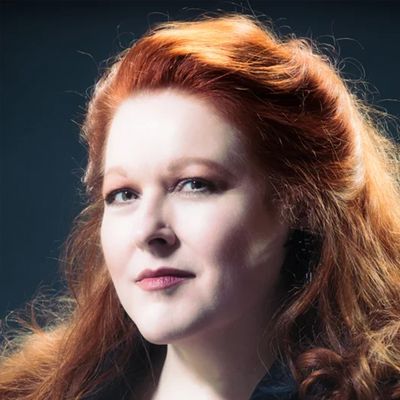
About
NINE surprised Broadway in 1982 when it opened last minute and proved to be a formidable foe to the other big hit of the season, DREAMGIRLS. It was also a musical that couldn't seem to escape drama, whether onstage at the hands of lead character Guido Contini or off. Here this week to discuss the highs and lows of this stylish and somewhat avant-garde musical is original Broadway cast member Kim Criswell (THE FIRST, BABY, THE THREEPENNY OPERA). From last minute costume shopping at a Times Square lingerie shop to wearing Tony-winning couture gowns, Kim spills the T on one of the most memorable musical seasons in Broadway history, and the unforgettable people who made it so.
Learn more about Kim, including her many recordings and upcoming performances by visiting kimcriswell.net.
If you enjoyed this episode, try our past episodes on Michael Bennett's A CHORUS LINE and Tommy Tune's THE WILL ROGERS FOLLIES.
Remember the best way to support the show is to rate, review, and share with your friends! You can also subscribe to PATREON! for only $1 a month and receive bonus episodes, including a brand-new DIVAS episode dedicated to Tommy Tune. Don't forget to follow us on Instagram, TikTok, and X for more great content. And take a look at our TeePublic Store, the profits from which we donate to Broadway Cares/Equity Fights AIDS.
More than anything, thank you for being part of this wonderful podcasting community.
Transcript
This transcript was automatically generated and might contain errors.
[0:01] Kim Criswell: I'm not really interested in talking about the musical film. We're not really going to talk about it. However, I do have to ask you, do you ever sing "Cinema Italiano"?
[0:07] Jeffrey Scott Parsons: No. You have to.
[0:16] Kim Criswell: Do I?
[0:21] Jeffrey Scott Parsons: Yes. Yes. I'm just putting this out there. I've only seen the film once. Okay. Look, I don't really care for the movie, but at once every six weeks, I watch Kate Hudson do "Cinema Italiano," because it just itches this little scratch that I have. Put it in your act, Kim.
[0:33] Jeffrey Scott Parsons: Welcome, everybody, to A Musical Theatre Podcast, where we discuss the cultural and emotional impact of some of our favorite musicals in theatre history. My name is Jeffrey Scott Parsons. You can call me Jeff. Today, we are discussing the musical NINE, which was a listener request from my dear friend, Donny. Thank you for writing in, buddy. And here to discuss this rather avant-garde musical is one of its original Broadway cast members. She's an Olivier-nominated actress who ultimately took over the role of Claudia, singing in an unusual way. She was also seen on Broadway in THE FIRST, which, Kim, we got to talk about that, because that was the same season as NINE, as well as BABY, which I'm obsessed with, STARDUST with a friend of the podcast, Jason Grau, and THE THREE-PENNY OPERA with Sting.
You run the gamut. She can also be heard on literally 40 albums, four of which are solo albums. And might I suggest you check out her belting "RAINBOW HIGH"? It's pretty thrilling. Everyone, please welcome Kim Criswell.
[1:51] Kim Criswell: Thank you. Thank you for that lovely introduction.
[1:57] Jeffrey Scott Parsons: I didn't even mention THE SLOW DRAG, which I think is such a cool piece, and you sound amazing.
[2:02] Kim Criswell: Yeah, ahead of its time, it was.
[2:04] Jeffrey Scott Parsons: Absolutely. Absolutely. You know, that was 20 years ago, and look at us now.
[2:09] Kim Criswell: Right? Great point. Okay, so there's so much to get into with this show, so we're just going to dive right in. Infamously, and we'll get more into it, NINE was thrown together at the very last minute of the 1981-1982 season, so much so that by the time this show went into rehearsals, you had already opened and closed another show in the same season, right? So what was going on in your life at this time?
[2:37] Kim Criswell: Well, I completely missed all of the NINE auditions. I didn't even know about it. I knew nothing about it, because I was in THE FIRST, which was Martin Charnin's musical about Jackie Robinson being the first black man in baseball, which was a fabulous thing to be in. He had actually written a weird little part, just a little part, in so that I had something to do. Martin was a pal of mine. He was a friend, because I had done one of the Annie national tours, and he just believed in me. He had put me into THE FIRST, which was an enormous compliment. But sadly, THE FIRST did not go as well as we had all hoped. I think it was a far better show than it got credit for being. It closed after, I think we had a month of previews, and we had a month run.
So that was all happening September, October, November, between rehearsals and previews and everything. Somewhere during the run, I get a call from my agent to go and audition for this thing called NINE. I'm like, well, what is it? He said, yeah, the auditions were a while ago, and they had it all cast, but I think, I'm under the impression that somebody dropped out, and so that's why I went to an audition. So I went to that audition, and I was told Tommy Tune's in charge of this, and he wants everybody to come in and sing a song in a foreign language.
[3:57] Kim Criswell: Oh gosh, really?
[3:59] Jeffrey Scott Parsons: Broadway people are not known for.
[4:01] Kim Criswell: No, I would be screwed. I don't have anything.
[4:04] Kim Criswell: Well, all I had was whatever opera arias I had worked on at CCM, where I was with Jason Grah, and Faith Prince, and Mark Waldrop, and Jimmy Walton, and all those other people that you probably know much about. But I didn't know any songs. So I picked up "QUANDO IN VO," which I could pretty much get myself through with a southern accent. I couldn't sing it without a southern accent. So I just remember, it was on the stage of one of the theaters, I can't remember which one, but I went out there, and I was just so annoyed to be asked to sing it, that I would sing it. I would sing a phrase, and I'd go "QUANDO IN VO, QUANDO IN VO SO L'ETA PER LA VIA, LA GENTE SO STE MIA," and then I would just stop and roll my eyes and take a big breath.
[4:54] Kim Criswell: Which looking back is kind of brilliant, because you're coming out with this full Italian diva energy.
[4:59] Kim Criswell: Right? Not particularly good Italian, I gotta say. I've sung in Italy many times since, and believe me, my Italian then, not so good. Anyway, but at the end of it, I did that, and I think they were giggling at me a little bit, because I was being unintentionally funny.
[5:17] Jeffrey Scott Parsons: Sure.
[5:18] Kim Criswell: And I sang it all. And at the end of it, all I remember, they were like, well, you know, thank you. And I just remember as I was leaving, I heard Tommy's unmistakable southern Texas twang going, "I like her, I really like her." And next thing I knew, I was cast. And this was all going on while THE FIRST was in production, and still, well, it was already in performances, and it was pretty clear it was going to close. So, you know, I think I had a turnaround of maybe three weeks between THE FIRST closing and the very first bit, which was the workshop. And in the meantime, we all had to do this thing, or I think we all had to do it, where we were invited to go over to Tommy's apartment.
[6:06] Kim Criswell: Really? Okay.
[6:07] Kim Criswell: Yeah. And I went to his apartment, which was somewhere down in the village, somewhere down there. And it was the weirdest apartment, because he didn't have any proper furniture, because he was so tall that the scale of proper furniture didn't suit him. So, it was kind of all about wallowing on beanbags on the floor sort of behavior.
[6:26] Jeffrey Scott Parsons: Attaboy.
[6:26] Kim Criswell: So, I just remember, you know, I was summoned to this meeting, and going to this meeting and talking to him, and him saying, well, you know, it's going to be, you know, it's a work in progress. It's based, you know, he told me what it was based on. He said, you know, and at any moment, all these women are women in the lives of Guido Contini. And at any moment, any woman could step forward and tell her story. So, we're casting all these women that, you know, any one of you could step forward and, you know, be a principal in the story. And I thought, well, I like that.
[6:56] Kim Criswell: Sure, sign me up.
[6:57] Kim Criswell: Okay, I like that. I mean, you know, I was, you know, I was 23, and I was in the chorus. I mean, you know, I didn't have any business thinking I should be a principal necessarily, not certainly not that early on.
[7:09] Jeffrey Scott Parsons: And this is Tommy Tune for crying out loud, too.
[7:12] Kim Criswell: Yes, exactly. So, you know, we have that little meeting, and he was very friendly and very, you know, Tune-ish. If anybody's ever met Tommy, he's a very particular kind of person, but perfectly nice. And so, then when we finally started, it finally started, we were on a workshop contract, which was one of those things that Equity had just started to come up with, which was, you know, how do you protect the actors who are creating a new piece?
[7:39] Kim Criswell: Yeah, post A CHORUS LINE, all of a sudden, this is like a reality.
[7:43] Kim Criswell: Yeah, and honestly, so many people involved with NINE were from the original cast of A CHORUS LINE. Anyway, we had a workshop contract that we all signed. And I should have known then that we were not dealing with necessarily the least grinchy people, because, you know, it's December, it's Christmas week, they decide to start rehearsals in Christmas week.
[8:08] Jeffrey Scott Parsons: You're kidding me.
[8:09] Kim Criswell: Rather than one week later, so we could have all had Christmas.
[8:12] Jeffrey Scott Parsons: Literally just wait a week.
[8:14] Kim Criswell: Yeah, exactly. No, no, no, which, you know, the next year when Christmas came around, I have a funny story about that, what that was like. But anyway, so, you know, we started rehearsal. And I just remember, you know, day one, sitting down. And, you know, being told, I'm sure Morrie got up and talked about it. And Tommy did, I can't remember details that much. But I do remember when the music started. They just like said, Okay, here's the overture. Now we're going to read through it. Wow. And I, you know, we had our music all in front of us, and about 20 tape recorders came out. And I thought, you people don't read music.
[8:51] Kim Criswell: Wait a minute. So I mean, there was varying degrees of people who read music. But I mean, I'm telling you, it was not easy learning that. Because not everybody did. In fact, quite a few didn't. But we were like thrown into the deep end. Okay, sing this. And so we were, we tried to stagger through reading it. And so we kind of staggered through the whole score. And that's when I started to realize the reality, which was, hey, hang on a minute. She has a song, there must actually be principals already.
[9:27] Kim Criswell: This wasn't a show that didn't have any principals already. It already had plenty of principals. But you know, so maybe that was a little, little oversold. That whole false advertising.
[9:38] Jeffrey Scott Parsons: Yeah. So meanwhile, Tommy had, he had three or four different people as assistants, which were that's where the A CHORUS LINE people came in. Because we had Tina Paul, we had, actually, was she in A CHORUS LINE? I don't know. Tommy Walsh was there as an assistant. Priscilla Lopez was there as an assistant.
[9:54] Kim Criswell: Oh, wow. I didn't know that.
[9:59] Kim Criswell: Michael Stewart was involved, of course. Well, Michael Stewart. Oh, I have many a story about Michael. I'm sure. Yeah, Michael was the producer. And the original Greg, everybody from A CHORUS LINE. Yes. We saw that patented Greg profile sniff look many times. I in particular saw it several times.
[10:21] Jeffrey Scott Parsons: Oh, my gosh. So, so many personalities involved with this. Before we go, before we go too far into that, because there are so many people to talk about, I want to, for those who don't know even what NINE is about, let's talk a little bit about what it's based on, which is a Federico Fellini film called, very famous Italian film called EIGHT AND A HALF. And it's, and it's a film about this director who's having a big time midlife crisis. He decides to go to a spa to get away, as it were. But that is not what happens. And he's just constantly confronted by the demons of his present past and, I guess, looming future.
[11:00] Kim Criswell: Now, the film is not, I think, intentionally an autobiographical film of Fellini, like this isn't necessarily his story, but it is about a director and it's called EIGHT AND A HALF. The reason it's called EIGHT AND A HALF is because he made eight films plus a short film. So he decided to call this one EIGHT AND A HALF. Like, like chronological, chronological, exactly. And so there is this, at least feeling that it is being birthed by an auteur from his experience of what it's like to be a director, an Italian film director with quite an interesting life and creative process. So this film is the inspiration, but not in a real literal way. The musical definitely does its own thing. If you watch the film, you're like, really, this is NINE?
But it was enough to inspire Maury Yeston, the composer to write the show. He was in, and we've talked about this so many times on the podcast, part of the BMI Lehman Engel workshop, which was a great opportunity for composers, and I guess still is, a great opportunity for up-and-coming composers to understand the construction of a musical. And in it, a lot of teams are built, Alan Menken and Howard Ashman, Lynn Ahrens and Stephen Flaherty. This is a real breeding ground for contemporary musical theater. Maury Yeston was a part of it. And one of his big projects, or I guess his big project while being in the workshop, was to write NINE. And this is happening in the 70s. He then becomes a teacher at Yale afterward.
Now, he's got this show essentially written. And at the same time, Tommy Tune, who was already a choreographer from his big splash with balloons in SEESAW, and his shirtless dancing football players in BEST LITTLE WHOREHOUSE IN TEXAS, and also taking Priscilla Lopez to her Tony win in A DAY IN HOLLYWOOD NIGHT IN UKRAINE. Anyway, he's really climbing the ladder in terms of being this Broadway force. Interestingly enough, it's also happening at the same time that the American musical is really struggling. And here he comes as a breath of sunshine. Because like you said, his personality is very sparkly, almost aloof. He has this very specific sense of humor. Whenever he receives a Tony Award, it's almost terrifying. You're like, oh, gosh, what is he going to say? Because he just has those big open eyes. And I guess I'd say right at this
[13:53] Kim Criswell: Very specific time, he directs an off-Broadway play called Cloud Nine. Have you seen this play?
[13:59] Jeffrey Scott Parsons: I have not, but it was very much in the same time period, and so I was very aware of it, but I didn't see it, no. I saw it in L.A. a few years ago, like a smaller theater company in L.A. did it, and it was my first time seeing it, and I thought it played beautifully in the new century. It's a really great piece. It definitely plays with time and gender. One actor is playing a woman in the first act, and then a different actor with a different gender plays that character in a different time period in the second act. It's really interesting, and not what you would expect from like tap dancing Tommy Tune, and as he's working on that and really becoming a must-have director, along comes this cassette tape to his doorstep with a note that says, you need to listen to this, and it's the score that Mari Esten has written to Nine, and the cassette tape came from this dude named Mario Frati, who was the original book writer of Nine.
Eventually, he gets replaced by Arthur Coppett, but Tommy, along with Arthur and Mari, start diving into this piece. Tommy's like, boom, I found my next thing, especially coming off of this really interesting piece like Cloud Nine. It's ultimately Tommy Tune who decides that this story, in which the thrust of the action is this director figuring out his life and surrounded by all the women in his life, that he decides that all of the adult roles in the musical, other than Guido, the director, will be women. That was Tommy Tune's idea from the get-go.
[15:41] Kim Criswell: Absolutely. That completely goes back to him. That was never the original idea, right? Even when you look at the script nowadays, or at least the script I looked at, instead of Francesca, it will say Francesco slash Francesca. They're always trying to say, and that's why I said it. But there's always this feeling that the authors are like, it doesn't have to be women, but it does, because that is the thrust of the show, and that is all Tommy Tune.
[16:13] Jeffrey Scott Parsons: In fact, he was so set on this being a thing that he quit. He quit for a hot second in order for Arthur and Mari to get on board. He just kind of sat in his truth and was like, I knew I was right, and I knew that they would come back, and they did. They came back and said, all right, just for the workshop, we'll do all women. Well, enter Kim Criswell and a parade of incredible women.
[16:36] Kim Criswell: Oh, yeah. I was at the back of the line, honey. Oh, come on. I was the last one to come in the door. It was mostly the same cast, except one notable difference. Pat Ast was Saragena. Do you remember who Pat Ast was? She was one of those Andy Warhol, Halston, in that group, the Studio 54 group. Lots of drugs, lots of craziness.
[17:05] Jeffrey Scott Parsons: Not traditionally gorgeous either, right?
[17:09] Kim Criswell: No, no, no, no. Well, I mean, their original concept of Saragena was that she was a bit of a grotesque. I mean, they really wanted her to be quite grotesque. She was out there. She was quite brilliant and interesting, but I think the decision was made that she couldn't quite do it, because she couldn't remember the script.
[17:30] Jeffrey Scott Parsons: Oh, interesting.
[17:34] Kim Criswell: She did a lot of drugs. She did a lot of drugs in the 70s. She did. And I remember being on a break because we were rehearsing at the New Amsterdam above, way up in the sky.
[17:45] Jeffrey Scott Parsons: Which is so fascinating. Can we push pause right there real fast? So, this is an abandoned theater and you're up on the roof, right? In this broken down palace. That's got to be a vibe.
[17:55] Kim Criswell: Yeah. It felt like there were many, many, many, many ghosts.
[17:59] Jeffrey Scott Parsons: Sure. It did feel like that. It felt very ghosty and dusty and atmospheric. Yeah. And a little bit creepy, but fascinating. It was a really cool place to rehearse.
[18:07] Kim Criswell: That's crazy. So, you're up there, you're on a break once.
[18:10] Kim Criswell: Yeah. I remember being in the hallway and listening to Pat Ast on the phone. There was one phone, way before we had our own phones. And Pat Ast was on that phone going, tell Halston I've got his drugs.
[18:27] Jeffrey Scott Parsons: That was a time. Oh my goodness.
[18:30] Kim Criswell: That was a time. So, anyway, I'm afraid Pat probably, she would have been fascinating in the role, but I think she would have needed to do the film, not the musical because a week would have been more than she was really on board for. So, I don't know whose decision it was, but she did not make the jump. But everybody else was pretty much the same. And we had all these people assisting and the running joke was, oh, they're having a production meeting because they'd have a break and they'd all disappear off in some room and they'd come back smelling a little bit of weed, just a little bit. Oh, that's a production meeting.
[19:10] Jeffrey Scott Parsons: This is insane. This is a Broadway show. I'm telling you.
[19:16] Kim Criswell: Yeah. Well, it wasn't yet. It was a workshop. But at that point it was being backed by Paramount Pictures. So, it had a really good solid amount of money behind it to move it forward. That was the plan.
[19:27] Jeffrey Scott Parsons: Okay. I'm going to read a quote here from one of the creative team, which was William Ivey Long, the costumer who really got his start.
[19:33] Kim Criswell: Yes, we love our William.
[19:37] Jeffrey Scott Parsons: I mean, he made all y'all look stunning. Not that you needed much help, but my gosh, you looked amazing.
[19:41] Kim Criswell: Oh, we did. We needed help. I'll tell you the process, which will floor you. But go ahead.
[19:49] Kim Criswell: He said that he was immediately put off by Toon and kind of the whole team. He said, quote, I thought they were preposterous and pretentious. They held hands and talked about karma. And Michael Stewart carried around a bag of crystals that he said had magic powers. Somebody would blow up a balloon before rehearsals and they'd pass it around because it contained the soul of the show.
[20:09] Jeffrey Scott Parsons: Really? Tommy had his head in the clouds, but of course, that's because he was taller than everybody else. I definitely had no idea what was going on. So, this is an interesting creative process, to say the least. I was pretty much on the side with William Ivey Long watching all that going, hmm. I'm pretty much on William's team as far as how I viewed all that.
[20:30] Kim Criswell: Yeah. And did you have a script at this point? Had Arthur written a script? Because I also heard there was a lot of improv.
[20:35] Jeffrey Scott Parsons: There was a lot of improv. I mean, and if you were me, Francesca, the Italian chorus girl, you don't have any lines particularly. We'd get to a scene and they'd go, okay, you're all reporters now. So, Kim, you say this. Cynthia, you say this. Jeannie, you say that. So, they'd just assign us things. And then Arthur would hand us those little note cards, like you used to have little notes in a filing note thing with your line on it. He would write your line on it and give it to you. We never got a script. Heaven forbid we got a script. We got a score or at least the things we were in. We didn't get a full score, I think, not then, but we got a script. That being said, throughout this workshop and as crazy as it was, I would feel like the score had to be the grounding element in the piece. It was pretty undeniable, right?
[21:29] Kim Criswell: Yeah, the score was there. Mari Justin was writing evocative, beautiful melodies that are both classical and somehow new. I feel like that had to be pretty special to witness being birthed.
[21:45] Kim Criswell: Yeah, I mean, the score was there and it was very clear this was not a typical Broadway score at all. This came from a Yale academic. It was quite properly musical in pseudo-classical ways. It was not your standard Broadway stuff at all. So, it was probably elevated to closer to a classical score in terms of its preparation and in terms of its attack. Very much so. Mari Justin had Phantom, Sections of Grand Hotel, the Titanic for sure, Death Takes a Holiday. All have that kind of quasi-classical hybrid to the musical theater art form.
[22:25] Jeffrey Scott Parsons: So, then by the end of the workshop, did you have something like a product to show the producers or whoever was seen?
[22:32] Kim Criswell: Yeah. For the workshop, they had the concept already of the boxes, that everybody had a box that they sat on and that was your territory. So, the whole thing was choreographed on the boxes, around the boxes, all of that. Did we have a passerelle up there? I can't remember, but I think we must have. And then we did a presentation. I can't remember how many, two or three, at the end for Paramount and other backers, potential backers. And we did that and then we all got the phone call saying Paramount pulled out.
[23:06] Jeffrey Scott Parsons: Literally pulled out all their dough.
[23:08] Kim Criswell: They saw it and they went, no, we don't want to back that after all now. There's no way this is making money. It's like, oh, we thought we were going to Broadway. Oh, I guess not. But we weren't in limbo for very long, strangely, because we didn't know how long that would last. And we were in rehearsal again by, I have my diary where I can actually look it up. I want to say, yeah, hang on. I found the diary from then, which is just scary.
[23:34] Jeffrey Scott Parsons: How lucky. Good for you.
[23:38] Kim Criswell: We closed the Nine Workshop on the 7th of February.
[23:41] Jeffrey Scott Parsons: Oh my gosh. That's less than, yeah, that's about a month.
[23:44] Kim Criswell: That's what it says in here anyway. So it only took them a month to find the millions of dollars that Paramount...
[23:50] Jeffrey Scott Parsons: Yeah, five weeks. Well, they went to Universal and Universal picked up where Paramount left off. There were several other backers. There were so many backers. Now, even though you had backing, from what I understand, the show didn't have enough money to have an out of town tryout. So that meant that Nine was going to open cold on Broadway, right? Which is what we say when, if a show doesn't go out of town.
[24:17] Kim Criswell: Now we have to go into a little bit of the tea of what else is going on in the season, because it's fascinating.
[24:21] Jeffrey Scott Parsons: It's a crazy season.
[24:24] Kim Criswell: Before Nine opens, the big, huge smash is Dreamgirls. I mean, undeniable.
[24:30] Jeffrey Scott Parsons: Which was right next door to us.
[24:32] Kim Criswell: So we saw them and they saw us all the time.
[24:33] Jeffrey Scott Parsons: You guys are literally sharing a wall.
[24:35] Kim Criswell: Yeah, exactly. And all the same restaurants on break days, you know.
[24:40] Jeffrey Scott Parsons: Oh, gosh.
[24:41] Kim Criswell: So we always saw each other. So Dreamgirls is this huge smash. Michael Bennett, who was the director and co-choreographer, is thrilled because he finally has his big hit again after Chorus Line. After Chorus Line, he had had a flop with Ballroom. Anyway, with cocaine running through his veins, he was really looking for that new hit and he got it in Dreamgirls. And so then all of this momentum starts chugging for Nine. And this is stuff Broadway myths are made of. But the way that the story goes, and Tommy Toon has confirmed this, is that Michael Bennett really started getting nervous, then annoyed, then angry that Nine was going to come in and possibly steal the spotlight away from Dreamgirls, especially when it came to the Tony Awards.
So Michael Bennett apparently called Tommy and said, Tommy, Tommy, darling, you have to take Nine out of town. And Tommy was like, well, we don't have the money. We can't. It's got to open. It's just got to open on Broadway. No, but you have to take it out of town. Michael, I'm telling you, we can't take it out of town. There's no money. And then Michael Bennett says, Tommy, take the show out of town. And then, you know, now he's getting almost mafia mob-like, right?
[26:02] Kim Criswell: Yeah.
[26:02] Jeffrey Scott Parsons: To the point of even saying that he would give his own money to the show in order for them to have an out-of-town tryout. But Nine stuck to their plan and opened the same season as Dreamgirls.
[26:14] Kim Criswell: Yeah, because Dreamgirls did seem to have so many things sewn up that season. I mean, I think it hurt every other show in terms of sales and everything else, because it was such a big hit.
[26:24] Jeffrey Scott Parsons: Yeah.
[26:25] Kim Criswell: And rightfully so. It's a fabulous show. But yeah, I didn't even know. There was a book that came out in the last several years that talked about the feud between the two of them over this. And that when Michael found out that Tommy was not going to follow his advice and was going to open the show in this season, that he threw something at his television set.
[26:45] Jeffrey Scott Parsons: Yes.
[26:46] Kim Criswell: And broke it.
[26:47] Jeffrey Scott Parsons: He broke the television set.
[26:49] Kim Criswell: Well, dang, I was right there, and I didn't know that. Yeah, he apparently threw a party the opening night of Nine. He threw his own little party at his apartment and then turned on the TV to see kind of what the local station had to say about the reviews.
[27:06] Jeffrey Scott Parsons: Yeah, what were the reviews going to be like, yeah.
[27:07] Kim Criswell: And the reviews, which were a little mixed for Nine, all said one thing, which was Tommy Tune and Mari Esten are like the new gifts to theater.
[27:18] Jeffrey Scott Parsons: And that television was smashed.
[27:22] Kim Criswell: Yeah, that's interesting. Like I said, I was really unaware of that at the time. And when I read about it, I laughed a lot. Because it was quite an old-fashioned rivalry.
[27:34] Kim Criswell: It really was. That being said, you know what's really interesting is that Tommy that season wins the Drama Desk Award for Best Director for Cloud Nine, the play that we...
[27:47] Kim Criswell: And guess who gave it to him? Probably Michael Bennett, I'm guessing.
[27:51] Jeffrey Scott Parsons: That's what you're going to tell me, isn't it? Yeah.
[27:53] Kim Criswell: Well, the thing is, they've been colleagues and friends. You know, that talent pool. You know, they were both dancers and directors and choreographers, and they both had the same pool of dancer friends. They were from the same group. I love this idea that, like, you can love somebody and support them and be happy for them and also, from your own sense of ego, just be furious. You know, like those two things can exist at the same time.
[28:22] Jeffrey Scott Parsons: Yeah. No, Michael thought he had a clear path to as many Tonys as he could possibly want, but then along came NINE to mess it up.
[28:29] Kim Criswell: So along comes NINE. And it did end up splitting it. Yeah, we split them.
[28:35] Jeffrey Scott Parsons: We split them right down the middle.
[28:37] Kim Criswell: Right down the middle. So now take us into the rehearsal process. You have the backing. You're going into the theater. It's an unusual-looking show, all white set. Like you said, you have these boxes that all the women are standing on, and it's kind of your little territory. You've got these gorgeous black costumes, everyone which represents a character. Take me through all of this.
[29:01] Kim Criswell: Okay. The costumes. Well, none of us had ever heard of William Ivey Long because he was just starting, really. He's brand new. We had this fabulous guy, and, you know, he was immediately a friend of mine because we both talk like this. We both had Southern accents. So I love him. I love William Ivey Long. I always have, and I always will. Anyway, he came in, and the deal was they said, okay, everybody is going to come in one day wearing a black leotard and tights to be photographed.
[29:28] Jeffrey Scott Parsons: Oh, wow.
[29:29] Kim Criswell: And so we were photographed from every angle in front of, you know, the white paper that they use in a photographer's studio for William so that he could take those photographs and figure out what do you do with that figure. Wow. How do you design for that particular body, something that will flatter that body? Because, you know, all the nonsense that went on when the show opened, oh, the 21 most beautiful women in New York. No. We were not.
[29:56] Jeffrey Scott Parsons: Interesting.
[29:58] Kim Criswell: We were not. But he, honey, he earned that Tony because he went to flatter every single one of those women, everybody. And from what I heard, because the budget was a bit, you know, it was a bit tight in places, and the show couldn't look like that. I think William plowed his own fee back in to pay for things. Wow. I don't think he even took any money away from that job. But he did take a Tony away.
[30:22] Jeffrey Scott Parsons: Yeah.
[30:23] Kim Criswell: So maybe it was worthwhile because, boy, oh, boy, has he had quite a Broadway career since.
[30:27] Jeffrey Scott Parsons: Yeah, he did just fine.
[30:28] Kim Criswell: But that was the thing. I mean, we were all like, oh, no, don't make me stand here in a black leotard. Because, you know, the thing is, we weren't dancers. You know, it was not a tuned show full of dancers.
[30:36] Jeffrey Scott Parsons: Right.
[30:39] Kim Criswell: So we all had figure flaws that we really didn't want to have photographed. And I would go for my feelings and go, oh, William, I don't like that part there. And he'd go, oh, honey, sugar, we'll put some specialness on that. You'll never notice it. Now, specialness generally on me equated to flesh-colored netting with spangly bits. So it was like holding it steady. So nothing was wobbling. Just keep it all in.
[31:07] Kim Criswell: Well, and also, when I would, you know, my understudy costumes for Claudia, I'm jumping ahead a bit, but for Claudia and Carla, because I was a cover for both of them.
[31:17] Jeffrey Scott Parsons: Really? I didn't know you covered Carla, too.
[31:19] Kim Criswell: Oh, yeah, yeah, yeah. Oh, yeah. Yeah, Toon said, oh, no, Kim's going to do both of those.
[31:24] Jeffrey Scott Parsons: OK.
[31:26] Kim Criswell: Sure. But, you know, they both wore body stockings.
[31:31] Jeffrey Scott Parsons: Right.
[31:32] Kim Criswell: Anita wore a lace one that you could see through. And, yes, you could see through it. You could see through it. Hand to my heart, could see through this thing. It did not have an elaborate flesh-colored lining. You could see through it. And Shelly wore a unitard, which was her kind of – she had this great model-y body, dancer-y body. And so that's what William gave her to do. He kept trying to put her in a dress or something or this. And she's like, no, I want this. So he said, she's going to be jealous because, you know, I'm going to give her a unitard with, like, ten bugle beads on it, and then she's going to see the rest of you, and then she's going to be jealous. Anyway, her costume worked out just fine for her.
[32:10] Jeffrey Scott Parsons: Yeah, she did fine, too.
[32:12] Kim Criswell: I just said, please don't make me wear that. I'll look like a bag full of doorknobs in either one of those costumes. Please don't make me wear that.
[32:18] Jeffrey Scott Parsons: A bag full of doorknobs, stop it.
[32:24] Kim Criswell: And then we got into a giant discussion about all the kinds of specialness he was going to give me as those two roles. He said, I'm going to give you the costume that I originally designed for Claudia, which is a strapless gown with a slit and a train and a great big ruffly tool thing around my head that I could drag behind me.
[32:44] Kim Criswell: And when I would go on for – well, the first time I went on for Anita, we didn't have a costume at all. William and I went to one of those – you're too young to have been there during this period of Broadway, but anybody my age remembers that Broadway used to have a lot of very tarty shops where you could buy quite whorish lingerie.
[33:07] Jeffrey Scott Parsons: I believe it was the place where the hookers would go and buy their get-ups.
[33:11] Kim Criswell: And William and I, it was a two-show day, and Anita's like, well, I can't really sing. And I said, okay, go home. I'll go on. And she's like, I don't know what I'm wearing. So William and I went to one of those ho-shops and bought me some ho-clothes to wear. And then when I went on, I had to kind of – there was no rehearsal time. So I had to change the choreography because – well, because Anita's like on her head.
[33:39] Jeffrey Scott Parsons: Well, yeah.
[33:41] Kim Criswell: If you have on a strapless bustier and you have big boobs like I do, you don't stand on your head. Because they fall on the floor.
[33:51] Jeffrey Scott Parsons: They fall on the floor.
[33:53] Kim Criswell: So I had to kind of change the choreography as I was going, as I recall. And I don't remember. I really don't. It's like it was a blank at the end of it because I had to change it as I was going so that I didn't have moments like that.
[34:05] Jeffrey Scott Parsons: Oh, my heavens. That first time.
[34:06] Kim Criswell: But William Ivey Long, oh, I got all the time in the world for William Ivey Long. He is a girl savior. He is fabulous.
[34:15] Jeffrey Scott Parsons: Yeah, but the other thing that was interesting during previews was that Tommy Krasker, who was one of – he went to Yale and he was Maury Eston's sidekick and friend and basically he was one of the heroes of the production because he played all the rehearsals.
[34:27] Kim Criswell: For the longest time, he was in a box playing big sections of the show that weren't orchestrated yet.
[34:40] Jeffrey Scott Parsons: Whoa.
[34:41] Kim Criswell: Because it wasn't all done when we started.
[34:43] Jeffrey Scott Parsons: Wow.
[34:44] Kim Criswell: A lot of notes. Jonathan Tunick did the orchestrations and they are brilliant.
[34:49] Jeffrey Scott Parsons: Yeah.
[34:50] Kim Criswell: But one person, you know, this is one man and it's that old-fashioned – he wasn't working in a computer program. He was pen and paper and ink and hands.
[35:00] Jeffrey Scott Parsons: So he was handwriting every single thing.
[35:02] Kim Criswell: With very little time. And then they'd have to go to be copied at Matilda Pincus and all of that. So it took as long as it took and there wasn't a lot of time. So we, you know, some nights we'd put in a new orchestration. Yay. But almost every night until we opened, there was at least one or two moments where Tommy Krasker was playing it from the box on the side.
[35:24] Jeffrey Scott Parsons: Wow.
[35:25] Kim Criswell: So pretty interesting.
[35:26] Jeffrey Scott Parsons: Yeah.
[35:27] Kim Criswell: Yeah, absolutely. I mean, it did really feel like a work in progress that was progressing. And you personally, how did you feel about the show? Because, I mean, you've done musicals at this point. Did you think it was going to fly?
[35:38] Kim Criswell: I had no idea because I thought the first would fly and it didn't. So what did I know? I didn't trust my instincts at all. I thought it was really interesting and a little bit, you know, it got accused of being a bit, yeah, yeah, what does it mean kind of stuff. And I had a little side of me that went, what does it mean? I remember asking Toon at one point. Because at one point we were singing Nine and I was one of those ladies singing Nine with China Elg.
[36:06] Kim Criswell: And at the end of it, you know, Nine, we just, oh, so we're singing this lovely soprano-y thing that's very, way too high. And then at the end of it, the music changes and we all go, la, la, la, la, la, la, la, and samba off. And I remember going to Toon and saying, now, why are we going from, oh, to, la, la, la, la, la. And he said, well, I don't know, it's Fellaini.
[36:33] Kim Criswell: I said, it's not Fellaini, it's Toon. I did not get an answer though. It feels like, you know, this show meets Tommy right at the place where he's really trying to, and rightfully so, earn his auteur status. And so it feels like so much of what this show became is instinct for him. It's like, okay, what is my instinct telling me? And maybe that's not always logical, but it's what he was feeling at the moment.
[37:05] Jeffrey Scott Parsons: Well, and as much as we can giggle about that, he was right.
[37:09] Kim Criswell: Yeah, I mean, fair is fair. His instinct didn't let him down.
[37:12] Jeffrey Scott Parsons: No, it sure didn't.
[37:13] Kim Criswell: He was right. And he was right for about 15 years. He held Broadway together kind of single-handedly, at least from the American side, for quite some time. And I think we forget about that.
[37:23] Jeffrey Scott Parsons: Well, he certainly did put in his time.
[37:26] Kim Criswell: And also it was during the 80s when we were losing people right, left, and center to AIDS. And we didn't lose him to AIDS.
[37:30] Jeffrey Scott Parsons: Isn't that incredible?
[37:33] Kim Criswell: We did lose Tommy Walsh. We lost so many of the people that were around the show, in fact, and Michael Bennett. But the show in general, so many people that did that show never did another show or died not long after. There was a lot of death around that show within a few years, which was just sad, just horribly sad.
[37:57] Jeffrey Scott Parsons: And unlike most Broadway shows, it wasn't the gay men who were dying.
[38:01] Kim Criswell: It was just people died.
[38:02] Jeffrey Scott Parsons: Wow.
[38:03] Kim Criswell: Yeah, well, there weren't any. I mean, the whole production team was gay men pretty much. But the only straight guy was Jonathan Tunick.
[38:10] Jeffrey Scott Parsons: And he asked me out on a date, and I went.
[38:12] Kim Criswell: He was the only straight guy. And so we dated for a while.
[38:15] Jeffrey Scott Parsons: Come on, Kim. You dated Jonathan Tunick?
[38:18] Kim Criswell: I did. I dated him through that show and through Baby.
[38:21] Jeffrey Scott Parsons: Oh, my gosh.
[38:23] Kim Criswell: He's kind of fabulous.
[38:25] Jeffrey Scott Parsons: He's kind of fabulous.
[38:27] Kim Criswell: And the other girls were annoyed because he was really the only straight guy.
[38:31] Jeffrey Scott Parsons: You nabbed him.
[38:33] Kim Criswell: That's adorable. Well, I wasn't trying to nab him, but he asked me out, and I said, well, sure, I'll go. Everybody else that was straight was married and not really available. But Jonathan was single, and he asked me out, so I'm like, yeah, I'm going.
[38:47] Jeffrey Scott Parsons: That's fantastic.
[38:50] Kim Criswell: I did tell him that I studied him in college on our first date. I said, you know I studied you in college. He said, well, you might be learning more now about me.
[39:00] Jeffrey Scott Parsons: He's a great guy.
[39:02] Kim Criswell: He's an absolutely great guy.
[39:03] Jeffrey Scott Parsons: Get ready for your next course.
[39:05] Kim Criswell: That's adorable. How fun.
[39:08] Jeffrey Scott Parsons: Okay, so the show opens, and you kind of become the toast of the town. If Dreamgirls is like raising the roof, then I would say Nine is kind of the, I don't know, what would be another word to describe it?
[39:22] Kim Criswell: Well, I don't know. It was a completely different artistic. It was certainly more artsy.
[39:26] Jeffrey Scott Parsons: Artsy, fair enough.
[39:29] Kim Criswell: Yeah, like high art, if you will. It was more artsy and completely different musical styles, one of them going very much towards pop and the other one going very seriously towards classical. Apples and oranges, you can't really compare them. Both were incredibly well done, but not the same thing.
[39:43] Jeffrey Scott Parsons: And when did you know it was a hit?
[39:45] Kim Criswell: I think we knew when we got the reviews, because we didn't have to wait very long. And then we got Tony nominations like a week later.
[39:53] Jeffrey Scott Parsons: And Dreamgirls has the most nominations, but Nine only has one less, right?
[40:00] Kim Criswell: Yeah, I mean it was absolutely eeny, meeny, miny, moe in just about every category. And there were other people in there, like David Alan Greer from the first was nominated, but he wasn't going to win because the show didn't run. So, it was very definitely between.
[40:18] Jeffrey Scott Parsons: Pump Boys, Dynex, that was one of the other shows, I think.
[40:20] Kim Criswell: Yeah, yeah.
[40:21] Jeffrey Scott Parsons: Joseph and the Amazing Technicolor Dreamcoat.
[40:23] Kim Criswell: Yep, I had lots of friends in Joseph, yep. It was kind of a fun year to be on Broadway, because there was a lot going on that was just fun and all different. Everything was different from everything else. And I think that that is, you know, while all of the drama and craziness surrounding this season is going on, I think that that is the unsung piece of this season is that Broadway was back in a huge way.
[40:45] Kim Criswell: The last juggernaut hit was probably A Chorus Line. And certainly there was, you know, Annie and Evita, which were all big hits and kept people coming to Times Square, which was, to be perfectly frank, unsafe. But this season, it really feels like Broadway is alive.
[41:04] Jeffrey Scott Parsons: Yeah, yeah, it did feel very alive. It got to be a little bit of a rat's nest because, well, Kastoon, you know, the way he had set it up initially, which probably worked for the piece, but it didn't work terribly well for us as people, was, well, you're all competing for Guido.
[41:24] Kim Criswell: Oh, no.
[41:26] Jeffrey Scott Parsons: So, you know, there was a real competitiveness among many of the women.
[41:31] Kim Criswell: That was not all that pleasant.
[41:34] Jeffrey Scott Parsons: That's too bad.
[41:39] Kim Criswell: They set it up like, and you know if you can't, you I couldn't really blame Toon because he wasn't around. He had a way of leaving. He's always known for that. Once something's open, he goes, well, and he came to now. Here's another inside Toon Nine story. We had this thing that Toon that started. It's one of the things that William was talking about. Um, we, they, every day before the show, like we're before the rehearsal or something, we would have the circle of love. We would all stand around in a circle and hold hands and Toon would say, the word of the day is sunflower or whatever it was. And we'd be like, ah, trying to make that deep. In the meantime, this is all. And basically when we opened, he told us the story.
I should not tell you this story because it's terrible. You better. You better tell us the story. We were at the circle of love. And Toon said, well, you know, I'm going to leave you soon. We're all there holding our hands. It's like five minute call. We have things to be, yeah, seriously night or night before. Um, and, uh, I'm going to leave you soon, but I want you to keep doing the circle of love. Now it's not mandatory, but, um, I'll tell you a story of what can happen when you don't do the circle of love. We had a production of Whorehouse that was running on the road and, you know, on opening night, our Miss Mona just got too busy to come to the circle of love. And, you know, later that week she was fired.
We're like, well, what's the message there now? It's not mandatory, but if you want your job, you better show up to the effing circle. Yeah, I think, I think I'm remembering that correctly. Yeah. And so whenever I would get annoyed about something, like for instance, pretty early on they decided they needed to cut five minutes out of the show. And I was being a brat. I was absolutely, if I was the director, I'd have smacked me right down. But they, one of the, one of the genius ways they found to cut five minutes out of the show or 10 minutes or however much they cut my name, Francesco. And so I started calling myself the no name Italian chorus girl. And I was like, cause I was miffed. How would anyone know that my name is Francesca at this point?
And, and I was being a brat and I'm like, I'm not going to wear false eyelashes anymore for that. It's such a brat. I have grown up now. So they might have been quite right to keep an eye on me. And Michael Stewart always had me in his sights in that way. Interesting. Do I need to come down on her about something? And he came down on me a lot. And sometimes it was fair and mostly it wasn't in my opinion. So, and part of that, you know, cause one of the reasons for that is Toon really liked me. And so Toon gave me a lot of things to do. He gave me this cover, that cover. Oh, let Kim lead that line. Oh, let Kim lead that line. Oh, let Kim do that. You know, I was often chosen by Toon for things.
Got it. And Michael didn't like me. And their whole relationship was pretty iffy anyway. Cause they were exes of each other. Exactly. They were now professionals who at one time had been boyfriends. Yeah. I'm not sure Michael really liked that Toon liked anybody else but him. So, um, even though, you know, I was no threat. Um, yeah. So it wasn't that comfortable a place for me after a while because the stuff I will tell you some of the stuff. First, I have to tell you the Christmas story. Cause yes, please, please. Sums it all up. Okay. So we open in May. We are a hit. We win a bunch of Tonys. Yeah. You know, we're sold out. That's musical by the way. Nine ends up winning. Yeah, we ended up winning.
So next Christmas rolls around. Um, and we are given a schedule by these people, which we should have known from the year before in the workshop that they are not big on holidays. Anyway, Christmas, we had, um, two shows on Christmas Eve and a show on Christmas Day. They didn't cancel any shows. That's the schedule. That is rough. Yeah. And this show, remember, it didn't just have 21 women and Raul Julia, who was, we haven't even gotten to Raul. He is, oh my gosh, we haven't even talked about better person in the entire planet that I've ever worked with than Raul Julia. There are people who are as good, but nobody better. He's just an amazing person that we all adored. Everybody adored him. So anyway, Christmas rolls around and we're all very grumpy about this Christmas schedule.
And we have heard cause you know, so many of them involved, including Michael, were original cast chorus line. So we had heard that what they were given for a Christmas present by the producers on, and I don't even know if this is true, but this is what we'd heard was a week salary as a bonus for a Christmas present and that that's what they had been given. And I, you know, we all like, yeah, yeah. I wonder what we're getting for a Christmas present. Oh, it gets better. We all go to, you know, we all go schlepping in on Christmas Day at like noon or 1230 or one for our, yeah, to get ready for our show. And at everybody's place, there is an identical wrapped box. And so we're all like, okay, it's the Christmas present from the producers.
What's it going to be? And everybody in the theater got this. Stagehands, little boys, Raul, principals, chorus, everybody, same, same thing. We all open it. It is a jigsaw puzzle of the Nine poster. That's it. I think I still have it. I can't. And so we were all like, really? I can't wait to get home. And on Christmas night, do my Nine jigsaw puzzle. And I mean, you don't give a stagehand a jigsaw puzzle. You give them booze. Everybody knows that. Musicians, you don't give them a jigsaw puzzle. The only people that would like it are little boys. We had some of those. Anyway, so you know how the show opens. The show opens with all the women come out at different entrances, all going yabber, yabber, yabber, yabber, yabber, yabber, yabber, yabber, yabber, yabber.
And then we all settle on our little bench on our little seats. And Raul comes out and goes, turns us back to the audience and goes to conduct us through the overture. Right? So we're the only ones that can see him. The audience is behind him. And what he says to all of us, right before we go, he goes, a jigsaw puzzle. Which we all just went, so he gave the downbeat and nobody sang because we were all laughing too hard. And the producers were all in the house that day just to take names if anybody didn't turn up kind of thing. Oh gosh. You guys, they were going crazy. They were like, what did he say? What did he say? What did he say to you? What did he say to you? And we're like, and not a one of us would tell them.
I think I may have been the first person to reveal that publicly. And this is 40 years later. You heard it here, folks. Oh my gosh. What an amazing story. That story needed to be told, didn't it? That story needed to be told. Honestly, I mean, you know, I pretty much have nothing good to say about our producer, about Michael Stewart. You know, the other ones, he was the one making decisions and he didn't treat people well. And he really didn't treat me well. So I'll tell you the drama that made me leave because it got really toxic for me. You know, I'd been on for Claudia 18 times. I'd been on for Carla 14 times. So I was, you know, I was on, I mean, I'd get there and I'd get to the stage and they'd go, Oh, you're on.
And I'd go, who am I? There were three people I could be. And I just do, I do want to give you props though, because we will, we'll talk a little bit more about the characters, but just so everyone knows these two characters would rarely be played by the same performers. So the fact that you're covering both of them is a testament to your versatility and talent. Well, they, you know, and that was completely down to Toon. Cause, cause you know, um, Michael did not, Michael Stewart was not a fan of me. So that was down to Toon entirely. So along, alongside this whole show, I have a really good friendship with Martin Charnin. You know, I've done Annie for him. I did the first for him and we would occasionally meet up and go out to dinner and you know, he'd go, Hey, how you doing cookie?
What's going on? It became clear that Shelley Birch who played, um, who played Claudia was going to leave cause she had a soap opera, you know, job and you know, she'd been doing double duty. And so she decided she'd leave at the end of nine months of the run. And so my agent inquired, well, it's a possibility you'll move Kim up and was told absolutely not. And so I was upset. And I remember going out, you know, one of, with one of those dinners with Martin and him saying, cookie, what are you, why are you upset? I said, Oh, you know, Shelley's going to leave and they won't move me up into the part. And cause I didn't, I didn't think I was remotely good casting for, for Carla, but I was for Claudia.
I thought that was my role. And I said, and somebody else has offered me a role to go to in regional theater and go do, I think it was a, I can't remember what it was, but it was some kind of a review. And he said, well, now this is really simple. He said, cookie, are they going to let you sing at the other job? And I said, yeah. And he said, are they letting you sing at Nine? I said, not really. He said, take the other job. Wow. And I said, really that, and that I've stuck with that advice my entire life. That was such great advice from Martin Charnin, who was such a mensch to me. He was such a great friend and patron, but anyway, so that was the setup. And then, you know, when they were talking about who was going to do Claudia, since it wasn't going to be me, Toon weighed in on it and said, no, I think it should be Kim.
You need to give the role to Kim. So Toon got me that job and Michael hated me for it. Yeah. Michael hated me for it. So I appreciated it from Toon, but Michael just turned on the evil more. What he then decided to do was start saying snarky things about my weight. And he said, he told the photographer that if I didn't take off 10 pounds before I took over Claudia, he would fire me the next day. No, he didn't say 10 pounds or 20. He said 20 pounds. So, but he didn't tell me that. I said, well, and Mark, this, the photographer Mark told me and I said, funny. He hasn't said that to me. Yeah. If he wants me to lose weight, he could be a professional about it instead of a jerk. Right. Um, so that's where we were.
Yeah. Then, um, I was taking over and I think early February, um, or late January. He tells the stage manager to tell Kim that I'm, um, I'm, I'm calling a rehearsal for her between shows on Saturday because I don't like the way she walks in a dress. I was like, really? She only wears character shoes and a unitard. And you know, I don't think I walk worse than she does. I don't think this is about walking. Yeah. Toon has picked me out to be the leader in this and that, the other thing, because he thought I was quite good at movement. So, um, so he's, I'm told to wear my long black beaded dress, which of course has spike heels and, you know, it's all black beads and train and all that. And right stage.
And so where you dress, well, I turned up in my black beaded dress and he turned up in his, I swear to God, my face turned up wearing a long black beaded dress. And then he gave me that patented, um, Gregory Gardner look and went, shall we start? Cause I looked at him and I went, Oh, that's really funny. And he went, shall we begin? And he minced around for the entire, all over the set, changed all my choreography and my blocking and minced around in his, in, in his bare feet. He didn't have the shoes on. You need to wear the shoes. If you're going to try to teach somebody how to walk. So he changed everything I was supposed to be doing as set by Toon. Wow. And I mean, I came off the stage after that and the stage manager who had not been particularly pro the girls in the show came up to me and went, I am so sorry.
Wow. And then at the very end, we tried to get him to give me a contract and try to get, and finally the last, literally Saturday I was supposed to take over on Monday on the Saturday between shows, my agent came over and brought the contract and the contract said, I'm putting a contract weight of 120 pounds on this. And if she does not maintain that weight, she will be, the contract's null and void and she's fired. And insisted on a four week out either way. No, no reason needed. So when I signed the contract, I was in violation of it cause I think I weighed 121. Oh my gosh. And I went down to wardrobe and they apologized to me and said, we are so sorry, but we've been told we have to weigh you in every day.
Oh. And write your weight down. My gosh. Kim, I am so sorry. That's what went on in Nine because of Michael, not because of Toon. Toon was gone. Yeah. When Toon leaves, he leaves. He was doing My One and Only. He, he like literally the day after opening, he started rehearsals on that thing. Yeah, when he leaves, he leaves and he's known for that. And he, you know, says when I'm gone, I'm gone. So that's what happened when Michael was running things. So it was absolute proof to me that he was planning to wait until Toon's back was turned.
[55:32] Kim Criswell: And Fire Me. So, I quit first. I took over on a Monday night and I quit four days later. I quit on Thursday. Gave my four weeks' notice because there was a production of Three Musketeers, that famous flop, that came in the next year. This was the out-of-town tryout and they were insistent that I had to be in it. And I'm like, Queen Anne, really? I don't see it. Because I had done the workshop for them. So, anyway, I had said, no, no, no, I'm taking over Claudia. And then I said, I'm going to take the other job. They're going to fire me. So, I'm going to take the other job. So, Tommy Krasker, who by this time had become a really good friend, reported back to me. They were all on the road doing the auditions for the tour.
And he said, every day, you know, I'd started on Monday night and Michael came in the next day going, well, I saw Kim on the first night and, you know, actually she's pretty good. I think she's going to be okay. She's pretty good. But I've heard there's this other show in the wings and we don't know whether she's going to take it or not. So, that was discussed in this, on the road, wherever they were. The next day they came in again and said, no, we've heard she's turned it down. And then the next day, and then they said, then they said, no, we actually heard she's taking the show. And Michael did that look and went, don't mention her name again. Good for you.
[57:00] Kim Criswell: So I played it for five weeks and then I left and he got back at me by rescheduling the Lincoln Center recording so that it would happen after I left. And because it was supposed to be while I was there. And then he also, this is the pettiness of this man. He, you know, the theater world books that they used to publish every year that had all the shows in the productions. And he had me taken out of theater world. So if you look up theater world, the production of Nine, I am not listed as a Claudia. He made sure I wasn't listed. I just thought, oh, you awful, awful little man. I mean, he was really an enemy. And it was one of those things that I learned very early on is that if you're in a situation where you're not being treated well and you are unhappy, you leave, you just leave.
You don't have to stick around for that. You don't have to stand around and be abused. So that's been my rule. And if I'm unhappy, whether I'm abused or not, it's not always because I'm being abused. But if you're unhappy, you should leave because there's somebody that would like that job and that would be happy with it. And maybe they treat them better.
[58:07] Kim Criswell: And that began with Nine. Like that's where you learned that lesson. And it's been with you ever since. Yeah, it was an incredible thing because it got me from it took me from chorus to principal on Broadway in one show. Right. And then I resolved that I wasn't going to go backwards and I wasn't going to be in the chorus again. So it did a very important thing for me. And it was it was good to be in a hit. It gave me all kinds of financial stability that I hadn't had before that. So there were many, many good things about it. I made a lot of wonderful friends that I kept. You know, Karen Akers and I are still very good friends. We see each other as much as we can because she's been in Europe a lot and I'm in London.
And, you know, she's whenever I go to New York, I always see Karen Stephanie Kotz, a realist I'm still friends with. And, you know, lots of the girls, you know, I mostly the women, actually. Interestingly enough, the principals are who I knew better. Well, in the meantime, Raul Julia, if you're going to have a leading man, you want Raul Julia because he was if there's anything I've learned in the theater about how to behave, he is the role model that I've modeled it on. If there's anything I've ever done right, it's because I learned it from him. He never missed shows. He was kind and lovely to everyone. And he was just he was fun. The first time I got thrown on for Anita, I didn't even know what I was going to do.
I barely got myself into a, you know, a costume from the, you know, from the dressy lingerie shop. I was just barely on stage with everything tucked in. And he came over to me just before the curtain went up and went, whatever you do, I go with you. It'll be great. You'll be wonderful. And that's the kind of guy. And he just went with it. I had to like roll on the floor with him and stuff. And we didn't have time to really rehearse anything. So unbelievable. Lillian Montevecchi was incredible to me. She was she just took me under her wing. She was so funny. I've heard so many people discussing Nine and the awards. And, you know, should it have been Lillian or Anita? Should it have been because they were up against each other?
And I got to say, it was so clear to me the minute nothing against Anita. But the minute Lillian arrived onto the stage, she just popped out as we're all milling around at the beginning and does a fan kick over her head and goes, Bonjour! Nobody is going to look at anybody else. Just the most presence, the most presence imaginable. So I just thought she was a force of nature and kind of fabulous. She deserved every good thing that ever happened to her because she was also just bags of fun. She was fun.
[01:00:45] Jeffrey Scott Parsons: Well, can we talk through some of these characters? Because I do think their personas are so tied because of the way that the show was put together to the original actors who created the roles in many instances. So I'd love to get your takes on them. Like I said, the show is a little dreamlike, so it's difficult to go beat by beat through the plot. But essentially, like we said, this director, played by Raul Julia, is having an existential crisis, a midlife crisis. And he thinks, and I want to get your take on this, but what I've always felt is that he thinks that the texture and the joy and the life of his world is women, is because of these women, right? And we see that from the get-go with the overture.
He is conducting this gorgeous music that is only being sung by these female voices. And what we discover throughout the show is that this joy, this life, is actually more destructive. It's a little more codependent. It's a more of a sign of his own personal stunted growth, arrested development, if you will. And so as we look into each of those relationships, we get a bigger piece of what that means.
[01:02:11] Kim Criswell: I mean, yes, that is the character take. I've sung many, many, many concerts in Italy, and so I know a lot of Italian men. And it is very, very much a part of a lot of the Italian men that I've met. It's a part of their psyche. Well, just that women are what they're interested in. And they're interested in all women, and they think all women are beautiful. I mean, that's sort of where Guido is coming from. All women are beautiful. All women are fascinating. Men are a pain, because men are always wanting something from me that's not… It's not giving me what I want in the way that a woman would. But I think he's fascinated with… Guido is fascinated with the game of women, but it's just his psyche.
And it all goes back to his mother, who has coddled him and nurtured him and loved him, and probably not been the greatest of disciplinarians. She didn't make him grow up and face the music. After knowing Nine, I always felt that the Fellini film must be called Eight and a Half, because this man is stuck at the age eight and a half, because that's Nine, right? Nine, the musical, is about this arrested development of the character at the nine years of age. That is something that the musical created.
[01:03:30] Jeffrey Scott Parsons: Yeah, that young Guido is running old Guido.
[01:03:37] Kim Criswell: Yeah, yeah. Forty-year-old Guido. It is very much a midlife crisis piece, too. He's turning 40. That's crucial. You can't really put somebody 55 in there to play him. He really needs to be the right age. It matters. And he's basically having… He's reacting to these women like a child, in some ways. But just… He's delighted by everybody. I love that. Okay, a few of the other characters that I definitely want to talk about. So, Luisa is Guido's actual wife, played originally by the amazing Karen Akers, who wasn't known for Broadway. She was more of a cabaret singer. She has this amazing, almost a Joni Mitchell voice, or kind of a folk voice, which is really cool. It's a very French vibrato that she's got. She sounds very European. She is European. I mean, her parents, she's like Italian-French in her background. So, she always spoke the languages. She is the genuine deal of a continental-type singer to put into a show like this.
[01:04:41] Kim Criswell: Sure. Luisa, as we find out from her incredible song, My Husband Makes Movies, is someone who's always making excuses for Guido's behavior, even as all of the paparazzi and reporters are asking her about who he's sleeping with and how she feels about his little escapades. And what's really fascinating is that I feel like Nine and Company have a lot in common, in that you have this main character, and then it's kind of all of the other people around that main character that bring the themes to the surface. And My Husband Makes Movies, in almost a Ladies Who Lunch-type way, has this cool third act in the middle of it, where we get to, instead of her making excuses for him, she finally starts talking in a very real way about what's going on inside of her.
She was an actress, and she remembers the time when they connected as artists, and now she's kind of drifted into the background and is being taken advantage of. And Guido doesn't really know what he has until she finally starts standing up for herself later on in the show.
[01:06:01] Kim Criswell: Well, and it's a character that rings true with a lot of people, because I certainly know lots of people who are married to a star, who find that they have to take second place in terms of just attention from people in the world. I look at Sting and Trudy Styler. She's an actress, and they got married, and somebody had to be with the kids, so she elected to make that choice. It's a tough one. The character that Karen played is not so far off Leonard Bernstein's wife in the film Maestro. Pretty close, pretty similar situation.
[01:06:30] Jeffrey Scott Parsons: Absolutely. How do you handle it? How do you handle it when the private marriage is not as satisfying as the public image needs it to be?
[01:06:43] Kim Criswell: Great way of saying it. Great way of saying it. Yeah. Another woman in his life, Carla, who is his mistress, who is married, and she's always talking about how one day she's going to get a divorce from her husband, and then Guido can get his divorce, and they're going to get together. Guido's never going to divorce Luisa, right? That's just not the case. I think on some level, Carla senses that, and she's incredibly emotional, fragile, and a little manipulative. She's always having suicide scares, and kind of doing big performative things in order to get Guido's attention, including the amazing song, Call from the Vatican, in which Guido lies to his wife and says that he's talking to the Vatican when, in fact, he's having phone sex with Carla.
[01:07:34] Jeffrey Scott Parsons: Yeah, exactly, and she's standing on her head, among other things. She's doing a lot of stuff over there. It's interesting to compare what Anita made of it, and she certainly made that role her own, and everyone else will always be compared to her in that role, because she took it and ran with it. What an original, too, kind of fearless.
[01:07:58] Kim Criswell: Yeah, very fearless. She kind of went home one night and came back the next day and said, I have some things I want to show you that I want to do in the song. She came up with a lot of that herself. Well, she was married to Grover Dale. Grover Dale is a choreographer. I think there's a fair amount of Grover Dale in that number.
[01:08:15] Jeffrey Scott Parsons: Yeah, I'm sure they moved to the couch in the living room and practiced some headstands.
[01:08:23] Kim Criswell: And that's what she wanted to do, tune, let her do it. I saw him change one move out of the whole number. So, when you go back to the original film, which we saw during the workshop, they did a screening of the 8 1⁄2 for us, and that's the character that stuck with me the most from that film, because in the film, she seemed like she was the one that was going to be left with nothing. And it was because she was played by an actress who seemed to be just 30 seconds from being overblown, over fat, over old, like her luck was not going to last for much longer.
[01:09:06] Kim Criswell: That's where the desperation is coming from. Yeah, she was not going to have the appeal to men that she had for much longer. So, for her to leave her husband and then have Guido go, get out of here, no, which is what happens even in the film. She's the one who seemed the most poignant to me.
[1:09:26] Kim Criswell: Okay, so let's talk about the producer. Because what I do love about Tommy Tune, you know, creating all of these female roles in the musical theater, which is an art form that tends to have more male roles than female roles, period. So, like, I love that NINE exists as this pillar of, see? See how interesting theater can be when you give quote-unquote unorthodox roles to women. So you've got this producer who, in any other musical, would be like a bald guy in a suit, to freaking Lillianne, how do you say her last name? Montevecchi? Montevecchi. Montevecchi. So hard to say. Just like her character, larger than life, in love with the French way of the Folies Bergères and kind of how beautiful life can be.
You know, it becomes this whole other character, maybe the most different character from the film, the original film. But what do we get from Lillianne Le Fleur? I think the reason her name is Lillianne is because she's Lillianne. There's no space between her and Lillianne Montevecchi and Lillianne Le Fleur. That's so cool. She was created for Lillianne Montevecchi. I don't believe there was a giant audition with 40 women who vied for that and she won. I think that role was written for her. That's the impression I got. They knew her history. I always heard the story and I don't know if it's true. Tommy being in Paris and she being on stage and she came and sat on his lap and da-da-da and that's how they met.
I don't know. That could be urban lore. But I do believe that this thing was seen as a vehicle to launch her in New York. And her character is, you know, trying to get Guido to make his next film. She's constantly knock-knock-knock. Here I am. What's your next picture? And she keeps alluding to this conversation that they had about his next project that for whatever reason Guido can never remember. Like what did I promise her? What did I say? It turns out, yeah, he was completely bullshitting the whole conversation and he doesn't remember it. What he ended up promising her and she reminds him is that the movie she wants him to make is a musicale, right? It's a musical because life is beautiful and she begins this huge song called the Folies Bergères in which she reenacts on this passerelle around the stage, you know, what made her, the actress, Lillianne, famous.
I mean and I think that this is what won her the freaking Tony is like who else could do what she did? You know, we try to do that in Gypsy, but she literally is that, you know, pointing at somebody. And was her, was her like little monologue to the audience, was it constantly evolving and changing? I feel like it went through some changes and I don't think it was ever written in stone. Yeah, she kind of riffed. I think she riffed and it settled down into a pattern. Yeah, I think that's my, that's my vague memory of it. She could do whatever she wanted really. They might have, you know, reeled her in and said, okay, it needs to be four minutes long instead of ten. It might have been one of those discussions.
But I think they pretty much gave her her head and they came up with, you know, the gimmick of the, you know, the endless boa that comes out of the box. Oh, the 49-foot feather boa. That's right. Yeah. Oh gosh. Yeah, and the fact, I mean, who but Lillianne Montevecchi could do a dance by herself in those four-inch Charles Jordan heels, five-inch probably, and just drape herself in a thing doing her own little dance and be endlessly fascinating. You don't want to look at anybody else. Wow. I mean, I don't know anybody else who could do that. In the more recent revival, Chita Rivera played it, of course. We just lost her. So shout out to Chita. Yeah. And one of my favorite casting choices, the replacement was Eartha Kitt.
I mean, that's a pretty great casting. Yeah, when that happened, I remember thinking the only two people in the world that I can think of who could do this are Chita and Eartha. Yeah. They were the right people. They really were.
[1:13:41] Kim Criswell: So now this is incepted in Guido's mind, the idea that, okay, it has to be a musical. My next film's got to be a musical. Throughout this, we also meet his mother, which you talked about. She was very coddling, very loving, and she would wrap him in a towel and hold him like a baby, even when he wasn't a baby. And then comes this whole section of trigger alert sexual trauma. That's how I experienced this show in 2024, is that this nine-year-old boy goes to the beach with his friends and meets this prostitute by the name of Sarah Hina, and she teaches them sex. They're on the beach. And this may be an Italian thing, so it might be a little bit of a cultural difference. It may be because of when we are.
But it seems like the problem isn't that this nine-year-old had a sexual experience with an older woman. That never seems to be the problem, so much as the reaction of Guido's mom and the very religious school that he is going to at the time is so shaming that this riff happens with his nine-year-old self, where now he does not understand love and belonging. He's only spiraling in a shame cycle. What do you think about that?
[1:15:01] Kim Criswell: Well, I don't even know if the word shame comes into it in this context, because he has a fetish that is developed because of that. His fetish is nuns. He develops a fetish for nuns. You remember, he makes Carla dress up in a nun's habit. That's right, and even in the original production, wasn't Sarah Hina in a nun outfit, and then she takes it off? Yeah, she was a nun all night, and then they very much make that allusion between that. And it's a fetish, and it's a thing that it's also in the Bells of St. Sebastian. You know, the nuns would tell us there are two kinds of women. One was a whore, one was a wife. And so it's an indoctrination, really. It's an indoctrination. It has to do with Italian mentality, Catholic mentality, mamas, you know, and how women behave with him.
But he ends up with probably a not-rare fetish for seeing people in nuns habits because of the cruelty of the nuns. Because if you listen to the lyrics of Bells of St. Sebastian, you get a lot of his backstory. Yeah, you know, it's so beautiful that you don't necessarily listen to the words, but if you do, you go, oh, okay. There was a lot of trauma going on here that then somehow made it into his sexual kind of conquests or desires. I'm just so fascinated by this section because it isn't a 1 plus 2 equals 3 part of the show. It is just kind of dreamlike and adds context. But I can't really even put my brain about what exactly it's telling us.
[1:16:39] Kim Criswell: Well, it's giving you snapshots.
[1:16:42] Kim Criswell: Yes, snapshots. It's a mosaic. It's giving you snapshots of Guido's life as a child and the things that happened to him that have added up to the person that he is as an adult who's not quite grown up yet. Okay, so then we got to talk about Claudia who comes in at the top of the second act. This seems like it was a muse-artist type relationship at the beginning. She became a star in his films, but then she also becomes this figure in his films. She always plays the same character. She's always like a goddess angel with all of the answers, and so he has turned her into this almost supernatural being. He seems like he worships her and also has absolutely no interest in who she is at the same time.
[1:17:34] Kim Criswell: Yeah, that is what comes off. Although I think he knows her better than that. I think he just isn't interested in who she is as a normal ordinary mortal. Who she is to him is a goddess and a muse. I think, certainly when I was working on it, the impression that I got was that they've had sex. They had an affair. She's not untouchable. They had an affair probably on the first film she did for him when she was very young. That came to an end like those things often do. Anyway, he continues to go back to that well because he found inspiration in that moment, and he keeps going back to the well to find more of it. He's not interested in her as an adult human being. He's interested in her as an inspiration for him, what he can get from her.
[1:18:27] Kim Criswell: I love the way you said that. That was so much better than what I said.
[1:18:30] Kim Criswell: Yeah, well, no, I mean, it's just, you know, that's what the song says is she's got so many conflicting feelings because she's gone on with her life. She has a stable adult relationship with someone and Guido didn't want to know about it. He just, when he's in trouble, he calls her every time and says, you have to come bail me out. You have to, you have to, you have to, and she can't say no to him. That song is so full of her conflicting feelings because she has outgrown that relationship, but she can't not care for him. Unusual Way, just fantastic, really encapsulating everything that you just said.
[1:19:04] Kim Criswell: So now, okay, so he's doing a musical and in the middle of this whole Unusual Way scene with Claudia, she refers to him as Casanova. Oh, you're my little Casanova, and ding ding ding, he gets the idea. Okay, what my musical is going to be is all about Casanova, and then begins this crazy sequence called the Grand Canal, which is just, yeah, just keeps going and going and going and going and going, and it is the filming of his project. All of the characters in it are these, the buffo versions of people. They're all, they're all people from his real life that he's kind of worked in as characters into this film. So you've got Luisa, but she is, but she's being played by his muse.
[1:20:04] Kim Criswell: Yeah, the wife is being played by Claudia because she's an actress, so she's playing the wife. Gosh. The mistress Carla is being played by the woman at the spa who's in charge of all the chambermaids. Interesting. Who's very funny, Camille Saviola, who sang the Germans at the spa. Sorry, pause. Can you please help me understand why there is a four-minute number called the Germans at the spa? I have like, I read through the script, I listened to it over and over, and I'm trying to figure out why this is such an important part of the plot, and I could not figure it out.
[1:20:34] Kim Criswell: Well, it's honestly, when they take it out, I hate that because it was one of the numbers I was in, so I'm very fond of it, which is not objective at all. It's thrilling to listen to, for sure.
[1:20:36] Kim Criswell: Well, what it does, because honestly, we don't know who anybody is if you don't tell us, and it's kind of out there outre anyway. You know, you start, and there's a bunch of people sitting on boxes singing as if they're an orchestra, and then you find out that's the wife, and then people pop up in conversation with him, but you don't know who all those other women are. You never find out unless you have the Germans at the spa. Got it. Which sets the spa, the spa lady comes out and says, okay, we're at the spa, and these are the people that he's going to encounter during his time here at the spa. These are the chambermaids over here. This is the woman in charge of them, and these are the German guests, and it's just a very funny thing about Guido that he, you know, just goes, hey, I want all you people to be in my film, and they're like, oh, cool. They all come along to be in his film. So now all of the Germans at the spa are...
[1:21:33] Kim Criswell: Exactly, exactly. So this is his cast. Okay, so now we're back at the Grand Canal. Everybody is offended by what he is doing on screen, and he thinks that it's ingenious and a piece of his life come to the screen, and it is actually schlock and terrible, and ultimately offensive to the people that he loves the most, and all of the women leave him, right?
[1:21:59] Kim Criswell: Because of it. Yeah, they all do, and particularly, I mean, you know, the person that kind of, well, it breaks your heart over and over. Claudia is not as touched by it because, you know, she's in the movie, so she's not noticing, watching the movie. But yeah, you're right, the heartbreak definitely with Carla, who has got, you know, she has received her divorce.
[1:22:18] Kim Criswell: Yeah, waving her divorce papers, and Guido's like, get out of here. You know, he's not even taking it on board, much less saying, oh good, we can be together, which is what she wants. So she really is like, ah, I think I've just been dismissed.
[1:22:34] Kim Criswell: Yeah, so sad. That's sad, and then the part that really gets me, even on the cast album, is when I hear Karen come in going, Guido, no, and you, her heart's in it. You know, she's just, she can't take it. She can't take the abuse and the betrayal, that putting her life on the screen and making it a comedy in some way, and making fun of it. So that's what breaks her. She's broken.
[1:23:03] Kim Criswell: And she sings Be On Your Own, which is a really powerful piece. Yeah, I think it's one of Maury's best songs, and one of his best lyrics. Because it is very specific to, I think, every...
[1:23:19] Kim Criswell: Has had a moment where that was the song they wanted to sing, you know, in their real life. It's very, very on the nose in terms of being truthful. Yeah. Speaking of, I digress. One of the things I was going to tell you, some of Maury's lyrics, you know, he has gotten some, he has gotten some criticism for his lyrics in places. And he's gotten better. No, no, no. I mean, I think a lot of them are absolutely fabulous, but every so often he'll get on a clunker. I remember when in "My Husband Makes Movies," she sang, some men buy stocks, some fry in walks. Yes, that was the lyric. It was changed. But it was some fry in walks at one point. I do remember that. Then there's the page of rhymes that he was handed for things that rhyme with Italian other than Rapscallion.
And he stuck to his guns there. He didn't change it. He's like, nope, I'm sticking with mine. And he was handed a page of alternate rhymes for that. Here you go, Maury. We figured it out. He's like, nope, nope, Rapscallion it is. And keep it he did. Keep it he did. He did not. He was not losing the Rapscallion. But most of it is pretty damn good, I'd say. And a lot of it is even much better than that. And I will, we didn't talk about the critic. Oh, Stephanie. She's still a good friend of mine. Stephanie Katsourilis. Oh my gosh. Stephanie Necrophilus because she's Greek. So they made her Greek. Her voice is just so fantastic on that album. But she has that cool little patter section of Folies Beaugere.
And I think that's a great little patter section. Like you did great with that one. It is great. It really is great. And I never heard her fluff at once. I mean, she really just, she just nailed it. You know what she did immediately after Nine? She went to law school and got herself a law degree and bailed out of the business. When she was done, she's like, I'm gonna go be a lawyer. She went to Yale and she got out. And I mean, she got out in like three years. And you know, she just went, oh my gosh, I've done it. I'm done. She's one of the smartest women I've ever met. And she's probably an incredible lawyer. So now I have a lot of time for Stephanie Katsourilis. She's pretty great. Oh, I love that. I love that.
[1:25:39] Kim Criswell: Okay. Anyway, so Louisa leaves. All of a sudden, this man whose life has been based on the women around him is alone. And I think that this proved to be difficult for the writers of the show. How do we end this? Is it going to be a moralistic ending? Does he try to kill himself? You know, there were all of these back and forth of what they were going to do. What ends up happening is he sees his mother who has passed and she, you know, she tries to calm him down. He doesn't listen to her and grabs a gun and tries to shoot himself, which is unsuccessful. But in doing so, has this dreamlike meeting with his younger self, in which his younger self tells him to grow up? Yeah. Well, if I'm remembering correctly, his mother doesn't quite just coddle him.
She's got a little parasol and she is doing a bit of a tightrope act as she walks across. She, you know, she's saying, well, you did this and then you did that. And well, you know, what did you expect to happen? And at the end of it, she closes it and goes, shape up. Wow. So that's what she says to him, shape up. She says that to him. That was a way, a brilliant way of using Tyna Elg, which I don't know if you, you're too young to remember who Tyna Elg was. I mean, she is, I think she's still alive. She was, have you ever seen the film of Les Girls? Cole Porter film. I've seen the poster everywhere. That's for sure. She's one of the Les Girls. Oh my gosh. She's one of those three women. She was a ballerina and sang and all of that.
And by the time this show came along, she was, you know, past her dancing days, but she was a ballerina and they gave her a moment where you can see it, which is her tightrope, little dance across the stage. Then I, why do I think it's young Guido that brings him the gun? Is it really? Does he find the gun or does somebody bring it? That's dark. Oh gosh. I mean, it's like, well, you're going to kill yourself. Okay. And he doesn't, of course, but he, you know, he has sung that whole, he has, because before that he's had the big nervous breakdown song, Guido out in space with no direction. And so he's having a real good pity party for himself. Cause everybody's left him and his mother comes out and she goes, yeah, you know, I can't save you. You've screwed up. Now shape up.
[1:28:00] Kim Criswell: Anyway, in the end, the women come back and this time we're all wearing white dresses. So I guess, I guess the idea is that the world has been washed clean and it's a new start because, you know, Louisa left and he's had enough time to realize that she was who mattered. She left, she went stalking out through the audience. She leaves out the front door. We thought, we think she went out, you know, she went through the lobby and got in a cab. We think she's gone. So the women come out all wearing white. So it's all washed new, and you know, he starts to take the pose just like at the start and then the spotlight goes on her empty place and he can't start because she is, she is everything he needs.
[1:29:47] Kim Criswell: Well, and he hands the baton over to little Guido, right? Yeah. Which I think that just kind of means I don't need to continue this fantasy. Yeah. I love this picture because part of our artistic selves is always going to be our inner child, right? And it's not like he gets rid of his inner child and says, no, I must be a grown-up now. But he passes the baton and says, you will always have a place here, especially when it comes to my art. But now I need to be a grown-up and figure out the other parts of my life.
[1:30:20] Kim Criswell: Yeah. I need to try to repair the damage and get what I really need. It is a step in a direction that I like more than, say, The Greatest Showman, where the show, where the musical ends with, and then he was the best father and husband of the year. That's never who Guido will be. There will always be that little boy waving the baton. But I think the idea, and this is probably from Eight and a Half as well, is that recognizing all of the parts of ourselves and making peace with that is how you move forward.
[1:30:47] Kim Criswell: Yeah. No, I think he, I think he, you're absolutely right. And I think he learns the whole, what we're supposed to believe at the end of that show is that he's learned something important that's going to stick, that he's going to change the things that have been so unsatisfactory and unkind that he's been doing. And that's what it will take to get Louisa back.
[1:31:08] Kim Criswell: That's great. I'm not, I still can't remember whether she, I'd have to go read the script and say, does she come back or does she not? In the script, it says that they go off together. I think she comes back.
[1:31:18] Kim Criswell: Yeah, I think they do. I think they both leave his fantasy life.
[1:31:21] Kim Criswell: Yeah, that's right. That's right. They both leave his fantasy life and go into a real life, maybe.
[1:31:28] Kim Criswell: I don't think she's dressed in white, though. Like, I don't think that's...
[1:31:30] Kim Criswell: No, no, no. She's still in the black. She's the only one who did not get a white costume.
[1:31:34] Kim Criswell: Yeah.
[1:31:35] Kim Criswell: She's not changed. She's expecting him to change.
[1:31:37] Kim Criswell: Yeah.
[1:31:39] Kim Criswell: And he's still in black, too, by the way.
[1:31:41] Kim Criswell: Gotcha.
[1:31:44] Kim Criswell: Yeah. And then, of course, we also had the doves. That was hilarious.
[1:31:51] Kim Criswell: Oh my gosh. Why did we need to put a hat on a hat and have real doves in the curtain call finale? That was hilarious. During the previews, the dove thing was hilarious because they would send them, they had 24 at first, I think. I think it was about 20 or 24. They had all these doves, and they were sending them from the top balcony, and they were trained to go to the stage, to stage right. There was a place they were supposed to go to where they'd sprinkled some birdseed. So they were all supposed to go. But they weren't all that well-trained, and they pooped on us. They would fly over us. I was so happy to be on stage left because they didn't much go over my head. But they pooped on us, and they pooped on the audience.
[1:32:35] Kim Criswell: Oh my gosh. 24 of them, what could possibly go wrong?
[1:32:39] Kim Criswell: What could possibly go wrong? So the funniest one was the night that one of them got its claws tangled in Nancy McCall's dress, who had the misfortune of sitting stage right, very near where they gathered. And she had on this full-skirted lace dress. So you go by that with a towel, and it's going to get stuck. So she had a bird going, so her hair came down. And she, of course, was not too happy either. So, oh, we had some moments. That was just one.
[1:33:12] Jeffrey Scott Parsons: Were they there for the full run? Was there ever a point where they were like, enough, enough, no more birds?
[1:33:18] Kim Criswell: I don't think they, I don't remember them ever cutting them. But then again, I wasn't there for the full run. But they did cut it down to like six of them.
[1:33:26] Jeffrey Scott Parsons: Okay, thank you. We don't need 24.
[1:33:29] Kim Criswell: Yeah, it was like so many birds when we started. It was like a tippy-hedron scene. We're like, yeah, what could go wrong with this? We're sitting there in our brand spanking new, the costumes we've just put on that we only wear for five minutes every night that are white. And then they all go flying over our heads and bombing us. Oh, man. I'm sure William was having a heart attack somewhere.
[1:33:52] Jeffrey Scott Parsons: That's fantastic. Kim, thank you so much for doing this with me. I've taken up so much of your time, but you have so many great stories. And what a fascinating time of our beloved art form was this particular Broadway season and this show. So thank you, thank you, thank you for spending some time with me today.
[1:34:03] Kim Criswell: Well, thank you so much for having me. This has been a joy to go through all this. And, you know, some of the things are on the record now that nobody really knew about.
[1:34:10] Jeffrey Scott Parsons: Hey, I love it.
[1:34:12] Kim Criswell: And the other thing, one other thing has to be said about a modern production of Nine.
[1:34:16] Jeffrey Scott Parsons: Yes.
[1:34:17] Kim Criswell: Where were the black people?
[1:34:19] Jeffrey Scott Parsons: Well, that's something that has followed Mr. Toon quite a bit.
[1:34:23] Kim Criswell: There weren't any ethnic people. There were a couple of people around the production who were Asian, perhaps, but nobody black. And you honestly couldn't do that now. You just couldn't and you shouldn't.
[1:34:33] Jeffrey Scott Parsons: No, you shouldn't.
[1:34:34] Kim Criswell: You absolutely shouldn't. But it was, you know, it was of a time and of a place. And it was, you know, certainly a very fascinating place to be. And anyway, I've enjoyed talking about it with you. So thank you for asking me.
[1:34:43] Jeffrey Scott Parsons: As always, if you have shows you'd like us to cover on a musical theater podcast, you can always email me at a musical podcast. For those of you who are subscribers to Patreon, exclamation point, you also received a bonus episode today dedicated to the diva himself, Mr. Tommy Toon. We have Kevin Winkler, who wrote a book all about Tommy Toon called Everything is Choreography, the musical theater of Tommy Toon. It's a fascinating episode, so make sure to listen to that. If you are not a subscriber of Patreon, exclamation point, for only one dollar a month, you get these bonus episodes. They're there waiting for you. We got years worth at this point. Be sure to follow us on social media. We're on Instagram and Twitter slash X, also TikTok.
We also have our TeePublic store, which has great designs, the profits from which we donate to Broadway Cares, Equity Fights, AIDS. You all have to know how grateful I am for you. I love doing these shows. I'm grateful you're part of this wonderful podcasting community.
[1:35:06] Kim Criswell: Hey, how do we follow you and what you got coming up?
[1:35:11] Kim Criswell: Interestingly enough, the best thing I've got coming up soon is I'm going to Cape Town, South Africa to do some concerts for a charity that is going to also end with me having three day safari. I'm very excited. If any of you are in Cape Town, South Africa, it's the middle of April. The shows are the third week of April, I think. Just look for it. We're going to bring musical theater to Cape Town. There'll be an orchestra. There will be a cast of eight singers, four South African, and the other four are coming from New York and from London. We're going to put on a great musical theater show for anybody that wants to see it. I think there are six shows, so there are plenty of tickets. Bring everybody you know.
[1:35:51] Jeffrey Scott Parsons: Fantastic.
[1:35:52] Kim Criswell: Other than that, I have a website. I'm not KimCriswell.com because somebody already had that. I am .net or .co.uk. Many records you can find me on Spotify or YouTube or any place, really. There's a lot of that media out there. I've made about 40-something albums. Crazy.
[1:36:09] Kim Criswell: There's a lot of me around. If you want it, you can find it.
[1:36:14] Jeffrey Scott Parsons: It's fabulous. Once again, slow drag, you singing Blues in the Night.
[1:36:20] Kim Criswell: My gosh, you left it all in the recording studio when you did that one. It was incredible.
[1:36:25] Kim Criswell: Thank you. That was a woman in a very bad mood doing some very bad behavior things.
[1:36:31] Jeffrey Scott Parsons: That's what happens when somebody done you wrong. Somebody's going to sing like that.
[1:36:37] Kim Criswell: Exactly. Thank you again, Kim. Everybody out there, thank you. Remember, be Italian. You rapscallion. Be Italian, you rapscallion.
© Broadway Podcast Network, All Rights Reserved