

It's time for another glimpse at what you're missing if you're not already a subscriber at PATREON!.. Read More
From the show: A Musical Theatre Podcast
Featured Shows
About
It's time for another glimpse at what you're missing if you're not already a subscriber at PATREON!
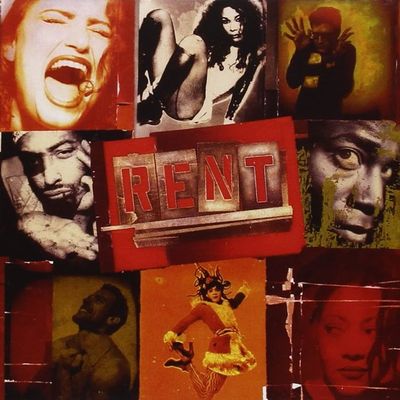
For only a few dollars each month, subscribers gain access to bonus content made special for fans of "A Musical Theatre Podcast." Case in point, listen to this preview of our conversation with Tim Weil, original musical director of the musical RENT, who has written a book shedding new light on this legendary musical that we've already covered on the main feed. This is exactly what PATREON! is for.
To learn more about Tim and find out how to order "Making Rent," please visit www.tim-weil.com.
To hear the rest of this episode, join us at patreon.com/amusicalpodcast.
Don't forget to follow us on Instagram and TikTok to share our posts and episodes!
More than anything, thank you for being part of this podcasting community.
Transcript
This transcript was automatically generated and might contain errors.
[0:01] Jeffrey Scott Parsons: Hi, listeners. It's Jeff, and I hope you've had a lovely week. About once a year, I like to share a bit of what we're doing over on Patreon! to help all of you listeners here on the main feed of A Musical Theatre Podcast realize what great content you might be missing. For only a few dollars a month, Patreon! brings you monthly essays, polls, contests, bonus episodes, and just like Oklahoma, Hello Dolly, Oliver, now Schmigadoon, actually, the exclamation point is essential to the experience. Now, out today for members of our Patreon fam tier is a conversation with Tim Weil, who was the original musical director of Rent, which is celebrating some important anniversaries. He has a new book all about his experiences creating the musical and collaborating with Jonathan Larson.
It's called Making Rent, and I really enjoyed chatting with him. Enjoy this preview of our conversation, and for the full 45-minute episode, be sure to go to patreon.com slash amusicalpodcast. Now, wherever you are, get ready to hear about this legendary musical from a brand new vantage point.
[1:16] Jeffrey Scott Parsons: P-A-T-R-E-O-N
[1:21] Jeffrey Scott Parsons: Patreon!
[1:26] Jeffrey Scott Parsons: Yo!
[1:28] Jeffrey Scott Parsons: Hello, Patreon exclamation point! In particular, Patreon fam, I am thrilled you're here. I'm thrilled that you're in our top tier of membership, because that means you get access to this very special episode. You know what? It's not just an episode. It's a celebration, okay? Why? Because this year marks the 30th anniversary of the musical Rent, and so you'd think that would make it the perfect opportunity, the perfect moment to do an episode about Rent on a musical theater podcast. Well, we did back in 2019. It was actually the second episode we ever did on the podcast, one of the longest in terms of running time, and it still gets quite a few listens to this day, which I think only showcases the lasting power of the musicals.
But still, I wanted to celebrate this anniversary because our guest easily has the behind-the-scenes story of Rent that you've never heard. Tim Weil started out on Rent as the audition accompanist and eventually became Jonathan Larson's collaborator and musical director. His new book, Making Rent, reveals how the musical has shaped generations of new American musicals, how that grew out of he and Jonathan's intimate partnership, and how, for the six years Tim worked on Rent's Broadway run, he endeavored to preserve Larson's musical vision. I can't wait to talk to him. Everyone, please welcome Tim Weil! Tim, I'm so grateful you're here, and I'm so grateful you're sharing this story because I didn't know about you. However, I must say, I know about your wife, and it makes me very, very fangirly over here. Yeah, it's all good.
[3:07] Jeffrey Scott Parsons: Tim is married to the great Randi Graff. And if you don't think I haven't been referred to as Tim Graff, you would be wrong. It makes me sweaty. I get so excited about Randi Graff. Are you kidding me? Legend status. We have so few modern American musical dames who can throw a zinger and sing a Cracker Jack song, but then also do I Dream to Dream? Are you kidding me? Anyway. She's all that. She is all that.
[3:43] Jeffrey Scott Parsons: She's all that, baby. We love Randi. Tell us about you, though.
[3:49] Tim Weil: Well, let's be clear, Jeff. You're like, I've never heard of you. Who's ever heard of the music director? Nobody. And that's a problem.
[4:02] Tim Weil: No, it's cool. It's totally cool. Well, then maybe we should start there. Tell us what a musical director does. I would like to think that you're essentially in charge of every note that's being heard by an audience member, and that's no small job.
[4:17] Tim Weil: Yeah. I mean, I think if you kind of look at the structure of the creative team, the director really has the 30,000 foot view because it's about the designers and it's about everything that happens in a musical. I think the easiest way to explain the music directorship would be to say that it depends upon the composer. The music director really works under the composer. So say, for instance, there's someone like Jason Robert Brown, who, as we all know, is a certified genius, straight up. 100%.
[4:54] Tim Weil: Jeanine Tesori, right tucked in there behind him. But Jason can do everything. So he will give you the full piano. If he was giving me his new musical to start rehearsing, there would be a full on piano part. The vocal arrangements would all be there. The arrangements would all be there. He would have a good sense of what the orchestration is going to be because like Sondheim, a lot of it is indicated in the piano score. So it can be as you crack open the Bible and get to work. It can be as easy as, here it is, teach this. Or, you know, you get to quite the opposite version. I don't think I'm giving away any secrets, but the famous team of Harvey Schmidt and Tom Jones, who wrote the Fantastics, 110 in the Shade. Harvey used to plunk out his melodies on a marimba.
[5:47] Tim Weil: What? And the reason I know this is because a good friend of mine who was a pianist was friends with Harvey for many, many years. And he would go over and they would together flesh it out into chords and harmonies and things like that. So it's from someone who's writing single note melodies, and I know some of you are still out there, to the insane geniuses like JRB.
[6:14] Jeffrey Scott Parsons: Well, and to your point, though, sometimes that really gives birth to something new and unique when you're just figuring out a melody on a marimba. You know what I mean?
[6:23] Tim Weil: Oh, of course.
[6:26] Tim Weil: There are spaces for all of these types of things, because who knows what comes of it. No, but let me tell you, I say this without any judgment. I'm just saying, it goes from A to Z in terms of what the composer will provide. And the really great thing that happened with Jonathan and I, just to kind of jump to right where Rent lands, is that he was a really, really good pianist. He had a really, really good vision, ear for what he wanted his music to sound like. And I sort of helped with what it felt like. And I also brought my other skills, which as a music director, I know how dramaturgy fits into melody making. Obviously, I've been playing in bands my whole life, so I know how the band should sound and how it gets divvied up and all that stuff.
And I also did a lot of vocal arranging before I came into my time with Jonathan. So our skills met up at a really, really great inflection point. And the great thing is, because I had these skills, he eventually came to rely upon me to take care of that stuff while he could get very, very busy with the very, very difficult work of creating this amazing show for 15 characters. Yeah, he was busy doing quite a few things when writing this show. Way. Yeah.
[7:55] Jeffrey Scott Parsons: So can you tell me, percentage-wise, how much were you in a musical theater, like a Randi Graff musical theater sound, and how much were you focused in a band rock and roll sort of?
[8:08] Tim Weil: It's a really great question, Jeff. Jonathan, his conceit was to have it be a concert and theatre performance. I specifically used the sentence in the book, we were a show wrapped up in a rock concert or a rock concert wrapped up in a show, I forget which. But yeah, that was kind of very much the Jonathan approach. And he also had the attitude of, let's try everything. And we did. And the other thing is, if you've seen the show, and for those of your audience that has, you know, the band is kind of like the 16th character in the musical, right? Really from the downbeat. Yeah, and also just their presence on stage. And if you saw it on Broadway, you notice the guitar player is furthest center.
So the audience sort of perceives him as kind of Roger's musical conscience. A very intentional play by Michael Greif, the director and Jonathan. So yeah, it was all wrapped in one. And, you know, the acting, the singing, the band, and our collective musical music making, as a company of singers, performers and musicians, it was very, very beautifully balanced. And I don't know if part of that was what I brought to the proceedings, but I certainly was exactly the right person to be doing it.
[9:40] Jeff: That's so cool.
[9:41] Tim Weil: In retrospect, but I even kind of felt it even at the beginning.
[9:45] Jeff: How so? Tell us.
[9:46] Tim Weil: I just felt like, boy, I have landed in the right place when Jonathan called to ask me if I wanted to music direct the show after I'd been playing auditions for a time. I just instantly knew that enough from auditions and from meeting Jonathan and Michael and just hearing them talk while I was very busy helping the singers. It just felt like a thing I wanted to be a part of. The workshop, the New York Theatre Workshop felt like a place I wanted to work. I had been working down in the East Village as a freelance musician playing in bands for years before then. So it was very, very comfortable terrain for me. I was less comfortable in the Midtown Broadway scene than I was at the New York Theatre Workshop, although I was doing a lot of subbing on Broadway by that time and the commercial Broadway work. But where I felt very, very comfortable was in that neighborhood that I had really sort of come of age in as a freelance musician in New York in the 80s and 90s.
[10:52] Jeff: So then I'm really curious about this little moment of the auditions, because can you help us understand what the vibe is? Are people that are coming in, do they get it? Or are you kind of searching for a needle in a haystack? How in the pocket was the theatre scene in terms of what you guys were trying to find and create?
[11:19] Tim Weil: Okay, great. Yeah, Jeff, let me work a little backwards. Interestingly enough, the closer we got to casting the second production that I did, which was the 1995 group, which became the original Broadway cast, by then we were looking for a little needle in a haystack, because we knew what we wanted. But when we began the 94 Workshop, it was kind of a combination of a reading and a workshop, but it definitely had a workshop feel to it, because there was the live band and it was a cast of 12 in 1994, and we bumped it up to 15 for the 1995 production. Jonathan and Michael were open to anything. Their motto, and then subsequently our motto was, why not? Let's try it. Interesting.
[12:12] Tim Weil: And that was the real ethos. And whoever came in, you know how actors will see in the trades, they'll see open call. When I went to play those auditions, it was truly an open call. Anybody who wanted to be heard, got heard. And it was awesome. It was almost utopian, right? That's so Bohemia, right? Like, there could be a place for you in this. Why not? Come on out. And everybody stayed open to it until we eventually got to the real practicality, like they have to be able to sing in tune, to be able to have rhythm. But seriously, until then, Jeff, we would consider anyone for any number of reasons. And then we had to bump up against the real practicality of, Jonathan has written this opus, and we have very few people inhabiting the opus, so they all got to be skilled.
[13:13] Tim Weil: When you hear from the original Broadway cast about how so many of them didn't think there was a place for them in musical theater, I think Adam Pascal has talked about that. I think Daphne Rubin-Vega to a certain degree. And I can't speak for them, but it almost feels like coming into this project, they were uncertain that Broadway was ever going to be a home for them. And yet, look what happened.
[13:38] Jeff: Yeah. Again, I love the way you're asking these questions, because now I can work backward. Broadway wasn't even anywhere- It wasn't even on there. No, it wasn't even on the radar.
[13:53] Tim Weil: All we were trying to do was, in 1995, cast this musical with the unbelievable commitment by Bernie Telsey and his very, very small company at the time. For those of your audience that might not know, Bernie Telsey is, for my money, the premier casting director in New York. And his office at that time was just three people. And so it was their diligence and their work that got that cast, some of whom eventually became, are becoming, have become iconic performers. And then working back from that, yeah, part of the open nature of it all was wherever we could find them, Bernie would find them. Yeah. And there's a lot of stuff in the book about that process. And it's a real tribute to Bernie's, as I say in the books, his gorilla casting tactics.
[14:54] Tim Weil: Yeah, he was a beast, man. He was a total beast. Incredible.
[15:01] Tim Weil: Yeah. And then a little luck, and then a little everything just kind of breaks right. And then we had this amazing, beautiful, talented, smart, and as we found out, very emotionally resilient cast.
[15:21] Jeff: Okay, how's that for a cliffhanger? Special thanks to Tim for being so generous with his time and memories. Be sure to order his book, Making Rent, which you'll find linked in our show notes. And there you'll also find a link to Patreon exclamation point, where you'll be able to listen to the rest of our conversation. One of my favorite moments is when Tim recounts how the creative team decided what to edit and what not to edit from Rent following Jonathan's passing, you know, when they were getting ready to take it to Broadway. It's fascinating stuff. More than anything, I'm grateful you're here and listening. And remember, no day but today.
© Broadway Podcast Network, All Rights Reserved