

Chances are if you're alive in 2023, you've been to Urinetown... the place not the musical. That's because despite being a hit back in 2001, the near apocalyptic state that URINETOWN: THE MUSICAL hilariously captures is somehow more relatable than ever: greedy corporate CEO's, environmental disasters, progressives with grand platitudes..... Read More
From the show: A Musical Theatre Podcast
Featured Shows
About
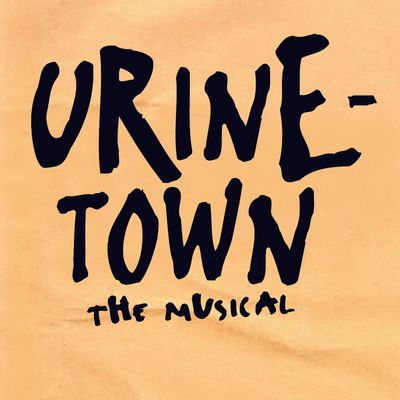
Chances are if you're alive in 2023, you've been to Urinetown... the place not the musical. That's because despite being a hit back in 2001, the near apocalyptic state that URINETOWN: THE MUSICAL hilariously captures is somehow more relatable than ever: greedy corporate CEO's, environmental disasters, progressives with grand platitudes... sound familiar? This week professor, director, and choreographer Kikau Alvaro is our guest to explore this brilliantly unique piece of musical theatre that inspires us to create art (no matter how weird it may seem) and laugh our way into having tough conversations.
Follow Kikau on Instagram and Twitter where you'll find info on his podcast "Carefully Taught." You can also see what he's up to at University of the Arts by visiting https://www.uarts.edu/kikau-alvaro
Want to support "A Musical Theatre Podcast?" Be sure to leave us a nice rating and review! You can also follow us on Instagram, Twitter, and TikTok for more great content. For only $1 a month you can receive bonus episodes on PATREON! And don't forget about our TeePublic Store where the profits we receive are donated to Broadway Cares: Equity Fights AIDS.
Transcript
This transcript was automatically generated and might contain errors.
[0:00] Jeffrey Scott Parsons: Welcome, everybody, to a musical theater podcast where we discuss the cultural and emotional impact of some of our favorite musicals in theater history. My name is Jeffrey Scott Parsons. You can call me Jeff. Today we are covering the musical Urinetown, possibly the worst and best title of any musical ever. It was a listener request from Lizzie. She said it's one of her favorite shows. Anthony also wrote in a while back and said he was working on a production of it. So I know a lot of you have been spending time in the toilet, so to speak. Here to chat about this unusual show with me is the Dean of the Ira Brand School of Theater Arts at University of the Arts in Philadelphia. He's also a director, choreographer, podcaster, and former dressing roommate of mine. Everyone, please welcome the amazing Kikau Alvaro!
[1:56] Kikau Alvaro: Yay! Hi, everybody!
[1:58] Jeffrey Scott Parsons: Yay! All right, Kikau, I sent you a list of listener requests to see what musical you'd be interested in chatting about, and you came back with Urinetown. So tell me why. Why'd you pick the show?
[2:14] Kikau Alvaro: Yeah, first of all, I totally love the show, but I do have a strange little history with it. It's very tangential, but part of my own artistic journey, and that is I was an usher at the Henry Miller Theater, which is now called the Stephen Sondheim Theater, when Urinetown first came to Broadway. I had heard that it was the rumblings about the show, but had not seen it, and then was hired as an usher at that theater space.
[2:48] Jeffrey Scott Parsons: Oh my gosh!
[2:49] Kikau Alvaro: Yeah. And I know you pretty well. I had no idea that this was true.
[2:53] Kikau Alvaro: Yeah, so that's a first kind of step toward it. I have since then directed the show twice, directed and choreographed the show, and it was with the seed of watching that show over and over and over again that just sort of felt like, oh my gosh, I know this. I know the show. I know how to direct it. I know how to approach it. And I just love it. Both times that I've directed the piece have been in university settings.
[3:23] Jeffrey Scott Parsons: Which I think is pretty popular, right? I mean, I think the show is great for educational settings for many reasons, none the least of which there are so many amazing roles.
[3:33] Kikau Alvaro: Oh yeah. Oh, it's perfect. It's perfect, perfect. I did the show in 2008, and then just recently closed a production here at UArts. So that's why I was like, oh, of all these shows, ready to go. It's the kind of show that's so relevant right now for many reasons, which I'm sure we'll talk about. And I think kind of exemplifies all of the things that I love about directing and choreographing, right? Collaborating on a piece that has wild characters and a real audience experience. We can interpret it in a million different ways and sort of speaks to social justice, police corruption, politicians, and environmentalism. Here in Philadelphia, while we were doing our run, we just experienced that water contamination, right?
So a week before we started our tech, Philadelphia was told, do not drink the water. And if you need to, please go and get bottled waters, which of course, all of the waters were taken from stores everywhere. So it's just one of those things that it's like, no, this is relevant. Yes, it's been around for many years, but like, wow, it's the perfect show for right now for so many reasons. In so many ways, I think that this show is more relevant now than when it came out. And we'll go into that for sure. But when I start to think about this show, it feels like a musical of complex paradoxes. Like it's both totally hopeless and made me laugh more than almost any show I ever saw in my twenties. It makes fun of musicals and also has some of the best musical theater writing of its time.
It's like saying quite a lot while constantly minimizing everything it's saying. And what's so impressive to me is that the tone that they were able to find within all of that contrast is so consistent. And so then you're simultaneously feeling safe about everything that's going on, which you shouldn't.
[5:41] Kikau Alvaro: I feel like what you're exactly saying is they've created a world that can just be anything, really pushes the limits. And also exactly as you're saying, can be so safe, can be so separate from an audience experience. Like, oh, look at this silly world that's happening, that I'm actually maybe learning something from or intrigued by or safe to laugh in. But the comedic aspects of it are so intricate and simple at the same time.
[6:16] Jeffrey Scott Parsons: So when you saw it, how early to opening were you to seeing the show when you were ushering for it?
[6:22] Kikau Alvaro: Oh, yeah. I joined pretty much after it opened. But definitely prior to their Tony time. So I'm just thinking of like, because it was September, it must have been like November, December of that time.
[6:44] Jeffrey Scott Parsons: And did you feel like the audiences immediately understood what was going on? Because for me, that's what I'm constantly amazed by. Within the first 10 minutes, you get exactly what's happening. It doesn't feel like a show that had to earn its place. But I could totally be wrong.
[7:04] Kikau Alvaro: Yeah, no, I think you're right. I think people knew immediately what it was. I knew and had heard about its process to get to the Broadway moment. So I think maybe people had some sort of idea. But it's kind of what's happening now with the musical Shucked, right, where people really don't know what that is. What is this? Also a very hilarious, super fun, perfect musical in its own way. But that was the appeal. It actually was like, you're in town, right? Okay, I guess I'm gonna go and find out what this is. And when people would leave the theater, it was with joy and with, oh my gosh, I can't believe what we just saw and super word of mouth kind of energy, and was in that particular season unique. Like, it was the Shucked of this season, right? Where you're just sort of like, I don't know where that falls. I'm not sure how to describe it. But it is great. You should see it.
[8:04] Jeffrey Scott Parsons: Shucked is such a great comp, I think for this. Everybody who goes to see it falls under the agreement that we're not going to talk about what the show is actually about, because we don't want to ruin it for anybody. And it's also kind of difficult to even explain, for that matter. So there's this mystery and everybody wants to go see what on earth this freaking show is about. It really is wonderful. And I get it. I want to actually be a part of the secret. It's exactly as you're saying. As an audience member, my buy-in is the experience itself, which is something that I, as an artist and human, really respect. Like, I'm coming to this theater space to experience something on this day or night that no one else is going to experience.
[8:55] Kikau Alvaro: Yeah, absolutely. And that entry point, that entry point of intrigue, I think is so exciting for an audience. And I mean, artists to discover as well.
[9:02] Jeffrey Scott Parsons: So let's talk about how it began. And what's, I mean, God bless freaking Greg Kotis. Because if you buy the script of Urinetown, he has written the entire journey of putting the show together in like the liner notes of the script. It's all documented for us. And now I get to kind of regurgitate it. He was a member of the Neo Futurists, which was like this theater company, right? And they were participating in a theater festival in, and I'm not kidding, Transylvania, circa the late 90s. Yeah. And after the festival, in true early 20s fashion, he's like, I'm going to strap a backpack to myself and have a few hundred dollars in my pocket. And I'm going to see Europe. I'm going to go to all of these great places before I go back to the States.
His first stop is France. And as you can imagine, a couple hundred dollars in Paris, France, does not go too long. So he almost immediately runs out of money. And now it becomes this like survivor type of situation of how on earth am I going to survive and also get back to the United States. As he's filling himself with complimentary crackers from the hostels and figuring out what to do, he also starts managing his potty breaks because in Paris there are like the fancier the toilet, the more you have to pay to use it. Like there are, I assume because I haven't been, there are public toilets that are available, amenities, if you will. But if you want to use like a nice one, you actually have to pay for it.
[11:03] Kikau Alvaro: Have you ever had to pay for a toilet?
[11:03] Jeffrey Scott Parsons: Uh, I have in the past, but I just don't think that it's an American typical situation. We're going to go into some store or some place to find somewhere to go.
[11:08] Kikau Alvaro: Yeah, for sure. Like we got Starbucks, right?
[11:11] Jeffrey Scott Parsons: Right. That's right. 24601. That's the bathroom code, the Starbucks.
[11:20] Kikau Alvaro: You got to change into your audition wear somehow, somewhere.
[11:23] Jeffrey Scott Parsons: That's right. That's right. Yeah. And I mean, it's just a different mindset in America. We get angry when there's like a bathroom attendant and they're like, do you want some perfume water? And we're like, get that away from me. I don't want to have to tip you. This is insane, right? Just give me my one ply and I'll be happy. So this is something that like is news to him, this whole idea of paying for public amenities. And as he's like holding it in while planning his next meal, because then if he goes and gets dinner somewhere, maybe they'll let him use the toilet. He starts imagining, well, what about a dystopian world where like a corporation takes over all of the toilets in the country because there is a drought and there's no water.
So a company has to oversee the usage of that and you have to pay every time you want to use the toilet. It's this strange, bizarre little thing that gets placed in his mind on this trip in Europe. And it keeps churning and churning in his brain and he keeps expanding and fleshing out the story. And then when he finally gets back to the States, he meets up with a friend named Mark Holman and they had worked together. I can't remember the name of their theater group in Chicago. Cardiff something? Yeah. Cardiff Giant Theater Company. There it is. And Mark had moved to New York to study musical theater composing. He did the BMI Lehman Engel Workshop, which we talk about incessantly on the show.
And so he meets up with him and kind of explains the idea. And much to his surprise, Mark Holman's like, yeah, let's do it. Let's write this musical about public toilets and we'll call it Urinetown. And thus begins this journey to create this absurdist piece, but actually a piece that has a lot of history in our musical theater tradition.
[13:27] Kikau Alvaro: So, on the podcast, we have yet to discuss The Cradle Will Rock or Three Penny Opera. And I apologize greatly, but sometimes you just really have, it can be a little bit of a dirge to bring up some of these older pieces. But I feel like by covering Urinetown, we might actually drum up some excitement to cover those too. So, Mr. Musical Theater College Man, can you talk to us a little bit about these two pieces? Because they have so much in common with Urinetown.
[13:59] Kikau Alvaro: Yeah, there's so much like the direct address to the audience, right? An audience both being in and a part of the
[14:10] Kikau Alvaro: Experience and also completely separated from it. You can be observing in one moment and then also be talked to directly by a character at any moment, right?
[14:20] Kikau Alvaro: That is right. That is right and that the play between both of those ideas really becomes its own style. There's also some elements like, you know this strong social justice or social impact. It to me feels almost like a mirror to the audience. Here's what's happening and being experienced by characters in the play that then you also are either experiencing or a part of. There's also some style things like the idea of a scarce scenic landscape and this may be why a lot of universities do this that you can a little bit on the cheap give this experience of seeing through seeing to the back wall. Things are really what they are. Even if it's heightened, there's something that sort of sits in its essence or truth.
That's so great. I will also say that I feel like at its core, The Cradle Will Rock, which was a Mark Blitzstein show here in America and The Threepenny Opera which began in Germany with, you know, Kurt Weill and Bertolt Brecht, the intention behind those shows was to criticize capitalism through a socialistic view. So they are using the art form of music and storytelling to criticize what they see as kind of like the root of all evil, which is capitalism.
[15:54] Kikau Alvaro: To be fair, warning everybody. We're gonna be talking about politics this episode because you can't avoid it. Yeah. Um, yeah, I have been a little bit in that camp where I have felt like okay if money is the root of all evil then like capitalism is the fertile ground from which it springs, right? But I feel like I've kind of changed my tune a little bit lately and actually, I will go a little bit further and say that I love the nuance that Urinetown brings to that conversation. I think it's probably one of the best we have.
[16:31] Kikau Alvaro: Oh, certainly. It is strange I just want to also point out as I'm thinking and speaking in draft that capitalism is also part of the structure of the piece even us talking about it now is because I've not only seen on Broadway this piece kind of flourish and grow but we have been doing this someone is making money itself is a capitalist, you know, venture whether it, you know, says it is or not.
[17:04] Kikau Alvaro: Yeah, it's this is a tough one right because I work with students who fall on the line between wanting to work in commercial theater and then I'm gonna say this may be controversial but like I'm not sure what the other thing is, right? Everything has some sort of money attached to it. So when a student says, oh, I just you know, I just don't see myself in commercial theater. I'm like, okay, that's fine totally fine but even the community theater you're doing has to somehow fund itself to do what it's doing or maybe the brand-new piece workshop something that you're working on also has its steeped in some sort of capitalist nature.
[17:49] Kikau Alvaro: So yes, there is doing art to do art but it is pretty rare for you to find something that doesn't have some sort of money attached somewhere even as an artist, this is this is so great. I'm glad that we're kind of on the same page a little bit here and I think it's because when you get into the place where we are right now you and I speaking where I'm currently working with an organization that's constantly applying for federal grants in order to bring about their purposes like even if you want to do theater not for the art, but as a nonprofit you're still existing in a capitalist society that is trying its best if I'm being totally honest, like sometimes we miss the mark completely but they're trying to allow these organizations to bring art to the masses because they believe it's an important part of society.
[18:41] Jeff Parsons: Right. So for everything that Urinetown brings up about capitalism being a problem, it brings something else up to remind us that like what I have as Jeff right now in 2023 has a lot to do with that same system.
[19:03] Jeff Parsons: Yeah, I mean the reason we have an iPhone, Pixar, yeah, there's no greater drive for innovation in the world than the capitalist society that the United States of America has created and I say that like out the side of my mouth because it makes me feel a little icky for saying so but I mean it's just truth. And so there's sort of understanding that and then there's pretending like that's not real. I worked for a long time at a regional theater that you know once you peel back the truths behind how people are getting hired how shows are being selected what we are doing to get audiences in or out right based on show selection everything has a bottom line.
[19:43] Jeff Parsons: Even and maybe especially now right post pandemic. We are counting the pennies we are counting the humans and for us in academia especially here at University of the Arts. We're not really interested in box office or ticket sales so it's like an interesting little twist when we're choosing shows we actually are truly serving the humans that are here as actors performers on stage designers directors so we can be more artistic but also it still has a bottom line like we can just draw that path everywhere.
[20:20] Kikau Alvaro: This also maybe fast forwards the conversation just a little bit but about the end of the show right, which is this isn't a happy musical, right? It very much looks like it hopeless even though there's a character named Hope in it. This musical is pretty darn hopeless, pretty darn hopeless and so it's fascinating how that feels like a bubble is being popped for the audience because they're like wait, hold on a second they too are on that page. Wait, this isn't happy. Wait what I'm gonna laugh at it I'm gonna walk out as you said hopeless but also sort of maybe energized or shifted or have learned something new maybe I'm gonna approach or euphoric from having laughed so freaking much or yeah exactly. There's so many different emotions that come up inside of it.
[21:10] Kikau Alvaro: But when we specifically go deep on politics or corruption or capitalism it's like it doesn't really end necessarily in a happy place and that's okay. Things are hard and sometimes things are weird and systems are in place and no one really knows why and I'll say this I don't know if this is too tangential, but like I think we I choose what to spend my money on and even if it doesn't feel significant to the world I'm just not gonna go to Chick-fil-A. Sorry Chick-fil-A just not happening, right?
[21:48] Kikau Alvaro: And it's because I have a point I also in a positive way or maybe not positive way choose to decide how to spend my money when it comes to seeing art myself. I will never ever ever on my social media or anything kind of trash or bash a show but I'll also not talk about it. I'll also with my money will spend and share like I am my own and have my own kind of theory around that we all can make choices when it comes to the art and the things that we're choosing to have in our lives.
[22:26] Kikau Alvaro: This is so great because by revealing what intention we have behind our money or how we spend our money where we let it flow we reveal that there can be almost a spiritual side to capitalism. You know what I mean? Like that's where the democracy comes in is because each person then has the choice of what to do with the money that they earn hopefully hopefully that there are the systems in place that allow for you know minimum wages and things so that everybody has a fair shot but with the money in hand we can decide what to do with it.
[23:02] Jeff Parsons: That's right. I feel like it is the only place our voice can be heard sometimes. I kind of love that we collectively get around something this idea of I don't know TikToks going viral. I just find it so interesting that like a million plus people also feel the same way about this one thing. So not even money but like time energy. I love when we all are swimming together about something and you think that you're maybe the only one. So it is this is an interesting conversation to have it just sort of now applying money on to it, right? Like what do you do about it?
[23:41] Kikau Alvaro: I also think that people find discussing money weird or hard they have their own relationship to it from when they were young or their parents or their upbringing or whatever. So I think that any opportunity to kind of like talk about it or bring light to it kind of shifts the DNA of the space. It's so true it also makes me then think you know getting back to Urinetown the kinds of conversations that artists like Greg Kotis and Mark Hollmann had to have about taking this piece into the commercial into Broadway something all of their work with either the neo-futurists or the Cardiff I already forgot what that freaking thing was called.
[24:26] Kikau Alvaro: God bless them they're doing amazing work. Six windows open card a group card of Giants. I will never forget you again. Anyway, but like going from those type of underground things to then creating this musical essentially on an organ in a church because Mark Hollmann one of his like gigs was playing organ in the church. So the first song that he wrote was "It's a Privilege to Pee" which he played for Greg Kotis in the sanctuary of the church on an organ. Can you imagine? Like that's just the best visual I could possibly have.
[25:05] Kikau Alvaro: But to go from that to then like a fringe festival because that was the only place that they could get the thing for those who don't know what fringe festivals are they happen all over the country but it's kind of a paid-to-play type situation where if you raise a certain amount of money give it to the festival they'll give you a space to then perform your show for like 10 performances and get as many producers to come and see it and take it, you know somewhere else. Honestly fringe festivals. Not a lot comes from fringe festivals I'm so sorry to say that but it's it's unfortunately true except in the case of freaking Urinetown, which is the reason to keep on doing them because honestly without a fringe festival Urinetown would never have made it to Broadway period exclamation point.
[25:51] Kikau Alvaro: So they do the show they mount the show in a fringe festival, which is like kind of unusual to have a full musical with like a big cast. Usually it's maybe like a show with four characters, right? It's very very small. Urinetown is a pretty big show. Mark Hollmann played the score on the piano for everybody. It was a huge hit people were of course really interested by it. They also apparently had this really great theater that was close to the ticketing place at the time so people were going to see what like was playing and then they would hear the cast of Urinetown singing their faces off and be like, ooh, that sounds cool let's try and get tickets to that. They sell out they oversell every single performance of this tiny little space that gets like is way too hot everybody's sweating profusely having the time of their lives.
It extends they like do another two weeks of performances and it just so happens that a producer comes and is like I think I know how to get this on Broadway and they trust him but he has a couple of conditions. He wants to put in Broadway actors he wants to get a director who's you know, a little bit more quote-unquote legit.
[27:03] Kikau Alvaro: So I can imagine this being a little bit of a deal with the devil, right? Do they leave behind their sacred morals about what producing theater looks like in order to like sell out to the Broadway gods? I just love this so much like we think the way to get a musical to Broadway is I don't know even in my own mind, I'm thinking there's an out-of-town tryout and then it kind of swirls around and then suddenly makes its way. We've since Urinetown had many different things some things that go directly to Broadway some things that maybe have a regional premiere somewhere and then come in this I remember being so weird it was in this festival and then all of a sudden fringe festival and all of a sudden it's here on Broadway like it just feels unheard of and now we have since had multiple things like this where you're like, oh yeah there is no one way there is no one way for something to get to where it's going to get as long as there is audience for it and interest and as long as the piece itself is good or the fact that you think something has to make it to Broadway, right? Like there's so many names and that nameless people right like that's the part about this that's like suddenly you're...
[28:21] Kikau Alvaro: URINETOWN, making this big of a splash, truly opens doors for many pieces. A show like TITLE OF SHOW would not have gotten to where it got, or even A STRANGE LOOP. The bizarre paths it takes, the years that go into putting these shows together, all add up, and you're kind of in the right place at the right time, and if they didn't maybe do that extension for the Fringe Festival, like, would that producer have seen it? I'm also thinking of shows like SPELLING BEE. It's like these things that just would not have gotten to where they got if the right eyes were not on it.
[29:00] Jeffrey Scott Parsons: 100%. And what's interesting about URINETOWN is that not only was it at the right place at the right time, but also the wrong place at the wrong time, because it has all of this fortune, it has all of this luck, it gets transferred to Broadway, and it is supposed to open, not kidding, like three days after 9-11. And then 9-11 happens. And to be perfectly glad, we always talk about how MAMMA MIA was like the musical to bring us back after 9-11 because it was just sheer fun and party time. There was nothing about URINETOWN that said, like, this is the 9-11 musical. And yet, it opens, it gets great word of mouth. Once again, everybody enjoys going to it, and it's a big hit. As incredible as A STRANGE LOOP was, is, and TITLE OF SHOW, URINETOWN ran for years.
Like almost 900 performances, had 10 Tony Award nominations, one for director, best book, best score. It lost best musical to THOROUGHLY MODERN MILLIE. THOROUGHLY MODERN MILLIE, how do you feel about that, Kikau?
[30:09] Kikau Alvaro: This is a good example. I actually understand it. And I have a, maybe this is in parentheses, but foot-in-my-mouth story, where I was going to an audition or something at the time. I was riding in an elevator, up or down, I'm not even really sure. And someone was asking me, oh, what do you think? Who do you think is going to win the best musical? And I was like, well, it's not going to be THOROUGHLY MODERN MILLIE. I know that it's going to be URINETOWN, because I think it's this. I didn't realize that I was in an elevator with company members of THOROUGHLY MODERN MILLIE. They were all behind me. It was such a foot-in-my-mouth. Like, oh, oops, sorry, all of you stars of THOROUGHLY MODERN MILLIE.
I just was presenting this other alternative world. I mean, truly, I was so passionate, and just saw the truth right at that point. Yeah, I'm going to speak the truth, artistic truth. This is going to win. Right. And then, whoops, did not realize. Hi, everybody. Congratulations on your show.
[31:12] Jeffrey Scott Parsons: Anyways, THOROUGHLY MODERN MILLIE, at the time, it's so interesting, because people aren't doing that show now, for a variety of reasons. And here we are. And here we are talking about URINETOWN, right?
[31:26] Kikau Alvaro: Yeah. A show that seems more appropriate for 2023 than it does for 9-11-2001. But that being said, there's a lot of Tony Award precedents, if you want to look into the history of the Tony Awards, where shows win, say, Best Book, Best Score, but don't win Best Musical, Ragtime, one of them, Falsettos, another one of them. There are shows that, I don't know, sometimes because the bigger show is a bigger show and maybe requires more collaboration from all of the designers and all the producers to be creating the amount of money that it takes to then connect with an audience in a big, successful way, sometimes that just deserves an award. I don't know. I don't know. It's always an interesting give and take.
[32:18] Jeffrey Scott Parsons: Yeah, I also think, I mean, it is so silly always to talk about awards, although I love it. I'm like an EGOT stats fan, yeah. I just want to acknowledge that there's lots of reasons why people win things. Can this show tour better or tour more? Or are there producers putting money into this in a different way? More money behind it. Always really fascinating, for sure.
[32:44] Kikau Alvaro: So, needless to say, URINETOWN's a big hit. Let's go through it, shall we?
[32:48] Jeffrey Scott Parsons: Absolutely. All right, so the show begins with Officer Lockstock, who's kind of our tour guide, if you will, taking us through this story. And from the get-go, he's saying, Welcome to URINETOWN, the musical, not the place, right? I mean, from the get-go, there's this self-awareness of, we know you've all spent a lot of money on a show with a disgusting title. And another character emerges to kind of be the voice of the audience, right? To possibly bring all of the subconscious to the forefront. And that character's name is Little Sally, quite possibly one of the best musical theater archetypes of all time. Can you describe Little Sally?
[33:34] Kikau Alvaro: She's a little street urchin, right? Little street urchin. She's tough. And what I love is this device through Little, right? Kids and their ability to just speak truths. And just say what they are themselves. And we just buy it. We're like, Great, Little Sally. It's a kid. Even though that is a full-grown human on stage, we sort of are resolving in our minds, Well, this is a young person. They're telling us this is a little girl. And, yeah, I think it's a brilliant character, a brilliant device, I think, for us to continually check in with throughout the piece. To hear those truths. Wait a second. What's happening here? What's going on? And it's an interesting way for even the writers themselves to fast forward to something different or to really point out what's happening in this moment. I think it's a brilliant, brilliant character.
[34:34] Jeffrey Scott Parsons: Oh, my gosh. So much comedy here at the top. She wants to kind of tell everybody what's happening in this place, right? Like the socioeconomic situation that they're in. Right? And Officer Lockstock says, No, that's too much exposition, Little Sally. Nothing kills a musical like too much exposition. And she's like, Yeah, how about a bad title? The jokes are just so great. And shout out to Spencer Caden, who was the original Little Sally, the only principal who was with the show from the get-go. She was not replaced by like a name actor. She was there at The Fringe. She was one of the company members of the Neo-Futurists, I think, with Greg Koda. So like just somebody who like really made a splash.
[35:20] Kikau Alvaro: Yeah. And that partnership between Spencer Caden and Jeff McCarthy, who was the Officer Lockstock. It's that like false bravado. That pairing is just so brilliant. It's so brilliant.
[35:33] Jeffrey Scott Parsons: That's so true. And she's able to kind of cut him off at the knees at every turn. So the sound of this musical, despite, once again, having this really hilarious and self-aware tone, the sound of it is pretty Kurt Weill, very kind of German. So this first song is bum, bum, bum, bum, bum, bum. You know, it feels heavy. It's a brilliant tone that they were able to balance that. John Rando, who was able to do that, choreographer John Carafa. What I love about this whole company and cast of URINETOWN is that through the staging, through the choreography, it was able to do something that I think the producers didn't have the guts to do, if I'm being totally honest. In the producers, they talk about we're going to create the worst Broadway show ever, right?
But all of the dancers are incredible. And Susan Stroman's choreography is polished gorgeously. So it's impeccable and inappropriate, and that's where the comedy is found. But here in URINETOWN, you've got non-dancers doing stereotypical musical theater choreography with flexed feet and not understanding turnout. And that's where that comedy is found. Nobody's got the Broadway bod. And if they do, then their character's pregnant. And eight months pregnant, and they've got this huge belly. So I just love all of those dynamics and diversity found within the cast.
[37:05] Kikau Alvaro: Oh, my gosh. It's the best part. It's also a good reason why lots of colleges do the show because it offers you what I would call a ramshackle ensemble, right? The possibilities are endless when it comes to the types. Even though the character names of the ensemble are like Robbie the Stockfish and really specific names sort of feels very Guys and Dolls-ish.
[37:39] Jeffrey Scott Parsons: Yeah, yeah, yeah. Harry the Horse.
[37:41] Kikau Alvaro: Who those people are really are super open. It plays into what I think young people right now are interested in, which is creating their own spaces and adding their own voice to the piece.
[37:53] Jeffrey Scott Parsons: Yeah, I love it. What we find out through all of this and this amazing cast of characters is that URINETOWN is an idea. We don't know where it is exactly, and we're told that we will find out where it is in the second act. But for the meantime, all we need to know is that URINETOWN is kind of a state of mind where you feel imprisoned specifically by this set of circumstances. This area, this land has been in a 20-year drought. There is no water, so therefore a corporation has taken over the public bathrooms. People have to pay in order to pee, and that has completely drained the economy. It's made the fat cats fatter, and everybody else is spending all of their money just to, you know, not go on dialysis.
Brilliant. It's the premise. An audience having zero idea what this piece is about, they're being told exactly what it's about, and there's still this mystery. We don't know what URINETOWN is, but, like, we all can understand and appreciate, as we spoke about before, what it would mean if we had to pay every single time we had to pee. Do you know what I mean?
[39:03] Kikau Alvaro: Yeah, yeah, yeah, yeah. The discomfort.
[39:05] Jeffrey Scott Parsons: And there is nothing more uncomfortable than needing to go to the bathroom, and there's a line, or you're down a couple pennies, and so you can't go use it. And, you know, Officer Lockstock, he and his fellow police officers are making sure that people don't go in the bushes or in the streets or, you know, in a water bottle in traffic, which I have done a couple times in Los Angeles because that's just what happens in traffic in Los Angeles. The second number that we come to is the first number, once again, that Mark Coleman wrote, called It's a Privilege to Pee, which is sung by one Miss Penelope Pennywise. Pennywise is in charge of one of the public toilets, and it's not just one of the public toilets. It's the worst. All of the poorest people use it, but she's also incredibly militaristic, right? She understands her duty, and she has a number two. She has a helper by the name of Bobby Strong, who is a good kid, and she recognizes he's a good kid.
[40:09] Kikau Alvaro: Oh, my gosh, all this dialogue makes me laugh so hard. Nancy Opel on this cast album makes me laugh so hard. Brilliant. Absolutely brilliant. By the way, Patti LuPone's understudy in EVITA back in the day.
[40:20] Jeffrey Scott Parsons: Oh, I didn't know that.
[40:22] Kikau Alvaro: Of course. That's crazy. She went on a couple times. She's amazing. I mean, and still touring the country. She's Cinderella's mother in the INTO THE WOODS tour.
[40:34] Jeffrey Scott Parsons: Is she really?
[40:35] Kikau Alvaro: Nancy Opel, yeah. She's amazing.
[40:38] Jeffrey Scott Parsons: Oh, my gosh. Legend, legend.
[40:40] Kikau Alvaro: Legend. It's a privilege to pee, as she tells us, and everybody's got to pay the fee. The problem that happens, though, during the song is that Bobby's dad has to go really, really badly. He doesn't have enough money. Bobby Strong asks Pennywise, hey, can he use it just this once? Please, it's my dad. She says, absolutely not, and so he has no choice but to relieve himself on the street, and he is promptly taken to URINETOWN by the police officers. This is a real turning point for Bobby, right, who sees his father carted away simply because he lacked a few pennies in order to go to the bathroom.
[41:18] Kikau Alvaro: Yeah, it's an interesting launch into a piece, right? The fact that urine and someone urinating really is what starts, you know, what sort of sets the story off.
[41:30] Jeffrey Scott Parsons: It's the inciting incident.
[41:33] Kikau Alvaro: The inciting incident. Coming back to this musical, I was like, where is the government in all of this? Like, why haven't they stepped up? And they actually do address that, and it's because the owner of the company, which is called Urine Good Company, hilarious, his name is Caldwell. Caldwell, Caldwell?
[41:53] Jeffrey Scott Parsons: Caldwell B. Caldwell, yeah.
[41:55] Kikau Alvaro: He's paying off politicians. He's paying them off. But ideally, like, if the government was working well, he would have never had this thing, right? And as much as we like to complain about government, this is why the government exists. But you can also see how slippery that slope is, right? Because politicians are humans, too. Corporations can hide behind these walls, but really they are humans as well. And in human interaction, there is corruption.
[42:30] Kikau Alvaro: Side deals, there are conversations like, you know, we can, it's happening right now with the Supreme Court, right? Like, people who know people who know people get us to this position.
[42:44] Jeffrey Scott Parsons: Yep, 100%. Clarence Thomas. So, the next person that we meet is Hope Cladwell, who is the daughter of the, you know, CEO of URINETOWN company. She is coming to the company to work. She's entering the workforce, couldn't be happier, couldn't be prouder of her dad, who has created this amazing organization for everyone to work at. And, of course, everyone who works there thinks that he's basically God. So, like, no problems there. Your dad is treated well by everybody at his work, like, it seems like a great place. Unfortunately, they're planning these rate hikes. Now it's going to be even more expensive to use the toilets. And when they go to the amenity that Pennywise oversees to announce it, Bobby Strong snaps and says, you know, leads a revolution to say, this is not right. We cannot do this. Just so many great songs this character has. But what is this one? Look to the Sky?
[43:46] Kikau Alvaro: Look to the Sky. Yeah. Or Look at the Sky.
[43:49] Jeffrey Scott Parsons: Look at the Sky. Right. You're right. Now, this is where it's kind of fun to add in the nuance of the other side. Because all of the platitudes that Bobby calls out, Look at the Sky, Run, Freedom, Run, you know, all of these different things are so inspirational, and they sound amazing. And Hunter Foster, who was singing, like, sounded incredible. But which, by the way, if you're in Town 1 or Thoroughly Modern Millie 1, either way, the Foster family was having a great night.
[44:21] Kikau Alvaro: Oh, a great year. Right? Regardless of what he's singing, there are no specifics. Nobody has a plan. Everybody has all the feelings and all of the like the good intentions. But like, that's kind of the problem with liberals sometimes is that we're like, I have all these feelings, and I know what's just and what is not. But like, no game plan.
[44:46] Jeffrey Scott Parsons: Right. The whole concept of follow your heart.
[44:49] Kikau Alvaro: Follow your heart. Exactly. Follow your heart, which becomes, you know, almost scientific when they're talking about aortas and, you know, all of the different pieces. And so we go, we go science for a second there. But really, it's like, we can't truly define what this thing is that we're trying to do in the first place. So it's like, I don't even know, even if you could put it into words, if you would be able to actually fully understand or comprehend the thing you're trying to do. It's much bigger than words.
[45:19] Jeffrey Scott Parsons: You're right.
[45:21] Kikau Alvaro: Yeah. Or the result of what you would get when you got what you're trying to do.
[45:25] Jeffrey Scott Parsons: So totally. Bobby meets up with Hope. They kind of have like a little meet cute session because he doesn't know what to do. And he's obviously feeling very impassioned by this whole thing that went down with his dad. So and when she, who's like so innocent and pure and thinks that the world is beautiful, says, listen to your heart, like they have this moment of true connection, as silly as it is.
[45:49] Kikau Alvaro: You're right. What happens next? Where are we at the story?
[45:56] Jeffrey Scott Parsons: Then we go back to UGC to do Don't Be the Bunny.
[46:01] Kikau Alvaro: Don't Be the Bunny, which I mean, after having Donald Trump as a president, you're like, they must have read The Art of the Deal when writing this song.
[46:10] Jeffrey Scott Parsons: It's insane. It's insane how accurate.
[46:12] Kikau Alvaro: It's word for word how accurate it is to this type of mindset. Well, someone's got to be a bully. So it might as well be you. Right? Don't be the bunny. Don't be the prey. I'm not sure what came first, right? Art of the Deal or these politicians seeing this show and going, oh, we're seeing ourselves. This works.
[46:33] Jeffrey Scott Parsons: Right? This works. Yeah, this is effective.
[46:38] Kikau Alvaro: I've seen campaign. Oh, my gosh, I can't think of what his name is in Florida.
[46:44] Jeffrey Scott Parsons: Ron DeSantis.
[46:45] Kikau Alvaro: Ron DeSantis. I can't believe I'm even saying that. But where there's conversations about how to approach interviews and debates, and that is to truly take no prisoners, to just bully your way through it. And nothing is your fault. And you're really kind of pushing the whole time that that is the conversation that they're having. And I'm like, that's exactly what this character is. Maybe a little bit more suave, but sure. Definitely. There's a musical number, but it's still the same thing.
[47:16] Jeffrey Scott Parsons: All right. From here on out, I'm calling it out. Whenever I see any of this behavior, I'm just going to be like, don't be the bunny.
[47:22] Kikau Alvaro: Yes. And then it will lead to a conversation about musical theater and the world will be changed.
[47:27] Jeffrey Scott Parsons: After this song. I mean, what does what do you think Hope walks away with from hearing her dad talk about this?
[47:33] Kikau Alvaro: Oh, I think it plants the seeds of something different, right? She goes to the most expensive university in the whole world to learn how to manipulate great masses of people. That's like from the show. And I think she realizes that these two ideas can't happen at the same time, where we're manipulating great masses of people and also following our heart and having true, meaningful relationships with the people that you're trying to manipulate. So I think for her, don't be the bunny. The function of that really is a turning point of wait, hold on a second. Something's weird. Something's going on.
[48:12] Jeffrey Scott Parsons: The first act ends with this first big clash between the corporation and the revolution that's happening at Amenity No. 9. And when Bobby realizes that Hope is Cladwell's daughter, because at this point they were just, you know, strangers that met and connected. Once he realizes that she's his daughter, he decides that the only way to get out of this confrontation is to kidnap Hope and use her as leverage against Cladwell. So the rebels escape with her as their hostage. And that gives way into this like police chase with a great gag where there's all this slow motion choreography and Officer Lockstock says, you know, they weren't able to catch him because they were moving so slowly. Just freaking brilliant. It's a great ending of the first act, right?
[49:05] Kikau Alvaro: In a different version of this musical, the second act would all hinge on whether or not Bobby and Hope were going to be together. And in this musical, they are together, but only because he's kidnapped her. It's fantastic.
[49:19] Jeffrey Scott Parsons: There's some fun surprises in act two, but like that itself is like so wild. And it certainly does not follow the RNH model, right? It certainly doesn't follow any traditional theater model that you can think of.
[49:32] Kikau Alvaro: Yeah, so true. And then intermission.
[49:37] Jeffrey Scott Parsons: And then intermission. So act two begins and the rebellion is hiding, what, like in the sewers?
[49:43] Kikau Alvaro: They're hiding in the sewers. That's right.
[49:47] Jeffrey Scott Parsons: Next to a large sign that says secret hideout. That's really one of my favorite parts.
[49:54] Kikau Alvaro: Signage is important. Here at the top of act two is also where we find out what exactly is you're in town.
[49:59] Jeffrey Scott Parsons: Yeah. So earlier in the play, Little Sally actually asks Officer Lockstock what it is. And he says something along the lines of, I can't quote exactly, but I can't tell you this now. I can't just blurt it out and say, there is no you're in town. We just kill people, right? Like that is, we have that seed planted earlier in a joking manner. We get to this song and we hear different interpretations of what you're in town might be. We hear from the poor, what it might be from Bobby and his mom, Josephine. And then it kind of comes down to Little Sally describing this metaphysical nature of it. Like perhaps it's still this mystery. So to the characters still at this point, we do not know what you're in town is. The characters don't know.
[50:48] Kikau Alvaro: That's right. The audience has some seed of truth.
[50:54] Jeffrey Scott Parsons: So then launching back into the story, Bobby, his mom, and Little Sally have gone out like to try and get more people to join their crusade, right? And that leaves the rest of the rebels there in the hiding place with hope. And they decide that the best way to get revenge on Cladwell is to kill her. And they started this number called Snuff That Girl, which makes me cry laughing because it's basically cool from West Side Story, but with non-dancers. I love it so freaking much.
[51:32] Kikau Alvaro: It's so fantastic. And they're all like murderous and wanting to kill this poor girl. Oh, it's so good. It's so great. Shout out, by the way, their Little Becky Two Shoes and Hot Blades Harry are kind of the two rebels who are kind of leading the charge in this number. Originally on Broadway, Ken Jennings, the original Toby from Sweeney Todd and Megan Lawrence, right? Who was in Holiday Inn and stuff. Just like incredible people in the ensemble in this show. Each one just a principle in their own right.
[52:10] Jeffrey Scott Parsons: Amen. Right when they're about to kill Hope, Bobby comes back in and stops them. And he tries to remind them, once again, of this feeling that really can't be put into words. And so he sings it as a song, Run Freedom Run, which definitely has to be tied to the fact that the composer was working at a church at the time because he takes us to church. You couldn't ask for a better act to energizer of a showstopper. I feel like the combination of both of these numbers sort of speaks to the ways in which people can be influenced in one way or another, right?
[52:48] Kikau Alvaro: That's so great. I love it. Okay, great. We're just gonna kill this person. Okay, wait, no, never mind. We're not going to and we're gonna look at this with, you know, it just feels so crazy.
[52:59] Jeffrey Scott Parsons: Hot and cold.
[53:03] Kikau Alvaro: That's so great. I didn't even think about that. But you're right, we swing from total opposites almost immediately, thanks to these two numbers.
[53:08] Jeffrey Scott Parsons: After this number, Pennywise, I don't know how she found the secret hideout, but she finds it, right?
[53:13] Kikau Alvaro: She finds it because she knows the sewers just as well as Bobby does.
[53:19] Jeffrey Scott Parsons: Oh, true, because they work at Amenities No. 9. Pennywise, oh my gosh. What a ridiculous woman. She bursts in and says that Cladwell wants him to come to the UGC headquarters. Bobby agrees to go with Pennywise, but only after he's reminded by the rebels that if anything happens to him, like if anything happens to Bobby, this is their leverage, then Hope gets, she gets the ax.
[53:50] Kikau Alvaro: This brings out a very strong emotional reaction from Miss Penelope Pennywise.
[53:56] Jeffrey Scott Parsons: Yes, it does. Miss Pennywise is interesting because she sort of exists in this, like, middle class. Like, she's part of the elite somewhat in this play, but really she's just without any of the perks.
[54:09] Kikau Alvaro: Yeah, so it's like, I'm imagining that if people are watching the play, they're going, oh, I'm kind of like in this area, or I kind of do work for the man, or I am the man, right?
[54:22] Jeffrey Scott Parsons: Oh, that's so true. Yeah, I guess I am store manager. I'm sales lead.
[54:28] Kikau Alvaro: That's right. That's right. I guess I'm the lead. So then here we do learn in this moment, in this sequence, that there might be some more of a reason why she's interested in making this all happen, right?
[54:38] Jeffrey Scott Parsons: Yeah. Pennywise takes Bobby to the headquarters, and basically what Cladwell does is he tries to buy him off. Sound familiar? Bobby's offered just like a suitcase full of cash and also a full pardon to all of the rebels as long as hope is returned and everybody agrees to the fee hikes. And Bobby refuses because that goes directly against why they began the rebellion in the first place. So he sends him to Urinetown. He's like, all right, well, you're going to Urinetown. And Bobby says, well, if anything happens to me, if you send me to Urinetown, they will kill hope. And he's like, all right, well, I mean, I guess that's just the choice I have to make. This truly horrifies Pennywise. She can't believe how evil Cladwell is.
And so he has her arrested as well. And everybody in their own little world starts singing this amazing song called Why Did I Listen to That Man? In which they're talking about one person that they believed, right? Bobby's talking about his own heart. Pennywise is talking about Cladwell. Hope is talking about Bobby. At the end of this song, another crazy twist, Lockstock and Beryl, who's his like, oh my gosh, that's so funny. Lockstock and Beryl, who's Officer Lockstock's like little minion. They take him up to the top of the headquarters building and they throw him off and he dies. That's when we realize that's what Urinetown is. Urinetown is just death. They just take you up to the top of the building and push you off and you die.
And we're thinking, no, like I remember watching this in the theater. I saw the national tour when it first came around. And I remember thinking like, oh, well, Bobby's not actually dead, right? But they make a point to say that he dropped and there's no way he could have survived.
[56:41] Kikau Alvaro: It's hilarious. One of my favorite moments is when Tiny Tom says to Little Sally, is he all right? After it's very clear, it is very clear that he is not all right. He just sort of so sweetly and innocently asks, is he okay? No, he's not. He just got shoved off a building.
[57:03] Kikau Alvaro: Yeah, yeah. So Little Sally comes in contact with Bobby's body as he's dying. And so she returns to the secret hideout to say that Bobby is dead, but that right before he died, he had a message that he wanted to give to Hope. And the song is called Tell Her I Love Her. And that he wanted everybody to still fight for what they know is right. Once again, these large platitudes. I just love it. I love the song so much because it just pokes holes in the things that we make precious, right? So someone dies and then like, there's this sort of grotesque reality of someone who has fallen off of a building.
[57:50] Jeff Parsons: Yes. This is like a comical version of Little Fall of Rain from Les Mis.
[57:58] Kikau Alvaro: Exactly. Exactly. There's definitely some Les Mis throughout the whole show, but this is that. Great number. Despite Bobby's great words, the rebels are still all ready to murder Hope, right? They're like, yeah, this is true, Bobby. He's dead. And now Hope will be soon. And once again, right at that moment, Pennywise enters and offers herself instead, revealing one of the other great secrets of Act Two, that she is Hope's mother and that she and Caldwell B. Cladwell had a secret romantic tryst. And Hope is the love child of said relationship.
[58:36] Jeff Parsons: I'm sure this follows some, you know, in a book writing about how to make a musical, there's some sort of like Act Two surprise or something. But this, in the context of the piece, is crazy. Like, it's such a surprise. It's like, wait, what? What are you talking about? And then it does make sense when you look back at all the different things about her being nicer to Hope and her relationship with Caldwell, etc.
[59:05] Kikau Alvaro: Yeah. It also somehow makes Caldwell more interesting that he wanted to bone this chick. You know what I mean? Like, what does that say about him? He's one of the people as well, to some degree.
[59:16] Kikau Alvaro: So, Hope, in another surprising twist, basically takes over where Bobby left off and convinces everyone to let her lead them. And she and Penny and all of the rebels march to the offices and Hope shows up and she's alive. Like, even though her father decided that she was going to die and that was okay, he's overjoyed. But then, of course, the rebels show themselves and that means that his reign of terror is over. They decide to send him to Urintown as well. He pleads to them and says, like, no, there is no future for you if you get rid of me. And they decide to kill him anyway and they throw him off the roof.
[1:00:09] Jeff Parsons: Wild. The same fate that Bobby had.
[1:00:12] Kikau Alvaro: So, now the town is finally at peace, right? The age, like, fear is over. People are looking forward to a bright new day. The Urine Good Company organization is renamed the Bobby Strong Memorial Toilet Authority. And now people can pee whenever they want. What is it? It's so funny. They say, whatever they want, wherever they want, with whoever they want. I mean, if that's not America, then I don't know what is. And Hope sings this beautiful song called I See a River, which just makes you want to pee when you imagine that. Anyway, it's this rousing anthem that leads us to believe that now the river's flowing in a really beautiful way. Unfortunately, that's not the ending of this musical.
[1:01:02] Kikau Alvaro: Once again, these bubbles that get popped, you finally think that we're on a hopeful end and everything's great. And then you learn that the water has become brackish and undrinkable and that actually the things that Cladwell had in place, the regulations were in fact kind of working and keeping things going for as long as it did.
[1:01:29] Kikau Alvaro: So then all of a sudden, nobody has any water. And there's this moment where Bobby's mother is like, oh, if only I had a cup of cold, fresh water. And Hope says something really stupid like, but don't you see, you are the water. You are the river. It's like, no, but I'm still thirsty. Anyway, it's the craziest ending to this crazy, crazy show. As terrible as the company was, they were actually kind of helping in their own weird way that the regulations actually were working. And then that leads to this idea of like, what the fuck musical is this? What the musical is this? Like, what did we just watch it at the very end? The whole point, right, was that they were doomed to be like, and there was no hope doomed, doomed, doomed, crazy.
[1:02:25] Kikau Alvaro: And so then they sing that this place has finally become what they had always feared it would become. What it always was, which is you're in town. Yeah, I don't know. There's so much I want to talk about, but this episode's already way too long. Just this idea of like, what fear does to people, how it's helpful sometimes, how it's not helpful most of the other times, and how we as adults have to know the difference.
[1:02:58] Kikau Alvaro: Yeah, how there's some sort of, there are agreed upon systems that are in place that only when they're interrupted, do we think about it, right? Like the pandemic made us go, oh, wait a second. Like, we don't need this area for parking. We're going to turn it into an outdoor, whatever. Like, that there's regulations that we don't even ever question that affect our daily lives. Fascinating. And some of that is somewhat fear-based. It's like, okay, well, I'm not going to ask why. I'm just going to pay my fee.
[1:03:37] Kikau Alvaro: The final words of the musical are, Hail Malthus. And everybody goes, huh?
[1:03:47] Jeff Parsons: Yeah. So, let's talk about this before we wrap up. Malthus, based on this dude, Thomas Robert Malthus, known for his theory surrounding population growth being kind of the end of us all. He had created this growth model that showed like, food supply or other resources is linear and that population growth is exponential. And so, like, if population growth keeps going up and up and up and resources keep going linearly, all hell's going to break loose. And so, that's why at the end of You're in Town, they say Hail Malthus is because they're like, he may have a point, right? People, our way of life might be completely unsustainable. And how many years ago was this play, right? Like, it's crazy to me that we are in 2023 and that these conversations still continue about the health of our globe. Even more so, it's even more urgent when we're talking about electric cars and solar energy and any type of energy, truly.
[1:04:55] Kikau Alvaro: So, the idea of even popping that name at the end of the play is so interesting because it makes you go, okay, Hail Malthus. Like, am I supposed to know who this person is? And if you don't, you sort of go, oh, I'm going to Google them when we are done. Like, I'm going to kind of learn, I'm going to PBS this and like get some information. Your own research of it is actually part of the job of the play. You digging deeper, finding out more and maybe changing your life to some degree to maybe, you know, contribute to the sustainability of our resources.
[1:05:32] Jeff Parsons: Exactly. I was absolutely listening to you, but I also just Googled Hail Malthus and Google immediately brought up, why do they say Hail Malthus in You're in Town? People go and see the show and then immediately go on their phone and Google what the crap just happened.
[1:05:50] Kikau Alvaro: And that's education. The inevitable demise of this musical, we've talked about it before, there is not a lot of hope, but how do we leave some hope from this conversation?
[1:06:03] Kikau Alvaro: I think that there is a lot of artistic ingenuity that we get from, that I find super inspiring about You're in Town that is both groundbreaking in many ways and also absolutely tied to our musical theater past. But also going forward, I guess, just from an emotional and cultural place, what do we do with our lives to make sure we don't live in You're in Town?
[1:06:28] Jeff Parsons: That is real. I think that that's the biggest one is, is that it asks questions or makes you want to ask questions about what our systems are doing and how we are situated from it. Are we going to be active participants in solving these problems or will we just allow things to be what they're going to be?
[1:06:59] Kikau Alvaro: I also think it's interesting, this play too, is one that is still so unique in how it got to where it got and is still an inspiration to that show that is new or has been othered or is unique or weird. I think people look to You're in Town as this aspirational piece, right? And so they feel there's a connectivity in there that is beyond what's on any page. It's like, oh, well, we should write this. It's a weird idea, but we should write it because You're in Town did it.
[1:07:30] Jeff Parsons: Because you literally never know.
[1:07:31] Kikau Alvaro: Yeah. And these writers have continued to write and, by the way, write bonkers stuff. Nothing's quite ever landed as popularly as You're in Town, but that's okay. If I remember correctly, they've created a trilogy, right? There's a prequel and then a sequel that is going to be coming out soon.
[1:07:51] Jeff Parsons: I didn't know that. That's amazing. And I don't think that they, I mean, will they go to Broadway? Probably not. Do they want them to go to Broadway? Probably not. I mean, they really are people who came in and won Tony Awards and then were like, yeah, we're good. We don't need to play the Broadway game. And more power to them because they're still working. They've got lots of projects going on.
[1:08:12] Kikau Alvaro: Yeah. So you're right. That's absolutely inspiring to me.
[1:08:19] Jeff Parsons: Kikau, thank you so much for doing this with me. What a total pleasure.
[1:08:23] Kikau Alvaro: Oh my gosh. It's been a blast. It's been so many years and I'm just thrilled to connect, reconnect in this way. As always, if you have recommendations for shows you'd like us to cover on a musical theater podcast, you can always email us, just like Lizzie did, at musicalpodcast at gmail.com. If you want to support the show, best way is to always give us a nice review and rating. But you can also subscribe to Patreon exclamation point for only $1 a month and you'll get bonus content made exclusively for you.
[1:08:54] Jeff Parsons: We also have our TeePublic store, the profits of which are donated to Broadway Cares Equity Fights AIDS. More than anything, you got to know that I really appreciate you being a part of this beautiful podcasting community. And I love you lots. Hey, Kikau, how do we follow you? What's going on with you?
[1:09:10] Kikau Alvaro: So you can follow me at all of the social media platforms at KeikoTown. So it's sort of funny we're doing a You're in Town conversation. I always thought of, you know, I love the idea that Cheesecake Factory, you have to get the cheesecake. So I sort of thought, who am I on social media? I am a town, KeikoTown. I am a destination. I am a destination. That is my brand. Also, right, we are having an amazing time here at University of the Arts. So if you're interested in hearing more about that, you can go to any of those websites that sort of feature college type things. And then I also have my own podcast called Carefully Taught, which is about teaching musical theater. And I host that with my very good friend, Matthew Teak Miller, who is at Chico State. So he is on the West Coast. I am on the East Coast. And we just talk about all things about teaching when it comes to musical theater.
[1:10:11] Jeff Parsons: Fan-freaking-tastic. Carefully Taught is a wonderful whoever came up with that title. Kudos.
[1:10:17] Kikau Alvaro: It was not me.
[1:10:21] Jeff Parsons: It's a great title. Wonderful. You are such an asset. I'm so grateful you're in the world. Thank you again. Everybody out there, thank you for listening. And remember, it's a privilege to pee.
© Broadway Podcast Network, All Rights Reserved