

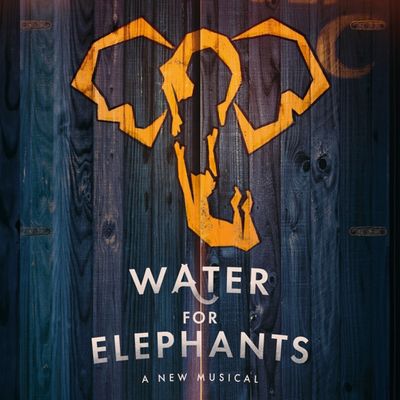
It's beyond privilege to record an episode about a musical with the writers of said musical, and that is exactly what we have this week! To celebrate last season's WATER FOR ELEPHANTS debut in the licensing world, Tony-nominee Rick Elice (JERSEY BOYS, PETER AND THE STARCATCHER, SMASH) as well as three members of innovative theatre team PigPen Theatre Co... Read More
From the show: A Musical Theatre Podcast
Guests

Featured Shows
About
It's beyond privilege to record an episode about a musical with the writers of said musical, and that is exactly what we have this week!
To celebrate last season's WATER FOR ELEPHANTS debut in the licensing world, Tony-nominee Rick Elice (JERSEY BOYS, PETER AND THE STARCATCHER, SMASH) as well as three members of innovative theatre team PigPen Theatre Co. (THE OLD MAN AND THE OLD MOON) join us to spend a little more time "under the Big Top" of their epic show. Their decade's long journey of imagination and creativity (with plenty of Rick stories along the way) will leave you excited to mount a production of your own.
To learn about licensing WATER FOR ELEPHANTS where you live, please visit https://broadwaylicensing.com/shows/broadway/water-for-elephants/
Follow PigPen Theatre Co. on Instagram @pigpentheatreco
Have you heard it's only $1 a month to join the ever growing community on PATREON!? Still too much money? Give us a nice review during the month of January, send a screenshot to amusicalpodcast@gmail.com and receive a free year on us! We can't wait to show you what we've been working on!
Don't forget to like and share our episodes on Instagram, TikTok, and X. We have great playlists on Spotify. And be sure to check out our TeePublic Store where our profits from the designs are donated to Broadway Cares/Equity Fights AIDS.
Most importantly, thank you for being part of this wonderful podcasting community!
Transcript
This transcript was automatically generated and might contain errors.
[0:01] Rick Elice: Before we arrived at the kind of maximalist circus spectacle that we had and staged and are very proud of on Broadway, we spent five years talking about the lo-fi version of this show. The thing that brought us together was that shared love of resourceful storytelling. So all of our conversations in the writing and the conception of this piece were along the lines of, you know, well, how are we going to do a train racing across the country? And we had all of these ideas, and none of them were we'll put an actual train car on stage. So I think it's going to be really exciting and gratifying in a lot of ways to see theaters at every level of budget and ambition tackle this story. Because we do feel that underneath everything, it's a really strong script with some great songs, and it'll be fun to see what people do.
[1:03] Jeffrey Scott Parsons: Welcome, everybody, to A Musical Theatre Podcast where we discuss the cultural and emotional impact of some of our favorite musicals in theater history. My name is Jeffrey Scott Parsons. You can call me Jeff.
[1:27] Jeffrey Scott Parsons: This episode is continuing our journey in discussing some of the newest musicals in theater history. If you haven't yet listened, check out our most recent episode on Lempicka, which has managed a sizable cultural footprint, even with only like 40 or so performances on Broadway. This one, this episode is dedicated to Water for Elephants, which also premiered last season, ran for 300 performances. Is that right, guys? And received seven Tony nominations, one of them for Best Musical, and now is about to make that rosy sized footprint even bigger because, and I'm so excited to announce this, Water for Elephants is now available to produce thanks to Broadway licensing.
[2:15] Jeffrey Scott Parsons: That means, right? Yes, that means you can now license your own production of Water for Elephants at your local professional theater companies or community theaters, and thanks to a special school edition, which I have also read, even your local high schools. So I'm really excited to have a discussion about this because it's, I mean, what a gift to have such a new musical for the whole country to really get to know in a new and personal way. So you think that would be exciting enough, right? But here to discuss all of this with me are some incredibly special guests. Rick Elice wrote the book for Water for Elephants and was the recipient of one of the other Tony nominations the show received.
[2:57] Jeffrey Scott Parsons: Don't worry, though, he's also been nominated a bunch of other times for co-writing the book of the smash hit musical Jersey Boys, writing the smash hit play slash musical Peter and the Starcatcher, which, by the way, Rick, I saw a local production clear over here on Maui last year. So if anyone knows a thing or two. I wouldn't mind going to Maui to see it either or just going to Maui. So, you know, if you need or if you're if you're casting replacements for you, please, please put my name on the list. Fantastic. Look, the mermaid section was particularly fun, right? Well, I've got a funny story about that, but I won't bore my pigpen brothers on with that one. But it's a good funny story about that. Amazing. Tell me. Anyway, everyone, please welcome the great Rick Elice.
[4:02] Rick Elice: Yeah. I didn't even mention the Addams Family, which because I work with kids all the time and it's their favorite show in the whole entire world. So, Rick, thank you for being here and for everything you're bringing to the musical theater.
[4:19] Rick Elice: Yes. Thank you for saying that. That's very kind. I just but let me put in a plug for the show. I just started rehearsing for today's Wednesday. So we started on Monday. I'm directed by the legendary Susan Stroman working on a musical now called Smash, which is going to open just a little a little old show named Smash. And that's based on how many seasons of television, some stupid show called Smash. And we open on April 10th. So if you're back from Maui by then, give me a holler and we'll hook you up with some of those premium seats.
[5:01] Jeffrey Scott Parsons: Oh, my gosh. Sign me up. Sign me up. That's so exciting. Congratulations. I mean, are you like sleepless and anxiety?
[5:19] Rick Elice: No, but it's why this it's why we're doing this in the evening, because everybody, you know, the Pigpen guys and you all were very kind to do this in the evening so that I could get home from rehearsal and and fire up the whatever this is, a MacBook Pro. I use I use the word pro lightly, but apparently that's that's what this is.
[5:45] Jeffrey Scott Parsons: Rick is definitely up on his tech, everybody. Don't you worry. OK, so so next up are some members of PigPen Theatre Company. Now, this group of seven artists wrote seven. Am I right in that wrote the music and lyrics for Water for Elephants, which blows my mind. And it isn't even the first show they've written. It's like it's like you all heard that musical theater was notoriously one of the most difficult collaborative processes. And you were like, you know what? We need more people. They have many accolades, including winning the NYC Fringe Festival's top honor twice in a row. It's you guys have such beautiful music, especially in this show. Everyone, please welcome Matt, Dan, and Curtis from PigPen Theatre Company.
[5:45] Matt: This is Matt speaking. Let me set the record straight. Rick's stories are half the reason why we agreed to do any project with Rick. We love his stories. No one's interrupting Rick for this entire conversation.
[6:04] Dan: No, no, no. I promise. I promise to hardly say a word.
[6:04] Jeffrey Scott Parsons: Now, stop it. All right. So thank you all for being here. Now, I'm staring at all of you and I can't help but feel like this was a collaboration that was bound to happen. Theatrical storytelling, inventive staging, lighting, puppetry. I mean, there was even a review of PigPen, your show, The Old Man and the Old Moon, that called it Once Meets Peter and the Starcatcher. So, so like who realized you had a lot in common and that this needed to happen?
[6:35] Curtis: I think Roger. I think when we met Rick's partner, Roger.
[6:42] Matt: The great Roger Reif.
[6:44] Curtis: Correct me if I'm wrong. I think him and Rick came and saw us at Barrow Street or did Roger come see us at Barrow Street?
[6:49] Rick Elice: No, we came together on a Saturday afternoon to the church basement just off of Washington Square and we saw The Old Man and the Old Moon. But am I wrong? Hadn't you come or some of you came to audition for Peter and the Starcatcher?
[7:04] Curtis: Yes. This is Curtis speaking. I definitely auditioned and I got pretty close to the end. I remember it was down to me and one other guy, Rick. So we haven't brought this up yet, but we'll talk about this.
[7:15] Rick Elice: No, it was all part of my long-term plan. It was a long-term scheme because, you know, we were sort of, we had heard about PigPen, you know, this audition happened and then we heard about Old Man and the Old Moon. And so we made a point of going down to see it because Roger and I were always into the sort of DIY theater point paradigm point of view, you know, so that it's just like you use stuff that's laying around it. You don't get bogged down in decor and decorative settings and big budgets and stuff like that. You just tell the story with whatever you have to hand. A few years later, Roger was working on something else, but I called these guys and I said, I got asked, by the way, I saw that producer today on the subway, guys, and I avoided his glance.
We were asked to adapt a novel as a theater piece and the eight of us got together up in a loft room somewhere over a theater and we spent a few weeks working on it and we had the best time. We came up with some great ideas and then it turned out that this unscrupulous producer, which won't narrow it down at all, so I don't have to worry about it. This unscrupulous guy didn't have the rights to the thing that he asked us to adapt. So it looked momentarily as if we'd wasted our time. But when Peter Schneider and Jen Costello called me and asked if I was interested in adapting Water for Elephants, I said, you know, immediately, having just come off of this very happy experience with these great seven guys who have only gotten greater since then, because this was, I'm talking about like 2015.
So Peter and Jen came with Water for Elephants and I said, would you be willing to talk to these guys? Because I think they're exactly right for this piece. Water for Elephants seemed to cry out for the PigPen ethos and I think the show demonstrates that that impulse was correct.
[9:27] Jeffrey Scott Parsons: Amen to that. You guys are known for kind of a folk sound that you're bringing to the musical theater landscape. Can we talk a little bit about that? When you're looking at the intersection of musical theater and folk music, what is there? Why do you feel like it's a good fit?
[9:44] Dan: Dan here. There's all of these genres and buckets that, you know, marketing people pour music into in order to, you know, find its audience. But folk music just means music, you know, by the people, for the people. And musical theater, I think above all, has always been music for the people. There are art forms that are more or less populist. And I would say that musical theater has always sought a wide audience and done it through the investigation of universal themes and catchy songs and clever lyrics. And, you know, when we started off together, we were writing, I think, probably along the lines of Peter and the Starcatcher, what would more aptly be described as, you know, plays with music, which are a lot easier, incidentally, to write.
And at some point, there was a very conscious decision. I think it was when we were working on our adaptation of Despero, which we turned into a musical in 2018. We said, you know, we're going to write a musical with a capital M. We're going to see if we can do it, you know, because the way our theater works is we do all of the jobs. So we're, you know, we're the cast and the band and we're directing and designing and all of that stuff. So we thought, you know, we'd give ourselves the additional challenge of having to sing, you know, full songs and a full score while also doing the puppetry and all of this other stuff. And we learned a lot in that process, mostly about how hard it is to write musical theater as opposed to music theater.
So for us, getting back to the question you asked me two days ago, folk music is, above all, inviting. And it brings people in. And when we were considering, especially this story, which is about a company of people traveling across the country, inviting people into their big tent, we were really excited to use folk and the music of the time when the story was set to paint that landscape.
[12:04] Jeffrey Scott Parsons: Absolutely. I think one of the, and feel free to disagree with me, but I think one of the true hallmarks of musical theater, and maybe this goes to your point about it being of the people, is that it's honest. Right? Like you can only stand so much musical theater where people aren't actually expressing their feelings. You know, you can hit satire. We just did an episode on Anyone Can Whistle, right? Where it's like a whole musical attempting to do satire. And in many ways, it's very successful. But even then, you realize that the characters are going to be different.
[12:37] Rick Elice: You have to sing what they feel. And I think folk music is always that. There's no pretense. There are these people who are communicating a story, a memory, a feeling, in a really honest way. That is certainly what I pick up from the characters singing your music in the show. You said that this whole thing took 10 years, which is not a new story for musical theatre. It's a long game. But did the pandemic play a part in that as well?
[13:11] Rick Elice: Yeah, we did a workshop of Elephants in the fall of '19. One of those music stand events where lots of people come representing lots of theatres. Barry Edelstein from The Old Globe came and offered us The Globe in the fall of '20. So that was to be our out-of-town in the fall of '20. Obviously, that didn't happen because of COVID. We weren't able to do our out-of-town until the summer of '23 in Atlanta. So the 10 years was... Although, of course, as the writers of the show, the eight of us and Jess Stone, our director, were in contact over that period of time because, of course, we were able to continue working because we were sequestered away wherever the hell we were. And the clock was not ticking. So what better time to ask the writers to redraft and figure new things out and come up with new ideas and stuff.
[14:19] Rick Elice: So then fast-forwarding, you've got your out-of-town, you've got all of this work happening. You open on Broadway in March of 2024, I believe?
[14:28] Matt: Yeah, March 21st. But the nightmarish part that nobody anticipated was that the show was budgeted at a certain figure for Broadway, including an out-of-town, which was to have been The Old Globe, as we just said, for a certain figure. And then three years later, when we had to rebudget it after the pandemic, the costs were 40% higher.
[14:53] Rick Elice: See, this is the kind of stuff that I don't think people realize. That's insane. 40%!
[14:57] Matt: That's what I'm telling you. It was like 40% higher. So people want to know why it's so hard now, as opposed to five years ago. It's always been hard, but it wasn't like the tiny little eye of a needle that you had to thread. If you had a good show, and the audience was loving it, and you had good reviews, and you had seven Tony nominations, you would have been able to have run.
[15:22] Rick Elice: That makes total sense. The other thing that I find so fascinating about last season is how freaking crowded it was. I remember a picture of the street that you all premiered on, and it was like, marquee, marquee, marquee, all new shows that had never been there before. I'm happy that you were able to receive the attention you got. Were you feeling any of that pressure, or were you just excited for all of the new art? Which I can imagine it could be both.
[15:50] Matt: I think it was our first, but not last, Broadway experience. So I think for us, it was exciting. It was really, really exciting, and I think it was hard. All of the other stuff that people kept talking about, like, it's crowded, there are other people coming in, oh, that show's opening next week. It was there, but I don't think we had anything to compare it to. And so, you know, ignorance is bliss in that way.
[16:10] Rick Elice: Absolutely. I think it's different for the artists than it is for some of the other people working on the show. We were very, very focused on what we were doing, and right up until the day before the critics came, we were still working on the show. So our focus was what was going on inside that building. And certainly, speaking for myself, I was sort of oblivious to what was going on, but the producers certainly weren't. The press people certainly weren't. The marketing people certainly weren't. Everyone who wasn't in the theater all the time seemed to be freaking out, because it's a competitive marketplace. There's only so many shows that an audience person is going to go to see, you know, because tickets are expensive, and, you know, you have to go into a part of town you'd probably rather not go to, and you have to see it at a certain time that might not be convenient for you, and you have to pay what they're charging, and you have to, you know, and then there's nothing you can hold in your hand after. So, you know, the days of being able to see all the shows in a season for most people is, you know, is out of reach now. So how do you stand out in such a crowded environment?
[17:23] Matt: Absolutely. I think that you were able to stand out, because, you know, I'm clear over here, and the message that I was receiving was, okay, this is the circus show, right? We tune into the Tony Awards, we see this crazy number where people are climbing poles, and, you know, like there was definitely a specific look and feel and sound to the show. Now y'all are maybe the first musical to be licensed, and so this is an interesting shift. A show that feels as big as a circus with important characters like an elephant, a lion, a dog, that then you're like, okay, community theater, have fun, figure it out. Knowing how creative you guys are, and how kind of DIY, to borrow a term that Rick has already brought up, what would you say to people who might now have the chance to put this show on themselves and not at the budget that you have on Broadway?
[18:21] Rick Elice: I think we said it. I think there's a note that accompanies the script. I seem to remember—
[18:25] Matt: It's quite an opus, Rick. It's incredible.
[18:28] Rick Elice: Well, it's because I get paid by the words, so there's always a lot of, you know—No, but truly, I didn't want to just sit here and make you listen to me read your words, but it is beautiful. But the whole idea is that you can figure it out. We did it one way. We didn't necessarily do it the right way. We did it our way. And now if you want to do it, you can do it your way. I think that's the beauty of the theater in general, and Water for Elephants in particular, is that this is a show where you can bring your imagination because this is a memory story. And that's super important for everyone to understand that going in. It's a memory story, and when you're remembering something that happened 50 years ago or 60 years ago—well, you wouldn't know that because you haven't been around that long—but you know, when you're remembering something that happened a long, long time ago, you remember it.
Everybody remembers it a little bit differently, and everybody remembers it a little bit with different details and a little bit more fragmented over here and maybe a little bit more realized over here, and then the next person will remember the story differently. In the mind of this one character, our central character, Jacob Jankowski, who is recounting in the present day some events that happened way, way back in his youth that changed his life forever, he remembers it the way we decided he would remember it on Broadway. But if you want to do it with a ukulele and a couple of lays around your neck, absolutely, you can do it that way. It just needs to be about what it's about, and it's about you don't take a leap of faith physically or metaphorically without knowing for sure—not hoping, but knowing for sure—that there's going to be somebody there to catch you.
Now, that's why the circus is such a beautiful setting for a story like that, because there you're literally showing people leaping in through the air only because they know for a fact there's somebody there to catch them. And the thrill is the risk, knowing that the trust is greater than the risk for the person flying through the air. That's what our story is about. So any way you want to demonstrate that, you can demonstrate it. You can demonstrate it with a tiny little stick figure. You can demonstrate it with an aerialist from Brazil flying through the air or sliding up and down a pole. You can do a shadow sequence, or you could do a dance sequence. That's the beauty of the theater is that it's the story that counts. And if the story is compelling, and if the characters involved in that story are compelling, then the audience will care what happens to them.
[21:19] Matt: Well, and to both of your points, one of my most favorite moments in the script is one of these memory moments when the elder, Jacob, walks in, sees all the animals, and as he's remembering it, he says, I'm having chills just thinking of it now. And as I'm sitting there in my living room, reading those words, not seeing anything on stage, I got the chills.
[21:43] Rick Elice: That's, yeah, that's a, I love that moment. It's a great encapsulation of, I think, us trying to recreate this Mr. Jankowski living in and lavishing and luxuriating in his memories. The organizing principle, as Rick sort of taught us, it was sort of like, how is this all serving this memory story?
[22:06] Matt: I want to go back to something that Dan was saying about where we were at before. This was before we had a director and before the production that came to Broadway existed. We were, the eight of us, spending a few years just pitching ideas to each other about how to do it that were always about how little do we need, not how much can we get, but how little do we need to actually tell the story? I'm talking about in a physical way. Like my favorite moment from the show, and I have lots of favorite moments from the Broadway production, including this particular one, which was spectacular. It was spectacular. But I thought by my lights, it was best of all when we did it, oh God, when the hell was it?
It was back in, I think, January of 2018. We all went down to Miami Beach. We went down, the eight of us flew down to Miami Beach to attend a conference, a theater conference, about shows that were on the brink of coming to town. In fact, the Lempinka guys were there, weren't they? Weren't they there then too? So it was just everybody sort of coming with their sample case and showing their wares. I got this song, I got this story. It was a conference of theater presenters from all around North America. They do this every year apparently. We went down with two performers, plus the PigPen guys, seven of them, and me to yammer about what the show was about. We had lovely Nicolette Robinson singing the song called Easy.
There was Nicolette standing on stage, the PigPen guys behind them with their instruments playing for her, and she was singing a song to a horse that we did not see at all. Arya, our PigPen colleague who is the percussionist and drummer, was using his kit to personify—that's the wrong verb, obviously, because we're talking about an animal—to animalify—an injured horse in a great deal of discomfort. But we get to meet this character of Marlena, our leading lady. We meet her not through dialogue or chatting with another human being. We meet her by seeing her gift of being an animal whisperer, a horse whisperer. All she did was look up a little bit higher than her own height because a horse would stand 17 hands, which would be taller than this particular performer.
Arya was doing percussion sounds, very sparse musical accompaniment just to guide her through the number. She sang this number, and I'll be damned, but everybody in the audience saw the horse, and even better than what we did on Broadway, which is why I like it more because what we did on Broadway was spectacular, but we showed the audience what to see.
[25:14] Jeffrey Scott Parsons: Welcome back to A Musical Theatre Podcast. Today, we are diving into the world of "Water for Elephants" with the incredible Rick Elice and members of PigPen Theatre Co.
[25:44] Rick Elice: It's a pleasure to be here, Jeff.
[26:14] Member of PigPen Theatre Co.: Thanks for having us!
[26:44] Jeffrey Scott Parsons: So, let's start with the journey of "Water for Elephants." Rick, can you tell us how this project came to life?
[26:54] Rick Elice: Absolutely! It all began with the novel by Sara Gruen. The story captivated me, and I felt it had the potential to be a musical.
[27:04] Member of PigPen Theatre Co.: We were drawn to the themes of love and survival within the circus setting.
[27:14] Rick Elice: Yes, and the characters are so rich and complex. It was important for us to honor their journeys.
[27:24] Member of PigPen Theatre Co.: We spent years developing the music and the story, ensuring it resonated with audiences.
[27:34] Jeffrey Scott Parsons: What were some of the challenges you faced during this process?
[27:44] Rick Elice: One of the biggest challenges was condensing such a sprawling narrative into a two-act musical.
[27:54] Member of PigPen Theatre Co.: And finding the right balance between the dramatic moments and the lighter, whimsical aspects of circus life.
[28:04] Rick Elice: Exactly! We wanted to create a show that felt both epic and intimate.
[28:14] Member of PigPen Theatre Co.: The collaboration between our team and Rick was crucial in achieving that balance.
[28:24] Jeffrey Scott Parsons: It sounds like a true labor of love.
[28:34] Rick Elice: It really was. Every step of the way, we were inspired by the story and the characters.
[28:44] Member of PigPen Theatre Co.: And the music! We wanted it to reflect the emotions of the characters and the world they inhabit.
[28:54] Rick Elice: The score plays a vital role in conveying the story's heart.
[29:04] Jeffrey Scott Parsons: Can you share a bit about the musical numbers?
[29:14] Member of PigPen Theatre Co.: Sure! Each song is crafted to highlight pivotal moments in the story.
[29:24] Rick Elice: And we aimed to create a sound that felt both contemporary and timeless.
[29:34] Member of PigPen Theatre Co.: It's a blend of styles that mirrors the diverse characters in the show.
[29:44] Jeffrey Scott Parsons: That's fascinating!
[29:54] Rick Elice: Thank you! We hope audiences will connect with the music as much as they do with the story.
[30:04] Member of PigPen Theatre Co.: We're excited to see how productions around the world interpret it.
[30:14] Jeffrey Scott Parsons: Speaking of productions, how can people get involved with licensing "Water for Elephants"?
[30:24] Rick Elice: They can visit Broadway Licensing's website for all the details.
[30:34] Member of PigPen Theatre Co.: It's a great opportunity for schools and community theaters to bring this story to life.
[30:44] Jeffrey Scott Parsons: Fantastic! I can't wait to see how it unfolds in different settings.
[30:54] Rick Elice: Thank you for having us, Jeff.
[31:04] Member of PigPen Theatre Co.: Yes, thank you!
[31:14] Jeffrey Scott Parsons: It's been a pleasure having you both here to discuss "Water for Elephants."
[31:24] Rick Elice: We appreciate the opportunity to share our journey.
[31:34] Member of PigPen Theatre Co.: And we hope everyone enjoys the show!
[31:44] Jeffrey Scott Parsons: Be sure to check out the licensing information and follow PigPen Theatre Co. on social media for updates.
[31:54] Rick Elice: Thank you, Jeff!
[32:04] Member of PigPen Theatre Co.: Thanks, everyone!
[32:14] Jeffrey Scott Parsons: Until next time, keep celebrating the magic of musical theatre!
[32:24] ♪ Musical number ♪
[32:34] Jeffrey Scott Parsons: We'll see you next week!
[37:51] Jeffrey Scott Parsons: Welcome back to A Musical Theatre Podcast. Today, we are diving into the world of WATER FOR ELEPHANTS with the incredible Rick Elice and members of PigPen Theatre Co.
[38:21] Rick Elice: It's great to be here, Jeff.
[38:51] Member of PigPen Theatre Co.: Thanks for having us! We're excited to talk about the show.
[39:21] Jeffrey Scott Parsons: So, let's start from the beginning. What inspired you to adapt WATER FOR ELEPHANTS into a musical?
[39:51] Rick Elice: The novel itself has such rich imagery and emotional depth. We wanted to capture that essence and bring it to life on stage.
[40:21] Member of PigPen Theatre Co.: Absolutely! The themes of love, loss, and the circus life really resonate with audiences.
[40:22] Rick Elice: And the characters are so vivid. Each one has their own journey, which makes it a great story to tell through music.
[40:23] Member of PigPen Theatre Co.: Plus, the music adds another layer to the storytelling. It helps convey emotions that words sometimes can't.
[40:25] Jeffrey Scott Parsons: That's a great point. How did you go about choosing the musical style for the show?
[40:26] Rick Elice: We wanted something that felt authentic to the time period but also had a modern twist.
[40:27] Member of PigPen Theatre Co.: We experimented with different genres to find the right sound that matched the story's tone.
[40:28] Rick Elice: And we wanted it to feel immersive, like the audience is part of the circus experience.
[40:29] Jeffrey Scott Parsons: It sounds like a fantastic journey. Can you share any memorable moments from the creative process?
[40:30] Member of PigPen Theatre Co.: There were so many! One that stands out is when we first heard the orchestration come together. It was magical.
[40:31] Rick Elice: Yes! And seeing the actors embody their characters during rehearsals was incredibly rewarding.
[40:32] Member of PigPen Theatre Co.: We also had some fun brainstorming sessions where we just let our imaginations run wild.
[40:33] Jeffrey Scott Parsons: That sounds like a dream! What do you hope audiences take away from the show?
[40:34] Rick Elice: I hope they leave feeling a sense of wonder and connection to the characters.
[40:35] Member of PigPen Theatre Co.: And that they appreciate the beauty of storytelling through music and performance.
[40:36] Jeffrey Scott Parsons: Thank you both for sharing your insights. I can't wait to see what the future holds for WATER FOR ELEPHANTS!
[50:28] Rick Elice: I made the same mistake in the first draft of that scene where Jacob says, she speaks Polish. And then as I typed it, I thought, oh, no, no, she's not speaking Polish, she understands Polish. Well, I'll tell you what, when I first listened to the score, because I hadn't read the script yet, I thought that that entire song was about a guy named Zostan who pulls too high. Like Zostan, he pulls too high. So I was pleasantly surprised to learn more about the story when I read the script. That being said, we find out that Rosie understands this language. They're able to train her. She becomes a huge star. Everything seems to be going much better, which means that everybody stops complaining, right?
Everybody tries to hide and lie about the reality, the truths of what's going on because they have food for the first time. As Barbara sings, the squeaky wheel gets fired. It doesn't get oil. One of the other things I wanted to ask about, there's this beautiful song that you all wrote called I Choose the Ride, and Camel sings it. And he basically says, you know, if you have a home to go to, please go there. Don't stay here. Here is for people who have no home. How much of the story do you feel like is full of these theatrical misfits, which I think on some level we all are, finding a place to be misfits?
[51:53] Rick Elice: Well, it's everything. I'm sure we put that in. It may be in the novel. I mean, because essentially, this old man has been forgotten by his real children, his genetic children, his biological children, sorry, and remembers a time when his non-biological family was the thing that was the most important thing to him. He lost his biological parents in an accident that was terrible and traumatic, and he was a kid. He had to figure out a new way to live, and he finds a family. You just said it, Jeffrey. Here we are. We are all on the island of misfit toys, one way or another, to some degree or another. I mean, except for Dan, because he's like, Dan's like, there's nothing wrong with Dan. But the rest of us- I also wrote that song about being a misfit.
We're just trying to be part of something larger than ourselves, and it's that these second families can be as rewarding as our real families, as dysfunctional as our real families, but the bonds, like with our real families, the bonds with these second families are like iron. So yeah, that number, and it's the whole idea of it being sort of a hymn, came out of our earliest conversations. I mean, Pigpen and me talking about this idea of family and home, and that home is not a place, but it's that feeling that you have when you're with people who are like you and who are part of a thing that you, too, are part of.
[53:37] Rick Elice: He is not a part of anything when he joins, when he jumps on the train. He's not a part of anything. He's just an asteroid hurtling through space, and he lands on this train, and it seems at least highly unlikely that he will stick around, and then he does. He does because of that first 24 hours of experience where he sees, oh, this isn't just some random life, but it's also, oh, this is that person, what's happening with that person, and this person's relationship with that animal, and this person's relationship with the woman, and all these strange people. Yeah, I guess this could be a place where I can rest for a minute and feel part of something larger than myself. What I love is that within this family, the elephant becomes a huge part, and an even bigger part than we even anticipate because when the poop really hits the fan, when chaos breaks out, and this is after August has descended, not just into some sort of, I think, bipolar episode, but maybe just with a skosh of sociopath, is able to have Wade toss both Camel and Walter off the train to their deaths, slug Marlena real good, wanting to probably kill Jacob as well.
Within all of that chaos, the person, or I guess the entity that finally stands up to August and takes him out is the elephant. Yeah, Sarah Gruen's novel begins really as a murder mystery because you hear the pronoun she in the first chapter. She, oh, she did it. I can't believe she did it. So, you are led to believe-
[55:27] Rick Elice: That it's Marlena. That it's Marlena, and only at the end, you realize that it's the elephant. Now, we elected, again, to take a different way into our story, but we did always, we were talking about a triangle story, and obviously, there's the triangle of August and Jacob and Marlena, but we always knew that there was an inverted triangle, which is Jacob, Marlena, and Rosie, because after all, when Marlena quits the train after her husband does this egregious thing, physical thing to her, and she says, that's it, enough, she leaves. Barbara tells Jacob where she's gone, and he goes to find her, and they could have just gone on with the rest of their lives. Why do they go back? Why do they go back?
Why is there the last 20 minutes of the show? Because they can't leave Rosie behind. So, it really is a justifiable triangle, too, that relationship. It also justifies the moment with the horse at the beginning. Their common language is this love for animals, right? It always has been. There's no way that they could have left Rosie behind.
[56:41] Rick Elice: Yeah, and it's not some sort of casual, oh, here's a little extra bone for the dog. This is like a genuine love that is on a par with the love that you would have for another human being, and certainly for a family member. These animals are absolutely part of the family. That's so sweet. Yeah, I think one of the things that most attracted us to this story when we first read it was the thread of empathy throughout, and the two sides of empathy that are kind of explored, which is our heroes are incredibly empathetic. They do everything they can to bridge the gap between themselves and others, up to and including an animal that doesn't even speak the same language. Through that, they're able to save themselves and their circus, but there's also this attempt to understand and empathize with a man who, at the end of the day, is in many ways beyond reach because he's capable of these acts, and he's capable of these things that put him outside of the realm of human empathy in a lot of ways.
I think there's a really interesting kind of collision course that he and Rosie, this elephant that we're really forced to mostly project onto throughout the rest of the story. I think the fact that she's the one that finally stands up and takes this guy out is a really poetic kind of conclusion to that thread of who do we try to reach, and who are we best to keep some distance from?
[58:21] Dan: That's beautifully said, Dan. Well done. See, nothing wrong with Dan. I didn't say which one of them I was.
[58:31] Rick Elice: Just to finish up the story, we learn that Marlena and Jacob do end up together with Rosie, who ends up stopping traffic in their little hometown that they retreat to. It is in every way a happy ending until it isn't because life continues after the happy ending. We are reminded that he becomes an old man that Marlena has passed on. It's a beautiful, complex tapestry of storytelling and life that I'm really excited everybody gets to know better. Thank you all so much for sitting down with me today to talk about the show. Congratulations on the massive achievement. Anything else you want to say before we close up shop?
[59:16] Rick Elice: Look for the show coming to a town near you.
[59:21] Jeffrey Scott Parsons: As always, if you have recommendations for shows you'd like us to cover on a musical theater podcast, you can always email me at amusicalpodcast@gmail.com. Don't forget, we're on social media, so share your favorite episodes and share the show with your friends. You can also give us a great review and rating. It won't make me mad, and it will help people find the show for themselves. If you haven't already, subscribe to Patreon! Where for only $1 a month, you can join the ever-growing community there that is going to receive so many exciting projects and collaborations throughout 2025. Do not miss Patreon! this year. Finally, we have our TeePublic store, full of great designs. The profits we receive from those designs we donate to Broadway Cares Equity Fights AIDS more than anything, everybody!
Thank you for being a part of this great podcasting community. Now, in case I didn't say it clearly before, Water for Elephants is now available for licensing. They're going to begin, and correct me if I'm wrong, they're going to begin with the school edition. All my high school teachers out there, all my educators, get on it. Get that teen school edition booked for your upcoming spring and or fall musicals, and then be on the lookout for the licensing that will go into effect in all community theater and professional settings later on. Rick, you mentioned that you've got Smash coming up. Anything else you want to plug?
[1:00:50] Rick Elice: Well, I want to plug Pigpen, you know, because none of us would be here on this, whatever this is, this podcast. Sorry, I almost said Zoom, but it's not a Zoom. None of us would be here if it weren't for them. So, you know, I'm just going to be a camp follower for them for the rest of my life. Amazing. How do we follow you guys, Pigpen?
[1:01:18] PigPen Theatre Co.: You can follow us on Instagram, Facebook, where our music is on Spotify. That's where the Water for Elephants album is, Pigpen Theater Company, Pigpen Theater Co. Yeah, I think we'll just plug this show. I mean, we're really excited for it to be licensed and to see people of all ages and communities of all sizes do this show. It's really a show about theater people and chosen family, and we're excited to see those people do this play.
[1:01:46] Rick Elice: Amen to that. Bring on the weirdos and the big tent. We are really excited because our original play, The Old Man and the Old Moon, has been with Broadway licensing for a couple years, and it's been so exciting to see what other people do with that play. And just recently, we added two other original stories of ours, plays with music, The Mountain Song and The Nightmare Story. So The Old Man and the Old Moon, Nightmare Story, and The Mountain Song are all with Broadway licensing. And seeing schools and community theaters and regional theaters do productions, and all of our shows are with this DIY aesthetic, it's so inspiring for us.
[1:02:25] Jeffrey Scott Parsons: That's amazing. How cool. Congratulations, everybody. Everyone out there, thank you so much for listening. What a fun conversation. And remember, choose the ride, yeah?
[1:02:36] Jeffrey Scott Parsons: Choose the ride when the choice is placed before you. That's a Mormon joke that nobody will get.
© Broadway Podcast Network, All Rights Reserved