

The second of a four-part program featuring Broadway composer Burton Lane, known for such celebrated shows as FINIAN’S RAINBOW and ON A CLEAR DAY YOU CAN SEE FOREVER, along with songs for over thirty films including ROYAL WEDDING and BABES IN ARMS... Read More
From the show: Anything Goes
Guests
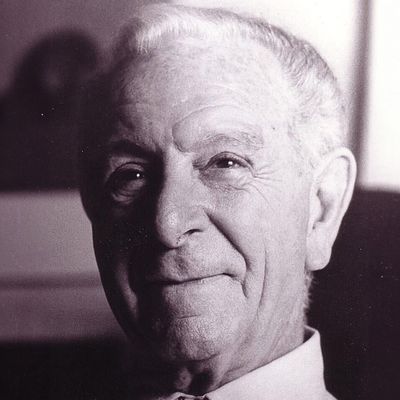
About
The second of a four-part program featuring Broadway composer Burton Lane, known for such celebrated shows as FINIAN’S RAINBOW and ON A CLEAR DAY YOU CAN SEE FOREVER, along with songs for over thirty films including ROYAL WEDDING and BABES IN ARMS. Lane recounts his early songwriting efforts in Hollywood with Frank Loesser and Harold Adamson, Broadway collaborations with E.Y. “Yip” Harburg and Alan Jay Lerner, writing songs for Fred Astaire, and discovering a young Judy Garland.
Featured songs: “Says My Heart,” “How About You?” “Anything Can Happen In New York,” “Chin Up, Cheerio, Carry On,” “Poor You,” “Don’t Let It Get You Down,” “The World Is In My Arms,” and “How Are Things In Glocca Morra?”
Originally produced and broadcast in 1981. For more information go to AnythingGoesPL.com or BPN.FM/Anything Goes. Theme music arranged by Bruce Coughlin. Associate producer Jeff Lunden. Anything Goes – Backstage with Broadway’s Best – is produced and hosted by Paul Lazarus.
Transcript
This transcript was automatically generated and might contain errors.
[0:00] Paul Lazarus: Hi, this is Paul Lazarus. In the 1980s, I produced and hosted a radio series called Anything Goes, a celebration of the American musical theater. Now the Broadway Podcast Network is bringing back these shows. Today, part two of a four-part look at the career of legendary Broadway composer, Burton Lane. Lane is best known for his remarkable scores for Finian's Rainbow and On a Clear Day You Can See Forever. This program was originally broadcast in 1981.
[0:37] Burton Lane: The couple years that I was with Frank, a year, year and a half I was with him, I never had any inkling he could write melodies.
[0:45] Paul Lazarus: Yeah, he really kept that hidden, didn't he?
[0:48] Burton Lane: That was hidden.
[0:51] Paul Lazarus: Yeah.
[0:52] Burton Lane: I mean, when I'm working with somebody, I'll throw lines out. The title of everything I have is yours, is my title. And I've always been lyrically conscious and always tossing out lines to be used or not used, depending on how a lyric writer felt about it. But with Frank, I struggled over tunes sometimes. He never said, we'll try it this way or try it that way.
[1:17] Paul Lazarus: Yeah, it's amazing. He really was waiting.
[1:20] Burton Lane: He had one song, I came in one day, as I say, he had split up with Manning Sherwin. And he had a lyric that everybody fell in love with, including me, when it was brought to my attention. It came to the producers of the picture's attention first. And they said, will you write a new tune for this lyric? And the tune was Says My ... the lyric was called Says My Heart. And I wrote a tune and very, very quickly went into the picture. And the picture was released shortly thereafter. And within three or four weeks after the picture was out, the song was number two on a hit parade, then it became number one and stayed up there for about 10, 12 weeks. Big, big hit.
[2:39] ♪ Musical number: "Says My Heart" — performed by Harriet Hilliard ♪
[3:47] Paul Lazarus: We didn't talk at all about Ralph Reed, who is, I suppose, in mid to late 30s your other primary collaborator, whose work I don't know as well because he's primarily a Hollywood writer.
[3:54] Burton Lane: Well he was Arthur Freed's brother. But Ralph, at that time, when I, it was Arthur who introduced me to Ralph. And Arthur at this time was a big producer at Metro. He was the number one producer in fact of musicals in Hollywood. And I wrote, started to write some songs with Ralph. And Ralph was a pretty good lyric writer. He wrote some charming lyrics with fun and with humor. And of course one of the big songs I had with Ralph was How About You, which we wrote for Babes on Broadway.
[4:39] Paul Lazarus: Which was, I think, your first Academy Award nomination too.
[4:43] Burton Lane: But one story, which very few people know about, except, I mean, very few people have heard, was I was the one who brought Judy Garland to Metro's attention. And she was in an act called The Gumsisters. And I had gone to a picture show downtown in Los Angeles at the Paramount Theater, where they had a stage show. And on the bill was The Gumsisters. And when they introduced their kid sister at the end of the act, of course it was Judy, and I just went out of my mind when I heard her sing. She was about 11 years old then. She sang two songs, Zing Went the Strings of My Heart and Airy Airy. Those are the two songs. And I went into the lobby of the theater, and I called the head of the music department of Metro.
And I said, I've just heard a sensational kid, and I think you ought to hear her. Somebody ought to hear her at the studio. He says, well, arrange to bring her out. So I went backstage, and I introduced myself to her father, and arranged the following week, when they had finished their run at the Paramount, to bring her out. And she came out there, I don't know, about 9, 9.30 in the morning. And I played her audition. Her audition started at around 9 or 9.15, something like that, with L.B. Mayer, with the heads of the studio, and went down through every producer on the lot, every director on the lot, until about 7.30 at night. And I played the two songs, Airy Airy and Zing Went the Strings of My Heart.
[6:30] Paul Lazarus: Were they all as impressed as you were?
[6:31] Burton Lane: Oh, well, they signed her, and the only thing, not one person said thank you. Nobody. Not one person said thank you. And in 1941, now this was 1934 when I brought it to the audition, when this happened. 1941 was the first time I actually saw Judy, since that audition.
[6:54] Paul Lazarus: Seven years later, wow.
[6:56] Burton Lane: I went on the soundstage to start teaching her How About You, she and Mickey. And when she saw me, she ran the whole length of the soundstage, threw herself in my arms and said, my God, where have you been? I said, I've been here. They had loaned her out. They signed her and then loaned her to 20th Century and to one or two other, to make some outside pictures. And then she brought her back here.
[7:24] Burton Lane: One, two, three.
[7:27] ♪ Musical number: "How About You" — performed by Judy Garland and Mickey Rooney ♪
[11:55] Paul Lazarus: It was in 1941 that you wrote Babes on Broadway with Ralph Reed.
[12:13] Burton Lane: Yes. With Ralph and Yip. Yip wrote a few songs in that picture. We wrote a song, Yip and I had a song in it called Anything Can Happen in New York, and we had a song that we had written to honor the British people during the Dunkirk evacuation during the war. We wrote a song called Chin Up, Cheerio, Carry On that Judy Garland sang in the picture.
[12:41] Paul Lazarus: Right. And she also sang How About You, which was a gorgeous song, and was nominated for an Academy Award, your first.
[12:51] Burton Lane: I lost to a pretty good song, too, you know.
[12:55] Paul Lazarus: What was the song?
[12:56] Burton Lane: The song that got the Academy Award was a little thing called White Christmas.
[13:00] Paul Lazarus: Oh, just a little thing called White Christmas, uh-huh. Mr. Berlin.
[13:05] Burton Lane: He did me in.
[13:06] Paul Lazarus: I didn't know that.
[13:07] Burton Lane: Sure.
[13:08] Paul Lazarus: Oh, so that's the...
[13:10] Burton Lane: Holiday Inn?
[13:11] Paul Lazarus: Holiday Inn, yeah, of course.
[13:14] Burton Lane: Hey, hey, New York, New York, fascinating city. Magic castles rising in the air. Wall Street, Broadway, guys are sitting pretty. Every window hides a millionaire. So when you see a fetus holler, there's no chance. Just tell them this, but with a dirty glance. But Mr. Woolworth didn't have a dime. And Irving Berlin didn't have a rhyme. And Thomas Dewey didn't have a crime. But anything can happen in New York.
[14:00] ♪ Musical number: "Anything Can Happen In New York" — performed by Mickey Rooney ♪
[18:44] Paul Lazarus: Two more songs from the film score to "Babes on Broadway." You heard Mickey Rooney performing "Anything Can Happen in New York" and followed by the composer himself, Burton Lane, performing "Chin Up, Cheerio, Carry On." Both these songs written in collaboration with lyricist Yip Harburg.
[19:03] Burton Lane: We had songs in a number of films, but we never did a score together for films.
[19:08] Paul Lazarus: Right, because the song, the next song I was going to talk about was "Poor You."
[19:12] Burton Lane: Yes, that was a song, uh, I, I, that came after "Babes on Broadway," I'm sure.
[19:19] Paul Lazarus: Yeah, I think so.
[19:19] Burton Lane: Yes, it was in a film because Tommy Dorsey was, uh, I remember, uh, Dorsey was in this film and Frank Sinatra was his vocalist. And this was a song that "Poor You" was a song that Sinatra did that was his first single. And I thought that song would take off and be a success, but it never happened.
[19:41] Paul Lazarus: Uh-huh.
[19:41] Burton Lane: And yet.
[19:41] Paul Lazarus: That's a marvelous lyric.
[19:46] Burton Lane: Oh yeah.
[19:46] Paul Lazarus: It's an adorable lyric.
[19:46] Burton Lane: And, uh, it was in a film called "Ship Ahoy."
[19:50] ♪ Musical number: "Poor You" — performed by Judy Garland ♪
[22:21] Paul Lazarus: Judy Garland performing a Yip Harburg Burton Lane song written for the film "Ship Ahoy" in 1942. "Poor You." You went back to Broadway in 1939, I guess, to do "Hold On To Your Hats" with Yip Harburg. What got you back to Broadway at that point? Because it's been a few years since you, I guess, well, almost roughly eight or nine.
[22:46] Burton Lane: Well, I had a very uneven career in Hollywood. I learned something about my own abilities. One thing is that unless I'm working on something I truly like, I'm not inspired, I'm not really motivated to do my best work. I've always admired writers like Harry Warren and the Silver Man and Henderson and many of the other pop writers who, no matter what they were working on, would always be writing at the top of the level of their talents. And I couldn't, I was unable to do this. I could only really function best when I liked either who I was working for, that is who I was writing for, or liked the property. So I had a kind of an uneven career. It was modestly successful and long periods where not much was happening.
And in 1939 I guess, or 38, 39, I was going through a rough financial period. And I figured, well, I'm going to try to get a band together so I can have some continuity of work and keep working and still write. So I started to organize an orchestra. And this took me to Chicago where there was an orchestra. I had had relatives living there who had certain connections and they had found a group that I could take over. And I was about to settle on this when I got a call from Alex Aarons of Aarons and Freedly, who said, would you like to do a show? Now he had done some tracking down to find me in Chicago. And he said, would you like to do a show? And I said, yes. He says, will you work with Yip Harburg? I said, yes. And I didn't even know what it was that I was going to work on. I dropped the show, I dropped the band, I dropped everything. I borrowed some money and went to New York.
[24:56] Paul Lazarus: And that's the show that turned out to be, the last show Al Jolson.
[24:59] Burton Lane: Right, it was his last Broadway show.
[25:05] Paul Lazarus: And he was, how did he react to having to, I mean, such a gigantic star, you know, how did he react to sharing the billing with people like Jack Whiting and Martha Ray?
[25:10] Burton Lane: Well, he wasn't really sharing a billing. It was Al Jolson in with.
[25:17] Paul Lazarus: Oh, I see. So he was still on top.
[25:17] Burton Lane: He was still on top, except that his career had taken a fall.
[25:23] Paul Lazarus: Yeah, it was not a high point for him.
[25:29] Burton Lane: It was not a high point for him. He had been off-Broadway for 10 years. This was his comeback. Radio had knocked him off. He had not been successful in radio. He had done films that were successful. Nothing had happened that was helping him along. He was kind of a leftover giant talent from another era, you know, caught by the mechanics of our business. Radio was a new thing. Television hadn't happened yet. Films had just started with talkies. It was the early days of talking films. So he was caught in the middle, and his career had gone downhill.
[26:07] Paul Lazarus: Hold on to your hats. Did he still do his tricks of, after a while on the show, he would sort of stop doing the show and then start singing medleys of his own thing?
[26:14] Burton Lane: Well, I'll tell you. We tried to figure out a way to avoid this, because it was his custom. At the end of a show, he always would do it at the end of the show.
[26:32] Paul Lazarus: Oh, he'd wait until the end of the show.
[26:36] Burton Lane: He'd wait until the end of the show, and then he'd bring the curtain down, he'd loosen his tie, say, folks, you ain't heard nothing yet, and then he'd do medleys of all his hits, which made people forget the new score. Well, Yip came up with a brilliant idea. Yip Harburg. We wrote an opening song for him. This had to do with a radio performer, a guy who had been on Broadway and who had failed, and now was on radio. And he was bemoaning the fact that his life had taken this terrible turn, and his opening song, which tore the house down, was a song called, I Was Walking Along, Minding My Business, Singing a Song. Now in that, that song described what a marvelous performer, what a big star he was, until this thing, this microphone came along.
And he did a chorus, and then he did a recitation, and then in the second chorus he did, I was walking along, minding my business, singing a song. When Whippoorwills call, and evening is nigh, I hurry to my blue heaven. I was walking along.
[28:01] Burton Lane: We're taking a long mine of my a man me he went into we did his medley we did his medley at the beginning of the show and all the critics said that he took on a quality he had never had before he was like Victor Moore you felt sorry for him because Joson was a man you never could feel sorry for right he didn't have that that that sympathetic quality he was very aggressive but always on top of everything this song brought out a quality he had never shown before and they adored him for it he tore down the house the opening number you couldn't go past that was a smash you were in the end of the show he says Joe open the curtains so he opened the curtains and there's a whole cast standing behind him he said the best cast money could buy all right close the curtains now all right folks you ain't heard nothing yet and now he goes into the same medley that he hadn't in the song except now he was doing the full songs yeah oh boy you were here this guy had incredible hood spot he was a monster you know he really was not a nice man he treated people he never treated me badly I guess because I was younger than anybody else yeah but he treated everybody else he sounds like he was not an easy person to work with.
[29:32] ♪ Musical number: "Don't Let It Get You Down" — performed by Al Jolson ♪
[31:27] Burton Lane: Did uh did the show close because he left I mean he he had what had happened he had done that he had gotten involved in this show in order to win back Ruby Kiowa he was married to Ruby right right and they had split up and what I don't know what he did but he convinced her that if she could work with him on a stage she'd fall in love with him again because she'd see how wonderful he was a man with a little ego just a small one yeah anyway she went she agreed to do this and and this this was amazing so that she would that she would agree that she would agree to do this now our show opened in Detroit played a week in Detroit and then went to Chicago and in the first week in Chicago a matinee performance he was doing a scene with Ruby and he was doing a reprise of a song called don't let it get you down love is a lovely thing love is a breath of spring and he went into dialogue after singing the first chorus but instead of the dialogue of the show he said you know Ruby if your mother hadn't come into the kitchen and brought and he brings up a subject that they quarreled about you and I would never have split up well Ruby took a look couldn't believe what she was hearing turned on her heels and walked off the stage and never came back the understudy finished the part then they had to replace Ruby of course they got Eunice Healy to replace her so that Jolson now knew he had lost Ruby now when the show was doing fantastic business when finally came into the yard did fantastic business by the when he got his money back his money back and business was still standing room only he closed the show and claimed he was sick yeah the weather or something he claimed he was sick and then they got photographs of him at the racetrack in Florida Georgie Hale was the co-producer with him and uh and sued and he was forced to open the show reopen the show but by that time something like three months or two three four months had gone by so all the life was you know you it was almost impossible to put the show together again and do it right and that was really the end of it but uh he closed the show as soon as he had his money back you know we got a terrible break with that score uh the show was opened in 1939 and that was very close to 1940 and uh in 1940 the big fight with BMI started and ASCAP was banned from the air right that's when you heard nothing but uh but no you heard uh public domain genie with the light brown hair BMI hadn't been formed yet right but they but it was formed during that year and ASCAP was off for a solid year uh two of our songs from that show started to become hits very quickly when the show opened the world is in my arms and there's a great day coming manana of course which are fabulous songs and uh suddenly we were off and that was it that's amazing and it's a shame because it was just before cast albums started to be made that's right as well it was just bad timing really.
[35:16] Burton Lane: I the world was big just a day ago for just a day ago who would ever dream I be dancing with you every star was far just a night ago and just a night ago too I seemed so all miscast just getting nowhere fast here was I a gypsy looking for a world to roam in now the world is in my arms no more aimless searching for a place to feel at home in for the world is in my arms Mexican hills Florida skies tropical seas here in your eyes when I see you smile I see the sun sets of Geneva what's that magic in your charms when I hold you I hold the world right here in my arms.
[37:12] Burton Lane: Another song from the Lane Harburg score to hold on to your hats the world is in my arms recorded exclusively for Anything Goes by multi-talented saloon singer Steve Ross and this about wraps it up for the first part of this look at Burton Lane's career a composer's composer and going to end today with a very very special recording of Burton Lane himself performing a song from the show we'll begin with next uh next Sunday Finian's Rainbow and uh it has very special significance uh in terms of the recent passing away of his collaborator Yip Harburg and this was at a Songwriters Hall of Fame award ceremony and I'm grateful to Dina Rosenberg of NYU for making this available and it was when Yip Harburg was to receive the Johnny Mercer songwriting award and uh unfortunately passed away just a few days before he was to get it Burton Lane performing how are things in Glocca Morra.
[38:10] Burton Lane: I'd like to do one song that I wrote with him that came from the score Finian's Rainbow it was one of Yip's favorites.
[39:13] ♪ Musical number: "How Are Things In Glocca Morra" — performed by Burton Lane ♪
[41:18] Paul Lazarus: You've been listening to part two of a four-part look at the career of talented composer Burton Lane associate producer Jeff Lunden Anything Goes backstage with Broadway's best is produced and hosted by Paul Lazarus for more information visit AnythingGoesPL.com if you enjoyed this episode be sure to rate and follow us thanks for listening.
© Broadway Podcast Network, All Rights Reserved