

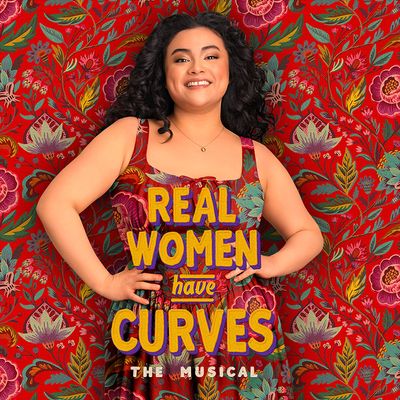
This episode features a conversation with Benjamin Velez and Lisa Loomer about the Broadway musical: Real Women Have Curves. Ana García (Broadway newcomer Tatianna Córdoba) dreams of flying away... Read More
From the show: Backstage Pass
Guests

Featured Shows
About
This episode features a conversation with Benjamin Velez and Lisa Loomer about the Broadway musical: Real Women Have Curves.
Ana García (Broadway newcomer Tatianna Córdoba) dreams of flying away. But when her family’s East Los Angeles garment business receives a make-or-break order for 200 dresses, Ana finds herself juggling her own ambitions, her mother Carmen’s (Tony Award nominee Justina Machado) expectations, and a community of women all trying to make it work against the odds.
REAL WOMEN HAVE CURVES: THE MUSICAL features a Tony-nominated score by Grammy® Award–winning songwriter Joy Huerta (Jesse & Joy) and Benjamin Velez (Kiss My Aztec), a book by Lisa Loomer (Girl, Interrupted) with Nell Benjamin (Mean Girls), music supervision by Nadia DiGiallonardo (Waitress), and choreography and direction by Tony® winner Sergio Trujillo (Ain’t Too Proud). Based on the play by Josefina López that inspired the iconic hit HBO film, critics have lauded CURVES as “entertaining and empowering” (NY Daily News), and “a laugh-out-loud musical comedy with a massive dose of heart.” (The Washington Post).
This episode features the songs “Make It Work” performed by Florencia Cuenca, Jennifer Sanchez, Carla Jimenez, Aline Mayagoitia, Sandra Valls and Shelby Acosta, “Jugglin” performed by the Original Broadway Cast of Real Women Have Curves, as well as “Flying Away” performed by Tatiana Cordoba.
Connect with Benjamin Velez:
Website: https://www.benjaminvelez.com/
Instagram: @benjaminvelezmusic
Connect with Lisa Loomer:
Instagram: @lisalromano
Connect with New York Theatre Barn:
-
Twitter: @nytheatrebarn
-
Instagram: @newyorktheatrebarn
-
Pauls’s personal instagram: @paulsmacs
-
Teresa’s personal instagram: @terijoyeaux
Transcript
This transcript was automatically generated and might contain errors.
[0:00] Teresa Attridge: Backstage Pass. Episode 15 – Benjamin Velez and Lisa Loomer.
[0:22] Pauls Macs: Ever wonder what it takes to make a new musical sing?
[0:25] Teresa Attridge: Our mission is to give you an inclusive look behind the scenes.
[0:28] Pauls Macs: We're interviewing the creatives who are changing musical theater,
[0:31] Teresa Attridge: one 11 o'clock number at a time. This is your Backstage Pass.
[0:35] Pauls Macs: Get your Backstage Pass.
[0:38] Teresa Attridge: Get your Backstage Pass.
[0:43] Pauls Macs: Hello, goals. Hello, hello, hello.
[0:46] Teresa Attridge: It is Teresa.
[0:48] Pauls Macs: Hey, it's Pauls.
[0:49] Teresa Attridge: And let me tell you, today is a very, very special episode of the pod.
[0:53] Pauls Macs: I really, like, cannot believe it. Pinch me. I'm dreaming. I'm daydreaming.
[0:57] Teresa Attridge: I cannot believe that we have our first Broadway show on the podcast today.
[1:01] Pauls Macs: Give it up for the team from Real Women Have Curves.
[1:05] Teresa Attridge: Ayo, say hi, Ben and Lisa.
[1:07] Benjamin Velez: Hello.
[1:08] Lisa Loomer: Hello.
[1:09] Teresa Attridge: And so for our listeners to know, we're recording the day after the Tonys.
[1:13] Pauls Macs: So there's been a lot to celebrate.
[1:15] Teresa Attridge: There's been a lot of, like, monumental stuff going on.
[1:18] Pauls Macs: So this is just such a nice chance to sort of settle in after all of that excitement.
[1:22] Teresa Attridge: We are so, so excited to have you.
[1:24] Pauls Macs: We're officially Broadway babies, baby.
[1:26] Teresa Attridge: And we've had just the best time reviewing your show.
[1:29] Pauls Macs: It's truly a fantastic piece of work, and we're excited to talk about it today.
[1:32] Benjamin Velez: Thank you.
[1:33] Lisa Loomer: Thank you so much.
[1:34] Pauls Macs: We're so excited to be part of it.
[1:35] Teresa Attridge: Amazing. All right. Well, Pauls, do you want to start with our little book report about our writers today?
[1:42] Pauls Macs: Yes, absolutely. Well, Lisa, Benjamin, I hope you're ready for this.
[1:45] Pauls Macs: It's sometimes uncomfortable for the people who have to experience their bio right in front of them.
[1:49] Teresa Attridge: Yeah, having someone just basically say all the cool stuff you've ever done in front of you, the blush, it's going to rise, rise in the cheeks.
[1:55] Pauls Macs: Okay, Lisa, we're going to do you first. Lisa Loomer is currently on Broadway with the musical Real Women Have Curves.
[2:01] Pauls Macs: Last year, she received the Cleveland Award for Most Promising Librettist and an Elliott Norton nomination for Best Script.
[2:07] Pauls Macs: Her play Roe, about Roe v. Wade, has been playing in varying political climates since 2016.
[2:13] Pauls Macs: It was commissioned through the Oregon Shakespeare Festival's American Revolutions Program in a production that traveled to Arena Stage and Berkeley Rep.
[2:20] Pauls Macs: It has been produced across America, from the Fountain Theater in Los Angeles to stages in Houston and Zach Scott in Austin to the Goodman in Chicago and the Oslo Rep in Florida to Alaska.
[2:30] Pauls Macs: It received the Jane Chambers Playwriting Award and the Penn Award.
[2:33] Pauls Macs: Her play Home Free was commissioned by the Denver Center before receiving its world premiere in Los Angeles at the Rode Theater.
[2:39] Pauls Macs: Cafe Vida, about female gang members, was presented at the Los Angeles Theater Center by the Cornerstone Theater in partnership with Homeboy Industries and was nominated for an Ovation Award for Best Play.
[2:50] Pauls Macs: Things You Don't Talk About at Dinner had its world premiere at the Denver Center.
[2:53] Pauls Macs: Distracted had its world premiere at the Mark Taper Forum and was subsequently produced at the Oregon Shakespeare Festival.
[2:58] Pauls Macs: The play was produced at the Roundabout Theater Company in New York in a production starring Cynthia Nixon.
[3:03] Pauls Macs: It has subsequently been produced in theaters throughout the U.S.
[3:06] Pauls Macs: Living Out had its world premiere at the Mark Taper Forum and was produced at Second Stage in New York.
[3:11] Pauls Macs: It has been produced at such theaters as Seattle Rep, Milwaukee Rep, the Denver Center, and TheaterWorks, often in bilingual productions as well as in Israel, Europe, and Mexico.
[3:20] Pauls Macs: Her play The Waiting Room went from the Williamstown Theater Festival to the Mark Taper Forum to highly successful productions at Arena Stage and Trinity Rep and then to the Vineyard Theater in New York.
[3:30] Pauls Macs: It has been widely produced nationally and internationally.
[3:33] Pauls Macs: Expecting Isabelle had its world premiere at Arena Stage and its West Coast premiere at the Taper.
[3:38] Pauls Macs: It has been produced in New York and nationally.
[3:41] Pauls Macs: Bacone, a political fable for young audiences about the border, began at the Taper and has been seen throughout the country from the Kennedy Center to Seattle's Group Theater and La Jolla Playhouse as well as in Germany, Alaska, and Mexico.
[3:53] Pauls Macs: For the Cornerstone Theater Company, she also wrote Broken Hearts, produced at the Los Angeles Theater Center.
[3:59] Pauls Macs: Ms. Loomer began her career as an actress and comedian.
[4:02] Pauls Macs: Her first work for theater was a crowd of two at the American Place Theater.
[4:05] Pauls Macs: This was followed by a one-woman show, all by herself at the West Side Arts.
[4:12] Pauls Macs: She began writing plays at the Intar Playwrights Lab under the direction of Maria Irene Fornaz.
[4:18] Pauls Macs: Her first play, Birds, was produced by South Coast Rep.
[4:21] Pauls Macs: Other works include Maria, Maria, Maria, Maria at the Mixed Blood, Excellerando at the Odyssey, and Looking for Angels at the Public Theater.
[4:27] Pauls Macs: Ms. Loomer is an alumna of New Dramatists.
[4:30] Pauls Macs: Awards include the Jane Chambers Award twice, the Susan Smith Blackburn Prize, the Kennedy Center Fund for New American Plays Award, a Lurie Foundation Award, an Ovation Award, and the American Theater Critics Association Award twice.
[4:46] Pauls Macs: She also received an Imogen Award for Positive Portrayals of Latinos in All Media.
[4:52] Pauls Macs: Her plays appear in the Best Plays of 1998-1999, the Best Plays of 1994-1995, and the Best Plays of 2003-2004, and are published by Dramatist Play Service, TCG, Dramatic Publishing, and Arte Público Press.
[5:07] Pauls Macs: She has taught in university drama programs, women's studies programs, and Latino studies programs.
[5:13] Pauls Macs: She also writes for film and television, both comedy and drama.
[5:16] Pauls Macs: She served as supervising producer for Season 2 of Love Is on the Oprah Winfrey Network.
[5:22] Pauls Macs: Films include Girl, Interrupted.
[5:25] Pauls Macs: She has written TV pilots for HBO, CBS, Apple, Fox, and Showtime.
[5:28] Pauls Macs: Upcoming work includes the world premiere of her play, Side Effects May Include, at Contemporary American Theater Festival this summer, and her continuing work on the musical adaptation of Like Water for Chocolate.
[6:05] Teresa Attridge: You hold yourself with the spirit of a veteran.
[6:08] Pauls Macs: First off, I love that you just said alliteration as a true playwright would.
[6:11] Teresa Attridge: But also, I just read your bio, but I'm still stunned and in disbelief that this was your first musical ever.
[6:17] Pauls Macs: And I just have to ask you, what was that like for you? What was that process going from, I traditionally write non-musical plays to suddenly I'm in musical theater land? I'd love to know more.
[6:26] Lisa Loomer: Huge learning curve. I was working on another musical for many years that I will work on again.
[6:35] Lisa Loomer: But the director, Michael Mayer, told me, "Lisa, you're not going to like this job."
[6:41] Lisa Loomer: He said, "Your job now is to write into the song and out of the song. And that's it."
[6:47] Lisa Loomer: And it turned out to be a lot more than that. But it's very different. It's different rhythmically. I create my own rhythm when I write a play.
[6:56] Lisa Loomer: And in this, I'm collaborating rhythmically with the music. The scene has to flow in and out of the music.
[7:02] Lisa Loomer: And it has to serve the music. And also, four people have to be in agreement on everything.
[7:08] Lisa Loomer: And when you write a play, I'm working in a new play festival right now. I've gone straight from the musical into my new play.
[7:14] Lisa Loomer: You know, I'll probably write any words I want to write. And no one will say, "Gee, how about this or that? Or, I don't see it that way."
[7:26] Benjamin Velez: It's very different.
[7:29] Lisa Loomer: So different.
[7:32] Benjamin Velez: Which is very exciting and very different.
[7:35] Pauls Macs: And Lisa, you are clearly such a powerful force. I cannot even understand the gravitas, the talent that it takes in order to just volley back and forth with you on a piece.
[7:44] Pauls Macs: You have such a clear point of view. But on that note, Benjamin, I'm sure you are equally impressive. Should we get to that bio as well?
[7:56] Pauls Macs: Well, I shall. But I should also say, before people are like, "Pauls and Teresa, what are you talking about?" This is not the entire creative team of Real Women Have Curves.
[8:05] Pauls Macs: Benjamin and Lisa are also representing their writing partners, Joy Huerta and Nell Benjamin. Broadway is Broadway, so we're very lucky to have both of them.
[8:14] Pauls Macs: There was only room for one Benjamin, I'm afraid.
[8:17] Lisa Loomer: Only one Benjamin on the podcast at a time.
[8:20] Pauls Macs: I'm so excited to read this bio. I was telling Benjamin before we started recording, the first time I became acquainted with his work was during the New York Theater Barn New Work series that we had during the pandemic.
[8:32] Pauls Macs: You know, it was on YouTube. Benjamin was presenting a show called Borderline.
[8:35] Pauls Macs: And I was like, wow, this music sounds so fresh. It's so promising. I'm going to watch that person. I'm sure they're going to do great things.
[8:44] Benjamin Velez: And now I saw you on the Tonys and I looked at my wife and I said, "That's crazy to me that you saw a flash of me on the Tonys."
[8:50] Benjamin Velez: That's pretty magical. And I'm still feeling the high from last night.
[8:53] Benjamin Velez: I mean, imagine it was you. I mean, it was magical for me. And I'm just a podcaster director. You wrote the piece.
[8:59] Benjamin Velez: So it's pretty exciting. All right. Without further ado, here is Benjamin's bio.
[9:02] Pauls Macs: Benjamin Velez is a composer, lyricist, a Miami native and Columbia University graduate where he studied film and wrote the one hundred and fourteenth annual varsity show Morningside Hates.
[9:11] Pauls Macs: He is a member of the BMI workshop where he won the Jerry Harrington Award for Outstanding Creative Achievement in 2012.
[9:17] Pauls Macs: His original musicals, including Afterland, Boomerangs, Borderline and Law City Radio, have been developed at the Yale Institute for Musical Theatre, Nymph, Dixon Place, Ars Nova, Joe's Pub, The Civilians, 54 Below, New York Stage and Film and the York Theatre, among others.
[9:35] Pauls Macs: His musical Borderline about borderline personality disorder written with Ariana Garber was the twenty eighteen recipient of the Weston New Musical Award developed in the twenty eighteen twenty nineteen Drumstice Guild Foundation Fellows Program and opened the twenty nineteen O'Neill National Musical Theatre Conference.
[9:53] Pauls Macs: His new musical Kiss My Aztec, written with John Liguizamo, Tony Taccone and David Camp, has been presented at Berkeley Rep, La Jolla Playhouse and Hartford Stage.
[10:02] Pauls Macs: Benjamin wrote music and lyrics for a new adaptation of Shakespeare's The Tempest for the Public Theater Works Public Works Program that premiered at Shakespeare in the Park at the Delacorte Theater in Central Park in August 2023.
[10:11] Pauls Macs: He, of course, co-wrote music and lyrics for an adaptation of Real Women Have Curves with Joy Huerta.
[10:17] Pauls Macs: Real Women Have Curves premiered at the American Repertory Theater in Cambridge in twenty twenty three and opened on Broadway in April twenty twenty five with Benjamin receiving his first Tony Award nomination for best original score.
[10:29] Pauls Macs: Benjamin was honored to receive the twenty nineteen Fred Ebb Award, a twenty twenty Donovan Larson Grant, the twenty twenty three Stephen Schwartz Award and the twenty twenty five Cleveland Award for lyrics.
[10:41] Pauls Macs: He is currently writing an original commission for La Jolla Playhouse with playwright Harrison David Rivers.
[10:44] Teresa Attridge: Well, Lisa, Benjamin, we are so excited to have you here today. I guess I should give you the opportunity to say anything you might say on behalf of Joy and Nell.
[10:50] Teresa Attridge: Is there anything you think they'd want us to talk about or do you want to dish any secret info about them as long as we're this is backstage pass?
[11:02] Benjamin Velez: Honestly, I bet they are so lovely and cool. Can you confirm the rumor is true? I'm sure I'm sure they are. I was just joking. I'm sure there's no inside gossip.
[11:11] Benjamin Velez: They are lovely and cool. And I'm sure as we talk about the process, we can speak to how they enter into the process.
[11:17] Teresa Attridge: Oh, my God. Well, I mean, the best way to begin is by beginning. How did you all meet each other?
[11:23] Lisa Loomer: Shall I start this?
[11:26] Lisa Loomer: Yeah, I think you were the first person on the team, Lisa.
[11:29] Lisa Loomer: I'm not sure whether it was me or Joy. Frankly, I think it may have been Joy.
[11:32] Lisa Loomer: I think that Sergio and Jack, Sergio is our director and Jack Noseworthy is one of our producers went down to Mexico to meet with Joy because they loved her music.
[11:44] Lisa Loomer: Joy is part of Jesse and Joy. They're a huge band in Mexico. They're hugely popular and very popular here as well.
[11:53] Lisa Loomer: They just thought it was perfect for the music, even though Joy had never written a musical before.
[12:02] Lisa Loomer: Joy and I were the virgins. Once Joy came on board, Joy loved the story, loved the original material, loved the idea for the musical.
[12:11] Lisa Loomer: I believe it was then that they came to me. I had to do what's called a pitch the same way I would with a movie.
[12:17] Lisa Loomer: I had to tell them what the hell I would do with this. If you know the original, it's a play that Josefina Lopez wrote when she was 18 and then it became a movie and now it's a musical.
[12:29] Lisa Loomer: It needed to be a musical. It needed to be a new iteration.
[12:32] Lisa Loomer: And I always say that when somebody brings me an idea or presents me with an idea that I might take on and make a long term commitment to, I say why this show? Why now?
[12:47] Lisa Loomer: And that's my jumping off point. I was especially moved, this was in 2020, I was moved by seeing women politicians of color coming into power, coming into the Congress, and invariably when they were interviewed or when they were nominated as Kamala Harris was nominated back then for vice president, the first person they thank is their immigrant mothers.
[13:11] Lisa Loomer: And I thought, okay, this is a time to look at women, to look at women in power, to look at women of color in power, to look at where they're coming from.
[13:20] Lisa Loomer: Because very often they do come from an immigrant family. And that really interested me.
[13:26] Lisa Loomer: I have to say, in my pitch I included a refugee from another country. Most of the key cast, the family is Mexican.
[13:38] Lisa Loomer: And why I did that, I look back on it now and I say, uh-oh, you know, why did I do that?
[13:44] Lisa Loomer: She just came to me, I'm a pretty, you know, I'm a playwright, I'm an instinctive writer.
[13:47] Lisa Loomer: But I thought we were looking at immigration from different points of view.
[13:53] Lisa Loomer: And the character of Itzel, who was a Guatemalan refugee just appeared to me.
[14:02] Lisa Loomer: And I thought she would be a very interesting person in the story that she would inspire the central character because in our version, it's a different journey that Ana takes.
[14:11] Lisa Loomer: And I was also interested in, I was very interested in Carmen. I was interested in doing a very different Carmen than we saw in the movie and in the play.
[14:20] Lisa Loomer: Because after all this is a different time. And it's harder for people to understand in our time why someone wouldn't want their daughter to go to college.
[14:26] Lisa Loomer: So I wanted to create someone who also had a dream. I wanted them to be equals. I wanted them to learn from each other.
[14:35] Lisa Loomer: And I wanted them both to grow and change at the end. So I made a lot of changes in Carmen's personality.
[14:47] Lisa Loomer: I was wondering what would it be like if someone who was not particularly feminine in that classical way to be working in such a feminine environment. So Fulvia came to mind. Okay, so that was me. That was my pitch. And then they went to Ben.
[15:10] Benjamin Velez: I would just like to say, number one, it's so amazing. We do not pre-send you the questions before we do this interview. That was actually one of my primary questions, a movie that came out in, you know, 2002. What I have discerned is that there are really, really smart, adaptive choices. The movie and originally the play as a document, as a dramatic document have evolved to meet this moment. And so without even asking you that question, you answered it very beautifully. So thank you for sharing. The ironic thing is this moment when I came up with my changes was 2020. And now it's 2025. And you know, our cast, we're all, we're in tears. Let's just say what the new circumstance that the time we are living in now, we all know Itzel, you know, the character, we all know in Itzel, and everyone knows someone at risk or is at risk themselves. So oddly, I created that character in 2020. But her situation is a lot graver right now.
[16:12] Lisa Loomer: Yeah, I mean, especially with everything going on in Los Angeles currently, you know, the show takes place in East Los Angeles, and with ICE currently occupying and staying in LA for 30 days, and everything we're seeing going on right now. Yes, it's like we talk about how history is cyclical, and how we as artists are trying to meet the moment. And it's so fascinating how everything sort of opens itself up more and bigger every time we revisit it, you know, it's like we get that little bit of extra context, or we take those little like those few more steps so that there is a place to look back even if we are looking back at the same point every time.
[16:47] Benjamin Velez: Yes, one of the best things about keeping the show set in 1987 is that when you set it in the past, it gives you the opportunity to see what has changed and what has not in a whole new way. You know, and that said, I also want to emphasize this is one part of the show. This is the most joyful show you will ever see. It's about community. It's about a culture, the curves mean it puts its arms around a problem. We don't shoot arrows, we put our arms around each other, we put our arms around what we're dealing with. And it is an extremely joyful experience, especially in hard times.
[17:24] Lisa Loomer: So much of that joy comes from the music itself. And that is how we get into you, right? How did you bring your infectious quality into this story into the score?
[17:34] Benjamin Velez: Well, so I think Joy was approached in March of 2020, right before the pandemic started. I don't know how soon Lisa was then approached, but I came aboard in August of 2020. Joy says this in other interviews, but when she was first digging into the material, she realized I have no idea how to adapt this into a musical. Please partner me with someone who does know how to write musicals. I was lucky enough to be in the right place at the right time because our director Sergio Trujillo was directing a concert online during the pandemic called Viva Broadway. And I had a song from another show of mine, Kiss My Aztec that I wrote with John Leguizamo that we were doing a song in that concert and Sergio loved that song.
And I guess that was how he was like, what about this guy to the producers and to the team? And honestly, I've had to pitch for a lot of jobs and this one I didn't really even have to pitch. That song got me the job. And I basically just had a Zoom with Barry Weissler, one of our producers. And then I met with Joy and Joy and I, we fell in love with each other right away. It was kind of crazy how easy it was for us to start working together. We wrote in the first month, we wrote four songs, all very different. And I think what made it so easy was that Lisa had already done a pass of the book without songs, but indicating where she thought maybe songs would go. And it was a great jumping off point.
Some of those spots we agreed with, some we didn't. She had already incorporated so much of her kind of new vision of how to adapt it into that. And we were just so inspired to just start writing. And I think one thing you didn't mention, Lisa, is that in your adaptation, the immigration and undocumented thing is a huge part of the story in a way that it's not in the movie. The movie really doesn't engage the status, the documented undocumented status. And I think it's also different because social media has given these kinds of stories a voice, whether it was when the play came out in 1991 or the movie in 2001. I'm sure those dates are not exactly right, but around those times. And so these stories are now being magnified in a way that they're not now.
And I think one thing we really wanted to do was give a voice to these people who haven't had a voice, especially when we were tackling the songs. We wanted to find ways to bring the inner life and inner just all the complicated swirl of what these characters are bringing with them to this country through song.
[19:40] Lisa Loomer: That's right. I was about to say, I feel like your opening number actually does a really great job helping to introduce these stories and characters. Of course, they always say the opening number is like the hardest one to write, right? Because you're trying to establish the world, the rules of the world, the people in the world, all of that stuff.
[19:54] Benjamin Velez: Well, it took many different drafts. That wasn't originally the opening number.
[19:58] Lisa Loomer: Oh, really? Amazing.
[19:59] Benjamin Velez: Oh, my God. Benjamin, the favorite story I tell on this podcast almost every third or fourth episode is how Stephen Sondheim had to write three opening numbers to A Funny Thing Happened on the Way to the Forum and that Drum Robbins made him fix it. Can you talk about the evolution of the opening number? And then we'll play the opening number.
[20:16] Benjamin Velez: Oh, great. I mean, I always say this now on every show I work on, because it is true. You don't know what your story is about until you're done writing.
[20:22] Lisa Loomer: To the end. Absolutely. I totally agree.
[20:25] Benjamin Velez: The first version of the opening we wrote was not in the factory. It was called Welcome to Boyle Heights. And it was kind of getting to know the neighborhood and culture. And even when we did our out of town in Boston, we had a Greek chorus of mariachis welcoming the audience into the story. It was not the women in the factory. I always felt like that wasn't right. I kind of knew our world of the show is the factory. And that is kind of the place we always go back to. Not necessarily the neighborhood. I think in the movie more you really have a sense of the neighborhood. But in our world, it's more closed in and we really get to know these women in the factory. And so I think eventually we realized that's where we needed to set it.
But even that song we had first we had a different version that was called 200 Dresses. And it was way more about the specific order. They had gotten the order before the song started. And the song was all about the order in the final version we landed on. It does both things. It basically introduces us to these women, gives a little taste of who they are and why they're even working in a sweatshop that's less than ideal. And then midway through the song, they get this order. And in the show version, it's an extended scene. You hear a phone call from this woman who's giving them the order. And you hear that another factory who had the order was raided by immigration. And that's why they're lucky enough to get the order.
So it's like this double edged sword of why they get it. It's what you would think would be an impossible order, but it's a huge opportunity. And so they decide, let's go for it. And we felt like that was the right way to find the kickoff.
[21:49] Lisa Loomer: Incredible. Well, I was just gonna say I usually ask the artist to set up the song through that process of describing the journey of the opening number, you totally just set it up. The show is set in 1987 in Boyle Heights, Los Angeles, and the factory that we're going to be focusing on is run by Estella Garcia, who is the older sister of our protagonist, Anna. And so she is the first glimpse we have into this family. And she is an incredible designer and seamstress on her own right. But she's created this new business. She's an entrepreneur, and she's trying to get this factory up off the ground. So that's the first entry point into our story. Fantastic. Here is "Make It Work" performed by Florencia Cuenca, Jennifer Sanchez, Carla Jimenez, Aline Mayagoitia, Sandra Valls, and Shelby Acosta.
[22:21] ♪ Musical number: "Make It Work" — performed by Florencia Cuenca, Jennifer Sanchez, Carla Jimenez, Aline Mayagoitia, Sandra Valls, and Shelby Acosta ♪
[25:40] Benjamin Velez: This is a way to start a musical.
[25:47] Lisa Loomer: Tenth time's the charm.
[25:48] Benjamin Velez: I literally listened to this song today when I was at the gym and I do think that I was able to get all my reps in because of it because I was pumped, hyped, ready to go.
[25:57] Lisa Loomer: Yes, yes.
[25:58] Benjamin Velez: Also, yeah.
[25:59] Lisa Loomer: Make it work.
[26:00] Benjamin Velez: Can't emphasize enough. The whole soundtrack is great and it's great for the gym specifically just to put in my little thing in there. It's like the perfect amount of just pumped up and still keeping track of your heart rate, you know what I mean?
[26:14] Lisa Loomer: I love it.
[26:15] Benjamin Velez: I am a podcaster, but I'm primarily a director. As a director, we're obsessed with the opening image. And so, Benjamin, I really resonate with what you were saying about it should have been the factory and you kind of knew that all along. Because as I was studying the piece, I was just thinking, oh, this number's in the factory. We have this opening image of everyone at all the different workstations. And yet, not to tell you what your piece is about, but as I was watching it, I was like, oh, this piece is about the intimacy and the relationships that form and transcend just this typical work environment and how these people grow as a family or an intimate unit. The way that their relationships transform within that workspace is part of what's so beautiful about this piece. So it feels so appropriate that this would be the opening number.
[26:59] Lisa Loomer: It also represents the culture very beautifully and the philosophy of, you know, we make it work. No matter what's happening, we make it work.
[27:08] Benjamin Velez: Absolutely. I mean, something that I've always taken from the title of the show as well with Real Women Have Curves. It's not just like the literal curve of the body when we're talking about them celebrating who they are and their shape and their divine feminine. But the idea that it's never a point A to point B, right? Like real women have curves. They have obstacles. They have alternate paths they have to take. They can't always go directly where they're trying to go because they have to work with what's going on around them.
[27:33] Lisa Loomer: So in that, I've always thought the title of the show and the movie and the play have been just, I mean, it's one of those things that you just kiss, you know? I think that when we get introduced to these characters, specifically to our lead character, to Anna, she might have found her way out. Well, again, I wanted to make some changes. What I was curious about with the character of Anna is what makes a young woman an activist? Where does that come from? We know she wants to write, but she wants to write for a purpose. And she wants to elevate her community. I thought, you know, what kind of experiences do we need in the show to have her come to that? And to see a budding activist to me was exciting and very challenging because you don't want it to be corny, you know, you want it to be organic.
So she is very different. I think she's maybe closer to the play in terms of who she is than who she is in the movie. And I have to say, I love the movie. But there were things in the movie that the director clearly said to me, no, this is a musical, you know, this is going to have a hopeful ending, a happier ending. Not that it doesn't have a hopeful ending in the movie, but it's a darker ending that she leaves despite her mother's fury and bitterness. Here she leaves with a blessing. That's part of the challenge of how we, just the adaptation challenge, because in a musical, the character needs to have reasons to sing and needs to be activated. That word, I will forever be a stain on my brain in terms of how much it was used in our discussions of how do we activate Anna?
Because in the movie specifically, it is more of a slice of life story where she's observing, but she's not doing as much. She's watching and learning, but that's not enough for her to sing about. We wanted to make sure that her songs in the show were not just reflective or pensive, but that she was actively pursuing something. And so we had a lot of discussions about the mechanics of, is she still applying to college?
[30:05] Benjamin Velez: Or being mopey about being denied these opportunities, or just head in the clouds dreaming about something she can or can't have, but actively pursuing it. And that took a lot of trial and error, to be honest.
[30:16] Teresa Attridge: I can imagine. Again, I did not send them the questions before we got on this podcast, but that was one of my number one questions. Adding the journalism plot was so smart, because it also creates a ticking time bomb. I need that story. I need that story. If you didn't watch it on the Tonys, you better go YouTube it right now. Where's that story? I need it. It adds dramatic tension in those musical numbers. Let's go ahead and play "Jugglin'" so everyone can hear it.
[30:37] Benjamin Velez: Well, in the "Jugglin'" version that's on the album, you hear more of what she's actually juggling. We had to cut it down for the Tonys. And that was something that when Nell eventually came on board the team, that was one of her main ideas, is that she had this idea of a montage. We never were really sure how do we fit Anna's journalism in, in a way that it doesn't take away from the rest of the story. Because the family and the factory are the two pillars of the story. And Anna's journalism always felt like a third wheel. "Jugglin'" came out of this idea of, well, what if it's a montage where we're showing her trying to do both the job at the factory, but also do her internship because she doesn't want to give up on that. And through that, we kind of get this sense of how determined she is. And we root for her because of that.
[31:18] Teresa Attridge: Yeah, in a very dramatic way. Here is "Jugglin'" performed by the original Broadway company of Real Women Have Curves.
[31:23] ♪ Musical number: "Jugglin'" — performed by the Original Broadway Cast of Real Women Have Curves ♪
[36:00] Teresa Attridge: Benjamin, you were saying earlier that "Make It Work" is your gym song.
[36:04] Benjamin Velez: This is my gym song. The grind don't stop. Don't let the ball drop. It just gets me so pumped.
[36:09] Teresa Attridge: Yeah. One of the things that I really appreciate about that number as well is that when we talk about the difference between like first generation struggles and immigration struggles and like what that actually looks like in terms of what we deal with every day. Right. When you're from a family where it's like we have to work and we're taking care of our families and we're making sure everything's okay. And for the younger generation of like, okay, well, I have to honor that sacrifice. But by doing that, I also have to like my individualism versus my ability to represent everyone versus my disappointing them by representing them. And I'm second generation. But I know that for my mother, because I come from a Filipino immigrant family, that that was really big with them as well, is that there were these really heavy expectations and that, you know, my mother's defiance of those expectations is why I was able to do what I wanted to do because she had to take on the brunt of that.
But what is it like to be the person who does in this little montage as well? What really stuck with me was that it's so quick in the music, too, where he's like, oh, yeah, where's the list? I want that list. The news is all going to be lists in the future. And she's like, oh, yeah. You know, the secret ingredient to what makes this so good is lard. And he's like, you can't say lard. Nobody wants to hear lard. Right. Because it's like, yes, yes, the journalism job. And she's writing about her community and she's trying to like, you know, elevate and somebody immediately is like, yeah, no, but you can't say that part. It's picking and choosing which parts of culture we accept. And even though it's like a small bit in that song, I was like that hit me like a truck.
I was like, oh, my God. Yeah, because that's the struggle. Right. Is this idea of like how much of yourself not only are you able to muster and bring for yourself, but how much pushback are you getting for it on both sides? The question that runs through is what do we keep of our family and our culture? And what do we have to leave behind in order to become fully realized ourselves? And that's a question that influences a lot of places in her journey, even her conflict with Mrs. Wright, who has assimilated. She has to look at the dark side of assimilation because after all, she is on this journey. What do I keep and what do I leave behind in order to become me?
[38:18] Benjamin Velez: Why don't I use that as a jumping to "Flying Away"? Yeah, we're all like this. So "Flying Away" is the song we probably rewrote the lyrics to more than any other song, because there were so many wonderful people that helped make the show a reality. But that meant there are a lot of cooks in the kitchen. And we knew that this song was really important to setting up her journey. We went through so many iterations of how to do that. You want to have her be determined, hopeful, not too bogged down by the guilt that her family gives to her. We ended up in this place that I really do think is the sweet spot, where basically the moment right before is kind of this cheerful song called "Denala," where her mother's laying it on thick that they came to this country, they crossed the desert just so she could have this better life here.
So now she needs to do her duty and work at the factory and do what's right by the family. And what we haven't discussed yet is Ana is the only documented one in the family. She's a citizen. And so the family and the factory rely on her to kind of legitimize the business. And so it's not just that they need her labor, but if she were to go to New York and anything were to happen to them, they would kind of be sitting ducks. So it really is this threat. And so we wanted to make sure "Flying Away" didn't feel flippant, that it didn't feel like, yeah, I just want to pursue this dream, that she really is cognizant of everything that they've done. But also, what was the point of them doing it all if she can't go after these opportunities?
And musically, I really love what we did here because the song starts in kind of a 4-4 time signature and the verses are in this 4-4 time signature, but then it kind of lifts off into a 3-4 on these choruses and you kind of get the balance of the guilt weighing her down. But then when she is able to dream, it lifts her up into this other realm musically. And I think you go on that journey with her.
[40:06] Teresa Attridge: Absolutely. That's a beautiful setup. Well, here is "Flying Away" performed by Tatiana Cordoba.
[40:06] ♪ Musical number: "Flying Away" — performed by Tatiana Cordoba ♪
[43:16] Teresa Attridge: What a great I want song but also can we shout out Tatiana cause voice of an angel.
[43:21] Benjamin Velez: Oh my god. Absolutely. I mean, she's such a force.
[43:24] Teresa Attridge: She is. And it's kind of incredible because she auditioned for us for the Boston production and she didn't even make the finals. It's crazy because when we saw her for the Broadway, she was it we knew as soon as we saw her. That is Ana. And so it's it's crazy to me.
[43:42] Benjamin Velez: Yes. Oh my god. That makes me want to cry. That's so good. It's just so good. That's like a backstage pass moment right there. That is true insight.
[43:51] Teresa Attridge: God. Thanks for joining us on New York Theatre Barn's Backstage Pass. Join us next time for part two of our conversation with Lisa Loomer and Benjamin Velez about the Broadway musical Real Women Have Curves.
© Broadway Podcast Network, All Rights Reserved