

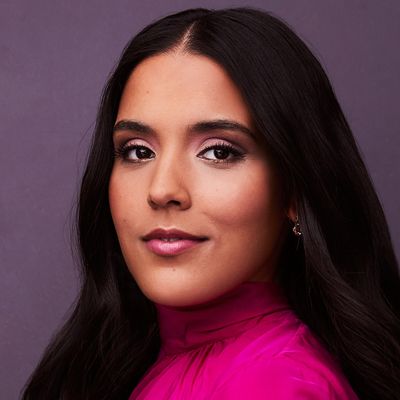
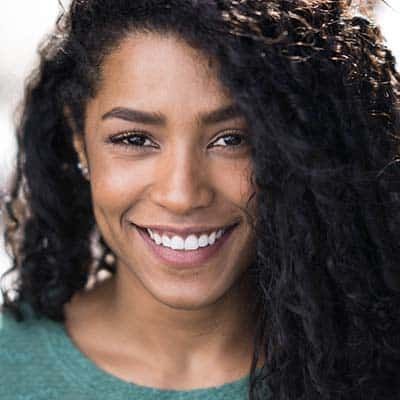
In this episode, we continue our conversation with Linedy Genao (Bad Cinderella), Taylor Iman Jones (Head Over Heels), Fran Tapia (On Your Feet), and Maiga Vidal about Maiga’s new musical: Café Con Leche. Special Guest Host: Héctor Flores Jr... Read More
From the show: Backstage Pass
Guests
About
In this episode, we continue our conversation with Linedy Genao (Bad Cinderella), Taylor Iman Jones (Head Over Heels), Fran Tapia (On Your Feet), and Maiga Vidal about Maiga’s new musical: Café Con Leche. Special Guest Host: Héctor Flores Jr.
With book, music, and lyrics by Maiga Vidal, Café Con Leche is an original romantic comedy set in Los Angeles with an all-Latinx cast. The new musical follows Alejandra, an accountant who longs to be the perfect immigrant daughter for her parents, even if it means staying in the closet forever. When a rent hike threatens to close her parent’s American-style donut shop for good, Alejandra, with the help of mysterious new customer Megan, opens Café Con Leche, a Latino-themed coffee spot, to moonlight after-hours at the store to make extra money. As her feelings for Café Con Leche and Megan grow, Alejandra begins to question just how much she’s willing to hide to keep her parent’s love.
This episode features the songs “My Turn” performed by Linedy Genao and “Alejandra” performed by Taylor Iman Jones and Linedy Genao.
Connect with Linedy Genao:
Instagram: @linedygenao
Connect with Taylor Iman Jones:
Instagram: @taylorimanjones
Website: https://www.taylorimanjones.com/
Connect with Fran Tapia:
Instagram: @franciscatl
Website: https://frantapia.com/
Connect with Maiga Vidal:
Instagram: @maigavidal
Patreon: https://www.patreon.com/maigavidal
Connect with Héctor Flores Jr.:
Instagram: @hectorfloresjr35
Connect with New York Theatre Barn:
- Support us: newyorktheatrebarn.givingfuel.com/nytb-yea2024
- Twitter: @nytheatrebarn
- Instagram: @newyorktheatrebarn
- Facebook.com/nytheatrebarn
- nytheatrebarn.org
- Pauls’s personal instagram: @paulsmacs
- Teresa’s personal instagram: @terijoyeaux
Transcript
This transcript was automatically generated and might contain errors.
[0:00] ♪ Musical number: "California Cappuccino Donut Coffee" — performed by Unknown performer ♪
[1:44] Héctor Flores Jr.: Welcome back to part two of our conversation with Linedy Genao, Taylor Iman Jones, Fran Tapia, and Maiga Vidal about this exciting new musical. With book, music, and lyrics by Maiga Vidal, Café con Leche is an original romantic comedy set in Los Angeles with an all-Latinx cast. The new musical follows Alejandra, an accountant who longs to be the perfect immigrant daughter for her parents, even if it means staying in the closet forever. When a rent hike threatens to close her parents' American-style donut shop for good, Alejandra, with the help of a mysterious new customer, Megan, opens Café con Leche, a Latino-themed coffee spot to moonlight after hours at the store to make extra money. As her feelings for Café con Leche and Megan grow, Alejandra begins to question just how much she's willing to hide to keep her parents' love.
This episode features the songs "My Turn," performed by Linedy Genao, and "Alejandra," performed by Taylor Iman Jones and Linedy Genao. Listen all the way to the end for a game where we decide which musical theater characters we'd like to serve us a Café con Leche.
[2:51] Maiga Vidal: Café con Leche is a Trojan horse. At the top, it's this queer, rom-com musical. You're gonna have fun, you're gonna sing. But inside of it is actually the cycle of daughters disappointing their mothers. Rosa has disappointed her mother, that's why she's in the United States. In Act 2, you know, I make you feel lots of joy in Act 1 because Act 2 will hopefully make you cry and then obviously then have joy, but there are parallels to each other. And language is also a thing, like Megan is closer to queerness in a way because it's actually more American, right? Like in Chile, divorce became legal in the 2000s. Gay marriage is like a conversation we're having now. And it's sort of taking the old world and that being connected to language and using language as that.
And Megan represents sort of this Americanness and what it means to be Latino, in my opinion. And then Alejandra is the middle. You know, everything is a spectrum, just like queerness, just like Latinidad. And so it's great when people are like, oh, you really did put thought into language as an additional metaphor on top of that. I mean, I should. That's literally my job. You know, my other job is to write shows for actresses of this caliber. If my whole reason for existence is so that these people are working all the time, then I've done my job. As Stephen Sondheim says, the third one is God is in the details, all in the service of clarity.
[4:10] Héctor Flores Jr.: And you are so specific about your language work. That's truly fantastic. This story features the cycle of possibly disappointing mothers, disappointing parents. I think that's a perfect segue into "My Turn." Would you set that up?
[4:24] Maiga Vidal: Yeah. OK. Linedy said something in the last interview that literally made me shake. I want to give this space to Linedy because she said it so well. But I do want to say that with this one thing, when I was writing this show and I was thinking of the timbre of the voice, because I have so many women and if you've watched Suf's, for example, timbre is so important there because it's an all-female cast. So like your bass, your baritones, your tenors. Right. It's not actually part of the score structure in something like Suf's. So it's so important that all these women showcase like you have a real contralto and an alto and a soprano and whatever. So when I was thinking of the show having the biggest parts being women, I was like, how am I going to create the contrast?
And I always wanted Alejandra to have this youthful, joyful, optimistic timbre. Obviously, not to gush, I do this every interview, but like, I'm sure Linedy probably knows, but like Bad Cinderella was like, you know, I was on Twitter and it was like, oh, oh my God, Evita wasn't even played by a Hispanic woman when it opened on Broadway. That's exactly what I thought when I read Linedy's bio. You have got to be kidding me. Literally, Evita was not played by a Latina actor. No shade to Patti LuPone. But you know what I'm saying? When I was writing the show, I was like, wouldn't it be sick? Wouldn't it be sick of Linedy saying this?
[5:33] Linedy Genao: Oh, you manifested that. You manifested that.
[5:36] Maiga Vidal: Dude, I was literally at the mall and Hector was like...
[5:38] Linedy Genao: You were carving your own path. Just like everybody else in this room, apparently. Everyone in this room is carving their paths.
[5:43] Maiga Vidal: I carved it to Hector and Hector was like, she's in. And I was like, thank you so much. Thank you. I was like, actually, muchas gracias, te quiero mucho. I hung up and I looked at my husband and I was like, Bad Cinderella said yes! I'm going to pass it off to Linedy now because she could actually set up this song better than I can.
[5:58] Linedy Genao: Oh, please. "My Turn" resonated a lot with me because I am the oldest of four and my father is the oldest of eight. And he came to this country from the Dominican Republic with my grandfather and two of his younger siblings for the American Dream and everything like that. And so obviously being the oldest of eight, my dad is very strict. Having the experience of being the oldest child of the oldest child, if that makes sense, of an immigrant, there are these expectations and these unspoken things. And, you know, basically my whole life, I wanted to make my family proud. A lot of decisions that I made, even if I knew they wouldn't make me happy, I did it for my family and for the honor and just making them proud, even if the sacrifice went out.
[6:40] Maiga Vidal: We'll discuss that after we play the demo, because that's very clear. So like the first few lyrics are to be the child of immigrants is to grow into who they expect to rise with no fear or hesitation to earn their love and respect. And then it keeps going, you know, but just that I was just like, oh, OK, I know this. I know this. Yeah.
[6:58] Linedy Genao: Like for real, for real.
[6:59] Maiga Vidal: So when you read those lyrics and you suddenly become Alphabot.
[7:02] Linedy Genao: It's me.
[7:03] Maiga Vidal: It's quite literally like it's me. Hashtag. Yup. A little funny story. My guy had presented these songs and I was like, all right, this is great, but we need an I Want song or an 11 o'clock number. And how soon can you have that done? No big deal.
[7:21] Linedy Genao: Literally.
[7:22] Maiga Vidal: Bye. It was Thanksgiving break. I had four days before deadline. We love the show, but you need this song. And I'm like, great. There are, I think, 20 pages of lyrics of variations for this song. And I couldn't crack it. And then finally, I was talking to Mindy Dickstein, who's my professor at NYU. And she's like, it's just because this moment doesn't sing. Think of a different moment. What's a moment that will make me sing? And then this song was born out of that. You know, you can't force a moment to sing. But in the story, I was like, but also like having the you got to have this in 96 hours, baby, or this thing is not happening. And I was like, absolutely, I'll have it for you. And then I didn't sleep, you know, shout out to Hector. Sometimes that's the best way for art to be created.
[8:01] Linedy Genao: You have that deadline sometimes.
[8:02] Maiga Vidal: And I mean, I experienced this in grad school. Sometimes having that deadline. Limitation is creation. As Theodore Barnes says, limitation is creation. Sometimes having that deadline can create the very, very best work. And I think it did here. Here is "My Turn," performed by Linedy Genao.
[8:17] ♪ Musical number: "My Turn" — performed by Linedy Genao ♪
[11:10] Linedy Genao: Oh, my turn now.
[11:18] Héctor Flores Jr.: Okay, first off, Linedy, your voice sounds incredible. What a performance. But what's so interesting about us setting up the song, we kind of said everything I wanted to say, usually what I say after the song. Because what was so interesting about this song as I was digesting it through my Stephen Sondheim-influenced brain, I was like, oh, this is an I want song for someone who can't actually pursue what they want. What they want is to please their parents. But what happens when what you actually want comes into conflict with what you think you're supposed to do? And even from this one song, that all was clear. That was all very, very structurally clear. So I got it. And it sounds incredible.
I mean, Linedy singing it, listening to that ending part, I was on the subway. And I just cried. I was like, oh, interesting. I actually write music I want to listen to who knew the thing about the word choice, my turn, right? It's like there's so much it's like the literal my turn, but it's also a turn you have the characters making a decision. So it's my turn to make a decision. And also when I wrote this song, I essentially I wrote it for pitch, right? So when I think about structurally in that song, I always wrote it with the intention that it could be an I want song, or it could be an 11 o'clock number, because those moments for the character dramatically are where the turn happens, right?
When I wrote this song is for October 2023. And I wrote the I want song. And now it's October 2024, literally, like a year later, I'm like, okay, actually, my turn is her coming to the realization that now it's her turn to make her dreams come true. And so by changing just the pronoun of make their dream to in this new version, making my dreams come true, you can still have that moment of having the literal turn of her life making a decision to choose herself over her parents, whereas like an I want song, right, it does the opposite. And that's the turn mechanic, literally.
[13:04] Linedy Genao: Does anyone feel Stephen Sondheim's ghost like in this room right now?
[13:07] Héctor Flores Jr.: Oh, please, do not.
[13:08] Linedy Genao: Nodding. He's like, well done, well done, Micah. Also, how cool of Mindy Dickstein advised you that the writer of Little Women, you know, like, yeah, pretty cool.
[13:17] Maiga Vidal: Mindy Dickstein is my advisor at NYU along with Rachel Shanken. I love them both very much. They're like the lyric heads there. They're incredible. They believe more in me than I believe in myself.
[13:27] Héctor Flores Jr.: That's the best kind of mentor.
[13:29] Maiga Vidal: That's the best kind of mentor. But she also does rag on me for using rhyme zone for my rhymes.
[13:36] Héctor Flores Jr.: I can cut that if you want later.
[13:37] Maiga Vidal: No, no, we literally joked about that today. Because of their belief in your work, you hold yourself to a higher standard, right? But I am very adamant that you do not need to go to graduate school to write a musical. You do not need higher education. The people in this room are a testament to that. You need to make your art. I was working on Café. I got my first opportunity with Café out of being in grad school, right? Like, I was already doing the work. What you get out of grad school and a place like NYU is the connections, the access. And that's what you're paying for. And I want to be super clear about that. Because you can write a musical if you want to. You don't need to go to like the fancy graduate school.
But on the flip side of that, I think it also comes with like gatekeepers opening their door and being like, I have had more opportunity because I say I'm a graduate of musical theater writing program than I had when I wasn't. But the work didn't change, right? So I think it's also being cognizant of the fact that I have been very blessed to be seen by so many people, including the faculty there and Hector and this incredible group of actors to be like, oh, your stuff is worth something. Hector talked about this earlier, like building a ladder for people to come up. That's why I do my little YouTube thing. If people DM me or they write me emails, so they're like, how do I start writing? I email back.
That's what I needed. This was born out of a desire to do theater. And you don't need to pay a crazy shit ton of money to do that. So I just want to be so clear about that. But it is also cool to have Mindy Dixon talk to and have her phone number.
[15:05] Héctor Flores Jr.: I would just say thank you for stating that. That's partly the reason this podcast exists is to provide accessibility to people to be able to hear this conversation. When I was 20 something years old, I would have loved to be able to listen in on a conversation like this. But it just didn't really exist on YouTube or the internet yet. Also, I went to grad school at the New School. You're exactly right that it's a weird problematic experience. I was a great artist before and my artistry was refined. But really, I'm paying to be able to I actually directed a few operas at the graduate musical theater writing program at NYU because they have like this thing where the alumni come back and like they do the opera lab.
Yeah, I directed for the opera lab. But the whole graduate experience is weird and problematic. The fact that you're aware of that is just it just is right. So I mean, you just have to be really cognizant of the fact that this is a privilege. Like going to grad school is a financial privilege not to get too personal, but like I married my husband's literally stationed in Japan right now. We've been doing literally international long distance for the entirety of this program. And the only reason I'm able to do this is because I'm able to afford rent in New York with a roommate, I got a scholarship and I'm taking financial aid, I'm making a decision to invest in my career, because I felt that the only way that I could move on to the next step was to get to meet people because I feel like if people get to know me, they'll understand that I'm serious and they'll want to work with me.
I think so much of that is grad school, but also like your peers, people who are your age, people who are at your level, like all these incredible artists, I'm not at their level, I'm an emerging playwright, these people are like incredible artists, and it's a privilege to be able to work with them, you know what I'm saying at this level of my career, but I think it's also like they were willing to put down their ladders to help me up, right? And so it speaks to the work ethic of everyone here.
[16:50] Héctor Flores Jr.: Hector, was there something else that you wanted to bring up that kind of naturally transitioned into Alejandra?
[16:56] Héctor Flores Jr.: I think I'd like to throw the question to the group if there was ever a time that you ever felt that you wanted to be with someone that you couldn't be with for one reason or another. Fess up! I mean, like, woo!
[17:08] Linedy Genao: I mean, Hector, just like, Hector, the guest host, just bringing in the deeply personal, I mean, this is backstage pass after all. I'll accept. God. Okay. I mean, who it is, but like, if you could explain what that maybe circumstance, how it made you felt.
[17:26] Fran Tapia: I feel that this is, it's super related to what Manga was saying. I'm, of course, queer, but I did not fall in love with a woman because I did not have any references on my experience, on my school, on my university. I did not know what a lesbian was, like, literally. I knew like gay men existed, but not lesbians. And when I first fell in love, I was like, well, let's jump to this. I'm 41 now. And I have a podcast on childhood and adolescence experience of Chilean people, Chilean adults that explain about their own stories. And really, I think it's super important, yes, to have those references, because if not, like, literally you're in the blind. Having new cells and being able to see relationships between mothers, daughters, someone that did not imagine themselves as queer and suddenly is feeling things.
It's super important. It's also important not to go into it only through the drama. I feel that, of course, we have lived so much drama, but from a place of joy, from a place of healing and understanding, communicating. I've fallen in love with a lot of people that I couldn't love. And I lost my family. I lost my sister, for example, for some time. But I decided for myself that that was going to be my life. Life has given me back everything that I've...
[18:43] Héctor Flores Jr.: ¿Cómo se dice luchado?
[18:44] Fran Tapia: Yes, that I've fought for. Yes.
[18:46] Héctor Flores Jr.: That's right.
[18:47] Taylor Iman Jones: Yeah, I'll piggyback on that. I played queer characters before I realized I was gay as well.
[18:53] Fran Tapia: Musical theater helps you find yourself.
[18:55] Taylor Iman Jones: For real. Like, here I am playing opposite women and their love stories. I was just like, wow, I'm really good at this because I'm such a good actor.
[19:00] Fran Tapia: No.
[19:08] Taylor Iman Jones: It's a little bit deeper than that. But in the same way that I think you play roles that are warriors or princesses or kings, and you pull from a part of yourself that you're like, oh, I didn't know I had that strength. Or I didn't know I could be that fierce. I didn't know I could be that strong. And we do it to make us feel better. But it's nice to be like, oh, I didn't know I could love like this. I didn't know that these types of relationships would speak to me in this way and open up more possibilities. Like, I just did a rock show where I had to play guitar on stage. And that was the first time I'd ever done that. But now I'm like, I am a rock star. I am a professional guitarist, technically. And so it's nice to be in these worlds that not only show people but will eventually help people find themselves as well.
[19:53] Fran Tapia: I feel like it was kind of crazy growing up. Like Fran said, I didn't have all those role models that we have today to normalize what a gay relationship is like. So growing up, I was kind of like, I guess like, everybody's kissing girls. So I guess I'll do that too. And I remember the first time I kissed a boy, I was like, that's what I need to do. Ding.
[20:12] Héctor Flores Jr.: And I'm guessing you asked that question because that is the perfect setup to the song Alejandra.
[20:17] Fran Tapia: Perfect. That was a segue. Teresa would be so proud. Thank you all for sharing that deeply personal stuff. Good question, Hector.
[20:25] Linedy Genao: It's funny because somebody that my mom didn't like, like I eloped with my husband, like I was a runaway bride, I live streamed my wedding in 2017. I didn't invite anyone. I got married in DC actually at a war memorial. You know, my family in Spanish is like, does your mom know that you're doing this? But like, that was literally the runaway love. But as I was writing café, I started from like a very logical place of like, I want all women because I'm writing for women. So I want my two love interests to be women. And as I'm developing the story, I was like, this is coming so easily to me. Oh, wow. Like, and then there was a pandemic. And I realized as I was writing it, I was pulling from these experiences that I had.
I was all of a sudden looking back at my experiences with women and being like, oh, that was you were in love with her. And you just didn't know that because you'd never seen like a woman fall in love like in high school. It was normal that it was normal that that could be a thing. And I'd never seen a Latina fall in love with another Latina like ever. My junior year of high school, we did Lillian Hellman's The Children's Hour. And I played Martha, a.k.a. the lesbian who shoots herself at the end of the show after she reveals her feelings. And I had to shoot the gun every night. I mean, like my director didn't when I go back to talk to my high school mentor, he's like, yeah, it's kind of obvious.
But to me, I was like, oh, this is this is what queerness is. It's literally her killing herself at the end after revealing her feelings. I didn't realize how much that had affected me until I was literally working on this musical. And I'm oh, maybe I'm maybe I'm bi. And like I've always been and I just didn't know. It's been sort of sort of a crazy conversation to like be very like married to a man, super happy. But like the majority of my work features queer women and I write for queer women specifically. It's just an interesting thing. Sometimes you don't know why you're writing it until you step back and you learn a lot. Same thing with directing. I had no idea why I chose Richard III for my thesis project. And suddenly I got to learn a lot about myself. And I'm like, oh, this is weird, but we might cut that, too. But can you bring it all back and.
[22:20] Maiga Vidal: Can you kind of shape that setup into how Alejandra fits into the show?
[22:25] Maiga Vidal: Of course, Alejandra is the act one closer of the show. Café Con Leche is technically an homage to Guys and Dolls. It's in the spot of I've never been in love before. I mean, it's not a one to one. What I'm doing with Café is like, what if all white cast with like the one Latino but like backwards, right? So it's all Latino cast with the one white girl. Her name's Natalie. So these two women are falling in love. But Alejandra knows that her mom doesn't know, right? And that choosing to leave with Megan that night means like it's a Rubicon. You can't return from that moment. And I think it's kind of like this interview, I might not be able to return from this moment. You know what I'm saying?
But it's a choice you make because you can't live with the way that you have been living anymore. But then to also have someone love you equally and be vulnerable and take a chance because I mean, I'm not going to spoil the show. But like Megan is also making a huge choice to reach out to Alejandra at that point and essentially be like, Hey, I'm gonna love you. Like, let's figure this out together. I think about Megan's section of like, I've never felt this way before, if ever. And I think Megan really means that they have a connection that's special, something that would break the taboo that Alejandra has and something that would put Megan's career on the line. That's the power of love, baby.
[23:33] Héctor Flores Jr.: Perfect. All right. Well, here's Alejandra performed by Linedy Genao and Taylor Iman Jones.
[23:38] ♪ Musical number: "Alejandra" — performed by Linedy Genao and Taylor Iman Jones ♪
[26:46] Maiga Vidal: All right. I mean, the setup of the song was like the most passionate set. Good job, Hector. That was the most passionate setup we've ever had for a song in Backstage Pass, I'm pretty sure. But yeah, I mean, what a duet. Like, you can just feel the passion in the vocals. I feel like, oh my goodness. What do you say to running away? I mean, oh my God, you know? Taylor ate that song. That's all I gotta say. Easy, easy when it's good. Easy when it's good material. I had originally an intro, which is the underscore for the little dialogue section. But then Felipe and I, my arranger, were talking. And I was like, man, if we have like the right vocalist, that acapella section at the top only works with a vocalist who can really act.
You know what I'm saying? Café con leche is like, you can sing, but you have to be able to act. And like, when I listen to Taylor, I literally get chills thinking about like, yeah, this girl's putting everything on the line. And Alejandra's gonna fall to her knees, baby. They are gonna run away. And it's gonna be a horrible decision, but they are gonna be happy in the middle of the act, you know? But what's crazy is that moment that Alejandra has to choose whether she's gonna like, go for love and for, you know, risk her family not accepting her and not coming back home, because that's a real thing for a lot of people, you know, is a huge moment. And I think it's encapsulated in the song very well. I feel like I'm brought to tears every time. I'm like, yes, love wins. Like, I'm clapping alone in my room, just rocking back and forth. Like, yes!
[28:10] Maiga Vidal: My hope is that when you watch that in the show, you feel joy and dread at the same time. Because right after that song ends, in that little underscoring after they leave, Rosa walks in and has caught them. But she doesn't say anything. And that's curtain. That's the end of act one. But isn't that life? The mixture? So often, we're like, I want the audience to feel this. Isn't life so much more often, oh, I'm feeling these two things at the same time, and they're competing?
[28:32] Linedy Genao: Exactly.
[28:33] Héctor Flores Jr.: Okay, my friends, well, I'm going to bring us home. It is game time. I mean, Teresa's like the game master. So again, these are big shoes to fill. And Teresa always names her games. So I'm going to call this game. What can I get you? So what we're going to do is let us say you're at a cafe, and you decide to order a cafe con leche. And you can like, you can judge the circumstances a little bit. I don't really discuss this too much on the pod. I did discuss it when Justin Cuartaz was on for Lizard Boy, because he also worked at Starbucks along with me. But you know, I'm used to that really early morning grind. I'd be the person behind the counter like 4am. If you're standing in line for coffee, or maybe you just sit down at a table, which musical theater character would you like to bring you your cafe con leche? I can go first. Oh, no, no, Taylor. Taylor's gonna go first. Yeah.
[29:18] Taylor Iman Jones: Because you warned us a little bit. So I've been racking my brain. This is kind of a stretch.
[29:24] Maiga Vidal: No, no, no stretches. If there's another box right in the other do it. I do this all the time.
[29:29] Taylor Iman Jones: Great. Then I choose Broadway puppets. All of the animals in Lion King. I want that King Kong puppet to come back. I want the tiger from Life of Pi. I'll take Sven from Frozen. Like the Avenue Q Bad Idea Bears. I'll take the Bad Idea Bears. I don't want any of the human puppets. But I want I just I love puppetry on stage, especially when it's like multiple people doing it. It's just it's such a crazy art form. And so that's what I think would brighten my day for 5am.
[29:58] Héctor Flores Jr.: Yeah, yeah. So you see puppets in the morning that bring your coffee make sure no like little puppet for hairs get in the coffee and you're good to go.
[30:04] Taylor Iman Jones: Exactly. It took like four people to do it.
[30:06] Héctor Flores Jr.: You see them like passing with their little arms like pass the cup over and over and over and over.
[30:11] Maiga Vidal: I love that. All right, who's next?
[30:13] Fran Tapia: I think I would have Vanessa from In the Heights because she has her coffee the same way I do. Light and sweet, a little bit of cinnamon.
[30:20] Taylor Iman Jones: Oh my gosh, that's amazing.
[30:21] Fran Tapia: To piggyback off of that. I, I would love to give Daniela from In the Heights cafe because she would come in with all the bochincha every day like the gossip of the day. And so every morning, even if it's a 4am shift, I will be ready to hear the tea like yeah. And just like, you're getting a different story every day. You're waiting for her to come back the next day to finish that part of the story. And I'm like, girl, I need to know what's going on. So I would love that.
[30:49] Maiga Vidal: Not to also, but like, okay, I'm from L.A. We don't have bodegas, okay? Like we have donut coffee shop. I go to my local donut coffee and I get a coffee there. Pero, if I could have anyone, it would definitely be Usnavi, okay? I'm like that boy, the first time I had a bodega coffee, I was like, is this what In the Heights feels like? Because I saw In the Heights in the middle of nowhere in California, I was going to school at Thousand Oaks. And I was like, oh my God, like, I don't even know what Latino people do in New York. And then I moved to Brooklyn and I go to my bodega and I talk to like my bagel guy. And he's like, here's your cafe and your bagel. And I'm like, this is the best day ever. So it would be Usnavi at my local bodega.
[31:26] Fran Tapia: Amazing. Fran, do you have an answer?
[31:28] Fran Tapia: So I would like a cafe from Abuela from In the Heights so that she like gives me something cozy.
[31:38] Maiga Vidal: So much water that it's like not coffee.
[31:40] Fran Tapia: Yeah. So I'm like, I mean, literally translates to like water of sock, but it just means that it's really, really diluted. Like an imagine like an Americano, but like so much more water than that.
[31:50] Maiga Vidal: Yes. And with a hug.
[31:52] Héctor Flores Jr.: That's incredible. So we've got puppets. We've got In the Heights. And I'll throw in mine, which was I definitely would like Elder Price and Elder Cunningham from the Book of Mormon. Because I like to be cheered up. I'm not so much a gossiper.
[32:06] Taylor Iman Jones: You know, like respect for sure.
[32:08] Fran Tapia: Listen, me neither. I don't want this to turn into that I like gossiping.
[32:11] Héctor Flores Jr.: No, and it's not gossip. It's chisme, which is different.
[32:15] Taylor Iman Jones: Okay. Okay. Thank you. No, I'll take all the gossip.
[32:21] Héctor Flores Jr.: But I also I think Elder Cunningham would be very entertaining taking my coffee order in the morning and make me smile. But I'm sure Elder Price would make sure that my order was correct.
[32:30] Maiga Vidal: So that's my order.
[32:32] Héctor Flores Jr.: All right, friends. Thank you so much for being here. Fran, Taylor, Micah, Linedy and Hector, thank you for guest hosting.
[32:39] Guests: Thanks for having us.
[32:42] Héctor Flores Jr.: Yeah, absolutely. Thank you for sharing this. Everyone, it is on Spotify right now.
[32:47] Héctor Flores Jr.: Go stream Café Con Leche, the developmental EP. Everyone sounds fantastic. The work is incredible.
[32:53] Guests: And thanks for listening Barnacles.
[32:55] Héctor Flores Jr.: Yeah, thanks Barnacles. All right.
[32:57] Guests: Muchas gracias. Los queremos mucho.
[33:03] Héctor Flores Jr.: Thanks for joining us on New York Theatre Barn's Backstage Pass, hosted by Teresa Attridge and Pauls Macs. And if you believe in supporting original culture shifting musicals, please like, subscribe and share.
© Broadway Podcast Network, All Rights Reserved