

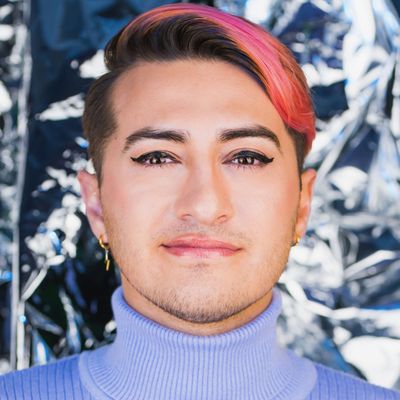
After a self-discovery journey, Performer and Producer Danny Marin is ready to take this industry by storm. 🔥 Danny always brings their whole self into their work, from their heritage and their family history to their queerness self... Read More
From the show: Backstage Talk
Guests
Featured Shows
About
After a self-discovery journey, Performer and Producer Danny Marin is ready to take this industry by storm. 🔥
Danny always brings their whole self into their work, from their heritage and their family history to their queerness self. 🫶🏼
Please visit their Instagram to see what they've been working on!
If you want to know more about our host, please visit his website! Feel free to reach out with feedback or if you want to be part of Backstage Talk!
Follow us on Social Media:
Transcript
This transcript was automatically generated and might contain errors.
[0:00] Martín Acuña: Hi, everyone. I am Martín Acuña, and you're listening to Backstage Talk.
[0:10] Martín Acuña: Hello, everyone. Welcome back to another episode of Backstage Talk. Today's guest is someone that I have looked up to for quite a while now, and before I introduce this next guest, I want to thank our mutual friend Jason Aguirre for introducing us. I have here with me Danny Marin. They are a transplant from Southern California. They are a writer and performer and producer in New York City, who originated the parody roles of Seymour in Liquor Shop of Horrors and LeFou in Beauty and the Bourbon as part of the Drunk Musical's Off-Broadway run. Previously, they've also been seen in the Off-Broadway production of Naked Boys Singing at Theater Row, and Danny produces shows across the country with their production company, Con Limón Productions, and they also were part of the inaugural cohort for the Schubert Organization's Artistic Circle. Danny, thank you so much for being here. I'm so excited.
[0:32] Danny Marin: Oh my god, thank you so much for having me. I'm so thrilled.
[1:12] Martín Acuña: I know that I just briefly introduced you, but a bio doesn't give us the whole story, so who is Danny Marin?
[1:27] Danny Marin: Oh my god, we could be here for hours. This is therapy, right? I've lived in New York. This will be my 11th year, and I spent a lot of my time—I moved here as an actor for Broadway, and I've been doing theater, and I was very fortunate to have just concluded my run Off-Broadway with Liquor Shop and with Beauty and the Bourbon, but I took a lot of time off to be an assistant. I worked as an assistant for several Broadway stars in different spheres, and I really took a break because I didn't know who I was, and I feel like as an actor, if you are questioning yourself and still learning a lot about yourself, it's okay to take a break, and so I took a very, very long break of like four or five years from acting, really.
I did some concerts and little things here and there, but I was really focusing on the assistant work, and I was working with Sherri Renee Scott, who is like my aunt. I love her. She's incredible. She's my family. I was working with her, and she said, Danny, you don't want to assist me forever. What do you want to do? What is next? If you're not going to fully focus as an actor, what other things are interesting to you? I've written, and I've done all of these other little things, and I was like, well, I really enjoy producing friends' work. I love doing concerts. I like doing benefit shows, cabarets. I like doing those things, and she said, cool. You want to be a producer. You should go produce, and she gave me the opportunity to work on her show.
I worked with J. Armstrong Johnson on his Halloween spectacular with rabbit hairs, and it really fueled a fire in me that as an actor and as a writer that I understand a lot of the smaller things that go on behind the scenes that a producer doesn't always see. So, I really took it as a calling. I launched my production company in 2020 in the midst of the pandemic with a mission statement to really support marginalized communities, and we're the global majority, and if we want to see more of us on stage, we need to have more of us behind the scenes as well, and so, you know, it's been a real treat, and I'm very fortunate to be working with the people that I'm working with.
[4:06] Martín Acuña: I love that. I love that. So, let's go back a little bit on your journey, and why did you choose musical theater and Broadway?
[4:20] Danny Marin: Because I'm sadistic. I don't know. I hate myself a little bit. No, I just always loved performing. I was and still am very much an introvert. I'm very, very shy. I actually have stage fright, like actually, like have very bad stage fright, and it was a big test for me. I was a really young kid when I was put into speech therapy because I couldn't say a lot of the words in English because my mouth wanted to say things like in Spanish, so I was put into speech therapy, and that, with diction and enunciation, like really kind of set me forward into my path as a performer. Yeah, I always loved singing. I always loved dancing. I never had the opportunities to be able to do any of those things in as far as like, you know, summer camp or any of that.
We didn't really have those programs in like elementary school or middle school, and so when I got into high school, I was told to join the show choir, and that turned into a whole explosive thing because I got to sing, dance, and got to act. They immediately were like, you're so hyper. You need to do musical theater. Go with the drama kids, and so I found this, you know, cool home where I got to be weird and didn't feel different. I got to really show my strengths. I got to show my acting ability, and it just, I really got the bug.
[5:57] Martín Acuña: I love that. I love that. So tell us a little bit also about your journey with Colimón Productions, with the Sherbert Organization's Artistic Circle, with the shows that you do, both writing on stage, producing, all about that.
[6:20] Danny Marin: Yeah, so Colimón was brought forth in 2020 during the pandemic. It was very clear to me that we all had these calls to action on how to move the theater community forward, not just Broadway, but theater as a whole. We were talking about all of these social changes around in our world and in our lives, and it became very clear to me that, you know, I wanted to move forward as a producer. I was working on a visual album for Broadway Cares with I Put a Spell on You with Jay Johnson, and I knew in my heart that I didn't want to move forward as a producer as Danny Maron Productions or Danny Maron LLC. I really wanted to go forward saying, how can I create a production company that is for our community?
And Colimón really came from a place of like, you know, it came about as a joke, the name of it. We were throwing around names of it, and my partner makes fun of me because the only time I eat Flaming Hot Cheetos is when they're Colimón. And so he threw that at me and was like, ha ha, and I was like, wait, no, there's something to that. There's something to that. I really like that. And what I've always said as a producer is that like, for me, the way that I operate is that I like to plant seeds. I like to, and I've always used this metaphor, so it was like, perfect. I like to meet people and wherever they are at or wherever I am in my journey, I am planting a seed by having a meeting with you or having communication with you.
We're building a relationship. Sometimes those projects or those people need the nourishment now because something is happening and growing and their project is blooming now, so I need to really be giving it attention, give it sunlight, give it water, give it what it needs. And then there's others that you leave there and you forget about, and you come back months later, years later, and you're like, oh, you grew. That's good. And so with Pon Limón, it really kind of fit the world that I was going for that this has to be bigger than just myself, and this has to be community-based and community-led and I'm not perfect. I don't have all of the answers and I'm not a monolith to every disenfranchised community, so I need to learn too.
There's a lot of places where I got to go with my unlearning and my relearning. So it was a really cool opportunity to be able to start a production company that just wasn't about me. And then with that, I was recommended to apply for this program. It was new. No one really knew anything about it except what was on its press release. And so I applied on a whim and I had a really fantastic interview where I just felt like I was myself and didn't feel like I had to put on a disguise of myself. A lot of time you go into these meetings for fellowships or for whatever, and you feel like you have to, especially as a Latine person, as a queer person, as a trans person, you feel like you have to put on a costume and say here's the package, here's what I think you want to hear from me.
And in this particular room, I was just myself. I was unabashedly myself. And they understood. They got it. And I was like, I left the interview, my first interview, and I said, there's no way I didn't just get that. And it's not from a place of cockiness. It just felt right. And those moments happen so often in our business where you have this gut instinct and you go, this is right for me. It may not be right for me now, but this is right for me. And I was very lucky to be a part of this first cohort. And it really changed my life in a lot of ways. I met some incredible, incredible producers who are doing such good work. Lauren Lacroix, Brian Joseph Lee, Victoria Dietrich, Sammy Lopez, who is like my twin brother producer.
Sammy and I have almost the exact same story, and that is so rare. We both come from the same place in California. We both very much have similar backgrounds as far as our family and why we got into producing and why we got into theater. And it's really changed my life because I, for the first time in my career as a performer, as a producer, as a writer, I feel like I found my community. I feel like I found my people. I feel like I'm not alone. And that is the big part of why I produce. And that's really special and really important for people to hear.
[11:28] Martín Acuña: I want to move a little bit forward into your background and your heritage as a Latin person. How has your heritage impacted or influenced your artistry as a writer, as a performer, as a producer?
[11:41] Danny Marin: Yeah, I think everything that comes with life and the lessons that we learn really come from our backgrounds. And for me, it's always been about family. It's always been about the community that we built. And it's honestly always been kind of about music. My dad has been in a mariachi band since forever, and with my uncles, with family. They have their own band and they go do weddings and all kinds of stuff. So music has always been around me. And that's been something that's so cool that I can really connect with my dad about that. And my grandparents, my abuelita and my abuelito, they both also write music and sing together and always have... That's what made them fall in love. And it's something that I always remember when I get to be in rooms and this is such a stepping stone for them.
This is something that they get to be proud of, that that was something that they passed on to a further generation. And it always brings a smile to my heart because they're so far away. They're all in California. And it just makes me feel connected anytime I'm a part of any of these rooms. I'm always reminded, oh yeah, this is how I got to this place. But yeah, I mean, I don't know. As a performer, I really have... As an actor, I've really embraced my heritage and very much... I'm very clear about what I will stand for and what I won't stand for. And one of the things that my reps and I had a lot of conversations with in the pandemic is that as a Mexican-American with a last name like mine, with the skin color of mine, I'm often being seen and auditioning for shows about Mexicans.
Great. Happy about that. I get to represent my community and not pretend like a Colombian or Puerto Rican. Lovely, love it. Representation matters. But I'm always being seen as somebody that is being deported or in fear of being deported or in fear that my family is being deported. There's always some kind of message behind there. And it has been since the very beginning of the pandemic. And I told my reps that I don't want to do that anymore, that I am very fortunate and grateful that these stories are being told. There's too much of it. And a lot of them are coming from white guilds. And I don't want to be a part of that, especially because a lot of those storylines are being written by white writers. Think about that. So I very much... If I see Ay Dios Mio one time and no other Spanish in a script,
[15:44] Danny Marin: A single parent household and going to the rich white people and seeing the grass is greener on the other side, that story is now about assimilation and how greatly that story completely changes without you having to change a single thing. And that's the kind of work I wanna do. And so with that, as a producer, that's the stuff that I try to find. I try to say, if we're gonna cast these people, how can we really utilize their story without having to change anything? How can we make this about them and for them and for their communities just as much and tell that same story? So that's really what I'm so grateful about with my background is that I've gotten to see a lot of kind of the flaws and the quirks of what our industry tries to do and try to put on us.
[16:39] Martín Acuña: What is the best thing about being a Latin artist? You mentioned this connection with your family, this connection with your heritage through your artistry, but what is the best thing?
[16:51] Danny Marin: I think the best thing for me is that I can be unabashedly myself. There's nothing better than being a Latine person or like coming from a very loud Mexican family where no one has imposter syndrome. Like we are loud, we know ourselves, we rag on each other and make fun, let's talk about shade, we do that, it's nothing. And it's something that I just love. And as an artist, I really have learned over this last couple of years, especially that I can walk into a room and just be myself. And that's what I love about being a Latine artist is that I really get to just put my full self into things. And I don't know, I don't apologize for being loud anymore. I love that. And yes, we cannot ask, like be sorry for being part of this huge Latin family that has very special characteristics.
They are sometimes used as the stereotype, but in the end, we are those things. Yes, they're a stereotype for a reason. And unfortunately we don't help ourselves. I'm just like, why am I gonna apologize for that? Okay, I'm a stereotype, yeah? And I hope you're making money.
[18:19] Martín Acuña: One of my last questions for you is, who is your biggest Latin inspiration? Do you have any artists from Latin America? Or you mentioned your grandparents that they bonded over music, your family bonded over music, your dad and his siblings bonded over music. But do you have any other biggest Latin inspiration?
[18:44] Danny Marin: Yes, I love this question. Thank you for asking this question. People do not ever ask this question. And this is, oh, I think about it all the time. I literally was talking to my partner about, I was literally half asleep. I was like falling asleep and I popped up out of bed and I said, hey, I need to reach out to this person. Okay, good night. Okay, let me tell you my two people. Everybody always thinks that I'm gonna be like, Lin-Manuel Miranda is my person. I love Lin. I just met Lin for the first time with the launch of Rise, the platform. Yeah, I saw that picture. And Rise, everyone needs to go onto Rise. Like that theater directory. It's such a cool platform and I'm very grateful to be a part of it.
And it's incredible. And Lin is a sweetheart. And if you look at the picture, literally everybody asks me, what did you do? What did you say to make Lin laugh? And I said, I don't know. He just kept laughing and I blacked out. I have no idea what I said. So picture is forever. I can hear him laughing in that picture. But Lin is not my person. I love Lin. He's great. My two people are America Ferrera and Eva Longoria. And the reason why they are my two people are because they're doing a lot of what I do and on a much higher platform. And they're two people that I really very much look up to in a lot of ways. They both came from not great backgrounds, from lower class families. And they did the work.
They went and auditioned, they took classes, they networked, they did all the things, became actors, are brilliant, incredible actors, are comedians. And I love it. It's what inspires me as an actor. I want to not replicate them, but I really wanna embody them when I act. They're both so incredibly funny and so smart. But they really use their platforms to then break out of that and take the focus off themselves. And they direct and they produce. And they are both incredible activists. And it inspires me. It really, we talk about all of these people that you constantly have in your sphere. We talk about our ancestors, like holding us up and cheering us on. And I look at those two particular artists and I'm like, I wanna be able to one day meet them and work with them and have them say, I'm so proud of you and what you've done by yourself.
And they're just so cool and so humble and have started such crazy initiatives and are both very much theater fans. America has been off Broadway and did the Merrily movie years ago. And Eva Longoria, who I very much want to play family at some point, I wanted to play my mom. She's probably too young to play my mom, but I want to play my mom in something. But she's a huge theater fan. And I'm just like, are we not tapping into those communities because those film and TV people are producers and they love theater? Like she specifically, like she was interviewed in Rita Moreno's documentary, which is incredible, watch it if you haven't watched it, it's so good. But she talked about her love for musical theater and how that's what she grew up with was watching Rita perform.
And that was what got her into acting and performing was having that inspiration. And so when I heard that, I was like, oh, I've never really thought about it in that particular way. And those two people were very much, like my partner makes fun of me because once a year, truly once a year, I will go on a summer binge of Ugly Betty, literally, legitimately, because it's three, four seasons, like you go through that really quick. And I literally binge it probably once a year because I'm just like, wow, she's just so charming. America is so charming and so funny and it's so heartfelt. And like, it's just everything I want to be. And those two individuals are just superheroes and if you don't follow their careers, do it, because they're really doing the work.
[23:30] Martín Acuña: I love that. I love that. And the whole explanation, thank you for that. Thank you for being so open, so candid. I am truly honored to have you here. My last question is, what are your top five favorite musical theater shows?
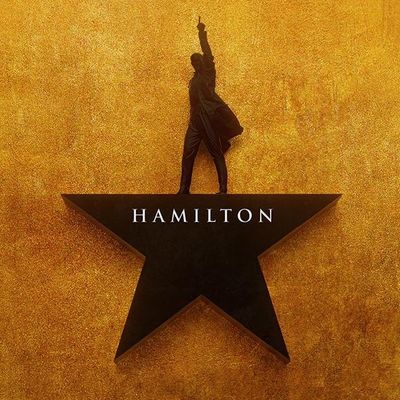
[23:48] Danny Marin: Oh no, you did not just do that. Um, oh no, oh no. Okay, I will tell you my, I'll tell you the ones that have like really impacted me over the last few years. Number one is Michael Arden and Duck West's Spring Awakening revival. Blew my mind. It's everything I want to do as a producer and as a performer. It told the story in a way that just elevated it in such a way that like, I have done the show before and I've seen the show before and it wasn't until this production that I understood the show. And I think that that is a testament to what artistry and what it was that they did. And so that's my number one as of the last like 10 years. Hamilton. Oh, I saw an Actors Fund performance of it. That was the first time I saw it.
Cried from start to finish. The music started instantly bawling. I saw the representation on stage and was like, I can do this. That was actually the turn for me that went back into acting was watching Hamilton. I said, I can do that. I could be on that stage. I could be doing what they're doing. Look at those people that look like me. So that's a big one. Ann Juliette, as of late, this particular season, Ann Juliette really blew my mind. I saw it in London. I was in callbacks for it. But I went to London and I was like, I have to go see this. It's been circulating and it's the music that I grew up with. I wanna see it. And I cried. I mean, in the same way that I did with Hamilton, I just sobbed watching May's story unfold and have it not be a gimmick and not have it be this corny thing.
It just, I felt so seen. And it wasn't until a year later that I came out as non-binary and as trans. And it was because of that show. And I saw it on Broadway and Justin is doing such an incredible job. They're an incredible powerhouse. They're beautiful. They're beautiful inside and out. They're so, so talented. And yeah, it reminded me that I can fully be myself in these rooms. I walk into an audition and I don't apologize. I don't come in, like I said before, with that costume and that disguise of this is what I think you wanna hear. I walk into a room now. Lindsay Mendez once said to us in an acting class, is a good friend. Lindsay Mendez said that she has like five songs in her audition book because she goes into a room and says, I know exactly who I am.
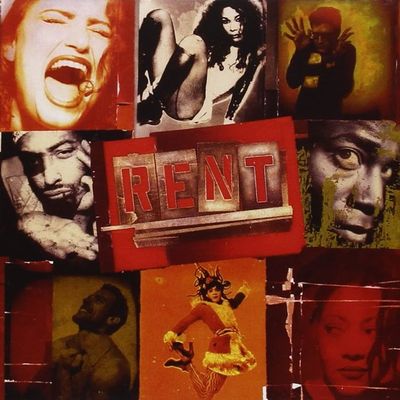
I will do different interpretations of these songs that fit the show. But these are the songs that speak to me. So this is what I'm singing today. And so that's what I've taken on in my audition book. I go in and I say, I'm singing this song and this may not be what you asked for. You're gonna wanna hear me sing this. But this is me. And it, but this is me. You wanna see me. That's the whole point of these auditions. You wanna see that I have the range. You wanna see that I can embody the character. Let me sing and show you who I am. And, you know, and Julia did that. And Julia did that for me. So those are three. Rent changed my life. Rent is what got me into musical theater. That was the first professional show that I saw.
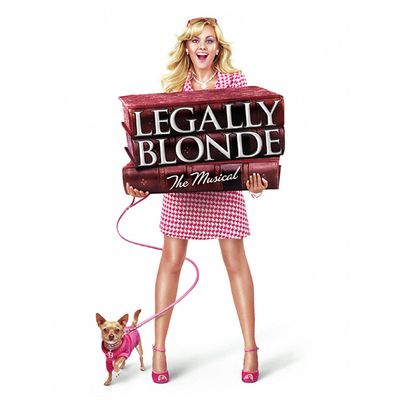
And I said, that, I wanna do that. And I thought I was a mark. I'm not a mark. I'm an angel. And I had to grow up and realize that I've done the show a bunch of times. And I'm like, oh yeah, I was never a mark. Okay, cool. Okay, whatever. What other shows? And then the last one I will say, Legally Blonde. Legally Blonde is my musical theater show. It is my gym song. It is everything. It's your comfort show. It's my comfort show. It like, you listen to that stuff when you're in a bad day and you're walking, you're strutting around the streets of New York and going, I am so much better than before. Word. God. I absolutely love those. And yes. So dumb. Yeah. But I mean, it does the work. It lives your spirit. It does. It's that good.
[28:30] Martín Acuña: Danny, thank you so much for being here, for sharing your story. This has been amazing, amazing. You now know how much I admire you. Just thank you so much for being here and for sharing your story with us.
[28:45] Danny Marin: Thank you so much for having me. I adore you and your podcast is incredible. I've been a fan of it for a very long time. I thank you for sharing and putting a spotlight on some of us who don't really get to be a part of these conversations in this way. Like, I really appreciate it. And this was so fun. I can't wait to talk to you more.
[29:08] Martín Acuña: Thanks everyone for listening to this new episode of Backstage Talk. Remember to follow us on Facebook and Instagram at Backstage Talk Podcast.
© Broadway Podcast Network, All Rights Reserved