

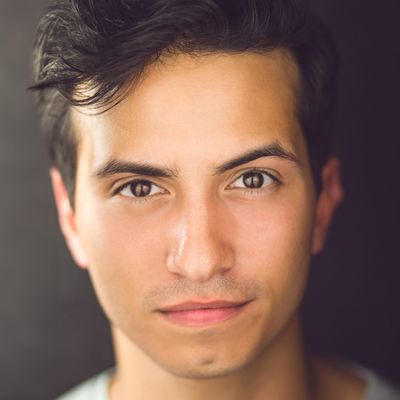
To celebrate & Juliet's first year on Broadway, Philippe Arroyo, who plays François in the show, gets candid about how his heritage has played a role in his acting journey... Read More
From the show: Backstage Talk
Guests
Featured Shows

About
To celebrate & Juliet's first year on Broadway, Philippe Arroyo, who plays François in the show, gets candid about how his heritage has played a role in his acting journey. 🫶🏼
He also shares how he ended up in this jukebox musical after touring the country with Aladdin, how he got cast, and the his relationships with his castmates! 💙
Please visit his Instagram to see what he's been working on!
If you want to know more about our host, please visit his website! Feel free to reach out with feedback or if you want to be part of Backstage Talk!
Follow us on Social Media:
Transcript
This transcript was automatically generated and might contain errors.
[0:00] Martín Acuña: Hi, everyone. I am Martín Acuña, and you are listening to Backstage Talk.
[0:10] Martín Acuña: Hello, everyone. Welcome back to another episode of Backstage Talk. Today's guest is the one and only the incredible Philippe Arroyo, who made his Broadway debut with the iconic musical, & Juliet. You may have seen him in Aladdin's first national tour, or York Theatre's Penelope, or Joe Iconis' Punk Rock Girl, maybe the first national tour of Into the Woods, or maybe on TV with Evil on CBS or Helpsters on Apple. Philippe is also an alum of Carnegie Mellon University, and I am ecstatic and over the moon to have you over. Philippe, welcome to Backstage Talk.
[0:55] Philippe Arroyo: Yes, thank you for having me. I'm so excited to get started.
[0:58] Martín Acuña: Oh my god, yes. I just read your bio, but I need to know, what else do we need to know about you?
[1:05] Philippe Arroyo: I'm a big, the biggest nerd, I think, you've ever met. I love Marvel movies. I love Star Wars movies, love movies in general, and I think my favorite thing that has been taking the majority of my time is On My Days Off every single Monday. I don't know if you've heard of this game called Dungeons and Dragons.
[1:27] Martín Acuña: Of course.
[1:28] Philippe Arroyo: It's probably the nerdiest thing about me, and it's taken over my life. And I think the thing that I like about it the most is that it's just an improv game, and I just play with all my actor friends. We're sitting around a table pretending to be wizards or thieves or whatever. And it's a great way to like, even keep up the acting on the day off, which has been, it's been so fun.
[1:53] Martín Acuña: I love it. I love it. And I'm also a nerd. I'm a Disney nerd, not that much with Marvel or superhero, but I enjoy that.
[2:02] Philippe Arroyo: Still Disney, you know?
[2:03] Martín Acuña: Yeah. So yeah, I love that. I want to know all about your journey to Broadway, and being on national tours, and then being part of & Juliet, that transfer from London to Broadway, and that incredible cast, that incredible show.
[2:23] Philippe Arroyo: Yeah, yeah, I think Broadway was something that was always on the horizon for me, as with most actors. It's something that I strived for since I was very, very young. I wanted to be a Disney Channel actor. I wanted to be on a Disney Channel original movie. And then I just found theater. And that was something that I found that I was very, very good at. I wasn't very good academically in schools. But it was really because I only focused so much of my attention on theater. It's all I really wanted to do. And so I eventually got into school, I eventually got into Carnegie Mellon. And that was a very tough experience, because they have all these kids from all over. And it was just a rigorous program.
And then graduating, I was fortunate enough to start auditioning and start that process, and start, you know, going on tours. And then I would go on another tour. And then it felt like I was just touring for the majority of my career. And I still knew that Broadway was something that I really wanted to invest in. So I was offered, I believe, a third year to stay with Aladdin, which it's hard to leave something secure. And not that not to knock down touring, because a job's a job. And we should be so fortunate when the work comes. But at the same time, I had been touring for maybe four years, three years. And I knew that if I didn't leave, I could, I could get wrapped up in the security of it, which, you know, no fault there.
There's nothing wrong with that. But I knew that I wanted to at least try to come back to New York, and say no to touring for just a little bit, and only say yes to New York jobs. And I'm so glad I did because it worked out because now, now we're on Broadway, baby.
[4:33] Philippe Arroyo: You did the jump directly to Broadway.
[4:36] Martín Acuña: Yeah, right.
[4:37] Philippe Arroyo: I love that.
[4:38] Philippe Arroyo: It took, it took three years after being in New York after leaving Aladdin. It was really hard. There were years where I had no work at all. Then obviously, the pandemic hit, and then it was hard for all of us. But I'm happy that once the pandemic, I mean, I don't want to say ended, but once things started reopening again, such as theater, I'm happy to say that I was able to find work pretty quickly, which is nice, because we were going for so long without art, and I was going crazy.
[5:17] Martín Acuña: Yeah, yeah, I feel you. I want to go back a little bit to, do you have any aha moment in which you said, it is theater?
[5:28] Philippe Arroyo: Yeah, actually I do. I was maybe, I had been doing theater my whole life, and it was more of a hobby. And then a friend took me to see a production of a show of a national tour called Jersey Boys. Yeah, and we all know Jersey Boys. But it was like the, it was the best show I'd ever seen in my life. And it was the first time I'd ever gotten access to a ticket that was so close to the stage. I was maybe third row, and I remember act one ended, and I leaned over to my friend, and I said, this is blowing my mind. I looked at the bio of the person who was playing Frankie Valli. His name was Graham Fenton. I was maybe 15. And Graham Fenton, I saw, went to Carnegie Mellon. And I was like, that's where I want to go.
If he went there, I'm gonna go there, because that guy up there is a star. We've never met since then. But since then, I have reached out to him on Facebook, and we are friends on Facebook. And, you know, I've just told him how much his performance meant to me. And I hope to do that to someone someday. I want someone to message me and say, hey, I'm, you're the reason why I'm doing this. That's the goal, I think. To inspire someone else.
[6:55] Martín Acuña: Let me tell you that you are one of the reasons that I am doing this. Because when I saw & Juliet in May, I was starstruck. I was already obsessed with the cast recording, with the London cast recording, then with the Broadway cast recording. And it was one of those shows that I was really looking forward to. And to just see you and see Justin David Sullivan on stage, and the rest of the cast, I was like, there is a place for queer Latin people on Broadway. And I love that. I love that. It was one of the few times that I have felt myself truly in my whole, like, I felt very seen on that show. And it was just amazing. I cried with the opening number. I cried with the closing number. I cried in the middle of the show. And it was just amazing, an amazing experience and an amazing show that that's why like this show jumped to my top favorites in no time.
[8:06] Philippe Arroyo: That's the goal. Yeah, I hope you leave the theater crying.
[8:10] Martín Acuña: Oh, yeah. Trust me. I was in a row with a lot of young people and kids, and they all loved. I don't know if crying, crying, bawling their eyes out. But you could see the puffy eyes.
[8:24] Philippe Arroyo: Oh, yes. We did it.
[8:29] Martín Acuña: Tell us a little bit more about this journey with & Juliet.
[8:32] Philippe Arroyo: Yeah, so I started the process a few months before they were starting their rehearsal process for Toronto. I want to say maybe seven months. And my first audition was for Romeo. And I thought, this is not gonna happen. They're gonna give it to someone who's not, you know, they're gonna give it to like a white guy. And then, you know, once I didn't get it, I thought, okay, well, that's that. And then they then they sent me Francois. And then I thought the same thing. I thought, you know, I think I was viewing Broadway a bit negatively at that time. And I think anytime I got something, I was more than ready to bear my soul into the audition. But there came this little, a way to deal with rejection.
Oftentimes, I, the way I deal with it, is I tell myself, it's not going to happen. But I hope that it does. And so I got Francois, the audition call. And I just was so convinced it wasn't going to happen. I'm a musical theater kid. I grew up, you know, singing Brian Darcy James, Who I'd Be, the Shrek song, like, that's the kind of style that I sing. So I said, no way am I gonna get this pop show. I don't have that style within me. And then I, then I auditioned for it. And I just kind of let it go. And months went by, and I didn't hear anything, maybe three months. And then I got a call to go in person. And that was cool. And then that whole, so the whole process for me auditioning was probably took four additional months since my first audition.
I didn't hear for so long. And then I got the job. And I cried. I called my parents and they cried. We all cried. And then I had gotten the job, but they were still looking for their May. And I started doing chemistry reads with other people. And everyone was great. I maybe read with six people. And then Justin was the last person to come in. I think. Yes, they were. They were the very last person to come in. And yeah, I think it was just clear. I think we all left the room and no one. Yeah. We know it is. And then we did Toronto. And Toronto was a was it about a year ago, actually now. And my role in France as Francois then was very different than it was today.
[11:41] Philippe Arroyo: Um, partly because it takes me a long time to feel comfortable and seated in a role. But also because I didn't really know what it was. I think I was trying to be something else. I felt I don't know, there's this weird. Everyone says bring yourself to the role. But I don't think this is maybe getting a little too deep. I don't think I was entirely happy with who I was at that time. So I felt uncomfortable bringing myself to something and showing it to the world. And I think a big part of myself as an actor, I now realize is that I have to be okay and happy with who I am now. Because I am putting if it if not for me, for the people that I share my art with, they have to see the best version of what my art looks like. And in order to nurture that I have to nurture myself.
[12:39] Martín Acuña: So absolutely, absolutely. And I love that this character brought to you into a self-discovery process. I think that every single role should do that. Maybe not as deep or as profound as it happened to you, but to bring yourself as a performer into the character. There is always a discovery process and that is beautiful. And I love it.
[13:08] Philippe Arroyo: And I think it helps that there is a discovery process within Francois' arc. It's inherently there. So I think playing Francois, just the character alone, yeah.
[13:54] Philippe Arroyo: You have a heritage from the PR, right, from Puerto Rico. How do you think that your heritage has influenced your artistry? Um, tricky question, because I am Puerto Rican. I look Puerto Rican. The world identifies me that way. They look at me, especially casting directors, directors, and they put me there. But I grew up, I was born in Alabama. I grew up in West Palm Beach, Florida, which is the whitest part of Florida. And my parents didn't teach me Spanish. And I would go home, home to Puerto Rico, once a year. And somehow, for some reason, I just didn't feel like I was Latin enough. And I still feel that way. It's something that I grapple with a lot, that I can walk, I can walk in the streets of Harlem, and for some reason, people will look at me, and people have said, Hey, white boy.
And it infuriates me, because there's a part of my culture that I'm so proud, even though I wasn't born there, even though I like, don't know Spanish, even though I don't ever want to feel like I'm not Latin enough. And there are times when I do. But then I meet people who are in the community, who really embrace where I am at in the community as well. And I still am a part of it. You know, I don't necessarily have to prove myself at all. Because on the other end of being called a white boy in the street, I have been discriminated against on the street as well, for being, there's the other side of that, too. Yeah. You know? But if we're speaking directly to theater, I guess I don't know. I think it's more so on how I'm perceived with directors and casting directors, and I have made it a point to not necessarily want to only portray Hispanic characters.
Although that is fun as well. I think, ever since Hamilton, ever since Lin-Manuel Miranda, we as people of color, we're able to portray so many different things now. And just being in a gang or being in the stereotypical idea of what it is to be a Latin person, a Latin actor, or just a person, a Latin person. We're more than gangs. We're more than, we're more than mowing your lawns. We're more than cleaners. We're more than, you know. I love that Francois is Latin, because he's someone who's, he's struggling with his identity. He's struggling with being enough. Is he enough? And also, like, in my personal life, within my family, very conservative, very Florida, it's not okay to be queer, you know?
And it's not okay to be Latin and queer. You have to be a man. What does a man mean? Francois has to face that as well. And luckily, you know, even my Brazilian father, Paulo, like, he, the reason why I think our relationship is as palpable and powerful as it is, I think, like, I'm Hispanic. He's Brazilian. That's there. You can see it.
[18:01] Martín Acuña: Yeah, absolutely. And I absolutely agree with you. It's sometimes feel that when you're Latin, you have to, like, choose between being one or the other, being either Latin or being queer, or having a different point of view. But I love that you bring that to your performances with Angel Lied, and that you bring this to your artistry. You just mentioned that sometimes you're called white boy, and sometimes you weren't called Latin boy, right? Being this mix, like growing up in Alabama, and in South Florida, and now being this whole thing. Do you have a best thing that you think that pops up of being this and an artist? You mean in terms of being portrayed as white and Hispanic?
[19:03] Philippe Arroyo: Yeah. No, I don't think I do. I don't think there's a best thing because it changes. It's very fluid. And it changes on a daily basis. I think, again, I think your identity sometimes is not necessarily how you identify yourself. It's how people look at you. And sometimes that label is put upon you. You can know what you are. You can know who you are. That's fine. That's good. But still, somehow, you'll be portrayed as something different or someone different. My whole life, I've thought I've been this confident kind of guy, but I've only ever played nerdy roles. That's the only thing that I have been accepted as. And it's made me question, why is that? What makes me so seen as someone with maybe a little more insecurity, someone who's a little bit more unsure, someone who is unsure of their identity?
And then again, playing Francois, it all finally clicked. And I said, Huh, I'm not as confident as I think I am. I am certainly all of these things that people see sometimes. And they want to show that to the world. And I'm not saying that that's great. But I do acknowledge the fact that, I don't know, I've learned a lot. And I've definitely been able to see how the world views you. And it might be different than how you view yourself.
[21:15] Martín Acuña: Yeah, absolutely. What is your best or favorite moment in the show, in Anne Juliet?
[21:26] Philippe Arroyo: I think my favorite moment is my least favorite moment in the show, because it's the realist. There's a confrontation I have with my dad towards the end. And we sing a trio with me, Justin David Sullivan and Paolo. And it's my favorite moment in the show, because when I turn around, and I have a speech that I tell him, everything, it sounds corny, but everything does drop away. Yeah. And it is him and I, and you see his eyes change, you see his face shift. And you see how my words really affect him and change him. The reason why it's my least favorite moment at times is because it's uncomfortable. And it doesn't always feel good to tell a parent that they aren't, it's not, it's not always, it doesn't feel good to express a boundary to a parent. And also to feel like you might be hurting someone, too. It's the same answer. It's because that moment feels real.
[22:45] Martín Acuña: Yeah. To me, at least, you know, I know everyone has their opinions. But to me, that moment feels real.
[22:53] Philippe Arroyo: No, and it is. And because it's hard to set boundaries and more with someone that you love, but also puts a lot of expectations on you and puts a lot of their own dreams and into you. So yeah, it is uncomfortable. It may be awkward, but it's a very real and heartfelt moment in which I would guess as an audience member that Francois tells his dad, and it's like, I'm growing up and you have to be okay with that. And okay with the boundaries that I'm putting and what I want to do with my life. Because if not, I have to go.
[23:35] Martín Acuña: Exactly. I'm willing, I'm willing to leave.
[23:40] Philippe Arroyo: Yeah. Yeah. I love that. Thank you for sharing that and for being so open about like your process with this character.
[23:46] Philippe Arroyo: Yeah, of course. Do you have any Latin inspiration? I mean, Lin, of course, Lin, like he's the best. And he's been so nice to me since I've been able to meet him. But even before meeting him, and even before he's been like, cool with me, I've looked up to him. And I think he knows that, you know? I just love that he's a writer. And I'm a writer too. And he just, he found a pocket on in Broadway that was empty. And he filled it with what he thought should be there. And what he thought he should be there, rocks. And I can't wait to see more.
[24:36] Martín Acuña: Absolutely. And he's Puerto Rican. And he's from the same hometown that my dad is from. And my uncle knows his aunt. And it's just cool. I love it. I love it. Final question. What are your top five favorite musical theater shows?
[24:53] Philippe Arroyo: I love Little Shop of Horrors. I love playing, I've played Seymour before and it's the best. I love Sweeney Todd. I also love this new production of Sweeney Todd. Hamilton, of course. In the Heights, of course.
[25:07] Martín Acuña: Of course.
[25:09] Philippe Arroyo: And then, you know, I love Be More Chill. I love Be More Chill. You know why I love Be More Chill? It's because it's basically Little Shop of Horrors.
[25:22] Martín Acuña: Yeah.
[25:24] Philippe Arroyo: It's this thing that comes in, promises him the world, if he does these things correctly.
[25:30] Martín Acuña: Yeah.
[25:31] Philippe Arroyo: But then it changes his life. And then that thing tries to take over the world.
[25:35] Martín Acuña: Yep. We can change the plan for uphill. That's it.
[25:39] Philippe Arroyo: Yeah. And I know that Joe Iconis, I know that Little Shop of Horrors is his favorite musical, too. So...
[25:50] Martín Acuña: Yeah, you can connect the dots.
[25:54] Philippe Arroyo: I love that. Philippe, thank you so much for being here. Thank you so much for joining us, for being so open. I've said it before, I am a fan. I cannot wait to see more of you. I know I will. And thank you for being here, for making me and a lot of Latin people feel seen in the show and in this industry. Thank you so much.
[26:19] Philippe Arroyo: Yeah. Anytime. Thank you so much for having me.
[26:30] Martín Acuña: Thanks, everyone, for listening to this new episode of Backstage Talk. Remember to follow us on Facebook and Instagram at Backstage Talk Podcast.
© Broadway Podcast Network, All Rights Reserved