

Meg Masseron is another incredible theatre journalist that came over on the show! 🔥 She firmly believes that journalists have the potential to be heroes and public servants, their job is to always expose the truth and hold society accountable... Read More
From the show: Backstage Talk
Featured Shows
About
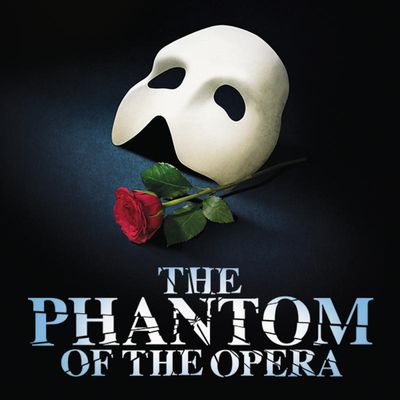
Meg Masseron is another incredible theatre journalist that came over on the show! 🔥 She firmly believes that journalists have the potential to be heroes and public servants, their job is to always expose the truth and hold society accountable. 🎉 This dear friend of mine is a Phantom of the Opera mega-fan and is here to share about her craft! 🤩 Find more about Meg reading her portfolio and on her Instagram! Let me know what you think about us leaving a review on Apple Podcasts! 👌🏻 Big shout-out and thanks to Juan Hernández and Andrea Martínez for our wonderful intro and outro music!
Transcript
This transcript was automatically generated and might contain errors.
[0:00] Martín Acuña: Hi, everyone. I am Martín Acuña and you are listening to Backstage Talk.
[0:19] Martín Acuña: Hi, everyone. Welcome back. Today's guest is a very dear virtual friend of mine, Meg Masseron.
[0:27] Martín Acuña: She is a freelance arts and culture writer based in New York. She will soon be graduating from Marymount Manhattan College with two degrees in digital journalism and theater history. So, Meg, it is an honor and a pleasure. Welcome to Backstage Talk.
[0:45] Meg Masseron: Thank you so much. This is so exciting. I've never just been, you know, allowed to run my mouth for several minutes at a time. So, this is truly my dream.
[0:55] Martín Acuña: Yay, good. First, I'm going to let you introduce yourself, share a little bit about your background, about your relationship with the entertainment industry, and how you ended up working in theater journalism and entertainment journalism too.
[1:13] Meg Masseron: Sure. So, I am originally from Baltimore, Maryland. I was definitely a theater kid. But my relationship with the entertainment industry was kind of like lamenting over the sadness that I would never make it because I am a terrible singer and an okay dancer. So, you know, you just you have to admit your faults as a person. I was someone, I knew it was going to take more work to become good at theater than it would to find something else to do in theater. So, I always thought like, well, I can be a director, but I knew that wasn't me. And meanwhile, I'm writing on the high school newspaper. And I'm thinking, well, if I don't do theater, I want to write for a magazine, I want to write for Cosmo.
And then I had the astounding realization that theater journalism is a thing that people do. And then I was like, oh, I could do that. So, I went to Marymount Manhattan, I started out with just a digital journalism degree. And then I added the theater history to just kind of educate myself more on theater so that I knew what the heck I was talking about. I'm not an actor, I did not know what the word viewpoint meant until like five years ago. And now I'm here trying and trying to graduate, but the pandemic just, you know, woo.
[2:35] Martín Acuña: So, you're now in New York, and you've been writing for, it's been four years now?
[2:43] Meg Masseron: Depends on what you deem as credible, right? You know, I've always just written wherever I could, whenever I could. I started making multimedia content for BuzzFeed when I was 19, I'm 23 now. So, I guess I would count that, but not necessarily as writing. And then obviously, like student newspaper, I've done all throughout Marymount, and I did it at community college in Baltimore too. But I was officially published and paid for my work for the first time in September 2019 with my first article for TDF Stages about my favorite musical. That it's, of course, Phantom of the Opera. It's my personality at this point. Like, that's my brand.
[3:30] Martín Acuña: And I love it. It is your brand. Like, I do think that young people always tend to go for contemporary musical theater. But you and I, I do think we are old souls in Young Buddies. So, we go for the kind of classical 80s, 90s sound of musical theater.
[3:55] Meg Masseron: Oh, absolutely. It's just so much more dramatic. There's so much more flair. I like the modern stuff, but I feel like the modern stuff is so much closer to what I either experience in real life with the storylines, like, you know, high school stories, or the music is so close to the pop music I'm already listening to. I go to theater because I want to be swept up in the crazy drama. Like, this would never happen in real life. Phantom is not realistic. That is what I love. So, I am a, like, pre-2000s musical theater girl.
[4:27] Martín Acuña: And I love it. So, let's go back to your profession, to journalism. Let's go to the basics for our listeners. What does an entertainment or theater journalist do?
[4:41] Meg Masseron: There's a lot you can do with it. It really just depends on what the publication you're working for wants you to do. You can just write straight news like, this actor broke his leg last night. He's now at Bellevue or Belmont. What's it called? I don't even know. I've never been to a hospital here. At a New York hospital because he broke his leg. You could write that. You can write a wide array of things like news articles, features, interviews, Q&As, opinion pieces. But you could also do more of the video multimedia stuff. That is where I do not go. Cameras are not my friend. There's so much you can do. And then you can be an editor, which is what I would ultimately love to do later in my career. And that is the person who currently is approving my stories, helping me write them, helping me get out there. And I think that that is one of the most important roles, not only in journalism, but in this theater industry is being a theater editor.
[5:43] Martín Acuña: I agree with you. So what has been the best part of writing for theater? Because you've written for a lot of sources. And you've been covering events lately now, like during the pandemic, you've been covering a lot of events. So throughout your career in theater journalism, what has been your greatest experience you've had?
[6:08] Meg Masseron: Honestly, I want to say that it's just been being able to get to go to events, being able to witness special moments, because that's what I thought I was going to be most excited about before I really got out there. But honestly, it's just been publishing deeply personal things about my life. That has been the most cathartic healing experience. Getting my Phantom article out there was almost as effective as the thousands of dollars I've spent on therapy. My My Fair Lady piece for TDF was literally a gift to my partner for our anniversary. So just being able to get everything that's stuck inside of me and get it out and put it on quote, unquote, paper, but of course, everything's digital now that is an experience that no event I go to no goodie bag I get could ever match.
[7:03] Martín Acuña: I love it. And I love those two articles, like I read them before this interview. And I just love them because it's a very nice way, in my opinion, as a performer, I always love to mix my personal stuff with either the character I'm playing or the song I'm singing, or the dance piece. I am dancing. And it's a very important part of me as a performer. So I can imagine, as a writer too, trying to find those bridges between your personal history and the things you're watching or the events you're going to is just amazing.
[7:50] Meg Masseron: How are you dealing with ethics in journalism? Because I know that can be a very gray area in between your personal opinion and just being this midpoint journalist in the events.
[8:11] Meg Masseron: Yeah, it's kind of just how I would describe just resisting the dark side, like in Star Wars. The thing is, you know, with like Anakin Skywalker and stuff, he didn't start out as a bad guy. He was someone going through a bad time that was very tempted by all the rewards the dark side had to offer. So I think that in journalism, you just always have to ask yourself, if there's a direct if there's a decision I'm making, you know, plan A or plan B, which plan is benefiting me and which plan is benefiting the people that should benefit you always need to choose plan B. I've been taught very well at Marymount. I've had excellent mentors. And I've also just always been, you know, a journalism junkie that's obsessed with like, you know, journalists uncovering the truth, doing the right thing, helping people.
I think that journalists have the potential to be public servants and be, you know, either heroes or just helpful. And that is what I always wanted to do. If I didn't do theater journalism, I wanted to be an investigative journalist. And I think that there's still a lot of potential for, you know, that right or wrong, good guy stuff in journalism. It seems very simple. But even when you're just doing an interview with a Broadway celebrity, you still have to constantly be making the right decisions. First of all, am I choosing to profile and give a platform to the right person? Am I choosing someone that has already had a lot of opportunities and has had a lot of privilege, when I could have chosen someone who hasn't had that many opportunities hasn't had the privilege?
So it's all about choosing who to shine the spotlight on. And being careful about your choices, being careful about your language, asking questions, it is a very, very self-correcting career, you have to just constantly be going through your head, like, think before you say this, think before you choose this, what could be wrong here. So it takes a lot of awareness, and it's something that no one will be perfect at, but you have to always try.
[10:08] Martín Acuña: Yeah, and more now that we as a community are trying to be more inclusive and respective, is the word, about everyone's pronouns, background, and all this discussion towards how we treat individuals. I think it's a very important thing to have in mind, not only as a journalist, not only as a performer, but like across our life.
[10:42] Meg Masseron: In that order, how do you think journalism can help the current obstacles in the industry? As someone that is not at the top of the hierarchy of journalism, I know that it's really, really tricky. And it's really frustrating for me because I am someone who fully believes in exposes and not dancing around things. And that is, in my opinion, what journalism is supposed to be in the first place and what it has been for many things. There's lots of movies about this. The Post, the one about the Boston Globe, I don't remember what it's called. And there's all these movies showing these insanely important moments in journalism where people push barriers. And they were like, no, you can't tell me not to publish this.
And they publish it and it changed the world. And sadly, in real life, there are so many more barriers like that, even for just a simple article on a recent controversy. So it's really, really hard to break those barriers when you're just the writer or even just the editor because it goes all the way to the top. So I just I really, really hope that theater journalism, as time goes on, as we demand more transparency and accountability, will be less afraid to cover the topics that everyone already knows is happening. Everyone's already talking about like, you know, it's the elephant in the room. Yes. And I love it. I truly, truly love it.
[16:07] Martín Acuña: Let's shift a little bit into the events you have coming up. You just covered Playbill. How was that, that Playbill event?
[16:12] Meg Masseron: It was absolutely beautiful. I can't describe how it felt after, you know, we're not post pandemic, but we're post vaccine. So I'm personally in a more comfortable place right now. And this was outdoors. Just being around not only that many people again, but being around queer people and being around theater people, you know, these are the communities that I belong to. And I just I was like on the verge of tears so many times. It was so fulfilling. I'm so happy for everyone that got to go and everyone that got to experience that. And I'm so happy for, you know, the fact that it was recorded and that anyone can watch it next week. It was so beautiful. Highly, highly recommend watching.
[16:58] Martín Acuña: And last week you covered the Van Gogh digital exposition, is it called?
[17:03] Meg Masseron: Yeah, that was actually a few weeks ago, but I got invited back for like the press opening or some fancy word like that. But that was definitely a challenge for me because I've never written about art before. I love art. My grandmother was an artist, but it's kind of like I know what I write about. And I'm very, you know, challenged sometimes to get outside of my bubble. But I was like, I love Van Gogh. I'm going to go and I'm going to write about it and it's going to be good. I hope it was. But that was really special, too, because it did have the intersection of theatricality. David Korins was involved with it. And I could definitely see his touch on it. It very much reminded me of the Dear Evan Hansen projections. And it was all just it was so gorgeous.
[18:02] Martín Acuña: Yes. And when are you publishing the article on that?
[18:04] Meg Masseron: Oh, that was published that one. It's already.
[18:05] Martín Acuña: Yeah, it was like three weeks ago or something. But like I said, I went back because I could not get enough.
[18:13] Meg Masseron: I love it. Before we go and before we close, do you have any future events you know that maybe you can get us a sneak peek into?
[18:24] Meg Masseron: Well, next week I'm going to Blindness. So that is very exciting. And otherwise, as a freelancer, things come up very quickly, often last minute. So I have no idea what I will be doing the week after that. But I hope that as theater reopens, I will be sitting in those theaters doing my journalism thing and also geeking out because I like to call myself a professional fangirl. Because I love Broadway. I'm here because I love it. And now I get to just be here and write about it. It's amazing.
[18:59] Martín Acuña: And this is a question I know the answer to. I know that probably as soon as Phantom opens, you will be on that opening night.
[19:11] Meg Masseron: You know, I'm not sure about that. I have promised myself that I'm going to wait until I can see someone I haven't seen already, like an understudy or a new Phantom. Yeah, I've seen it 13 times. So I'm going to try to hold back. But you know what? Maybe I'll be lurking around the outside just listening to the excited cheers. I don't know. You'll find me. I am the Phantom of the Majestic.
[19:35] Martín Acuña: And I love it. OK, last question. No brainers. I know you already said you're number one, but top five favorite musical theater shows.
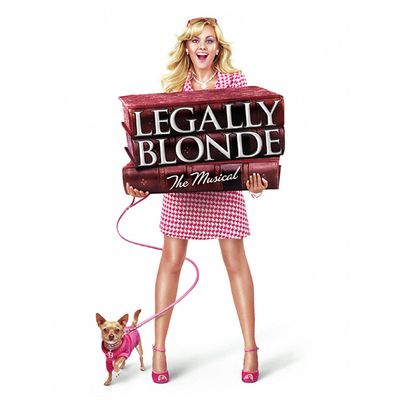
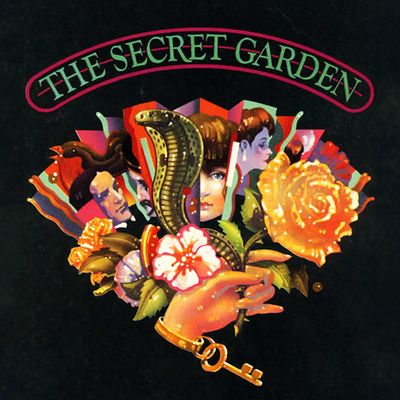
[19:45] Meg Masseron: Oh, my gosh. OK, obviously Phantom. I love My Fair Lady. I am actually a huge fan of Legally Blonde. I always forget how much I love Les Mis and then I hear one song from it and I'm like, oh, yeah, that's a good show. And The Secret Garden. Is that five? I think that's five.
[20:03] Martín Acuña: Yeah, those are five. Well, Meg, this has been wonderful. Thank you so much for coming over. If someone wants to reach out to you, what's the best way to do it?
[20:14] Meg Masseron: OK, I am totally fine with you sliding into my Instagram DMs. Some people are weird about that. I am not. I'm not weird about any DMs. Honestly, slide into any DM. That is totally fine with me. And if we, you know, if we have potential to become friends, like I will follow you back. I love making friends in the industry. I'm not going to I'm not going to ghost you.
[20:38] Martín Acuña: All right. So listeners, you already know I will leave Meg's portfolio in the episode's description. Go follow her on Instagram and read her stuff because they are great. Meg, thank you so much. It's been amazing. And I really, really love this conversation.
[20:57] Meg Masseron: Thank you so much. You're the best.
[21:01] Martín Acuña: Thanks, everyone, for listening to this new episode of Backstage Talk. Remember to follow us on Facebook and Instagram at Backstage Talk Podcast.
[21:21] Thank you.
© Broadway Podcast Network, All Rights Reserved