

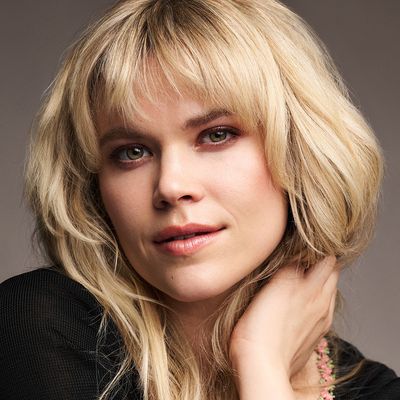
I got the chance to interview the amazing Jane Bruce. She talked us through her journey in the arts, mental health, how she started doing theatre and how she finally got to Broadway's Jagged Little Pill... Read More
From the show: Backstage Talk
Guests
Featured Shows
About
I got the chance to interview the amazing Jane Bruce. She talked us through her journey in the arts, mental health, how she started doing theatre and how she finally got to Broadway's Jagged Little Pill. Jane is one of the most incredible performers I've ever met and she shows us in this episode why with a sneak peek of one of her upcoming EP's songs.
Give her a follow on her instagram here: https://www.instagram.com/janeybrucey/
And you may follow my personal Instagram too: https://www.instagram.com/themartinacuna/
I want to give a special shoutout to the amazing composer Juan Alejandro Hernandez and sound engineer Andrea Martínez for the intro and outro of this episode. They're close friends of mine and they just opened their business! Check them out here: https://www.instagram.com/juanyandrea_/
Transcript
This transcript was automatically generated and might contain errors.
[0:00] Martín Acuña: Hello, and welcome to another episode of Backstage Talk. This is your host, Martín Acuña speaking, and today I have a really special guest. I met her back in January when I was in New York, and here with me is Jane Bruce. She is currently being part of the ensemble of Jagged Little Pill.
[0:32] Jane Bruce: Yes, hello.
[0:34] Martín Acuña: So I am really excited about this interview, because Jane was the biggest sweetheart ever when I met her on the stage door when the Jagged Little Pill performance ended. I remember she had this big, big smile on her face, and that is how I remember her from that day. So Jane, tell us a little bit about yourself.
[1:10] Jane Bruce: Yeah, I've lived in New York City for about seven years, and maybe it's getting closer to eight. No, I think it's seven. I think I've been rounding up to seven for like four months. And I went to the University of Michigan and then grew up in Ogden, Utah. So yeah, just kind of always loved performing and kept pursuing it, and finally got to make my Broadway debut this year in Jagged Little Pill.
[1:41] Martín Acuña: Congratulations, very bad.
[1:43] Jane Bruce: Thank you. Yeah, it was pretty exciting. I was really fortunate to be with the show since the out-of-town tryout in Cambridge, and yeah, it was kind of a wild ride because we did that show, and then there weren't any theaters open for so long. It was kind of this waiting, nebulous kind of time. I was really lucky that I got to do a couple other really awesome shows in between, but definitely worth the wait. I'm so grateful that I got to make my debut with such an awesome show.
[2:15] Martín Acuña: Well, first of all, thank you for being here, and congratulations on your Broadway debut. I know it's like a really big step, and it's really important for us performers to finally get there. I want to know a little bit about how you started in theater.
[2:36] Jane Bruce: Yeah, I was always definitely a very eccentric, kind of zany child, trying to perform, make people laugh, wearing crazy outfits. When I was in fifth grade, we did an opera. We wrote an opera from a fairytale book or something with my music teacher, which I'm sure she wrote the opera and took the odd suggestion from us. I definitely wanted to be the lead, and the lead character was this guy, this prince guy who found this magical river or something. I was like, oh, well, that's the biggest part, and so I should play it because I'm the best one. My teacher had to explain to me, like, no, we have to let the boys be boys, and girls be girls. I was so mad that I had to play the river princess. It's like, whatever, but I really loved it.
Then I started auditioning for community theater, regional theater all over in my area, which there wasn't a ton. I kept doing theater in high school. I was really lucky that my parents were really supportive. My mom sort of rebooted the whole theater program at my high school because it was non-existent, and she was like, well, that just won't do. There were a lot of other kids my age who were wanting to do these big, amazing, extravagant musicals that the other high schools were doing, and so my mom just got some other moms together, and they raised money, and they brought in directors from the local university and choreographers, and she just made it happen, which is amazing. I also did speech and debate in high school.
I did an event called Dramatic Interpretation, where it's just like a big, like a 10-minute monologue. You can play, like, multiple characters, whatever, and I loved getting to do that. I think that really had a big impact on my, like, the kind of artist I became because it was so, I just did it all myself, and I got, I learned to really love, like, creating a character, and, like, creating a story, and, like, physically becoming different characters, and playing multiple characters, and, yeah, yeah. I went to Broadway Theatre Project when I was in high school, which is no longer in existence. I think mostly people who ran that now run a really amazing program called the Performing Arts Project, but that was really life-changing.
I got to go when I was in high school and meet people from all over the country, and, you know, there wasn't a lot of access in Utah, and my family's not Mormon, so we just, we were definitely, like, a little bit of kind of outsiders in a lot of ways, and, yeah, I'm just so grateful that I had the experiences I did. I don't think if I hadn't gone to that theatre camp, I wouldn't have known about, like, any of the universities that have all these amazing programs. I wouldn't have known to even, like, look into a school like University of Michigan, so, yeah, but I definitely, once I decided I wanted to be a performer, that was it. Like, no questioning, no doubts, which some of us would have paid, like, a tiny bit more attention, like, in an art history class or something, you know? Would have tried a little harder to retain some of the books I read, but, you know, it's all good.
[5:49] Martín Acuña: So cool. Well, your history is amazing. I guess all of us started in high school, but not a lot of people take the decision to be a performer for a living, so, yeah, it's hard, but, well, the ones that really wanted are pursuing this. So you went to the University of Michigan for a BFA in musical theatre.
[6:19] Jane Bruce: I did, I did. I really loved my time there. I think I feel very grateful that I was auditioning for college and all of that, probably like 10 years ago for me, so I think it was before the whole college admission process for musical theatre got quite so insane, and I think definitely still very insane, and looking back, like, I mean, I just had no idea what I, I just was so, like, blindly confident. I think I also was lucky that it was before social media was such a huge deal. Like, I wasn't, it's funny because I feel like as I've gotten older, in some ways I've gotten less confident because it's so much easier to see everyone around you and compare yourself to their journey. Everyone's journey is so much more out in the open now.
You can know what everyone is doing at any given time, and so I'm really grateful in some ways that, like, I just was charging ahead with kind of the whole process of auditioning, and I got incredibly lucky, and I really loved University of Michigan. I loved being in Ann Arbor, and I just loved learning. You know, my biggest advice to anyone who wants to pursue this is, like, you're never going to be the best at anything, or the most beautiful, or the most, you know, the best at belting, or ripping, or dancing. You know, there's always going to be more, but if you love the process of learning, and not only learning the skills, but also, you know, theater is about human emotions. It's about connecting.
It's about empathy, so in addition to just trying to work on your skills, you also have to, like, work on yourself as a person. You have to work on, like, reading the room. You have to work on knowing when it's appropriate to, you know, speak or ask a question, and when it's just actually better to listen to someone, and with all of that, I feel really grateful that University of Michigan felt like I was able to just grow exponentially in every capacity. I think that was so important. Yeah, I feel like I liked the adult that I became in my time there, you know, on top of, like, the training, which I loved. I loved school. I loved my classmates. I loved all of it. I loved everything about it.
[8:45] Martín Acuña: Well, without a doubt, you've grown to become an amazing performer and amazing professional. I need you to know that.
[8:52] Jane Bruce: Thank you. Thank you.
[8:53] Martín Acuña: Because from my experience, seeing you on stage was one of the most beautiful things I've seen in theater in the last easily 10 years. I mean, Jagged Little Pill was, like, a landmark for me because it just, like, shoves you a lot of information and a lot of things to deal with that even if it's not directly connected to you, they rest in the back of your mind, and they get you to think a lot of stuff around you and the people you're surrounding yourself with and the reason you are keeping some people around you. So, yeah, I mean, Jagged Little Pill is in my heart and in my mind every single day since I saw it in January. How has it been your experience with Jagged Little Pill?
[9:52] Jane Bruce: It was pretty amazing. I've been trying to, you know, so, if we're talking, like, timeline in some ways, you know, I graduated from Michigan and kind of, I've been so lucky my whole life. I've been very, very privileged and very, very fortunate that every time I put my mind to something and said, I want this, I want this role or I want, you know, I ended up becoming a national champion for speech and debate without any coach at all. Like, that's insane and I look back at that and I'm like, oh my god, like, how was I so fortunate? Yeah, but I just had so much, like, moxie, you know what I mean? I worked hard. I didn't ever think, I didn't, you know, I had just that right amount of, like, ego and confidence that kind of gets you to work hard without, like, making you an asshole, I think, but when I graduated and moved to the city, things definitely did not happen the way I thought they were going to, you know what I mean?
I really love doing new work, like, that's my favorite thing. I love doing readings and workshops. I think also because I write music, I love, and I've done some directing, I feel like I'm, I feel very confident about being able to, like, come into the room with a new project and be really smart about, like, how whatever role I'm tackling, like, fits into the bigger picture and, like, problem solving things and, like, making big choices, like, I just love all that and I thought, I thought that, like, everyone else in the business would know that about me too and, like, you know, and it was hard, like, I did sign with an agent when I graduated, but it wasn't a huge agency and, like, I didn't have my equity card and I had really short hair.
I was, you know, probably, like, 30 pounds heavier than I am now and I just didn't, no one knew what to do with me, you know what I mean? Like, it was a very weird time of trying to kind of keep fighting to get in the room for things and, I mean, I don't think I even got an audition for anything that was actually on Broadway for several years after I graduated, you know, and even then, barely ever, like, I've only auditioned for, like, a very, very tiny handful of Broadway shows in my life just because sometimes if you're not, it's just so hard. It's so hard to, to kind of get into rooms. It's so hard to kind of break down those things and I've been trying to be seen for Dragon Little Pill when it was a workshop before the out-of-town tryout and my agent was kind of like, sorry, you know, I can't help you out and, or, you know, they just, they can't see you, they're seen to the other people.
And then when they were doing casting for the out-of-town tryout, it was my voice teacher who was able to kind of, like, put in a good word for me and that was enough to get me in the room. The casting agency said they didn't think they wanted to see me because they thought I was too clean cut for the show and, which I, I sort of get, but that was interesting feedback, you know, to hear that was like, oh, like, wow, it's just wild how you can, you see yourself one way and you can never actually know how other people see you and when you're an actor that can be a bizarre thing because you also do want to be true to yourself and, anyway, wild. But I was completely overjoyed to, to get the part and I definitely had that moment during my final callback where I was in the hall and, like, checked my bank account and
[14:25] Jane Bruce: Amazingly smart and intuitive, and she took such good care of every single one of us, but she also knows what she wants. I love how she sees things and how she was always open to other things that we would bring to a scene or to a moment. And then I just think she's so smart. As we were developing the show from the out of time trial to Broadway, the cuts and the adjustments and the rewrites that happened and the restagings, I thought all of her ideas with how to really make the story more cohesive were all, at every turn, I thought were so brilliant. Every time he'd give me a note, I'd be like, yes, I love that. I'm like the weird actor that loves notes. Now that we've been up and running for a while, I'm like, wait, wait, wait, give me more notes.
I want a few things to play with. Please give me more notes. One more before you leave. Yeah, please. Anything? Anything? It's been amazing. And I love that a lot of us have been together since the out of time tryout. And we're definitely like a very close family. We're all very big personality human beings with a lot of heart and a lot of integrity. And I feel very grateful that it's a group of people that are all really, really real. You know, we're all down to earth. Exactly. And because the whole show is about, you know, putting your shit into the open and working through it. We all do that. We hold each other accountable and we teach each other and we lift each other up. And I've learned so much from the cast. And it's yeah, I'm very, very grateful for them. That was such a long answer to your question.
[16:45] Martín Acuña: No, I loved it. I loved it because you already answered one of the questions I had in mind that it was what was the best thing about this show. But I can clearly see that it's been everything from the process to the cast to everyone behind it. So, I mean, I'm really happy that it turned out like that. And I mean, as an outsider, because I do not know the whole cast, I've only seen all of you on stage. But that shows that family feeling and that love between all of you shows on stage. And I think that is one of the most successful things about the show, because everyone is so real when they're there. And of course, they're utterly real outside the theater. Now that you've talked about that the show is about gathering your stuff and putting them out there.
I know that this show may take a toll on the performer's mental health, and because you are all really vulnerable on stage. How do you all manage to do eight or nine shows per week with such strong and deep and tough story?
[18:11] Jane Bruce: We were really lucky that the producers gave us a lot of tools along the way, the whole team. We had a lot of impact trainings where we talked as a group about the topics so that we were both educated and also knew that there were resources there for us. I think in the ensemble, I think we're really lucky that I spend my whole show basically with Ebony, Laurel, Heather, Yana, Nora, Deanne, Maya, Soon, and Elise. All of us are together. We're in a dressing room and then we're not on stage, which we often are together. Then we're downstage in this little quick change room together, and Kelsey. And so we've gotten really close. We have a really tight bond, and we also all have a pretty bizarre and insane sense of humor in a lot of ways.
We're fortunate that we're able to do the heavier scenes in the show and honor those scenes and then go offstage and be wiggly little assholes to blow off some steam. I know a lot of the leads have their own tools that they use as well. I think we're really lucky that we all have so much fun together, that we're able to find things throughout the show. That's the weirdest thing for me about doing the show and being on Broadway. Since it's my first time, I've never been in a show that ran this long. It is wild how you know that what you're doing is incredibly powerful, and you know that everyone in the audience seeing it for the first time is having an incredibly emotional experience. But it is so bizarre, and I never thought it would happen to me, that there are days where you just go to work.
It doesn't mean that you don't feel it or that you don't care about it. Not every day, but there are days where your body hurts, and you're tired, and your partner is upset that you're never available, or you're not upset because he's never upset. It's hard to find that same time to connect or whatever it is. It's hard. It's a hard job. I've definitely started seeing a therapist in the last month or so because I felt like I was just getting really, really stressed out. I felt like I was just having a hard time managing the stress of all of it, you know, of just doing the same thing every day. It's going to be taxing. And as an understudy, we're also in rehearsal most of the day, Thursday and Friday.
And I also have a fairly severe injury that was causing me a lot of pain, so I was having a really hard time. I felt like I couldn't do the show the way that would make me feel really confident doing it because being that full out was hurting me. And if I kept doing it in a way that hurt me, then I wasn't going to be able to do the show at all. So I definitely am glad that I decided to start talking to someone. I think therapy's amazing for everyone, no matter where you are in your life, or even if you think that you don't need it. I think it's really beneficial, and I know it was really good for Elia, as my best friend and partner, to not make him the person that always had to catch whatever it was that I was experiencing every day.
So it's a wild ride. You just kind of get in this bubble. You become your own universe with your cast and with the show. And it's both amazingly beautiful and powerful, but it's still a very challenging environment and job. Yeah, definitely it's been interesting to navigate, and it's something I'm trying to be conscious of while I have this time, this kind of downtime, to really find some more stress-relieving tools that I can take back with me when we pick back up again, just to keep myself from getting overwhelmed. I think a lot of that also has to do with the material, you know what I mean? Even if you think that saying and doing those things every night isn't taking that toll on you, it is.
[23:02] Jane Bruce: I had to put in for Bella a month ago or so, over a month ago, and a put-in is where everyone comes together and runs the full show, or at least the scenes concerning the characters that are doing the understudies that are doing that put-in. And the two people playing, or whoever's on in that put-in, does full costumes, all the costume changes, does everything full out, and everyone else can be in street clothes but wears a mic. And so you get sort of like a trial run of all the stuff before you do it. And they did a put-in for Ezra, because they were going to be going on for Lauren a couple weeks later, and so they let me do the put-in as Bella as well, just to kind of multitask, you know? And I've been learning Bella since the Out of Time tryout.
I've been working on the role for a long time, and I haven't performed it yet, but I'd never done the whole thing in sequence with all the costumes and with all the stuff, you know? I had never actually been inside that story from top to bottom, and I was amazed by how much of an emotional toll it took. And I was like, holy shit, like, they need, you know, Catherine should absolutely have a therapist, like, on site, you know? But it really gave me a lot of perspective on, like, what he also deals with, and what Elizabeth deals with. And I think there's also something, it was probably more emotional, because it was just the first time doing it all, you know? I'm sure once you do it more frequently, you know?
But yeah, it's definitely a heavy show, and again, I think it just helps that we all have each other and lift each other up, and if someone's having a bad day, we take care of them, and we're grateful for that.
[24:44] Martín Acuña: So how therapeutic has this show been? Because we know that since it's a heavy show, it can take a really emotional toll on the performers. From your experience, how therapeutic has it been for you?
[24:59] Jane Bruce: I mean, I think therapeutic is an interesting word in some ways, because, like, I think, I mean, I think I associate therapy with, like, growth in a lot of ways, and so I think in that sense, I think the ways in which I've grown as a performer, as a person, as an artist, like, Alanis' music has changed my songwriting and elevated that, like, tenfold. I think the way that I maneuver in a group setting, like, I'm a little bit, I kind of like my own time, I'm a little, you know, like, being even just in a group dressing room has taught me a lot about how to cohabitate, cohabit, to be with people all the time, and so in that sense, I think it's been incredibly therapeutic, and then also, it's also just so nice, I think, as a performer or an artist, it can be so stressful to feel like your work is not being validated in, like, the big ways that were taught, you have to feel validated to be worthy, and so even though I know that, like, having a Broadway credit on my resume doesn't actually change, doesn't mean that I'm any more talented than I was before, it still certainly feels like a big weight is lifted, that, like, you know, whatever else happens, I, that is always going to be true now, and then I got there, and I did it, and I, and I made it, so that's definitely huge, and then just the topics of the show have taught me so much, you know, there's a scene where I play this awful white high school girl, and I go and touch Frankie's.
[26:51] Jane Bruce: And get called out for it. And I remember the first day of the out-of-town tryout when we like read through the script and I read through that scene and all of the black people in the cast were like, you know, yes, that is so real. That happens. Like, you know, they were loving how truthful that scene was in terms of their own experiences.
[27:14] Jane Bruce: And, you know, there are hardly any black people in Utah. And I had to like take a real moment to myself and be like, holy shit, like, I don't know that I ever knew that or that I can't say that I've never done that in my own life. Like, just because I didn't know, you know, and I think that's the biggest thing I think I've learned from the show is that saying that you're not educated about something isn't ever an excuse for behavior that hurts someone else.
[27:44] Jane Bruce: And like trying to continue to be proactive about recognizing, you know, the blank spots in my own experience that blind me from really understanding what someone else's experience is, you know, and how can I educate myself on their experiences so that I can be a better ally or friend or coworker or human in the world. Yeah, that's been those have all been really good lessons.
[28:13] Martín Acuña: I love how you've been so open since the day I met you to this conversation about vulnerability and mental health and similars inside the industry and you as an artist, because I listened to your EP and I loved it. But one of the things that I actually fell in love with was that rawness and that vulnerability in the lyrics.
[28:49] Jane Bruce: How do you feel about that in the industry and as your profile as an artist? I feel grateful that I feel like more and more openness and vulnerability is becoming more just kind of the standard. I think I mean, I think that Jagged Little Pill and I think it shows by how much people respond to the story. I hope that it will open the door for more original musicals to get produced on a large scale that are tackling real issues in a real way. Not that I don't love a little escapist entertainment as much as the next person, but I do think that I do think that people are hungry for honesty.
[29:36] Jane Bruce: I think that I mean, I don't know. I struggle a lot like this industry and how I'm navigating it with like the whole social media thing. I think I'm someone like nothing causes me more grief than the thought of me either disappointing someone or someone like thinking I'm a bad person or not liking me. And so I have a really hard time with social media because I go down these spirals like, oh, no, if I post this, will someone think that I'm cocky or that I think I'm all that? Or, you know, will someone it feels sometimes so bizarre to know that. Like that. It's a bit of an assumption sometimes on social media that everyone wants to know what you're doing and thinking all the time, and I feel guilty about that.
[30:26] Jane Bruce: I'm like, no, like, I don't want to assume that you want to know. And but I do think that with Jagged Little Pill, like I also have felt so much love and acceptance and support from the fans that it's helped me understand that it's OK. And that, like, as long as you just do it with honesty and vulnerability and openness that, like, you know, sure, there might be someone who goes through your story and see something. And maybe because of some insecurity they have or some past experience they have with someone that maybe you remind them of, they might they might think a judgmental thought about your Instagram story. And that's OK, because there are other people who, you know, I'm always amazed by comments to things and responses to any video posts. It's, you know, yeah, it's been really encouraging, I think. And it's helped me not be so judgmental towards myself.
[31:25] Jane Bruce: You know, I'm absolutely my my own worst critic, and I struggled for a long time with eating disorder stuff and body dysmorphia and kind of going back and forth between really, really intense OCD sort of diets or eating habits and then falling off of those. And I get depressed or anxious and then being really, really cool with myself because I'm so mad that I gained weight back or don't, you know, couldn't maintain that level of commitment to my health or whatever. And it's still a really hard journey, you know, even being on this kind of break from the show. Like, I've had to be really careful about the thoughts I'm thinking because it's so easy for me to go down a path of, oh, I'm not dancing eight times a week and I'm not moving the same way.
And so I shouldn't eat as much because I'm not moving as much. And, you know, what if I don't fit in my costumes and I only brought a certain amount of clothes from Utah? And what if my, you know, what if the two pairs of pants I brought don't fit? Because again, you know, it's just like this spiral down. Yeah, it can get really nasty up in that little head pretty quickly.
[32:39] Jane Bruce: But I think a lot of people deal with that. I think, you know, unfortunately, I don't know. It's like a pro and a con of social media. I think it's so easy for people to, like, put a little sheen on what they're doing in a way that it makes it look incredibly desirable. And then also can make you feel really bad if you're not having that same, you know, experience. But I do also think it provides a space for a lot of us to also break through that and talk about what's actually going on and realize how similar a lot of our experiences are. Yeah, I don't know. I've always been, like, probably a little too honest for my own good at times, but I'd rather do that way than not.
[33:28] Jane Bruce: And being that honest that sometimes is like a double-sided sword for us. I actually prefer to be a little raw and a little honest, a little more honest with myself. But, yeah, I do understand a lot of things that you're saying. And I think that social media today is full of crappy people that are just reflecting their own issues on people outside. I think social media has its pros and cons. Because, for example, I've decided, like, utterly decided to use social media as a networking path for me. And it's been amazing that out of the blue I'm talking with Broadway performers or people that nowhere in the world I would have contact with.
[34:32] Jane Bruce: But thanks to Instagram or thanks to Twitter or thanks to Facebook, I could reach them and, like, start a friendship or start a dialogue with them. And that has been amazing. Because I'm being self-conscious of my actions through social media.
[34:54] Martín Acuña: Yeah, it's wild. I think so much about folks who are younger, like 10 years younger than me or even more, who have never known anything else. And I worry, so my heart hurts for them of, like, when you're too young still to actually process the bigger picture of things, how much those little things on social media can matter. And, you know, yeah, I think I feel optimistic that, you know, more and more people will use it for good and for communicating true things and connection. And especially with, you know, this pandemic going on, like, we, especially as a performer, like, I took, you know, I had to make a self tape for something last week and I had to make another video for something. And I really struggle with making videos because I hate pictures and videos of myself. I really get so mean to myself in my head.
[36:00] Jane Bruce: And so it can become a really dark path for me, you know, and I have to kind of do it until I feel like I have a performance that feels like what it would have been if I'd been in the audition room and I have to send it without looking at it or editing it. Because if I go down the path of watching it, I get so hard on myself. And so, yeah, and so I was definitely really nervous about, with all of this, how knowing that it would mean that, you know, in order to stay connected to the people, the amazing people I've met through Jugged Little Pill, it would mean a lot more posting on social media and a lot more probably having to make tapes for things. And, you know, but I feel I'm coming around to it more and more.
[36:46] Jane Bruce: And again, I think it helps that, like, I love watching the Rosie O'Donnell thing last night and just seeing all of these amazing performers and they're all just like in their houses, you know, in their tiny apartments or in their sweatpants. And, you know, I mean, it was it helped to see all these amazing, amazing performers all kind of in the same boat of like, OK, I guess we're doing it this way now. And like, it's not going to be perfect and we're not going to look beautiful and we're not going to sound flawless. And it's OK, you know, and so, yeah.
[37:19] Martín Acuña: Now that you're talking about a self-tape, what are your future projects?
[37:24] Jane Bruce: Um, well, such a good question. Um, I won't, you know, sometimes self-tapes are funny things, like people have, you know, things auditioning like so, so, so far in advance. I think sometimes it's just it's just silly, but I have no plans to leave Jugged Little Pill, that is for sure. And I I'm going to try and take this time to finish an album that I recorded along a while ago. I recorded an album with Elia that he produced in the fall of 2018. And we recorded all these songs that I wrote when I was doing the out of town tryout of Jugged Little Pill. And I went through this really intense breakup and I was like, you know, channeling all of these really big feelings. And, yeah, it's sort of a breakup album.
[38:18] Jane Bruce: And then Elia helped me produce it. And over the course of like the fall of working on the album, producing the album, being in the studio together for a week straight. We both were like, oh, my gosh, we're crazy about each other. Oh, no, you know, because we've been working together and friends for a while. And I kind of would always like it, but I won't date Elia. Like we have we are working together. It's too important. I won't do it.
[38:44] Jane Bruce: Yeah, exactly. And I found it very funny that over the course of a week of me singing all my breakup songs that that was the sealed deal. But and then it's just sort of. I just need to basically I need to mix and master all those songs, which is kind of like the finishing touches of finding all the levels and everything. And it's I think part of why I haven't finished is it becomes very daunting. It's like, OK, like once you do that, it's it's done and you can't go back and change it. And the EP I recorded a couple of years, a few years ago, I like it and I'm really proud of it. But I never recorded with anyone before. And I didn't sometimes know what to ask for in terms of what I wanted or what I wanted to sound like.
And so does your taste change? Like, I even think that I had other songs at the time that looking back, I wish I would have recorded these decks. I just think they're stronger songs. And it's a hard. I think that's the hardest thing is that as a musician, is that you do something and then it's kind of out there and it's not really yours anymore. And yeah, but that will I'm going to finish it. I'm this is time. This is a great time for that.
[40:03] Jane Bruce: I'm going to do a few more like live concerts. I think I have one on April 4th for a little theater company in upstate New York that I did a show at once before. And I'm also going to work on.
[40:17] Jane Bruce: I'm going to be doing a musical that I got commissioned to write. It's kind of going to be like a... I don't know if you know anything about the show The Lion.
[40:27] Martín Acuña: No. Unfortunately no.
[40:31] Jane Bruce: It's a beautiful, beautiful one-man show that this guy Benjamin Shoyer wrote about his childhood, his experience with his father and his own diagnosis. He was diagnosed with cancer and had to fight that. But the live show was really amazing. He played all these different guitars and it was kind of this storytelling experience. So I'm going to start from a structure more like that. I'm not really... I don't quite feel ready to write something with like tons of people and tap breaks and big production numbers.
[41:11] Martín Acuña: Yeah. Not quite yet.
[41:13] Jane Bruce: But I think it will be something where I kind of play different characters. Probably mostly about kind of my own journey. I had an experience when I was a child. It was like a spiritual assault incident that I had never actually thought had any real lasting effect on me. As I kept writing I was like, oh yeah, that thing happened. But I don't feel like it. I'm not triggered by it. I don't think about it. I'm fine. I'm totally fine. Totally fine. Totally fine. And I think in the process of doing Jagged Little Pill and talking about trauma and how we can bury trauma and ignore trauma, I started to really think more about like, okay, well, but what about... Maybe I don't feel triggered by that experience, but how can I trace back so many other painful things in my life to that or to how that changed me?
And so I think it's mostly going to be about that and trying to explore what that means. Kind of asking that question of does one experience define you and everything that you do after that? And does that have to be a bad thing? But I have no idea really what it's going to be yet. I just have a handful of songs that I think fit into that kind of exploration. And I'm excited to take this time to keep fleshing that out.
[42:43] Martín Acuña: Well, I will be waiting for your album and that musical. I am really excited about that. I've listened to your live concerts through Instagram, and I mean, you're an amazing singer, an amazing songwriter, and I am really excited for everything that's coming up for you.
[43:05] Jane Bruce: Thank you.
[43:07] Martín Acuña: Would you like to sing a song from your album or your EP or any song you're down?
[43:14] Jane Bruce: Sure. Let me go grab my guitar.
[43:16] Martín Acuña: Yeah.
[43:19] Jane Bruce: Be right back.
[43:21] Martín Acuña: Oh, that was fast.
[43:23] Jane Bruce: Yeah, a little bit too far away. For a second I was worried it was farther, but I'll do it.
[43:30] Martín Acuña: All right.
[43:37] Jane Bruce: You're an amazing guitarist too, so you're a full, good triple threat.
[43:43] Martín Acuña: Oh, yeah. I mean, I know.
[43:46] Jane Bruce: I always get a kick out of people at the stage who compliment me on my dancing, because I'm really a dancer lass. I'm a singing actor, instrumentalist, who can move with good character intention or something.
[44:06] Martín Acuña: I don't know.
[44:08] Jane Bruce: I think I'm only convincing in Jagged because I've known the dance moves now for long enough that it almost looks like I know what I'm doing.
[44:17] Jane Bruce: Yeah, I started playing guitar when I was, like, 15 just because I wanted to accompany myself, and I feel grateful that two of my closest friends in high school were, like, these very, like, indie, cool girls who, like, didn't really know anything about musical theater. They, like, didn't really care that I did musicals. They were, like, okay, but they'd, like, drive around and, like, smoke American Spirits and listen to indie music and, like, go thrift store shopping, and I was, like, so nerdy and always trying to be as, like, cool as them. And so I think I started listening to more music where people were playing acoustic guitar in all these ways that really excited me, so I wanted to learn.
[45:00] Jane Bruce: This is a song that's going to be on the upcoming album. I also might not release all of it. I might kind of—the new trend in music, I feel, is to release, like, multiple singles, and then maybe you repackage them. I don't know. Calling it an album is maybe—maybe. I don't know. But this is a song I'm going to release. It's called The Best of Me. It's definitely one of the most, like, honest songs I think I've written that I really like.
[45:31] Jane Bruce: I can't sleep, it's been a while since I closed my eyes. No dreams will hold me tight enough, I tell my mind again. The thoughts race to see which one will get the best of me. I don't speak, I try to do what's best for everyone, but my fear of confrontation won't let me be there. I wonder when it'll finally get best of me. So do you think you know me? Well, enough to say you love me, I hope you do. Because I'm feeling kind of crazy. I liked when you called me baby.
[46:35] Jane Bruce: I don't think I say things out loud when I shouldn't. My heart sinks when I hear myself, but I don't want to let it do. Because I hate when my shortcomings get the best of me. I confess I try to shape myself based on what I think will impress. Doesn't everyone try to just be free? But my insecurities get the best of me. So do you think you know me? Well, enough to say you love me, I hope you do. Because I'm feeling kind of crazy. I liked when you called me baby. Because I hate when my shortcomings get the best of me.
[47:40] Jane Bruce: I'm delicate. But also messy and I tend to forget. I can be selfish sometimes. But I'll give you everything that's mine. So now, do you think you know me? Well, enough to say you love me, I hope you do. Because I'm feeling kind of crazy. I liked when you called me baby. How about you? You can't just say you're the best in me. Because I think that I'm in love with you.
[48:52] Martín Acuña: Hey.
[48:57] Jane Bruce: That was beautiful!
[48:59] Martín Acuña: Thank you!
[49:01] Jane Bruce: That was amazing!
[49:03] Martín Acuña: I loved it.
[49:05] Jane Bruce: Thank you so much for sharing that song with us.
[49:09] Martín Acuña: Of course, yeah.
[49:11] Jane Bruce: Yeah, that one will definitely come out. That's one of those songs that I feel very proud. Like, stamp my name on. I wrote that. Said those things. Made those rhymes. Yes! That one will come out for sure.
[49:30] Martín Acuña: I loved it. Thank you so much. It's an amazing song. It has amazing lyrics. And you should be proud of that work.
[49:39] Jane Bruce: Thank you.
[49:40] Martín Acuña: Thank you. Before we go, I have two last questions. The first one is, which are your top favorite musical theater shows?
[49:46] Jane Bruce: I always ask this question.
[49:53] Jane Bruce: Yeah, yeah. I love Cabaret. I want to be Sally Bowles someday so badly. And I just think it's an extraordinary piece of theater. I think it's like, it does everything. You know what I mean? It's got amazing characters. It pushes the boundaries in terms of its social commentary. I just really love it. I love Sunday in the Park with George. And Into the Woods, in terms of Sondheim shows. So good. And then I also love, Elia is writing this new musical called The Death of Desert Rose. And he's still working on the final drafts and everything. And from what I've heard in the songs, I know it's going to be one of my favorites. So that's up there.
[50:48] Jane Bruce: Yeah. I loved The Dance Visit when I saw that when it was on Broadway. That really blew me away.
[50:56] Martín Acuña: Yeah. Cool.
[50:59] Jane Bruce: I will be expecting The Death of Desert Rose.
[51:03] Jane Bruce: Oh, yeah. Definitely. And Country Western about Lady Bounty Hunter.
[51:10] Martín Acuña: Cool. That sounds good.
[51:15] Jane Bruce: And my final question is, do you have a recommendation of a book, a movie, a show, a series, you really love that you've recently seen or read for the audience?
[51:28] Jane Bruce: Yeah. I recently read this really great book called, I think it's called Normal People. I think. I'd have to look up the writer. Hold on. I can do it really quick.
[51:42] Jane Bruce: That was amazing. I also read this really other great book called Inland. Let's see. Yes. Inland by Taya O'Brett. I love. And Normal People book. Normal People by Sally Rooney. It was just like this beautiful, fast read. Characters that you loved. It was great. I really loved it.
[52:16] Jane Bruce: TV shows. I mean, there's so much that's so good. I'm definitely a Drag Race fan. I haven't watched the latest episode, though. But that's always good. Feel good TV. My family and I, we're like following along with Westworld, which I think is such a great show. And we love Schitt's Creek. Schitt's Creek is so delightful.
[52:44] Martín Acuña: Well, Jane, thank you for being with me. Thank you for being here on the podcast. It's been an amazing chat. I loved it. I love you. I admire you a lot.
[52:56] Jane Bruce: I love you right back at you. Thank you. It's been amazing.
[53:03] Martín Acuña: So thank you.
[53:05] Jane Bruce: Thank you.
[53:06] Martín Acuña: So, yeah. I hope I'll see you soon back in New York.
[53:10] Jane Bruce: Yes, yes, yes.
[53:12] Martín Acuña: Hopefully very soon.
[53:13] Jane Bruce: Yeah.
[53:15] Martín Acuña: Once we all, everyone needs to social distance and wash their hands so that Broadway can reopen really soon.
[53:22] Jane Bruce: Soon.
[53:23] Martín Acuña: Yes.
[53:24] Jane Bruce: So stay inside and don't mess around so we can all entertain you again very soon.
[53:31] Martín Acuña: Bye, Jane.
[53:32] Jane Bruce: Thank you.
[53:33] Martín Acuña: Bye.
[53:34] Jane Bruce: Thank you.
© Broadway Podcast Network, All Rights Reserved