

Bruce Dow is a musical theatre performer, director, and educator that has been on Broadway 5 times! 👏🏻 In this episode, Bruce opens his heart to us and reflects on his own journey in the industry, how he got where he is today, his experience filming Diana: the Broadway Musical, and how his words of advice turned around the life of the young actor John Rapson... Read More
From the show: Backstage Talk
Guests
About
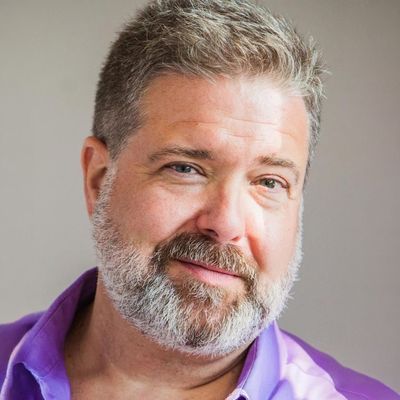
Bruce Dow is a musical theatre performer, director, and educator that has been on Broadway 5 times! 👏🏻
In this episode, Bruce opens his heart to us and reflects on his own journey in the industry, how he got where he is today, his experience filming Diana: the Broadway Musical, and how his words of advice turned around the life of the young actor John Rapson. 🤩
We share laughs and we also shed happy tears, and it is the best Thanksgiving episode I could have asked for. 💙 Enjoy it!
If you want to contact Bruce, please do so on his website or on Twitter!
Transcript
This transcript was automatically generated and might contain errors.
[0:00] Martín Acuña: Hi, everyone. I am Martín Acuña, and you are listening to Backstage Talk.
[0:18] Martín Acuña: Hello, everyone. Welcome back to Backstage Talk. Today's guest is Bruce Dow. He is an American-Canadian actor, director, composer, librettist, and theatre educator. He has been featured on a Broadway stage five times, and he has been the recipient of several awards, like the Dora Award. He has a keen interest in the mental health and self-care of performing artists and people of all genders and identities. Right now, you can catch him in Diana, the Broadway musical ProShot Recording on Netflix. Bruce, thank you so much for coming over. I'm super excited. Welcome to Backstage Talk.
[1:03] Bruce Dow: Martín, I'm thrilled to be here. Absolutely thrilled to be here.
[1:07] Martín Acuña: Yeah. I know they're only hearing us, but your smile is infectious.
[1:14] Bruce Dow: Thank you.
[1:15] Martín Acuña: I know this is just audio, but yeah, it's great. So go ahead, ask.
[1:20] Martín Acuña: You were born in America, but you went to Canada at a very young age. In all that process, what made you choose the thespian path in life?
[1:32] Bruce Dow: Oh, yeah. I was born in Seattle, Washington, USA, which is just across the border from Vancouver, Canada. My mother was from Vancouver. My father was from Seattle. But how did I end up doing this? Oh, wow. No, that's a great question. I mean, I certainly understand that I am a person of privilege, of North American privilege. And so my life was very good in many ways. But it was also, for everybody, has their own challenges and hardships. And without getting too dark about it, I had a rather angry, abusive, alcoholic father. And there was a lot of tension at home and being a little, like, as soon as I popped out of the egg, I was a little weird kid. That's just who I was. And so one place where I could.
So growing up, there was a lot of need for personal escape to feel safe. So that was a lot of living in a fantasy world, creating characters in my mind, having, you know, building little forts and creating my own world. And then also, at an early age, I learned that I could make people laugh. And I could, you know, I would listen to, you know, recordings, Danny Kaye and Ralph Harris. I used to love Australian children's family performer who later was arrested for child molestation. Very sad story. But his work was amazing. And so I would imitate these guys and do this stuff. And my family would love it. And I would be safe. And I felt I have something to give. So I was very young when I learned that Batman on TV, the old Adam West 1960s TV series, because I'm very old.
I was very young when I learned that he wasn't really Batman. And he was an actor pretending to be Batman. And I thought that was super cool. I wanted to be Batgirl. But at the same time, it was so I thought, well, if that's something I can do when I grow up, that's what I want to do. I want to be able to be in that safe space where I'm in my fantasy world, but I'm also making people happy and people like me. So it's kind of comes from a natural instinct to find a safe space in an unsafe space and to want affection and attention, which are natural things that children want. So that's a very long way of saying how I ended up doing this. But as I was growing up, my parents didn't want me to be a child performer professionally.
So I just did shows at school. And then I went to university and did a Bachelor of Fine Arts in acting. After that, I decided I never wanted to act again. And I did a year of stage management, lighting design, set and costume design. And then I did a master's in directing. And then I somehow ended up as an actor, not a director, although I do direct sometimes. I'd like to direct more. But anyway, that's very long just cut me off or throw something into your computer when you want me to stop.
[4:47] Martín Acuña: Don't worry. So tell me a little bit about your journey specifically in musical theater, because on Broadway, you were part of Beauty and the Beast, Les Mis, Anything Goes, A Funny Thing Happened on the Way to the Forum, Jesus Christ Superstar, and most recently, Diana. But I know, or I would guess that you have done a lot more things, either regional or in Canada, that involves musical theater. So tell me a little bit about that.
[5:15] Bruce Dow: Sure. I mean, growing up, I never distinguished musical theater from non-musical theater. For me, people were telling stories, they were acting, and sometimes they would sing because that's the world the characters lived in. And sometimes they wouldn't. Sometimes they'd speak Shakespeare. So it was very strange growing up when sort of teachers and in the business, I remember right after I graduated, and I'd just done the original Canadian cast of Les Miserables. And I sent out my resume to audition for a theater company. And they wrote back and they said, oh, we're not doing any musicals this year. And it was like, dude, that's one credit on my resume. Look down there. I've done a lot of plays and other things.
So it was a sort of shock to realize that people separated them. But I've always loved that expansive feeling of musicals. The size of hearts, the intensity of emotion, the clarity of personal expression. And in addition to the shows you mentioned, I did a lot of work at the Stratford Shakespeare Festival, now just called the Stratford Festival of Canada, which is North America's largest classical repertory theater. They've got four or five theater spaces now, over 700,000 patrons a year, annual budget over 75 million. It's a huge thing. But we did two musicals there. We did a production of Into the Woods, which was kind of set in 1930s Newfoundland, which was a great production. Because in the fairy tales, the only colors mentioned are black and white and red.
So we went with that color palette. It was just taking a musical and looking at it with a totally different light is really interesting. We also did a production of Cabaret, where I played the emcee. And I know your audience can't see me, but I'm a big boy. I'm healthy. I'm a little husky around the hips. So I'm not the typical Alan Cumming or Joel Grey you'd expect to play the emcee. And the director of that show really wanted to reimagine the images that the audience gets. So that's kind of, anyway, that's what I love about theater in general. But my journey with musical theater has been one of sort of not pioneering, one of sort of championing the idea that doing a Shakespeare play and doing a musical is the same damn thing for an actor. So they need to be respected equally. And the skill set for musicals is obviously, in many ways, much higher. So it's been an exciting journey.
[8:07] Bruce Dow: I love it. I love it. So you were part of Beauty and the Beast. Tell me a little bit about that experience. Because I mean, it's one of the biggest shows Disney had on Broadway.
[8:20] Bruce Dow: That was, there's lots of things I'd love to tell you about the creation of it in Toronto. It was the original Broadway creators came up to do it, the directors and choreographers. Um, lovely people, they were very intense in many ways. But the show itself, I mean, when do you get to play a singing, dancing fork? And I, you know, I was the measuring spoons, which meant I had a big tablespoon around my head. And then I had the teaspoon, half teaspoon, quarter teaspoon sort of hinged off my knee and costumes were amazing. Um, with Beauty and the Beast, I think the things that I remember most is, first of all, that glorious score. It was one show I was never bored to go in to do. I mean, I love Les Mis, but honestly, if I ever have to hear, uh, I will stab myself in the head with a knife.
You know, I don't ever want to hear that again. But Beauty and the Beast, you can put that on any time and I'm just filled with joy and excitement. And I'll also never forget. What was I doing? I had something I had to do during the preview, the prologue, where, where we hear the story of the rose and the young prince who's transformed into the beast. And I remember watching the audience and there was in the front row, there was a mom and her little, tiny had to be four year old son. And the little four year old son was watching the magic and watched the witch come on. And then when the beast transformed it, prince transformed into beast, he wasn't having any of it. He screamed, he looked at his mom and said, no. And then he literally started to crawl over her out the back of the theater.
He was so terrified. And to me, that was, I mean, I felt sorry for him, but at the same time I went, this kid is so involved with what we're doing and it's so real and exciting for him. And I just thought that was so beautiful. It's such an important part of humanity to be able to share stories like that. Beauty and the Beast was one of my favorite experiences. I love it. And that is the, that is part of the experience. That is part of theater. That is why I personally think that theater will never die. Even with technology or whatever, it connect us. And as you said, it's just humanity in its most raw form. I think, I think I always look at the theater as a kind of church where we go to tell our secular stories, where we go to tell our life human stories.
And, and it's where we can watch other stories and identify with them or even reject them and say, I could never live like that. Or to watch a story and go, I could never live the life of that person, but I understand what they're experiencing. And I've never understood that before. It's, it's such a place to share whatever we're doing on this planet. Nobody knows, you know, but we, we, we got to sit down and tell our stories. Yeah.
[11:40] Martín Acuña: Absolutely. So you were also in iconic Broadway shows like Les Mis, Anything Goes, Forum, and Jesus Christ Superstar. Tell me what were the best things about these shows?
[11:55] Bruce Dow: Um, which one did you mention first?
[11:59] Martín Acuña: Um, I started with Les Mis. Buddy, you already said that you would put a knife on your head.
[12:04] Bruce Dow: I was just, just the music. I mean, there are the great iconic songs in Les Mis. I Dreamed a Dream, There's Nothing Like It. Bring Him Home, Nothing Like It. On My Own, Nothing Like It. The, the songs, Empty Chairs and Empty Tables, they're gorgeous. But the connecting tissue of that show, I saw a dog, I saw a cat in the street. I had to, and I'll find something to eat. You took my hair, you took my teeth and my dog. I have to, that stuff just after eight times a week for a year and a half, really, I can't deal with. But doing that show was an eye opener because I thought, I just came out of theater school and I thought, I'm going to work with a creative team from
[12:43] Bruce Dow: The Royal Shakespeare Company. Oh my god, little did I know it would be the associate director who was Cameron McIntosh's ex-boyfriend, a failed hairdresser who had become a director. You didn't get the real team. I remember a brilliant actress was playing Eponine, and the director was more concerned as to how she was holding her coat because that's the image that the audience has to see, because it's in all the productions, rather than what she was playing. And that was a real wake-up call of sort of the McDonald's recreation of productions around the world. I think there's more understanding of that now, more leniency, but at the time it was, it has to look like that. It's like, yeah, but I'm an actor. So that was interesting. What was next on the list? Anything Goes.
[13:37] Bruce Dow: And Anything Goes, we did as a benefit at Lincoln Center Theater. And this is just one of my favorite stories. It was sort of an in-concert version, but it was the 1980s cast brought back to do it. So it was Patti LuPone and Howard McGillan. Just a sidebar in Toronto, it was Carrie Butler who played Belle. They brought her up to play Belle for Beauty and the Beast. And she's just one of my favorite people ever. I don't see her much, but I love her. So anyway, we're doing Anything Goes and we're doing a performance of it. It was a fundraiser, so there were limited performances. Patti gets up, she sings "Blow Gabriel Blow." The trumpeters, the two of them, it's, you know, I'm just singing in the ensemble and moving around a little, but I'm just in awe of what this woman does.
She finishes the number, the audience goes crazy, but they don't stand up. So Patti says, let's do it again. Why don't we just do it again? So she and the poor trumpeter, who looked like he was going to have a stroke, they did the whole number again. The dancers were exhausted. Everybody got up. We did the whole number again. Patti did her 125% amazing performance plus another 25% brought the audience to its feet. The house went crazy and you could just see her go, okay, yeah, that's what it was supposed to be. And she went on with the rest of the show. It was one of my favorite stories because you just go, it was just one of those things where you went, she was brilliant. And she went, but I can do better.
And I'm going to do it because I'm not going to get to do this song many more times. So I need it to happen the way it needs to happen. And she did it. And the poor trumpeter did it. His head was bright red, but man, that man could play. I can't remember his name, but an amazing. Next show. That story is iconic.
[15:37] Bruce Dow: Oh, it's totally iconic. Oh, I just admire the crap out of that woman. She really exemplifies an actor who sings while acting doesn't distinguish that. Oh, I have to stop. And it's about vocal performance now and how I sound and how my riffs are. It's like, no, she's just going, this is the performance. That's where it's going to sound if we do it. Yeah. Okay. Let's go with Forum.
[16:09] Bruce Dow: Forum was a production we started at Stratford and then they moved it to Toronto as a commercial production. That was a crazy experience for me. We were opening at Stratford. I got the flu. My understudy wasn't ready to go on. So I sang through it and sang through opening. And I suddenly found out that I had a paralyzed vocal cord and I may never sing or speak again. And so I had to drop out of the Stratford production. But they, so it was heartbreaking. They brought me back for the Toronto production and I felt just blessed to be brought back for it. But the thing about that show is we all remember it as the sexy slaves and the funny jokes and the stuff. But for me, the journey of Suitless, it's the great thing about a great farce.
And this is something I like to share with students is how it's not about how funny it is. It's about how real it is. You do the crazy things because Suitless needs his freedom. So how can he get what he wants? He needs to make this crazy thing happen. The only idea he has is to take that further. And that's where the madness and the humor comes from. If you go out there to play, this is a funny joke and I'm going to land the joke. Great. But if by the end of that show, you can see one poor man who just wants to be free, just wants to be loved. And he's the oddball out and he fights for it. And each of the other characters fight for what they want. And the humor comes out of the crazy ideas they come up with.
It's not about they want to be funny. And that makes the audience go crazy. They, I really, that was a beautiful production directed by, of all people, Des McAnuff from Jersey Boys and Now Ain't Too Proud and Big River. And I'm a huge fan of Des because he, he understands what needs to be a little obsessive about what needs to happen visually and what needs to happen with the timing. But he knows that stuff and he makes it happen. But he also has great compassion and really appreciates when an actor brings something to the table. And that's, that's just something I'll never forget. He's somebody I'd drop anything towards at any time.
[18:47] Bruce Dow: I love it. I love it. So let's jump into Diana, because you recorded this in the middle of the pandemic. A lot of the performers have shared their stories on Twitter and on Instagram, and you were basically had to be on lockdown, the same people in a compound sleeping together, living together for I don't know how much. So tell me about that whole craziness.
[19:16] Bruce Dow: Um, have you watched Squid Game yet?
[19:19] Bruce Dow: Yes.
[19:20] Bruce Dow: I'm totally kidding. It's nothing like that. It's nothing like that. We weren't all locked in a big gymnasium together. I just thought, but I thought that was a funny joke. Okay, so we were about 10 days from opening Diana on Broadway, and our producer, we had all been following Twitter and watching the pandemic sort of move towards us. And we knew something was going to happen. But then our producer Beth Williams came in sort of halfway through an afternoon rehearsal. We were doing rehearsals in the afternoon and doing the show at night. And she gave us one of the most beautiful, compassionate speeches about we're shutting down. We'll see you in two weeks. I don't know what's going to happen.
I can't tell you what's going to happen. Just know, we love this company. We want to keep everybody together. And we want to support you through this, whatever this is going to be. And being a producer is a really tough role because, especially for commercial theatre, it comes down to the money. But when you have somebody who, of course, is handling all that very well, because you're getting paid regularly, but who has that kind of compassion, it's a rare and beautiful, beautiful experience. So we went our separate ways, thinking we'd be back in two weeks. And then we did a series of workshops online. They wanted to keep the company together. So we did a implicit racial bias awareness training workshop, which was beautiful.
I mean, the creative team wanted to have diversity in a cast that fundamentally, historically, would have been entirely white. There ain't a lot of colour in Buckingham Palace. So I don't know how it is now, but at that time, not going to happen. But then if you bring a person of colour onto the stage in that context, and they're only playing a servant, is that reinforcing? So I mean, our creative team has been amazing about, and I'm no longer with the show right now because of an illness. I'm doing fine. But it's a thing. But they've replaced me with a person of colour, who's an incredibly talented actor and singer. So I mean, that fluidity is beautiful. So we did that workshop. Then we did some, they thought, okay, we've got a little more time to work on the show.
So they wrote some new songs. We tried to rehearse them on Zoom, which is impossible. As you know, I'm sure if you try to, you know, let's hear the chorus on Zoom. That ain't going to happen. But they did it. And then out of the blue, they said, okay, we're going to record the cast album. And Frank Marshall, who's one of our producers, who's best known for small films like Indiana Jones and Jurassic World and that series, who's also like the sweetest guy. You just go, okay, huge Hollywood producer. And he comes up and goes, Hi, I'm Frank. And you talk, you just, anyway, they're adorable. So they said, because of Frank, they went, we're going to do this first off to Netflix. And they took us to New Jersey.
They tested us on entering the hotel. The hotel was only our company. The hotel was locked down. Nobody could enter or leave. They tested us. They isolated us. We worked with a major medical company into how to do this procedure. We began, once everybody had been tested multiple times and had been isolated for quite a while, then this pre-vaccine, we started rehearsing in full PPE with masks and shields and gloves and sanitizer everywhere. It just smelled like rubbing alcohol during rehearsal day. So we rehearsed the show in this hotel in New Jersey, recorded the album in New Jersey, and it's out now. And I would recommend, if you've seen the Netflix and you're interested in vocal arrangements, listen to the cast recording.
You don't hear it as much in the Netflix audio as in the original cast recording. You can really hear the harmonies that he and I, throughout our musical supervising came up with. The vocal creation of that show was so exciting. And then once we'd done that, recorded the album and rehearsed the stuff, they picked us all up and moved us to a hotel in Manhattan along with the crew and everybody else. And they isolated 180 people. And through all this, they're feeding us and they're, you know, taking care of everybody's dietary needs and everybody's emotional needs of being locked in your hotel room 24 hours a day when you're not rehearsing. And then we moved into the theater and walking on that stage, they'd torn out all the seats in the orchestra.
And there were nine cameras set up. It was the same director of photography who did Hamilton, I believe. Don't, double check that, but I'm pretty sure it was the same guy. So there were nine cameras and a boom camera and it was all recorded. The vocals are all live. We're not lip syncing. And that was just an amazing surreal experience too. At that point, we'd been tested enough. The cast could be on stage without masks. We went backstage and either masked up if we were going to our dressing rooms, but dealing with the poor dressers who were trying to do all those incredible quick changes and they were in full PPE, including gowns and gloves and masks and shields. But somehow it all happened and somehow it all came out on Netflix and then the reaction started.
[25:12] Bruce Dow: Yeah, I personally, I really liked the show. I think the company is outstanding. I mean, the talent on that stage is outstanding.
[25:57] Bruce Dow: And uh no, the voices in the acting can't be criticized for any second. Um, but also we knew in advance that when you're telling a story about somebody for whom people have very strong reactions, most of the world loves and still mourns Princess Diana. A lot of the world hated her guts because she threatened the royal family and threatened the status quo and still does. Um, and when you, I mean, if you think of any hero in your life and you imagine their story on stage, you're going to have a very clear picture of what you think it should look like. Yeah. Um, and we knew that what we were presenting was Joe and David's image of this story of a woman they love and have great respect for. And they, you know, two boys from New Jersey wanted to tell a story about Princess Diana. That's their perspective, but that's not going to be everybody's perspective. Yeah, that's not going to be how everybody sees her. So we knew there would be criticism.
[27:02] Bruce Dow: Yeah, absolutely. If there's any disappointment I have, and I probably didn't say this, but I'm gonna say it anyway, is, and I noticed this with other shows, the glee and vitriol that a lot of performers have when a show is criticized. There's that kind of, oh, there's a victim, let's jump on it and let me show you how clever I am in insulting the show. And let me, it's like, oh, this crazy thing came out. It was a, we're not, we're not a poll. What are those things you sign? A petition. It was a petition to prevent James Corden from being in the movie "Witness." It was on Twitter for like a day and a half. That's why I've kind of done Twitter for a while. Um, but I just thought, and it was mostly artists and actors who were signing it.
And I thought, how can you, whether you like him or not, and whether you're, you know, it may be very valid to go, I'm a little tired of seeing him in every movie musical. How dare you deny somebody? Actively go after denying somebody a part. You know, that's the side of our business that I kind of have hit my tolerance wall with, my no bullshit wall. Yeah, if I can say that, you know, just like, you know, don't be a dick. I'm not, I would never tell another actor you can't play that part. You know, I mean, right now we're going through the process of making sure that we don't tell another actor that they can't play a part because of their race or gender or heritage or background. Everybody has them.
If you connect with a story, tell the story. If it's your story, keep it your story. If you want to share your story, share your story. If you want to play, you know, if you're queer and you want to play Martha in "Who's Afraid of Virginia Woolf," you do it. Um, so then to have a petition saying I don't want to see that actor play that role, that's horrific. You know, that's a really ugly side of our business. So when "Diana" came out, there was criticism. I mean, I'm glad there was a reaction. I'd rather, you know, I'd rather leave the theater being furious or elated than come out of the theater and go, where am I gonna get my fries and a cocktail? You know? Um, so, uh, but anyway, that's my diatribe on the thick and twistedness of our business.
[29:35] Martín Acuña: No, but I love it. Thank you for sharing it. Um, so Bruce, what advice would you give a young version of yourself?
[29:42] Bruce Dow: Oh, um, oh, I love that. I right now I would say go to law school. Uh, no, I'm kidding. Um, go to law school, work at, work at, work at, uh, you know, go work at the department store. No. Um, what I would say to a younger version, okay, this actually happened. Um, and, but I've done, I passed it on to a lot of actors. Um, so the advice I would give to a young me, um, I actually did give to a young man, which is a weird thing to say. Um, but I was doing something at Stratford. I think it must have been "Cabaret" because I recently recorded a solo album and I was selling it in the lobby. Um, which was fun. I came out in sort of semi-dragon heels, this big fat guy to sign full makeup and sell CDs in the lobby.
And um, this little kid came up to me. He wasn't a little kid. He was, uh, you know, 13 years old or something, little, little husky fella came up to me and he said, um, I want to do what you do, but I know I'm not the typical musical theater person. So it meant so much to see you play the MC that was "Cabaret," to see you play the MC in "Cabaret." Um, I want a career in theater. How do I do this? And I don't remember the exact words I told him, but I just, my, the feeling of what I remember was, um, you know, if, if, if, don't let them tell you you can't. Don't let anyone tell, I mean, anyone who tells you you can't do this, um, that's somebody you don't want to work with. So I just said, you know, do it, get the training, um, show them that they need to cast outside the box.
I mean, I went into audition for "Cabaret" at Stratford knowing that I wasn't right for the MC. I was too young for Herr Schultz and I was a little old, a little husky to play, um, but the lead guy, what's the name? Um, anyway, so I just sort of went in going, this is a new director. I want to see. So I went in and sang and somehow got cast as the MC. I mean, if you look at pictures of me, I don't look like those guys. Um, and this young actor saw that and he was, you know, he's still in high school and he wanted to do it but felt the industry wouldn't let him. So I just said, you know, do it. Don't let them tell you otherwise. And, um, but get the training, get the skills, do that anyway. Forgot about it.
Nice kid, nice interaction. Then a few years later, I got a Facebook message from a fellow named John Rapson. And he said, uh, dear Mr. Dow, uh, I don't know if you remember, but I thought I would cry a little. I don't, I don't know if you remember, but when I was a teenager, um, you know, a little husky kid, I came to see you at Stratford and you told me to keep going. Um, well now I'm in Toronto. I'm playing the lead in the national tour of "Gentleman's Guide to Love and Murder" and I would really love you to come to my opening night. And um, uh, sorry, but I, I didn't tell him that to, you know, I tried to be honest with him. It's not going to be easy, but you can do it. But he did it. And to have that feeling that I had actually touched a life and that he wanted to share that moment with me, I was so, so, I, it was that night and I got, you know, as dressed up as my sorry ass could and I went to the Royal Alexander Theater in downtown Toronto and I had a beautiful ticket and many people were there and, um, you know, they were asking, you know, what are you doing here tonight?
I mean, you're at the opening. We'd expect to see you, but what's what brings you here tonight? And I said, well, that, that guy, that's my kid. And he's not my kid, but he's, he's, he's doing this because he thinks I told him something. And um, so the advice I would give any young actor is the most important thing is get the training. We love it. We have the feeling we want to do it. We, you know, you have a drive. You've had some feedback that says, yes, this is something you can do. Really get as much training as you can in as many things. I would also say push in the areas you're not as comfortable. If, if you're a good singer, really work on your acting. If you're a good dancer, realize what a good singer are, how closely they're related.
Sorry, my nose is still running from that story. Um, um, but uh, sidebar, but related thing. I don't know how many dancers realize what great actors they are. You, you're acting with your whole body already. Do the same thing with text. Same thing with singers. If you're breathing and carrying a story through a tone, then you can do that with Shakespeare. I'm, uh, working at Stratford. The great late artistic director Richard Manette there sort of ended up with the cross-casting situation that a bunch of musical actors were dumped into Shakespeare production. I don't think he was too thrilled about it off the top, but halfway through the rehearsals, we had a full company meeting of all 150 members of the acting company and Richard said, you know, what the musical theater people are better at Shakespeare than you Shakespeare actors because we understand rhythm and we understand tempo and we understand how to use language in a broader sense.
So, um, so if you're a little, little kid who's, you know, looks different, sounds different, feels different, a little gender non-conforming, get the training and do the work and show them that you should be in their show. And if they don't want you, you don't want to work. That's, that's my advice. Now I talk a lot.
[35:57] Martín Acuña: No, thank you so much for sharing that story. It, oh, it was, it was one of the most beautiful moments in my life. I just felt, you know, I remember the little kid asking, I, I know I'm not what they think I'm, I'm not pretty, I'm not skinny, I'm not all, and, and look at him. He did, he's grown up and he's working everywhere and he's brilliant. Um, he's a handsome dog. He's grown up into a very handsome man. So John Rapson, look him up and hire him. He's brilliant.
[36:29] Bruce Dow: Well, Bruce, thank you so much for coming over. It's been amazing talking to you. If someone would like to contact you, get a hold of you, where can they find you?
[36:34] Bruce Dow: Um, they can find me, um, at www.brucedow.com. So brucedow.com is my website and, uh, there's a contact for email on that. Uh, at dowbruce is my Twitter. brucedow.com is my Instagram, I think, or my TikTok. I'm not sure. Anyway, I'm kind of, um, I would say go to the website, uh, and check me out there because I'm sort of actually taking a break from social media. Um, not just the criticisms of "Diana," but just I've, I found the, there's a lot of anger out there that for me right now is really toxic. So I'm, for a while I was sort of enjoying the fight. Now I'm like, I need to step away from this. So, uh, so, but, but anybody send me an email, whatever. I think it's dowworkshops at gmail.com. So, so yeah, and you're a delight and man, you do your research and, um, and you're a very talented singer and actor yourself. I have noticed I've looked at stuff. So, so you keep fighting the fight and, uh, yeah, thank you for having me.
[37:48] Martín Acuña: Thanks everyone for listening to this new episode of Backstage Talk. Remember to follow us on Facebook and Instagram at Backstage Talk Podcast.
© Broadway Podcast Network, All Rights Reserved