

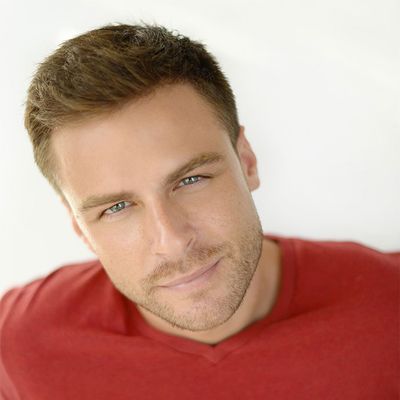
Eric Ulloa is one of the most talented human beings I have ever had the chance to talk to. 🤩 As he says: Latin excellence! 🌟 After his Broadway debut, he has embarked on writing and he is here to share his thoughts on Latinx representation and visibility on Broadway... Read More
From the show: Backstage Talk
Guests
Featured Shows
About
Eric Ulloa is one of the most talented human beings I have ever had the chance to talk to. 🤩 As he says: Latin excellence! 🌟
After his Broadway debut, he has embarked on writing and he is here to share his thoughts on Latinx representation and visibility on Broadway. 🔥
I am so happy to launch this season with him as the first guest! 💪🏻
Transcript
This transcript was automatically generated and might contain errors.
[0:11] Martín Acuña: Hi everyone, I am Martín Acuña and you are listening to Backstage Talk.
[0:16] Martín Acuña: Jonathan Larson asked how can you make someone take off and fly in one of his songs from Tic Tic Boom. And I, for the past two years, have learned one way to do it through the power of community. Welcome to the Latinx in Musical Theatre Special for season three of Backstage Talk, where we will be featuring artists from across all positions in musical theater from several Latin American countries and different Latin heritages.
[0:51] Martín Acuña: Hello everyone, welcome back to another episode of Backstage Talk. Today's guest, I am super excited to introduce you to Eric Ulloa.
[1:01] Martín Acuña: He is a 2020 American Theater Wing Jonathan Larson Grand Finalist and a 2020 Cliburn Prize Award Finalist. He is also the author of 26 Pebbles, which had its world premiere at the Human Race Theater Company. This play was featured in American Theatre Magazine, The New York Times, and won the Kennedy Center Citizen Artist Award for 2017. This play, 26 Pebbles, was named one of the top 10 plays of 2017 and one of the top produced plays nationally during the year 2018.
[1:39] Martín Acuña: Eric is also the librettist of the musical Passing Through, which had its world premiere at Goodspeed Musicals in summer 2019. He is also the writing assistant of Oscar winner Alex Dinelaris on the upcoming screen adaptation of Jekyll and Hyde, the musical. He also wrote Viva Broadway: Here Our Voices, a special writing for Illuminaris with Lin-Manuel Miranda, Antonio Banderas, Chita Rivera, and many more. He also, because he is a bag of wonders, is the author of the play Reindeer Sessions and is the co-creator of Meet the Alpha Beats for Nickelodeon Noggin.
[2:20] Martín Acuña: On the other side of the footlights, Eric was in the original Broadway company of On Your Feet, The Story of Gloria and Emilio Estefan. And he also has appeared in the 2016 Tony Awards, The Macy's Thanksgiving Day Parade, and A Capitol Fourth. Eric, thank you for being on Backstage Talk. I am super honored to have you over.
[2:42] Eric Ulloa: Oh my gosh, thank you for having me. It's always so embarrassing hearing your own bio. No matter how many times you hear it, your cheeks always get red. Thank you.
[2:53] Martín Acuña: But you've done a lot. I mean, you've been on the stage, offstage, you write, you perform, you do a lot of things. So I want to ask you, what was your aha moment? Um, or when did you choose the thespian path in life?
[3:08] Eric Ulloa: Oh goodness. Um, well, so to get to that, I started off in life. Um, I wanted to be a Disney animator my entire life as a kid. I wanted to animate for Disney. In fact, if you look at my school memories, little workbook that my parents kept and I would fill out every year, I think when I was in kindergarten, it said I wanted to be the president of the United States and an animator. You know, two likely career goals. They work hand in hand. Um, eventually the presidency went away, and I wanted to be an animator for years.
[3:40] Eric Ulloa: And then when I was around 13, 14, I took a course in animation and kind of learned, I thought I'd just walk into Disney because my drawing skills and I'd walk in and they'd be like, "Hey, you're in charge of creating the characters. You make the characters." No, that's not how it works. You work for years and years and years on all like to make the character's arm move a little bit. This was back in the day of hand-drawn animation. So, you know, a hundred drawings to make Ariel's arm, you know, come out once. And I was like, "Oh no, I am not, that is not for me. I am not that kind of person."
[4:15] Eric Ulloa: I am much more like an ideas guy, and I like to create, and the idea of just doing hundreds of drawings to make an arm move, I was like, "No, I can't do this." So at around 14, 15, I just had no idea what I wanted to do. And I was—don't listen, kids—I was skipping class one day in high school. Um, that's the unofficial story, but it's true, but something good came out of it. But don't skip class. I was nervous I was gonna get caught, and so I hid out in the back of the auditorium of my high school, and because they had all these, you know, tons of chairs, and if you're in the back, no one could see you.
[4:54] Eric Ulloa: So I was hiding out in the back because I was so scared I was gonna get caught, because I was trying to be a rebel and I'm not. And I saw them rehearsing their spring musical, which was Little Abner. Little Abner is a show that's rarely done, an old 1950s musical comedy based on the famous comic strip from back in the day. I had never heard of theater, musical theater. What was this? You know, I come from a family of Cuban immigrants. We never went to the theater because it wasn't something that was in our sights or, you know, even when I was younger in our economic world, to be honest.
[5:29] Eric Ulloa: And I was like, "What is that?" So I got a ticket that night and came back and saw the full show. And that was the aha moment. I was like, "Oh, not only do I want to do that, but very arrogantly, I was like, I can do that. I know I can do that." And I showed up weeks later to the audition for Fame, the play version slash the musical. It was a hybrid, and I showed up, I'm not even joking, dressed in a denim shirt with a little bandana tied, just like Antonio Banderas in the Evita movie, literally the costume, and I sang "Oh What a Circus," a cappella, and the teacher was like, "Who are you and where have you been?"
[6:13] Eric Ulloa: And I just dove in because they created such an open gate for me, and I dove into the theater. I just loved it, and everything else went to hell. All I wanted to do. And I really learned that, um, more than anything, I've always said that I'm a storyteller, I'm a creative. And it was a new way of telling stories I didn't know existed. I love it. I absolutely love it.
[6:39] Martín Acuña: I mean, you went from badass or tried to want to be badass into a theater guy.
[6:46] Eric Ulloa: Literally, like outside, like I skipped fourth period, and then I saw like a security cart drive by, and I went running, running to the back of the auditorium and hiding.
[6:55] Martín Acuña: I love it. What a rebel.
[6:57] Eric Ulloa: Yeah.
[6:59] Martín Acuña: I love it. I love it. So you started in high school. Your journey in musical theater started in high school. And how did you get to Broadway and into writing musical theater?
[7:11] Eric Ulloa: Oh gosh. So, um, I went to college at the University of Central Florida. And you know, people, I often get asked a lot, you know, is college a necessity for performing? And I always tell my story, which for me it was. I started very late. I did not start musical theater till I was 16, you know, almost 17. So I only had a little bit under my belt. Um, I was able to kind of learn more about what I did and refine my craft those four years. Also, you know, you had an opportunity to audition and maybe be in a show per semester.
[7:47] Eric Ulloa: And I was very fortunate. And from my freshman year on, I was in a show every semester. So I had every, you know, six months, whatever, a chance to be in a full production, more stage experience, more, you know, experience just on all the and then in classes on mechanics and acting and voice, you know, studio and everything. Um, what I also love more than anything, and I think is a big thing that I always try to tell a lot of students and people in the theater and wanting to be in the theater is that what I learned and was the history.
[8:21] Eric Ulloa: And I to this day can tell you the most random facts about musical theater history, but they're important because they kind of taught me about the fabric of what I was wrapping myself in, you know? And the more and more I learned about it, the more and more I don't—I was like, "I don't want to just wrap myself in this fabric. I want to be in the fabric. I want to like get in there and like be a part of this tapestry and create stuff." Um, my senior year, I took an advanced directing class, and like you had a directing class you would take, and then some students that wanted to do it based on the recommendation of the teacher could then be considered for the advanced directing class, which had like seven, six students a year, and I was chosen as one.
[9:06] Eric Ulloa: My professor Mark Brotherton, who passed away last year, but he was a huge influence on me. He taught me about what I always say when you're an actor, you always—and not everyone, but most actors focus on looking out from the proscenium. And when you step outside of that, you realize how much is around you in the proscenium. You see the full picture. In fact, whenever I'm in a show of mine and we're during tech and I see actors sitting around talking backstage, I go, "Get out to the house, get out there and take a look at the world you live in. Like take a look at the full picture so that later on when you're sitting upstage and you think you're sitting in the darkness, you're not sitting in the darkness. There's an amazing light happening on you that's telling a story beyond what you may know."
[9:52] Eric Ulloa: Because so I try to get them to see the full picture of things, and that's where I started learning the full picture of things. Um, I'm gonna go real quick so I don't bore your audiences, but I got to New York. I was very fortunate. I—my first one of my first jobs, I came to New York to audition to meet an agent that was interested in me in college, forgive me. And she sent me out an audition, was like, "You're never gonna, you'll never book this, but just go in. I want to see how you do." Uh, I booked it. Uh, and two weeks later, I had moved to New York with this huge production of Follies to be in for Sondheim's 75th. I got my equity card right away. I got my agents right away at a big agency. Uh, I met Stephen Sondheim and started what was a nice friendship, you know. I have my first review was in The New York Times by Ben Brantley. So really, we jumped into the deep end.
[10:44] Eric Ulloa: Uh, there was no kiddie pool to start with, but it was very exciting. Uh, it started my career very well, and then to get to the writing comes the part where my career just went and like just stopped. Uh, I had a really bad breakup, and through it because it was one of those everyone has that moment where all your self-confidence goes out the window, and this was this moment, and my agents would call me and would be like, "What is happening to you? You know, people are calling and saying like that you're just walking in the room, and you know, for lack of a better word, you suck."
[11:21] Eric Ulloa: Uh, and I just had no confidence in the rooms. I could not get a callback to anything, not even a callback. Uh, I had moved to a new apartment in a part of town that I didn't really know and was dodgy, we'll use that word. Um, I had a dog because I fought for the dog in the divorce. I was like, the dog's mine, and then I was like, Oh my god, I have a dog. Holy shit. So everything was very, and I was single again after three years, you know. So it was very a lot. And then one fateful night, I was sitting at I got invited by my friend John McDaniel to go to the Drama Desk Awards uh with him. And I went, and I at the party afterwards, I met a uh I call it, I call him pre-Kinky Boots, Billy Porter.
This is before Kinky Boots even started out of town. I ran into Billy Porter, people introduced me. I knew who he was, of course, because I, you know, love and know my musical theater, and we became like fast friends talking, and poor guy, I must have bored the hell out of him because I was telling him my whole breakup story and all this stuff, and how no one wants me anymore, and this I can't book anything, and only the way Billy Porter can do, he turned to me and he goes, So I was like, So I was like, What do you mean so? I go, I can't I can't book anything, no one wants me. I can't, I feel so uncreative. I I what he goes, so is it all you do is just flap your gums and say lines? And I go, What do you mean?
He goes, You said you're a creative. Go make something, go create something. And that was a slap. Literally, he he bitch slapped me across the face and said, Stop sulking. And I always I I will always till the day I die tell this story with him attached because he very much was the wake-up call I needed.
[13:00] Eric Ulloa: And a friend of mine I knew who was an actor and was also a composer, uh, Caleb Damschroder was working. He wanted to work on this musical adaptation of Brian Friel's Molly Sweeney. I knew he was playing with it. I said, Hey, would you want to would you allow me to play with you on it? I don't really know what I'm doing, but I know I can write, and maybe I'm a good librettist. We'll see. So we started playing with it and started um working on a musical version of it, and somehow I just don't know how I got the rights to keep doing it, and we know kind of presented it, and that's how I got to writing. And then 26 Pebbles was the moment where it really landed, and people were like, Oh yeah, he's a writer, but um, yeah, it was it's been a crazy journey, but let me tell you, you never never let anybody tell you that you know they know where life was gonna take them. You have no idea where life's gonna take you. It's insane.
[13:51] Eric Ulloa: Yeah, absolutely. And I think that the last two years had taught us a little bit on the hard way that that same thing. And I've told a lot of people that that look, you can either look at something literally, or as a metaphor in some ways, like the last two years, I've been very lucky. I've been very lucky and very fortunate to have had workers of writing and to also be able to employ a lot of people in my field for voiceover work on these animated series and stuff like that. So it's been wonderful on my end. But for many people, they did not have that. And I always say, I always try to compare that to this breakup moment I have where I felt so lost and unable to find my bearings. This is a different version of it, but still lost and unable to find your bearings.
These are the moments that I go, the people I think that in life really fly beyond what they think they're able to, or the ones that allow themselves in these moments to not sulk, not just sit in it forever, but to say, okay, what else do I do? You know, you've had two years for people to think, what else do I do in this? And I think a lot of people, I've heard a lot of friends that have started writing, sort of directing, sort of writing a book they wanted to do, sort of whatever it was. And I love that because if you're a creative, you're a creative, you know, and many people I know have incredible outlets that are that in multiple forms that are creative that are not just in theater, that are, you know, friends that are working in, you know, uh creating uh floral displays for a florist, things like that that I'm like, yes, yes, think beyond the box. We can do a lot, or just not robots who say lines.
[15:28] Eric Ulloa: Yeah, absolutely. So I want to ask you what's your approach to writing in musical theater? Since it's such a vast thing to do. That's my pressure writing musical theater. Um my first thing always is, and it's it's a very in speaking, you know, we'll we'll stick with Sondheim since he's obviously as passing it so timely. He had a great rule about when something sings. I'm very, very particular. Uh I'm tough about musicals as far as what now there's some musicals that I enjoy that are that are lovely, but it's very rare to find musicals that are meant to sing. And I, you know, I always look at it and I think does this story have to sing? Do the stakes of these characters need to be elevated by music and by vocalizing their emotion?
Um more so in when it comes to adaptations. Is the film a great film? Is the book a great book? Is it then most times I say leave it alone? That's me. I say leave it alone. I I can't change that. But if something has a different thing or I can take a different take on it, or I say, Oh, this inspires me to tell the story this way, then that's how I first approach it.
[16:41] Eric Ulloa: Um, I like musical theater writing uh and and the approach into it because it it is playwriting is the loneliest sport on the planet. It's just you and your laptop and your insecurities, and your insecurities are not a good friend. Uh so that's that's and it's always like, and I joke when it comes to plays and that I'm I'm really good at not writing, really good at not writing. So I just sit there all day long and like, okay, I wrote two sentences. Time for Twitter, you know, like something like that, or you know, it's it's and it gets worse and worse. Um, but musical theater writing I love because I am solo a librettist, I do not do lyrics, I do not write music. I have a brilliant writing partner in Brett Ryback, who does that so beautifully, and he's my writing partner on Passing Through and a bunch of other stuff that I can't speak of yet, but it's exciting. Um, and he I love collaboration.
[17:38] Eric Ulloa: Um, I love when people call me out on my own bullshit. I love when people challenge me on what I think is ready and great. A lot of times is not. Um, I think we suffer a lot of times from writers who throw things in and think that their first draft is the draft, and that's just absolutely not true. And if you think that you really need to rethink being a writer, no one's first draft is their final draft. Um, I just love the collaboration of it, I love the challenge of it. I love the creation. I love that I can write a monologue that I finish it and I'm like, oh Neil coming out of the house, like I've done it, my masterwork. And then that monologue gets ripped out of my hand and turned into a song, and no one sees my monologue that I work so hard on, but that monologue gets turned into the most beautiful child in this song that does the exact same thing times a million more that I could ever possibly do with just my words.
[18:39] Eric Ulloa: So that's what I love about, you know, and my am I entered. That's my entrance into writing a musical theater, how I get into it. I that's thrilling. Like, yes, like seeing your work being transformed once you think it's finished, and then it pops up into something new and different, but it keeps the essence of it. I just love it.
[19:03] Eric Ulloa: Yeah. Okay, so what advice would you tell a younger version of yourself? Oh my goodness, I I know that's easy. I because I say this when I when I teach students, I say this all the time. Um, I wish I had known just be yourself. Just be yourself. You there will be there will never be a better version than what you are. And for years, because I think sometimes in our educational institutions, this is really bad habit. And bless professors, they don't mean to do it. But I want to say out loud, stop doing it. Stop telling your students to emulate someone. I hate that. You can look up to, you could have someone that is like your mentor in your mind. I have many mentors, whether mentors I've physically met and worked with, you know, like Alex Denelaris, who was a mentor of mine in writing and helped me in the movie world, or mentors to me like Howard Ashman, who died long before I've ever, you know, and I never got a chance to meet him, but I sure as hell emulate the way he goes about creation.
[20:08] Eric Ulloa: So mentors are great. To emulate someone, I think it's a really tricky thing. I think for years, like I was in school, and everyone's like, oh, you're a young so-and-so. You're a young, and I'm like, and and I would go with that. And so I started trying to copy their sound, and I couldn't sound as great as that. And I couldn't get, you know, when I first got to New York, everyone's like, you're like a Cheyenne Jackson. And so I had like, I started trying to let and I'm I can sing, but I'm not a Cheyenne Jackson singer, you know. Like he does his own thing brilliantly. So like all these things that I put in my head and tried to be, and it wasn't until I walked into a room that I was like, here's me, here's my take on it.
If you don't like it, I don't care. And you know what happened that day? I booked my first Bravo show. The day I walked in and I said, I don't care. This is me. If you don't like me, I don't care. All I can do is offer me. I'm tired of this. Boom, broadly.
[20:58] Eric Ulloa: So be yourself. There's only one Audra McDonald, there's only one Kelly O'Hara, there's only one Cheyenne Jackson. So be yourself, be Eric Ulloa. That's what I would say to myself.
[21:07] Martín Acuña: I love it.
[21:08] Eric Ulloa: I love it. And it's so needed right now because we always try to push aside what we truly are and try to be someone else because that is what people like.
[21:23] Eric Ulloa: Yeah. But in the end, it's it's just a mix of what is out there and what we have to give to our industry. So yeah. 100%. 100%.
[21:36] Eric Ulloa: Yeah. I want to turn now into Latins and Musical Theater. Because you've written, um, as I said before, the Viva Broadway specials. Um, and you've worked a lot with Latins and Musical Theater in New York. What is visibility and representation for you?
[21:59] Eric Ulloa: Well, it's interesting. It's oh it's an evolution. And this is for me for me, it's an evolution. I've always been extremely proud of being Cuban. My parents emigrated here when they were um my mom four, my dad 17. You know, they started off life with nothing down in Hialeah in Miami. Um, anybody from Miami knows very well where the Cubans are. Um they worked at the Opalaca Hialeah Flea Market. You know, we all I I used to hang out in the you know in their little area of the time. Um but so I've always been very proud of being a Cuban.
[22:35] Eric Ulloa: God knows when I was 13 years old, my beeper, I'm aging myself, I'll be 40 in a month. My beeper case had a giant Cuban flag on it at 13. Um, and my last name's Uyoa. You can't really escape that. Yes, my name is Eric Michael, but Uyoa, no real, not really passing, no matter how I look. Uh Uyoa is Oyoa. Um, so I've always been very proud of it. I've always kept it deep. I think you know, we are Latin's tough when they come when they come here, especially immigrants trying to make it, where they're taught to assimilate. And so a lot of assimilation happened in my family. You know, from moving from Miami to Fort Lauderdale. I used to joke that I've been to two or three Quincenas. I've been to 34 Bar and Baum mitzvas.
If we're going by what I've been around, I am more Jewish than Cuban in my childhood. But uh the so it's been a journey, and then it was when I was when I was in, it was when I wasn't on your feet that I really got the full breadth of not only being proud of who I am, but to be loud and proud of who I am, and to make sure that I accept nothing less, and that beyond me, because I have an inherent privilege of I think you know, being white presenting, people meet me and they assume like I always say from like Nebraska, and I'm not. I'm from Miami, I'm you know, I'm from I'm as Cuban as they get. But because of that, I know the privilege I have to be able to. My it's that show struck with me according wanting to put forward the agenda we all seek, which is more representation, fighting for more access, fighting for more uh opportunity, and that as someone that can weave in and out of the cracks of this business that can really suck at times to fight hard and fight passionately for my community.
Um so to me, representation, you know, it means it's it's an ongoing journey, and every day it changes more and more. I'm I I become more and more vocal about it and I and I I stomach less and less bullshit about it and people try to make excuses or don't you see I go no I I see nothing. I see I see minimal happening. That's what I see. And I expect more and I and I demand more. So that's what happens. It's a growing journey.
[25:01] Martín Acuña: And how do you think that we can increase Latin visibility and representation specifically on Broadway?
[25:13] Eric Ulloa: We need to open up and what I don't see and this happen I what I don't see is a lot of uh Latin producers I do I mean like nil I I I can't I can't think about the top of my head I'm sure there has to be one or two you know in the and when I say producer I mean the lead producer category like what we would think of as the gatekeepers the ones that are on that magical list like at the theater you know that um I want to see more Latin casting directors because look we know our own communities you know um unfortunately I think a lot of times we have casting directors who are wonderful to our community but they know 16 of us and there are 600 of us you know I'm saying like there's so many more um I you know we need to allow for uh uh writers uh creators choreographers directors to have the the you know the opportunity to create on these stages you know I put out that video with um Roberto you know with the uh the pietate video, and it was all about the idea that on the last, you know, on the last check-in, but you know, I think it was 2018 19 season on Broadway, there was the you know the of new shows, zero Latin choreographers, zero Latin writers, one, one, not percentage, one you know, Latin director.
Um, like if the numbers were all like below five percent, even in the performing things, and I was like, how is this possible? We are the largest growing minority, we are 20% of this country. How is that possible? You know, and yet, and also for producers and the higher ups and the powers that be to know that please do not make to ask us to like write and create for Broadway and then expect us, like I always say, they always want WEPA, the musical. We don't all write wepa, you know. Um there, you know, a perfect example, the best play award wasn't WEPA, it was the inheritance, you know, an inherently in many ways white story about the the you know the AIDS epidemic and the generation that followed and what was left for us.
But inherently, because Matthew is a Latin writer, it is a Latin play, it has themes of community, family, um, uh uh minority struggles. Those are all things that come from his experience, you know, his freaking aunt is Priscilla Lopez. You don't get much more Latin pedigree than that. But I think, and that's a two-part thing. You know, the powers that be need to see us and know that we can write anything we want, that that is a Latin show, but also our community, and you know, I I for all the love that I give to our community, I have to chastise us a bit. We have to be more vocal about these things. I saw very few people celebrating Matthew's win for best play, and we made history. It's the first time a Latin playwright won best play.
We got to check one more box on that Tony thing that we, you know, for Latins. And you know, we have to be loud and proud about these things and put it out there. You see on my Twitter, I always try to repost Latin excellence and just showcase people that are doing great things because we should be doing that, not just for ourselves. It's not about just us. If it's only about your own career, it's not enough. Like raise up your friends. Make sure people know that Latins are all around us doing amazing things. And I think in our own community, we have to do that for others, not just for ourselves. It can't just be self-promotion, or you're not doing the work.
[28:38] Martín Acuña: Yeah, I agree with you. We have to absolutely be more vocal and raise up our community.
[28:45] Eric Ulloa: Yes. No one else is gonna do it.
[28:49] Martín Acuña: Exactly.
[28:49] Eric Ulloa: Exactly. So now that you mentioned that traditionally Broadway people expect a specific type of Latin show. Like you just mentioned, they want this carnaval, they want this wepa, they want all of this that stereotypically is Latin. And it is, yes, it is part of us, but it's not the only thing we have to offer. What is the most important part for you when you are writing or performing Latin characters? When you are creating them.
[31:15] Martín Acuña: I love it. Eric, thank you so much. I have loved every single second of this conversation.
[31:21] Eric Ulloa: To me, it's always an important thing is the essence of Latin, the Latin people, the Latin community. What's the uh you know, what's the essence of it? You know, family is very important, community is very important, culture, music, food, God help us all, food. Number one. As I'm sitting here like on a full stomach from last night's family gathering, food. Um, you know, I think it's just um the I those core those core principles, I you know, go, you know, the honesty of what our community is. I don't think you know, there's there's room for all, and there should be room for all, because I do think like if somebody thinks that we're gonna all of a sudden go from zero representation to getting to right place about whatever overnight, just that, no, there's gotta be room.
You know, Lynn Mango has done a beautiful job of allowing the uh of of showcasing us in many different forms. For in the heights, which is very much like you know, like it has it, it's uh it is fully a Latino story, then we have Hamilton, yeah, which has essence of that in there somewhat and in the way it's cast and the diversity of the story, uh, but it's not inherently a Latin story, but it is a Latin story because a Latin person wrote it. So it is inherently has all that in there for every, you know, um Encanto, we have Tic Tic Boom. Yeah, you know, again, all the things, uh, you know, in tick-tic boom, there are inherently Latin themes in there because the creator wrote it. You can feel it.
If you're a Latin person, you feel it, you can tell. So I think just you know, if we keep on going about things with the essence of who we are, what we represent, and and where our hearts lie, then it is essentially you're building a true Latin representation and character and writing.
[31:21] Eric Ulloa: Oh yeah, my pleasure. I have two last questions. First, where can people find you if they want to work with you, collaborate with you?
[31:30] Eric Ulloa: Um see if you can end up being a writing partner. Where can they find you?
[31:36] Eric Ulloa: Um, yeah, I'm I'm I'm actually I'm very good at social media. You can vouch for it. Uh um I uh you can find me on Instagram at um the Uyoa T-H-E-U-L-L-O A. And then on Twitter, somebody had my name randomly. So it's the Uyoa 2. So T H E U L L O A two on Twitter.
[31:56] Martín Acuña: I love it. And final question: what's your top five favorite musical theater shows?
[32:03] Eric Ulloa: Oh my goodness. Uh how dare you, Sophie's choice me. Okay, I'm gonna come in it, I'm gonna comment it from a writing perspective. Shows that I think shows that I think stand the test of time because they're written beautifully. Um, number one, always fiddler on the roof. Perfect show. Perfect show. You can't screw it up. Um, out of order. Uh Gypsy.
[32:29] Eric Ulloa: Cabaret. A little night music. Random, random throwing there, and I gotta tell you, I think maybe Ragtime. I think this is a recent thing. I the more and more I listen to writing, I go, damn, that is a damn well constructed show. Yeah. It's really good. And that sometimes those lines, Terrence McNally's lines will catch you off guard. Yeah.
[32:57] Martín Acuña: Absolutely. Eric, thank you so much for being part of the Latins and Musical Theater special here at Backstage Talk. It's been an honor. Um, you know how much I appreciate you, and I cannot wait to see where you are going next.
[33:16] Eric Ulloa: Thank you. I can I I I look forward to more and more, and with it creating opportunities for more Latin artists to come along the journey. That's the most important thing. We have to always keep a hand down and pull people up.
[33:29] Martín Acuña: Thanks everyone for listening to this new episode of Backstage Talk. Remember to follow us on Facebook and Instagram at BackstageTalk Podcast.
© Broadway Podcast Network, All Rights Reserved