

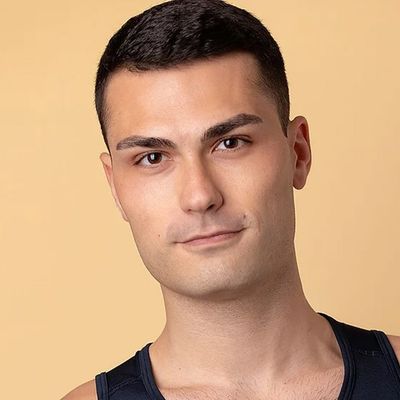
Ryan Rodiño is a talented young man that has toured the world performing musicals. 🕺🏻 Visibility and representation is a topic that he has had intertwined into his work lately and it's not only for the Latinx community, is for every single color, race, and culture... Read More
From the show: Backstage Talk
Guests
Featured Artists
Featured Shows
About
Ryan Rodiño is a talented young man that has toured the world performing musicals. 🕺🏻
Visibility and representation is a topic that he has had intertwined into his work lately and it's not only for the Latinx community, is for every single color, race, and culture. Everyone needs to feel seen in the stories we are telling. 👏🏻
Ryan brings a young perspective about how we can grow forward and bring more voices to the room. 🔥
Follow Ryan on Instagram and check out more about his work on his website.
If you want to know more about our host, please visit his website! Feel free to reach out with feedback or if you want to be part of Backstage Talk!
Follow us on Social Media:
Transcript
This transcript was automatically generated and might contain errors.
[0:00] Martín Acuña: Hi everyone, I am Martín Acuña and you are listening to Backstage Talk.
[0:16] Martín Acuña: Jonathan Larson asked how can you make someone take off and fly in one of his songs from Tick Tick Boom, and I for the past two years have learned one way to do it, through the power of community. Welcome to the Latinx in Musical Theatre special for Season 3 of Backstage Talk, where we will be featuring artists from across all positions in musical theatre, from several Latin American countries and different Latin heritages. I am proud to showcase my Latinx family. I hope you enjoy.
[0:51] Martín Acuña: Hello everyone, welcome back to another episode of Backstage Talk. Today's guest is Ryan Rodiño. He was born and raised in Long Island, and at four years old his mom took him to see Blues Clues Live at Radio City Music Hall. That was his first exposure to live theatre. On the way home, Ryan told her he hoped to be like the character Steve one day, jokingly thinking he wanted a green shirt and a spiral notebook. Which really what he wanted was to perform. Ryan's love for storytelling and art developed quickly, so he began studying acting. With Manhattan in his backyard, he jumped into the world of theatre, dance and film as an outlet of expression. At 17, Ryan was given the opportunity to perform at the Jimmy Awards on Broadway, and it opened his eyes to endless possibilities.
Two months later, he attended Montclair State University to pursue a BFA in musical theatre. Here, Ryan was reminded of the importance of embracing uncertainty and being a human first. Since college, he has had the privilege of following his passion in New York and around the globe. Ryan, thank you so much for accepting my invitation and welcome to Backstage Talk.
[2:12] Ryan Rodiño: Yeah, thank you so much. I'm so happy to be here. This is so exciting.
[2:18] Martín Acuña: Okay, so your first exposure was this show in Radio City Music Hall. But after that, what was your aha moment that made you realize you wanted to be an artist for life?
[2:30] Ryan Rodiño: Yeah, so I mean, really, I feel like Radio City was kind of my aha moment at four years old. I mean, when I think about it now, I had this wonderful childhood of being able to come to Manhattan whenever I wanted to. So my wonderful mother, she took me to Radio City, and we saw the show, and I was just fascinated by the theatre. I mean, not many four-year-olds, their first exposure is not Radio City Music Hall. So it was so special to see that, and she saw that I loved theatre, and no one in my family had ever done theatre before. So this was very out of the ordinary. But my mom is so supportive, and she started to take me to Broadway shows. So we saw Beauty and the Beast, and The Lion King, and Chitty Chitty Bang Bang at the time.
Yeah, and I just wanted to do it. So she signed me up for acting classes, and there is a wonderful regional theatre in my hometown that had an acting school. So I started studying there, and then there's a dance studio that is also attached to that. So I started taking classes there, and then I got more serious about it, and took classes in the city. And I just, I never stopped. I loved it so much. It gave me so much joy as a kid, and still does today.
[4:16] Martín Acuña: Yeah, I know. And it's amazing to have that kind of creative freedom at such a young age. And that is just wonderful. So tell me a little bit about your journey in musical theatre since you graduated from Montclair.
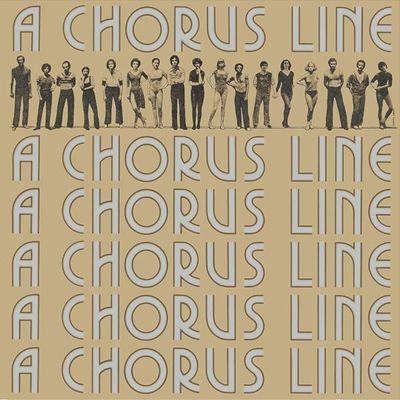
[4:22] Ryan Rodiño: Yeah, so I went to Montclair State University, which is in New Jersey. And it's right outside of Manhattan. It's literally a 20-minute bus ride from campus to Port Authority in Midtown. And I had the most wonderful experience there. The professors were so supportive, and I really, really could not imagine myself going anywhere. I'm a firm believer that you always end up where you're supposed to be. And Montclair was not necessarily my top choice, but it absolutely was the correct choice for me. And I loved it. And when I was a junior in college, I was going on some auditions in the city because we are so close. And there was an audition for a chorus line for the national tour. And I figured like, oh, like, I'll just go.
It's like, you know, going to the audition is basically a big master class from Bayork Lee, who is the, she is a Tony Award winner, who was the original Connie Wong on Broadway in the chorus line. And she basically is the helm of Michael Bennett's estate. And I'm like, the audition will basically just be like a masterclass. Like, I'll get to learn the choreographer from her. Like, it'll be great. Like, I'm just gonna go. It's an open call, whatever. So I went and I got it, which was so crazy. I was a junior in college. So I took a hiatus from school. I actually did school online for a little bit on tour, which was so crazy when you're touring. I'm so glad that I did it, but I would never recommend that to anyone.
Because when you're touring, you're going back and forth to different time zones. And, you know, we were on a bus and a plane. And I did not always have Wi Fi. And I'm trying to finish school online and worrying about what time it is in New Jersey. And what time does our show end that night? And how quickly do I have to get an assignment? And it was very stressful. But I did it. And then the tour ended up going to Japan. We toured all of Japan. And I was able to do an independent study abroad while we were there with Montclair. And in Japan, there were producers from China who came to see the show, and they picked up the show for China. And it was the first time that China had ever seen a chorus line.
And Bayork always told us that China always wanted the show when it first came out in the 70s and 80s. But because of the government in China at the time, and because of censorship, they wanted to censor a lot of things in the show. And Michael Bennett always said to them, this is a Pulitzer Prize winner, I'm not going to censor anything, unfortunately. So the show never went to China until 2019. And that was a huge year for China, because they had, what was it was a chorus line, Rent and Kinky Boots for the first time ever. And that was big. So it was so wonderful to then be able to go to China and originate a role essentially there, even though it's, you know, the show is so near and dear to all of us in the States.
It was the first time an audience was ever seeing a chorus line, which is so wild. But yeah, so in between my layoff from Japan and China, I went back to school for a semester, where I was able to kind of close all the bookends of everything that I couldn't do online that I had to do in person. I finished up China, and then I have been working regionally, which has been super wonderful since then, and a little bit in TV and film, and some events here in New York, and then the pandemic happened.
[8:35] Ryan Rodiño: So we're still in New York. I mean, I'm, I'm a New Yorker, nowhere type of person, because I grew up here, and I don't really know anything else. But um, yeah, I'm still here. I'm still doing the thing. I think all of us collectively right now as an industry are trying to figure out what on earth we're doing. We're all part of this massive industry experiment right now on what's working and what's not, which is equally as exciting as it is kind of terrifying.
[9:10] Martín Acuña: Yeah, it's pretty daunting.
[9:18] Ryan Rodiño: It is very daunting. You know, and it's, there's no right answer. There's no rulebook. We're all figuring it out together.
[9:24] Martín Acuña: Yeah, like you can't, you can't learn how to navigate a pandemic and a four year BFA course, you know, like, there's, there's no textbook on how to do this. So we're all managing and I have a lot of faith for the future.
[9:38] Martín Acuña: Yeah, I want to go back a little bit to your craft. And what is your approach to characters and performing in musical theater? Because one thing I loved when I was looking you up was in your bio, and this is something that I've seen throughout your work, that you, it's very important for you to embrace uncertainty and always be a human first. And that is something that for me connected me immediately to what do you do in your craft. So I wanted to know your approach to character creation in musical theater.
[10:17] Ryan Rodiño: Yeah, thank you. I always think everything has to come from honesty, whether you're doing something that is super dramatic, or if you're doing something that's so corny and tongue in cheek, like, everything still has to come from a place of honesty. And, you know, us as musical theater performers, or just artists in general, we're constantly on the go, we're always go, go, go, go, go, we're always thinking of what's next, where, you know, it can be sometimes hard to live in the moment. And I had, there was a casting director, I took a class from Kate Lumpkin, she's so fabulous. She'd be a great person to interview. She said to me, she was like, you have to stop being a human doing and you have to just be a human being.
And when she said that, that really clicked with me. And I also had someone else once tell me she was like, you have nothing to prove and everything to share. So she's like, stop trying to prove that you can do something, just do it. Just let it come from a place of honesty. So I think that in any area of any art form, honesty is always the number one policy.
[11:38] Martín Acuña: Yeah, absolutely. So after going on tour, Japan, China, working regionally in the States, throughout college, everything, what is a piece of advice you would tell a younger version of yourself?
[11:53] Ryan Rodiño: I would tell myself to be a human being. It's the same answer as before, with the honesty and everything. Like, you have to be able to be a real person first. Like, how can you play roles without being so certain in the role in yourself? Like, RuPaul says this all the time, if you can't love yourself, how the hell you're going to love somebody else? It's so true. And I think that as a child, if I learned self-love a little bit earlier,
[12:32] Ryan Rodiño: And the importance of that, and how important that is to carry into our work. That is something that I would, I would tell myself. Absolutely, absolutely. So important to, and more in this industry that it can sometimes be so crushing on our spirits to have a lot of self-love.
[12:57] Martín Acuña: I agree with you. So let's change gears here. And let's move into visibility and representation for Latinx people in musical theater. What is visibility and representation for you?
[13:09] Ryan Rodiño: For me, I mean, I think that we need to, and it's happening, it is happening, but we need to put more people of color on stage in any show. It doesn't matter what it is. It doesn't matter if it's a golden age show where historically it was all white people. I don't care. That's not what, that's not the time that we're in right now. And it's not just something that is specific to people who are Latin, Latino, Latinx. It goes across the board with any culture, with any race. Put, make your shows diverse. Put people of everything on your stage. I think that that is so important right now.
[14:01] Martín Acuña: Yeah, absolutely. So how do you think we can increase that Latin visibility and representation on Broadway, off Broadway, and regional theater?
[14:10] Ryan Rodiño: Yeah, I think, honestly, the majority of this is helmed in the hands of, first of all, producers who hire people to do a job and it all trickles down from there. So it's like, you need to have a casting director who is bringing diverse people to the table. And I think that that's what a lot of people are just asking is that they want more people to be in the room to be seen for things. I have so many feelings and sometimes it's hard for me to express them when it comes to this topic. How can I wrap this up? It's also so hard sometimes to answer these questions when you are a pawn in the situation and you're not in a place of power. And it's like, you know that you want more representation but you don't necessarily know how because you're not at the helm.
But I don't think that it is difficult for there to be more representation on Broadway. There's so many people who are here in New York who want it so badly. You know, I'm stumbling again. I don't know how to express it. This really is a question that I find very difficult to answer because I feel like the obvious answer is just put more people on. And how do we do that? We just do it, you know, we just do it. We put more people of color on the stage. I feel like it's as simple as that, honestly.
[15:52] Martín Acuña: Absolutely, it is hard, as you just said, to try to answer and find solutions to these questions when all we have is like our opinions and we don't have some real tangible power to make change. But I do believe that once we start getting people in those rooms, that power relationship will change. So I agree with you. We need more, we need to see ourselves more on those tables, behind those tables, not only on stage. Because having diversity right now on stage is quote unquote easy, but not in the creative teams, in the people in the back. So, and I think that we are going there. We are finding people and people are uniting to be behind those tables, to be sitting on those chairs and having not only a voice, but a vote. So for you, in your experience as a performer, what has been the most important part of creating Latin characters in musical theater?
[17:04] Ryan Rodiño: Yeah, well, I think that when we are creating, and this is great what you just said, because this completely ties in to what I'm thinking about this question, is that when we are creating new characters, you need to have people at the table who have an experience of that, whether it's culturally, whether it's through race. I was thinking the other day, my friend and I, we were having a conversation about Andrew Lloyd Webber and his shows and whatever. And I was thinking about Evita. And I'm like, this, and I love Evita. Since I was a kid, I've loved it. But I'm like, this entire show is about people from Argentina and it's written by a British white man. If we're going to be bringing new roles into the repertoire of what our industry is, they need to be written by people of that culture or of that race.
And that is, I think, part of more representation that we need to see on Broadway, because it's not only the people that's playing the roles, but it's those that are writing them and the stories that they want to be telling and the directors that are helping tell those stories. I think that that is where we are lacking in diversity. I mean, it's lacking everywhere, but I think that that, right now, personally, is what I think we need more of.
[18:40] Ryan Rodiño: And I just had this wonderful experience of this new workshop. It's called Members of the Choir. It's a brand new play written by Evan Edwards. And I had never, first of all, I haven't really worked on new works before. So this was super exciting for me. It was a straight play. And the entire cast, the majority of it are people of color. I had the one Puerto Rican role, and then the rest of my fabulous, fabulous, fabulous cast mates, the majority of them are black, and then there's one white character. And the entire play is written by a person of color. And it literally was, Martín, the most magical thing that I've ever been a part of to see all of this unfold. And I would just sit there in the rehearsal room, and I'm like, this is exactly what people are talking about.
This is what we need to see. It was just so, so wonderful. And the whole play, every character is queer. Every character is gay. And it's the first time that, first, we're seeing a play written that is mostly people of color. We're seeing a lot of it in TV, in shows such as Pose, but we're not really seeing this on stage. And in my experience, this is the first play about gay people that isn't about AIDS, which is so important, you know? And it's through the lens of queer people of color in 2021, in the now present time, where we're not talking about something that's so traumatic from so many years ago, you know? So I know that I just went on a tangent, but going back to your question on how do we make new characters of our cultures, they need to come from the people that are writing the stories and telling the stories, and producers need to be producing that because that's what's important right now, you know?
[21:14] Martín Acuña: Yeah, and hopefully this workshop of this new play will go places because it sounds exciting. And yeah, I'm excited to see where it's going. And so to you and the rest of the team, break legs, like we say in Latin American countries, mucha mierda. That is basically our good luck in theater. And yeah, before we wrap up, if someone wants to follow your work with you, see what you've done, where can they get ahold of you?
[21:49] Ryan Rodiño: Yeah, I'm on Instagram, at ryrodino, R-Y-R-O-D-I-N-O. And I can be contacted on my website. It's www.ryrodino.com. And I have a little contact form. Anyone can reach out to me there.
[22:11] Martín Acuña: Awesome. And last question, what are your top five favorite musical theater shows?
[22:19] Ryan Rodiño: Oh, goodness. I, hmm. Okay, so I love a lot of shows. It doesn't have to have a specific quarter. Yeah, yeah, yeah. Let's see. Well, A Chorus Line just means so much to me just because of my history with the show. So I always do have to say that. Let's see. Let me think about, instead of it being my favorite shows, I'm gonna think about some of my favorite experiences that I've had in the theater.
[22:50] Ryan Rodiño: Go ahead. A Chorus Line in Spanish, honestly, was the coolest thing to see in Spain. So there's one. Billy Elliot is also another show that I hold so close to my heart. I saw it four times on Broadway. When I was a teenager, I was so in love with it and I just felt connected to the role of Billy and Michael. Other shows. I love Next to Normal. For a play, I love Boys in the Band. Let's see. What's another one? I'm trying to think. I truly, I love everything. I love storytelling. I love musicals. I love plays. But yeah, I would say, okay, maybe those are my two. Oh, and Parade. There we go. Number five. Parade is another show that I hold very dear to my heart.
[24:03] Martín Acuña: Awesome. Ryan, thank you so much for coming over. I have loved this conversation. I cannot wait to see where you're going, to see you perform. Yeah, I wish you the best in 2022. I know you will go places and thank you for coming over to Backstage Talk.
[24:22] Ryan Rodiño: Yeah, thank you so much, Martín. This has been so wonderful. And I, you know, this is the good thing about social media is that it can connect us no matter where we are in the world. And I think that that is so special and I wish the best of luck to you and this new season of your podcast. It's super exciting.
[24:43] Martín Acuña: Thanks everyone for listening to this new episode of Backstage Talk. Remember to follow us on Facebook and Instagram at Backstage Talk Podcast.
© Broadway Podcast Network, All Rights Reserved