

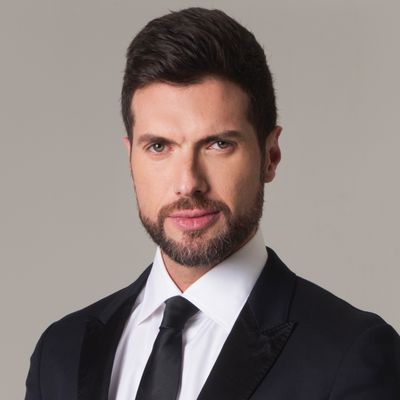
All the way from Mexico, Mauricio Martínez is a Broadway performer that moved through the stages like a rising star. ⭐️ In this episode, he retells his whole story, from the Mexican stages to his Broadway debut with On Your Feet!.. Read More
From the show: Backstage Talk
Guests
Featured Shows


About
All the way from Mexico, Mauricio Martínez is a Broadway performer that moved through the stages like a rising star. ⭐️
In this episode, he retells his whole story, from the Mexican stages to his Broadway debut with On Your Feet! 🤩
He also walks us through his experience with the representation and visibility of Latinx people in the Great White Way. 👏🏻
This episode is also available in Spanish! 🌎
Follow Mauricio on his Instagram to know more about his work.
If you want to know more about our host, please visit his website! Feel free to reach out with feedback or if you want to be part of Backstage Talk!
Follow us on Social Media:
Transcript
This transcript was automatically generated and might contain errors.
[0:00] Martín Acuña: Hi everyone, I am Martín Acuña and you are listening to Backstage Talk.
[0:16] Martín Acuña: Jonathan Larson asked how can you make someone take off and fly in one of his songs from Tick Tick Boom, and I for the past two years have learned one way to do it, through the power of community. Welcome to the Latinx in Musical Theatre special for Season 3 of Backstage Talk, where we will be featuring artists from across all positions in musical theatre, from several Latin American countries and different Latin heritages. I am proud to showcase my Latinx family. I hope you enjoy.
[0:51] Martín Acuña: Hello everyone, welcome back to another episode of Backstage Talk. Today's guest is Mauricio Martínez and I am honored to have him on the show. He is a Mexican actor and recording artist who recently starred as Emilio Estefan in the Broadway musical On Your Feet, the story of Emilio and Gloria Estefan. You can currently see him too in the Emmy Award NBC Universal's original TV series, El Vato, on Netflix. Being a household name in Mexico and Latin America, Mauricio starred as the leading man in the Mexican productions of the Broadway musicals Beauty and the Beast, Saturday Night Fever, The Drowsy Chaperone, Sweet Charity, the premiere Spanish versions of Broadway's The Last Five Years, Songs from an Unmade Bed, and in plays such as Arthur Miller's A View from the Bridge and Toyer, a thriller by Gardner McGee before crossing over to the United States.
In the American stage, Mauricio originated the starring role in the world premiere of Children of Salt, a new Latin musical at the New York Musical Festival in 2016, and went on to play the iconic role of Che in Evita at the prestigious Kansas City Repertory Theater that same year before making his Broadway debut as Estefan in the summer of 2017. Mauricio, I am so happy to have you over. Thank you so much for joining us on Backstage Talk.
[2:28] Mauricio Martínez: Thank you, dear Martín, for having me. I'm very honored and I'm very, very happy to be here connected to you. I watched myself age 20 years in less than a minute with that intro.
[2:42] Martín Acuña: Yeah, it usually happens. I saw all my life flash before my eyes.
[2:50] Mauricio Martínez: I love it.
[2:51] Martín Acuña: Mauricio, I want to ask you first, what made you choose the thespian path in life?
[2:57] Mauricio Martínez: Oh, what made me choose a thespian life? Well, my mother had a lot to do with it, because my mom is a huge fan of Hollywood musicals, old Hollywood musicals. And when I was growing up, she would play me movies like Grease, obviously, Hello Dolly, West Side Story, The Sound of Music. And I completely fell in love with the genre, not knowing that most of those movies came from the theater, and that those theaters were in a place called Broadway, and that Broadway happened to be in New York. I only saw New York in movies. So as I grew older, I discovered that my real passion came not really from the movies, but from the stage, from a theater. And growing up in Mexico, I also grew up, obviously, with both cultures.
I always say that I'm not only bilingual, but I'm bicultural, because I grew up, even though I did grow up in Mexico, I grew up in a very Americanized city of Mexico called Monterrey. And we're very influenced by North America, by the United States. So I also grew up listening to both music, you know, I would, both types of music, I would watch MTV and watch Michael Jackson and Paula Abdul and Bon Jovi and Whitney Houston. And I would always also watch Luis Miguel, Alejandro Fernandez. So I grew up with both cultures. And I fell in love with both of them. And I wanted to do them both. And I discovered that theater was the venue, theater was the place, the destination where I could do the same in both languages and be honest and be true to myself in telling stories.
You know, I discovered I had a voice too, thanks to the theater. I used to do plays as a kid. And I discovered that I had it. And I started studying singing. And my voice teacher told me, you have a voice and you have, he mentioned a word, musicality, that I'd never heard before. And I'll never forget it, because the way he said it, you know, and I realized, oh, I have this, I was born with this, I opened my mouth and I sing on pitch. I can sustain the note. I have this, so why not use it? And that's how it happened, you know, little by little. And I always wanted to tell stories. And I just fell in love with the theater. And I love, I fell in love with creating. I fell in love as I grew older from junior high, then I moved to high school.
And that's when I discovered my tribe, you know, people that were just like me, that wanted to sing. You know, when I saw Glee, then years and years later, I was like, it brought me back, because I saw it, and I thought to myself, that's exactly how it was for me in high school. You know, I found my tribe, friends that were musicians as well, or dancers or singers, or they wanted to do concerts, or play the piano, or, so we were all this crazy bunch that loved performing. And that's when I fell in love with it. And it just took me, it always took me somewhere, you know, the drive that I had, and the passion for being on stage. And I knew I had to, I knew that it was going to take me out of where I was at that time, that was Mexico, you know, I wanted to be in New York.
And that's where I headed. And I never looked back, you know, I got a scholarship when I was 18. I took it so seriously that I started taking singing and acting lessons at 15. And by the time I was 18, I was already in New York studying musical theater. You know, that's how clear my path was, and how driven I was, and how also I think there's a phrase called, there's a phrase that goes, when in the moment of commitment, the universe conspires to assist you, you know, and I believe that, I believe that firmly. And that's what happened, you know, and that's always been the theater for me, you know, my commitment, first and foremost, is with theater, with stage, when it can be with musicals, well, even better. I love it.
[7:29] Martín Acuña: You just briefly mentioned the start of your journey when you were 15 and then when you moved to New York at 18. Tell us a little bit more about your journey in musical theater and how you went from Mexico to Broadway.
[7:40] Mauricio Martínez: Okay, well, that's literally the title of one of my concerts, the first 54 Below show that I did a couple years back. And that's literally my life, from Mexico to Broadway. Growing up, I used to watch all these movies that my mom used to play, and I fell in love with it. And so I started taking singing lessons. I just asked, when I found my tribe, I found these people, and I just asked, where do you take singing lessons? And they told me where, and I would go and sign up, and I would work in the summers, so I could pay for my voice lessons, and that's how it all started. And I started doing theater at that age. I was probably around 14, 15, and it just grew and grew and grew. By the time I was 18, like I said, I was already in New York.
But then my visa ran out, so I had to go back to Mexico, and that's when I discovered a TV show called Operacion Trunfo, which is like the Mexican idol. And so I went, I was third runner up, and the day the show ended, I got a call from the producer, who was offering me Saturday Night Fever. He was telling me, the producer really liked you, watching you in the show, and he says that you'd be perfect for this show. And I told him, well, I auditioned for that in New York, but I didn't get it, because I was pushed out of the subway, and for some reason, I hurt my ankle, and I couldn't do the dance call. But I really, really wanted to audition, and it's so funny that life, in its mysterious ways, and then I was gonna do it when I was working on cruise ships, but my dad passed away.
I was gonna do it in Germany, because I auditioned, and I got it, but then I had to turn the contract down, because my dad was diagnosed with cancer. So by the third time I got Saturday Night Fever back in my life, it was the time to do it, and it was in my country, and it was in my culture, and in my own language, and with my people, and for my people. So it was extra special, and that's when I knew, I was like, okay, this is what I'm meant to do in my life. You know, be careful what you wish for, because dreams come true, but you never know how they're gonna come true. You know, you can ask for something, and you're not really sure how you're gonna receive it, and that's how I learned that I was really, really, that this was really my calling.
And after Saturday Night Fever, it just snowballed from there. After that, I did Beauty and the Beast, and I did Jesus Christ Superstar, then I did The Last Five Years, and then I did A View from the Bridge, and then I did The Drowsy Chaperone, and that was like, just, I didn't stop. I was also recording albums, and doing concerts, doing a couple of films here and there, doing lots of TV, like telenovelas and stuff, but the main, like the spinal cord of my career was always theater, musical theater. And 2016 came, and my friend, I already auditioned for Evita in 2011. I was flown from New York, from Mexico to New York, and it was down to two guys, the guy that got it and me, and he got it. So I was like, okay, I went back, but then 2016 happened, and my friend Jaime Lozano, who's also from Monterrey, wrote this beautiful musical called Children of Salt, which is based on a play by a Mexican playwright named Hernan Galindo, who's also from our hometown of Jaime's and I, Monterrey, Mexico.
And so it felt like home, in a way. And he said, listen, Paisanito, this role is perfect for you, I think. I think I've even written some songs, the last songs that he was writing, based on your range and your style and your voice type. And so I would really like to see if you would want to do it. And I'm like, I was thinking the same thing. So I said yes, and I came to New York. And in the audience of Children of Salt, we did it at Nymph, at the New York Musical Festival. And the audience was Justin Hough, who was then...
[11:53] Mauricio Martínez: The casting director of On Your Feet worked at Chelsea, Burnout Chelsea Casting. He waited for me and he said, "You'd be perfect for Emilio. I'm looking for an actor to replace the actor who's playing Emilio Estefan right now on Broadway in On Your Feet. Would you like to come see the show and see if you want to audition?" And yeah, so I went to see the show. And when I saw it, I lost it, you know? I just knew it in my heart that I was going to play that role one day. And I did, you know? That's what brought me to On Your Feet. I'll never forget the day of my audition and the day I met Emilio and Gloria and Jerry Mitchell and Sergio Trujillo and Alex De Nolaris. Of course, my brain just went icons, icons, Grammy, Tony, Emmy, Oscar, like.
Yeah. And I got it and it changed my life forever. It made my dream come true. It brought me to the States. It brought me to the US. It gave me my green card. It brought me back to New York as an adult and it made my dream come true. And along the way, I discovered beautiful human beings and a great bunch of people that I call friends and family to this day. And yeah, that's literally the journey from Mexico to Broadway. And it was the perfect musical to bring me back to the US because it was the union of my both worlds in a way. You know, it was the Latin music in Spanish of icons and recording artists that I grew up with and me also doing music and being a recording artist and doing telenovelas for Univision and Telemundo.
It was like that, the Latin market. And my passion for Broadway and musical theater in English, Anglo or British, it was the union, like the marriage of both worlds. So it made it extra special because to me it was like a musical in Spanglish in a way. And a musical that talked about pride, Latin pride and a musical that was the first musical in history to have 99% Latinos on stage. There was only one American, one American on stage who played the A&R. The rest were all Latinos. That broke records. That's like the first time it's ever happened. And that's, I mean, that makes me so proud, you know? Because there's nothing better than representation, you know, than seeing your own people playing the parts that were written for your people. You know, that's very special.
[14:55] Martín Acuña: I agree, I absolutely agree.
[14:56] Mauricio Martínez: And in a true story, and in a true story that is still, that hasn't ended, of two people that are still alive, still killing it, still inspiring. So it's beautiful to see, you know? It's not the same to play somebody that maybe already died and like, or that died like hundreds of years ago, or recently than somebody that's there and still inspiring and still working, still producing, still recording, still being a parent, still being a husband. Like he's still there, very much so. And you're getting to know him at the same time. And then, yeah, so it was perfect. It was perfect, and I will always be grateful for that beautiful show. Before we go into visibility and representation, I want to ask you, what would be that piece of advice you would tell a younger version of yourself?
[15:50] Mauricio Martínez: Ooh, I would tell him to have more fun, to enjoy it even more. Because I, and yes, because I took it so seriously back then, I still do, obviously. But back when I was a teenager and I was starting out in my young 20s, I was like a military, I was like military, you know, I was so strict. So I would tell my younger self to loosen up a little bit and maybe enjoy it, have more fun. Have more fun, you know? Because time goes by and it doesn't come back. So there's some things that I'm not gonna be able to do, Saturday Night Fever, for example, now. Because I'm in my early 40s and I'm not as flexible. And I can't, my knees and my back will probably won't be like, no, you can't do that anymore. You know, that was 20 years ago.
So there's a reason why the roles find you at a specific time. But now I'm ready to play, I don't know, Jean Valjean, you know? Because 20 years ago, I didn't have the voice or the range or the emotional baggage or just the wrinkles, you know? So it's, or the gray in my beard. So yeah, there's also gains with the losses. But yeah, I would tell him to have more fun. Have more fun and to not let anybody convince him of I'm not going for it, you know? Just go for it, go for it. And I know he would, I know he will. I know he will, yeah.
[17:27] Martín Acuña: Okay, let's turn into Latins in musical theater.
[17:31] Mauricio Martínez: Okay. What is visibility and representation for you? You just mentioned that On Your Feet was the first show you saw that you could say the people on that stage are truly who we are as Latins.
[17:46] Mauricio Martínez: Yes. Right? It was the first time in Broadway history that the 99% of the cast was all Latino, you know? It's a show with the most Latinos on stage ever on Broadway. So that's historic and that's beautiful. And I've always said that representation and visibility is like holding up a mirror, you know? The artist holds up a mirror to the audience, facing the audience, so they can see themselves reflected. It's always a reflection, you know? Theater is always a reflection of society, of what's going on in the times, fiction, you know? So if you hold up a mirror, you should see yourself there. Always, all of us, all colors, all shapes, all sizes. But what's happening or what has happened in the past many, many, many, many years is that yes, fiction is holding up a mirror, but there are certain spots in that mirror that are covered for some reason, or maybe somebody painted on top of the mirror so that some reflections are not there.
What representation and visibility is, is literally grabbing a cloth with soap and washing the mirror so everybody can see themselves reflected. I think it's very important to support, yes, obviously Latin performers, Latinos, but very important to support creative Latinos. Who's writing the stories? Who's writing the music? Who's producing? Who's directing? Who's casting? Who's funding? Who's the assistant director? Who's the lighting designer? Who's the costume designer? Who's making the shoes? Who's making the wigs? Are they Latinos? Are there Latinos in those teams? I always ask, is there a Latino casting this musical about Latinos? And there should be. Is there a musical, is a Latino musical director involved with that Latin music? There has to be. There has to be so it can be authentic and so we can be represented. Yeah.
[20:16] Martín Acuña: It's very important to support creatives because yes, I believe that. I mean, I see more Latinos than ever. Yes, and I'm very happy about it, but I see them mostly in front of a camera or on stage. What about behind? What about backstage? What about creating? What about all the creators, all the Latin playwrights, the authors, the musicians? Where are they? I'm sure they're there. We just have to support them. We just have to help them get that opportunity to be in mainstream.
[21:04] Mauricio Martínez: Yeah. In a mainstream show, in mainstream, because we have so much to give. We are the minority. We're not gonna be a minority anytime. Like very soon, we're not gonna be a minority. We are the highest growing minority group in this country. So there better be more and more representation because we're everywhere and we're not going anywhere. Spanish is spoken more and more and more in this country and Latinos, what people forget, what people do sometimes in this country is that they place us all in one box. Latinos are this. And we're so different and we're so diverse. And there's so many of us. There's Colombia, Peru, Guatemala, El Salvador, Honduras, Mexico, Spain, Brazil, Cuba, Puerto Rico, Costa Rica, Argentina, Paraguay, Uruguay.
We're all so different. No one is alike. Like nobody is alike. And there's so many of us. And then there's the Latinos that were born here and the ones that speak English and the ones that don't speak English, the ones that speak Spanish, the ones that don't speak Spanish. Afro Latinos, Blanquitos like me. There's so many. So, and we're so diverse. That's why we're so powerful. But I think it's important for us to help each other. It's important for Mexicans to reach out to Cubans and be like, "Hey, I wanna help you tell your story," or a Puerto Rican to call the Peruvian or the Honduran to the Salvadorian. Like El Salvador, we just have to help each other because there's so many of us. There's so many of us.
And we tend to make our groups in a way. And I like to mix those groups always. Because I think it's important. That was what On Your Feet was. I remember we used to, on Saturdays between shows, sometimes we would bring like a dish that each one of us cooked, you know? So Linedi who's Dominican would bring up something that was from Dominican Republic and Hector who was Puerto Rican would bring something from Puerto Rico. I would bring tamales or something Mexican. And a beautiful dancer who's from Spain would bring us a tortilla Española, schizo from Spain. So it was a mixture of it all. And that's how we are, you know? Just as diverse as we are in our.
[23:46] Mauricio Martínez: How do you think we can increase Latin visibility and representation on Broadway?
[24:16] Mauricio Martínez: How do you think we can increase Latin visibility and representation on Broadway?
[24:44] Mauricio Martínez: How do you think we can increase Latin visibility and representation on Broadway?
[25:12] Mauricio Martínez: How do you think we can increase Latin visibility and representation on Broadway?
[25:32] Mauricio Martínez: How do you think we can increase Latin visibility and representation on Broadway?
[25:52] Mauricio Martínez: How do you think we can increase Latin visibility and representation on Broadway?
[26:12] Mauricio Martínez: How do you think we can increase Latin visibility and representation on Broadway?
[26:32] Mauricio Martínez: How do you think we can increase Latin visibility and representation on Broadway?
[26:52] Mauricio Martínez: How do you think we can increase Latin visibility and representation on Broadway?
[27:12] Mauricio Martínez: How do you think we can increase Latin visibility and representation on Broadway?
[27:32] Mauricio Martínez: How do you think we can increase Latin visibility and representation on Broadway?
[27:52] Mauricio Martínez: How do you think we can increase Latin visibility and representation on Broadway?
[28:20] Mauricio Martínez: How do you think we can increase Latin visibility and representation on Broadway?
[28:48] Mauricio Martínez: How do you think we can increase Latin visibility and representation on Broadway?
[29:16] Mauricio Martínez: How do you think we can increase Latin visibility and representation on Broadway?
[29:36] Mauricio Martínez: How do you think we can increase Latin visibility and representation on Broadway?
[29:56] Mauricio Martínez: How do you think we can increase Latin visibility and representation on Broadway?
[30:16] Mauricio Martínez: How do you think we can increase Latin visibility and representation on Broadway?
[30:36] Mauricio Martínez: How do you think we can increase Latin visibility and representation on Broadway?
[30:56] Mauricio Martínez: How do you think we can increase Latin visibility and representation on Broadway?
[31:16] Mauricio Martínez: How do you think we can increase Latin visibility and representation on Broadway?
[31:36] Mauricio Martínez: How do you think we can increase Latin visibility and representation on Broadway?
[31:56] Mauricio Martínez: How do you think we can increase Latin visibility and representation on Broadway?
[32:16] Mauricio Martínez: How do you think we can increase Latin visibility and representation on Broadway?
[32:36] Mauricio Martínez: How do you think we can increase Latin visibility and representation on Broadway?
[32:56] Mauricio Martínez: How do you think we can increase Latin visibility and representation on Broadway?
[33:16] Mauricio Martínez: How do you think we can increase Latin visibility and representation on Broadway?
[33:36] Mauricio Martínez: How do you think we can increase Latin visibility and representation on Broadway?
[33:56] Mauricio Martínez: How do you think we can increase Latin visibility and representation on Broadway?
[34:16] Mauricio Martínez: How do you think we can increase Latin visibility and representation on Broadway?
[34:36] Mauricio Martínez: How do you think we can increase Latin visibility and representation on Broadway?
[34:56] Mauricio Martínez: How do you think we can increase Latin visibility and representation on Broadway?
[35:17] Martín Acuña: Thanks everyone for listening to this new episode of Backstage Talk.
[35:22] Martín Acuña: Remember to follow us on Facebook and Instagram at Backstage Talk Podcast.
© Broadway Podcast Network, All Rights Reserved