

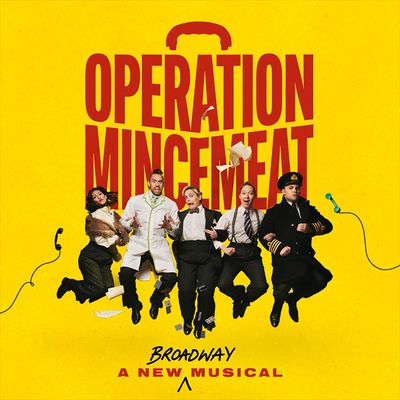
Gerianne Perez might have the hardest job on Broadway, understudying 3 out of the 5 roles in Operation Mincemeat on Broadway. Gerianne tells us about the endurance needed to take on this show, after the marathon of performing in Six the Musical... Read More
From the show: Behind the Awards with Eila Mell & Bruce Gotlieb
Guests

Featured Shows
About
Gerianne Perez might have the hardest job on Broadway, understudying 3 out of the 5 roles in Operation Mincemeat on Broadway. Gerianne tells us about the endurance needed to take on this show, after the marathon of performing in Six the Musical.
Also in this show Julianna Margulies 1995 Emmy win for ER.
Gerianne Perez is a powerhouse performer known for her soaring vocals, emotional depth, and commanding stage presence. A proud New Yorker of Puerto Rican descent, she has built a dynamic career spanning Broadway and several national tours.
She made her Broadway debut in the groundbreaking a cappella musical In Transit and went on to appear in Waitress, where her vocal strength and heartfelt performance left a lasting mark. Most recently, she is standing by for the tour de force role of Montagu in the U.S. premiere of the West End hit Operation Mincemeat, earning praise for her comedic brilliance and versatility in one of the most buzzed-about new musicals of the season.
Her national tour credits include Vocalosity, Waitress, and the original U.S. Boleyn Tour company of SIX, where she originated the role of Catherine of Aragon. Gerianne has also worked extensively in regional theatre, bringing warmth, wit, and vocal fire to both classic and contemporary roles.
An alumna of NYU Tisch School of the Arts, Gerianne is also a passionate advocate for representation in the arts and a frequent collaborator on new works that spotlight bold, diverse voices. Whether leading a musical or championing new stories, she continues to be a vibrant force in american theatre.
Make sure to check out Eila's book, "The Tony Awards", and all her other amazing books: https://amzn.to/43WMu5Y.
Connect with Eila and Bruce:
Transcript
This transcript was automatically generated and might contain errors.
[0:17] Eila Mell: Hello and welcome to Behind the Awards. I’m Eila. I am here with Bruce. Hello there.
[0:34] Bruce Gotlieb: Good morning. How are you today?
[0:36] Eila Mell: I’m good. So we’re listening to Julianna Margulies, our guest.
[0:41] Bruce Gotlieb: Yes, that was her Emmy win for ER a year after she was dead on a gurney.
[0:53] Eila Mell: Right, that was how it was originally written.
[0:55] Bruce Gotlieb: Because she’s so amazing that they needed to have her. And then she became the star of the show.
[1:01] Eila Mell: Her and George Clooney were the couple.
[1:05] Bruce Gotlieb: I know. So the lesson is, take the job, even if it’s a one and done, because you never know what it can become.
[1:13] Eila Mell: Yeah, I mean, how many times do you hear that story of, oh, I was only supposed to be in for two episodes, or I was only supposed to be in for one, and then all of a sudden—
[1:22] Bruce Gotlieb: I know. Now she’s got ER money. That’s nice.
[1:25] Eila Mell: Yeah, for sure.
[1:27] Bruce Gotlieb: Remember how big a deal ER was?
[1:30] Eila Mell: Oh yeah, I remember watching it all the time. It was must-see TV.
[1:34] Bruce Gotlieb: I watched it for a little bit, but I think I didn’t stick with it, that’s for sure.
[1:40] Eila Mell: No, too bloody for you?
[1:42] Bruce Gotlieb: No, I just, I don’t know. I just didn’t love it.
[1:46] Eila Mell: Okay.
[1:48] Bruce Gotlieb: But, you know, it’s so funny. For such a hot show, I don’t think it’s ever really on in reruns.
[1:56] Eila Mell: No, I don’t know that it was. I mean, it was, I think, at one point, but I now think with streamers, that it kind of got away from that.
[2:06] Bruce Gotlieb: Yeah.
[2:07] Eila Mell: But I remember when it was out, I mean, it was that must-see TV block of time.
[2:13] Bruce Gotlieb: It was Friends, it was ER, I think Seinfeld was part of it.
[2:17] Eila Mell: Seinfeld, yeah. It just, I mean, that’s where everybody was.
[2:22] Bruce Gotlieb: Right, right, right. Was it on at the same time as Cheers or had Cheers already left?
[2:28] Eila Mell: I think it was already gone.
[2:30] Bruce Gotlieb: So, okay, yeah, that’s hard to remember.
[2:33] Eila Mell: Well, today we have Gerianne Pérez, who, speaking of remembering, my gosh, she has so much to remember because she understudies all three of the female actor roles in Operation Mincemeat, so that is quite a feat, so let’s get her out because there’s so much to talk about.
[2:56] Bruce Gotlieb: Including that it’s exciting coming up the end of August and she’ll give us the dates that she’s going on for her first eight-show week of Monty, so that’s so exciting.
[3:06] Eila Mell: Yeah, Monty is, you know, I mean, it’s very much an ensemble show, but if there is a lead role, it’s Monty, so good for her.
[3:15] Bruce Gotlieb: Let’s get her out.
[3:16] Eila Mell: All right. Well, Bruce, what was my favorite show of last season?
[3:23] Bruce Gotlieb: Just this little transfer from Across the Pond, Operation Mincemeat.
[3:29] Eila Mell: I mean, I only talked about this show in probably every episode.
[3:33] Bruce Gotlieb: That’s incredible.
[3:36] Eila Mell: So, welcome Gerianne Pérez from Operation Mincemeat.
[3:40] Gerianne Pérez: Hi, thank you so much for having me.
[3:43] Eila Mell: Thrilled to have you.
[3:44] Bruce Gotlieb: Thank you so much for joining us. Now, I don’t know if you know this, but we had the five from England on our show all at once, so that was a crazy great episode.
[3:54] Gerianne Pérez: I’m sure very chaotic with all five of them.
[3:57] Eila Mell: So much fun, it was like a party, and our audience loves Operation Mincemeat.
[4:02] Gerianne Pérez: They really do.
[4:04] Eila Mell: So, the five of them, obviously, you know, some of them being on the creative side, as well as the acting side, they’ve all kind of been from the beginning. So, for someone like yourself, who, you know, obviously is no stranger to the stage, but now you’re walking into what I would assume would feel like an existing family already.
[4:24] Gerianne Pérez: Absolutely. How is that space, that navigation?
[4:28] Gerianne Pérez: Oh, I mean, it’s crazy. They flew us to London for rehearsals, and they actually rehearsed us as the covers for a whole week before we started working with the Brits.
[4:39] Gerianne Pérez: We call them the Brits.
[4:40] Eila Mell: I love it.
[4:42] Gerianne Pérez: And so, you know, I think that we were really excited once we got into the room with them, and we were rehearsing our version of the show in a completely separate room. It was being staged on us as the understudies. They wanted us to be ready to go on as soon as humanly possible, just to make sure that, because it’s a really complex show, if you know the show and you love the show, it sounds like you do, you can tell it’s crazy.
[5:05] Gerianne Pérez: We call it Final Destination the Musical. If you put a prop in the wrong place or the desk in the wrong place, like seven people are dying offstage.
[5:11] Eila Mell: That’s right.
[5:12] Gerianne Pérez: So it’s incredibly complex, and they wanted to get it in our bodies as quick as possible. But when we—I will never forget the first time I saw our cast do the invited dress. And the way—they were already spectacular to watch in the rehearsal room, but the way that they turned it on when they were in front of an audience, the way that they could play with an audience, the way that they could improv if something went wrong, they had you in the palm of their hands. And the second I saw how they could work with an audience, I was like, oh, this is going to be good.
[5:49] Gerianne Pérez: And also, I have the biggest shoes to fill. I am first cover for Monty, Natasha Hodgson, and that show is really—that person is really the ringleader of the show. He’s really the train conductor, taking you along for the story, the exposition. He talks and sings the most of anybody in that piece. And so when I saw Tash and what she had to do, I was like, okay, I have to buckle up and be ready to come with that amount of showman energy when I step on the stage for the first time and every time after. But you feel, as an American cover for this show, like you have a great weight to carry. We all know that we are filling shoes of people who have either written this show and done it for six-plus years or crafted the roles so brilliantly around their talents that they're kind of—it's impossible to follow in their footsteps like Claire and Jack. Those are two people who are not the writers, but the writers wrote those roles specifically for their strengths.
[6:44] Gerianne Pérez: Jack Malone’s character specifically is—everything is tailored to what he can do best. His dialect work, his character work, his voice work is crazy. So we knew that we had a heavy load to carry when we got on this stage. And so I think that we knew we had to put a ton of work in into being brave enough to play these roles on Broadway. But they, as people, are so welcoming. I mean, if you had them on the podcast before, you know they're incredibly sweet. We love covering them. They are so low-maintenance. They're not precious. Like, we would have times in the rehearsal room where all ten of us would be singing, and the music director would say, OK, Gerianne, you sing Monty, have Zoe be Bevan, have Jack be Hester, but let's have Brandon be Davey.
Like, he would do this thing where he would mix us up a lot so that it felt very much like sharing. It felt very much like what's mine is yours. It didn't feel like this is my role, and they're just not precious. They are so secure in what they bring to the table that they support us as covers, and they know that we're here to support them, which is ultimately what we're here to do. We're here to have their back if they want vacation, if they have an injury. We can step in so they can take the rest that they need. They're the absolute best.
[8:12] Eila Mell: They told us that in casting the roles, I mean, not in casting the actors, but in who was going to play which roles, they all sort of had a go at different roles. So when you're covering the roles, is it the same, or is it, like, that's the track? Once, like, everything that Zoe does is going to be, the understudy does all of those?
[8:34] Gerianne Pérez: Absolutely. So I cover all three of the women, and yes, the way that their tracks are specifically built with those sort of offshoot characters that are features that they slip into, that is the track that we follow in line of. So our wonderful cover, Sam Hartley, who covers Jack Malone, is going to play Hester and Spillsbury and all of those crazy characters. As Monty, I'm going to be a cockney. I'm going to be one. But for most of the show, I am that singular character, Monty, because he is such a through line throughout the piece. But when I cover Bevan, for example, I'm doing quick changes out of my butt, truly. I have never put a hat on, taken a tie off, and put it to my pocket quicker.
It is very frenetic and chaotic playing Zoe's track. And then Claire's is crazy. I just did our third cover, Stumble Through, last week in her track, and hers is a big sing. Hers is the closest. Six was the last show that I did. And so that's the one where I'm like, OK, I'm buckling up as a vocalist because I'm stepping into Claire's track, and she is, you know, she's the songbird of the show, I have to say. I have no qualms saying that. They all have these very specific niche skills, and so as a cover, you have to fit into all of three of those things, and they're all just so different from each other.
[10:01] Eila Mell: How does now, being an understudy and a swing and all of those things we've talked about on the show before, is an ask like nothing else, and our hats go off to people who step in in the middle of a show or within an hour's notice, all of those things. What is it like in your brain to draw just on those specific things?
[10:20] Gerianne Pérez: You know, like, oh, today you're going on for Zoe, tomorrow you're going on for Claire. I just feel like it's got to be just chaotic to draw that specific track out.
[10:30] Gerianne Pérez: Absolutely. I was going to say chaos. Chaos is what it is. Some people who are offstage tracks, like I've been a swing before, sometimes you can hold the tracks in your brain. I've held like six or seven different tracks, four of them being ensemble. When I was a swing in Waitress, that was not as complex as what I'm doing here, and it's because all five of these people are principals. All five of these people hold a significant amount of content in their brains for their specific tracks. Nobody's ensemble here. You know what I mean? Like, it's far more work on the brain. It's interesting because you're memorizing three vastly different harmony parts. Like, Claire is up in the rafters. She is singing high Bs, all while pulling a staircase around and grabbing a trumpet.
And Zoe, she could be a tenor if she wanted to. She's singing lines that are lower than what Jack sings sometimes. And then Tash, Monty exists somewhere in the middle as the mezzo. So it's really, truly stretching every corner of your possible talents, right? Like, when you are Jean, you are pulling out that kind of classic spitfire ingenue, high, high, high singer, somebody who knows how to hold space but also give focus to whomever is leading the scene. Then if you're Bevan, you are not only a strict and angry colonel, you are a goofball in the second act as Hazelden, pulling out the craziest Hagrid, West Country accent and also diving into ridiculous physical comedy. And then if you're Monty, you are leading a show.
You are saying, hey, audience, come follow me. I promise you're in good hands with me, and we're going to go on this ride together. So you are stretching so many facets to who you are. It's really fun, but also so scary. Like one of our other covers, I always say, like, how you doing? She goes, I just need a lobotomy. Like, I truly think that like this show and the nuances of this show and all of the things that we have to know in order to cover this show will stick with us forever. But it's, yeah, it's absolutely insane. Chaos is what I could say is inside of my brain.
[13:02] Gerianne Pérez: What a way, though, to keep any skill set that you ever learned from college to any type of community you've ever done. What a way to keep all that sharp, though.
[13:12] Gerianne Pérez: Absolutely. I truly think that this show has really sharpened my mind. It has also pushed me to get out of my head. You have to be so brave to do this show. If you're watching anybody look like they're moderating and trying to watch themselves, like it is a show that requires full out, no marking. Like we will hear the Brits be like, especially during.
[13:36] Gerianne Pérez: Tony season when they were doing all of those shows and not calling out, understandably so, they were like, I'm exhausted, I'm exhausted, I'm exhausted. And then we'd watch them on the monitor and see them giving nothing less than 110% because that's just what the show calls for. They know, and anybody who goes into the show knows, you can't phone it in. It is full out, no marking. So you also, as a cover, are building stamina off stage to be able to do it when you're called to go on. It's bananas. And also, what's unique about this show is that everyone is on stage most of the show. Absolutely. There's no break. There's no break. There's like two moments for Monty and Bevan where I get to sit backstage and that's where I'll usually like, I also, again, I've done Six before.
I never thought I knew like show hunger, like I know what Operation Mincemeat. It is two and a half hours plus of a musical. And by those small breaks that I get, I am ravenous. I will find whatever donut or cupcake is in the hallway to just scarf down my face because I am starving. I could eat a Thanksgiving meal before the show and still be so hungry with the amount of calories that you burn in this show. You're sweating, you're exhausted, and also having the best time. But yeah, it's tough. My gosh. Yeah.
[15:02] Eila Mell: So what's a two-show day? I can't even imagine if you're saying all of that for one show. I can't imagine what it's like on a two.
[15:08] Gerianne Pérez: Yeah. A couple of weeks ago, I did a Friday and a two-show Saturday and I was exhausted. I went home and I ordered Sonic. I ordered like a smash burger and an ocean water and fries. And I was like, I deserve this. It's absolutely crazy. It's wonderful that we as coverers get one a week. And also, we aren't building the stamina of the show until we cover a vacation. Trust when I say that I'm covering a vacation at the end of this month. I am gearing up. I am already hydrating. I am already mentally getting myself in a place to do eight shows a week. But it's going to look very different from the way that I live my life now, which is I can eat what I would like. I'm a little bit loose with my schedule. No, I will be very diligently living like an athlete. I will be eating well. I will probably have no life, see no friends. I will strictly live in service of the show when I'm doing it more than once a week, for sure.
[16:13] Eila Mell: Right. So how did this opportunity come to you? Was it just a regular audition?
[16:19] Gerianne Pérez: Yeah, yeah. Tell us a little bit about that. Truly. It's funny because it was the fall of last year. I saw the announcement that it was coming to Broadway. Up until that point, there had not been really any sort of show that I felt was a right fit for me in this season or a role that I could audition for. So I obviously did my research in Operation Mincemeat. I will never forget watching their Olivier performance on YouTube and being like, I don't know that this is my bag. But a couple of weeks later, an audition came through. And what I do love as a human is a challenge. And I, again, had just gotten off the road from being on tour for a year and a half, and I needed to do anything to get my audition legs under me.
So I couldn't really turn down an opportunity to stretch that skill and to get in front of a room that I hadn't seen in a little while. So I got the audition packet and it was actually for Bevan. And I looked into the packet and I said, hmm, I don't know that this is a right fit for me. So I went back to my agents and casting. I said, okay, I don't think that this is right fit. What about if I go in for Jean Leslie? Casting gets back to my agents and says, hey, I don't think that she's exactly a perfect fit for Jean. What about Monty? Then I look into Monty's packet and I do just a little bit more digging. And mind you, when we're in auditions, they don't give you access to the script. So all we have to go on is the character description and just basically what's in that audition packet and what you can find online.
But it's all very tight lipped. So there's little to access in order to find your way into these roles other than what you've been provided. So I looked at the packet and I was like, I think I can find my way into this guy. So I went in for Monty, for cover Monty, and sang something for my book, I did Diva's Lament. And then I got to my first callback and then they added Jean Leslie material. So I got to do All the Ladies. And then by the final callback, they added in Haselden material. So I'm doing Monty, Jean and Haselden. And by the time I got to those finals, I really wanted it. I had spent so many hours coaching on that packet and working on the different dialects. This has been also something that is so different from any other audition experience because you're working on vastly different dialects from an American dialect that I hear every day.
So it's not just about learning the songs, learning the scenes like I would a normal audition. It's also getting in my mouth a completely not native dialect. So I had to run it so many more times in order to not get jumbled, basically. And it also just, like I've said before, it calls for unyielding bravery. And I am a Virgo. I'm type A. I like to get things right. I think that's part of why I'm a good swing, a good cover is because I can hold a lot of things in my brain. And when I go on, I can do things right. I can do things accurate. I'm going to go to the right space, say the right lines. But in this show, you really have to be just so far out of your head. You have to throw things at the wall.
You have to be not afraid to bomb, to not land a laugh. And just make it's the opposite of naturalism in this show. You really are going strong with character work. And I will never forget, I did the whole scene. I did all the scenes. I got to read with one of the writers, Dave. And then they were like, okay, just sit outside for a moment. Let's see if we need to see anything else from you. And I left and I was outside on the bench. And I was like, I hope they ask for something else. Like, let me just like prove to them that I'm right for this job. Like, let me like do something else to seal the deal. It was so, so eager to please now that I look back on it. But I wanted it so badly. And so Carrie Gardner, the casting director came out.
And I had also just heard her go in and heard the room bust out in laughter. I was like, huh, I don't know what that is. Carrie comes out. She goes, hey, that's all we need from you today. I just want to say you have done brilliantly through these auditions. And you should be really proud of yourself. Went home, cried, crossed fingers. And then a couple of days later, I found out I got it. And I remember asking, I think, Tash months later when I got to meet her again in person and start to work with her, I said, you guys laughed when Carrie went back in. What was that? And she goes, well, Carrie came in and asked if we needed to see anything else from you. And we said, no, please call her agents right now.
We don't want to lose her. And so it just was such a lovely thing to hear that, like, in my head, I was like, let me prove something else. And they were like, no, please, let's not lose her. Like, we found our girl already. And so it just was a wonderful moment to realize that they had faith in me that I didn't even have.
[21:09] Eila Mell: Yeah. Oh, that's so sweet. Yeah. It's funny when we spoke with them about the trajectory of the show itself, the Fringe Festival and all of this. It's funny that the last two shows that now you've been part of, you mentioned Six, kind of went through that same trajectory. And then now here you are now having participated in both of those.
[21:35] Gerianne Pérez: Absolutely. I it's funny just being in two shows that couldn't actually be more different from each other. But but our two British shows that had exactly what you said, they started really small. They started with people who were friends at university. And so I think there's something also to say about those two shows being so cool, young and scrappy, little engine that could kind of shows and just see like, yes, there is great spectacle in both shows. But you're not looking at Death Becomes Her. You're not looking at Wicked when you go see Six and Operation Mincemeat. What you are getting is this this these cool retellings of history in a digestible way. And again, they couldn't be more different from each other.
But it is absolutely funny to me that I went from Six to basically five. But again, when I left Six, I was like, when I closed that chapter, I was like, I need to just I want to manifest something completely different for myself. And here I am in Operation Mincemeat.
[22:42] Gerianne Pérez: I do. Six is one of my favorites. I love the humor and the retelling. I love it. Love it all. I love that it's, you know, 90 minutes. Like I always say to people, it's a 90 minute Spice Girls concert with some history lesson thrown in. Absolutely. It was such a blast. I had such a good time on tour. I made the best friends. My voice is made of steel and titanium after that show. And also just like, it really is impactful. It's it's some people might go and say this is a bit bubble gum for me. But I never lost track of how empowering the show was for our audience members. I got messages and DMs and and and met people at the stage door who were like, I see myself in you. You made me feel stronger.
I had I had ex-wives or like moms who had brought their daughters and they were like, I saw myself in Catherine of Aragon. Like you gave me strength. Like I also dealt with business and that. And it felt empowering to see your story and also watch you empower my daughter. So Six was just a beautiful, beautiful gift for sure.
[23:47] Eila Mell: Yeah, that's absolutely just about the women. So and, you know, they're universal stories, even though, you know, they were married to, you know, a king.
[23:52] Gerianne Pérez: A king. Exactly. We all go through it. For sure. For sure. So is there any one character that you connect to of all the characters that you cover for this show?
[24:02] Gerianne Pérez: Oh, my goodness. That's such a good question. I think that I have two different parts of me. And so those two different parts of me relate to two different people. I think that the person in me who is scrappy and wants to matter is Jean. And when I when I got to rehearse into that track, there was something that felt inherently like me at my core. I am not the loudest voice in any room I enter. I am not the one cracking jokes. I am not an extrovert. I am more introverted. But when I do speak, it usually does matter. Most people know me to be a quiet person, but when I speak, it matters. And that is very Jean Leslie. She also wants to matter as well. And so I just she's she's a beautiful character.
She's she's got such grit, such nuance. And I loved rehearsing into her track. Monty is my stage persona. A lot of times when I will my offstage person is vastly different from when I hit a stage. When I hit a stage, I know how to turn up that dial and become a showman. That's that's part of why it was wonderful being Catherine of Aragon. You're the first queen who comes out the gate. You have to come in like a wrecking ball and say to the audience, this is what you're about to see. I'm going to be your introduction to it. I am going to be the first thing that you see. It's the same thing with Monty. I am the only person on stage when that curtain comes up at that desk with a coffee cup saying, hey, you're going to trust me for the whole show and you're going to love it and you're going to enjoy it and you're going to laugh at me.
And maybe it's sometimes you might be mad at me, but not for long. Like it's it's it's a vastly different part of me. But it's it's a wonderful. It's just a wonderful feeling getting to step into someone who is so opposite my personal energy. So it's it's it's twofold. But I would say both Monty and Jean are really special.
[26:08] Eila Mell: Having digested this from so many different angles. Do you have a favorite part of the show as a performer and then as a patron?
[26:13] Gerianne Pérez: Oh, OK. I love this question. OK, so one thing I will say is there's nothing like being in the wings. So also as understudies will trail backstage because the backstage traffic and the the the costume changes are so nuanced. We trail backstage to see what that business is. And I will never forget the first day that I was trailing and I watched from the wings. Claire do all the ladies. She has this moment where she gets up on the desk and she has to go belt a high G. And I just looked at her do that, knowing knowing that she doesn't warm up, that she can eat a whole dig in meal, right, like at five minutes to places and then sound like that eight times a week like that, that never feels like Claire Marie Hall never vocally falters. She is a machine. And so I that that was one of the craziest moments to be kind of a spectator to as a performer.
[27:13] Gerianne Pérez: I love doing the finale. I am sweating by that point. By the moment they have come in and said, "Hey, we defeated Hitler. Sorry for spoilers." I truly have been sweating. I have been yelling, talking the whole show, and it is just this beautiful, crazy. I mean, again, I won't give the spoilers away around the finale, but that is such a fun medley and kind of greatest hits that showcases all of the different characters that we have shown you throughout the whole show. And it is so much fun to do. It is the moment where I'm like, get out of your head. You are going to have fun and have a blast. You are going to run around. You are going to do crazy things. So as a person, I love performing the finale. And also just for tonight is a good time, too.
[28:19] Kevin Solak: Hi, this is Kevin Solak and we'll be right back with Behind the Awards. So nothing about this show is easy, right? But is it almost easier when you get to do the Montague track just because you're the one character a lot more than in the other tracks, you change characters more often?
[28:36] Gerianne Pérez: Yeah, I totally understand why you asked that. And I do think there is an aspect that is easier because I get to exist as this one person. You know, when I covered Bevan and did my put in, my brain truly was exploding because her offstage traffic is almost more chaotic than what she needs to do on stage. And what she does on stage is already crazy. Again, we've got her first act existing really as Bevan, this infuriated colonel pretty much the whole time, but calls the shots. And then you have in the second act where she, Hazelden, really kind of takes the reins almost from Monty in the second act. And I always say, like, I get to kind of relax after the first act is done because now it's in Zoe's hands and she has to kind of pick up and is the sort of person that is making things happen in the second act as far as the exposition and the story and the mission goes.
So having that load, knowing because Monty's backstage track is nowhere near as complex. She's got like one cushy, cushy, cushy quick change. What Zoe does is absolutely bananas. I could go backstage with a GoPro and, and, and as Bevan and show you guys, like, if I could, I would, because what she does is absolutely bananas. She is, there were times when I was trailing her during making a man during a lot of her transitions, she is at a run and it's not just one or two transitions. It's multiples that she is at a full on run to get to the complete opposite end of the stage to enter as a completely different person. She probably does, she and Jack, I think maybe do the widest array of very complex and different characters.
So playing her, I, and I also had a cold that day that I did my put in. So I, my brain was just like, Gerianne, please go back to your cushy Monty track. Like Monty is crazy just because like you're talking the whole darn time and you are so in charge of story and making sure the audience knows where you're going with this and understands the complexity of the mission. But Zoe's track is so complex because she's doing a million things on and off stage. I don't know if I answered your question, but I did. I remember when I went to see the show the second time I was looking for when Zoe comes out and she's behind a bar because it's such a fast change. I was like, oh, how is she doing that? Cause it seemed like it was in a second and it's not a second, but it's not much more.
[31:16] Kevin Solak: No, it's truly not. She makes it. She makes an exit.
[31:23] Gerianne Pérez: Yeah, she truly, she makes an exit. I think. And that, oh yeah, yeah, absolutely. She exits stage right. And then she enters through like a trap door and then she gets revealed. It's it's I, but, oh, and don't, and mind you right before that, she does a quick change. So she's got about 10 seconds. Yeah. I mean, you should have a conveyor belt backstage. They constantly refer to real time and mincemeat time. Like they're two different things.
[31:48] Kevin Solak: They are. They are. They know how to stretch a few seconds.
[31:53] Gerianne Pérez: They really, really do. Yeah. Well, they've been doing it a while. Yes. And you, with between not only the traffic, the props, the sets, dressers, I'm sure back there helping with these changes.
[32:05] Gerianne Pérez: Absolutely. It's got to be chaos back there too. It is. It is. And they, the thing is that the Brits, so things are a little bit different with unions over on the West end than over here. Here, it's very specific that for different aspects of our crew, stage management, dressers, they, they can only do certain things on the West end. Sometimes they had stage managers helping with, with changes. They had a lighting person help with a change. Like it was all, it was a little bit more hands on deck than what we can do here for union regulations. So when we came over, I remember during tech, the Brits being like, you don't understand, like we will need another person. I will need another person on this change because I remember I had two or three in order to make this happen in time.
They were so tapped into exactly what they needed that it was like, okay, we'll add a person here. We'll, we'll pull this person from there. But it's, it is absolutely insane. But also what I will say is because of the scrappiness of the show and because they did it off, off, off, off, off West end, they also were doing so many of their changes by themselves. So we'll get into a position where we as covers will go on. We will expect some help behind us to, to seal an apron or to hand us that cane. The dressers won't do it because they got used to the Brits doing it themselves. And we're like, no, no, no, we need help. We need help. I need you to seal this thing. I don't know where it is behind my back.
So that's one of the interesting thing is, is the Brits are so self-sufficient because it is so ingrained in their body, how they make things happen in such a quick, quick amount of time. I still have not figured out how to in three seconds, take off my tie, put it in my pocket, get the cockney hat that is being thrown at me, put it on my head and say my line all within the 10 span of seconds that I have to. And I've done the show at least 12 times, I think. I still don't have it, but they make it look as easy as breathing.
[34:01] Kevin Solak: And I'm sure the audience doesn't even notice that you don't have it.
[34:06] Gerianne Pérez: They probably are like, that was amazing. I hope not. I hope they don't notice. But they learned the show and that was incorporated into how they learned the show. So those changes. So it's very different coming in.
[34:17] Kevin Solak: Yes.
[34:17] Gerianne Pérez: Yeah. There would be times when we were watching them in the studio and we would see them do something and Tash would be like, Oh, well, and by the way, like, you're going to be taking off a tie. I'm not doing that motion here in this moment, but you will be taking off a tie and then you will be grabbing a hat. And I'm like, Natasha Hodgson. We always, we, when we go on for this show, we look at the writers and we say, this was, this was a crazy, cruel thing you made and you are unkind for this crazy thing. You had other people who didn't create this do, but we love, we love them for it.
[34:56] Gerianne Pérez: Oh my gosh. What an opportunity to get to show off so many talents.
[35:03] Kevin Solak: I know it's, it's truly the widest spectrum of, of anything you will ever have to do, whether you are, whether you are covering the covering the guys or covering the girls, you, you really are stretching pretty much every facet you could possibly have.
[35:14] Gerianne Pérez: Yeah. Just this show could be your whole reel.
[35:20] Gerianne Pérez: Absolutely. Absolutely. When you decide whatever age you were that this was the career choice for yourself in your wildest imagination, could you have even wrapped your mind around mincemeat?
[35:29] Gerianne Pérez: No, no. When I was a kid, when I was like the first musical I did was Oliver. Like I fell in love with musicals through like seeing national tours of Phantom of the Opera and Mama Mia. Like that was my end. Like Greece, those Chicago, those are my introductions to, to theater and to shows. And so I could have never imagined that a lot of what I would do in my career were new works. Like two of my Broadway companies were original Broadway casts, which was what my, my Broadway debut in transit was. And then I did waitress, which was such a gift, but I could have never imagined that what my career would take me was really crazy, cool, fun shows that had not even been created yet. I thought I was going to be in like the legacy shows, the legacy revivals. And in fact, my career took me in a very cool, experimental and wonderful place.
[36:24] Gerianne Pérez: What else is fun about the show is, you know, you're so busy. Everyone's so busy doing these eight shows a week plus at the time, the Tony campaigns and everything, but yet you still all, you know, covers and the main cast all made these great videos for social media. And there was so much fun. There's one that's my favorite where you guys are all like, sort of facing off like Jetson shark style. It's so fun.
[36:52] Gerianne Pérez: We loved doing that because it's so counter to how we are actually as people and how we exist as a 10, but it was so fun being like, I had to like, look at Tash and be like, I hate you. And I remember when we were filming, cause I knew they didn't have audio. I was like, you have really pretty eyes. And it just was so funny. But like, and then I love that final shot where Zoe and Brandon just like, like pretty much like buck each other. And it just, it cracked me up. It was like, we are so stupid for this. We are absolutely ridiculous. But I will just go back and say watching them exist during the Tony season was truly, truly, truly inspiring.
[37:36] Gerianne Pérez: I want to say that they were never unkind in the building. They were exhausted. They did not have days off the amount of networking and things you have to do for the Tonys. I could have never imagined. It was wonderful to witness. It was also wonderful to not have to be a part of, because I was getting a front row seat to what it, what it might be if someday I am in a Tony nominated show. And they, again, I will say that they were exhausted and then they would enter the stage and you would not know it. They would still be giving a full out show. The fact that Jack made it through every single one of those shows through previews and never called out. I mean, he worked for that Tony. He wanted that Tony and he worked for that Tony and he got it.
And he was, it was so deserving, but just watching them is so deserving, but just watching them navigate that time. I mean, we had an ENT who was wonderful. She came in and gave B12 shots just to kind of like boost their immune system. But they just, they really bucked up during that time and they got the word out about our show and their work and what they put into it. And the fact that they, they stayed on in the show. They wanted their show, the version of the show that they had created to be what people were seeing during the awards season. It just was phenomenal to watch. And we, we just supported them. We would cheer for them. Like we would, like if they were running upstairs, sweating, exhausted, we'd be like, you did this, you got this, you got this. We tried to be like, as, as best we could cheerleaders for that very, very strenuous time for them.
[39:11] Kevin Solak: Well, I mean, all the work that you guys and they put in, you know, the extensions and the ticket sales and the love that the Broadway community has for this show. Like it, it speaks to, to all that work.
[39:22] Gerianne Pérez: Absolutely. Yeah. They, they bust their butts. They really, really do. And I think they knew like, they knew that they would really have to work very hard to get this show seen and kind of beloved by the audiences here. You know, the, there's a whole bunch of politics that we don't hear about and don't always know about in these award seasons and things like that. And what I always saw in them, especially the cast members were also the writers is we have to trust our show. We have to trust that we have a good thing. And regardless of what these outcomes are of whether the awards go our way and all of that stuff. And, and even with the reviews that came out, it was like, we trust that our show is good. And that's all the, all we can do is our show. So it, it feels very safe entering a building where there is trust in the piece that they have created.
[40:13] Gerianne Pérez: And it sounds like not a lot of pressure.
[40:20] Gerianne Pérez: It's not a lot of pressure. It is a really, really nice building to walk into. I have walked into buildings that are stressed about ticket sales. I have walked out into an audience that is half full and look at my impending unemployment coming. And that kind of work environment is really hard to go to eight times a week. Whereas at Mincemeat, we're lucky enough to, to, to be okay and ticket sales and to have, have been Tony nominated and relatively beloved this season, but it just,
[40:50] Gerianne Perez: I don’t know, even if not, I still feel like the building would’ve been like, well, we tried. We could’ve flopped and I still think that people, our cast would’ve been like, well, we gave it our best go. We’re still running over in the West End. People still love us. We know we have a good thing. And again, it just comes down to trusting what they created.
[41:13] Trevor Burrus: Absolutely. Any dream roles in your mind of one day?
[41:16] Gerianne Perez: Dream roles? Well, I truly have no idea how long this show will run, but I will always say that I would love to be Satine in Moulin Rouge! She has such a wonderful arc. She gets to be a little goofy, a little funny. She gets to be honest, dropped in. Her songs are fantastic. She gets to be a showman, but she also gets to have heart. She’s a real trained conductor of a role of a show, which doesn’t happen all the time. So I would have always loved to be Satine in Moulin Rouge! I love Vanessa in In the Heights or like Angelica Schuyler. We love a Lynn written woman. But I also look forward, yeah, I look forward to what gets written. Like as I said, my career has been built on a bunch of new works. So I look forward to someday getting a breakdown for a role and looking at a woman who is just like me and who I can find my absolute way into, and it’ll come.
[42:15] Trevor Burrus: I love that.
[42:16] Gerianne Perez: You have to be at the theater every performance?
[42:19] Gerianne Perez: Yes, I do. Yeah. Just in case, God forbid, anything happens. But yes, we are there eight times a week. It’s, well, and one time on the week we go. But yeah, it’s cushy. But a lot of times also I’m running the show backstage in one of my different tracks. So Monty is far more dropped in in my body because that’s the one I perform. But I also have to be ready to go on for Bevan or Jean at an emergency’s notice. So because those are not as strong in my brain, I have to run at least two to three shows backstage. It’s not a normal swing life where you get to just like be backstage and watch TV on your computer. It’s in order to keep the complexity of these tracks in the mind, you really do have to be running them and on your feet. You can probably recite the show from beginning to end.
[43:12] Gerianne Perez: Yes, exactly. Honestly.
[43:14] Trevor Burrus: I’m going to put my feet up, close my eyes.
[43:18] Gerianne Perez: Not at all. No.
[43:19] Trevor Burrus: Let me know what your bill comes on all the while.
[43:22] Gerianne Perez: Exactly. No, you really, really do have to do everything you can to be like, do I know this show? And odds are, even if you think you know the show, there are still some bits you would totally destroy and mess up if you had to be thrown on.
[43:36] Trevor Burrus: So what day do you perform? Is it the same day each week?
[43:40] Gerianne Perez: No, it’s on a rotational basis. They didn’t want people to kind of be able to figure out and they didn’t want us to have like a standing show. What if it was like always a matinee? It just in order to keep things equitable and also to give our on-stages the rest that they need at different portions in the week, they rotate us on at a different show per week. A lot of people thought that actually when we started going on, it would be an all-cover show, which is not what it is. We swing on with four other on-stages, which I think is really smart and really great because they understand the energy of the show, whereas we are Americans. We have a different kind of version of comedy, different version of these roles.
So when we’re like, okay, here we go. I’m stepping into your land, your place, and here is how I can rise to meet you. Whereas when we do the show with the other fellow covers, we have a little bit of a different energy and show that we built. So it’s interesting kind of getting that dynamic to work. Does that make sense?
[44:49] Trevor Burrus: Yeah. You get noticed that you could tell like friends and family like, hey, by the way, I’m going to be on Tuesday, so go buy a ticket.
[44:58] Gerianne Perez: Absolutely. Yeah, no, it’s really, really cushy. I have to say like not every standby gig gets a guaranteed performance a week, nor do you always get it in advance. I remember our alts on the sixth tour, they were always just like bummed out because when they would go on, it would be last minute. And obviously, you can’t get family to come fly in to see your Berlin debut if you didn’t know it was going to happen until two hours prior. So that’s been one of the best things about being a standby in this show is we get one a week and we get those dates two months in advance so we can send it to loved ones. Like one of our Broadway debut girls, she’s 23, fresh out of college, and she had about 15 plus people at her show on Sunday that had all flown in to see her.
Because obviously, that is the greatest gift as a cover is if you can give your loved ones enough notice to come and see you. And it’s not always like that. It’s a great gift. And also, I just think I have to say like the seven show week for our principals, I have seen their quality of lives just get so much better not doing eight shows a week. And they don’t have to be in the building for that eighth show. They literally just have to be in the area in case, God forbid, something happened. But otherwise, they’re doing seven shows a week and I do think that they’re less injury prone, less likely to get sick. I see them just far brighter. Their lights are far brighter after the Tonys and when we started doing this rotation.
[46:29] Trevor Burrus: If someone calls out because of illness, does that change your schedule as a cover then?
[46:35] Gerianne Perez: Does that? Not at all. Or then you just have two covers that show?
[46:41] Gerianne Perez: Yes, exactly. Exactly. Like say, were you meaning like for one performance, I’m already on for Monty but then somebody calls out? Absolutely. Like nothing shifts. We will always primarily go on, if I’m not mistaken, for our first cover first. That’s kind of the best and most secure way that the show exists is us going on for our first covers. But say Tash called out on a Tuesday and I also had a Saturday show, I would also keep that Saturday show and then cover her for the other one.
[47:08] Trevor Burrus: Was your first time being able to perform the show, was it a scheduled or was it a, oops, got to go on?
[47:12] Gerianne Perez: No, no. I have a reel that is, I like to call it baby viral, but it is, it’s a reel that I captured documenting my first day going on. I remember the night before I went in to go say hi to Tash, check in on the girls and she was like, I’m feeling a little bit low, you know, I don’t think you should be surprised if by chance I might have to call out somewhere within this week. And I was like, okay, girl, I got you. Like you deserve to rest. Like again, this was maybe three weeks out from the Tony Awards. Again, they’re really trying to make it through their final stretch. And I was like, you take the time if you need, if you want to push through, push through. I respect it too. But you know, but she kind of gave me a bit of a warning.
So that night I ran the show. Mind you, the week before I had just done my Bevan put in. So Bevan was the most current in my brain and in my body as far as being on the stage goes. So I ran that show, I went home, I slept terribly. I was so nervous because I just, I had a bit of a feeling. I had just, I had, I was like, I feel it coming, I feel it coming. And so that morning I step away from my phone, I go and make my breakfast, I come back and I see that call from my PSM. Hey, and then that text, hey, call me when you can. And I said, oh Jesus, no. So I called Karen and she goes, hey, so just so you know, Tash isn’t feeling so great. She’s going to see if she can do the show this afternoon, but you should be prepared.
She calls me about 15 minutes, 30 minutes later. Hey, you are in fact on today. We’re going to rehearse a couple of things on the stage with you since it’s your debut, but you’re going on. We will let you know about tonight. But as of right now, oh, it was a two-show day, it was a Wednesday. So that’s how I got my introduction into Monty, was my first two-show day. So I truly was like, I think the best thing I can do is just get to the theater as soon as possible, just like maybe 10:30 in the morning. So I steam, I gargle some salt water. I get to the theater and I just start running the show. I run the lines. I start putting on all of my makeup. I get into hair, which I was late for my hair call because I didn’t know the schedule.
And then I got to the stage and I could already feel like the jitters coming. Like, I was like, oh, this is crazy. I hadn’t even had any caffeine that day. I had butterflies, up the wazoo, to be quite honest. And right before about five minutes till I was, I was really nervous. And so I did like some meditating, some tapping, and I went down to the deck and it was my first time being on the deck behind the curtain or on the stage and hearing the audience. Because the last time I had done that, I was playing to an empty house doing my put-in. And so, which for anybody who is listening who might not know what a put-in is, it’s basically us as understudies doing the show with all of the tech elements, lights, camera action, costumes, but obviously not to an audience.
It’s basically to make sure that we’re ready for when we are in front of paying people. So, I sat down at the desk and I heard the band play for the first time live. And I felt the curtain rise up and I looked out and there’s just that spotlight on me. And I remember looking out at the audience and going, this is crazy. This is crazy business. And then I started Born to Lead and then it was a blur from there. But I remember saying that that first show was very much fight or flight. I was simply surviving that show, going to the right spots, saying all of the right lines. But it was very much like when I look back on it now, I think I was rushing through it because I was so afraid that I would go up on something or mess something up.
And I remember one of the biggest things Zoe said to me was, she goes, you can take your time. Like, we are in your wheelhouse. There’s nothing you as Monty have to rush through. He is not pressed. So, that night when I was told I was going on again, I said, okay, my one mission is to have fun tonight. Like, it was fine if the first one was just getting through it. But tonight you will have fun. And from then on, my mantra is, have fun tonight. Have a good time. Like, stay out of your head. But yes, that first show, to answer your question, Bruce, was absolutely a whirlwind. And the nerves were nerving, to say the least.
[51:48] Trevor Burrus: But they subsided for the next show, the nerves?
[51:51] Gerianne Perez: I definitely felt more dropped in for that evening show. I will also say I got hit with severe exhaustion. Like, I was like, I was eating dinner. There was a bit of, there was like a press thing that I had to go back early to do because obviously Tash was not there, so I was filling in for her. And I was like, oh, I’m exhausted. Like, the physical and emotional and vocal output of playing Monty is insane. Like, I thought I knew exhaustion by doing Six. That’s 15 pounds of dancing in a costume, 90 straight minutes, barely any time offstage. Like, I thought I knew what it was like to perform through exhaustion. But Monty is a completely different beast. And I was like, how am I going to do this?
I had to like down a Diet Coke. But I was, I was definitely more excited to get on that stage. I felt like my voice was more dropped in. I was more dropped in. I was more present. I was like, able to make a bit more eye contact. And that’s, that’s just what I have built out throughout my performances since then is just connecting even more, making more moments to connect with the audience because Monty can also break the fourth wall and look at the audience, make a moment with them, connect with them. So it’s, it’s that, that first show was definitely the safe show, I think. And then it’s just built out to be more chaotic and crazy since.
[53:14] Trevor Burrus: When is the week that you’re on for the full week? Can you say?
[53:21] Gerianne Perez: Yeah, absolutely. That’ll be the last week of August.
[53:27] Trevor Burrus: Okay. And you’ll be doing Monty that week?
[53:33] Gerianne Perez: Yes, I will be doing Monty for eight shows that week. Yes. Amazing. The 24th through that whole following Sunday.
[53:37] Trevor Burrus: So if anyone seen the show already and they want to see a different spin on Monty, they should go back again. The show is wonderful the second time. You even get more out of it because you’ve absorbed a lot already and now you can catch a lot of the nuances the second time.
[53:47] Gerianne Perez: I completely agree. And if you haven’t seen the show, go see it for the first time. You’re going to, it’s just going to be amazing. And so why not see Gerianne in it?
[53:56] Trevor Burrus: Thank you. Absolutely. Well, we will be cheering you on. We’re so excited for you and thank you so much for joining us.
[54:01] Gerianne Perez: Of course, thank you so much for having me. I appreciate it. It’s been our pleasure. Once you’re here, you’re family. So whatever you have going on, let us know and you’ll come back on to promote it or we can share it out there to our people. And we can’t wait to see you with Monty and whatever else, those exciting new roles for your career.
[54:21] Gerianne Perez: Awesome. Thank you. And we’ll see everyone next time on Behind the Awards.
© Broadway Podcast Network, All Rights Reserved