

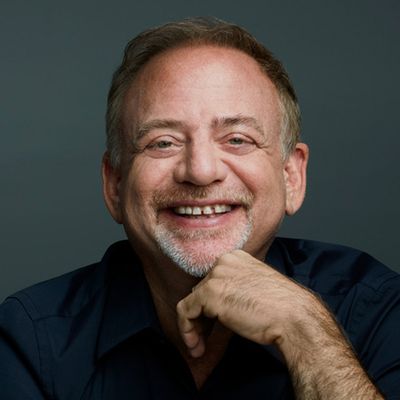
Marc Shaiman - Never Mind the Happy. Tony, Emmy, Grammy Award winning Composer and Lyricist Marc Shaiman stops by Behind the Awards to give us a sneak peek into his Memoir Never Mind the Happy. Marc shares his path to success when a daydream turned into reality starring Bette Midler... Read More
From the show: Behind the Awards with Eila Mell & Bruce Gotlieb
Guests
Featured Shows

About
Marc Shaiman - Never Mind the Happy
Tony, Emmy, Grammy Award winning Composer and Lyricist Marc Shaiman stops by Behind the Awards to give us a sneak peek into his Memoir Never Mind the Happy. Marc shares his path to success when a daydream turned into reality starring Bette Midler. Marc also recounts his time on SNL and meeting Billy Crystal and Martin Short, his many Movie credits including First Wives Club, When Harry Met Sally, Sister Act 2, and South Park: Bigger, Longer & Uncut which lead to his Broadway dreams coming true with Hairspray along side Scott Wittman.
Get Marc’s Book here: https://www.amazon.com/dp/B0FP5L62X5?&linkCode=sl1&tag=marcshaiman-20&linkId=dfe4af2994d42b81f7823af7f8f74972&language=en_US&ref_=as_li_ss_tl
Also in this episode - Rodney Hicks Play InhaleExhale Directed by Josh Rhodes and starring; Christopher J. Hanke, Crystal Lucas Perry, Michael James Scott, and Elizabeth Stanley gets a one-night-only reading at The Laurie Beechman Theatre February 23, 2026.
For Tickets: https://www.showclix.com/event/lbt25-inhale-exhale
Marc Shaiman is a renowned American composer, lyricist, arranger, and music producer known for his work across film, television, and theater. Shaiman began his career as a musical director and arranger for Bette Midler before expanding into film scoring. He gained prominence with his work on films such as When Harry Met Sally, The Addams Family, Sister Act, City Slickers, A Few Good Men, Sleepless in Seattle, The American President, and South Park, on television with SNL, and on his recordings with Harry Connick Jr. and Mariah Carey. Shaiman earned widespread acclaim for co-writing the Broadway musical Hairspray alongside his longtime co-lyricist Scott Wittman. The duo has also co-created the musicals Catch Me If You Can, Charlie and the Chocolate Factory, Some Like It Hot, and Smash. He has been nominated for multiple Academy Awards and has won a Tony, two Emmys, and two Grammys. Marc Shaiman is celebrated for his versatile, emotionally resonant music and his ability to blend classic musical theater sensibilities with modern storytelling. Born and raised in New Jersey, he currently lives in New York with his husband, Lieutenant Commander (ret) Lou Mirabal.
Make sure to check out Eila's book, "The Tony Awards", and all her other amazing books: https://amzn.to/43WMu5Y.
Connect with Eila and Bruce:
- Instagram @behind_the_awards
- Eila @eilamell
- Bruce @cominghomewithbruce
Transcript
This transcript was automatically generated and might contain errors.
[0:00] Marc Shaiman: Hey, I'm Marc Shaiman, and this is Behind the Awards.
[0:12] Eila Mell: Hello and welcome to Behind the Awards. I'm Eila. As always, I am here with the amazing Bruce.
[0:20] Bruce Gotlieb: Thank you so much.
[0:21] Eila Mell: Good morning, Bruce. How are you doing on this?
[0:24] Bruce Gotlieb: At the time of recording, we've had a couple of days of some little bit of snow, nothing crazy.
[0:29] Eila Mell: Winter Wonderland.
[0:30] Bruce Gotlieb: You know, I think I'm going to make it through the snow.
[0:32] Eila Mell: Okay, all right, good. Nothing too bad.
[0:36] Bruce Gotlieb: That's good, that's good. So, you have some exciting news to share?
[0:40] Eila Mell: I have some exciting news. Our friend and former guest, Rodney Hicks, original company member of Rent and Come From Away, he has been, over the course of the years, writing as well as performing. And he has a new play called Inhale, Exhale. And it is going to be having a one-night-only performance at the Laurie Beechman Theatre on February 23rd. Josh Rhodes, who directed Bo, is going to be directing this as well.
[1:08] Bruce Gotlieb: Excellent.
[1:15] Eila Mell: And they just announced the cast, which is really exciting. Christopher J. Henke, Tony nominee Crystal Lucas Perry, Michael James Scott, and Elizabeth Stanley as well. She's also a Tony nominee.
[1:31] Bruce Gotlieb: And we'll have the link if anybody wants to buy tickets to it. It sounds really exciting. And it's got a really great cast and director attached to it.
[1:42] Eila Mell: And you get to eat dinner as you watch it at the Beechman. So that's nice.
[1:46] Bruce Gotlieb: Yeah, it's a great venue.
[1:48] Eila Mell: Yeah, it is, really. No, that's fantastic. We're excited for him and this, you know, getting a reading and all, so.
[1:55] Bruce Gotlieb: And what's the date again?
[1:57] Eila Mell: The date is February 23rd.
[1:59] Bruce Gotlieb: Okay, so you have plenty of time to get your tickets. But get them because they sell out. It's not a huge venue, so yeah.
[2:07] Eila Mell: Yeah, so that's exciting. Well, wonderful. And our guest today...
[2:11] Bruce Gotlieb: Is also exciting.
[2:12] Eila Mell: Oh my gosh. I mean, he's incredible. He's so funny.
[2:16] Bruce Gotlieb: He's on this book tour that's just a whirlwind.
[2:20] Eila Mell: Yes, it is. It's Marc Shaiman. So why don't we welcome Marc?
[2:25] Bruce Gotlieb: Yes, and we'll have a link for his book in our notes as well. So everyone can pre-order. It's a great read.
[2:31] Eila Mell: It really is. So let's bring him out. Well, Bruce, today is exciting because we have probably one of the busiest people in the world on our show.
[2:43] Bruce Gotlieb: And absolutely one of the funniest. Let's welcome Marc Shaiman.
[2:47] Eila Mell: Absolutely. Marc, thank you so much for joining us. We are thrilled to have you here.
[2:52] Marc Shaiman: Thanks for having me.
[2:54] Eila Mell: Well, this is an exciting time because it's the holidays and you have a book. And it's a perfect gift for people to buy. Let's talk about this book.
[3:00] Marc Shaiman: Well, it's my memoir. And you can pre-order it, but it won't be under your tree this Christmas. But that's okay because people will have something to look forward to.
[3:13] Eila Mell: Exactly.
[3:14] Marc Shaiman: Yes, yes. I mean, people could pre-order it and put the receipt under people's Christmas tree or put the receipt under my Christmas tree.
[3:23] Eila Mell: Right. It's proof that it's coming.
[3:26] Marc Shaiman: But yeah, I wrote a memoir. And it's called Nevermind the Happy.
[3:31] Eila Mell: Yes.
[3:31] Marc Shaiman: And people wonder what that means.
[3:33] Eila Mell: Well, so we got a little sneak peek at the book. But can you tell the story about why you called this book that?
[3:40] Marc Shaiman: Well, it just stuck in my head. You know, normally book titles often are four words, you know, to kill a mockingbird.
[3:50] Eila Mell: Right.
[3:50] Marc Shaiman: Catcher in the rye. What does that mean? I'm somehow equating my book now to two of the greatest novels ever written. But so this phrase just stuck in my head. One morning, my sister called my mother on New Year's Day and said, "Ma, I want to be the first to wish you a happy and healthy new year." And my mother defined Judaism and defined my personality when she said, "Nevermind the happy."
[4:19] Eila Mell: So your mom focused on the positive in everything. Got it.
[4:21] Marc Shaiman: So if you wonder why I seem to always be like bemoaning my fate, despite the fact that the most wonderful things have happened to me in my life. That's a clue.
[4:35] Eila Mell: And I love that you describe yourself as an Eeyore in the book.
[4:39] Marc Shaiman: Very much so. Yeah. And, you know, I wish it was different. But I am always kind of waiting for that other shoe to drop. And often it does. So, you know, life keeps proving me right. But we persevere. And if it's not broken, then why fix it at this point too, right?
[5:01] Eila Mell: Your career's probably not been worse for the wear on it.
[5:02] Marc Shaiman: Yeah, career-wise. Yeah. But how I live my life every day is something I could try to work on.
[5:07] Eila Mell: Well, that's it. And there you have a goal.
[5:11] Marc Shaiman: So now we have a friend in common, and that's Lilius Pirro.
[5:16] Eila Mell: Oh, yeah. Now, I knew Sal also from Rocky Horror.
[5:20] Marc Shaiman: I don't think that people realize that you are one of the reasons that Rocky Horror has become this worldwide phenomenon.
[5:29] Marc Shaiman: It's a very strange asterisk to my, it's not my career, but yeah, it's true. I was one of the small group of people that started the audience participation at the Rocky Horror Picture Show.
[5:43] Eila Mell: And you were very young when you did this. You were a kid.
[5:45] Marc Shaiman: Yeah, I was 16, I guess, maybe 15, but I think 16. Well, I don't know, somewhere in that vicinity. And yeah, it's just true. And I went, like I'd say, like 70 or 80 times, I was part of that going. Every Friday and every Saturday night.
[6:05] Eila Mell: Right.
[6:05] Marc Shaiman: And developing all the lines that got screamed out and costumes. And Sal and I would act out Magenta and Columbia. There is one picture. This was pre-cell phones, pre-anyone even bringing a camera anywhere. Not even like a Polaroid. There's literally just one picture of me and Sal with a hairdryer, obviously, before it touch, touch, touch me.
[6:28] Eila Mell: Right.
[6:29] Marc Shaiman: And it's a shame that it isn't. You know, there are things documented from that time. But as far as I'm concerned, no, I'm like a shadowy figure. I'm like the Zapruder film of the Kennedy assassination.
[6:42] Eila Mell: That's right.
[6:43] Marc Shaiman: But you were there.
[6:45] Eila Mell: Yes.
[6:45] Marc Shaiman: Gone down in history.
[6:46] Eila Mell: Yeah. So I'm sure I used to go weekly. But when it moved to A Street, that was later. I'm sure you are. You looking forward to the revival coming?
[6:55] Marc Shaiman: Yeah. It sounds like it's going to be a sexy revival.
[6:57] Eila Mell: Yeah, absolutely.
[6:59] Marc Shaiman: Yeah, I know. It's the 50th anniversary. The fact that I was part of all that seems to have fallen in the cracks to anyone putting together documentaries or evenings or whatever, because I haven't gotten a call. So here I am seeing Nevermind the Happy.
[7:15] Eila Mell: That's right.
[7:16] Marc Shaiman: Exactly. I was part of that.
[7:18] Eila Mell: But we're calling attention to that because you were. It's a big thing. I mean, it really changed how people went to the movies. You know, in a certain way, these midnight movies were not what they were until then. And, you know, someone wrote a movie script. That's really actually a lovely script. And people have been trying to get it made for a good 10 years, I'd say now, called Creatures of the Night. And it's about Sal Piero, Mark Shaiman, Louis Faris. I mean, it's about the group of people that started all that. But somehow it's never gotten the traction to get on. But it's a perfect movie because it's just it's so current about deciding to just be who you want to be. And, you know, it's just it's so all current. It really should be made.
[8:02] Eila Mell: It really does speak to today.
[8:04] Marc Shaiman: Yeah.
[8:05] Eila Mell: So, Mark, for our listeners, the acknowledgement of your book, I think, is so touching because most people, you know, don't have the opportunity to acknowledge somebody who not only they became friends with, but, you know, kind of instrumental in a lot of your career. And that's Bette Midler that you give is your acknowledgement. And then separate sections, obviously, that detail other points of your career. But can you can you tell our listeners a little bit about, I guess, the start of that relationship? And and then ultimately, I mean, you guys not only are friends, but almost kind of your love for her catapulted what we know today.
[8:41] Marc Shaiman: Yeah. I mean, it's a long, long story. It's decades of a friendship and relationship, you know, both professional and, you know, just a friendship. You know, I've told the story before. I guess I better get used to telling the same story over and over again as I go on this whirlwind press tour.
[8:57] Eila Mell: That's right.
[8:58] Marc Shaiman: You know, when she came on the radio, I was like 13 or 14, like 1973. I was 13. And there was Bette Midler singing three part Andrew Sisters swing harmony on my AM radio, pop radio. I mean, back in the day when I was a kid, there was just one radio station we all listened to. So you had to like everything on there. I actually I wish people now I wish myself I hate that I go in the car now with satellite radio and I choose all the genres I like.
[9:31] Eila Mell: Yep.
[9:32] Marc Shaiman: But back when I was a kid, you had the Beatles and the Supremes. And then suddenly there was Peggy Lee singing. Is that all there? And you had to listen. There was Frank Sinatra singing something stupid with his daughter.
[9:48] Eila Mell: Yeah.
[9:49] Marc Shaiman: So I got it all. I learned so many different styles of music because that was it. There was no other thing to switch to. So anyway, so suddenly there is, you know, he was the famous man from Astor. And I was like, my head exploding like this is the greatest thing I've ever heard because I'd only been a little exposed to maybe the music of the 40s. And then Bette Midler albums just made me find the albums that inspired her. And so girl groups, you know, I was young when girl I was very young when girl groups came out. I was three or four years old. But through Bette Midler, The Hearing Chapel of Love, I remember, yeah, I did love that record when I was a little boy. And anyway, I went and I went to see her concert.
It was her second Broadway concert that she did. It was called Clams on the Half Show at the Minskoff at the newly opened Minskoff. She may have actually been the first thing to play the Minskoff Theater. And anytime I go see anything now at the Minskoff, I remember this moment that I'm telling you about. I went, I stole money from my father's wallet. I cut school and I went to the city. I had the gayest day of my life, which is documented in my book. I won't get into the details, but it's salacious. And the evening ended with me going to see Bette Midler at the Minskoff. And I had a daydream as she was performing that I would run down the aisle towards the stage and say, "Oh, Miss Midler, I know every note of every arrangement, every song on all your albums.
Please let me play." And I'd run on stage and I'd play and she'd look out of the audience like, "Hey, he's good." So I had that daydream. Cut to I had this fairytale existence of the people I started meeting. I started going to New York and to make a long story short, met some people one day at Marie's Crisis, a four day afternoon. I was with friends from New Jersey. There was no one in there. We didn't know it was Marie's Crisis. We didn't know it was a piano bar. We just went in there and the bartender. Oh, there's so many long stories. And anyway, I ended up working with a comedy group that was Scott Whitman, my co-lyricist. For 25 years, my romantic partner. And he lived across the hall from one of Bette Midler's backup singers.
And they decided the Harlets, they wanted to be their own group where they weren't on the road with Bette. She had just finished the tour where they sang one song to open the second act. So there I was across the hall. Maybe I was 17 at this point. And I knew just what they wanted from being a Bette Midler fanatic. And I was across the hall and I would do it for free. So they hired me to be their musical director and their acting cabaret act became a success. And Bette said, "Girls, come back on the road with me in my next tour. And I'll let you really do your half hour version of your show to truly open my act." So I was flown to L.A. to teach Bette Midler's new band, the Harlets material. And after our rehearsal, I went and sat on a couch in the back of the room.
And this was at a place called SIR, Studio Instrument Rentals. And the band was up on a stage, which is important little details. And then in walked Bette Midler. And this was just maybe two years from me being in my little room in New Jersey with her posters on the wall and just listening to her records endlessly. And she walks and starts rehearsing. And I'm just like the luckiest boy on earth getting to watch Bette Midler rehearse. And she said at one point, "I'd love to sing no gesturing." And the band looks through their music and there was no music for it. I knew it was from her third album. You know, it was this great reggae song.
[13:44] Marc Shaiman: Hey you! Can you play No Gesturing? And I actually got to walk to a stage and say, Oh Miss Midler, I know every note of every arrangement of every song on all your records. Please, let me play for you. Oh my gosh. So I got to, I knew the song and she was like, I could use you, stick around. And my flight home was cancelled. And instead of putting me in a hotel, maybe because she liked having a piano player around, or also was a frugal gal. But she put me in her guest room of the house she was renting. So I wasn't even like in a guest house in the backyard. Right, acres away. I was down the hall. I was living in her house down the hall like she was my sister. And that's when our brother-sister relationship started. And that's that story. Amazing. You couldn't even write it better if you tried.
[14:47] Marc Shaiman: And people ask me, how can I do what you've done? Well, you know, meet some people at Marie's Crisis one day by chance. And then he lives across the hall from one of your idol's backup singers. It can't be repeated. Anything that can be repeated, what I do say to students is, say yes, say yes, say yes. Show up, show up. You never, ever know. And I have a million stories about myself. Or like when Scott and I went to see a Summerstock version of Hairspray, because it was where Scott had done Summerstock, and they said, come up, we'll give you an award at the end of the night. Well, we could have easily said no. And the girl playing Tracy, you know, got the lead in the show in Summerstock. But it was, you know, up in Vermont. And, you know, she was giving her all, but she probably didn't think, well, what is this necessarily going to lead to?
[15:43] Marc Shaiman: But then one night Scott and I came to see her in it, and we were like, she's really good. So, and her name was Marissa too. Cut to, she ended up playing Tracy for like the last year of the run of Hairspray, because Scott and I went that one night. She could have easily called in sick or said, oh, why do I want to go to a show in Vermont? Anyway, it's just an endless amount of stories of say yes, show up. One of the great things about the book too, not only all of these type of stories that you're sharing with everybody is just the little, you know, every few pages, a couple of snapshots of these pictures that, you know, like you said, didn't exist when everybody now is walking around with a phone that takes a photograph. So they're getting stories. They're getting some really great photographs. You get song lyrics in there. Like the book has really everything for a theater lover.
[16:40] Marc Shaiman: You know, there's, there's, there's, you know, my childhood and all that, and that's very theater-y. And then suddenly it takes this turn towards movie scoring. I hope people will be interested in hearing about all that. And you know, the machinery behind film scoring, and then all the meeting these directors and what it's like to collaborate on a movie, which is not unlike collaborating on a show, but it is a different animal. I hope that's interesting. I tell as juicy as stories as I chose to, I didn't want to write a book that was all about, you know, like nasty stories, but I am honest. I think the person I'm probably nastiest about is myself. I mean, all the stories are about like, can you believe I did that? Can you believe I said that or, you know, just the things that happen. Oh, but there are some juicy stories in there.
[17:32] Eila Mell: We love that. You know, I think people know you in our audience for sure. You know, for your work on Broadway. Absolutely. I think people don't realize how extensive your film career is.
[17:44] Marc Shaiman: Oh yeah. You've had such a partnership and collaboration with Rob Reiner, but other directors as well. I know. I mean, I've been nominated for seven Academy Awards. It's amazing. The theater crowd, it's just like, man, out of sight, out of mind. I mean, when I was did Hairspray and, you know, it was this huge success and the family of the cast, we were so tight and so close and just having the experience of a lifetime, all of us. But it wasn't until one day well into rehearsals or even well into the run where like one girl came up to me and said, did you work on Sister Act II? Like, yeah, I worked on a lot of movies, but Sister Act II for the age of the people who were in Hairspray when it opened, that movie was like everything to them.
[18:32] Eila Mell: Yeah. Yeah.
[18:34] Marc Shaiman: Which is why I almost called the book, my other title that I played with and I would have cribbed it from Christine Eversol, who said this one night, she was performing at the Carlisle and a guy in the front row was just on his phone right in the front row, not looking up at her, just on the phone. And so she finally said to him, Google me. That's what I say. Always the cast. Now I start the first day of rehearsal. I say, hi, I'm Mark. I wrote the music. I co-wrote the lyrics and Google me just to kind of know not to show off so much, just to know if you want to talk about this and that and this and that I'm right here. And I have a lot to tell you if you want to hear about it.
[19:16] Eila Mell: I mean, some of the biggest movies of all time, right?
[19:19] Marc Shaiman: Yeah. Some are really iconic movies. I had a run there for a while. That was just outrageous. Every movie was like, has become like an iconic movie. It's crazy. When Harry Met Sally and City Slickers. And I mean, just for the First Wives Club and all of them, not all of them, but many of them had little moments that allowed me to exercise my musical theater chops or love, you know, Sister Act was like a musical. Even at the end of the First Wives Club, when they start singing, you don't own me and it just becomes a musical and I had these moments. So, and Adam's Family Values. There's a thing I post every Thanksgiving where they sing, eat me. Yeah. It's just crazy. All these moments.
[20:07] Eila Mell: Was that you putting "Surrey with the Fringe on Top" in When Harry Met Sally?
[20:10] Marc Shaiman: Yeah, I was part of all the decisions that were there. Yeah. Yeah. I mean, just these little things that, you know, people like us, we love that, you know, "Surrey with the Fringe on Top," I guess, going back to your, before you even met, you know, Bet and doing all that was this always, obviously some type of music was, I'm assuming the trajectory or what you thought you wanted to do with your career, but was musical theater movies that, that, that type of involvement with music? Was that the idea all along?
[20:42] Marc Shaiman: Yeah. In elementary school, for whatever reason, my township had like no music department. I remember once a teacher playing a record of a band. It was the record called In a God of the Vita and discussed, what does that title mean? That's my only memory of grades one through six of having any knowledge or talk of music. So I could play piano really well, but only my aunts and uncles and cousins knew I would play for them when they'd come over. Then these two women in my township, God bless them. A woman named Judy Cole and a woman named Mania Unger. They recognize that my township wasn't putting on musicals or the high schools. They were, it was crazy. So they did something in the summer, a summer theater workshop.
And a friend of mine said, I'm going to go audition for The Sound of Music they were doing that summer. So I went with her and I said, can I audition to play piano? And Judy Cole, the director said, where's the piano kid go play. And I went and played, I don't remember what I played, but I'll always remember when I finished, I turned around and everyone in the entire auditorium was just staring at me.
[22:04] Marc Shaiman: Cause I was like, I was like, I was a pimple on two legs who could play piano. Like, like just this crazy show biz. Gods were in me and they were just staring at me like a freak. And from that moment on it was musical theater. And Judy took me to then commit to all the community theater that she directed. And the first time she took me, it was Funny Girl at the Clark Player Productions. And she said, everybody here's our new piano player. And they all were like, Judy, you've lost your mind. And she was like, Mark, go to the piano and I sight read the Funny Girl overture, which is a hard thing to sight read. I couldn't play it now. I'm now I'm old and decrepit, but, and that was it. One show after another and getting the great piano conductor scores. That was so much more than when you go to just a music store.
[23:00] Eila Mell: Yes.
[23:01] Marc Shaiman: Wow. I could see all the flutes and the trombones and, and I could listen to the cast albums and look at these piano conductors. And that was my school. Yeah. And so that, that, in answer to your question, that was everything.
[23:07] Eila Mell: Lily has told me that you were like a genius as a kid on, you know, musically and that when she was a kid, she would sing at the Duplex. She was like 10 and you would play for her. You were her musical director.
[23:20] Marc Shaiman: Yeah. I played for Sal. So I think, I think she sang in his act. Right. I, Al did an act at the Duplex and this is the original Duplex. That was just two buildings down from Marie's Crisis. Now it's across the street, across Sheridan Square. Yeah. But the original Duplex were like Joan Rivers played and Phyllis Diller and other people that your listeners won't have heard of unless they Google them.
[24:02] Marc Shaiman: Yeah. I remember writing dirty lyrics for Sal. I wrote special lyrics to a person could develop a cold. That was much more dirty. I think, yeah, I won't even get into it, but I do remember that.
[24:08] Eila Mell: I am Laura Bell Bundy and behind the awards we'll be right back.
[24:12] Marc Shaiman: When did you start taking lessons? A little, you know, little boy, another story I only found out 10 years ago, 10 years ago, the New York Pops did a concert at Carnegie Hall to honor Scott and I, and I was lucky enough that my old piano teacher who must've been 3000 years old at that point, Miss Andrews was still alive and still kicking. And so I was able to invite her to Carnegie Hall to see me being honored. And she sat with my sister and my mom. And only then did they tell me this story that my sister was taking piano lessons and I was too young to take piano lessons. I wasn't really this big, but too bad.
[25:26] Marc Shaiman: And my sister finished her lesson. And my mom said to the piano teacher, almost Andrews come up and have a cup of coffee. So they were up in the kitchen and my sister had gone out to play. And then they heard my sister's piano lesson being played on the piano. Like, is it a ghost? And they ran down the stairs and looked around the corner and there I was playing her lesson by ear, well, by fingers, but by ear. Wow. And that's why I started taking lessons earlier than most because the piano teacher was like, well, we got to start him right now. And so I, you know, I took piano lessons from, I think first grade, which I think is a little younger than usual, but whatever.
[25:33] Eila Mell: Can you still play by ear?
[25:36] Marc Shaiman: I mean, yeah. I mean, when I listened to, I don't have perfect pitch. I have relative pitch, which, but when, but a song comes on the radio and I start, Oh, well, that's a G chord. That's I'm thinking of it usually in the key it's in. I just naturally place it where it's at. And yeah, it's all, it's by ear. I mean, I know music, but, you know, yeah. And that's why, like, sometimes if I get a massage, I ask them to turn off music because otherwise I'm analyzing what they're playing. Oh, there's that a minor again, especially that massage music. That's just like, right. It's on the loop. It's supposed to be relaxing that it's on this kind of, it's a kind of mantra of music, but I'm like, Oh, here comes that second on the G chord again. So I, or sometimes I say, can you turn on like some intense classical music? Cause then it's beyond my comprehension. Then it's too hard to try to figure it out and I can kind of zone it out.
[26:35] Eila Mell: I mean, I'm always impressed, you know, people such as yourself that can just sit and someone mentions a song and you're just, especially if, you know, yes, if it's your own, you wrote it, but to just on a dime, it's like pressing play on a CD or a tape or whatever. And like, it just starts and it's there it's without even thinking, you know, it's just a gift. And I don't know.
[26:57] Marc Shaiman: Well, I got the job on When Harry Met Sally because Billy Crystal said to Rob Reiner, I know a guy, he used to call me Rain Jew. He says, I know a guy who I've started working with and he just knows every song. I don't know how I learned every song, but between like 13 years old and my mid-twenties, I just, I have like a phonographic memory. I just learned every song.
[27:25] Eila Mell: You're like the Mary Lou Henner of music.
[27:27] Marc Shaiman: Yes, it's true. And do you have sense memories when you hear something? I so often every song I say to my husband, "Oh, I'm at the Blue Star Shopping Center in my hometown." That song came on and so on and so forth. Yeah. Did you know Billy Crystal from Saturday Night Live? Yes, I worked at Saturday Night Live off and on for a couple of years. And that's how I met him and Martin Short. And that's how I co-created the Sweeney Sisters, which was a recurring act that not many people know because the music rights make them not show it on repeats. That's too bad. Even on YouTube, they often will take it off. But there's that one and it was the best is the Bell Medley. That was the best one. And that's the one people know and everyone accuses me of having a mullet.
I just had a lot of hair. I never said to the hairdresser, "Give me a mullet." A mullet is about, you know, a mullet is, you know, white trash, you know, what is a party on top? What is it? I forget. I just had a lot of hair, which I don't have anymore. I miss it. But what are you gonna do? But at the time, the Sweeney Sisters were huge. It was Jan Hooks and Nora Dunn. And everybody, you know, just tried to emulate them. They were fantastic. It was a great time to work at Saturday Night Live. And for a few months, I didn't get anything on. I just wasn't connecting with the writers. And then that one day, when Jan Hooks and Nora Dunn and the Turners, a married couple who were writers, knocked on my door and said, "We have this idea about these medley singing sisters.
Would you like to help us create these medleys?" And I, as I say in the book, I would have run to the piano except my office was so small. I was already seated at the piano. I was like, "Come on in." And I was like, "Oh my God, finally, like angel voices of like, finally, yes, something." And then, you know, then we started doing them like every few weeks. Yeah, yeah, it was a big thing.
[29:49] Bruce Gotlieb: So Marc, we love the videos you make with Jennifer Lewis. I think they're hilarious. We love her. The two of you together is like, chef's kiss. You better.
[29:58] Marc Shaiman: How did you guys? Yeah, we met on Beaches. Well, no, I went to a New Year's party once after a show. And she was friends with this person. And she came in and she basically accosted me and the rest of the party telling a story. But we really met on Beaches when there's a song, Auto Titsling, Auto Titsling in return crowd. She can't allow it to say anymore. It called for someone to play the opera singer with huge breasts. Yep. That inspires Auto Titsling to create the first over-the-shoulder boulder holder. And although she was gonna lip sync the one opera note, I said, "I got the perfect girl," because Jennifer had just been one of the harlots. So Jennifer came and they all ventured her already large, right?
Bodegas. And during while we're filming that number, there are a lot of, you know, breaks where they change the lighting. And we were in a theater in LA at the Wilshire E Bell, it was called, and there was a piano, you know, right below the stage. And Jennifer saw a piano, you know, and she was like, "Can you play Think?" You know, Aretha Franklin. And we proceeded to do it like a 25-minute version of Think. Oh, wow. And then we started trading Aretha stories and we realized we both love this very obscure song for one of her albums and our friendship bonded. Then we just started writing songs about everything we did. Wherever we went, we write a song about it. Including, of course, the infamous, "My pussy bone broke on the back of a two-hump camel." Do I don't know if you censor or beep? We don't.
[31:43] Marc Shaiman: Out there for everybody. Yeah, that really happened. We were on a round-the-world trip. We were in Mongolia on the Gobi Desert on camels. And she was riding next to me. She said, "Mark, I think I just broke my pussy." And that's all you need to say to me. The song was written, you know, an hour later, I had the whole song written. Oh, funny. That seems like a great segue into the South Park movie.
[32:06] Marc Shaiman: I'd say yeah, that is a brilliant musical. You know, no one knew what to expect when it came out. We didn't even realize that that was going to be a musical. I know that the studio didn't want that really getting out there. And then it was like, I mean, you heard that there was Oklahoma in it and there was Les Mis. And I mean, it was really rooted in actual musical theater. The greatest gig, you know, I ended up, of course, having a movie of Hairspray and then Mary Poppins Returns. Yeah. But South Park, Bigger Longer & Uncut, it's hard to be for a movie where I got to co-write music, lyrics, arrange, orchestrate, sing. That's all my voices on the around. It's a small world, little moment of Kyle's mom's a big fat bitch.
Here's how kids sing around the world. That's all just me insanely working through the night singing all the voices. It was just the beginning of digital recording where I could sit here and record myself and change the keys. And then I said to Trey Parker, I said, "Oh, I can't wait till we record this with the real choir. It's going to be so funny to watch them singing it." And he was like, "Over my dead body, we are keeping. We are not changing that." So that's all my insane voices on the movie. It was just heavenly. It was the greatest experience.
[33:33] Marc Shaiman: Oh, my gosh. And I always think of the lyric, "Up to the movies we go where we learn everything that we know."
[33:41] Bruce Gotlieb: Yeah, right.
[33:43] Marc Shaiman: Yeah, the ending of the opening number.
[33:46] Bruce Gotlieb: Yes, it's true. So many of us.
[33:46] Marc Shaiman: And then that led to after trying to write musicals that would get on Broadway and just never catching a break when I was in my 20s. Then I went to L.A. and had this film music career kind of fell on my lap in my 30s. And then South Park happened like at the tail end of that decade, the 90s. And suddenly Margo Lion, a producer, got the rights to Hairspray. And it was just when South Park movie came out and she was asking people, "Who should I get to write a musical of Hairspray?" And the John Waters humor is very much connected to South Park. And totally everyone said to her, "Get Marc Shaiman, get Marc Shaiman." So not only was it the greatest experience in itself, but it led to my ultimate dream coming true.
[34:30] Bruce Gotlieb: Yeah.
[34:30] Marc Shaiman: I mean, the phone call and she said, "Who would you want to write lyrics?" And I was like, "Well, I would only do it if it's me and Scott." Scott had moved to L.A. and he had no artistic outlet. And he had dutifully stayed with me for almost 10 years of not having much to do. And I knew this was going to be so good for our relationship as well as a dream. So she said, "Well, would you write some songs on spec? Because I don't know what you guys will do as lyricists." I remember running across the yard to the house saying, "Scott, you want to write a musical Hairspray?" And the next morning he said, "The opening number, Tracy Turnblad should be like Curly in Oklahoma." And he looks out in Oklahoma and he sees, "Oh, what a beautiful morning."
And he describes all the beautiful things. Well, Tracy Turnblad should open her window and have that same kind of feeling about John Waters, Baltimore. There's the flasher and there are the rats and there's the bum. But she should sing it with the same kind of love. And that was the first song we wrote and everything we wrote on spec that was still like, "Good Morning, Baltimore." Welcome to the 60s. Wow. Big, blonde and beautiful. And "I Know Where I've Been." Those were the first songs we wrote.
[35:48] Bruce Gotlieb: Wow. I mean, one of them is like, you know, so I call the tent poles. Yeah, it's like those are the four songs that sort of like then hold up the whole rest of the show. And "Good Morning Baltimore" is just a perfect opening number. It sets up the show.
[36:00] Marc Shaiman: Not for me to say, but thank you.
[36:05] Bruce Gotlieb: And well, I said, yeah, because what you need to do with Hairspray is the minute the show starts, you have to fall in love with Tracy. Otherwise, it doesn't work. And the lights come up and she, that song just helps you ingratiate yourself to her. So it is, it's just the perfect opening. It sets everything else up. You're bopping in your seat. You're ready to go.
[36:29] Bruce Gotlieb: And did you write that with Jennifer Lewis in mind?
[36:32] Marc Shaiman: For Motor Mouth Maybelle completely, we thought, well, who else? But she was under contract on a TV show, a cable show called Strong Medicine. Yeah. And she couldn't get out of the contract. And so she sang the demo. She sang the demo for Big, Blonde and Beautiful. And she sang the demo of I Know Where I've Been. But they couldn't do the show. She finally did do it. Yeah. You know, I don't know what your time limit is. But when she finally went to the show on the third day. Yeah. Was it? Yes. It was the third day.
[37:09] Bruce Gotlieb: She had a three-month contract.
[37:09] Marc Shaiman: On the third day. I still went to see her. You know, my friend was finally in my musical. And that day she'd gone traipsing through Central Park, ignoring the fact that she's allergic to every single flower on Earth, even though she loves cultivating a garden. So that night at the show, she made her entrance. And she said for the first time in her life, she came out and she went, "What? Oh my gosh. No voice." And she somehow got through the scene and the song. And she insisted she could see a woman in the front row turn to her son. And she could tell that the woman was saying, "This is not how it's supposed to be."
[38:11] Bruce Gotlieb: Yeah.
[38:11] Marc Shaiman: So I ran upstage knowing that she'd be beside herself. And I knocked on her dressing room door and I said, "Bitch, your contract was for three months, not three days." Which did finally make her laugh because she was absolutely sobbing that happened to her. But yeah, so she did finally get to play it. And now she sings that song. You know, I know where I've been there. You can see Carnegie Hall or she sang it for me last year in San Diego. No one sings it like because she sings not only with incredible voice, but the specificity of the lyric. She does not let a single lyric go without you really, really getting what what's trying to be said.
[38:38] Bruce Gotlieb: I had the privilege of when I finally got to see Hairspray. She was on as Motor Mouth and oh, really? I was sitting I want to say maybe like second row. It was. You know, you get chills when people sing, sometimes this is the first time ever in my life I've never had the experience again where I like felt the heat in my body radiating that her, like you said, her message is her singing that song was so a singular moment that never you can't ever experience again. And she was absolutely phenomenal. So those people who turned and said that's not the way it's supposed to sound. I got the way it's supposed to sound.
[39:16] Marc Shaiman: That's good. And I have had, of course, a lot of brilliant singers. Yeah. Oh, yeah. I got to hear them sing that song. I mean, I've been so lucky. It's just incredible that, you know, you get to do this musical finally and it becomes, you know, just now a classic musical. You know, that happens so rarely for people. So, I mean, that's that's a huge thing to have accomplished.
[39:41] Bruce Gotlieb: Yeah. You know, thank my lucky stars, you know. Yeah. It'll always be there. You know, no one can you know, it's just it's just there now.
[39:47] Marc Shaiman: Yeah. No, it's forever. And and gets done, you know, not only I wouldn't even say across the country, but across the world. It's just something that.
[39:54] Bruce Gotlieb: Yeah.
[39:54] Marc Shaiman: Yeah. I've seen it across the world. We got to see it in Johannesburg.
[40:02] Bruce Gotlieb: Wow.
[40:02] Marc Shaiman: And although apartheid is allegedly over, you know, the racial situation there is as bad as it is everywhere, let's face it. And the woman there, Mara Lowe, when she sang it and she put a black power fist at the end of the song, which was, you know, I don't want to say chancy. It was a big thing for her to do in front of that audience. It's still. And Scott and I were just dissolved into tears, just it was so moving and so powerful.
[40:42] Bruce Gotlieb: Yeah.
[40:42] Marc Shaiman: And so on and so forth. Yeah. You know, you probably you don't think about this when you're creating the show, but, you know, a lot of kids probably know about the 60s because of Hairspray.
[40:51] Bruce Gotlieb: That's lovely to think of.
[40:56] Marc Shaiman: Yeah. Welcome to their 60s. When you and Scott sit down to start on a project, does one thing come? I know it's collaborative, but does the music start first or is it the idea or the lyrics? You know, is there a kind of formula or is it it depends?
[42:11] Marc Shaiman: And Billy Crystal, and so on and so forth. I love writing lyrics. And, you know, mostly Scott and I will sit across from each other then and just kind of phrase associate until we come up with that phrase that's really the title, but I'll tape them all to the piano. And then just a certain phrase will just blow it out at me like more than others. And, you know, I mean, with Hairspray, we were lucky like right there in the movie, you know, Hey, mama, welcome to the 60s. She says, mama, welcome to the 60s. So anyway, it just, you know, happens that way. So sometimes I'll have all the music and we'll write the lyrics afterwards. More often now we write the lyrics first, and then I move over to the piano and I should probably switch and go back to the piano. Cause I think it makes the music be more organic. I don't know. I don't know. There's just a million ways to skin a cat or whatever that expression is.
[43:11] Eila Mell: Well, I would have to say that we loved your last season of Smash. We absolutely loved it. It was, you know, everything obviously you got from the TV show, but then amplified and the music is just also iconic. It's like everything you guys write is just, it's just so perfect.
[43:37] Marc Shaiman: Thank you. I mean, on Smash, we knew every song had to be like as much of a home run as we could come up with for that week. Cause it's like, here's that one moment in the show, the show off, you know, these phenomenal cast and, and, and Scott and I learned that we could write a song under that deadline, which up to that point, we had no idea that we could do that. So yeah, as you know, the Smash chapter in my book is lengthy. Yeah. And we thought that the show was so much fun. I mean, the TV series was fun, but this was funny and fun in a different way.
[44:16] Eila Mell: Yeah. That's what, that was the intention. Cause that was always mine and Scott's biggest surprise on the TV show. Why it was so serious. At one point, the, like, you know, a network executive said, you know, guys, you, you got to pump up the soap opera aspect. And I was like, I can't believe that he said that I would have thought that would be like a dirty word, a dirty term to call a soap opera. That's all they wanted. And I was like, guys, we always said, no matter what's going on in a musical, it could be falling apart. You're still going to hear laughter coming from the rehearsal room. If you walk by a rehearsal of a musical, you're going to hear laughter, right? Like everyone is having a good time, even when it's everything's going wrong.
We're laughing at like, can you believe it? That's why I end the Smash chapter with the story. This happened after I handed in the book, it was like the deadline, every deadline I kept, but then I remembered, oh, please, can I please get this into the chapter? And they said, all right, we'll open it up for you. Which was at a rehearsal for Smash while we were running, we had an orchestra rehearsal with a bit of a change in the orchestration. So it's like six thirty that night. And they said, oh, my God, the bombshell sign is broken. So the crew lowered the bombshell sign onto the stage as we're there rehearsing with the orchestra staring right at the bombshell sign. And as they're trying to make it work, the word bomb lit up and the word hell lit up.
Yeah. And then it just started flickering between the two. Bomb. Hell. Bomb. Hell. Bomb. Hell. We knew, oh, this is not a good omen. But that's why I end the chapter where we knew something was not quite going our way. Still, I have fondest memories. We had such a good time putting it on. I mean, you had the cast was you have everything.
[46:27] Marc Shaiman: Yes. Yeah. We think it should have had a longer life. Yeah. But a musical that you got to work on was something that you created for Only Murders in the Building.
[46:32] Eila Mell: That's right. So much fun. Can you talk about that?
[46:38] Marc Shaiman: That is Pasek and Paul are just the greatest guys because they did something that would never occur to me, which is share in the riches, you know, a share in the riches in this case being the gig. Like, you know, I'm much more territorial, you know, no, no, no, no. But they, you know, they got this gig and maybe it was just because they've been working so hard on so many projects themselves. And they just had this great idea of like, let's involve other writers and it just makes it more fun for them. And it turned out and I sort of knew that we had actually gotten them the gig on Smash. Scott and I were allowed to along with the executives, but very much be part of like, who's going to get to write Hit List.
Right. And when we heard Pasek and Paul's demo, it was like, I remember distinctly remember I was in my car in L.A. I was like, who the fuck are they? Oh, my God. Listen to this song. It's a theater song, but it sounds like it could be on the radio right now. Like, who are these guys? So that was that was a no brainer to hire them. So cut to all these years later. And they said, do you want to write? There's a going to be like a tongue twister, Gilbert and Sullivan style song that they had already decided that with John the showrunner. And we had the best time. It turns out they're kind of similar to Scott and I. And we gossiped and gossiped about every person that ever walked up Broadway, 8th Avenue or 6th Avenue or any cross street in the 40s or 50s. Man, we covered everybody.
And then every now and then we'd get back to writing the song and writing the song with so much because four lyricists, you're like, how could we possibly write it? But with Google Docs, it's we're all had the Google Doc in front of us. And you see someone else writing and you're like, I'm going to it's just the most fun game of alliteration of what word that you wouldn't think of. Like, we got Yiddish in there. Me and Benj were getting Yiddish. And luckily, Scott and Justin knew the Yiddish words. But like the word Fisher is in there. Yeah, that's not often in a lyric, especially one by Steve Martin as a detective in Maine Lighthouse. But still, and the rhyming and the alliteration. And also, that's what I love about them.
They love the craft of lyric writing. But what they can do, which I can't do at all, they can then write songs like the songs for The Greatest Showman. Oh, yeah. I don't have perfect rhymes that have planted rhymes like pop songs. Because if you write perfect rhymes for pop songs, it sounds stodgy. I can't do it. I can't write a song without perfect rhymes. I just can't do it. But they can. They can. They can go. It's like schizophrenic in a great way. They can just put on that hat and be those people. Anyway, we had the best time. And then, then to get to write the Tony song for Cynthia Erivo.
[49:43] Eila Mell: Yeah, that was so good that another we just had, we have so much fun. Yeah, we shouldn't be allowed to have that much fun. And get paid for it. I mean, that's the dream.
[49:56] Marc Shaiman: Yeah, did we get paid? Yeah. Yes. It was still. Yeah, and Only Murders in the Building of so many projects I've worked on. Everyone's happy up there. Everyone on it is nice and sweet and happy. And so what an experience also, because that's not always the case. Even on Hairspray, where everything seemed to always go right, even if something went wrong, it turned into something better. Yeah. But Only Murders in the Building. That's just such a great vibe to the to that show. And then to get an Emmy for it on top of it all. It's like, I know, I 16. Yeah, other times between that and lost all those. So the night of the Emmys for Only Murders, I turned to Scott. And I said, you know, I don't care if we win.
I just don't want to lose. It's kind of profound. Because I got into musical theater to get to not go to gym class, right? I'm not competitive. I don't want to be better than you or first or win a ribbon. I don't care about that. I just so when you suddenly in this position, like why did I have to be? Huh? Yeah. So 31 years later, it was I have to admit, winning is better. And it and to win with those guys. It was just a great, great night. It was just wonderful.
[51:23] Eila Mell: Maybe there's maybe there's a musical in there. You should call Susan Lucci and you guys can commiserate and have a musical telling you all these happy stories.
[51:33] Marc Shaiman: Look, I'm so upbeat with the title of my book. Nevermind the Happy. That's right. When you read the book, you'll hear about all the other things that happen. You know, where something wonderful happens. And then two days later, bam. It's just it's just constant ping ponging. I mean, life, right. Obviously, you've had so many huge successes. But, you know, what is it like when a project doesn't work out the way that you hope?
[52:01] Marc Shaiman: It's heartbreaking. And, you know, I say you would think that your skin would get harder or thicker. But no, my skin has just gotten thinner and thinner. The more of those arrows, slings and arrows hit. I don't really want to do it anymore. That's why I guess one of the reasons I wrote the book was just to say, well, look, I did this. Right. And there's a lot there. I did. Look, I did all this. And, you know, maybe say, OK, 50 years, like maybe I've done enough and maybe I'm not going to put myself in the position anymore to be especially nowadays. I mean, like however you feel about it all, like what's gone on with the Queen of Versailles. Mm hmm. Yeah. About the glee over a show having its closing notes. Yeah, it's just it's just not right. You know what? Right. You don't wish that upon someone.
[53:00] Eila Mell: Yeah, I thought. But I didn't see Kristen. I saw Sherry. Well, I'm sure Sherry were they Scott. My God, she's pretty. She was wonderful. She was wonderful. I'm going. There are so many women. I was thinking about that because I'm well, I'm not supposed to say yet, but I'm doing a big concert down the road a little. OK, OK. I was thinking of all the, you know, different women who I could invite. And we are living in the age. Oh, my gosh, of the tremendous belting wonders of whether it's Shoshana. I mean, all those Shoshana and Jessica Voss. Yeah. And all they're just also. Yeah. And they're all luckily getting a chance to show it off. Yeah. Yes. Yeah. It is quite something what's going on with, you know, the generation that has has come to Broadway right now. Yeah. And all different ages, too. I love that.
[54:00] Marc Shaiman: Yeah. Well, I'm the old on the old man now. I don't I don't feel like the old man, but you don't look like the old man. Well, there's a lot older. We've had a couple of guests well into their 90s. That's true. I'm getting there. You have a ways to go. Well, I mean, this has just been such a thrill for us. Is there any other projects that you can talk about that we might not know are coming from you?
[54:04] Marc Shaiman: No, there's one coming up that we haven't announced yet. OK, that it's not meant for Broadway. That was the one thing I got into it saying no Broadway. OK, so it's a bit more off the beaten track, but it involves Broadway people. But we're developing it now and we'll see what happens.
[54:24] Eila Mell: All right. Well, we'll be there for that whenever. And, you know, when we can announce it, we will. But thank you so much for joining us. This was such a thrill. Yes. And everybody needs to run out and get Nevermind the Happy wherever you can preorder your books. Very easy. Just put Marc Shaiman in Nevermind the Happy and you'll be happy that you've done that. Exactly. Thank you, guys. That's very sweet. Thank you. And we will see everyone next time on Behind the Awards. Bye bye.
© Broadway Podcast Network, All Rights Reserved