

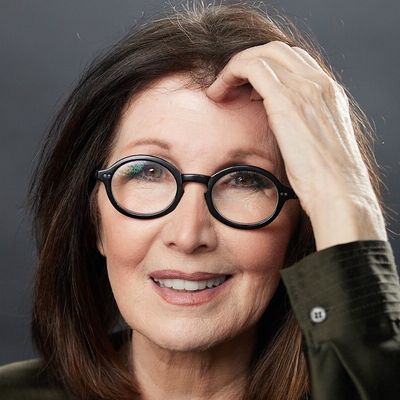
Come spend a moment in the woods with one of Broadway's finest artists, Joanna Gleason, who not only won a Tony Award for her magnificent portrayal of The Baker's Wife in Into The Woods, but also starred in such Broadway hits as I Love My Wife, Social Security, and Dirty Rotten Scoundrels... Read More
From the show: BEHIND THE CURTAIN: BROADWAY'S LIVING LEGENDS » Podcast
Guests
Featured Shows

About
Come spend a moment in the woods with one of Broadway's finest artists, Joanna Gleason, who not only won a Tony Award for her magnificent portrayal of The Baker's Wife in Into The Woods, but also starred in such Broadway hits as I Love My Wife, Social Security, and Dirty Rotten Scoundrels. Joanna's career is not just limited to the theatre as she has appeared in dozens and dozens of film and television works including Boogie Nights, The West Wing, Crimes and Misdemeanors, Hannah and Her Sisters, Hello, Larry, and more! Joanna pulls back the curtain on her career to discuss how every night she paid tribute to her I Love My Wife costar Lenny Baker in Into the Woods, what it was like being in a rehearsal room with Mike Nichols , and why Joanna returned to the well-known disaster Nick and Nora after twenty years! Also, Joanna shines the spotlight on Arthur Laurents, John Spencer, and Stephen Sondheim Become a sponsor of Behind The Curtain and get early access to interviews, private playlists, and advance knowledge of future guests so you can ask the legends your own questions. Go to: http://bit.ly/2i7nWC4
Transcript
This transcript was automatically generated and might contain errors.
[0:00] Robert W. Schneider: Dear friends, we are so sorry about the ads. They are a nightmare in every way, but with your donations, we can get rid of ads someday.
[0:09] Kevin David Thomas: Beautiful Kevin.
[0:10] Robert W. Schneider: Thanks, Rob. Bach and Harnicker smiling so hard right now. Friends, yes, we are back with a new plea. Much like those adorable puppets from Avenue Q, we are asking for you to give us your money. For those of you who have headed over to Patreon to throw a little money our way, we thank you so much from the bottom of our hearts. Your contributions are the only budget we have for this show, and it provided us a new soundboard and better studio space. So a thank you.
[0:36] Kevin David Thomas: Thank you.
[0:36] Robert W. Schneider: And as you know, nothing is more fulfilling than talking to the legends of Broadway and hearing them share their thoughts, wisdom, and talents with all of us. However, it does cost money. And if you want to help us keep the show going, please head over to Patreon.com. That's P-A-T-R-E-O-N.com. Search for Behind the Curtain, and you can give as little as a dollar a month. And trust me, that dollar will help us more than you will ever know. Plus, for certain monetary donations, you will get to pick your favorite thing and have advanced knowledge of our future guests so you can ask the legends your own questions.
[1:09] Kevin David Thomas: Ooh.
[1:10] Robert W. Schneider: Or you can simply leave canned goods and an original cast recording of How Now Dow Jones outside our doors if you don't want to contribute on Patreon.com. Truth. So once again, please head over to Patreon.com. That's P-A-T-R-E-O-N.com to help us out. Thanks.
[1:24] Kevin David Thomas: Thank you.
[1:25] Robert W. Schneider: Hi, I'm Robert W. Schneider.
[1:27] Kevin David Thomas: And I'm Kevin David Thomas.
[1:28] Robert W. Schneider: And this is Behind the Curtain Broadway's Living Legends. Don't forget to follow us on Twitter at Broadway Curtain. And make sure to join our Facebook page at Behind the Curtain Broadway's Living Legends. And follow us on Instagram at Broadway Curtain Podcast. Plus, you can always listen to our podcasts on Broadway World and Stitcher.
[1:45] Kevin David Thomas: If you were an actress who grew up after 1988, then the woman we are speaking to today most likely inspired you to get on stage. See, no matter what school you attended or where you were growing up, there was the day your drama teacher put on the VHS cassette of Into the Woods. And there, on screen, was the artist we all wanted to be. Her acting choices did define a whole new generation, yes, but it wasn't just her work in Into the Woods that inspired us. No, no. There was I Love My Wife, The Real Thing, A Day in the Death of Joe Egg, Social Security, It's Only a Play, plus countless television and movie appearances, including The West Wing, one of my favorites, Boogie Nights, Crimes and Misdemeanors, and the infamous Hello Larry.
[2:42] JOANNA GLEASON: Hello.
[2:43] Kevin David Thomas: Hello.
[2:44] JOANNA GLEASON: I can hardly live up to that intro.
[2:45] Robert W. Schneider: Oh, please. We are so happy to have you. You are joining us by Skype today from your lovely home in Connecticut.
[2:52] JOANNA GLEASON: How wonderful.
[2:53] Robert W. Schneider: It's fantastic. And there's still a foot of snow on the ground, so nobody gets anywhere very quickly at the moment.
[2:58] JOANNA GLEASON: But it's beautiful.
[2:59] Kevin David Thomas: Oh, good. So then you are trapped to be with us today for the next day.
[3:03] JOANNA GLEASON: All right.
[3:03] Robert W. Schneider: So we're gonna start right at the beginning. Where did you grow up?
[3:07] JOANNA GLEASON: Born in Toronto, and we moved to the States in when I was six years old, and then New Rochelle, New York for a few years, and then out to California.
[3:19] Kevin David Thomas: Because what did your tell us what your father did and your mother.
[3:23] JOANNA GLEASON: My dad, and I'm gonna wax a little sentimental because my dad was Monty Hall. Um he died last September. He was ninety-six, and mom died in June preceding him, and they were together 70 years. And so when I speak of him in the past tense, it's just still kind of odd for me. He was a broadcaster, he was in sports and television and then created a show that moved us out to California. He created Let's Make a Deal, which still runs to this day. Fabulous Wayne Brady. So yeah, he was in television, but he spent the major part of his fame and his life raising money for charity, and that's what he really is best known for. A wonderful, wonderful man, an absolutely wonderful man, but you don't need us to tell you that.
[4:11] Kevin David Thomas: Um you went to Beverly Hills High School?
[4:13] JOANNA GLEASON: I did, and I was there at the same time I was a freshman when Richard Dreyfus was senior, and Albert Brooks was there, and Julie Kavner was there, and yeah, a lot of luminaries. We had an extraordinary and Lorraine Newman was there.
[4:27] Kevin David Thomas: Oh wow.
[4:31] JOANNA GLEASON: Uh yeah, it was a great place to be, a great drama department. Did you know that you had always wanted to be on stage? When did the acting bug first hit you?
[4:43] JOANNA GLEASON: I was first on stage when I was 10 in a play in New Rochelle, New York at my school, where I played a Mexican woman who spoke just a little bit of Spanish and had flowers in her hair and a big wide colorful skirt, and I thought, well, this is interesting because I'd wanted to be a chemist. I'd wanted to be a science teacher and a chemist, and nearly blew up the garage, actually, at one point with my chemistry set. But when I was on stage, I realized that I could both disappear and reappear. In other words, I could disappear from life, particularly this was particularly useful as a teenager. And I could reappear in another character, which gave me tremendous, tremendous freedom.
[5:30] Kevin David Thomas: What were some of the roles? Or let me go back a second. Were you a big movie and television fan?
[5:36] JOANNA GLEASON: I was a fan of the movies of the 40s. And who were the actors and actresses that you really, really wanted to emulate?
[5:44] JOANNA GLEASON: I knew I would when I was watching Barbara Stanwyck and Betty Davis, I knew there was something, there was something there happening that was not done specifically for the camera. It was also terribly personal, and it had violence in it, and it had humor and intelligence, and I loved James Mason and Spencer Tracy, and I loved Walter Brennan and Thelma Ritter, character actors who were you know not cartoons.
[6:14] Kevin David Thomas: Yeah.
[6:15] JOANNA GLEASON: If somebody had said, I have never seen a Barbara Stanwyck or a Betty Davis picture, which movie would you suggest them to go see for Barbara Stanwyck and Betty Davis?
[6:24] JOANNA GLEASON: I would say The Lady Eve and Double Indemnity and Betty Davis, good God. Um, just you know, pick one. I mean, obviously, you know, all about Eve, all about Eve, definitely.
[6:41] Kevin David Thomas: A good choice.
[6:42] JOANNA GLEASON: Yeah, yeah. That one and Jezebel, really, I mean, just extraordinary. Also the one with Paul Heinrich. Come on, we have the stars. Why ask for the moon when we have No Voyager.
[6:52] Kevin David Thomas: No Voyager, thank you.
[6:53] JOANNA GLEASON: Yes. And were you quickly Googling that or did you just know?
[6:56] Kevin David Thomas: No, my hands are here.
[6:57] JOANNA GLEASON: Hands are nowhere near the keyboard.
[7:01] Kevin David Thomas: Yeah.
[7:01] JOANNA GLEASON: So yes, watch them, watch them, watch the intelligence at work in those performances. What was the first production you did at Beverly Hills High School?
[7:13] JOANNA GLEASON: I think the first one may have been, oh I know exactly what it was because it left a mark. I was in The Music Man.
[7:21] Kevin David Thomas: Oh.
[7:21] JOANNA GLEASON: But you know when they carry the big wooden frame across the stage and it stops for a minute in front of the farmer and his daughter, the Grant Wood picture of American Gothic?
[7:34] Kevin David Thomas: Yes.
[7:34] JOANNA GLEASON: And you need pretty much the ugliest girl in class to do that, you know, that one solo line. That was me. And yeah, and that was my first. And then we did The Mikado. I was Katisha, another lovely creature, Katisha in The Mikado, and Verena Talbot in Drum Capote's The Grass Harp. And I went to my drama teacher, the phenomenal John Ingall, and he was mentored so many of us, oh my god, over decades. And I said to him, you know, is it just gonna be kind of these Harrodan ugly creatures? And he said, Stop. Let me tell you something. What you're playing are character roles, and you will play those now, and then you will play leading lady roles, and so you will never stop working. But the girls who are playing, you know, the nice little ingenue things, he said they will have a very short shelf life unless they're brilliant and know how to become more of a character actress. And it kind of got me through.
[8:37] Kevin David Thomas: That's brilliant advice, and obviously one that you were able to latch on to and help guide you through the next step. Were your parents supportive in this pursuit of acting?
[8:46] JOANNA GLEASON: Yeah, but the thing at home was, you know, let me see your report card and what are you doing for other people, which was very big in my family and essential and is to this day. And also clean up your room. So at the bottom of the list was, oh, you're in the drama department. That's fantastic. We'll go to all the shows. We're very proud of you. Just know that it's a tough slog if you're thinking of doing this with your life. They were not trusting of the industry. And dad was not an actor, but dad was in the big kind of umbrella of show business. So they were cautious, but they were proud and very pleased with what I did.
[9:39] Kevin David Thomas: Um and then you leave high school and you have a choice. You can either continue your education or you can start trying to make a professional career for yourself. You chose to go to college, correct?
[9:50] JOANNA GLEASON: It wasn't even a choice. It was essential. I just think you're not fully formed. There are a lot of child actors, and some with a kind of preternatural gift at a young age. I there are people who were I mean, wasn't Ryan Gosling in like the Mickey Mouse Club or something?
[10:11] Kevin David Thomas: Yes.
[10:11] JOANNA GLEASON: We got started quite.
[10:14] Kevin David Thomas: Right.
[10:14] JOANNA GLEASON: And so there are people who have matured into adulthood and carry that talent with them and seem to be able to have real lives as well, real healthy lives, and that's wonderful. But I didn't think I was going to burst out of the gate at 18 and have a big motion picture or television career, and I didn't want it. I wanted a campus, I wanted to do shows in college, I wanted to meet people, I wanted to have all the garden variety positive and negative experiences that you have in college and living away from home. I needed that.
[10:46] Kevin David Thomas: And you went to school where?
[10:48] JOANNA GLEASON: My first year I went to UCLA and lived at home, and that was not as much fun as that's not living on campus, yeah.
[10:56] Kevin David Thomas: Yeah, no, and um, but too close to campus to warrant asking to live in a dorm.
[11:01] JOANNA GLEASON: Exactly. And so then we went about 30 miles further, and I went to Occidental College, a spectacular liberal arts college, and I lived off campus there.
[11:11] Kevin David Thomas: What were some of your favorite classes in school?
[11:15] JOANNA GLEASON: Well, I like the religion and philosophy classes. I loved the speech classes, obviously the drama classes and doing the plays, but you know, religion and science to me, I'm fascinated with them. Those are my, I read about quantum physics as a hobby and philosophy as a hobby, and a lot of it is applicable when you're teaching in the arts.
[11:38] Kevin David Thomas: Yes.
[11:39] JOANNA GLEASON: I think it's essential, by the way, for actors to get out of their heads and stop navel gazing and learn what people are like who are not like them because that's our task. It's to illuminate those stories and not superimpose our own limited knowledge on those characters.
[11:59] Kevin David Thomas: Are you a voracious reader?
[12:01] JOANNA GLEASON: No, not as much as I should be. I'm ashamed to say, not as much as I should be, but I'm also a writer, and so sometimes reading it jams my circuits and makes me feel like, oh, that's so much better than anything I could do. My husband is a voracious reader and goes back to books he has loved, like The Winter's Tale and Patrick O'Brien books about the sea, and he'll read them again and he'll read, he's always got a book in his hand. Oh, I want to be more like that.
[12:29] Kevin David Thomas: Same.
[12:29] JOANNA GLEASON: So um you finish up at Occidental. Why when do you move to New York City?
[12:36] JOANNA GLEASON: I started doing theater in the Civic Light Opera at Los Angeles Civic Light Opera. Oh, Beach Civic Light Opera. I did some shows, and I was lucky enough to be at the Mark Taper Forum doing Hamlet, playing one of the ladies in waiting until Kitty Wynne, who was playing Ophelia, left to go do a movie, and I got to go on. I was her understudy. So I got to play Ophelia for a week. And the LA Times came back actually and re-reviewed it. That was Sylvie Drake, this wonderful woman who came back and gave me my first really legitimately wonderful review. And that was a lot of that theater and around town. I did Promises Promises and I yeah, I did Fiddler. I mean, had you always been singing growing up, and did you know that musicals versus television film or you know legit theater, did you see it as individual or were you open to all of these as possibilities?
[13:26] JOANNA GLEASON: I you go where you get the job, Frank. I mean, I didn't, I didn't I didn't come up with a kind of assurance vocally, nor was I particularly trained to think that I because there are voices who from a young age, you know, like Bernadette and and Patty and and Audra McDonald and Vicky Clark and Kelly O'Hara.
[13:47] JOANNA GLEASON: I mean, there are I can name ten if you would let me amazing voices, and these women are also wonderful actresses. I didn't have that assurance, nor did I have a powerhouse voice. But I was one of those actors who could sing well enough, you know, to get the job done. And I thought I always just thought of myself as an actor, frankly. Um, and if needed to sing, I could be made to dance, you know.
[14:11] Kevin David Thomas: Sure.
[14:12] JOANNA GLEASON: Which is interesting because I'm looking at your uh equity card. I lied.
[14:15] Kevin David Thomas: What?
[14:18] JOANNA GLEASON: I there was there were auditions up in Oakland at the Woodminster Theater, out in the open, an open air theater for Promises Promises they were doing, and I think I had done it already at Civic Light Opera uh at Long Beach Civic Light Opera.
[14:35] Kevin David Thomas: Oh, yeah.
[14:35] JOANNA GLEASON: And I flew up to Oakland, California on my own dime. It was 49 bucks in in those days, and I auditioned really, really well, and they said, Are you equity? And I said, Yes, and they handed me a contract, and I ran to equity with the contract, and I signed up and I paid my dues and joined. So I did it kind of uh, you know, ass backwards.
[14:56] Kevin David Thomas: Yeah.
[14:57] JOANNA GLEASON: Amazing. There's nothing wrong with that. You were being resourceful.
[15:01] JOANNA GLEASON: I was not felonious. I was an aspirant. So um you you get some real and you got to work at the Amundsen, you said?
[15:13] JOANNA GLEASON: I did. I did I did a play, I worked at all of the theaters in Los Angeles. I've I worked at the uh LA Civic Light Opera in in On a Clear Day with with Bob Goulet, directed by Sir Alfred Drake, and that was pretty phenomenal. Oh wow. I played Daisy Gamble and in at the Amundsen, I was in a play with Angela Lansbury and John McMartin, and and I was asked to leave the play in LA because they decided I was too young for the role, and they came to New York without me and previewed and opened and closed in about 13 days. So yeah, but she's there and still be running.
[15:46] Kevin David Thomas: No, actually.
[15:48] JOANNA GLEASON: Not at all. But uh Angela was just, she's everything amazing, you know, all in in one phenomenal woman. When you're in a room with Alfred Drake or Bob Goulet or Angela Lansbury or even John McMartin, what are you learning from them? Were there any big takeaway lessons that you could articulate?
[16:07] JOANNA GLEASON: Angela had a work ethic that was admirable and um and professional and and hard working. And and John McMartin uh made it look easy. He had just a grasp of uh of everything. Alfred Drake was creative and funny and and wise and a and a gentle and um convivial director who who who created a fabulous atmosphere in the room uh to work. And Bob Goulet just was a a lovely fellow with a with an astonishing voice.
[16:39] Kevin David Thomas: Let's talk about directors for a little bit. What is the ideal director for you? What do you look for in a director?
[16:48] JOANNA GLEASON: I look for somebody who likes to answer questions, but knows enough to tell you when to stop asking them. Uh I like a director who has a tremendous sense of humor and who who will laugh when you are funny. Mm Mike Nichols used to laugh until tears would roll down his face, and I thought, well, that's it. We can all die now. We've just we've made Mike Nichols laugh. And I like a director who is prepared and who is spontaneous and sees something, or you bring something, even if it's an accident in rehearsal, and they say, Yes, that, yes, let's do that. Great. And I like directors who who praise but not fulsomely. Fulsome, by the way, meaning uh uh uh um uh it it's disingenuous, it doesn't mean full of.
People misuse that. And by the way, there's no such word as jury rigged New York Times. It's Jerry-rigged. I'm on a tear now, don't stop me. What people have done to this language. Anyway, that's another topic for another day. It's gerrymandering, or if somebody wants to rig a jury for a that's another thing. Where was I? Directors. They have to be smart. And I would love it if they were the smartest person in the room. And uh and organized, organized and open.
[18:04] Kevin David Thomas: Yeah.
[18:05] JOANNA GLEASON: How do you approach the creation of a role?
[18:08] JOANNA GLEASON: I don't create roles. I I interpret them. They are created by the playwright.
[18:13] Kevin David Thomas: How do you get oh sorry?
[18:15] JOANNA GLEASON: No, that's okay. Um it's built I've been lucky enough that enough shows have I've been the first one to play the role, so a role has been built on me to a certain extent, and what I can bring to it. So to that extent, if you want to say created, that's flattering. But really, there is something in the mind of the writer and the composer, and we need to arrive at a kind of agreement that how I interpret all that is what they want. And then you imbue it with whatever humanity and imagination you bring, you and you alone can bring.
[18:53] Kevin David Thomas: Do you follow a particular acting philosophy, say a Meisner or an Adler or or any of those?
[19:00] JOANNA GLEASON: No, I was lucky enough to um know Stella Adler and actually teach a couple of times uh at Adler's Conservatory. And I and I did take a year of classes with Nina Fosh, who was a disciple of me of of Stella's, but I don't ascribe to any you can't, I don't want to see your philosophy. I don't want to see your training. In fact, I don't want to see your training at all.
[19:24] Kevin David Thomas: Right.
[19:25] JOANNA GLEASON: Uh uh, I just think you know there's good acting and there's bad acting, and it's about honesty and imagination and um the ability to repeat it.
[19:35] Kevin David Thomas: Do you enjoy the process of table work?
[19:38] JOANNA GLEASON: Not really. Um I I like a good read-through as much as the next person, and you owe it to the creative team. Um I like to come in with no plans as an actor because plans, somebody's plans and agenda always get in the way of everybody else. But great expectations are necessary. And I like to listen, but then I love to get on my feet, even with the book in hand, because that tells me about the space. It tells me about where the energy of the dialogue is going, uh, you know, how how the energy flies through the room, um uh and how to gather up the molecules so that when it's your turn to speak, there's been you know adequate listening time and watching time for the other characters, and it's it's a very tiny, tiny bunch of small muscle control at work there once you get on your feet.
And I just think we end up being listless at the table, and it becomes like a radio play, and you start to get addicted to inflections and line readings and and rehearsal room laughs, and I just think it's it's not my favorite thing. People love it, and there are schools of thought and and theater companies that spend months at the table, and I would probably drink an inkwell and just be felt dead.
[20:57] Kevin David Thomas: Thank you.
[20:58] JOANNA GLEASON: I'll be right there with you. I'm not a fan of table work either. It's essential, and some directors, that's the process, and I would honor that were I, you know, asked to join that kind of thing. But I'd have to find in my metabolism a way to make discoveries at the table to continually and you I make discoveries, I like making discoveries during rehearsal on the feet and definitely in previews. I love previews, and I wish they went on. I wish they went on longer, frankly, um before opening.
[21:24] Kevin David Thomas: So now we're going to jump back to your trajectory. Why the move to New York City after having so much success in Los Angeles?
[21:32] JOANNA GLEASON: I didn't like Los Angeles. And I had been in New York for I Love My Wife, uh, 1977, 78, uh, and went back to LA and resumed my life and was raising my son. But then I I didn't I was withering and um and kind of depressed, really. Uh also there wasn't a lot of theater at that time there. And I um moved back to New York, where I was married to my second husband who lived in New York, and then things really started to kick up a notch in the 80s for me, and um, and then into the early 90s, at which point you'll probably get to Nick and Nora on your timeline there.
[22:14] Kevin David Thomas: Oh yes.
[22:14] JOANNA GLEASON: Oh, yeah.
[22:15] Kevin David Thomas: Oh, yes. How did I Love My Wife come into your orbit in the first place?
[22:18] JOANNA GLEASON: I auditioned in Los Angeles.
[22:20] Kevin David Thomas: Oh.
[22:21] JOANNA GLEASON: Because somebody who had seen me in shows at the LA Civic Light Opera and the Long Beach Civic Light Opera, and at the Mark Tabor Forum, and everywhere, someone had seen me, a man named Bo Wilson, who worked at Universal Studios, called um Joe Leighton, who was the original director of I Love My Wife, and said there's a girl you should audition her for uh I Love My Wife, because they were auditioning in LA, which um happened at that time. And I auditioned, and they said, Would you audition in New York next week for Cy Coleman and Michael Stewart? And I said yes, Yes. And then I went home to my then husband and I said, I have to get to New York. And the airfare is $479 on TWA. And he said, Well, how are you gonna do that? And I said, Uh, let's have our friends over and let's play Jeopardy for money.
[23:10] Kevin David Thomas: So are you serious?
[23:12] JOANNA GLEASON: Yeah, I'm quite serious. And uh I think I don't know, I think I won a hundred dollars or something like that, and then I just um uh took my little credit card and got myself to New York, stayed with friends, auditioned with just the ghost light on the stage. On the stage of the theater, yep.
[23:28] Kevin David Thomas: Yeah, I think we auditioned, I wanna say we were at the Broadhurst, but maybe we were at the I think you were on 48th Street to audition. We ended up at the Barrymores where the show was done on 47th. And I auditioned and they said, We'll call you by tonight.
[23:44] Kevin David Thomas: What did you sing for your auditions? Do you remember what you were go-to?
[23:46] JOANNA GLEASON: I do I do. I sang um To Keep My Love Alive. Um they wanted something funny, so I did that, and then I think I read a scene. Good choice, and that was that. And then they called me at midnight, and uh and you had the Broadway debut.
[24:06] JOANNA GLEASON: Yeah, I did.
[24:07] Kevin David Thomas: What was the process like of putting together I Love My Wife?
[24:10] JOANNA GLEASON: Well, it was truncated because Joe Leighton, 10 days into rehearsal, had a terrible accident that put him in the hospital, and there we were without a director, and there were the four of us and four musicians and Jimmy Naughton and Lenny Baker and Eileen Graf and I and Johnny Miller and Michael Mark and oh, I'm gonna get all this wrong. Kenny Michelle, and no, there's and uh was it Warren Benbow at that time? Somebody was on drums. Anyway, somebody fabulous. The there were the eight of us with no director, and we started auditioning the show. We auditioned what we had, which was just part of Act One. We auditioned for Tommy Tune came in. Anna White, the choreographer, came in, and she called Jean Sachs, who was married to B. Arthur, and Jean was in LA, and we woke him up at like five in the morning, and she said, Gene, get, you know, get out to New York. Come here. And he flew in and he watched us and he said, I'll do it. And he took over, and it was spectacularly great to work with him.
[25:06] Kevin David Thomas: What made him such a strong director?
[25:09] JOANNA GLEASON: Funny as hell. Nobody funnier. Nobody who knew comedy better, and he was patient with all of us, and he had great ideas all the time, and he was loving and easy and laid back and spectacular.
[25:22] Kevin David Thomas: And let's talk a little bit about Lenny Baker, who we lost way too soon. Can you share some memories of working with him, please?
[25:29] JOANNA GLEASON: Well, Lenny had a gift for physical comedy. You know, he was very long and lanky and uh extraordinarily skinny with a very prominent nose and piercing blue eyes and snaggly teeth, and yet somehow to me really attractive and gorgeous in in this kind. Somebody likened him, one critic, or it might have been, I want to say it was maybe like Michael Musto or somebody was writing about him and described him as a benevolent bird of prey. And that's uh Lenny from Lenny, who didn't have a great singing voice, but sang just perfectly. From Lenny, I learned a lot. And there's an homage I did. Lenny died in 1983. He got sick, he was sick actually, while we were doing the show. Um he had thyroid cancer, and he went for surgery and they severed one of the nerves to one of his vocal cords accidentally.
And then he could never really totally really speak again, but he came back and was kind of hoarse. Then I left the show, he continued in it for a while, then he had to leave the show, and he moved to California to try to get better and to heal, and then he had to eventually move down to Florida with his parents. And I went down to see him, and he at that point was clearly dying, and he weighed about 80 pounds. And he picked me up at the airport with his mom. He was just skeletal at that time, and he had the energy to for us to go out to get crabs at a famous crab restaurant. And then the next morning he was too tired to get out of bed, but he said, Come here, I want to talk to you before you go back.
I was flying back, and um it's funny because there was a an intercom in his room so his mom could hear if he needed anything, and she she she was listening actually because she told me later. And he said, This was now this is night 1983, and he said, You know, I'm I'm I want you to wear this ring, and he gave me a little ring, and I said, I'll wear it always.
[27:24] JOANNA GLEASON: And he said, yes, wear it, because then you can pretend you're the baker's wife. And yeah, and five years later, I was the baker's wife, but in a whole different sense of the word. And there was a little homage I did to Lenny when Cinderella comes running on, and I'm on stage and she falls and I fall, and she's in her gown, and I'm sitting next to her, and we're starting to sing, you know, he's a very nice prince. I took her gown and I laid it over my legs to see what it would feel like to wear a ball gown. And it just came to me, and I thought, but that's exactly something Lenny would have done. So every night when I did it, I just thought of him. I just thought, you know, he was wildly inspirational.
[28:07] Kevin David Thomas: Wow, thank you for that.
[28:08] JOANNA GLEASON: Yeah, thank you for sharing that. Um, you finish up I Love My Wife, correct? You go back to Los Angeles. Were you trying to then get into the world of film and television?
[28:19] JOANNA GLEASON: Yes. I was married and I was pregnant with my son and I got a pilot for Hello Larry. And we shot the pilot once with one lead actor, and then he was replaced with yet another lead actor, and then we're shooting the pilot now a third time, and I'm like out to here, pregnant. So they had me behind potted ferns and cabinets and things like that. And McLean Stevenson got the role, and then I gave birth to my son, and ten days later went back to work and we started doing the series.
[28:48] Kevin David Thomas: Oh my goodness. Uh, do you enjoy film and television? On camera work?
[28:52] JOANNA GLEASON: No, not really. Um, the only television I really loved doing were the times I got to work for Aaron Sorkin. Uh, when I did the newsroom and I did several episodes of The West Wing.
[29:07] Kevin David Thomas: Yes. And what makes him so different? What makes Aaron Sorkin special?
[29:12] JOANNA GLEASON: The writing, the writing and the cast of characters. Uh, I did have great fun working for Diane English. Uh, and we did a show Love and War for three seasons, and it was fun. It was a great group of people. And we did have fun, and I learned to direct for television from Diane. She made that happen, actually, and gave me a shot, my first shot. So that was a great experience. Um, I did a show with Bette Midler. Bette really wasn't happy. She's a phenomenal human being and performer, but it didn't go. We did most of one season, and then that went away. And you know, there's a lot of kind of hurry up and just make a show in five days. And if one of the wheels isn't on the track, it's kind of difficult.
Yeah, so it's highly lucrative, it's a fairly easy work schedule. I don't regret ever doing it, and it sort of raises your profile, as they say, but really, um, it was not my favorite thing to do. And I got to be in some wonderful movies also and work with phenomenal people, but the sitting around and waiting, the director in me, the writer in me was impatient. I felt myself being impatient and didn't have the time because I never had enough of a role to really ask them, let's have time to flesh this out and try more things.
[30:33] Kevin David Thomas: So you're there because they know you can do it, you do it quickly and you do it well, and then you go home, and it wasn't as satisfying for me.
[30:41] JOANNA GLEASON: Yeah, I understand. Um, another actor we would like to talk about, even though he's probably best known for his film and television work, John Spencer was an amazing theater actor before he catapulted to stardom. What was it like sharing a scene with him?
[30:56] JOANNA GLEASON: John is maybe the most inspiring and connected, and to whom I've been the most connected ever in a scene on film because he—I've talked about him at such length actually because I loved my experience with him so much. Smart, he had great economy. There were no tricks and bells and whistles, there was no filigree, it was just the truth, and it was the truth and then his humanity, which he never forced. And so out it would just come. It would come in from those eyes and it would come in the way he just said the line. And the scenes with him felt so intimate and wonderful. And it was really a highlight for me in my career was working with him. A marvelous actor who also left us way too soon.
[31:53] Kevin David Thomas: When you were in Los Angeles and you're in your film and television zone, did you keep pursuing theater work in New York City?
[32:02] JOANNA GLEASON: No, no. In fact, there was really no considering it because my base was LA at that time and I was raising my son at that time. And then life, without going into too much detail, fractured in many ways, and I ended up back in New York in nineteen eighty in the early eighties and really almost had to start—no matter how successful I had been—I got quite a lot of attention for I Love My Wife when it opened up and we burst on the scene, all of us. I had to pretty much start over.
[32:37] Kevin David Thomas: Okay.
[32:38] JOANNA GLEASON: Uh, and did it was a more gradual, you know, climb. Uh, and things didn't really take off for me again until nineteen eighty-four, eighty-three, eighty-four, eighty-five, and eighty-six, and then comes Into the Woods in eighty-seven.
[32:57] Kevin David Thomas: Were you making the rounds? Were you trying to get your name out there? I mean, again, you know, with casting or—
[32:57] JOANNA GLEASON: I was auditioning. I was auditioning for things for which I was not right. I was auditioning great and not getting it. I was auditioning and not getting it a lot and trying to figure out what, what, what, you know, what is the what? And that horrible thing of sitting outside the door and hearing the girl who's in there before you be amazing. And just, well, I'm just screwed here. That's—and then also, you know, overthinking was a big problem for me, and not being able to just go for it with a character that I knew that I wasn't gonna be the best casting for. So I was always sort of on the other side of the desk as well as up there auditioning. Um, but I realize now I'm more comfortable on the other side of the desk.
Uh, I think that I did off-Broadway, I did a play with Peter Rieger, just the two of us, and I got to do a show at Manhattan Theater Club, El Amassaneri with Eileen Heckert, and that really started things going on a Terrence McNally play, and then The Real Thing. I stood in for both leads in The Real Thing and got to go on in both parts, and so things slowly, slowly, slowly, you just keep showing up, and you're lucky if you're lucky, yeah, and it leads to, you know, other things.
[34:22] Kevin David Thomas: How do you keep yourself in a healthy headspace when you're trying to rebuild yourself in a profession?
[34:30] JOANNA GLEASON: Well, there's no single answer. Um, you have to really be careful about expectations because they can become addictions, and it's better to just keep making plans in real life. Plan to take care of your health, plan to be a good friend and a good family member, plan to keep studying and keep reading, and plan to go to museums and plan to go see every show you can see, and then your plans change, make a new plan. But expectations will kill you because you really only have like a 50-50 chance of them being realized. They will or they won't, and then you've wasted a lot of time and energy. So I had to kind of lower my expectations and then just keep forging ahead and make a life, a real life.
[35:22] Kevin David Thomas: How does Joe Egg come into your world?
[35:26] JOANNA GLEASON: Oh, I auditioned for Arvin Brown, and it was to star Stockard Channing and Jim Dale. And I auditioned and I got it. I've been friends with Stockard ever since. She's one of the dearest people in my life. And um, I learned by watching her. I learned a great deal. And I learned by watching Jim. And it was a phenomenal production. And Peter Nichols actually came to town and watched us for a while. That was one of those roles that it's got a great kind of like, it's a little gem, sit on a Tiffany setting. Suddenly you get this great kind of monologue and these great kind of witty bantery things, and you get to wear a blonde wig and hold a cigarette and smoke. Hirschfeld does a thing of you, you know, and with all the Nina on the neck, and you just think, wow, this is amazing. And things really, that's actually I think maybe when I hit a kind of stride was Joe Egg.
[36:24] Kevin David Thomas: Yeah. So being in the rehearsal room with Stockard Channing and Jim Dale, you said that you've learned a lot. Can you give us a specific example of their artistry in a rehearsal room?
[36:31] JOANNA GLEASON: Well, again, again, work ethic. I mean, Stockard is maybe one of the smartest people I've ever known in my life, and her questions were of such intelligence and always to the point, and never about vanity, and never about ego. Really just in service to the play. And my admiration for her started then and has only increased.
[36:55] Kevin David Thomas: Another great company of actors that you got to work with was the cast of It's Only a Play.
[37:00] JOANNA GLEASON: Yes.
[37:01] Kevin David Thomas: Which was off-Broadway. And this cast is incredible. It's James Coco and JOANNA and Christine Baranski. I mean, it is a comedy troupe that you would die to be in a room with. How does this project come about?
[37:16] JOANNA GLEASON: I think I had done—no, I hadn't done El Monsieur. You'll know the timeline better than I. No, El Amassaneri was later. I auditioned. Um, I auditioned and I got it. And John Tillinger, who's remained a friend, John was the director, and Terrence was rewriting it. I think it had had an out-of-town production.
[37:37] Kevin David Thomas: It had, yes.
[37:39] JOANNA GLEASON: Was it called Broadway Broadway or something like that? Um, and so he was rewriting as we were rehearsing. Coco was a force of nature. And I just, you know, I got to play a coke-sniffing actress on the downside of her career, and it was great fun. Frizzy hair and a mini skirt and snorting lines of I think it was lactic acid or something, you know, every night.
[38:09] Kevin David Thomas: Yeah. But we, you know, James Coco is another actor that we love talking about on this podcast because of his comic ability and artistry. So I'm happy to know that you thought he was a force and a nice person, I'm assuming.
[38:22] JOANNA GLEASON: Absolutely. Oh, yes, a doll.
[38:24] Kevin David Thomas: Um, getting directed by Mike Nichols is on the bucket list of every major actor working. So, what is that experience like when you worked on Social Security?
[38:34] JOANNA GLEASON: Well, I had met him during The Real Thing where he cast me as the understudy. And so I knew him there. I had a tiny role in the movie Heartburn, and Social Security came about because he knew me. And I don't remember. I it's hazy in my own memory if I auditioned for that. It's possible though. But there was Marlowe, Thomas, wonderful woman, wonderful woman, and Ron, the late Ron Silver, um again, too soon, and uh Stefan Schnabel and Olympia Dukakis, and Kenny Welch, Canadian actor Kenny Welch. So, as I said, written by Andy Bergman, and I would say about um, uh El Amassaneri, that was—I'm sorry, well both El Amassaneri and It's Only a Play were directed by Lynn Meadow, directed those Manhattan Theater Club. Uh, Mike was just the smartest person in the room, uh possibly one of the smartest people in any room anywhere, and also the funniest. But when you made Mike laugh, that was—you could just take that to the vault.
[39:46] Kevin David Thomas: Were you a big Nichols and May fan?
[39:48] JOANNA GLEASON: Yes.
[39:49] Kevin David Thomas: Yes, and stopped short of doing the routines for him because I thought that would be just—he would smile politely and I so I didn't. I never did put the album twice a while. I never did. Bell Telephone does not want your dime. I just never did any of them, never.
[40:04] JOANNA GLEASON: You know, the character that you played in It's Only a Play versus the character in Social Security are so different. What inspires you when you inhabit a role?
[40:13] JOANNA GLEASON: I hear them, I hear it on the page. They wrote it. This is Terrence McNally, we're talking about here. You know what I mean? And Andy Bergman wrote a very funny, funny script for Social Security, a funny play. So you hear it, and I guess the reason they cast you is because they get it that you got it. And when you hear it and you see where it fits in, what the music is of the whole play. I don't know. Maybe that's—I don't even want to use the word talent, but it's certainly in what you want to have in your toolkit as an actor.
[40:58] JOANNA GLEASON: You have a very good ear for dialogue.
[41:00] Kevin David Thomas: Thank you.
[41:01] JOANNA GLEASON: I would say I think so. And I think that stood me in fairly good stead. Um, before we move on into Into the Woods, you have a very besides Heartburn, a breakout role in Hannah and Her Sisters, even though it's one scene, it's probably the funniest scene in the movie with a former guest of ours, Tony Roberts.
[41:21] JOANNA GLEASON: Yes. Um, I was scared to death. It was my first real film role ever. The audition consisted of my being told Woody has his offices down at such and such address, go. Juliette Taylor was casting, and I went in and he said, he stood up and he said, Hi, nice to meet you. Thanks for coming in. And that was it. That was the whole audition. My audition for um Crimes and Misdemeanors, the second movie for him, consisted of going there, walking in and his standing up and shaking my hand, going, Nice to see you again. Thanks for coming in. And that was that. Because Juliette Taylor, great casting director, knew what she was looking at, and she knew, oh, this'll go, she can do this. And Woody would look and say physically, yep, all right, good.
They lightened my hair a little bit so that I didn't look like this was for Crimes and Misdemeanors, so that my hair didn't look the same as Angelica Houston's, and that was that and he knows he knows that you know what to do and when a director has that much faith in your instincts and your you know uh uh what you're gonna bring with no agenda other than to serve what he wrote then you're hired right and for our listeners who have not seen either Hannah and Her Sisters or especially Crimes and Misdemeanors where you you are so hysterical in it thank you it's it's I literally convulse every time I see it it's very funny.
[42:42] Kevin David Thomas: Um please go and do so now I think it's time to ask about this major musical role that comes your way which is the Baker's Wife.
[42:51] JOANNA GLEASON: Right. And and you had just on Broadway done two serious dramas and now musical comedy comes back into your life um yeah I did not have any real credit you know vis-a-vis uh uh musicals and I on my birthday uh which is June 2nd um everybody thank you thank you for your cards wishes and advance cookies yes uh I was told you're gonna audition for a workshop of a of a musical about fairy tales and it's for James Lapine and for uh Stephen Sondheim and Paul Gemignani music director what do you have to sing and I went oh my god oh my god here I am caught short uh and had you interacted with them at all in your career thus far oh no uh I hadn't and um I went in and I and I the only song they didn't have a full script at that time, but the only song I knew was um what I had done on a clear day with Robert Goulet.
[43:56] JOANNA GLEASON: And so I I was gonna sing uh what did I have that I don't have? And I sang a little bit of it, and I I could see that I was just putting them to sleep because I was singing it much too slowly. And then they said, Did you bring anything up tempo? And I this was the fork in the road. I could have said, No, I'm sorry, and it would have been thank you, thanks for coming in. And instead, that thing in me just said, No, but I can sing this one really, really fast. And I just kind of went, you know, hit it, and whoever it was on the keys, um, might have been Paul actually, on the keys, and I sang it very, very fast, and they were laughing. And and then they said, Okay, I got the call, you're gonna do the workshop. And I was with it, you know, ever since.
[44:42] Kevin David Thomas: How did the role of the Baker's Wife change from that first reading to what we eventually saw on opening night?
[44:50] JOANNA GLEASON: The most significant change was in um well, there there was uh in the workshop she didn't have her big number, the the moments in the woods. But also when it went to San Diego, um she finished her song. I finished the song and went off stage. Uh an apple rolled on stage at the end of my song, and I picked up the apple and I took a big bite and I walked off stage. You never saw me again, and you heard from Jack that I had been killed by a poison apple or something like that. Never eat apples in the woods, was you know, something like that. And I thought, wow, I my character and Chip Zion, the baker and the Baker's Wife, are not fairy tale characters, they're fictional characters. They seem to be the link to the audience in terms of you know, some sort of reality, reality or or or present-tense people, more contemporary people, if you will.
And I felt uh very sad that I didn't come on again until the curtain call. And uh the audience, several audience members in the talkbacks, because there were many, said the same thing. They said, Where'd she go? So before we reassembled for New York to rehearse for New York, uh Steve had us come to his house, Bernadette and Chip and me, and I can't remember, but it's it's possible that that Kim and Robert Westenberg were there too, and Little Red and Jack, uh Danny Ferland and uh uh and Ben. And he he played um my coming back after I died, being killed by the giant that that was different, and also coming back on at the end as a as a spirit to sing to my husband and the baby. And I thought this changes everything.
[46:47] Kevin David Thomas: Yep.
[46:49] JOANNA GLEASON: This changes everything.
[46:52] Kevin David Thomas: Do you, when you're in a rehearsal process and you're developing a new work, um, do you not? I don't want to say ask for changes or suggest changes, but do you begin that conversation if no one solicits you with for that information, if that question makes any sense whatsoever?
[47:12] JOANNA GLEASON: Yeah, it does because there were two times in my life, three actually, in my career to date, where that's happened, where Steve actually called me at home, and he tells a story, and I tell the story, and and he called me at home uh because he was about to write Moments in the Woods, and he said, Oh, just like, you know, what are your thoughts? And I thought, holy crap, I'm being asked for my thoughts by Stephen Sondheim. And I said, you know, I I think she's got one foot in in either world. It's like, you know, she's in the wrong story. And he took it from there. And that was extraordinary. He writes in his book, uh, he wrote two beautiful books, Finishing the Hat, um, two-part two volumes, and he actually says he almost never asks, and he almost never takes suggestions, but he did from me, and he names me and he talks about it.
And I thought, wow, okay, okay it did happen. And I made Mike Nichols laugh. Okay, here we go. We're doing really fine. And uh Willie Holtzman, playwright Willie Holtzman had written a play, and he he allowed me, it was called Something You Did About a Woman in Prison for uh um uh an explosion. She was part of a uh uh the anti-war movement back in the in the 60s, and and it ended up killing somebody. She was in prison, and I had a long, long speech. He sat with me many times and allowed me to say, look, I think there's too much here, and she doesn't need to say that here. And is there a way to make this feel? And and he was amazing about that. But the the best example of that for me was Stephen Karam when when I did Sons of the Prophet.
We did it in Boston. We had done it up in Poughkeepsie in a lab and you know, workshops for it, and then we did it in Boston at the Calderwood Pavilion at the Huntington Theater. And um, and I said to Stephen, she says too much. I always like to say less and show more. And he changed so much. He changed the relationship between me and another character, uh, Charles Socariti's character, and he rewrote and he rethought, and it got better and better. And I thought, well, that's the mark of uh an unthreatened um uh uh creative uh genius. I think Stephen is a genius.
[49:25] Kevin David Thomas: Agreed.
[49:26] JOANNA GLEASON: Yeah, I agree. Very much so.
[49:27] Kevin David Thomas: Um, what was your reaction to listening to this Sondheim score for the first time?
[49:35] JOANNA GLEASON: You're you can't absorb it all at once in the first listen. You can't absorb the fact that you're going to be responsible for this, and it's going to bring your A game, and you have to be as smart as what you're saying, even if you play somebody who's not that intelligent, you have to have the intelligence as an actor to understand how to deliver this. And I thought this is the biggest challenge I've ever had, and the most fun.
[50:07] Kevin David Thomas: Um we had Chip in earlier today as one of the things.
[50:11] JOANNA GLEASON: You did.
[50:12] Kevin David Thomas: Yes.
[50:14] JOANNA GLEASON: Um we were talking, and you know, one of the things, and I'm sure you're you're very aware of this, but Into the Woods is going to be performed years and centuries after we have all left this earth. Many people will inhabit the role of the Baker's Wife. What pieces of advice or words of wisdom would you like to pass on to those who will inhabit the role at some point?
[50:35] JOANNA GLEASON: Just remember you're a part of a bigger story. Uh, and just remember that she is trying to the top of her capacity to do so to survive. And it is a love story with her and the baker. So, with all the comedy and the barbs and the, you know, the little sarcasms and things that are sly and and wry and contemporary, don't lose sight of the fact that the song It Takes Two is a is a moment that changes their path and changes their life together.
[51:12] Kevin David Thomas: Yeah.
[51:14] JOANNA GLEASON: Um how long did it take you and the rest of the cast in the rehearsal hall to find the style of the piece?
[51:22] JOANNA GLEASON: Not long. It's on the page. It's on the page. It's in the music, it's on the page, it's in James's words and in his staging. And it's it's in the casting is 90% of everything.
[51:36] Kevin David Thomas: And then a Tony Award for this brilliant performance. So what is that experience like? What do you think it's like?
[51:41] JOANNA GLEASON: I would love to tell you what it's like. And how did it change or not change your life and career as a result?
[51:51] JOANNA GLEASON: You know, it's the great, it's the now you're called Tony Award-winning actress, you know, JOANNA GLEASON. You're Tony Tony winner of JOANNA. So it it attaches to you, and that's fantastic. And it's uh it's helpful when other people need to refer to you or to explain you to other people. Um it's a bit of a calling card, and uh I'm I'm proud, I'm proud as hell of it, frankly.
[52:16] Kevin David Thomas: You should be.
[52:17] JOANNA GLEASON: And I mean great company. Listen, there's a family of Tony winners, and that's far reaching and and uh and and decades uh in the making, but there's a family of of people who've done Sondheim shows, and that family is is particularly dear to me.
[52:34] Kevin David Thomas: And how do you keep it fresh every night?
[52:36] JOANNA GLEASON: Well, it's your it's your job to keep it fresh every night, and they're paying good money to see you uh start at the beginning and not do last night's show and not play for you know last night's laughs tonight.
[52:47] Kevin David Thomas: Oh interesting.
[52:48] JOANNA GLEASON: Um it's your job. And you'd better have a well of resources and know your material and be available for wonderful tiny little surprises on stage. Um or your scene partners and honor the the uh well-drawn out uh choreography and and musicality of the night. And stay healthy, man. You have to stay healthy. That's your job too. And I I don't know now. I mean, honestly, it would be the assault on the vocal cords and the climate changes and the humidity and the dryness and the heat and the snow and the flu and the food poisoning and for me the commuting and the parking and the driving. It it's like wow. It used to be that you could have your whole day roll into the theater at 7:30, do the show and go out all night with friends and laugh and eat and do all that. And now, you know, the i the show is your day.
[53:47] Kevin David Thomas: Right.
[53:48] JOANNA GLEASON: It it's your whole day. So I I'd like to think I have another terrific role in a play to do. I would really hope that there is another one for me. Uh in terms of musicals, I I don't know. I'm less sanguine about that. Umless I get to be Madame Armfeld in a wheelchair and have, you know, one song and then close.
[54:08] JOANNA GLEASON: In 20 years. Desiree that ship is sailed. Although I would have loved to have played Desiree, but that that I think that ship is sailed, and now we're on to Madame Armfeldt. And Miss Daisy.
[54:19] Kevin David Thomas: No, no.
[54:22] JOANNA GLEASON: Um one of the things our podcast does is we love to explore musicals that were maybe not appreciated their first time out, if at all. And that would be Nick and Nora. So we'd love to talk to you about how that comes into your orbit and a little bit about that project.
[54:39] JOANNA GLEASON: I um I don't remember. I think I just had a meeting with Arthur Lawrence. I don't remember auditioning for it. There's much of Nick and Nora I have excised from my memory banks, except for the fact that it brought me Chris Sarandon. Yes. And that changed absolutely everything. And that was, you know, 26 years ago. Arthur Lawrence was a uh he was very dear to me and Chris, and he loved that we got together, and he uh had great affection for us. But Arthur was um the the book writer and the director of this project, and the book needed a great deal of work, and it never happened. And he was at odds with Charles Strauss, the amazing Charles Strauss, and the amazing Richard Mulpee, who wrote the music and the lyrics.
And the producers also weighed in, and this one wanted a different wig, and this one thought a different dress, and this one, and suddenly it was um a mess. Uh with a with a stunning cast. Yes. Uh again, um darling, wonderful, amazing Christine Berezki and Barry Bostwick and Chris Sarandon and Deb Monk and Faith Prince, and you know, Tom Sessma and Michael Lombard and Ramack Ramsey, and I'm and and you know, I'm probably just forgetting people. Um and it was uh it was a mess. And we knew it, and it should have been directed differently, and it should have been written and cut dramatically, and uh we knew it. We knew there was a big bullseye painted on us when the curtain would go up, and we previewed for far too long in New York where the word got out.
You didn't play an out-of-town tryout at all. No. No. And and we should have. Yeah. We should have. But it was all very public in the town where you live. And it was tough. It was really tough. For you and Barry, uh, as the leads, how do you keep a positive attitude? I mean, uh the the energy comes from the top. Oh, Barry's the sweetest man on earth. Uh Barry managed in his own Zen way to find out how to deal with it, and Arthur was not particularly generous or kind to him. Um for me, I I was falling in love with Chris Sarandon, so I I I cared less about the show and more about my future. Yeah. Would it be improper of us to ask about the first date? Our first date was uh after rehearsal one day.
I had sort of popped a rib and had to go to the chiropractor who popped it back on, and I was meeting Chris at an Indian restaurant. We went to go see the movie. We either saw, I think we saw the movie Dead Again with Kenneth Branagh. Remember that remember that movie? Yes. This weird movie? And Emma Thompson, they were married at the time. And uh uh yeah, that was our first date. What a romantic first date. Not to go to a Yankees game and sit in the owner's box because uh uh the Nederlanders, I think were part owners or something like that. Yeah. Wild. Um the show was painful for you, but there was recently a reunion concert at 54 Below. What made you want to revisit it? To uh to do it on my terms.
Whereas to say the things I couldn't say back then because I was intimidated. And to say, we're cutting this, we're cutting that, we're cutting this, we're cutting that. And I said, I want to go back, owning it now, and having survived it and thrived because of it, in fact, strangely, because of it. And so that for me was it was fun. Maybe a little cathartic and a little more like I get the last word. Good for you. Yeah, you deserve it. Um after Nick and Nora, there's a lot of film and television work that's coming your way. Yes, we moved back back to California. My son was in then in uh junior high and high school, and I thought there's just really no show now, should take me away from from uh the day-to-day in his life.
And so uh there was a lot of TV and a lot of series, and uh it was um it was good to do, and I'm grateful for it for all of it. But then when Aaron was off uh and out of the house in college and beyond, I was I was like it was like the pilot light was going out. Yeah, and I said, you know, I said to Chris, I I don't know about you, but I miss I miss the seasons and I miss the East Coast and I miss doing theater. And he said me too. And we uh the phone rang actually after a particularly difficult day, emotional day, the phone rang, and uh it was an offer to do The Royal Family at the Amundsen in LA. Then the phone rang, and it was uh my friend Jeffrey Lane, who had been who had uh had I done had I done that and come back?
Yes, I think I have. I can't remember the timeline here. Uh do you want to do um Dirty Rotten Scoundrels in San Diego? And then the phone rang, would you like to do The Normal Heart at the Public Theater in New York? Oh my goodness. Same day. And I said, I said, you know, that that um that's a sign, and I said no to the Amundsen, and I said yes to both The Normal Heart and Dirty Rotten Scoundrels. And that and Scoundrels was when we actually physically moved back after San Diego. We packed up a van that we rented, our two dogs, our suitcases, and we drove across the country and came to New York, and I never set foot in our old house again. We sold it and we've just been on the East Coast ever since.
Oh my god, good. Very, very good. I want to ask you about this interest that you've developed in directing. Did you first uh develop it when you were working on all these television shows? Or did you always know in the back of your mind you wanted to be a director? I think I think I I think I always knew. And I was told actually by directors by to drop his name again, Mike Nichols, you should also be directing. Um and I took it as a and and I as I say, when Diane English brought me into the control booth and watched me watch her edit one of our episodes, you know, and give me a chance to direct not only Love and War, but three episodes of a show that Louie Anderson did for CBS. And I directed one of the Oh Babies at Lifetime, because I was doing uh that series for uh for two years, I think.
Um I just thought this gets to use everything I know. That's I get to use everything I know. And I love answering questions, and I love when when department heads bring you these inspired ideas that you could never have thought of because it's not your department, and you just say, Yes, that, yes, that, yes, that. Let's keep going. I've I've written a movie, we won't talk too much about it. And and I I have some producers and we're putting it together now, and I'm gonna direct it. So that that will really be the test of you you want to direct? Yeah. This is not just one episode. Um let's talk about your passion for teaching and for educating a whole new generation of artists. When did you realize that you wanted to do this?
I think I was I was asked, particularly by Circle in the Square Theater School, to come in right after Into the Woods, or maybe at the end of it, and then going forward on their faculty to teach a musical theater class. But it was really an acting class using songs, right? Using um ballads. Uh I can work with ballads because they're they're monologues essentially. Um and I started that, and then it just kind of grew into a private class, meaning uh out of a school, you know, a group class, but uh not a um part of uh an educational day. And then colleges and high schools brought me in to do them. And then I started in California. I had a whole class that ran on Monday nights of adults, and then more schools and more schools and more schools.
And so um I've been really fortunate in that I've taught a lot. I've taught a lot of my own group classes and and a lot in institutional um theater groups and theater uh and schools, and some private coaching. And I I'm telling you, it's talk about using everything you know and also being of use to people, because it's it's 80% group therapy at some point, and then 20% um teaching them about how to just turn the lights on because it's not about showing yourself and filling that great needy, you know, expansive neurotic need that we that we grow up with and attention. It's it's about illuminating stories so that the people in the audience feel that they've been represented. What do you wish that all students who are entering this business know that they might not know?
What do you wish they know? Well, that's a tough one because I would like to say to them that 80% of them aren't gonna have what they think they're gonna have in terms of a career. 80%. So you have to figure out what plan B is and how to stay in it if you love it, without the expectation that it's gonna bring you fame, fame and fortune and attention and all of that red carpet stuff. Because unless you have something that really distinguishes you from the pack, your work will be generic and you'll get a few generic shots at things, and then you have to figure out why you're 30 and don't have a life. That's very true. Do you teach analysis of text, analysis of music? Where do you know? No, I could, I don't. There are those who do it exceedingly well.
And in fact, Stella Adler would would have an analysis of Chekhov plays that she would do, and she was just phenomenal. Phenomenally gifted at that. So, no, that's that's not what I do. I um I use the song as the text, and I we create a new context for it out of the show, out of the show's context, and move it into something that we can relate to. So the text is the same, the context is different, and the subtext, that's where your imagination and your thinking has to engage. And we create a whole kind of mini drama out of your song. And I have a lot of people partner up on stage, and other people play other characters on stage while you're singing, and so your energy keeps moving, and you're not sunk into your glassy-eyed, you know, how am I doing kind of thing.
Well, and also on to what are you saying? Where does it come from? What else are you thinking? You know, keep the motion of your thoughts. And I learned this, Paul Gleason, who is my son's father, who's my first husband, Paul Gleason is one of the great teachers in this country, acting teachers. And so much of what I've learned has come from him. Because talk about he's a he's a is of an artist and a philosopher and an acting teacher to his core. Um, but he he talked about the motion of your thoughts. That's what we see. We see it on stage as as clearly as we see it on film. And if you are not thinking anything, it just you know, going to the next note or the big note here, or you know, a hand gesture or something that's showy, then I'm done with you and I'm bored.
Right. Yeah, I'm ahead of you. That's so interesting. Now, I wanted to ask you a question. What do you think? What do you know now that you wish you had known when you first started out in this business? It doesn't matter. It doesn't matter what I know now because I would not have been able to absorb it or apply it back then. That's a good answer. It's the best answer I think we've had to that question to be honest with you. Um I'm sure you have lots of things to do, but I will ask you what is next for you? What's the next step in your journey? Well, uh uh as I said, I I'll do more teaching. I I'm gonna start a group where they come and instead of really paying, it's hard to ask aspiring actors or adult professionals who have other careers to actually pay a lot.
I feel bad about it. Um, I'm gonna just have them come and bring, you know, uh donate a piece of clothing or make a contribution to uh a local charity or shelter. And in exchange, we will do class. And I'm gonna do, I'm setting up a group of that up in Westchester. I I've written a movie, I'm gonna direct it. That's gonna hopefully take up this year and get really, you know, uh boots on the ground, wheels on the tracks, and all of that. And uh, and we'll see if there isn't just some kind of role floating around in the ether that lands uh, you know, um in my lap that that is as exciting for me to get up in the morning and and and drive in and park and slog through the weather and worry about my voice and what to eat.
I hope so. Is there is there a bucket list role? Is there something that you would love to have tackled that you have not done yet? No, because I've been lucky enough to be the the originator of of most of the roles I've done. Of course, uh I'm kind of spoiled by that, and I love it. Uh and I love it. Um there aren't really any that I that I think to my and and generally the roles that you look at have been done by such iconic performers that in a way you just think, oh, that's hers and hers alone. And thank you so much for being so generous with your time today. This was a great pleasure, really lovely to meet you both. And and come and bring me to Penn State and I'll teach for a while. Oh, believe don't don't, because we're gonna come and hold you to that. And I've got you on recording saying it. Thank you for everything that you have given us over the years, and we cannot wait to see what's next. It's been my great pleasure. Thank you both.
© Broadway Podcast Network, All Rights Reserved