

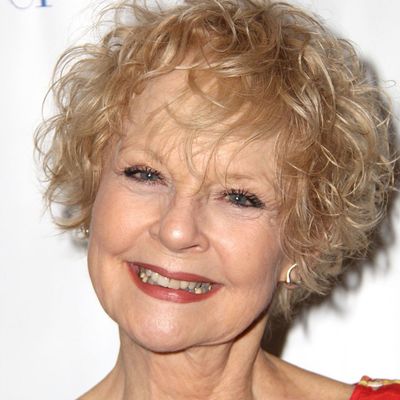
It may not be Halloween but we got the one and only Eve Harrington, Penny Fuller, with us in today's episode!.. Read More
From the show: BEHIND THE CURTAIN: BROADWAY'S LIVING LEGENDS » Podcast
Guests
Featured Shows
About
It may not be Halloween but we got the one and only Eve Harrington, Penny Fuller, with us in today's episode! Penny has been an Emmy Award winning familiar face on TV with such credits as The Bob Newhart Show, The Love Boat, One Day At A Time, Matlock, and Judging Amy but the theatre is her home with appearances in the original Barefoot in the Park, Cabaret, Applause, Rex, The Dinner Party, and the most recent revival of Sunday in the Park with George. Penny pulls back the curtain on her career to discuss how she won the role of Broadway's most sinister ingenue, what it was like losing her head to Nicol Williamson, and why she was almost Mabel Normand! Also, Penny shines the spotlight on Lauren Bacall, David Merrick, Robert Redford, and Jake Gyllenhaal. Become a sponsor of Behind The Curtain and get early access to interviews, private playlists, and advance knowledge of future guests so you can ask the legends your own questions. Go to: http://bit.ly/2i7nWC4
Transcript
This transcript was automatically generated and might contain errors.
[0:00] Robert W. Schneider: Dear friends, we are so sorry about the ads. They are a nightmare in every way, but with your donations, we can get rid of ads someday.
[0:09] Kevin David Thomas: Beautiful Kevin.
[0:10] Robert W. Schneider: Thanks, Rob. Bach and Harnick are smiling so much. Friends, yes, we are back with a new plea. Much like those adorable puppets from Avenue Q, we are asking for you to give us your money.
[0:23] Robert W. Schneider: For those of you who have headed over to Patreon to throw a little money our way, we thank you so much from the bottom of our hearts. Your contributions are the only budget we have for this show, and it provided us a new soundboard and better studio space. So a thank you.
[0:23] Kevin David Thomas: Thank you.
[0:36] Robert W. Schneider: And as you know, nothing is more fulfilling than talking to the legends of Broadway and hearing them share their thoughts, wisdom, and talents with all of us. However, it does cost money. And if you want to help us keep the show going, please head over to Patreon.com. That's P-A-T-R-E-O-N.com. Search for Behind the Curtain, and you can give as little as a dollar a month. And trust me, that dollar will help us more than you will ever know.
[1:00] Kevin David Thomas: Plus, for certain monetary donations, you will get to pick your favorite thing and have advanced knowledge of our future guests so you can ask the legends your own questions.
[1:09] Robert W. Schneider: Ooh.
[1:10] Kevin David Thomas: Or you can simply leave canned goods and an original cast recording of How Now Dow Jones outside our doors if you don't want to contribute on Patreon.com.
[1:18] Robert W. Schneider: Truth. So once again, please head over to Patreon.com. That's P-A-T-R-E-O-N dot com to help us out. Thanks.
[1:24] Kevin David Thomas: Thank you.
[1:26] Robert W. Schneider: Hi, I'm Robert W. Schneider.
[1:27] Kevin David Thomas: And I'm Kevin David Thomas.
[1:28] Robert W. Schneider: And this is Behind the Curtain: Broadway's Living Legends. Don't forget to follow us on Twitter at Broadway Gurden. And make sure to join our Facebook page at Behind the Curtain: Broadway's Living Legends. And follow us on Instagram at Broadway Curtain Podcast. Plus, you can always listen to our podcasts on Broadway World and Stitcher.
[1:44] Robert W. Schneider: Sally Bowles, Corey Bratter, Eve Harrington, Anne Boleyn, Princess Elizabeth, Mimi Schwinn. Those are just some of the great roles that were made even greater in the hands of today's guests. Her first Broadway appearance was in the original Barefoot in the Park. And that was soon followed by Cabaret, a star-making turn in Applause, a hair-pulling experience in Rex, plus An American Daughter, The Dinner Party, Sunday in the Park with George, and countless television appearances in shows like Love American Style, The Love Boat, Murder She Wrote, Law and Order, Mad About You, and the films All the President's Men and The Beverly Hillbillies.
[2:17] Kevin David Thomas: Ooh, one of my favorites.
[2:18] Robert W. Schneider: Yes. To tell us what it was like to work with such artists as Neil Simon, Robert Redford, Lauren Bacall, Wendy Wasserstein, Richard Rodgers, Anita Gillette, and so many others, here is the wonderful Emmy Award-winning PENNY Fuller.
[2:33] PENNY FULLER: Penny, this resume exhausts me. My God.
[2:36] Robert W. Schneider: I'm exhausted listening to it.
[2:39] PENNY FULLER: You did it.
[2:40] Robert W. Schneider: I know. Wow. It's amazing. There is some confusion. I am— is it IBDB lists a different Broadway credit for you as your debut?
[2:49] PENNY FULLER: What does it list instead?
[2:50] Robert W. Schneider: The Moon Besieged. Remember that?
[2:52] PENNY FULLER: Uh-huh. So what we're gonna start there. What— and then we'll go back in time. What is—
[2:55] PENNY FULLER: I never told anybody because first of all, I read for the two parts and I didn't get them, and they asked me to understudy. So I thought, okay. And then they said, We need you to come on in the second act in a square dance. I said, No, I don't want to because I don't want my Broadway debut to be a square dancer. So they said, We'll put you in a hat. I said, fine. And nobody was ever supposed to know. Somebody told. And it ran— the play ran one night.
[3:29] Robert W. Schneider: Now that's not fair.
[3:30] PENNY FULLER: Well, I don't know how to get, but I was in the program.
[3:32] Robert W. Schneider: Were you in the program listed? Do you think?
[3:33] PENNY FULLER: I don't remember. I think so, yeah. And they won't take your age off either, ID and be whatever.
[3:43] Robert W. Schneider: No, no, I won't, because except some people knew smart enough not to put it on the city.
[3:47] PENNY FULLER: Well, you just didn't say anything in the first place.
[3:49] Robert W. Schneider: But I—I didn't know. In fact, when I got to New York, I looked so young I put some ages on.
[3:54] PENNY FULLER: No. Really?
[3:55] Robert W. Schneider: You would add— you would make yourself older.
[3:57] PENNY FULLER: Yeah, 22.
[3:58] Robert W. Schneider: Yeah, instead of 21.
[4:02] PENNY FULLER: Right. Now I'm taking them off anywhere I can.
[4:07] Robert W. Schneider: So I have to ask you, growing up in North Carolina, how did you discover your love of theater?
[4:13] PENNY FULLER: Oh, how long is this podcast?
[4:15] Robert W. Schneider: Right.
[4:15] PENNY FULLER: We go.
[4:16] Robert W. Schneider: Yeah, well, you just go.
[4:17] PENNY FULLER: You just go. Yeah. So, well, I was a child of divorced parents.
[4:22] PENNY FULLER: Right. In those years it was divorced. You didn't like say it was hard shots. People didn't talk about that. So I was up and down. Sometimes all three of us, and sometimes just Daddy and I lived in New York, up in Briarcliffe Manor. And then sometimes Mommy was there, and sometimes Mommy and I lived in an apartment in New York. So that's kind of how I was in love with New York before. I used to come in from Briarcliffe Manor, where we lived, and I was maybe five, and I would go to the Carnegie Hall to the Lita and Lola Rom Dan Modern Dance class. Oh, and I would do this stuff. But when we get off the train, I would look at the concrete— and this is in one of my shows. Well, you haven't seen that one, good.
So I would look at the concrete and I would see the mica in the concrete getting off the train, and it sparkled. And so I was always thought New York was all sparkle, sparkle, sparkle. So then my parents remarried other people, and I moved to Lumberton, North Carolina in the about seventh or eighth grade.
[5:32] Kevin David Thomas: Did you see any Broadway shows when you were—
[5:32] PENNY FULLER: Oh yeah.
[5:36] Kevin David Thomas: What was— do you remember your first Broadway show?
[5:37] PENNY FULLER: Of course.
[5:37] PENNY FULLER: Well, of course. Oh, I— my first was Three to Make Ready with Ray Bolger, because my mother adored Ray Bolger. I mean, I was tea tying. Then it turned out we went to see High Button Shoes because my great uncle, who was actually married to my great aunt, but actually divorced from my great aunt, was in it. Bill David, his name was, William David, and he was— the last thing he did was playing Pop in Pajama Game. Oh, so you know, I thought that was so very exciting. But I wanted to be a movie star then, and I think I was five by this time. Oh, I wanted to be a movie star, and then he came out and started talking about the theater, and of course I kept my mouth shut about movies, and then he told me about left stage and right stage and center stage and follow the light, and I was hooked from that day on.
[5:38] Kevin David Thomas: Okay.
[6:30] Kevin David Thomas: Who were some of your favorite movie stars?
[6:32] PENNY FULLER: In those days?
[6:33] PENNY FULLER: Oh, when I was five, June Haver. Oh, I just thought she was— I wasn't serious then. Wasn't a classical actress.
[6:42] PENNY FULLER: No, I was— you know, I was a little girl. She was pretty, she had blonde hair, I had blonde hair, she was prettier than Betty Grable, and they were always in competition. And then when I went to see High Button Shoes, Sandra Lee, do you know Sandra Lee? She's still with us in around the corner from where I live. And um, but she was tiny, so I thought, oh, there, and I won't change my name because if I'm in the back row of the chorus, I'll want people to know I'm there. So I won't go, you know, change my name. So they'll know.
[7:11] Kevin David Thomas: Do you remember your first time on a stage?
[7:14] PENNY FULLER: Let me think for a second. No.
[7:20] PENNY FULLER: No, I don't. But were you doing plays and musicals in high school?
[7:25] PENNY FULLER: Well, Lumberton didn't have a drama department.
[7:27] PENNY FULLER: Oh, but the thing happened that we did have a senior play, and Miss Hamilton, who was the great English teacher we had, she was gonna do Girl Crazy. And I wanted to play the funny character, Brooklyn, I forget what it was. She gave that to Susan McIntyre and gave me the lead, which was the boring part. Oh, right. You know, the pretty— I was devastated. And then I went. In those days, women were not allowed at the University of North Carolina until their junior year.
[7:59] Kevin David Thomas: Wait, so women were not allowed on— like to go to school there until their junior year?
[8:05] PENNY FULLER: Okay. So you went to WC, I mean women's college.
[8:10] PENNY FULLER: Uh-huh. Or you went to St. Mary's Junior College in Raleigh. And I went there for one year, and I studied drama with Miss Davis, who was then 80. And she taught us to say, The sun is shining. Great. So I said to my mother, I said, I am never going back to St. Mary's. And she said— and she'd never gone to college. And she said, Why don't you go to someplace like Northwestern, way out in Chicago? I don't know where she got the name. I never even asked her. And I said, okay. And then I found out afterwards it had a drama department. So it was just by happenstance.
[8:49] PENNY FULLER: Yeah, like luck. Who knows? So then I found out that Patsy McAuley, who was going to Salem College, she didn't like it any either. So she wanted to go to Northwestern, so she called me up and she said, I'll go if you go. And I said, I'll go if you go. So my mother drove me to instead of all the way to Fayetteville to get on the train. That was 30 miles. We drove to Pembroke and they flagged the train down for you.
[9:16] PENNY FULLER: Oh my God. You flagged the train down for me.
[9:19] PENNY FULLER: On I got, and then picked up Patsy, and off we went to Chicago. And Patsy—
[9:27] PENNY FULLER: Patsy ultimately was like a fish out of water. She— she first of all she'd never seen so many boys. Right. She was so excited about that. But she— but she finally transferred back her junior, her senior year, yeah. But and I stayed for the two years that I was there. But um, three— three. I was a sophomore, that's right, three. But the— this I'm telling you, because Patsy said to me one night, they put all the transfer students in a hotel in the town. So she said, I'm scared to walk all the way to UT, University Theater, to audition. Would you walk with me? I said, sure. So we walk, and I've never done anything. Patsy had auditioned for Otto Preminger for St. Joan. I mean, I had only done that terrible part in Miss Hamilton's. Oh, I also played in the French play.
I did for— yeah, in high school. So I walked with her, and I'm waiting for her, and I'm reading the script to find out what a script really looks like. And the teacher, Dr. Schneiderman, said, You. You with the blonde hair. And I looked up, he said, Yeah. Me? He said, Yes, you read. I said, But okay. And of course, I got the part.
[10:36] PENNY FULLER: Oh my gosh.
[10:37] Robert W. Schneider: And the rest is history.
[10:38] PENNY FULLER: Kitty Duval in The Time of Your Life.
[10:41] Robert W. Schneider: Oh my God. Wow. So you're done in Chicago, you come to New York, start pounding the pavement. Do you start looking for an agent? How do you know what to do? How'd you know what to do?
[10:59] PENNY FULLER: It wasn't so scary.
[11:02] PENNY FULLER: Not scary. It wasn't so— first of all, it wasn't so laid out what you do when you can't do. And it wasn't like tall buildings. It was just kind of you— it was a kind of a village. And you sort of soaked up what people told you. I got a job working for some magazine or something where one day they asked me to type some checks. I thought I'm gonna throw the whole thing into bankruptcy. But that was— and I did a couple of photo shoots where I was in true romance magazines.
[11:38] Robert W. Schneider: Oh, you know, Reggie.
[11:40] PENNY FULLER: Well, no, it was more dramatic. But he's leading me up the state, you know, that kind of thing. And then I went to audition for— because you didn't have to be in equity for off-Broadway, then equity being the union. Yes, and I went to audition for a show called OK, right? And I did my audition, they said to wait. And um, remember what you sang?
[12:05] PENNY FULLER: No.
[12:06] Robert W. Schneider: Okay, I know.
[12:07] PENNY FULLER: Probably— no, I remember later on things I sang. But the parts were the— what were they called? I can't think, not the Kit Kat Club, that's Cabaret. Anyway, whatever. There were three little— six little parts, whatever we were. And um, so you didn't have to sing that well, you just had to be cute. And um, so I— they wanted me to wait, and I watched, and there was this girl that got up there that I thought was so fabulous, and she did her audition. Let's see if I can do it. When the glimpse of stocking is looking something's shocking. Now heaven knows. Anything goes. Do you know who it was?
[12:49] Kevin David Thomas: Linda Lavin.
[12:50] PENNY FULLER: Oh my God, really? She was auditioning for the same thing. And that was— well, because we became friends, but I mean, but I remember that sounded very much like her, I promise you. It was a very good imitation.
[13:02] Kevin David Thomas: We've never had a Linda Lavin impression on here before. This is a first.
[13:05] PENNY FULLER: I'm not sad about it.
[13:07] Kevin David Thomas: Yeah, well, she lived down in the village, and I lived right around the corner from where— oh, we both got cast in the show, by the way. I lived right around the corner from— it was the East 74th Street Theater, something like that. So on Saturday nights when we had two shows, she spent the night with me on the rollout, I mean the, you know, the folding couch. And she would— because she had was a real singer and her mother had been a singer.
[13:32] PENNY FULLER: And so Linda taught me all these great old songs. That's the first time I ever heard, I believe in doing what I can.
[13:39] Robert W. Schneider: Yeah.
[13:39] PENNY FULLER: And never wear an April face. I mean, she knew all these great jazz songs, and she taught them. I used to have the tape, and then I found it one day, and it was too old.
[13:52] Robert W. Schneider: Oh wow.
[13:53] PENNY FULLER: So that's how we became friends.
[13:55] Robert W. Schneider: Oh my goodness.
[13:56] PENNY FULLER: And there was a recording made of that production. I think it's seventy-three. I don't think it's even one of those.
[14:03] Robert W. Schneider: No, I think it's like only an LP.
[14:05] PENNY FULLER: Yeah.
[14:08] Robert W. Schneider: I may own it.
[14:09] PENNY FULLER: Uh oh, great.
[14:10] Robert W. Schneider: Really?
[14:11] PENNY FULLER: Oh wow.
[14:12] PENNY FULLER: Marty Stevens.
[14:14] Robert W. Schneider: Oh, can you walk us through the process of auditioning for a show back then as opposed to today?
[14:20] PENNY FULLER: Well, I don't audition that much today. It's not that different, but it seemed like we were all in this together.
[14:29] Robert W. Schneider: Yeah.
[14:30] PENNY FULLER: Not that they were chummy, but it just didn't seem like this immutable, what's that mean? This unconquerable wall.
[14:37] Robert W. Schneider: Yes.
[14:40] PENNY FULLER: That wall, that thing that it is today. But also, you know, my attitude, our attitude was like, oh, can I got to audition rather than, oh God, I gotta audition for this damn thing.
[14:52] Kevin David Thomas: That's so true.
[14:53] PENNY FULLER: It's very true. And you were taking acting classes as well, Tin Hanman.
[14:57] Robert W. Schneider: Uh and wait, no, Michael.
[14:57] PENNY FULLER: Michael, Michael. I'll think of his name.
[15:02] Robert W. Schneider: Oh, sorry.
[15:03] PENNY FULLER: No, that's okay. Michael, Michael, Michael.
[15:08] PENNY FULLER: Can't think. You'll know who it is. And then Wynne Hanman.
[15:11] Robert W. Schneider: Yeah.
[15:12] PENNY FULLER: And then, so you studied legit. I mean, you were like real serious acting.
[15:17] Robert W. Schneider: Were you always singing?
[15:18] PENNY FULLER: You know, I was like, well, you had voice. I didn't. I was like, you were the cute one that would like Harry Two. I couldn't really sing that much. I mean, I could sing, but I couldn't sing that was not my—I was a classical actress because of Miss Grout.
[15:28] Robert W. Schneider: So then why auditioned for musicals?
[15:30] PENNY FULLER: Because that was the only thing you could audition for if you weren't in the union. You could audition for the chorus.
[15:34] PENNY FULLER: So my next job was South Pacific, because the nurses didn't have to sing very well.
[15:41] PENNY FULLER: I'm a man, no, no, no. Run around the stage, and I think Linda was in that too. I'm not sure.
[15:46] PENNY FULLER: But um, so and then one day, um, John Fernley, the director, who had been R and Rogers and Hammerstein's production manager and whatever through the years, he came up to me. He had one glass eye, and I never knew which was the real one.
[16:09] PENNY FULLER: You know, it's just they both looked good, but they weren't—you knew one was something's not right in one of them, yeah.
[16:19] PENNY FULLER: And he had his arms in front of him like this, and he said, Sing something for me.
[16:23] PENNY FULLER: I said, Here in front of everybody? Uh-huh. In front of everybody?
[16:26] PENNY FULLER: And he said, Yeah, so I sang. Uh wait a minute, I'll think of it. You want—you said you could uh think.
[16:36] PENNY FULLER: Oh no, well. We can edit. Every time I fly my little uh da-da-da.
[16:42] PENNY FULLER: And every time I da-da-da-da-da, I never very are something about being uh I'm a disaster.
[16:50] PENNY FULLER: Okay. That was the song that I knew. I like it.
[16:52] PENNY FULLER: Um, and he said, Good, I'd like you to stand understudy uh Alan Ann McCleary, who was Nellie Forbush.
[17:00] PENNY FULLER: Well, that was great, and I had—I thought about how wonderful it would be if I had to go on, and I thought, in the city center, I couldn't possibly—it was at City Center.
[17:10] PENNY FULLER: So thank God I never had to go on, but then he comes to me later and he says, What are you doing this summer?
[17:16] PENNY FULLER: I said, Nothing. And he said, I'd like you to come to the Carter Baron Amphitheater in Washington and understudy Janice Page, who was playing Nellie Forbush, and then the next show we're doing is Carousel.
[17:33] PENNY FULLER: And John Waite and Jan Clayton are recreating their roles for the first time since the original, and I'd like you to play Carrie Pipperidge.
[17:43] PENNY FULLER: I said, Yes, I think I could do that. And it was, of course, the break of my life.
[17:50] PENNY FULLER: Whatever John Fernley got me, got something, you know, that other people didn't get, and he had all kinds of plans for me that never worked out.
[17:58] PENNY FULLER: But I mean, so the first day of rehearsing Mr. Snow, I—well, Carousel, there's John Wright, Jan Clayton, me, Irving Blackton, the conductor, and John Fernley.
[18:15] PENNY FULLER: And they said, okay, sing Mr. Snow.
[18:18] PENNY FULLER: So I sang Mr. Snow.
[18:21] PENNY FULLER: And if anybody on here is a friend of the person I'm going to mention, please forgive the story.
[18:27] PENNY FULLER: John Fernley's looking like this, and Jan and John are there, and I'm having to sing in front of one of them.
[18:35] PENNY FULLER: And when I finished, John looked at them and said, Well, she's no Gene Darling, which destroyed me.
[18:44] PENNY FULLER: I thought, oh my God, because Gene Darling was the original.
[18:47] PENNY FULLER: And after about two days, I said, Miss Clayton, Miss Clayton, I could I talk to you for a minute.
[18:52] PENNY FULLER: I mean, I know I—what can I do? I know I'm not. She said, Oh my God, you didn't understand. We hated her.
[19:03] PENNY FULLER: Oh my gosh.
[19:04] PENNY FULLER: Yeah.
[19:05] PENNY FULLER: So that was my real.
[19:06] Robert W. Schneider: Yeah.
[19:06] PENNY FULLER: Well, and so what was it like to be in a rehearsal with them or to share the stage with?
[19:10] PENNY FULLER: Well, it was just at the beginning, it was impossible to even imagine.
[19:17] PENNY FULLER: But then later, because they were so great.
[19:19] Robert W. Schneider: Right.
[19:20] PENNY FULLER: It was like, oh, they're the kids. I mean, they're just like all of us.
[19:24] PENNY FULLER: And I remained friends with Jan when we both were living in LA later.
[19:28] Robert W. Schneider: Yeah.
[19:29] PENNY FULLER: What a break.
[19:30] PENNY FULLER: Wow, it was.
[19:31] PENNY FULLER: It was. By this time, and I don't know how, I had an agent.
[19:36] PENNY FULLER: Oh.
[19:38] PENNY FULLER: I think somebody told him, and he saw me in okay or something, you know, cute.
[19:45] PENNY FULLER: Yeah.
[19:45] PENNY FULLER: And his name was um Howard Hoyt.
[19:51] PENNY FULLER: And he worked for Lester Leicestershire.
[19:55] PENNY FULLER: And there was a—his brother was some Leo Sure, I think, out in Hollywood.
[19:59] PENNY FULLER: And they were somebody like this.
[20:01] PENNY FULLER: And so Howard Hoyt said, I'm sending you up for this play.
[20:05] PENNY FULLER: There's a tour, a national tour of Toys in the Attic.
[20:10] PENNY FULLER: And uh this is to remind me to tell you something about it.
[20:13] PENNY FULLER: Okay, good.
[20:14] PENNY FULLER: So it's a play by Lillian Hellman, and it's a Southern girl.
[20:19] PENNY FULLER: I said, Oh, I don't know.
[20:20] PENNY FULLER: So I go and I audition, uh, I read the scenes with the stage manager, and there's some people out there, but Kermit Bloomgarden, the producer, is not out there.
[20:30] PENNY FULLER: So I read, and they say, Could you wait a minute?
[20:33] PENNY FULLER: And they come back and they say, Could you back come back at four?
[20:38] PENNY FULLER: This was two.
[20:40] PENNY FULLER: I said, uh, yes, sir.
[20:43] PENNY FULLER: And I went and did whatever I did, and I came back at four.
[20:47] PENNY FULLER: To the theater, abroad.
[20:48] PENNY FULLER: To the theater, yeah.
[20:49] PENNY FULLER: Yeah, the Hudson.
[20:50] PENNY FULLER: Oh, uh huh.
[20:51] PENNY FULLER: Oh, which I come back, and there's one more person in the audience, it's Kermit Bloomgarden.
[21:00] PENNY FULLER: So um, I do the scene, and they offer me the job for 250 dollars.
[21:06] PENNY FULLER: I said, a month?
[21:08] PENNY FULLER: I mean, I didn't know.
[21:09] PENNY FULLER: I didn't know.
[21:10] PENNY FULLER: I never—I mean, I had, you know, so uh so I went on tour for five months or something like that in one of the hardest plays ever.
[21:22] PENNY FULLER: You know, a couple of towns we stayed a while, but there was a week in Cincinnati, a week in Columbus, Ohio.
[21:28] PENNY FULLER: It was the best training ever.
[21:31] PENNY FULLER: To go out and do something night after night to see what that's like, to be judged by a new critic week after week, and understand that one's gonna say, and did, that terrible whiny Agene, and the next week they'd say the only organic performance was the lovely little, you know.
[21:49] Kevin David Thomas: Yeah, boy.
[21:50] PENNY FULLER: So in the meantime, oh, I don't have to tell you that story.
[21:55] Robert W. Schneider: Yeah, that one?
[21:57] PENNY FULLER: Yes.
[21:57] PENNY FULLER: Okay.
[21:58] PENNY FULLER: So we're in rehearsal, and darling, dear, wonderful Anne Revere, who had been blacklisted, you remember, came over to me one day, and I was playing Constance Bennett, who was playing my mother.
[22:10] PENNY FULLER: Oh.
[22:11] PENNY FULLER: And she began my training for acting with my back.
[22:14] PENNY FULLER: Because I acted with a lot of stars as the daughter or whatever, and I learned to be very expressive with my back because they were always upstaging me.
[22:25] PENNY FULLER: And she—Anne came and Constance at that point was kind of cruel.
[22:31] PENNY FULLER: And but she—I know it was terror.
[22:34] PENNY FULLER: But I didn't know it then.
[22:35] PENNY FULLER: But now I understand.
[22:36] PENNY FULLER: Anyway, Ann comes up to me, puts her arms around me, says, Call me tonight.
[22:41] PENNY FULLER: So I call her, and she says, My husband, Sam Rosen, was—I'm sorry to be saying this, but it's true, Ann and Sam.
[22:50] PENNY FULLER: He was blacklisted, and he's trying to get back into the business.
[22:54] PENNY FULLER: It was really tough, and he's been working with this girl, and she was the one who was supposed to do the part until you came, and they had him come back at four.
[23:03] PENNY FULLER: And she said, my husband's a really wonderful director, and he's been working with Constance, and he'd be glad to work with the two of you.
[23:14] PENNY FULLER: And it didn't occur to me that that was, you know, unethical.
[23:17] PENNY FULLER: What it meant to me was she wouldn't be mean to me anymore, and maybe we could solve it.
[23:22] PENNY FULLER: Well, I go the next morning to Sam and Ann's apartment, and in 27 seconds, I realize this is not about making it better.
[23:31] Robert W. Schneider: Right.
[23:31] PENNY FULLER: It's about making Miss Bennett better.
[23:34] PENNY FULLER: So okay, so and then I realize I've done this unethical thing, and I'm feeling terrible.
[23:40] PENNY FULLER: Then we do a run-through, and Lillian Hellman and Constance Bennett and I are taking a cab back home after the reading, and Lillian's in the front.
[23:50] PENNY FULLER: She said, That damn Sam Rosen was there, trying to tell Scott McKay, that was the Jason Robard's part, uh, what how to do it.
[24:00] PENNY FULLER: I just—and Constance grabbed my hand and squeezed it.
[24:05] PENNY FULLER: And from then on we were friends because we were cohorts in this bad thing that we'd done.
[24:10] PENNY FULLER: And we ended up being really good friends, as it worked out.
[24:13] Kevin David Thomas: Yeah, I did.
[24:15] PENNY FULLER: Wow.
[24:16] PENNY FULLER: But uh, I didn't know that whole story till we got on the train from Montreal to Toronto when Patricia Jessel, the British actress who was playing Maureen Stapleton's part, told me that whole story of the other girl that she had the part.
[24:30] PENNY FULLER: Then we arrived in Toronto, and there was a tr—critic there named Nathan something.
[24:36] Kevin David Thomas: Uh-huh.
[24:36] PENNY FULLER: And everybody in New York was terrified of Nathan.
[24:41] PENNY FULLER: And so everybody on the—and so the next day we open, and I don't read reviews anymore.
[24:47] PENNY FULLER: That was how I learned, but sometimes I'll read them later.
[24:51] PENNY FULLER: But anyway, it's uh he liked me and hated the play or whatever.
[24:55] PENNY FULLER: Then there was this other guy, Ron Evans.
[24:58] PENNY FULLER: Funny that I can remember.
[25:00] PENNY FULLER: I am amazed.
[25:01] PENNY FULLER: And he wrote, and I quote perfectly.
[25:06] PENNY FULLER: It took Lillian Hellman nine years to write this play, and a little slip of an ingenue, PENNY FULLER, three minutes to wreck it.
[25:16] PENNY FULLER: That is the meanest thing.
[25:18] Kevin David Thomas: Like that's good times and bum times.
[25:26] PENNY FULLER: So you want to know about classy, so I get a call from Kermit Bloomgarden.
[25:30] PENNY FULLER: He says, Don't you pay any attention to that? We love what you're doing.
[25:34] Kevin David Thomas: Oh, that is classic.
[25:36] PENNY FULLER: That's when there was class in the theater in the producers.
[25:39] Kevin David Thomas: You're right.
[25:39] PENNY FULLER: And there were producers.
[25:40] Kevin David Thomas: Right.
[25:41] PENNY FULLER: Not 57 people.
[25:44] Kevin David Thomas: Exactly.
[25:44] PENNY FULLER: Exactly.
[25:46] PENNY FULLER: So um, so that was my big dramatic thing, was that.
[25:52] Robert W. Schneider: Right.
[25:52] PENNY FULLER: And then after that, you go back to New York after tour, and maybe a little time goes by, but you get into Barefoot in the Park.
[25:59] PENNY FULLER: Oh no, then I do my Shakespeare.
[26:01] PENNY FULLER: Well, I don't know when I did my Shakespeare, but the point is I did three or four or five Shakespeare's in the park.
[26:08] Kevin David Thomas: Oh, you did.
[26:08] PENNY FULLER: Going back to the classical idea.
[26:10] Robert W. Schneider: Oh, right.
[26:10] PENNY FULLER: At its beginning stages before Shakespeare.
[26:12] Kevin David Thomas: Tell us a little bit about what that was like.
[26:14] PENNY FULLER: Joe Papp before Shakespeare in the Park was Shakespeare in the Park.
[26:16] PENNY FULLER: Yes, well, it was Jerry Friedman was the director of it.
[26:20] PENNY FULLER: And you know he's still alive.
[26:22] PENNY FULLER: Down in North Carolina, I know that.
[26:24] PENNY FULLER: And he's written a new book.
[26:25] Kevin David Thomas: Yes, that's what I'm talking about.
[26:26] PENNY FULLER: Yeah.
[26:27] PENNY FULLER: Okay, so I have nothing to say.
[26:29] PENNY FULLER: You know everything.
[26:32] PENNY FULLER: Well, originally there were two little boxes on the stage.
[26:37] PENNY FULLER: And you would—I would run to one box and say, Oh, Rosalind, Rosalind's sweet my cuz be merry.
[26:45] PENNY FULLER: And then she'd come over and she'd say, I can't, whatever she said.
[26:48] PENNY FULLER: And then sometimes because the mics were in those little boxes, and that was the way it was.
[26:53] PENNY FULLER: Originally.
[26:55] PENNY FULLER: Then the next show we did, they—oh well, I don't know what I did, but the next Henry the—No, Richard III and Henry the Fourth.
[27:03] PENNY FULLER: Okay. We both had, we both, I think, had these big microphones that we put down our front. And so you could speak and fine, and it was fine, except that it picked up police calls. You're not kidding. I am not kidding. No, but that was better than running to the top. We're making improvements here. This is good. But that was great to do those shows. Oh, it was great. So it was Richard, it was As You Like It. Or as we sometimes said, Can you bear it? It was Richard III, and it was Henry the Fourth, part one and part two. Incredible. Yeah, I was very lucky. Yeah. Very fortunate because I got to do what I was really wanting to. You're trained to do. Yeah. Yeah. So then somewhere along the line, they said they're going to fire the understudy or the standby.
Right. Standby in Barefoot in the Park. So I go and I read for it, and then they give me the part. And a standby is somebody who in those days would either call in and say, I'm going to be at home if you need me, or I had to go to the theater, make sure everything was fine, and then say I'll be in seat 406 at the Booth Theater if you need me. Okay. So I'd had four rehearsals. Four. Four. The third act had not even been typed on real paper, it was still onion skin paper. When we did the third act, it was a three-act play. Remember those? And um so I get to the theater, and there Harvey Madlinski, may he rest in peace, was white as a sheet. And I said, What's the matter? I said, Liz is out. She heard she's done something to her back.
You're gonna have to go on. Elizabeth Ashley was in the middle of the house. I'm sorry, of course. Elizabeth Ashley, my best friend. Sorry, Liz. No, no, no Bessie. Just for a while. Bessie May. So um I said, I opened my purse, I took out a dime, and I said, Would you call my boyfriend who's at my house and tell him to bring my sneakers? Because Liz's sneakers don't fit me. Thank you. I don't know what took over, but the greatest calm you've ever seen. I go into her dressing room, she's still there, she's writhing on the couch in pain. She's so worried about me. I'm worried about her. I'm putting on makeup, which I don't think I even know how to do. I'm putting on her clothes. I said, I don't have a wedding ring.
She said, Well, my ex-husband Jimmy Ferrentinos is in there with that. So I put on Jimmy Ferrentinos. And I get dressed, and there was a great big fur, uh sheep, some kind of curly sheep coat they put on me. Then I almost fell in the floor. It was so heavy. And I hear them say, and tonight, Melisabeth Ashley will, oh. And I'm still fine. I've got my the thing. And they said, okay, and he pats me on the back and he says, Good luck. And I walk on and I do the first thing. I put the flowers in the paint can and thing. And then I don't know what's next. And that's 14 minutes, seconds into the play. And I have a three-act play. And I thought, if I just go sit down on that platform and cry, they'll understand.
Nobody would not agree. So I go to the platform to sit down to cry, and I see the suitcase. And in the suitcase is a log, which Corey, the character takes, to uh put in the pot little pot belly stove. Yeah. I put it in, I never forgot another thing. Yeah, and Redford and Millie would come on with their eyes were like and I tried to let them know I was okay. Oh man. And I eventually took over. You did? Yeah. Playing opposite Robert Redford. Yeah. And then Robert Reed and then Tony Roberts. And then Tony Roberts. And working with Robert Redford before he was Robert Redford. Good actor to share a stage with. Oh, he's fantastic. He was fantastic. He was Robert Redford then. He was just and a lot of that stuff was not Mike Nichols.
That was Robert Redford. Oh yeah. A lot of that the s the ties he takes off, he's a s what is he at square? What is it? A lawyer, right? He's a lawyer. Yeah, but what what's the word she goes? Stuff shirt. Oh yeah. He takes off his ties, opens a big dictionary, and closes, puts them in the to press his ties. Huh. That's Redford. That's not Mike Nicholson. Oh, that's cool. I mean, as wonderful as Mike Nichols is. I mean, Redford's a funny guy. Yeah. And he's the kind of funny that the line will happen or a thing will happen, and it'll be silent, and then about eight seconds later, he'll laugh. You know, it's that delayed thing funny. He's so good. Uh is Cabaret next for you after? Yes. So how did that come into your orbit?
Well, I had finally started studying with this wonderful teacher, David Craig. Oh yes, legendary. Legendary. Oh yeah, we should talk about him. I'm talking about him. Well, he was particularly at that time, there were lots and lots and lots of uh actors singing, like Rex Harrison. And it was it was a time when there was actors, singers, even actors who didn't sing, were doing a lot. And he taught a class, which I still kind of, if anybody asks me, I'll coach them a little bit with his technique. It was a fantastic thing. And for me, I had tried to get into his class two years before, and I didn't, and the gods were out looking out for me again because when I got to him, it was just ready and I just blossomed.
But he taught somehow, he constructed a um method or a technique for where you were not, as most, well, everybody is, but particularly actors who don't sing so much. You are not being sung by the song. You are bigger than the song. You put the song into you. So you're not, and you're not doing all these things where your arm goes out that you didn't mean for it to do, but it did. He constructed a technique that would take you away from that and would give you a foundation, and you could really fly as a singer or a talking singer or whatever. Yeah, and I was studying singing by this time, and it released me as a performer, and certainly released me vocally, and I went to audition for Cabaret.
And at that time there were about four of us and that were the finalists at that point. And as far as I've always heard, you know, two were for this one and another one was for this one, and it went on like that, and it was just and Hal Prince, I heard was being driven crazy, and then somebody said Jill Howarth, who's that girl in Exodus. Oh, well, if she can sing Anna Note, I'm hiring her because I'm tired of fighting between you guys about the and she did, and they did. So they got out of town in Boston, and she broke her leg and was having a lot of vocal problems. So they decided they would get a standby when they got to New York, and it turned out to be me. Oh, and that time I went on after four rehearsals.
Um I uh yeah, uh and uh I played it over a hundred times. Okay. So did you like playing Sally Duncan? I loved it, and they offered me to take over, but like an idiot, I said, Well, I've done that a hundred times, I gotta do other things. So they hired some kid named Anita Gillette. Yeah, I've heard of her before. You might know her. Um uh we don't haven't talked about La de Linia that much on the show, but it'd be nice to just remind our listeners of her. I mean, some people know her as you know, Kurt Weill's wife, but she was much more of an artist outside of that. Oh yes, she was fantastic. She played Floyd and Schneider in this production book. And and you did you talk to Anita about her?
Because we both loved her. And that first day I went on, they were all catering to me, giving me vinegar and water for energy and pinning Jill's costume or ripping it to so it fit. I can't remember. And Lenya was just so wonderful and kind to me. And to watch her every night, well, a hundred times, a hundred times playing those parts, playing singing those songs, was uh as good a lesson in how to do it as any teacher almost that I ever had. I don't really mean that because I was lucky to have four great teachers. But she was extraordinary, extraordinary. And you'd look at her and you'd say, and on top of that, she has all that life that she has lived that you can't. Right. I mean, especially what she's singing about and what the show is about, and how 20 years earlier this she was there.
I mean, did were you aware uh as you're watching the piece being put together, especially if you were watching it as a standby, that this piece was different, that this of this was a darker uh musical theater piece that Broadway really hadn't seen something like that? Yes, and it wasn't as dark, of course, as it is now, right? Which I think is better worse, by which I mean it was you knew it was a little different, but when they would sing The Sun in the Morning, it was so pretty. And then when they did it at a party, you were sort of tapping your foot, and the next thing you know, you were really sick. So it wasn't so dark that you already knew where you were. Right. That's why I thought it was so brilliant.
Yeah. Yeah. Wow. That's really amazing. And then Jack Gilford. Oh man. Loved him. He was so funny. And they were all so kind to me. Yeah. You know, as the person well, but pretty soon they were bored when I went on. It wasn't exciting anymore. Yeah, he was wonderful. And he brought he went to Budapest on some movie or something, and he came back to the show and he brought me a beautiful pin from Budapest. And it's Hungary is my favorite place anyway for some reason. Oh, what a sweetheart. Yeah. Um when did you start to develop your interest in uh film and television work? When I didn't get Promises, Promises. Oh. See, they sat up like that when I said that, didn't they? Can you take us through with that?
I mean, yeah, yeah, I auditioned for it and then I didn't get, I mean everybody practically was sewing the costumes and I didn't get it. So I was doing probably Henry the Fourth or something in the park, something like that significant. Yeah. And I thought, well, now I'm just going out to Hollywood. I'm just and I went out and I got a TV show, Miss Judd for the Defense. Oh, okay. And my mother was Margaret Leighton. My father in the play, I mean in the show, my sister was Carrie Snodgrass, and Brian Bedford was my brother. Oh my gosh. So that's not bad. And the director, John Ehrman, when I had my big scene and I said something like, No, Mother, I won't, it was projected. Yes. And it went through the sound stage, went like that, and John Ehrman came up to me and whispered to me, Too much.
So then I somehow or another I moved out there. And I got no, I think I moved out there because I got did this Hollywood, this um TV series, Love American Style. I did the pilot with Michael Callan. And we also did one other episode because they loved our characters so much. And I think that's why I moved out there. And from that, um, I can't think of their names. Jim and oh god, I can't believe this. Well, you'll look it up. Um I can see them. They wrote it pilot for me. And out there, yeah. And when they came to me and said, We need a snip of your hair because when we get the rug for the apartment, we wanted to, and I thought, Wow, this is what being in Hollywood's like. And then I got my own parking space at Paramount.
Oh wow, I don't know. This is kind of nice. And the pilot, and it was so negative, or they didn't like it or something, so they never even showed it on dead pilot season. Oh yeah, so that was that. But by that time I decided to move and because I had a piece of film. Right, exactly. And I was always there trying to do arty stuff, in spite of the fact that I was there. You mean in theater or in film and television already stuff? Both. Really? And I turned down, I can't tell you how many cute little sitcoms, because I was sure that I was going to get something that I would then not be the second person of the standby.
[40:29] PENNY FULLER: Yeah. But I that was what I wanted. Because you wanted the yes. Yeah, I wanted at the park instead of the second time around. Were you out there when the call for applause came? Mm-hmm. So how does they flew me in? No, no. They flew back Hal flew me in for company. That's what it was. And I'm auditioning for company, and I and they said thank you. And I, as I'm walking out the stage door, this guy walks by and he said, PENNY FULLER, what are you doing here? I said, What do you mean? He said, I'm the stage manager for applause. Oh. And we we were looking for you, but they weren't willing to fly you out. Yeah, well, Hal was. So I uh I um auditioned for it, and it was between me and another girl, Diane McAfee.
Yeah. They gave me the script and they said, We'll let you know. And I read it on the plane going back, and I thought, and this is I thought I hope I don't get this because it's not very good. And I can't, I can't I I'd have to do it. And I didn't get it. It was Diane McAfee. Okay, fine. Okay. So I'm oh, that's when I'm finishing the pilot, I think, somewhere around there. Yeah. And um so I get a call from my friend Bill Craver. He says, I'm going to the gypsy run through of applause. The gypsy run through is the run through before you go out of town. That's right. Like the final dress rehearsal that they're all. So that everybody in town can see it. And all the other shows come to see it. And I said, Well, let me know how it is.
And he said, Well, I think it's fantastic. The call is wonderful, it's gonna be a big hit, but the girl is not very good. I said, Oh, really? And then I go on with my life, and now I finish this series, and I'm having my hair washed at the O'Reilly Beauty Salon on Santa Monica Boulevard next to the Santa Palm car wash. And they bring me the phone when my head is in the sink, and it's my then I had a manager who, or maybe I didn't have a manager. No, I didn't have him yet, I don't think. No, yes, I did. And he said, um, they want to fly you out to see if you want to replace it. Applause. I said, Oh, when? He said, tonight. Oh, oh. So I threw things in a bag and flew to Baltimore and got went to look at the the show, and I was in the second row.
I said, Take me out of the second row. Those gypsies come on, they see me there, they'll know why. Especially Miss Replace, Miss Understudy, Miss Everything. She said, Oh, you will just pretend like you just say you're visiting your aunts. I said, I'm telling you. And of course, I'm sitting there, and the gypsies come on, and Gene Foot does a pirouette and goes, Oh, Petty Fuller's in the audience. Petty FULLER is in the audience. And I saw the show, and I think I understood what was missing is that she was not old enough, uh, Diane, to be a threat to Bacall. She didn't have the aesthetic weight in some way. She's a great singer. Um, and mother of Maud Maggart and uh Brendan Fiona Apple. Fiona Apple.
Maud would not be here were it not for me. You know. So I said, okay, and I remember going the next day to meet Bacall, and I thought, God, let her know that if I'm good, it will only help her. Right because that's what it needed. There was no tension of oh God, you know, and she and I became like that. Oh, really? Yeah. And so it turned out it turned out rather well.
[44:07] PENNY FULLER: Yes. It's been a little uh I don't want to say scary, but it's what if that company's already put together and then you show up. I mean, that must have been a little intimidating. Oh well, well, it was. Um, Bonnie Franklin and her manager who were friends of mine said took me to lunch and said, or dinner or whatever, and said, the gypsies are tough. Yeah. Whoops, and um, as a matter of fact, here comes the toughest one now, Nick Dante. He's really tough. And he comes in, he doesn't think Diane should be fired. I said, Oh, and he comes and he sits down, he's got a notebook, and he says, Hello, and I think, oh my god, my life for the next nine months of display depends on the next three minutes.
And I said, and we talked for a second, I said, What's in the notebook? And he said, Oh, I'm a writer. I said, You are, and he said, Yes. I said, What are you working on? And he told me this story and this thing that he was working on. Of course, he eventually was the first writer of chorus lines. Oh my goodness. Yep. Wow, and we became friends, and he would leave me little notes and little flowers saying for PF from PF for PENNY FULLER from the Phantom Fairy. And so when we started rehearsal, Ron said, Well, what are you doing? This would be Ron Field. Ron Field, I'm sorry. No, no, no. I just looked at it. I mean, we got to Detroit and we started to rehearse. And he said, What do you do? I said, I'm rehearsing. He said, No, you have to do what you did. How can I fix? I said, but this is what rehearsal is. You find what you're doing. So it was not easy. It was not easy, but she was great.
[45:46] PENNY FULLER: When did you realize that you were in something that was gonna do okay? I don't know that I even thought about it. Really? I think I I think it was I think it was a given. Yeah. I think I I mean, how could it not be with a star like that? But I mean, and and the people writing it and everything. I don't think that was in my mind. My mind was surviving and making this play, making this part, making this move that they made justified. Right. And I did it. I I remember I asked for the speech where Eve tells her autobiography in the dressing room to the you know, the poor pitiful Eve. I said, You've only got like four lines. I think you need to give her more. And so they did. Oh wow. Um, and um and I don't know why.
I don't know why, but I just knew I knew how to play that song. I knew how to play that part. I was I would play the most innocent little thing, and I remember I had an image of a cat, so sometimes I'd sit like a cat and just watch her like a cat. But I wasn't like evil, and you wouldn't really know it, I don't think if you saw it, but then you'd it you somehow empathically know it or sympathically, and then when she finally got her thing, and then her come up and was it was hard. It was hard to do that negative thing for so long. It really was. Really was, but I loved I had a lot of money. What a part though. I mean, really great part, yeah. And great show, and great to have such a great part in which she's the star. Right. And you still have a great part. Exactly, yeah. And you get to have your spotlight.
[47:30] PENNY FULLER: Yeah. Do you have any memories of making the movie of applause, the TV movie? Yes. Oh. Which listeners, you can go on YouTube and watch it. It's there. London. It's all there. Yeah. London. We did it in London. Well, his my favorite story. Oh? Um, I went for a fitting because they were changing the costumes. Halston was doing the costumes. Oh. Base because that was Betty's favorite, uh, Miss Bacall's favorite uh designer. And um, so I there was this fringe jacket that Ray Aggie on the first the first designer had designed a dress, the one that did the play, the show, and it had fringe on it so that when she moved it looked like she was moving even more. And in the TV, they decided to make it a very simple dress with a fringe jacket.
And I remember the little tailor l Taylor lady taking this very expensive, I'm sure, jacket and cutting the fringe when it was on my hand, and I thought, what if she made a mistake and got it too short or too long? Okay. We're in London and there's a lot going on. I've done my first scenes, but I haven't done the second part with the other Eve. And um I thought, well, I should try on my costume for that party for the party scene to see if it fits. And I put it on the dress, it fit, put on the jacket, and the sleeves were very long. And I thought, I don't understand that. I thought and Betty had already worn. So I went in to I said, Betty, I don't Betty is Laura McCall. That was her real. Well, like she liked to be called by her intimates.
And I said, Betty, I don't know. She said, Well, I must be some mistake. Because of course Halston could not make a mistake. Right. So we looked, and the costume that she wore in the in the first musical scene was my got my jacket. Uh-oh. And if you look, and then later she put this one on for where we go out in the car. And if you see, then it's the right length. Yeah. So she said, I'm sure it was. It was I'm sure it didn't happen.
[49:40] PENNY FULLER: So that was my favorite story from that. Yeah. Uh, did you get to play opposite Ann Baxter at any point in the room? I did. So this is the movie Eve. This is the movie. What's that experience like? That was extraordinary. She was in rehearsal. Ron was not around, so the stage manager was directing it. And people were doing the thing you must never do, which is taking her bodily and saying, then she moves over here. Or just and she was, she was such a lady and such a class act. She was not, but then we had a break. And of course, I was young. I don't know that I'd have the s the temerity to do it now. So I go down to her dressing room, come in. Miss Baxter, I just want to say something to you.
Every Hollywood person wanted this part. And you are the only one who knows how to play this part because you were Eve, and you don't let people push you around like that. You stand up for yourself and you say, Don't touch me, I'll do it. Well, she loved me from that day on. You know, I'm not that she wasn't doing it, but she felt bad as the new person. But they and nobody meant to be bad. They were trying to help, but could save me from help, please. So for her opening night, I bought her a little silver apple from Tiffany's that said, um, I think it was for sacron or something like that. And it I had put it um goodbye, Eve, hello Margot, let love A B from PF. And then when I left, she wrote, she gave me the same little apple that said, Goodbye, Eve, hooray, PENNY. Love.
[51:18] PENNY FULLER: Oh, wow. She was so funny. She was so good. Well, why wouldn't she? But I mean, you know, to do a musical. Right. Take over a call. For a call, that musical, that character, that history, that Michigas. That's pretty epic. Yeah. If you don't mind my asking you, were you involved with Mac and Mabel at some point? Yes. I take that as a yes. I didn't know that. Yeah. Oh, well, I auditioned. Oh, I was supposed to. Oh, I know how it started. On my birthday, I got a call in LA. Penny, this is Gower Champion. Hello. He said, I have just told David Merrick to write out a contract for you to play Mabel Normand. I said, Oh, thank you so much. That's very exciting. I'm thrilled. And I'm happy birthday to me.
Happy birthday to me. Then I don't hear anything for a while. And then September I hear. Hello, PENNY. This is Gower Champion. Hello. Now about your audition. Come again. So I thought, uh so I prepare this audition. I have a dance audition. Oh, and I heard the gossip was, or the word was that I was I would do the second act fine, but was I funny? So I took Nancy Walker, yeah, who was the America's greatest female clown, and I said, Nance, will you help me with this? And she she said, We're gonna go see some Mabel Normand movies at the in Fairfax. And we look, Papel Norman wasn't funny. She was kind of the not the straight man, I mean she was funny because of the situation, but Marie Dress, all those other people were the funny people.
So I prepared this whole audition. I had that cane that you do like that, it becomes a cane, a thing, and all and I had a dance, I was doing how could you believe me when I said I was dressed as a little boy, and I had a short mini dress on and a coat over the I don't know, but I I had it all worked out, and I'm on the elevator going up to the stage at the Dorothy Pavilion, Dorothy Chandler Pavilion, and Gowers there and said, PENNY, what are you wearing? You're gonna be funny today? Oh my gosh. So I walk onto the stage.
[54:01] PENNY FULLER: And he moves the piano to a place so that I'm standing in the lights in the right way. He treated me with such respect, and I did my "You're Laughing at Me" was my ballad. And how could you believe me? And uh I didn't get it. Marsha Rodd got it. And three weeks later, she was fired, and Kelly, somebody, Kelly Bishop paper. Kelly Bishop, yeah. Yeah, Kelly somebody is got it. And um day Bernadette is sitting in the rehearsal, and she said, "What's Bernadette doing there?" And uh Gower said, "Oh, she's just looking at the room because she wants to rehearse in here." And after lunch, Kelly was no longer there, and it was Bernadette. So, okay, now in in the strange ways that the world looks, works.
I am now in San Diego doing, remember who I am, doing Juliet in "Romeo and Juliet," Viola in "Twelfth Night," and Dol Tear Sheet in "Henry Four Part 2." In rotating rep. The dream of every actor. Yeah. I am so thrilled. Where do you think "Mac and Mabel" opened out of town? San Diego. How time many times does anything open in San Diego? San Diego. On a Monday night. So guess who could go? Guess in the in the hotels, the little things that's what's going on had pictures of me on the covers. So there was some justification. Some, you know, whatever. And then so I go to the opening night and I look, and only I know the newspaper boy in the first act chorus number has newspapers under his arms. And it's the color version of the San Diego Union with me as Juliet on the cover.
What? Uh-huh. Uh-huh. So there is some kind of something. I don't know what, but something's going on. Then a couple of weeks later, we skip red wine, the assess associate producer says, "Penny, I'm calling you to warn you. We're now in LA, and Bernadette's having voice problems. And they are thinking of calling you and asking you to stand by." I cannot let you put on the air what I said to that. And I said, "What I said, and I said, and I am besides that doing these great parts." And they said that's why they thought you might want to do it, because you're just out of town doing some little plays. That wow. Oh, look at the little face he's always saying I should say we're very we're very lucky we have uh one of our uh listeners with us, uh Addison.
Uh and your girlfriend's having Anna? Mara. Mara. Addison and Mara have come in from California to watch PENNY's interview today. Oh and shocked, shocked by what we're hearing. Yeah, okay. Wow though. Oh, I know, I know. I have that in one of my shows. Good. And when I say that the next song I sing is "Time Heals Everything." Oh so funny. Um "Rex." I know. Oh, I'm sorry. No, it gets back up in a second. Don't worry about it. Don't worry about it. If you don't mind, I don't mind. I mean what listen. Again, the powers of whatever, giving me a musical in which I play Anne Boleyn and Princess and Soon to be Queen Elizabeth in the second act, with Nickel Williams, who's in one of the great actor, serious actressing, with Richard Rogers and Sheldon Harnick.
Come on. I know. It's over. I don't have to worry anymore. Before rehearsal started, it seems like shoot, this is it. Yeah. And and classic. About Henry VIII, yes, and all the things. You know, this trained actor. Yeah, yeah, you got it. Yeah. So well, Nickel was unhappy. Yeah. He wasn't, and I I do did really like him a lot. I like all the bad guys usually, the bad boys. And he wasn't drinking just white wine, if you get that gist. And he was miserable. And he they you know, he really could sing, but he sang, he did great Frank Sinatra uh imitations. He had a light voice. He didn't have that my boy Bill kind of voice. Right, crude. So it didn't, it didn't kind of work as well as they thought it would.
And he was miserable, and it was it had problems. And there are stories that you know, we could do chapter two, chapter three, and chapter four of my visit to you guys. Um but basically um trying to do it short. Well, we opened in in Bolt in um Wilmington, Delaware, and the only person who got a bad review was me. And it was printed on the show card in front of the box office because they got the rest of the show got a good review. So on I go, and then I w I keep fighting for uh a song, uh a change of there was a song, a beautiful song that they wrote, but it did not come out of the moment. And I kept, and the I'd have this huge fight with Henry, and he'd say, "Lady, I made you queen, I can pull you down" and walk off, and then I'd say, "Yesterday, your eyes were bright with."
And it would start with this bum bum bum bum bum. And it just didn't uh uh I couldn't get from there to there. And I tried to explain it, but no, so when we got to Washington, where may I say Richard Coe said, "Why are there all these other queens? Why isn't this a show about a triangle of Anne Elizabeth and Henry?" Um, and I had a meeting again, young, with Mr. Rogers and Sheldon Harnock and the producers, and I tried to explain why this song didn't work. And Sheldon trying to help me, um, wrote a new lyric that was I don't remember. It was something like "yesterday you put me on the throne, but now I'm" and that didn't work either. So, and then we get through the this whole stuff, and then finally we open, and on the opening day, I am opening a letter, it's a letter, uh, you know, the fan congratulations stuff.
And it's a letter from somebody who said, "You thank you, you gave me the kind of performance that makes me want to go to the theater." And this tear is rolling down my cheek, because I thought, I got and Ed Sharon, the director, walks by me and whispers in my ear. I'm sitting in the audience waiting for my next. By the way, your song is cut. So I called a meeting, and I said, and there's Mr. Rogers and Sheldon and Hal Prince, who had now been brought in too, and and Ed Sharon, and I don't know who else. And I said, "Listen, this is your show, you do what you think is right, but I'm here not for me, but for Anne. And for all she did, she deserves a song. She deserves to be the right song. And that's all I'm saying.
Now thank you for coming to the meeting. I'm going to get my opening night tickets. I don't know where you went. Years later, Sheldon said, I never saw such bravery in my life. And then years after that, I hope he won't mind me telling you this, because to me this tells you what kind of man he is. We went to a Northwestern thing, and we were having a drink at the bar afterwards. And I said, Sheldon, do you remember all those years ago when I had all this? Yeah, yeah, yeah. If you'd had a director, no, no, no, Sheldon, it wasn't that. And I explained to him, and he said, "That's very interesting. The next day, I got a email from Sheldon said, I thought about what you said, and I looked at the script, and you're absolutely right.
I think I could fill a kind of a little thing now, and then she could do the thumb. Thank you so much for caring and for remembering so long." Wow. Tell me anybody in the theater, anybody who would do that but Sheldon Harnock. And then back to LA. Yeah. Where you go and win the Emmy Award. Yeah. For "The Elephant Man." Yeah. What's that experience like? What? The "Elephant Man" or the Emmy? Let's say both. We'll start with the "Elephant Man," and then we'll talk about the Emmy. Well, they fla they said they want to take you to the there's a and so I had just gotten divorced and had a little baby, and I thought, can I go on the road with a baby? Well, well I'll and then I had some a manager who said, "You get the comp production company to pay the nanny.
Then you don't get the you don't get that money, but you don't have to pay tax on that money." So we worked it a lot. I mean, anyway, I went in and I they said Philip, I saw the play, I love the play. Philip Anglin will see you afterwards. I said, okay. And so I go to see Philip Anglam, and he's very beautiful and very quiet and dis uh you know distinguished. And we're talking, and I told him how I love the play. He said, um, do you drink alcohol? And I thought, oh God, what do I say? I said, well, some. Well, I found out later it was like he didn't want to go on the road with me if I wasn't gonna go out for drinks afterwards. Oh funny. So I got the job and I got uh Fifi was paid by the nanny was paid by the company, and my little girl Heather, who's two, and I go on the road, and we play this pl wonderful play all over the country, and it's a fascinating play to play the different people, different regions, equals regions, that's parts of the country.
And Philip and I, one day he's doing this speech where he says, and then he's building a church with his, and he says, and then I wanted to go up and up and up or something like that. And I he looks over at me and I'm just smiling. I'm not supposed to be swimming. He came back to me afterwards and said, "Why are you smiling?" I said, "I don't know. I just was looking at you and I decided this is the time I love you. I love you." And we became, we still are very, very, very close friends. Yeah. And then when we I had no idea I was gonna win the Emmy, of course. And I I remember saying, "What are you gonna say if you win to him?" We're going in the car. And he said, "Well, I'm gonna thank Joe Blow and Frank blah blah."
And I said, "Who are they?" And he said, "Well, you know, the producer from the A the network," and I thought, "Oh God, well, I'm not gonna win anyway, I don't have to work." So when I won, I'm walking up there thinking, "What am I gonna say?" And I said, "a brave network," or something like that. And I've watched the film, and you can see if you knew what I was doing, you can see me go, "not bad. Good job." And the sweet story is that when I was a little girl, I used to sing "God Bless America" with Kate Smith on the radio all the time. And I would always say, "From the mountains to the frairies," because I didn't know what the word was. I thought it was "Frarries." And my mother never, which it was so cute, she didn't win.
So that day, that Tony uh Oscar thing, they brought what is it? Emmy, thank you. They uh Kate Smith, they celebrate her and they rolled her on, and at the end of the show we sang, and I sang for my mother who had not seen it, you know, because she died long before, "from the mountains to the fraies." That's so sweet. It's wonderful. And then we have years upon years of more television appearances and all that fun stuff, and then um "A New Brain." Well, Bill's claims that he saw me do "Cabaret." Oh. And he never forgot it. Wow. And he wanted me to play this part from the beginning. That's what he says. I mean, I have no reason to doubt it, but I can't I can't imagine. But he did. So I was here doing a soap opera, I think, and I'd done two plays at Manhattan Theatre Club.
And I was about to go back to LA, and he they s oh no, before that, they said, "Will you come to New York and do a four-week workshop about it?" and I said about a guy in the hospital with a brain tumor and his mother? No, I'm not gonna not for four weeks. Not a workshop. So Nancy Dusot did it. Oh. So then I come back here to do the plays, and then they're gonna do a one week or something like that workshop, and they ask me. And I said, "Yeah, I'll do that before I go back home. I'll do that." And I during the time that I had been gone, you couldn't just say, "play me the song, okay, I got it." You it you had to count and everything. The music got very complicated. Bill Finn. And I was so busy learning the music that I didn't even really understand the story at all.
[1:07:27] PENNY FULLER: Except I do remember seeing Bill's mother there laughing when I was singing, throwing out the books because that's exactly she said Oh well. So okay, so then I go and do in Seattle I do Wendy Wasserstein. An American woman. Thank you, American daughter. And then I say, Okay, my daughter's going to college. My daughter's going to college, I'm going back to New York. So we sell everything. Wow. I come back to New York. And yeah, yeah. Uh I'm gonna do New Brain, I guess. I I can't remember the exact sequence of events. So I'm I'm up in um up in Williamstown doing that wonderful play by Richard Richard Nelson that you won't see, I don't think, because there are too many characters called Misha's Party.
Oh, wonderful play. And I get a call to go to l Rome to uh to teach. Oh, yeah. I don't teach, but I Rome? Why not? Yes. And it turned out I knew something. I didn't know that I knew it until some of that David Craig stuff until I tried to impart it, even in Italian or two Italians. So when I come back, while I was in London, I turned my head and my something went bing. And I I couldn't get my voice went wonky. So I come back here and I know that I'm gonna start rehearsal for New Brain in March. This is November, end of November. So I start going to doctors, and I can't. I have no voice. Oh no. No, nothing above about a middle C. And I don't know where my good vibes went, but they were off somewhere.
So I start working. I went to chiropractors. I went to acupunctures. I went to massage people. I went to everybody. And I finally called my agent and I said, I don't think he said, shut up and keep working. You got two more months. So I did. And one day I got off the massage table and I thought, oh, I think something's different. And then I found another person who worked on it and I began to get it back. Okay. So I told somebody I hurt my shoulder at rehearsal, and I would bring a hot pad to put on the that's what I and Bill doesn't even know the story to the day, so I don't let him listen to this. So I'm doing pretty good, but finally they're gonna it's the tomorrow they're gonna pick the keys of the songs.
So I go to my pianist Michael, it was Michael Michael. Um I'll think of it. Michael, I can't think of it. Um, and we go through three different keys. The one that is written in, which is a little high. Or no, one higher than that, and the one that's written in, which is still a little high, and a lower one. And that's fine. So I say to Bill, I don't know what you think, but I think it's interesting if I sing it, sing the ballad. What's it called? Music still plays on. If if I sing it in the lower key, because you don't have that sound anywhere in the show. And this is a particular. So he said, You're absolutely right. So I did it, even though I could have, I would have been stressed, but I could have.
And it was one of the most exciting things. But I didn't understand the play. I went to the costume fitting and she said, Well, put your suit, and we got the suit on. She said, now your gown. I said, What gown? Oh, the hospital gown. Hospital gown? She said, No, no, your gown. When do I wear a gown? She said, in the dream sequence. I said. Dream sequence. You know, when he's got the thing wrapped around his when he's in the hospital, he's at the operation, and he dreams you're in the stork club. I mean, a nightclub kind of thing. I said, So she puts this dress on me, which honest to God, I can look pretty good in almost anything. I looked terrible. And I said, she said, no, that isn't right, is it?
I said, Well, what are you looking for? She said, Well, that the quintessential black strapless gown. I said, I have one at home. And a friend of mine, a costumer, had given me one. I think it's a Dior or something like that. It's a little sh threadbare, but I have it still. With the with a little otter tail train and the little peplum and strapless. It is. So she said perfect, and they remade it. I mean, they they made one for and that's what I wore. And I had no idea what that show was when I began. I had no idea. I didn't understand anything. Frogs? I just I just had to had to learn the music so fast for the for the reading. But I think I think it's one of the top four experiences of my life, and I don't know what the other three are.
I'm just assuming. You know, I just loved it, and I can't believe they didn't get it. They meaning the critics. Yeah. I can't believe it. I just can't believe it to this day. It's so life-affirming, it's so funny, it's so dark, it's so light. It's real. Yeah. And his mother did throw those books out. Oh, yeah. Yeah. Uh and you got a drama desk award. I did. You did? No, I did not. I'm pretty sure you didn't. I don't think so. You don't think so. Well, I trust you over more than a nomination. Because you know why? I'll tell you something that's going to bring tears to your eyes. Uh oh. Uh oh. Bill and I get there and they have a sitting kind of back, and we said, well, I guess that tells you what we're talking about.
And then they announce the winner for the best actress, and they say, and the winner is for what's the name of that thing? Peanuts. What's the what's the musical of peanuts? Your good man Charlie Burns. You're a good man Charlie. It's Kristen Chedowitz. And they come up and everybody cheers, and she says, This really belongs to PENNY FULLER. How about class? What? I forgot about that. Did you know that? I remember reading about it. That's a good idea. Well, I didn't know anybody paid any attention but me. Well, the nerds do. Yeah, the nerds. In my mind, you want. In my mind. Well, that's what, but I mean, I just thought that was so lovely. She's such a great gal. Because with all that kooky, you don't know the how profound she is, really.
No, you're right. It's really sweet. Not necessarily true. No, no, no, no. That's rare. That's rare in this industry. Um, in our last few minutes together, tell us about Sin Twisters. I love it. Ah. Shin Twisters. Well, uh, Michael Bush, who is now a professor at Miami, University of Miami, but used to be up here at uh Manhattan Theater Club. He was made artistic director of the cabaret section of the Eugene O'Neill the conference. Conference. Yeah. And he said, I want you to teach, like you did in Italy. And I said, Uh I'm not sure I can teach if they can speak English. I mean, I don't know, I don't know. And I said, But listen, I met this guy, Barry Kleinboard, and he wants me to see if I can get him Monday night either at Manhattan Theater Club.
He said, He's great, bring him to the meeting. So I brought him to the meeting that I didn't think I was going to, and they start talking, and I'm left out. And then Michael says, and I'm thinking, how can I do David Craig in two 10 days when it took him a whole year? You know, David Craig and what I know too. So he said, Well, I'll be back in a minute. And he comes back and he says, Okay, this is what's gonna happen. You two will teach together, and you will do a cabaret every Friday night of the conference every year. So it's because of this that uh started singing so much. And then after about, I don't know how many years we did it, five, six, something like that. One time Barry said, you know, you and Anita should do an act.
Now, my mother and her sister-in-law called themselves Sin Twisters. That's where I got the name. But Anita and I kind of, but we didn't really know each other. And we were at a party at Len Carrier's Christmas party, and we had our glasses of wine standing in the narrow hallway, and we started talking, and we leaned up against the wall and slid down the wall and put our legs across the little hallway and sat there and drank our wine and discussed our whole lives that we'd never done, and the idea of doing this cabaret and calling it Sin Twisters, because we were always taken for each other. Right. And you did some of the same parts. You did other things. Some of the same parts for years. And people always called us the other.
And one of the reasons was I had red hair during the period because when Bob Redford came to see cabaret, he said, you know, you should dye your hair red. Well, I was in the sink the next day. You know, so we did look even more. And people even today get us mixed up a little bit. We don't look that much alike, but if you haven't seen either one of us for a while, so we started doing, and now we just love it. We love it. And we can do our little stuff, and we don't have to do the whole show. We can share it. It's great. It's great. We've and we've become such great friends. We really have. Well, when the only time I know we're doing it now is in New Jersey this summer at Cape May. Great. In August.
I don't know when it is, but it's summertime. And that was only just I mean, we don't we thought when when they asked us a long time ago, we said, oh, sure. Well, I mean, you know, so, but we haven't done it since last May. Okay. At Birdland. Right. But we've done it three or four times, and we add a couple of things each time and change it a little. Well, we encourage all of our listeners to check it out because it's really is a fantastic show. Any other exciting projects coming up for you? No, listen, I had such a good year last year. I got to do my my one woman show that I commissioned that Barry Kleinbort wrote, which is a musical of 13 things about Ed Carpalotti. I was doing that in Santa Ma in Santa Monica at the Broad Theater when they called and asked me to do Sunday in the park.
So then I came and did Sunday in the park. So I'm not working, but I'm sort of resting on my laurels, too. You should be. That was a wonderful experience. That Sunday in the park. Yeah. Yeah. That Jake Gyllenhaal is everything you would want him to be. As an artist, as a man, as a humanitarian. He's brilliant. And that whole show was brilliant as well. It was, wasn't it? Yeah. Well, I know that you're resting, but we want you back on stage as soon as possible. Okay. All right. I'll I'll do that. Thanks. Just for you. Yes. Thank you so much. You brought up so many things I had forgotten about. Wow, thank you. Oh, I want to just again say one thing. Yeah. When we were rehearsing Sunday in the park with George, it was in the soon-to-be new open Hudson Theater where I had rehearsed my very first show, The Toys in the Attic Tours.
I mean, that must have been crazy when you walked into that theater for the first time. Well, of course, it looked a lot better now. That's true. Full circle. Yeah. Full circle. Can't wait to see you on stage. Yeah. Thank you. Until next time. Thank you. Good day, Mr. Thomas. Good day, Mr. Schneider. Well, it has happened. We finally hit over 100 iTunes reviews, and we would like to thank each and every person who took the time to do so. Huzzah. Now we want to climb those charts even faster. And that is where you lovely folks who have not yet rated us come in. The process is very simple. On your podcast app, tap the search tab, enter our name behind the curtain, Broadway's Living Legends. Tap the search key, tap our beautiful logo, tap the reviews, tap write a review, then tap your way into our hearts.
Tap your troubles away. That's nice, Rob. Once you are there, you can rate us from one star to five stars. Think of one star as Hervey V Rob, how do you say this name? Herve Villechelle. Oh, dear God. I walked right into that one. Think of one star as Erve Via Jez and Ema Sumac in Sideshow and five stars as front row seats to the opening night of Gypsy. But they keep me. Yeah, they keep me for the third time. I thought that was pretty good. I want to get good reviews, Rob. We want to get good reviews. Excuse me, Arthur Lawrence. Excuse me, but trying to liven up our commercial ads a little bit. Eight-minute long commercial. It's an infomercial at this point. I'm gonna be like that lady that sells you the copper pots.
Look at this. You can put 400 pounds of manure in it, and it slides right out. Then you can make an island. You got another line, Kevin? I'm waiting for you to say plus you can leave your comment and let us know if you like what guests were like a little bit more. Plus, you can leave a comment, let us know what you are liking, what you're not liking at this point, or what guests you'd like to hear next. So head on over to iTunes and let us know what you think of our little show. Speaking of little, I'll tell you a story about Charles Lawton later. Thanks, guys.
© Broadway Podcast Network, All Rights Reserved