

He has appeared in 250 movies and over 100 theatrical productions. His resume ranges from the original production of Fiddler on the Roof to the most recent Choir Boy, his scene partners have included E.G. Marshall, George C... Read More
From the show: BEHIND THE CURTAIN: BROADWAY'S LIVING LEGENDS » Podcast
Guests
About
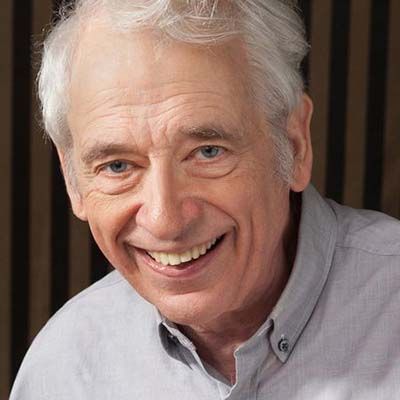
He has appeared in 250 movies and over 100 theatrical productions. His resume ranges from the original production of Fiddler on the Roof to the most recent Choir Boy, his scene partners have included E.G. Marshall, George C. Scott, Meryl Streep, Kevin Kline, and Barbra Streisand, and he is the author of the acclaimed Orson's Shadow. He is Austin Pendleton and he is one of the more respected artists working in the entertainment industry. Austin pulls back the curtain on his career to discuss how he received his greatest direction from Anne Bancroft, what it was like directing Elizabeth Taylor, and why Zero Mostel's picture will never be in the dictionary under "consistent." Also, Austin shines the spotlight on Orson Welles, Maureen Stapleton, and Jerome Robbins! Become a sponsor of Behind The Curtain and get early access to interviews, private playlists, and advance knowledge of future guests so you can ask the legends your own questions. Go to: http://bit.ly/2i7nWC4
Transcript
This transcript was automatically generated and might contain errors.
[0:00] Kevin David Thomas: Well, you guys, the time has come.
[0:03] Robert W. Schneider: Yes, uh, so uh Behind the Curtain is uh gonna go off the air.
[0:08] Kevin David Thomas: What?
[0:08] Robert W. Schneider: April Fools!
[0:09] Kevin David Thomas: Kevin, you made my heart leap faster than Gwen Verdon and Redhead.
[0:13] Robert W. Schneider: Richard Kiley for me.
[0:15] Kevin David Thomas: Okay.
[0:17] Robert W. Schneider: You guys, we aren't going anywhere.
[0:18] Kevin David Thomas: And in order to ensure that, friends, we need your help.
[0:21] Robert W. Schneider: Our podcast is entirely self-produced, and like I said, we need your help.
[0:25] Kevin David Thomas: If you can, our little Easter eggs, head on over to Patreon.com.
[0:28] Robert W. Schneider: That's P-A-T-R-E-O-N.com and search for Behind the Curtain's BROADWAY'S LIVING LEGENDS.
[0:34] Kevin David Thomas: I think I know the title of the show, and set a monthly donation.
[0:37] Robert W. Schneider: Even a dollar a month helps us.
[0:40] Kevin David Thomas: Your contributions help us continue doing what we are doing and bringing the legend stories to your ears.
[0:46] Robert W. Schneider: Have a great June.
[0:48] Kevin David Thomas: April.
[0:50] Robert W. Schneider: April.
[0:52] Kevin David Thomas: Thank you.
[0:54] Robert W. Schneider: Hi, I'm Robert W. Schneider.
[0:56] Kevin David Thomas: And I'm Kevin David Thomas.
[0:57] Robert W. Schneider: And this is Behind the Curtain Broadway's Living Legends.
[1:00] Kevin David Thomas: Don't forget to follow us on Twitter at Broadway Curtain.
[1:03] Robert W. Schneider: And make sure to join our Facebook page at Behind the Curtain Broadway's Living Legends.
[1:07] Kevin David Thomas: And follow us on Instagram at Broadway Curtain Podcast.
[1:09] Robert W. Schneider: Plus, you can always listen to our podcasts on Broadway World and Stitcher.
[1:13] Kevin David Thomas: Today's guest is a true Renaissance man of the theater, who, on and off the stage, continues to dazzle audiences with his talent, wit, and shrewd intelligence.
[1:22] Robert W. Schneider: His Broadway debut had him going toe-to-toe with Zero Mostel's's Tevye, which was followed by the Mike Nichols production of The Little Foxes, whose cast not only included him, but also Anne Bancroft, George C. Scott, E.G. Marshall, and then he directed Elizabeth Taylor and Maureen Stapleton in The Little Foxes a few years later.
[1:40] Kevin David Thomas: Plus, there was Shelter, which we love to talk about, Doubles, Grand Hotel, The Diary of Anne Frank, and today's current smash hit Choir Boy.
[1:49] Robert W. Schneider: And that is only a few of the theater credits.
[1:51] Kevin David Thomas: We haven't even yet mentioned his TV shows with Ethel Merman, Catch 22 with Orson Welles, Skidoo with Groucho Marx, What's Up Doc with Barbra Streisand, The Front Page with Walter Matthau and Jack Lemmon, The Muppet Movie with Charles Durning, and countless others.
[2:05] Robert W. Schneider: Here is one of the hardest working artists in our industry, the one and only Mr. AUSTIN PENDLETON.
[2:10] Kevin David Thomas: It is so nice to have you with us.
[2:13] AUSTIN PENDLETON: Thank you.
[2:14] Kevin David Thomas: Now before we went on the air, we asked AUSTIN, when do you sleep?
[2:18] Robert W. Schneider: Because it seems like you are always out, always working.
[2:21] AUSTIN PENDLETON: But you said it's manageable, is that correct?
[2:23] AUSTIN PENDLETON: Well, I sleep uh between seven and eight hours at night. Usually sometimes if I'm agitated about something, I wake up early.
[2:32] Kevin David Thomas: Yeah.
[2:32] AUSTIN PENDLETON: Okay.
[2:33] AUSTIN PENDLETON: And uh, or and but sometimes when I'm agitated and wake up like early, I get back to sleep.
[2:41] Robert W. Schneider: Okay.
[2:41] AUSTIN PENDLETON: Good.
[2:42] AUSTIN PENDLETON: I'm not sleep deprived.
[2:44] Kevin David Thomas: God bless you.
[2:45] AUSTIN PENDLETON: Yeah.
[2:46] AUSTIN PENDLETON: This fuels you, this continues to fuel you, all of this creation.
[2:49] Robert W. Schneider: Oh, yeah.
[2:50] Kevin David Thomas: When did you first fall in love with all of this?
[2:53] AUSTIN PENDLETON: The business or theater itself?
[2:56] AUSTIN PENDLETON: Six years old, something like that.
[2:58] AUSTIN PENDLETON: Yeah.
[2:59] AUSTIN PENDLETON: Right after World War II.
[3:03] AUSTIN PENDLETON: Um, I come from Warren, Ohio.
[3:05] Kevin David Thomas: Uh-huh.
[3:06] AUSTIN PENDLETON: And they began a community theater in Warren called, uh, the name of the county Warren is, it's called Trumbull County.
[3:14] AUSTIN PENDLETON: So the theater was called Trumbull New Theater, TNT.
[3:18] Kevin David Thomas: Oh, so get it?
[3:20] AUSTIN PENDLETON: TNT is still thriving out there.
[3:22] Kevin David Thomas: Oh, is it?
[3:23] AUSTIN PENDLETON: Still doing good work.
[3:24] AUSTIN PENDLETON: Still really.
[3:25] AUSTIN PENDLETON: And the, um, the first rehearsals were held in our living room.
[3:32] AUSTIN PENDLETON: Because they came to my mom, because she had been a professional actress and director.
[3:35] Kevin David Thomas: Oh, had she?
[3:36] AUSTIN PENDLETON: Yeah, when before, and then she got married and she settled in Warren.
[3:40] Kevin David Thomas: Gotcha.
[3:40] AUSTIN PENDLETON: And during, um, uh, just before the war, which was me and soon after Pearl Harbor Day, which is my brother, and a month, uh, a few weeks after VE Day, my sister, she had three children around the time of the war.
[4:00] AUSTIN PENDLETON: And, um, then about a year or two maybe after that, maybe 1947, she, that, um, because she had this experience, this professional experience, they came to her for advice.
[4:12] Kevin David Thomas: Oh, okay.
[4:13] AUSTIN PENDLETON: And the advice led to she helped them on how to raise money for the group.
[4:18] Kevin David Thomas: Okay.
[4:19] AUSTIN PENDLETON: And she helped them with just advice, um, about acting.
[4:24] Kevin David Thomas: Yeah.
[4:25] AUSTIN PENDLETON: And she was a professional actress, you know, and trained as such.
[4:30] AUSTIN PENDLETON: And, um, then, um, that morphed pretty quickly into acting and she, and the first two productions were done in our living room.
[4:43] AUSTIN PENDLETON: Hung up a curtain and halfway down living room on the other side one side of the was, uh, 60 or 50 or 40, uh, folding chairs.
[4:55] Kevin David Thomas: Oh my goodness.
[4:56] AUSTIN PENDLETON: And the other side was whatever they had put together to represent the furniture of the set and behind there were some sliding doors and you could see back into a playroom which was, which would provide a backdrop and I mean all the, all the toys were cleared away.
[5:12] AUSTIN PENDLETON: And, uh, but the rehearsals were held in our living room after dinner a lot of the time.
[5:20] AUSTIN PENDLETON: And the first two productions were done there.
[5:22] AUSTIN PENDLETON: And she directed the second of those two productions, a play that she then, um, uh, directed again at the theater for us later called Hotel Universe by Philip Barry.
[5:36] Kevin David Thomas: Wow.
[5:37] AUSTIN PENDLETON: Very uncharacteristic play by Philip Barry.
[5:40] AUSTIN PENDLETON: Very kind of, it's a two-hour intermissionless philosophical discussion.
[5:48] Kevin David Thomas: Oh, that's interesting.
[5:49] AUSTIN PENDLETON: Yeah, it's, and on the eve of it was written on the eve of World War II.
[5:53] AUSTIN PENDLETON: Um, set in Europe, you know, in the south of France.
[5:57] Kevin David Thomas: Yeah.
[5:58] AUSTIN PENDLETON: It's a beautiful play.
[6:00] Kevin David Thomas: Um, and so you were on stage for the, for these?
[6:04] AUSTIN PENDLETON: No.
[6:04] AUSTIN PENDLETON: But my brother and I, I'm the oldest of three.
[6:08] AUSTIN PENDLETON: My brother and I would sneak down after we were supposed to be in bed and hide behind furniture and watch the rehearsals.
[6:14] Kevin David Thomas: Fantastic.
[6:15] AUSTIN PENDLETON: But I got so entranced by those rehearsals.
[6:22] AUSTIN PENDLETON: Yeah.
[6:23] AUSTIN PENDLETON: And it liked the whole, and, and they continued to rehearse in the living room even after they moved to other venues, and then, uh, ultimately about 10 years later, they built a place of their own, a theater of their own.
[6:37] AUSTIN PENDLETON: And, um, they, um, which we, which is still there, and is now named after her.
[6:47] Kevin David Thomas: Wow.
[6:48] AUSTIN PENDLETON: That theater, so she directed Hotel Universe, and then she began acting in some of the productions.
[6:56] AUSTIN PENDLETON: And she was a wonderful actress.
[6:59] AUSTIN PENDLETON: I mean, really, she had it.
[7:00] AUSTIN PENDLETON: She had what it took, you know.
[7:03] AUSTIN PENDLETON: And then first they went to a high school auditorium, then they went to a junior high school auditorium for a few shows.
[7:11] AUSTIN PENDLETON: Then, and this was my favorite time, they went to a cheese shop to a room above a cheese shop in downtown Warren.
[7:20] Kevin David Thomas: Okay.
[7:21] AUSTIN PENDLETON: At that time, downtown Warren was a prosperous blue-collar town.
[7:25] Kevin David Thomas: Yeah.
[7:26] AUSTIN PENDLETON: And it was a really thriving community.
[7:28] AUSTIN PENDLETON: And the downtown was and is beautiful.
[7:31] AUSTIN PENDLETON: It's organized around a courthouse square, and you know, it's a county seat and this beautiful courthouse, and all the stores down there were really great, and drugstores and the all the different kinds of stores.
[7:44] AUSTIN PENDLETON: And right in the middle of all that, just off the main road a little bit, was a cheese shop.
[7:51] AUSTIN PENDLETON: Began with an A, it was the man's name.
[7:54] AUSTIN PENDLETON: You go, went up a flight of stairs beside it, and this space that they converted into a proscenium theater.
[8:02] Kevin David Thomas: Oh, geez.
[8:03] AUSTIN PENDLETON: And that was where she did Hotel Universe again.
[8:07] AUSTIN PENDLETON: And right after that, um, a person who was at that time her best friend in the theater was an English woman who had come over as a war bride, directed, um, A Streetcar Named Desire.
[8:20] AUSTIN PENDLETON: And it was in that cheese shop, it was the first time I ever saw that play.
[8:24] Kevin David Thomas: Wow, which I'd never read or I still I remember everything about that night.
[8:31] AUSTIN PENDLETON: And um, I'd never even really heard of it.
[8:34] AUSTIN PENDLETON: Yeah.
[8:36] AUSTIN PENDLETON: And I said to my cousin Lila, we went to it, and we were like, we sub, we subscribed to Theater Arts Magazine and all that.
[8:44] AUSTIN PENDLETON: We were just hounds, you know.
[8:47] AUSTIN PENDLETON: And um, I said to Lila afterward, I didn't realize I remember this so clearly.
[8:58] AUSTIN PENDLETON: You can worry about a character in a play after you see the play.
[9:03] AUSTIN PENDLETON: You can worry about them.
[9:07] AUSTIN PENDLETON: That was the play that, uh, that taught me that that can happen.
[9:12] AUSTIN PENDLETON: Yeah, that they're, and of course he's a genius at that.
[9:14] Kevin David Thomas: Yeah.
[9:16] AUSTIN PENDLETON: Uh, he makes you care about the most peculiar people.
[9:19] Kevin David Thomas: Yeah.
[9:20] AUSTIN PENDLETON: He makes millions of people care about that.
[9:22] Kevin David Thomas: That's right, even after it's over, yeah.
[9:23] AUSTIN PENDLETON: Yeah.
[9:24] AUSTIN PENDLETON: You carry it around with you.
[9:26] Kevin David Thomas: Yeah, yeah.
[9:27] AUSTIN PENDLETON: And um, Tennessee Williams.
[9:31] Kevin David Thomas: And uh, so, like a whole lot of people in my generation who got interested in theater, or even people who didn't, he became a name that meant something beyond the fact that they were good plays.
[9:48] Robert W. Schneider: Right.
[9:49] Kevin David Thomas: I'd love to ask you a little bit about your, uh, acting methodology as a teacher, uh, because you're one of the most respected acting teachers that is, you know, working in the United States.
[9:57] AUSTIN PENDLETON: When it's true, it's, oh yes.
[9:59] AUSTIN PENDLETON: Oh yes indeed.
[10:01] AUSTIN PENDLETON: Yes, indeed.
[10:02] Kevin David Thomas: We always tell our guests don't worry about humility today because that's gonna go right out the way.
[10:06] AUSTIN PENDLETON: Well, no, no, that, that I'm surprised to hear that.
[10:09] AUSTIN PENDLETON: I'm pleasantly surprised to hear that.
[10:10] Kevin David Thomas: Um, so, uh, two actors come into you with a scene and they're gonna do um, a scene from A Streetcar Named Desire, or they're gonna do something from Death of a Salesman.
[10:18] AUSTIN PENDLETON: Right.
[10:19] Kevin David Thomas: How do you begin approaching the text?
[10:22] AUSTIN PENDLETON: Well, what, what, what's your process?
[10:23] AUSTIN PENDLETON: I should say, maybe I don't want to put it.
[10:25] AUSTIN PENDLETON: I, my um, uh, do you know the play Uncle Vanya?
[10:29] Kevin David Thomas: Yes.
[10:30] AUSTIN PENDLETON: And the character of the professor.
[10:32] AUSTIN PENDLETON: And from the beginning of the play, everybody, almost everybody has turned on the professor.
[10:38] AUSTIN PENDLETON: And now that he's come to live with him, because they realize he was a great, he was a very highly successful professor in college, and now he's retired and he can't handle the retirement and all that.
[10:48] AUSTIN PENDLETON: But, but they all say, and they make endless long, funny speeches about him.
[10:56] AUSTIN PENDLETON: And they say, now we realize we thought he was so brilliant, and he's written these books.
[11:01] AUSTIN PENDLETON: Not one idea in those books is original.
[11:05] AUSTIN PENDLETON: So I say to the class, well, not one idea you're hearing from me is original.
[11:13] AUSTIN PENDLETON: A teacher isn't a person who thinks up new ideas.
[11:17] AUSTIN PENDLETON: A teacher is a person who passes them on.
[11:19] AUSTIN PENDLETON: This professor is getting a very raw deal from, you know, from all these people in this, uh, in out in the country there.
[11:28] AUSTIN PENDLETON: And, and Chekhov is sly enough that, uh, that's all there for you to see.
[11:36] AUSTIN PENDLETON: And um, so, but, but the audience gets so sympathetic to the other characters that they say, here, he's, he's a fraud, and then they have to think about it.
[11:47] AUSTIN PENDLETON: Well, no wait, he's a teacher.
[11:50] AUSTIN PENDLETON: I had a, I had a professor of European history, I was an undergraduate at Yale in my freshman year.
[11:57] AUSTIN PENDLETON: Breathtaking teacher.
[11:59] AUSTIN PENDLETON: I still remember things he said.
[12:01] AUSTIN PENDLETON: And he was a master, he was a young guy, and he was, he was a master of he would slam down the stick and the slide behind him would change.
[12:09] AUSTIN PENDLETON: And his descriptions of developments in, in European history were so dramatic.
[12:15] AUSTIN PENDLETON: Yeah, and I thought this guy's brilliant.
[12:19] AUSTIN PENDLETON: Well, I've, I later learned that he was teaching the standard new thoughts about European history at the time.
[12:26] AUSTIN PENDLETON: But the point of that is I remember everything he said.
[12:32] AUSTIN PENDLETON: In a way I might not have remembered it if I, it had been a little less interestingly.
[12:37] AUSTIN PENDLETON: I mean, I would have taken it in, maybe.
[12:40] AUSTIN PENDLETON: So anyway, so I, um, I had three great acting teachers, Uta Hagen and her husband, Herbert Burgoff, who began HB Studio.
[12:51] Kevin David Thomas: Where do you teach now?
[12:52] AUSTIN PENDLETON: And Bobby Lewis, aka Robert Lewis, who was a big Broadway director.
[12:59] AUSTIN PENDLETON: Yeah.
[13:00] AUSTIN PENDLETON: And a famous acting.
[13:02] AUSTIN PENDLETON: These are three of the top acting teachers of that era.
[13:07] AUSTIN PENDLETON: And almost everything I teach is what they taught me.
[13:33] AUSTIN PENDLETON: And even the rebels against Stanislavsky are rebelling against Stanislavski.
[13:39] AUSTIN PENDLETON: So they're taking his idea and saying, no, there's more to it than that, or less to it than that.
[13:43] AUSTIN PENDLETON: But that's, um, that was the genius.
[13:48] AUSTIN PENDLETON: And um, now the approaches that, well, even Uta and Herbert, who were husband and wife, had had very different approaches of how of the methodology of teaching that.
[14:01] AUSTIN PENDLETON: And Bobby had a whole other set of things, but they all came to at the core, they were the same.
[14:08] AUSTIN PENDLETON: They're all about, you know, the word, or it used to be anyway. What's your objective? What do you need in the scene? What is your need? What do you need? What do you need to get from whoever you're talking to? Including if you're talking to the audience. And that's now there are lots of different ways to present that. But essentially, any almost anyone who teaches acting, it does, even if they teach auxiliary things that take off from that and go into other areas, it all finally can't happen unless it goes back to that essential principle. And so that's what I teach.
[14:59] AUSTIN PENDLETON: And I often say things that have been cruelly said to me over the years. I turn the I say I say, uh, look, we're all in this. I mean, it's like uh uh I've been accused more than once accurately of what I'm accusing you of right now. You're you're playing an emotion rather than a need. Even people who take a deliberately and interestingly radical stance against that to be taught, uh ultimately it's rooted in that. Right. There's no way around it.
[15:40] AUSTIN PENDLETON: Yeah, yeah, you know, yeah. And it was, and the one who located it was Stanislavski, and the reason he did, he wrote three books about acting itself, by the technique of acting one. All each of them at least 200 pages long. And then he wrote his autobiography called My Life in Art. And he was a rich boy. And his parents lived in a state outside, I think outside Moscow. And he would get his friends, his young act he and he and he had he was a young actor, he had all these young actor friends, and he was a young director.
[16:32] AUSTIN PENDLETON: And they would go out and they would practice plays out on the estate of his parents and all that. And they would all go to the theater together. Or they would all go at one time or another to see a certain place, you know, so forth. And he said, and they began to realize certain actors are brilliant, and other actors are also brilliant, but not convincing. Now, what is the difference? And they would go backstage, they would ask permission to go, and they would ask these actors questions.
[17:15] AUSTIN PENDLETON: And often the actors who they really admired were not totally articulate. I mean, um, about their technique. They that they were practicing uh a technique very clearly that was working, but they couldn't, and they didn't even want to try to describe it. I totally understand that, by the way. Um, the um, but so they would observe then, and they would say, well, as Udahagen puts it, there's two kinds of acting. There's acting based on life and acting based on other acting.
[17:50] AUSTIN PENDLETON: And sometimes the acting based on other acting can be effective, yeah, but it's based on other acting. And um the implication of what she says in that, well, there are hundreds of them, but one of the implications is that every time you take on a role, you the world starts all over again. The rules are all different and everything, but you need a guide. And her two books point up out a lot are effectively a guides.
[18:21] AUSTIN PENDLETON: Yes, yeah, and uh quite effectively our gods are guides. And all her exercises, which are famous, they all have to do with people pursuing a need. That's right. And she starts with exercises where it's essentially trivial, and you're alone in your apartment and you're and and you're dealing with an object, and you have to you're trying to get that object to accomplish a task for you, and that, you know.
[18:47] AUSTIN PENDLETON: But it's a need. Her sensational one used to be called the lost object exercise, which is the most spectacular exercise. I would see students of hers who were very withheld, clearly interesting, but withheld, they would get to the lost object because your size and they would be Eleanor Douza, they would be John Barrymore, they would be Marlon Brando, they would be whoever you want to name. They would just burst to life.
[19:19] AUSTIN PENDLETON: And the and the principle of that exercise is very simple. You you set up hopelessly uh uh pressured circumstances, like a time circumstance, like I mean, a classic one is you're about to leave the apartment for an appointment to which you cannot be late because you were late the last time. I mean, you set up circumstances. And then just as you're about to leave, you um you can't find the keys.
[19:47] AUSTIN PENDLETON: Or you can't find a piece of paper that you need to bring to this, whatever this is. Say you have the you're it's an audition or a callback or something, and you you have the script, and you were gonna get it completely memorized on the subway. And you can't, but you need something before you can leave, and you can't find it. Yes.
[20:10] AUSTIN PENDLETON: So, and you rehearse this all by yourself, you know, in your apartment or whatever. And you you rehearse, you you build the search, you build the logic of the search. Yes. You go to, oh, oh, it must be, I I know what it is. Uh because the last time I saw it, it was here, so you look there, and it isn't there. And then you start to look other places, and it just isn't anywhere you can conceivably imagine it being.
[20:53] AUSTIN PENDLETON: You you're you cannot be late for this. And you certainly can't show up late and say, well, I couldn't find my keys, or I couldn't find my script. Yeah, that's really reassuring. People are here. And the and um, so and because I was gonna work on my lines some more, what you hadn't learned them already? I mean, you know, you cannot be late.
[21:13] AUSTIN PENDLETON: And and finally, you're just looking everywhere. Yeah, and you find it almost accidentally. Now, when you rehearse it, you work out each place you're gonna look. You work on the logic of where you would look, and you work out how the places you look are still have some kind of logic, but they become more and more illogical.
[21:45] AUSTIN PENDLETON: And then finally, and and then you know exactly where you're gonna find it, but you have to as her use her phrase, all this has to really move in on you, even though you know what's gonna happen. And the essence of a lost object exercise is you don't know. Exactly. So, how do you do that? And then you get to the core of her teaching, which is taught with other words by other teachers, expectations.
[22:10] AUSTIN PENDLETON: I really expect it's gonna be here. Oh, it's now if I really expect it, if I rehearse it a hundred times, and each time I actually expect it's under here, so I'll just lift, it will it will move in on you that it's not. Yes, yes, automatically. If you don't have the expectation, it won't. You'll just be acting it.
[22:28] AUSTIN PENDLETON: Yeah, showing and finally, and then finally, even though you know here it's it's not possible here. I don't know what I'm gonna do. It's just like gonna it's gonna move in on you if the expectation is always there. So that's an exact analogy to playing a scene.
[22:43] Kevin David Thomas: Interesting.
[22:44] AUSTIN PENDLETON: In a scene, in a scene, say it's a two-character scene. If I want something from you, and I'm trying everything, and first I think I well, the way I'm gonna I'm I'm gonna get you to give me a hundred dollars. And I start out, and but we have a history where you've loaned me a hundred dollars for and never seen it again. But I think and so I think I know how to play you.
[23:04] AUSTIN PENDLETON: So I'll start with look, I know that in the butt um I really need this because I there doesn't happen to be anything in the bank right now. Or I can't be it can't be known I'm taking money out of the account. I'll be asked questions, and anyway, if you get I promise you this, Dan. I'm pretty sure it's gonna work if I make enough of a pitch.
[23:24] AUSTIN PENDLETON: Yeah, and then it doesn't work. And that moves in on me because it's always worked before. So I try other things, and each time, and always I'm expecting this one is gonna do it. So in other words, I'm searching for the lost object, which is your giving me money.
[23:44] Kevin David Thomas: Yeah.
[23:45] AUSTIN PENDLETON: And finally, often in a scene like that, it ends where I I don't find it at all. Is that and but it builds. It builds because my expectations keep getting more um threatened.
[23:58] Kevin David Thomas: Yeah.
[23:59] AUSTIN PENDLETON: Now you do a lot of directing as well. So is there a difference between directing an actor in a production and coaching an actor in a classroom setting?
[24:08] AUSTIN PENDLETON: No. No, no delineation. No, there I mean the circumstances are different. Sure. The stakes are higher. Sure. But it's the same process essentially.
[24:17] Kevin David Thomas: I'd love to ask you about the little foxes that you did uh in the early 80s because with with with Elizabeth.
[24:24] AUSTIN PENDLETON: With yeah, you know, just a couple of Elizabeth Taylor and Maureen.
[24:27] Kevin David Thomas: But but you're asking me about that as opposed to the one I was in.
[24:30] AUSTIN PENDLETON: Yes.
[24:31] Kevin David Thomas: Yeah, right.
[24:31] AUSTIN PENDLETON: Okay. Yes, because we're gonna jump back to that one in a second. Um these are individuals who I'm assuming are coming from different schools of thought in different schools of acting, and your job is.
[24:40] AUSTIN PENDLETON: No, they're not.
[24:41] Kevin David Thomas: Okay, tell me, please.
[24:42] AUSTIN PENDLETON: Elizabeth Taylor and Maureen Stapleton were both legendary actors of Tennessee Williams by the time they got to. I mean, they had part of the reason I had no trouble imagining her in a play was a lot of her greatest screen performances were in roles written for the stage.
[24:58] AUSTIN PENDLETON: And it's a way of thinking. You you have you think in the long arc. And you would see in like in those films, you would see long, long takes.
[25:09] Kevin David Thomas: Yes.
[25:09] AUSTIN PENDLETON: Like you wouldn't unlike in Virginia Wolf. Oh my god, yeah. And and like um in in Suddenly Last Something.
[25:15] Kevin David Thomas: Yeah.
[25:15] AUSTIN PENDLETON: And and it's a it's a way of breathing. It's a way of uh of getting through a whole long thing. And so I thought if she can do those parts on film, she can act anybody, just speak up a little.
[25:28] Kevin David Thomas: I mean, it's it's no what was it like being in a room with Maureen Stapleton?
[25:32] AUSTIN PENDLETON: Oh, she was a lot of fun. She was very funny. She was, you know, in her approach to her work was utterly serious.
[25:40] AUSTIN PENDLETON: Yeah. She, I mean, but um really serious, fantastic to watch. But I mean, her persona in a she was hilarious. She was very funny person.
[25:54] AUSTIN PENDLETON: It was like pouring pouring water on an overheated engine on her own over on her own highly heated engine that created that acting that she could do so well. She kept pouring cold water.
[26:04] Kevin David Thomas: Yeah.
[26:07] AUSTIN PENDLETON: That's incredible. I w I wish I'd had the opportunity to see her on stage. We have all the wonderful film performances. I just never gotten a chance to see her live.
[26:17] Kevin David Thomas: That's what I heard.
[26:18] AUSTIN PENDLETON: I mean, uh legendary.
[26:20] Kevin David Thomas: Um now, jumping back, if we may, to the production of Little Foxes You Were In.
[26:24] AUSTIN PENDLETON: That's right.
[26:24] Kevin David Thomas: Would you tell us who were some of your castmates, your fellow storytellers in this production?
[26:29] AUSTIN PENDLETON: Anne Bancroft, as you say, George C. Scott, E.G. Marshall, Margaret Leighton, Bea Richards, people like that.
[26:37] Kevin David Thomas: This is a master class in acting.
[26:39] AUSTIN PENDLETON: Yep.
[26:41] Kevin David Thomas: And the director?
[26:42] AUSTIN PENDLETON: Was Mike Nichols.
[26:44] Kevin David Thomas: So what is it like to be directed by Mike Nichols?
[26:47] AUSTIN PENDLETON: He's very demanding.
[26:48] Kevin David Thomas: Yeah.
[26:49] AUSTIN PENDLETON: Yeah, very. I mean, it was wonderful. He virtually cast me by accident.
[26:55] Kevin David Thomas: What do tell.
[26:57] AUSTIN PENDLETON: He wanted it to be Dustin Hoffman, with whom he was making the graduate.
[27:03] Kevin David Thomas: Yes.
[27:04] AUSTIN PENDLETON: Now, as this was told to me by the sort of the what's called the enhancing producer. The show was done at a nonprofit theater, the Beaumont, you know, at Lincoln Center.
[27:14] AUSTIN PENDLETON: So an enhancing producer, like we have Inquirboy Ray, and we have them where they come in and they put in extra money and all that. And um, so the enhancing producer was a distinguished Broadway producer of the time.
[27:32] AUSTIN PENDLETON: It was in the days when there would be one producer. So and so presents. Right. And um he was one of those, although he he wasn't given uh I mean it was uh I don't think his name was used. Or or it was said the Lincoln Center Company or whatever, in in can in association with presents.
[27:55] AUSTIN PENDLETON: Um he told me that um, and so Mike was sh was shooting the graduate, which uh was the movie that of course transformed the life of Dustin Hoffman. And I think I personally think it would have been transformed anyway, sooner or later.
[28:13] AUSTIN PENDLETON: Uh, a talent like that.
[28:14] Kevin David Thomas: Yeah.
[28:15] AUSTIN PENDLETON: I mean, you know, but the actual way it was happening was because of Mike Nichols against the strenuous objections of his producer.
[28:27] Kevin David Thomas: Uh, you're gonna him?
[28:30] AUSTIN PENDLETON: Are you kidding?
[28:31] Kevin David Thomas: Really?
[28:32] AUSTIN PENDLETON: Yeah. And so Mike took a huge risk. And of course, it paid off. And um, but he took a huge risk.
[28:42] Kevin David Thomas: Yeah.
[28:42] AUSTIN PENDLETON: When the thing is successful, sometimes people don't realize the degree of risk that's been taken.
[28:48] Kevin David Thomas: Right.
[28:49] AUSTIN PENDLETON: And so then he offered him the part of Leo. Because when The Graduate was through, he was gonna start come back to New York and start The Little Foxes. And Dustin didn't want to agree to it right away. I think he, Dustin, I don't know him that well, but he's always been, I knew him before and after all this. And he's always been a very curious person. He's in certain ways at those years was kind of a role model for me. I didn't know him either personally that well or even his work that well. But something about there was a restlessness about him. What could come up? What, yeah, I'd love to work on this. What is something I, I don't want to commit to a thing. I think it probably the implication was, I now here I'm, I'm making this up, I have no idea, but I think probably the, well, if he's still asking me a week before it goes into rehearsal, maybe I will.
But I mean, I don't know that that's true or not. Um, but Mike wanted to round out the cast, and this, so this producer told me, the enhancing producer that I said in one day, why to this producer? Why do I have this part? I'm totally wrong for this part. And um, it's getting clearer to me every day how wrong I am for this part. And uh, he said, well, I called Mike, I said, has Dustin made up his mind yet? And Mike said, no, I, I gotta move on this. Uh, get me, well, he said, who do you want? Get me another eccentric young character actor in New York. And my picture was in the paper that day. Oh. I'd been in a play a few months before called Hale Scrawdy, and um, which opened and closed in a week.
[30:45] Kevin David Thomas: Yes.
[30:45] AUSTIN PENDLETON: Which was idiot. It's a brilliant play. And it was directed by Alan Arkin. Brilliant play. They should never have done it on Broadway. If they'd done it off Broadway, we would all still be playing it. We'll all be a little old for it by now. But we, but you know, it would have played for a few years off Broadway in the climate of that time. But the climate of that time hadn't caught up with Broadway. I mean, I mean, Broadway had not caught up with the climate of the time. So, but anyway, it opened and closed, and it was sad because it was brilliant, and I went off to ACT in San Francisco. And one day my agent calls and she says, oh, they want this, they want this, are you interested in this and that now?
She said, oh, and you've been offered, um, I saved this for last. Would you like to be in Mike Nichols' production this fall of The Little Foxes? I said, are you serious? She said, yeah, I, I saved that for last I thought that might interest you, and then we'd forget to talk about everything else I had to. And we sure would have. Yeah. And I said, yes. So then we had a little kind of layoff from ACT, and I passed through Ohio, and I stayed overnight, and with my parents, and they had a library, and they had The Little Foxes. So I read it and I thought, wait, I don't, I don't, but okay, it's Mike Nichols. Right. And I mean, I'm simply not gonna say no to this. So then a couple of months later we started rehearsals, and um, or mother what's saying and he says to me, you know, a couple of days in he said, you know, come here, you're, you're wrong for this.
And I, I didn't say, then why am I here? Right. Or I know. Yeah, yeah. Uh, I said, oh, oh, something like that. He said, but he said, let's make that a challenge. My way of rising to the challenge was simply to not do anything. I just showed up every day and did the scene like any other part I would have played. And he would, he kept finding different adjustments for me to take. And I would, it all would come out the same. And I, he was getting, there's a big scene the character has with his father. It's a very well-known scene, it's a famous scene. Yeah. And uh, the dad was E.G. Marshall. And so, but it's got to be humiliating. In the mornings we would rehearse for two hours, the Oscar Leo scene.
And then there would be an hour lunch, and then the rest of this brilliant cast would come in the afternoon. It got embarrassing. And I thought, why do we? I mean, it's how it's fine. And Mike was getting visibly frustrated. And Lillian Hellman came in and she offered suggestions that were, I mean, she, she had been asked to, she wasn't taking over. And her suggestions were brilliant. I go, oh, that's, yeah. And then I would keep doing the same thing. I do not know what bug had bitten me. But I just kept thinking, well, if I just keep being natural and everything, it'll all happen. It certainly wasn't E.G. Marshall's fault. What was going wrong with the scene. And finally we had a run through with all these brilliant actors.
We rehearsed on the stage of the Beaumont with the set and everything. Oh wow. Oh my god. It's incredible. Yeah. And um, one day we had our first run through in one afternoon. He didn't give me any notes, he gave everybody else tons of notes. These great artists that I listed. And I said, continuing my idiocy, I walked to him and says, I guess you're pleased, you know. He says, I can't give notes on this. It's just at no point does it have anything to do with the character. I give up. You gotta do something. And that probably is the best direction, among the best directions I've ever had in my life. Where I don't know if I'd have the nerve to do that with an actor. But it was like, I give up.
In other words, he wasn't firing me, but he was sort of implying that the ball was in my court now. He'd done everything he could think of. So I went out into the dressing room area, and there was Anne Bancroft, and we'd become good friends during the rehearsals. She said, uh, you don't look happy. And I told her what he said, and she said, oh. So next morning I come in and she said, it's the way you walk. Come into my dressing room. I thought about it last time. It's the way you walk. You're walking wrong. Here's how you should walk. And I thought, well, so when he calls you out to rehearse just now, just walk like that. Don't think about anything else. I thought, well, I have nothing to lose. So, uh, I mean, so I did, and Mike said that's great.
[36:38] Kevin David Thomas: Really?
[36:38] AUSTIN PENDLETON: Yeah. The walk.
[36:40] Kevin David Thomas: Yeah.
[36:40] AUSTIN PENDLETON: The walk transformed everything else.
[36:43] Kevin David Thomas: Really?
[36:44] AUSTIN PENDLETON: Yeah. And she, you see that in a lot of her work. I mean, first of all, the her first two plays that she was in were by William Gibson, Two for the Seesaw, and The Miracle Worker. And there are similarities in those characters, but also things that are very different. And I saw them both. And I remember thinking, God, she's the same, only she's totally different. What is it? And then I thought there's something about, and then thinking back on it now in terms of what she took at the time she, she told me this some years later, during The Little Foxes. Yeah, that was the difference between those two women she played. Certain characteristics, they had kind of her that thing she always had as an act of utter forthrightness that you know that um, and and the willingness to fight, fight, fight for something she wanted to have happen.
And but in other ways that the characters were profoundly different. One was a person with impaired sight who had been blind. And then um, and the other one was was a modern dancer. And with all that comes with that, one was from the Bronx, one was from Ireland. Yeah. I mean, and it and and I'm, I'm not saying that all she did was change the way she walked, but that clearly was in there. And then you see something like The Graduate, which has a whole other physicality to it. And um, so my experience of him as a director was the infinite patience and the infinite resourcefulness that he went to to try to get me into something resembling this character.
[38:37] Kevin David Thomas: Yeah.
[38:38] AUSTIN PENDLETON: And the intelligence of the different things he tried. Very specific. Well, look, if you play it this way, see what happens. And nothing would happen that was any different from what had happened before. And then the courage to risk everything and say, I give up on you in this. I've tried everything I know how. That's a huge thing for a director to say. And then how that led me to really take it seriously. And then I had the good luck to be encountered by a great acting artist.
[39:17] Kevin David Thomas: Yeah.
[39:18] AUSTIN PENDLETON: And who said, well, if that's what he's saying, let me think about it. I think it's this.
[39:24] Kevin David Thomas: That's a fabulous story.
[39:25] AUSTIN PENDLETON: Yeah. Now, then the other thing we did was Catch-22, which is almost the opposite. In the um, I was doing exactly what he wanted, but doing it in scenes with Orson Welles, who was being a very bad boy.
[39:40] Kevin David Thomas: Please tell us.
[39:41] AUSTIN PENDLETON: Oh God. Oh, he was just, he was like a really resourceful, malevolent 11-year-old. I mean, grown-up child. Yeah, oh, he, he would undercut Mike's directions. He would blow takes in his scenes with me because he didn't like what I was doing. He would, I mean, he would, and of course, he knew he knew all the tricks of movie making, so he knew how to how to how to fuck up a shot, you know, and make it unusable. And I mean, it just we would do, and finally he would agree to do a take. And Mike would slip me a Hershey bar covertly. And so that was almost the opposite experience from The Little Foxes. Where everything was working on your end, but your scene partner.
[40:30] Kevin David Thomas: Yeah.
[40:36] AUSTIN PENDLETON: But you were so enamored of him that you wrote a plaint about him.
[40:39] Kevin David Thomas: Enamored not the right one.
[40:41] AUSTIN PENDLETON: Well, you know, I was. But I, but it sort of was a delayed reaction. Well, first of all, he was adorable.
[40:47] Kevin David Thomas: Yeah.
[40:48] AUSTIN PENDLETON: I mean, he was, his performance between shots when we would all be sitting in those chairs, and he would pontificate about every living and dead film director. Give his opinion of it. And they were usually just unconscionably vicious, but so entertaining. I mean his storytelling abilities were, you know. And uh he would boast that in this most recent film he had thrown Fred Zinneman off the set. Fred Zinneman. Great. I mean, you know, and and uh, um he and he, he was enormously proud of that. And he just, he was a bad boy. And I mean there's no other description of it. He wasn't a monster, and he was hugely entertaining, like bad boys always are.
[41:42] Kevin David Thomas: Right.
[41:42] AUSTIN PENDLETON: Uh, up to a certain age.
[41:44] Kevin David Thomas: Yes.
[41:45] AUSTIN PENDLETON: He had gone past that age. But still, because he embodied it so well, he was adorable. And then, years and years later, Judith Auberginois, whose husband is Renee Aubergemois, um came to me, and I'd known them from ACT, and she said, why don't you write a play about Orson Welles working with Lawrence Olivier and Brene will play Olivier, and their friend Alfred Molina will play Orson. And it wasn't a deal or anything. We didn't sign it, kind of not a not a dime changed hands.
[42:14] AUSTIN PENDLETON: But so I thought, okay. I mean, I got nothing else to do. But I mean I don't want to make write a play about people you can rent. You know what I mean? Like uh it's like uh but okay, and I'll just play around with it. And then it took me three years to come up with it with a draft I could show her, and then she hated it. Because when you ask someone to write a play, you do have something in mind. And I didn't I didn't ask her what she had in mind. I thought uh and so I wrote something other than the play she had in mind. And she she spoke highly of the way it was written, and she said, but this isn't then they called me from Steppenwolf, where I'm a member, and they said, You've written a new play, because they'd done an earlier play of mine, Uncle Bob, and that had gone well out there.
And I said, Yeah, but it's no good. And the and the and the literature, well, send it. I mean, you're an ensemble member, send it, maybe there's something can be salvaged from it or something. I said, No, I'm embarrassed. She said, Well, Uncle, I said it's nowhere near as good as Uncle Bob. I'm embarrassed to send it. Finally, she said, Do you realize the shit I read every week? Will you just send me this script? So I did, and she called and said, Okay, we're doing it next season in the little theater. And so I did a big rewrite of it. And and um, so that's the Orson saga. It's a fabulous play.
[43:55] Robert W. Schneider: Hey, podcast listeners, are you looking for a place to rehearse in New York City that is clean, spacious, and most importantly affordable?
[44:02] Robert W. Schneider: Come check out Shetler Studios and Theatres, our wonderful host for these podcasts.
[44:07] Robert W. Schneider: Shetler is centrally located on West 54th Street between Broadway and Eighth Avenue, right in the heart of the theater district.
[44:07] Robert W. Schneider: Right in the heart, you'll find music, dance, and acting studios complemented by two black box theaters and six presentation venues.
[44:20] Robert W. Schneider: The professional facilities, inspired environment, and expert industry staff combine to provide the New York artist with an unparalleled studio experience.
[44:29] Robert W. Schneider: Visit their website at Shetler Studios.com.
[44:33] Robert W. Schneider: That's S H E T L E R Studios.com.
[44:37] Robert W. Schneider: Shetler Studios and Theatres is our home for recording the legends of Broadway, and we hope that you make it your artistic home too.
[44:42] Robert W. Schneider: That's Shetler, S H E T L E R Studios.com.
[44:47] Robert W. Schneider: See you here.
[44:50] AUSTIN PENDLETON: Um another person who might be in the bad boy category that I want to ask you about is Zero Mostel's. Ohson is an obedient child compared to the really zero is the only total anarchist I've ever met. Really? Yeah. Nothing was sacred. Nothing at all. He would literally do anything on stage. Really? Anything. And um and particularly in the scene with me, because I was clearly in awe of him. Yeah. He was it was like acting with with with Niagara Falls. You know, it was like the best line ever. It was like he just kept coming at you and you would you know. And you would you're just constantly being overwhelmed. And every time it was different, I mean, every time it was. I played it with over over a year with him.
Oh not one performance of that scene remotely resembled any other performance. We're talking a Fiddler on the Roof this time. Yeah, the big confrontation scene about two-thirds of the way through the first act where the shy tailor, you know, has to confront Tevye. Oh God. He just he would do anything. It could be said that some of the things he did had a kind of metaphorical accuracy. They they would not even be remotely things that an orthodox milkman in a shtetl, you know, in Russia in 1905, would even think of and reject. Right. They just would I mean uh they were inspired uh vaudeville, really. Like Worschbelt, Catskill humor. Except they were too original for that. They were like out of left field.
They weren't standard old clown tricks. Yeah. They were like they were this like fountain that would bring up all kinds of different liquids and and drench you in them. And and I uh some of the cast got and probably got very displeased with that in in the year that he was in it. And uh I didn't uh to me, he was like, God. Really? He had people say, how could you he would grab me by the balls during the scene. No, and not let go? What? Yeah, but you're only a poor tailor, he would say and grab my balls. My God. That's one of the milder things. And I I would just, and then he would pull stuff out of me that I didn't know was innate. And and I mean, I people said, AUSTIN, um that scene is so, you know, strange to watch.
I say, oh no, I'm just lost in it. I'd say, I say, are you serious? Do you just put your mind aside when you go out and I and I I just loved it. Yeah. I I was such a I was sort of an actor geek at that time. I was really serious and everything. And he he uh all the rules just came crashing down around me. And the great thing about it for me, I mean it wasn't, it was not valid for the play. Right. The authors might even be the surviving author, or the others, if they were hearing this, if they were still alive, would probably be offended to hear me saying all this because he made trash of the values of the written scenes, you know. Um particularly scenes that had any comedic possibilities at all.
In in the poignant scenes, he was pretty consistent. He would whisper things to the actresses that weren't very nice. Okay. But yeah, oh yeah. But but from the audience point of view, you saw basically the same scene every night. It was it was truthful and simple and so forth. But um uh I think the idea of doing eight performances a week of fairly straightforward material is like putting a very large animal in a small cage in the zoo, and they just start to go crazy. Yes. They lift their leg and piss on the viewer. They they do anything to declare their freedom. But one thing that I learned from it, almost this wasn't a plan, but just was just keep pursuing your objective. No matter what he does, you have to persuade him, he can't intimidate you. You have to persuade him that you're a good man to marry his daughter. And so underneath all of that was that.
[50:01] Kevin David Thomas: I was gonna ask you, um, when you were starting out your career, did you have an interest in pursuing musical theater? Or did you think it was gonna be mostly a non-musical?
[50:07] AUSTIN PENDLETON: I couldn't sing. My um my agent, who I referred to, she was a woman by the name of Deborah Coleman, and I was introduced to her by an actress friend of mine. We'd both been in this actress friend and I had both been in the non-equity company at Williamstown, and this agent saw her in a play there and took her on as a client. And then she told she told Deborah Coleman about me in terms of being seen for a play. And I got seen, so she sent me up for it. I got seen and got the part, so she took me on. So I did the play that she, which was also also Jerome Robbins. Um, and um then um then a couple months into that, she said, um, you know, you should learn to sing. You could you could be right for musicals, but you gotta be even in those days which are kind of relaxed about singing voices, you still have to be able to hit a note.
Right, the right note in a while. And uh it was the post-Rex Harrison era where you know actors were it, yes. Yeah, and it was kind of a thrilling time, but she said there are limits. And and um the um so she called a friend, and he I met him and she she he said, I know the woman for you. Aura Whitty was her name. She lived right around the corner in a building on 7th Avenue that at that time housed a lot of singing teachers. Yes, yes, I know exactly what it is. Yeah, yeah. I don't know if it if it does anymore, but in those years, a lot of artists lived there. Yeah. She lived down the hall from the producer Ted Mann, who rents and Patricia and Patricia Patricia Brooks, his wife, opera singer, actress. And um the um so I went to Aura Whitty, and within a year she got me to the point where I could successfully audition for for Fiddler on the Roof. And so at that point you I could sing.
[52:12] Kevin David Thomas: You could sing.
[52:13] AUSTIN PENDLETON: Mm-hmm. That's a good story. I wish I could sing.
[52:15] Kevin David Thomas: Right. Do you want to ask about your favorite musical?
[52:17] AUSTIN PENDLETON: Which is Shelter.
[52:20] Kevin David Thomas: Shetler, Settler, where we are today.
[52:22] AUSTIN PENDLETON: Yeah, Shelter. You directed that.
[52:23] Kevin David Thomas: Yes.
[52:24] AUSTIN PENDLETON: Uh, and we talked to Joanna Merlin about it uh because she was involved in the case. It's a beloved show. It's a cool show. And years.
[52:32] Kevin David Thomas: Yeah, she's in it. Um your memories of that.
[52:36] AUSTIN PENDLETON: I fucked it up.
[52:37] Kevin David Thomas: Well, really, really.
[52:39] AUSTIN PENDLETON: I I I didn't do a good job.
[52:40] Kevin David Thomas: Why do you say that?
[52:42] AUSTIN PENDLETON: Because I saw the production and I thought, this isn't well directed. And people were disappointed in it at the time.
[52:56] Kevin David Thomas: But fucking up is fucked up.
[52:59] AUSTIN PENDLETON: You're right. You're right, AUSTIN. It was I've I still feel bad about it.
[53:04] Kevin David Thomas: Oh, geez.
[53:04] AUSTIN PENDLETON: And there was uh I mean, I mean, get over it, AUSTIN. Um, but the but the the um um it was 1973. Yep. Um I had been in their previous musical, The Last Sweet Days of Ice.
[53:21] Kevin David Thomas: Yes, which is you were very I have the album, it's a very well it was very popular at the time.
[53:26] AUSTIN PENDLETON: Yeah, it was uh it was one of those hits that got a drama desk award, yeah. Yeah, OB's all over the place. Oh, yeah, yeah, yeah. But it's one of those shows that has there's something kind of magical in this town about a total surprise hit. Yes, yes, yes. I mean, the first half of the previews had a week and a half of previews. Oh and for the first half people were saying, well, the producers called for the scenery to be taken away after the opening night performance. Oh, okay. Well, and they with good reason. Okay, yeah. I mean, it's like uh if they had waited till then, they would have had a higher pay, a higher price, I guess. So it was an intelligent, it just wasn't working. And word, and the director was Word Baker, and he just pulled it together.
Okay. In two or three days. So then around that time I'd started directing at Williamstown. And the second play I directed was a couple of years after Isaac was Uncle Vanya. And that went very well. And and Gretchen came up to see it. Gretchen Cryer. Yeah. And she said, you know, maybe you should direct Shelter. You certainly understand our material because of I you know how to act it. Right. Yeah, right. And now you this Uncle Vanya is very well directed. So anyway I thought I got this. When you're as talented as I am things just fall into place. You know and I received to make wrong choice after wrong choice after wrong choice. And and this was swiftly evident when we got into previews.
[55:01] AUSTIN PENDLETON: In New York. Yeah we we only had previews in New York we didn't do no out of town gotcha. It was like and I was like a deer in the headlights. I was like I don't know what to do. So they called in my friend Peter Hunt oh yes who I'd been to college with and who's a very good friend of mine. He came in and he did some in two or three days he did he did the equivalent equivalent of what Word had done. Okay. So it wasn't the disaster that it was in the first part of the previews. Okay. But again it wasn't it was a longer preview period than Isaac but it was it was like two weeks or something two and a half weeks and it it didn't and Peter got it to the point where it wasn't a disaster and of course it has that beautiful score.
It was fantastic and it has um it has a and it had uh the the designs by Tony Walton and Richard Pilbury Love Tony Walton. And yeah and Richard Pilbrot did the lights and and um who was at that time, maybe the premier designer of lighting in the Western theater. It came fairly close to being a hit by the time all was over said and done. And I got two or three Tony nominations, and it it uh um you know one was for Marsha Rod, who was wonderful in it, and it and for the score and for the I think the musical itself might have gotten one.
[56:27] AUSTIN PENDLETON: I don't know. But um the um so it wasn't like yeah disaster, but but it's always been it's been suspended in midair ever since, and then they did uh it's not quite one of those flops they put on the wall in Joe Allen.
[56:43] Kevin David Thomas: Yeah, yeah, yeah.
[56:46] AUSTIN PENDLETON: What sometimes you wake up screaming at night that a show you did is gonna end up on the wall at Joe Allen's.
[56:52] Kevin David Thomas: What's the matter? What did you dream?
[56:53] AUSTIN PENDLETON: I was in Joe Allen's and I looked up at the show, it said directed by AUSTIN Peterson, you know, and and the um they've gone a little easier on that at Joe Allen, so it's a little more ambiguous. It used to be an announcement of catastrophe.
[57:08] AUSTIN PENDLETON: And and um and then they did it, they did a staged reading of it oh, a year ago. I've yeah, a couple of years. In 54, we did another video. Which was brilliant. And of course I started clamoring, oh, let me direct it again. Fix it.
[57:26] Kevin David Thomas: Yes.
[57:27] AUSTIN PENDLETON: They very sweetly said, Are you are you out of your fucking mind? Like, and uh they found very gracious ways to say that.
[57:38] Kevin David Thomas: Oh my gosh.
[57:39] AUSTIN PENDLETON: That's okay. Yeah, it's one of our favorites, though. Um I have to ask you. What um doing a television show with Ethel Merman?
[57:47] Kevin David Thomas: Just a pilot, I believe.
[57:48] AUSTIN PENDLETON: Yeah. What was that like?
[57:50] AUSTIN PENDLETON: Oh heaven. I mean, I loved her. I had no idea when they when they remade the pilot why they didn't go back to her.
[57:58] Kevin David Thomas: Yeah.
[57:59] AUSTIN PENDLETON: You've seen it?
[58:00] Kevin David Thomas: Yes, it was.
[58:01] AUSTIN PENDLETON: I think she's wonderful in it.
[58:02] Kevin David Thomas: Oh, she's hysterical.
[58:03] AUSTIN PENDLETON: You're both hysterical. And I don't remember who's playing the kid, but he's great too.
[58:06] Kevin David Thomas: Chris Barnes.
[58:07] AUSTIN PENDLETON: Who had a he had just been in the the lead in the movie called The Bad News Bears.
[58:12] Kevin David Thomas: Oh.
[58:13] AUSTIN PENDLETON: About the little boys who play baseball.
[58:15] Kevin David Thomas: Yeah.
[58:16] AUSTIN PENDLETON: And he had been the lead in that. And oh, he and Ethel did not get along.
[58:23] Kevin David Thomas: Oh.
[58:24] AUSTIN PENDLETON: Do tell, please.
[58:26] AUSTIN PENDLETON: When is the kid gonna deliver?
[58:28] Kevin David Thomas: Oh.
[58:31] AUSTIN PENDLETON: And he would look at her with unvarnished contempt. I mean, God. And Bruce Peltrow, who directed it and created, would refer to Chris as Brando.
[58:43] Kevin David Thomas: Because his work was very internal.
[58:46] AUSTIN PENDLETON: And uh and he was as good as Brando.
[58:51] Kevin David Thomas: Yeah.
[58:51] AUSTIN PENDLETON: Yeah. I mean, and and uh so Bruce, I think by calling him that was trying to signal to Ethel, leave him alone. He works a different way than you. And it was um, and I I kept thinking, ah, if we're picked up, what's this gonna be like? You know.
[59:14] AUSTIN PENDLETON: And uh um, so um, but they were both extraordinary, and in fact, the very thing that made them not not get along with each other at all, yeah, uh, was part of what worked. Yes, you know, it's like uh Clark Gable and Vivian Lee or whatever. It's like a that creates a certain thing that is kind of electric. And the whole point of it is they're from two different worlds, yeah.
[59:39] Kevin David Thomas: Right, right.
[59:39] AUSTIN PENDLETON: And it was really working, and then CBS decided, well, we'll do it again, but this time we'll do it in LA rather than in New York. And it'll still be set in New York, but and we'll certainly get rid of ethyl. And I thought, what wait. Go back to where you said we'll get rid of ethyl.
[1:00:01] AUSTIN PENDLETON: Um and Bruce said, I forget what he said, but his point was with CBS, that's that question is not negotiable. So I don't know what it would be like to have worked with her if you'd never if you didn't know her already.
[1:00:21] Kevin David Thomas: Yeah, sure, sure, sure.
[1:00:22] AUSTIN PENDLETON: And she was very open. I mean, she was interested in. I I don't I forget how she put it. She had her own way of putting things, to put it mildly. And I remember I asked Maria Karnilova when when we were in Fiddler, how did Jerry Robbins get that performance out of her in Gypsy? And Maria said, I'll tell you.
[1:00:48] AUSTIN PENDLETON: She came in the first day and said, Okay, teacher, teach me.
[1:00:52] Kevin David Thomas: Wow.
[1:00:53] AUSTIN PENDLETON: And she did what he said.
[1:00:57] Kevin David Thomas: That's great.
[1:00:58] AUSTIN PENDLETON: Yeah. So that's who she was. Just that openness.
[1:01:01] Kevin David Thomas: Yeah, yeah.
[1:01:02] AUSTIN PENDLETON: She was totally um confident in her vulnerability. You know. I also have to ask about another film of yours, which has some musical theater people in it, which is Skidoo.
[1:01:14] AUSTIN PENDLETON: Oh, yeah. Um also fully available on YouTube. Um, what was Kado? And who were some of the people that you were Well, directed by Auto Prometheus?
[1:01:23] AUSTIN PENDLETON: Yeah, the one casual. Yeah. Oh, he was. I loved him. Yeah. I liked everybody, but I I learned a lot from him. Like such as how to behave in front of a camera.
[1:01:35] AUSTIN PENDLETON: That's all. And and uh the uh little essay. Yeah, and and then a few years ago, and we kept up our, I mean, he would have me in Katin over for dinner in his townhouse, he and his beautiful wife. And um he had a townhouse on E64. And um he came to after that, he came to see every time I was in a play, he would come to see it, a screening of the movie. Yeah, he was great.
[1:02:00] AUSTIN PENDLETON: And and but I liked everybody on it. It's just I'm I don't understand the and neither did Otto. I don't understand why that movie has a cult following. I just don't it doesn't work at all. I mean it I mean it's like it is really it truly is kind of a nice try at something kind of original, but not one thing works.
[1:02:25] AUSTIN PENDLETON: And and and I I've never understood it, and and it's developed this following over the years. They showed it at the film forum, and there was one of those little reviews in the New York before by Richard Brodie, yeah, who's a very exacting, brilliant critic. He extols it.
[1:02:43] Kevin David Thomas: Yes.
[1:02:44] AUSTIN PENDLETON: And I'm reading that, I'm thinking, I just don't understand this. There's uh and Otto sort of felt the same way about it. Can can you believe that they look that they like this film? And uh uh I'd say yeah, it upsets me. And he would say, Well, there's no reason to get upset, but uh but and then they I went to the film forum a few years ago, they had in retrospective and I saw just about everything, including movies I'd never heard of that he made.
[1:03:15] AUSTIN PENDLETON: Oh yeah. It's a brilliant body of work. Oh my gosh. Staggering body of work. And when you see it all within a week or two, it's just there's a real approach to filmmaking in it. Skidoo is we all have our misfires. I mean, we do have them.
[1:03:31] AUSTIN PENDLETON: If you've never seen it, because you haven't seen it, right? It's like Groucho Marx is God and Jackie Gleeson's. But Groucho Marx isn't funny.
[1:03:39] Kevin David Thomas: No.
[1:03:39] AUSTIN PENDLETON: And I think that's a thing that never happened before. That might be some of the appeal of it, which is these brilliant people who can do no wrong are doing wrong. Doing like, but wrong in a boring way.
[1:03:55] AUSTIN PENDLETON: It's a little bit of a reason. Not like taking some outrageous leap that does just inhibit it. Right, a reinvention of some kind. Yeah, it's just not, oh, that's terrible, but boy, is that exciting to watch how they go for that. No, it's all very inhibited. It's all very self-conscious.
[1:04:14] AUSTIN PENDLETON: So you took some of the least self-conscious actors in the world, and they are self-conscious in this movie. That's amazing. And it's a miracle in itself. And usually he kind of, I mean, God, he made a movie with Joan Crawford once, which I saw at the film where she's brilliant in it.
[1:04:29] Kevin David Thomas: Oh yeah.
[1:04:30] AUSTIN PENDLETON: I mean, she she often was good, but it's a whole other Joan Crawford. It's so direct and simple and so smart and in um she portrays the intelligence of the character, and she portrays the intelligence of the character intelligently. Not that she's not intelligent, yeah, but th the i i it has a simplicity to it that I don't think I've ever seen her do quite like that.
[1:04:59] AUSTIN PENDLETON: And film after film is like that. Wow. What excites you now? What projects get you to sign on to them?
[1:05:08] AUSTIN PENDLETON: Oh, I'll do anything. Kind of. I've always associated acting with kind of saving my life. And so it still has that for me. I equate it with survival. And then also I like to act a lot because you get older you you have want to keep exercising that process of learning the lines. Um, because you you you get afraid, oh what if I can't learn lines anymore.
[1:05:37] AUSTIN PENDLETON: So I do a lot of I do a lot of showcases.
[1:05:40] Kevin David Thomas: You do.
[1:05:41] AUSTIN PENDLETON: Yeah. Just to keep acting. See, you say I work a lot. A whole lot of that is showcases. And um if I didn't do any showcases, the rather slender outline of my more highly visible professional work would become more evident.
[1:06:01] AUSTIN PENDLETON: But there's this accurate sense that I'm always doing something. At least two-thirds of the times it's it's it showcases either either directing them or acting in them.
[1:06:12] Kevin David Thomas: Right, right.
[1:06:13] AUSTIN PENDLETON: But it keeps you active. I think it's a good thing.
[1:06:16] Kevin David Thomas: Yeah, and that's I I think I have a fear that if I stopped it would all fall apart.
[1:06:20] AUSTIN PENDLETON: Fair, fair.
[1:06:21] Kevin David Thomas: Yeah, yeah.
[1:06:22] AUSTIN PENDLETON: I think it's as as primitive as that. Yeah, that's you're also a brilliant storyteller.
[1:06:27] Kevin David Thomas: Yeah.
[1:06:27] AUSTIN PENDLETON: And thank you for sharing that with so many people for so many years.
[1:06:32] Kevin David Thomas: Yeah.
[1:06:32] AUSTIN PENDLETON: It's really in what way storyteller.
[1:06:35] Kevin David Thomas: As an actor, as a director.
[1:06:38] AUSTIN PENDLETON: Well, you work with Jerry Robbins. You learn this stuff.
[1:06:41] AUSTIN PENDLETON: Yeah. It's it I filler on the Roof was about to expire on the road. I mean, literally. The reviews were bad. Huh. They needed more money to keep it open. No people would say, are you kidding? And you watched him pull it out of the fire step by step, and it all had to do with storytelling.
[1:07:13] AUSTIN PENDLETON: A lot of other people go, Well, we gotta do this here, we gotta do that there, we gotta glitch it up, we gotta do this. No, this point isn't clear that this change happens in the story at this moment.
[1:07:24] Kevin David Thomas: Wow.
[1:07:25] AUSTIN PENDLETON: And a few weeks of that, and suddenly it was like playing. And no huge thing had happened. Right, right. Just clarity.
[1:07:32] Kevin David Thomas: Clarity.
[1:07:33] AUSTIN PENDLETON: Yeah. And it was amazing to watch. Every day we would rehearse. In those days you didn't have to have a day off with a Broadway show out of town. So he took advantage of that. Of course. And he put in a couple of great songs, but again, that helped the story.
[1:07:48] Kevin David Thomas: Yeah, right.
[1:07:49] AUSTIN PENDLETON: And um, like Do You Love Me? No. And he just and he wouldn't throw anything out that was telling the story, even if it might made a moment that seemed slow or whatever. He said, No, they need this. They need this. So we just need to make it a little clearer.
[1:08:06] Kevin David Thomas: Yeah.
[1:08:06] AUSTIN PENDLETON: Not sh not throw it out. Right.
[1:08:10] AUSTIN PENDLETON: And uh you watch someone literally save a show and allow it to become maybe the biggest classic of all musicals.
[1:08:21] Kevin David Thomas: Yes.
[1:08:23] AUSTIN PENDLETON: And when uh a couple weeks ago, nobody was giving it the time of day.
[1:08:27] Kevin David Thomas: Yeah.
[1:08:27] AUSTIN PENDLETON: And it's you don't ever forget that.
[1:08:30] Kevin David Thomas: Right.
[1:08:31] AUSTIN PENDLETON: Well, you're carrying that legacy on today between what you learned from him and Uda and all these people. It's really commendable and a beautiful thing that you're still carrying on that legacy.
[1:08:40] Kevin David Thomas: Oh, it's it's you know, fun.
[1:08:41] AUSTIN PENDLETON: Yeah.
[1:08:42] Kevin David Thomas: And thank you so much for sharing.
[1:08:43] AUSTIN PENDLETON: It's traumatic, but it's fun.
[1:08:45] Kevin David Thomas: Of course, but that's the art that we live.
[1:08:46] AUSTIN PENDLETON: Yeah, right.
[1:08:48] Kevin David Thomas: And you're currently on Broadway right now in quite a bit.
[1:08:50] AUSTIN PENDLETON: First time in 21 years.
[1:08:52] Kevin David Thomas: Holy shit.
[1:08:52] AUSTIN PENDLETON: Oh, he's so good.
[1:08:53] Kevin David Thomas: Well done, AUSTIN.
[1:08:54] AUSTIN PENDLETON: You're so good, and then it's a beautiful play.
[1:08:56] Kevin David Thomas: It's a beautiful play. Um, thank you so much for sharing so much with us today.
[1:09:00] AUSTIN PENDLETON: My pleasure.
[1:09:01] Kevin David Thomas: This has been really fun for us.
[1:09:03] AUSTIN PENDLETON: Thank you.
[1:09:03] Kevin David Thomas: Till next time.
[1:09:04] AUSTIN PENDLETON: Bye everybody.
[1:09:09] Robert W. Schneider: Today's episode was recorded at Shetler Studios on 244 West 54th Street. Visit Shatler Studios to book your room today, and you could be as cool as us. That's S-H-E-T-L-E-R-Studios.com.
[1:09:22] Robert W. Schneider: And a big thanks to our sound editor Daniel Schwartzberg and social media manager Bethany and Selecki. And friends, don't forget, we want more folks to hear these incredible stories, and that's where you guys can come in and help us out.
[1:09:34] Kevin David Thomas: Yes, in order for people to find out about us, we need lots of ratings on iTunes. The more ratings, the more they'll come up and search us. So head on over to iTunes, search for behind the curtain Broadway's Living Legends, click on our logo, click on ratings and reviews, then write a review and leave us five stars and make us feel as special as Eliza Doolittle on Eliza Doolittle Day.
[1:09:56] Robert W. Schneider: Or you can leave us one star and make us feel as bad as Annie did in that weird production in Boston where Annie dreamed about being adopted and then ended the show back in the orphanage. True story, Rob was there.
[1:10:09] Kevin David Thomas: I saw it. So head on over to iTunes and make us feel even more special than we already do.
© Broadway Podcast Network, All Rights Reserved