

Get ready to be pulled in a new direction as composer/lyricist Andrew Lippa teaches us all to live out loud and how to be the life of the party. That's right, we went there... Read More
From the show: BEHIND THE CURTAIN: BROADWAY'S LIVING LEGENDS » Podcast
Guests
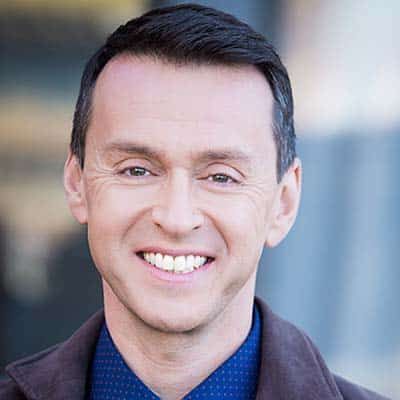
About
Get ready to be pulled in a new direction as composer/lyricist Andrew Lippa teaches us all to live out loud and how to be the life of the party. That's right, we went there.
Andrew pulls back the curtain on his career to discuss how he fell in love with musical theatre, what he learned from Nathan Lane, and why Kristen Chenoweth has become his muse.
Also, Andrew shines the spotlight on Michael Mayer, Stephen Sondheim, and Bebe Neuwirth.
Become a sponsor of Behind The Curtain and get early access to interviews, private playlists, and advance knowledge of future guests so you can ask the legends your own questions. Go to: http://bit.ly/2i7nWC4
Transcript
This transcript was automatically generated and might contain errors.
[0:00] Kevin David Thomas: Ho ho ho! Merry Christmas! That's what Santa says. What? Do you need to eat all those Lapkas? That's what Hanukkah Harry says. Hanukkah Harry. Yes, it's December, and the holiday season is upon us. Oh, what do you want for Hanukkah, Rob?
[0:14] Robert W. Schneider: Well, Kevin, I want more folks to contribute to our Patreon. What do you want for Christmas, buddy?
[0:18] Kevin David Thomas: I was gonna see the Angel Cast recording, but um, I guess I'll say the exact same thing, Rob. Maybe someone out there will get us that gift.
[0:26] Robert W. Schneider: How would they do that, Kevin?
[0:27] Kevin David Thomas: Well, our generous holiday elves should head on over to Patreon.com. That's P-A-T-R-E-O-N dot com. And then search for Behind the Curtain Broadway's Living Legends. And then you can set up a monthly donation. Even a dollar a month helps us out. Your contributions help us continue doing what we are doing. We are self-funded, so we need your help.
[0:47] Robert W. Schneider: Have another PBS tote bag. And for Hanukkah, feel free to contribute eight times a month.
[0:53] Kevin David Thomas: Okay, Rob, now you're pushing it.
[0:54] Robert W. Schneider: Okay, you're right. I get it. I see what you did there. Okay, have a safe, healthy, and happy holidays, and head over to Patreon.com, P A T R E O N, and leave a nice little gift for your two Broadway loving elves.
[1:07] Kevin David Thomas: You like that lie, didn't you? Hi, I'm Robert W. Schneider.
[1:11] Robert W. Schneider: And I'm Kevin David Thomas.
[1:12] Kevin David Thomas: And this is Behind the Curtain Broadway's Living Legends. Don't forget to follow us on Twitter at Broadway Curtain. And make sure to join our Facebook page at Behind the Curtain, Broadway's Living Legends, and follow us on Instagram at Broadway Curtain Podcast.
[1:25] Robert W. Schneider: Plus, you can always listen to all of our episodes, old and new on iTunes, Spotify, Stitcher, Broadway World, the Stage Network, and the Broadway Podcast Network. Today's guest has created a unique and authentic voice in the American musical theater. At regular intervals, he's able to have you holding your sides in laughter, then reaching for tissues when he breaks your heart at the next measure.
[1:43] Kevin David Thomas: Indeed. Some of his works include The Wild Party, Big Fish, The Addams Family, John and Jen, The Little Princess, I Am Harvey Milk, and more recently made available for listening, Man in the Ceiling and Unbreakable. To tell us what it was like to work with such legends as Kristen Chenoweth, Marshall Brickman, Jerry Zaks, Susan Stroman, Jules Pfeiffer, and so many more. Here is the man whose music fills every BFA showcase and Ripley Greer Audition Studio from now until the end of time, Mr. ANDREW LIPPA.
[2:10] ANDREW LIPPA: Hello, hello. That is a lovely introduction. Thank you both. Thank you.
[2:16] Kevin David Thomas: We are so happy to have you today. Where we are on Skype with you. Where are we Skyping you from?
[2:20] ANDREW LIPPA: Uh, you're Skyping me from New York City, but I was running from thing to thing and unable to be in the studio with you. So, uh, I am in my home in New York City and running to the next thing. So I'm so glad you made time for me today.
[2:32] Robert W. Schneider: We are glad you made time for us. So I'm gonna let my lovely now you and Kevin know each other. Kevin, tell everybody how you know Mr. Lippa.
[2:37] Kevin David Thomas: We just met briefly, uh, two weeks ago, uh, Abingdon Theater Company for their benefit honored, uh, Mr. Lippa, uh, with, uh, for his work and recognized him. And so I was the music director of a concert that we did. You listeners, you heard us talk about it actually for a couple weeks. Uh, and so we met for the first time there. I got to play and conduct his amazing songs and scores. We had so much fun.
[2:58] ANDREW LIPPA: And this was an extraordinary thank you again, Kevin, for that evening. Uh, my family attended and, uh, some very close friends and colleagues from the very beginning of my career here in New York City. And it was the first time in my career I, uh, ever went to an evening of ANDREW LIPPA songs and wasn't involved, uh, in any way other than having written them.
[3:21] ANDREW LIPPA: And, um, you put on the most wonderful show. Uh, just, uh, Chad Austin, who runs Avenue Theater Company, directed it and helped, uh, you know, make that evening so special for me and my family. And, um, and, um, I can't thank you enough. It was really wonderful.
[3:36] Kevin David Thomas: Happy to be involved. It was really a great evening, yeah.
[3:38] Robert W. Schneider: So, ANDREW, where did you grow up?
[3:41] ANDREW LIPPA: Well, that's, uh, there's a, you know, a supposition there that I have grown up. So, um, so my, my, uh, birthed in which location?
[3:50] Kevin David Thomas: Yes, yes, I aged in a particular area.
[3:54] ANDREW LIPPA: Um, it's my left hip. Um, no, I, um, uh, yeah, I'll be here all hour. Um, I was born, I was born anybody can learn this on Wikipedia. I was born in Leeds, England, uh, which is central Yorkshire, to British parents. I'm third generation English, and, uh, we moved from there for a short while. When I was 17 months, we moved to Windsor, Canada, which is the city that sits across the Detroit River from Detroit. And then 18 months later, we became American residents and moved to a suburb that bordered Detroit, a little town called Oak Park, Michigan, which is where I, uh, grew up and went to college at the University of Michigan, and then in 1987, when I graduated college, I moved to New York City.
[4:36] Kevin David Thomas: And where why did they come to, uh, America or Canada and then to on the boats and on the plane?
[4:44] ANDREW LIPPA: They were on a plane, but all their stuff was on a boat. So Neil, Neil, um, uh, Neil, what's his name? Uh, Neil Diamond. Uh, I was gonna say Neil Sedaka, and I'm like, Neil Sidakel. Uh, and, uh, Neil Diamond wrote that song for my parents. Um, we, uh, I, you know, it's a long, ugly family story, and if you know I were paying you for therapy, I'd probably get into it. Um, but, uh, it was my family just wanted to do something. My parents wanted to get out of being Glenn. They, they, my father was looking for different kinds of work opportunities, and, uh, we had a cousin. It's just really a typical immigrant story. The only advantage, and it's a significant one, but the only advantage my parents had was that they spoke English.
And the, uh, the rest of their story mirrors, uh, that of many immigrant stories I've heard. Um, and like I said, the language thing is a big deal, and so they were able to navigate much easier in a place where they spoke the same language. But it was, uh, you know, there's a big difference between England and the United States today, but it was amplified, uh, I think quite a bit 50 years ago. And my parents didn't know anything about American culture. My mother had never been on an airplane in her life.
[6:01] Kevin David Thomas: Oh my god.
[6:01] ANDREW LIPPA: Um, all of their, um, all of their stuff was on a boat, they had $700 and two children, one of them an infant, which was me, and, uh, came to a country they'd never seen. They didn't know what it looked like, they didn't know anything. So, and they stayed with our cousins until they got settled and, um, they made their way in America. So, uh, my parents are pretty extraordinary for doing that.
[6:24] Kevin David Thomas: Yeah. And what do they do for work?
[6:27] ANDREW LIPPA: They were always salespeople or involved in some sort of selling of something. My mother ultimately, um, achieved her dream of, uh, opening a lady's boutique, uh, in, uh, the next town over Southfield, Michigan, and she ran that clothing store for about 15 years, and, um, she used to come into New York City, uh, five times a year and shop in the market. She, when she first came to New York City, her first time, she, um, some woman she had met, she used to be a seamstress. My mother, she's an expert tailor, and, uh, she had been, uh, taking care of some woman's, uh, seamstress work for a while, and this woman said, "You should own your own shop." And my mother said she always wanted to, and ultimately, this woman and her husband invested in my mother.
Uh, they gave her $10,000, and my mother, um, bought a bunch of fixtures from a store that was going out of business and signed a lease with a place and took whatever money that she needed to get on a plane and get a hotel. And for three days, she spent on 7th Avenue, literally going from building to building, starting at the top of the building and knocking on every door and going, "What do you sell?" until she found stuff that met her aesthetic and the aesthetic she thought that would work for the store. And in those days, in the 1970s, they would send you stuff. Uh, I think the term is on consignment. They would send it for free, or you, you know, you would get a line of credit, and they would send her boxes of goods, and she opened a business and took out ads in the Jewish news and the local newspapers and hung up her, you know, her sign.
And, uh, she turned it into a very successful little enterprise. And that's how I ended up coming to New York. My first visits when I was in high school, because I would come with my mother and shop in the market. So I would sit and pick out women's clothing during the day, and then we would go see Broadway musicals at night. And then, of course, years later, she was surprised to learn I was gay.
[8:16] Kevin David Thomas: And what was the first Broadway show that you ever saw?
[8:19] ANDREW LIPPA: You know, I can't remember what the first one was. I know early on we saw Evita and 42nd Street and Barnum and Lena Horne, The Lady in Her Music.
[8:29] Kevin David Thomas: Oh, that's so, that's awesome.
[8:30] ANDREW LIPPA: It was amazing. And my most memorable one was seeing the, uh, one of the earliest previews. It was like the second week of previews of Dreamgirls at the Imperial. And I remember it being, well, Dreamgirls is one of the most um formative theater-going experiences of my young life. And, and in fact, what I've told Henry Krieger this and, uh, that that when I wrote The Wild Party, it was that experience I was trying to, um, emulate, not in storytelling, but in, uh, or character or music, but in, uh, sort of feeling I wanted The Wild Party to never stop moving, um, the way that I remember, yeah, in energy, that's good. Energetically, I wanted The Wild Party to be like what I remember experiencing in Dreamgirls. And so, you know, what a thing to be able to, uh, tell the people who you know to tell Henry, uh, who had made the music for that show to be able to tell him that what an influence he had on me.
[9:59] Kevin David Thomas: Um, what came first? Uh, singing or playing the piano?
[10:03] ANDREW LIPPA: Singing long before playing the piano. I sang in the, uh, I'm sure I sang in the womb. And, uh, I, um, was always, always, always singing from my very, very earliest years. And that's how I learned to read music was as a singer. And then, um, and music was always for me, uh, uh, I always say about music and about playing piano, uh, I knew how to play the piano before my hands did. And, um, when I was just shy of my 14th birthday, we, my parents were able to afford a piano and lessons. And I, um, I was, uh, the day that the piano arrived, I called my mother that morning, uh, sick at school, and my mother came to get me, and she was very grumpy about it. And I, and she wasn't normally grumpy about me being sick, and I was like, why, why?
And I couldn't quite figure it out. And it, and then I realized it, it was she wanted the piano delivery to be a surprise. And, uh, because my mother loved surprises, and she wanted me to come home from school and discover a piano in the living room. Instead, what I got to do because I was sick was look at the piano come from the outside world off of a truck, handled by strangers, and placed in our home and sort of in a sense given to me. And that experience was so much richer for me than coming home to see a piano in the living room, which of course was a generous and wonderful thing that my parents did for me. But I'm glad it turned out the way it turned out because I got to see it happen.
[11:44] Kevin David Thomas: And then you, you went to school, you started out as a vocal performance major, and then you became a music ed major, is that correct?
[11:51] ANDREW LIPPA: Well researched. Uh, yes, that is exactly what I did. I, I got accepted to Indiana University and to the University of Michigan.
[11:59] Kevin David Thomas: Right.
[11:59] ANDREW LIPPA: Um, and, um, I went to the University of Michigan in part because I was an in-state student and it was a world-class, uh, music school, and it cost very little compared to being an out-of-state student at a place like Indiana or elsewhere. And so I went to the University of Michigan as a voice major. I was a voice major for my first year, and Jeffrey suggested we write a musical, and we wrote a 45-minute musical that I, uh, we showed to my composition professor William Bolcom, and to our casual odds.
[12:29] Kevin David Thomas: Yeah, well, he was an amazing influence on me.
[12:32] ANDREW LIPPA: And, uh, Brent Wagner, who ran the musical theater program, and I kind of got hooked on writing music and ultimately writing songs myself. And so I switched out of being a voice major because I didn't really want to be a singer full time.
[12:50] Kevin David Thomas: And was the voice major was the, was it a like classical voice or did you focus on Broadway styles?
[12:55] ANDREW LIPPA: I mean, obviously you got to learn the basics and classical voice to sing Broadway, but there was a nascent musical theater program when I was at the University of Michigan, and musical theater programs were fairly new ideas when I was a student. Um, so it was a conservatory-like environment and it was a classically based thing. And I sang my first year, I, I was, I had a much, uh, I had a young voice, obviously I was 18, and, and I wasn't quite a tenor, and we were working on trying to help me expand my range and sing, um, you know, legit quote-unquote material and learn languages and all that stuff. And I won a competition, and I, you know, I had a lot of reason to think that, you know, I could make a career as a singer if I chose.
But I just wasn't, it always proved I love singing, and I love that I can sing, um, but it always, uh, for me has been just a part of the whole music making experience. And, and it when I write songs and scores, I get to have the whole experience that really fulfills me from the, you know, the what if stage, you know, it didn't exist and then it does, right? And I get to sing my own songs and play them, and sometimes can like I conducted the Royal Philharmonic Orchestra in London last year, uh, in a, uh, big, uh, concert version of A Little Princess. And so I got to conduct my own score, and, um, so that that's been the best part about, uh, you know, doing, you know, singing is that singing has led me through the process of making musicals.
[14:37] Kevin David Thomas: And then when you became a music ed major, you have to learn all the other instrumentation, and so I bet you that just helped inform you as a writer as well, I would think.
[14:45] ANDREW LIPPA: Yeah, I think it did. You know, I, I think one of the most, um, one of the most, uh, what's the word, uh, influential things that happened to me when I was a teacher for four years here in New York City was I learned how to improvise at the piano.
[15:00] ANDREW LIPPA: And oftentimes the accompaniments for songs for middle school age children, and that's what I that was where I taught was uh 10 to 14-year-olds. And those songs I found kind of dull. And so I would embellish them considerably and make up new arrangements on the spot. And I learned much more how to do that and felt really comfortable at the piano. And so by the time I left when I was 26, I didn't have any fear about being an audition pianist or being thrown into playing the piano in intense situations because I had honed that skill for a while. You could fake it really well.
[15:44] Kevin David Thomas: Correct. And so speaking of when you came to New York, why knew you? I mean, obviously in New York you wanted to be a part of it, but you came to New York and you became a teacher. What was the goal when you came to New York? Was it to teach, or did you have always a goal of like, oh, maybe I'm gonna go after I'm gonna write shows, I'm gonna do that in New York as well?
[16:02] ANDREW LIPPA: The goal was to do—I don't think I really at 22. I was a very, I wouldn't say it was unfocused, um, maybe that is the word though, but I was um I just didn't know exactly what I wanted to be or do. And sometimes you don't. And uh and so in rather than um working in an office or a restaurant or uh some other job that um I wasn't suited for or didn't want to do, um, I liked working with children very much, and I liked um teaching music. And so, and I have the experience and the degree for it, so it felt like a good fit while I was I got I was accepted to the BMI Musical Theater Workshop, my second year in New York, and Jeffrey Seller again there, Jeffrey will keep coming up in this story, um had commissioned uh a musical at a synagogue that I co-wrote.
That was my first show in New York that Jeffrey produced and directed, and um and that was in 1989. And so I was always leaning towards writing songs in the theater and figuring out how do you how do you turn that into a way to make a living.
[17:18] Right. And you know, the first things I did, you you know this story, Kevin. You know, I did uh in addition to teaching, I played the piano and I did arrangements and I did copy work and I did I conducted and I did people's um club acts and I would sing on people's demo recordings, whatever uh anybody asked me to do, frankly. And um it was musically, whatever anybody asked me to do. And uh uh I did that for a while, and I was grateful that I, you know, could do all of those things because they were they were instructive in you know giving me lots of experience. So, yes, the answer is I wanted to work in the theater. I think I ultimately wanted to write musicals, and I was starting to learn how to swim in that.
I didn't start writing lyrics until I wrote um, and so I started writing The Wild Party in 1996. And so I was uh always uh quote unquote just a composer. And um then, so I wasn't exactly sure those first years what I was going to end up doing. And once I started writing lyrics, it got much clearer to me.
[18:25] Yes. And now, besides Dream Girls, what were some of the other musicals that had a big influence on you as you started to find your own voice?
[18:33] ANDREW LIPPA: Uh I wrote a song uh for Stephen Sondheim's 80th birthday um that was after uh the opening of Sondheim on Sondheim at the roundabout uh at Studio 54, 900 people went over to the Hilton on Sixth Avenue and threw him a big dinner and tribute concert. And I was one of uh seven songwriters or teams of songwriters like Bobby and Christian Anderson Lopez and um Lynn Manuel Miranda and Janine Soria, David Lindsay Bear, and Michael John LaCusa, who were asked to write songs in honor of the master. And I wrote a song uh about a boy I had a crush on in high school who introduced me to Sweeney Todd. And uh it's a song that Steve really loved the song and uh has been very generous about it. And uh when it was published in the ANDREW LIPPA songbook, uh it's co-published by Steve because there's enough Sweeney Todd music in it.
So Steve and I co-own that song. So it's the only song I ever co-owned co-owned with Stephen Sondheim. And so Sweeney Todd was a this um extraordinary awakening in the musical theater when I was in 10th grade, and uh followed quickly by Evita, both of them double albums, for those of you who remember what that is. And um and and that leaned much closer to opera than anything I had experienced before as a musical. And I um there's no, you know, there's no uh no surprise that The Wild Party is all is pretty much completely sung, um, as was John and Jen. So my first two musicals um were sung through works because I really like that. You know, I like seeing that. And that those were the influential pieces, uh Sweeney Todd and Evita, really, those were the big winners for me when I was in high school.
[20:22] Kevin David Thomas: Uh, what about the BMI workshop? Tell us a little bit about your experience uh with this. We've talked, our listeners are familiar with it because many guests have been a part of it before, but curious what your experience was with that was like.
[20:34] ANDREW LIPPA: It was extraordinary for me because it was like going to graduate school for free. So that was one amazing thing. It was also, you know, what motivates writers is deadlines. And um, you know, in general, that's what, you know, I don't know a lot of people who tell you they love writing. I remember hearing Stephen Sondheim say that he loves having written. And that's good. And um, and I know this feeling. And so um BMI provided this frame as this safe space of a framework where you could go once, you would go once a week, you'd be paired up with other uh collaborators, you'd be given assignments early on, and then you were to go and develop the thing that you wanted to develop. And those first two years were truly uh truly you uh really useful uh time for me because um while I had a sense that I wanted to make musicals, I didn't know enough about how musicals functioned or like what would make it while you know what what I hadn't I hadn't written very much.
I'd only written hands. Rules, quote unquote, you know. Well, I suppose it's the rules and the rules to break and the rules not to break, and uh and you know, and BMI has this, you know, famously set of rules, and and they eat you know, you can go through the canon and see examples of writers who followed them and successfully made shows, and writers who didn't follow them and successfully made shows. So, you know, just like anything, um it's a a spoonful of uh salt, is that it? You guys and um, you know, you just you know you take what works for you. And uh, but what was what was better for me was the opportunity to be in an environment where there was no failing, and or if you failed nobody had to know about it, so you weren't uh humiliated by it.
You were just able to make mistakes and learn and be given feedback from your peers and from the people who taught the class. And um, we had these extraordinarily good teachers, uh Skip Cannon, um uh was my first year teacher, and and uh Richard Anquist, who passed away uh a few years ago, uh was our second year teacher. And they they they just were very insightful, very, very good um listeners and good teachers, and uh I really have always been grateful to them in that experience.
[23:02] Kevin David Thomas: Are there any rules of storytelling that you follow?
[23:05] ANDREW LIPPA: Don't suck, I suppose is one of them.
[23:07] Kevin David Thomas: That's a good one.
[23:09] ANDREW LIPPA: Uh-huh. Yeah.
[23:09] ANDREW LIPPA: I have my own set of rules, like the Passover principle, which is uh on Passover, the youngest child asks Manista, Nahalala Hazeth, why is this night different from all others? And I believe that um the best theater songs in uh in a show that uh are the ones that answer that question, our first time or discovery experiences, even if the character says, I've done this a thousand times, it's the first time they've said they've done it a thousand times. And um that's why things, shows older shows in particular, like let's say Carousel, which has some rapturous music, also has things like uh, you know, uh fly high, fly low, or whatever that things, yo-ho, yo-ho, whatever that let's say like life for me, whatever it's called.
Um and blow hard blow now. And um thank you. Yeah, so everybody knows what below screen. Thank you. There it is. Blow high blow low. I think I know that guy. Exactly. And um, and uh the clam baked song where nothing happens and where it's very difficult, you know, it's it's establishing mood or scene or or community, but it isn't related in any other way that I can see to theme or story or uh character development. And so I find that uh tedious. And so that that's my particular. There are as many people now, I can hear them writing all of the emails to me now. How dare you? Um, but you know, so be it. Everybody's fine. Opinions are like assholes. Everybody's got one. And um, and I think um I think that is a rule of mine.
I think I have learned also that thematically, if all the songs relate to the theme. And so I think that's that's something I look at. I also acknowledge that musical writing is playwriting, and that if you don't understand what makes a good play, it's I think it's difficult to understand what makes a good musical, even though there are a lot of other things that make a musical a musical. One of them is uh uh uh conflict is necessary. Conflict uh people come to see plays and musicals because of it's about characters in con some kind of conflict. And if they are conflict-free, I find them for me, they're not interesting. I want to know that the characters are in some sort of dire situation or in some sort of situation where they want something they can't get and um or they're trying to get. So um that those are a few things that I think about when I write.
[25:40] Kevin David Thomas: When you start to work on a new project, do you try to identify the theme really early on, or do you let the story flow out and then you gather the theme after you put all the pieces together?
[25:49] ANDREW LIPPA: Uh it's my answer. Yes.
[25:53] ANDREW LIPPA: So um it all depends on the thing. Uh, you know, something like The Wild Party, I didn't know why I was writing it or what it was about, but I knew I was at that age when I discovered it, I was 31. I was deeply compelled by it. Now, this is a group of I was talking to a group of NYU students earlier this week. They're doing a production of The Wild Party, and and one of the students asked me, Well, what is you know, what do you think the theme of The Wild Party is? And I said, you know, your guess is as good as mine. I made it, and I'm not sure, I didn't follow any of these um uh routes that I have learned how to follow over time. And uh the show was a a lot of id uh that I just barfed out of me.
And it was also I recognize it to be this thing where over time people have criticized it for being harsh or R-rated or ugly or the characters are unlikable. And and why did I write such a compelling piece? Uh or for those people who find it compelling, a compelling piece. And why did I write um something that I found deeply compelling about if the characters are so unlikable? And it dawned on me that what I really want to show is yeah, everybody, we've all got a lot of this stuff lurking under the surface. A lot of us want to behave poorly, a lot of us we watch cop shows all the time where people behave poorly. We watch gangster movies all the time where people behave terribly, and yet we watch them.
We watch Peaky Blinders on television, and we wonder, uh, you know, like we're glad we're not like them, but we're deeply compelled by them. So, why in the musical theater do characters who behave poorly have to have to be likable like Guys and Dolls? Why can't they be horrible? And and what is that experience when you go to the theater and watch people truly being horrible? And so any discussion that's come up recently, there's been a couple discussions about new productions of The Wild Party in in uh big ways, and I'm hoping that they happen. I keep saying, and it this may be the thing that stops it from happening, because maybe people don't want to see that, but I keep saying, if anything, I want to lean into what makes The Wild Party horrible.
I want to make these characters even uglier, and I want to make them behave even worse. And I think it's through that that when they find the shred of humanity that they are able to find at the end of the piece, that that shred is enough to say, look, even among the worst of us, there is there is a possibility that that reform could happen. And uh I think I think there's something deeply interesting about that. And um, if uh the commercial theater doesn't, so be it. I'll write other things that that reach a large audience.
[28:46] Kevin David Thomas: Uh going back, let's talk a little bit about Goodspeed and why uh Goodspeed is important to your your life and your career.
[28:53] ANDREW LIPPA: Well, the Goodspeed, um, formerly known as the Goodspeed Opera House, um uh was uh a home for me for the better part of 1992. I got a call one day in January that year from a wonderful choreographer named Michelle Asaf. And Michelle was working on a new production of It's a Bird, It's a Planet Superman that Stuart Ross, um Stuart Ross, who had made Forever Plaid, had rewritten uh with permission of the authors, and um was directing and and uh doing this production at the Goodspeed. And uh the pianist took uh at the auditions took ill. And Michelle woke me up one morning at 10 a.m. Now, why I was sleeping until 10 a.m. is anybody's guess.
[29:42] ANDREW LIPPA: But Michelle, yeah, Michelle woke me up, and uh this was the days, by the way, when you had a phone, you know, with a tape, and you would use quarters to call in and get your messages. If it rang, if it picked up after a certain number of rings, then you knew there'd be messages, but if it didn't, then you could hang up and get back. My service number was like that when I came to New York. Those days are quite over. But um Michelle woke me up and said that the pianist took sick, and uh could I get down to 890 Broadway immediately? And I said, I'm on my way. And I got dressed and I ran down to 890 Broadway, and the music director, Michael O'Flaherty, who ended up being the music director for many, many years at the Goodspeed, just retired.
Uh yeah, just retired. Uh Michael was playing the auditions until I got there. And then when I got there, I played the whole day. And Michael came over to me, and I used to play auditions like um like I was Van Cliburn. You know, not so much trying to get attention. I always knew my role as an accompanist. I just thought like the performance is not just about the piano and the singer, it's about the music making that's going on in the room. And like, why would I just phone it in? Like, I better play the shit out of this. Yes. And so I did. And Michael came up to me at some point and he said, tell me a little bit about you. He was very intrigued and wondered why he didn't know who I was. And I was, you know, new.
I had just left teaching. And so they asked me back the next day. I'm sorry for that pianist who got sick who didn't get asked back the next day. And um, yeah, that showed this. And by the end of that day, Michael asked me if I'd come and be the pianist for this production. And so I said yes. And I went to the Goodspeed, and the first day there, Keith Levinson was the assistant music director and um orchestrated. He was doing new orchestrations. And Keith um, I think at the time was married to Janine Tessori. And uh her name was Janine Levinson for a while. And I don't know that she's keen on me saying that out loud, but it's no secret as far as I know. And um Keith uh was um overloaded with work on the orchestration side and was finding it impossible to be in the room and be an accompanist in the room.
And so at the end of that first day of rehearsal, Michael said, would I become the assistant music director and dance arranger? And then Michael would do the vocal arranging, and then Keith would do the orchestrating, and that's what happened. And I did that production, and then I got asked to do Paint Your Wagon, the next show of that season that Michael also music directed, and I was his assistant and played in the room and did the dance arrangements. And then Michael Price, who ran The Goodspeed, took me and Michael O'Flaherty to lunch and asked us if we'd become the full-time music staff at the Goodspeed Opera House. And Michael O'Flaherty said yes, and I said no, and it was the first time I ever had said no. I was like, what am I doing?
Like, when am I ever gonna get offered a job like this? No. But I had just started my career, and I didn't want to live in the country, putting on other people's musicals. I just wasn't ready for that. That wasn't what I wanted to do. And I wanted to make my own musicals, and so uh the next year they produced John and Jen, which was the first production we had developing that show. And so this was a wonderful thing because not only did I get my start as a musician at the Goodspeed, but I got my start as a composer at the Goodspeed. And so um it's been a very special relationship for me.
[33:31] Kevin David Thomas: Where did the idea for John and Jen come from?
[33:34] ANDREW LIPPA: Tom and I, Tom Greenwald, my colleague, uh writing colleague and I, on that show, um had two friends who were actors, and they were planning on doing an hour-long showcase in New York for themselves. And they had two other one-act musicals that friends had written, and they asked us if we would write a one-act musical for them. And they had shared a play with us that was the only thing that our play had in common with is that it was about a brother and a sister during a difficult time in history. And Tom and I didn't really like that play. And one day Tom wrote a 30-page lyrics and story and explanation and character development libretto, and he handed it to me and he said, read this. And I did, and it was called John and Jen, and it was about a brother and a sister during the Vietnam era, but he died in the war despite her efforts to try and stop him from joining the Navy.
And we started writing it, and uh we meant to write it for those two actors, but they never did it, they never actually performed it. And yeah, it just didn't happen. People got busy or, you know, weren't available, etc. And uh Jeffrey Seller, there we go again, um, had put together an evening of one acts uh early in his producing career. Um, my friend David Stern, who's written a lot of movies and lives in Hollywood, uh, John and Jen, and a play by Teresa Rebeck. And it was her first, one of her first things, and it was a one act, one, you know, three one-act evening that Jeffrey produced at a Theatre Row Theater on 42nd Street for two or three nights. And I played John, and um that was how we started developing it.
And then ultimately, um at the Goodspeed in 1992, after a performance of Paint Your Wagon, we put on a 30-minute version of John and Jen and asked the audience to stay back and threw a party afterwards, and everybody was like, This is great, and you should make it a full-length piece. And Tom and I talked to the director, Gabriel Barry about how we could make it a full-length piece. And we came up with the notion that the show currently is, and we kind of giggling said to each other, yes, and the Goodspeed will produce it next year. And that is exactly what happened.
[36:02] ANDREW LIPPA: Hey, podcast listeners, are you looking for a place to rehearse in New York City that is clean, spacious, and most importantly, affordable? Come check out Shetler Studios and Theaters, our wonderful host for these podcasts. Shetler is centrally located on West 54th Street between Broadway and Eighth Avenue, right in the heart of the theater district. Right in the heart, you'll find music, dance, and acting studios complemented by two black box theaters and six presentation venues. The professional facilities, inspired environment, and expert industry staff combined to provide the New York artist with an unparalleled studio experience. Visit their website at ShetlerStudios.com. That's S-H-E-T-L-E-R Studios.com. Shetler Studios and Theaters is our home for recording the legends of Broadway, and we hope that you make it your artistic home too. That's Shetler, S-H-E-T-L-E-R studios.com. See you here.
[36:59] Kevin David Thomas: In your position in the Dramatists Guild, what are some of the things you would like to see change for dramatists over the next say like 10-15 years?
[37:38] ANDREW LIPPA: Well, um I do think I would love to figure out with our friends um at Equity how we can develop shows in a way that actors don't feel they're being taken advantage of, feel that they're compensated appropriately, and make it less expensive. Um because I do think one of the major challenges I hear from writers all the time is the, you know, being able to develop, particularly musicals, because it just often involves more people because you're also dealing with musicians. The same thing is true. I'm not singling out Equity, the same thing is true of our friends at the AFFM. Um, and if there was a conversation to be had specifically about um about development and how we do this as a community and how we look at it as a community, because I see that it's challenging, particularly for young or untested writers, to get their work on um and to get their work seen.
And ultimately, you can record things and people can hear it, or you can put it on YouTube and people can watch it, but really, there's nothing, nothing replaces the being in the room experience while you're developing a show. And uh I hope that, you know, we can expand the number of development opportunities and still make everybody feel um welcome in that situation and feel compensated in that situation. Writers, I will remind your listeners, writers get paid nothing uh for those readings and development opportunities. Um writers uh aren't members of a union, the guild is not a union, and nor are we allowed to be uh because we own the work that we make. And um, and so it's um often that's one of the reasons the Dramatists Guild Foundation exists is to help uh give money to writers who need it when they need it.
We have many, many stories of people who had shows transferred to Broadway from off-Broadway or from uh they were done out of town on the way to Broadway in that period in between off-Broadway and Broadway or out of town and Broadway, people can't pay their rent. People can't pay their bills or can't feed themselves. Um that's just unacceptable to me in a culture where we say we value um we value the art, but we're not valuing the art maker. And so I do believe that, you know, that's our role at the Dramatists Guild Foundation, and that's becoming my role as I try to age gracefully.
[39:58] Kevin David Thomas: How did You're a Good Man, Charlie Brown come into your life and what were the challenges of matching the voice, you know, of fitting your three songs, or maybe you wrote more than that, into Clark Gesner's piece?
[40:14] ANDREW LIPPA: Well, that first came about, uh it was a 1998 was a phenomenal year in my life, and um it just was a lot of firsts, and uh it Charlie Brown was one of those things that came along that year. Um my very, very, very good friend Caitlin Hopkins, who runs Texas State University's musical theater program. Caitlin and I have been friends for many years. We had worked on a show at the Lambs Theater. We did a new musical called Johnny Pie and the Fool Killer. And uh we um uh I was a musician on that project. And um Caitlin, uh her father, her late father was one of the original producers of You're a Good Man, Charlie Brown in the 1960s, Gene Person. And Caitlin had said to me about a year before 1998, uh, so that would be 1997, uh, I'm good with math.
And uh Caitlin had said that there were stirrings of a Broadway revival of Charlie Brown, and that they wanted a music director and or arranger, and she put my name in the hat. And I remember thinking, I don't want to be a music director of You're a Good Man, Charlie Brown. It's like, you know, I wanted to write new shows, and I didn't look at that with as much distaste as just came out of my mouth, but um maybe I did. You know, I was like, I didn't want to be a music director. That was not my goal. You know, I wanted to write shows. And so when it came along, Michael Mayer, the director, called me and said that I had been recommended, and again, I think Janine Tessori played a role in that as I recall.
Janine had recommended me to Michael, because they had done Thoroughly Modern Millie together. And um, uh I'm not sure did Thoroughly Modern Millie get to Broadway by then? I can't remember if it was, but they were working on Thoroughly Modern Millie and um, yeah, I don't think it had gotten to Broadway yet. And um uh I said to Michael, you know, what's the job? And he said, you know, it was rearranging the score and the potential of writing this one song for he was hoping Kristen Chenoweth was going to say yes to doing it. Now remember, Kristen Chenoweth had been in Steel Pier and A New Brain, and you know, she was a respected Broadway actress, so she wasn't superstar Kristen Chenoweth yet.
And I knew of her because she did a reading of, she did the O'Neill production when we developed The Wild Party in 1997. And I knew Christy and I was very excited about the idea of writing a song for her, and Michael knew what it was going to be. It was gonna be about the My New Philosophy strips, and that he was changing the character to the character of Sally. Michael had a whole plan. And I was so intrigued, and I thought, well, one new song on Broadway and being the music director and arranger, like that's a good deal. Like I'll take that deal. And um, and it turned into three songs, and so um, and a joyful experience. And of course, writing My New Philosophy was really fun, and I remember I was um looking at the strips and trying to figure out how to order things and what to write about, and I could not come up with anything.
And one day uh I literally slammed my hands on the piano. I was, I went like I don't know if you can hear this on me. Yeah, we can hear it. I was, I went like this. And I went, I like it. I like it. That's a good philosophy. And then I went, but philosophy, philosophy. And then that's how I wrote the song. And I wrote the song in an afternoon after three days of agony. And honed it, really worked on the lyric for a few more days to really get it to be in the right order and to say exactly right. And in fact, it was the uh some philosophies are simple. That section. It originally was some philosophy are simple. Um I think, therefore I am.
[44:34] ANDREW LIPPA: Some philosophies are clear. Wham, bam, thank you, ma'am. And that was seen as a little body for Charlie Brown characters, so I switched it to what it currently is. I remember showing it to Michael, and he was so joyful. Oh, he is so joyful, and it was so fun to work with him, and he loved it. Then we took it, we showed it to the producers, and it had to go through this process of being vetted by Charles Schultz. Michael went to meet with Charles Schultz about a whole host of things, and Charles Schultz heard the song and gave his thumbs up for it, which was like, are you kidding me? Then we showed it to Kristen, and she spun platinum. You know, if you could spin platinum, she spun gold out of that song.
I always have ever from that day thought about songs and actors as this 50/50 kind of notion where 50% of the experience is what I write, and 50% of the experience is what the actor does with it. Adina Menzel singing "Life of the Party" from "The Wild Party" is another example of that. You know, Nathan Lane leading the opening of "The Addams Family," what these brilliant singing actors do when they come to the material and they go, "Thank you, it's mine now. Now here's how it goes." And that's what Kristen did. I remember with that first performance in Skokie, Illinois, at the North Light Theater where we started, she did the song, and the audience, no joke, it was like a minute of screaming.
I thought, what is going on? Like this is not "The Wizard and I," you know, and although "The Wizard and I" was yet to be written, but you know what I mean? I just didn't get it, but we saw it happen, and then it happened every day ever more. There wasn't a performance where Kristen didn't get that kind of response. It was clear she had emerged from a chrysalis and she was a butterfly, and that song is what helped her be a butterfly. She gives the credit to that song, and you know, she talks about our relationship. I've written several things for her. My only gold record is "Evil Like Me," the song from "Descendants" that Kristen sang. That's a wonderful thing too. Looking ahead, "A Little Princess," tell me about that piece, because it was done out on the West Coast.
There's a great recording of it. You just conducted it. My gosh, that must have been an amazing experience in itself, doing that in London. But tell us a little bit about that process, putting that piece together.
[47:21] ANDREW LIPPA: Sure, Susan Shulman, who Rob I know knows and had mentioned when we were off-air. Are we like, is that what we call that? It sounds like off-air. It sounds like a discount airline that you'd never want to fly on. They always pick someone to leave in the middle of the flight. It's called Get Off Air. It's also there's like three seats in the back, get you off air. I'll stop. I'll stop that now. So Susan Shulman and Heidi Ettinger, the wonderful scenic designer and also a sometime producer, Heidi Ettinger was a lead producer on the original production of "Into the Woods." Heidi and Susan had successfully done "Secret Garden," and they had gone to Brian Crawley, who Susan knew because she had directed the original production of "Violet," and Brian wrote the lyrics and book for "Violet."
They brought me in as composer. It's the only project I've ever done where I was composer only. I was fairly fresh off of doing "The Wild Party," and there was this opportunity to go do the production in Australia with Australian producing partners. We actually went to Australia to develop a reading, to do a reading of her first development step. That was fun. It was my first trip to Australia in 2001. I got involved and worked with Brian, and it was a great experience because I had never done this kind of thing where Brian and I got together and we would talk about what the song might be or what it might be called or who might sing it or what it was gonna be about. Then we'd figure out what that was, and then Brian would literally look at me and turn on a digital taping device, whatever it was called in those days, and then I just sat at the piano and would play music.
Literally just out of my head. I'm like, what if it's this? Or what if it's that? They're really silly tapes because at times I go to—it's like listening, it's like watching yourself when you're not supposed to be watching yourself. It's a very odd form of navel-gazing. When I listened back to those recordings, Brian would make these compiled recordings where he'd take the bits he liked, he'd put lyrics to them, and then I'd be going blah blah blah because I was just la la la making noises, talking, going, eh. It's the weirdest thing you ever heard. But I could hear a song emerge, and I would say to myself, wow, I like that music. Who wrote that music? Of course, I had written that music, but I had no memory of most of the music I wrote for that show because I would just do it in a room with a piano, and then he'd go and two weeks later, send me something that had lyrics, and I would start piecing it together on paper, and boom, that's how we wrote a score.
The majority of how we worked was music first. We did a production at TheaterWorks Silicon Valley in 2004. It was a beautiful production that Susan directed and Heidi designed. We were working with the Dodgers, the producers who at the time had experienced some sort of change in their business, and they were having some, I don't remember, some sort of internal issues, and they let go of all of their developing projects except one that they decided they were gonna hold on to, a little musical called "Jersey Boys" that they were doing at the La Jolla Playhouse. When "Jersey Boys" hit, of course, the Dodgers were newly reborn, but at that point, they had stopped their relationship with "A Little Princess," and we found ourselves adrift.
We didn't have a commercial producer anymore, and we just could never find a commercial producer after that. MTI wonderfully came on board as willing to license it, and we took a while to raise the funds to make the recording, but eventually we did, and in 2011 we finished that recording. It was a big labor of love, and now it's licensed and done by schools and colleges and all that sort of thing and theaters around the world. Maybe one day it will have its day in a big glorious Broadway production.
[51:53] ANDREW LIPPA: Going back to your process, I know this is like a private thing to ask because it's kind of like looking at the man behind the curtain, but you know, is that how you usually will come up with a melody or the flavor of what you're writing? You'll just improvise at the piano and see where your hands go and see what feels right, or will you sit down without a piano and really Leonard Bernstein it and write it in your head? I don't know. Do you know what I'm saying? You don't have to be too personal about it, but I'm just curious how you actually make that creation.
[52:23] ANDREW LIPPA: I would say it's probably a combination of those things. There are times where I read a book about what happens, like how creativity might work in the brain, and how often people talk about that when they're doing something mundane, whether it be on the treadmill or swimming. For me, it's often in the pool or in the shower or walking or on the subway. I have a bunch of voice memos on my phone where I'll sing, you know, like indecipherable, but by me, and they will be the stirrings of some idea or melody of something or some feel of something. It depends on the song and it depends on the score. Sometimes it is about feel because musicals are so much about a lot of things, but energy matters, like the feel of that moment.
What's the pulse of this moment now, and how is music affecting what the story is? How's music telling the story or in opposition to the story? I often talk about this because this music is hopeful, and it sounds so beautiful, right? We all know this is the accompaniment for it, and she sings, "On My Own, pretending he's beside me." Like that's kind of nutty. All alone, I walk with him till morning. Well, no, you don't. You're like a ragamuffin in the street, you're about to die, and it's raining. Sorry. In the hands of a lesser artist, somebody might write "On My Own, pretending he's beside me," you know, something really morose and plotting and minor. But they didn't write that. They wrote this hopeful, beautiful piece of music, and the music tells you, you know what?
Even at this young woman's worst moment, there's hope in love. There's hope in this moment. Maybe, if not here somewhere, maybe beyond in the afterlife, wherever it is, there is hope and love. So songs sometimes the music will tell one story and the lyrics will tell a different story, and it's that third thing that you get and you combine. Yes, and you're the other chemical that goes in with those two chemicals to make whatever that particular thing is that is intended to be felt. That is part of what goes through my head every time I sit down to make something.
[55:18] Kevin David Thomas: Thank you for that. That's fantastic. Jumping ahead to "The Addams Family," which is incidentally like for the last couple of years, the most produced musical in high schools.
[55:28] ANDREW LIPPA: Oh my God, I love it.
[55:31] Kevin David Thomas: I'm underscoring your chat. Go on.
[55:33] ANDREW LIPPA: I love it. Audiences should know. I mean, our listeners should know it's the most produced musical in high school.
[55:39] Kevin David Thomas: So for the most produced, "The Addams Family" is most produced in the Americas.
[55:39] ANDREW LIPPA: "The Addams Family" is most produced in...
[55:52] Kevin David Thomas: I don't know.
[55:53] ANDREW LIPPA: I enjoy the accent too.
[55:55] Kevin David Thomas: I love the accent. So, what were some of the challenges in writing it and getting it produced and getting it on its feet, keeping the vision?
[56:01] ANDREW LIPPA: You know, none. None. It was all simple. What a blessing that Stuart Oaken, the lead producer of that show, took me to lunch in 2006 and said, we were he was running a program at Northwestern University called the American Musical Theater Project or Music Theater Project that he co-founded. I was developing a new musical there called "Asphalt Beach." While we were, it was a very silly, funny high school comedy. Stuart said he hadn't realized how funny I was and always loved "The Wild Party," and that was enough to convince him that I should write the score to "The Addams Family." I asked him who else was working on it, and he told me Marshall and Rick were Marshall Brickman and Rick Ellis were writing it, and the Fayel McDermott and Julia Krouch were directing and designing it, and I said, sign me up.
The process of that show had some challenges, including the fact that working with very famous characters, the audience has, unlike "Charlie Brown," which was a show that I just augmented, this was from whole cloth. Audiences come in with expectations about, you know, everybody's got a slightly different expectation of what they think it should be or what they want it to be. You hope that you can win them over by saying, hey, this is how we see these characters doing these things. That just took a while to find our footing and figure that out. We had the blessing of somebody as brilliant as Nathan Lane, who taught me so much about comedy and about pace. One of the things I learned from Nathan was how to go slowly.
I think one of the things, like if you look at Robin Williams comedically, his pace was very fast. Nathan's pace, at least in the work we did together, was very slow. I learned a lot about how to make things funny slowly. It's something that didn't come naturally to me until I started looking through it and started asking myself questions about that. It had the challenge of being a big commercial project of people thinking that that was the only reason we were doing it. If you're gonna play in the big leagues, you have to be ready for the big league criticism. All of that stuff, and "The Addams Family" has been the most produced musical, as you mentioned, for the last five years in North America.
The most produced musical except for one year when it was number two, and it was beaten by "Beauty and the Beast" the year that their live-action film came out. But we ascended back to number one, which I just love. And it's just been an amazing blessing. The show opened on Broadway to, it would be kind to say mixed reviews, and ten days later, in an article above the fold, which used to mean something in the days of the broadsheet, the New York Times, where you were on A1 above the fold, that's where the top stories were. There was an article about how "The Addams Family" was selling at a record pace. Clearly, criticism, no criticism, good, bad, thumbs up, thumbs down, didn't matter. I think we were at the—I think in some ways it started in the 2000s somewhere where the internet and so much about how people receive information has changed, as we see in the current political climate.
They weren't looking to the traditional sources, and even though it was 2010, so it's almost 10 years ago, the audiences embraced the show. It was a very big success and a big success on the road. It ran for 16 months on the road and then had a non-equity tour for 18 months and has been just produced everywhere in 15 languages. There are three recordings in three different languages, and it's been a real blessing.
[1:00:42] Robert W. Schneider: Um, I'm gonna jump ahead to talk a little bit about the choral writing that you've done. I find it fascinating that you wrote these book musicals and then we have two pieces: we have the I Am Harvey Milk and on the more recent Unbreakable, which is, incidentally, everyone can listen to and get the CD and stream it at all your music places. But that's quite a, I don't say it's quite a change, but it's like writing for a big choir like the San Francisco Gay Men's Chorus, for instance, and having almost like a, I want to call it like an oratorio. What were the challenges in writing that and the exciting things about it? I mean, I love, I mean, I miss, I'm a singer and I miss singing in a choir, you know, and I love choir.
[1:01:22] ANDREW LIPPA: I love choral singing as well. Um, and you not only wrote it, but you starred in it. Um, that must have been pretty cool.
[1:01:31] ANDREW LIPPA: What a pig! Um, I was asked in 2011 by Tim Seelig, the music director of the San Francisco Gay Men's Chorus, would I write a five-minute piece about Harvey Milk? And he was asking 10 or 11 other composers to do the same so that they could have a whole evening dedicated to Harvey Milk. And I said I didn't want to write a five-minute piece, I wanted to write a 60-minute piece. And Tim and I discussed why. And um, he went to the other co-commissioning choruses—there were 10 choruses total, who were co-commissioning this idea—and sold them on the idea of me writing the whole thing. And I wrote a 60-minute work called I Am Harvey Milk. I decided very early on I didn't want to write a bio of Harvey Milk, a musical biography.
I wanted to write something that covered ground about what kind of a person he was and what the experience must have been like. And um, so I started it with him as a 12-year-old singing. It's, uh, the first movement is called Operatic Masterpiece, and it's about this boy singing about how he wants to live his life like the characters in operas. Uh, I want my life to be just like an opera at the Met, three hours in the dark, where love is found in one duet. And he is joined by the chorus, and then ultimately the older version of himself. And he and the older version of himself sing together about how they want to live their life this way, which is ultimately what Harvey Milk did live his life on a sort of grand opera scale.
[1:03:09] ANDREW LIPPA: And the second movement is a piece called I Am the Bullet for the Chorus Only, and it is sung from the point of view of the bullet that went through Harvey Milk's head. The character, the voice of the chorus, they sing, I, I am the bullet, I am the bullet that went through the brain of Harvey Milk. I have no opinion, I have no allegiance, I am just a bullet. I do what I'm told. And what happened was in doing that, I was unlocked from all of the traditional narrative devices that have held me and held my attention in making musicals. And I structured the whole piece around the 11 months that Harvey served as a member of the city board of supervisors in San Francisco, that each month represented a different facet of his life.
And it goes non-chronologically. And it somehow amounts to something, and the audiences have been—it's the only piece I've ever done that is absolutely raves everywhere. The New York Times, the Wall Street Journal, Opera News, so many places that have written, Washington Post that have written about the show and their response to it and audiences' responses to it have been ecstatic.
[1:04:32] ANDREW LIPPA: And we did it at Disney Hall in LA, we did it at David Geffen Hall in New York City. That was with Kristen Chenoweth and the Orchestra of St. Luke's and Joel Fram conducting, and I played Harvey Milk. And it's just been a remarkable way to be able to express myself. And one of the things that I was allowed to do that really is harder to do in making musicals is to allow the music to have its own set of reasons, meaning I could choose purely musical ideas that are part of the fabric of why I'm telling the story. The whole piece starts in D major. And um, if D major is the key I gave to Harvey Milk as a boy, I wanted D major to be the key that the piece also ended with. And um, something as simple as that is almost impossible to do in the musical theater because you're always adapting the score around the talents of the individuals.
And so perhaps the person playing the lead can't sing the song in D major at the end of the show, and they need to do it in C major. So, like, why should that matter? It does, it does. And I think there's a—I think there's an energy, again, they use the word energy, there's an energetic thing about it. And so it opened that head and that, uh, my opportunity to write and think in those ways. And so we did it, it's been done over 40 times around the world. Um, we did it with 700 singers in Denver for an audience of 5,000 people. It was quite remarkable. And uh, I wrote a partner piece for it called I Am Ann Hutchinson for Kristen Chenoweth to shine in, and we did it at the Music Center at Strathmore in North Bethesda outside of DC in 2016, and it's coupled with I'm Harvey Milk.
So the first act is I Am Ann Hutchinson, the second, I Am Harvey Milk. And the first performance we did at the Strathmore Music Center, uh, the end of the first act, which is Ann Hutchinson, uh, the audience gave it a standing ovation. And I've never ever been involved with something where an audience gave the first act a standing ovation.
[1:06:51] ANDREW LIPPA: And we, um, I can't announce it here, but we may have, uh, we may be able to talk about it soon, uh, and uh what's happening with Ann Hutchinson and Harvey Milk. So, uh, Unbreakable, which we also wanted to talk about a little bit on this program, was um my follow-up because, uh, Tim Seelig again came back to me and said that they had pulled together another group of choruses from around the country. I think it was 11 this time, and um, they wanted me to write another piece, and I decided that, uh, I wanted to take a page out of August Wilson's book. Uh, August Wilson, of course, having written the, what are known as the Pittsburgh Cycle, as the Pittsburgh Cycle, the 10 plays that took place during the 20th century in African American experience in Pittsburgh, um, including plays like Fences and uh, the Piano Lesson, etc. And um, I thought, can I do that in one evening?
Can I make a chronology of gay life, LGBTQ life in one evening? And rather than it feeling like a textbook or uh something, some, you know, good medicine, it focuses on stories that most of us don't know or don't know in full, and they're often fully dramatized. It was staged and um, it takes place from 1900 to the moment, and uh, I was also cast myself in that because who else is gonna cast me in their show? And uh, so I'll cast myself, thank you very much. And um, it was, uh, it too has got this life, and we keep getting requests to do it, and we are working also on a New York birth for that score and that piece um and a possible taping for television. So it's um, it's just been exquisite to write for the gay community and to talk about things that matter to me in our community.
[1:08:48] Robert W. Schneider: That's beautiful. And listeners, you can get that CD, you can stream it. I would also recommend Googling or looking up the playable article that you wrote that you go down track by track, giving context to each of the tracks. I listened to it, but then I read each, you know, little blip about each track, and I—that gives a greater picture of what's going on. I highly suggest doing that, listeners. Uh, another CD that just came out, like very recently, is The Man on the Ceiling. Now, when did you write that versus when like it's now able something that we can listen to now?
[1:09:21] ANDREW LIPPA: Well, often these pieces are overlapped when one is writing them. Uh, I started work, for example, on Big Fish several years before starting work on The Addams Family, but The Addams Family came to Broadway several years before Big Fish. So, um, The Man of the Ceiling is based on a book that Jules Feiffer, the great cartoonist and illustrator and writer, um, Jules, you know, wrote the screenplay for Carnal Knowledge directed by Mike Nichols. He wrote the screenplay of Popeye, directed by Robert Altman. Uh, he, uh, you know, he wrote short stories and he won an Academy Award for a short film, and he won the Pulitzer Prize for cartooning for his comic strip in The Village Voice for 44 years. Jules is a legend of American arts and letters.
And um, Jules wrote this book, uh, this book for children, basically, or middle-aged children, uh, in 1993 called The Man in the Ceiling. I discovered it in 1996 through a friend who had suggested I read it. And in 2000, I invited Jules to come see The Wild Party, thinking I had something to show him that I had done. And hey, would you consider letting me do The Man in the Ceiling? Jules saw The Wild Party and really liked it, but wouldn't let me do The Man in the Ceiling. And I spent five years calling him and bothering him and asking him if he would change his mind. And ultimately he did, and I pitched it to Tom Schumacher at Disney. And uh, Tom and Jules and I, we developed it at Disney for a couple of years.
It wasn't the right fit, uh, Disney and the show, and the show went dormant for a while, and then guess who stepped in? This, you should call this program Jeffrey Seller and ANDREW LIPPA in parentheses. Um, Jeffrey Seller wanted to get involved as producer and director, and uh, in 2013 we started working with Jeffrey. The show finally had a production in 2017, and I play one of the characters, and um, then in early 2019, this year, we went into the studio and TRW, Theatrical Rights Worldwide, uh, took on the license of the show. It's available for anybody who wants to put it on. And we have this recording, and it took a, you know, that's a 19-year saga that finally yielded another lovely little musical. And um, we—I just had a conversation last week about a potential New York City production.
[1:11:53] Robert W. Schneider: I hope so. Listeners, please go listen to this. It is so special, it is so well done. I absolutely love it. It—I can't say enough about it, so please, please, please listen to this. And I look forward to seeing a New York production of this.
[1:12:05] ANDREW LIPPA: Yeah, I think it needs to be a good idea.
[1:12:07] ANDREW LIPPA: Yeah, thank you for your kind words about it. I love it dearly, and I love the friendship. I love the friendship that I was able to make with Jules as well. Jules has been like a father, both an artistic father and a father father. My father passed away in '07, and Jules will be 91 in January. So, um, I'm grateful he's been in my life.
[1:12:28] Robert W. Schneider: Andrew, this has just been an absolute joy. I can't even begin to thank you enough for taking time out to talk to us.
[1:12:34] ANDREW LIPPA: Well, thank you for including me in this program, and uh, and thank you for making this program. It's so wonderful that you're spreading the love of musical theater and uh insights into it. And uh, as a listener and as a participant, I want to thank you for that.
[1:12:47] Robert W. Schneider: Aw, thank you, ANDREW. Till next time. Bye everybody.
[1:12:54] Robert W. Schneider: Today's episode was recorded at Shetler Studios on 244 West 54th Street. Visit Shetler Studios to book your room today, and you could be as cool as us. That's S-H-E-T-L-E-R Studios.com. And a big thanks to our sound editor Daniel Schwartzberg and social media manager Bethany Selecki. And friends, don't forget, we want more folks to hear these incredible stories, and that's where you guys can come in and help us out.
[1:13:19] Kevin David Thomas: Yes, in order for people to find out about us, we need lots of ratings on iTunes. The more ratings, the more it will come up in search results. So head on over to iTunes, search for Behind the Curtain: Broadway's Living Legends, click on our logo, click on ratings and reviews, then write a review and leave us five stars and make us feel as special as Eliza Doolittle on Eliza Doolittle Day. Or you can leave us one star and make us feel as bad as Annie did in that weird production in Boston where Annie dreamed about being adopted and then ended the show back in the orphanage. True story, Rob was there.
[1:13:54] Robert W. Schneider: I saw it. So head on over to iTunes and make us feel even more special than we already do.
© Broadway Podcast Network, All Rights Reserved