

Good old Jason, good old, good old, good old Jason Alexander joins us from Los Angeles to look back on his incredible acting career onstage and off... Read More
From the show: BEHIND THE CURTAIN: BROADWAY'S LIVING LEGENDS » Podcast
Guests

Featured Shows

About
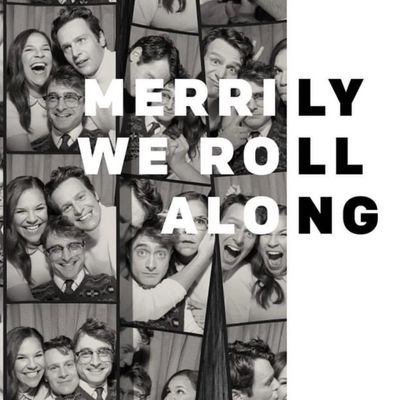
Good old Jason, good old, good old, good old Jason Alexander joins us from Los Angeles to look back on his incredible acting career onstage and off. From the triumphant/turbulent days of Merrily We Roll Along to rollerskating in The Rink to collaborating with Jerome Robbins to winning the Tony Award to starting a directing career, Jason covers it all.
Jason pulls back the curtain on his career to discuss how you turn down Jerome Robbins, what it was like roller skating with Chita Rivera, and why Joe Mantello taught him a great lesson about acting.
Also, Jason shines the spotlight on Doug Henning, Gene Saks, and Liza Minnelli!
Become a sponsor of Behind The Curtain and get early access to interviews, private playlists, and advance knowledge of future guests so you can ask the legends your own questions. Go to: http://bit.ly/2i7nWC4
Transcript
This transcript was automatically generated and might contain errors.
[0:00] Robert W. Schneider: Tis May, tis May, the lusty month of May.
[0:02] Kevin David Thomas: Alright, calm down, Guinevere.
[0:04] Robert W. Schneider: Sorry, Kev, but what could be more exciting than spring showers, green trees, and new flowers?
[0:08] Kevin David Thomas: How about new Patreon subscribers?
[0:10] Robert W. Schneider: Tell us tomorrow, wise one.
[0:12] Kevin David Thomas: Well, you let's do some spring cleaning of your wallets and head on over to Patreon.com.
[0:16] Robert W. Schneider: That's right. P-A-T-R-E-O-N.com.
[0:20] Kevin David Thomas: And you can search for Behind the Curtain Broadway's Living Legends, and then go ahead and set up a monthly donation.
[0:24] Robert W. Schneider: Even a dollar a month helps us.
[0:26] Kevin David Thomas: Your contributions help us continue doing what we are doing and bringing these legends and stories to your ears.
[0:32] Robert W. Schneider: I'm off to pick flowers now.
[0:33] Kevin David Thomas: Ooh, may I join?
[0:34] Robert W. Schneider: Yes, but dress light because it's very warm for May.
[0:38] Robert W. Schneider: Uh hi, I'm Robert W. Schneider.
[0:40] Kevin David Thomas: And I'm Kevin David Thomas.
[0:42] Robert W. Schneider: And this is Behind the Curtain Broadway's Living Legends.
[0:44] Kevin David Thomas: Don't forget to follow us on Twitter at Broadway Curtain.
[0:47] Robert W. Schneider: And make sure to join our Facebook page at Behind the Curtain Broadway's Living Legends.
[0:51] Kevin David Thomas: And follow us on Instagram at Broadway Curtain Podcast.
[0:54] Robert W. Schneider: Plus, you can always listen to all of our episodes, old and new, on the Broadway Podcast Network, iTunes, and Spotify.
[1:01] Kevin David Thomas: Today's guest is one of Broadway's most beloved song and dance men.
[1:04] Robert W. Schneider: New York audiences have seen him devour the stage in such shows as Merrily We Roll Along, Forbidden Broadway, The Rink, Broadway Bound, Jerome Robbins Broadway, Accomplished Fish in the Dark, and so many more.
[1:14] Kevin David Thomas: And of course, there were the small screen versions of Bye Bye Birdie, Cinderella, A Christmas Carol, the big version, the big screen versions of Lucky Stiff, Love Valor, Compassion, and Brighton Beach Memoirs.
[1:24] Robert W. Schneider: Plus, he's a celebrated director who most recently completed a critically acclaimed production of The Last Five Years.
[1:43] Kevin David Thomas: Good old, good old, good old, good old JASON ALEXANDER.
[1:46] Robert W. Schneider: Jason, how are you today?
[1:49] JASON ALEXANDER: Well, I feel much older now that you have run that resume. That didn't happen in a day, I know that. A lot of hard work there, a lot of hard work.
[1:59] Kevin David Thomas: What an impressive resume. I have to ask you, do you know how many times in The Rink you said, good old Lenny, good old, good old, good old Lenny?
[2:07] JASON ALEXANDER: I'm just per performance.
[2:07] Kevin David Thomas: Per performance.
[2:12] JASON ALEXANDER: It has to be what, about 18, 17?
[2:16] Kevin David Thomas: Repetition is an actor's nightmare, and you make it sound so organic and so beautiful. What was it like when Candor and Ebb said, "Hey, here's a song for you, JASON"?
[2:26] JASON ALEXANDER: Heaven. Absolute heaven. You know, the guys. So for people that aren't familiar with The Rink, it was really a two-actor vehicle for a mother and daughter. Um, in our case, Tudor and Liza Minnelli. And then six gentlemen play every other role in their lives. Our base characters are the sixth-man wrecking crew that's come to destroy their skating rink, but we become past lovers and husbands and family and friends and neighbors. And every guy in the show except me played one drag character. I was the only one who didn't play a woman. But we came into the show, um, really not expecting much by way of solo material. You know, it was group numbers. We were there to be an ensemble in a chorus to support the ladies in their story.
And when suddenly "Marry Me" showed up, which was not right, it came between the workshop and the rehearsals for production. Here was this gorgeous gift of a song, a gorgeous tune, a really, you know, as only Fred Ebb could do it, just a charming, easily, sweetly romantic lyric and a great moment and a great, you know, just this wonderful thing I got to do with Chita Rivera every night. And so, you know, the first time they sat down and sang it, I just went over and hugged them both and went, "How do I say thank you?" You know, it was just and it is occasionally a song I see pop up, you know, on engagement videos or walking down the aisle kind of stuff. It's not hugely known, but it's got enough play that, you know, happy to be the originator. Such a gorgeous song.
[4:13] Kevin David Thomas: Now, were you with the workshop from the get-go?
[4:16] JASON ALEXANDER: I was, I was. I remember going to the first audition for The Rink and having it go really well. Uh, you know, I could tell the reading went well and the songs were. Do you remember what you sang for it? Do you remember what your audition song was?
[4:29] JASON ALEXANDER: Yeah, I do. I think I was still doing the same two songs. So my ballad was "Corner of the Sky," because my uptune, I had two very, um, they were uptunes from shows and roles where I could literally never be cast, but I loved the songs. So I either did "Stick Around" from Golden Boy, which is Sammy Davis Jr.'s song.
[4:57] Kevin David Thomas: Oh, yes, we know it well.
[4:59] JASON ALEXANDER: Yes, of course. Or I did "It's a Deal" from Raisin. Talk about thinking of those were big audition songs for me. And out of context of their shows, they're not, you know, um, race specific. So sure, that's right. Yeah, sure. Wow, those are good ones too, actually. Actually, that's great. We normally ask that. I think this is the first time we've ever heard Golden Boy come up as a butt. The reason I remember that audition so well is eventually I got far enough along in that first audition that they said, "So do you roller skate?" And I immediately said, "Absolutely, of course." I had never been on them in my life, I had never had my foot on a wheel of any kind, and they said, "Great, because the skating auditions in two weeks, and we'd love to have you come back."
I remember I lived on 88th and between First and York, and there was a skate rental shop on Second Avenue in 87th, and I walked over there, rented skates, and you had to give them your shoes, you know, so that you wouldn't just run off with the skate. So I now am in a pair of roller skates that I've never been in that I know not at all how to operate. And I'm going, where do I even have enough area to try this? I crawled, literally crawled on trees and signposts up to Central Park and got to this area where it was 1981 or 82. So the phenomena of roller boogie was happening, and there were a lot of, you know, the brothers had the big boom boxes and they were great. And I saw two guys that looked like they wouldn't kill me, and I said, "I have 20.
Can you teach me anything about this?" And they said, "Well, the first thing you got to do is get those stoppers off of your skates." And I went, "Yeah, the only thing is keeping me up." They put me on my butt, they unscrewed the stoppers, and then straight up they began to give me a lesson so that by the end of that day I could kind of move forward and turn a little bit, and they had begun to show me the idea of how you would skate backwards. But I rented the skates every day for two weeks, went to that audition, sort of, you know, hammer clawed my way through it, and then all of us that got that show, the six guys that got the show, we went to skate school. So we had three months, four days a week at the old Roxy Roller Rink with a woman named April Allen.
[7:33] JASON ALEXANDER: The thing that always was remarkable about The Rink is I really liked the show that was on the page. And the show on the page was really the show on the stage. They did a wonderful job of making the script come alive, and all previews were glorious. Audiences loved the show, really responded to the show, and we got absolutely clobbered on opening night. It's the only time I didn't see those kinds of reviews coming. Usually I have a little bit of radar for, "I'm not sure." Um, I was completely surprised. I think we were all taken by surprise because of the reaction we were getting in previews. But I was also shocked because I sometimes you fall in love with something on the page and you go, "Eh, I didn't quite get it up on the stage," or vice versa.
It's not so great on the page, but boy, it came alive on the stage. This was, I thought The Rink was a beautiful piece from inception through production, and I was really surprised when the critical community just did not go for it.
[8:34] Kevin David Thomas: And so, what's it like sharing a stage with both Chita Rivera and Liza Minnelli? Would you learn anything from watching these two geniuses at work?
[8:42] JASON ALEXANDER: Of course. Um, first of all, it was heaven. Of everything I've ever done on stage, the sheer joy of that show from the first day of rehearsal to the closing night, I don't think has been topped. Um, it was a small company. We all got along extremely well. Chita and Liza from the get-go made it very clear that we were an ensemble, that this was not a star vehicle, that we were their company members and they treated us like that. They were funny, they were irreverent, they were joyful in the work, um, they were generous with their time on stage. Um, I remember Liza sitting with me one time and saying, "I love how you do 'Marry Me.' Talk me through, you know, how you found the articulation of it," and then really she listened.
Yeah, and then she said, "Could I offer you one or two thoughts?" And I said, "Of course." And you know, she knew, I mean, Candor and Ebb were part of her DNA. She gave me some really great insight into some potential line phrases that would augment it musically, could have a richer meaning. So, you know, it was that kind of work. And Chita and Graciela Danielle taught me how to dance. I mean, I've you know, I've been in musicals, so I can move. I'm an actor who moves, and I've had enough formal training that I know exactly how I fall short and where I get away with stuff. Um, but Chita and Graciela, you know, they would say things I would do, I would strike a dance pose the way I thought it was being choreographed, and they'd come over and go, "For them, yes, for you, no. Your hands have to be here, not here, you have to look here, not here."
They were showing me how to adapt things for the way my body moves and the lines that I could create. And you know, Chita taught me things about partnering in a dance number, how to support your woman. Um, they were just great. And you know, I tell a story all the time about Chita doing this extraordinary thing one night when Liza was out, and there were next to nobody in the house, about a hundred people, and they came to her and offered her the opportunity to not do that show so that she wouldn't feel embarrassed by it. The first words out of her mouth to the stage management was, "If we cancel this performance, will the boys be docked a percentage of their pay?" That was the first thing out of her mouth.
And the stage manager said, "Well, yeah." And she said, "Well, then bring the boys down here. I need to talk to them." And we pow out, and she was the one who said, "It is completely up to you guys. Um, Mary Testa had just joined us. She said it would be a great sort of put in rehearsal for Mary if we want to treat it that way." And we all agreed, okay, we'll do it. What the hell? And you know, and we all went, "Well, but we're gonna goof around, we're not gonna take it seriously." And she could feel that. And the last thing she said to us before we all split up to get ready to go on was, "The hundred people that stayed, stayed. Give them our show. Don't cheat them." And I just thought, you know, for a woman and a star of this stature at this point in her career to be presented with this compromising situation where you know, the situation is saying, not the truth of it, but the situation is saying the audience left because Liza wasn't there, and you know, they didn't want to see it without her, despite you being here.
For the first reaction for her to have is to think about her other colleagues, and for her last reaction to be thinking about the audience that stayed, that set the bar for me about what kind of a professional I wanted to be, if I was lucky enough to have a career. And I've always said to her, "You're my role model. When I grow up, I want to be Chita Rivera. I want to think like that." If I can.
[12:40] Kevin David Thomas: It's really special.
[12:41] JASON ALEXANDER: Yeah, like musical comedy college, it sounds like on that show.
[12:43] Kevin David Thomas: You got absolutely.
[12:44] JASON ALEXANDER: Now, where was actual college for you?
[12:47] JASON ALEXANDER: I went to Boston U for three years as a theater arts major. And I uh I didn't get to finish. I um, the summer after my junior year, I got a film that ran a little late, and I wasn't able to make it back to the start of the senior year. So I was going to take one semester off and then just graduate late, but I that's when I got cast in Merrily We Roll Along. So I waited for Merrily, and then I also met the woman that I would marry around that time.
[13:15] Kevin David Thomas: Yeah.
[13:15] JASON ALEXANDER: So the idea of going back to school when all those cylinders were firing just didn't seem to work out. And I uh I think 15 years after I didn't graduate, they gave me an honorary doctorate. So please refer to me as Dr. Alexander.
[13:29] Kevin David Thomas: Yes, we shall, Doctor.
[13:30] JASON ALEXANDER: Yes, we shall thank you, Dr. Jason. What was the bug that got you into this?
[13:35] Kevin David Thomas: Yeah, yeah, the spark.
[13:36] JASON ALEXANDER: Yeah, I so I had I guess a little bit of a performance background in that I was a latchkey, uh kind of quiet, lonely, shy kid. And I was I was playing around with magic, you know, as a kid. So I was really into magic and thinking, "Oh, I'm gonna be a magician," never thinking that means being a performer. I just, you know, I don't know what I imagined, but I never equated it with performing. When I was 12 years old, two things happened at the same time. I went to magic camp and I started looking at kids who were really good, my age and a little older, who were really good, and I started to realize I was not terribly good at this. And that disappointment was followed fast on the heels of us moving from Maplewood, New Jersey to Livingston, New Jersey, where I knew nobody. And the first kids that picked me up or noticed me in Livingston were the theater kids. There was a really active, well-supported teen theater, and they were doing a production of Sound of Music.
[14:40] JASON ALEXANDER: They had lost their Friedrich von Trapp. And I was a new kid at the community pool, and this stunning teenage girl came up to me and said, "Hi, you're new. Do you sing?" And I went, "I do now." And I got pulled into that production. And what struck me was not so much I enjoyed the performing of it more than I thought I would, but what got me was the instant community that comes with being part of the theater. Suddenly I had friends and we shared common interests and we were excited by the same things. And the fact that I was, you know, a short dumpy kid didn't matter because I could sing and I can dance and I was funny, and I was a team player and I was all these other things. So I started enjoying the world of being around kids who performed, but what really pushed it over the edge was because we were in New Jersey and we were all theater geeks, we would go every weekend to New York and we'd see two shows.
We'd see a Saturday night and a Saturday matinee. And I guess it couldn't have been more than six months into me hanging with this group of kids and developing this habit of going to New York. We went to see a Saturday matinee in previews of Pippin. And I'm suddenly from the curtain goes up, and there's that wall of hands and I'm looking at literal magic tricks, which I had never seen on stage before, and I'm watching Ben Vereen, and something about his performance and Fosse's staging. The epiphany hit me where I went, "Oh, it's all an illusion. This is a big illusion. That's a kind of magic trick I could probably do." And it was that show, that score, that story, and Ben's performance in particular that made me go learn how to sing, learn how to dance, start doing this.
I remember coming home from New York that night and saying to my parents, "Hey guys, have you ever heard of the high school performing arts in New York?" And they went, "Yeah, have you ever heard of Livingston High School? Because that's where you're coming." But I did start studying, and I did from that moment on. I was kind of laser focused on, "Boy, I'd love to try and work in the theater if I could." And you know, two or three years later, I was lucky enough to fall into a professional career. It wasn't initially in theater, but it was theater that led me there.
[17:04] Kevin David Thomas: We have to ask because we love hearing about this. Were there any other productions that you saw besides Pippin that you said, "Oh my god, this is just phenomenal"? And what was your first Broadway show as well? I'd love to know that as well.
[17:16] JASON ALEXANDER: Yes. The first, now I actually lie in my concert, in my symphony concert. I say that it was The Music Man because there's a reason. But the truth is it was Fiddler on the Roof. Oh, and my parents, for reasons I do not understand, because it's suicide, took me to see Fiddler on the Roof when I was four and a half years old. How they thought to take a four and a half year old kid to the Broadway theater. But the legend is that I sat there just jaw down and mesmerized by it. And you know, there were so many shows that just blew my mind as I would see them. Evita was one in my early days. There were some shows that, wait, you talk about obscure stuff. So there was a huge flop on Broadway created by the same team that had created Man of La Mancha.
It was called Home Sweet Homer. Oh yes, a musical based on the Odyssey. Oh yes, Yul Brynner and Joan Deener and Russ Thacker, who I had seen in Your Own Thing off-Broadway. And I went to see this thing, I saw it on a preview, and I went, "This is gonna run forever." Closed on opening night. I saw Via Galactica, the whole Julia story. You were the one about the interplanetary garbage truck. There was so, and you know, we used to sit and talk about why did that, why didn't that work, what was great, what was off, what was memorable. We became not critics so much as rabid dramaturgs, I guess. You know, why did something happen, not happen, work, not work? It was great training.
[19:05] Kevin David Thomas: Sounds like you really cared about the craft, the real makeup and what makes good figures figuring that out at that age, yeah.
[19:11] JASON ALEXANDER: Yeah, so why did you choose Boston as a college for you?
[19:15] JASON ALEXANDER: Um, unlike today, where I can tell you my wife could be a college admissions advisor. She is now, as having put our two sons through college, she is as thoroughly knowledgeable as anybody else I've ever met. When I was applying to college, I don't think my parents even knew where I was applying. So there were three schools at the time that had highly, highly lauded theater programs that were sort of in my area. I didn't think I would be able to travel just anywhere. So I applied to NYU, Boston U, and Carnegie Mellon. Did the exact same audition at all three places. Carnegie Mellon said no, NYU said yes, waiting list, and Boston said yes and gave me a little scholarship money. Oh. And so by pure, you know, the process of elimination, I said, "Great, let's go to Boston."
And was very glad I did. I mean, I'm sure I would have had a fine time at the other two schools, but I loved Boston. The opportunities I had when I was there were really good, and several of my professors were really impactful. One of them, I tell this story fairly frequently, was a guy named James Spruell, who is no longer with us. And James was an African-American guy who had come up through street theater, you know, political activism through theater on the street. So he was a real kind of known nonsense. He was an artsy fartsy, he was just called it like it is. And I really had a fantasy that my work was going to be quite traumatic and classical. And I mean, I guess I loved musicals, but I was drawn to the more serious musicals rather than the entertainment.
And Spruell called me into his office during my sophomore year and literally said, "I know your heart and soul is Hamlet, and you would be a profound Hamlet, but you are never going to play Hamlet. So you best get good at Falstaff." And I was like, rocked, because I hadn't really thought about comedy. It wasn't something I was drawn to. And, but Jim, being a no-nonsense guy, looked at me and basically said, "Here's a kid who's five feet five inches tall. If he stands on his tippy toes, he's 25 pounds overweight, and he's already got a bald spot. If he doesn't start thinking about comedy, he's gonna have no career." And so he turned me, and I actually took him very seriously, and I kind of created my own syllabus by watching comedy and listening to comedy, trying to figure out why things are funny or how things are funny. But had it not been for him, I don't know that I would have gotten to this kind of work as quickly as I did.
[22:08] Kevin David Thomas: It's great when you have a mentor like that.
[22:10] JASON ALEXANDER: Oh my gosh. Absolutely. And so you'd mentioned this before. So you were in Boston and Merrily and the movie came about, and so that prevented you from going back to Boston. Tell us a little bit about the Merrily experience. Where do we even begin?
[22:21] JASON ALEXANDER: Yeah, where do you begin? I believe, you know, at my age, recollection and make believe start to blend. My memory is that I went to an open equity call for it. That they, you know, because they were looking for young actors to play adults. I remember Joanna Merlin being at that first open call, and Joanna said, "Yes, very good. I'm gonna have you, I want you to audition for Hal and Steve and the gang." And I went, "Oh, okay." And I guess several weeks later I went in and auditioned for Hal and Steve and George Firth and Paul Geminiani and Ron Field and you know, Murderer's Row at that table. What they would later tell me is that I more or less had the role from my first audition. They I think the fact that I was 20, but because my hair was thinning, because I had some extra weight on me, and because I had this innate understanding of that New York burlesque vaudeville sensibility, I had the right fit for a sort of Mike Todd kind of character.
So the role was essentially mine from the time I did my audition for them. I didn't know that until much later, so I sweated out for a while. And then the entire process of Merrily was wonderful and joyful, and I wouldn't have missed it for the world. Clearly, it was also filled with stress. It was a show that was troubled from day one, and I always say that I didn't know it at the time, but the circumstances and the way that that show played out was a greater gift to me than had it been a success for me personally. Had it been a success, it would have been another success for Sondheim and Prince, and I would have been launched as a Broadway actor, which I couldn't believe at 20 years old, I was on Broadway, and with those guys.
But it would have all gone according to expectation, and I wouldn't have learned anything other than if you work with Prince and Sondheim, you can be in a big hit show. What I learned instead by working with guys who held godlike status is that the gods are mortal and that they, yes, they have enormous talents and they have enormous experience, but that doesn't guarantee them anything. Every time they step up to create a piece of work, they have no more assurance of its success than they did the very first time. And that was a huge lesson that yes, you can have enormous respect and much deserved respect for these wonderful, wonderful artists of the theater, but don't deify them. They are just human beings just like you.
They need good people to be in the room with them in order for their stuff to work, and I began to be able to tell myself, "You have a right to be in the room." Yeah, you can be in the room with them, you know, you're not them, but you can collaborate with them and you have value. So that was a big lesson, and also learning that you have failure and you go on, and that when people ask me about Merrily and they say, "Well, that was one of the failures." I go, "The show was not a success. It was not a failure for me." The barometer of did I have success by being a part of that production of Merrily? Absolutely, I did, and I wouldn't have traded it for anything. So it also taught me to not measure success and failure by others' opinions, but by the experience you have yourself within it. Because the greatest successes in the world can be personal failures if you're not feeling it.
[26:31] Kevin David Thomas: Absolutely. Yes, yes. Now, when you look at Lonnie's documentary and you see yourself from that time period, what is that like to see you at 20 auditioning in front of Joanna in front of Steve? What is that? What's it like to look back? What do you wish that, I was gonna say, what do you know now that you wish that kid in the room knew in 1980?
[26:57] JASON ALEXANDER: So it didn't make it into the documentary, but, and I'm sure Lonnie did it with all of us, but once he got the footage, which was late in the process, he had been looking for it, but he got to it late, and he showed me an interview that I did for that documentary that was being filmed, and he was filming me watching it, and then it ends, and he looks at me and he says, "What do you think?" And I said to him, "I just hate that kid. I hate that kid," because what people don't, and they have no reason to unless they know me, what they don't quite expect or believe about me is that my public persona is a bit of a persona that I needed to develop in order to be functional if I was going to be a performer.
I am at heart shy, insecure, not an introvert, but you know, not funny, not gregarious, not a lot of those things. And when I started performing as a teenager, and I started having attention paid to me, I couldn't, I would fold in on myself. I didn't know how to respond to it. And so I started to develop someone who could walk into these spaces with a little more confidence and a little more "hail fellow well met" and a sense of humor and a sense of something that without me knowing it and without my intention, would not only come off as confident, but would actually come off as cocky slash arrogant. And it was all a giant cover for how insecure I was about everything. But like kids I went to college with would go, "You know, you were the most confident son of a bitch."
And I went, "I used to go to bed every night going, tomorrow they're gonna throw me out of here because they're gonna see that I have nothing to offer." And when I watched the Merrily footage, I saw a kid who was clearly so excited and so nervous, and so didn't know what to do with this attention or this opportunity and everything it could mean, and you know, didn't know what to do with it.
[29:21] JASON ALEXANDER: So what he went, what he did was go, yeah, yeah, you know, yeah. Hey, if this works, it works. If it doesn't, it doesn't, there'll be something else, you know. And I just go, come on, that is so not who you were. So when I look at that kid now, I go, oh bullshit. But nobody watching it would have known that. And it doesn't pain me because you know, we all we grow and we learn as we go, but it took a lot of therapy for me to be able to not have to resemble that kid in any way and still have a way to be with people, and another part of myself grew out of that manufacture, and it is more organic and honest now, but it was very much a charade. That was part of the process. You had to go through that in order to do that.
[30:09] Kevin David Thomas: Absolutely.
[30:11] JASON ALEXANDER: And so after Merrily closes, did you go into Forbidden Broadway next? Was that next for you?
[30:15] JASON ALEXANDER: It was next, although there was a pretty good waiting period. The period between Merrily and Forbidden Broadway was probably the longest period of unemployment I've ever had.
[30:26] Kevin David Thomas: Really?
[30:27] JASON ALEXANDER: It was about 10 months where I couldn't even get a commercial. And I was thinking about my wife and I were recently married, and I was thinking about going to the American bartending school because they said in two weeks you graduate in two weeks and we help place you. Now then and to this day, I don't really drink, I don't know anything about alcohol. I said, you know, if they had said, okay, pick up a tumbler glass, assuming everyone knows what that is, I would be going, okay, I need to, I forgot the class on glasses. I don't know what I was about to do that, and then my wife, who at the time was trying to be an actress, decided, nope, you have the passion, you have the talent, you have a bit of a resume now. So she went to work full-time, and I was able to hang out for a little bit longer. And shortly after we made that decision, Forbidden Broadway came along.
[31:22] Kevin David Thomas: And were you trying to, was everything at your disposal, TV, film, staged, were you was it all equal to you, or were you really focusing on one or the other?
[31:32] JASON ALEXANDER: It's interesting, you know. You know, my fantasies as a kid were all about theater in New York. That's all I imagined was just if I could get a career working in the theater in New York, I'm good. Amazingly, the earliest work I was getting was in front of a camera. It was all commercials. But I never still never thought about film or television being what I would be doing. So yeah, they sent me out on the occasional pilot or guest thing or you know, small film role, but almost all my auditions were theater and commercial work.
[32:03] Kevin David Thomas: And that's where your heart was.
[32:04] JASON ALEXANDER: Yeah. Absolutely. I was and still is.
[32:07] Kevin David Thomas: Yeah.
[32:09] JASON ALEXANDER: Um, I have to ask, what impressions did you do in Forbidden Broadway?
[32:13] JASON ALEXANDER: Yes. So I took over, I replaced Gerard. Our cast came in because that whole original cast en masse went out to Los Angeles to open the show at the comedy store. So the entire show was replaced in one fell swoop. And it was me and Marilyn Passakoff and Jeff Etchin and Annie Morrison, and for the life of me, I'm gonna kill myself. I can't remember who our accompanist was, but Brad something, I believe. And um, so I did Yule Brenner, I did Richard Burton, I did Kevin Klein, you know, those were the ones I remember off the top of my head.
[33:01] Kevin David Thomas: How does Broadway Bound come into your orbit?
[33:03] JASON ALEXANDER: All right. I think I had done the little bit role in the Brighton Beach movie at that point. So it's possible that Gene Sachs said, Hey, let's see that kid. But I know Jay Binder was casting that show, and Jay was a fan of mine at that point. And he said, Come on in. And Brighton Beach was running at the time, still on Broadway, so I auditioned on the set in the house with Jonathan Silverman, and it was without exception, it was the greatest audition I ever gave in my life, to the point where when they said we need you to come back again, I went, I panicked. I went, why? What didn't I do? I mean that's it, and they later confided in me that the only reason they had me come back is that the first audition was so good they wanted to make sure it wasn't a fluke. And to their credit, my callback audition was not as good as my first audition, but they hired me anyway. It was fantastic.
[34:00] Kevin David Thomas: Tell us a little bit about being directed by Gene Sachs, the great comedy director.
[34:05] JASON ALEXANDER: Yeah, Gene. So Gene is one of two directors that I tell people I actually learned things from as an actor. I was, I mean, everybody, you learn from everything, but really learning a vital lesson about myself and/or about acting. Gene Sachs was one, Joe Mantello was the other. In the case of Gene, one of the reasons I became, have become a director is that even when I was back in Boston University, my teachers would always say, Are you sure you don't want to direct instead? Because I had a tendency to look at pieces of material from a very macro view, from a very directorial point of view, and I would sort of determine what my character, how my character fit into the big story and what that character needed to do, and I would pretty efficiently deliver that.
So I was a little bit of a director's dream, but what a lot of really the best actors see the world of the thing they're in only through their character's eyes. Nothing else exists, and so they look for possibilities that I, as an actor, never even thought to look for. And it makes them profoundly interesting actors. Well, I came into the first day of rehearsal for Broadway Bound. I could have opened that night. I was off book. I had studied not only in college, but I had studied with many teachers. Most importantly, I had studied with Larry Moss for years and years and years. Oh, and Larry taught me everything I know about how you make choices and how you deliver those choices. So I was really ready to perform at our first rehearsal.
And the first week was going great for me, it was going great. Just great, loving it. And Gene came to me at the end of the first week and said, Everything you're doing is great. It's just great. I see all the choices, they're wonderful choices. They're not gonna work for the show. So I want you to get rid of what you're doing. Just take the day off, think about it. But you need to think about this and this, but you gotta head in that direction. And I'm thinking he's wrong. He's wrong, that's not right. This is the way to do it. Oh my god, I got nothing now. He doesn't want what I came in with. And I would come into that week of rehearsal and I'd struggle for two days to try and find a toehold in another way to look at this.
And then I'd find the toehold and I'd go, oh, okay, maybe. And I'd start to invest in that, make some choices about that. And Gene would let that go for a week and a half, two weeks, and then he'd go, Yeah, great, great. Not exactly right though. Think about this and this, and you know, try and make choices, and he'd send me down another rabbit hole where I'd go, but none of that works. It doesn't work, it doesn't work. And eventually I'd find some way to muddle through it and build something out of it. He kind of did that to me all the way through previews in Duke. We had two out-of-town previews. We did Duke University and then we went to the National in Washington, DC. When we got to National and we were doing our tech load in at the National, Gene took me out to lunch and he said, Um, you can now do anything you want to do.
And in fact, your first set of choices were probably the strongest ones and the best ones. I said, So if that's true, why did you do that to me? Why did you make me jump through all these series? And he said, You came in, you weren't listening, you weren't taking anything in. You were so strong, you were abstracting the play. Because everyone else was open and available and finding their ways at ensemble, and you would suddenly become the leader, but Stanley's not the leader of this story. So I had to take you off your game and make you struggle to find some other things. And he said, And by the way, a lot of the stuff you found is very valuable and very important, and you're gonna use it over and over, but you wouldn't have even been looking if I hadn't done that to you.
And I went, wow, absolutely right. And it was one of those great lessons of going, okay. Yeah, just because you make a choice and it's strong and it works, doesn't mean that's the only possibility. Such a good lesson. So, you know, opening myself up to not knowing a little bit and to being more receptive to what my colleagues were throwing at me, you find a lot of stuff you wouldn't have worked otherwise.
[38:16] Kevin David Thomas: Yeah. And what did you learn from Joe Mantello?
[38:19] JASON ALEXANDER: So Joe, I never worked on a play with Joe. I worked on the film of Love Valor. In which I thought still thought Joe was extraordinary, but it was the experience that made Joe Mantello say, I never directing another movie because it was a very, very difficult, a much more difficult shoot than by any rights it should have been. And I'm sure it was a lot of it was really frustrating for Joe, and I don't think he had the as good a time doing that as he could have. But so much about doing that film was frightening to me. It had been a long time since I had done dramatic work. And they are just some different muscles. And Nathan had made such an imprint, you know, that was his role. That's his role.
It was and is his role. And I was a straight man being asked to play the most flamboyant role in this piece. I was fully aware of how important it was to the gay community, this piece of writing, this piece of material, and that all these characters be honest and real and true. And I thought, boy, I could easily fall into a cliche or a caricature here. And on top of that, it's the whole cast that has done this show for a year. How am I ever gonna catch up and do this work? And it is a tribute to those gentlemen and their hearts and their talent that we became an ensemble and their work lifted my work. But in particular, the big monologue, the big Aria monologue that Buzz has towards the end, was a piece that I was just petrified about.
And I thought, oh my god, if I mess this up. So I did a lot of work to prep for it. And you know, we come in on the day, and Joe sets me up so that it's my close-up first, so that we know we're gonna get this. And we do the first take, and I think it's great because I am enraged and I'm frightened and I'm weeping, but and he goes, Let's do another one. And I go, okay. And we do another one, and he goes, okay, let's do a close one. We do another one. And I've done like four or five takes now where I am so proud of myself because I am giving you every emotion from A to Z, and I'm and it's there, and I feel like I'm Meryl Streep reborn, right? And Joe comes out after several of these takes and he says, Great, great, we got it, we got it.
I just want to try something. Um I want to do one take where you're not afraid of dying, you know, it's not about that. What you don't want is you don't want to be alone when you die, and that's what you're so frightened of. And there's like five lines at the end. I'm doing the scene with Stephen Spinella where I say, 'Do you promise that you will be there when it's my turn, that the last face I see will be yours?' And that's a and he and his character agrees to do that. He said, just make the whole piece about getting him to make that deal with you. And I go, Joe, for the love of God, this is a three-page monologue. I can't just do that. I can't pursue that the whole time. He goes, I know it's a piece of something.
We have it. We've got it. We're great. And he makes me do a take where I purposely play that intention strongly for the whole take. And at the end of that take, for the first and only time, I am not crying, but Steven Spinella is. And you could feel what that scene had become about. And we cut, and Joe comes out from behind the monitors, and he's got a look on his face that's kind of like, uh, not bad. And I look at him and I go, that's the take, isn't it? And he goes, Yeah, that's the take. And what it taught me, and when I teach and when I direct, I use this lesson hardcore. I used to believe that my job as an actor was to make great choices for myself. That is still true. But the highest of heights is to make great choices for my partner.
Because if I can make, if I can offer to my partner this exciting palette of possibilities for them to respond to, their response is going to be heightened, which is going to heighten me again, which is going to heighten them again. And what you get is extraordinary tennis. And I remember when I was a kid, I was asked to be at a week of rehearsals for a street that Meryl Streep was rehearsing. And I was just there to read the small roles in rehearsal. But I asked her, and I was maybe 24 or 25 at the time. I said, you know, you're such a great stage actress. How did you learn? What's your secret to film acting? And she said at the time, um, be better in their close-up than you are in yours. And hopefully they'll do the same for you.
And I didn't understand what that meant. Yeah. I totally didn't. But this is what she meant. Work for your partner. Your partner will elevate. You will elevate your partner, and your partner will elevate you. And together, collaboratively, you will elevate these moments.
[43:35] JASON ALEXANDER: Hey, podcast listeners, are you looking for a place to rehearse in New York City that is clean, spacious, and most importantly, affordable? Come check out Shetler Studios and Theatres, our wonderful host for these podcasts.
[43:47] JASON ALEXANDER: Shetler is centrally located on West 54th Street between Broadway and Eighth Avenue, right in the heart of the theater district. Right in the heart, you'll find music, dance, and acting studios complemented by two black box theaters and six presentation venues. The professional facilities, inspired environment, and expert industry staff combine to provide the New York artists with an unparalleled studio experience. Visit their website at Shetler Studios.com. That's S-H-E-T-L-E-R-Studios.com. Shetler Studios and Theaters is our home for recording the legends of Broadway, and we hope that you make it your artistic home too. That's Shetler, S-H-E-T-L-E-R-Studios.com. See you here.
[44:32] Robert W. Schneider: Now I must ask for somebody who said they move well. How did you win a Tony Award for Jerome Robbins, Broadway?
[44:41] JASON ALEXANDER: Yes. Purely as being the best dancer on the obviously. I mean, you know, uh I don't know how I won the Tony. Let's be very honest and let's not be coy. It was not a great year for music in 1989. They couldn't even get four musical nominations out of that season. So I was up against Robert LaFosse, who was in Robbins with me, who was an extraordinary dancer. And I was up against, and I won't remember their names, but two gentlemen from um Star Mites. And Star Mites had already closed. I think Gabriel was very um and a lovely actor with three first names that I can't remember. Um, like Seth Austin Green or something like that. Um, and their show had already closed. So honestly, the night that I was up for the Tony, I thought, well, it's between me and Bob LaFosse.
And frankly, this is this should be the year of the dancer. I mean, Robbins was a dance show. It was the best show on Broadway. It celebrated dance. And I really thought it's it's Bobby LaFosse. But um, but that was fine. I went into the Robbins show with the absolute certainty it was gonna do nothing for my career. Absolutely nothing.
[46:01] JASON ALEXANDER: How did they sell that show reluctantly, really reluctantly? I was gonna say, how did they sell this to you?
[46:06] JASON ALEXANDER: So Manny Azenberg was producing it, and I had worked with Manny on Broadway Bound. Now I started doing a thing when I was doing Broadway Bound where it was very clear to me that the wonderful, brilliant John Randolph, who played our grandfather, was always going to have just a little bit of line trouble. And he would always dig himself out, but it was never quite the line, and sometimes the paraphrase was hysterical. And my character in act one always has a pad and a pencil in his hand because we're trying to write the sketch. So as these malaprops and these things would go wrong, I would write them down. And I began to do a newsletter once every bi-monthly newsletter called Broadway Blown, where I would write the actual line as written by Neil Simon, and then I would write what came out of either John.
I mean, he wasn't the only one to flub, but what came out of the actor's mouth, and then I'd put a little editorial comment after it. And it would usually be a page, two-page newsletter that we would circulate to the company. Well, Neil and Manny loved this thing. They thought it was hysterical. So Manny said to me, I want to do an award show for our company. I wanted to have a night at a restaurant where everybody, cast and crew, get some kind of an award. Would you write that show? So I wrote the award show where we gave everybody in the entire cast and crew of Broadway Bound got an award. Don't ask me why. Based on that, when Manny realized that Robbins didn't know, he had no book for the show.
He knew what dances he wanted to do, but he had no idea how they made an evening or what connected them or how they connected. He only knew that he would use some sort of an MC or narrator to do that. So Manny began calling me and said, I want you for the show. You're gonna be the MC, you're gonna be the narrator. And I went, of a dance show? You want me to get up eight times a week and go, in 1952, Mr. Robbins directed boom. I go, that's not an actor's job. That's like get Ed Sullivan. I mean, you know, that's right. It's not for me, Manny. I can't do it. He says, No, you're gonna play parts and you're gonna, and I said, No, I'm not, because I can't dance Jerome Robbins' material. So two or three times he said, just go down and audition for him.
And I went, all right, fine. But every time I went, no, this is crazy, I'm not gonna do that. He actually said, You owe me a favor. He had let me out of Broadway Bound a little bit early to do a television pilot that didn't go. And so I owed him a favor. And I said, Well, you can't make me do a whole show as the favor. He said, Nope, that's not the favor. The favor is you have to go down, meet the man and just audition for him. And then at the end of that, if you're not interested or he's not interested, so with that, I go down and I get introduced to Jerry Robbins. Well, the first thing, just to give you an example of who Mr. Robbins is, the first thing out of Jerry Robbins' mouth when he meets me is, Why the fuck am I having so much trouble getting you to audition for my show?
And the first thing out of my mouth is, well, with all due respect, sir, I don't want to be in your show. And he looks at me and I said, Please don't misunderstand me. I I it's gonna be an amazing show. I'm the first guy online to buy tickets, but I don't understand how I can help you. You are an amazing choreographer. I can't dance on par with your material. And Manny just keeps talking to me about being a narrator, and that that's not a compelling job for an actor. And I just can't see myself helping you or it being of interest to me in that way. So he goes, All right, well, Manny says you're a good actor and a singer. Do you know the material from Fiddler on the Roof? And I went, Yeah, since I'm four years old, I know the material.
So he says, Go sing sunrise sunset. And I'm standing in the Minsk, the old Minskoff studio, sorry, the old Michael Bennett studios, and there's a big wall of windows, and the sun is setting behind me because it's like six o'clock at night, and I sing, I've been rehearsing since I'm four, sunrise sunset, and I look over at the end of it, and he's got a tear running down his cheek. And I went, uh oh. I'm in trouble. He had me do a couple other things. He had me do a he had me learn a dance routine, and I, you know, I slog my way through it, and he was very honest, and he said, Look, I don't know what this show is. I really don't. Um, Manny thinks very highly of you. You're clearly a very talented man.
You could clearly do the roles in the show that I was thinking of for this part, but I would like to ask you to help me create the show. I would like you to write your own role in this show in collaboration with me. And I tell you what, I understand it's a leap of faith for you, so I am telling you, regardless of what anything might say in your contract, if you get me to opening night and you're not happy with what you do in the show, I will allow you to leave after opening night. And the reason I took the show, honestly, is knowing that I had aspirations to direct, and I'm now looking at perhaps the greatest director of musical theater of the 20th century, arguably. I said, maybe I should spend six months at his heels and learn some stuff.
And that's why I took the show, but never thought it would do a thing for me as an actor. So to be there on Tony night, right? Being handed this thing was like, what looking glass that I just stepped through? It was an it was an amazing journey.
[51:43] Robert W. Schneider: And what are some of the lessons that you learned from him in the rehearsal hall that you still carry with you today as a director?
[51:48] JASON ALEXANDER: Well, you know, there were many, and some by positive example, and unfortunately many by negative example. Um, on the positive side, Jerry understood detail better than anybody I've ever seen. So he'd have the dance happening centered, like in the bottle dance in Fiddler. You're watching those four guys with the bottles on their head. He's watching everybody on the sides and going, what formations should they be in? You know, who's not having the action, who's in the wrong show, who's his attention to detail was extraordinary. And I became someone as a result of that show who is unfortunately guilty of looking where the director doesn't want me to be looking. And I'm often very happy that I am because I do see wonderful artists at work on them on the margins.
Um, he would work material beyond the point where we go, it's that's it. That's all you're gonna get out of it. It's done. There's nothing left to get. He would find more. And he also understood that something happens in performance that, with the best of intentions, doesn't happen in real. And he would never give a nod or the axe to anything until it had seen an audience. Um, so all of that was amazing. His research was amazing. Um, where he would fall down is just his ability to collaborate with other people and his interpersonal skills. Uh he was ferociously unkind way too often. And uh, you know, the Robbins show was a show, there were 70 people in that show, 60 on stage and 10 swings. Everybody there, he spent a year and a half casting that show.
He had the finest American dancer, theater dancers in the country. Nobody better. Any one of them could have been the headliner or dancer for any show on Broadway. Here they are working as an ensemble, guaranteed nothing, because they want to be there for him. He couldn't have been more loved or respected, and yet he did find ways to create animosity and to break people's spirits and break people's hearts. I think everybody who did the show at the end is very proud and honored and happy that they did it. I think they all feel they got more than not. But there were many times where it came at tremendous cost for many of them. And as much as I love Jerry Robbins, I cannot quite understand how he became that person and and why he felt he needed to work with that kind of energy from time to time. But all that said, brilliant and what he left us is so glorious that that's honestly that's all we need to remember in Bible.
[54:41] Kevin David Thomas: Yeah, no, absolutely. Now I'm curious about your craft as an actor. When a role is handed to you, you accept a role. Where do you begin your process in creating this character?
[54:51] JASON ALEXANDER: So you know, part of it is a little bit of the of that directorial overview of what is this story about, and what what role does my character play in that story? But that's just to sort of give it an understanding starting point. I then do exactly what I teach. When I when I teach technique to actors, I break it all down. I go, basically, guys, you're gonna have to answer four questions. And it's always the same four questions, and it doesn't matter what medium you're working in: musical theater, theater, film, on camera, off-camera commercials, children's theater, Shakespeare, the technique doesn't change, technicalities change, but not the technique. You're gonna have to answer four questions.
You're gonna have to answer them in this order, or they won't make sense and line up. And you're gonna have and the questions are not hard, and you know, a first response to the question is not hard. It's how it's the specificity and creativity with which you answer those questions that become your choices, and that and those are the choices that you bring to rehearsal, and then you discover with your other actors which ones are gonna work, which ones are not gonna work, where you negotiate. You go, your choice works there. If you do that, I have to do this. So I sit down with my script and I start with the first scene I'm in, and I start to ask those four questions. And and I can tell you what the questions are.
No acting student has never not heard them, it's just how you answer them. Who am I talking to? Really? Really, who am I talking to? It's not enough to say I'm talking to my mother. You, all of our mothers have multiple personalities and multiple roles in our lives. You have to be much more specific than my best friend, my lover, my mother. You have to really dig in and when you start to understand who this character is to your character, I begin to think about well, who are the people in my life that have played that kind of a role that I can use as a stand in to make my other choices now because putting that person in front of me fires up my imagination and grounds it into what I might do.
So, who am I talking to? What do I want them to do? What do I think I'm gonna be able to get that person to do when I begin this scene? I may or may not succeed, that's in the writing. But what do I think I'm gonna be able to do? And it's always to do, not to think, not to feel. This is something I learned from Larry. Trying to get people to do things because if they just think it or just feel it, you don't know. People can say anything and they can feel anything, but if they don't show it to you, you don't know it. And they can also lie, they can say they love you and they're plotting to kill you. I mean, you know, so it's what they do is is how we prove to each other that we mean it and that we've had an effect.
So I have to figure out specifically what actions do I want to see my partner do. Um in acting to in acting school, they call that an objective, but that's all they mean by that. Then the third thing I start to think about, and this is where it takes the most imagination and where the choices are limitless, is what am I going to do? Not what does the text about. What am I going to do to make my partner do those things? The lines indicate something, but they don't tell you what to do. They might say whisper or shout. There might be a stage direction that says angry, but you might be far better off not doing that line angry. That's the performance the playwright has in their head. Doesn't mean it's the right one.
[58:24] JASON ALEXANDER: Doesn't mean it's the one for this production. So I begin to come up with my actions that I'm going to try out in rehearsal to see if I can get my partner to do these things that I think they need to do based on who I've decided they are. And then I start to look at the obstacles that are in the way. Why wouldn't they just do what I want them to do? Well, more often than not, it's because the text is telling them to do something else. Really good conflict is often in the text, but sometimes it's not. And especially in comedy, to really find funny, you have to create conflict that isn't there. You have to create, you know, self-doubts or physical ticks or whatever, assumed conditions. So I begin to make a whole series of choices in my script, and then I go to rehearsal with those choices and I try them on.
And the actor that I'm playing with either picks them up or doesn't pick them up, or does something that takes me off my game, and I go, whoa, I need to react to that. And then you finish the rehearsal and you go, okay, that was really interesting. So you did that, I did this, you did that, I did this. That seems to be the blueprint. The director goes, yes, no, yes, no, yes, no. And that's all rehearsal are. It's a negotiation about your choices, my choices, which ones make this show. Many actors have an unfortunate comfort for when things feel conversational and real, they go, that's good. It's conversational and real, it feels real. And I and I one of my things when I'm talking to students or or um actors I'm directing, I go, um, there are no conversations in the theater.
Yeah, nobody's paying 200 bucks a ticket to see a realistic conversation. They are coming in to see people at work on each other, sometimes together, sometimes in opposition, but they are people working through a critical moment in their lives, even if it doesn't seem like anything very critical is happening here. Underneath the layers, something very important is happening, or it would not be worthy of being on a stage. And it is our job to find what that is and breathe some life into it, even if it's very quiet life. Yeah, that is our job. The writer delivers the text, the actors deliver the subtext. And if we're if we're only delivering the text, we are redundant to the writer.
[1:00:48] Kevin David Thomas: Is there a directing project that you'd still like to accomplish? I mean, do you have a bucket list at this point?
[1:00:53] JASON ALEXANDER: Yeah, I do. Well, you know, I I've been really fortunate. The last five years production that I did at Syracuse opened to doors that I have been trying to open for years. So on paper, I am I am the director of three up-and-coming Broadway pieces. Um, and I'm very excited about all three of them. And in fact, the COVID may fast track some of them because a lot of shows are not coming back, and a lot of shows that were imminent, uh, the elements won't be there for it when they're ready to come back. So we we may move way up in the line, and we're we're actively very proactive on two of them right now. Two of them are done, finished, ready to be produced. Uh, one of them is a project that I am uh developing with Ricky Gervais based on one of his films.
And so that has a ways to go. But yeah, there are tons of I I mean, there's tons of things that I get excited to do. You know, I pitched my friend Danny Friedman, who uh took over President Playhouse. Um I said, you know, I I love scaring people on stage. I love things that are scary on stage. And I said, I know Dracula is usually played for kitsch and for laughs because it's so much of its period. But I said, you know, it is really a very tragic character. This is a character who has no one else in the world. Anything he loves dies, or he must curse it forever. And you know, he has that line in the play about the walls of my castle are broken and I am the last of my kind. And I said, if Dracula was an endangered animal, if it was the last buffalo, and that buffalo was killing everything in its path to survive, we'd go, well, you know, we got to preserve the buffalo.
I mean, it deserves to live, not Dracula. And I thought that's so interesting. I would love to find a way to make the pain of being the last of something. Fighting for, don't I have don't I have a right to exist? Am I such a curse? Am I such a blight? You know, so it's those things that intrigue me.
[1:03:02] Kevin David Thomas: So it sounds like the directing is fueling you now so much.
[1:03:08] JASON ALEXANDER: It's seen it's yeah, telling stories. I think that's why I like teaching too, is I get involved with people's stories. Uh you know, making that's all we do for a living. We're just telling stories at the end of the day. I get excited about storytelling. And for better or worse, when an actor is in whatever performance, when an actor is involved in the storytelling, they can only shed light on the small piece of participation that is appropriate. There's something about directing where you can say it's not about manipulating things and you know, forcing your ideas on everybody else, but it's about having an idea about how a story can resonate and inviting people and collaborating with them to see if you can make all the elements of that story resonate the same way. And if it takes you down a path that you didn't anticipate, that can be great. Equally great is when it takes so when I did last five years, I saw a different story in my head.
[1:04:09] Kevin David Thomas: Well, I'm sorry, would you tell our listeners a little bit about what your vision for last five years was?
[1:04:13] JASON ALEXANDER: It was it was a vision born of this from what I thought of as necessity. So I love last five years. I I've always been enchanted by that score and by the characters and so much of what happens. But I remember the first time I went to see last five years, and I thought I was doing a stroke because I there is nothing in that material that tells you what it's doing or why it's doing it. You have to have a program note that says, by the way, her story goes backwards, his goes forward. And in truth, that is not what happens. It starts that way, then they travel forward together for several numbers, and then it splits off again. So if you don't know that, there's nothing organic in the material to tell you that, and there's nothing organic in the material to give it that construction.
And it always bothered me. So I wanted to see if there was a way to do the show without obviously without changing a word of it or a note of it that could give it a reason to be done the way it is done and to make in some ways going forward or going backward irrelevant. So I started digging into you know JASON's lyrics, and in the first song, I'm still hearding, Kathy has this little verse about uh bring back the lies, Jamie, put them back on the wall. Maybe I'd see how it could be that we that you thought. So certain that we had no chance at all, yeah at all. And I thought, bring back the lies, put them back on the wall, huh? Huh, huh? Well, Jamie's a novelist, huh? He's gonna write about this tragic thing in his life.
And I thought, what if the last five years is Jamie's novel, the thing he wrote to try and explain to her how he was failed, how they were failed, and how this happened. And in order to pull that off, I began the show with Jamie coming out and seemingly typing. And on our I had just moving walls were basically my set. We did a lot of projection. And it would say, The last five years by Jamie Weller Steen. And then what I could do, and thank you, JASON Robert Brown for allowing this, is I couldn't have them say anything they didn't say. I couldn't, but I could put text up on the wall that he supposedly had written, and that text became a premise for why you need to know this piece of our story now, Kathy.
I need to tell you about this now so that you'll understand the all of it. So it didn't matter whether it was going forward or backwards. And every single song, because of the little piece of text on the wall before it came a context to experience that song with. So that began to solve my problem. My other problem was it's never been terribly theatrical. Of the 14 songs, only two or three of them are duets. Everything else is a solo. And so it's generally beautiful, engaging, unbelievably good reportage. Yes. You know, somebody steps forward, they give you the report card of where they are, and then they go back, and the other one doesn't. And I didn't want to stage a musical like that. So the first text that went up on the wall said something like physicists tell us that time moves simultaneously in every direction, that the Kathy and I in this moment are shadows of a Kathy and Jamie in other moments.
And as that went up on the wall, two dancers dressed identically as Kathy and Jamie came out as their shadows. And now I have a moving body for each character and a singing body for each character. And I have Kathy, I have Jamie able to play a scene with a younger Kathy, an older Kathy able to observe it and move around and through it. And suddenly it opened the show to staging and choreographic possibilities that it otherwise would never have. So it was both a physical take on how to do it and a contextual take on how to do it. Only able to be done because JASON went. I laid it all out for JASON Robert Brown in a long email, and he sent me back this gorgeous email that went, as long as you don't change a note, as long as you don't change a lyric, you know. Everybody sings what they're supposed to sing. Go with God, PS, it won't work. Because I'm sure everybody in the world got some kind of variation. Sounds like him.
[1:09:00] Kevin David Thomas: That sounds like him.
[1:09:00] JASON ALEXANDER: Yep. But uh, but I I wrote him uh the night before we opened, and I said, I I wish you could see this. I want to thank you for giving me the opportunity. It it is, I said, I don't know if you would like it or if it would speak to you, but it is beyond everything I could have imagined. And he wrote me back uh an email that said, I have spies, I hear great things.
[1:09:22] Kevin David Thomas: Oh, that's great.
[1:09:22] JASON ALEXANDER: So, but because of I think the the reconstruction approach that I took to that show, it was seen, and uh and we got ungodly good reviews, some in some really notable places, and I think that's what sent these producers for the shows I'm now attached to. Good heading my way.
[1:09:39] Kevin David Thomas: That's fantastic. I, you know, you you have been so generous with your time and you've been so generous with your wisdom. On behalf of us and all of our listeners, thank you so much for all the beautiful things that you put out into the world. And we can't wait to see what other shows you're gonna either be in or helming, my god.
[1:09:55] JASON ALEXANDER: More stories, yeah.
[1:09:56] Kevin David Thomas: Yeah, more stories. Keep telling stories, please. Jason, stay safe out there.
[1:10:00] JASON ALEXANDER: Thank you so much for.
[1:10:01] Kevin David Thomas: Thanks, you guys, you too. And God, when they open these theaters up, let's find a way to meet up and get back in the Amen.
[1:10:07] JASON ALEXANDER: Let's alright, till next time, everybody.
[1:10:11] Kevin David Thomas: Today's episode was recorded at Shetler Studios on 244 West 54th Street. Visit Shatler Studios to book your room today, and you could be as cool as us. That's S-H-E-T-L-E-R-Studios.com.
[1:10:25] JASON ALEXANDER: And a big thanks to our sound editor Daniel Schwartzberg and social media manager Bethany and Selecki. And friends, don't forget we want more folks to hear these incredible stories, and that's where you guys can come in and help us out.
[1:10:36] Kevin David Thomas: Yes, in order for people to find out about us, we need lots of ratings on iTunes. The more ratings, the more they'll come up in searches. So head on over to iTunes, search for behind the curtain Broadway's Living Legends, click on our logo, click on ratings and reviews, then write a review and leave us five stars and make us feel as special as Eliza Doolittle on Eliza Doolittle Day. Or you can leave us one star and make us feel as bad as Annie did in that weird production in Boston where Annie dreamed about being adopted and then ended the show back in the orphanage. True story, Rob was there.
[1:10:43] JASON ALEXANDER: I saw it.
[1:10:43] Kevin David Thomas: So head on over to iTunes and make us feel even more special than we already do.
© Broadway Podcast Network, All Rights Reserved