

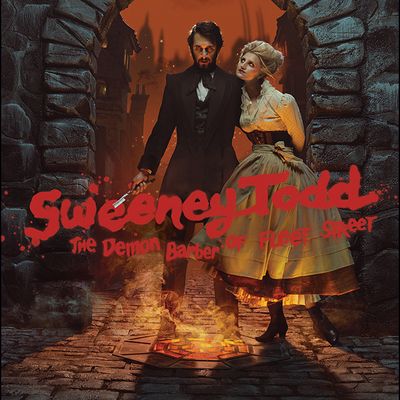
SHOWS: Sweeney Todd, Sunday in the Park with George, Into the Woods. One of Broadway's busiest music directors, Tony Award winner Paul Gemignani, joins Rob and Kevin to look back on his career as a music director on such projects as Pacific Overtures, On the 20th Century, Sweeney Todd, Evita, Merrily We Roll Along, The Rink, Jerome Robbins Broadway, Passion, and many more!.. Read More
From the show: BEHIND THE CURTAIN: BROADWAY'S LIVING LEGENDS » Podcast
Featured Shows
About
SHOWS: Sweeney Todd, Sunday in the Park with George, Into the Woods
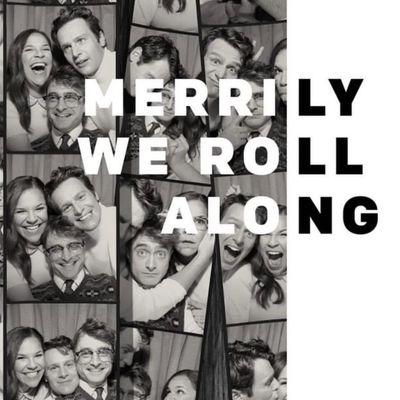
One of Broadway's busiest music directors, Tony Award winner Paul Gemignani, joins Rob and Kevin to look back on his career as a music director on such projects as Pacific Overtures, On the 20th Century, Sweeney Todd, Evita, Merrily We Roll Along, The Rink, Jerome Robbins Broadway, Passion, and many more!
Paul pulls back the curtain on his career to discuss how he got into the good graces of legendary music director Hal Hastings, what it's like collaborating with Stephen Sondheim, and why he wants to see the role of music director be elevated within the industry.
Also, Paul shines the spotlight on John Kander, Cy Coleman, and Hal Prince
Become a sponsor of Behind The Curtain and get early access to interviews, private playlists, and advanced knowledge of future guests so you can ask the legends your own questions. Go to: http://bit.ly/2i7nWC4
Transcript
This transcript was automatically generated and might contain errors.
[0:00] Rob Schneider: Hi, I'm Rob Schneider. And I'm Kevin David Thomas. And this is BEHIND THE CURTAIN, BROADWAY'S LIVING LEGENDS. Don't forget to follow us on Twitter, at Broadway Curtain. And make sure to join our Facebook page at BEHIND THE CURTAIN, BROADWAY'S LIVING LEGENDS. And follow us on Instagram, at Broadway Curtain Podcast. Plus, you can always listen to all of our episodes, old and new, on Broadway Podcast Network, iTunes, and Spotify.
[0:22] Kevin David Thomas: It is one of the most important positions one can hold on a musical, and it is probably the one that is least understood by audiences, and probably by a good number of industry professionals as well. It's the role of the music director. While there are many working today, there are only a handful that are as iconic and as legendary as today's guest. His iconic work as a music director is probably best associated with the works of Stephen Sondheim, having served as the music director on Pacific Overtures, Sweeney Todd, Merrily We Roll Along, Sunday in the Park with George, Into the Woods, and Passion, plus other original productions, such as On the 20th Century, Jerome Robbins' Broadway, Crazy for You, and countless other productions for the Roundabout Theatre, and just about every single Sondheim concert that has ever been seen.
To tell us what it was like to work with such legends as Hal Hastings, Hal Prince, Andrew Lloyd Webber, Condon and Green, Kander and Ebb, Marvin Hamlisch, Jerome Robbins, Susan Stroman, and so many more, here is Tony, an Emmy Award winner, and even more importantly, the proud papa of Alex, Paul Gemignani. Paul, how are you today?
[1:24] Paul Gemignani: I'm great. How are you guys?
[1:26] Rob Schneider: Good. We are so happy to have you. Thank you so much for joining us. Paul, I'm so curious, why do you think that the role of the music director is not one that's, you know, more well-known in the industry? And we were talking a little bit before we went on the air, which is it's something that really schools don't even teach so much today. Why do you think that is?
[1:46] Paul Gemignani: I think it's two things, basically. I think one is that the younger people, or let me put it another way, the musical director thinks of himself as not one of the creative team. He thinks of himself as a worker. Usually, many times, not so much when I came up, but now, people are picked for what they can do as opposed to what they are. Like, for instance, I can't play piano. I've never been a pianist. I'm a drummer and a cellist. And that was outrageous when I did that. People went, you're a drummer and you're the musical director? Because all of them are pianists, because then it saves money if you see what I'm talking about. And now what that's done is it's filtered over into the musical director's job on Broadway, where you play piano and conduct the orchestra and do this and do that.
Not saying any of these people are bad, good or indifferent. I'm not judging their talent. I'm just saying how the job has changed in that respect. That's one thing. The other thing is the musician from day one on Broadway was a second-class citizen. Still is. Not to all of us who work there. But to most people. I've had people come down to the orchestra pit after me standing there for three hours. Orchestra. This was not recently. This is like when they didn't record or they didn't put orchestras in a room, separate rooms, so that what it sounded like was a recording in the theater. And rightly so. The focus of notoriety goes to the writers and the director and sometimes the choreography, depending on who is what.
So you're sort of lost. Now, the reason why I think I succeeded and I'm serious about this is because I didn't know any better. I came from the classical jazz world. I had nothing. I knew nothing about musical theater. I saw one musical theater production in my life before I came to New York, which was Merman in Gypsy with my mother when I was about 13. And did that leave any impression? That didn't really do anything for you? I talked to Milton Roseduck, who was the conductor. Because you were more interested in that. I thought because I was a musician. I played for a long time. And so I went down and talked to him. I didn't know who he was, but later I did. And we used to laugh about it. I mean, geez, he's a legend.
Absolutely. And the thing is that I think that because I came from a different world entirely, I knew any better. I came from a world like you guys are creating now. You talk to each other. You communicate. You create a thing within five people. You play in a jazz quartet. You're all creators. Not so much in the classical world, but at least in a classical orchestra, you feel like you're important. On Broadway, they put you in a hole and never talk to you. Half the cast never knows your name. I'm talking about if you're a player. And what you play, you know, that's changed. Depending on the leads in the cast, that can change. And depending on the musical director, how much he infuses the orchestra into the, you know.
So I think that the reason why my career went ahead in the respect of being able to say things and mostly being part of the creative team and being recognized is because I spoke up. You know, I'd say when I thought something was wrong, I'd say when I didn't think a singer could sing and was getting hired because they were a good actor and it was a musical role. I would open my mouth. And there are few people since or today that will do that. And so what it does is it keeps that job as a lesser than it is in terms of value and how it reacts in a play. I mean, when you understand, I'll tell you one thing, you guys know this, but I will tell you one thing why I feel that this job is so important and why it has to be done correctly and why it's rarely done correctly.
You open the show, the Tony Awards happen. The only person on the creative team that is there on any regular basis is the musical director after that. You don't see the director. He's off doing something else. I don't mean he never comes by. You don't see the choreographer. You have the dance captain. So the only original person that was in the room when the thing was created before any actor got involved is the musical director. Now, sometimes that's not true, depending on the way the show is written, but I'm saying you are the one that's ending up running the country, running the company from a creative point of view, from the acting point of view. Yes, there's a stage manager taking care of the stage blocking, which usually is what it is, blocking.
They don't go to the dresser, I mean, unless it's an emergency, but you don't find them. You find my job more in the dressing room talking over a moment in the show that's not working at the moment or it's flipped back or something. This is what a musical director is supposed to do. Also, he needs to be, she, he needs, she, I don't care, he or she needs to be everybody's friend. And I mean that in a funny way. I mean, the actors must feel that for whatever the silly reason is, they can come to you and go, you know, I just don't whatever. And you're there to help them. The exact same thing with the people in the orchestra. They've got to feel that you have their back no matter what, because nobody else does.
And I'm not being exaggerated, I'm not exaggerating about that. The union, since early 70s, hasn't done squat. They talk a good game, but they're more interested in, they're afraid of losing jobs, so the producers have just eaten them up. You know, and I'm sure that's true in other unions. So anyway, I think that this is an important job because it is pivotal to making a show look the same on December the 31st, 1971, as it does if it runs three years later. Yeah. With all the changes, with all the cast changes, with everything else. And that's not an easy task, but it is very easy if there's a camaraderie set up. Right. Because we're all doing the same thing. We're all trying the same thing.
I mean, think about Susan Robbins' Broadway for a second. That show never went downhill. I mean, it did nothing but improve the entire run. And that's because we all really cared, really cared about it. As hard as that show was to get up and running, and as hard as it was, and a taskmaster that Jerry was, it was worth every second. And every time we got through with that show exhausted, we appreciated that we had the opportunity to do it. You know, you go to work, everybody, I think, thinks that this work is easy. Oh, good. You go down, you do your little play, and then you go have a couple of beers, and you're cool. You know, and you only work three hours a day. Right, right. Well, you know, it's harder than that.
But it's harder to have a standard and to keep it. And to have the commitment to what your art form is. You know, this is something we created, this musical theater, like jazz, basically. So if you don't, if it's not inside you when you do it, if it's not, if you're not committed to it, nobody sees. The audience can't tell. They watch television. You know what I'm saying? There's no commitment involved. But you know, you can tell. And it makes you a better actor, a better singer, a better conductor, a better musician, if that's the way you go into it. That's what I based anything I did on, in my head. I did it, figuring if I did it, they'd do it. Well, if I did it, the orchestra would do it. The relationship with the actors grew because of my commitment and their commitment went together. It wasn't separated by, oh, he's a musician, oh, you're an actor.
[11:08] Kevin David Thomas: Right. Paul, how do we help bridge that divide? You know, where you say, you know, the musicians are treated like second-class citizens, which is true. How do we start to overcome that? Or is that something that's just...
[11:18] Paul Gemignani: Well, if I were in charge of Broadway, the first thing I would do is I would not allow any musician to play where he couldn't be seen. I can't have a full orchestra, and that bothers me. But I love Studio 54 because we're right there. We get to see you. We get to see all of the instrumentalists.
[11:34] Kevin David Thomas: That's correct. That's exactly right. It's so important. It's got a whole other thing on the show because of that.
[11:38] Paul Gemignani: I would start by raising the pits back up to where they were in the 30s, like what you see in the movies. So you can see the violin bows and you can see if you're sitting in a certain place, you can see maybe a brass player or, you know, you can see somebody when they stand up with their instrument.
[11:56] Kevin David Thomas: Right. So that's the first thing I would do. I would make the pit bigger so that the sound coming out of them would not necessitate such an elaborate sound system, you know, because I know that in my shows and the sound designers I've worked with, we like natural sound, meaning when we do a Zitz probe, we start with the microphones off, not the actors, but sometimes we've done that. Sometimes the paint on, if I'm in front of them in a pit and the pit's wide open enough, the pit at the Broadway, I don't know what it is now, but it used to be fairly open because it's a ballet house. That's what that was built for. That pit originally held 130 people.
[12:40] Paul Gemignani: Yeah, I had no idea. Well, when I went there with Evita, it was the first show I did there, I couldn't get 21 people in there without, I had to put the piano outside the door because I couldn't get them in the door because the producers had shoved the theater floor so far forward to put extra seats in. That's why the pits have gotten smaller. Anyway, you have to go back to the original design of the theaters to make this work, what I'm saying, and to have everything up where when you're looking at the theater, when you're looking at a number, what you see is the orchestra playing like you do in the movies, because if you don't see the musicians, you don't know any, they're not, they're all...
[13:34] Paul Gemignani: So I would advocate on talkbacks and things like that, if there were seven actors there, to have at least four musicians there. And I would require it. I used to go to the talkbacks at Roundabout myself, because I can't legally ask the musicians to do that. But as I noticed later on, when I sometimes I wouldn't go, that a couple of musicians would show up, at least one. Because also you, as the musical director, instilling that pride in them, makes them, it's the thing we were talking about before, where everybody's in the same show, that you can get that going. You don't have to do anything. It'll happen by itself, just like any good rally kind of thing. Whether the musician thing, and to go back to your question, could ever be answered and fixed, there's an apathy, you know, among actors and musicians and people who work in the theater.
I go to my job, and now it's my life. You know, that, when I started, that wasn't there. I mean, you'd go out for a drink with one of the actors after work. You know, like, somebody would ask you to, like, I know, Len Carey, who asked me to go to a hockey game once. I'd never been to a, I'm not a sports person at all. I'd never been to a hockey game in my life. And he was, he's from Canada. So, it's incredible. And you know, I've never been there before. I'd never gone back. You know, I wouldn't want to. But it was, you know, Mako and I used to go out for a beer every single night out here. So, it's changed a little bit, like everything does. And that's okay. I also think the material's changed.
I think that as valuable as the social media is, and as valuable as what we're doing right now, there's something missing that wasn't missing, say, when David Frost did it on TV, or when you hear it on the radio. I don't know why that is. It could be my own generation. There's something missing. There's a connection missing. Even though we're looking at each other, we're talking, you know, I don't know how to put my finger on it. But it feels that way. And shows feel that way. The first time I saw Book of Mormon, I went, there's nothing happening here. It's funny. But I didn't find anything really being said that made me go like that in my seat. From that show on, not totally, but I felt, you know, once Disney started to take over Broadway, and a lot of those things that are cartoons are up on stage.
And you can't, I think one of the things that, I mean, I'm extremely lucky to have been privileged enough to work with the people I worked with, because it was in the absolute heart of when this business was flourishing, and some of the greatest shows were written. I'm not speaking about Sondheim alone, but Maury Yeston, he wrote Nine, those kind of, you know, I got to meet and work with Julia Stein. I couldn't ask for a better time to live. It goes in spurts of different values. And I think Broadway, with the exception of Lin-Manuel, I don't want to hurt anybody's feelings by saying this, but with the exception of him, I don't see a lot of new opinions that matter. I see a lot of fluff and frizz in the musicals I'm talking about. The plays are doing pretty good.
[17:42] Kevin David Thomas: I mean, it sounds like when you were first starting out, which was in the mid-60s, you know, you had things by people like Hal Prince and Kander and Ebb that was so revolutionary. Did you feel that way when you first saw Cabaret for the first time?
[17:58] Paul Gemignani: Well, here's the thing. That's what made me think about, I thought musical comedy, musical theater was frivolous. I thought it was not played very well. I thought that the music wasn't really challenging enough. I liked Julie Stein, but I never listened to those things. I never listened to them. I only, I only, I did my whole musical education on the road in Cabaret because I knew nothing from these things. I saw Cabaret, I came to New York to visit a friend of mine and I met him and he got me a ticket to the show. I came from a jazz gig in Minneapolis and I thought, well, I'm here, that close, I'll take a train from Chicago to New York and see my friend. And then before I go back home, because I'll never get, and I'm in the West Coast, I'm never coming back.
Right, you're from San Francisco originally. Yeah, right. So I went to see the show and it blew my mind. I mean, it blew my mind. I'd never heard music like that in a theater situation. I wasn't a Bertolt Brecht fan, so I didn't hear Bertolt Brecht stuff until later in my life. I didn't listen to that kind of music. I listened to jazz and classical music, period. I did not listen to musical theater. And so I saw Cabaret and it had, you know, that was the original cast. It was Blas Alenia, Jack Kilfrey, it was all those guys. And I was like, whoa. And the story just hit me. So Ed and I talked a lot about it and, you know, that's where I met Hal Hastings because I didn't ask for to meet him. Ed thought I would like to meet him being a musician and that's where I met Hal Hastings and it ended up, blah, blah, getting my first job as a drummer assistant conductor of the first national company of Cabaret, right on the spot.
And that's because I was trained as a classical musician and we were always trained to put, to have a resume handy. So my reading on that is, I pulled up a resume and put it in my pocket and carried it always. And I had it in my pocket. And I handed it to him and said, you haven't played many shows. I said, no, I have played a lot of Gilbert and Sullivan in the park in San Francisco. I don't think he knew that much about Gilbert and Sullivan. And I certainly didn't know that much about Broadway, but lucky for me, it's not the same at all. But anyway, and I got the job. Make a long story short.
[20:40] Kevin David Thomas: But Paul, you just put your back to jazz and classical. I mean, here's why, because here's what it was. He said to me, asked me what I was doing. I said, well, I just got off a jazz gig in Minneapolis. I came out to visit my friend Ed and I saw your show last night and thought it was incredible. It blew my mind. And he said to me, so how are you getting back to California? Have you got another gig? He said, no. I said, no. He said, well, I might have something for you. You have a resume. And I showed him my resume. He said, well, I don't know this. Let me check. But would you be up to playing drums? Because he saw a lot of conducting credits on Mike. I conducted a lot of light opera and that kind of stuff.
And when I, as a jazz musician in a classical, I would switch back and forth. And I said, he said, maybe assistant conductor. I said, OK, sure. Yeah, because I had no way. I had to pay my own way back. I was like, I would have to pay my own way back. So it was a steady gig, too. I mean, yeah, six months. And I and at the end, I said, well, can I leave in San Francisco? Yes. That's our last stop anyway. Before we go to whatever the I think they broke it down to a truck. All right. So so that's how that happened. And then I played that. I didn't know that assistant conductors on the road in the musical theater. It's not that way today. But when I was started, the only way assistant conductor would get up to conduct is if the guy in front of him dropped dead right there on the podium.
And there's no other way because you never conduct every not even rehearsal. But because I never did. And every time I asked Joe, Joe, Joe Lewis, who ended up to be my assistant on Candide when I switched to Candide, said, no, you're not going to conduct. Only if I drop dead. Are you going to conduct? So and I suddenly realized, oh, I see what that game was beating the pot. But I had a good time. I had a good time. And I learned a lot. And playing that show, there was no part. The guy who had played it before me did not read the part that was written. He just made up his own part, because I don't know whether he couldn't read music or whether that's what they were ready to do. I find that most Broadway drummers do that.
They don't. They play sort of the part, but then they really make it their own. They make it better. My own instinct. I just didn't know that that's the way it was done. Nobody told me anything. Anyway, I got through that and he called me back to do Zorba. Six months later, when I got to San Francisco, I got home. I was there a week and he called me and said, I've got a new show. We'd like you to I'd like you to come back and play. And I said, you know, I don't want to play drums on Broadway musicals. I said, I'm a conductor. And, you know, I'll tell you what I'll do if you come back and do this job for me when it goes down the road, if it goes on the road, you'll be the musical director or you'll be the conductor.
And that's what happened. I took a chance. I thought, oh, well, what the hell? I didn't have a job at the time. I had an open job at two nightclubs in New York. I mean, New York and San Francisco where I could go back to work at any time. So I wasn't losing anything. So I went back to New York and played Zorba with Herschel Bernardi and went out on the road with when it went out on the road with John, Ray and Chita. I was a conductor. And then he called me back to call me. We got to San Francisco again and he called me and said, I have a show that you need to come back. I'd like you to come back. You'll you'll meet everybody you'll ever need to meet in show business in this show. And I said, doing what?
And he said, being the drummer. I said, no, no. I told you I'm a conductor. I don't I'm trying to get out of this. I don't want to play the drums anymore. I played them since I was 16. I don't want to do I want to be a conductor and I'll never do it if I don't try and do it. So I'm not going to have to say no. He said, listen, this is stupid. You need to do this. I said, well, who's why? Who's in it? Well, Stephen Sondheim. I know who that was. Michael Bennett didn't know who that was. Hal Prince, I knew because he was directing both shows I'd worked with. And I met him a couple of times. That's the only person I knew. And I said, well, I don't know. I need time to think about it. Let me think about it over the weekend.
I said, OK. He said, OK. And I called a bunch of my musician friends and they went, are you nuts? What's the matter with you? Take the job. Get to New York. What are you, out of your mind? So I went to New York and met Michael Bennett and Sondheim and the rest is history.
[25:56] Kevin David Thomas: Paul, did you guys hit it off right away? I mean, did you could you tell? I mean, it was a pretty amicable from the first time meeting Michael and Stephen.
[26:05] Paul Gemignani: It was a match. Then things happened and I took Paul, he left for selling to the president. This is Hal Hastings?
[26:18] Paul Gemignani: So I conducted from the Tonys on. I mean, I didn't do the Tonys, but from that after the Tonys on, I conducted around New York and then I took it to L.A. By the time I came back, Night Music was already cast. He had no work for me. And I was literally. I'd done the Scrabble album. We had that was supposed to be a little York theater, two piano and drums thing. And it turned into because of so many people wanting to do it. It turned into this big thing at the Schubert with a full orchestra, with me conducting in front of everybody I'd ever have to know in show business.
[27:08] Paul Gemignani: It was the most iconic concert ever. Like an audition, you know. Lenny was there. Everybody was there. And at the end of that concert, there was, you know, hi, that was really good, and I had nothing. No jobs, nothing came up, nothing. I am in, where was I living at the time? I think I moved, I think I was living in New Jersey. I had taken, out of desperation, I had taken, because musicians didn't get paid very much in those days. They don't get paid much now, but they didn't really get, I mean, I think my salary on the road in cabaret was $450, including per diem. I was about to take a test to drive a school bus because it was a daytime job and would allow me to audition and still go sub on Broadway.
But because I was a conductor, I couldn't go sub on Broadway. Nobody would hire me again as a drummer because I was a conductor. And suddenly one day, as I was about to take that test, Elliott Lawrence called, who I didn't know was a fan, and said he was leaving Sugar and he would like me to replace him, would I be interested? And I said absolutely. So I went on salary immediately and went to learn the show. I was still learning the show and at a matinee, I was going to start conducting that Saturday matinee. I was looking at a Wednesday matinee and the phone in the box office rang, I guess, and somebody came up to me and tapped me on the shoulder and said there's a phone call for you in the box office.
I felt like I was in a Mickey Rooney movie. I go to the box office and it's Howard Haynes telling me could I come to the office. Howard Haynes was the general manager for Hal Prince. Could I come to the office in between shows? And I said sure, what for? And he said I'll tell you when you get here. Got there, found out that Hal Haynes had died and they wanted to take over Night Music. And now the rest is history. That's so bittersweet. That's sort of the trajectory. And I will say this right now, 90% luck. 90% in the right place at the right time.
[29:34] Kevin David Thomas: Paul, I was going to ask you before we move on, what are some lessons that you learned from Hal Hastings that you still take with you today when you music direct?
[29:42] Paul Gemignani: Well, he taught me the business end of business. And he taught me about to be a conduit for his musicians. Give them a voice somewhere other than the pit and protect them.
[30:00] Kevin David Thomas: Then, Paul, what was the first show that you were sort of music directing from day one where you weren't coming in as a replacement? Would that be Candide?
[30:08] Paul Gemignani: No, I replaced John Machere in Candide because Machere was an opera guy. Classical guy. He thought he was doing the evening shows and he wasn't doing the matinees. And when he told me that he wasn't doing the matinees, that was the end of his gig. None. And Hal moved me from Night Music, which I did not want to leave. You liked it. I did. But I had a great time. There's not a show that I would, well, there are some, but not these. So I moved to Candide. The first show I did on my own was Pacific Overtures.
[30:46] Kevin David Thomas: Okay, so why don't we take this show as an example. Would you walk us through what your duties and responsibilities are as a music director from, hey, there's a project, are you interested? All the way up until opening night. What all do you do as a music director?
[31:02] Paul Gemignani: Well, are you going to use Pacific Overtures? We can or we can use another show of your choosing.
[31:08] Paul Gemignani: I think Pacific Overtures is good because it was the most to do. I had to find a stage pick, meaning I had to find two or three people that would be authentically Japanese, or authentic Japanese musicians. And preferably two, which I ended up doing. And that's one thing. In that particular show, I wrote, when she would choose Japanese folk songs because that's what we wanted to play on the side of the show. It's a Sakahachi and the Koto. I would translate them into Western manuscripts because all the Japanese musicians wrote in Gregorian chant notation. So I would translate the Gregorian chant notation into Western manuscript and put them so they could go in the score. The main job, and this is of any show, I don't know about today, but in those days, if I'm expected to make a chorus sound good, you've got to give me tools.
[32:28] Paul Gemignani: In a dance show, do you need 17 dancers and that means you only get four singers? Okay, well, these dancers better sing. Do they have to sing like Renee Fleming? No. But they have to be able to carry a tune. They can't sing out of tune. And I will not have people mouthing on the stage. So, well, you'd be surprised. So that's one job. You couldn't sing? Goodbye. I mean, when I say can't sing, can't carry a tune, if you can sing, I don't care what octave, and it's in tune, you're in. You may be singing man's key. You may be singing with the baritone, but you're not out of tune. Because you can't fix that. You can't fix that in a chorus. And the problem is 90% of people can't tell the difference anyway.
What I mean is people listening cannot tell when an orchestra is in tune or when it's not, when it is in tune, it's a different brilliant sync sound. Okay, so that's a very important part of the job. The most important is having the company sound the best it can. It is the musical theater underlying.
[33:50] Paul Gemignani: So my job is to make sure that in auditions I let nobody by that I can't work with, that I can't make work. And as I said, there's lots of tricks. Lots of tricks. You learn with classical choruses how to make them sound not like that. So I used every one of them several times in many shows. But that is to me the most focused thing you can do. And the other thing that I think is most important is supporting the music, supporting the composer. Being the conduit between the composer and the director when there's not conflict but when the director and the composer both are in the room at the same time there is, shall we say, different standards. Okay, so you have to sort of clean that up by in a loving way. Diplomacy. And I believe it's appreciated in the long run.
[35:10] Paul Gemignani: So take care of any outside external business, meaning like figuring out who you're going to hire on the stage. Hal Hastings taught me one other thing. You're the one, there's a lot of things outside contractors they're called in the business today. They hire all the musicians in the band. Most of the time they have a discussion with the conductor but basically they're hiring the band. So basically psychologically those musicians are working for him not you. That to me is backwards. So one of the things Hal Hastings taught me and I picked up on right away was hire your own musicians. Meaning there's no outside conductors, no outside contractors in my shows if you look up.
[36:00] Paul Gemignani: Yeah, you're right. Dreamgirls was the only one because that was a takeover. I took that over and it was already established. But there's none because and that's including at the Round Rock where they have them and I'm not there. Every other time they have another outside. And I'll tell you why. In my contract I say I have total say of the orchestra. Total. Nobody else has any say in the orchestra but me. Who's in it and how they play and where they sit. Now, yes it got easier as years went by for me to say that because they heard the orchestra. Right, they knew. Those who understand. Those who didn't understand thought well he must know more than I so let me get away with it. I hand the list if they insist on an outside contractor I say I don't see why.
Why are you paying him? I can handle any problem that comes up. You don't need somebody on the outside that you're paying $600, $700 a week that's never here but one week. I'm not saying that there's not times when you need these guys. I never did. I didn't, I wasn't trained that way. That's why the orchestra sounds the way it does. That's one of the reasons. There's other reasons but that's one of the reasons.
[37:16] Paul Gemignani: The other thing that I do and I think it's important is I allow the players to choose their own subs. Their own subs? They're going to have three each. I give them, this is my terms, I give them two maybe if I hear something great and I think they have a bad show give them two or three performances before I say out. Or in. Most of the time it's in because you know what when you give them the responsibility they're not going to hire you. Come on! You're right. But when you have somebody that is self-controlling everything and sends a sub in for a guy that then he doesn't have any confidence in them either. This is the reason why. This is the other reason why the orchestra sounds the way it does. They have an investment. I give them, I make them have an investment in their own orchestra. Those are the basic functions and then you are a house mother from then on for both the orchestra and upstairs.
[39:10] Paul Gemignani: Can you talk a little bit about your relationship with the orchestrator? You've worked with someone like Jonathan Tunick many times. What's that like? Especially on these new shows.
[39:20] Paul Gemignani: Most of my relationships with orchestrators are great because most of them are collaborative. The orchestrators are, I've been privileged with the best. Stereoband, Tunick, Bill Broan, Billy Byers, Sid Raymond. Oh, of course. Those guys, you have those guys on your side. As I said, I'm not shy about ideas. I'm also not shy about going, I don't understand this orchestration. I don't think it's good enough. Nobody says that. No. I'm not patting myself on the back. I'm just simply saying, I didn't know any better when I first did that. That's also part of your job. I'm sorry, man. If you're the CEO, you don't go, oh, jeez, I can't yell at that girl because she'll cry. Come on. It's just part of the job. This is missing. It's not there.
[40:43] Paul Gemignani: And I'm happy. I don't care where you are. I'd rather you be here. But if you got something you think is more important, it's your life. Go do it. But don't leave me like leaving you in the lurch. That's my rule. I don't follow any rules but my own in terms of lifestyle. But the purpose is to create a working environment that is conducive to creativity. That's the only gig that you have as a musical director. And you have to be as committed and as good as they are. If you're a mediocre conductor, you can't expect they're going to play great no matter what. But they'll play even greater and with more freedom and with the love that they reminded of the love they had for the first time they ever played an instrument every time they played. That's what you want. You want them to say to you, God, I can't believe that this gig is over. That's what you want to hear at the end.
[41:45] Kevin David Thomas: I'm so curious about your relationships with different composers. And do the relationships change? And do your duties change depending on who you're working with? Say, we know so much about your work with Sondheim, but tell us a little bit about working with people like John Kander or Cy Coleman.
[41:57] Paul Gemignani: Well, it's different in the sense that they approach everything. Both of those boys approach different things differently. Cy had perfect pitch, which is a whole other weird thing because he would write. In other words, you never knew when he changed keys. You had to look for five minutes to find out how he changed keys because he never did. He just went there. Yeah, you heard it. And it's nightmare, nightmare for the orchestrator. I mean, Cy came in nuts on the 20th Century because he changed keys and you go, how'd that happen? No key signature, nothing to see it coming, you know.
[42:46] Paul Gemignani: So jazz. Yeah, exactly. And Kander is very classically, I mean, his head is classical. And he, for instance, I have a theory about singing. You don't make somebody sing something they can't. In other words, if Steve writes something who's great about this, by the way, I will call him up and say, you know, this guy hasn't got an F. So I'm going to have to lower this because they all care about keys like crazy. This is like the Holy Grail. You cannot change a key. It's like, you know, I don't know what it is like a million adultery if you change a key. So I will always call Steve and say, look, this guy cannot sing. He hasn't got a good F. He's got a good E flat, but he hasn't got a good F. He got a good D, but he has no F. So I'd like to lower it a step and see what you think.
I don't think you're going to notice any dramatic change, but let me let him let me work him up on the song and you come and hear it. And he did and would always go. He's always great. And as that relationship went, if I said I'm going to change the key, he went, OK, fine. Kander and Cy Coleman, Kander wants to sit at the piano and try it himself. He didn't quite believe me, but they always found out that I was right and fixed it. I mean, or either change the key themselves in a different way than I was going to do it or did something to allow the person to only have that high note. Right. And Coleman was the same. And not mistrust so much as I want to hear it myself. So we put it together. We sing it in the key that they he wrote it in.
And then I play it from the key that I chose. And he either adjust it or say, but they never questioned me on it. It's an important thing. You don't put an actor on the stage doing something they can't do. This happens all the time, all the time. You just lower it a half step. Everything would be fine.
[45:01] Kevin David Thomas: Do you give acting notes? Do you give acting notes when you're teaching music for the first time?
[45:06] Paul Gemignani: Absolutely not serious acting notes. But like, what does that lyric mean? What are you talking about? I don't get it. Yeah. Tell me. I also sometimes put an image in their mind. You know, he's talking about here is this. And maybe if you whatever, because we I mean, we've talked to some directors who said, you know, they don't want the music director to do that. They just want them to. And I go, well, that's kind of a waste of a great resource. But again, it's the way you say to the director. I never say anything to an actor that he doesn't know about. I go to him and say, I'm going to have to talk through the lyrics with her because there's some places she's not getting them. And I'm just going to give her some specifics about the lyrics, not giving her any blocking or, you know, what her emotions should be.
I'm just here what the lyric actually means, which is what I did. I do. I don't say move. Let's sit down here. I don't do that. And I think they're afraid or they don't think the guy can do it. I've never had a director say to me, don't do that. That's my job. Not once. Good. I mean, he is a partner. He is bought. You can't leave him out in the dark. You can't show him something. The only time we've ever pulled something is in Sunday in the Park. Mandy and I came up with the idea of doing him doing both voices with the dog. Yeah. And we just laid it on Steve. We didn't say anything about it because he's a girl. He's a girl. So we have something to show you. Sit down. Don't say anything yet. Go.
That's the only time we pulled, you know, without I didn't warn him. I was afraid if I told him he he hasn't you know, they have images in their head. Right. But Steve is so collaborative and such a collaborative artist that I knew if I showed it to him, he'd either say, what the hell are you doing or or he'd like it.
[47:11] Kevin David Thomas: Have you ever had a lot of those? What the hell are you doing? Things?
[47:19] Paul Gemignani: No, no. You're John Cullen and I and Kevin Klein put together the entire number of. I can't remember the name, but you know, in the dress on the 20th Century, the dressing room scene, yeah, that do it. Oh, yeah. And but you know what I'm talking about? Yes. We put it all together and showed it to how I'm showing it now that we've got that we've blocked it and everything. You want to see it? And he laughed and came in and he made correction. He made adjustments, but he basically left what we did. It's the spirit of something, you know, you're not going, oh, yeah, I directed that. I fixed that up. No, you didn't. Don't use that language. One thing. But I mean, it's you know, it's it's the spirit in which you do something.
You know, you're not trying to take over anything you're trying to. They see that you're enthusiastic about the project, about what you're doing. That's that's to me important. I can't do it anyway anyway. So if they don't like it, they have to fire me. I don't know. I don't know how to. I don't I don't know how to get that. I get that. You know, just teach the notes and go away. I just can't.
[48:30] Kevin David Thomas: What do you look for out of a director for you? What's the ideal director music director relationship?
[48:34] Paul Gemignani: Joe Mantello, Joe Mantello. Yeah, because we both ask each other questions about like if I wanted to do something with an actor, I'd say, do you want to do this or do you want me to play around with it and see if you can and then see if I can get somewhere. It's lyrically with that kind of communication. I had it with how I had it with Joe Mantello. I have Lonnie. I would say that 90 percent of the directors I've worked with, I have that relationship.
[49:12] Kevin David Thomas: And Paul, I'm sure that every show has its difficulties. But was there a show specifically for you that you found, for whatever reason, the hardest to music direct or a show that you found yourself getting emotionally invested in? And then, you know, maybe you had that emotional investment in the rehearsal hall and then for whatever reason, it just didn't translate to an audience when it got on stage early, merrily. Talk about your experience with that, please.
[49:39] Paul Gemignani: I thought it worked. I still do. I don't understand the problem. I always blamed it on the audience itself where you can't think coming backwards. What's the matter with you? It's a story. And, you know, so many people, I think, go to the theater and they're rigid. You know, you can't be rigid and go to the theater or the opera or the ballet. It's an opening experience. And I think Merrily suffered from that because it was a little harder to deal with. I never found it hard to deal with. But then my mind, as a creative artist, goes wherever it has to go. I never, you know, I mean, I don't think like other people do in that respect. Merrily never bothered me from day one. I could never understand why people didn't, it didn't work.
Now, I'm not sitting out, not involved with the actors and the material and all that. You know what I'm saying? I'm not doing that. So I give them that credit. I'm not saying they're stupid. I'm just saying I can't, I never understood that. It made perfect sense to me. And I saw the struggling with communication. I saw the struggling with, you know, that they were struggling with it and, you know, it's not so much we changed the music, but we changed the way it looked and what we did a lot. Didn't work, didn't work. And then we were Sunday, the Sunday after closing, making an album, which everybody loves. Well, I'm sorry, now I'm really confused, you know, but it was a great score. But no, there's not, most of the shows I've done, that's the wrong, it's not the wrong question to ask me, but I'm sure other musical directors or people, creative people, would have a much more succinct answer than me.
I'm pretty much a kid. I jump in the water and try and swim and I'll stay above water no matter what. You know, I mean, I just, it's just the process that, and you do get lost in it. You do get lost in the process.
[51:46] Kevin David Thomas: All right, Paul. So you get to conduct one score for the rest of your life, but it's only one score. You don't get to touch another one. What's the one score? It's the classic Desert Island, you know.
[51:58] Paul Gemignani: I know, I know. Well, it's between two. I will tell you, it's between three. I'll tell you what it is. Okay. Sweeney, night music, Kismet, Gypsy. I didn't see Kismet coming. I had to say that one, that one, that one a little, I love it. Listen to the music sometime. I love the music. The orchestra music. Yeah. Ah, gotcha. And, and, and cause it's boring. Of course. Yeah. And also the, the one that is so much fun to conduct, not as much as Gypsy, but so much fun is Any Get Your Gun. Oh, wow. Narrow it down any way you want. I can get it down for a minute. That's great.
[52:41] Kevin David Thomas: Paul, it's been such a pleasure talking to you. We can't wait to read the auto, the memoir when it comes out, and we'll make sure to plug that on the show. Please take care of yourself, Paul. It's been such a pleasure getting to talk to you.
[52:48] Paul Gemignani: Thanks. Thanks, Grant. Thank you so much.
[53:00] Kevin David Thomas: Thank you so much, Paul. Thank you for listening to today's episode, and a big thanks to the Punchy Players, Jeff Marquis, who is bringing back Lucy, Betty, Judy, and Morta Schill for us. And a big thanks to our sound editor, Daniel Schwartzberg, and social media manager, Bethany Ann Selecky. And don't forget, we want more folks to hear these incredible stories, and that's where you come in. In order for people to find out about us, we need lots of ratings on iTunes. So head on over to iTunes, search for Behind the Curtain, Broadway's Living Legends, click on our logo, click on ratings and reviews, then write a review, and leave us five stars, and make us feel as special as Eliza Doolittle on Eliza Doolittle Day.
Or you can leave us just one star, and you can make us feel as baddy, baddy, bad as Annie did in that really weird production in Boston where Annie dreamt that she was being adopted, but then she ended up back where in the orphanage, right back where she started. Yeah, true story. Rob saw it. Yes, and it was baddy. It was bizarre. I was there. I was. Oh, good. So head on over to iTunes and make us feel even more special than we already do.
© Broadway Podcast Network, All Rights Reserved