

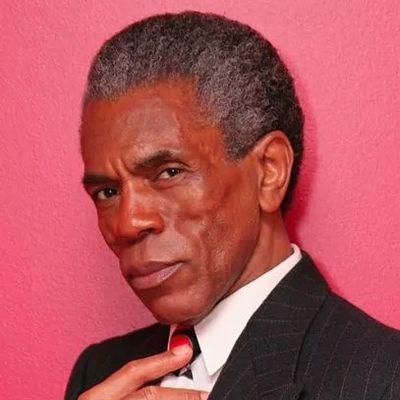
Revisit our episode with the legendary Tony Award winner Andre DeShields. Become a sponsor of Behind The Curtain and get early access to interviews, private playlists, and advanced knowledge of future guests so you can ask the legends your own questions... Read More
From the show: BEHIND THE CURTAIN: BROADWAY'S LIVING LEGENDS » Podcast
Guests
Featured Shows


About
Revisit our episode with the legendary Tony Award winner Andre DeShields.
Become a sponsor of Behind The Curtain and get early access to interviews, private playlists, and advanced knowledge of future guests so you can ask the legends your own questions. Go to: http://bit.ly/2i7nWC4
Transcript
This transcript was automatically generated and might contain errors.
[0:02] Ralph Schneider: Hi, I'm Ralph Schneider.
[0:04] Kevin David Thomas: And I'm Kevin David Thomas.
[0:06] Ralph Schneider: And this is Behind the Curtain: Broadway's Living Legends.
[0:09] Kevin David Thomas: Don't forget to follow us on Twitter at Broadway Curtain.
[0:12] Ralph Schneider: And make sure to join our Facebook page at Behind the Curtain: Broadway's Living Legends.
[0:16] Kevin David Thomas: And follow us on Instagram at Broadway Curtain Podcast.
[0:20] Ralph Schneider: Plus, you can always listen to all of our episodes old and new on the Broadway Podcast Network, iTunes, and Spotify.
[0:26] Kevin David Thomas: On the weeks that Ralph and I will not be dropping new interviews, we decided it would be fun to go back and reintroduce you to some of our favorite interviews we have done with past guests.
[0:35] Ralph Schneider: Before he won the Tony Award for Hades Town, we got to sit down with the legendary Andre DeShields.
[0:41] Kevin David Thomas: Yes, we feel that this was not an interview, uh, but a uh spiritual awakening.
[0:47] Ralph Schneider: Andre didn't just discuss his career with us, he discussed philosophy, spirituality, confidence, and the magic of life.
[0:56] Kevin David Thomas: We sat there enraptured with his openness and felt when the interview was done that we had somehow ascended to a higher plane.
[1:03] Ralph Schneider: Uh, if you've seen Andre on stage, and I hope you've all seen him in Hades Town at this point for which he won a Tony Award, you see his magic.
[1:11] Kevin David Thomas: But when he's less than three feet away from you and he looks right into your eyes, you see this deep, deep humanity that is absolutely life-changing.
[1:22] Ralph Schneider: That's beautiful, Ralph.
[1:24] Kevin David Thomas: It's true.
[1:24] Ralph Schneider: Um, and from May 23rd, 2016, here's our interview with the future Tony Award winner, Andre DeShields.
[1:35] Ralph Schneider: Hi, I'm Robert W. Schneider.
[1:36] Kevin David Thomas: And I'm Kevin David Thomas.
[1:38] Ralph Schneider: And this is Behind the Curtain: Broadway's Living Legends.
[1:41] Kevin David Thomas: Don't forget to follow us on Twitter at Broadway Curtain and on Instagram on Broadway Curtain Podcast.
[1:47] Ralph Schneider: Ooh, full name.
[1:48] Kevin David Thomas: And make sure to join our Facebook page at Behind the Curtain: Broadway's Living Legends.
[1:52] Ralph Schneider: Today's guest has stopped just about every show he has ever appeared in, and after over 40 years in the business, that's really saying something.
[1:59] Kevin David Thomas: Yes.
[2:00] Ralph Schneider: From The Wiz to The Full Monty, from Ain't Misbehavin' to Play On, no one can take a stage like our guest.
[2:05] Kevin David Thomas: But like all legends, he's not only an actor, he's a director, choreographer, educator, pioneer, trailblazer, Capricorn, and a true artist.
[2:16] Ralph Schneider: For all of you who said you wanted to meet the wizard, well, here he is, Mr. Andre DeShields.
[2:20] Andre DeShields: It's my pleasure, let me tell you.
[2:23] Ralph Schneider: Oh yes.
[2:25] Andre DeShields: You've come to the right place.
[2:29] Kevin David Thomas: Yes.
[2:30] Ralph Schneider: That's what I wanted to hear.
[2:31] Andre DeShields: Oh my goodness.
[2:32] Ralph Schneider: So, Andre, where did you get started at? Where were you born?
[2:34] Andre DeShields: I was born in Dundalk, Maryland, which is just outside of Baltimore.
[2:39] Kevin David Thomas: Okay.
[2:40] Andre DeShields: I lived in Dundalk, Maryland until I was perhaps four.
[2:46] Andre DeShields: Then we moved to the big city, Baltimore.
[2:50] Andre DeShields: And that's where I am from, essentially.
[2:53] Kevin David Thomas: Yeah.
[2:53] Andre DeShields: And importantly, although I'm a senior citizen now.
[2:58] Andre DeShields: So when I went to apply for my social security benefits, and the first question they ask is, where were you born?
[3:07] Andre DeShields: It's a test.
[3:08] Andre DeShields: And I said, Baltimore, Maryland.
[3:10] Andre DeShields: And they said, you're not the right person.
[3:13] Andre DeShields: And then I remembered I was born in Dundalk.
[3:16] Andre DeShields: And I said, Dundalk.
[3:17] Andre DeShields: And they said, oh, okay.
[3:19] Andre DeShields: Woo!
[3:22] Ralph Schneider: Okay, good.
[3:23] Andre DeShields: So all you young, all you young beginners out there remember that.
[3:27] Kevin David Thomas: That's right.
[3:28] Ralph Schneider: Where you really came from.
[3:30] Kevin David Thomas: Right.
[3:30] Ralph Schneider: What if you're—oh, sorry, go ahead.
[3:32] Kevin David Thomas: No, I was gonna ask, were you introduced to musical theater or to dance at a young age?
[3:37] Andre DeShields: Kevin, this is all about alchemy. And I am an alchemist, and I encourage any young person who wants to pursue this industry professionally to reassociate themselves with the ancient wisdom of alchemy.
[3:54] Andre DeShields: Now, why do I say that? Because when I was adult enough to have conversations with my mother and my father, my mother shared with me that her lifelong dream was to have been a chorus girl.
[4:08] Andre DeShields: And she didn't use the term dancer, she said chorus girl.
[4:11] Andre DeShields: Of course, her parents thought that was much too indecent of a career to pursue for a young colored girl.
[4:18] Andre DeShields: Her parents not being too far from the Emancipation Proclamation.
[4:22] Andre DeShields: So their advice to my mother was, you're not going to shuffle your way through life.
[4:28] Andre DeShields: My father and I had a similar conversation.
[4:31] Andre DeShields: He wanted to be a singer, and he was a fine singer, a tenor.
[4:35] Andre DeShields: His parents said to him, how do you expect to bring the bacon home to the table pursuing such an insecure career?
[4:42] Andre DeShields: Both of them deferred their dreams to become performing artists.
[4:46] Andre DeShields: That's an introduction to why I think it was the X and Y chromosomes that possessed their deferred dreams at the moment of conception that set my destiny out before me.
[5:00] Andre DeShields: And from my first conscious thought, it was always about entertaining.
[5:05] Andre DeShields: So I believe, I know in my core, that my first service was to manifest the deferred dreams of my parents.
[5:14] Andre DeShields: And my second service was to have a grand time on the path that had chosen me.
[5:20] Kevin David Thomas: Did your family ever get to see you on stage?
[5:22] Andre DeShields: Yes.
[5:25] Andre DeShields: Now, when I was growing up in Baltimore, a classic inner city ghetto, tenement slum, that whole story.
[5:33] Andre DeShields: Of course I was cautioned, boy, get serious about your life.
[5:36] Andre DeShields: You're gonna be an entertainer? No.
[5:38] Andre DeShields: You think you're Sammy Davis Jr.?
[5:40] Andre DeShields: Of course I thought I was, but I didn't respond that way to them.
[5:44] Andre DeShields: I learned very quickly at an early age that I had to keep that dream close to my vest because it was only going to be sullied by authority figures or even my peer group.
[5:55] Andre DeShields: So it wasn't until my sophomore year in college that I actually had an opportunity to act on a stage from the time that I was growing up in Baltimore until I went to college.
[6:12] Kevin David Thomas: Where would you find chances to act?
[6:15] Andre DeShields: Well, in my daily life, you know, yeah, yeah, yeah. If you're a young black boy growing up in the ghetto, you're a target if you even express interest in something as fey as the arts, so it was a protective shield not to share that dream with anyone.
[6:35] Andre DeShields: Yes, during my sophomore year at Wilmington College when a drama instructor, James Marty Gilbert, and I wanted to remember that name because he was a huge influence on my life not only as a performer but as a young man growing up in the fiery sixties.
[6:33] Andre DeShields: Yeah, hold it close to my vest.
[6:35] Kevin David Thomas: So was that Wilmington College?
[6:58] Andre DeShields: And he has continued to watch over my career.
[7:03] Andre DeShields: And the last time we actually saw each other face to face was in Chicago when I was doing Jungle Book.
[7:10] Kevin David Thomas: Just a couple of years ago.
[7:11] Andre DeShields: Yeah, just a couple of years ago.
[7:12] Kevin David Thomas: He must have been so proud.
[7:15] Andre DeShields: To see, yes, he was proud.
[7:16] Andre DeShields: He was, um, over the moon that he was responsible for keeping me on that straight and narrow course that finally took me to national attention.
[7:27] Andre DeShields: So he said to me, quote, I've always wanted to do A Raisin in the Sun, but we've never had the talent on campus to achieve that.
[7:35] Andre DeShields: Now you must understand that Wilmington College is a Quaker school, very pristine campus, and at the time that I attended it, there were maybe 1,000 students, and perhaps 25 of the students were persons of color.
[7:49] Andre DeShields: And not maybe a few of them were interested in the arts.
[7:52] Kevin David Thomas: Right.
[7:52] Andre DeShields: But the arts or the theater majors were predominantly and overwhelmingly young white men.
[7:58] Kevin David Thomas: Yes.
[7:59] Andre DeShields: Which is another part of that story that needs to be told.
[8:02] Andre DeShields: Through all of my years in college, very seldom did I have an opportunity to perform on what was considered the main stage because all the plum roles went to the young white men.
[8:15] Kevin David Thomas: Of course.
[8:15] Andre DeShields: Yeah.
[8:16] Andre DeShields: I mean, I could have done what the newspaper boy in You Can't Take It With You or the periphery roles.
[8:25] Andre DeShields: Yes, but the idea of having a King Lear, you know, and you playing Lear is out of the question, you know, at a school.
[8:32] Andre DeShields: Oh, that wasn't even a dream at the time.
[8:33] Andre DeShields: Just trying to get cast in a main stage show was Mount Everest.
[8:39] Kevin David Thomas: Yeah.
[8:39] Andre DeShields: So to get back to the story with James Gilbert, uh, he says, but I think I've finally found my Walter Lee Younger.
[8:45] Andre DeShields: I'm 19 years old, and I'm getting an opportunity to play Walter Lee Younger.
[8:49] Andre DeShields: This was a gift that I could not have imagined because it's now 1966.
[8:56] Andre DeShields: Those inner cities that I was telling you, we grew up in were now the center of what we call urban insurrection, riots that were being burned to the ground.
[9:08] Andre DeShields: I'm in the safety of the walls of this pristine Quaker college, about to do Walter Lee Younger.
[9:15] Andre DeShields: What does that do for me?
[9:16] Andre DeShields: Well, it knocks off my shoulders that huge chip that I was carrying as a young black man who had been taught that not only is white might, but it's also right.
[9:30] Andre DeShields: So to say that I started college with an overwhelming sense of inferiority is sort of understating it.
[9:38] Andre DeShields: But having the opportunity to play Walter Lee Younger was a healing experience.
[9:42] Andre DeShields: It lifted a lot of that anxiety, a lot of that, as I said before, the chip on my shoulder, a lot of that need to point at Mr. Charlie and blame him for all of my distress and anxiety.
[9:56] Andre DeShields: It was erased.
[9:57] Andre DeShields: So at 19, I was beginning a journey like a tabula rasa, like a blank slate.
[10:04] Andre DeShields: So I could be, uh, I could choose the impressions that I want, yeah, wanted to make the rest of my life about.
[10:12] Andre DeShields: That's the power of what we do.
[10:14] Kevin David Thomas: Yeah.
[10:15] Andre DeShields: Uh, not everyone understands it, not everyone realizes it, not everyone appreciates it.
[10:23] Andre DeShields: But we who choose this industry as a profession, we are warriors and we do the hardest work that is imaginable.
[10:35] Andre DeShields: We meet people where they are, and we invite them on this journey, this challenge to be changed.
[10:43] Andre DeShields: But the promise, the covenant is you won't be harmed.
[10:47] Andre DeShields: You'll be elevated, you'll be liberated.
[10:49] Andre DeShields: Changed, definitely.
[10:50] Andre DeShields: And that's a huge, first of all, responsibility to take on.
[10:55] Andre DeShields: And it is a huge sense of freedom once it is achieved.
[11:00] Kevin David Thomas: Did you—oh, go ahead, please?
[11:02] Andre DeShields: I was gonna say, did you move up to New York immediately following graduation?
[11:05] Andre DeShields: I did not graduate from Wilmington College.
[11:07] Andre DeShields: You meant to now, as I described, it was a pristine campus, Quaker school, very few people of color.
[11:13] Andre DeShields: Uh, what it did for me, countless advantages, but the one that changed the course of my life.
[11:20] Andre DeShields: When I was going to school, it was de rigueur for a student to spend his junior year abroad.
[11:28] Andre DeShields: And I chose to study in, naively so, my choice was made naively.
[11:33] Andre DeShields: I chose to study in Denmark.
[11:36] Andre DeShields: Now, you have to understand that I was preternatural, I was precocious.
[11:40] Andre DeShields: Uh-huh.
[11:41] Andre DeShields: You mentioned in the introduction that I'm a Capricorn.
[11:44] Andre DeShields: And that's an indicator of Capricorn.
[11:47] Andre DeShields: We're old when we're young and we're young when we're old.
[11:51] Andre DeShields: But, um, a reaction to the way I grew up, and let's just put it under one big umbrella, racism.
[11:59] Andre DeShields: My reaction to that, um, sometimes approached anti-Americanism, anti-capitalism.
[12:06] Andre DeShields: So when I made my choice to study abroad, I looked at Scandinavia because of its reputation for social welfare.
[12:14] Kevin David Thomas: Yeah.
[12:15] Andre DeShields: Totally.
[12:16] Andre DeShields: And my experience there continued the job of opening my mind, but also opening my heart.
[12:23] Andre DeShields: It was in Scandinavia, 1966, that I experienced the exact opposite of what I was experiencing in the United States.
[12:23] Andre DeShields: In the United States, I'm the scum of the earth.
[12:36] Andre DeShields: In Scandinavia, I was like the second coming.
[12:39] Andre DeShields: People—it's '66 now—people had never been that close to an American Negro.
[12:44] Andre DeShields: And I've had my Jimi Hendrix.
[12:46] Kevin David Thomas: Yes, you did.
[12:47] Andre DeShields: Naturally and everything.
[12:48] Andre DeShields: People wanted to touch my skin.
[12:50] Andre DeShields: People wanted to touch my hair, right?
[12:52] Andre DeShields: And I'm thinking, wow, I didn't know life could be this good.
[12:57] Andre DeShields: And then to have this very unique perspective to be from the United States of America, which was having the veil of political innocence torn from its eyes in the middle sixties.
[13:08] Andre DeShields: To be in Europe, to be in Scandinavia, and to have this perspective, to look back on where you had come from and go, wow, that's where I live.
[13:19] Andre DeShields: That's where I'm returning.
[13:20] Andre DeShields: That's the image that the entire world has of the United States of America.
[13:27] Andre DeShields: And I'm representing it.
[13:29] Andre DeShields: So what that did for my head was made me understand that when I returned to America, that Quaker campus was too small.
[13:39] Andre DeShields: Not the same anymore. It's not the same. I needed to be where the action was, where the changes were being made. And that ended up the University of Wisconsin, Madison, which was one of the hot campuses in the 60s. I mean, there was the University of Michigan Ann Arbor, there was Berkeley. But Madison, Wisconsin was really the center of the political revolution. It was in 1970 when I graduated that I started my professional career in Chicago in the musical Hair. I'd come down from Madison to audition, ultimately got the gig to answer to your question. Is that I then spent this is 69. Yeah. I then spent the next four years living in Chicago. And then in early 1973, I arrived in New York and was received as a Chicago actor.
[14:36] Kevin David Thomas: Oh, interesting.
[14:37] Andre DeShields: Very interesting. Yeah. Very interesting. Why did you leave Chicago to go to New York?
[14:39] Andre DeShields: Because I had, after 15 months of doing Hair, which was a lovely baptism into the marketplace, if you will. Yes. Professional theater. Sure. I joined the Organic Theater Company, which was one of the theater companies which defined what was then the burgeoning off-loop theater movement, which is now helmed by Steppenwolf. The most successful production that the Organic Theater Company conceived was an episodic science fiction space adventure called Warp. Several several of them. In which I created the role of Xander the Unconquerable, ruler of the sixth dimension. Yes. Okay. Yes, you did. That is a title.
[15:36] Andre DeShields: My mouthful. And I lived up to it. And that's what brought me to New York in January 1973. Yep. It's on probably at the Ambassador Theater, two weeks of previews, two weeks of performance, and it was summarily dismissed by New York critics. And we closed on Valentine's Day, 1973. And I thought my ultimate destination is New York. I'm here. I don't have a pot to piss in or a window to throw it out of, but I'm here. Why go back to Chicago and try to find another way to get it? So that's when I separated from the Organic Theater Company and did what many young actors do in their salad days. You trade your domestic abilities for a place to sleep.
[16:34] Andre DeShields: A friend of mine, you might know of this name, Charlotte Crossley. She, okay. For those who may not know Charlie Crossley, she did the national tour of Hairspray as Motemath's Mabel. She has other credits than that, but that's the most recent. She was doing Jesus Christ Superstar at the time, living in Chelsea, and she allowed me to sleep on her couch. And in return, when she came home, the dishes would be washed. Yeah. That kind of thing. Yeah, yeah, sure. The house would be clean, whatever. That was the spring of 1973. Uh-huh. And in the fall of 1974, I was rehearsing for The Wiz.
[17:20] Kevin David Thomas: Wow. Always working.
[17:22] Andre DeShields: Yeah. Always working. That's what people say about me. Andre, you're always working. I said, Well, that's flattering. But if I was always working, then I would have wasted away by now. However, I know what they mean. Right. And it's not at all undoable, it's not impossible. And it's something that everyone can do if you focus your energy, if you focus your dreams, if you focus your epiphanies, and not pursue blessings that do not have your name on it. That's where I find many of us in the arts go astray. Because there's so we have big eyes like horses. You ever wonder why horses have blinders? They have big eyes, they see a lot, which they must as a wild animal, but when you domesticate them, you want them to see the path that they must travel, that they must focus on.
[18:23] Andre DeShields: It's the same thing with those of us who choose the arts. There's so much glitter, bling, so much distraction, so much fool's gold out there that we sometimes lose our way, and in many situations find out too late. Oh, that belongs to somebody else. And then we have to find our way back. So if we can during those times when we think we aren't working, when we have time on our hands, if we take that time to cultivate all the other stuff that we need to have a sustainable career and a long career, that's part of the work. Boy, that is cultivating patience, cultivating long suffering, cultivating the art of listening, cultivating the discipline that says the universe always says yes. It's a cornucopia that's dumping abundance, not arbitrarily. What we have to do is go into that treasure chest of abundance and receive what is ours and let go of everything else. I know it sounds philosophical.
[19:47] Kevin David Thomas: No, it's hard to do that.
[19:48] Andre DeShields: But that's the alchemy, that's the alchemy I'm talking about. That's so good for young people. Have you always been aware of this alchemy? Has this or is this something that's been developed?
[19:55] Andre DeShields: Well, certainly, certainly it's developing. But it's something that I've always been aware of. And it's something that as I continue to grow as an artist and become the best Andre DeShields that I can. It is something that I use as my litmus test. Doing The Wiz, going back, going back to that. Um how did that job come about for you? Or that story, I should say. You seem like such you're so devoted to telling stories. I don't even want to call them jobs anymore. Shows.
[20:33] Andre DeShields: Oh, I'm so well, okay. Please remember the question, because I'm now gonna do a sidebar. When I was growing up, I would hear my older siblings refer to their job as a slave. Oh, I gotta go to my slave today. And we would understand that they meant job. Early in my years here in New York, one of the people with whom I had made a lifelong friendship with from the University of Wisconsin, I was complaining. I need a job. So the next time I saw my friend, he brought me an application for the post office. And I said, What's this? He said, You said you needed a job. They're hiring at the post office. And I hit myself in the head. I got it. I don't need a job. I don't want a job. I want the appropriate proper place in this profession that I've chosen. And that is not a job.
[21:39] Andre DeShields: Telling the story of The Wiz. How did that come about for you? I'm in New York. It's now six months later from the time that Warp had closed. And this is what I mean about putting on the blinders. I could not have known it, but when I was performing Warp, who saw me in this show? Ellen Stewart, who founded La Mama. Of course. When the show closed, she had one of her emissaries, if you will, reach out to me, brought me down to La Mama, and she said, if you want, La Mama will be your artistic home in New York.
[22:18] Andre DeShields: Oh wow. From Ellen Stewart. Ellen Stewart is incredible. I'll tell you exactly what she said. I saw I sometimes don't tell this story because people get a little bent out of shape. But Ellen said to me, Okay, Warp was episodic. We opened episode one on Broadway thinking that we were going to get to episode two and three. The show closed during episode one. We didn't get to two or three. Okay. Because the character that I created did not appear until episode two. I worked as the standby for the male characters in episode one. One of the actors who played a character called CyMax, X S Y M A X, who was described as a cosmic ape, twisted his ankle and could not go on. I was the standby. I went on as this character. That's what Ellen Stewart saw.
[23:16] Andre DeShields: Oh, wow. Okay. Now I wanted to set that up because remember CyMax is a cosmic ape. I wanted to set that up because when I was brought to Ellen, she says, You want to be a monkey? You be my monkey. Meaning it very affectionately. Right? It was one of those moments where you're overwhelmed. I now I'm six months into New York, and I have an artistic home offered to me. That was 1973. I worked at La Mama every year from 73 to 2002.
[23:50] Kevin David Thomas: Oh my goodness.
[23:51] Andre DeShields: In different capacities. But it is your home. But you've had a consistent relationship.
[23:56] Andre DeShields: Yeah, a consistent relationship. Ellen Stewart was doing things with theater that was frightening to the establishment, if you will. First of all, La Mama had numerous. I didn't ever count them, but I know there were at least 20 appendages around the world. There was La Mama Spileto, there was a La Mama Korea, there was a La Mama China, there was a La Mama Argentina, there was a La Mama Romania, that kind of thing. She was bringing theater companies from around the world to perform at 74A East 4th Street. And in many situations, the company could not speak English, and they performed in their native tongue. And audiences could not speak their native tongue. We would go to see these outrageous productions that were obviously alien, but at the same time universal. Because Ellen believed that it wasn't necessary to understand the language. It was necessary to understand the emotion.
[25:05] Andre DeShields: Now we're trying to answer that question about The Wiz. Oh, yeah. I forgot. I forgot. I want to hear more about Alan Stewart, but I forgot. So the two epiphanies as a child that I had in my life, one was the film version of Cabin in the Sky. The other was the film version of The Wizard of Oz. Those are the two, those are the two experiences that in conjunction with my dream to be an entertainer put me two-thirds the way on my path. The final third, which is how do you legitimize the combination of a dream and an epiphany is be cast in a role so that you can show your stuff. I've already explained that with Walter the Younger in A Raisin in the Sun during my sophomore year. So the thirds are there, the three parts of the path is there. The dream, the epiphany, and the legitimacy. So now all it takes is the fortitude to keep pushing forward.
[26:08] Andre DeShields: Go on. Just keep going.
[26:10] Kevin David Thomas: Yes, keep going forward.
[26:12] Andre DeShields: When I heard about The Wiz, I thought, oh wow, wouldn't I love to be the wizard? This relates to the alchemy. Because the traditional image we have of alchemy is a wizened old guy with a pointed hat on his head with a big spoon stirring in a cauldron. Right? We fast forward to when the auditions are actually being held. So I go in and they have me in the lineup for the scarecrow, and I get cut. Then they have me in the lineup for the lion, I get cut. Then they have me in the lineup of the tin man, I get cut. And I'm about to get dismissed from the process, which is okay, because I didn't want to be the scarecrow. I didn't want to be the lion, I didn't want to be the tin man. Now here's something that you can't that doesn't happen any longer. Two things that don't happen any longer, which are magical and I think missing from the theatrical experience.
[27:10] Andre DeShields: One of them is in '73, '74, when you auditioned for a show, you actually auditioned in the theater that the show was coming into. So we were auditioning in the majestic stage manager walking into the wings. Looking into this yawning dark chasm, hearing people but not seeing them. I mean, that's alchemical and that's magical.
[27:44] Kevin David Thomas: Totally.
[27:45] Andre DeShields: What can you do with those elements now? Oh, yeah. Right? That's one element of magic of alchemy that's missing. The other element is persuading the powers that be that they haven't seen you at your best. So I begged Ken Harper, the producer, I said, I want to be the wizard. Please let me audition for the wizard. And he said, No, you're a little too young. We're looking for someone like the Frank Morgan actor who did The Wizard of Oz in the film. Please, please. Okay. So I get sent away because they're not seeing the wizard that I get called back. Now remember, this is 1974, late '73, early '74. This is the decade when men generally, but black men particularly could be beautiful. Big hair, tight jeans that uh belled at the bottom.
Yeah, you know, skimpy shirts, you could show little skin. Yeah. You could wear earrings, you know. It was all right. It was the um we were it was the decade of permission. So when I knew I was coming back, I pulled my hair out to that Jimi Hendrix. I put on my silver platforms that it studs on the sides, which I still own. Yes. Right. I put on my James Brown hot pants, right? I put on my hippie halter that had love written across it. I put on my My Cy Earrings. And I went back and I sang Wilson Pickett's Midnight Hour, right? That was the audition song for you. That was the midnight hour. I love it. I'm gonna wait till the midnight hour. That's when my love comes, coming down. I'm gonna wait till the midnight hour. When there's no one else around, I'm gonna kiss you, girl, and hold you and do all the things I told you in the midnight hour.
[27:48] Oh yeah.
[30:18] Andre DeShields: Oh yes, I am now wait a minute. You know, yes. Yes. That's a story to be told. Now wait, and this is the this is the beautiful truth of it. I'm telling you the story because it happened. There are people who were there who will tell you the same story. Charlie Smalls, who was the composer, stood up and said, That's my whiz. I left the audition. I mean, this is the movie now. This is a film now. Yeah, right. I left the audition dressed as I was, doing jetes down 44th Street. You know, no one said, we agree with you, Charlie, and here's the contract. You know, I got the desired results. Producer said, we're looking for Frank Morgan. Charlie Small says, no, we're looking for Andre de DeShields. That's right. That is right. And although that brand has been challenged over the years, it still stands.
[31:22] Kevin David Thomas: Oh, yes. Do you have any memories of uh the process of putting that story together?
[31:28] Andre DeShields: The story of the whiz? Yeah. Oh, yes. The whiz did a three-city pre-Broadway triad. The first city was Baltimore, Maryland. Welcome home. Hello. Yeah. I mean, you talk about dreams coming true. We opened the Wiz in Baltimore. Andre DeShields is the Wiz. The family, you asked me earlier, did your family support your career? Well, now it's like, oh, we always knew it. We always knew it. Everyone, the whole neighborhood knew it. Exactly. And the neighborhood turned out. I could have died then and gone to heaven. Yeah. Do you know what I mean? My nieces, my nephews were there, my brothers and sisters were there. My mother was there. You know, it's like what you you wanted to be a dancer. Well, when you see me dance, I'm using your feet.
I'm doing it for you. Dad, you wanted to be a singer? Well, when you hear me sing, I'm using your voice. Now, the next two cities were Detroit and Philadelphia. Where we got a chilling, I shouldn't say chilling, although it was. It was a chilly response, which was chilling. Yes. Okay. Um the general notion from the critics was that why do we need a black version of this brilliance that Judy Garland has already blessed us with? Now, in retrospect, the answer is as brilliant as the Judy Garland film is, it's also brilliantly exclusive. That's right. Yeah. When you get Stephanie Mills to inhabit the role of Dorothy, then it becomes universal. Yes. Every little girl says, Oh, that's my story. I can relate to that.
[33:12] Andre DeShields: The third element I want to mention is that when the show arrived on Broadway on January 5th, 1975, that was the opening night. The closing notice was also posted. Ken Harper sold the rights to the Wiz to, I think Universal, it might have been 20th Century Fox, but he sold the movie rights. Yeah. Took that money and in many ways innovated the live action commercial for Broadway. Oh right. Because he knew that we weren't reaching the audience that would make the difference. The audience being African Americans who thereto for always perceived Broadway, the great white way as inhospitable terrain. So what we had to do was to use technology in its infancy and reach into the homes of the people who can make the difference.
How do you do that? With a commercial. So when our first church group, if you will, that's what I'd heard a lot of preachers had spread the word too. When our first church group came in, I don't mean to say it was a feta completely, but even in the 21st century, the most powerful marketing device is word of mouth. When you have groups of people leaving the theater saying, Hey, you gotta see this. You've got to see this. Then people will invest their money and go see it. And that's what happened with the Wiz. Not only did our art transform a community of people, but a community of people paid us back and transformed our art into a long-running experience. True. A film and a live television. Which then in fact took even more people.
Yes, yeah. And more people. So your closing notice came down eventually. And you were too stayed up. It stayed up for the two weeks. And then on that final Sunday, we had a ceremony when the Ken Hopper took it down. Wow. And we were like, Yes! Okay.
[35:31] Andre DeShields: Oh my gosh. I can't even imagine what was it like working with Jeffrey Holder. The initial artistic team, the position that Jeffrey Field was costume designer. He was not the director. In this pre-Broadway three-city tryout, Manny Aisenberg, who is the general manager for the Schuberts, scratching his head, you know, what's we we know we have a great family show here. What's what's wrong? I'm not gonna point fingers, I'm not gonna lay any blame, but I'm gonna tell you how it was resolved. One day, and this is when you say overnight, this was overnight. One day we're working with Gilbert Moses and his associate director, Bill Duke, and the next day we come in to rehearse, and there's Jeffrey Holder standing in the center of the stage.
I don't know if you know what his um familiar garb was, but a big black hat and a long black cape. Yes. I mean, he was theater walk on two feet, and there he was standing in the middle of the stage. You know, we come in, and he says Don't worry, follow mother. So we come up on the stage, right? He creates a circle, he lights two um hands hands full of sage. Great. Right. And he leads us through the theater, right? Dispelling the evil spirits. Yes. The negative uh intelligence. Yes. As it were. And Manny Aisenberg announces that not only is Jeffrey Holder the costume designer, he's now the director. Now, if you can imagine the big bang, right? Starting off with a spot this small and so compressed that it can do nothing but explode. That's what Jeffrey did for the whiz.
[37:32] Kevin David Thomas: And then after the whiz comes Ain't Misbehaven. Is that right?
[37:36] Andre DeShields: Yes, after The Wiz comes Ain't Misbehaven. And telling the stories in song of Fat Swaller, how did you grow up listening to that music?
[37:46] Andre DeShields: I did not grow up listening to a Fat Swallow score. Yeah. But certainly in my house, my father and my mother would sing songs from their youth. Right. And one of them, first of all, was Black and Blue. Yeah. My mother would sing Black and Blue. Um Ain't Misbehaven was one. And my mother remember my mother wanted to dance. Yeah. My mother would dance the snake hips. Really? Now, if you recall Ain't Misbehaven, my tour de force moment, my stop the show moment in Ain't Misbehaven, was as the viper to a song called The Vipers Drag Reefer's Song. It was a conflation of two moments. One, the instrumental from Fat Swallower, and the dance from Snake Hips Tucker. And of course, I I'm this is the man who hits himself in the head often.
So I'm hitting myself in the head again. This is what my mother used to do around the house. I certainly don't mean to dis diminish the contribution of Arthur Farrier, the choreographer of Ain't Misbehaven. He's the one who uh taught us all what we had to do from the perspective of period. Yes. And he's also the one who trained in Balinese dance. So when you look at Ain't Misbehaven, when you look at the viper and you see all the flourishes in the fingers, that's Arthur Farrier teaching Balinese dance. But when you see the hips rocking, that's my mother.
[39:32] Kevin David Thomas: That's your mother.
[39:35] Andre DeShields: She finally got on stage. I could not have we could not have at the time told you the exact path Ain't Misbehaven was going to take. But we all knew that we were cooking something special. We're back at the cauldron. We've got a recipe that really has something never before experienced. And the proof of the matter is that what critics wanted to categorize as a review took the Tony for Best Musical. Now to be a musical, you have to have a story. You have to have a book. And if you when you when you put up Ain't Misbehaven, all you get is a score. But in that score are the connective tissues, are the intersturse, I think that's the term, that give you a complete narrative that connect the songs in such a way, because the songs are stories unto themselves. Yes. But when you connect those stories, you get a look at the complete life of this jazz and comedic genius who it was Thomas Fatswaller.
[40:42] Andre DeShields: Brilliant. Ain't Misbehavin' is the perfect show, not only because of the cast, the other storytellers were Nell Carter, Ken Page, Amelia McQueen, Charlene Wooded, and Andre DeShields.
[40:54] Kevin David Thomas: And sign me up.
[40:59] Andre DeShields: Preserved on film, correct?
[41:01] Kevin David Thomas: Well, yeah, preserved on film for television.
[41:03] Andre DeShields: Yes.
[41:04] Kevin David Thomas: Yes.
[41:04] Andre DeShields: Absolutely. But still there's a very well done, with a live audience on the NBC sound stage that Johnny Carson would do his show on.
[41:12] Kevin David Thomas: Oh, I didn't know.
[41:13] Andre DeShields: Yeah. And they built a cabaret on the sound stage.
[41:16] Kevin David Thomas: That's wonderful.
[41:17] Andre DeShields: And we performed the show for a live audience. And one of the issues was how do we do the viper's drag, which starts stage right and moves stage left. Now you could put up a long shot, but it would look very flat. So I don't know the gentleman's name, but I remember his Herculean task to put a camera on his shoulder and follow me. And then when you watch it, you don't see any jiggling except for the hips. That's the jiggling you want to see. But it's, I mean, it's as if there was a camera on a tripod. But that's a man holding a couple of with a camera on his shoulder.
[41:59] Kevin David Thomas: Before steady camera.
[42:00] Andre DeShields: Before steady camera. It's preserved beautifully. And it is, sorry, going back to what you were saying before, it is the perfect review. Can you tell us a little bit about Harlem Nocturne?
[42:10] Andre DeShields: Yeah. In 1984. First, I should say to you that Ain't Misbehavin' was based on an idea by Mari Horwitz. Harlem Nocturne was an idea written by Murray Horowitz and myself. And in terms of the conception, it was shared by all of the members of the company, which included Mark Shaman as the pianist musical director, and included three marvelous dark divas. One of them is Frieda Williams, one of them is Elliot English, who has gone on to a very attractive TV career, and the third was Deborah Byrd. And part of my La Mama story is it was created in the basement cabaret at La Mama in 1984, which is now their archive.
[43:03] Kevin David Thomas: Uh-huh.
[43:04] Andre DeShields: And it played there for many months, and it was seen by Barry and Fran Weisler. And they're the ones who moved it briefly to Broadway. Another one of those inventions that was ahead of its time.
[43:20] Kevin David Thomas: Yeah.
[43:21] Andre DeShields: Uh, it didn't last long. However, it put another notch in my belt, if you will.
[43:29] Kevin David Thomas: What were some of the plays? I mean, besides A Raisin in the Sun, that you found to be transformative for you.
[43:38] Andre DeShields: During the 80s and the 90s, I could have been called the poster boy for non-traditional casting. And not only was it deliberate on an artistic basis, but it was politically deliberate because that concept of roles being the exclusive domain of white actors needed to be exploded. So I had an opportunity to play Sheridan Whiteside in The Man Who Came to Dinner.
[44:06] Kevin David Thomas: Fabulous.
[44:07] Andre DeShields: Fabulous. What theater did you do that?
[44:09] Andre DeShields: This was at the Wisconsin Theater at the University of Wisconsin, but this was post-student career. I was a professional performer being invited back to mark to celebrate the 30th year of the Madison repertory that I did the first its debut performance in 1960, the summer of '69. The debut show was The Fantasticks, and I was El Gallo.
[44:38] Kevin David Thomas: Oh my gosh.
[44:39] Andre DeShields: So again, these are precedents that are being set in a career that continues to pay off for me.
[44:47] Kevin David Thomas: Now you didn't say colorblind casting before. I think you said technicolor.
[44:51] Andre DeShields: Technicolor.
[44:52] Kevin David Thomas: I love that. Can I steal that from you? Do you mind if I start using that?
[44:56] Andre DeShields: No, please use it because colorblind casting, certainly in the language that unions use, yeah, non-traditional casting and colorblind casting relate to a certain group of protective demographics. We're talking about people of color, we're talking about women, we're talking about seniors, and in some situations, disabilities you're talking about.
[45:23] Kevin David Thomas: Yes.
[45:23] Andre DeShields: But um, but this is what I'm saying. When you include disabilities, when you include Asian Americans, and then any other hyphenated American that you want, and now when you include transgender, it really is technicolor.
[45:42] Kevin David Thomas: Yeah, it's a great way of putting it in the same way.
[45:49] Andre DeShields: Right? Yeah. Being refracted through a prism, and you go, oh my dear. White is all the colors in the world.
[45:59] Kevin David Thomas: It's a good way of looking at it.
[46:00] Andre DeShields: And a lot of that started with La Mama.
[46:02] Kevin David Thomas: And Wisconsin.
[46:03] Andre DeShields: I had no idea that Wisconsin was so progressive.
[46:06] Kevin David Thomas: Madison.
[46:07] Andre DeShields: Madison always has to be.
[46:09] Kevin David Thomas: I did not know that. I feel ignorant.
[46:11] Andre DeShields: Yes. Definitely, definitely progressive.
[46:13] Kevin David Thomas: How important was it for you to direct The Colored Museum?
[46:16] Andre DeShields: It was important for me for two reasons. First of all, when it played the Public Theater, and they held auditions, and I auditioned wanting to play Miss Raj, right?
[46:31] Kevin David Thomas: Why not?
[46:32] Andre DeShields: Exactly. That killer monologue. Uh, didn't get the gig. That's cool. Dennis Zache, who was the artistic director of the Victory Gardens Theater at the time, and who is still in my life, a mentor in my life, and who's also the standing artistic director when the Victory Gardens received the Tony for Outstanding Regional Theater, was the man who said you should direct.
[46:59] Kevin David Thomas: And when people say that to you, the smart response is, thank you. When are you hiring me?
[47:07] Andre DeShields: Right.
[47:08] Kevin David Thomas: Yes.
[47:09] Andre DeShields: And he said, Are you available? And I said, What are we talking about? He said, The Colored Museum. It's again, you have to stop a moment and realize it's not even a moment, it's an instant. You have to stop an instant and realize you weren't meant to play Miss Raj, you were meant to direct it for the Victory Gardens Theater, for which I won my first Joseph Jefferson.
[47:37] Kevin David Thomas: Congratulations.
[47:39] Andre DeShields: Congratulations. That's why I say the universe always says yes.
[47:42] Kevin David Thomas: Yeah.
[47:44] Andre DeShields: Don't spend your time chasing other people's dreams.
[47:46] Kevin David Thomas: Well you gotta be open to it.
[47:47] Andre DeShields: Oh, yeah.
[47:48] Kevin David Thomas: Oh, too.
[47:49] Andre DeShields: Oh, yeah. But even if you're not open to it, even if you've turned your back on the universe, it is still saying yes.
[47:50] Kevin David Thomas: Yes.
[47:50] Andre DeShields: Yes. Yes.
[47:58] Kevin David Thomas: And I love how versatile you are in terms of the stories you're you tell, the stories that you're open to telling. Because, you know, just as in terms of the fear in which we live since 9/11. And now we live by this adage. If you see something, say something.
[48:17] Andre DeShields: Well, here's the adage I live by. If you know something, share something.
[48:21] Kevin David Thomas: Yes.
[48:22] Andre DeShields: Not only does it assist the person with whom you share it, it allows you to let go of it. It allows you to empty yourself so the universe can fill you again. Now, I that's the way I say it. But George Bernard Shaw, a brilliant man, as we all know, also quite a brilliant misanthrope. This is what George Bernard Shaw says, and I might be paraphrasing slightly, but I'm gonna get the kernel of it. If you have an apple and I have an apple, and you give me your apple, and I give you my apple, we each still have one apple. But if you have an idea, and I have an idea, and you give me your idea, and I give you my idea, we each now have two ideas.
[49:16] Andre DeShields: If you want to experience new horizons, you have to be willing to let go of the shore for a very long time.
[49:31] Kevin David Thomas: And then some people scratch their heads about that.
[49:33] Andre DeShields: I said, well, now think of that in terms of Christopher Columbus. He was looking for a new horizon. What if he was attached to Europe? He never would have taken off. What if in the middle of the Atlantic Ocean, which took three months to cross by ship at that time, he wasn't seeing land and he looked behind him, he wasn't seeing land. That's the kind of adventurous exploration you must do as an actor.
[50:02] Kevin David Thomas: Yeah.
[50:03] Andre DeShields: You haven't found the character yet, and you have given up the information that you had been holding on to in search of this character. Do you give up in the middle of your adventure of your journey? No, you keep going until you see land.
[50:26] Kevin David Thomas: How do you, as an actor, approach a role?
[50:29] Andre DeShields: I look for the music of the character. Even if it isn't a musical, every character is singing a song. Without a song, you're not human. Now I don't mean to say that you have to have a money note or that you have to know how to carry a melody. That is not what I'm saying. What I'm saying is, inside of each of us, because we all are the stuff of the big bang, we all are stardust. As a matter of fact, it's Joni Mitchell who says it best. We are stardust, we are golden, and we've got to get ourselves back to the garden. That's the Woodstock song that she wrote and that Crosby, Stills, Nash sang at Woodstock. I take that as one of my mantras. So when I'm inhabiting a character, I look for the stardust, I look for the gold, I look for the path back to the garden in that character.
[51:28] Kevin David Thomas: And the garden, right, is the music of the spheres.
[51:31] Andre DeShields: That's why I say I'm searching for the song. Each of us has a melody in us. Now, once I find the melody, then I look for what part of me is in the character. After I establish those two things, then I ask the question that we're all taught to ask. What does the character want? Because that's what moves the character forward. But it's a common ground, it's a commonality, it's a sense of humanity that has to be established first. We are all remembering or forgetting the same thing. We are all losing or achieving the same thing. We are essentially all on the same path or the same journey. We take different paths, but we are essentially all on the same journey, which is why casting by color is evil.
[52:23] Kevin David Thomas: It really is.
[52:24] Andre DeShields: It's unconscionable. There are directors who encourage that kind of approach to a character. There are some that don't encourage it because the actor is really autonomous in a situation like that. I mean, the actor, I follow direction well, but whatever I am, whatever character I am inhabiting, be it a supporting character, be it an adversary, be it a heroic character, whatever character I am inhabiting is the central character of the narrative. That's how I approach it.
[52:55] Kevin David Thomas: It's amazing what it can do, what the theater can do.
[53:00] Andre DeShields: Yes.
[53:00] Kevin David Thomas: And you've taken this with you.
[53:02] Andre DeShields: I've taken it with me, and I continue to take it with me and use it as a tool to not judge from a point of view of bias or prejudice or even predisposition. Allow people, allow experiences, allow life to unfold. It's many blessings, it's many phenomena. And understand it's made for your pleasure, not for your discomfort.
[53:30] Andre DeShields: It's made for your pleasure. Surrender to it. Live long. That's my plan, anyway.
[53:45] Kevin David Thomas: Amen.
[53:46] Andre DeShields: I became a septic veganarian on the 12th of January.
[53:50] Kevin David Thomas: Happy belated birthday.
[53:51] Andre DeShields: Thank you so much. And I'm working on the next 70 years.
[54:02] Kevin David Thomas: Next week we've got everyone's favorite and longest running Phantom of the Opera, Howard McGillan joins us.
© Broadway Podcast Network, All Rights Reserved