

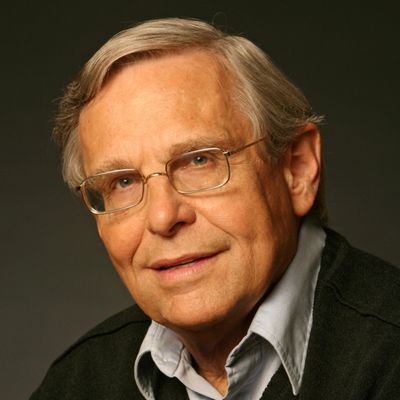
Richard Maltby Jr, acclaimed lyricist and director, sits down again with Rob and Kevin to pull back the curtain on his illustrious career. In this episode, Richard discusses how he met David Shire, looks back on Love Match & How Do You Do I Love You, two musicals that never came to Broadway, and the process of working with choreographers... Read More
From the show: BEHIND THE CURTAIN: BROADWAY'S LIVING LEGENDS » Podcast
Guests
About
Richard Maltby Jr, acclaimed lyricist and director, sits down again with Rob and Kevin to pull back the curtain on his illustrious career. In this episode, Richard discusses how he met David Shire, looks back on Love Match & How Do You Do I Love You, two musicals that never came to Broadway, and the process of working with choreographers. Plus, Richard pulls back the curtain on such legends as Andrew Lloyd Webber, Ronny Graham, and Cameron Mackintosh. Note: Due to a technical error, there are some sound issues with this interview. We tried to fix them to the best of our ability.
Transcript
This transcript was automatically generated and might contain errors.
[0:00] Kevin David Thomas: Hey listeners, Kevin and I need your help.
[0:02] Robert W. Schneider: Yes, we need your help, please, please, please.
[0:04] Kevin David Thomas: We need your stars.
[0:06] Robert W. Schneider: We need your reviews, you guys, on iTunes, so we can start to climb those iTunes rating charts.
[0:11] Kevin David Thomas: It's simple. Open iTunes, click on the iTunes store, search for Behind the Curtain: Broadway's Living Legends.
[0:19] Robert W. Schneider: Then click on ratings and reviews. Under the Customer Reviews, click write a review, and then let us know what you think from one to five stars.
[0:29] Kevin David Thomas: If you need some help, think of one star being Carol Channing and Paul Lynn in the road company of The Last Five Years, and five stars being free front row tickets to Hamilton.
[0:38] Robert W. Schneider: Although when you think about it, I actually would give five stars to the road company of Carol Channing and Paul Inn in The Last Five Years, because I think that would be awesome.
[0:45] Kevin David Thomas: I would love to hear.
[0:46] Robert W. Schneider: Can I hear moving too fast because Paul?
[0:49] Kevin David Thomas: That's the really that's the one I really want to do.
[0:51] Robert W. Schneider: She the Shakespeare.
[0:55] Kevin David Thomas: Erica Schwartz and Danica Weiss.
[0:57] Robert W. Schneider: And the Handleman twins.
[1:00] Kevin David Thomas: So there you go. You can also leave a comment if you like the reviews.
[1:04] Robert W. Schneider: Send us your reviews, friends. Thank you.
[1:06] Kevin David Thomas: Hi, and welcome back to part two of our interview with the wonderful RICHARD MALTBY JR.
[1:11] Robert W. Schneider: Just so you're aware, we had a few sound issues with this particular recording, but we've tried to work them out to the best of our ability.
[1:18] Kevin David Thomas: Thanks so much and enjoy part two of RICHARD MALTBY JR.
[1:22] Robert W. Schneider: Since I don't think we asked you originally on our first day that I'd love to get an answer to is exactly how did the collaboration between you and Mr. Shire come about?
[1:30] RICHARD MALTBY JR: Oh, well, we met in freshman year at Yale. I had gone to a prep school where I'd written a musical in my senior year. And I went to Yale as opposed to Harvard because Yale had a theater and Harvard didn't at the time. And David came from Buffalo, or he had gone to a prep school. He came with a complete score to a musical. Ballads, comedy songs, uptempo, the Begin. Those days are the Geen Charm song. He didn't have a book, a story, or characters or lyrics, but he had the score for the musical, and he thought that people would just take it and just make a musical out of it. Why not? So I thought he was this asshole hick from Buffalo. And he thought I was this pretentious twit from Exeter. And we were both right.
Still friends today. Well, we weren't at first. You know, neither of us really wanted to work with the other. But there was no other alternative. There was, yeah, who else is gonna, you know, we looked around and basically David was the only one who wanted to write music and I was the only one who wanted to write a musical. So whether we liked it or not, we got together. And every now and then I think wasn't I lucky to get a world-class composer out of that. I mean, I could have gotten anybody, I could have gotten, you know, any number of, there were in subsequent years some people who came to write musicals who were not nearly as good as, you know, in terms of composing as he was. He really set the bar too.
I mean, oh he did. He was, he once he found his voice, which took a little bit of doing, he started to explode. I mean, we used to, when we first came to New York we would always meet with some time and we would play our songs and he'd play his songs.
[3:30] RICHARD MALTBY JR: Show and tell what songs. It was show and tell. It was, well, he hadn't produced Forum or any of the Pal Prince shows or even Dwayne Harold Waltz. And he was, he'd done those two biggies and he was complaining because nobody in the world wanted him as a composer that wanted to write lyrics all, you know, so we got together and he would, you know, complain everything. I know for a fact because I confirmed with Jonathan Tunic that Sondheim got a lot of chords from David. I believe that, he'll admit it. I mean, he accepts it and writes, you know, bubbly notes every now and then. When did he also did many more things for us? He also got us an agent, he got us a publisher, he was a very great help and did you just look him up when you came to New York?
I mean, obviously you knew Steve Sondheim was someone that, but no, because this was would have been like the, he was just the lyricist of Gypsy and West Side Story, right? That was not exactly Chuck Libert, but right. No, David and I wrote two shows at Yale, and then when we graduated, we wrote another show that was going to be done at, it was called The Sapp of Light. And it was done at Shi when Sheridan Square and we tried it out at Williamstown. And it was our, you know, rip-off of The Fantasticks. I mean, you know, there'd never been a little musical before, and so we thought, oh well, we can do that. And it had a rather mindless story, but it had a bunch of very interesting songs, and it ran six weeks.
But somewhere in the first or second week, Steve came and then he came back and brought Hal Prince, and then he came back and brought Jerry Robinson and Leonard Bernstein, and so that's how we met him.
[5:45] Kevin David Thomas: That's incredible. Such generosity, really. You know, in those days, there wasn't a direct route, there wasn't a route of any sort for new writers, you know, to get into the mainstream. And so people like Hal, who were adventurous, were thrilled when some new voice came along, and so they were incredibly supportive.
[6:01] Robert W. Schneider: Were there any lyricists or composers that you were looking at the time beside Mr. Sondheim that you thought their work was just incredible and you were admiring their craftsmanship?
[6:32] RICHARD MALTBY JR: Well, my personal idol was Sherman Harnick. When I was at Yale, Fiorello came through. I think I saw The Bonnie Beautiful. He did, yes. Oh, yeah, I saw that, but it was the, if Fiorello came through and which had really really deft lyrics, and then shortly after, well not shortly after that, She Loves Me opened and She Loves Me. David went to see it before I did, which is unusual, and he said, there's this show. And it's really interesting, and so I went off to see it. I mean the lyrics in that are just flawless. And they all seem exactly like human speech except their song. That's always been my model. I don't know where I got that from, but I just bothered me, you know, and it wasn't human speech. And so I would just work very hard until it became if you took away the music, you'd still say the same thing.
[7:36] Kevin David Thomas: Can we talk a little bit about Love Match or How Do You Do I Love You?
[7:41] RICHARD MALTBY JR: Sure. I mean, we actually our first years in New York were, she, you know, checkered, well we got, you know, Streisand and she recorded five of our songs, so that was good. We did a review called Graham Crackers with Ronnie Graham at the upstairs at the downstairs.
[8:05] Kevin David Thomas: I hate to interrupt for our listeners. The name Ronnie Graham comes up a lot. Would you explain a little bit about who he was and why he was so influential?
[8:11] RICHARD MALTBY JR: Well, Ronnie Graham was a comedian, a really inventive madcap comedian, and he was the central comic in New Faces of 1952. Which was maybe the only really really successful New Faces that was done. It's still kind of a model for everybody. And so he did television shows and other things like that, and we decided on to be called Graham Crackers.
[8:55] Kevin David Thomas: I love it.
[8:56] RICHARD MALTBY JR: But he was a person who went to Dr. the Dr. Feel Good of the time, the one that Alan Learner was, the vitamins that he was the vitamins with some other secret ingredient which was, you know, some kind of opera anyway.
[9:17] Kevin David Thomas: Can we talk a little bit about Love Match?
[9:22] RICHARD MALTBY JR: Sure. I mean, we actually our first years in New York were, she, you know, checkered, well we got, you know, Streisand and she recorded five of our songs, so that was good. Yeah, we did a review called Graham Crackers with Ronnie Graham at the upstairs at the downstairs.
[9:44] Kevin David Thomas: Oh yeah, a comedian, a really inventive madcap comedian, and he was the central comic in New Faces of 1952. Which was maybe the only really really successful New Faces that was done. It's still kind of a model.
[10:05] RICHARD MALTBY JR: So he did television shows and other things like that, and we decided on to be called Graham Crackers.
[10:14] Kevin David Thomas: I love it.
[10:15] RICHARD MALTBY JR: But for secret ingredient, which was, you know, some kind of upper anyway. They were all, they were, and he would spout these that in the show and he'd say what, but what in the show? He never remembered what he had just done. And he didn't have any kind of sense of focus. It was all, you know, he was theoretically directing the show. One time I, David and I were, it was close to the opening, and we had went off after a rehearsal and we sort of had enough Ronnie had to come in and sort of take charge. So we were, we had a little dinner, then we went back to the club to tell him that we were gonna, that he had to take charge. So he was there with just the three of us and he said, you know, talk, and so I started to do my really large and impassioned speech.
And as I was doing it, he took out this little zipper bag and he opened it up and took out this rolled up his sleeve, took out this plastic tube, put it around his arm, filled a syringe with something out of a bottle. Now somewhere around long here, I completely lost my train of thought. I was no longer able to focus as he, you know, oh I can't find a vein. It's not a part of my, you know. Keep talking, he would say, keep talking. And I'm going, I, I, I by now had totally forgotten anything I was planning to say. He said, it's just vitamins, it's just vitamins. It was not just vitamins.
[12:00] Kevin David Thomas: That is the legendary Ronnie Graham.
[12:00] RICHARD MALTBY JR: That is the legendary Ronnie Graham for our listeners. He was, he was, well, like so many of those madcap comics, you know, the real world was not a place for them. Jonathan Winters and, you know, he was like that, you know. Robin Williams in a way, who at least could control himself doing a, you know, doing a part, but he was one of those off the wall zanies who was hysterically funny. And real life was always a problem.
[12:30] Kevin David Thomas: Gotcha.
[12:34] RICHARD MALTBY JR: Well that gives us a little glimpse into who Ronnie Graham was. My gosh. And so now then let's go back to Love Match or How Do You Do I Love You.
[12:42] Kevin David Thomas: I'm so sorry because I cut you off when you were mentioning Mr. Graham's name.
[12:45] RICHARD MALTBY JR: How Do You Do I Love You? We had, we were working on a show of our own that would have been rather interesting because the main character would not have, would have been mute all through the show and it was really a satire on the modern world and she never had a chance, she never spoke. Wow, so for some reason Julie Stein picked it up and he was going to produce it, but we needed to expand the story. One of the people we went to was Michael Stewart who didn't really like our show, no, no professional would have because, you know, had this sort of problem, right? Main character who didn't say, actually it would have been a great show, would have been a, I mean she would have been a dancer, she would have, you know, it would have been a really interesting part, but anyway he said no, but why don't, why would he had another idea for a show about a woman who finds a man through, well what we would call today computer dating, but in those days it was sh, that she got a job in an insurance company and used the computers of the insurance company to zero in on the perfect guy for her.
[14:12] Kevin David Thomas: How cute and how clever and ahead of its time.
[14:15] RICHARD MALTBY JR: Well, I don't know. It seems like it was ahead of its time but it was a real cornball musical and but we, you know, nobody was asking us to do anything else so we said yes.
[14:30] RICHARD MALTBY JR: And we did it. It starred Phyllis Newman. It played the music tense, you know, the um Lee uh Lee Goober was the producer of it. He was at that time married to Barbara Walters, who kept walking in on our meetings. Oh my goodness, you know, it was a nice experience. We hired um Jonathan Toonick to be the orchestrator, and it was like his first show or one of his very shows. Um and it gave us our great experience. We opened in some place in Maryland, and we knew that there was one review coming out in the weekly paper. We didn't know, I mean, it was a real small town. And it finally came out, I think on a Friday, so we went off to the drugstore to buy the newspaper, and we opened it up, and we were looking through it, and we couldn't find it.
And it was a show called How Do You Do I Love You. The headline read, "Goodbye, I hate you," and proceeded to pan everything in the show. Uh it was, I mean, I always think this is kind of marvelous because that was our first professional review. And truthfully, if you get that as your first review, they can never hurt you again. Nowhere to go but us. Yeah. You know? Can never, so uh good at it. Yeah. Right? Develop a thick skin early on. Uh you never develop a thick skin, but you realize that there's nothing, you know, nothing worse that they can say about it.
[16:13] RICHARD MALTBY JR: One of the other things we didn't talk about last week that we should talk about because we've had two-thirds of the cast on our show. Oh, is Starting Here, Starting Now. Yeah, we've interviewed Lonnie and we've interviewed George. Uh and not Marjorie. Not yet. Not yet. She's around. We'll get the triumph. Triple Crown. Triple Crown there. Uh where did the desire come from to create this show? Well, it came from um from Lynn Meadow, actually. Um I suppose we could, we sort of skipped over um Love Match, which was, oh, I'm so sorry, we can go back just for chronology of the um the one thing about How Do You Do I Love You was that was the first time we decided we would use um rock and roll as the natural vocabulary of the younger characters, which had never happened before.
There were um you know shows were beginning to have the rock number or the pop number, you know, but they were always sort of like set pieces stuck into a show about something else. And we thought we could actually make it the vocabulary of the main character, so um, which had never been done before. Um as a result, um David Merrick and Bert Bacharach came out to see the show and uh hired Jonathan and hired a musical director because you know that for Promises, Promises, because that was the breakthrough that they were, you know, working towards.
[17:58] RICHARD MALTBY JR: And we, to our great dismay, having broken ground and a kind of a modern kind of sound, got offered um a musical about Queen Victoria and Albert. That's what Love Match is. We were brought in to sort of doctor it. You know, can you write this song? And we did, and then, well, why don't you write that song too? And slowly we ended up at replacing the entire score and everything. Um it starred Patricia Routledge and Larry Guitard. Oh wow, and Hal Linden played in uh the Amundsen, and at that time they were thinking that the West Coast would become a uh a try-out place. So they needed a new haven to go to. They decided they were going to make Phoenix, Arizona, into their out-of-town try-out town.
And so they renovated some big movie theater. Wow. Um what they didn't allow for is that um theaters have uh staffs of people who do this all the time. Right. So we were there opening of a really big musical um with stagehands who didn't know, you know, stage right from stage left, and uh in our texts were uh our first preview, we actually had an audience, and we were told that we might stop from now from time to time. We stopped, I think about ten minutes into the first act, and then again and then again. Oh, and about midnight we had barely reached the end of the first act, and um people started leaving because it was midnight. Um and uh it was, I think, one of the first shows that Robin Wagner designed.
It was one of the first shows that Jules Fisher designed. Oh wow. Um so we had some interesting people. Um and um and it was pretty, and it had some of the score was really, really wonderful. Was directed by um Danny Daniels, who did three brilliant dances, uh but he wasn't really a director. Right. And the sort of supervisor of the show was a guy named Noel Wilman, who had directed A Man for All Seasons. Yeah. And uh even though at one time Paul Schofield was famous for saying Noel Wilman had nothing to do with the success of A Man for All Seasons. I guess he was lucky. He uh he didn't really know anything about a musical and you know kept saying things like, "Well, get on with it, dear boy."
[20:50] RICHARD MALTBY JR: Um the uh the show opened in uh I don't know, I guess we must have played in Phoenix. Um I don't even remember that, but we opened at the Almondson. And uh did not get very good reviews, although I must say a couple of them were smart enough to single out the score, which was very nice. It had a uh book by a guy named Christian Hammelt, who had never written a musical before. And um we had after we opened in uh at the Elmondson, there was this big production meeting about how what we were gonna do, because we were on a we were scheduled to go to the Fisher in Philadelphia in uh Detroit and come into New York. It was all on trajectory. Um and there was work that had to be done, and we sort of everybody agreed that we're gonna do this and this and this.
It was a lot. And uh as we were leaving the room, I was walking down the hall with Christian and David, and uh I said, "Chris, well how um what what what what are we gonna do? How how are we gonna do this? What what are you going to do?" And he said, "Uh nothing." And I said, "What?" I said, "No, I'm not going to do anything, I'm not gonna change anything." I said, "But you you you have to. We're, you know, it's you you have to." And he said, "No, I don't. I have a rich wife." Oh, there's that's one way. I mean, uh there was a total conversation stopper. You can't, you know how do you trump that? How do you trump that? You just, you know, okay, you don't care whether the show succeeds or not because you have a rich wife. My God almighty. Oh wow, okay. That's my favorite theater anecdote in my life.
[22:42] RICHARD MALTBY JR: So it was a collection of music that you and Mr. Shire had written, uh for various, yeah, we did. We then came back to New York. Hal Prince suggested to another producer that we work on a show that was about the same material that Reds was uh making connections with some of his composer friends, Billy Goldenberg in particular, who uh had were in California and getting all sorts of work. Uh Universal had them started working different features and uh um and pretty soon he was moving out there, and it was about that time that I decided that I really wanted to be a writer, uh a director, so I just started my little training program. It was in the second show that David and I wrote at Yale. Um was that Cyrano or Grand Tour?
Oh, Grand Tour. Grand Tour, which was Gretchen Cryer was the lead. Amazing. Nancy Ford was in it also, Austin Pendleton and um Bill Hinnan and uh so uh anyway, uh she uh we had a it was about a school teacher and and and so there was a classroom right at the beginning, so we needed a bunch of kids, and she was one of the uh uh one of the school kids, the tall girl she was. And um um you know, and and she was, we were I guess very nice to her on uh who knew, but you know, um but it was a big deal for her stuff. Um by the way, Peter Hunt did the lights, and John Batam was the set stage manager. Um John Conklin did the set. Wow.
[23:29] RICHARD MALTBY JR: So um time flips some pages and we're now uh she has graduated from Yale, is looking for to become a director, and this guy had this idea of in London apparently there are theater clubs. There are places w that are um uh well they're an anti person who was crazy enough to take it on and um you know, with its sixty thousand dollar debt and everything else, I mean it was uh it was pretty hopeless. Um but we had a theater on seventy-third street, the Bohemian Hall, and um anyway, I sort of came in to help them do the benefit, their first benefit, which sort of saved them. And so uh you know, I had reconnected with her, and it did have a large cabaret space, a sort of a restaurant space. There was a whole bunch of shows that hadn't happened or hadn't been produced or that had were produced but uh weren't successful, and um so it seemed like it had uh failure written all over it.
And uh but I thought, well, I wanted to, I became a director in order to do my own thing, so let's do that. Yeah, absolutely. The one thing I knew that we were was we're just gonna do the songs. We were not gonna have sketches or anything. In those days, reviews always had sketches or a compare of some sort like the uh um the compare in uh Side by Side by Song, yes, um um somebody who sort of tells little anecdotes and sets up the songs a little wackel walk up. Um we were, we were um and I called up uh uh I called up Lonnie Ackerman, who had been in How Do You Do I Love You, um and she said yes. There had been a girl then who had done a very funny nightclub act who was sort of a soprano. I called her up, and that was Marjorie, and she said yes.
And I called up another guy who uh Michael Tucci, who was in Greece, and he said yes. Um so suddenly we had a cast, and I couldn't, I mean, I was astonished that people would say yes. I remember I think I told you they were getting twenty-five dollars, not twenty-five dollars a week, twenty-five dollars for the eight-week commitment. Um four weeks of rehearsal and four weeks. Amazing.
[26:53] RICHARD MALTBY JR: So we found a pianist, and we went into rehearsal, and we started teaching the songs, and uh I kept putting off getting it on its feet because I really had no idea how to direct a musical. Um and so um I took this, that moody opening is from uh for the SAP of life, Starting Here, Starting Now, it goes into Starting Here, Starting Now, which is that song, and then we had bunches of songs from uh from different shows, comedy songs, ballads, and everything. And uh but we did just the opening with everybody singing I am in love, you know, that thing and Starting Here, Starting Now, which seemed to be a good way to start, and they sang it. And I had didn't know what to do, so I said do it again. Um and they sang it again, and I said, "Well do it again."
And I must have happened about six or seven times, and finally, just out of desperation to maybe help me, uh Jo um Michael went over to one of the girls in the middle, and I thought, why didn't he go to the other one? I thought, oh, oh I've got a plot, I've got a triangle. So then I put together the first seven songs as a kind of a story um of this boy in love with two girls or trying going after two different two girls and kind of a sleaze bag of a guy. Um so you're open to reordering? Well, that had no order at that time. It was just not, oh, it was just nothing, just a bunch of songs. And then I put together a certain number of songs that became a little bit of a plot, and oh dear, what do you know?
And went, that was the first half of our act, and then had three solo numbers and then some group numbers, and then suddenly the whole first act was there, and I followed that through on the second act.
[28:51] RICHARD MALTBY JR: And in doing so I invented the bookless musical, the bookless musical review, the review that doesn't have any that is connected by internal logic, not by any kind of interviewer or by sketches. There were no words in the show at all. Um, and that's how you invent, that's how you change the world. There it is, Michael crossed to that girl. I know it's totally true. And from there on, you know, um, and then the show opened and people wanted to move it. It took a great deal of effort to, uh, to move it to a theater restaurant on 46th Street called Barbara Anne's that, uh, had a little stage and was, uh, and it was very nice. We had a terrible time making a deal. We had to raise all of twenty-five thousand dollars to put it up, and you know, it was like pulling teeth together.
Um, we actually, the major investor was this crook who was a friend of somebody's, some, you know, show business has the dark side, and somebody knew somebody, and, uh, and they were gonna commit to, I think, twenty thousand dollars or something like that. And, uh, we kept being told, you know, be on the corner of the f of 42nd and eighth at six o'clock, and someone'll come and give you, and they didn't come, and then different things that'll happen, and finally Mary Joe Slater, who was the, uh, um, one of the producers, uh, got given this bag full of cash. A car came up, timed into it, was given a bag full of cash and dropped off. And, uh, I've never heard anything like this before. Never heard anything about it, but years later, New York magazine did a, did a, um, uh, uh, an article about this guy, this sort of theatrical kind of, well, he wasn't even a theatrical, he was like a second-level hood who was murdered.
And that was the guy who gave us the bag of hood. Oh my gosh. And there's in the whole of the story, it goes on and on, and then there's this paragraph about how he dabbled in show business. Well, I guess we're thankful because, uh, kept your show. Show got on, you know. And was recorded, and you know, they, they toured the country. They, you know, it was, it was recorded, it got nominated for a Grammy. I mean, it was, um, yeah, it just kept expanding and expanding and expanding. Um, when we moved, we also, I mean, the show was made up of just songs that had existed, and, uh, and it needed some sort of edgier songs, and so we wrote, um, Flair, I don't remember Christmas, um, I love that one.
Um, I don't believe it, that which was actually a melody from, from Love Match, but another, but a new, new lyric and a new concept. And, um, I think probably a couple of other things too as well. Specifically for the, and still around today. It's, you know, those songs appear in showcases and cabarets and they're still moving. Good songs. You know, or their character songs and you see what story songs. What I realized was, um, that people didn't write like us. And, uh, the reason why our songs were not treated well in the shows that we had done was that the directors didn't know what to do with them. They knew how to stage musicals. They knew how to stage a musical number. They didn't know how to make a scene.
And so they would, and our songs are kind of deceptive. Uh, you know, they might have a kind of a recognizable kind of showbiz bounce to it that, you know, sort of telegraphs what the show is, what the song is. But in fact, the content of the song is quite different, using that sort of sunny bounce as a kind of a, uh, you know, as a character enriching element. Um, I'm, um, it's bouncy, but I'm actually saying something serious. Right. So, um, and people tended to miss that. And, um, do, uh, so when I was putting the show together, I made a lot of the mistakes that they made. Um, and then I realized, oh no, that's not what the song is about. The song is really about this. And, um, in song after song, I realized the depth of characterization, which I had taken for granted was, uh, was quite, um, profound in these songs.
They really, really, really, they not only had to be acted, but they had to be understood, you know, in a character sense. They had to be understood. It was, it was not just, uh, they were, they didn't have to be just performed, but there was something, you know, like that's our, our style. And, um, I didn't think there was anything unusual about that until I, you know, realized that a lot of people don't write that way. Exactly with subtext and everything. I'm gonna move us up to Song and Dance.
[34:28] Kevin David Thomas: Uh, how you directed that?
[34:28] RICHARD MALTBY JR: I did.
[34:31] Kevin David Thomas: And how did you become involved with that project?
[34:34] RICHARD MALTBY JR: This is the musical The Android Rebu, uh, wrote the music, right? Uh, well, um, uh, Tyler Gatchell and Gatchell and Newfoundland were the kind of the big deal, uh, general managers of the time, and they did all of Andrew's shows. Tyler was one of the great men of the theater, and, and, uh, the two of them, when we were hopeless trying to move Starting Here, Starting Now, these two guys who were the biggest deal in New York took on this little show and were our general managers. I mean, they were, they were so helpful. And the theater is made up of those people, and, and, and they, uh, you know, they loved the score, they couldn't do anything, they couldn't do without, you know, they just couldn't do enough for us.
Uh, so after, um, after Baby opened, uh, Andrew was looking for lyricists as he, as he always was. One time, uh, I'll tell you this, uh, afterwards, uh, when we were working, I was working with Don Black on the lyrics of the show, um, and we were going to visit Andrew at Sidmonton, which is out in the country. You drive after you get off the main roads, you go through these little country roads, and the country roads are very narrow and they have these huge hedges on each side, so that you're kind of driving to this like tunnel. And, uh, you know, we're in the middle of nowhere, but the road we were on was just filled with cars. And I said to Don Black, where, who are all these people? Well, you know, and he said, lyricists.
[36:23] RICHARD MALTBY JR: Uh, but it was, it was, it was like that. Um, so Andrew at that time was interested in doing Aspects of Love. Right. And, uh, so he flew me over to, uh, talk about that, and, um, and he played me, um, he played me the songs that he said would be the score for Aspects of Love. And what, when he played me was the score to Phantom of the Opera. Oh wow. They all went off into Phantom of the Opera. Right. Because Phantom of the Opera came up first and, and, uh, you know, fascinating. Um, and Aspects of Love had a real problem. It's really an interesting kind of cult novel. It has an absolutely breathtaking first chapter. And then it's like the writer didn't know what to do with it after that. And so the first chapter you want to put on the musical stage instantly.
And, um, and after that, but in the course of it, he had also, he and Cameron had also done, uh, some, uh, Song and Dance and, uh, I, uh, in London and they were looking for, uh, somebody who could perhaps come up with something that would, it was, it was two separate things, a song cycle in the first half and a ballet in the second, and was there any way that they could be combined? And, uh, said, well, we need someone who's not, not only a director, but also a writer, like, well, like you, RICHARD. How convenient. And so, uh, I didn't do Aspects of Love, but I went home and wrote an outline of how the, how the two stories could work together and they, and, uh, Andrew and Cameron thought that was very clever, and so suddenly we were off on, on, on that.
Um, they, they did it involved, uh, you know, rewriting a good deal of the first of the song cycle. Right. And, um, and Cameron said, well, Don Black is totally signed off on this. You can just, you know, do whatever you like. And I said, I don't know. I'm writing and I'm about to really go to work on it. And suddenly Cameron calls and says, well, actually Don would really like to be involved. Turned out that Don contractually had to be involved.
[38:51] RICHARD MALTBY JR: Oh, and that he hadn't in fact signed off on it in that sense. Um, and, uh, so Don came over with what would have been, it could have been unbelievably, uh, uncomfortable time because I'm sitting here rewriting his songs. And, uh, but he's a good fellow. He's a, has a great sense of humor and he went along with it, and we had a, we had a really good time. And we, so we holed up in the Mayflower Hotel and rewrote the show.
[39:22] Kevin David Thomas: Well, how interesting. So now a question for you as a director.
[39:26] RICHARD MALTBY JR: Uh, the second act of Song and Dance is completely choreographed.
[39:30] Kevin David Thomas: It's an all danced piece.
[39:32] RICHARD MALTBY JR: And then we're gonna just jump forward for a quick second to Fosse, which you directed, which is also an entirely choreographed piece. So you were not a choreographer.
[39:42] RICHARD MALTBY JR: I am certainly not.
[39:44] Kevin David Thomas: Um, how does that relationship work?
[39:47] RICHARD MALTBY JR: Well, in Song and Dance, uh, the first act is a song cycle, it's a one-woman show. You know, and I had the idea of Bernadette.
[39:59] Kevin David Thomas: Which by the way, nobody liked.
[40:02] RICHARD MALTBY JR: Really?
[40:02] Kevin David Thomas: Well, she wasn't Bernadette at that time.
[40:04] RICHARD MALTBY JR: Right.
[40:04] Kevin David Thomas: She had done Mac and Mabel, which is a, you know, and she'd done some movies and everything, but she wasn't a box office name.
[40:10] RICHARD MALTBY JR: Who would they have wanted?
[40:11] Kevin David Thomas: Well, I don't know that they wanted anybody else, but they weren't impressed with that.
[40:16] RICHARD MALTBY JR: Okay.
[40:16] Kevin David Thomas: But I couldn't, I talked them into it and, uh, um, uh, you know, and it won, she won her first Tony for it.
[40:24] RICHARD MALTBY JR: So, and the second act was a ballet to a piece of music, just variations he wrote it. Andrew's brother is a cellist, world-class cellist, and so he, um, uh, he wrote a cello concerto for him and, uh, and just decided that that would be the second act, and it starred a guy named Wayne Sleep who was a big small man but a big sort of dancing star in, in, uh, in London. So the first act was a one-woman show star with a star. The second act was a ballet with a star, and I found a way to make one of the stories, uh, one of the, one of the men that, uh, um, our, um, heroine gets involved with, the second act is this, is, is his story and they finally, you know, they finally get together. Um, and someone had the quite brilliant idea since we needed a world-class choreographer asking Peter Martins, who had just taken over the New York City Ballet, um, to do it, and he had never done a musical.
[41:20] RICHARD MALTBY JR: Um, but I wrote out the entire plot of the dance, so to that extent I wrote the ballet, and then he, he had the music and then there was the story, and, and so he did that.
[41:49] Kevin David Thomas: You wrote the structure of what should happen getting you from point A to point B and then it's his job to...
[41:49] RICHARD MALTBY JR: He just, he took the story and the music and then, and then staged it. I mean, all the dancing was his.
© Broadway Podcast Network, All Rights Reserved