

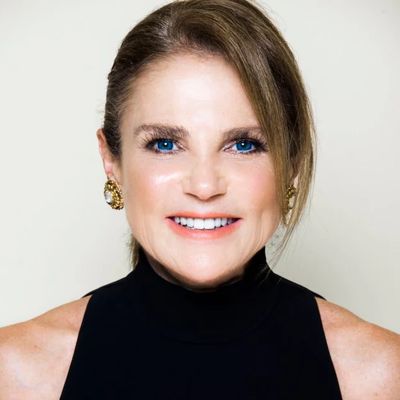
Come down from your balcony, Golda, because Tovah Feldshuh is sitting down with Rob and Kevin to look back on her incredible career in theatre, film, and television. Tovah dissects not only her process, but, her collaborations with countless directors, writers, and fellow actors... Read More
From the show: BEHIND THE CURTAIN: BROADWAY'S LIVING LEGENDS » Podcast
Guests
Featured Shows


About
Come down from your balcony, Golda, because Tovah Feldshuh is sitting down with Rob and Kevin to look back on her incredible career in theatre, film, and television. Tovah dissects not only her process, but, her collaborations with countless directors, writers, and fellow actors. From Cyrano to Pippin, Sarava to Yentl, Hello, Dolly to Gypsy, Tovah takes everyone down memory lane with love and laughter. Tovah pulls back the curtain on her career to discuss how she became Golda Meir, what it was like becoming Yentl, and why a spontaneous cartwheel made her a star! Also, Tovah shines the spotlight on Christopher Plummer, Jerry Zaks, and, of course, Sarava! Become a sponsor of Behind The Curtain and get early access to interviews, private playlists, and advance knowledge of future guests so you can ask the legends your own questions. Go to: http://bit.ly/2i7nWC4
Transcript
This transcript was automatically generated and might contain errors.
[0:00] Robert W. Schneider: At Broadway Curtain.
[0:01] Kevin David Thomas: And make sure to join our Facebook page at Behind the Curtain, Broadway's Living Legends.
[0:05] Robert W. Schneider: And follow us on Instagram at Broadway Curtain Podcast.
[0:07] Kevin David Thomas: Plus, you can always listen to our podcasts on Broadway World and Stitcher.
[0:11] Robert W. Schneider: Our guest today is one of the entertainment industry's most respected and admired performers. Yes, she's a very familiar face on screens, including appearances on Law and Order, The Walking Dead, and the very popular Crazy Ex-Girlfriend, where she created a sensation in her infamous song Where's the Bathroom? Which of which we will post if you've not seen it, because it's absolutely brilliant. But today we celebrate the incredible theatrical contributions of this award-winning artist. Starting with her Broadway debut in Cyrano, today's guest has graced the stages of such shows as Dryfuss and Rehearsal, Yentl, the off-Broadway Sarah Vaughn, and her one-woman tour de force in Gold's Balcony, which holds the record for the longest-running one-woman Broadway show.
To tell us what it was like to work with such legends as Christopher Plummer, Garson Kanin, Ruth Gordon, and Jack O'Brien, plus many, many others, here is a performer whose energy and passion for storytelling is palpable, whose demand for truth in storytelling is infectious, and whose humor is unmatched. The incomparable TOVAH FELDSHUH.
[1:11] TOVAH FELDSHUH: Thank you very much, Rob.
[1:13] Robert W. Schneider: Oh, appreciate that. We are so happy you are here with us today.
[1:17] TOVAH FELDSHUH: I'm very happy to be here.
[1:18] Kevin David Thomas: So we're gonna start at the very beginning. Where did you grow up?
[1:21] TOVAH FELDSHUH: I grew up. I was born in New York City at 90th in Lexington, probably on the pavement, in a defunct hospital at that time called Beth David, in an undefined decade.
[1:33] Kevin David Thomas: Fair, fair, fair.
[1:35] TOVAH FELDSHUH: And I went from Manhattan to Scarsdale. My father was a litigator, a trial lawyer, and my mommy was a mommy. They both fell in love at NYU when she was seventeen and he was eighteen. In those years, you were in rapid advance if you were clever, because the United States needed a workforce. So they both entered college at sixteen.
[1:55] Kevin David Thomas: Oh my god.
[2:01] TOVAH FELDSHUH: And so I'm from a New York family. My grandparents were all European from Vienna, Austria, from Germany, from London, my grandmother was British, and from Russia.
[2:13] Kevin David Thomas: Wow.
[2:13] TOVAH FELDSHUH: Um, and if dad is a lawyer, where did the love for the arts come from? Because you and your brother are both artistic.
[2:21] TOVAH FELDSHUH: Right. I am the little sister of Dr. David FELDSHUH, who is a Pulitzer finalist for his play, Miss Evers' Boys, and has just written a new play called Yussel the Muscle. Do not be confused by the title. It certainly has humor in it, but it's really based on a true story of Max Schmeling, who was a German prizefighter who became the heavyweight champion of the world and would win and then lose his championship to Joe Louis. And it is about the relationship between Max Schmeling and his American Tuffy, child of immigrant manager, a man named Yussel Jacobs, and the relationship of the Schmeling family in Germany to Joseph Goebbels, and then all of that relating to Joe Louis. So we have an African American, we have a Jew who's the little man guiding Max Schmeling, who was not a Nazi, but he was a German and came to this country with people screaming Bremen Go Home, Bremen Go Home, that was a ship, and then of course Joseph Goebbels, who favored very much Max Schmeling's beautiful movie star wife.
And I will be playing the title role again as Yussel as a man. It's not a woman wanting to become a man. It isn't my usual love for trouser roles, whether it's Viola, Rosalind, or Oriental, it's a man playing a man. So I have a lot of studying to do. And if I ever write a biography, I guess it would be from Yentl to Yussel. I'm very excited about that. We go into rehearsals January eighth in Minneapolis, where both of us began our career at the Guthrie. My brother was associate artistic director, he was a McKnight fellow. And I won the McKnight Fellowship five or six years after he did, and followed him, carrying spears and understudying all the size seven leading ladies.
[4:08] Kevin David Thomas: Yes.
[4:09] TOVAH FELDSHUH: And got to go from the Guthrie right to the Palace Theater. That was the luck of the draw.
[4:20] TOVAH FELDSHUH: To sing and dance was okay, but if you didn't, you couldn't do Iambic Pentameter, you were nothing. So I had to really bone up. I had gone to Sarah Lawrence where we did Stravinsky's Renard, the Fox with blue hair and green teeth, and my mother came to see it and said, Oh my god, why didn't you go to Vassar? And I very much wanted to go to Vassar, actually more than my alma mater, because I liked the furniture. It was a very profound time. David went to Dartmouth because he liked the color green. I mean, this was the kind of guidance we got in those years. So anyway, I haven't been on the stage for a bit except for Gold's Balcony, because I've been doing so much television. Television is in its golden age again.
It's like a huge vacuum. I mean, there's so many opportunities. It's a vacuum cleaner. I'm doing two series at once. It's fantastic. And playing the president of the United States on Salvation for CBS. We have the finale this Wednesday night at 9 p.m. And of course, doing Crazy Ex-Girlfriend.
[5:20] Kevin David Thomas: Yeah.
[5:21] TOVAH FELDSHUH: But to deal with theater, my theater career heavily has informed my ability to do many, many different things on television, notably sing and dance. And I remember I was hired sight unseen to play Naomi Buncha. Maybe they'd so seen Kissing Jessica Stein, and I remember doing Where's the Bathroom, probably in two takes. And Rachel said, I told you, I told you Broadway works. Look at this girl. Look at Broadway. That's the first thing that young wanted performance. It's good that that's a good idea. She bet on the right horse. Well, if you can do things in large chunks in a few takes, you're saving them a tremendous amount of money and you're keeping the wheels running. Also, as beautiful as my part is, you know, I was a guest star.
And my job is to come in phenomenally prepared and not to slow anybody else up. Rachel Bloom and the regulars have more latitude. A guest star, there's an etiquette to this that I was brought up with to the theater because I came from repertory and there was a real hierarchy.
[6:24] TOVAH FELDSHUH: I had a British artistic director. Anyway, I grew up in Scarsdale. I went to Scarsdale High, went to Sarah Lawrence College, I won the scholarship to the Guthrie Theater, I applied to Harvard Law School to simply be near my father. I made the wait list, and I won this McKnight Fellowship, which was a free ride from Minnesota Mining to attend the University of Minnesota for a master's degree and to be a journeyman at the Guthrie. And with Michael Langham, I mean Michael Langham, and he was the toughest. So I assumed when I left the Guthrie that I would end up, you know, being a chorus girl. I had no idea I would fall into the pot of good fortune and gift. I don't want to be touting my abilities, but I worked very hard and have worked very, very diligently, but not hard, diligently all my life to be skillful, and it was that skill that gave me Yentl and all these starring roles on Broadway.
It was that skill, but I had a completely different view of me at the Guthrie. They thought I would never be an actor. They said, you can perform at our fontres. You were like you were a single thing. Yes, you can do your tap dancing. Do your tap dancing and your singing. So you're not a singer. And carry your spears. But in terms of Oedipus Rex, I think you should play a leper upstage left. And I was a leper, upstage left, and I screamed, and she I'll never forget Langham said, You're not going to do that, are you? Turn your back to the audience. I can't look at you. So it was tough go. Guthrie was tough, and Michael Langham was brilliant and brutal, and he was brutal to the young kids. So children, if you're listening to me, brutal to younger people who do not share the same status or power when a fancy head of a company is creepy to young people. That is truly a bully. Do not lose heart. Remember who you are, and that the sunshine comes from within. And for God's sakes, do not mistake a despot for an artistic god.
[8:40] TOVAH FELDSHUH: So I came in with this new part, and one day Michael Langham didn't show up for work, and he had been fired from the Broadway musical of Cyrano. And in his place came the director from Hollywood, Michael Kidd, who was a choreographer. Yes. Right. And heads started to roll. He was a nice man, but he had all these unequipped rep actors who couldn't sing and dance out on Broadway's standpoint. So it was a Guthrie production that was transferring to Broadway. It was going to start at the Guthrie because Plummer was so affiliated with Langham. He had starred for him many times. And Chris Plummer is a very good friend of mine to this day. He's also gotten more and more mellow, but he was very naughty, very brilliant, very gifted, was a fluent pianist.
And if he liked your talent, if he felt you cut it, you were in great shape. And if he didn't, woe unto you in those years. So Michael Langham disappeared. It was like watching the god Ra fall from the pyramids of Egypt. It was like watching Icarus, you know, immolate near the sun, you know, when he didn't listen to his father, I believe it was Apollo. In all events, Michael Kidd shows up, and all of a sudden, people who can't cut it start to be replaced. He's got to bring this in and make it a hit.
[10:11] Kevin David Thomas: Yeah.
[10:12] TOVAH FELDSHUH: So one day he said, Can anybody do a cartwheel? I said, I can do it. I can do a cartwheel, sir. If you need me, I can do a cartwheel. And he said, You, you do a cartwheel. And I just did it, did it, did it. And one time he asked me to do something, I said, Why should I do that? He says, you know, when I'm with dancers, they don't ask me why, they just do it. Actors always ask me why. I said, Right, sir, right, whatever you want, I'll do it, I'll do it. I was just a good soldier. And Michael Kidd brought me to Broadway with 14 lines in a red dress. And 18 months later, I would be on the marquee in Yentl at the O'Neill Theater where Book of Mormon is. And I said, You were my break. You let me stay in the company. He said, I needed you. You could do a cartwheel. And I was a good soldier. I was a very good soldier, very good team player.
[11:13] Kevin David Thomas: How did going back to the Yentl? How did that how did you go from a 12-line red dress girl, and then all of a sudden you're literally the star of this play?
[11:24] TOVAH FELDSHUH: So okay, so I had 14 lines in a red dress, and I was put up for auditions, and I tried my best, and I got a lot of stuff.
[11:32] Kevin David Thomas: Yeah.
[11:32] TOVAH FELDSHUH: The only thing I didn't get was the traveling, the bus and truck tour of Two Gentlemen of Verona for the Public Theater. Remember, Mary Goldberg was the casting director, and I so wanted to do it. And to this day have never worked for the Public Theater, which is hard to believe. I love the Public Theater. Love Oscar Eustace and really would Oscar if you're listening. I would like to be chosen for something. So I was doing plays and musicals. I mean, you were looking up for the...
[11:56] TOVAH FELDSHUH: I was for whatever I made. Oh, I know. The first thing I was offered was the understudy to Bernadette Peters in Mack and Mabel by R. David Merrick.
[12:08] TOVAH FELDSHUH: David Merrick took a shine to me, and I said, Sir, I guess the situation started, let me go back. Cyrano ended in six weeks. Christopher Plummer would win the Tony, I would go out to Hollywood with James Richardson the third, he would get take the universal contract. I wouldn't, I'd come back home. I was offered the title role in Brainchild. Okay. Directed by Michelle. That's right. There's a recording, I believe, somewhere of uh I'd love to hear that. I looked to the case. When you need a friend, and I extend my hand, and I extend my hand, my hand. It's right. That kind of summer thing prepared me for Sarava. Sarava. Sadava Sadava means Hello Strange and Chow Shalom. Anyway, back to this. My day.
Very quickly, our first guest was Randy Graff. Ah, she's great. And she sang the same thing for us. So we've had it twice now. I'm so happy. I'm so happy. She's great. She played my little sister. Oh, it's amazing. Um we'll get there. Yes. So right after Cyrano, I was offered Dreyfus in Rehearsal. Right. It was directed by Garson Canaan. It was starring Ruth Gordon and Sam Levine. And my name was by this time Tova Feltchu. My birth name is Terry Sue Felt You. I changed it for a Christian boyfriend who's alive and well. Hello, Michael Fairchild. Your photography looks beautiful as it was when we were children. And you changed my whole life. I didn't know that changing my name because I loved you so much long before I met my beloved husband, Andy, would change the whole landscape of my life.
And it did, because in Romeo and Juliet they say, what's in a name? A rose by any other name would smell as sweet. Not true, children. And let me tell you why. Because people's lives are about themselves. We are all inside our own skin and body. And our main concern is to make sure we live to see the morrow, live to see the next day. So we take care of ourselves. So Tova Felt you is a really shorthand for somebody who's either Orthodox, European, Israeli, none of which I am. I was a cheerleader at Quaker Ridge School. And however, my perceived value was different. So Garson Canaan, David Merrick took a shine to me. I was offered the understudy to Bernadette Peters, and I had understudied for two years at the Gaffey.
I said, Mr. Merrick, I am so honored, but I've understudied for two years, and I will never do it again as long as I live, and I never have. I said, It's the hardest job with the least reward. And he said you're a foolish girl because Bernadette will get sick and you would go on, and we could still make you a star, and Garrett Champion would be there. So Mac and Mabel would open and it would close in six weeks. And in the meantime, I did Dreyfus in rehearsal for David Merrick, and he offered me the role because Garson Canaan said, Tova Feltchu playing Miriam Palodnik. With a name like that, she's got to be right. And that was it. I met him, I said, hello, he gave me this part. And I got a great review in the Times.
I was very pleased. I played Lucy Dreyfus, the wife of Alfred Dreyfus, accused of treason in France, and um banished to Devil's Island. And a uh and the actress playing Lucy Dreyfus, which is Miriam Palodnik, and then the war breaks out and everything falls apart. And the play also closed within two weeks at the old Helen Hayes Theater. And from that to that theater was delivered a script of Yentel the Yeshiva Boy by Isaac Bashevis Singer and Leon Aplin, and another script of Where's Charlie opposite Raul Julia to play Amy, which I got. Once in love with Amy, always in love with Amy. I was thrilled. I mean, the idea of uh Where's Charlie? And it was on Broadway, even though it was Circle in the Square, it was on Broadway, it was for Ted Mann.
Five hundred dollars a week, it was a fortune. And I was also offered at the same time this broad off Broadway thing at the Chelsea Theater Center, then at the Brooklyn Academy of Arts, which could have been, you know, the Brooklyn Academy was like going to Hoboken at those days. It was 1974. And I was going to, of course, take Amy. We accepted Amy. And within a day of accepting Amy, my commercial agent, may she rest in peace, Marjorie Field called and said, You know, Tova, this is a revival. Yentel the Yeshiva Boy, you have the title role. It's a new play. You never know what could happen. I suggest at least you read it and give it covet the honor. So I reread the play. I took my bus to Stark Hesseltine.
He was my agent by this time, with whom I stayed with till I went to ICM, and it was 119 West 57th Street, Tar Castletine and Bob Baker, both of whom would one would die of AIDS and one of cancer. Wonderful men, wonderful men. There were a lot of boutiques in those days, and they were very uh powerful. They had a great, great deal, and a lot of the big stars had personal agents, is the only way I can call it say. So I went to Stark and I said, you know, maybe maybe I should reconsider this. And I auditioned for Yentel in a yellow Terrycloth robe and combat boots, and I didn't even get back to Manhattan. They offered me the job, and Marge Field said you should take it, you should take it. And Stark said, Well, it's a new play.
So Mac and Mabel would close in six weeks. Where's Charlie? He was furious at me for accepting the role, and then pulling out. It's the only time I've ever done that, actually. Pulling out two days later. Um, and I said, But sir, it's 48 hours, and I I've been advised. I said, you have to forgive me. And he didn't for many years. And then we we had a refro small. I just kept loving him up. Where's Charlie was very nice. Maybe my fate would have been different. Maybe I would have worked more for the public theater. Who knows? But Yentel opened at the Chelsea Theater, and it was similar to the Goldest Balcony experience and Arena's Vow. You could not get a seat for little Yentel the Yeshiva Boy out of the Brooklyn Academy.
You could not. And it would transfer to the O'Neill Theater. And I had at the time been offered by Richard Rogers to play Anne Boleyn in the first act, Princess Elizabeth II in a musical of Rex opposite Nicole Williamson, the starring role. And I had accepted it, and we had it in my contract to leave Yentel to do this. So Yentel opens on Broadway, and eight weeks later I was to start rehearsals because I wanted to do everything. Yentel's a big hit, big hit. Rex hasn't gone into rehearsals. And the everybody was advising me, of course, to you'd made your splash, you're in for six weeks. Get out of there and go on to your next triumph. It was only Garson Canaan who had directed me in Dreyfus. He said, Listen to me, Jim Jick.
I remember it means little toy in Yiddish. He said, You're too young to understand this now. But Yentl is your show, and it's a hit. Rex is Nicole Williamson's show, and we don't know the fate of it. He said, Don't leave a hit. Don't leave a hit, right? Ted Danson in Cheers, don't leave a hit. Shelley Long in Cheers. Yeah. Who? Yeah. And gifted. Yeah. Leaves a hit after one season. Big error. Don't ever leave a hit. Uh, because it establishes your base. It's more than just an artistic consideration, it's a commercial consideration. So go figure. I listened to Garson Canaan. We would name our son Garson Brandon Levy. Garson Canaan was a witness at our wedding. I married Andrew H. Levy, a Harvard lawyer like my father.
And Ruth Gordon was our matron of honor. Oh. It was very exciting. So I didn't leave the hit, and the producer said, if you don't leave us, we will double your salary and put you on the marquee. And so they did. Tova Feltchu in Yentel. And that was been a great moment. It was the greatest. It was the greatest. I I don't like coming down from there. Yeah, now I stay up there as much as I can. Oh yeah. And it's a different now it's a different game, you know. It's just piping. Yeah. Nobody gets billing. It's true. You know, or you do, you know. Or like one person, yeah. Let me ask you, what was it like being led by Garson Canaan and having a relationship with the wonderful Ruth Gordon? What did you learn from them?
[20:30] TOVAH FELDSHUH: I learned a lot. Well, first of all, he was the first one to say what I believe is the truth. Ninety percent of a successful production is the casting. And if you have a good actor, you leave them be. You don't carve them, you leave them be. If you have to chisel every actor as if they're a Stradivarius that can do anything you want, then we're stuck with only your point of view. And the Otto Preminger is dead, man. You know, that kind of dictatorship is dead. And here we have an Amir sitting in Washington posing as somebody for a hair commercial that thinks he's president of the United States, and it's a real problem. So this kind of dictatorial at this point in my life, and I would say colleagues of mine, you don't work under a director, you work with the director, your colleagues, your whoever gets to the truth first wins the game is I think it was Joe Montel who says that.
But um Garson was wonderful. He cast us. He asked me for one or two things as Lucy Dreyfus. He was thrilled with much of everybody's work. He heavily directed uh more Ruth and Sam and tried to choreograph the piece we worked with um some great extraordinary designers. Was it Ann Roth? I mean, just extraordinary historic designers. And before I worked with Santa LaCuesto, I worked with a very, very Boris, I have to remember his name. Aronson? Yeah. Boris Aronson. Oh yeah, he's a legendary. It was extraordinary. David Merrick was our producer. And I had a relationship with David Merrick all the time, always took me out for lunch. Really? Took me to meet his beautiful wife. He was wonderful to me.
He begged begged me to change my name. I said, Ah, you probably have strides to change your nose. I was really You're a sassy. I was a I was a nervy kid. Yeah. I would and I wasn't I wasn't unloving. I wasn't um oppositional at all, but I just spoke my mind. You just we were trying to do it. Because I'm the youngest of eight cousins, and I was the littlest. And my cousin Johnny and I, if we didn't speak up, we'd be run over. You know, uh my cousin spanned over twenty twenty-two years of time. So when we were born, Johnny and I were born from May Kaplan and Lily Kaplan, my mother, um, and and my aunt, um, uh my our older cousins, Joan and Lucille Gronofsky, they were getting married already. And it was so interesting.
Um so uh so to make a long story short, I didn't change my name. He said, at least go back, go back to Terry Fairchild, you know. And I didn't do it, and it has influenced my whole career, and this is the choice. You know, happiness is a choice.
[23:14] TOVAH FELDSHUH: What is your ideal rehearsal process like? Well, the ideal rehearsal process is when the director tells me he loves me, he's lucky to be with me, and he's quiet and lets me find the truth. So I had this director approval for Goldest Balcony, and I interviewed several people, and I was asked to interview Stephen Schwartz's child. Now I was with Stephen Schwartz and sang, 'Don't you know I'm a child of the 70s? I did straws in the wind with Josh Mastel, myself under the baton of Phyllis Newman, and Phyllis Newman was strung up. She was friendly with Bernstein, Comden and Green, Stephen Schwartz, Peter Stone, all these people worked on this review for the American Place Theater under Wynne Hanman. It was a ball. So I knew Stephen in 1974, and his wife Carol was pregnant with a baby. That baby would direct me in Gold as Balcony. That's crazy. And I I met with him, and he was thrilled to get the job.
[24:09] TOVAH FELDSHUH: He was in his 20s.
[24:10] Kevin David Thomas: Yeah.
[24:11] TOVAH FELDSHUH: So he's probably close to 40 now. And uh I've been doing Goldest Balcony since 2003, and I will be doing it in Montreal for two weeks in 2018. I do it every year. I did it for 2,000 people, December 8th and 11th. Played Toronto last year, played Montreal next year.
[24:30] Kevin David Thomas: Fantastic.
[24:30] TOVAH FELDSHUH: So actually, this is my one fallow year where I haven't done Goldest Balcony. That's interesting. Sad for me. Um, so in all events, uh I'll never forget when we were trying to block the play. He so brilliantly said to me, 'This is what I'm gonna do with the set. He was very organized as a Harvard graduate psych major, such an organized mind. I'm gonna give you a diamond, a diamond platform, like a baseball diamond. On the platform is the war, off the platform is your memories. So the play is not constructed chronologically, the play boomerangs, where she scallops, where she scallops in her um, not to mention something that's not kosher in terms of Goldmayer, but the Trafe Scallop, only to be outdone by the high trave shrimp and lobster.
Uh anyway, where she scallops from discussing this surprise attack by by Egypt, Syria, and eventually Jordan, and she goes into this reminds me of, and she steps off the platform when I was a little girl in Russia and there were progrums. And then he said, You find your truth. You choreograph this blocking, because if you do it based on your logic, you will never forget it.
[25:48] Kevin David Thomas: Right.
[25:48] TOVAH FELDSHUH: And I said, if if I feel that I can help, that there are more vivid choices, if ideas come to me, which of course they did, I will suggest them. And if there's a change in blocking, or we have a problem, or we have a stymie, I will help you solve it. It was one of the greatest experiences of my life. Do you subscribe to any specific acting philosophy? You're a Meisner artist as opposed to a Stanislavsky artist, as opposed to an Adler artist and all that stuff.
[26:14] TOVAH FELDSHUH: Yeah, I was trained by Udahaken. So she was very simple. She was very direct, and I was accepted at the studio while I was in Yentel. And uh he was, you know, did all this deep stuff and the relaxation exercises, which has stood, you know, Al Pacino and people like that in in great in in great stead. I guess I would I always ask, what is the truth here? What is the truth here? I ask it of my director, I'd ask it of of myself. Now, of course, it's a subjective answer, but that's what I try to find. What is the truth here and how does it sit, and how does it sound, and what is her walk? You know, the walk for Golden Beer is very interesting and very simple. You have to watch the film and imitate it till you get it.
So you need accurate, excellent, effortless. And so to become effortless as Yussel is a big leap for me. It's a really long journey. You know, it's like David couldn't get Mike Mark Ryland, so he asked me, you know. And I and I think with all the transsexual and the 50 genders and the prejudice against other genders in this administration, it's an important F you to a government that's the most peculiar and most selfish to change roles. To change roles.
[27:41] TOVAH FELDSHUH: I hire the line tester. That means the line tester reads me the stage directions, and I work through the piece. That is, if I don't get it, I ask her to repeat it. I ask her to repeat it three, four times. The second thing I do is I start to memorize, I repeat each line five times. You can there's a very easy way to memorize lines if you need to be alone in your living room. I like to hear it. You take a ruler and you isolate the first line, and you learn the first line. Then you put the ruler on top of the line, and you start to go down line by line, and you you what you do, you piggyback back. So hello, how are you is the first line. I'm fine, thank you, how are you? So you would memorize hello, how are you?
Then you go down to I'm fine, thank you, how are you? Then you go back, hello, how are you? I'm fine, thank you, how are you? What's so that you go from one one line to one and two to one, two, and three, and you keep looping back, which is what we do where we do it in music. You learn a note, you learn a measure, you learn a phrase, you learn a system. Yeah, you learn a page.
[28:45] Kevin David Thomas: How do you deal in the rehearsal room with a director who chooses not to leave you alone, who would like to consistently keep trying to chisel away at you when you feel that no chisel needs to take place at this time?
[28:57] TOVAH FELDSHUH: Right. It's tough because you don't want to endow him with the usual, which is the usual message is you're not good enough, and I need to correct you, I need to fix you. So you have to let that mythology go, and that's a tough one. Uh what you do, what I do, of course, when I meet somebody, you're still in the euphoria of a new person. Um you try it, you say, okay, sir, okay, sir. And then eventually, like I spoke to Zax one time, and I do love him. I said, look, you know, I'm a supporting role in this. I think we were doing the royal family. I said, you know, you have uh you take a vacation with me. Concentrate on Elaine Stritch, who took up a lot of rehearsal time. Elaine Stritch, the great Donna Murphy, or a Benante.
I said, You've got these luminaries here who have bigger roles than I do. I've got one little solo. If I'm disappointing you or whatever, or you're not happy, just go like this. Let's go like this, and then we'll work on it. But then that, if you could ignore me, take a vacation, use me as your vacation. I would love that. And and he did. That's a right. He's a good such a good guy. I would I would work for him in a minute. I would work for him in a minute.
[30:09] TOVAH FELDSHUH: Um so if they are heavily telling you, lift your arm here, lift your arm there, and very often the Europeans do that. Yes. You write it down, you try to do it, you say yes to everything, you work it out that night, and if you can't work it out that night, you come in the next day and you don't do it. Because his life is not about you. It's about him and getting through the production. So if you're lucky, he won't always remember. And B, your job is to make it organic. So if you make it organic by going askew on something, but it's real, he usually buys it. There are many ways to go to plan B. Um the other thing is, and this is a tough one, you you have to try to believe in people. You know, the worst is when you're with a novice, because the novice is held on to you like crazy.
And it's it's they don't even think it's disrespectful. They think it's their job. It's so boring. It's your job, you know. Do you carve the the line of of uh of an actor who can do it differently every night? What do you think?
[31:11] TOVAH FELDSHUH: I do gold as balcony like it's chiseled in gold. I I uh it's an improv. I do gold as balcony. The actor has to know everything, so the character can know what? Know nothing. The actor knows everything, so the character comes on and Manashtana Halala has said, why is this night different from all other nights? Because on this night, um July, uh September 18th, 2017, I'm with precisely these people, many of whom I don't know. And what I always say in the long run, this is a good one. This is somebody's first play, and this is somebody's last play. Make it worth your while to give that gift.
[31:48] Kevin David Thomas: When did she first come into your life? When when did this as a play, as a person, as an idea? Because now for the last 15 years, it's been a major, major force in your life.
[31:59] TOVAH FELDSHUH: Yes, major force. When did that when when did that first nugget get started? Well, you know, as a Jewish kid, I was sent to Hebrew school, the conservative movement um in Scarsdale. I went to White Plains, uh, Rabbi Gelb and Cantor Wolf, and now um this extraordinary red-headed Harvard graduate whose name will come to me. He's so good. For them was Arnold Theretsky. But anyway, the name of the rabbi will come to me, and he's wonderful, and he presided over my mother's funeral. Oh, come on, Toba. Anyway, see that? That's aging. That's aging. The image will come to me. It's not gone. The name isn't gone. It's just going to take a minute to float up because the computer is full. And if it doesn't need it for survival, it tends to go, bua-bye.
Right. You know, menopauses when God says, thanks for the calcium, bua. Thanks for the children, bah-bye. I used to be five three, my darling. I'm five feet and a quarter because I was a runner. So 40 years of running. I my children call me squirrel. So I'll be three foot nine and a pair of floeman heels. So um anyway, Golda came into my life as a little girl because you knew the prime ministers of Israel. And she was a woman. The fourth prime minister, the only f female prime minister, and there weren't many prime ministers when she was around. Right. Not at all. She was really alone. I think maybe, maybe Nehru's daughter was in. And um it is possible. There were very few possible uh I don't I don't know that Thatcher was there when she was there.
Thatcher was brilliant, incidentally. Um I I would have to check the dates. So she came in as a kid, but because my name is Tova Feltchu, I sometimes have trouble fighting for and getting parts, though I f I go to I go to battle, I go on the the grid, the grid of competition, which is fine with me. And uh I've been gifted with many, many good roles. As I said, Catherine Hepburn, three three queens of Henry the Eighth, uh Donna Flor, Maria Morelli, uh uh Eurena Good Updike, Juliet for Jack O'Brien, and two gentlemen of Verona for Jack O'Brien, and the country wife, Marjorie Marjorie Marjorie Pinch wife. Like I went to Hampshire, I went to Hampshire to study the exit. And then I get to the rehearsal, and I'm the only person who's gone to Hampshire, everybody else is talking mid-Atlantic speech. So that was a loss. That wasn't so good. I had to manipulate that to kind of be part of the part of the show. Otherwise, it would sound like I was like not part of the.
[34:42] Kevin David Thomas: Yeah, what is she at right now?
[34:43] TOVAH FELDSHUH: Right, right, right, right, dead right, as opposed to a live in Rome. There you go. Um, so as a result, I was handed Goldemarie as I was Judy Stein on a silver platter. And I called my manager at the time, Gene Fox. I said, Oh no, another Jewish mother at this awful off Broadway place I've never heard of. It has no director, who knows if it has money. And she said, Hello, this isn't just another Jewish mother, this is the mother of a state. This is a prime minister. And you must take this piece. We don't know where it'll land. She was right. And it was a pleasure to pay her commission. Truly a pleasure to pay her.
[35:24] Kevin David Thomas: So that was that. I'd like to ask you. Um one of the things that we talk a lot on this on this show is that students should bring their own interpretations to roles that have been in the canon for quite some time. And one of those roles that you tackled was Dolly Levi.
[35:41] TOVAH FELDSHUH: Right. My name is Dolly Levi born Gallagher. One sentence. And read the Thornton Wilder. You want to read your source. My name is Dolly Levi born Gallagher. My name is Dorothy Gallagher, and I married a Jew. My name is Stardust Gallagher, and I married a Jew. You see, I came from Ireland. I did. And who's better to be a uh a matchmaker than one immigrant who's married another immigrant than he died, you see? And I got no money. So I gotta go to work. I'll go to work as a matchmaker. You think I'm upper middle class?
[36:12] TOVAH FELDSHUH: Not at all. I'm working class. I'm a working girl. Huh. And I got the gift to gab, and I know how to do the jig. And if any of you Irish people are listening, the jig is also a metaphor for sex. To jig with somebody is to... Yeah. So and what does she marry? She marries upstream. She marries Dutch. She marries a Dutchman. Yeah, Vandergelder. He lives in Yonkers, Yonkers is like uh uh uh not Stanford, Darianne or Greenwich. It's like Greenwich, Connecticut. So it's safety. So that's how I did Dolly Levi, and I it it tracked, as they said, and that New York Times article said er Tova Aaron Gobra. It was a very, very good notice. Awesome. And um I don't know if Jerry liked it or not. I loved it and it was very successful.
And I would do Dolly Levi in a minute. And yes, if Jerry directed me as Dolly Levi and he wanted me to drop the accent, I'd figure a way in. I'd figure a path in. Because God knows Bette Midler didn't use it. I mean I love this idea that it's been done a certain way, and you you go to the text, you examine the text. And was anyone in rehearsal going, she doesn't speak with an Irish brogue. Did anyone try to give you any resistance against that? No, because the creators weren't there, and my wonderful director who's the artistic director of the Paper Mill Playhouse thought it was a great idea. They thought it tracked. It did track. It was interesting. I mean, look at David High Pearce's interpretation of Vandergelder.
It's the most interesting interpretation I've ever seen. It was great. And Kate Baldwin played the part that she's playing on Broadway. Oh wow. Yeah. Yeah. What a very good production. But just trusting your instincts and trusting that your artistic choice is going to be the most fulfilling for this storytelling. I just thought it was grand.
[38:02] TOVAH FELDSHUH: Yeah. And it would mean that they just like Streisand went, you know, Happy Days are... you heard the song Happy Days as if it were newborn. So if the audience is always right, and if you're if they're rattling their program because you're lying, if my truth lay in her immigrant roots, and then there is the confluence of lucky coincidence. My grandparents were what? All European. So I was one generation removed from being the child uh the child of immigrants. So I heard many, many accents growing up. I speak five languages. I love the Irish. I love the gift of Gab, Jews are the people of the book. Irish are the people of the gift of Gab. That's a very verbal people, you know. So it was fantastic. Joe Campbell, Hero with a Thousand Faces, my professor at Sarah Lawrence.
[38:56] TOVAH FELDSHUH: Yeah. Oh, wow. Well, that's the thing is my mother said, my mother said, "You want to study acting? You're gonna go up to Poughkeepsie." Who's gonna go up to Poughkeepsie? You go to Bronxville. It's very creative there. I don't know, they don't have grades. I don't know about that, but it's really creative. Maybe you'll learn to learn, and you'll get some good teachers. And I did. And I said, "Mom," she would say to me, "you know, your grandmother was British." I said, "What happened to your speech pattern?" I'm boarding a dining room table, 1911 with the Bronx.
[39:30] TOVAH FELDSHUH: Let's talk about your cabarets for a little bit. Because you've got some wonderful cabaret shows, and you've just finished one recently over. And I have some great, great footage from the wonderful Lesaf Blasberg did a two-camera shoot for both of those performances. Very pleased about it. How does the process begin of putting on your own cabaret show? You think of what you must express. And with the death of my mother, aging is optional, because God, I hope it is. So number one, she was a living example that we're back to the Zen priests. You want a children to be generous. You want to live a long life, go have a mother who lives to over 103. There you go. And I said, Mom, how do you do it?
She goes, easy, chocolate and laughter on a daily basis. Then, you know, there was that dialogue, and it'll probably be in the series. And I write it, you know. And she came to every show I ever did. Wait a minute, Tolf. I'm not coming to see you in the Virginia monologues. I can't say the word. But four women in black dresses talking about their Choch Burgers. Forget it! Oh my god. So if you're pretty burger. That's it. If you're pretty and there's movement and there's color, give me a ring. So I take her to the matinee of Pippin.
[40:35] Kevin David Thomas: Um what did you say?
[40:37] TOVAH FELDSHUH: Go ahead. I was I was going to ask you, um, what do you wish that you had known 40 years ago that you know now?
[40:45] TOVAH FELDSHUH: Or do you not know? The biggest thing is the relationships. Doesn't matter how gifted you are. If you are tough on people and don't have good relationships, if you do a play and you're too tough on the tech crew, and they complain to the director. Good luck to you.
[41:01] Kevin David Thomas: Were you were you tough on people, or was this something that you've gained observation?
[41:07] TOVAH FELDSHUH: And if things were not going the way they should, I spoke up. But what I didn't understand as a younger person was making sure not to be oppositional. What I understand now in talking to my really wonderful contractor, and I'm not shining you on, he's a great guy, and he's a good problem solver, and we we have a problem. So that you don't stand opposite a person, you flank them. I didn't know that at all. I thought to bring people up to their standards, you said it and was your right, you know.
[41:36] Kevin David Thomas: Well interesting, very interesting.
[41:39] TOVAH FELDSHUH: Yeah. You do not want to be difficult to work with. You know, why is Trump difficult to work with? He can't control his impulses, and he doesn't understand the consequences of his action, or he does, and he's just not a good guy.
[41:53] Kevin David Thomas: So let me ask you a question. You get hired to play Donald Trump.
[41:57] TOVAH FELDSHUH: Yes, what's it?
[41:58] Kevin David Thomas: Let's do Adolf Hitler.
[41:59] TOVAH FELDSHUH: Hitler.
[42:00] Kevin David Thomas: Okay. I get hired to play Adolf Hitler. What's the path then?
[42:02] TOVAH FELDSHUH: I've been thinking about this. I got the path in. Hitler was a fantastic maid. He was a housekeeper, and his house was the planet Earth, and he just wanted to clean it up. He needed to clean it up to get the best, the brightest, and the most beautiful inhabiting the planet Earth. And that necessitated eliminating certain groups that did not fulfill his vision of beauty. Now the Danes were great because they were the ultimate Aryans. And the Aryans were great, preferably the blondes and blues, but Max Schmeling, with whom I'm going to do a play with his character, had dark hair and a pronounced nose. And he said, I'm not Aryan, I'm not Aryan. And Hitler said it doesn't matter because you're the world champion of the world. We love you, we claim you. You're German, you're German. So he even made an exception.
[42:53] TOVAH FELDSHUH: So the way into Hitler is with a broom in a dustbin psychologically to clean up the world. So of course you can't have Down syndrome children. And the poles, I mean, my Hitler's experience of the poles with that they deserve to be servants, servants, you know. And they'll build Auschwitz, they'll build Birkenau, they'll they'll take, you know, they'll do it because we'll take the whip to them. And they're so s you know, they're whatever they are. We can enlist some of their people to be to tyrannize them. And then, of course, um, homosexuals, recalcitrant priests. I mean, there's no space for other opinions here. We want the blondes and blues, and we can't pollute the race by having people who don't believe in Christ, like a Jewish person around.
So we've got to get rid of them too. Besides, they're to blame, they're they're foxy, they're weasels. Jews are not foxy, and we're not weasels, but we do understand the preciousness of surviving, and it is a religion that does not canonize. Forgive me now, but it's a truth, martyrdom. We do not seek martyrdom, we seek mitzvot deeds of loving kindness in your life.
[44:05] TOVAH FELDSHUH: So tonight I'm here for you today because you're you and I keep my word. I said I was going to be here, I was going to be here. I just didn't know I wouldn't find a parking space. Forgive me. You seem like a socially conscious artist, correct?
[44:16] Kevin David Thomas: Yes, of course.
[44:17] TOVAH FELDSHUH: What book would you recommend that all artists who are about to enter this profession read?
[44:23] TOVAH FELDSHUH: The Five Languages of Love by Gary Chapman. Five languages of love deals with sustaining relationships with people. This in this case of husband and wife, but he wrote many. And it talks about that every human being to be a mensch, to be a fully formed person, and he's a uh he happens to be Christian by religion, and he happens to uh be God fearing. That's his thing. But uh for those of you who are deist and not deist, and I I can tell you I believe in God spark, but I don't think there's somebody up there that I'm I'm dealing with there. But I believe in the higher reaches of mankind.
[45:00] TOVAH FELDSHUH: But Gary Chapman says to be a fully formed human being with a sustained good relationship. I was reading because I'm celebrating 40 years of marriage. I've been with my husband 41 years, and we both have the advantage of having two beautiful children whom we were stuck by, and they have very beautiful partners. So things are on the straight and narrow because it's like a garden. You know, you can't just a person turns into a weed without any guidance. And uh I'm reading it and it says you have to know two languages. You have to know enough about yourself to know what is your language of love. Mine is words of affirmation. Um, and then you have to figure out what is your mate's language of love.
[45:40] TOVAH FELDSHUH: And he divides it into five things. It's uh words of affirmation, quality time, deed tasks, and um and physical touch. And there's a fifth one I haven't gotten to yet. But what's interesting to me is Andy, well, actually he does say I love you, but he says it sometimes in a cursory way. Love you, you know what I mean. But I would say, Andy, whom I've lived with for 41 years, if I were to watch his behavior, I would say the most important thing to Andy is deeds, is doing the deeds. And the reason I say that is because what he does for us, all the estate planning, which takes months, and all these specific is specifications of um planting a garden, the meticulousness of the deeds that he approaches throughout his whole life.
[46:32] TOVAH FELDSHUH: So probably his language of love is the tasks. And if I were to be the best wife I could for him, I would be task-oriented around him. Yes, I'll do your dish. Not why don't you do anything around the house? Because that's what turns him on. And if he's smart about me, he won't keep correcting me, which he does to preserve and protect me. But I don't want to be corrected, and I don't want to be over directed. I need space to fail and to succeed. So you have to find out the key. Now, we don't even question this as a good parent. You give a good child. In other words, if I were to teach you children, I would teach you the way I want to be taught, and I can tell you I would not reign tyranny around you at all. We would live in the question, I would ask you questions, I would keep my voice low, and I would make sure that you felt like enough.
[47:25] TOVAH FELDSHUH: Very often when the young actor comes up, they're normal. Hello, how are you? And the minute they get on stage, particularly with a musical comedy, we got something else going here that looks like a cartoon or a comic book. And so my job is not to say, What the hell are you doing and shut you down? My job is to say, let's play movie star, and I'm gonna be the camera, and you're gonna do the same line. You went, hello, Dolly. Well, hello. I guess I could do the same line, but I think you need less musculature in your um face. So why don't we substitute for muscle breath? So why don't you breathe? That's the path in, as opposed to do your muscle. For this teacher, I'm throwing up the gold dust, take what you can. So the child breathes in, the student breathes in, he goes, and they breathe in, they go, hello, Dolly. I said, very good. I said, what if you breathe more and even do less?
[48:16] TOVAH FELDSHUH: And they go, they breathe and they go, hello, Dolly. I said, that's wonderful. What about if you even do less? You do less. All of a sudden the person starts to relax and they start to self-ignite. And I said, So what do you want to do? You want to what do you want to do? You want to say goodbye to Dolly? Do you want to say no, no, I want to greet Dolly. So I said, So, so you want to look at Dolly? Oh, yeah, look at Dolly. So breathe and look at Dolly and say, Hello, Dolly. New idea. Well, hello, Dolly. New idea, what what? It's so nice to see you. I think home or back. Back where you where you don't belong, a country club that cuts you out because you're Irish. Where you be what? You be what?
You belong. So that each word becomes inevitable by ferreting out not only opposite choices, but from your enoughness. Your enoughness. And I have to apply this to Yussel. I feel very inadequate facing this role. And I actually have to apply my enoughness that I'll be fine as Yesel. And I will master Yussel, particularly if I'm effortless. They'll buy it. That's fascinating. That's absolutely fascinating. Thank you.
[49:30] TOVAH FELDSHUH: And you've been doing this kind of a since the process began for you? Well, no, I teach the actor's approach to a song. And I did it at Yale. I began to codify it at Yale and Cornell. When I was asked to do master classes, I said, teach something. I said, Well, I could teach the actor's approach to a song, which is why the songs like, you know, I won't forget when Peter Pan came to my house, took my hand. I said I was a boy. Glad he didn't check. So there's the new thought, right? Yeah. Right. And then when you work on it, I won't remember. I won't remember when Captain Hook. No, I won't forget when Peter Pan. That everything has a choice. To not be or be, to be or not to be. Everything has a choice. And that sometimes you do the opposite in your recitation of the actual line to experience the choice.
[50:22] TOVAH FELDSHUH: And is this a process that you've that you've learned on your own, or was this instilled at you either at the Guthrie or at Sarah Lawrence or somewhere else? Some of this was through Milton Consellus, and some of it I've made up. And then you just coalesce different things. For instance, there's other ways to break, you want to break the pattern, you know. Speak the speech I pray you as I pronounced it to you, trippingly on the tongue. You do that on a cork. Because consonants are the carriers of ideas. Vowels are the carrier of emotions. That's why in opera we use what? We use vowels. We sing on vowels, right? That's why it's Romeo and Juliet. Who makes all the plans for the escape? Juliet. That's why when you have taming of the shoe, you have Kate and Petucchio. It's the argument of ideas. The argument of ideas. So doing it on a cork helps to be effortless with the ideas, with the actual consonants.
[50:39] TOVAH FELDSHUH: Speak the speech, I pray you as I pronounced it to you, but then speak the speech I pray you as I pronounce it to you, tribunally on the tongue. Then you start to mess around with pitches. Speak the speech I pray. Just to ignite your imagination through different pitch preferences so that you can be clear and use the five-octave scale in the expression of a line. This is all very, very useful for the stage. And if you can do it in film, wowie. Have you thought about codifying it into a publication? I haven't no. Well, maybe. Maybe maybe. We're just gonna plant that seed. Yeah, yeah, with the YouTube demo. Yes. You could do that. Yeah, yeah. Not that you don't have enough on your plate, but this is such valuable information. I would hate for it to go totally to waste for on only just our listeners. Thank you. That's interesting.
[52:10] TOVAH FELDSHUH: Yeah. Yeah. We'll just keep pressing you on that every once in a while, we'll say. Yeah. Send you an email. How's that going? Also, I was taught one sentence that was very useful. If I can only keep you off balance, you'll be brilliant. That's what one of my teachers said to me. You know, you're so good in go traveling upstream against big obstacles. Um so the four principles, kids. Uh always try your best. Keep your word impeccably. Assume or presume nothing. That was a good one. I would not have discovered that the entry to my home, that is, as I exit my home from my living room, was like Alice in Wonderland if I had assumed that all this entry would be perfect because it slopes. And it was a daunting observation, but it came from assume or presume nothing.
[53:04] TOVAH FELDSHUH: And then here's the final thing. This is the big one. Nothing's personal. Those men who spackled my ceiling did not do it lopsided to hurt my feelings or make my day difficult or their own. They did their best. And maybe the light wasn't good enough for them at that time. And what good does it do to take the whip or your anger and fury to these men, besides demolish them, have them be disgusted with you or dislike you and be unable to do their best again. So control thyself and support and empower. You want to empower, acknowledge, empower, acknowledge. Empower, acknowledge. And respect, and it's a tough one. If the director tells you to do something you don't want to do, respect, respect, breathe in, and just say, I'll try it.
Let's try it. Incidentally, back to Scott Schwartz, who was exemplary, as was Jack O'Brien. They very often, if I my memory searching with Jack, it's been a while, but with Scott, he always says, Let's try this. Let me try this. So we do. And you have empowered and acknowledged us today.
[54:13] TOVAH FELDSHUH: I thank you so much for coming in. My pleasure and spending all this time with us. Um hopefully we'll have you back again at some other point because I feel so I feel so rejuvenated. This is thank you. Yes. Um what is what is next for you? Is there any is there a show coming up that we should be aware of or anything you'd like to Jeff Harner wants me to do Tova the Tover the World tour. Yeah and talk about my travels but I have to think how we have to make the traveling a metaphor for the full life movement. Yes. You know aging is optional because God I hope it is very clearly this idea of yeah it's and Tova out of her mind was a very good title Tova in a nutshell but um I maybe I can do it if I look at Tova the tour what comes to mind is oh give me land lots of land don't fence me and the idea of not being fenced being a that's a great message a world citizen and uh a Veltan Show and uh just on the on the cornball thing, you know, you could do this whole search around the world and then you could say around the world I've searched for you but if I found my world you know is you is here is a very wizard of oz you could do that or you could do um uh I took a ride on a train and I thought about you.
[55:32] TOVAH FELDSHUH: I think it's Johnny Mercer you know i i there's some very sexy interesting things and why do I why am I an adventure traveler? It's again to live to live and to climb the mountain while I can climb it because those days those days will pass. I think that's my one of my greatest latest virtues it it wasn't early that man chronological time like it or not stops for no man and I don't deal with chronological time I deal with quantum time. Right. But nonetheless, as much as I ride my bike here and pretend that I'm nine years old and do my Peter Pan songs and swim, you know, over a half a mile a day and have muscles like I'm 40 when I'm not guns, you guys. You got guns. As much as I do that, time marches on, and um Andy took the silver key off of my car keys, and so for not to not to lose them, I put them, I put the keys in the bathing suit I'm wearing in front of you now. Kids, I'm walking around in Lululemons and a bathing suit to remind myself, number one, that I'm going to the pool to swim, and number two, I'm an athlete.
[56:33] TOVAH FELDSHUH: And an athlete walks around in athletic clothes. That's what I do. I walk around like an athlete. That's the part I play to stay fit, because a lean horse runs a long race. I repeat, for all those who are Greek, Italian, and Jewish, a lean horse runs a long race. So I am not interested in food dysfunction. And those of you who drink too much, forget about it. You don't want to die of multiple organ failures. So get off of that stuff. Um doesn't mean you can't sit, but you know what I mean? Oh yeah. Oh yes. If a thing isn't what it's supposed to be, but it's it's more than it's supposed to be, it's the beginning of obsession or at least dependence. Example, I'll give you my example. Food. Food isn't just, I don't just eat uh to fuel myself to get to the swimming pool. I eat for pleasure. I eat when I'm unhappy, I eat late at night to reward myself for a hard day's work, and it's either salt or sugar.
[57:28] TOVAH FELDSHUH: And what my yoga teacher taught, which is very important, how do you feel after you eat that? And when you get to my age, you feel like you have a food coma and that you are achy, that certain foods actually make you ache, and it's not the humidity. So be mindful of how you feel after you have something. So when I have that green drink with the kelp and the spinach and this, I feel like I'm five years old. Right. So that feels good. So try that one in terms of making food food. Food food appropriate fuel for the well-being of your brain and your body. You know, I'm still working on that, but I'm in pretty good shape.
[58:06] Kevin David Thomas: We've got some incredible advice today. This is wonderful.
[58:09] Robert W. Schneider: This is a life-changing event.
[58:12] TOVAH FELDSHUH: It really is. It really is.
[58:14] Robert W. Schneider: Thank you. Thank you so much, not only for sharing all your talents with us over these past years, but your openness, your honesty, your wisdom, and your guidance. And we cannot wait to encounter you again for even more.
[58:27] TOVAH FELDSHUH: I'm I'm I can't wait to hear the podcast.
[58:31] Robert W. Schneider: Good day, Mr. Thomas.
[58:33] Kevin David Thomas: Good day, Mr. Schneider.
[58:35] Robert W. Schneider: Well, it has happened. We finally hit over 100 iTunes reviews, and we would like to thank each and every person who took the time to do so.
[58:43] Kevin David Thomas: Huzzah. Now we want to climb those charts even faster. And that is where you lovely folks who have not yet rated us come in.
[58:51] Robert W. Schneider: The process is very simple. On your podcast app, tap the search tab, enter our name behind the curtain, Broadway's Living Legends, tap the search key, tap our beautiful logo, tap the reviews, tap write a review, then tap your way into our hearts.
[59:07] Kevin David Thomas: Tap your troubles away.
[59:09] Robert W. Schneider: That's nice, Rob. Once you are there, you can rate us from one star to five stars. Think of one star as Hervey V Rob, how do you say this name?
[59:17] Kevin David Thomas: Herve Ville chez.
[59:18] Robert W. Schneider: Oh, dear God. I walked right into that one. Think of one star as Herve Via Jez. And Ema Sumac in Sideshow and five stars as front row seats to the opening night of Gypsy.
[59:29] Kevin David Thomas: But they keep me.
[59:31] Robert W. Schneider: Yeah, they keep me for the third day. I thought that was pretty good. I want to get good reviews, Rob.
[59:35] Kevin David Thomas: We want to get good reviews.
[59:37] Robert W. Schneider: Excuse me, Arthur Lawrence. Excuse me for trying to liven up our commercial ads a little bit.
[59:43] Kevin David Thomas: Eight-minute long commercial.
[59:45] Robert W. Schneider: It's an infomercial at this point. I'm gonna be like that lady that sells you the copper pots. Look at this. You can put 400 pounds of manure in it and it slides right out. Then you can make an omelet.
[59:56] Kevin David Thomas: You got another line, Kevin?
[59:59] Robert W. Schneider: I'm waiting for you to say, plus, you can leave your comment and let us know if you like and what guests were like.
[59:59] Kevin David Thomas: Plus, you can leave a comment to let us know what you are liking, what you're not liking at this point, or what guests you'd like to hear next. So head on over to iTunes and let us know what you think of our little show.
[1:00:14] Robert W. Schneider: Speaking of little, I'll tell you a story about Charles Lawton later. Thanks, guys.
© Broadway Podcast Network, All Rights Reserved