

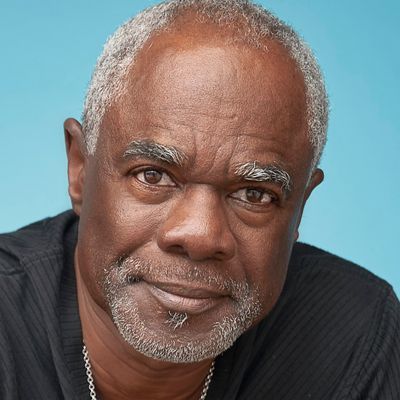
Legendary actor Glynn Turman joins the pod squad to reflect on his extraordinary career spanning theater, television, and film. Glynn shares personal stories about his friendship with Jay-Z and Beyoncé, his passion for horseback riding, and his dedication to mentoring young people through his Camp Giddy Up program... Read More
From the show: Beltline to Broadway
Guests
About
Legendary actor Glynn Turman joins the pod squad to reflect on his extraordinary career spanning theater, television, and film. Glynn shares personal stories about his friendship with Jay-Z and Beyoncé, his passion for horseback riding, and his dedication to mentoring young people through his Camp Giddy Up program. He also speaks candidly about the evolution of representation in entertainment and whether real progress has been made.
Glynn Turman is an Emmy-winning actor, director, writer, and producer with over 50 years in the industry. From groundbreaking television roles to critically acclaimed performances on stage and screen, he has become a beloved and respected figure in Hollywood. He has appeared in Fargo, Ma Rainey’s Black Bottom, and Queen Sugar, while also dedicating his time to advocating for Black storytelling and youth mentorship. A true Renaissance man, Turman’s legacy extends beyond acting—his love for horseback riding and his work with inner-city kids through Camp Giddy Up showcase his passion for uplifting and inspiring future generations.
Transcript
This transcript was automatically generated and might contain errors.
[0:09] Lauren Van Hemert: This is the Beltline to Broadway podcast.
[0:12] Lauren Van Hemert: I'm Lauren Van Hemert, your host, and on this episode, I'm chatting with Glynn Turman.
[0:30] Lauren Van Hemert: If you've watched television any time in the last 50 years, chances are you're familiar with Glynn Turman's work. From Peyton Place to A Different World to Fargo and The Wire, this award-winning actor has earned the respect of generations of fans.
[0:53] Lauren Van Hemert: But Turman tells me he prefers the stage to television or film, which makes sense since that is where his storied career began at the age of 12. And that is where our conversation begins.
[1:21] Lauren Van Hemert: How does that life event set the tone for the rest of your career?
[1:50] Glynn Turman: All of that, all that was sort of forged right there on that Broadway stage at the age of 12, looking up to all of those iconic figures that I was surrounded by.
[2:02] Glynn Turman: We just lost Sidney Poitier. What are your memories of him, of working with him, of that experience?
[2:11] Glynn Turman: Well, the memories of working with him were numerous, you know, depending on where we were and what was going on, you know. I remember when we were in Chicago previewing before we came into New York.
[2:29] Glynn Turman: And I remember the notices, the reviews being posted backstage on the bulletin board. And as we all came off the stage, everybody stopped and read the notices, which were rave reviews, you know.
[2:49] Glynn Turman: And Sidney Poitier and everybody was crowded around reading these reviews. And my mother, who was there with me, she operated, was there and she was reading the reviews as well.
[3:00] Glynn Turman: Sydney turned to everybody and then picked up my mother and spun her around and said, "We're a hit, we're a hit, we're a hit," and then sat her down gently.
[3:18] Glynn Turman: And then going to the hotel room where we were staying, and she got on the phone and started reliving that experience on a girl, and then he picked me up and he spun me around and I had never seen her act like such a little, you're like a teenager, you know.
[3:38] Glynn Turman: She was like so excited. And that memory stays with me that let me know how special this guy was, you know.
[3:49] Glynn Turman: It's funny that we come up with now. So was your mom always part of the dream? Did she always have the buy-in that this was your path, this was your journey of being on stage, a performance?
[4:02] Glynn Turman: I think she knew it, but she didn't enforce it on me. I left the play after a year, you know, of being with it on Broadway. It wasn't like she was a Broadway mom.
[4:15] Glynn Turman: But her friends were in, you know, a lot of her friends were in the business in one form or another, you know. It was that kind of setting in Greenwich Village in the 50s and 60s, you know.
[4:29] Glynn Turman: When I got to performing arts high school, that's where I did well for the first time in school and got great grades, and though she passed before I graduated, I had made a declaration and had told her that this was what I was going to pursue, you know, because I guess I can do this pretty good.
[4:55] Glynn Turman: They tell me I'm doing this pretty good, you know, and she says, "Yeah, I think that's a good idea."
[5:01] Lauren Van Hemert: You starred opposite Adrienne Warren and Tanya Pinkins in this amazing miniseries, Women of the Movement. As I was watching the piece, it is so relevant, it's so telling. It almost could be the headline of the Ahmad Aubrey case in a way.
[5:25] Glynn Turman: Absolutely. Does retelling this story, do the stakes feel higher after all we've been through as a country in the last couple of years?
[5:35] Glynn Turman: You know, when I started with Raising, Raising was a revolutionary piece. It was at a revolutionary time in our country, and so it was running the crest of a revolutionary time period in our America.
[6:00] Glynn Turman: The exact same thing is happening with this piece of Emmett Till, and you hit it on the nose when you said this is Aubrey's parallel. And here's the thing about it.
[6:15] Glynn Turman: Aubrey's mother, Mrs. Jones, she received some sort of justice for her son November 24th, I believe, is when the men were convicted.
[6:29] Glynn Turman: Do you know that November 24th? Mamie Till turned 100, and she had been seeking, she did not get the justice for her son, seeing the perpetrators being held accountable.
[6:49] Glynn Turman: But Mrs. Jones did get a chance to see some form of justice. That's what you call divine timing or something. I don't know what to call that.
[6:59] Glynn Turman: Divine intervention for sure. Adrienne Warren, she is magnificent. She's magnificent.
[7:08] Glynn Turman: But the cast was wonderful. I'm so proud of the cast, so honored to be a part of this wonderful cast.
[7:15] Glynn Turman: I was talking with Myra Sarah, and I said, you know, there was not a bit part cast in there. There was no bit part. Everybody was a major player and contributed majorly to the telling of this story.
[7:38] Glynn Turman: You know, it was just amazing.
[7:41] Lauren Van Hemert: Well, it's such a powerful piece, and I think there will be a lot of awards that come out of it and to add to your collection.
[7:50] Glynn Turman: Oh, thank you, thank you, really. One of the producers of Women of the Movement was Jay-Z. Tell me about your relationship with Jay-Z and Beyoncé, who put you to work.
[8:04] Glynn Turman: She gave you your first modeling gig.
[8:07] Glynn Turman: Yeah, she sure did. Well, they're basically family. We've all become very, very close and have shared many family occasions together, you know, and this particular time a while ago, we were all in a vacation setting when Beyoncé let it be known that she was not happy with the conclusion piece that needed to be fitted into her campaign for the Ivy Park rodeo collection.
[8:13] Glynn Turman: And I said, you know, there's anything I can do to help. And she said, "Well, I'm looking for a girl, I need a beautiful girl who can ride and who knows how to ride a horse, you know, but she's got to be beautiful as well, because she's got the model that's closed and this is the kind of everybody really needs somebody."
[9:00] Glynn Turman: I said, "Well, you know, I said my granddaughter who used to model and is a barrel racer, was a barrel racing when she was a youngster, you know, when they were circuit with me. And if you know, I'm sure she'd be thrilled to do it, you know."
[9:15] Glynn Turman: And so I went to my granddaughter and my granddaughter's teasing, so I don't know, I'm busy, I might be too busy to do this. Of course, yes, I'll do it, you know, I can't wait, you know, that kind of thing, really.
[9:35] Glynn Turman: And we were taking up on it. And next thing I knew I was one of the models, you know. I thought I was gonna just shovel a little horse poop, you know, and keep the area clean, but next thing I know there I was in this wonderful jumpsuit, which I got to keep.
[9:57] Glynn Turman: And so in a turn, oh my god, you know, I've been in this business a long time, and I've made some fans or two over the years. But God, you talk about instant fans.
[10:14] Glynn Turman: Oh man, my little social media thing that I had just blew up like, "What? Who are all these people?"
[10:24] Glynn Turman: So it was quite something, you know. You know, she's such a gracious young lady, she is, you know, a fantastic mother.
[10:32] Glynn Turman: Which that's what I like to get to see because I see Jay and her behind the scenes with the kids, you know, and how attentive they are, you know, and I know how difficult that is having to raise kids in the spotlight like myself.
[10:47] Glynn Turman: And they're just great with that. And the video was filmed at your ranch with your horses. So talk to me about your passion for horses, your passion for riding, cowboys. Where does that passion come from? The passion actually comes from DNA. My grandfather had land in Georgia and my daddy is from Georgia. As a kid, my father and I were not in each other's company. My mother and father were divorced when I was a youngster. We got to know each other later in life when we became rather close, my father and I, but that was later, you know, so I had no clue that my grandfather or even my father grew up on a farm, but I just always loved horses and the outdoors. So come to find out that it's really a DNA thing, but I pursued it and there I am doing what my granddaddy did.
How many horses do you have? We have three. We have a summer camp for kids that we've had for 27 years at the ranch in Camp Giddy Up, and we bring kids from mostly the inner city and give them an outdoor western experience. So we've done that for quite some time, and I used to work with an organization called Cowboys for Kids, with Ben Johnson and a bunch of the old cowboys from back in the day, you know.
[12:31] Lauren Van Hemert: I would imagine it's very rewarding having the kids come to camp on your ranch.
[12:37] Glynn Turman: Yeah, it's one of my proudest achievements, you know, it really is. You're working on a project now with George C. Wolfe, and you also worked with him on Ma Rainey's Black Bottom and worked with the late Chadwick Boseman. For so many of us, his death came as such a surprise; we didn't even know he was sick because he had continued working, continued giving back. What was it like working with him on that project, which would be his last project?
[13:22] Glynn Turman: Well, like you, none of us knew, you know, so the cast had no idea as well. It was just hard work; we were doing very hard work, long days, tough text, you know, and then the last few days, weeks, very physical. He never blinked, never coughed, never showed any signs of fatigue or anything. You know, he was like, "Let's do one more take." It was his idea to do another thing. He was just extraordinary, you know, he was just really extraordinary in terms of his quest for perfection and getting things right. He was an old school actor, you know; he was not a flash in the pan. He truly left such an indelible mark through the canon of work he left behind. It's amazing.
[14:32] Glynn Turman: And you also have such an amazing canon of work that spans stage, television, and film. Do you have a favorite medium?
[14:46] Glynn Turman: Of course, stage is my first love, you know. I've always had an affinity for the stage, you know. It's just where I started, I guess, and I'm such a ham; I really enjoy the immediate response of the audience that you can only get on stage, you know. I enjoy acting, period, so wherever I do it, it's cool, you know. But the stage is flying without a net, you know.
[15:22] Glynn Turman: And you mentioned, you know, we spoke about Raisin in the Sun being such a revolutionary piece for its time. In the last couple of years, we've seen this reckoning of white American theater. Do you think that in theater we are starting to see a shift in the types of stories we're gonna see on stage and who gets to tell those stories?
[15:55] Glynn Turman: I hope it's a continuing thing. Whenever there's a shift in our American experience that looks like progress, I'm always sort of holding my breath because at 75, I've been around the corner a couple of times and I've seen things look as though they were moving forward only to find out it was just a bump in the traffic jam of progress, you know what I mean? That lane didn't really clear up; it just bumped along, you know what I mean? So I don't get excited about these shifts and changes, but it's enough to keep you hopeful, and you gotta get your ride, your money's worth out of that hope, that anticipation of hope, you know. But is it some lasting change that's going on? That's to be seen.
[15:57] Glynn Turman: Well said. I do wonder, you know, when you look at the evolution of television, from a show like Peyton Place to a show like Women of the Movement, to me there's such a wide swing there. As far as working on television, talk to me about the evolution of the medium because I feel like television's small screen feels pretty progressive right now, even with things like Ma Rainey's Black Bottom; I mean, it's incredible.
[17:44] Glynn Turman: No, for ABC to have taken on Women of the Movement is a big kudos, you know, big kudos. But at the same time, is it really a major step? Because you have to remember I started with Peyton Place, and it took the first Black family on a network TV series, you know. Well, that was a hundred years ago. You mean it's taken a hundred years? Well, not quite a hundred; half a hundred indeed, Lauren. It was, you know, it's been fifty years since Peyton Place. I know that's hard to believe, but trust me, I was there.
[18:29] Glynn Turman: So it took 50 years for the network to get up the gumption to say, "Oh yeah, we're going to tell this story, and we're gonna tell it right, and we're gonna have Black people tell it and write it and tell the story." Well, I had that argument with Peyton Place 50 years ago when they asked me, you know, when I said sort of no, I won't—we won't say it that way—but Ruby Dee and Ossie Davis and all of us were in producer's offices protesting the way they had us talking and what they would have us say. I got to write for Peyton Place as a result of one of these confrontations. I wrote one of the episodes for our arc. So it's the same battle; it's the same argument, you know. Is that progress? Fifty years? Like I said, it's the bump in the road, you know. It's no freedom on the freeway.
[19:23] Glynn Turman: Your manager calls the secret of your longevity in this business "glennessence," which I love. What would you call the secret of your success?
[19:35] Glynn Turman: I don't know if there is a secret, you know. I just keep going, you know. One of my mottos is there is no finish line. So I don't think in terms of there's a line that I've got to cross that will equal either success or completion, you know, or winning or losing, you know. There's not that line. There's only forever, you know. I just try to be a part of forever.
[20:12] Glynn Turman: If you could go back and talk to twelve-year-old Glynn Turman making his Broadway debut in Raisin in the Sun, what would you tell him looking back now, knowing what you know?
[20:28] Glynn Turman: I really don't know. I would tell him just what I said: just enjoy the ride. Women of the Movement, which stars Turman along with Tony Award winners Adrian Warren and Tanya Pinkins, can be streamed on demand on ABC or Hulu. If you would like to check out Turman's video for Beyoncé's Ivy Park rodeo campaign, I'll put the link in the episode notes. If you like what you've heard today, please consider subscribing to this podcast, follow us on social media on Facebook or Instagram at Beltline to Broadway, or Twitter at Beltline to Be Way, or visit us online at www.beltlinetobroadway.org. Until next time, I'll see you at the theater.
© Broadway Podcast Network, All Rights Reserved