

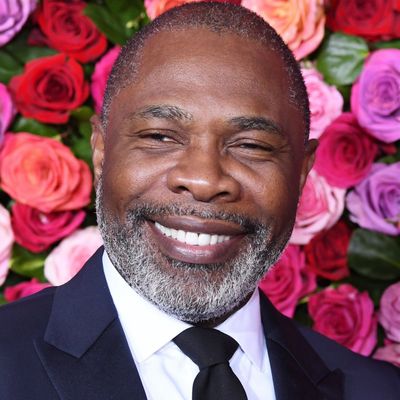
Michael Potts steps into The Batter’s Box to chat with host Al Malafronte and producer Alan Seales in Episode 16! Potts is an Obie Award Winner, and one of the most esteemed and versatile actors in the game... Read More
From the show: Break A Bat! where Baseball Meets Broadway
Guests
Featured Shows


About
Michael Potts steps into The Batter’s Box to chat with host Al Malafronte and producer Alan Seales in Episode 16! Potts is an Obie Award Winner, and one of the most esteemed and versatile actors in the game. He takes the boys through his processes and views towards acting that’ve produced some extremely memorable performances both on stage and on screen.
With an acting career that began via a secret application to the Yale School of Drama, Potts has since gone onto master authentic embodiment of characters that’ve spanned iconic performances such as Brother Mouzone in HBO's The Wire, Mafala Hatimbi in The Book of Mormon, and Principal Hawkins in The Prom.
With a Class Act reputation on stage and off, it only seems fitting to parallel his master of craft to that of Derek Jeter. With the legendary Yankee Captain’s upcoming induction to the Baseball Hall of Fame later this month, Potts offers a poignant perspective on what embodies greatness either in acting or athletics.
Connect with Michael Potts on Instagram: @mpotts62
Connect with Break a Bat! on Instagram: @break_a_bat_podcast
Transcript
This transcript was automatically generated and might contain errors.
[0:06] Al Malafronte: Hello and welcome to the Break a Bat Podcast, where baseball meets Broadway. An attempt to show that my two favorite mediums don't have to live in such separate worlds and maybe even break some stigmas. We're happy to have you with us. Now let's play ball.
[0:24] Al Malafronte: Welcome to Break a Bat, coming at you from the Broadway Podcast Network Studios. I'm your host, Al Malafronte. And alongside me is my producer Alan Seales.
[0:35] Alan Seales: That's when I say hi.
[0:36] Al Malafronte: Yeah, that's caught me with a mouthful of protein bar.
[0:42] Al Malafronte: I was gonna say, we're uh that but is that the way like you come back to the show? Everyone's been asking about where you've been after the Ashley Williams episode.
[0:50] Alan Seales: Um scheduling conflict, but right now I have a dinner conflict, which is why I'm eating during your intro.
[0:56] Al Malafronte: Wow, isn't that such a selfless guy, isn't he? He's a favorite among the batheads, so I'm happy that he's back with us today. And uh, you know, to be honest, uh, you know, we've got a great show in store for you today because we're joined in studio by a very special guest from the acting world.
[1:12] Al Malafronte: And I'd say from a baseball perspective, probably one of the more versatile players in the game. Think uh along the lines of Max Muncy on the Dodgers or even here in New York with Jeff McNeil. He could play a lot of different positions, and more importantly, he could play them all very well. You know, whether it's on TV uh with The Wire and True Detective, and then of course, here on Broadway uh with The Book of Mormon and The Prom.
[1:34] Al Malafronte: And now, Alan, I don't usually speak for you on this show, do I?
[1:39] Alan Seales: No, never.
[1:40] Al Malafronte: The latter, one of our favorites in recent years, would you say?
[1:44] Alan Seales: Oh, absolutely.
[1:45] Al Malafronte: Right? That's why I'm super excited about this one. So uh that being said, if you'll please turn your attention to home plate, just beyond the marquee. Now batting Michael Potts.
[1:56] Michael Potts: What's up, Mike?
[1:57] Al Malafronte: What's up?
[1:58] Michael Potts: I can do it.
[1:59] Al Malafronte: Good. I mean, I know it's been a few months since The Prom closed, but you know that you gotta love that level of theatricality when you come back on uh Eighth Avenue here.
[2:06] Michael Potts: Oh, yeah, that was pretty cool. That was pretty cool, way more than I expected.
[2:10] Al Malafronte: Yeah, over the top is one way to put it.
[2:12] Michael Potts: Well it's Broadway.
[2:13] Al Malafronte: That's right. It's Broadway. What you been up to, man?
[2:17] Michael Potts: Uh, recently. Uh well, you know, The Prom ended, and then uh I left a little early to go shoot a movie. Uh and then after that came back and I've been doing some guest star stuff on uh a couple of shows uh on the broadcast networks, and uh last week did uh 29-hour reading of another potential two Broadway musical, Car Wash.
[2:43] Michael Potts: Had that last week, and then I'll be working, you know, totally different change of pace with Randy Eckert on some, you know, another music theater piece uh that'll be coming up, I think, in the spring.
[2:57] Al Malafronte: So is it has it amazed you? You've been in the industry a long time. You mentioned that you do a reading for Car Wash, some of these movies that they've managed to, you know, turn into musicals over the years.
[3:06] Michael Potts: Well, here's the interesting thing. I I didn't know someone informed me a bit of trivia about Car Wash that it was originally written to be performed as a musical on stage. But it ended up I don't know if that's true or not, but this is what some uh a fellow actor told me in doing their research that originally it was supposed to be uh a musical, and it ended up being uh a film, movie musical.
[3:27] Michael Potts: Uh well, not even a movie musical, just uh a movie with music with this incredible soundtrack. So it's coming home, I guess.
[3:34] Al Malafronte: Yeah, and which uh part did you read for?
[3:37] Michael Potts: Uh well, in the movie, the the the role is Daddy Rich.
[3:41] Al Malafronte: That's the Richard Pryor role.
[3:42] Michael Potts: Oh, the funny one. So in this uh reading, he's been he's Reverend Rich as opposed to Daddy Rich.
[3:50] Michael Potts: Reverend Rich. I mean the role was is a minister.
[3:53] Al Malafronte: Right.
[3:54] Michael Potts: He was a bit of a minister in the movie. But I I I think to kind of update it, or to take some of the stereotypical spin off of it. We'll switch from Daddy.
[4:03] Al Malafronte: Yeah.
[4:04] Michael Potts: From Daddy Rich to uh to Reverend Rich.
[4:08] Al Malafronte: Oh, nice. And you mentioned some of the guest spots too. I know you're a New York guy. Do you like to escape to LA to do those shows that you're gonna do that?
[4:14] Michael Potts: Oh sure. I'll go anywhere that they uh, you know, it's a good role and they want to hire me and pay me and fly me out there, sure.
[4:20] Michael Potts: Yeah. Yeah, I I uh I mean New York is home, it's home base. I wouldn't want to, I'm not in LA. That's not my vibe.
[4:28] Michael Potts: Uh, but I do go out there and visit and I do enjoy the time that I'm out there as long as I know I'm coming back home.
[4:34] Al Malafronte: Is everyone a lot more low-key when you're shooting out there? I just get the vibe of LA.
[4:37] Michael Potts: Oh no, oh no, no, no. Big budget stuff is always tight.
[4:42] Al Malafronte: Or just the opposite. Are you kidding?
[4:43] Michael Potts: Wow. Oh, no, no, no, no. It's very, very tense.
[4:46] Michael Potts: Very, very tense because it is big budgets, lots of money uh at stake. And people I don't think people realize that it takes a bit of a small army to put together television shows and movies.
[4:59] Michael Potts: That's a lot of money. And um, and and time is money.
[5:04] Al Malafronte: Yeah.
[5:05] Michael Potts: Time is money in the in the in the television and movie industry. So it can be, it can get really, really tense sometimes.
[5:13] Al Malafronte: Did you know that going into it when you set out on this?
[5:16] Michael Potts: No, no, no.
[5:17] Michael Potts: No. All of it. I mean, who knows? When you fresh uh you you first come out of school, everything is OJT to a greater lesser extent, or unless you had done something professionally before you went to school, uh, you wouldn't know.
[5:31] Michael Potts: So you you're you're you're it it's baptism by fire almost.
[5:36] Al Malafronte: And you've had an incredible career, obviously. And you know, I I know that you're a graduate of the Yale School of Drama. So I mean you had ultimate training.
[5:44] Al Malafronte: Uh, you're viewed widely throughout the industry as you know being a consummate professional. You do things the right way on and off the stage, as far as we know.
[5:52] Michael Potts: Do you have some scandals that are coming up in a Tempest?
[5:55] Al Malafronte: No.
[5:56] Michael Potts: I wish that was that interesting. No.
[5:59] Al Malafronte: You know, it just I I want to get your take on this. Uh, you know, in a couple weeks, it's expected that Derek Jeter is going to be unanimously unanimously selected to enter the Hall of Fame.
[6:10] Al Malafronte: And you know, you've been in New York a long time, you've watched him play. Uh, you know, there's a dilemma right now among voters for the Hall of Fame and for fans.
[6:19] Al Malafronte: And I, you know, and I mentioned, you know, you being a consummate professional for this reason. Because Jeter always did it the right way, the captain uh sixth all-time and hit its five World Series rings, all you know, the whole nine yards.
[6:30] Al Malafronte: A lot of people want to give him his moment in the sun, kind of have him be the only one enter the Hall of Fame this year. Whereas, you know, you have other guys who are based on numbers equally qualified, like Clemens and Bonds, but they use steroids.
[6:43] Michael Potts: Uh, for someone who's always done things the right way, I just want to get your thoughts on, you know, do you it how how do you feel about this?
[6:51] Michael Potts: Well, it it's kind of apples and oranges in a way, uh, because in our business, uh, there are so many different ways to to, I guess, to become a star or to to get noticed in this business, and not everyone has the same level of craft or or skill or nearly as professional.
[7:10] Michael Potts: And I think you probably see them every day when you're watching television movies. So I've tried to do it out of this notion of the right way for me has simply been about respecting the integrity of my craft.
[7:27] Michael Potts: That's what's most important to me. Um basically subjugating my ego to the to the idea of the craft of telling the story.
[7:40] Michael Potts: Um, because I think it it honors the profession and you know, sort of the the people who taught me, taught me about the nobility of the profession, and I try to carry that on.
[7:50] Michael Potts: Excuse me, but I think, you know, other actors may have a different perspective on that. Now, as far as this baseball and uh uh Derek Jeter, uh a lot of these guys who have been inducted, I I think they have been with a little asterisk.
[8:04] Michael Potts: Yeah, there's just a cloud of suspicion. A little asterisk next to their name. Um there can be an argument that the steroids are simply enhancing what is already there naturally, you know, above average athleticism.
[8:19] Michael Potts: So it enhances that. But I think if we we want to believe in a meritocracy, right? We want to believe that um it's about hard work, it's about the natural gift and it's about the hard work, then yes, that should be rewarded.
[8:35] Michael Potts: I think there should they're um I would have some questions about people who got in enhanced, right? Who had a little enhancement. It would, it would, it I uh I wouldn't want to put them on the same level as someone who actually did it, was an all-star, an outstanding player, legendary player, simply on their own merit, on their own hard work and their own skill.
[9:01] Al Malafronte: And you talk about respecting your craft. Growing up, could you have ever have imagined, you know, you grew you grew up in Brooklyn?
[9:09] Michael Potts: No, I actually grew up in South Carolina.
[9:10] Al Malafronte: I grew up in South Carolina, obviously. Born in Brooklyn.
[9:15] Michael Potts: Born in Brooklyn, grew up in South Carolina.
[9:17] Al Malafronte: Yeah. To make it all the way to the Yale School of Drama. First of all, what you know, growing up so far from here, um, what spurred your interest in theater?
[9:26] Michael Potts: Well, see, the uh you'll find, just as in music, with a lot of uh African American singers, uh, the church is the center of most communities, uh, certainly smaller communities.
[9:38] Michael Potts: And the church is a performance space. If you've ever been into an African any church, Catholic church as well. I mean, the costumes, the liturgy, all of that, the the incense.
[9:50] Michael Potts: It's the ritual of of of religion. So you grew up you grow up in church, and so I began um doing the little pageants that we would have. On Easter, we would have pageants, on Christmas, we would have pageants about, and we would act out, you know, the crucifixion, we would act out the birth of of Christ and things like that.
[10:11] Michael Potts: So there was always performing. And uh I sang in the choir and the in the various choirs, and so performance had always been a part of it.
[10:21] Michael Potts: Um getting to Yale and getting to New York, uh, that's all by accident. It wasn't anything that I was I didn't have a plan for it.
[10:30] Michael Potts: And honestly, when I started out, I thought I was gonna be a cardiologist. I mean, that was the goal, and boy, did that make my mom very happy until it didn't.
[10:40] Michael Potts: Until I decided that that wasn't what I was going to do. So you know, I sort of gotten the a little bit of the bug in about seventh grade.
[10:52] Michael Potts: And uh sort of fumbled my way just back and forth, never really took it seriously. Because as I was growing up, there weren't a whole lot of African American men that I saw on television in the movies.
[11:04] Michael Potts: We had Sidney Poitier. I think we may have had Ivan Dixon. So it wasn't something because it wasn't seen as a career in my family, that's not a job, it's not something you do.
[11:18] Michael Potts: So you never took it seriously in that way.
[11:20] Al Malafronte: How did you convince them?
[11:21] Michael Potts: Was it with your talent?
[11:23] Al Malafronte: Convince my parents?
[11:24] Michael Potts: Yeah, to let you go out and pursue it, or you just kind of said, screw it, I'm doing it anyway.
[11:28] Michael Potts: Here's the thing. Here's the thing. I secretly applied to Yale.
[11:31] Michael Potts: I did not tell my family. Uh after high school, I had wanted to go into acting school, and uh my mom staged an intervention one summer to dissuade me.
[11:43] Al Malafronte: Do you like get home from school one day and all of a sudden there's like everyone in the room?
[11:47] Michael Potts: That's exactly what it was.
[11:48] Michael Potts: Wow. My mom dishing out food to a dining room full of people, including a neighbor, uh, who I didn't understand why she was there. She wasn't related.
[11:59] Michael Potts: But it was all to dissuade me from this frivolous pursuit of show business. And so I did. I put it away for a long time. I put it away and decided to try and went to undergrad and decided I would try to do the pre-med thing, and then moved from that to English, and was slowly, slowly kind of being drawn back and into the performing arts. And so eventually I just decided because of a professor that I had, an undergrad, who had taught at Yale. And brought it up to me. He said, "You want to go to Yale?" And he kept talking about it. I said, "I don't know anything about Yale. I don't know what you're talking about." So, you know, you do a little research. But it still wasn't something that I saw myself doing.
And then eventually I did, and you know, going back, coming back to the whole notion of Broadway again. It was the year that Fences was on Broadway. And I remember watching the Tony Awards that year, and it was James Earl Jones and Courtney Vance doing the scene from Fences. And I remember watching that and being enthralled and went, okay, I recognize these people. These people sound like me, they look like me. I understand the situation. I can do that. And so I decided to find out where Courtney Vance had gone to school, so I could do it too. And I found out it was Yale. And a year later, I sort of secretly applied without telling anyone. And figured it was in the baseball, it was a Hail Mary.
It was a Hail Mary. It's the only place I applied to. And I figured if I got in, I was meant, it was one of those moments. If I get in, I meant to do this. If I don't get in, then I'm meant to do something else. So that's how that happened.
[13:46] Al Malafronte: It's amazing. Yeah, you kind of let the natural progression of the universe take its course. It sounds like your parents obviously had their mixed feelings, but when you tell them that you get in, at that point are they just so proud they can't even reprimand?
[14:01] Michael Potts: No. Oh no, not as much. I think it's my little sister. She was blown away by it. But my mom was like, "Oh, what are you gonna do about your job?" Because I think I was working at the city at that point. She was not, she wasn't having it. Wow. It took her a while to come around. Honestly, it took her quite a while. Nearly the entire time I was at Yale. It took nearly that entire time for her to come around to the notion of, okay, this is what you want to do. I guess I better get behind you. But no, she did. She was not.
[14:42] Al Malafronte: I get it. I get it. You've played some badass roles on television. These days, do most people recognize you more for what you've done on screen or on stage?
[14:52] Michael Potts: On screen. And it's starting to pick up. Last few years, it has become more about stage. If I go and see a show nowadays, there'll be people in the audience who will recognize me from something they had seen me in. A play they had seen me in here in New York or on Broadway, what have you. But still, mostly on the outside, it's all about, it's still about The Wire to these days. I mean, I'm grateful for it. But it is, it's mostly still about The Wire.
[15:23] Al Malafronte: That's actually one of my buddy Gene. That's his favorite show ever, I'm pretty sure.
[15:29] Michael Potts: I hear that a lot from a lot of people. Favorite show ever. It's interesting, you know. You play a character like that, you know, like Brother Mouzone on the outside. I like to think of this as like a silent assassin in baseball. Like Bernie Williams was the center fielder for the Yankees, jazz musician off the field, very quiet, very soft-spoken. His nickname when he came up was Bambi. So meanwhile, this guy could hit 450-foot home runs and make the All-Star team every year. Brother Mouzone on the outside was like so still and so composed, polite, yet he projects an intensity from the inside that feels dangerous. How did you do that?
[16:10] Michael Potts: You know, you get the script. And I think I came upon the character more about little stage directions that the writers put into it. More so than anything I could come. It's just they had a way of saying, you know, he'd say a line, and then you'd have he looks askance, or he looks off. So they would describe in a way what his reaction to a certain thing would be. And I started getting a sense of the character simply from that, and just the language they would use. Everything you would notice, they would write him arias and the syntax he would use. So I had that. And then I also had my memories of, you know, old black and whites. When you watch these old shows and news broadcasts and interviews.
I've heard Malcolm X speak, so you knew what that is. You've heard the M from Minister Louis Farrakhan, you've heard him speak. So you start taking that into account, and also where my parents lived in Prospect Heights in Brooklyn, and then I would come into Bed-Stuy to pick up the train. And there would usually be, you know, Nation of Islam brothers out there selling out the Final Call, I think is the name of the paper. And so you'd hear them, you'd hear how they speak, you know, how they spoke. So I think that was all in the machine there, and it kind of made sense and fell together with the character.
[17:48] Al Malafronte: When you're in the midst of playing a role like that that's so intense, do you find that your personality changes at all off-screen?
[17:56] Michael Potts: No, no, no. You know, it's a great thing, you know, not to name drop, but you know, like Diane Wiest would used to say, you know, you wipe your feet. Which when you leave the theater, you wipe your feet. You leave that there. That's what you did there. And you go out, you wipe your feet, and you become who you are. So no, I didn't feel that I was more intense. My family would tell you, I am so far removed in their minds from that character. I had a cousin who would go, "That's not my cousin." Because it did frighten them, because they didn't know me that way. But in my mind, I'm playing, this is the character. My job, my craft is to embody as authentically as I can that particular character. That's who he was. That's where he lived. That's where Brother Mouzone lived. That's not where Michael lives. So I was able to leave that. And I'm like, okay, done. Yeah, done, okay. That's that guy, and okay, cut, wrap. All right, cool. I'm back to me.
[18:58] Al Malafronte: Let me ask you the opposite of that. Do when you're having a bad day, or do you take anything from the outside onto stage with you or into the sound stage?
[19:08] Michael Potts: I would always do that. You know, because we're supposed to be empathetic beings. And if we're open to it, all of that's gonna resonate. We're bringing this the cumulative of our experience to what we're doing. And so if something affects us in the day, yeah, it's gonna have a resonance in how we play. That's why if you go and see a Broadway show every night, there's something a little different in it, you know, over the course of the performance of a week. If you watch it eight times, you're going to find eight new things that an actor has done. And it could be because of what happened that particular day. It all resonates because we're using, we're using us, we're using all of us. So it will be the way you keep the consistency of the performance, is just how I said it's about the craft.
You still have to know what story you're telling, what your objectives are, what your actions are. But yes, I have had days I've walked on stage because you know, something has happened just the moment before, or something had happened earlier in the day, even earlier in the week that I had, you know, that troubles me. But I still have to go and perform, and so it will show up. But hopefully it will, but you must not let it spoil the performance, spoil the performance you crafted.
[20:30] Al Malafronte: I was gonna say to be able to separate that. That's just the mark of a consummate pro, like as I'm, you know, that's what you were taught.
[20:38] Michael Potts: I mean, that's the notion of technique, that's the notion of craft. It will be in there, it will be in. I think television and movies probably appreciate it more because you're gonna do several takes, and people want whatever is in there to come out, they want to capture something. You know, they want to capture lightning in a bottle. And so if you do it 15 times, and that thing that bugs you suddenly comes out in that particular line, they might go, "Oh, that's amazing. That's the take we want," and they'll take that because they want a mix of things that they can choose from. They want it as raw and as real as possible.
[21:13] Al Malafronte: Now, when you've done Broadway and you're in rehearsals and readings, as far as your technique, obviously. Right. But you know, when you're, how do you put the Michael Potts spin on your characters? Like, for example, let's take what Principal Hawkins in The Prom. And first of all, I, you know, kind of on the opposite side of the ball is Brother Mouzone in many ways.
[21:33] Michael Potts: Very much, yeah. A lot of our listeners are big fans of The Prom. So, how was Principal Hawkins originally written? And then how did you put your own spin on it?
[21:44] Michael Potts: The thing I got Principal Hawkins as the way the director and I, Casey Nicolaw, and the creatives, Chad and Matthew. They wanted him to be outside of the world of Broadway. They wanted everyone in Indiana to be sort of middle America ordinary people who are just been invaded by these over-the-top Broadway personalities. And so it's easy because they're bringing one thing to the table. They're these over-the-top performers, and I'm just this everyday guy in this town in Indiana who's just trying to teach his kids and keep them on the straight and narrow, and trying to remind everyone of their better angels and let Emma go to the prom with her girlfriend. What is that? How does that harm you in any way?
We're all human beings, we're all trying to keep the peace. And so you look at him as sort of trying to be, I don't think you can't do that. You can't go and I don't think to myself, "Oh, I've decided I'm the moral compass of the..." No, it is just, "Guys, take it easy. This is nothing. This is life. Let's just do what we need to do. This is not a big deal." And so that allowed me to make him sort of an easygoing, normal sort of guy. And as far as Michael Potts, I mean, I tend to be a more steady, easygoing type of person. I mean, I've got a nutty side. I can be, I like to laugh. And things like, and so I can be a little bit of a card sometimes, but most times it's about being centered and being still and being quiet and being focused.
So that's probably what I brought to Principal Hawkins. That with all of this other stuff going on around him, you know, the shouting from the PTA and the parents who are not cool with this, and then the Broadway personalities, their big personalities, it's like you have to center yourself to try to make sense of the situation and to keep it focused on what was important and what was important was Emma.
[24:19] Michael Potts: Keep the story focused on Emma and her right to be who she is.
[24:25] Al Malafronte: That being said, since it sounds like you know, you kind of talk about you know being a pretty easygoing person yourself, when you had to work alongside the South Park guys, Matt and Trey, when you're doing Book of Mormon, completely different ball game, huh?
[24:37] Michael Potts: Yeah, but that plays into my nutty side.
[24:39] Al Malafronte: Oh, yeah.
[24:40] Michael Potts: That plays into the kind of mischievous side of it.
[24:43] Al Malafronte: No, no.
[24:44] Michael Potts: When I first, I howled, honestly, when I first, and they were very apologetic. They worried that it was too much and people would be offended. And I remember them handing it to me and saying, we completely understand. It's not for everybody. And if you don't want it, it's, you know, just let us know and it'll be okay. And I remember reading the song Hasidiga, and I just, I howled. I couldn't. I like said, you're gonna say this on Broadway? They went, yeah. And when I said, if you have the balls to write it, I guess I better grow the balls to do it. It became that kind of challenge. And then when we did it, just the response to it was mind-blowing. It was pretty extraordinary. I've never had that experience before.
[25:28] Al Malafronte: Did you see Book of Mormon, Alan?
[25:30] Alan Seales: Oh yeah, several times.
[25:32] Al Malafronte: To this day, arguably one of the three or four funniest shows of all time.
[25:37] Michael Potts: Has to be, right?
[25:37] Al Malafronte: Well, I enjoy Book of Mormon because they have no shame.
[25:42] Michael Potts: None.
[25:43] Al Malafronte: And it's not singling out a single gender or race or anything. It's just everything's messed up. Let's just have a laugh.
[25:52] Michael Potts: And smart. I mean, it's really, really clever because honestly, when you look at it deeply, they're just making fun of us. They're making fun of themselves and they're making fun of all of us by making it seem as though they're making fun of Mormons in Africa. But no, no, no. They're just doing this with a mirror and being shameless about it. You know, no, it was an extraordinary experience. And now you were in the OBC. Did you ever get any pushback from the Scientology Church a few blocks away?
[26:22] Al Malafronte: Uh no. They were having their own protests about something else down there. I think a few, one or two people from the Mormon church may have said, but for the most part, I mean, I knew it. I said the Mormon church, this is gonna make them mainstream. They're gonna eat this up. And they issued this wonderful statement about, you know, how the Book of Mormon will entertain you for a night, but the Church of Jesus Christ will, you know, will save you for a lifetime, something to that effect. And then they went and put a giant billboard in Times Square promoting the Mormon church. They were very, very smart. We done, and we got a lot of ex-Mormons who kept coming to the church. Sorry, kept coming to the show.
Um so yeah, we thought we would have more trouble. We had, you know, security gates and everything at the door because we just knew we'd get pelted. I really knew, thought I would after Hasadiga. People would really come for. No, no, I think we got two letters that concerned us. So you concerned security a bit, but that was it. Everybody loved it. People got it. They got it.
[27:35] Al Malafronte: Yeah, and it's still running. Isn't that amazing?
[27:36] Michael Potts: Still running.
[27:37] Al Malafronte: Who knew?
[27:38] Michael Potts: Who knew? I, you know, I laugh. I saw, you know, I said, I said, this will last seven months. Well, we'll go seven months out of this. That's about it. Who knew?
[27:54] Michael Potts: So let me ask you this. Now, you know, I guess to that point, that was your first lead role in a Tony winner to that point. I want to ask you something that's a bit of a sore subject among our fan base here. Do you think The Prom deserved Best Musical going up against Hadestown? Both great shows, but Hadestown got a lot of love at the Tonys this year.
[30:08] Al Malafronte: Or was it like working with Beth Leavel? Because I thought that that was one of the best dynamics I've ever seen on stage between the two of you.
[30:08] Michael Potts: Um, of course I'm biased. Of course I think The Prom should have. I thought the story deserved more love from the Tonys than it got. Didn't get any, and it should have gotten far more love for it. Hadestown is a wonderful show. And Hadestown, I get the whole Hadestown thing. It's a lot of eye candy with it. It is a Broadway show. You know, there's a lot more, and when I'm what I mean by eye candy is spectacle. There was a lot more spectacle on stage with Hadestown. And here we were, we were something sort of old-fashioned, sort of throwback. Wasn't a ton of glitz or projections or things, just easy, basic sense. And the story was the thing that was primary, that was put forward more so than all of the other elements that go into making a Broadway show.
Hadestown had all the other elements. I mean, it's a story, you know, Morpheus is, you've heard that that story's been done before. But it was the lights and the sound and the costuming and all of that. And so I get it. I get it. I mean, very, very similar in a way to sort of like Moulin Rouge. Again, it's a highly entertaining show. It's very, very sexy. And, you know, it's what people were into. It's the thing that turned them on the most. But The Prom had its very, very dedicated and rabid fan base. It just wasn't enough to keep it running. So yeah, unbiased. The Prom should have won.
[30:15] Michael Potts: Just adore, love Beth Leavel. Absolutely adore her. Wasn't expecting that. I'd never worked with her before, and didn't really know her work up to that point. And it was an odd thing because this was a show that they had been working on for years prior to it coming to Broadway. These were roles shaped around them. I was the newcomer. I came in in the last year when they were reworking the role. And so there was already this family and this core of the Broadway people. And so I had to find how do I find my way into that? Will this work? And we did. I think we hit it off, and because she was so generous as a performer as well, she was present, which is, you know, that's what you live for. Certainly what I live for as an actor is that the people you're actually speaking to on stage are actually listening to you and taking it in and responding in kind, and she did that.
You know, and it goes without saying, she's extraordinary to watch. You look at it going, you've got to be kidding. So a lot of those things in that scene where I'm clapping and applauding like mad after she does that lady's improving, that's just me, just in awe. Like, you really are, you're the real deal. You're pretty extraordinary. You are the real deal. I mean, she's a beautiful woman, beautiful woman, beautiful human being. It was easy, it really was.
[31:45] Al Malafronte: Alan, you like that's one of your favorite numbers in the show too, if I recall.
[31:49] Alan Seales: Oh gosh, yeah.
[31:50] Al Malafronte: Did you see closing? Were you there for closing?
[31:52] Alan Seales: No, no, I'm still shooting.
[31:55] Alan Seales: I was there for the final performance. And it, I mean, there are clips of it all over the internet, which I'm sure you saw, but it's like it was like a five-minute showstopping applause.
[32:05] Michael Potts: Oh, yeah.
[32:06] Alan Seales: Just went on forever.
[32:09] Michael Potts: I could watch that number. Like that there's something to your point of being there, being present in the moment. She just delivered that as if it was the first time she was doing it every single night. Every single night. And it was something different. It was always different. It was so good.
[32:25] Michael Potts: No, she's honestly, she's the real deal. There's no question about that. I'm so excited to see her in Devil Wears Prada. Yeah, I'd work with Beth Leavel again and again and again and again in a heartbeat. In a heartbeat. She's top of my list.
[32:44] Al Malafronte: You talk about connection to the audience, and of course, you sang the song We Look to You, which is really like a love letter to theater. That must have been pretty cool for you.
[32:52] Michael Potts: Yeah, it was, it's a very, very sweet song. In my head, you know, and I guess people might fault me for not playing to the audience enough that I should play to the house more. But in my mind, that was a love letter. That was all about Didi for me. And so that's about being in the moment and playing the character for me. I was like, this is my love song to you, because I'm falling in love, or I've fallen in love with you. And if I do that, my belief is I do that well and I show that, then it will resonate. The audience will get it. I mean, I know certainly looking at it on the page what the intention of it was. I know I am singing about the relationship between the audience and a great show and a great story. But as the performer had to be for me about Principal Hawkins and Dee Dee.
[33:46] Michael Potts: I'm curious to get your take on this about maybe I guess the way that they're teaching certain performers, you know, coming up through the pike. Have you seen a big change in technique over the years that, you know, has either, you know, in some ways pleased you, in some ways, you know, upset you a bit being the pro you are?
[34:03] Michael Potts: Yeah. I'm not gonna fault teachers. I don't know if it's the teacher, and I don't want to bash millennials or students, students coming up. I've done my fair share of teaching. And the last bit of teaching, I just felt some of the young actors were more focused on what their brand was, and less so on craft. In my mind that there was a lack of curiosity about what you were doing, about what they were doing and not asking enough questions. There was a thing, and I'm not gonna bash one technique over the other, but there was this notion, I don't know if this is really a technique, but this notion of if you just say the lines, the audience will get the character. That basically characters is created in the mind of the audience, that the actor doesn't really create anything.
He or she just says the lines and the audience creates. And I have a huge problem with that, because in my mind, then I don't need an actor, I can do that myself by reading a novel or a book. I don't have to pay whatever Broadway prices are to see an actor stand there and just say the words and not imbue them with anything more, with a greater understanding or depth of what they're saying without having specific objectives or an action. You just don't stand there. And I've been finding that or seeing that happening more and more and more. I think with some, not all, but with far too many young actors, this notion that I'm, in fact, I've had two students in the past tell me that same thing.
[35:57] Michael Potts: You didn't get it.
[35:58] Al Malafronte: I thought if I just said it, you'd get it. So what the Alan, you're you have an acting background. Is it like this when you were coming through the system?
[36:05] Michael Potts: No, no. I disagree. I mean, I'm in your camp that I think part of what the actor's job is to do is to bring the intent, to bring the backstory. And I think some of my favorite conversations I've had are with people in ensembles who have created this entire world for this unnamed, absolutely unspoken character of why they're there, what they're doing, why they're selling flowers, why they're talking to that person. Like that's part of the fun for doing eight times a week. They keep it fun, but also for the audience. Like, who is this person? What did they do before they just walked on stage?
[36:41] Al Malafronte: Absolutely.
[36:43] Michael Potts: What did they do before they just walked on stage? Absolutely. Yeah, otherwise it's just this stamp. Absolutely. And I mean, and it's like, you know, it requires work. It requires work, it requires discipline. And I don't know, we can blame everything on social media. You can become an insta-star.
[37:00] Al Malafronte: Yeah.
[37:01] Michael Potts: You know, you get enough followers or what have you. Um, we have examples of it. So, uh, I don't know. Uh, there is the lure. People want to be stars, they want to be famous, they want to be seen, but shortcuts. People, uh, even former students who have told me, you know, said I keep hoping you'll say something that'll just make it happen, that I'll just get it and I'll know what to do. And I, um, I'm always having to remind that you, you do realize this career that I have I didn't have it right out of school. What you're seeing now has been 20, you know, some odd years, 20 plus years in the making. So I don't know why you think that it's going to happen for you in a year, six months. Sometimes they're a little deaf to that part. Um, you know, it's hard. I guess you don't want to hear that it's going to be tough, that it may not happen right away, and that you may have to work very, very hard and sacrifice a great deal to kind of get where you'd like to be.
[38:11] Al Malafronte: You've accomplished so many big things. Is there one passion project, or is there something that you've yet to do that would just be a dream come true for you and be like, hey, I did it?
[38:24] Michael Potts: No, no, no. I'm because I've been asked this before a number of times, and this is the way I see it. If I get to do that thing, what then? Does that mean I'm done? Well, no, not even in the sense that you don’t’re done. There's so many other great. I've been fortunate enough, I've gotten to play some great, great roles. Uh, and be a part of some great projects. And I, which tells me that there are more great roles out there, more great projects yet to come. And so I try to keep myself open. I just want to do the next great thing. I want to have the next great experience because this is, you know, it's my bliss is the thing I want to do, so I'm just looking for the next great one. Whenever I've asked this question, I was asked that question in grad school.
I remember saying, you know, in all my self-regard, I said, you know what, I want to play Oedipus, and I want to play all three. I don't want to just do Rex and I want to do all three of them. That would do it for me. And I got out of school and within five years I had done all three. So it's like, okay, now, now what?
[39:34] Al Malafronte: Yeah.
[39:34] Michael Potts: So I guess I'm done. I've peaked. And it's, uh, it's not that. It's not that. Uh, um, I'm still, I'm still very, very hungry. You know, that was that, and I'm grateful for it. But it's always like, what's what next? What's what's going to turn me on next? What's going to excite me? What's the what's the next big challenge for me? So no, so I don't have any one. It's just what's the next, what's the next mountain to climb? How high can I get?
[40:11] Al Malafronte: Yeah, that's true. You know, what am I gonna see when I get up here? I uh first of all, we can't wait to see what that is. Before that, Michael, I talked earlier and we've talked about what you've done that's so great and how you got there, but I've got something really challenging in store for you.
[40:26] Michael Potts: Oh no, okay.
[40:27] Al Malafronte: I want you to visualize this. It's the ninth inning. There's two outs. You've got to bring home the winning runs here. All right. We're gonna play a little game called Fastball Derby.
[40:39] Michael Potts: Oh, okay.
[40:40] Al Malafronte: Gotta help me. So fastball derby. Think of it like this. Hey, Angie got through it. Former castmate. She got through one for you. Angie Sharp! She knows this stuff. It's hey, they just think of it like this. You know, all the pressures on the line. I ask you a question. You say the first thing that comes to your mind. Give us some more insight into Michael Potts, all right? Let's see.
[41:06] Al Malafronte: Most challenging role you've ever had to play.
[41:12] Michael Potts: Oh, oh. Uh, uh. The priest in Mother Courage.
[41:21] Al Malafronte: If you were a baseball player, which position would you be in? Why?
[41:25] Michael Potts: Uh left field. Uh because very little comes out that way. Safest position for me.
[41:40] Al Malafronte: Favorite New York City meal.
[41:43] Michael Potts: Oh. Oh, uh, uh. Oh, I I have a lot of them. I would say uh Del Posto, the hundred layer lasagna from Del Posto.
[41:57] Al Malafronte: That's it.
[41:58] Michael Potts: That sounds phenomenal.
[41:59] Al Malafronte: Yeah, it is pretty phenomenal.
[42:02] Michael Potts: Most fun actor or actress you've ever gotten to work with.
[42:06] Al Malafronte: Most fun.
[42:08] Michael Potts: Ooh. Um, um actor or actress.
[42:13] Michael Potts: Josh Gann. He's absolutely nuts. He keeps you laughing on stage or off. You have no idea where it's coming from, when it's coming, but he always gets you.
[42:25] Al Malafronte: Yeah.
[42:25] Michael Potts: Probably not surprised. It's nice to see that he's had this big film now, too.
[42:29] Al Malafronte: Not surprised.
[42:30] Michael Potts: Not surprised.
[42:32] Al Malafronte: Most embarrassing on stage moment.
[42:40] Michael Potts: Uh well, it happens. It's happened a couple of times, but I would say it happened in The Prom where I said half my line. And I couldn't remember the rest. No, no. It was I'm supposed to be looking at the computer. And we're supposed I'm supposed to tell them how many views Emma's video has gotten. And it's supposed to be six million. And so I went, six.
[43:13] Al Malafronte: Christopher Sieber had to whisper to me, million.
[43:21] Michael Potts: I couldn't remember six million. I just got out six. That happens. That happens every now and then. You you say one line and you can't remember the rest of it. Gone. I got nothing. Help, help.
[43:39] Al Malafronte: You probably played it off to the audience just by that's awesome.
[43:46] Michael Potts: Favorite late night snack. Two show day at the Long Acre. You get home, it's after midnight. What's Michael Potts grab before he hits the couch?
[43:53] Michael Potts: Wine.
[43:54] Al Malafronte: Red or white.
[43:55] Michael Potts: Red.
[43:55] Al Malafronte: All right, there we go.
[44:00] Michael Potts: Proudest moment of your career.
[44:03] Al Malafronte: Oh.
[44:04] Michael Potts: Um.
[44:08] Michael Potts: Uh when my mom and the whole family came up to Yale in my third year and saw my last show. And she got it.
[44:19] Al Malafronte: That moment when she finally got it.
[44:22] Michael Potts: How does she feel now?
[44:24] Al Malafronte: Well, well, she passed five years ago.
[44:27] Michael Potts: Very sorry.
[44:27] Michael Potts: But she was a very, very proud theater mom by the end of it. She she was gung-ho for things I thought she would never, I really thought this very religious woman. I could not bring her to The Book of Mormon. And she came and she had the best time. So yeah, I think that was it.
[44:49] Al Malafronte: Lastly, what's the best piece of advice anyone ever gave you, and what was it?
[45:03] Michael Potts: Um I guess what would would be Earl Gister, acting teacher. Um which I try to remember a lot. And he would say, if they don't get it, you know, he had tracheotomy. Says if they don't get them and they don't get you, they don't appreciate it, fuck them.
[45:36] Al Malafronte: And that'll be our first exploited rated episode of Break A Bat.
[45:41] Michael Potts: I love it.
[45:43] Al Malafronte: That's right, though. You gotta stay true to yourself. Not enough people do. And I think that, and listen, I'm a millennial technically, but with this age of social media and whatnot, not enough people are really are really, you know, being pure to their truths. And I think that everything you talked about today, you know, it really hits home.
[46:00] Michael Potts: I hope so.
[46:01] Al Malafronte: Well, thank you.
[46:03] Michael Potts: Thank you.
[46:04] Al Malafronte: That was awesome, wasn't it, Alan?
[46:05] Alan Seales: Totally.
[46:06] Al Malafronte: I really enjoyed that one.
[46:08] Alan Seales: Oh, oh, good.
[46:09] Al Malafronte: Well, we can't wait to.
[46:10] Alan Seales: I never know. It's just like, okay.
[46:15] Al Malafronte: You said you wanted to interview me. Good good luck. Hope you got something you can use.
[46:21] Alan Seales: Plenty and then some.
[46:23] Al Malafronte: Now, Michael, where can everyone find you on social media if they want to keep abreast of what you're doing?
[46:28] Michael Potts: Oh, well, they probably it'll bore them to tears because I'm really terrible at it. You can find me uh on Instagram, MPOT62.
[46:37] Al Malafronte: Awesome.
[46:38] Michael Potts: Or Twitter, uh MichaelPotts NYC.
[46:41] Al Malafronte: Wonderful. Don't look for a lot of posting.
[46:44] Michael Potts: No. I'm not, I'm just not that interesting.
[46:50] Al Malafronte: Well, I'm sure our audience today certainly found uh plenty of interesting things and then some. And uh listen, it's it's been such an honor to sit and talk with you today. I can't thank you.
[46:58] Michael Potts: No, thank you.
[46:59] Al Malafronte: Thank you.
[47:01] Michael Potts: I appreciate it.
[47:02] Al Malafronte: Fantastic. Well, that'll close out the ball game here on Break A Bat with my producer Alan Seales. Signing off.
[47:08] Alan Seales: Signing off.
[47:10] Al Malafronte: We'll see you next time, folks.
[47:14] Al Malafronte: Thanks for listening to Break A Bat. This is produced by the fine folks at the Broadway Podcast Network. Visit and subscribe at BPN.fm slash break a bat. You can find me online at break underscore A underscore bat underscore podcasts, and you can also find the Broadway Podcast Network on Instagram at Broadway Podcast Network. It's been so great having you here with us today, and we'll see you next time.
© Broadway Podcast Network, All Rights Reserved