

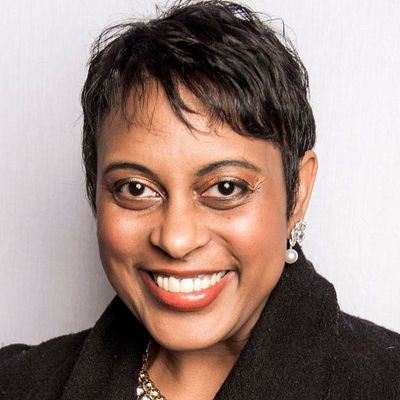
In this episode we're joined by Schele Williams, director of the upcoming revival of AIDA. We explore looking at the world and theater through a post-COVID lens, talk about her children’s book Your Legacy, in which she looks at slavery through a new lens - and as always we get some great audition advice... Read More
From the show: Breaking Broadway with Kerry Butler
Guests
Featured Shows

About
In this episode we're joined by Schele Williams, director of the upcoming revival of AIDA. We explore looking at the world and theater through a post-COVID lens, talk about her children’s book Your Legacy, in which she looks at slavery through a new lens - and as always we get some great audition advice.
Follow me on Instagram @kerrybutler1. For coaching and teaching, visit my website at www.kerrybutlercoach.com or email me at kerrybutlercoach@gmail.com.
Learn more about Schele Williams on Instagram:
Transcript
This transcript was automatically generated and might contain errors.
[0:04] Kerry Butler: Once I played a penny who just couldn't stop the beat. Yes, with rather skits on her feet. Although just recently to see a real quorum.
[0:27] Kerry Butler: Musical version of Tina. Tina. Now come with me, Emma.
[0:39] Kerry Butler: Hi. I am your host, Miss Kerry Butler. Together, you and I are breaking Broadway.
[0:53] Kerry Butler: Hi everyone. Welcome back to Breaking Broadway. I am super excited for our next guest in our director series. We have Schele Williams, who is one of the hottest directors around right now. So much buzz around Schele. She has so many upcoming shows: The Notebook, Mandela the Musical, debuting in London, revivals of The Wiz and Aida, and Hidden Figures, the Musical. When I saw that movie, I was like, that would make a great musical. And I recently worked with her and had such an amazing time. While we were working together, I was writing in my script, not notes about my character, but things that Schele was saying, like, oh my gosh, I've never heard this before. Just writing so many notes about just her words of wisdom about the industry and about the process.
And also we're going to talk about a new book that she has just written that I absolutely love, called Your Legacy. So we're gonna cover all this. Welcome to the show, Schele. Thank you so much for being with us.
[1:56] Schele Williams: Hi, Kerry. It's awesome to be in conversation with you.
[2:00] Kerry Butler: Okay. Well, I'm so excited. So we usually start our show just talking about your journey to where you are now. So you started out as a performer, and oh, but first tell me about your childhood. Like where did you grow up? Where did you find theater?
[2:12] Schele Williams: So I'm a Midwestern girl from Dayton, Ohio. I had a what some people would call an unusual childhood. My dad's a professional musician, he's the drummer for the Ohio Players.
[2:28] Schele Williams: Oh my god. So I grew up, you know, going to gigs on Fridays, like missing a lot of Fridays and being on like the tour bus and going away. That's my mom, my mom and dad are high school sweethearts. They've been together for 50 plus years, and so they did something kind of magical, which is they always said that our life was normal. So, this whole lifestyle of being an artist to me was like, you know, the most normal thing in the world. And like having a nine to five felt so weird. You know, I talked to friends and they were like, and then my dad's every day, you know, home every day at six. And I was like, for real? Like, right, you know, so I had what I thought was like a totally normal childhood, and I had the example of watching my dad follow his passion, practice every day, and struggle, you know. So I didn't walk into this lifestyle with blinders on.
[3:26] Schele Williams: I too started out as a drummer and I was gonna ask you.
[3:30] Kerry Butler: Oh, yeah, that was like my passion.
[3:33] Schele Williams: And then I played the pit. I played the pit in all the high school shows.
[3:37] Kerry Butler: Oh my gosh.
[3:39] Schele Williams: And then I auditioned for The Wiz. I was a part of a group called Muse Machine in Dayton, Ohio, and I auditioned for The Wiz and they double cast Dorothy, and I was one of the Dorothys. And it totally like changed my life. And I mean, when I tell you upended everything, I had a scholarship to go to music school. And here I am in May of my senior year.
[4:00] Schele Williams: Wow. I had this conversation with my parents where I say, I want to be an actor and I want to turn down these scholarships. So I took a gap year so I could study theater. I had an acting coach. And then I auditioned for AMDA in Ohio, yeah. And then I worked at the mall, and like I was an honor student, and I remember running into my English teacher, and she was like, Where are you going to college? And I was like, I took a gap year because I'm going to be an actor. And she literally said to me, I thought you were gonna become something.
[4:36] Schele Williams: Oh and I was just like, Oh, I'm gonna show her. Like I was like, yes. I will never forget like the just the dis I was so excited to share, like I'm following my passion. And she was like so disappointed. But I got a scholarship to AMDA and I went and it was like life-changing, and so that was that's what brought me to New York.
[5:00] Kerry Butler: That's an amazing story.
[5:02] Schele Williams: It's pretty wild, it's pretty wild. And Darius Dehaas and I were in class together. We were students, so I've literally known Darius since the day I moved to New York in 1990.
[5:13] Kerry Butler: Oh my gosh. And so did you, so you studied because you're a dancer too, right?
[5:19] Schele Williams: Oh, I, as my mom says, I was such a precocious child that she put me in every class that she could afford. She was just like, Great, can I buy another hour? What else can she do? Like I did tap, ballet, jazz.
[5:32] Kerry Butler: Oh, okay. So you did all of that like when you were young.
[5:34] Schele Williams: Yeah, Miss Pam's school of dance. You know, you didn't just become a dancer in college because I'm like, you're gonna make me feel really bad right now.
[5:42] Kerry Butler: No, I was, my sister and I are eight years apart. So it was literally like, how do we keep this kid busy? It had nothing to do with my own passions or wants.
[5:51] Schele Williams: Okay. Okay, so then you got out of AMDA, and then what happened?
[5:55] Schele Williams: Uh then I auditioned for everything and was so happy to get anything, right? So I ended up doing 42nd Street in Europe. There were, you know, that's when European tours were flourishing. I did the European tour of Oklahoma. That was my first job.
[6:11] Kerry Butler: Wolfgang Bosch?
[6:13] Schele Williams: Yes! Oh my gosh. Well, we can go on for hours about Wolfie and the tours. Gosh.
[6:18] Schele Williams: Yeah. I did remember the 42nd Street tour happening around the same time.
[6:23] Kerry Butler: Oh, yeah.
[6:24] Schele Williams: Yeah. So we were like, you know, it was amazing. Like someone paying you to be in Europe was like phenomenal. Yes. I did 42nd Street in Europe, I did Porgy and Bess, and then I did the Tommy sit-down tour, which was like the sit-down production, which was amazing. It was with Michael Cerberus and Roger Bart, and it was like ridiculous. And then I did a bunch of regional, I did some A Chorus Line, I did a show called Paper Moon that was at Goodspeed, and that's where I got my equity card.
[6:51] Schele Williams: Wow. And while I was doing Paper Moon, I will always love Donna Lynn. She was a stage manager, it was her first year at Goodspeed, a stage manager, and I got the opportunity to audition for Rent. And they, and they, and I was a swing in the show and the dance captain, and they gave me the matinee off so that I could go to my callback.
[7:16] Schele Williams: And while I was there, I got the show.
[7:19] Kerry Butler: Wow.
[7:20] Schele Williams: And so that then became, you know, your first Broadway show?
[7:24] Yes, I started out with the national tour and then ended up coming into New York, and that was my first Broadway show.
[7:30] Kerry Butler: Wow, that's so exciting. What a pretty, what a great Broadway debut.
[7:34] Schele Williams: It was, yeah. I mean, it was very dramatic and super fun. I was in, um, I when Rent started, I was the merchandise gal.
[7:45] Schele Williams: I sold t-shirts and hats all through previews, opening night. Like I was the merchandise girl, right? And I watched the show every day. And then six months later, when the tour happened, like who knew it better than me?
[7:58] Kerry Butler: Right.
[7:59] Schele Williams: So then I became the dance captain. And then I, the original choreographer, the original assistant choreographer got pregnant, and Marlise asked me to become her associate. So I became the associate choreographer and was putting up the show in Toronto and got a call from Brig Bertie that said, Hey, do you want to do Seasons of Love and Broadway tonight? And I was like, huh?
[8:24] Schele Williams: And he was like, You have a plane ticket for two hours. You're and I literally like left Toronto with like my backpack and got to the theater at 7:35. And there were a couple things that are different in all the shows, you know. So I had to learn, like, you know, what coat am I selling? Because some of them are like glued down, you know. So I was like, which one actually lives? So I learned a couple of you know, things that I needed to know. Angela went, the costume designer was in the stage management office, and she looked at what I was wearing and went, switch sweaters with me.
[8:58] Schele Williams: And I took off the sweater I was wearing and I put on her like slightly wet pit sweater, like literally like put out a mic and walk on stage. Like that was my first point.
[9:13] Kerry Butler: Oh my gosh!
[9:16] Schele Williams: Honest to God, like no put in, no nothing.
[9:19] Kerry Butler: Oh my gosh.
[9:20] Schele Williams: Half the cast was like, isn't that the associate choreographer? Can she even sing? Like they didn't even know who I was. Like it was no mic.
[9:26] Kerry Butler: That is the best Broadway debut I've ever heard. I think you win.
[9:31] Schele Williams: It was pretty fun.
[9:34] Schele Williams: It was really pretty fun.
[9:35] Kerry Butler: Oh my gosh. So then is that kind of how you got into the directing choreographing track?
[9:42] Schele Williams: Yeah, yeah. It was I when I was in Tommy, I was a swing. And the great and amazing Bayerk Lee taught me how to, you know, build a swing book. And then when I got Rent, she was like, okay, you're gonna be a dance captain. She was like, okay, girlfriend, I'm gonna tell you everything you need to know. And she literally taught me how to watch a show, how to notate a show. And she was such a mentor to me.
[10:08] Schele Williams: And she was the first director who asked me to be an assistant. And I, she was like, I can't go up to she couldn't be there to put up the production of Porgy and Bess. I had done her version in Europe. And she said, I want you to restage it for me. And I was like, me? And she's like, you'll be fine. And I got to put up that ginormous opera.
[10:29] Schele Williams: Um, and then I went back to acting because I was like, you know, that that was fun. So I think choreographers and directors saw it in me long before I did. They were like, oh, you want to assist me on this? And I was like, Yeah, sure. You know, like I, it didn't even, it didn't click for probably like 10 years that this was something that I really wanted, or something that I maybe had like, you know, a talent for until I made the decision that I wanted to be on the other side of the table.
[10:59] Kerry Butler: And then I realized, oh wait, I've kind of been preparing for this for a long time and I just didn't know it.
[11:06] Schele Williams: And how do you feel? Do you miss performing since that's what you dreamed of when you were little?
[11:10] Schele Williams: Or never once.
[11:12] Kerry Butler: Wow.
[11:12] Schele Williams: It's so, as a matter of fact, it's so weird because I think about it on days like Thanksgiving. And I'm like, how did I do that? How did I like, you know, just things days where I'm like with my family and enjoying it. I was like, I remember like not eating because like I had to do a show that day.
[11:33] Schele Williams: Yeah. You know, just like I, every time, like it's not lost on me. Every time I go to a wedding or I go to like, you know, a relative's graduation or a big event. I think about I was never able to do this when I was performing.
[11:48] Kerry Butler: Yeah, it's during this time.
[11:50] Schele Williams: Yeah, during this time, I'm thinking, like, wow, I have missed so much. I really have to be better about like putting life events maybe ahead of the show sometimes.
[12:02] Schele Williams: Yeah. I remember thinking like, I've got to save this personal day for, you know, if I get sick. You know, you get three of them, or at least back in the day, you're like, No, I think you still only have like maybe, maybe, maybe I don't think you even get three personal days. I, you know, thinking like, well, my uncle died, but what if grandma dies? Like, I might do that. Like, it's, it was so crazy to think about that. And I think about really, you know, when we talk about things as a family, like I missed that event. I'm not a part of that big memory. And so when I think about, of course, I think about the joy, and I have so many memories, but I think about how different my life was. And it was a sacrifice I was fully prepared to make.
But now that I'm on a new path, I fully enjoy the perks and privileges of this new lifestyle. It does have other, you know, other things are really hard. When I'm in production, I'm not seeing, you know, my kids for like a long time. You know, when I go away to London, I'm gone for two months. There's like a lot of upending that happens and that's very different in life now in different ways. A tremendous amount of responsibility. I do feel very responsible for every single job when I do a show. I think about like the hundreds of people who won't have a job if we get it wrong. Yeah. And so I really like to have like 45 conversations about one thing and really hold every single creative person accountable and making sure that like we're all not so busy that we don't have time to discuss this because, you know, it's at our hands to do our very best because if we get it right, hundreds of people get to thrive.
Yeah, and if we get it wrong because we were sloppy or we were too busy, or, you know, we have the privilege of having other productions, you know, that I've, I saw that so many times when I was doing readings and workshops, and I would think, hey, we're doing like a workshop before we're supposed to start rehearsals, and it kind of looks like you guys have never had a conversation, you know, where I'm like, uh, we're figuring this out now in rehearsals. Like you haven't heard this song, choreographer. You know, there's certain things that I was like, oh God. Yeah. Or you can just like see like the expiration date on your show when it's in the first day of rehearsal because you can clearly read the room and see everyone was so busy they never got together to chat.
[14:38] Kerry Butler: Wow. That's so interesting.
[14:39] Schele Williams: Oh, you know, that to me, uh, that'll never happen for me. You know, like I am a, I'm a big believer in process, a big believer in exploration. And when I chat with collaborators to have conversations, you know, one of the big things I say is we are gonna take our time.
[15:00] Kerry Butler: Yeah.
[15:01] Schele Williams: I noticed that in the reading we did together, I was like, this never happens. You just really, there's no like goal ahead, it's just exploration, kind of.
[15:11] Kerry Butler: Yeah, you know, there's certain things to me, you're gonna, there's no way to, I mean, at least for me, there's no way for me to know if something really works based on like I've sent you a few pages like this before my show. I'm like, you know, I think that what you have to do is you have to explore it and you have to give yourself permission to explore it. And you have to give yourself permission to just be wrong and try. And not everything that we think is going to be great is gonna be great, and that's okay. You know, maybe what you come out of it was like, I really love this collaboration. There is something here. This is just not the thing. So I am, you know, when people ask me if I am interested in directing something, I have to really make sure that they are in line with the process and the way that I want to work. You know, otherwise I'm not the right director for the piece.
[16:05] Schele Williams: Yeah, there's so much I want to talk to you about because these are exactly the things that I took the notes on. But for first, I want to make sure, since this podcast is for, you know, young performers, there was one thing I loved that you talked about, um, your approach to understudies. And how you noticed, because you were an understudy yourself, and how you noticed that understudies don't take up space. And so your advice and that the chances that you've given to people.
[16:33] Schele Williams: Yeah, I have, I mean, I understudied in every single show that I did. Every, I say for 42nd Street, which is my very first show. Um, but even in 42nd Street, when the tour went back out, I was watching the role Lorraine so hard because I wanted that role that I ended up like auditioning and getting that role the next time it went out. So even in my mind, I was thinking like a cover. I was like, I want, you know, um, but I was always dance captain, always swing, swing a lot, always covered. Um, and the thing that I often see in auditions is that when understudies and swings come into audition, you know, they don't know how to take up space because they have been taught to become this other person.
They've been taught to become, you know, we want you to take your extraordinary talent and put it in this box that we need for this moment. And that is an extraordinary skill. And I have done it, and I've been so proud to say I can be nine different women in this show, and that is a challenge, and that is, it's incredible stretch. But the thing that's often forgotten is that when you go into audition for something new, that this is an opportunity for you to be your authentic self and to say, I'm no longer in a box. I am here to shine. And something that I challenge casting directors, directors, choreographers, that when you see that someone has understudy or cover or swing on their resume, that it is not our job to be lazy and say, oh, great, they can do that for us.
It is our job to actually cast the show with the best people to do those positions, but to also allow someone who's done it before that their past does not dictate their future. And that I want to see them with fresh eyes. Once a swing, always a swing. And so I will spend time in auditions and try and push and probe and say, I just want to meet you. Let's break you out of the box. You know, I say, I want you to take up space a lot. And it's, it really is sadly something that a lot of performers don't know how to do, especially performers of color. And especially people who have been, you know, uh, understudies and swings a lot. So I do take the extra time to do that.
[19:19] Kerry Butler: And how do people learn to do that?
[19:22] Schele Williams: You know, I, I have a, uh, if I'm watching someone, you know, I'm really spontaneous about it. Sometimes I feel like what people need to do is like take out their frustration. You know. You know, I'll tell someone, you know, just like I'll give them a book and just say, you know, just throw this against the wall when you're singing the song. You know, just let it out. How does it feel to have been like stuck? You know, how do I unstick them? You know, sometimes I'll have them like turn their back to me and just say, you know what, you're in your shower, and you're like, you know, sing it as if you're in Madison Square Garden. And like just be the rock star on the stage and like close your eyes and sing a song. I'm sad I never auditioned for you. It's sound so fun.
[20:06] Kerry Butler: You know, it is, it's so hard to see someone at 75%. It like it's like heartbreaking for me. Because I think like, who told you that 25% doesn't matter? And I want to tell them, you know, it all of it matters. It's so important. Uh, I'm getting so teary. I spent my career at 75%. And I'm a hundred percent as a director. Wow. And I think like, wow, why did I always feel like I had to be what the room needed me to be? I don't want people to feel that way.
[20:51] Schele Williams: Yeah. That's like, that's yeah, that's another thing I loved that you talked about, even your work with um introverts and how you give everybody in your cast a moment.
[21:02] Kerry Butler: Oh gosh, yeah.
[21:03] Schele Williams: How you find, how you find, I mean, like, that's just beautiful.
[21:06] Schele Williams: Well, you know, it's, it's the, um, you know, everybody needs that, that high mom moment. You know, like an opening night. You're like, my moment is, and just making sure that everyone has that, that high mom moment in the show. Um, and you know, there are always people. I was never, I'm like an extrovert introvert, you know. Like I do not like to go to parties. I'm like really, I'm not the person who's gonna be like, hey, such and such. I'm, you know, I'd like I'm never gonna introduce myself. And like I get very embarrassed, and people are like, what are you doing? And I'm like, oh no, they're raising my kids. And like, you know, I was like probably like said something about, you know, to you when you were like, you know, what are your credits?
And I was like, Oh god, I just, I don't like any of that stuff. Um, and because of that, you know, I remember being in auditions and like people in the room, I'd watch a director like look around and people would like perk up and like quit to volunteer and that kind of thing. And, um, and I was never that person. And I would, you know, oftentimes like get overlooked for things. Um, and so I really do try and see like who's sitting in the corner, who maybe has their earphones on because like the not because they're ignoring the space, but because like the room is just too busy and too many people are on.
[22:23] Kerry Butler: Yes.
[22:24] Schele Williams: And how do I like create that moment of engagement? You know, I'm not necessarily gonna look at an introvert, you know, there's a beautiful um book called Quiet by Susan Cain. And I read that book and I was like, oh my gosh, not all performers are performing all the time.
[22:40] Kerry Butler: Yes, right.
[22:41] Schele Williams: And so I do try to find those moments on breaks and just say, like, hey, you doing? Hey, you know, and just kind of connect in ways that make each person feel comfortable. Um, I think of like when someone asks me, what do I think my job as a director is? And I was like, I think I think of myself as a, um, a linguist, um, because I feel like my job is to speak everyone's language. And so I spend the first like kind of week just kind of watching people and going, oh, okay, you speak dance. That's your comfort zone. Okay, so what I want to do is engage you as a dancer. And then what I want to do is encourage from your dancer place, like this moment, or you're a singer first. Okay, so your strength is here.
This is your superpower, and I want you to live in that, but I also want to grow this. And so I kind of just, you know, you're a person who's a little bit more quiet, but like wickedly funny. So, like, I want to sit next to you at the next like company meeting, you know, just kind of like kind of watching the room, kind of figuring out, you know, how each person thrives. Because my goal is to get the best out of everyone for everyone to feel extraordinarily empowered and heard, and for them to feel like they don't have to conform to the space, they can bring their authentic selves into it.
[24:08] Schele Williams: So, you know, I get really excited when I figure out, you know, I come home, you know, my husband and I'm like, Oh, I try to figure out this person's language. Like I totally had a breakthrough today, and you know, and so you know, by the end of like a two week period, he knows who all the characters are and like how they thrive. And I'm such a like high for me to figure out like if I've made that connection and you know, artistically and figured out, you know, how we're gonna grow this. You could write a book on that because I've never heard that before, you know, and it's kind of like the thing about our kids, like how you know, whether you're an audible learner or a visual learner, so you've kind of found your own theater language that's my I I think that's like my niche is like that's my you know it it it's really it's fun you know I like to do crossword puzzles like it's a challenge you know so it kind of like it's I'm super like sporty and competitive so it kind of like I'm gonna figure you out and then we're gonna like make it happen. So I kind of like I don't know it it scratches my itch somehow to figure out you know what everyone's like superpowers is and how to grow it.
[25:13] Kerry Butler: I love that. Um, I want to talk about one other thing before because then I want to leave time to talk about your book but another thing that I loved that I never heard before really was um how you I think it's was it your brother who works in um and has to think ahead of what the next trend is or something that's yeah my brother in law yeah so you've kind of done that with theater I try to I always try to think about when I'm working on a show not what's great now but what's gonna be great like three and four years from now.
[25:50] Schele Williams: Like the mindset of the community what we're gonna need. Yeah um because we don't make theater for this like when we're rehearsing and we're developing something by the time it gets to the stage it's stale unless we're thinking ahead and so I I never want to feel like I'm making theater that is reactive.
[26:08] Kerry Butler: Yes.
[26:08] Schele Williams: You know like and if you right now about like COVID is like well you know in six years when that comes to like comes to the stage, what is that going to be? You know, like that's the tricky thing. It's about what are the, you know, what do we know about our history? And that's why history is so valuable. You know, history repeats itself. What do we know uh about this next wave? We're not going through something new. We're going through something, we're in a cycle of humanity. Where are we on this cycle? Where is the cycle going to next? What are going to be the challenges based on what we have at our disposal and what we can see in the future is coming that will be both you know a help and a hindrance. And how you know are we as human beings uh what are we grappling with? What are we celebrating? What are we um what do we need to confront to grow?
[27:08] Kerry Butler: So those are the things that you know and I remember you talking about Aida if you want to and how now it's going to appear that was reactionary but you actually it was more visionary at when you you know you were working on it.
[27:23] Schele Williams: You know when I started working on the show you know a few years ago I was really thinking about you know and it's the same theme of my book you know what how do we how do we authentically tell our stories? How do we reclaim our history? You know Aida is based on two very real places Egypt and Nubia but there has been this fictional story put upon these very real places so what happens if we actually go back and read history and look at the history of Nubia and look at the history of Egypt and what I discovered was something so incredible. You know, if you look at these two places, and they've often been depicted, you know, all the way back to, you know, all the way back to like Liz Taylor as like, you know, Egyptians being, you know, very white presenting versus Nubians who are very, you know, brown, black presenting. The this that if you look back in history prior to the the Roman and Greek invasions, Egypt and Nubia were split by a border.
[28:31] It's New York and New Jersey, right? You know, this is like if you just kind of broke it down to like local, it's like, what's the difference between these two people? Hairstyles, right? What's the difference between like Nubia and Egypt? Culture, traditions, but their skin color is the same. The sun is the same, right? They fought over like where the borderline was. These people were not separated by color. And so, you know, I set the show during the 25th dynasty because I thought what an interesting story if you're not predicting its ending. If it's not about color, then now we have to really lean in and go, oh, what are the issues here? It's very easy to go, like, oh, one's you know, black, one's white, and we know where this is going. Um, but but I actually think that it's infinitely more interesting when the audience isn't ahead of you from the moment the curtain comes up.
[29:29] Kerry Butler: So uh it is, you know, the idea of reclaiming our history and authentic representation is certainly like now very much in our zeitgeist. We're having these conversations. And I had a conversation with Bob Crowley in London in October. We had dinner, I was there working, and we were, you know, talking about the set design for Aida and the costumes, and I was just kind of grappling with like, oh, Bob, you know, in 2020, I was like ahead of the curb in this conversation. And he said something to me that has really resonated to me, really resonated with me. And I've rethought the whole show and I'm now so excited.
[30:05] Wow.
[30:09] Schele Williams: He said, because we we had locked the set design, you know, we were like done, right? Because we were in rehearsals when the when you know Broadway shut down. He said, I want to go back and revisit everything. I want to reopen the design. I want to revisit everything with you. Because we aren't the artists we were two years ago. And I was like, that's why you're a genius, right? Like that's that's why you put people who are like so smart around you that continue to inspire you. Because in 2020, I was done because that's all I knew. But I have lived more, I have thought more, I've experienced more, and what an incredible time to re-examine this piece. And when I thought about where we were in our consciousness as human beings and what's going on in the world, I did see, oh, there's something new to tease out in this musical.
And although I'm not going to reveal it, no, I I am I am super excited that there are new themes for us to look at that I think will be very resonant and very topical when the show does make its debut in 2023.
[31:26] Kerry Butler: That is so exciting. Um, and I think that's a great segue into your book that you wrote.
[31:32] Schele Williams: Yeah.
[31:33] Kerry Butler: Uh so tell me why you wrote the book.
[31:36] Schele Williams: I wrote the book because I was um I was sitting at Passover with my daughters at my sister-in-law's house, and my husband's family is Jewish. And I was listening to my mother-in-law tell the girls about their Jewish enslaved history, you know, Passover as a whole, like, you know, almost like a theatrical ritual, like reliving that, retelling that story. And we had done this every year since they were like, you know, literally, you know, in high chairs. And this was probably like the fifth year, and I thought, I have never told them about their enslaved history.
[32:11] Wow.
[32:12] Schele Williams: And why not? And why don't we have a ritual around this as black people? Why are we not doing this? And so I was like, I got I have to find my way in, you know, and I was looking for books. And although there are so many books that kind of speak to slavery in this country, I wanted to find my way in that felt both very personal, but also what is that first conversation? And the more research I did, like I just kept going down the rabbit hole.
[32:47] And what I discovered was that the story of our ancestors doesn't begin on the shores of America. It begins in Africa. Before we talk about enslavement, we have to look at first freedom and really look at how did they survive it? How did they endure? What gave them the tools to both create and innovate and their ingenuity? It's because that's who they always were. And that arriving on the shores of America did not rob our ancestors of those skills, that those skills were at play. And because of their strength and their ingenuity and their grace and their dignity, I'm here. And so I am a part of that legacy.
[33:39] And so I wrote the book to begin the story and begin the conversation about who our ancestors were. And how do we celebrate them? And how do we look back on our lives and know that there is a connection between their brilliance and our brilliance, their resistance, their resilience and our resilience because there's still so much work to do, but they have left us all the tools to do it.
[34:11] Kerry Butler: I really I love your book so much.
[34:19] Schele Williams: And when my girls, you know, were little, I joined the Black Affinity Group, and they welcomed me with open arms and were just so lovely to me. But I learned so much that I think white people don't realize. And it's a huge controversy that's going on right now in schools.
[34:39] Kerry Butler: Yeah.
[34:41] Schele Williams: And they were parents, you know, talking about the first time their kids learn about slavery isn't or learn about any people of color, black people, is through slavery.
[34:53] Kerry Butler: And it's traumatizing for them.
[34:55] Schele Williams: They come home from school crying. And it was just heartbreaking to hear these stories. And I think what your book does is it's just a great tool for schools to have just to be the first um to learn about it and for other parents, white parents, to know how important this is to be taught in a um a different way.
[35:26] Schele Williams: Yeah. I I was traumatized.
[35:27] Kerry Butler: You are.
[35:30] Schele Williams: I was traumatized in school. I mean, I was like one of three black kids in school, you know, to see depictions of black people in chains and you know, see movies, they're speaking broken English. And you, you know, I felt like they were ignorant.
[35:49] Kerry Butler: Yeah.
[35:50] Schele Williams: Like, you know, when I started when I started doing the research for this book, and Carrie, I'm so embarrassed to say it, I was like, you know, 46, 47 years old, and I was reading, and it never dawned on me that when I saw black people enslaved by people speaking broken English, that they spoke other languages.
[36:13] Schele Williams: Right. I was like, oh my good God, of course they did. Oh my good God. Yeah, of course. They spoke their own language. This was like it was so mind-blowing to me that I didn't, I never put that together. And so what I attributed to ignorance was actually cruelty of not being prevented to learn a language, but the perseverance of saying, we will communicate. You know, I didn't know that there was a language created called Pigeon, which was a combination of so many both African and Caribbean languages, so that they could communicate together. And what love it took to look at a stranger after your family has been ripped away and saying, You're my brother now. And we will connect. It's extraordinary.
[37:11] Kerry Butler: Yeah.
[37:09] Schele Williams: Extraordinary acts of love and courage. And how are we not telling those stories? Why are we being arrested by the trauma that we're not seeing the beauty? And it's because we, you know, for me, I was so afraid to go to a place that I thought would traumatize my children. But what I knew by looking at Passover every year is they're able to digest this story of Jewish enslavement. And therefore they are able to digest the story of African American enslavement. Like I knew that it wasn't that one they could do one but not the other. It just meant that I had to figure out a way to do it. I had to find my way in because clearly they can handle it. And that to me was, you know. And then once I once I figured out how to talk to my girls about it, I was like, oh, I bet you other people, because I asked other people, I'm like, hey, how are you doing it?
Like, girl, what are you telling your kids? And what I and when I heard from other people, you know, really good friends of mine was like, oh, I'm not having that conversation. And I was like, oh, huh. You're not having that conversation, you know, because I'm like, you know, the old mom. So I figure like everybody else has done it already. And I was really shocked that really good friends of mine had also, you know, kicked the can on having the conversation because they didn't have a way in. So I wrote the book because I thought we need to have the conversation.
[38:49] Kerry Butler: Yeah.
[38:50] Schele Williams: What I needed was a tool. This might not be right for everybody, but it certainly did break this open for me in such a joyful way. Um, that perhaps it could, you know, be of service to other people as well.
[39:04] Kerry Butler: I love it. I highly recommend it. Um, no matter your race, I think it's really important how you teach the story of slavery to your children. And also just um remember that um diversity matters. And this is the whole thing with like, I'm just putting this out there here. The critical race, the critical race theory is not being taught in schools. That's not that's just a political term. And um, you know, as a white mom who's gone through this whole system way before it was talked about in the past two years. I can tell you this is not political. It's just diversity makes the world more beautiful.
[39:53] Schele Williams: And I mean, in theater, like your what you're bringing to Aida is just this new, it's just beautiful. To me, it's it's an important. It's it history's extraordinary. It's extraordinary. Something I learned when I was reading about Nubian and Egypt, Egyptian history. It kind of blew me away. Of all the things that I read and learned and researched, was women. Women's role in Egypt in ancient Egypt and ancient Nubia. Women were revered. Women were the leaders of the armies because we're strategic thinkers. Women were gods. Women were doctors. Women held, you know, when a woman got divorced, they owned property and took what they brought into the marriage, right? There was women had more equity 4,000 years ago than they do than we do now. And I was like, huh.
[41:05] Kerry Butler: Wow.
[41:05] Schele Williams: I actually want to get back to where we were. It was really the influx of like religion that really like subject, you know, I was like, all of a sudden there was a book that was like, women don't do this, and women don't do this. Oh my gosh. I was like, uh, and and it made me realize how important it is, you know, to write things down for us to begin to like tell our histories, for us to be be able to talk about our journeys. It was unbelievable. Um, what I learned about gender alone. Um the the history is is vital, it's important. There is, you know, I've heard so many things about, you know, talking about race makes white kids feel guilty. And I was like, I I don't know how any child could feel guilty for something they didn't do. It it wasn't them.
[42:07] Kerry Butler: Yeah, and it's it's and it isn't ever about now.
[42:11] Schele Williams: It's never like we we say there's no such thing as always and never in our house. Like the kids are like, you always say we're like, there's no such thing. But it's it's the same thing. There's no all one race did this and all that's right. It's that it's it's nuanced and it's specific, but it's true, and it's really important to tell the truth.
[42:32] Kerry Butler: Yes.
[42:32] Schele Williams: And anytime we are running from the truth, it always comes back to haunt us in in terrible ways. I have never um had conversations where people are really advocating to be more ignorant. Like, I don't want to know, and I don't want my kids to know because I'm afraid of what they will know.
[42:55] Kerry Butler: Yeah.
[42:55] Schele Williams: And I'm like, I our actual job to me as parents is to tell our children the truth in stages and ways that they can handle it, right? We're not gonna start out with like, you know, subjects that they can't handle. Right. But as they grow, we also grow with them. We allow their knowledge to grow because they have a purpose in making this world better.
[43:20] Kerry Butler: Yes.
[43:21] Schele Williams: And if they are not, if they don't have the tools and the education and the appreciation for what was, how can they be a part, a vital part of creating the future? So I I'm not afraid of any stories about black people. You know, I'm like, tell the stories. I'm not afraid of any stories about any race. I'm not afraid that my children will walk away and say, oh, that's me. They have a very strong understanding of who they are. They can also look at something and say, that's right and that's wrong. And we can have those discussions as a family. You know, when I started talking to my children about like, well, let's really talk about what Thanksgiving is and isn't. Talk about the real story.
[44:10] Kerry Butler: Yeah.
[44:12] Schele Williams: And you know, and and they were like, huh, they weren't traumatized. They weren't like crying in Turkey, right?
[44:20] Kerry Butler: Yeah, yeah.
[44:21] Schele Williams: But it was really important for them to understand that. They were like, oh god, they like they were like, huh, then why do we tell this other story? Right. And I was like, I I don't know, but I'm gonna tell you the truth because Native Americans deserve for their story to be told.
[44:42] Kerry Butler: Yes.
[44:44] Schele Williams: On that note, everyone go out and buy your legacy. Get it for everyone you know, adult, child, um, and go and see Shelly's show. Is Shelly, do you have anything else to plug? Do you want people to follow you on any social media?
[45:03] Schele Williams: I'm on Instagram at Schele Williams and at Legacy Book. And uh anything else that that I missed?
[45:14] Schele Williams: I the only thing that I would say is, you know, I just want to send so much love to our extraordinary industry.
[45:23] Kerry Butler: Yes, and every human that makes theater happen all over the globe.
[45:30] Schele Williams: We have gone through it in the last two years. We have had, you know, everything from, you know, people have had to like move back home with their families, and you know, even all of our side hustles were gone. The teaching dance classes. And we saw like it has been such a struggle. We have lost so many friends. So many people have succumbed to depression and drugs. And this is the most extraordinary community. And what we do in the world is not frivolous. It is vital. And we keep showing up. And we keep supporting each other. And we're going to get through this. And you know, people who are feeling alone know that, you know, we are a community of love. That the actors fund, yeah, the actors fund is there for us.
Never feel embarrassed to ask for help. That's what we do. We support each other, we help each other. And when we can and we will get our stages back open and we will get back to doing what we love, we're gonna do it remembering what we have been through, how important we are to each other, that we, the humans supersede any story that we have to tell, and we will value each and every person that makes what we do possible.
[47:02] Kerry Butler: Ah, I love that. Thank you so much. This was an amazing interview. Thank you, Shelly, so much. Shelly Williams, everyone.
[47:04] Schele Williams: Thanks, Carrie.
[47:04] Kerry Butler: Thank you so much for listening. If you like this podcast and want more episodes, please take a second to rate it. Check out my website, Carrie ButlerCoach. For more info on private coaching and teaching at schools. You can follow me on Instagram, Carrie Butler1, and visit bpn.com.fm slash breaking broadway for always to listen, follow, subscribe, hear past episodes of Brigging Broadway, and find out more information. Together, you and I are breaking Broadway!
© Broadway Podcast Network, All Rights Reserved