

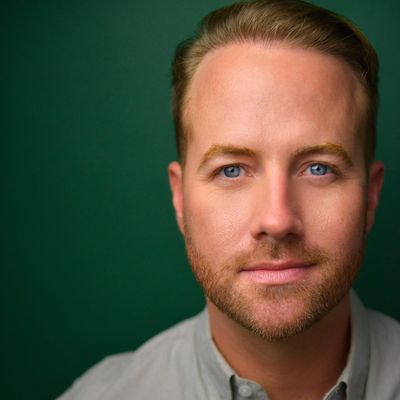
What’s the story morning glory?... Insta-story that is! Find out how to work social media to market yourself. Our guest is the incredibly knowledgeable Bret Shuford - Broadway Actor, Create Life Coach and one half of the Broadway Husbands... Read More
From the show: Breaking Broadway with Kerry Butler
Guests
Featured Shows

About
What’s the story morning glory?... Insta-story that is!
Find out how to work social media to market yourself. Our guest is the incredibly knowledgeable Bret Shuford - Broadway Actor, Create Life Coach and one half of the Broadway Husbands. You do not want to miss this one!
As always, you can follow me on Instagram @kerrybutler1. For coaching and teaching, visit my website at kerrybutlercoach.com or email me at kerrybutlercoach@gmail.com.
Learn more about Bret:
@bretshuford
Listen to The Broadway Husbands Podcast at bpn.fm/broadwayhusbands.
Transcript
This transcript was automatically generated and might contain errors.
[0:04] Kerry Butler: Once I laid a penny who just couldn't stop the beat. Yes, with roller skates on her feet. Although just recently to see a real quo.
[0:36] Kerry Butler: Now come with me, Emma. I am your host, Miss Kerry Butler. Together, you and I are breaking Broadway.
[0:53] Kerry Butler: Hello everyone. Welcome back to Breaking Broadway. Today we have Bret Shuford. He has performed, produced, choreographed, and directed dozens of Broadway regional national tours, viral videos, television, film productions, from Wicked to the Wolf of Wall Street. He's also a certified life coach. And I am having him on because I got to sit in on a talk that he gave all about social media. He showed me all the mistakes I have been making. And he does follow me on social media, so I'm hoping I'm not in trouble because I have not incorporated all of his amazing tips yet. But maybe today I will take the next step and go even further. But I did, I thought it was super, super helpful. So I asked him to come on, and I'm so glad that he is here with all of us. Thank you so much for joining us, Bret.
[1:49] Bret Shuford: Oh my gosh, it's totally my pleasure. Thank you for having me.
[1:52] Kerry Butler: Before we go into all of your amazing tips for social media and how you can use that to help your career, what is your journey to doing this?
[2:01] Bret Shuford: Ah well, my journey, I've always been very curious and very kind of technical, tech savvy, I guess.
[2:10] Kerry Butler: Did you start out as a performer?
[2:13] Bret Shuford: Yeah, right. Yeah, yeah. No, I've been in multiple Broadway shows, as you know, like Beauty and the Beast and Little Mermaid, and did you go to school for theater?
[2:23] Bret Shuford: Yeah, musical theater degree.
[2:25] Kerry Butler: Yeah.
[2:26] Bret Shuford: But even in college, like, you know, I think was it MySpace, you know, I was like all over MySpace, and then Friendster, and then, you know, and then I found Facebook, and I've always been very social media and always, you know, what's interesting about the art industry is I feel like people were and still can be very hesitant about it because I guess it can come off a bit for some people, they feel like it can be fake or it can not, and so many people in theater who come from or at least who started doing theater. We went to theater because it was like a place where we could be authentic and be real and like find our tribe. And then like you see this kind of presentational thing. So I was always very shy about it, even though I loved it, I was like curious about it because I'm just a people person.
I love people, I'm curious about people. That's just always been how I've operated. And so social media to me just was like an extension of that. But I can also see why so many people are hesitant about it as well. So anyway, I was always curious and just naturally kind of good at it. And so that's I just did it kind of while I was performing. And with YouTube, I started a YouTube channel and Facebook, and then when Instagram came out, I was just like figuring out all the different nuances of all of these different tools. But never really thought of it as a business. Like, oh, I could teach people how to do that until people started coming to me and just going, Hey, how did you do that? Like, what are you doing there? I like the way you do that because it's different than what I see, you know. So then I started being less shy about it and started actually talking a little bit more about it.
[4:16] Bret Shuford: So yeah, it's been interesting.
[4:19] Kerry Butler: So has it is it like a second job for you, like performing? You still perform, and then this is like your certified life coach and help people with social media, or has that like taken over?
[4:30] Bret Shuford: It's been an evolution. It was always a side hustle. It's like I wanted to, you know, it was like I'm performing and working on Broadway was my full-time job, and then I was being of service and helping my community and having this side job coaching, but then the pandemic hit. And when the pandemic hit, I was so grateful I had this thing because I just I just went full throttle. I just dove all the way in. And ironically enough, all of us in our community were like, I don't know what to do, I don't have work, and I never built a social media following. And I'm like, hey, I'll help you. You know, so then people were coming to me and asking for some support during that. And now I've actually kind of switched it. I'm doing coaching full time now and auditioning here and there.
[5:20] Kerry Butler: Wow.
[5:22] Bret Shuford: I even turned down going back to Wicked when the pandemic ended.
[5:26] Kerry Butler: Oh my gosh.
[5:27] Bret Shuford: Yeah.
[5:28] Kerry Butler: Wow, that's awesome.
[5:29] Bret Shuford: Yeah, it's crazy. Because you know what, as performers, we're always out of control. You know, we never have power. And now you can be choosy about what you want to do. Imagine that.
[5:40] Bret Shuford: That's awesome.
[5:41] Kerry Butler: Yeah.
[5:42] Kerry Butler: Okay. So let's get into helping our young performers. What do you think is the most important thing young performers need to do to start out like with their social media if they're actors?
[5:54] Bret Shuford: Well, I think number one, I mean, if you're young, the boundaries have to be really set for yourself, very, you know, at least until you're of age. And but I think that, you know, you want to make sure you're setting really clear boundaries around your time on social media, your the kind of content you're putting out there, but also communicating with your family and your parents. Because if you're gonna choose to do this as a profession, you have to make a decision. Do I want to use social media as a tool for my business to grow relationships and become known? Or do I want it to be like a place where I keep in touch with my friends and my family? And because you can't really do both. You have to make a decision of what it's going to be. Because your family is not necessarily gonna always be your audience.
[6:49] Bret Shuford: Right, right. But your audience isn't maybe gonna care about the same things your family cares about. So you need to make a decision of what do you want it to be? Do you want it to be a tool or do you want it to be just like a way to stay in touch with your friends? That's number one.
[7:03] Bret Shuford: And then, of course, healthy boundaries around your time, around your attention. Because the thing with social media, if you don't set boundaries, I mean, when we're following different accounts or we're spending time scrolling, we're giving all of these people and these accounts the one thing we can't get back, which is our attention, right? It's priceless. And your time and your attention, you know, you can make more money. You can make more, you know, friends, you can get new jobs, but you can't make more time.
[7:40] Kerry Butler: So do you set timers for yourself?
[7:43] Bret Shuford: I don't know that I set like specific timers. I think because I've done it for so long, I know my habits. So if I catch myself in that compare and despair mode, which we all can do, yes, it's time to put it away, go for a walk, you know, watch a Mickey short, you know, something that is. I will set timers for myself. That's good. I think that's healthy.
[8:08] Bret Shuford: Yeah, sometimes and I'll do it. Some I have done it for my kids. I should do it again. But I think it's important, at least until it becomes a habit, because creating habits. I think like say somebody who's just out of college, should they what's most important? Should they have a YouTube channel? Should they have a website? Do they need, you know, to be putting videos of themselves up on Instagram singing?
[8:38] Bret Shuford: Well, I think most importantly, you know, choose one. I always say choose one to two platforms. Do not try to do it all. There's too many nuances that each of these tools have that, you know, to try to just like start a YouTube channel, that like YouTube, there's so much to it in order to grow it. And if your expectations are, for instance, YouTube, most people think it's like a streaming channel. It's not, it's a search engine. And if you don't understand how to use keywords and SEO in order to optimize that, you're gonna be disappointed because no one's gonna see your videos.
[9:21] Bret Shuford: So if you're just posting videos of you performing and you're not telling a story, you're gonna be disappointed because people aren't gonna engage, people aren't going to be, you know, reacting to the content you make. So understanding the nuances of a specific platform, it's just like understanding how to sing, right? Understanding how to, you know, the tools like you don't you got to learn. It's that's why I always say pick one, maybe two to start and just get really good at it. And then if you're like getting good at it and you're growing, then you can start to add other things to your, you know, tools.
[10:00] Kerry Butler: That's so interesting. I remember when you gave that talk, you were saying find your brand, right? Like find what the people who follow you like about you. Is that what it is?
[10:12] Bret Shuford: Yeah, I mean, the idea is that well, I use this analogy of a theme park, right? We as a creative, we are a theme park. And every time we show up at an audition, we're basically immersing people in our park, right? And what's the experience that you're creating? Every time you create a piece of content, you're creating an experience that immerses people in your park, right? And so some people are gonna some people love Disney, some people love Magic Kingdom, or some people love Hollywood Studios and don't like Magic, right? It's everyone's park is different, and that's okay. So just understanding what is my experience, and then everything you do then becomes just an invitation. Like you're just inviting people into that land. And if you're not clear about the experience you're creating, and you're not specific about the experience you're creating, then it's sort of like walking into Magic Kingdom and there's no castle.
[11:20] Bret Shuford: It's like no one knows where to go. Like there's nothing leading you down Main Street. You have to get really specific about what it is you want people to experience, because that encompasses everything that you do.
[11:37] Kerry Butler: Do you think people starting out need a website?
[11:41] Bret Shuford: I don't know that you need a website to start. I would just say a website is helpful. I mean, you know, first thing anyone does at any audition and you talk to any casting director or creative team, you walk in the room, they're gonna Google you or they're gonna Instagram you. It's the first thing they do.
[11:58] Kerry Butler: Wow, no way.
[11:58] Bret Shuford: Yes.
[11:58] Kerry Butler: Wow.
[11:58] Bret Shuford: It's the first thing I do when I'm like, oh, who is that? I look them up, right?
[12:07] Kerry Butler: Right, right.
[12:09] Bret Shuford: And if you're not creating, like you can create what people find. It's you know, by using these tools. If you haven't, like for instance, I think at the least you should have an Instagram or a TikTok. Because your Instagram can act as a website for you and there's searchability in there, you know, if you're using your name as your handle if you're using your name, that's a searchable tool.
[12:37] Bret Shuford: So if I'm looking you up, one of the first things I say to people is like if your handle is like Carrie 29643, then you might want to rethink that because no one's gonna find you. I remember I was like, uh oh, when you gave that talk because I have three different handles for like Twitter and Instagram and you're like, no, you have that one for all. It's true, but that's your brand, right? People want to know who you are. So like having a profile photo that is the same one across all platforms, having a handle that is the same across all platforms so that when people find you, they're like, oh, that's them. That's the person I was looking for. I know exactly who that is. I know what I'm getting because it can be very confusing.
Especially someone like you, Kerry, who I sort of see as like a Broadway celebrity, who, you know, there's probably people making fake accounts of you. I want to know that it's really you and I'll do that if the photos and the names and everything matches across all platforms.
[13:46] Bret Shuford: And the sooner you can get that, the better because, you know, it doesn't mean that if you can't find your name, right? So if I couldn't find Bret Shuford, I could put Bret Shuford actor, Bret Shuford the Bret Shuford or whatever that is, but make sure it's the same across all platforms so there's consistency because consistency is key.
[14:05] Kerry Butler: Okay.
[14:07] Kerry Butler: I mean, I'm like, oh yeah.
[14:10] Kerry Butler: How do I gonna change?
[14:12] Kerry Butler: How am I gonna change my names?
[14:16] Kerry Butler: Um, you talked about a lot of stuff I didn't understand a few minutes ago about like the SO something and knowing that stuff.
[14:28] Bret Shuford: Like what is that?
[14:30] Bret Shuford: Well, exactly, right? So SEO means search engine optimization, which is really like how, like if I Google you, the first thing that comes up is whatever first article comes up, it probably pops up because of its search engine optimization. So they've used keywords, which basically means like repeated words throughout the article or throughout the text. Or, you know, like if I look up Broadway, probably one of the first things I'll see is Broadway.com, right? Because Broadway is the keyword.
[15:08] Bret Shuford: Yeah. So understanding that search engine optimization, the way it happens is like if I build a website, right? I can't just build a website, BretShuford.com, if I've never had that space before, and expect people to Google and see Bret Shuford as the first thing that shows up in the search engine because there's no optimization. It hasn't been clicked on enough. And Google basically will put the things at the top that have had the most clicks with those words.
[15:38] Kerry Butler: Oh.
[15:39] Bret Shuford: Yeah, it's weird. So that's why things like Instagram are great because Instagram kind of already has its own searchability within it. So if you want to create an Instagram profile and you make it your name, if a casting director or a producer looks you up and your name is what's there, it's gonna be easier for them to find you than say Google. That's also why like if you have a name and somebody else has your name and they're a doctor in Indiana and but they've been around for so long, if you search for your name, their article might pop up first. It's because they've been around longer. So you want to try to optimize your website, get people to click. That's why people blog, that's why people create content that people click on that drives traffic to your website.
[16:31] Kerry Butler: Oh hold on, wait, what? I know, I know, it's crazy. Wait, so you have a, you put a blog on your website? Where do you put the blog?
[16:42] Bret Shuford: Yeah, on your website. On your website, put the blog on your website and having the words in it will make people click on it more. Well, what you want to do, so let's say if I started a YouTube channel right now, let's just use YouTube as an example. If I decide, okay, I want to create YouTube content, I want to talk about my life. Let's say Steven and I have, you know, Broadway Husbands, we're pregnant. Let's say I'm blogging about having a baby.
[16:59] Kerry Butler: Right, oh congratulations.
[16:59] Bret Shuford: Thank you. So let's say I'm creating video content about that and but I've never created video content before. What I could do is make the video, put it on my website on my blog page on my website, okay? And then share the link to that page on Facebook to my email list, have my friends click on the link. What will then happen is that every time somebody clicks, it drives them to my website.
[17:42] Kerry Butler: I see.
[17:43] Bret Shuford: Because your friends aren't going to click on your website because they already know you. So if you put this link like, oh guess what? I'm having a baby. Aren't you interested in hearing about my baby? So then they'll click on your website. And then the next thing you know what will happen is that if I Google search my name, that website will show up further and further closer to the top of the list.
[18:02] Kerry Butler: Oh, that's brilliant.
[18:04] Bret Shuford: Yes.
[18:05] Kerry Butler: Okay.
[18:06] Kerry Butler: That's a lot of work though.
[18:09] Bret Shuford: It can be a lot of work or like it actually can be easier than you trying to build a following on YouTube because you'll get more people clicking on your website than people finding you through searchability on YouTube, right? Because you're kind of leaving it up to Google to drive traffic to your YouTube channel or you create, you get to control your own website. So I mean that's what search engine, anyway, this could go on and on and on, but that's what search engine optimization really is and how to use it really for your best use for your business.
[18:48] Kerry Butler: Okay.
[18:49] Kerry Butler: Wow, that's so interesting. Can I just ask you one more thing about—
[18:51] Bret Shuford: Of course.
[18:51] Kerry Butler: No, you can also, can I, I've heard that you can also pay money to get your people, your SEO like up or something. Is that true?
[18:51] Bret Shuford: You can also pay people to go into your website and optimize it for you. You know, just people that are specialists in that.
[19:16] Kerry Butler: Oh.
[19:16] Bret Shuford: I am not a SEO specialist, but I will say, like, you know, I don't know that it's worth spending money. Honestly, you can hack it by doing what I just said, right? If you love to write, start a blog. Right. If you love to do video, do YouTube video, but then put it on your website so that you become, your website becomes the first thing people find when they search for you on Google.
[19:43] Kerry Butler: Okay.
[19:44] Kerry Butler: All right.
[19:45] Kerry Butler: I love that. That's a good trick.
[19:49] Kerry Butler: Um, what do you think about people putting up—
[19:55] Bret Shuford: We kind of talked about this, but singing videos on Instagram and stuff. Because I have heard from casting directors I interviewed on here that when they're looking for people, they will, if say, um, say there's a new show and it's, you know, like Wicked or something, then they'll look up people who have hashtag Wicked and look at their videos to find new talent.
[20:15] Bret Shuford: Yeah. I mean, honestly, the most important thing you can do is make sure your Instagram or whatever platform you choose. When I see it, let's say if I'm auditioning you in the room and I pull up my phone and I pull up your Instagram account, I want that account to match exactly what's happening in the room. I want it to be a physical, you know, digital manifestation of the physical version of you. And I think that's the most important thing you can do. So if you're a singer, yeah, you should have singing content on there. It should not be the only thing you have on there because you're also a human being. So there's things about your life and the things that people like, there's a lot of great singers in New York City who can sing "Defying Gravity," but they're not you.
So tell me what makes you you so that I have a stronger connection with you and a more willingness to spend more time with you because that's really all we want, right? We want them to call us back to be willing to spend more time so that they say, great, I can be in a rehearsal studio with this person for four to six weeks and have a great time. So you want that to be clear.
[21:27] Bret Shuford: What happens quite often, what I think I might have talked about this when we met, is I really think there's two things that most people fall into. They either fall way too into what I call the credibility camp, which is like they will just post their singing videos or their self-tapes and think that that's enough. And then there's the other people who what I call the vulnerability camp, which is like they'll just kind of vomit about their lives and the things that they believe in and all that stuff. And the perfect balance for anyone on social media is to have both. You want to have your credibility meet your vulnerability. You want to be able to share equally not just what you do, but who you are.
[22:16] Kerry Butler: I love that.
[22:17] Kerry Butler: Yeah.
[22:18] Kerry Butler: Uh, on the same lines, what miss, what other mistakes do you see people making?
[22:23] Bret Shuford: Kind of, yeah, yeah. And it goes back to like what I was saying too is storytelling, right? We're all, most of us who are in theater are expert storytellers, no matter what level we're at. And most people don't tell stories. Like if you're gonna post a singing video, make it a song that's gonna move me, that's gonna tell me about this moment or why you sing the song or who you're singing the song to. Don't just post something that's like, here's me belting a high D. Like it doesn't, that doesn't tell me anything. It doesn't give me a clue and it doesn't help me move. Because that's ultimately, even if I'm a casting director, right? They're human beings too. They want to be moved, they want to feel things, they want to feel connected. That's all we want. So if somebody's posting a singing video, like give me an example of what a story would be.
[23:12] Bret Shuford: Yeah, sure. So let's say I would choose, see, what's one of my favorite songs that I sing is, um, I'll just stick with "Defying Gravity." Let's say I love singing "Defying Gravity," and I know it's like a great song for me. I could tell a story about how today I was singing, I just felt like singing this song because I was so excited to finally become a dad. And the freedom that becoming a dad gives me reminds just reminds me of how limitless I can be.
[23:47] Kerry Butler: Okay, so it's not like look at me, I'm such a good singer.
[23:50] Bret Shuford: Yeah. And then now me as an audience member is watching that song through the lens, thinking, yes, I get it now. It's a story.
[24:02] Kerry Butler: Oh wow. You guys, isn't that cool? Like to think that you're using your Instagram to tell stories. I never really, I mean, I think I do tell stories, but I don't consciously do it.
[24:16] Bret Shuford: Right. You're just naturally at it, naturally good at it. And I will say this, your story game has been on point lately. You've really stepped up your Instagram stories.
[24:25] Kerry Butler: Oh, why thank you.
[24:29] Kerry Butler: I'm a little nervous having you on because I did not, I haven't been doing as much as I should, I think, because I remembered I took notes from the last your last talk.
[24:41] Bret Shuford: Well, on that note, you will have to tune in next week to hear more amazing tips from Bret on how to storytell through your social media. So if you care to find me, tune in next week. Together you and I are breaking runway.
© Broadway Podcast Network, All Rights Reserved