

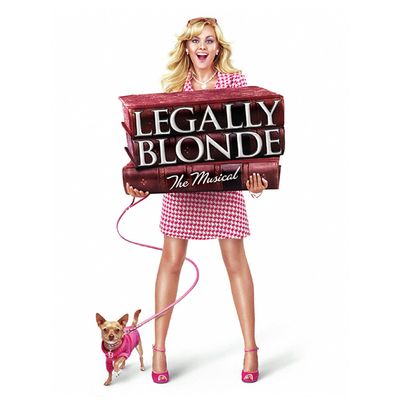
Such a treat to speak with Nell and Larry, the hilarious duo behind Legally Blonde, the Musical. We spoke about identifying a musical moment, the creative benefits of going away to “Camp Blonde”, and of which Legally Blonde moment they’re most proud... Read More
From the show: Broadway Biz with Hal Luftig
Guests


Featured Shows
About
Such a treat to speak with Nell and Larry, the hilarious duo behind Legally Blonde, the Musical. We spoke about identifying a musical moment, the creative benefits of going away to “Camp Blonde”, and of which Legally Blonde moment they’re most proud.
Nell Benjamin is a Laurence Olivier-winning and Tony-nominated composer and lyricist. For Broadway, with Larry, Nell wrote Legally Blonde: The Musical. Also for Broadway, Mean Girls. Off-Broadway, Nell’s credits include: The Explorers Club; Dave The Musical; Because of Winn Dixie; and Half Time. In development: Huzzah!; Life of the Party. Nell is also working on an original musical movie for Universal and three new animated films for Netflix.
Larry O’Keefe is a Laurence Olivier and Lucille Lortel Award-winning composer and lyricist for Broadway musicals, film, and television. His credits include: Bat Boy: The Musical; Legally Blonde: The Musical; Heathers: The Musical; and Sarah Plain & Tall. In development, with Nell, are Life of the Party and Huzzah!
To follow their projects in development, follow Larry on Twitter @LarryisOKeefe.
For all things Broadway Biz, visit our Instagram @BroadwayBizPodcast or our website broadwaybizpodcast.com.
Have a question for Hal or a topic you'd like him to explore? Send Hal an email at broadwaybiz@halluftig.com.
Transcript
This transcript was automatically generated and might contain errors.
[0:03] Hal Luftig: Hi everyone. This is Hal Luftig with my Broadway Podcast Network show, Broadway Biz, where every episode I will chat with my friends, some of the top theater professionals in the business about the business of Broadway.
[0:22] Hal Luftig: I'll join the Broadway Biz. You'll be a Broadway wiz. You'll learn to raise cash to open your smash. You'll be all the way from the patron stage. In no time you'll know the business of show, the greatest job there is. So join our squad as we unplug our love big Broadway bus. Let's get busy with the Broadway Biz.
[0:56] Hal Luftig: My guests today are composer lyricists Nell Benjamin and Larry O'Keefe. Nell and Larry are the genius team behind one of my favorite musicals, Legally Blonde. Today they'll be sharing their tips to writing a smash song on this episode of Broadway Biz. Hey Larry and Nell.
[1:15] Nell Benjamin: Hi!
[1:17] Larry O'Keefe: How are you guys?
[1:19] Nell Benjamin: We're good.
[1:20] Larry O'Keefe: How are you, Hal?
[1:21] Hal Luftig: Thanks for having us.
[1:22] Nell Benjamin: Oh, thank you for being here. Two of my favorite people in the world. How's it all going? How's Pete George doing?
[1:28] Larry O'Keefe: She's doing very well.
[1:30] Nell Benjamin: She's drunk with power, as usual.
[1:32] Hal Luftig: Yes.
[1:34] Nell Benjamin: You have a very, well, she's like her parents. She's, you know, funny and smart and knows what she wants.
[1:44] Hal Luftig: So there you go. You know, it's your fault, guys.
[1:45] Larry O'Keefe: Totally.
[1:48] Nell Benjamin: Her teachers have written a poem to say thank you and farewell, because this is her last week of first grade. So they have written a poem, and she's started saying, "Oh, I'm gonna write music for it, but first I need to fix some of their words."
[2:03] Hal Luftig: Boy, does that sound like someone I may know or not?
[2:08] Larry O'Keefe: Yeah, yeah.
[2:09] Hal Luftig: So I just have to tell my listeners that the theme music you heard going into this program and the music you'll hear going out was written by these two incredible guests today, Larry O'Keefe and Nell Benjamin. So thank you for that.
[2:25] Nell Benjamin: Thank you.
[2:27] Hal Luftig: Yeah, I'd love to know as part of our conversation, but it's a little aside, like when how did you come up with that theme song?
[2:34] Larry O'Keefe: Um, I just told you I need one, and you came up with a really kicker song with hilarious lyrics. How did you come up with that?
[2:43] Larry O'Keefe: Well, um, the secret is that that was a trunk song from a, I don't know if you'd call it a student show. I was out in LA at the Actors Gang, which is where Bat Boy was first born, and there was a sort of a younger brother theater company called Namaste Theatre Company, who puts on benefits, and they were right out of USC, and they were a bunch of really great sort of knockabout, rollicking, roisterous people, and they put on a big show benefit for their Christmas celebration years ago, and they asked me to write songs for it, and one of the songs was some sort of like Greek tragedy, only really quite filthy, and it involved, you know, scheming queens and their evil sons murdering people, and the tune was the mother convincing her son to do terrible things.
And I think the song was called Golden God, because I guess the movie Almost Famous had come out, and incongruously we decided that the tune would be like a great sort of like straight-ahead show tune. We've always sort of loved the tune.
[3:52] Larry O'Keefe: Yeah. Um, but you could never use it at the film. The lyrics were very specific and very filthy, and it was this really sort of like really great Broadway sort of style tune that was just lying around being unused because it had only been written for a benefit for a show, and so, you know, it's yours now, Hal.
[4:12] Hal Luftig: I was gonna say, guys, I think I'm gonna have to coax this one out of you because, I mean, you're checking all my Larry and Nell boxes right now. Golden God, filthy lyrics. What's not to love?
[4:27] Hal Luftig: I know the story, but I want our listeners to hear it because it's so wonderful and adorable. So, can you tell us how you guys first met?
[4:35] Nell Benjamin: Uh, yes, we can. We first met in college, auditioning for an improv theater troupe called On Thin Ice. Um, and the way they did the auditions for this one group was you had to go in, two strangers had to go in and improv together. And so I was paired with Larry. Um, and we went in to audition for this improv comedy group, and the suggestion they gave us was that I was Jane Goodall and Larry was an ape.
[5:08] Nell Benjamin: So we had to improv a scene, and once you've picked imaginary bugs out of someone's hair, the small talk becomes a lot easier.
[5:15] Larry O'Keefe: It does not, we had already so functionally humiliated ourselves in front of each other that any shyness or tongue-tiedness I would have had was like, well, it doesn't get any better than this. How much more can I screw it up? So that's kind of how we met.
[5:31] Hal Luftig: Would you say that you guys, before this, now you just touched on something, I mean, would you say before this audition that you perceived yourself as an actually shy person?
[5:31] Nell Benjamin: Me? Yes, absolutely. Even though I was auditioning for improv comedy, isn't that all? Um, but uh, yeah, I would say, uh, I would say there was some social awkwardness there. When you're that age and younger, you think you are much worse than everybody else, right? I'm definitely the worst at this. Everybody else is doing so much better than I am. And maybe part of my work is to convince a bunch of people that that's not true. Everybody is having the same problems.
[6:14] Larry O'Keefe: Isn't that what theater is? Just to convince everybody that we're all having the same problems. It's gonna be okay.
[6:19] Hal Luftig: That's true. I thought that was my job as a producer, but you're happy to have it.
[6:20] Larry O'Keefe: I'm happy to give it to you next time we work together.
[6:28] Hal Luftig: Yours now, yours. So you meet, you pick knits out of each other's hair, which by the way I've still seen you do from time to time. What's some of your early collaborations were like? Like how did you start actually writing together?
[6:41] Nell Benjamin: The very first thing we wrote together was a Hasty Pudding show because that's Harvard's drag show with an original script every year, and we wrote one. We competed in the comp and our script was chosen, and so we didn't have to be on stage. We had other people wear the fake boobs, but we got to be the book writers and lyric writers of a show that got a full production with a large budget and eight shows a week and a big old tech. And it was a really great formative experience in trying to guess at what an audience finds funny and also how to write on time so that changes can go in and get rehearsed.
[7:24] Nell Benjamin: And we also got to work with, you know, we worked with David Chase professionals, Roger Grodsky, people like Alan Feinstein, who sort of taught us a little bit more than a lot of people.
[7:36] Larry O'Keefe: Oh, shout out to Karen Pisani Pastore, the amazing choreographer. So there were professionals directing, choreographing, and designing and telling us what to do and fixing our mistakes, and actually, at that age, we did not want to hear. I'll be frank. Like this was probably one of the few experiences where you're like, these are professionals, and they are telling you that, you know, they're not just grading like your essays A plus, they're like, this needs to work, and here's why it doesn't, here's how it will.
[8:04] Nell Benjamin: At the time, we were not delighted that one of the contracts, you sign a contract with the pudding, and it basically becomes work for hire, unlike the normal Broadway standard, and that meant they can change things out from under you if you don't do a good job. That was to, you know, guarantee a certain minimum level of quality, and sometimes they would change stuff out from under us, but David Chase and people like that would always explain why, and we would always get to sort of haggle. And that was a great introduction to the real world.
[8:31] Hal Luftig: Had you either of you ever thought about writing music lyrics?
[8:37] Larry O'Keefe: Uh, Nell, you wrote a play. Had you ever thought about writing before this opportunity of Hasty Pudding came about?
[8:44] Nell Benjamin: I had thought about writing all the time. I really loved writing. I would write sketches, I would write little things for my fellow classmates. I wrote a soap opera in like a ringed binder that featured all my classmates doing things they would absolutely never have done in real life, and we all sort of had fun doing that. So, um, I didn't think about writing for musicals because I wasn't a singer. I wasn't, so I thought, well, you have to be a musicals person to write musicals. But my mom would take me to the York Theater Company.
[9:17] Nell Benjamin: Um, and we saw all of those Sondheim revivals there. We went to Light Opera of Manhattan, saw the complete works of Gilbert and Sullivan in one summer that they put on in rep over a year. So I was being exposed to it, but I didn't think it was something that I would know how to do. Um, although I was very interested in poetry, and the kind of poetry I was interested in had rhyme and meter and all the things that were not terribly fashionable in poetry at the time. So I thought, well, you know, I guess I'm interested in outdated poetry. What are my job prospects there? Um, yeah, no, I always wanted to write, but I didn't think about musicals really for a very long time. Not until after the pudding show.
[9:57] Larry O'Keefe: I was writing short silly plays and comedy bits all through school and high school. There was a student show in high school that required songs, and so I started writing song parodies, and that was fun, but I also liked my own lyrics, my own melodies. Um, and the Hasty Pudding Show also had a competition for composers as well. So before Nell and I wrote the book and lyrics for the pudding, I was also writing the scores for the show, which is a whole different set of challenges and remedial catch up because I started learning some of the basics of writing and composition late, you know, unlike, you know, I was no Mozart. I was more like a late teenager before I knew how to write down music. But it was always something on our minds, always something that we loved doing.
And of course, all around us were lawyers and pre-med people. So there was not a lot of encouragement. Harvard did not have a drama major at the time. So we all sort of were laboring, all of us, the dozens of people in the Harvard Theater Company, we were all sort of under the impression, well, this is what we do for now for love, and then someday we'll have to be, you know, lawyers or something. And luckily, the pudding show and certain other experiences sort of taught us, no, there's other ways to do this life.
[11:17] Nell Benjamin: I'm gonna also give a shout out to a class called Science A18, because there was this idea at Harvard that everybody needed some basic grounding in everything. They called it the core, and we all needed to have some, even if you knew what you wanted to do and what you wanted to do was study classics or English or whatever, you were gonna have to take science classes. And so I took Science A18 and had an enormous amount of trouble understanding what was going on.
[11:46] Nell Benjamin: Um, but I discovered, and you had to write a weekly essay, an essay every week about what you had read, that I discovered that if I rhymed my essays and made them funny, I could get a higher grade than if I just tried to explain it because I clearly was not understanding it. But if I did like funny things, they would kind of be like, all right, all right, we got new pads. So I think this was a major formative experience for me. Like if it's faster and funnier and it rhymes, it's gonna do better.
[12:17] Hal Luftig: You know, Nell, you know how they have those prep courses for LSATs and GMATs, and yeah, I think you just, I think you need to start one. And instead of actually studying like the LSATs, you just teach them how to make their answers, you know, funnier and rhyme better.
[12:34] Nell Benjamin: And you know, you would think of the kinds of lawyers we would have.
[12:38] Hal Luftig: They would all be so entertaining.
[12:40] Nell Benjamin: Oh my gosh, it would be so much more entertaining.
[12:42] Hal Luftig: You're right. If an actual federal judge could call you on the carpet for a slant rhyme, imagine how happy that would make me.
[12:51] Larry O'Keefe: That's right. You're under arrest for bad rhyming.
[12:54] Hal Luftig: Sorry, there was an S on the end of that word. It does not rhyme in the world.
[13:01] Nell Benjamin: That's all we're...
[13:03] Hal Luftig: See why I love these guys. All right, let's take a step back. So now you want to write a song. How does that begin? What's your process?
[13:09] Nell Benjamin: Well, I think for a musical song, the most important thing is to find the moment that you think might need to be sung.
[13:20] Larry O'Keefe: So looking at the plot for the moment when a character makes a decision or takes an action or responds to something that's happened to them with an action, that's usually where we start.
[13:31] Nell Benjamin: Yeah, we uh there's an old trope which is, you know, when dialogue and spoken words are not enough, the emotion's too big, that's when you gotta sing.
[13:40] Larry O'Keefe: And I was like, well, that's not when you gotta sing. Um I think audiences are to be told what to do.
[13:47] Nell Benjamin: Yeah, that's true. But audiences like, you know, they like fast moving plots more than maybe they did uh 50, 80 years ago.
[13:54] Larry O'Keefe: And so we go straight for the transactions and the proposals and the crossroads. Um when uh like there's a lot of songs, wonderful songs that are written that are like when I was in kindergarten, or uh, what is this feeling that I've been having for the past few weeks?
[14:11] Nell Benjamin: And all of those seem to like they don't rocket forward like certain other songs do, but contrast that actually with a very quiet song, Bring Him Home from Le Miz is a beautiful song, but it's not actually contemplative, it's a proposal, it's a transaction.
[14:25] Larry O'Keefe: He's begging God, take me and let this boy live. And even if he does, he's gonna take my daughter away from me, but that's better than him dying.
[14:36] Nell Benjamin: And so that song is beautiful and memorable because it is so fraught with transactions and future tense and tension and cliffhanger.
[14:45] Larry O'Keefe: And the moment that he who has been so protective of his daughter is willing to let go.
[14:50] Nell Benjamin: Yeah. Um it's a stunning ballad, it really is.
[14:53] Larry O'Keefe: And it's stunning. In other words, the beautiful music and lyrics are made possible by the terrifying moment, the moment of uncertainty, what's going to happen.
[15:02] Nell Benjamin: Um, so that's what we look for. And we we're very lazy. We we like looking for moments that make our writing easy.
[15:10] Larry O'Keefe: And a moment that's a cliffhanger is always easier for me to write than a moment that's sort of like in reflection, I will remember this thing from years ago.
[15:17] Nell Benjamin: I've never thought of uh bringing him home in that way.
[15:21] Larry O'Keefe: And now, of course, I'm gonna, and I hope listeners do that go back and listen to that with what you just said in mind. I think that's fascinating.
[15:30] Nell Benjamin: So how do you know when a song is done?
[15:34] Larry O'Keefe: You you have a task, you have to write a song for a moment in a show or just a song. How do you is there an aha moment when you look at each other and say, we're done?
[15:44] Nell Benjamin: Sorry, when you're like, how do you know a song is done? I'm like, when the people start applauding.
[15:51] Larry O'Keefe: Now let's start saying, What's the show about? It's about two and a half hours with 15 minute intervention. In one way, the song is never done.
[15:59] Nell Benjamin: Like you could always pick it up and fix it.
[16:01] Larry O'Keefe: Yeah. Very rarely do you do you find you know that you want to not rewrite everything.
[16:09] Nell Benjamin: That's just me personally.
[16:10] Larry O'Keefe: Well, but actually, you know, the applause thing might actually be more real than we thought, because I will stop wondering if a song needs rewrites if it gets in front of an audience and they cheer for it.
[16:23] Nell Benjamin: I think there's about three kinds of applause you can get in theater.
[16:26] Larry O'Keefe: One is that big excited, exhilarated, bursting balloon sort of feeling of woo-hoo, yeah.
[16:33] Nell Benjamin: Love that. If you hear some laughing in among the plotting at the end, you've done your job.
[16:37] Larry O'Keefe: Then there's the other one which is, yeah, mmm. The good effort one, which is sort of like that that was good, but it's always very short.
[16:45] Nell Benjamin: And you're like, oh, maybe that song didn't, you know, give the audience everything they needed or were expecting.
[16:52] Larry O'Keefe: And then there's the one which is really the really short one. Uh, which is like we actually the wrong song.
[16:58] Nell Benjamin: Yeah, we acknowledge you have finished the number.
[17:00] Larry O'Keefe: Well, yeah, that that one sometimes means you've written the song about the wrong topic or given the solo to the wrong person.
[17:06] Nell Benjamin: Um, but in other words, we know a song is done when we've tried it out, and audiences really get what we were going for.
[17:15] Larry O'Keefe: They laugh in the places we want, and they reward it because audiences reward not just a good song, but the right song, the right treatment of the right moment.
[17:27] Nell Benjamin: I've definitely written songs that I thought were great, but they started, you know, 30 seconds too early in the plot or 30 seconds too late.
[17:34] Larry O'Keefe: Yeah, there's there's there can be that experience of sitting in the theater and you have a burning question.
[17:39] Nell Benjamin: Something's pulling you forward in the plot, and then a song starts and you're like, Great, I'm gonna get answers, and the song doesn't give you those.
[17:45] Larry O'Keefe: It's a fun, wonderful song, or it's a moving wonderful song.
[17:49] Nell Benjamin: And like, but I I don't wanna pay attention to this right now. I want I need to have other questions answered, other problems addressed.
[17:57] Larry O'Keefe: And uh hopefully if you get the song moment right, you don't get that.
[18:01] Nell Benjamin: But it's you know, there's always room.
[18:03] Larry O'Keefe: I I don't think you can you can call a song finished.
[18:06] Nell Benjamin: I mean, I when I hand in a lyric, it is fin I don't hand in like unpolished things, but even if you've written it, even if the music is there and it's orchestrated it, you may find that on stage we need to take a cut here, or this dance break has to go in, or things like that.
[18:20] Larry O'Keefe: So if you're if you're excited to have a finished song, musical theater is not the career for you.
[18:26] Nell Benjamin: Another example is Ireland from Legally Blonde.
[18:28] Larry O'Keefe: Oh, yeah. Um, which is a song which we were very proud of and it served a good moment and it it helped paint a character very well, and it got always got a good applause in Broadway and Orfe knocked it out of the park vocally.
[18:40] Nell Benjamin: And we nonetheless, we were like, we we might have been a little afraid to to you know excavate it because Orfe was scary um and brilliant and would have given us a hard time if we'd made it worse.
[18:55] Larry O'Keefe: But then when we went to London, Sonia Friedman, our producer in London, very, you know, you know, as was her right, said, There's some things I want to look at.
[19:04] Nell Benjamin: She said, Do we need the Ireland song at all? And we're like, oh God.
[19:07] Larry O'Keefe: Um after some haggling and some fun stories, which we'll tell you later, um, we went back in and we realized, oh, there is a logic problem that that uh it's and actually it was a logic problem that had come up recently because the original Ireland song on Broadway was predicated on the fact that Paulette actually knows nothing about Ireland uh except what she sees on like PBS and the Patriots and River Dance.
[19:07] Nell Benjamin: And River Dance and River Dance, yes, right, and all those things, and so she has this conception of Ireland, and by the time we got to London, you could Google Ireland and you could get a lot more information.
[19:42] Larry O'Keefe: And it didn't seem right that Paulette just didn't know this stuff and hadn't bothered to, you know, Google it.
[19:47] Nell Benjamin: So that made it it wasn't that it made Paulette look ignorant, it made the authors look stupid for having chosen things that just logically don't make sense anymore in the world of the internet.
[19:57] Larry O'Keefe: So the very small change, which had huge implications of Paulette, the reason Paulette has this weird picture of Ireland is because she got it from her grandfather, and he told her these stories, and she believed them to be true.
[20:09] Nell Benjamin: And she didn't just go and Google because it was her grandfather, and this is what she learned, and this is how she feels.
[20:18] Nell Benjamin: Every story he told me, stand me wrong.
[20:21] Larry O'Keefe: And we also put in a verse where she said, My grandfather should have just shut it.
[20:21] Larry O'Keefe: And in other words, we put that dilemma into her mouth and made it clear that she, instead of being an ignorant, sort of like cheerful optimist, she was a uh a sadder but wiser person who had gone through her journey of ignorance and realization.
[20:36] Nell Benjamin: And that made the song more interesting, more dense, made it made you respect Paulette more.
[20:40] Larry O'Keefe: So yeah, that song wasn't done until London.
[20:44] Nell Benjamin: And I think it went over better as a result of us working harder on the logic.
[20:49] Larry O'Keefe: Um, yeah, it did.
[20:50] Larry O'Keefe: I never questioned it while the show was in development because I always thought the song was a setup for what came in the second act, which was the river dance move. And that's why the audience just like burst out laughing. That's one of those moments, Larry, where it was like big balloons and all that kind of stuff. Because the moment they saw Kyle and Paulette doing that river dance move, the song before in Ireland set it all up. And it went over great in New York, and Orfe was wonderful.
[21:23] Nell Benjamin: It did about 80% of what we thought the song should have done in retrospect after, you know, we got to work on the London version.
[21:31] Larry O'Keefe: We're like, oh yeah, we yeah, that was a little bit of sloppy logic on our part, but everyone else did a great job on it.
[21:37] Nell Benjamin: My other favorite thing, my very favorite part of the show, and maybe you were gonna ask us about this later, is the reprise of Ireland, and we can tell you now or later, whatever you like.
[21:46] Larry O'Keefe: Before we do, um, I just wanted to share uh with you and my listeners a uh fun memory I just had while you were talking about the three different kinds of audiences reactions.
[21:58] Nell Benjamin: Um when we were out of town in San Francisco, uh I remember the then theater, the the gentleman um who ran the theaters for the presenting organization kept saying, Gosh, I hope the little man just stays in his chair.
[21:58] Larry O'Keefe: I hope the little man just stays in his chair.
[22:16] Nell Benjamin: And I had no idea what he was talking about. I didn't know who the little man was.
[22:21] Larry O'Keefe: I thought it was maybe the owner of his company.
[22:24] Nell Benjamin: I had I had no idea, and I I didn't want to look stupid, so I just nod and not react.
[22:32] Larry O'Keefe: And then the reviews came out, and I didn't even notice this, but Greg was his name, was like over the moon.
[22:40] Nell Benjamin: Oh my God, he's like applauding wildly. And I was like, the little man is and I was like, okay, and now I'm gonna ask, what the hell are you talking about?
[22:49] Larry O'Keefe: And I don't know if you knew this, but the the review system in uh San Francisco, they have it's not like a five-star system.
[22:57] Nell Benjamin: They have like a five little man system.
[23:00] Larry O'Keefe: And the best you can get is the little man standing up from his chair, the wildly applauding.
[23:06] Nell Benjamin: And then, you know, a four-star would be the little man in his chair, you know, leaning forward and wildly applauding.
[23:13] Larry O'Keefe: The third is he's just sitting in his chair.
[23:16] Nell Benjamin: The fourth is he's in his chair, but he's sleeping.
[23:19] Larry O'Keefe: And the fifth is the chair's empty.
[23:23] Nell Benjamin: So I just thought, oh, great.
[23:26] Larry O'Keefe: So whenever you go to San Francisco, pray for that little man.
[23:29] Nell Benjamin: And we were very lucky. We got the little man sitting in his chair wildly applauding.
[23:33] Larry O'Keefe: So that was that was fantastic.
[23:35] Nell Benjamin: That is so deliciously cryptic.
[23:38] Larry O'Keefe: The fun part was I had no idea what he was talking about.
[23:42] Nell Benjamin: So I couldn't take it when the reviews came out.
[23:44] Larry O'Keefe: And he said, Oh, the little man's I was like, okay, Greg, who's this little man?
[23:48] Nell Benjamin: Because you know, I didn't know if it was like a real person.
[23:50] Larry O'Keefe: Uh Larry, you were about to tell the story of the reprise.
[23:55] Nell Benjamin: There we are, you know, trying to throw things at the wall and make it stick.
[23:59] Larry O'Keefe: And we know that Ireland is gonna stay in the show.
[24:01] Nell Benjamin: You know, we know it's the best solution so far for that moment, but we also need a scene change to get out of Paulette's salon and go to the next scene.
[24:12] Larry O'Keefe: And we said, Well, yeah, it does need to be on a high note.
[24:16] Nell Benjamin: We can't end with the Ireland song.
[24:18] Larry O'Keefe: We need dialogue after it.
[24:19] Nell Benjamin: So what the hell? Let's just do a big reprise to do big energy.
[24:23] Larry O'Keefe: And then, so okay, it'll go to Paulette because uh L needs time to do a costume change, so you gotta keep Paulette on stage, fine, let her sing a big reprise.
[24:31] Nell Benjamin: And so Nell went off and came up with the funniest lyrics I've ever heard.
[24:35] Larry O'Keefe: Because again, Paulette, although she's wised up a bit uh from her earlier romanticism, she's still sort of a strange eccentric Boston girl.
[24:47] Nell Benjamin: And so Nell said, Here's what you'll say.
[24:49] Larry O'Keefe: Uh have her say, you know, go out there, El, because if you can't win your man back, nobody can.
[24:54] Nell Benjamin: And then the music swells and she goes, and Nell handed me this lyric, which goes, the Irish fear nothing and no one.
[25:00] Larry O'Keefe: And I started laughing.
[25:02] Nell Benjamin: They keep fighting till everyone's dead.
[25:04] Larry O'Keefe: And I started laughing harder.
[25:06] Nell Benjamin: I'm not sure where this metaphor is going.
[25:09] Larry O'Keefe: I was on the floor.
[25:11] Nell Benjamin: Uh I just felt like it had to be said.
[25:13] Larry O'Keefe: And I was so mad at Nell because that was four lines in a row, and every single one made me pee myself laughing.
[25:18] Nell Benjamin: And by the way, she rhymed the lines, uh, the Irish feel nothing and no one, which only really rhymes if you say with a Boston accent.
[25:26] Larry O'Keefe: It only rhymes with they I'm not sure how this metaphor is going.
[25:30] Nell Benjamin: We also have this sort of deeply competitive streak where when one of us comes up with a particularly good line, so angry.
[25:36] Larry O'Keefe: Uh the the other one gets actively angry.
[25:38] Nell Benjamin: This is how we we appreciate each other, is by being really angry that the other one came up with that good line first.
[25:45] Larry O'Keefe: So yes.
[25:46] Nell Benjamin: So we're we're like also like that that moment is not, you know, it's not really a transaction or a proposal, which is our our normal go-to for songs.
[25:57] Larry O'Keefe: It's just a celebration and it's just a loony moment of farting around on stage.
[26:01] Nell Benjamin: It was just delightful.
[26:02] Larry O'Keefe: It was like the thing that the audience needed for a moment, a moment of just pure pleasure to sort of again pop a balloon and just end the scene on a really fun highlight.
[26:11] Nell Benjamin: I also like the idea that Paulette is convinced that with her story of Ireland, she has helped Elle.
[26:18] Larry O'Keefe: Yeah, which she has up to a point where she's just like, now that I have given you my advice and my Irish, you know, love advice, uh, you're gonna be much better off.
[26:26] Nell Benjamin: I just feel like that's an important moment for the two of them.
[26:29] Larry O'Keefe: That's fascinating to know that that's how you'll process.
[26:32] Nell Benjamin: I thought you just like cook together and live together.
[26:37] Larry O'Keefe: But also, um, it also plays into one of our favorite tropes to get comedy out of nothing. Um, we are not big fans of mean people shutting people down on stage as a source of comedy. That doesn't make us laugh. What makes us laugh is a happy idiot with a great plan. Paul Paulette is the one with the silly plan, and she's got silly optimism, and that really always seems to work beautifully on Broadway stages. So we're always looking for good happy idiots.
[27:04] Hal Luftig: Let's talk about you find out you got the gig, the job of writing the music and lyrics for Legally Blonde.
[27:11] Larry O'Keefe: Well, this there seemed like there were two natural musical moments. We had to have an opening number. Every musical does. At some point there is the first song. And I just when I saw the film, I thought, wow, bend and snap, because it had a musicality even in the film. I thought that would be a great musical number, you know, for the stage. But short of that, when we came to you, I as a producer, I said, I'm not sure what else in this story sings. How did you guys, from the moment you found out you got the gig, as I said, how did you start breaking that down and identifying moments and songs and things like that?
[27:54] Nell Benjamin: I love that question, by the way. And thanks, by the way, for the Bend and Snap thing, because you really kept on us and made us come up with a real winner. We're talking about that too. Our big joke with Bend and Snap, which I'll say briefly and then I'll answer your question, was that there are two kinds of people in the world. The kind of people who say, "You're going to have a Bend and Snap number, right?" And the kind of people say, "You're not gonna have a Bend and Snap number, are you?" But you guys were right. We were skeptical of it, and you were right, and we were so happy with the results. But in terms of where I think with Blonde, we started very intensely with Heather watching the movie and identifying those moments that we really loved, and sort of doing the beats, which is what you do as a writer.
You know, what are the story beats that you absolutely must have or that you absolutely don't need. I mean, before we wrote a single word, there was a lot of plot work. There was a lot of, you know, can Vivian come around at the end? So if Vivian comes around, do we need the female professor to be the person who stands up? Isn't it going to be better if Vivian is the person who turns around? What kind of a personality is Emmett gonna have? Can we take little bits of other characters and put them in Emmett and things like that? So there was a lot of plot work first, and then we thought about those moments that we wanted to address.
[29:21] Larry O'Keefe: And sometimes we got it quite wrong. I remember we had a brilliant funny number about taking the LSATs. And we were so proud of this number, and you guys were like, no one wants to hear a number about taking the LSAT. Even the people who took the LSAT are not going to enjoy a number about taking the LSAT. So we're like, but it is so clever. And so it was finding out okay, we need to streamline the moment that she goes to Harvard, which is why "What You Want" became just this very fast-paced moment of getting her in. We knew act ten poles, opening number, act one finale, act two opening and finale. We also needed to find moments of people changing, and that could be the audience's expectations changing.
One of my favorite numbers was the number we thought was going to be sort of a love ballad, but that is the one where Warner dumps her. And so we knew that that dumping had to happen in the middle of a song. They couldn't complete a happy love song and then have the dumping. But again, that's a challenge. If you have a dumping, it's hard to end a song on a note that gets applause. We worked hard to get different versions of that. The end result was a song serious, but my absolute favorite moment of surprise was when Warner gets through an entire verse, and they're at the beautiful table where it looks like he's gonna propose to her. He finishes a verse in a chorus, and then Elle, it's her turn to sing, and she goes, "I never thought that I..." She starts the second verse, and he goes, "Uh honey, I'm not finished."
That was our kind of our weather vein for the whole show. Like the size of that laugh was the audience that we had who got where we were going, but it was so perfect because here's a guy who you think is singing a perfect love song, and she cannot get a word in edgewise, and we're like, okay, something is wrong with this relationship, right? Something is wrong with this guy, and we know it now, and now we are teed up for the rest of the song to work.
[31:31] Nell Benjamin: Other places, other reasons to look for songs is places where people make very big decisions. And Elle Woods is a perfect character, I think, for our style of writing. If I flatter myself, because she does things rather than stews about them. And Nell was the one who pointed out people think we should have an I want number, but all her songs are I wants, but that's too slow for her. She's already halfway down the road on, you know, towards I'm doing. So Nell had a great idea that, you know, people saying, like, we need an I want song, but Nell said, well, if we have an I want song and she's not actually applying to Harvard Law, that's wasted time. So it should be in the middle of the doing that we hear what she's wanting, which is how Nell came up with the idea for a song called "What You Want."
I feel like the I want song is a reverse engineering from good songs that have worked. That people say you gotta have an I want song, especially. And they always say it if there's a female lead. They're never like this guy needs an I want song because he goes off to do stuff. And I was like, well, why can't a girl go off and do stuff? So, you know, when we were thinking of is there an I want song for Elle, it's like, no, there's an I will song because what she wants, if you'll pardon my coining of the phrase, is wrong. She wants Warner, and we all know this is not a great idea. So her going to do it is one of the best things about Elle Woods is that she once she hits on a plan, nothing can stop her. Not the image of Harvard, not walking into a party entirely wrongly dressed. Once she's going to do something, nothing stops her, and that I think is one of her best qualities.
[33:14] Larry O'Keefe: It's a powerful message, and I used to say that all the time in interviews when people would ask, you know, about why take a film like Legally Blonde that was so tied to its star and so, you know, beloved and turn it into a musical. And I used to always say, because like any musical, it's a character that you starts out thinking, you know, she wants one thing and realizes halfway through that what she wanted was the wrong thing and discovers things about herself, you know, and others along her journey. And I always used to say that about Elle Woods. You know, she started going to Harvard for the wrong reason, because of some jerky guy, and ended up discovering, you know, herself and her ability to win cases and, you know, stay with, you know, with the other students, stay up to par with the other students.
And I, you know, that's a very, very powerful message. Great to see the hero's journey recast for her because, you know, she meets her wizard who's supposed to help her, and that guy turns out to be terrible. And she realizes her quest is entirely different. And I think that is one of the coolest things is to watch it happen to a girl like Elle when people would just say, oh, well, she can't go on a hero's journey, she's blonde.
[34:34] Hal Luftig: I wanted to take a step back for a second because this program is about how the business side of Broadway marries the artistic side. So, you know, do you think about the budgetary considerations when you're writing a song for a show or maybe it was Blonde that started it, but I one of my first things is who don't we need, who don't we need here? Because of that reason, because well, also because once you know wonderful actors and actresses, you hope that you give them enough interesting stuff to do. And the idea of having of getting the best person for a role and having the role be boring or small or not punching, you know, above its weight, just seems like a crime. You know, why would you who would you get as a strong role and what would they be doing for all of Act One, basically?
[35:32] Larry O'Keefe: So I think that was part of it. I mean, I definitely think we take story budget into consideration. Sure. You know, you try not to come up with insane ideas that you know to be expensive and unproducible. But if there's something that you fall in love with, you just can't help it. That's why it is so crucial to have someone there to say we cannot recreate the Concord on stage.
[36:02] Nell Benjamin: Thank you for saying that. Now I didn't want to go there, but thank you.
[36:07] Larry O'Keefe: The same voice who has to say, you know, we're not going to build this or we're not going to do that to the director. Everybody having their eye on it is a good thing. But if you have a flight of fancy, excuse me, the word flight for the Concord, or if you have a song you think is great, the great thing is you and a great director could find a way to make it producible if everyone's on board with it. But that means it has to be pretty darn great.
[36:31] Nell Benjamin: Well, when we were doing the song "What D'You Want," we were trying to more or less recreate the excitement and energy of the montage in the movie when Reese Witherspoon gets into Harvard mostly by means of a beautifully produced video montage. We said, well, we can't really do a video, but we can have Elle show up in person, and Larry said, maybe with the UCLA marching band. That seemed to go over fine. That didn't seem very expensive. But we also were bold enough to suggest a marching band because we knew this was a show aiming for Broadway with a certain size budget and a certain size production. If we were, you know, told at the outset, okay, we're going to do this, you know, at Playwrights Horizons on their second tiny stage, then that would have changed, you know, our architecture of our planning.
[37:21] Larry O'Keefe: So yeah, we do a lot of planning certainly for the physical dimensions of a show, what we know will be possible. We also are doing architecture at the beginning for things like theme and what the show is recommending or advocating. And sometimes those two things have to work together. Sometimes the scale of a show has to help with the point of a show. And certain shows have to be done big, and certain shows have to be done small. I think Falsettos is one of the greatest shows ever done. And I don't think there will ever be a need to give it a 30-person all singing and dancing choir. Although I would love to see that.
[37:58] Nell Benjamin: Me too, just not on my time.
[38:03] Larry O'Keefe: There are economics that you cannot fathom as a writer, and those you don't try, those you look to have a team that is going to figure it out. I don't think I've ever said, this is what, you know, I absolutely know that my swings and my ensemble in this will be five people. I've never had to say that because there are other people to sort of keep their eye on that. But I have said, you know, we don't need to have all of the law students that are represented in the movie. These are not things that plot-wise and characterized, we absolutely need. And that is, and that, and the bonus is we won't have to hire that person.
[38:39] Hal Luftig: I thought that the beautiful moment of the horror of the montage, which was not in the film that you guys created, was when Elle said to the dean, you know, what about love? Have you ever been in love? And, you know, it's a powerful feeling, and it just humanized the whole song for a moment. And ultimately that's what got her in. But I thought that was a brilliant stroke.
[39:01] Larry O'Keefe: Oh, I was gonna say, I think it was good to have two kind of cynical-ish people to have the Harvard people working on it because we were like, what theoretically, like don't treat it like a fantasy, treat it totally seriously. What would get Elle in? And the funny thing is the sheer logistics of bringing everybody there, the competency of it, the people there, and then the last argument, she makes a really good argument about love and emotion that you can't just be all brain, you have to be heart too. And we thought, yeah, I'd let her in for that.
[39:35] Hal Luftig: So and look, it worked. Um I wanted to talk about something else that we did during the creation of Legally Blonde that I've never really asked about before, and that is when we all went to, or you guys went to Camp Broadway, as I fondly call it. And for the audience who listen our listeners who have no idea what I'm talking about, there was a point in the development of Legally Blonde where we decided, we the producers decided that what the writers really needed was to be, you know, in the same room in the same city together and bouncing ideas off one another. And originally we were gonna bring Heather, our book writer, to New York and put her in a hotel. And Larry and Nell at that point, you were bi-coastal, and you know, we just found a time that we would all, you know, be in New York, and the plan was that every day we would rent a studio, and every day from like nine to five, like a job, you guys would go there with Jerry, Jerry Mitchell, the director, and work and write.
We discovered when we were pricing that out, that because it was at the beginning of May, that we could actually get a house, rent a house out in the Hamptons, because Cherry loves water, and you guys could actually live together for a week, which was less expensive for the producers than my what I just said was the previous plan. But I've never asked you this as a creative process. What was that like for you? Was it helpful? Did it work?
[41:14] Nell Benjamin: Ultimately it was very helpful. When we first were told the plan, we were so nervous because collaboration, particularly with people you don't know, can be so fraught, like having to make these decisions and cut this and do that. And we thought, oh my god, how much worse is it gonna be if we're all living in the same house? That's like a reality show. Uh and this was, I think, before there were reality shows. Yes, it was before that, yes. We were like, what? Oh my gosh, what's gonna happen? Um, and but I do think that that workshopping together, being together was so incredibly fruitful. Uh, in terms of, I mean, for one, it was incredibly fun. Instead of seeing, you know, Jerry as hair director, he was cooking for us on the grill.
And we were sort of living together and wandering around and having time to think and get to know each other. Um and story conferences and story, you know, haggling, we did it in person instead of over the phone. Which that was crucial to have index cards on the floor with the three of us, moving them around, crossing them out, throwing them out, was I don't think we could have streamlined the story to the extent we did without that moment. Um weirdly, I don't think any of the songs that we wrote during that retreat survived. Not a one. But we did some great prototypes and some beta testing. Um we tinkered with some tunes that actually did wind up in the show. Uh, but you might remember, Hal, that although the actual retreat itself didn't come out with any tunes, less than a month later, we kept working in studios in New York City.
And that's when we came up with Chip on My Shoulder. That's when we came up with the final bend and snap. And that's also when we came up with the final version of what became Find My Way. And those had been probably the most contentious songs to figure out what we were gonna do. And so I don't think we could have gotten to the point where we did them had we not built a relationship with Jerry and Heather through that retreat. So I've become a big booster of if you're starting something out, get everybody, especially because in musical theater, it seems like everybody is doing 50 projects at once. I mean, not at the moment, but and just getting someone's attention for an intense period is going to yield so much.
[43:38] Hal Luftig: Yeah, that is well, thanks for saying I thank you for saying that. I do remember that well. Um, and I yes, you're right. We the producer group was, you know, oh, we did this, and nothing came out of it. But that what you just and then we realized how wrong we were, well, how wrong we were, you know, because sometimes you don't think, you know ahead of what it did create. And having you explain that was just now was incredible. Every collaborative action plants some kind of seed, and you might as well, you know, if you want to plant good seeds, might as well put them in a beautiful house with a swimming pool and a grill and then wait because those seeds, you water them, they will grow. But it's also out of your comfort zone.
You know, you're not at you don't go home from your job. You're there. And I think I think it became very crucial in just in terms of, you know, knowing what's important to other people, knowing what kinds of things they were looking for in the dramatic moments of numbers, and saying, okay, what can we both agree on? Which is easier to do when you're in the room than it would be if I'm going away and guessing like what would Jerry like to say about this moment, um, or trying to call him or email him in between the other shows he's doing and say that. I don't, you know, even if you can't say tangibly like this and this and this came out of it, so much did.
[45:04] Nell Benjamin: I agree. No, I agree. I remember that storyboarding moment when Kristen Mike, Dory, and I, the other producers are blonde, um went out there to the Hamptons and we saw it on the floor, all of these and different colored index cards. And I remember we looked at each other and we we kind of had, are they like playing Yahtzee or something? What is this?
[45:29] Larry O'Keefe: That's your show.
[45:31] Hal Luftig: Yeah, yeah, that's my new show. But it really did, it did really yield great stuff. But thank you for explaining that. I just have to ask this question because I just have to. Um, do you guys have a favorite moment or a moment that you're most proud of in Legally Blonde?
[45:48] Nell Benjamin: I do like the moment when Elle forgives Warner at the end. Because in the movie, it was very satisfying to watch Warner come up to her with his tail between his legs at the end of the movie. Elle has won and she's saved the case and she's proven she's brilliant. And Warner pulls out the ring that everybody was hoping that he would have pulled out, you know, an hour and a half previously in the movie. Says, Will you marry me? And she and then in the movie, Elle says, I'm sorry, Warner, and throws words back in his face from earlier. Um, if I'm gonna be a senator by the time I'm 30, I can't hang out with idiots like you, or whatever the line is. Um, and she walks off into a blinding, you know, into the blinding light, and then there's a graduation, and everyone cheers at her standing up to that dick.
And that was satisfying in the movie, but we kept sort of like not wanting her to do that to him with such a kiss-off because the Elle that you know we were developing on stage, you know, it had evolved a bit. She had evolved over and above the movie, as hopefully always will happen when you're adapting something from an original IP. So Nell, again, I think maybe it was Nell said, I don't like her insulting him at that moment. I she has all the power now. He's been beaten, he's been proven wrong. Why does she need to rub his face in it? Instead, I think she should pull him up off his knees and tell him a gentle but firm no, and then thank him for having, you know, been a dick at first and then sending her on this journey that actually made her wind up better than she had been before.
[47:22] Larry O'Keefe: I think weirdly it came out of two things. One was, um, I think the forgiveness moment I was lucky because Jerry had seen this same movie as I had, which was Kung Fu Hustle. That's right. Um, which has all this kung fu and gangs oppressing people and people fighting back, and the hero at the end to his greatest enemy forgives him and offers to teach him his after defeating him in battle, does this and Jerry was excited about that idea and what what it could mean for Elle that she's so incredibly enlightened that and powerful and that she's able to do this. Um, and then there's a great um I want to say Margaret Atwood story that's uh kind of about no, it's Angela Carter, and it's about the stepsister or the stepmom and the witch and all that, and saying, uh, you know, you fine, you can hate me all you want, but I'm the plot baby.
And I thought she wouldn't have done any of this if it weren't for Warner. Like she'd find another guy like Warner. So maybe she could have this moment to say, like, if it weren't for you, there are no villains. If it weren't for you, I wouldn't be here. Um and that seemed very like a step away from the movie that would give a little more value to the musical.
[48:38] Hal Luftig: I you are so right. Um, because it it gave Elle, like you said, the woman power that she needed, like she didn't have to dumb herself down, and she won with the heart that she always had. I always felt in the movie that was a little off-kelter because you know the one thing you could say about Elle Woods is she has a big heart and she would never hurt anybody intentionally. Uh, you know, not even Vivian. And that just seemed a little for me when I first saw the film, I thought that that moment just, you know, I know everyone loved it and cheered when you know she walked away into that haze, almost like she was going up to heaven. But but uh I thought your version gave it more realistically what Elle would have really done.
[49:29] Nell Benjamin: Well, especially with Vivian having a turnaround on Elle and coming and becoming such a big person that she says things like, you know, but when I'm wrong, I say I'm wrong and I was wrong about you. For Vivian to be that big, Elle needs to be at least as big. She has to have at least as big a heart. So it, you know, the little things you change earlier, you know, force you to change things later too.
[49:53] Hal Luftig: I wanted to ask from your perspective, from an author's perspective, um, what makes a good producer?
[50:01] Nell Benjamin: Well, first of all, you make a very good producer. So let's just I'm not fishing, Nell. That wasn't a setup question.
[50:10] Larry O'Keefe: Is it like art? You know it when you see it. Um, I think there's a couple things that have caused me to that have made me feel like I'm in in the presence of someone as good as you, which is and many of the things are things you did. Yeah, which is rare. I think for one thing, giving the author's space to try things and make decisions and making it feel safe, saying, like, whatever your craziest idea, whatever idea you love, we're going to protect it for as long as we can, and we're gonna protect it from, especially with an adaptation, other people who have different ideas. Um, we're going to see if we can protect it from budgetary concerns or whatever. We're going to let it go for as long as we can and let you get through it and explore it.
Another thing that I think is is essential, and again, this is something that you do as well, is a producer who gives a note that is, I see the problem. There's a problem here. Like there's kind of two kinds of notes you get. There's a the note that says the scene isn't hitting for me in some way, I don't know why, or the song isn't hitting for me. Take another look at it. And there's the person who says, Do you know what you need here? You need a song about X. You need an elephant. You need an elephant. On a bike. And that latter note is not terribly helpful to me personally, because one, I'm a naturally contentious person. So as soon as you tell me what I have to do, I'm like, you're never getting an elephant on a bike.
Duly noted now. Um, but also because all of a sudden you've gone from your own narrow point of view, which was what we needed, what we had, to a new narrow point of view. So even if I give you an elephant a bike, I haven't thought through why it's there. And so you will get the very false elephant on a bike. You will get me trying to address a note rather than me understanding why there's an elephant on the bike in the first place. And that will be a very expensive thing. That will actually cost a producer money in the end to have an unthought-out elephant on a bike. But so often great producers like you and others will know not to prescribe a solution. They will spend a lot of time digging into describing the problem, saying things like, Hey, Larry Nell, we think that you were trying for X kind of emotion, but actually you think the audience is getting why. How could you work harder to get that X?
[52:49] Larry O'Keefe: There's also an external sort of out in the world, out in the world sort of quality that I've seen producers really excel at, which is knowing what the market is gonna want and knowing what the audiences are gonna want is in some ways a total guess, but in some ways it can be an educated guess. For example, if you're doing a show and you're aiming it towards Broadway, it should contain a certain amount of uplift and a certain amount of community and a certain amount of humor and a certain amount of education. And I'm sure that those proportions change all the time. But if you can have your finger on the pulse a bit of what the society at large wants, then you can aim it effectively. Sometimes producers think, oh, the audience wants that movie on stage.
And then if it begins and ends with that, then you might get a clone of the movie. But if the movie was eight years ago or 10 years ago and society has grown a bit, then a smart producer thinks, okay, the audience will enjoy the familiarity of that beloved movie turned into a musical. But what new things are we saying or advocating or recommending? And who are we saying it to? If the audience is a tiny off-Broadway audience, there's a certain kind of audience that or a certain kind of message that might resonate with them. But the audiences that go to Broadway shows have a certain kind of personality or a certain kind of expectation, and you want to educate them, uplift them in language that they will understand.
And so we've seen you do that countless times, Hal. We've seen great producers do that. It is a conversation with the audiences and with the people who buy tickets and with the people who sell group sales and with the people who write about Broadway. And it is a community, and we spend the entire time of our careers, whether we know it or not, we ask ourselves, what do we want to be as a society? What are our values? How do we want to see them challenged on stage? How do we want to see them celebrated on stage? And that's one thing we love about you. And the last thing I would say is there's an enthusiasm. Yeah, that if you get a producer who's like, I love this project and I know why it needs to be made, it can carry everybody forward.
It certainly, you know, carries me just to have a person, you know, to have a person who's like, you know, with some edits or stuff, we could do this, or if we do it differently from the way you guys usually do it, it could be good. This is not helpful. It's this idea of like it has to be done. I remember a very wine-soaked big dinner we all had in New York after one of our readings or something, and you said something, I was sitting next to you, and you said something to me, and it won't be an exact quote, because like I said, there was a lot of wine, but it was it was and you said it has to happen. And if I don't do it, I don't know that someone else will, and I can't be responsible for that.
It has to happen. I remember also how you were telling your investors saying, like, this might not be the one you make money on, but it's the one you'll be proud of for the rest of your life. It's the one that speaks something to our culture and teaches us something and helps us celebrate and grieve and more and learn. And I was like, I want to work with that person, I want to work with the person who wants to make it happen because it has to happen. And then let them worry about the budget.
[56:20] Hal Luftig: Well, thank you. Thank you. I wasn't, I really wasn't fishing, but thank you for everything you said. And what a brilliant answer, Larry, because I think what you touched upon about what's what we're saying to society is especially now, is so important. Is is so and it's what theater should be. It should be that lightning rod that gets people to think to discuss. I can't remember if it was how if it was Oscar Hammerstein or something, someone like him who said that when we all get in the theater, we're all asking ourselves the question, are we okay? Are we gonna be okay? And you know, a lot of shows say, sure, and they're you know, they're fun, but they're may not be very truthful. And a lot of shows, a lot of plays, especially without music, say, no, we're all doomed.
And that's can be educational, but it may not be, you know, what we need to move forward. There is a sweet spot in the middle, and a lot of Rogers and Hammerstein shows, a lot of Sondheim shows, they basically answer that question of are we okay with no unless, or yes, but only if we change this or that. And even a show as light and fun as Legally Blonde, you know, we went looking, you know, you and Jerry and us, we went looking for the ways that the show could be nutritious, could be educational, and could be more than just a diversion. And thanks for helping guide us there.
[57:45] Larry O'Keefe: Well, thank you. Cause I together I think we've created one of the most enjoyable shows I've ever seen. Before we go, I have three rapid fire questions that I want to ask each of you. And I only ask that you don't think about the answer. I ask it, you answer it. Okay. Um, so the first is what is your favorite musical?
[58:11] Nell Benjamin: Heathers.
[58:13] Larry O'Keefe: Mean Girls.
[58:16] Hal Luftig: Okay. I in case the listeners don't know, they just they just said their favorite musical was one of the other the shows that the other one had written. So they just both made yeah. That's a tough question because you love them all. Of course I love the what first of all, you never I'm not a person who's gonna list one of the ones I wrote, first of all. Let's just get that out of the way. But more importantly, I do think Heathers is one of the greatest musicals ever written. I'm astonished by it, and it made my life very difficult while I was trying to do Mean Girls. Because there are similarities, and I was like, how do how are we gonna do it better than Heathers did? Well they did she did.
She she definitely did. So I think Mean Girls had a, you know, a different trajectory, a different genesis, but they share DNA about, you know, you know, women fighting the power and facing tyranny and trying to forge new ways. And there's certainly room for both shows, but what Nell did was extraordinary. What Tina Fey and Jeff Richmond did was breaking open some of the boxes that Broadway sometimes inhabits and just sort of I've never seen anything like it in terms of energy and yet clarity and logic and and joy and celebration and yet a very, very strong dose of good medicine underneath a very well sugared pill.
[59:40] Hal Luftig: So yeah. Well, I just have to say that um I think you you're I agree with you both. Both of those musicals that you just mentioned are brilliantly written. Um so I at first I thought you just answered that way because you know you didn't want a big marital fight when we got off with but I agree. They are they are brilliant. Okay, next question. What is the wackiest moment you've ever experienced in the theater?
[1:00:10] Larry O'Keefe: Wow. There's tough competition for that. Okay, but you see you're thinking, thinking, don't think.
[1:00:17] Nell Benjamin: I know, but I I'm remembering, I'm not thinking. You know, sometimes the wackiest moment is so insanely traumatic. You have you put it from your mind, you put it in the back, and you're like, oh no.
[1:00:27] Larry O'Keefe: That's very true. I was in a pr I was in a production of a play called The Ruling Class, my freshman year in college, and I was playing an 80-year-old Earl in England. And I was the prologue, and the entire play was made possible by me accidentally killing myself in an act of autoerotic strangulation. So he was the 13th, uh 12th Earl of Gurney, and I it was my job to give a speech, go home, tie a noose to my large four-poster bed, hang from it, accidentally kick the chair over and die. Um and one night, I think it was closing night, there was no chair and no noose.
[1:01:07] Nell Benjamin: Uh-oh, props.
[1:01:09] Larry O'Keefe: Yeah. I don't remember how we solved the problem. Eventually, actually, somebody came on with a big chair that said ART on it, because it was happening in the main stage of the Loeb with ART. And it was definitely not, you know, not right for that period piece. And I think that they actually found some kind of like large lighting cable. And it look was really quite dangerous because the noose was designed to be safe that I could appear apparently hang myself but it it was very makeshift and I I did you know black out a little bit mid-strangulation but I learned a lot about theater and about myself and so Larry the lesson you learned from that wacky moment was let other people hang themselves on stage.
[1:01:29] Nell Benjamin: Touche now do you have a wacky moment?
[1:01:58] Larry O'Keefe: Oh I have so many and they're all coming into my mind at once. Here's a Legally Blonde one where we were watching from the back of the Palace Theater we're watching blonde and we're all standing way in the back of very large theater and Orfe is singing Ireland and she is doing an extremely she she's she's singing it with a great deal of anger. She's wailing on it it's sounding great and she seems to be focusing that anger at a very specific point. In the front row in the like the second row maybe and we're like this is a this is a new take for Orfe like what's going on this is a pretty ballad what's happening what's happening here. We're like okay and I think Jerry was sort of like telling someone to write a note down or things like that.
And then right after we said this, we all go do you smell chicken? And what had happened was a group of theater goers a family out for a nice Broadway show had brought a picnic and they began to take it out in the middle of Ireland and pass food around to each other. And Orfe could see this quite clearly from the stage, and that is why she was singing with as much fury as she could at them. And it was just a very, it was like, oh, dinner and a show. Okay. This is not the time. And it was very funny too, because Ireland was the moment where, you know, we'd always said we had all these big crazy numbers, because the opening numbers so big, and what you want is big and active. And so clearly Ireland was the calm moment where they felt they could have a nice dinner without interruption from the show. So that that was pretty wacky to me.
[1:03:44] Hal Luftig: That is wacky. That is wacky. And so what was the lesson that you would say you learned from that moment?
[1:03:51] Larry O'Keefe: I would say the lesson is that all audiences want different things out of theater.
[1:03:58] Nell Benjamin: And you're right.
[1:03:59] Larry O'Keefe: And some include mayonnaise and some include mustard. Some include, you know, there's there's lots of reasons why people go to the theater, and there's lots of different people going to the theater who are, you know, deciding these these folks were like, we really want to see Legally Blonde, and apparently we don't know that you don't bring your own dinner. Um but hey, how positive that people who don't see a lot of theater wanted to come and see Legally Blonde. That's exciting and make a night of it. So I I would always say think about your audience and you know, decide who your core audience is, but you know, be open to the other people who are gonna come see it. Maybe the lesson is invest in dinner theaters.
[1:04:38] Hal Luftig: It's a million-dollar idea.
[1:04:38] Larry O'Keefe: I promise I'll think about it.
[1:04:40] Hal Luftig: Well, now, Larry, this has been so wonderful. Thank you very much.
[1:04:45] Larry O'Keefe: I love you guys.
[1:04:48] Nell Benjamin: Love you guys.
[1:04:49] Hal Luftig: Love you guys.
[1:04:50] Okay.
[1:04:51] Hal Luftig: Talk soon. Thank you for tuning in to this episode of Broadway Biz. If you have any questions about today's episode or the business of Broadway in general, let me know on Instagram at Broadway Biz Podcast or via email at Broadwaybiz at Halluftig.com. Be sure to follow me at Broadway BizPodcast for updates on everything Broadway Biz. The Business of Broadway. BroadwayBiz is part of the Broadway Podcast Network. Huge thanks to Dory Berenstein, Alan Seales, and Brittany Bigelow. This has been produced by Dylan Murray Parent and Kevin Connor and edited by Derek Gunther. Our fabulous theme music is by Nell Benjamin and Lawrence O'Keefe. To learn more about Broadway Biz, visit BPN.fm slash BroadwayBiz.
© Broadway Podcast Network, All Rights Reserved