

This episode, Hal invites Jerry Mitchell to the podcast. Jerry a two-time Tony Award-winning choreographer and director for Broadway... Read More
From the show: Broadway Biz with Hal Luftig
Guests

Featured Shows
About
This episode, Hal invites Jerry Mitchell to the podcast. Jerry a two-time Tony Award-winning choreographer and director for Broadway. In today’s conversation, Hal and Jerry discuss the beginnings of Broadway Bares, which to date has raised over $20 million for Broadway Cares/Equity Fights AIDs, how to identify a star in the audition room, and what he thinks makes a story perfect for Broadway.
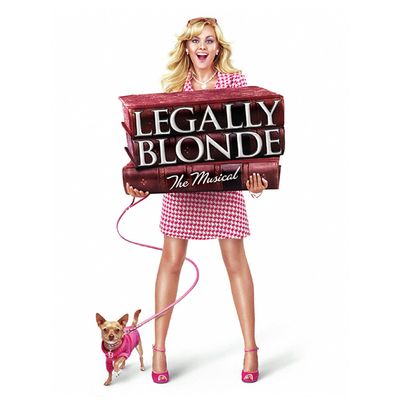
Jerry has been involved in over 50 Broadway, Off-Broadway, West End, and touring productions. As a choreographer, his credits include: Hairspray; Gypsy (starring Bernadette Peters); La Cage aux Folles (Tony Award Best Choreography); Catch Me if You Can. Also as a director: Legally Blonde; and Kinky Boots (Tony Award Best Choreography), which spawned numerous international companies. Most recently, Jerry directed and choreographed Pretty Woman: The Musical. Jerry and Hal are working together on new musicals in development Becoming Nancy and My Very Own British Invasion.
You can find Jerry on Instagram and on Twitter @JammyProd. For more information on Broadway Bares, visit Broadway Cares/Equity Fights AIDs at BroadwayCares.org.
For all things Broadway Biz, visit our Instagram @BroadwayBizPodcast or our website broadwaybizpodcast.com.
Have a question for Hal or a topic you'd like him to explore? Send Hal an email at broadwaybiz@halluftig.com.
Transcript
This transcript was automatically generated and might contain errors.
[0:03] Hal Luftig: Hi everyone. This is Hal Luftig with my Broadway Podcast Network show, Broadway Biz, where every episode I will chat with my friends, some of the top theater professionals in the business about the business of Broadway.
[0:22] Hal Luftig: Come join the Broadway Biz. You'll be a Broadway Whiz. You'll learn to raise cash to open your smash. You'll be all the rage from the patron stage. In no time you'll know the business of show, the greatest job there is. So join our squad as we upload our love big Broadway. Let's get busy with the Broadway Biz.
[0:56] Hal Luftig: Our guest today is one of my favorite director choreographers, Jerry Mitchell. Jerry is a two-time Tony Award winner for Best Choreography. I can't believe it's been over 20 years since I first saw him on stage. I'm so excited to welcome Jerry to Broadway Biz.
[1:14] Jerry Mitchell: Hi.
[1:15] Hal Luftig: Hi, everybody.
[1:16] Jerry Mitchell: Who are we talking to?
[1:18] Hal Luftig: Well, let's hope a lot of people.
[1:32] Hal Luftig: I think interesting story. Back in 1991. Dear God, 1991, there was a musical called The Will Rogers Follies. And it was all about, it was a stage version of Will Rogers reading the newspaper, being, you know, optimistic, telling jokes and stories that were supposed to lift us all up. And it was in its own way a folly's kind of esque show, which meant it had beautiful girls dancing around him and kind of some vaudeville accent dispersed in the show. When the curtain came up at the Palace Theater, there were the stage was in complete darkness, but you heard this constant beating of a drum, like boom, boom, boom, boom, boom, boom, boom, boom, boom, boom, boom. And as the lights slowly came up in first in silhouette and then more and more, so you could figure out what who that person was.
And he was just starting, you know, to dance to the boom, boom, boom, boom, boom, boom. And I remember this to my friend who uh who now lives in Denver, who was with me. He practically was speechless. And it like grabbed my arm and he said, Who is that guy?
[2:55] Hal Luftig: I wanted to share with our listeners that you created, you, Jerry Mitchell, what we now know as Broadway Bares, as part of the Broadway CARES Equity Fights AIDS organization. Can you tell us how that came about? Because it's a major fundraiser.
[3:12] Jerry Mitchell: It was 1990, 1991, and Broadway Cares and Equity Fights AIDs were two separate organizations. And the kids in the original La Cage at the Palace Theater started a fundraising event for AIDS relief and AIDS charity at the time. It was an Easter bonnet competition. And that was really the only annual event that was starting to grow and raise money for Broadway Cares or Equity Fights AIDs. Jason Opsall, John Gunnan, and Troy and Troy Britton Johnson, who were my dressing roommates on the Will Rogers Follies, and Jack Doyle. One of them, and I think it was Jason, said, Why don't you go dance on the bar at Splash in that costume and let people tip you and we'll raise money. Go go dancing. And I went ding ding ding ding ding.
A light went out over my head. I called up six other guys. I got them together, I choreographed a little opening number. We went to Splash one Sunday night after the matinee, and we charged $10 to get in. And we all got up and did the opening number. Then we all did a solo strip, and then we go go danced and they put money in our G strings. Well, the show was a big success and it was over with. And Brian and Harry, the owners of the club, came to the dressing room and they said, Hey guys, if we kick everybody out of the bar, we can start fresh and we can do a second show. We'll charge them $10 to get back in. You guys do a second show and we'll make twice the amount of money. And I looked at the boys and the guy said, Let's do it.
Everybody made out, and it was fabulous. Made out in the sense that we made out like bandits with cash. And I had a pillowcase full of wet dollar bills, and I had no idea how much money was in there. And I took it the next morning to Broadway Cares and they counted it and called me up later that day and said, You raised $8,000. And I went, Oh my God. And then literally within 24 hours, I said, I'm gonna do one in six months, and I'm gonna add girls and I'm gonna make it bigger and better. And we continued to do this show, which continued to literally grow like a fire to last year, the 29th version, over 200 dancers, Hammerstein Ballroom, and we raised just over $2 million in one night of burlesque.
[5:24] Hal Luftig: That is incredible. If anybody ever asked me, would a burlesque show with eight guys turn into a 29-year annual event that has raised collectively over 20 million dollars for Broadway Cares Equity Fights AIDS, not to mention produced productions of it in Vegas, San Francisco, London, West End Bears, and last year for the first time, Italy Bears. I would have said, you are crazy, crazier than a loon. I never would have thought that would have happened to this show. This show became this fundraiser has literally become one of the four yearly events that is part of Broadway Cares Equity Fights AIDS now.
[6:04] Jerry Mitchell: Wow.
[6:04] Hal Luftig: Well, it's uh and and Jerry, it has the distinction of having Rosoli put out a Broadway Bears book, correct?
[6:13] Jerry Mitchell: Yes, we put out a book for the 20th anniversary. And it's sort of if you look if you get that book, it tracks each year and how much money was made each year, one of the great things, shows all the posters from 20 years. It's gonna be time to do another one next year for the 30th anniversary.
[6:30] Hal Luftig: Wow, wow. Time just like look, I came to New York City in 1980, I was 20 years old, and the AIDS crisis was just starting to hit us and hit us hard. And by the time 1990, when I started Broadway Bears, I had lost 10, no, I had lost eight of my closest friends from college. I needed to do something to give back, and I used my creative sense as a director choreographer and my love of community to figure out a way to get back to my community. And it also in turn, it was the most selfless act I think I've ever done in my life to get up on stage and strip because it takes a lot of cojones to take your clothes off in front of people. It really does. Teaches you a lot about the power you have as a person and how you can control any situation because a stripper is in charge of the room, trust me.
You can tell all those eyes are looking at you, and you can tell them when to look and when not to. You are in charge. And as an actor, it was a great lesson for me because it was a fear that I had to overcome. The idea of creating something to give back to the community selflessly, in turn allowed the community to see my work as a director and choreographer, like yourself, Hal, and other producers, they saw what I was doing, and suddenly I was getting asked to meet on a possible show. And so now on Broadway Bears, I invite young up and coming choreographers to participate and choreograph numbers. The AIDS crisis stopped dance a little bit in musicals. There were no musicals that had a lot of dance because all of the choreographers who were working were passing away.
And as you know, as a producer, it costs it's so much money to invest in a new musical, no matter what the year is, that suddenly you're putting all of this money on the line with a young choreographer who has no track record. And it was a very difficult time in the 80s to get a new musical and new people produced.
[8:39] Hal Luftig: Wow. You know, Jerry, thank you for that. And thank you for what a wonderful bridge into what I was really hoping we can talk about. You know, the purpose of this program is to talk to the different artists, a different department of artists that come together to make a Broadway show. And what I'm most interested in, and I hope our listeners are is how that financial side of the business, you know, the show business matches its artistic side. So you know I'm gonna ask you a couple of you know I want to ask about a process and things like that for you. So in beginning a new musical, what is your process of discovering a story?
[8:57] Jerry Mitchell: I'm actively seeking out things that I want to tell like Becoming Nancy. I found that book, I read that book and then I called you guys and said would you help me produce this because I want to tell this story. I really look for shows when I'm looking at a show I'm looking for a universal theme. I am looking for a message of hope. I really think that's important and most importantly I'm looking for something in the story that I actually feel like I can place myself in that story.
[10:04] Jerry Mitchell: No, but if you watched the movie there were two things that I thought first of all she was an incredibly strong heroine. El Woods just like David Starr is an incredibly strong hero in Becoming Nancy and just like Lola and Charlie both are heroes in Kinky Boots. They have something that they have to overcome. They're either misunderstood or they're being given the short end of the stick, they have something to prove. And they're a little bit larger than life characters that are a little bit larger than life, I find it's very easy to hear them sing. It's very easy to see them dance because those expressions are when talking isn't enough and you have to get even bigger with your emotion. So I'm looking usually for characters that really have some place to travel to from the first moment you meet them to the last moment of the story.
[10:34] Hal Luftig: How do you know that a story is a good musical? Even Legally Blonde wasn't a musical on the film.
[11:03] Jerry Mitchell: First thing I think is I want a hundred million dollars. And then I wake up and I go, okay, I'll be lucky if I can get 10. So how am I going to tell this story with a budget? And then I and then on the a week later, I ask myself, what do I really need to tell this story? If we use Legally Blonde as an example, you, Kristen, Mike and Dory were incredible with me because you gave me such free reign as a director to choose my creative team, David Rockwell, Greg Barnes, Kenny Posner, and to work with who I had worked with all of them as a choreographer on previous musicals. You were very you never told me what I could and couldn't do.
[11:47] Jerry Mitchell: You let me go crazy, and then you told me we have to rein it in because of this, because of this, because of this. And we did, and we brought it down and we presented a beautiful show on Broadway. But when it got time to do the tour, we knew that we wouldn't be able to sustain that kind of a financial show on the road. And I was given a real challenge. Really, it was Mike who came to me. I'm sure you guys had many discussions, but Mike's work on the road is so vast. And he came to me and he said, This is what we think the show is going to make each week on the road. And in order for the show to be successful, we can only spend this much money on the set, and we can only skip in we have to come in as a guarantee for this much money.
Well, I didn't know any of those things when I was a first-time director of a first-time national tour, so the process for me as a director was a challenge. Can you tell your story for six million dollars as opposed to sixty million dollars? And I said yes, and I did, and we were a huge success. So I always think big first is the answer to your question, and then I think like a producer because in a sense I am a producer. I produce Broadway Bares, you know, I know how to put on an extravagant show with a G-string and five dollars, so why can't I apply that to a Broadway musical?
[13:17] Hal Luftig: Let's talk about casting for a second because, um, in my experience, you are one of the best director choreographer casters I've ever seen. Um, you know, you have plucked people from total obscurity and they've gone on to be major stars.
[13:36] Jerry Mitchell: Well, you look for the person who comes in and is the perfect fit for the material, right? And when that happens, magic happens on stage because you've suddenly put somebody in the role who should be playing the role, right? So your work as a director and choreographer, I think it was Mike Nichols said that 90% of a director's job is casting. If you cast it right, you're going to be successful because you'll have the right person telling the story. And you know, I thank you for that compliment that I find people who are unknown and turn them into stars.
[14:13] Hal Luftig: Me too.
[14:13] Jerry Mitchell: But the truth of the matter is every director does that. That's the job of every director. Because most of the people you're gonna hire in musicals and in theater, not all, but a good deal of them are gonna be people no one's ever heard of before, just like they've never heard of the character in the story. And then suddenly they meet the character and the actor meet, and bang, that's what a star is. It's an explosion of talent, writing talent, and acting talent coming together and going, wow. And all I am is the person who saw that person fit that material, and then I just kind of guide them to deliver it in the best possible way. But when they walk into the room for the audition, they will win it on their first impression.
Uh, Annalie Ashford walked into the room with pink bows on her shoes, and I had listened to 30 or 40 girls come in and read Margot and sing and try to talk to a chihuahua. And when Annalie Ashford did the scene and tried to make me believe that she was talking to a dog and the dog was talking back, I was laughing so hard I could not control myself. And she walked out of the room and I said, Well, that's it. She's the girl.
[15:30] Hal Luftig: Sometimes you have made a decision for a role without auditioning them. And I'll give you an example. When you were over in London and we were casting the London Blonde, you had seen this actress, turned out to be Sheridan Smith, and you called me and said, Hal, we found our UK Elle Woods. And I said, Really? Who? I had never heard of her, and I remember very clearly saying, Cherry, that's nice, but I think now we know we're gonna need, you know, well, let's look and see if we can get someone, you know, that will sell tickets. And Sheridan won the Olivier Award her first for best actress. I was nominated for an Olivier for Hairspray in London, and she got on stage and sang "Suddenly Seymour" from the West End production of Little Shop.
I saw her in the bar afterwards and we both had a Cosmo in our hand, a pink Cosmo. I said, You're born to play Elle Woods, and we just hit it off and started talking, and I thought, oh, I just spent a little bit of time with her there, and I thought, oh, she could play this part and knock it out of the park.
[16:50] Jerry Mitchell: Well, what's interesting and why I asked that question was when you told me that, as you said, she was in a small production of Little Shop of Horrors on the West End, and I went to see it, and she was a delightful Audrey, but in my mind, I couldn't make the connection because Elle is so different. What was, you know, amazing was you said that she's our Elle Woods at least 12 months before she, you know, officially became our Elle Woods. And you know, I just, what made her Audrey for me, what I saw in her as an actress was the vulnerability she was able to deliver. Elle, you meet Elle Woods and she's gorgeous and she's blonde and she's rich. What's the problem? Oh, she got her heart broken by her boyfriend.
What's the problem? We've all gotten our hearts broken. What you realize is that she actually is a person who believes in the good in everyone. And she's a person who will stand by her friends, Paulette, when they lose their dog and fight to get their dog back. I mean, you find these things out about this girl, and she gets you to root for her. But the girl has to be unsure of her confidence in order to end up becoming the confident person who wins in the end. And she was able to play that vulnerability card so beautifully. Laura Bell did the same thing. Anyone who's been cast in that role for me, I've been doing a lot of online things with classes and schools and colleges, as we all are, and they are all doing Legally Blonde.
And they ask me what's the most important thing you could tell me. And I say, find the truth in these people. These are real people. Just like Kinky Boots, those factory workers are based pretty much on, and let's talk about that for a second, because I think that's incredibly interesting, and our listeners would like to hear that.
[18:53] Hal Luftig: You saw the film, you know. Daryl called me, and then we called you, and we took you to lunch, and we talked to you about the film, which you had seen, correct me.
[19:07] Jerry Mitchell: Did you see it?
[19:08] Hal Luftig: No, I didn't see it until you guys sent it to me.
[19:11] Jerry Mitchell: Once you sent it to me, I watched it, and yeah.
[19:13] Hal Luftig: Yeah, and you agreed that it would, you know, be a good musical. Then you went over to just get a little piece of research. I know you went over to London into the UK, Northampton, and actually was given a tour of a factory that had these women that were currently that work there.
[19:36] Jerry Mitchell: And I went to London and I went to the factory where they shot the film Kinky Boots. It's the Trickers factory in Northampton, one of the few small factories that's still in operation. And yeah, all those factory workers were in that shop. I took a ton of pictures and I took a ton of videos on the tour of not just the actual factory, but the people who were working in the factory and the machines they were working on and how they were making the shoes. And I downloaded all of that information into a Dropbox for the original Broadway cast. And the cast absorbed those videos and started to draw and build their characters out of watching these real people in the real factory. And it was so important to the truth of our musical that there was this real truthful world with a real truthful job every day making shoes and a fantastical world, which also had its own truth of a drag performer surrounded by backup, and it was all made with feather glitter and a hot glue gun.
[20:48] Hal Luftig: Feathers, glitter, and a hot glue gun.
[20:50] Jerry Mitchell: So you had these two worlds competing to tell this, how are these two mindsets going to come together and succeed? And it was such a simple idea, but such a great one. So you saw the movie. Um, we approached Harvey Fierstein because we thought, you know, wow, that would he would be a great person. And no secret, he originally turned it down.
[21:16] Hal Luftig: Yeah.
[21:17] Jerry Mitchell: And we had a different set of music composers, and no secret, they, you know, ended up not working out. How did you, what was the process for you of getting a, you know, getting a Harvey to a yes, and then clearly he suggested Cindy Lauper, and you had to, you know, basically walk her through the construction of a song and what you needed that song to tell. What was that like?
[21:52] Jerry Mitchell: Let's go back to getting an author to say yes. Um, I went to Harvey. Maybe I, maybe you know this, maybe you don't. I went to Harvey on Legally Blonde.
[22:01] Hal Luftig: I did not.
[22:03] Jerry Mitchell: See, so I was coming off of two big, really amazing events for me in my life. One was Hairspray working with Harvey, which was completely joyous, and the other was La Cage aux Folles, which won Best Revival, and I won Best Tony for choreography. And again, working with Harvey, and Harvey, up until that point, was so generous to me and so supportive of everything I did. So when it came time for Legally Blonde, the first person I thought I wanted to write the book was Harvey Fierstein. So I went to Harvey and I asked him, and he said, Oh, darling, no, no, darling, not for me, not for me, God. So that was really hard for me because I thought, oh my God, I'm gonna get Harvey to write this book, blah, blah, blah. That didn't happen. So then Kinky Boots happened, and I went to him, and I don't remember him saying no to me.
[22:51] Jerry Mitchell: So he might have said no to you guys. He might have said no to me. He did say he said no to Daryl. I mean, but he said yes to me when I asked from the very first time. And I said, Okay, this is great. And then we started to play, and it didn't work out, like you said. And then Harvey said, What about Sin? And I said, Well, that's a great idea. And I think it was his brother who mentioned it to him, and he called her up. And you know, Sin and I had worked together a couple of times on the Gay Games. I choreographed her, and I choreographed a video for her, and she had been in Broadway Bares for me. So we knew each other also and through Alan Cumming. And it was sort of like one of those things where I'm working with two people who I feel are family in a lot of ways.
[23:33] Jerry Mitchell: I don't feel like there had to be any filter between us when we talked about things. So the collaboration was very comfortable from the very beginning. And Cindy, the reason the show was a success, and the reason Cindy won a Tony Award for her score, the reason Cindy won all of the accolades, and the reason the score is so good, is because Cindy never pretended like she knew more than anyone else in the room. She was listening to Harvey's incredible guidance as a book writer on what's needed to get to the next beat for the characters. And you know, and when I we were at the end of the first act, and I knew I wanted to do this big production number, I wanted everybody dancing, and I wanted to celebrate with the factory workers and the angels, and I wanted that the conveyor belts working as treadmills, and she said, What do you want the song to be?
And I said, I want it to be, yeah, we made the boots, yeah, we did this, yeah, we did that. She said, Okay, and she came back the next day, and the song was called Everybody Say Yeah. And she wrote the song. You know, I mean, she took the information and then she came back and delivered in spades. And when, and you know, when we couldn't find the right number for Lola, she wrote uh, you know, Angel Gone to the Devil. Nope. She wrote Black Widow, nope. She wrote Land of Lola. Yes, ding ding ding ding ding. Yes, we'll take it. And suddenly you had another hit number in the show. So she really never stopped, never stopped doing the work. I remember having the conversation with you, um, that you know, that Jerry, this has to be, you know, a reasonable musical, and we're going out of town, and this is blah blah blah.
And you um you said, you know, I I understand that let me go and think about it. And then you you suggested a you know, incredible uh design team. Um, David Rockwell for the sets and Kenny Posner for the lights and Greg Barnes for the costumes, um, all of whom were nominated. Um how did you you know process that when I had said, you know, Jerry, we have to make it economical. Um, and how did you process that? And how what was the process of talking to your designers in in that way? Because one of the great things was when we finally did see all the design elements, it was it wasn't incredibly economical. And I thought that was stunning because usually you get a bid facets, lights, and costumes that's like in the stratosphere.
The trick with the show was as I read the script and worked on the script and digested and dissected the script. Ninety percent of the time we were in the shoe factory or near the shoe factory, outside the shoe factory, in the shoe factory, around the shoe factory. And I thought to myself about all the places I've gone in my life, the little gay clubs where I've seen the Lolas of the world perform. And I thought to myself, how do I mix the two worlds? And that was the beginning of the idea that I presented to David about what if we told the entire story in the factory. I said, we're not going to be making real shoes on stage, but I have to give these factory workers something to do that makes the audience believe they're working.
And when I went to the shop in Northampton, you would see them pushing things and rolling things and everything. There were no conveyor belts for shoes. It was all on roller racks, pushing pieces, lifting boxes. You saw these guys working constantly like that, if they're not tied to a machine. And I said, Well, what if the set was moved by the factory office? The factory workers were always doing the work. And David loved that idea. So we started to create the factory, the inner life of the factory. And I didn't know it at the time how, but by keeping the running cost of the show low, by using that simple concept, we were protecting the property in a major way, right? And I remember a wonderful producer who you know and I know very well, God bless her, Margot Lyon.
I remember her once having a conversation with me and saying, if you know the street value of the story you're telling, you'll know how much money to invest in telling it. And it was something of that nature, she said to me. And I've always used that now, whenever I approach a project. What is the value, the street value of the story you're telling? So it kind of lets you know how much you can invest in telling that story and still protect yourself to have a successful run. So and that's really I said that we're gonna spend all the money in Milan. That's where we're gonna put the bang for our buck. When we get to Milan, the show is going to explode into an extravaganza no one's ever seen. Let's spend it there.
And that's what we did. And I I and I remember um even what we had in Chicago was not as explosive as as you then realize you wanted. And we, you know, up the game for the Broadway, which is what Kenny did so brilliantly with the you know, the neon lights changing and the different boots appearing. That that was uh that was a big game changer too. But it was your vision that led that charge. You know, and you mentioned Margot. I just have to say I'd be remiss if I didn't say how wonderful a producer she was. She was almost like a mentor towards me, and um I miss her, you know, really very much. Yeah, terrible. Yeah, you know, and she was a wonderful producer, and and I just want to, as we wind down here, I have a question, and I swear I'm not fishing for compliments, but if you should throw some, I wouldn't say no. Um you are a co-producer on with us on Becoming Nancy. Yes. Um, so in your opinion, what makes a good producer?
[29:49] Jerry Mitchell: Telling the truth.
[29:49] Hal Luftig: To whom?
[29:49] Jerry Mitchell: Telling telling the truth to everyone involved, your your team, your director, your choreographer, your uh I think, I think what makes what makes a great producer for me is a sense of trust. I need to trust my producers. And that, you know, as you as you grow in this business and you become more um experienced, you realize that everyone's everyone should be in the theater for the same reason to make this show or this story the most amazing success it can be. And if everyone is in that mindset, I find that the collaboration is so much easier. But uh understanding the importance of the storytelling and then being able to support that. A producer needs to support the support the team that's putting it together and allow them a long enough lead so they can make mistakes and figure out how to best tell it.
Because sometimes out of those mistakes come the solutions, right? A perfect example was the damn sword box and kinky boots, which we which we we must have spent more time and more money and more conversations on why isn't it working? Why isn't it working? Why isn't it working? Until finally one afternoon in New York, a week before we opened, I figured it out. I figured it out. But you didn't ever come up to me and hit me over the head and say, if you don't take that out tomorrow, I'm closing the show, right? That wouldn't have worked for me, right? So you allowed me to have my process. And I think I think it's probably one of the reasons we have had so many great collaborations, and we'll continue hopefully to have them in the future, is that we get each other on some level, some unspoken level, we get each other and the and we trust each other.
We really do trust each other. And I think that that has made for many successes for us. And we've had some failures too. Let's not let's not kid ourselves. But you know, we've all had them. Everyone in this business has had failure. And usually from failure comes a great solution to success for the next project.
[32:05] Hal Luftig: Yeah, that that is true.
[32:07] Jerry Mitchell: I that is true. You know, you try to learn something from each show that you do, whether it's a success or a failure, what sometimes you don't even sometimes you don't even know you've learned something until you get to the next project.
[32:21] Hal Luftig: Right, right.
[32:21] Jerry Mitchell: And you go, oh no, I'm not gonna do that again.
[32:24] Hal Luftig: Yeah, that's that is so true.
[32:26] Jerry Mitchell: Well, well said. Um, well, Jerry Mitchell, this has been so much fun, but like all good things, it must come to an end. But before I let you go, I'm going to ask you three rapid wrap-up questions. Uh that um I just ask that when I ask them, you don't think about it, you just kind of like a like a you know, one of those tests, you just say what first thing that comes to your mind.
[32:53] Hal Luftig: And just so you know, I'm not picking on you. I do this with every guest.
[32:57] Jerry Mitchell: Okay.
[32:57] Hal Luftig: Um so you ready? Here's the first one. What is your favorite musical?
[33:03] Jerry Mitchell: A chorus line.
[33:06] Hal Luftig: What is the wackiest moment you experienced in the theater?
[33:13] Jerry Mitchell: The wackiest moment when Jerry Robbins took the scissors from Irene Sheriff and charged up on the stage and cut the baby crook's costume, and she just sat there. You could smoke in the theater at the time. She just sat there in the theater and continued smoking and didn't even flinch. Their relationship was going back so far she didn't care. He was destroying her costume with scissors and she just let him do it. I was like, oh my god.
[33:41] Hal Luftig: All right.
[33:42] Hal Luftig: So the final one is riffing on that.
[33:45] Hal Luftig: So the lesson learned from that experience was.
[33:52] Jerry Mitchell: Always say what you want to say.
[33:54] Hal Luftig: Don't be afraid.
[33:55] Jerry Mitchell: Your idea might be better.
[33:57] Hal Luftig: Yep.
[33:58] Hal Luftig: Wow.
[33:59] Hal Luftig: Well, Jerry Mitchell, I love you. I can't thank you enough. This has been a pleasure and a joy, and I love you dearly. Thanks for joining us today.
[34:07] Jerry Mitchell: Love you, Hal.
[34:08] Jerry Mitchell: Thank you, thank you.
[34:22] Hal Luftig: If you have any questions about today's episode or the business of Broadway in general, let me know on Instagram at Broadway Biz Podcast or via email at Broadway Biz at Halluftig.com.
[34:38] Hal Luftig: Be sure to follow me at Broadway Biz Podcast for updates on everything Broadway Biz, the business of Broadway. Broadway Biz is part of the Broadway Podcast Network. Huge thanks to Dori Berenstein, Alan Seals, and Brittany Bigelow. This has been produced by Dylan Murray Parent and Kevin Connor and edited by Derek Gunther. Our fabulous theme music is by Nell Benjamin and Lawrence O'Keefe. To learn more about Broadway Biz, visit BPN.fm slash Broadway Biz.
© Broadway Podcast Network, All Rights Reserved