

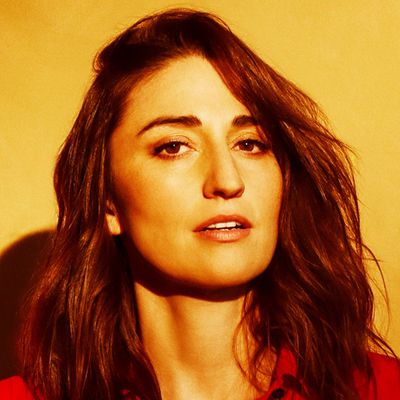
Sara Bareilles is not only a GRAMMY Award-winning recording artist, she’s also the creator of the hit Apple TV drama LITTLE VOICE, the composer of the hit Broadway musical WAITRESS, an actor, and an activist... Read More
From the show: Broadway Gives Back
Guests
Featured Shows
About
Sara Bareilles is not only a GRAMMY Award-winning recording artist, she’s also the creator of the hit Apple TV drama LITTLE VOICE, the composer of the hit Broadway musical WAITRESS, an actor, and an activist. But even with the many demands on her creative life, she gives so much of her time and her talent to help those in need. Join Sara for a passionate discussion on music, women in the arts, and much more.
Looking for ways to give back?
Learn more about the worthy organizations discussed in this episode:
- Rock n’ Roll Camp for Girls
- Susan G. Komen
- National Women’s History Museum
- The Actors Fund
- Black Theatre United
Connect with Sara:
- Website: sarabmusic.com
- Facebook: @sarabareilles
- Twitter: @sarabareilles
- Instagram: @sarabareilles
- Little Voice
- Girls5Eva Trailer
Connect with Waitress:
- Website: WaitressTheMusical.com
- Facebook: @waitressmusical
- Twitter: @waitressmusical
- Instagram: @waitressmusical
Connect with The Broadway Gives Back Podcast:
- Facebook: @broadwaygivesbackpodcast
- Instagram: @broadwaygivesbackpodcast
- Twitter: @broadwaygives
Hosted & Executive Produced by Jan Svendsen and co-produced & edited by Jim Lochner.
A proud member of the Broadway Podcast Network.
Special thanks to Dori Berinstein, Alan Seales, Brittany Bigelow, Katie Rosin, and Yo Nikolova from BPN; Julian Hills from The Bulldog Agency; Eric Becker and Broderick Street Music; the Charity Network; and Glenn Weiss!
Transcript
This transcript was automatically generated and might contain errors.
[0:05] Jan Svendsen: Welcome to the Broadway Gives Back Podcast.
[0:07] Jan Svendsen: I'm your host, Jan Svendsen.
[0:10] Jan Svendsen: This podcast spotlights Broadway actors, shows, and organizations in their pursuit of social impact and philanthropy.
[0:17] Jan Svendsen: Join us as some of the brightest lights on Broadway share their stories about their favorite charities and how they got involved and the people and the causes who benefited from these philanthropic efforts.
[0:33] Jan Svendsen: On today's episode, I have a very special guest.
[0:36] Jan Svendsen: She's a GRAMMY Award-winning recording artist.
[0:39] Jan Svendsen: She's the creator of the hit Apple TV drama LITTLE VOICE.
[0:42] Jan Svendsen: She's the composer of the hit Broadway musical Waitress.
[0:46] Jan Svendsen: And in addition to her musical career, she is an actor and an activist.
[0:50] Jan Svendsen: But even with the many demands on her creative life, Sara Bareilles gives so much of her time and her talent to those in need.
[0:57] Jan Svendsen: I'm proud to call her a friend, and I'm thrilled to have her here today.
[1:00] Jan Svendsen: Sara, welcome to the Broadway Gives Back Podcast.
[1:03] Sara Bareilles: Thank you.
[1:04] Sara Bareilles: Hi, it's good to be here.
[1:06] Sara Bareilles: Thanks for having me.
[1:07] Jan Svendsen: Oh, thank you for being here.
[1:08] Jan Svendsen: So we've worked together on a number of projects, fundraising projects through my day job at the Charity Network.
[1:14] Jan Svendsen: And you raised money for Susan G. Komen and the National Women's History Museum, the Rock and Roll Camp for Girls, and other causes.
[1:24] Jan Svendsen: You also served as an official ambassador for fundraising on Charity Buzz, and you curated a Broadway auction.
[1:30] Jan Svendsen: And I think recently I read that you took part in a virtual drunken artist drinking game to raise money for the Actors Fund and Black Theatre United.
[1:39] Jan Svendsen: My point is you do so much for so many people, and you've done this throughout your career.
[1:44] Jan Svendsen: And you're also one of the most genuine and real people I have ever known.
[1:48] Jan Svendsen: Where do you get this spirit of doing good and giving back? Where does this all come from?
[1:53] Sara Bareilles: Oh, that's so kind of you to say. And I think, you know, it's my family. My parents were always people who oriented themselves around taking care of their community and whether that meant inviting people to Thanksgiving dinner that didn't have anywhere else to go, or something more organized and kind of more based around community organizing, or it's just a gesture to someone that's based in kindness. I think that was a really strong foundation in our household growing up. And so it's something that's always really spoken to me. And I think one of the things that I loved so much about getting to know the Broadway community in a more substantial way is that it is a point of orientation for the community itself.
It is a community of people who are very integrated into their activism for the most part, has been my experience. You know, of course, I'm sure that's not everybody, but like I have been amazed at just how seamless it feels like the Broadway community makes time and space for organizing and fundraising and charitable giving. It's just so much a part of the kind of the ether in this space, which I just I adore and have learned so much from.
[3:13] Jan Svendsen: You basically just said the blurb that introduces this Broadway Gives Back podcast. Because it's true. When I was thinking about what would be interesting to talk about, and I thought about that. It's in the DNA of Broadway and the community to give back. So you were a perfect addition to that Broadway community in that way.
[3:30] Sara Bareilles: Thank you.
[3:31] Jan Svendsen: So we were talking a little bit. You've written your first TV show for Apple TV called LITTLE VOICE, and you've just been nominated for an NAACP Image Award for outstanding writing in a drama series. Congratulations. I loved the show so much, and I also love the backstory of how the show came about. Can you talk a little bit about that?
[3:49] Sara Bareilles: Yeah, I mean, so it was such a it felt like this serendipitous accident where JJ Abrams and I ended up at the same function at the White House, actually, during the Obama years, of course. And he had asked me if I had ever had any interest in working in television, which I had never really even considered at that time, and then we had a follow-up meeting, and I was sharing with him that one of those shows that was so foundational to me as a young woman was a show called Felicity, starring Keri Russell, which is a sidebar interesting factoid is that I tend to be gravitating towards Keri Russell properties. But anyway, so I loved the show Felicity, and I thought, wouldn't it be interesting if to sort of make a show in that ilk that is about a young woman kind of finding herself and who's a songwriter, and at that time we were just sort of on the heels of Waitress, and Jessie Nelson and I were and continued to be very bonded and very close working partners, and she came on the project and it all kind of like bloomed quickly into LITTLE VOICE, which is the namesake of my first record.
And I actually had a song written for my first record called LITTLE VOICE, which was a really important song to me that at that time I was told was not good enough to be on the record, and all these years later, that song ends up being the theme song for the television show and sort of like the thesis statement for the TV show of just, you know, trying to turn down the noise of the world and find your way, find your path as a young authentic artist. And so yeah, we had a beautiful time making that show. Challenging, oh my gosh, and very ambitious, but also at this point so nostalgic because we've stopped filming right before the pandemic. So I look back at those episodes, and I mean, we're in Central Park and Washington Square Park, and it's crowded and it's summertime and nobody's wearing masks, and we're not freaked out yet. It's just a really sweet, nostalgic time.
[6:11] Jan Svendsen: I felt like New York City was almost a character in the show as well. And it felt that way, similar to how, you know, Sex and the City was back in the day, but like New York was such a focal point as well. How much of that I I'm guessing that a lot of that was autobiographical, or there were experiences that you brought from your own life to that character in the show.
[6:32] Sara Bareilles: Some of it was. It ended up being actually a little bit further away. There were little Easter eggs, I think, throughout the series, but her life is very different than my life was, and we even kind of made that decision early on in the process because I was having a hard when it was a little more autobiographical, I was having a hard time like, no, no, but it didn't happen that way. It kind of it was stifling instead of liberating. So this it became a nice way to kind of just open up the possibilities of what kinds of stories we could tell for best. And so that was actually a good little discovery we made was to step a little further away from my life.
[7:13] Jan Svendsen: Right. And then you released your album in September called More Love Songs from LITTLE VOICE. For me, listening to that album, there's like a theme of communication. And I just wanted to ask you, sort of, what did these songs, what do they say to you, or what do you want them to say to your listeners?
[7:32] Sara Bareilles: It's interesting, you know, it's a mixture of songs that have lived in my repertoire for a really long time, or songs that I wrote when I was the age of that character. So songs when I was, you know, in my mid-20s, that just never found a home in the world yet. And the whole project has a little bit of a thread of nostalgia for me. And it taps into a very specific kind of chapter in my life where I think I was so overwhelmed with my own insecurity and excited by the possibility of what could happen, and you know, nothing has formed yet. So it's all open road, and you haven't learned to be cynical yet. And it's such a sweet time in a young artist's life to really kind of swim in the possibility of what could be, so that album feels it's probably like a little bit of an old soul, that record. And it's also the way we recorded it was very old school. It was just like band in a room, lots of live takes. It felt very nostalgic as well to do it that way, more like how I used to record.
[9:00] Jan Svendsen: I'm gonna get back to philanthropy in a second, but I just wanted to talk to you a little bit about your new series that's coming out on Peacock TV, Girls5Eva. Is that how you say it?
[9:10] Sara Bareilles: Yeah, you can't.
[9:12] Jan Svendsen: Um, and you've got some other Broadway talent in there with you, Renee Elise Goldsberry, and you've got Tina Fey who created the show, um, Busy Phillips and Paula Pell. So that looks like so much fun, by the way. Can you share any tidbits about that show or about the shoots?
[9:28] Sara Bareilles: Oh my gosh, it was like a literal fantasy come to life. It's every possible like dream I'd ever had for myself. Like, like I can only get worse from here. It's like it really just, you know, I got the call in the middle of last summer, so it was I want to say it was maybe June or July, and so the context of the timing of getting that phone call felt really meaningful because I had a really hard time just after things shut down, and I think a lot of people went through this where like the novelty wears off of, oh, I'm gonna do puzzles and just be quiet, and make sourdough.
[10:14] Sara Bareilles: Yeah, yeah. I got past that pretty quickly and went into, you know, some sort of existential panic, as I think lots of people were doing. So it felt like a touchstone of some again, some possibility of what could come, and that was very calming to me. So, but the opportunity to work with Tina Fey and Meredith Scardino, who was the creator of Kimmy Schmidt as well, um, the unbreakable Kimmy Schmidt, which is another one of my favorites. But we're, you know, it's the idea of doing something that, as it was pitched to me, was sort of, you know, 30 Rock with a softer heart. And I was like, I can't think of anything more fun. It's music, it's comedy, it's women, it's about women in my age group that are, you know, trying to find themselves or rediscover themselves in some way.
And the cast is extraordinary. It is so much fun to go to work. We were so sad to leave at the end, and it was incredibly challenging, you know, making a show during COVID is daunting for a lot of reasons, but I think there was also this kind of current undercurrent amongst everybody at work that we were all just so grateful to be able to go to work at all.
[11:38] Sara Bareilles: So it was there was a really nice sense of gratitude that was kind of just present for us every day, or we just felt like it's hard to be in masks and you know, getting tested every day and all that stuff, but it was we all felt very lucky.
[11:55] Jan Svendsen: Um I can't wait to see it. Um there's a theme so far that we've been talking about, and it it's you associate yourself with a lot of women's and girls' empowerment causes and shows. And I just wondered sort of if you think about this in an overarching way with intentions and specific goals, or does it just sort of happen organically? I know that when I listen to your music, or when I watched LITTLE VOICE or Waitress, which we'll talk about in a couple minutes, um, I feel sort of heard and I feel empowered and I feel motivated, and I'm not your target demo, most likely, but I just wondered sort of how you how you do you think about that in a bigger picture, or is it just something that happens, or how do you how do you get there?
[12:40] Sara Bareilles: First of all, yes, you are target demo. But I just am really interested in talking to people who are older women. Well, no, people, yes, also. But that's me too, by the way. But just people that are interested in truth and honesty and and kind of seeking out the soft places to land in the world. Like um, I think it's it hasn't necessarily been a totally conscious decision, uh, at least not initially, but I have always really made it a point to try to go towards what feels the most true and uh in alignment for myself. Like I want to do things that feel good to do and to make, and I want to look back on the choices I made and feel like yeah, that was an important sort of statement to make it to the world.
And and really the thing that drives me the most is just about wanting to encourage people to feel like they're enough exactly as they are. I think I you know, I was someone who I was bullied growing up, and I and I had um you know, a lot of body image issues, and I went to a small Catholic school that was like very toxic at times, and also very wonderful, like that it what I took away from my from my adolescence was like it's just hard. This is just hard to grow up. And I say that in my 40s as well. It's hard to be a human and to try to be a conscious-minded human. I mean, look through look at you know, this incredible expansion of consciousness we've gone through this last year. Um, so I think where I can offer people, you know, words of support or comfort or validation, um, just that like trying to be good is sometimes enough.
Not always, but but really it's it's you know, intention does matter in this life. And I think the more we can give that um also just the the freedom to young women in particular, but young people, um, to to understand that they're it's hard to turn down the noise of the world, especially at that age, because there's sort of even now so much more so there's so much there's so much funneling their attention towards this kind of marketplace that lives online and the compare and despair trope, it's just so loud for so many people, and I think it is hard to find yourself and to you know know that you are enough.
[15:20] Jan Svendsen: Yeah, and the whole idea of finding yourself. I mean, that's a journey throughout your entire life. I don't think anyone ever finds themselves, you know. No, how do you decide, you know, sort of which causes or organizations you're gonna support and how you support them? I mean, I guess there are some charities where you take out your checkbook and you write a check. There are others where you give of your time and your talent, there are others where you may share information in social media. Like, how do you is again, is it sort of just a oh, this sounds really interesting, I'm gonna do this because it came to you, or do you like seek things? Or how do you how do you get there?
[15:52] Sara Bareilles: I I it's a little bit of a mixed bag. I think you know, sometimes the causes that are near and dear to you tend to find you, especially once you've done a little bit of philanthropic work and and then um people sort of get to understand your interests and then sometimes it's relationships. It's people like the Rock and Roll Camp for Girls in Los Angeles is a is an organization I have worked fairly closely with over the last ten years or so. Um, and that's run and curated by some of my very best friends. So it's just work that I really believe in, and I've seen firsthand as I was a camp counselor and a volunteer and did fundraising and stuff for them. Um, that it's just doing really good work in the world.
So it matters to me to help kind of raise the profile where I can offer my time if that's the most valuable thing. I think it's each situation is different, and sometimes it's just you know, sending money to an animal rescue organization that I follow on Instagram and I'm I just see the work that they do and I appreciate it. So I want to support where I can. But it's hard. There's a lot of need. There's a lot of need in the world. And so I cannot also understand people getting to a place of fatigue and feeling like there's so much deficit just within ourselves sometimes where we're just I'm not getting enough. And so I don't have it to give. But my parents again also were like, if you don't feel so good, go do something nice for someone else. And you'll see how how powerful that that act of of generosity or altruism can be, and and really what a you know seismic shift it makes inside ourselves.
[17:37] Jan Svendsen: That's definitely a theme that with the other guests on the show as well on this podcast, we've talked about how you feel so good when you it's really more of a selfish act because you're giving and it makes you feel so good to do that. Um I think too, as we're we're faced with so many problems that are macro, and we we're up against these kind of unsolvable problems in in many regards. It's just like we're not going to fix the world ever. There will always be poverty and hunger, and you know, it's in some form or another. And so sometimes doing something that's micro and based in a community, like I always feel like that's a really good solve for feeling that powerlessness about how we can't make the world better like that.
That we have to, you know, invest in our communities and and you can really make a difference in one person's life, truly, just by being kind at the bodega or whatever. It's just like they're just it. I think kindness and and love truly are the the most powerful forces that we have.
[18:44] Sara Bareilles: I couldn't agree more, and it's interesting because we've had differing opinions of different guests on the on this podcast, where some have said, no, you have to make a big statement and you have to pick something really big and be very strategic about it. But I would say most people feel similar to what you've just articulated, which is it's the small acts of kindness and um that we can we can control and that make us feel good and and helping even just one person is so meaningful.
[19:09] Jan Svendsen: Yeah, I think that's right. I mean, I I tip my hat to someone who can really kind of like develop a strategy. I'm like a little more disorganized in my mind, so I tend to just a little more scattershot that way. Squirrel, yeah.
[19:26] Jan Svendsen: Um let's talk about Waitress for a minute. Um that was the show that brought you to Broadway. And it was so groundbreaking in so many ways, um, especially because it was the first show to have an all-female creative team. Um and I just wondered you know again with the theme of of you know women and and girls, what do you think having all of those women in the room brought to the table, not just for the project but for the collaboration in general. How did that how did that feel to you? And obviously you've now collaborated with a lot of other women and other shows too. So I just wondered you know what um what you think that adds in terms of value.
[20:04] Sara Bareilles: You know what's so interesting about Waitress is that it was we were well into the process before anybody noticed that that's what had happened. So what I really appreciated about that part of it was that it wasn't a casting decision. It was just people being at the top of their field being paired or being hired and creating this thing and then understanding that that like oh we all happen to be women which felt like a very um I don't know I thought that was serendipitous in a way it felt like a little glimpse into the future where like what if we could just all be people and and then it wasn't so much about it has to be this or that but that we were the right people to tell this story at this time and um I don't know you know, I I think that so much of these conversations are still in evolution and rightfully so but that was one thing that I really appreciated about the the the experience of making Waitress and and I just I learned so much from that process on so many levels but we also had wonderful male department heads and we have we had wonderful male collaborators so it it never felt like there were only women in the room but um it was really powerful to be in an experience and then take note of oh it's it is unusual sadly but um really really powerful to to be collaborating with women and I just I loved them all so much and it really became like such a sisterhood by the end and and we got into it we had fights and you know it was it was a rocky road and and the stress of putting together a musical oh my gosh I have such tremendous once we opened Waitress I was like I am only a fan of anybody who gets anything made ever because this is so hard.
[22:08] Jan Svendsen: Yeah I remember you saying it was a hard process and it was you learned so much.
[22:12] Sara Bareilles: Yeah yeah yeah. You talked about Waitress being a family and I guess I was thinking about your family a lot um when um you know when COVID came and with Nick Cordero's death and you know, it was so heartbreaking and the story was so public for so many months and I think everybody's hearts just ached um how did you all cope with that news especially because there was social distancing and you couldn't all be together.
[22:39] Sara Bareilles: I mean I think the only way you can process that is to have compassion for how many people are going through the separation and loss and grief in this new format. It is um I mean my heart continues to break for Amanda and Elvis, his family that got and his siblings and parents. I mean, there's just such a loss there.
[23:06] Sara Bareilles: Um and to have to say goodbye to someone in that way feels particularly cruel. And I think that's something that this virus brought into the foreground for so many people. I mean, like I think about hugging my friends, and it's just feels like this foreign like, oh, we used to do that thing. It's just any kind of interpersonal contact is so charged at this moment because we're all so frightened of spreading or sharing or you know, getting um the virus. So I it gave me a lot of compassion for all of these, you know, hundreds of thousands of families who have had to say goodbye to someone. And it was so public, it was like a strange thing because we were also removed that it felt like the only way you could connect was being on social media.
So it was a it was a strange, it was a strange time and um, you know, well, Amanda also, you know, she I think did something so unique. I mean, she really put herself out there and made it very public. Yeah, and I think that helped it hopefully it helped her, but cope with it, but it also helped so many other people. Um it was a really brave thing to do. I I don't know that I would have the strength to do that myself, and that's not how everybody copes with something, but I thought it was um it felt really authentic to her, and I have seen how what a huge difference that's made for so many people to to be able to share in grief or just to watch how someone else is going through it, and um I can't imagine it's an easy road to walk, um, especially publicly. So she's she's a real she's a tough, tough cookie.
[24:56] Jan Svendsen: Um speaking of waitress, um, so looking forward and hopefully optimistically forward, um, what are the plans for waitress in the future when um when life resumes some kind of new normal?
[25:09] Sara Bareilles: Well, as we speak, there are rehearsals in Japan in for waitress in Japanese, and uh wow. So I just posted a video of myself recording. We do this little jingle at the beginning of the show that reminds people to turn off their cell phone, and I recorded it myself, and um, and so I was just recording it the other night of singing it in Japanese, and I have the phonetic spelling written out in front of me, and I'm sure I'm butchering it, but you know, hopefully intention. Um, but yeah, so waitress will be opening in Japan, which is tremendously exciting, and there's an Australian production that's in the works as well, and um a tour of the UK that will hopefully be launching next year. Um, if not late this year, I think I think we're set for late this year, and I think I'm doing the thing where I'm just imagining everything will get pushed again, but you know, we we'll just we have to respond to what's safe and healthy for everyone.
But waitress thankfully is going to have a really big life in the world, and and we're at the precipice of this next phase where um you know community theaters will be able to do the show, and hopefully we're we're talking about trying to develop something for the show that we're to make the material a little more kid friendly for for like a high school we're like not sure how you tell this story but um you know there's a lot of interest and excitement about telling this story so we want to make it as accessible and to as many people as as can see it.
[26:46] Jan Svendsen: Um so speaking of theater in the future, um I've asked a lot of my guests the same question, and I don't have an answer, so I've decided that my answer is gonna be a compilation of everybody else's answers. I'm gonna pick and choose. But if you could wave a magic wand, what changes would you want to see um once Broadway's up and running again? And particularly in this year after COVID, after all of the systemic racism, you know, conversations that are happening. I just I feel like, you know, and because Broadway's been down for so long, there's this amazing opportunity to, you know, to change things and for the better.
[27:23] Sara Bareilles: Yeah, yeah, yeah. I think the two things that feel that are the most important to me is diversity in storytellers and storytelling, um, the kinds of stories that get made into musicals and who gets to make them. And uh affordability. I think that is one of the things that feels um like the saddest thing to me about Broadway is that the exclusivity is sort of built into the structure because it's so expensive. And it's expensive for a lot of reasons. It's not even just greedy producers who are trying to, you know, make it's it really is a it's a form and function of the way this structure is set up and how much it costs to have a building and you know all kinds of things and unions and um so I understand that it's complicated, but I really think that changing the theater, which is what it's meant for, is to be uh to have um a more open door policy to the community it is made of and is for.
So um those are those are the two main issues that I think deservedly need to be really reframed and and attacked. And again, I don't really have the answers for that either. But um I do know, you know, there's a lot of good people working on it, and we can see how you know the city that I love so much. You know, I've only been here nine years, but I feel like a New Yorker in my heart, and and um you just feel like when when theater and art and culture aren't pulsing through the veins of this city, it is you know it feels bleak in certain ways. So you we just we get it this amazing opportunity to see the value of arts and culture in when we knew that, but we get to really see what it looks like if if it wasn't here, and I think there will be such an appetite for it in every way, shape, and form. And and that feels like a really good thing too.
[29:38] Jan Svendsen: Yeah, it's been like a controlled experiment, yeah, this last year.
[29:41] Sara Bareilles: The worst one, the worst one ever. Although I will also say, you know, looking at the you know, the glass half full, there have been there's been so much creativity this year, too. Yeah, people have been doing I went we attended a party the other night on Zoom. It was a dance party with a DJ, and everybody was dancing in their boxes, and I thought, okay, this is I'm not doing that. But of course, like you get into it and we were dancing in our box, you know, soon. So I feel like there's been a lot of interesting ways to create, um to create in general, and but there is a void, and I can't wait till we get back together. I miss the human connection. I keep saying this that it it feels like there what we've been what's been illuminated is what what a flimsy surrogate a screen is for human interaction.
It just doesn't as much as we are oriented towards our screens and our lives and our livelihoods, there's just nothing like it. There's nothing like standing in a room and watching people on stage or listening to a band or sitting around a dinner table with your friends. There just there is no substitute for that. And I don't want to have dinner with FaceTime. I want to have dinner with my friends, you know.
[30:52] Jan Svendsen: Yes, I do understand. Um, you know, if if your fans were listening to this, which hopefully they are, um what would you, I don't know if you could advise them or what would you share with them as to ways that they could, as everyday philanthropists give back.
[31:09] Sara Bareilles: Well, I think first of all, I just I love my fan community so much. They are my experience of them is that they really are um tender hearted. They're people that feel they feel the world in a big way, just as I do. And the the tricky part of being someone who feels the world so big is that it's very easy to get overwhelmed. And I see a lot of people really struggling with their mental health, really struggling with just can I make it? And you know, have had some really beautiful exchanges with people online about self-harm and about getting help. I'm always been a huge advocate for like for um mental health, taking taking care of your mental health. And I'm someone who has been on medication and been in therapy for many, many, many years.
So therapy is my number one go-to. Um, meditation also being a tremendous tool in self-care for me. Um, and so I think that the first thing I would say to my fan base is to make sure that you're taking care of yourself, and that is the the first stop for our philanthropy in this world is to just become friends and friendlier to ourselves, and then it can be really simple if you're not someone who has a lot of fun. If you got money, share it. And if you and if you don't, what you can share is kindness and a smile and a dollar, or you know, it doesn't have to be these big, I think again, it's so easy to get overwhelmed with how much need there is, but if you know, volunteering your time is is something you can do that is extraordinarily valuable, and and as we come out of the other side of this pandemic, and in certain ways, there are ways to engage with the world again, and I promise you it feels good.
It feels so good to be around people other people who are making that choice and that sacrifice, and um, you get sort of reminded that you're not alone in the world. There are other people who are trying to do good even though it's hard.
[33:26] Jan Svendsen: Well, that was an optimistic note, and I'm gonna end it on that. Thank you so much for being here today. I really appreciate it, and I am look forward to seeing you and hugging you in the future.
[33:38] Sara Bareilles: In the future, yes, thank you so much.
[33:40] Jan Svendsen: Thanks for listening to this episode of Broadway Gives Back. Broadway Gives Back is part of the Broadway Podcast Network, produced by Dori Berinstein and Alan Seales with Brittany Bigelow, and music by Eric Becker at Broderick Street Music. Special thanks to my producing partner, writer, and friend, Jim Lochner, and to Katie and Yo at BPN, Julian Hills from the Bulldog Agency, the Charity Network, and to my fiance, Glenn Weiss, who is always my consultant.
[34:09] Jan Svendsen: If you like what you hear, don't forget to subscribe and rate this podcast wherever you stream your podcasts. You can also follow Broadway Gives Back on Facebook and Instagram at Broadway Gives Back Podcast and on Twitter at Broadway Gives. To learn more, visit BPN.
© Broadway Podcast Network, All Rights Reserved