

You may know him as the star of the hit HBO documentary Siempre, Luis. But for over 40 years, Luis A. Miranda, Jr. has used his tireless energy to champion community activism... Read More
From the show: Broadway Gives Back
Guests

Featured Shows

About
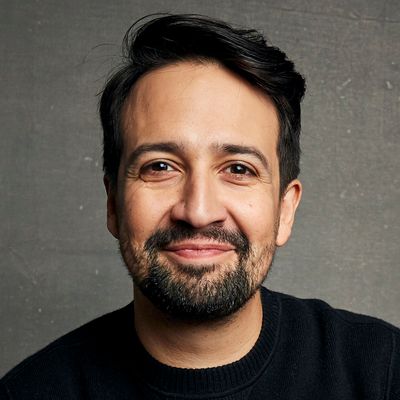
You may know him as the star of the hit HBO documentary Siempre, Luis. But for over 40 years, Luis A. Miranda, Jr. has used his tireless energy to champion community activism. He is the Founding Partner of The MirRam Group, a government affairs, lobbying, and political consulting firm in New York City, and the Founding President of the Hispanic Federation. He also chairs or sits on the board of numerous political and arts organizations, including the Latino Victory Fund, the Northern Manhattan Arts Alliance, The Public Theater, NYC & Company, The City, The Broadway League’s Viva Broadway, and the Caribbean and Latin American Studies Department at the CUNY Graduate Center.
With his wife, Dr. Luz Towns-Miranda, and his children Luz Miranda-Crespo, Lin-Manuel Miranda, and Miguel Towns, Luis and The Miranda Family passionately advocate for education, the arts, and social justice, along with a sustained focus on relief and rebuilding efforts in Puerto Rico in the wake of Hurricane Maria. Join us (with a surprise guest appearance from Lin-Manuel!) for an impassioned discussion of the power of activism and making a difference.
Looking for ways to give back?
Check out these worthy organizations discussed in this episode:
Connect with Luis:
- Twitter: @Vegalteno
- Instagram: @Vegalteno
Connect with Lin-Manuel:
- Website: LinManuel.com
- Twitter: @Lin_Manuel
Connect with The Broadway Gives Back Podcast:
- Facebook: @broadwaygivesbackpodcast
- Instagram: @broadwaygivesbackpodcast
- Twitter: @broadwaygives
Hosted & Executive Produced by Jan Svendsen and co-produced & edited by Jim Lochner.
A proud member of the Broadway Podcast Network.
Special thanks to Dori Berinstein, Alan Seales, Brittany Bigelow, Katie Rosin, and Yo Nikolova from BPN; Julian Hills from The Bulldog Agency; Eric Becker and Broderick Street Music; the Charity Network; and Glenn Weiss!
Transcript
This transcript was automatically generated and might contain errors.
[0:05] Jan Svendsen: Welcome to the Broadway Gives Back Podcast.
[0:07] Jan Svendsen: I'm your host, Jan Svendsen.
[0:10] Jan Svendsen: This podcast spotlights Broadway actors, shows, and organizations in their pursuit of social impact and philanthropy.
[0:17] Jan Svendsen: Join us as some of the brightest lights on Broadway share their stories about their favorite charities and how they got involved and the people and causes who benefited from these philanthropic efforts.
[0:34] Jan Svendsen: On this episode of the Broadway Gives Back Podcast, I'm excited to welcome a true maverick in the community.
[0:40] Jan Svendsen: You may know him as the star of the hit HBO documentary Siempre, Luis, but for over 40 years, Luis A. Miranda, Jr. has used his tireless energy to champion a number of important causes.
[0:53] Jan Svendsen: He is the founding partner of the MirRam Group, a political consulting firm, and the founding president of the Hispanic Federation.
[1:00] Jan Svendsen: He is the board chair of the Latino Victory Fund and the Northern Manhattan Arts Alliance, and a board member of the Public Theater and NYC & Company.
[1:10] Jan Svendsen: He also chairs the Broadway League's Viva Broadway Initiative.
[1:14] Jan Svendsen: Luis and his wife, Dr. Luz Towns-Miranda, have been married for 42 years and they've raised three amazing children.
[1:22] Jan Svendsen: Luz Miranda-Crespo, Miguel Towns. Oh yeah, and this very special guy.
[1:27] Lin-Manuel Miranda: Hi guys, it's Lin-Manuel Miranda. I'm sorry I can't be there with you with my dad to record this podcast, but I wanted to answer a few questions and be a part of this conversation.
[1:35] Jan Svendsen: So stick around because Lin will be joining us later to answer some questions.
[1:39] Jan Svendsen: But first, I'm happy to introduce someone who, along with his family, are dear friends, and together we've collaborated to raise tens of millions of dollars for dozens of causes.
[1:49] Jan Svendsen: Luis is the driving force in the Miranda family and sets the stage for all of their activism and charitable efforts.
[1:56] Jan Svendsen: Luis, my friend, welcome to the Broadway Gives Back Podcast.
[2:00] Luis Miranda: Thank you very much, Jan. I am so excited that we're gonna have a conversation, like hundreds of conversations that we have had over the years, but this time it's called a podcast.
[2:13] Jan Svendsen: Exactly. So Luis, do you remember the first time we met?
[2:17] Luis Miranda: I was trying to think about it this morning. It was over 10 years ago, and it was through Lin. At the time I was producing Broadway on Broadway, the concert in Times Square, and Lin contacted me and asked if he and Karen Olivo could perform the Jay-Z song, Empire State of Mind as the finale.
[2:35] Luis Miranda: I said to him, yes, you can, but there's a deal. I need you to help me start this program called Viva Broadway at the Broadway League. And it was about encouraging more Latinx engagement on Broadway.
[2:47] Luis Miranda: Lin looked at me and he said, nope, the person you really need is my dad Luis. And we met for lunch at Glasshouse Tavern, and the rest is history.
[2:57] Luis Miranda: I totally know. It's incredible because my son thinks that I pimp him, but I think he pimped me as much as I pimp him for causes and things that we believe in.
[3:11] Luis Miranda: I do remember, and you know, Glasshouse Tavern has become a regular spot for me since I had lunch with you there.
[3:19] Luis Miranda: Yeah, that was it seems like such a long time ago, but it also seems just like yesterday. So speaking of yesterday, I do want to start this conversation, and I really want to kind of dig back into your history and your past.
[3:33] Jan Svendsen: And you know, Luis, you are one of the most kind, caring, amazing human beings that I know. So, how and when did you get involved in sort of doing good? Like, was it your upbringing that helped make you a more socially responsible person, or is it something that came to you later in life? But why are you so good, Luis?
[3:53] Luis Miranda: Thank you. Thank you for calling me good. Believe me, there are plenty of people who will disagree with you, particularly people with whom I had run campaigns against. I have always been doing charity and it had to do with my upbringing. You know, I grew up in a small town, and something that is fascinating and wonderful about small towns is that everybody knows everybody.
[4:30] Luis Miranda: And that as much as you fight in a small town, because it's like family, you help as much as well. So places that we may think are like bad institutions, like the Lions Club, the Rotary Club, the Red Cross, those were the institutions I did a lot of work with, because in every small town in Puerto Rico and in America, those institutions are important to help others.
[5:08] Luis Miranda: So my activism actually began in working in those institutions because my parents were very involved in it.
[5:18] Jan Svendsen: So I know I've talked to other people, and we've talked about this too, but there's a lot of emotion that comes up when someone is being philanthropic and active and using their activism and being socially engaged. So while you're giving, you're also kind of getting. And I just wondered if you could describe the feelings and the philosophies that you have when you are being philanthropic or socially active.
[5:49] Luis Miranda: You're absolutely right. You give as much as you get. When the whole mess with COVID-19 began, as you know, because we work with you and Charity Network, we started the fund at the Hispanic Federation. We knew, even though it had not happened, but we knew that the Hispanic community, that the Latinx community would be impacted disproportionately.
[7:18] Luis Miranda: And we knew, even though it didn't happen at that point, because we have the health indicators, we have the lack of access to health care, we have entry-level jobs where people have to show up somewhere that you could not do it remotely from your computer. So those were all the ingredients that made the Latino community a primary target for COVID-19.
[7:48] Luis Miranda: So we started the fund very, very early on in the pandemic. And I see how people partly because we have had such a heartless precedent and administration dealing with all of this pandemic. People begin to stay away from causes or work away from causes, not because they don't think that it's important, but there is fatigue at some point, there is fatigue.
[8:45] Luis Miranda: Just to remind ourselves every day that this is not 113,000, 250,000 that is just not a statistic. It's a real issue that affects real people throughout the country.
[9:04] Jan Svendsen: Yeah, I think that we've all gotten sort of dazed by just the staggering numbers, and we've lost—we don't even realize how many souls have been affected and how many people's lives have been completely shattered. You know, talking about this, you know, obviously for what's going on right now with, you know, with I think you've kind of split this year of 2020 between political activism and supporting COVID relief efforts.
[9:33] Jan Svendsen: So I think that your charity work or your philanthropy work goes kind of in two directions. Part of it is always going to be political, and part of it's going to be supporting at-risk communities. Does that sound right to you? And how do you kind of decide who you're gonna support and what you're gonna support?
[9:52] Luis Miranda: I just think that politics permeates everything. That's what I taught my kids. That's what I tried to communicate to anybody who will listen to me. Because to the extent that we elect bright people with good hearts, we are leaving the policy implementation and creation in good hands.
[10:19] Luis Miranda: That's why I believe that politics is so important. And at the end of the day, it is government that has the largest of resources to fight most of the issues we have to fight and resolve in our society.
[10:43] Jan Svendsen: But on the other hand, there are the small things that you need to do. I have witnessed your family, and I have witnessed how they come together around causes. How did you instill philanthropy in your children?
[10:59] Jan Svendsen: I see I remember back to the time that you did the panel with the entire family for the Town and Country Philanthropy Summit. And all six of you were there. It was Lin, and Vanessa, and Sita, and Luz, and you all were so united on your family's philosophy about activism and philanthropy. Can you just talk a little bit about how did you raise your kids to be like this? And how did you get everybody united in this way?
[11:42] Luis Miranda: We had smarts and energy. So equity was always part of what we gave in our community and to institutions. So when a hurricane hit Puerto Rico in the early 90s, and we did a telethon to get dollars and funds and resources, Lin-Manuel and Luz-Cita answered the phones. Those were the days where people called in and got donations on the phone.
[12:20] Luis Miranda: When we had to qualify a candidate to run for office, my kids went door to door with petitions for that candidate. It was always a family enterprise, and that's why even now it continues to be a family enterprise.
[12:45] Luis Miranda: We're just very lucky that ideologically we are in the same place. But we also work hard in making sure that we convince each other whenever there is a particular cause or institution that it's important to only one of us. And we always discuss why it's important.
[13:21] Luis Miranda: I remember, Jan, one morning during the Hamilton run in Puerto Rico, Luz and I, in the morning when I make coffee and we sit and talk about the day ahead and the day before over coffee, Luz had visited the Planned Parenthood in Puerto Rico Pro Familias.
[13:52] Jan Svendsen: Can I just insert here for all of our listeners? Luz is on the board of Planned Parenthood as well. So this is an important cause for all of you, right?
[14:04] Luis Miranda: It is, but you know, in Puerto Rico, we were involved in so many other things right after Hurricane Maria that when Lou said, I want to make sure we commit to help pro familias Planned Parenthood in Puerto Rico because the doctors that provided pregnancy terminations are aging, and there isn't a new group of doctors out there, they need to be trained.
[14:41] Uh, and so we talked to the entire family, and it then became a priority for everyone. Whatever we do, we all have to do. Someone can become the orchestra director for that particular issue because they're more passionate about it than the rest of us, but we all have to be together ideologically and ready to help.
[15:11] And I've witnessed that with all the work that we've done together, every member of your family has had a cause that they've been passionate about. We've worked on climate change and the environment, which I know is important to Vanessa. Planned Parenthood was important to Luz, immigration, I know was very important to Lin, who we'll be hearing from later in this podcast. There are so many causes that your family has supported, but I know that there are two that are very near and dear to your heart, Luis. The Hispanic Federation and the Latino Victory Fund.
[15:40] Can you talk a little bit about those?
[15:42] Luis Miranda: Uh yeah, you know, for Hispanic Federation, it's an institution that myself and others work together in developing in the early 90s. I was the founding president. And I always thought that it was an important institution because it was modeled after institutions that have been incredibly successful through the decades. Support financially and with sweat equity institutions that are important for the health of that community.
[16:49] So I have continued that work with the institution as it goes from state to state as it expands its horizon and its causes. It is not until 60 million people receive its proper share of resources and access and equity that we build a better nation. And it has happened for every wave of immigrants into this country. And it has made the country better. So the formula we know that works.
[17:41] And that goes hand in hand with Latino Victory, which is the other side of my brain, which is politics. It's how do you increase Latino participation and Latinos in elected office? We are 20% of the nation's population and one percent of the people in elected office. And until the table of power includes everyone, you will have a divided society.
[18:21] You will need the Black Lives Matter movement for equity and justice. So we constantly have to strive to develop a society that is more diverse and a power structure that is more inclusive. And unfortunately, with power, people who have power don't want to give it up. So you have to take it away.
[18:48] I think we're seeing that in line. I think we're seeing that right now, aren't we? With the election results.
[18:53] Jan Svendsen: Yes.
[18:55] Luis Miranda: Well, this one we're gonna have to push out of the White House. But you see it in little ways and in big ways. And when you take power away, you create this discomfort. And you have to do it in a way where that discomfort is created, but we work to bring back equilibrium to our society.
[19:26] Jan Svendsen: Wow, you said that so perfectly. Um, that's great. Um, you know, I want to talk a little bit about Hamilton because it changed all of your lives and your family, but it also changed the world, it changed theater, it changed everything. But I want to talk a little bit about how Hamilton's success changed what you and your family were able to do in the world of social impact and charity.
[19:53] Um, and I'll just I'll start with sort of one thing. I know that many people, when they become successful, they can you know buy bigger houses or hire more people to help them, or you didn't do any of those things, but you did hire one person, a full-time director of philanthropy, um, Sarah Miller, who is amazing.
[20:14] Uh, and I just think that that demonstrates so much where your priorities are at as a family. So if you could just talk a little bit about how Hamilton's success helped move the needle for you in regards to doing more good.
[20:34] Luis Miranda: It allows us to have disposable income. Uh, we always had the intellect and the energy, so sweat equity was always part of the equation. Uh, but you know, I could see how people with resources help causes and how important that is. I have been in enough institutions to see how a chunk of money makes such a difference in serving needy populations, in expanding resources for an organization.
[21:18] So it gave us the dollars that we never had. So we live in the same house.
[21:25] Jan Svendsen: I know.
[21:30] Luis Miranda: Where we have lived for the last 40 years. We go to the same places that we used to go because we spent most of the time with friends and family. So that's what we enjoyed doing before. That's what we continue to enjoy.
[21:58] But we knew early on, and Lin-Manuel and I actually had this conversation early on. It feels like Sarah Miller has been involved in our lives forever because she has.
[22:45] We should be involved in because we all have jobs and realities. And it was Lin-Manuel the one who said to me, talk to Sarah. I think she's ready to leave the place where she's at, and she can begin to work with us.
[23:09] And to her credit, she said yes right away. She has always been part of the Miranda clan, but this will make her a key part of the Miranda clan since philanthropy giving and doing good, it's so important for our family.
[23:37] So now when my daughter says, you know, I met with so and so and so, and they won blah blah blah blah blah. I said, talk to Sarah.
[23:48] Jan Svendsen: Well, speaking of talking to Sarah, Sarah and I have had the good fortune to work with each other and been joined at the hip for many of the fundraising initiatives that we've done with your family. Um, but let's pivot a little bit because one of the things Sarah and I did work on with you all, um, and that was the incredible fundraising initiative for Puerto Rico.
[24:07] So can we talk a little bit about just differences and how philanthropy is in Puerto Rico versus how it is here on the mainland? Um, and any of your insights on that.
[24:18] Luis Miranda: So Puerto Rico, it's starved of resources. Uh, and it is starved of resources because before Maria the participation of philanthropy from the US in Puerto Rico was small, was you know very very minuscule.
[24:48] Uh there is when you think about In the Heights in 2011 and Hamilton in 2019 were the first and only two equity Broadway productions that have gone to Puerto Rico.
[25:09] Uh, you realize that you have to do real work. Uh, and that's what we immediately started doing, but not only by getting resources for the island and its institutions, but also by convincing others to invest.
[25:37] Uh we just started this art program with Bloomberg Philanthropies, and it was a fascinating process. Uh this is a fantastic institution, Bloomberg Philanthropies, international philanthropy that had actually tried to do something in Puerto Rico, but didn't know how to start, because the politics are difficult, because you need knowledge on the ground of how to move left or when to move right, and so when we went to them, then we began real conversations of putting resources together and for them to do something that they have done over and over in the United States but now with arts organizations and training of our art organizations in Puerto Rico.
[26:46] So it's not only the dollars it's also bringing the access of amazing institutions who otherwise will not be in the island.
[26:58] Jan Svendsen: Right. So this brings up of course you recently released the documentary Siempre Luis on HBO and um I thought maybe you could talk a little bit about what it feels like to be the subject of the film and there's a lot obviously in the film that has to do with your efforts to bring Hamilton to Puerto Rico and your nonstop in the most Hamilton of ways Herculean efforts of you know building back Puerto Rico and helping the relief efforts after the hurricane there was a lot of things that came together at that time that you were dealing with but what is it like to be a star so I you know I'm I'm I'm I'm not a star.
[27:43] Luis Miranda: No you're a star in many of us though.
[27:46] I am I'm I'm I'm this guy who worked very hard who's very proud of his accomplishments most important of all of all racing amazing children and trying to keep together an amazing family.
[28:06] You know I looked at it as initially as I'm doing this as a favor to JJ.
[28:20] Luis Miranda: John James, who directs the documentary, is someone that I have a lot of affection for. He is very talented and has always wanted to be in this lane. I imagine he heard me say so many outrageous things at the kitchen of 895 Broadway where we work together that he probably said, you know, this guy is an interesting subject. When you add that to the fact that Lin-Manuel and Hamilton were beginning to take off in an unbelievable way, I think that was something that was intriguing to him.
[29:15] Luis Miranda: For me, it was trying to merge him and Carlos as furniture around me because if that you cannot be authentic. I do these tricks with my head, and one of them was they don't exist; they're just like a sofa or a painting or a mirror. That allowed real conversations to flow and for real conversations to occur. At the end, when I saw the whole thing, I was surprised, first, by John James, Carlos, and everyone who was involved at their talent and how they were able to organize in 90 minutes the ADHD, schizophrenic phase of my life and of everybody around me. The rest is history.
[30:44] Jan Svendsen: I mean, I know so many people that have seen it that don't know you, and everyone has said to me, oh my god, it was so amazing, he's such an amazing human being, he's so authentic. That was the word that just kept coming up, was he was so authentic. I have to say, I remember some of the scenes in the film because I was there in the background hanging out, and you're right, the film crew just became sort of just a piece of furniture in the room, and we all sort of just ignored it at some point. That's when the real authenticity, I think, was able to flourish. How's the film doing? What kind of feedback are you getting about the film?
[31:22] Luis Miranda: You know, I get fantastic feedback from total strangers who leave a message that then gets transcribed at the MirRam Group or at some of the institutions that I'm affiliated with. The level of care, sometimes annoyingly so, but because the documentary starts with my cardiologist and my wife making faces about my heart attack and how I don't take care of myself, which is absolutely false.
[32:05] Jan Svendsen: No, it's true.
[32:06] Luis Miranda: It's true. You do not take care of yourself, and I've got an idea about that too.
[32:10] Luis Miranda: My doctor said to do three things: do exercise, eat well, take your pills. I do those three things. End of story. I get amazing inquiries from people who I haven't seen in years. A classmate of mine in sixth grade, she played Maria von Trapp, tracked me down because of the documentary.
[33:01] Jan Svendsen: Wow.
[33:07] Luis Miranda: My therapist, who I thought was dead.
[33:14] Jan Svendsen: They found you, huh? Your work isn't done.
[33:19] Luis Miranda: When I was in my twenties.
[33:22] Luis Miranda: So if it was just to reconnect with so many amazing people that have touched my life, if that was the only reason why I did this documentary, that was worth it. That was worth it.
[33:39] Jan Svendsen: So you are one of the most caring human beings I've ever met, but you're also relentless and you're demanding. You see that in the documentary. No one says no to Luis Miranda. How do you do that? How do you get things done?
[33:56] Luis Miranda: Because I always create a mental plan of what I want. I then get feedback from people who I care about, and they care about me, and they're smart, and they make my idea so much better. Now it's not my idea anymore; it belongs to the people who are massaging and creating that idea. Then we go and we charge, but now we charge as a collective of people who are invested in making something happen. It may be that sometimes I'm the vessel to do the ask to take it to the next level, or at some point, my original idea, now I'm just giving feedback, and I always try to figure out what is my role in making this happen. My dad used to tell me all the time, the worst I can say is no. So if the worst I can say is no, why not ask?
[35:27] Jan Svendsen: Exactly. I want to talk a little bit about the work that you do as a parent with both of your kids on advocacy and social impact. What does it feel like to, especially because Lin is so public and engaged, what does it feel like to work on advocacy issues with your son?
[35:48] Luis Miranda: It feels the same way that it felt when he was answering the phone when Hurricane Hugo hit Puerto Rico. It is the same process at a different level. We now have to consider other variables that we weigh in doing X or doing Y, in picking this over that, because there are so many needs and so many wrongs that have to be righted in our society that we are constantly making these selfish choices of picking A over B because this is a lane that we're more comfortable in, we know more people, we know we could have a greater impact, or nobody else is involved in it, and somebody has to get involved in it. But it really feels the same way. The conversations are usually the same. Let's do this. Let's get people on board, and let's do it.
You know, Broadway cares. At the beginning of COVID, we had already started doing the work with the Hispanic Federation. Lin-Manuel quickly learned, because of his craft, that everyone in his world was unemployed. The need was immense. So we said, wait, then COVID help needs to be with the Hispanic Federation, but also with the artist and the arts community. Everybody rallied around it, and Louis Crespo, my son-in-law, created a new sweater, and then we reached out to celebrities to start wearing it and raise money that way as well. Everyone needs to help from their lane.
[38:03] Jan Svendsen: And speaking of someone who helps others from his own lane, Lin was not able to join us live for the recording of this podcast because he was shooting the final scenes of Tick, Tick... Boom! But I had the opportunity to ask him a few questions. Lynn, let's talk about the concept of everyday philanthropy. What advice would you give to your fans as to how they can become everyday philanthropists? What might this term mean to you? Not everyone has a platform or a checkbook, so how can they activate and do good?
[38:33] Lin-Manuel Miranda: You know, I think that the only thing you really need to engage in philanthropy is one of three things: money, passion, or time. If you have one of those three things, you can get to work on the causes you believe in, whether that's volunteering, or whether that's donating to causes that are important to you, or whether that's lighting up social media and using it to engage with the powers that be or raise money through social media. There are lots of ways to get involved, and you don't need to open a checkbook to do it. I think there are lots of ways to direct your energy and your passion and your time towards the things that you believe in.
[39:18] Jan Svendsen: Let me ask you one more question. Lynn, you're a very public figure now, and many people in your position wouldn't use their platform to support charity or for social activism. I know your dad pushes you in some ways, and you'd probably be happy sitting home and writing, but you make a choice to engage in important causes and to motivate and inspire others. Why?
[39:41] Lin-Manuel Miranda: I've always sort of put my shoulder into the things that I believe in, whether those are philanthropic causes or injustices that need energy behind them or need addressing. Obviously, since Hamilton, the megaphone's a lot louder. I think that I choose; I think the impulse to help comes from the same place as the creative impulse. You have to listen to the thing that won't leave you alone, whether that's a creative idea or whether that's some injustice in the world or inequity that you feel like you can address somehow, or there's just an amazing organization, and you read about the work they're doing and you say, how can I help or how can I support? Those are all great ways to get involved and get engaged.
[40:39] Jan Svendsen: Well, Luis, it was so great to have you on my podcast and on Broadway Gives Back. I think that the Broadway community is a very giving community, and you are a key member of this community, as is your family. I appreciate you being here and talking with me about philanthropy and social impact. I hope some people have been motivated, and they can go on to our episode page on the website and learn more about some of the causes that are important to you and how to get involved. Thank you again.
[41:13] Jan Svendsen: Thanks for listening to this episode of Broadway Gives Back. Broadway Gives Back is part of the Broadway Podcast Network, produced by Dori Berinstein and Alan Seales with Brittany Bigelow, and music by Eric Becker at Broderick Street Music. Special thanks to my producing partner, writer, and friend, Jim Lochner, and to Katie and Yo at BPN, Julian Hills from the Bulldog Agency, the Charity Network, and to my fiancé, Glenn Weiss, who is always my consultant. If you like what you hear, don't forget to subscribe and rate this podcast wherever you stream your podcasts. You can also follow Broadway Gives Back on Facebook and Instagram at Broadway Gives Back Podcast and on Twitter at Broadway Gives. To learn more, visit BPN.FM/BroadwayGivesBack.
© Broadway Podcast Network, All Rights Reserved