

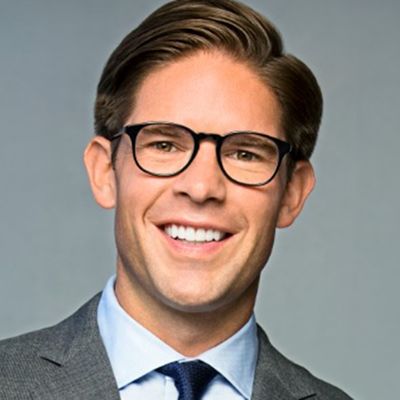
Frank DiLella is one of Broadway’s most recognizable faces. As the Emmy Award winning host of ON STAGE, a weekly theater program on Spectrum News NY1, Frank has served as a correspondent on- and off-Broadway and around the world, and hosts his own podcast “Show and Tell with Frank DiLella” on iHeart Radio... Read More
From the show: Broadway Gives Back
Guests
Featured Shows
About
Frank DiLella is one of Broadway’s most recognizable faces. As the Emmy Award winning host of ON STAGE, a weekly theater program on Spectrum News NY1, Frank has served as a correspondent on- and off-Broadway and around the world, and hosts his own podcast “Show and Tell with Frank DiLella” on iHeart Radio. A strong advocate for arts education, join Frank as he recounts some of his favorite backstage stories and the joys of doing good—this time from the other side of the mic!
Learn more about about the worthy causes discussed in this episodes and how you can donate and/or help:
Connect with Frank:
- Website: FrankDiLella.com
- Facebook: @FrankDiLella
- Twitter: @fdilella
- Instagram: @fdilella
- On Stage
- Show & Tell with Frank DiLella podcast
- NY1
Connect with The Broadway Gives Back Podcast:
- Facebook: @broadwaygivesbackpodcast
- Instagram: @broadwaygivesbackpodcast
- Twitter: @broadwaygives
Hosted & Executive Produced by Jan Svendsen and co-produced & edited by Jim Lochner.
A proud member of the Broadway Podcast Network.
Special thanks to Dori Berinstein, Alan Seales, and Kimberlee Garris from BPN; Julian Hills from The Bulldog Agency; and Eric Becker from Broderick Street Music.
Transcript
This transcript was automatically generated and might contain errors.
[0:05] Jan Svendsen: Welcome to the Broadway Gives Back Podcast.
[0:07] Jan Svendsen: I'm your host, Jan Svendsen.
[0:10] Jan Svendsen: This podcast spotlights Broadway actors, shows, and organizations in their pursuit of social impact and philanthropy.
[0:17] Jan Svendsen: Join us as some of the brightest lights on Broadway share their stories about their favorite charities and how they got involved and the people on the causes who benefited from these philanthropic efforts.
[0:33] Jan Svendsen: My guest this week is one of Broadway's most recognizable faces.
[0:37] Jan Svendsen: Frank DiLella is the Emmy Award-winning host of On Stage on Spectrum News NY1, the channel's weekly theater program.
[0:45] Jan Svendsen: Since joining NY1 in 2004, Frank has interviewed some of Broadway's biggest stars, winning an Emmy for his special on the Broadway musical Come From Away, as well as five New York Press Club Awards.
[0:58] Jan Svendsen: He has served as the entertainment correspondent both on and off Broadway and around the world.
[1:03] Jan Svendsen: And he hosts his own podcast, Show and Tell with Frank DiLella on iHeartRadio.
[1:08] Jan Svendsen: A strong advocate for arts education, Frank currently serves on the board of the Roger Rees Awards and is on the selection committee for the Clive Barnes Award and Foundation, which honors talented young professionals in the artistic fields of dance and theater.
[1:22] Jan Svendsen: I'm so thrilled to have him here today.
[1:24] Jan Svendsen: Frank, welcome to the Broadway Gives Back Podcast.
[1:27] Frank DiLella: Hi Jan. I'm so happy to be here.
[1:29] Frank DiLella: It's so good to see you. I haven't seen you in a while.
[1:31] Jan Svendsen: Well, I saw you on the street. I saw you on Broadway in passing, what was that, two weeks ago or something?
[1:37] Frank DiLella: It was so quick that we actually get to have a conversation.
[1:40] Jan Svendsen: I know, I know. I'm thrilled. I'm a little nervous because you know, you're the interviewer, but now it's time to interview the interviewer.
[1:47] Frank DiLella: And I'm hoping to learn a lot from you, Frank. You're such an amazing host on all of your shows.
[1:52] Frank DiLella: Thank you.
[1:53] Jan Svendsen: So, how about if we do a little warm-up exercise and I'll ask you a few rapid fire questions so that everybody can get to know you better?
[1:59] Frank DiLella: Sure.
[2:00] Jan Svendsen: All right, let's do this. If you were an animal, what animal would you be?
[2:09] Frank DiLella: Oh gosh, Jan, I'm not good at this stuff. I guess because I love my dog so much, I guess I'd be a dog.
[2:16] Jan Svendsen: What kind of dog, by the way?
[2:17] Frank DiLella: Um what kind of dog? Is your dog?
[2:20] Frank DiLella: Um, he's a mutt. He's a Chihuahua terrier mix.
[2:23] Jan Svendsen: Awesome. And I think he's very handsome, so I'd be my little Alfie.
[2:27] Jan Svendsen: Aw. What is your favorite time of day? Sunrise or sunset?
[2:31] Frank DiLella: Definitely sunrise.
[2:33] Jan Svendsen: Favorite food.
[2:35] Frank DiLella: Um I'm an Italian boy with chicken parm.
[2:41] Jan Svendsen: What's the first thing you notice about somebody when you meet them?
[2:44] Frank DiLella: Probably their eyes.
[2:46] Jan Svendsen: So Dr. Anthony Fauci was asked this question during an interview, so I feel like it's safe to ask you as well. Boxers or briefs?
[2:52] Frank DiLella: Briefs.
[2:54] Frank DiLella: By the way, he answered the question too. Um the long briefs, you know, the sort of boxer brief combos.
[3:02] Jan Svendsen: Yeah.
[3:03] Jan Svendsen: Okay. Tell us two truths and one lie about yourself.
[3:08] Frank DiLella: Oh my gosh, Jan. Like this is the hardest. This is the hardest thing I've ever had to say, I've ever had to sit through.
[3:15] Frank DiLella: Um you know how it feels.
[3:19] Frank DiLella: And a lie. Oh my gosh, I'm not good. I see, I'm the interviewer. I'm not normally the interviewee.
[3:26] Frank DiLella: Um, I'm a college professor. I've played opposite Meryl Streep on screen. I've never been to a Broadway show.
[3:38] Jan Svendsen: Okay, well, we all know which one is the lie. Speaking of Broadway shows, do you have a favorite of all time?
[3:46] Frank DiLella: Oh, yes, of course. I have a couple. Can I give you a couple answers?
[3:49] Jan Svendsen: You can.
[3:50] Frank DiLella: Um, A Chorus Line, Gypsy, and Dreamgirls.
[3:58] Jan Svendsen: Can you describe yourself in three words? Or pick three words that you know you can associate with yourself?
[4:05] Frank DiLella: I'm gonna go with three words that people have used to describe me because I'm again, Jan, I'm not good at this.
[4:12] Frank DiLella: Um you're not self-aware.
[4:15] Frank DiLella: Not self-aware at all. Um kind. I try to be kind, I make an effort to be kind, you know.
[4:23] Frank DiLella: Um, so I'll go with kind. Um curious. I'm gonna throw modest in there.
[4:32] Frank DiLella: Take modest. I'll take modest, thank you. Jan, I'm not I'm I keep repeating myself, but I'm not good at these things. This is actually so much fun for me now.
[4:42] Jan Svendsen: I love seeing you struggle. You are good at what you do.
[4:47] Jan Svendsen: Okay, all right, let's pivot. Let's talk about your career and about some of the important work you've done in arts education.
[4:53] Jan Svendsen: I think that might be easier.
[4:54] Frank DiLella: Yes.
[4:55] Jan Svendsen: So today is Throwback Thursday. And I wanted to ask you what are some of the most memorable moments of the many years that you've been interviewing Broadway's best?
[5:05] Frank DiLella: Oh gosh. Um, you know, Jan, first and foremost, I, you know, grew up in Philadelphia. My mom was taking me to Broadway shows as a kid.
[5:15] Frank DiLella: Um, you know, she was on the road a lot as a kid, and our time with our mother was spent on the weekends, and you know, we all had a mutual love for Broadway and theater, and she would just say to me, Frank, book tickets, we're going like we'll go to New York, and we would go up for you know, the weekend and we would see stuff.
[5:35] Frank DiLella: And so I grew up as a young boy in Philadelphia, idolizing people like Chita Rivera, Harvey Fierstein, Patti LuPone, Bernadette Peters, and Liza Minnelli.
[5:50] Frank DiLella: And so to get to New York City in 2002 to move here and to actually get to know these folks and sit down with these actors and stars and you know get to pick their brain about their crafts and what they do is just a dream come true.
[6:08] Frank DiLella: I mean, I have a long list of folks who you know, I just there were pinch me moments. Um I have a great moment that I got to experience or moments I got to experience with the late great Elaine Stritch.
[6:22] Frank DiLella: Um in fact, her final one of her final interviews I got to do with her. She was in town when her documentary came out.
[6:34] Frank DiLella: And um she wasn't in good health, she wasn't feeling well, and she had me go to the place where she was staying and do the interview with her in bed.
[6:34] Frank DiLella: And she had me lay down next to her and we just chatted, and then what that interview morphed into once the cameras were turned off.
[6:52] Frank DiLella: She just started telling me stories about JFK and Ethel Merman and Judy Garland and you know, like these icons that you know she got to be around and experience, and you know, talk about Sondheim and how she still, you know, basically on her deathbed was still wanting his approval of the stuff that she was doing.
[7:16] Frank DiLella: So moments like that, I know that are so special, and I cherish those moments.
[7:23] Jan Svendsen: That's amazing. I will never get that visual out of my head now of you and Elaine Stritch laying in bed together on her deathbed. Wow, that's crazy.
[7:32] Jan Svendsen: So, how has it been covering Broadway during these months of the pandemic and now the reopening?
[7:39] Frank DiLella: Um, obviously there was a big lull in there during the lockdown. So, how did you fare and what did you do?
[7:47] Frank DiLella: Well, I have to give credit to our station, NY1 here in New York City. You know, as you mentioned, I host a show that's all about theater that runs weekly.
[7:57] Frank DiLella: It's a news magazine program called On Stage. And when we knew things were looking grim and things were looking bad, especially with Broadway.
[8:06] Frank DiLella: It was here on March 12th when we got the announcement that Broadway was shutting down for what we thought was just going to be a couple of weeks.
[8:13] Frank DiLella: We did not know it was going to be a year and a half plus. You know, my boss pulled me aside and said, you are committed to this industry, you are committed to this community.
[8:25] Frank DiLella: And so I went into the control room and in the studio, and I basically taped a message that said, we are here, we will be following this community day in, day out, and providing you with updates along the way.
[8:40] Frank DiLella: Stay with us, follow us, follow me on social. And that's what we did, Jan. I mean, one of the first big things that we got to do was I called all of my Broadway friends.
[8:50] Frank DiLella: I called people like Kristin Chenoweth and Katharine McPhee and Lin-Manuel Miranda, who I know you are very close with, and you know the list goes on, and we put together an hour special for the Actors Fund, which is an incredible organization, as you know.
[9:08] Frank DiLella: And I know this is a podcast about how the community gives back. The Actors Fund has been there for the community for years and years and years through thick and through thin.
[9:17] Frank DiLella: And I said, we have to do something to raise awareness for the Actors Fund to help raise money for the Actors Fund.
[9:22] Frank DiLella: And so we put on a show via, you know, everyone sending in clips from their home.
[9:30] Frank DiLella: So Jenna was getting clips from people, you know, Debra Messing showing us how she was exercising, and Marisa Tomei showing us how she was doing a dance class to get through the pandemic and or get through this time.
[9:42] Frank DiLella: And we raised awareness and money for the Actors Fund because that is an essential organization for this community.
[9:51] Frank DiLella: So, you know, that was kind of the kickoff to you know this commitment of we need to follow this community, we need to tell the stories of how people are surviving, you know.
[10:01] Frank DiLella: And then every month we put together a special. And, you know, when the BLM movement really took um stepped into the spotlight following the murder of George Floyd, we connected with a lot of um black members of the theater community to see how they were feeling, what they were doing, and how the community was responding.
[10:24] Frank DiLella: So we wanted to just make sure we were current and aware of how the community was staying afloat and trying to stay afloat during this dark, dark, long, unwanted intermission.
[10:37] Jan Svendsen: And now, as it's reopening, tell us what you've been doing every day.
[10:41] Frank DiLella: I think you've been a theater every day, right?
[10:43] Frank DiLella: It's been crazy, Jan. And it's been so thrilling to step back into these spaces that we both know, I know you know this too. The theater is church, the theater is temple. You know, walking into these Broadway houses, they're sacred spaces. And to not have that for such a long period of time was heartbreaking and hard, emotionally hard on all of us.
[11:10] Frank DiLella: You know, I normally see you at the theater, you know, how many times a week, three or four times a week. So to be back, you know, covering these openings, and I'll never forget, you know, being back at Waitress, which was one of the first musicals to open on Broadway since the pandemic happened. Every single character walking on that stage, walking onto that stage was getting entrance applause and standing ovations. It was, it's been thrilling.
[11:39] Frank DiLella: And what's great is that, you know, being back at the theater, you know, yes, there are these safety protocols in place, but people are willing to abide by them. People are willing to take part and do whatever they need to make sure that these spaces are safe for all involved.
[11:58] Jan Svendsen: Other than the safety protocols, have you noticed any changes? And also sort of part B to that would be, and what changes would you like to see as Broadway reopens?
[12:10] Frank DiLella: I mean in terms of the safety, I think what they're doing. I know they just, um, the Broadway League just put out that it looks like the safety protocols that are in place, the masks and showing your vaccine card with getting in, that's gonna now go through the end of February, which again is great to make sure it's a safe space for all. But I do think, you know, I was talking to Brian Stokes Mitchell and LaShans about Black Theater United. And I think, you know, these organizations or these groups that have been formed, you know, due to some of the horrible stuff that we had to witness as a community as a nation that happened last year. I think these groups that are being formed to help diversify and make equal all parts of the theater are really good things to happen to help move this industry forward and get it to the right place.
[13:09] Frank DiLella: You know, what I admire so much about this community is that this is a community that doesn't rest on its laurels. They want to make change, they want to be the change, and they want to push forward and lead as an example. And I think that is, you know, just a really good thing to take in and observe and hopefully help towards making these changes happen.
[13:36] Jan Svendsen: Yeah, really good point. So you're an alum of Fordham University at Lincoln Center. And now you're a professor teaching theater journalism. And I just wondered how theater journalism has changed since you went to school, and if you had any advice that you would give students who want to enter that field.
[13:54] Frank DiLella: So I get asked this question all the time. And I always say, you know, it's funny you're saying this too, because I was just talking to a friend of mine who works for another network, and we both are the same age, and you know, we went to school for journalism and we were taught one way, and you know, this was the model, this was the way for such a long period of time. But you know, now with the tools that we have at our fingertips on our phones, we can anyone could be a journalist, anyone could be a critic or, you know, a reporter in their own right. But I always say, you know, figure out your passion, figure out what you like. For instance, for me, it was the theater, and then just go from there.
Just, you know, I tell my students that they always ask, well, how do I get into this? Or, you know, I like I'm a film buff. How do I like, you know, start reporting on this? It's like you have Instagram, you have TikTok, you have Facebook, you have Twitter. Get out there, you know, be careful with what you put out there. Don't put everything out there, but when it comes to personal stuff, but just start forming a beat. Start forming a beat and start forming a voice, create your voice and go from there.
[15:10] Jan Svendsen: That's good advice. I'm gonna take it. Um, I hear there's a big project that you're working on, and I think you're not allowed to talk too much about it, but maybe you could give us a little preview.
[15:23] Frank DiLella: Well, yes. What are you allowed to say?
[15:26] Frank DiLella: You've heard correctly. Um, I'm working on a very big project in regards in response to the reopening of Broadway. Obviously, this was a moment that, you know, was a first for all of us. This has never happened before where Broadway was shut down for this period of time. And um, I'm working on a very big project, which I will be able to announce and which will be announced in the coming weeks. Um, that will, if you're listening, you will be able to take in come early next year. And I'll leave it at that.
[16:02] Jan Svendsen: Let's talk a little bit about arts education. Um, as I mentioned in the intro, you serve on the board of the Roger Rees Awards. Um, you're part of the selection committee for the Clive Barnes Award and their foundation, um, honoring young professionals in the theater. Um, can you tell us a little bit about those awards and why you've chosen to be involved with them?
[16:24] Frank DiLella: Yeah, well, you know, I'll start with the Roger Rees Awards. Um, first and foremost, the theater changed my life. I was one of those odd kids growing up, um, wasn't into sports at all, but you know, the theater was my safe haven. And I was so fortunate enough that my mother put me into a school, my parents put me into a school. My mom chose it though, uh, so she gets the credit, where there was a really solid musical theater program. And from first grade through eighth grade, and then, you know, obviously in high school as well, every spring we would do a splashy big musical where they at my grade school they would hire the musicians from the national touring companies that would come into Philadelphia.
So that would be our pit. The costumes were incredible, and we would do like there was no cut-down version of Fiddler on the Roof or The Sound of Music or The Music Man. We did the full thing. And, you know, that was the one thing I look forward to every single year. That was my, you know, big Friday night football experience or my big day, you know, playing baseball. And, you know, with that, and then kind of trickling into the community and going to theater camp and you know, doing community theater and whatnot, I started to find my people and started to find, you know, people who are accepting and a community that was accepting. And of course, I loved Broadway. I loved seeing shows with my family and always knew I wanted to be a part of this, but didn't know if, you know, acting was the right path for me.
And I'm getting off on a tangent, but the arts and musical theater changes people. And you know, in a way it saved my life too, because I didn't fit in. I didn't fit in with the other jocks and guys at school. But with this particular, you know, sub-community, I did fit in. So I am a strong advocate and a firm believer that, you know, musical theater is a very powerful community to be a part of. But then also think about the stuff you learn when you're studying, you know, theater and musicals and reading music and learning how to play music, which, you know, I feel so fortunate enough that I got to do during school. Um, you're learning math, you're learning how to interact with people, you're learning teamwork and team building.
And so when Susan Lee, uh, who we both know asked me to be a part of the Roger Rees Awards and that board, it was a no-brainer. I said, yes, I love the Jimmy Awards, the Jimmy Awards are the National High School Musical Theater Awards that happen every single year, normally during a normal year, right after the Tony Awards. And you've been, Jan. You've seen, you know, these kids and how passionate they are about theater, and it's something I look forward to every year. And so the Roger Rees Awards are the New York City chapter and the surrounding area to the Jimmy Awards. And when they asked me to be a part of it, I was 100% in.
[19:40] Frank DiLella: And about what about the Clive Barnes Award and Foundation?
[19:43] Frank DiLella: So, uh, I got brought into that by um, a colleague, Patrick Bocheco, who's another theater journalist in the community who I know you know, and he, you know, he had been on the community for a while and he nominated me to be a part of that. And we get together and we honor artists, both in the fields of dance and theater, who are under the age of 30, who show, you know, promising careers. So folks we've honored in the past have included MJ Rodriguez, Ashford. So, um, our track record is pretty good with that one. But it's, you know, to see, there's nothing more thrilling than to see an artist, especially a young artist, you know, emerging and starting to come into his or her own or their own. Um, it's pretty thrilling. I'll never forget seeing MJ in Rent. Right. And as Angel, and thinking to myself, oh my God, she is amazing.
[20:47] Frank DiLella: She's amazing. And now look at what she's doing. She's taking the world by storm. There's nothing stopping her now. I wanted to talk about that whole idea of living life with a purpose and being philanthropic or doing good. What does that mean to you? How did you see that modeled for you? You talked about your mom. Was that something that your family just did as part of their way of life? Or did you come into this later in life? How did you become that person who wanted to give back?
[21:20] Frank DiLella: Yeah, I have to say it's both my parents. Growing up, one thing that really stuck out to me—two things. My mom was always the first. If anyone was in need, she would always say, "What can we do? Do they need money? Do they need food? What can we do?" So first and foremost, and to this day, my mom is that way when it comes to friends of mine who are running marathons for amazing causes. She's the first to donate. She's like, "Yes, we have to help." And then the other thing that really made a mark on me in a good way was as a kid, before our time with our mom would be on the weekends. Our time with our father would be during the week because my mom would travel during the week for her job. With my father, he would get us ready for school, and then he would make her lunches, and then he would have all these other lunches on the kitchen table.
I remember saying one morning, "Dad, what's that for?" And he, before going into work, would feed the homeless. He was like, "There are guys around where I work who I know aren't eating today, and so I'm bringing them sandwiches." He would do that almost every morning before school. Seeing stuff like that just leaves an imprint on you.
[22:54] Frank DiLella: Especially during this time when everything was shut down. I will never forget this period. I think our whole generation, anyone who's alive during this time, will never forget this pandemic. This pandemic changed so many lives and changed our world in a variety of ways. I have friends who were working on Broadway, making healthy salaries, who couldn't afford groceries, who couldn't afford to do their laundry, had to decide whether or not they were going to do their laundry, take it to a laundromat, or buy food. They were doing laundry in their sink. For me during this time, I was like, "What can I do? What can I do?" For me, it was like donate to the Actors Fund and raise awareness for the Actors Fund because what Joe Benicasa does—I know so many stories of people losing their health insurance or not being able to pay their rent or not being able to buy groceries, and Joe is there and puts you in touch with the right people.
I think it all comes down to my parents. Whenever there is an opportunity to sit on a board or to help others, especially when it comes to arts education, that's a no-brainer. It's like, "What do I need to do?"
[24:11] Frank DiLella: As you were talking about earlier, you've interviewed so many legendary artists. Thinking about your interviews with Tom Hanks, Vanessa Redgrave, Bono, Elton John, Hugh Jackman, and James Earl Jones—the list goes on. I just wondered, during any of those interviews that you've done, did any of those artists offer you any pearls of wisdom with regard to their own philanthropy or being of service or any kind of social activism? Were any of those people that you look to for inspiration in that area?
[24:46] Frank DiLella: One person who I'm really inspired by, and someone who really puts his money where his mouth is and his art where his mouth is, and is legit changing the world when it comes to entertainment but also doing good, is your pal Lin-Manuel Miranda. I feel like we're busy people. I don't know where he gets the energy to do what he does. Every time I talk to him or see him on social media, he's fighting for some good cause or he's fighting for the Broadway community. He's trying to make the community better in so many ways. He is truly inspiring and, in many ways, is a leader or the speaker for our community as a whole. I'll never forget the family invited me down to Puerto Rico for the premiere of Hamilton down there.
I know we saw each other down there. I went with Luis to Vega Alta, where the family is from, and Lin spent his summers. It was so important for them to give back to that community and having the museum there that Lin, with his Tonys and all that good stuff, how that was helping the community and was a source of income for the community and people in the community. It was really amazing.
[26:09] Frank DiLella: Then seeing the pictures when Hurricane Maria hit Puerto Rico, you see these pictures of Lin handing out sandwiches and being on the ground there to help people who are struggling. I mean, it truly is. He's truly inspirational. He is, but so many of the people that you've interviewed have been. I was looking back, and I know you interviewed Jane Fonda. To me, she's also such an important activist. Little fun fact: I went to high school here in LA, and I was on the committee that brought Jane Fonda to speak at our high school on the field to talk about Vietnam.
[26:53] Frank DiLella: Wow. When she was sort of Hanoi Jane. I was looking back, you know, Hugh Jackman you've interviewed, and he's done so much philanthropic work. Andrew Lloyd Webber has his own fund that goes through the American Theater Wing for arts education. I feel like you and I are so lucky because we get to talk to all these people who do so much good, not just in their entertainment, but also in their philanthropic work or their social activism work. It's so inspiring. Speaking of Andrew Lloyd Webber, I just sat down with him as he brought Phantom back to Broadway. I talked to him, I checked in with him a few times during the pandemic. I have to say, when all is said and done, and we hope this is years behind us, I think he's going to come up as one of the saviors of this moment because, as you may recall, when everything shut down, he was one of the first to say, "We need to figure this out."
His shows were running in South Korea, and I chatted with him like three weeks into the pandemic. He said his people were already looking into these special knobs for theaters so that once you touch them, they automatically clean themselves. The air systems that I know a lot of the theaters have put in, but also he was like, "No, we need to figure out how we're going to bring people back and do it in a safe way." He was one of the first people to sign up to do a trial vaccine when it was at Oxford University. He basically said to the government, "If you keep opening and closing or shutting us out, put me in jail because we need to make—artists are essential workers." This was said to me during the pandemic too, and it's so true.
Artists got us through the pandemic. You turned on Netflix, you turned on Spotify, you turned on iTunes, you were watching YouTube videos of whatever. These are artists, and these are essential workers, and they need to be taken care of. Andrew was leading that charge in many ways and on many fronts.
[29:04] Frank DiLella: That's so true. I love that idea. I never really thought about it in that way, but artists were essential workers. I don't know what I would have done through the last year and a half without some of the content that was created, and even just the social media that was inspiring. Whether it's on your podcast or on your show on New York One or right now here with me, I wondered what advice would you give to listeners about doing good in the world? There's so much negativity in this world. It doesn't hurt to be kind; it doesn't hurt to be nice. It doesn't hurt to do good, you know? If you can give back, and like you said, giving back doesn't just happen with writing a check. Giving back can also be giving of your time. The ultimate payoff with all of that is that you will feel good in the long run.
[30:00] Jan Svendsen: So true. Frank, thank you so much for having this chat with me and for being on my podcast. I've learned so much from you.
[30:06] Frank DiLella: Thank you, Jan.
[30:09] Jan Svendsen: Thanks for listening to this episode of the Broadway Gives Back Podcast. Broadway Gives Back is part of the Broadway Podcast Network. Special thanks to my producing partner, writer, editor, and friend Jim Lochner. And thank you to everyone at BPN, including Dori Berinstein, Alan Seales, and Kimberlee Garris. I'd also like to thank Julian Hills from the Bulldog Agency and Eric Becker from Broderick Street Music. If you like what you hear, don't forget to subscribe and rate this podcast wherever you stream your podcasts. You can also follow Broadway Gives Back on Facebook and Instagram at Broadway Gives Back Podcast and on Twitter at Broadway Gives. To learn more, visit BPN.fm slash Broadway Gives Back. Thanks so much.
© Broadway Podcast Network, All Rights Reserved