

My guest on this episode is Ben Francis, author of the very compelling book titled Careful the Spell You Cast — How Stephen Sondheim Extended the Range of the American Musical. Sondheim is without a doubt one of the most studied, examined, and analyzed Broadway creators of all time... Read More
From the show: BROADWAY NATION
Featured Shows
About
My guest on this episode is Ben Francis, author of the very compelling book titled Careful the Spell You Cast — How Stephen Sondheim Extended the Range of the American Musical.
Sondheim is without a doubt one of the most studied, examined, and analyzed Broadway creators of all time. In fact, we have done quite a bit of that right here on Broadway Nation. However, as you will hear, Ben Francis contends that in spite of all of that investigation, Sondheim continues to be very misunderstood. He is often labeled as being cynical and pessimistic, but Francis instead argues that Sondheim firmly belongs to the “Broadway aspirational tradition” — a tradition that celebrates dreams of a better life — and he suggests that Sondheim’s shows are to a great extent are a continuation of the work of his mentor Oscar Hammerstein II.
Ben Francis’ other works include contributions to the Oxford Handbook Of Sondheim Studies, the Oxford Handbook of British Musicals, and the Oxford Handbook of Shakespeare and Music, as well as Christopher Hampton: Dramatic Ironist
Become A PATRON of Broadway Nation!
This episode is made possible in part by the generous support of our newest Patrons:
Andy Wigginton and Mark Stanton.
If you would like to help support the work of Broadway Nation I will information at the end of the podcast about how you too can become a Patron.
If you are a fan ofBroadway Nation, I invite you too to become a PATRON!
For a just $7.00 a month you will receive exclusive access to never-before-heard, unedited versions of many of the discussion that I have with my guests — in fact I often record nearly twice as much conversation as ends up in the edited versions. And you will also have access to additional in-depth conversations with my frequent co-host Albert Evans that have not been featured on the podcast. And all patrons receive special “on-air” shout-outs and acknowledgement of your vital support of this podcast.
And If you are very enthusiastic about Broadway Nation there are additional PATRON levels that come with even more benefits.
If you would like to support the work of Broadway Nation and receive these exclusive member benefits, please just click on this link:
https://broadwaynationpodcast.supercast.tech/
Thank you in advance for your support!
Transcript
This transcript was automatically generated and might contain errors.
[0:00] David Armstrong: Welcome to another episode of Broadway Nation, the podcast that tells the remarkable story of how immigrants, Jews, queers, African Americans, and other outcasts invented the Broadway musical and how they changed America in the process. I'm David Armstrong, and this is the third and final part of my conversation with Ben Francis, whose amazingly compelling new book is titled "Careful the Spell You Cast: How Stephen Sondheim Extended the Range of the American Musical." Just like the book, our discussion is structured around Sondheim's collaborators. In this episode, we discuss his work with George Firth, John Wideman, Hugh Wheeler, and James Lapine. And as always, Sondheim's mentor and surrogate father, Oscar Hammerstein II, plays a big role in this conversation as well.
This episode is made possible in part through the generous support of our Broadway Nation patron club members, including our inaugural members Roger Clarice, Neil Hoyt, and Chris Mode. Thank you, gentlemen, for your generous loyalty. If you would like to help support the work of this podcast, I'll have information at the end of the episode about how you, too, can become a patron. Here we go. George Firth, how do you see those sets of shows?
[1:16] Ben Francis: Well, it's two musicals and a thriller or a collaboration, which is the only play that Sondheim ever co-wrote. He's much more contemporary. When he started working for the company, he didn't have a record player because he wasn't really interested in music. Of course, he'd written 11 one-act plays as a vehicle for Kim Stanley, but that didn't take off. But Prince thought, well, this could be good for a musical. He's much more about contemporary life. I think he's less haunted by the past. They don't have a past in Company. Of course, they've got almost nothing else in Follies. I mean, of course, you do go back in Merrily We Roll Along. But again, they're both New York stories, as is Getting Away With Murder.
He's more of a comic writer. I mean, there's this sort of bitchy dialogue, the kind of Bette Davis lines that you get in both of them. I mean, Joanne is a sort of Bette Davis kind of part. And Merrily as well. Yeah. And he's more of a comic writer, really. I think he's less haunted somehow, certainly than Goldman. It's more about just recognizing the world as it is. In a way, he's closer to Chevlover, although he wasn't so much a sketch writer. I mean, Company, it's more like they are little jokes, a little sort of set-ups. They are sort of comedy sketches in a way.
[2:30] David Armstrong: Yeah. It is almost like a review. Those things could happen in any order, really. Except right at the end, you'd have to have Joanne's proposition and Bobby's rejection of that at the end.
[2:41] Ben Francis: I think Firth is contemporary, much lighter in texture.
[2:47] David Armstrong: And what did that pull out of Sondheim, do you think? How would you say that the songs that he writes for Firth collaborations are different than the other shows?
[2:52] Ben Francis: I mean, they're not about pastiche. Well, not so much. I mean, of course, Follies is sort of, you know, wall-to-wall pastiche, whereas Company is a more contemporary, inflected sound. Not that Sondheim ever really wrote rock music, but it's as near as he got, I think, in Company. Even in Merrily, which has some Broadway pastiche, you know, Gussie's opening number, but it's much less about drawing on the past. It's much more about almost contemporary, slightly pop-inflected sound, but with Broadway craft. Although in Merrily, you're going backwards. Musically, it doesn't really go backwards very much. It's not like it goes suddenly to a sort of 1950s Frank Sinatra, lonely man wandering the streets kind of song, whereas, you know, with Follies, you get Ben suddenly doing a Fred Astaire number, or, you know, it was a Helen Morgan number for Sally.
There's none of that in Merrily. It's some straightforward ballad writing, but you can take apart and reassemble. In a way, that's what they're doing with the story in Company. You had these sort of modular units you could put together almost in a different order, and it would still work.
[3:56] David Armstrong: Again, like a review.
[4:02] Ben Francis: Yes, that's it.
[4:02] David Armstrong: Both of the Firth shows are musical comedies.
[4:08] Ben Francis: Yes. I mean, Merrily has rather a sour end. It's a man just throwing his life away. There is a kind of cautionary tale, which, of course, was the original play. Of course, that wasn't very successful. I think partly because people didn't want to see just somebody be a son of a bitch his whole life, you know, cheat on his wife, throw away his dreams. And it's strange, actually, that play is that the plays that the characters should be writing in the Kaufman and Hart play are kind of very upfront, left-wing kind of Clifford Odette's plays, which is kind of the thing that Kaufman and Hart weren't writing at all. They were writing the Broadway fluff that they were criticizing this guy for writing. It's almost like you feel that they were sort of criticizing themselves.
[4:44] David Armstrong: That is interesting. Okay, let's talk about the shows with Hugh Wheeler.
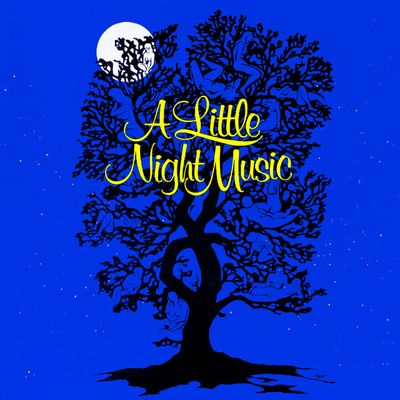
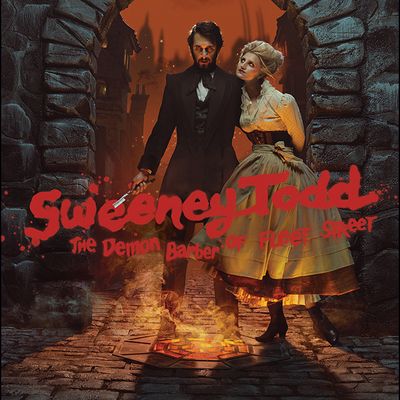
[4:48] Ben Francis: Again, he was British, which sometimes said that was why he was a good match for Sweeney Todd, because he was familiar with Sweeney Todd as a figure of mythology. He was a very sort of professional writer. There was a play he'd had on Broadway, Big Fish, Little Fish. He also wrote detective stories, which, of course, always appealed to Sondheim and that sense of kind of uncovering things, which certainly is in Sweeney Todd, although it's not a sort of whodunit as such. There's this sort of sudden horrific revelation. Most of the stuff is fairly lightweight. Little Night Music is, although it's taken from a Bergman movie, it's fairly lightweight. I mean, there's a happy ending for everyone, except Madame Armfell, who dies, but then she was pretty horrible anyway.
Again, she's a manipulator, and she's the one who won't be honest with her own emotions. She just sees everything as manipulation. And that's why, you know, she can't, in the end, although she had a dream of a life, but she turned the man down because he was poor. It seems too heavily moralistic an ending. Yeah, I mean, Wheeler was somebody who understood perhaps a slightly more ironic European sensibility, which, I mean, Sondheim did because he was very much an Anglophile, but perhaps was slightly unusual on Broadway.
[5:57] ♪ Musical number: "A Weekend in the Country" — performed by cast of A Little Night Music ♪
[7:01] David Armstrong: The tone was more sophisticated than.
[7:22] Ben Francis: Yes, I mean, I mean, it's more sophisticated, slightly more sort of ironic and detached. I think the book for Sweeney is incredible, the way he just packs in so much. There's so much happening. And then at the end, you feel, oh, I should have seen that coming. Well, I didn't when I first saw it. I don't think it matters too much if you do, because he's had such an emotional sort of hoof, aching for the judge to get it. And then he doesn't. I think, oh, God, I want him to die. And then finally he does. And you're so glad. I equated it with Hitchcock, because Hitchcock had that way of playing on your emotions and making you feel quite nasty things. First, when, you know, in Psycho, you want that car to go down in the swamp.
You don't want poor old Antony Perkins to get caught. And then you want to find out what's happening. So you want to get pulled up again, you know. And I think there's that kind of rather teasing thing, which perhaps is more of a European thing. I mean, because Hitchcock was English, although he was hugely popular in America. But I think that kind of Englishness and that kind of slightly teasing quality of sort of, you know, never being quite sure whether they're serious or not, I think is something that Wheeler had.
[8:22] David Armstrong: It's fascinating to look at just the range within Sondheim's own work between a plotless show like Company and then one of the most heavily plotted shows ever, Sweeney Todd. Completely plot-driven, as a thriller has to be. And yet he seems to have equal passion for both of those things.
[8:41] Ben Francis: Yes, I think that was it. He kind of had gone through the plotless stage, the sort of, let's just have these characters have their states of mind without too much clutter. And then he'd gone back. Again, I say that although Sweeney Todd is a melodrama, really it's closer to film noir. Melodrama is fairly straightforward. It's just going to be good and bad. You had these tortured heroes in film noir and people who were patsies, people who were set up, who didn't see the truth until too late. And that happens again and again, certainly in classic film noir and in the sort of wave of it in the 70s as well, like in Chinatown, in Vertigo, in Build My Gallows High. You've got people who don't see what's until it's too late.
There's a kind of fatal knowledge. I think it goes right back to the Greeks. I mean, we all know who Oedipus has married, but he doesn't until near the end. And there's that sense of somebody pressing to find out and then not wanting to know when it's happened. He said that, I wanted people to take it seriously in the 20th century, the way people had in the 19th century. He and Wheeler made it more of a film noir about somebody driven by revenge, which isn't in the original Sweeney Todd plays. It was in the version, which was written by Christopher Bond, which Sondheim saw at the Theatre Royal Stratford East in 1973, which is what actually turned him on to writing the show, because that is one of the few where he actually came up with the idea. And he had to persuade Harold Prince, people eating each other.
[9:59] David Armstrong: There is a story apparently, Harold Prince, somebody was storming out of Sweeney Todd. She looked at him and said, are you the producer of this show? He said, yes. And she hit him with a handbag. I don't come to see people eating each other on stage. I want to see songs and put on your Sunday clothes.
[10:13] Ben Francis: Exactly. That world you're talking about there, that film noir aspect is what layers the show to make it more complex, more ambiguous. It creates a paranoiac world, I guess, in a way, that is what elevates that melodrama to something much more complicated. Again, we identify with these characters in a similar way that we do in film noirs, where these beyond flawed heroes, but these incredibly fatally flawed heroes are still captivating to us.
[10:45] ♪ Musical number: "There Was a Barber and His Wife" — performed by cast of Sweeney Todd ♪
[11:22] Ben Francis: That's it. I mean, because in a way, you often see why they're in that situation. Although, you know, I mean, like in The Killers, he was in love with Ava Gardner, you know, there's this sense that all the people are trapped in their society. The shows never say, well, that makes it okay. And they never say it's okay to kill people because you're poor, or because you've been a victim of injustice yourself. The characters always have to take responsibility for themselves in the end. That's why in a way we can admire them, because they don't kick, they don't whine, they don't say, well, why is it happening to me? They damn well know what's happening to them.
[11:55] David Armstrong: It's that identification that I always talk about. If a character is really well written, we identify with it because we see ourselves, not that we would do what they do, but we think somehow in the back of our mind, that's exactly what I would do if I were a crazed homicidal maniac.
[12:08] Ben Francis: Yeah. Yes, you kind of think, well, yeah, there, but for the grace of God, it might have been me.
[12:14] David Armstrong: Exactly. And same thing with Rose and Gypsy. We can all be in her shoes.
[12:19] Ben Francis: Yeah.
[12:20] David Armstrong: Because it's so brilliantly written. Let's talk about Wideman and Lapine. And one of the things I thought was really fascinating is that you compare the Wideman shows with the Lapine shows and talk about them being sort of the mere opposite of one another.
[12:34] Ben Francis: Well, I mean, Wideman, of course, he's much more of a sort of political writer. It's much more about people being in a society who are sort of, in a way, trapped in it, certainly in Pacific Overtures. The characters are kind of just carried along on this tide of history. Also in Assassins, I mean, none of them have that realization that we were talking about in Sweeney Todd. They all think the world owes them a living. They've been hard done by. They kick against fate and that none of the characters ever really learns anything. You can sort of sympathize with some of them. You can sort of sympathize with Sam Bick. You begin to sympathize with Booth. And then he calls Lincoln a high mighty lover.
I think, oh, that's what he was like. And of course he was. He was raging racist. I mean, he was a very unpleasant character. But, you know, sometimes it makes a character so tragic that you almost are seduced by him. And there's, I think with Weidman, all the shows, I mean, the other one is Roadshow. There, Wilson Meisner is such a likable guy, but you have to say, yeah, but he's a bloody time waster. You know, he's somebody who will waste your time if you let him. And Addison, who had a gift, throws it away. And he can't blame Wilson because he was already selling out before Wilson was on the scene. So, I mean, Wilson encourages his worst aspects, but they're already there. And there's always that sense in Weidman that people don't really escape, that they're trapped in a society and, you know, perhaps they could have done, but they don't. Whereas with Lapine, they do.
George, although he has to pay the price, he loses Dot, but he has his art. And then, you know, George II, he finally connects back to family and to tradition, which is very important that it's so much of modern criticism. You'd think that the artists had to sort of struggle against society.
[14:09] Ben Francis: He had to just get in touch with his own mind and reach into himself, which of course they do, but there's actually not very much or not so much about tradition, especially as represented by the family. I mean, I think another person would have had George sort of marrying Dot in Act Two, but it's on Man and the Pine don't do that. It's family that he connects with. I mean, you've got that Blair Daniel as sort of the critic, who's the intellectual, and she can identify problems, but then it's family and tradition that actually kind of get you over that hump and make you connect back to the world and to connect to something meaningful. And Into the Woods, you know, you've got the community. It's almost like Oklahoma, you know, at the end, except some of them are dead.
You know, they all joined together. And even in Passion, somebody who's ragingly self-obsessed as Fosca actually says things like, "I feared like the world I now love dearly." Even she kind of comes out of this bedroom, this kind of mad room where she obsesses about this man, even though she's dead and he's mad. There is this sense that they have triumphed over the world. And I think, again, all the shows in Lapine, you can kind of win through even if it kills you. Whereas with Weidman, you can't.
[15:12] Ben Francis: I was really interested in this quote at the end of the chapter on John Weidman, as you're about to launch into the chapter on James Lapine, you say, in the shows with Weidman, none of the major characters are able to finally assert themselves against the standards of the world. It's in the shows with James Lapine that we see the characters triumph over the corruption of ideals. Expand on that a little bit for us. How does that play itself out? With Weidman, you know, Addison is a sellout. Wilson was never anything but really. Although they do have a kind of love for each other, but they can only express it after they're dead. With Assassins, they've got this thing, everybody's got the right to their dreams.
Everybody gets a shot. Everybody's got the right to their dreams. All the way through Sondheim, there's always a sense of the sort of, there's a miracle Jew coming to me, or that lucky star I talk about is Jew. Those are the early shows. And in Assassins, it's like everybody's got the right to their dream. Where's my prize? Which is the sort of obsessive phrase that they come back to. Where's my prize? You know, when Rose says, nothing's going to turn up for us, is it? There's that sense that they're bitter. They think the world owes them something. And that's why Weidman and Sondheim both thought, why is it there's this constant violence against the president? Which you don't get in Britain.
I mean, we've had one prime minister who was assassinated. And again, that was a lone, disgruntled madman. That was in 1812. But you know, you've had four assassinations plus several attempts. These people often are loners. It assumes that Lee Harvey Oswald did it, which of course is dubious. But there is this sense that these people are cut off from the world. They can't connect. And they want to. I mean, that word connect, which is positive in Sunday in the Park with George, you know, connect, George, connect. It becomes that you're gonna connect, connect. And it's a dream. They don't connect. Well, they kind of create a family for each other. But it's a family that's based on killing. I love that point you make that they've taken the idea of the right to the pursuit of happiness and left out the pursuit part. They think it's the right to happiness. Yes, that is what's gone wrong.
[17:24] Ben Francis: Yeah. Why aren't I accepted? Why aren't I a star? You know, I did it because there isn't any Santa Claus. And there's a sense of just I've been cheated. I should be a star. You know, there's that duet, Unworthy of Your Love, where Squeaky From and John Hinckley both singing, but not to each other, both singing to people who aren't there. He's singing to Jodie Foster, I'm Unworthy of Your Love. Of course, she's not in love with him. She told him not to ring him again, which he admits later on. He's trying to tell himself that he's going to prove himself by shooting Ronald Reagan. And of course, he gets that wrong. He doesn't actually manage to kill Reagan. And they play Reagan kind of making these jokes that he did actually make.
I hope this person's a Republican. Because Reagan was a brilliant operator. He was a horrible president. He was a brilliant operator. And he had that kind of wry, self-deprecating humor. So, you know, Hinckley's just looking like an idiot. And of course, Squeaky From has this idea that, oh, Charlie will save the world by killing people, which is completely insane. And they both have this dream of somebody saving them that isn't going to happen. And that sort of thing, that refrain, never going to happen, is it? No, we're never going to get that prize. And they all feel that something marvellous is going to happen or should happen. And it doesn't. Charles J. Guiteau wants to be ambassador to France.
He's never going to be. And so he gets so indignant. He shoots Garfield. All the way through, there's a sense of I want, I've got my dream, you can't stop me. And you see that all over the internet these days. You know, I'm saying this, you can't contradict me. Right. They've got that. And they just take it to this violent extreme. And isn't the issue that they don't become disillusioned because they still believe they have the right to what they think they should have? There's no catharsis in that sense. They're still trapped in this hell of entitlement. It's almost like Huy Clos, you know, there's going to be a guy on like this for all eternity thinking, why don't I get it? Where's mine? Where's mine? I want it.
[19:17] ♪ Musical number: "Everybody's Got the Right" — performed by Ben Francis ♪
[20:12] Ben Francis: They're trapped in this constant round of self-loathing, but also bitterness. There's no chance of self-realization or seeing themselves in that mirror catharsis. That's right. Yeah.
[20:16] David Armstrong: Don't go away. Ben Francis and I will be right back after this quick break.
[20:21] David Armstrong: Hi, this is David Armstrong. And if you're enjoying this episode, I strongly suspect that you will want to read my new book, Broadway Nation, How Immigrant Jewish Queer and Black Artist Invented the Broadway Musical. On sale now wherever books are sold. And I'm very happy to report that the early reviews have been terrific. The esteemed author Jeffrey Block says that Broadway Nation is a fascinating, comprehensive and timely gem of a book that more than lives up to its promise of delivering no less than five books in one. Kudos to David Armstrong. And Tony Award winning lyricist David Zippel says that David Armstrong's insightful history of the evolution of the Broadway musical and its creators is captivating and comprehensive as well as indispensable.
The book is, of course, available on Amazon, but I recommend that you go to the publisher's website, bloomsbury.com, where you will currently receive a 10% discount. Again, like the podcast that inspired it, the book is titled Broadway Nation, How Immigrant Jewish Queer and Black Artist Invented the Broadway Musical. Now, back to the show.
[21:25] Ben Francis: So as you say, then the Lapine shows are the 360 from that. You talk about them returning to a Hammerstein model of emotionally warm, character driven shows, even if they're in a more fragmented form. You also say that in those shows, sometimes writing in the aspirational tradition of Rodgers and Hammerstein.
[21:49] Ben Francis: Yes. Yeah. So talk about that, because that would surprise many people. I know. Well, I mean, it actually annoyed me with a lot of some of the critical work on Sondheim, the early stuff, almost seem to want to distance him from Hammerstein. I mean, they actually, one essay talked about him jeering at the Rodgers and Hammerstein happy ending. I thought like they all had happy endings. I mean, he says with Lapine, I got in touch with my emotional Hammerstein and I was the better for it. He said that, you know, he likened Hal Prince to Lorraine's heart and then Lapine to Hammerstein. And that sort of opened him up emotionally. Banfield says that Sunday is the first show where the music, as Stephen Oliver says about Mozart, heals the characters.
They can connect. Dot will come in and say what George needs to hear. The connection isn't perfect in the first act. George and his mother had that duet where they're not quite connecting, but also she does say you make it beautiful. So there is some connection between them. And then George avoids this shallow world of sort of, you know, just the chroma looms and the gimmickry and all the technological stuff and goes back to understanding his tradition and his link with his tradition. He's connecting back to that and connecting to a wider world and into the woods. I mean, both of those shows, again, it's like Allegro. Allegro, you had this man was selling out or at least he wasn't doing what he should be doing with his life. And his mother comes back. The ghost of his mother comes back and sings Come Home.
[24:30] Ben Francis: And he goes back to being a small time doctor. Hammerstein said he wasn't arguing against the big city. He was saying that you should do what you're good at, not become a figurehead. And then you've got the same thing happening in a way in Sunday in the Park with George. George meets Dot and he meets George Sorra's mother and he links back to his tradition and family. And the same thing happens in Into the Woods with No More. You've got the son who's running away from his own son meeting his errant father. And of course, the errant father is also a bit like Carousel. You've got the father of Billy Biggler who ran off and left him and he runs off and kills himself and leaves his daughter. So you've got both of those with No More.
It's about somebody confronting his own past and realizing what he's doing to his own son, which even the witch realizes too, like his son will be too. Oh, why bother? She just thinks it's an endless cycle of people abandoning and deserting each other. But the baker confronts the mysterious man who is his father and then realizes first he was singing No More. Can't we just forget all this? I just want to run away. I don't want any more responsibility. And then No More totally changes his meaning. There's going to be no more giants, no more people getting killed. And he goes back. So both of them, as in Allegro, the baker or the younger George, both connect to tradition. And from that, they get the strength to go on.
[25:45] Ben Francis: It's funny that actually that kind of deep structure resurfaced with Lapine after Sondheim had been a gopher on Allegro, which is 1947. Into the Woods is 87, so that's 40 years. And Sunday's 84, so that's nearly 40 years afterwards. Somehow, Sondheim's able to release that emotionally. And again, with passion, it's so unusual. I saw the movie, the Torres Scholar movie that inspired Sondheim, and that's much more ironic. They took out the irony. The sort of drunken Giorgio tells a story to this dwarf who then sort of laughs and saying, you know, how absurd, you know, stupid. And they took all that out. I mean, Sondheim and Lapine tried to kill any laughter at Fosker because they were getting a lot in previews.
And one bloke, he was like, oh, just leave her there. You know, it's like there was a sense that Fosker was just this vampire. Why on earth would anyone just not run 100 miles from her? Sondheim was so moved because she was just so, again, like Rose. She just does not hold back. She just throws everything on the table, as it were. She just throws herself and doesn't care about making a fool of herself, which actually is what Ben says. He says he'd like to find love. And I don't care how ridiculous I look. He says that. But I mean, Fosker just does it and keeps on doing it. A lot of men would just run away. But Giorgio falls in love with her because she just is so shameless. She just doesn't hold back.
It's a completely romantic thing of, you know, giving your all. And she does, even though she's appallingly manipulative. He knows that. And he still falls in love with her because she just won't hold back. And I can't see any other book writer being able to go with it. Possibly Goldman. But I think with Goldman, it would have all just gone completely wrong. Whereas with Passion, there is a sense that they are kind of triumphant. I mean, she didn't have long to live anyway. So this way, she knows what it is to be loved. And Giorgio knows what it's like to love for the first time because it starts with this orgasm he's having with Clara. But that is just a little shut away affair. It's our little room, which is the kind of thing that Sondheim never celebrates.
He never celebrates this little room where we can forget the world. That's what they have. And it's immature. Their affair just ends. Neither of them seem all that bothered about it. And then with Fosker, he finds real love. And though he goes mad, he never regrets it.
[27:52] Ben Francis: It's so interesting because as much as I love Sondheim, and I love so much about Passion, that show jumps the shark for me. And I never quite recover from when she says, this is what love is. All I can do is, no, it isn't. No, it isn't. No, it isn't. And I never get past that. It's a tough one to take. I mean, I'm never quite convinced that he would actually fall in love with her because he can see how manipulative she is. I mean, she's almost a Jewish mother, you know. His poor noise complained almost a bit. Look what I've done.
[28:49] Ben Francis: My friend turned to me and looked at me like, what the hell is going on?
[28:55] David Armstrong: And I went, yeah, I told you it jumped the shark. But I would love to see a production where I didn't feel that, where that didn't happen.
[29:03] Ben Francis: You were talking before about the connection between Allegro and Sunday in the Park with George in terms of the dead character coming back to encourage, inspire the main character. I was also really interested in the connection you made between Carousel and Into the Woods with the echoing of the line, as long as there's one person on earth who remembers you in Carousel, and then the mysterious man saying, oh, I thought you were dead. Not entirely, are we ever? And there is that sense of having to deal with what your parents have given you. And we all know what Sondheim had to deal with, with Foxy. And yet he celebrates this connection in multiple shows.
[29:38] David Armstrong: Although, I mean, he certainly said some pretty bitchy things about it, partly perhaps growing older, and you do start to understand why people are the way they are.
[29:46] Ben Francis: And I think he recognizes that, honor their terrible mistakes, kind of echo of the Bible, honor thy father and thy mother. And he's saying, all right, they weren't perfect, but honor that, honor the fact that they were trying. The effort, as long as people make an effort, probably Foxy thought she was bringing him up right. She was showing him how the world really works. And, you know, you've got to get ahead, you know.
[30:04] David Armstrong: Yeah. Even when she said that horrible thing to him about the only-
[30:07] Ben Francis: Well, that was a strange thing, wasn't it? She sent him that note saying, the one thing I regret in life is giving birth to you. And then he just showed her this letter. And she said, oh, well, I didn't really mean it, you know. And she just didn't, she did not realize what she'd done. I mean, that's so bizarre. It's almost clinically kind of pathological or something. But yeah, she just did not see why he should be so hurt by that. But even then, he didn't abandon her. He put her in an expensive nursing home. He didn't just sort of say, you know, the hell with you and leave her.
[30:32] David Armstrong: Right. He took care of her.
[30:34] Ben Francis: That's right. He didn't abandon her.
[30:36] David Armstrong: I don't think he spent a lot of time with her, but-
[30:37] Ben Francis: No, not after that. No, he didn't. But it's such a strange story. Truly bizarre. So as you're working on this book, as I was reading it, I was thinking there must have been delightful moments where you just had those lightbulb aha moments of, oh my God, I see it now. I see this connection. Can you remember any of those moments where you just made a link that was thrilling?
[31:02] Ben Francis: I think one thing is Sweeney Todd, the way he reuses words like wonder. Antony says, you know, the wonder of Peru. And then with Sweeney Todd, it's the cruelty of men is as wondrous as Peru. So he twists it. And then Sweeney thinks, you know, I'm cynical. I know what the well is. And then you realize he doesn't. The last time he uses wonder is to Mrs. Lovett. You're a bloody wonder. And it's like, you know, realizes I thought I was cynical. I didn't know the half of it.
[31:22] David Armstrong: He was naive.
[31:23] Ben Francis: He was naive. That's right. Yeah. That word kind of recurs. It was also, of course, it does impassion. He was naive. There are three songs called Joanna. Antony is about being in love and innocent and just yearning for the girl. The judge's song is about taking her by force. And then at the end, when you got Sweeney's song, which is about loss, he's singing this sort of lovely song while he's killing people. It's more than just a gag because it makes sense of that line. I think I miss you less and less as every day goes by because he's killing himself. He's killing his own dream. He cannot make it real in the world because he doesn't care about anyone else who will happily dispatch anybody to make him into pies. And that's destroying his dream.
[32:02] David Armstrong: And also, I mean, the whole thing about miracles, I realize just how often miracles turn up. I mean, there's a miracle Jew and then making a miracle, a magical, mystical miracle in Do I Hear a Waltz? The whole thing about the phony miracle and the real miracle in Anyone Can Listen to All.
[32:37] Ben Francis: Will it defy him?
[32:40] ♪ Musical number: "The Miracle" — performed by Ben Francis ♪
[33:09] Ben Francis: You call it a miracle is the line in Merrily We Roll Along when they're looking at Sputnik, which is kind of like a man-made star. It's odd because some Americans didn't feel that way about Sputnik. I remember Stephen King saying when he was a boy he was sitting in this children's matinee at the cinema and suddenly they stopped the film and the manager walked on stage and said I have a very serious announcement, Sputnik has been launched. One of the kids shouted angrily, show the film, liar! Like they couldn't believe the Russians had won the space race, they were horrified. But I mean in this show it's mankind, it's not the Russians or the Americans, the sense that we've conquered the skies, we can conquer everything.
Again I mean I mentioned Frederick Jackson Turner and the idea of the limitless frontier and again that turns up in Merrily We Roll Along and also in Roadshow. It's all out there for you to win, everything is out there. Of course also it's sort of in Assassins and of course it's turned in on itself because they haven't won anything. The idea of miracles and people making their own miracles because I mean sometimes I've said our lives aren't scripted, you don't rely on just somehow Robert McKee is going to turn up and give you a redemptive moment. You have to do it, you have to make your choices and then you live with them, which is what Addison says to Wilson and Wilson says oh nuts, you just make yourself over and make yourself into anything you want to be, which he does for a while but it never works.
[34:28] Ben Francis: I think so yes there's always that thing of miracles and also I mean just how many times I've spotted almost like little references to Hammerstein, which I don't know whether they're deliberate or not but it would be in his DNA. I mean sort of you know I'm as normal as blueberry pie from South Pacific becomes goodbye to blueberry pie in Gypsy and then it's a true and honest thought that if you're a teacher by your pupils you'll be taught becomes let the pupil show the master in Pacific Overtures or the lark that's learning to pray which is a line that Sondheim never liked becomes a linnet that's screaming because it's been blinded and locked in a cage. So you've got this sort of constant sort of Sondheim's DNA had Hammerstein ironically but then also not ironically.
I mean he always did admire Hammerstein and thinking yes I can write like this too. So many of the Hammerstein shows are about community and Sondheim comes back to his shows become more about community as they go on.
[35:16] David Armstrong: That's right. He starts to talk about that aspect of why that's important.
[35:22] Ben Francis: That's it yeah. Lepine said you know it's about being part of a whole. Sondheim and Lepine both were fed up with Bruno Bettelheim. Everyone thought that they were referring to Bettelheim when they wrote Into the Woods with the uses of enchantment. In fact they didn't like him because he kept seeing it in a very sort of didactic way. You meet these witches and you overcome them and you triumph. Lepine is more Jungian. He said you know life is about being part of a whole. It's interacting with other people not just sort of you know triumphing. It's not just this kind of ego fighting other egos. It's about people who are able to connect with each other.
[36:04] David Armstrong: That's interesting you bring up Jung would obviously was a big influence on Lepine and that's has so much to do with the collective unconscious. I don't think people think about that influence that Sondheim is advocating that we get in touch with our collective unconscious but he is.
[36:15] Ben Francis: I think Jung was more influenced on Lepine than now on Sondheim. Sondheim said he got his knowledge of most of his childhood was spent watching old Balbastanic movies. True but I think this connection that he has with Lepine manifests itself in these shows that then become more about those ideas. It's about belonging together and about emphasizing what binds us together rather than fighting against the world. Fighting against conformity which is a big theme in the Laurent shows. It's about sort of finding a world that goes beyond conformity and it's about community which of course again is Hammerstein. It's Oklahoma. It's Carousel.
[36:46] David Armstrong: Absolutely just as you say the form is more refracted.
[36:53] Ben Francis: Yes that's it. That's the big difference not the intent.
[36:58] David Armstrong: That's it but I mean that was the same with movies with art in general. It was a lot more sort of fragmented sort of jagged almost.
[37:03] Ben Francis: Non-linear yeah exactly.
[37:10] David Armstrong: What impressed me so much about this book was the way you take this very broad view of the whole canon and then you take this microscopic view of each show and each lyric and each moment in the show. It almost feels like you have investigated every single beat of every single one of Sondheim's shows mostly from a literary standpoint but also from a musical standpoint. What's the sum of all that? I'm sure this is an impossible question but how do you sum up Stephen Sondheim? What is that spell that Sondheim has cast on us?
[37:34] Ben Francis: Well I think he's shown us life beyond disillusion especially in the times he was writing. There was a sort of general sense of disenchantment of failure or life had gone wrong. He confronts that and says but it's still worth living which is what the great shows of the depression era were saying except they were saying yeah life can be bad but keep singing and you'll get through it. Sondheim is about sort of keep living and don't give in but take responsibility for yourself and you may not get everything but you'll get a life.
[38:06] David Armstrong: It's so interesting how that is counter to some of the perception of Sondheim but I feel like you have done a great job of revealing what he's actually there to tell us. As you said before no writer really starts off with a message but there's no reason to write if you don't have something you want to tell the world. Every piece of art has some intention behind it and I love the way you've at least helped me see that even with a subject that I thought I knew backwards and forwards.
[38:35] Ben Francis: Thank you. So thank you Ben Francis it has been my great pleasure to have you today on Broadway Nation to talk about your new book Careful the Spell You Cast.
[38:46] David Armstrong: Thank you.
[39:16] ♪ Musical number: "Harmony" — performed by Ben Francis ♪
[41:52] David Armstrong: Broadway Nation is written and produced by me, David Armstrong. Special thanks to Pals Mox for his help with editing this episode, and to the entire team at the Broadway Podcast Network.
© Broadway Podcast Network, All Rights Reserved