

This is the second half of my recent conversation with Tony Award-winning composer, lyricist, arranger, and music producer MARC SHAIMAN about his new, New York Times bestselling book, NEVER MIND THE HAPPY... Read More
From the show: BROADWAY NATION
Guests
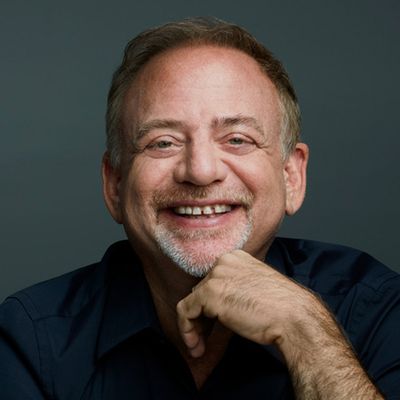
Featured Shows
About
This is the second half of my recent conversation with Tony Award-winning composer, lyricist, arranger, and music producer MARC SHAIMAN about his new, New York Times bestselling book, NEVER MIND THE HAPPY.
During his five-decade career, Marc has found enormous success in nearly every aspect of show business, but in this episode, we focus on his experiences on Broadway, including CATCH ME IF YOU CAN, CHARLIE AND THE CHOCOLATE FACTORY and, most especially, the behind-the-scenes history and development of his smash-hit musical HAIRSPRAY.
Become A PATRON of Broadway Nation!
This episode is made possible in part by the generous support of our Patron Club Members, including our newest patron, PAULA & STEVE REYNOLDS.
If you are a fan of Broadway Nation, I invite you to become a PATRON! For as little as $7.00 a month, you can receive exclusive access to never-before-heard, unedited versions of many of the discussions that I have with my guests — in fact, I often record nearly twice as much conversation as ends up in the edited versions. You will also have access to additional, in-depth conversations with my frequent co-host, Albert Evans, that have not been featured on the podcast. And all patrons receive special “on-air” shout-outs and acknowledgement of your vital support of this podcast.
And if you are very enthusiastic about Broadway Nation, there are additional PATRON levels that come with even more benefits.
If you would like to support the work of Broadway Nation and receive these exclusive member benefits, please click on this link:
https://broadwaynationpodcast.supercast.tech/
Thank you in advance for your support!
Transcript
This transcript was automatically generated and might contain errors.
[0:01] David Armstrong: Welcome to another episode of Broadway Nation, the podcast that takes you deep inside the remarkable history of the Broadway musical with a special emphasis on the immigrant, Jewish, queer, and black artists who invented it.
[0:30] ♪ Musical number: "Good Morning Baltimore" — performed by Annie Golden ♪
[1:11] David Armstrong: I'm David Armstrong, and this is the second half of my recent conversation with Tony Award-winning composer, lyricist, arranger, and music producer Marc Shaiman about his new New York Times bestselling book, Nevermind the Happy. During his five-decade career, Marc has found enormous success in nearly every aspect of show business, but in this episode, we focus on his experiences on Broadway, especially the behind-the-scenes history and development of his smash-hit musical, Hairspray. If you missed part one, you may want to catch up with that before listening to this one. Before we begin, I send my heartfelt thanks to the generous patrons of Broadway Nation, whose support is crucial to making this podcast possible, including longtime patrons Paula and Steve Reynolds. If you would like to support the work of Broadway Nation, there'll be information at the end of the episode about how you too can become a patron.
[2:38] David Armstrong: The music you're listening to is the original pre-production demo recording of Hairspray's opening number, sung by Annie Golden, "Good Morning Baltimore," which, as you will hear in a moment, was inspired by Rodgers and Hammerstein. As we pick up our conversation, Marc Shaiman and his partner Scott Whitman have just received an offer to transform the film Hairspray into a Broadway musical. Here we go.
[3:04] Marc Shaiman: So I ran across the hall, not the hall, I ran across the lawn. I think I floated across the lawn and said, Scott! I just got an offer to write a Broadway musical of Hairspray. So he came up the next day and he said, Tracy Turnblad should be like Curly in Oklahoma. And he looks over the beauty of Oklahoma and he thinks, oh what a beautiful morning. Well, Tracy Turnblad should open the blinds of her window and look out on John Waters' Baltimore and see the flasher and the bums and the rats on the street. But to her, it's all beautiful and she should sing about that. And I ran to the piano and started, you know, Good morning Baltimore. The basic idea of that song and the music just flowed right out of me.
And then me and Scott sit down and take the dummy version that I've written where sometimes it's just blah, blah, blah, blah, blah, blah, and then we carve out the lyrics together. And Scott always comes up with the titles. Ninety-five percent of every song we've written, Scott has come up with the title. He won't come in the room really until, because he's also a director and he has a real director's mind, until he has the whole scope of what the song should be. He doesn't want to try to start writing. Sometimes we'll start phrase associating to try to figure out where we're going, and through those phrase associations, one will stick out. In the case of Hairspray, we got a good head start because Tracy Turnblad says in John Waters' movies, she says, Mama, welcome to the 60s. And she also says, now all of Baltimore knows I'm big, blonde, and beautiful. So we had a nice head start there.
[4:44] David Armstrong: And of course you were smart enough to take that title and give it to a different character.
[4:49] Marc Shaiman: Yeah, we realized when I went to the piano with big, blonde, and beautiful, it just seemed to start as a dirty blues. And the actress who played it in John Waters' movies, Ruth Brown, she was a famous singing star in the 50s with a kind of dirty blues sound. So it just made sense to give her, because she also was big, blonde, and beautiful. Yeah, Hairspray was just blessed that way. Every single thing that happened, even if a bad thing happened, it would turn into something better. And one of those, at least seemed like a bad thing at the moment, was your director. You started off with Rob Marshall as the director of the show, which of course would have been sensational.
[5:27] Marc Shaiman: Yeah, when he first came aboard, he said, I'm developing a movie of Chicago with Miramax. And even Rob, we were all like, it ain't ever going to happen. Who's going to make a musical these days? That was in the absolute doldrums. No one was making movie musicals. So we all proceeded thinking, that's never going to happen. And Chicago had been announced as a movie musical for 20 years at that point. And everyone, possibly Goldie Hawn, Liza Minnelli, were supposed to do it once, and so on and so forth. And so Rob was our director, choreographer for three readings. Mostly, at that time, only really director because we were just reading from scripts. There was no choreography involved. But after the third reading, he called and said, they gave a green light to Chicago.
And he did ask if we would wait. He said, would you wait a year? And I knew better from having made movies. I said, there's no way, it's going to be two years. And meanwhile, Hairspray was, I like to say, we were giving birth, and it was crowning. You could already see the head. I see the head! And Rob understood, and we all had to part ways. And that was a terrible moment. But then Jack and Jerry came up as a possible new way to go. And we sent those demos that we had created to Jack and Jerry, and they were over the moon and full of a million ideas. And while you know them, Jerry was just beside himself. Oh, this could be that, and this could be this. And Jerry created that stage with all the scaffolding for the people because him and Jack just said, yeah, with all these backup parts, we should always see people singing. It shouldn't just be voices unseen. And then suddenly we had Jack and Jerry, which was just perfection.
[7:10] David Armstrong: Of course, this is where our worlds intersect because at that time, as my audience will know, I was the artistic director at the Fifth Avenue Theater in Seattle, where Margot, I got a phone call from one day, actually from Richard Frankel, was the first person who called me, but on behalf of Margot to see whether we would be interested in Hairspray, this completely unknown quantity at the time. And it's where our two books come together too because I write about this in my book. Would we be interested in launching the out-of-town tryout of Hairspray? And I remember that demo arriving in the mail and putting that, of course it was a CD at that time, into a CD player and listening to it for the first time and just being completely blown away by those, I think there were only four songs on that original demo that I heard. Probably, you know, Good Morning Baltimore, Welcome to the 60s, Big, Blonde, and Beautiful, and I Know Where I've Been.
[8:10] Marc Shaiman: Absolutely, and of course you had the capability to produce those amazingly, with top talent to say the least. I know, looking right over your head, there's Jennifer Lewis who sang the demo of Big, Blonde, and Beautiful and I Know Where I've Been. She's the first person to sing those songs.
[8:30] ♪ Musical number: "I Know Where I've Been" — performed by Jennifer Lewis ♪
[9:00] Marc Shaiman: We wanted her to be Motormouth, but she had a contract for a TV show that she couldn't get out of. Yeah, not to mention Nathan Lane and Annie Golden.
[9:12] David Armstrong: Yes, Nathan Lane.
[9:14] Marc Shaiman: Yeah, I sat down and sang him Timeless To Me. He was gonna sing both Edna and Wilbur, and I sang it to him, and then I said, now really pull up a chair, and I'll really bang out the notes for you. He was like, no need, put up the microphone. I was like, Nathan, you just heard the song. He said, I think I got it and proceeded to basically sing the song back to me. He truly has a phonographic memory. It was mind-blowing.
[9:36] David Armstrong: Yeah, Hairspray in Seattle. Yeah, talk about the experience of Seattle at the Fifth Avenue Theater. What did you learn there? How did the show change? What was the biggest moment of revelation there for the show?
[9:48] Marc Shaiman: Well, the big moment, and I'll make a long story short, after three readings, the producers all finally beat Scott and me down enough. They kept thinking that I Know Where I've Been, a beautiful song, but they felt like, gee, is it too serious? Isn't Hairspray just a fun night? Is it going to stop the show in the wrong way, meaning slow it down just as we're heading to the ending? And we were like, are you kidding? It gives the show the heart and soul of what it's all about, and it makes the triumph of the end all the more important. I mean, they're all wonderful people, the producers who were suggesting heavily that we try something else. So finally, we wrote a different song that was more upbeat.
I'm going to skip over the whole thing about how we ended up saying, you know what? No. So we went back to I Know Where I've Been. The Dramatist Guild allows us to hear the song that we wrote performed before it can be cut. So when we went to Seattle, the producers were not happy with us about that, that we had stamped our feet and had a tantrum and said, we're putting the song back in. So that was a big moment.
[10:48] Marc Shaiman: The opening night in Seattle, two big moments that night is Scott and I thinking when you're writing a show, you kind of think everyone in the audience is just going to be you. What makes you happy? And I remember peeking out of the curtain at the audience that first night in Seattle, and we would hope the audience was going to look like us, diverse, our age, you know, just you thought it was going to be us out there. And I looked out and I say in the book, it looked like it was the participants of a George and Martha Washington look-alike contest. The whole audience was white from head to toe, white hair, white face, white everything. And we thought, oh, is this where our little fantasy ends? Are they going to like this show? Are they going to get it? Well, we couldn't have been more stupidly wrong about judging books by their cover.
[11:40] Marc Shaiman: I learned the lesson of Hairspray ourselves that we had judged all these people by the way that they looked because they loved the show from the second it started. It was clear, wow, this is going really well. I always say they screamed after the opening number and they screamed after every number that came after it, and then they screamed the loudest at "I Know Where I've Been." I know that was the moment where I was sitting behind a lot of our producers, and I could see they— the number started and they were like this, and then when the number ended and the ovation happened, I saw their shoulders go down. If they had their arms crossed, I saw their arms go down, and they, you know, they were wrong, and they all owned up to it and realized, oh my god, thank god you fought as hard as you did because the show would not be— I mean, it's crazy.
I mean, they said, shouldn't Tracy Turnblad have the big 11 o'clock number of the show? And we're like, what could be more Tracy Turnblad for her to recognize that the Black community, that she should say, please take the 11 o'clock spot.
[13:05] ♪ Musical number: "I Know Where I've Been" — performed by Marc Shaiman ♪
[14:24] Marc Shaiman: Just one little revision on your story just told because I was sitting next to Margo that night, and right after the applause was there, screaming for the number, she turned to me and said, now we'll never get that song out of the show. And of course, she would tell that story on herself later because they were completely wrong, and they were forever grateful, I think, to you guys because if you'd gone along with what they wanted, that song might never have been in the show. And I don't think the show would have been the hit that it was. It would have been a big hit, but it wouldn't have been as important. And the fact that we had to fight for it was our own little micro version of the civil rights fight.
The fact that we had to fight to get it in the show just makes it all the sweeter and more important that it's in there. Let's touch at least briefly on your other Broadway enterprises, Catch Me If You Can, another show where our worlds intersect because that also premiered at the Fifth Avenue Theater, and it had its challenges, as you also write about movingly in the book. It was an unbelievable— I remember it just felt like this could not be happening. Not unlike a recent tragedy that I have now lived through where you can't believe— you just can't believe it. And for those who are wondering what we're talking about, it's when Norbert Leo Butz's sister happened to live in Seattle, and we went to dinner with her and her wife Sunday night, and then I think Monday night, the boogeyman crawled into their window, raped and knifed them both, and murdered Norbert Leo Butz's sister. And this is when we're just about to open the show.
[16:03] Marc Shaiman: Yeah, so everything stopped, of course. Norbert, you know, brought his sister home to St. Louis, I think, and asked if we would wait for him, and we said, of course. But we couldn't even believe that he could— could he have it in him to come back in a matter of days and be in a musical? But he did. And all he did when he came back, his strength, he just said, please, the one thing my sister would not want is for you to hate Seattle. She loves Seattle. And he was able to put himself back into the show so that on opening night on Broadway, in my curtain speech, I said, this show is for everyone's fathers and for one of our sisters. Life— so anyway, yeah, there you go. So that, you know, it's something that we will never— none of us will ever forget, and God bless the whole Butz family for being able to survive that.
[17:14] David Armstrong: Yeah, it was unbelievable for everyone involved, much less for Norbert and his family. It just says— it's unfathomable how he was able to do that and then continue with the show on Broadway.
[17:27] Marc Shaiman: Yeah, and when it's Winona Ryder.
[17:30] David Armstrong: Yeah, yeah.
[17:34] Marc Shaiman: Oh, bittersweet. On a less, you know, deep note, maybe I'll reverse these when we release it, but there were also— you learned a lot about writing a musical on that show because there were some challenges that you talk about in the book.
[17:47] Marc Shaiman: Yeah, but I may be wrong. I'm a firm believer that the show is better in Seattle than it was on Broadway. I don't believe all the changes that we were asked to make made the show better. I think we had a firmer grasp on what it should be in Seattle, and I don't know, I could be very—
[18:06] David Armstrong: Right now, you're— I have the exact same opinion about it. I remember going to open it on Broadway and thinking, oh, this is slicker and, you know, smoother in many ways, but not as— you know, just basically not as good as it was in Seattle. I think you're right. You had more of a set profile in Seattle. It seemed you seemed to more together on what the show was about.
[18:29] Marc Shaiman: Yeah, it all got splintered when they fired Terrence McNally. Can you imagine a sentence that has the word "fired Terrence McNally" in it? But they just felt like— I mean, you know, I speak in the book honestly that Margo and Hal Luftig got involved with the show as producers because Margo loved us from Hairspray and wanted to be involved. Hal Luftig and Jerry Mitchell was a love affair, and they wanted to work together, you know, professional love affair. And they liked the material, but they didn't love it in a way that— like, you have to love something to— so they were always kind of like, is this right? Is it good enough? That just wasn't— you know, that was the lesson of like, you know, keep talking to producers until someone is obsessed with your show and not just very lovingly wanting to be involved because loving the people involved.
[19:22] David Armstrong: And a lot of people reading this book, especially theater students, really anybody interested in how a Broadway show comes together will be very fascinated as much by the success as by the challenges that some of the shows faced for you.
[19:33] Marc Shaiman: I tried to keep in mind, especially movie scoring, to not get so deep into inside baseball, as they would say, that you just literally couldn't understand what I'm talking about. So I do try to write about it in ways that everyone could hopefully find interesting. You know, people— I'm getting a lot of great reactions to the book, and I don't get the sense that people are skipping over chapters because I tried to make it so that you'd understand everything, whether it's emotionally or about how the sausage is made on a movie or a Broadway musical.
[20:14] David Armstrong: You succeeded completely there. I can't imagine anyone skipping chapters because, number one, you've written it so breezily, and I mean that in a very positive way. It feels like a conversation with Marc Shaiman, which is— and I'm sure even on the audiobook, it feels even more like that.
[20:33] Marc Shaiman: Oh my god, so yeah, I had fun on the audiobook to do the magic that way.
[20:40] David Armstrong: Yeah, it just flows from one fascinating story to the next, and of course, it's filled with amazing celebrities that we're interested in. The people that you have worked with in your career is a, you know, a dictionary— who's who.
[20:55] Marc Shaiman: Exactly.
[20:56] David Armstrong: Who's who of late 20th century, 21st century show business. I mean, there's some people I meet now, I go, gee, you're like the last person in show business I never worked with because it's amazing how the paths have led from this one to that one. And, you know, it's just a blessed experience I've had, and I love your star-struck attitude toward it on many occasions when you're there with Barbra Streisand, and you can't believe you're there with Barbra Streisand.
[21:24] Marc Shaiman: Yeah, and guess what? I just got word that my friend Jay Landers, who is Barbra Streisand's A&R man, co-producer, he is like this with Barbra Streisand. He wrote me to say, I read her the entire chapter, and she loved it because I didn't know if she would because, you know, I'm honest about the chess game it was of working with Barbra Streisand and all the people involved and, you know, the, oh, don't say this to that one, and you know how it all went. But he allegedly got a great kick out of it, so that was a great relief.
[21:59] David Armstrong: Yeah, I think you write so wonderfully about the intrigue sometimes of show business and the egos involved, but in a very— I never feel like you're, you know, dissing anyone, as someone might say. You're just honest, but also we understand that there's a couple recording sessions you go to where there's prickly egos involved and some at least great potential for conflict. I don't know if you left any of the actual conflict out, but at least you presented it in a way that seems like, well, this is just fascinating show business without there being any sort of axes to grind.
[22:29] Marc Shaiman: Yeah, yeah, yeah. They're there, you know, they're grudges, but you know, you get older sometimes, you wonder, I don't remember why I was mad at that person. What happened? I don't know. And then, you know, eventually life is long, and you make up or you realize, oh, you know, anyway, life— it's just life. It's just show business has more of a spotlight on it, but it's just the same things that anyone goes through in life, no matter what their profession is or who their friends are. You know, my friends just happen to be famous. Sometimes I clam up, like at a party or something, if I'm meeting new people because I sound like a jerk if I talk about, you know, my friends and what I did last night or what I'm working on. It's just— I just feel like an asshole if I just name-drop, you know, but I'm just— that is your world.
[23:20] David Armstrong: You have dinner with Sarah Jessica Parker and Matthew Broderick on a regular basis, I assume.
[23:25] Marc Shaiman: They eat just like anyone else, yeah.
[23:28] Marc Shaiman: Live in living color, let me take you for a ride.
[23:35] Marc Shaiman: Yes, I'm live in living color.
[23:45] Marc Shaiman: So sit back and let me be your TV.
[23:52] David Armstrong: Don't go away. Marc and I will be back with more Broadway Nation right after this quick break.
[23:57] Marc Shaiman: I got a story I'd like to tell.
[24:02] Marc Shaiman: But I'm gonna need help to tell it well.
[24:08] Marc Shaiman: I got a story about fame and money.
[24:13] Marc Shaiman: And it's got more curves than a playboy bunny.
[24:19] Marc Shaiman: I want to live, not just survive. I want to tell my story live in living color.
[24:26] Marc Shaiman: Something special's up tonight. Yes, I'm live in living color.
[24:32] Marc Shaiman: Life ain't lived in black and white.
[24:41] David Armstrong: Hi, this is David Armstrong, and if you're enjoying this episode, I strongly suspect that you will want to read my new book, Broadway Nation, How Immigrant Jewish, Queer and Black Artists Invented the Broadway Musical, on sale now wherever books are sold, and I'm very happy to report that the early reviews have been terrific.
[25:01] David Armstrong: The esteemed author Jeffrey Block says that Broadway Nation is a fascinating, comprehensive and timely gem of a book that more than lives up to its promise of delivering no less than five books in one.
[25:13] David Armstrong: Kudos to David Armstrong.
[25:15] David Armstrong: And Tony Award-winning lyricist David Zippel says that David Armstrong's insightful history of the evolution of the Broadway musical and its creators is captivating and comprehensive as well as indispensable.
[25:29] David Armstrong: The book is, of course, available on Amazon, but I recommend that you go to the publisher's website, bloomsbury.com, where you will currently receive a 10% discount.
[25:39] David Armstrong: Again, like the podcast that inspired it, the book is titled Broadway Nation, How Immigrant Jewish, Queer and Black Artists Invented the Broadway Musical.
[25:49] David Armstrong: Now back to the show.
[25:51] David Armstrong: So let's touch briefly on Charlie and the Chocolate Factory.
[25:54] David Armstrong: You mentioned that earlier. How did that come about? And talk a little bit about the differences between the London version and the Broadway version.
[26:02] David Armstrong: And here you're working with a big corporation, which makes things more challenging.
[26:07] Marc Shaiman: Strangely enough, it was another example of Scott Sanders, the producer who ended up, you know, having great success with The Color Purple. He flew me to England with him once to meet Raoul Dahl's widow about a musical of Charlie and the Chocolate Factory.
[26:22] Marc Shaiman: And nothing became of it. And then lo and behold, years later, Sam Mendes and his producing partner, Carol Newling, and Warner Brothers called Scott and I.
[26:33] Marc Shaiman: And we went and had a meeting and they said, would you be interested in writing a musical of Charlie and the Chocolate Factory?
[26:38] Marc Shaiman: They said Raoul Dahl didn't like the songs from the movie.
[26:42] Marc Shaiman: So even though those songs are iconic, they said, you know, they didn't want them because he didn't want them.
[26:50] Marc Shaiman: You can go online and actually find the letter he wrote to the head of Warner Brothers saying, can we please get those horrid songs out of my movie?
[26:59] Marc Shaiman: Which is ironically also what P.L. Travers said about Mary Poppins. You know, these very angry British writers of classic iconic characters.
[27:10] Marc Shaiman: So anyway, the second time around, we said, OK, we figured Tim Burton had just made a movie that didn't have any of the songs and no one was picketing outside the theater.
[27:19] Marc Shaiman: It was a huge box office success.
[27:23] Marc Shaiman: So we thought, all right. And while writing it, we had so much fun.
[27:26] Marc Shaiman: David Gregg, the book writer, and Sam Mendes, we were loving working on it.
[27:31] Marc Shaiman: At the time, I think I say in the book, I had this concept that was just it never came to fruition, really.
[27:37] Marc Shaiman: But in my mind, Willy Wonka is like the Old Testament God, angry and seeming to like make terrible things happen to people to teach a lesson.
[27:47] Marc Shaiman: But Charlie, Charlie is like Jesus. Charlie's the New Testament, where he's just preaching love and just full of happiness and joy and wanting to bring everyone together.
[28:00] Marc Shaiman: That never became a big subtext or through line to the musical.
[28:05] Marc Shaiman: In England, the sets were unbelievable. People left the theater humming the sets and it ran a good long while at the Drury Lane Theater, which is, you know, four years at the Drury Lane Theater is like eight years in any other theater.
[28:20] Marc Shaiman: But Scott and I got beat up. You know, it was going up against those classic songs.
[28:25] Marc Shaiman: Eventually, they did say we have to put pure imagination in the show.
[28:29] Marc Shaiman: And we were unlucky enough to have written our own song that we're most proud of called Simply Second Nature.
[28:35] Marc Shaiman: That's about what it's like to be creative.
[28:38] Marc Shaiman: We put it in that song in the book.
[28:40] David Armstrong: Do we get to hear it on the audio version?
[28:42] Marc Shaiman: Yes.
[28:43] Marc Shaiman: You get to hear Christian Borle, who sang the demo.
[28:46] Marc Shaiman: Wow. Before Christian played the part on Broadway, we always thought, wouldn't he be great?
[28:51] Marc Shaiman: So he sang a lot of the demos for us.
[28:53] Marc Shaiman: So we had that song where pure imagination is in the movie.
[28:58] Marc Shaiman: So you could hear the audience just go.
[29:03] Marc Shaiman: And then when pure imagination came at the end, you could go, you know, and Scott and I love a happy audience.
[29:09] Marc Shaiman: We want a happy audience.
[29:11] Marc Shaiman: So when it moved to Broadway, we gave up our song for the walking into the chocolate room and put pure imagination where it ought to be.
[29:18] Marc Shaiman: And luckily, we got the song at the end of the glass elevator.
[29:21] Marc Shaiman: We got to write a new song.
[29:22] Marc Shaiman: But on Broadway, the misbegotten concept to try to make it affordable on Broadway, because Broadway prices are crazy, that the audience would use their pure imagination to see Willy Wonka's factory.
[29:31] Marc Shaiman: People were not happy with that.
[29:39] Marc Shaiman: And so we limped along and, you know, did not have a very long run.
[29:44] Marc Shaiman: I'm still very proud of the songs that we wrote.
[29:47] Marc Shaiman: I mean, I really, really am proud of them and Doug Besterman's brilliant orchestrations.
[29:51] Marc Shaiman: And then, of course, hybrids version, you know, a little of this, a little of that version.
[29:56] Marc Shaiman: So the version that's now out to be licensed or on tour is very successful.
[30:01] Marc Shaiman: There's a tour right now.
[30:02] Marc Shaiman: I wish I could go in China.
[30:04] Marc Shaiman: And I've just seen like pictures and short videos of it.
[30:07] Marc Shaiman: It looks spectacular.
[30:08] Marc Shaiman: So, you know, things have landed in place.
[30:12] Marc Shaiman: But our Broadway experience was, yes, a big disappointment.
[30:16] Marc Shaiman: But as you say, I think it's a show that will continue to come back and be done because, number one, the score is really good.
[30:23] Marc Shaiman: And number two, it's a title, obviously, that attracts people.
[30:27] David Armstrong: You talk a little bit about the power of nostalgia in that chapter.
[30:31] David Armstrong: And I was interested in that, that it's hard to fight against.
[30:35] Marc Shaiman: Yeah. And I get nostalgia. I came in the 70s.
[30:39] Marc Shaiman: Nostalgia became not just a word to describe what it's like to love things from the past.
[30:44] Marc Shaiman: It was the nostalgia craze.
[30:47] Marc Shaiman: No No Manette on Broadway.
[30:49] Marc Shaiman: Bette Midler on the radio singing an Andrew Sisters song, you know.
[30:53] Marc Shaiman: So I grew up at a time where you, you know, and I myself, you know, discovering Fred and Ginger movies because when I was a kid, there was the Million Dollar Movie.
[31:03] Marc Shaiman: They had a movie on at 4:30 every day on Channel 9.
[31:07] Marc Shaiman: And they would show the same movie all week.
[31:10] Marc Shaiman: So you could watch it in bits and pieces.
[31:12] Marc Shaiman: So you had to get up off the couch to change the channel.
[31:15] Marc Shaiman: And you only had barely three channels.
[31:17] Marc Shaiman: So I watched a lot of movies that nowadays, a kid, when I say a kid, I mean, you know, someone younger who may see a black and white movie and be like, oh, I had no choice.
[31:23] Marc Shaiman: I watched it and learned to love these classic movies, you know.
[31:33] Marc Shaiman: So you probably remember the Regency Theater on the Upper West Side.
[31:37] Marc Shaiman: Oh, my God. The Regency Theater where they'd get these pristine prints where you could see the beauty of black and white and the gray, the gray, you know, just how gorgeous it could be.
[31:47] Marc Shaiman: So, yeah.
[31:48] Marc Shaiman: So, you know, we learned on Charlie and the Chocolate Factory.
[31:50] Marc Shaiman: Certainly.
[31:51] Marc Shaiman: I remember in England, I'd say in the book, walking home from either rehearsal or a preview of Charlie and walking by Mama Mia, which was already, of course, a huge hit.
[32:02] Marc Shaiman: And the sign outside of Mama Mia says, you already know you're going to love it.
[32:07] Marc Shaiman: And I pointed and I said to Scott, I said, there lies the future.
[32:12] Marc Shaiman: People are more, you know, and, you know, I realize I've worked on a lot of movies turned into musicals and a lot of people, you know, point their finger at it for that reason of like, oh, but, you know, 95% of all musicals are all adaptations of something else.
[32:27] Marc Shaiman: It used to be a book and then it turned into a movie.
[32:30] Marc Shaiman: You know, so I don't subscribe to this idea that making a musical out of a movie is such a horrible thing.
[32:36] Marc Shaiman: A movie has figured out how to tell the story in two and a half hours, you know, or less.
[32:42] Marc Shaiman: So it makes sense.
[32:43] Marc Shaiman: So anyway, Sondheim based several of his shows on movies.
[32:48] Marc Shaiman: So it's I agree.
[32:49] Marc Shaiman: I don't subscribe to that theory at all.
[32:51] Marc Shaiman: The only thing that's different now is they don't change the title from the original movie.
[32:54] Marc Shaiman: And they constantly put the musical at the end.
[32:58] Marc Shaiman: Like I still see ads now for Hairspray the musical.
[33:01] Marc Shaiman: We didn't write Hairspray the musical.
[33:03] Marc Shaiman: It's Hairspray.
[33:04] David Armstrong: Right.
[33:04] Marc Shaiman: Stop adding the musical.
[33:06] Marc Shaiman: It's such a cliché.
[33:07] Marc Shaiman: It makes you roll my eyes every time I see the musical after everything.
[33:12] David Armstrong: Two more things before I let you go.
[33:16] David Armstrong: I want to ask you what it was like based on your four-year-old inner child to then write the songs for Mary Poppins Returns.
[33:22] Marc Shaiman: Fantasy upon fantasy.
[33:28] Marc Shaiman: And if I hadn't gotten that job, I don't know what would have happened to me when I heard about it and the fact that it was Rob Marshall talking here full circle moment.
[33:36] Marc Shaiman: Now Rob Marshall and his partner John DeLuca are creating the movie.
[33:39] Marc Shaiman: Rob could have been like, you didn't wait for me for Hairspray.
[33:42] Marc Shaiman: I'm not even going to meet with you on Mary Poppins Returns.
[33:45] Marc Shaiman: But they're not like that.
[33:46] Marc Shaiman: And he also gets a royalty from Hairspray.
[33:49] Marc Shaiman: So all's well that ends well.
[33:50] Marc Shaiman: So yeah, we had to wait months and months and months to find out.
[33:55] Marc Shaiman: And then we found out we were in the final running.
[33:58] Marc Shaiman: And I think those last three weeks when we heard we were in the final running, I don't think I left my bed.
[34:03] Marc Shaiman: I was like, what's his name at the end of the social network, constantly hitting refresh, refresh on his computer, waiting to see if his girlfriend's going to write him.
[34:12] Marc Shaiman: Like, I just was waiting for the email to say yes or no.
[34:16] Marc Shaiman: And if it had been no, I don't know what I would have done.
[34:18] Marc Shaiman: I couldn't have lived in a world to see posters about a Mary Poppins sequel that I hadn't gotten to write.
[34:24] Marc Shaiman: But lo and behold, we got the gig and got to write a love letter.
[34:30] Marc Shaiman: Basically, the plot of Mary Poppins Returns is about learning to embrace what you loved as a child for Michael Banks, who's become sad and lonely.
[34:40] Marc Shaiman: And he's a widower and he's not helping his children get back into living life.
[34:46] Marc Shaiman: And Mary Poppins comes really to me.
[34:48] Marc Shaiman: She comes for the kids, but she really comes once again for Michael Banks.
[34:52] Marc Shaiman: And by the end of the movie, it's about him embracing, you know, that sounds like a cliché.
[34:57] Marc Shaiman: I'm saying in a bad way, embracing your inner child.
[34:59] Marc Shaiman: But, you know, embracing.
[35:00] Marc Shaiman: And the joy and the wonderment of a child's imagination. Rejoining the human race, as we know in another show. And so in doing so, we got to write our love letter to Mary Poppins, the movie. And that was just the joy from beginning to end. And then the fact that the biggest full circle moment of my life, which I only realized months later, it was at my 60th birthday party, and I was thanking my friends and talking about moments in my life. And when I got to Bette Fiedler, I was thanking her for singing the song at the Oscars for us. Emily Blunt didn't want to sing at the Oscars in front of a billion people. Emily Blunt sings beautifully in tune. She could have, but she was petrified at the idea of singing at the Oscars. So Scott and I had all our chutzpah together and asked Bette to sing it, and she amazingly said yes.
[35:46] Unknown Speaker: This evening's next nominee for Best Original Song was written by Marc Shaiman and Scott Whitman for the film Mary Poppins Returns. Performing "The Place Where Lost Things Go" with Marc Shaiman on piano, please welcome The Divine Miss M.
[37:35] Marc Shaiman: But when I realized months later, oh my God, I got to write a song for my favorite literary character, Mary Poppins, and that soundtrack that defined my childhood, and it's being sung by Bette Midler, my favorite performer in all the world, whose albums I went right to from the Mary Poppins soundtrack, at the Oscars, which we all watch and is a part of all of our lives, and I got to write this song with Scott Whitman, my first soulmate, a man who means so much to me, and a collaboration that means so much, that all these things converged in this one three and a half minutes. I mean, that's why I do think, I know I sound like I'm hawking, my book is full of stories like this that I do hope are inspirational.
I don't think I sat down to write an inspirational book, but now that I'm telling all these stories and podcasts and in interviews and stuff, I realize, yeah, people can really get that from my book, that if you just show up and say yes, and just keep saying yes and showing up.
[38:35] David Armstrong: And do the work.
[38:36] Marc Shaiman: Yeah, and do the work. And then if you're lucky, you'll find people you love doing the work with, because then the work goes away, then it's just all play, and you're just having a great time with your friends.
[38:49] David Armstrong: I think that's the perfect place to end. There's so much we can't cover today, some like it hot, which is out on tour right now.
[38:57] Marc Shaiman: Oh, yeah, yeah.
[38:58] David Armstrong: Smash we didn't cover, but again, we'd have to do five or six episodes to cover everything that's in your book. And it's been so wonderful to talk to you and hear these stories interconnect in the way that they do in the book, which I think is to me what kept me just paging through the book going, oh, I can't wait to see what happens next in a way, you know, and of course, I actually know the story of your career, at least in the general sense, but you made it quite fascinating all the way through.
[39:28] Marc Shaiman: Thanks, David.
[39:29] David Armstrong: Thank you, Marc. Thanks for joining us today on Broadway Nation to talk about your fantastic new book, Never Mind the Happy.
[39:39] Marc Shaiman: See you soon.
[39:40] ♪ Musical number ♪
[42:51] David Armstrong: If you love this podcast and would like to delve even deeper into the world of Broadway musicals, then I invite you to become a patron of Broadway Nation. For as little as $7 a month, you can receive access to a treasure trove of exclusive features, including new specially produced episodes that are available only to patrons. And this includes a five-part series on the Broadway musicals that received the Pulitzer Prize for Drama. And all patrons receive shout outs and acknowledgments in recognition of your vital support. To join, go to broadwaynationpodcast.supercast.tech. That's all one word, broadwaynationpodcast.supercast.tech. Or simply click the link in the show notes to this episode.
[43:39] David Armstrong: Broadway Nation is written and produced by me, David Armstrong. Special thanks to Pals Mox for his help with editing this episode and to the entire team at the Broadway Podcast Network.
[43:51] ♪ Musical number ♪
© Broadway Podcast Network, All Rights Reserved