

Author Thomas Hischak returns to the Broadway Nation this week to tell us about his captivating new book, Song Of The Season — Outstanding Broadway Songs Since 1891. For this book, Hischak analyzed every Broadway season since 1891 and selected one song as the most outstanding... Read More
From the show: BROADWAY NATION
Featured Shows
About
Author Thomas Hischak returns to the Broadway Nation this week to tell us about his captivating new book, Song Of The Season — Outstanding Broadway Songs Since 1891.
For this book, Hischak analyzed every Broadway season since 1891 and selected one song as the most outstanding. In this episode, we discuss “Oh, Promise Me” from Robin Hood (1891), “In The Good Old Summertime” from The Defender (1902), “Defying Gravity” from Wicked (2003), “In Old New York” from The Red Mill, “They Didn’t Believe Me” from The Girl From Utah, “Charleston” from Runnin’ Wild, and “Begin The Beguine” from Jubilee (1935).
Thomas Hischak retired from full-time teaching in New York State and now teaches theatre part-time at Flagler College in St. Augustine, Florida, USA. He is the author of more than 30 indispensable non-fiction books on theater, film, and popular music, and long-time listeners will remember him from episodes 104 and 105, where we discussed his previous book, The Abbott Touch — Pal Joey, Damn Yankees and the Theatre of George Abbott.
Become a PATRON of Broadway Nation!
This podcast is made possible in part by the generous support of our Patron Club Members, including our newest member, Alan Teasley.
For just $7.00 a month, you will receive exclusive access to never-before-heard, unedited versions of many of the discussions that I have with my guests — in fact, I often record nearly twice as much conversation as ends up in the edited versions. You will also have access to additional in-depth conversations with my frequent co-host, Albert Evans, that have not been featured on the podcast. All patrons receive special “on-air” shout-outs and acknowledgment of your vital support of this podcast. And if you are very enthusiastic about Broadway Nation, there are additional PATRON levels that come with even more benefits.
If you would like to support the work of Broadway Nation and receive these exclusive member benefits, please just click on this link:
https://broadwaynationpodcast.supercast.tech/
Thank you in advance for your support!
Transcript
This transcript was automatically generated and might contain errors.
[0:00] David Armstrong: Welcome to another episode of Broadway Nation, the podcast that delves deeply into the remarkable history of the Broadway musical with a special focus on the immigrant Jewish, queer, and black artist who invented it. Today, my guest is Thomas Hischak, who returns to the podcast to tell us about his captivating new book, Song of the Season — Outstanding Broadway Songs Since 1891. Hischak is the author of more than 30 indispensable nonfiction books on theater, film, and popular music, and longtime listeners will remember him from episodes 104 and 105, where we discussed his previous book, The Abbott Touch — Pal Joey, Damn Yankees, and The Theater of George Abbott. Before we begin, I want to thank the generous patrons of this podcast who help make it possible, with a special shout-out today to patron-level member Alan T. If you would like to support the work of Broadway Nation, I'll have information at the end of the episode about how you, too, can become a patron. Without further ado, here we go.
[1:10] David Armstrong: Welcome, Thomas Hischak. It's such a great pleasure to have you today on Broadway Nation to talk about your new book, Song of the Season — Outstanding Broadway Songs Since 1891.
[1:21] Thomas Hischak: Thank you. Glad to be here.
[1:23] David Armstrong: How do you describe this quite unique book?
[1:25] Thomas Hischak: The book wasn't my idea. It was a colleague of mine who I've written books with, Mark Robinson. He told me that he wanted to write a book where he picked one song from every season that he thought was most significant, and it would be called the Song of the Season. I thought, what a great idea. Good luck with it. He started working on it, and he realized he knows the modern stuff really well, not the really old stuff, and he really felt it should go back further. So he was concerned about that, and then he got very busy. He got a job, and he was directing plays. Finally, one day, he just said, if you want to do it, go ahead. I said, yes. It's dedicated to him for giving me permission to do it.
I do go back to 1891, and I do every season up through the 22-23 season. I pick one song out of the hundreds that might have been written for that season that I think was the most significant. I describe the season, what played that season, what were the big hits, what were the minor ones. Then I pick the song, I talk about the song, the lyric, the music, how it fit in the show, who recorded it, anything that I could find about each song. It's a pretty thick book because it goes through 130 some seasons. The way things change, going through the book for me, I worked on it chronologically. I just learned so much more about how things changed. It was enlightening to look at, oh, this is the best song this season.
Wow, it's real different from the song from the season before or 10 years earlier or 10 years later. It was a learning experience for me. A lot of research, but a lot of opinion, because basically, it's a subjective choice, what do you think the best song is. I'm open to debate. I know people will disagree, and they should.
[3:09] David Armstrong: What's fascinating is that you have basically written a history of the Broadway musical from around the corner away.
[3:13] Thomas Hischak: Yes, because each chapter has a summary of that season. If you just read those, you do get a history of the musical, when the British shows were popular, when it was all British, when it was all American, and a few British shows came in, and then you had a British invasion. All the changes, you could get that just from the summary of each season.
[3:36] David Armstrong: You just talked about the subjective aspect of choosing these songs. What was your process?
[3:40] Thomas Hischak: I looked at several things. What was the most popular song? I didn't want to just do that, but I did look at the popular songs, the ones that were recorded a lot, but I looked at the songs that had a bigger influence. This particular song was very popular at the time, but it hasn't stood up, or it became very influential for later songs. One of the ones we'll talk about, They Didn't Believe Me. There's a song that just opened the doors for all kind of new innovations in the Broadway music. I looked at the ones that sometimes were controversial. Therefore, they were in the news, or they were discussed a lot, or chatted about. I looked at ones that just were fun. Everybody loved them. They just kind of perked up Broadway. I would say, for me and my girl, that it did that, that season. It just made everybody happy, and there are not a lot of songs that do that anymore.
[4:31] David Armstrong: Why 1891? Why start there?
[4:37] Thomas Hischak: I chose that season because the song Oh Promise Me, which was sung in the operetta Robin Hood, that became the first theater song, American theater song, that swept the nation. It was a big seller on piano sheet music, but mostly it was sung at hundreds and hundreds, literally thousands of weddings. Oh, promise me that you will take my hand. The most unworthy in this lonely land. And let me sit beside you in your eyes, seeing the vision of our paradise. Hearing God's message while the organ rolls its mighty music to our very souls. No love less perfect than a life with thee. Oh, promise me. Oh, promise me. Oh, promise me. It was the song for weddings from 1891 till the 40s when people started getting a little tired of it. By the 60s, it was kind of a joke to sing Oh Promise Me. What were they singing then? Sunrise, Sunset.
[6:36] David Armstrong: Another Broadway song.
[6:36] Thomas Hischak: That was a Broadway song too, yeah, but that was sung at hundreds of weddings as well. But so, 1891 seemed to be a good spot. There had been some British songs that swept the nation, especially Gilbert and Sullivan, very popular. But this was the first time an American theater song became nationally known and loved. And so I thought that was a good starting point.
[6:58] David Armstrong: I noted in that chapter, the 1891 season, you talk about Robin Hood and you also talk about A Trip to Chinatown. One was the operetta hit of the year and one was the sort of musical comedy hit of the year.
[7:09] Thomas Hischak: It's amazing because Robin Hood was considered the first really good American operetta at the same time A Trip to Chinatown is considered the great grandfather of musical comedy, American musical comedy. And that had some hit songs too. There they were, some hit songs coming out of Broadway shows first time, but nothing topped Oh Promise Me, so I had to go with that one.
[7:31] David Armstrong: And what I also really appreciated is your focus on the number of performances each show ran and how that changed over the years and what that indicates to us. Because when you look back, you can look at a show and say, well, Robin Hood only ran 40 performances, but that was a big hit in those days.
[7:50] Thomas Hischak: And it came back again, again and again. They did that a lot back then. From the early years up until the 30s, if you ran 100 performances, that was considered a runaway hit, a milestone hit. You not only paid all your bills, you probably made a small fortune. Well, in the depression, that sort of didn't work anymore. And by the 40s, you had to run 400 or 500 performances to really make your money. Although in the 50s, there were shows like Paint Your Wagon and Playing in Fancy, maybe. Yeah, they ran a modest amount, 300 something, and they made money. They broke even. They didn't make a fortune. They didn't go on to become regularly revived, but you could do that back then.
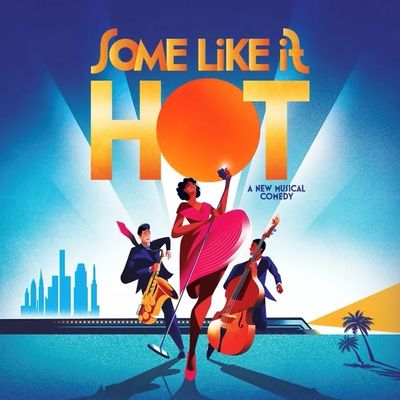
[8:35] Thomas Hischak: And jump to the last season, Sun Like It Hot ran 441 performances. It won all the Tonys. It ran over a year. It got great reviews. Audiences loved it, and it lost a fortune. But that's the nature of Broadway. It's either a runaway hit or it loses money. There's no in-between anymore.
[8:57] David Armstrong: So we go from 100 performances as being sort of the mark of a hit to 300 or 400 performances, and then does it make another big jump? What is it today, 1,000 performances?
[9:09] Thomas Hischak: Yeah, probably. And if it's a big musical, 1,000 isn't going to do it. If Les Mis ran 1,000 performances, it would have lost a lot of money. It was the 70s where everything changed. The prices went up. The choices of prices disappeared. No longer had five different level prices. You now had two. And the 70s production costs rose precipitately. That's when it happened, because I remember seeing it. It was my early years of going to the theater. And I remember spending $7 or $8 to see a Broadway show, not the best seats, to all of a sudden, the top ticket was $15. And everybody was like, oh my gosh, $15 for a show. And we had no idea where it was going, even the most pessimistic of us.
[10:14] David Armstrong: That's another book I wish somebody would write, The Study of the Economics of Broadway and how that has changed, because there's so much controversy about it. And people are always complaining about ticket prices. I'd love to just see it with the idea of, what did $15 mean in 1970? And what does that mean today? And those kinds of things.
[10:40] Thomas Hischak: Right, yeah, because accounting for inflation is pretty amazing. You remember when Nicholas Nickleby opened?
[10:40] David Armstrong: I do remember. $100 was outrageous.
[10:43] Thomas Hischak: So it was really only $50. And it was over three hours. So you really got your money's worth. It was totally worth it. But I remember shelling out that money and thinking, I've never paid this much.
[10:56] David Armstrong: When they announced that, it was like, whoa, $100, you know, now you can't even get in the balcony for that.
[10:58] Thomas Hischak: Exactly.
[10:58] David Armstrong: Out of all these songs, I've selected a few that I thought we should talk about. Again, a subjective choice on my part. But I sort of have chosen one from each decade, roughly, some of them, the big hits, and some of them, the more unusual selections, which I think is interesting to talk about why you talked about them.
[11:18] Thomas Hischak: Let's start with the preface, because you talk about two songs in that preface that I think are really interesting just to give the book focus.
[11:23] David Armstrong: Yes, I compared The Defender, a show that nobody knows, which introduced in the good old summertime and how that had a big impact on audiences back then. And then I jumped all the way to Wicked.
[11:41] Thomas Hischak: Defying Gravity.
[11:41] David Armstrong: Yeah, audiences sitting there and watching the end of the first act, you know, and Idina Menzel hitting those high notes and raising up in the air. And that was definitely the song of the season. That's what everybody was talking about. Are they the best songs of the season? Maybe, maybe not. But that's what people were talking about. That's what hung on. Good old summertime became such a standard, and Defying Gravity was.
[12:17] Thomas Hischak: Recorded by everybody and it's been mocked and parodied because it's so well known. So I picked those two very different time periods and very different songs to show how one song might dominate a season. And my task was to find that song for each of the seasons over the 130 some years. And of course, the question is, will people still be singing "Defying Gravity" 120 years later the way people are still singing "In the Good Old Summertime" today? It's hard to say, yeah.
[12:46] David Armstrong: I think that's one of the big things we notice in this book as you go through it. As the musical changed, the songs get much more specific, much more tied into the story and the characters, much less extractable. The idea that when you wrote a Broadway show, you just wrote a bunch of songs and didn't worry about plot or the characters. And you hoped that one or two of the songs might travel. They still hope that today. But the good musicals are written with character and plot in mind. It's like, oh, only Sweeney Todd could sing this song. I don't think Frank Sinatra is going to record it. It's just so specific to the character and everything.
[13:23] Thomas Hischak: That happens a lot. So now the song of the season is not one that maybe a lot of people are recording, but it's one they all know and they talk about. So I have several examples of that, that they're popular in their familiarity, not in their repeating. They're not sing-along songs.
[13:40] David Armstrong: Right. They become the buzz of the season.
[13:42] Thomas Hischak: Yes. Well, let's start with 1906-1907, which is from The Red Mill. And The Red Mill is a Victor Herbert, not really an operetta, more of a musical comedy. It's got operatic elements, but it's the closest he ever came to musical comedy. And it really is very revivable. It's got some operatic singing for the romantic leads, but the two leads are comics. It's got wonderful sing-along and Broadway kind of songs. The outstanding one, although there's very good songs throughout that show, but the outstanding one by far is "The Streets of New York." And you'll say, well, I don't know that one. I never heard of it. And you have. Everybody's heard it. It's better known sometimes as "In Old New York," but even that lyric doesn't help you.
It was played on every merry-go-round, every skating rink, every fashion show, every, you know, Olympics, you name it. It's such a familiar melody. And with the lyric about New York City, you know how wonderful New York is. The characters are all in Europe, but they wish they were back in good old New York, the streets of New York. It's such a catchy melody. And so unlike Herbert, he could write beautiful melodies, but they were usually in the lyrical stand. This was in the sing-along style.
[15:24] David Armstrong: The song was extremely popular. It was sung by two guys who couldn't sing. They were the comics. So it is not a difficult song to sing. And that's another reason that's a favorite for sing-alongs, barbershop quartets, choral groups, you name it. I'm amazed. I started looking up how many movies it was. I couldn't even list them all. It was like 100 movies. If you wanted a scene to be very New York-ish, you played this on the soundtrack. You showed some scenes of the streets of New York, and then you were all set. It just told everybody everything they needed to know. Broadway cannot get away from singing about New York.
[16:19] Thomas Hischak: From the beginning. From the very beginning.
[16:23] David Armstrong: Even in New York, it is so different from the New York of later. But the number of songs about New York in Broadway shows is pretty amazing. It's amazing, Victor Herbert's music, how much of it still resonates. And he's the earliest of our great composers.
[16:39] Thomas Hischak: That still sort of survives in a way.
[16:42] David Armstrong: You can't do many of the shows, but some of the songs, yeah.
[17:06] David Armstrong: Don't go away. Thomas and I will be back with more Broadway Nation right after this quick break.
[17:25] David Armstrong: So let's jump to 1914-1915, and this is a song you mentioned a little while ago, "They Didn't Believe Me." What is it about this song from a show that certainly no one's ever seen since its initial production, The Girl From Utah. What made this song so extraordinary?
[17:41] Thomas Hischak: Well, The Girl From Utah was a London show, and when they brought London shows over, they often changed the score. And Jerome Kern wrote one or two songs sometimes. For 10 years, he did that, writing an extra song for a London show. He went over to London and wrote some songs there too, but he never really got a full score for quite a while. But he wrote this song to be added to The Girl From Utah. It's a love song. It's going to be an 80s show. There's nothing specific about it, except that it's just an amazingly subtle but very revolutionary song.
[18:33] ♪ Musical number: "They Didn't Believe Me" ♪
[19:04] Thomas Hischak: Many musicologists, of which I am not, point to this song as the beginning of a new sound. And you can only describe it as the foxtrot. This might be the first foxtrot song. Not a waltz. It's in 4-4 time, but it's not a march. It uses a pattern that's a little bit like a dance, but not a fast dance. And it just has amazing chord progressions, something I barely understand. But the way the chords change throughout this, Kern was a master at subtlety. Did the audiences go, wow, no, they just liked it, and it became popular. It's what happened afterwards. When this song was sung, the lyric was, for the first time, conversational. Now, George M. Cohen had, 14 years before, broken through the operetta language.
He hated operettas. And he said, swell, and my gal, and, you know, you're worth a hundred bucks or your grand old rag. He was using street slang. And that was refreshing. But this wasn't that kind of slang. It was lyrical, but it was conversational. And I could point out one phrase that kind of says it all, where at one point, it's a duet, and they sing it back and forth. It says, when I tell them, I'm certainly going to tell them that you're the love, blah, blah, blah. Certainly, which is a three-syllable word, was colloquialized down to certainly. We'd say, so what? It just fits the notes. But it was like, no, that was the way this love song was going to go. So the lyric is different. The music is different.
The chord progressions are different. Nobody in the audience noticed, although they liked the song. But you know who was listening? A very young Cole Porter, George Gershwin, Richard Rogers, Vincent Heumanns. They were young guys. They heard this song and they went, wow, that is so refreshing. That's the kind of theater song I want to write. I want to write waltzes. I don't want to write marches. I want to write that kind of song. They all proclaimed that Kern in that song was their inspiration. So that's what I call an influential song.
[21:40] ♪ Musical number: "They Didn't Believe Me" ♪
[22:30] Thomas Hischak: This song just spoke in a way, musically and lyrically, that no song. It's the song of many seasons in that regard, because it has this ongoing influence on people. And every song of those incredible composers that you just talked about, the influence it had on them means that that song just rolls on and on and on.
[22:51] David Armstrong: That's right. It's still affecting things.
[22:54] Thomas Hischak: And even today, I feel like when you hear it and they get to that, and I'm certainly going to tell them, it just is arresting because you just go, it's out of the ordinary because it seems so much like the way people talk.
[23:07] David Armstrong: Yeah, it's still kind of effective. Yeah. It's performed the right way. To me, the perfect echo of that is Jerome Kern again with Oscar Hammerstein.
[23:17] Thomas Hischak: No, with who wrote the lyrics for Bill.
[23:19] David Armstrong: Oh, that was Woodhouse.
[23:21] Thomas Hischak: Woodhouse. When he gets to, I love him because he's, I don't know.
[23:26] David Armstrong: Yeah.
[23:27] Thomas Hischak: It just stops you in your tracks when you hear that because it's so arresting. For a lyric to do that and kind of just like, wait a minute, you're not supposed to do that. You're supposed to just keep the pattern and run at the end of the line.
[23:39] David Armstrong: Who was Herbert Reynolds?
[23:40] Thomas Hischak: He was prolific enough, but this is the only song that goes down into history. He worked with a lot of people. Kern worked with a lot of people. He never had just one partner. Hammerstein was his most frequent and most devoted partner. But Kern worked with a lot of people and Herbert Reynolds was the same way. Don't know too much about his personal life, but I'll see his name pop up here and there. For some reason, this little, you have to remember, he didn't do the score. He and Kern were just either put together or got together and said, we got to write two songs or three songs for this musical. And they could have parted ways. It's just interesting that somebody who wrote a song that's so influential, we know so little about.
[24:19] David Armstrong: Yeah.
[24:20] Thomas Hischak: Lost to history.
[24:21] David Armstrong: Well, let's jump to a very different song. We'll jump to the 1920s now. And this is a song that every documentary about the 1920s, any movie that you see that references the 1920s, you will still hear.
[24:35] Thomas Hischak: Today, it sort of exemplifies the entire era in a way. Oh, yeah, I would say that Charleston is the name of the song and the name of the dance. I would say it is the 1920s roaring twenties. That's a cliché, you know, wild dancing and alcohol prohibition and alcohol anyway. And yeah, if you want to identify this, why don't you just play a few bars of this? Most people don't know the lyric. It's the Lenny instrumental, and it's used to play really fast, you know, to show the high speed of the era. Two authors, Johnson and Mack, again, not very well known, but they wrote a lot of stuff. They wrote this for a forgettable show called Running Wild. Nobody knows or cares about the show, but the song and the dance, they have to be connected.
They caught on right away. It was performed in the show. Before you knew it, everybody was doing the dance, and it is the dance. I mean, there's so many dances that were invented in the 1920s, half of them named after animals. But this is by far the king of them all. And it has an interesting lyric. It's about going down south where they do things different. Carolina. It's not a brilliant lyric, but there's no question that the music is contagious. Yeah, it's just one of those things. And the dance was contagious. It was popular throughout the whole decade, and it still comes back here and there. Even on the contemporary dance contest shows on television, you'll still see the Charleston dance because it was so infectious.
[26:00] ♪ Musical number: "Charleston" ♪
[26:37] Thomas Hischak: This was one of those series of black musicals that start with Shuffle Along in the 20s. This is sort of a sequel in some ways or a follow-up to Shuffle Along. Each season, there was all black musicals. They often had offensive names like the Black Birds of 23 or something like that, Hot Chocolates. There was always a couple of shows like this, and audiences enjoyed them. It was escapism. It was like going to Harlem, but you didn't have to go to Harlem. And then this one actress, forget her name, not famous, she led the song. And it just took off with white and black. It wasn't like this is now something that was sung just by African Americans. It was no, it was everywhere. And where did the song reappear?
There was a nostalgia for the 20s, somewhere in the 50s. I would say The Boyfriend has their version of the Charleston, and even sings Won't You Charleston With Me. Every once in a while, there'll be a musical number that is in the mode of a Charleston. Usually, it's nostalgic. Usually, it's a comedy number. Take Bye Bye Birdie. When he sings about kids, how crazy they are, he is singing a Charleston variation. That's the Charleston thing. And it's just perfect, because the father is 40 years out of date, that he would sing in that style, to show how connected he is to his kids in the 1960s. Just really smart playwriting, because they're giving him a song that's completely the polar opposite of rock and roll. I'm sure that was Strauss's idea, you know?
[28:25] David Armstrong: Totally, yeah. Charles Strauss. So the Charleston hasn't left us in the 20s, nevertheless, because the very last show in the book is Some Like It Hot, which is a pastiche of the 1920s. You could slip Charleston in there if you had to, because it would fit right in. But they had to do their versions of dance numbers in that show. Right. And that rhythm is just so, as we said, tied to the period. It just epitomizes the 20s. Let's jump now to the 30s and talk about one of the most famous songs of all time, I think is fair to say, which is Begin the Beguine.
[29:00] ♪ Musical number: "Begin the Beguine" — performed by Cole Porter ♪
[30:03] Thomas Hischak: A Cole Porter song from a forgettable show. Unfortunately, most Cole Porter shows are not revived. Just because we do Anything Goes and Kiss Me Kate all the time, it's a reminder of how few of his shows we can do. Not his fault. Scores are wonderful. Begin the Beguine became the hit of the show. And I'm blanking out on the show. It's Jubilee. Jubilee. All right. When was the last time you saw that revived? Although I have to say that's a show that fascinates me because it actually sounds very funny and got incredible reviews. I like the plot. Yeah. Yeah. I haven't read the script, but the plot is like, hey, this sounds kind of fun. A royal family going slumming, you know. Begin the Beguine breaks all the rules.
It has that Latin-ish, African-ish beat that is in a lot of Cole Porter songs. But this one is intoxicating. Cole Porter himself contradicted himself throughout his life, explaining where he got the idea for it. You know, he said this one time. He said that sometime. It really doesn't matter. It has an exotic quality to it that just brings you to somewhere different than America and today, in your case, the 30s. The song is longer than just about any other theater song till you get to Stephen Sondheim's. It builds. It's not repetitive because it's long. It just builds. It starts off and it's an exotic thing. It's almost like it's a frenzy as it builds up. The lyrics are enticing. There's something about the lyrics for Begin the Beguine. The Beguine is a dance. You have to explain that.
[31:01] David Armstrong: And like the rumba or something like that.
[31:06] Thomas Hischak: Yeah, it's one of those South American dances, but it's not about a dance. It's about romance. You begin the Beguine, you're slipping into a kind of a dangerous slope of ultimate romance and sex.
[31:18] ♪ Musical number: "Begin the Beguine" — performed by Cole Porter ♪
[32:10] Thomas Hischak: The song had no way it was going to be popular. It was too long. It was very hard to sing. You could play it and people would dance to it, but the song would never become popular. Well, that proved to be wrong because of certain recordings that people made and they just sold. And this song became one of the, I don't know, I would say it's one of the most romantic songs of the period. And there's a lot of romantic songs in the 1930s. But this one is on a different level. That would be one way of putting it. It's also and correct me if I'm wrong, but it's sort of a minor hit in the 30s. Is that correct? Or during the when the show opens?
[32:56] David Armstrong: I think it was in the 40s when some of the big bands recorded it. That's when it became. Yeah, because Jubilee didn't run that long. And so it wasn't like it was there for not that many people heard it in Jubilee. So and there were some early recordings. But in the 40s, when I don't know if it was Dorsey or whoever, they had a huge hit with it. And then everybody knew it. And that's a swing version of the song, although originally written as a Latin song. And then it becomes very famous in a swing version. I wonder how Cole Porter felt about that. I'm sure he liked the royalties.
[33:29] Thomas Hischak: He loved the royalties and he loved the notoriety because he got a different audience when it became a big band hit. You know, he had the theater audience and he had songs that were recorded by, you know, all kind of people. But this was a whole new world of fans dancing to the big bands. I think he enjoyed being part of that. I'm just guessing. But that's what it was. Yeah.
[33:50] David Armstrong: I love seeing the list of people who recorded these songs in each of the chapters, just because they'll always be surprising ones. And then I want to go back and hear them like Elvis Presley recorded Begin to Begin, which is somewhat unexpected.
[34:04] Thomas Hischak: You're right. Right. I loved researching all the people who had recorded the songs and like you get a beautiful song from the 30s and some pop group from the 60s recorded it. You know, great success. And Smoke Gets in Your Eyes became a huge hit in the 50s, 20 years later after it was written. And it wasn't changed that much to become a big hit. But it's always interesting to see which songs are reborn or revived or revitalized. That's what makes a standard a standard, that you can do that and the song still works.
[34:45] David Armstrong: And that's where we'll pick up the conversation on the next episode of Broadway Nation when Thomas Hischak returns to tell us more about his book Song of the Season, Outstanding Broadway Songs Since 1891.
[35:06] David Armstrong: Now, here's the information about how you, too, can become a patron of Broadway Nation. A donation of just $7 a week will not only keep Broadway Nation up and running, it will also provide you with exclusive access to the complete, unedited versions of many of the interviews that you hear on this podcast. And all patrons will receive special shout-outs and acknowledgements of your vital support for Broadway Nation. To join, simply go to broadwaynationpodcast.supercast.tech. That's broadwaynationpodcast.supercast.tech. Or simply click the link in the show notes to this episode. Broadway Nation is written and produced by me, David Armstrong. Special thanks to Pals Mox for his help with editing this episode, and to the entire team at the Broadway Podcast Network.
[36:51] David Armstrong: Thank you.
© Broadway Podcast Network, All Rights Reserved