

This is the third and final segment of my recent conversation with author Laurie Winer regarding her book Oscar Hammerstein II and the Invention of The Musical, recently released in paperback... Read More
From the show: BROADWAY NATION
Featured Shows
About
This is the third and final segment of my recent conversation with author Laurie Winer regarding her book Oscar Hammerstein II and the Invention of The Musical, recently released in paperback.
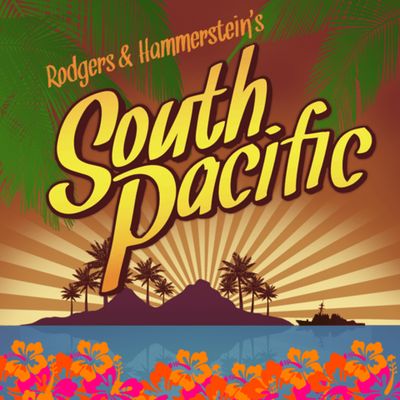
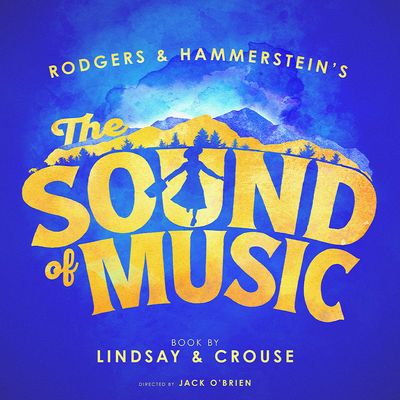
Today our discussion centers on the second half of Hammerstein’s remarkable partnership with Richard Rodgers, including the creation of their musicals South Pacific, Me And Juliet, The King And I, Pipe Dream, and The Sound Of Music. If you missed the first two parts, you may want to catch up with those before listening to this one.
Laurie Winer has been a theater critic for the Wall Street Journal, the New York Times, and the Los Angeles Times, and was a founding editor of the Los Angeles Review of Books.
How to become a PATRON of Broadway Nation!
This podcast is made possible in part by the generous support of our Patron Club Members, including long-time patrons Gary Fuller and Randy Everett.
For just $7.00 a month, you will receive exclusive access to never-before-heard, unedited versions of many of the discussions that I have with my guests — in fact, I often record nearly twice as much conversation as ends up in the edited versions. You will also have access to additional in-depth discussions with my frequent co-host, Albert Evans, that have not been featured on the podcast. All patrons receive special “on-air” shout-outs and acknowledgment of your vital support of this podcast. And if you are very enthusiastic about Broadway Nation, there are additional PATRON levels that come with even more benefits.
If you would like to support the work of Broadway Nation and receive these exclusive member benefits, please just click on this link:
https://broadwaynationpodcast.supercast.tech/
Thank you in advance for your support!
Transcript
This transcript was automatically generated and might contain errors.
[0:27] David Armstrong: Welcome to Broadway Nation, the podcast that explores the remarkable history of the Broadway musical with a particular focus on the immigrant Jewish queer and black artist who invented it.
[0:43] David Armstrong: I'm David Armstrong, and this is the third and final segment of my recent conversation with author Laurie Winer regarding her book Oscar Hammerstein II and the Invention of the Musical, which I'm happy to note has recently been released in paperback.
[0:58] David Armstrong: Laurie Winer has been a theater critic for The Wall Street Journal, The New York Times, the Los Angeles Times, and was a founding editor of the Los Angeles Review of Books.
[1:07] David Armstrong: Today, our discussion centers on the second half of Hammerstein's remarkable partnership with Richard Rodgers, including the creation of the musicals South Pacific, Me and Juliet, The King and I, Pipe Dream, and The Sound of Music.
[1:21] David Armstrong: If you missed the previous episodes in this series, you may want to catch up with those before embarking on this one.
[1:27] David Armstrong: Before we begin, I have to give a big shout out to all of the patrons of Broadway Nation whose generous contributions in part helped to make this podcast possible, especially longtime patrons Gary Fuller and Randy Everett.
[1:41] David Armstrong: If you would like to help support the work of Broadway Nation, please listen for the information at the end of the episode about how you too can become a patron.
[1:49] David Armstrong: Here we go.
[1:51] David Armstrong: From the failure of Allegro comes the unbelievable success of South Pacific.
[1:56] Laurie Winer: Yeah.
[1:56] David Armstrong: You talk a lot about Josh Logan in this part, rightly so, because he is the co-author of South Pacific and was crucial to that show's success.
[2:06] David Armstrong: The show probably would not have been successful without Josh Logan being involved.
[2:10] David Armstrong: And he was also the director of the show, and that show was famous for—I know that Hal Prince told a story about being with George Abbott in their office the day after the opening night of South Pacific.
[2:22] David Armstrong: Abbott was quizzing young Hal Prince about why was that show different than any other show that came before it? What did you see last night that was unique?
[2:30] Laurie Winer: Prince wasn't entirely sure.
[2:31] David Armstrong: And Abbott said it's the very first time a show never stopped for a scene change, that the transitions were seamless all the way through.
[2:40] Laurie Winer: Interesting.
[2:41] Laurie Winer: I do remember Dorothy Hammerstein talking about how long scene changes just drove Oscar insane.
[2:46] David Armstrong: Yeah, and you said even after that, The King and I was a show where they were frustrated by the scene changes.
[2:51] David Armstrong: And now we go back and we look, it's fairly rudimentary.
[2:53] David Armstrong: There's actually a video of the London production, which you've probably seen with Mary Martin.
[2:58] David Armstrong: The quality of it is very low, but it was something that was filmed for—it wouldn't have been television yet. I don't know what it was filmed for. I think maybe they showed it at movie theaters or something in England.
[3:08] David Armstrong: But you do see the production. And to us today, it looks very rudimentary. The travelers close and the scene happens in front of it, and there's a transition.
[3:15] Laurie Winer: But at the time it was seen as being a revolution in staging because it just didn't stop. And the scenes overlap.
[3:22] David Armstrong: Well, yeah, Hammerstein would have loved, you know, all the digital sets because you never have to wait for a set change.
[3:29] Laurie Winer: That's probably true. Talk a little bit about Logan and how he figures into, especially this section of the book.
[3:35] Laurie Winer: He's not treated economically or financially fairly by Rodgers and Hammerstein.
[3:40] Laurie Winer: Okay, so what happens is Oscar is stuck. He's writing the book, the book is basically a series of stories. They're related, but it's not an arc. It's not one story.
[3:50] Laurie Winer: Which Logan had recommended to begin with.
[3:53] David Armstrong: Had recommended to them, yes.
[3:55] Laurie Winer: So Oscar always had trouble, because as you say, it's quite difficult. So he was having a lot of trouble putting it together. He also didn't understand military etiquette.
[4:04] Laurie Winer: Um, Josh Logan had bitten award. I forget whose idea it was, but Josh Logan probably offered to come to Doylestown, Oscar's country house, and work with him.
[4:16] Laurie Winer: And they worked together for 10 days. Hammerstein got unstuck. Logan was a manic depressive, and his wife said to him, "You've got to ask for credit on this because you will plunge into a depression if you're not credited."
[4:29] Laurie Winer: And so he did ask, and Hammerstein, his first response was, "Absolutely, you're absolutely right." And then after Hammerstein talked to the lawyer and Richard Rodgers, he came back and said, "No, it's not possible."
[4:40] Laurie Winer: My theory is that Richard Rodgers said no. And one of the reasons he said no was because Logan worshipped him. I think he had a contempt. Why do I say this? Just based on letters that I read, because there's a lot of letters about it, because they went on and dragged on for years and years.
[4:58] Laurie Winer: And Logan owed his career to Rodgers to a certain extent.
[5:02] Laurie Winer: He did, and he also loved him even after this, but also became a love-hate thing. It dragged on for so long, and there's so many letters, and even after everyone was dead, it was still dragging on.
[5:13] David Armstrong: Should Logan have gotten financial credit?
[5:16] Laurie Winer: Probably, yeah. They did give him the credit, except for the point size of his name had to be 20 points less in a bond than their names.
[5:23] Laurie Winer: It seems very petty now. He got credit in the playbill for being the co-book writer, but he didn't get any of the royalties. And his name as director had to be smaller in print.
[5:35] Laurie Winer: They had to reduce the size of his name.
[5:37] Laurie Winer: Yeah, and the pettiness of it and the cheapness of it, I attribute to Richard Rodgers, that may be right and it may be wrong.
[5:43] David Armstrong: I think you're right. As great as Richard Rodgers was, one of his challenges was crediting the other people he worked with. Trudy Rittman and DeMille never received the credit or the financial reward that they probably deserved.
[5:58] Laurie Winer: And it does seem that Rodgers, but then Hammerstein's going along with it too, which is interesting. And they split everything 50-50, I believe, Rodgers and Hammerstein, which was already a big thing from Hammerstein, because he's writing the book and the lyrics, which in a traditional structure, he would have gotten two thirds and Rodgers would have gotten one third.
[6:15] Laurie Winer: I think that agreement probably came out of the fact that Richard Rodgers was more of a success when they first got together.
[6:22] David Armstrong: Yeah, yeah.
[6:22] Laurie Winer: I also feel from knowing Hammerstein through your book and other people's books, it just feels like he understood this is the two of us together making this happen. And we are equally dependent on one another. We should share it equally.
[6:41] David Armstrong: I think you're absolutely right. The impact of South Pacific is hard to convey to people today. I use this term a lot when my students—I say it's the Hamilton of its day, because I'm trying to find something that will convey the level of—and I think it's beyond Hamilton because the musical theater was still so central to American culture at the time.
[6:59] Laurie Winer: It was a centerpiece of American life, not just culture. Even though they had great success with Oklahoma and Carousel, there's something about the success of South Pacific that was astronomical.
[7:12] David Armstrong: Did you see Bart Sher's production at Lincoln Center?
[7:15] Laurie Winer: Yeah.
[7:15] Laurie Winer: I was very moved by that.
[7:17] Laurie Winer: It was fantastic.
[7:18] David Armstrong: It was fantastic.
[7:19] Laurie Winer: And just as Carousel is about poverty, South Pacific is about racism. And it is Oscar's, you know, most direct statement on racism.
[7:28] Laurie Winer: The way he does it is so brilliant because he doesn't threaten the audience. He doesn't tell them they're little. He tells them they're wonderful, but we've got to be better. That's why it's so effective.
[7:39] Laurie Winer: And I cried so hard at that production. There's something so beautiful about being asked to be better than you are. Also, I felt so connected to my parents, who, you know, my father was a merchant marine in the war and they had seen South Pacific and loved it. And something about binding me to their reality. And it's an incredibly moving show.
[7:59] David Armstrong: Is it your favorite?
[8:01] Laurie Winer: I actually think The King and I is my favorite, Rodgers and Hammerstein, but I do love South Pacific. It was definitely up there.
[8:06] Laurie Winer: I was moved and very intrigued by the way you talk about Nellie Forbush in the book and what you just said that she is positioned as the heart of America in a way. And yet she has to confront her internalized racism.
[8:20] Laurie Winer: At a time when those two words had not been coined as that idea yet. Somehow Oscar Hammerstein is calling it out in 1949, saying this is the problem we have in America. And as you just said, we can be better.
[8:34] Laurie Winer: Nellie Forbush is a much bigger racist in the stories than she is on stage. He's so smart in how he presents her. You can see that she's racist, but it's not so much that you hate her.
[8:46] Laurie Winer: The reason that she's able to confront her racism is because she believes that the man she loves may be dead because he goes off on a mission and no one knows where he is. Very dangerous mission.
[8:58] Laurie Winer: She thinks that he might be dead, and so she's in this void, this sudden void, and is able to kind of see her own actions in a new way. Then he comes back, picks up the lyric that she's dropped in the song, and it's just so beautifully done.
[9:15] Laurie Winer: My god, it's the masterpiece.
[9:17] David Armstrong: Now, you have to learn to mind me when I talk to you, and be nice to me too. Because I love you very much.
[9:26] Laurie Winer: Now, Manger.
[9:30] Laurie Winer: I will not sing.
[9:32] Laurie Winer: You just want to laugh at my French accent.
[9:35] David Armstrong: Okay.
[9:35] Laurie Winer: But you've got to help me.
[9:40] Laurie Winer: Ditem.
[9:45] Laurie Winer: La Bemois.
[9:55] Laurie Winer: La vieger.
[10:02] Laurie Winer: Sherman de Moiselle.
[10:13] David Armstrong: And as you point out in the book, Hammerstein drastically improved that moment of realization for her from the way it's presented in the novel.
[10:20] Laurie Winer: Yes, absolutely. In the novel, she basically lies down on her bed and decides not to be racist anymore. Hammerstein really dramatized it and lifted it up, just fantastic.
[10:32] Laurie Winer: And I think that final image of the show is so brilliant and forward-thinking, this nuclear family that we see on the stage that is the vision of what America has to become long before anybody would probably articulate that.
[10:53] Laurie Winer: And at the same time, you know, he was starting Welcome House, which was an organization that found homes for orphaned Asian children from the Korean War. And so he was actually doing something practically in real life as well as in his work.
[11:08] Laurie Winer: And he was progressive, no question about it. Again, it's so interesting to confront the challenges people have with the show, understandable challenges, and yet their solution is to negate the show or to cancel it entirely.
[11:24] Laurie Winer: You know, impossible for you and I to consider. I think there's a parallel between that impulse to not do the shows and the banning of books for children in public schools.
[11:34] Laurie Winer: You can't be afraid of confronting what was terrible about your past. Germany had no choice but to confront what they had done in World War II. But they really confronted it, you know.
[11:48] Laurie Winer: We need to do that too. And I think part of that is doing these shows. The idea that you can just erase racism by not presenting works that might possibly have racist components, I think is crazy.
[12:01] Laurie Winer: And especially when the show is entirely, again, an anti-racist statement.
[12:05] David Armstrong: Yeah, exactly.
[12:06] Laurie Winer: Statement, I don't think is too strong a word. I don't think even message is not too strong a word. It was intentionally, and as you recount the argument of the controversy that went around about "You've Got to Be Taught," and some people saying it should be removed from the show and it was too preachy and all that kind of stuff.
[12:22] Laurie Winer: Right. For me, that just underlines the point. Hammerstein made it clear that's what the show was about. I think he even says in that letter if we took that song out, we wouldn't do the show at all.
[12:31] David Armstrong: Right. And what could be clearer than that? Then this is what the show is about. Our intention is to say something about racism.
[12:39] Laurie Winer: Yeah, and it's so great that these two people from the Midwest and the East Coast, that's Nellie Forbush and Lieutenant Cable. They fall in love with people of a different race because they are removed from their environments where they are able to meet and they fall in love. And then they have to think about that love in the context of how the people back home would see it. And it makes them very uncomfortable. And it's just so well done.
[13:06] David Armstrong: You mentioned that about the people back home. When they start thinking about that, their courage goes away. And it made me think about that song, "My Girl Back Home," which was taken out of the show originally and then put back in the movie, and then it was in Bart Sher's production. But the subtext of that song is right there in what you're talking about. It's the difference between where they are and the reality for Nellie, Little Rock, Arkansas, which I think is interesting. The events of Little Rock happened six or seven years after the show is written. But for audiences today, we understand very clearly the world she's going to go back to, or she would go back to if she went back.
[13:42] Laurie Winer: Absolutely.
[13:43] David Armstrong: Don't go away. Laurie and I will be back with more Broadway Nation right after this quick break.
[14:26] Laurie Winer: I won't spend too much time on Me and Juliet. I think mostly because it's a show I've never seen. I don't know if you've ever had a chance to see it anywhere. You write very well about it and you write very interestingly about it.
[14:38] David Armstrong: Thank you.
[14:39] Laurie Winer: But again, it seems like the story, if you even say these words, it's just sort of lackluster.
[14:43] David Armstrong: Yeah.
[14:44] Laurie Winer: The characters don't collide. The heroine is just such a nothing. And the villain is sort of a judge for eye, but he sort of has an easy resolution which undercuts the drama.
[14:56] David Armstrong: Right. I guess, you know, it was exciting to them to be writing about their world, the musical theater backstage. That sounded like a really good idea. And there are some good songs in it, and especially the audience chattering about the show. I like that a lot. Because Oscar used to love to eavesdrop on people in the lobby.
[15:54] Laurie Winer: And so he has a song where he sees them ungenerously, and he also has a song where he sees them generously, which is interesting. So it's "Intermission Talk" is the ungenerous one and the "Big Black Blob," which it calls. I can't get it. "Big Black Giant" or something like that. Which sees them as a group of humanity coming together. So there is some very interesting stuff. And maybe someone could fix it. I don't know. And one day we would see it.
[16:17] David Armstrong: Maybe you should do that.
[16:18] Laurie Winer: Of all the shows I'm gonna pick to rewrite, it's probably not on the top of my list.
[16:23] David Armstrong: Understandable.
[16:24] Laurie Winer: It would be interesting. I'd love to see the show. That's a show I wish was recorded in some way, other than the cast album, which was never my favorite. It didn't grab me. It's always interesting. I think those cast albums that grab us when we're young, what's really interesting is the ones that don't usually don't have a very good story.
[16:39] David Armstrong: Absolutely.
[16:40] Laurie Winer: Even though you can't really tell from the cast album what the story entirely is, the elements of it are not coming through in the songs that get recorded.
[16:48] David Armstrong: Although Pal Joey is kind of a great cast album, and that story was kind of a mess. They're constantly trying to tell it better every time they, you know, it gets produced. It's a great score.
[16:58] Laurie Winer: Yeah, although I'd argue that characters are really strong in Pal Joey and are really well written. And so that comes through.
[17:03] David Armstrong: That's true.
[17:05] Laurie Winer: And then they are kind of original, they're not like people in their shows.
[17:09] David Armstrong: Yeah, no, they're very specific and interesting and yeah, quirky.
[17:16] Laurie Winer: I believe that brings us to The King and I, which is, I'm pretty sure my favorite Rodgers and Hammerstein show. People ask me why. And it's hard to say exactly, but again, I think it's because of what it's about, and it's something we've both written about now in my book and your book.
[17:33] David Armstrong: I'm always worried when I pick up books now, because my book's done basically and can't really be changed.
[17:38] Laurie Winer: And we're gonna feel like Mary Long De Roll Feeling.
[17:42] David Armstrong: Exactly.
[17:42] Laurie Winer: What did I miss? What didn't I put in the book? What are they gonna come up with that I didn't think of? Of course, throughout your book, there are probably a thousand wonderful insights that you have that I didn't have or research you discovered that I didn't have, but I was also happy in the big picture. I didn't feel like I was, you know, completely missing something.
[18:02] David Armstrong: What you identify there is that the show is about universal freedom. It's about slavery. The central theme of The King and I is slavery. And you say it's I may end up quoting myself rather than you, because it was very similar, that the negative aspects of the King of Siam are the same negative aspects as what America's fighting the Civil War at that exact moment over, which is slavery.
[18:29] Laurie Winer: The hard thing is that you know, their criticisms, as I know you're aware of The King and I in that it's us preaching to another culture from a superior place. We're saying stop having slavery.
[18:42] David Armstrong: I mean, that's possible.
[18:43] Laurie Winer: Well, because I don't think people see past the optics, and I believe that it may be a fatal flaw of the show now, is the optics present a white woman teaching Asian people how to live and be a white woman who represents democracy, confronting a man who happens to be Asian who represents slavery and the patriarchy, that that's really the conflict. The racial cultural aspects of it is secondary to that because the show is equally critical of Americans who are in favor of slavery.
[19:19] David Armstrong: I'd be is that literally in the text? It culminates in the ballet in the small house of Uncle Thomas Ballet as the centerpiece. The longest thing in the show is that ballet.
[19:29] Laurie Winer: That's right.
[19:30] David Armstrong: And who's the villain of the ballet? Simon Legree. Top Tim says that the king is like Simon Legree. They're held up together. She almost loses it when she speaks out and calls out the king.
[19:42] ♪ Musical number ♪
[19:59] Laurie Winer: But I do not believe Topsy is wicked, Critter, because I too am glad for the death of any king who pursues a slave who is unhappy and wishes to join her lover. And your majesty, I wish to say to you, an honorable guest, I will tell you the end of the story. It is a very sad ending.
[19:47] Laurie Winer: Right, yes.
[20:43] David Armstrong: Which I think is fascinating, but I do understand why that's not the first thing people see.
[20:43] Laurie Winer: Yeah.
[20:48] David Armstrong: It kind of falls into what we've been talking about with some of the other shows. It's this weird transitional time we're in where, you know, we may be throwing out the baby with the bathwater. I think an anti-slavery show should be okay.
[21:01] Laurie Winer: It's complicated, obviously, it's very complicated. We're having a writer's residency here. We host writers to finish projects, and this young Vietnamese-American scholar was just here. She had never even seen The King and I, and her subject is colonial Vietnam. And she didn't, yeah, she never even seen it. She didn't think it was necessary. That's how kind of irrelevant it now seems, I think, to young people.
[21:24] David Armstrong: I teach a big lecture course, so I have a hundred students, and they have to watch about 10 of these musicals as part of that. Most of them they've never seen before and barely heard of in many cases. These are not theater students, these are from all over the university for the most part.
[21:40] Laurie Winer: So do they tend to like the musicals?
[21:43] David Armstrong: They fall in love with them. I have to say that 90% of them fall in love with these shows, are completely captivated by them, especially Fiddler, West Side Story, Gypsy, Funny Girl, because they have to watch them on video for the most part. I'll make them go to a live production if there's something around that they can see.
[21:43] Laurie Winer: Right.
[22:02] David Armstrong: But I've tried to choose the movies or the live video captures that best represents the Broadway show. It's very interesting to see how captivated they get. And some of the things we're talking about, especially for 20-year-olds today, they're a little different than even the students five years ahead of them. They're not buying into the cancel culture nearly as much.
[22:29] Laurie Winer: That is so wonderful to hear. Because I don't really have access to that particular body of knowledge, and that is really good to hear. So they recognize the problematic aspects, but they also recognize the rest of it.
[22:41] David Armstrong: Yes, yes. And of course, I'm pointing it out to them and I'm pushing them on some of these issues. And like with Nellie Forbush, some of them have a hard time accepting. They're mad at her for being racist and they turn off to her for being racist. It's very hard for them to get past. I think because they really don't experience that themselves. I think they have grown up in a world where they have much less internalized racism than any people before them. They have a hard time getting on her side. She turns them off in the scene where she says, I can't marry you. And then we have a long conversation about yes, but what happens at the end of the show? What does she do? Or more importantly, what does she not do? She doesn't go home. She doesn't go back there. She decides to stay where she is. She confronts the racism. That's the story.
[23:30] Laurie Winer: And Cable can't. And you make this point too that Cable has to die from story purposes because he's unable to choose life.
[23:39] David Armstrong: Very well put, yeah.
[23:40] Laurie Winer: She chooses life. We're like gonna both start to crush.
[23:44] David Armstrong: Exactly.
[23:45] Laurie Winer: Exactly. It's just so moving. It's an amazing piece of work.
[23:47] David Armstrong: Like The King and I, some people would say that is the climax of Rodgers and Hammerstein's career. I'm not entirely sure I agree with that. They then have a very problematic show, which is Pipe Dream. The show I've never understood. I've read the script, it's hard to get through. I've listened to the cast album. I find the album really hard to get through. It's pretty watery.
[24:10] Laurie Winer: You read the Steinbeck, right?
[24:12] David Armstrong: No, I've never read the Steinbeck, but I'd like to go back and read the book. But I've read there's like a published version of the libretto.
[24:18] Laurie Winer: Oh, okay.
[24:18] David Armstrong: As I said in the book, I understood why it would attract them because I think that the character of Doc is very much like Hammerstein.
[24:26] Laurie Winer: And how he also liked to see himself, which is, you know, he's a man of great wisdom but few words and kind of takes care of everyone and people depend on him.
[24:37] Laurie Winer: And he's also kind of eccentric, but he's really the cornerstone of his community. I think Hammerstein really identified with him, but that doesn't mean that he could make the musical work because he didn't he couldn't.
[24:48] Laurie Winer: Well, and as you point out, the fatal flaw seems to be that the leading female character who's supposed to be a prostitute, they just were not brave enough to keep her being a prostitute. And then you have no story. And Steinbeck said that, didn't he say you've got no story left if she's not a prostitute?
[25:04] David Armstrong: Yes.
[25:04] Laurie Winer: Sexually they just could not deal with the messiness at all. It's so interesting. And do you think equally they had the same challenges, or do you think it was driven by one or the other?
[25:13] Laurie Winer: The music isn't particularly that memorable. I'm having trouble thinking of a single song that it in my head. If I looked at the song list, I might find one. But no, so I think they both they it just didn't connect with either of them. That happens to every writer. They start down a path and Roger and Hammerstein, they had much less, I think, ability to go down a path and then say, Oh, this isn't working, let's do something else. Once they were in it, both from a point of view of, well, of course we can make this work 'cause we're Rogers and Hammerstein, and just I think structurally and economically and business wise, it was now an entity that had to be carried through.
[25:53] David Armstrong: Definitely. It also just goes to show you that even the greatest artists make mistakes, and it was a mistake. It just demonstrates the level of difficulty of making a musical because nobody had more wherewithal to turn it around in whatever style, which they then demonstrate first with Cinderella on television, which was sort of a competition with Peter Pan in a way. That's not the most brilliantly written book even for the T V production, but what a set of songs.
[26:18] Laurie Winer: Oh, fantastic. Just fantastic. But something just occurred to me that we talked about Allegra being Hammerstein's most personal musical, and I happen to think he really identified with the character in Pipe Dream. And those were two musicals that he really was not able to make come alive. And maybe it's because he was writing about himself, and that's not what he did well.
[26:39] Laurie Winer: Which is also interesting when you think about the divide in culture that happens because we move into a time when everything is personal, when the singer-songwriter comes to the forefront, when we no longer value as much people writing about people who aren't themselves. And in some ways, you mentioned this earlier that we have a trouble with Roger Hampshire because they wrote about cultures that we could say today they have no right writing about. But that is the nature of fiction writer to a great extent is to bring the world to them.
[27:10] David Armstrong: Yeah, I think they would be horrified by the dictum that you really shouldn't write about other people's experiences. I think that could be horrifying to them.
[27:18] Laurie Winer: Yeah. So it's interesting that you say that when they did write about things that were more close to themselves, they had trouble. They struggled with that.
[27:25] Laurie Winer: No, I really think so, yeah. You have many wonderful diversions in your book, Oscar the First, Stephen Sondheim figures in heavily, and you spent a lot of time talking to him, his relationship to Hammerstein, Josh Logan we talked about earlier. You bring it back around to the Sound of Music, which is their final work, Oscar's final lyric, Oscar is too sick to write the book for the show. I'd be interested to know how that process of conceiving the show and talking about every element of it worked on that show. It seems like Lindsay and Krause had already written a version of it before Hammerstein and Rogers got involved.
[28:01] Laurie Winer: Yeah, I don't know whether they decided where songs should be interjected in the script. I don't remember whether they did that or not. Mark Horowitz would remember. But I was thinking as you were talking that as we talked about Oklahoma being product of these two artists coming together in their overwhelming joy and relief. I think the Sound of Music, Oscar knew he was dying near the end of the writing. I think it has a feeling of farewell and closure. I think it has some of Hammerstein's most profound lyrics. I think there was just a sense of an ending in it. And then, of course, the last song he writes in his life is "Edelweiss."
[28:45] ♪ Musical number: "Edelweiss" — performed by Laurie Winer ♪
[29:24] Laurie Winer: It's a beautiful song, especially when you think about it as the last song that he ever wrote in terms of saying goodbye, in terms of his appreciation for beauty and for small things, his benediction for his own country. I also love the parallel you made with it with "Oh, What a Beautiful Morning." Because in a way those two songs are very similar.
[29:45] David Armstrong: Yeah, so it's the first and the last song they write together. So I think that sense of ending is very haunting and beautiful. But again, the movie captures a lot of stuff that's great about the musical, but it doesn't capture the stuff that was really interesting about the musical. Need to see it on stage to see that.
[30:01] Laurie Winer: It's interesting that you say that, because I've produced that show several times in my career. And those songs from the stage show, and part of this is, of course, because the movie is now emblazoned in everyone's head. Those songs just fall flat completely. My personal opinion is they're not the greatest songs, but they do have the most interesting subject matter, as you say.
[30:22] David Armstrong: Interesting ideas.
[30:23] Laurie Winer: Yeah, exactly. But for some reason, the audience is very impatient with them when you do them today. As you say, they don't know it, and it's like, give me the heroine.
[30:32] David Armstrong: Yeah, I think that's absolutely true. I feel the way you write about the show is interesting because you acknowledge all the criticism that that show came in for, both on Broadway and then the movie. And the reviews are remarkably similar. They all are using words like sugary and treacly and all those things. From the beginning, it was seen as that. And yet the audience loved that show on Broadway. It was a gigantic hit. And then the movie turned it into what I would contend as the most popular musical of all time.
[31:04] Laurie Winer: You know, this is reminding me of the conversation that you had about Bette Midler. I love Bette Midler, so I was very interested in those podcasts. And you said something about camp, which is that you can love something and also acknowledge that it's ridiculous. And that is what Camp is. And I think that is what the movie experiences now. I think people genuinely love it and also find it ridiculous.
[31:30] David Armstrong: I think that's true, which led then to the sing-along and the costume contest and all that stuff that go along with it. And yet, I do think, again, getting back to the primary aspect of the story in each of these shows being the central element. What the story is about still moves us and still affects us, in spite of us thinking elements of it are ridiculous. Because ultimately it's a story about defeating fascism.
[31:56] Laurie Winer: Yes.
[31:56] David Armstrong: Fighting Nazis is always a good side to be on, I think. And this incredibly transgressive woman at the center of it, who is a problem from the beginning. She described in the second song as being a problem. And then she defies authority both with the nuns, and then she defies authority in the house with the captain, who is sort of on the verge of becoming a Nazi figure himself in terms of the way he treats his family and the way he shut down this world. Her triumph over that still moves us. To me, that's the central reason that show has become so popular. He can't deny the power of the artistry of Hammerstein and Rogers. I mean, it's very much there.
[32:36] David Armstrong: Laurie Winer, it has been such a pleasure to talk to you today on Broadway Nation about Oscar Hammerstein II and the invention of the musical.
[32:46] Laurie Winer: Pleasure was all mine.
[32:48] Laurie Winer: You dear attractive dewy-eyed idealist. Today you have to learn to be a realist. You may be bent on doing deeds of daring doom. But up against the shock, what can a herring do?
[33:07] Laurie Winer: Be wise, compromise. Compromise and be wise.
[33:19] Laurie Winer: You won't have to bow your head to stupid little. Why not learn to put your faith and your reliance on an obvious and simple fact of science?
[33:40] ♪ Musical number: "The Herring Song" — performed by Laurie Winer ♪
[36:02] Laurie Winer: And I know, though I cannot tell you why, that's sharing that as long as I'm living, just as long as I'm living, there is nothing else as wonderful as I, I nothing else as wonderful as I.
© Broadway Podcast Network, All Rights Reserved