

This week my, guest is Christopher T. Connelly, the author of the fascinating new book HELEN MORGAN — THE ORIGINAL TORCH SINGER AND ZIEGFELD'S LAST STAR... Read More
From the show: BROADWAY NATION
Featured Shows
About
This week my, guest is Christopher T. Connelly, the author of the fascinating new book HELEN MORGAN — THE ORIGINAL TORCH SINGER AND ZIEGFELD'S LAST STAR.
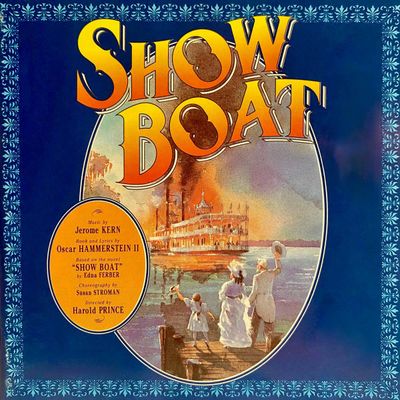
There are a number of individuals who were very big Broadway stars back in what I call the Silver Age of Broadway (the 1920s and 30s), But who today are mostly overlooked and left out of the conversation. Performers who were on a level with Jolson and Cantor and Fanny Bryce, but whose fame has almost entirely faded. Of course most musical theater fans will know the name Helen Morgan, and know that she originated the role of "Julie" in Show Boat. But if you are like me, you will be largely unaware, of the incredible range of her talents, the depth and breadth of her career, and the level of her stardom. And I have no doubt that you'll be as fascinated by this book and by this conversation as I was.
Christopher S. Connelly is a film and theater historian. His work has appeared in Etcetera magazine and the Kino Lorber DVD release of Mamoulian's Applause. He is also an actor, Roman Catholic cantor, and chorister for the Atlanta Opera. When he is not writing or performing, he works IT for the Georgia Institute of Technology.
Become A PATRON of Broadway Nation!
This episode is made possible in part through the generous support of longtime Patron Club Member MARK STANTON.
If you are a fan of Broadway Nation, I invite you to become a PATRON!
For as little as $7.00 a month you can receive exclusive access to never-before-heard, unedited versions of many of the discussion that I have with my guests — in fact I often record nearly twice as much conversation as ends up in the edited versions. And you will also have access to additional in-depth conversations with my frequent co-host Albert Evans that have not been featured on the podcast. And all patrons receive special “on-air” shout-outs and acknowledgement of your vital support of this podcast.
And If you are very enthusiastic about Broadway Nation there are additional PATRON levels that come with even more benefits.
If you would like to support the work of Broadway Nation and receive these exclusive member benefits, please just click on this link:
https://broadwaynationpodcast.supercast.tech/
Thank you in advance for your support!
Transcript
This transcript was automatically generated and might contain errors.
[0:01] David Armstrong: Welcome to Broadway Nation, the podcast that explores the remarkable history of the Broadway musical with a particular focus on the immigrant, Jewish, queer, and black artist who invented it. I'm David Armstrong, and my guest today is film and theater historian Christopher T. Connelly, who joins me for a conversation about his new book, HELEN MORGAN — THE ORIGINAL TORCH SINGER & ZIEGFELD'S LAST STAR.
[0:47] David Armstrong: There are a number of individuals who were very big Broadway stars back in what I call the Silver Age of Broadway, the 1920s and 30s, but who today are mostly overlooked and left out of the conversation. And I'm always fascinated by them, stars who were on a level with Jolson and Cantor and Fanny Bryce, but whose fame has almost entirely faded. Of course, most musical theater fans will know the name Helen Morgan and know that she originated the role of Julie in SHOW BOAT. But I, for one, was largely unaware of the incredible range of her talents, the depth and breadth of her career, and the level of her stardom. And I have no doubt that you'll be as fascinated by this book and by this conversation as I was.
If you're a fan of Broadway Nation, I invite you to join patrons such as Mark Stanton, whose longtime generous support helps to make this podcast possible. If you're interested, there'll be information at the end of the episode about how you, too, can become a patron. Now, without further ado, here we go. Christopher S. Connelly, it is so great to have you today on Broadway Nation to talk about your new book, HELEN MORGAN, THE ORIGINAL TORCH SINGER AND ZIEGFELD'S LAST STAR.
[1:57] Christopher T. Connelly: Thank you for having me.
[1:58] David Armstrong: It's my pleasure. I really enjoyed reading this book. You have unearthed so much information about Helen Morgan and this period. Any reader of this will discover a whole new world of subject matter way beyond SHOW BOAT that I certainly didn't know before.
[2:17] Christopher T. Connelly: The amazing thing about Helen Morgan is she was everywhere. If you look at her life, you have a very good overview of what it was like to be a working actor in their 20s and 30s.
[2:28] David Armstrong: Completely. What I also didn't appreciate was the magnitude of her stardom. I mean, certainly she is a famous name. She's had movies and TV shows made about her. She is somebody who we still know her name well, mostly because of SHOW BOAT. But she's a giant star on the level of Fanny Bryce and Sophie Tucker and other contemporaries of her time.
[2:49] Christopher T. Connelly: Very much so. At the height of her fame, she was one of the biggest.
[2:52] David Armstrong: And one of the highest paid.
[2:54] Christopher T. Connelly: Yes.
[2:54] David Armstrong: She's up there with Jolson and Cantor and Fanny Bryce in a way that I think we've mostly forgotten about.
[3:00] Christopher T. Connelly: The problem with all of them is they were mostly stage people, stage animals. That goes away if you don't have a record of that, you know, recordings and radio and everything else.
[3:11] David Armstrong: I was also struck by the many descriptions you include in the book from reviews and people who saw her and knew her. And it's part of what you're talking about there, that stage magic that she had. From all accounts, you could not take your eyes off of her when she was on a stage. She had this devastating effect on a live audience.
[3:30] Christopher T. Connelly: She had complete and total control. And to the only other person I know of that era who could match her was Jolson in a different way. But she was hypnotic when she was on stage. You were absolutely drawn to her.
[3:42] David Armstrong: And Jolson is another one of these people who is hard for us to grasp today because we only have the movies and there aren't that many movies. And it doesn't totally translate to what obviously was there in his live stage performance.
[3:57] Christopher T. Connelly: Electric is probably, you know, the best way to describe it. It'd be like seeing Strayson. It's that sort of magnitude, that sort of electricity that, oh my God, I'm in the same room with this person.
[4:08] David Armstrong: Yeah, it's that chemical reaction.
[4:10] Christopher T. Connelly: Yeah, Morgan definitely had it.
[4:11] David Armstrong: So what drew you to Morgan? Why did you obviously spend what had to be an incredible amount of time doing the level of research that you did for this book? You have unearthed everything there is to know about her seemingly. I'm sure you were frustrated that you couldn't find. But from my viewpoint, this is such a thorough investigation of her life and career and especially her career. What compelled you to do that?
[4:35] Christopher T. Connelly: Well, like most people of my age, I first became aware of SHOW BOAT through the 1951 film. Back in the day when, you know, the library was your Google, I would wander up and down the rows of books, subjects that interest me, and just pull things off. Oh, this looks interesting. And I pull something off the shelf. I think it was Stanley Green's World of Musical Comedy. And I started reading about SHOW BOAT. And it said that Helen Morgan, who created the role of Julie on stage, had this high, sweet plaintive soprano. And I thought to myself, that's the stupidest thing I ever read in my life. Julie is Ava Gardner. She's this earthy broad, you know, she needs to be the mezzo or the contralto to be a vocal difference between her and Magnolia.
[5:18] Christopher T. Connelly: Having two sopranos seems like an odd choice to us today.
[5:22] David Armstrong: Exactly. And then I heard a recording of Helen Morgan, and it changed everything. It changed the character. That just fascinated me, because that one difference would completely change how you would see a character, how you would play a role. And so I went out of my way to find out everything that I could about her. And I'll jump ahead a moment. But the level of detail that you go into this book with interesting information, you talk about that transition from soprano, which almost all of the stars of the pre-microphone days were sopranos, or big belters, the contraltos, that sort of darker, bluesier sound only comes in really with the microphones. What I found fascinating was that you tell us that Hammerstein started this transition with Julie in the, was it the 1947 revival of SHOW BOAT?
[6:10] Christopher T. Connelly: Yeah, 1946, but yes.
[6:12] David Armstrong: 1946, yeah. So that, for the first time, is Julie not as a soprano.
[6:17] Christopher T. Connelly: Yes, I believe that's correct. About the same time MGM produced TILL THE CLOUDS ROLL BY, which was a biopic of Jerome Kern. I think the Broadway revival opened first, but in that Lena Horne sang Julie, so it was still that sort of mezzo-contralto, bluesy sound. But it was around the same time.
[6:33] David Armstrong: And then who actually sang the vocals for Ava Gardner?
[6:37] Christopher T. Connelly: Oh, it was Annette Waring, I think.
[6:39] David Armstrong: Annette Warren.
[6:41] Christopher T. Connelly: Right, Annette Warren. You revealed that Helen Morgan is a major star, and it boils down to sort of three categories. There's her stage work, which we know a little bit about. There's her nightclub work, which if we are familiar with the movie, THE HELEN MORGAN STORY, we certainly get a sense of that. It's a movie that was on a lot when I was a kid, but I haven't seen in years. How would you describe that movie, if that's what we know about Helen Morgan?
[7:07] Christopher T. Connelly: Because a lot of the people involved in her life were still around, particularly the men in her life were still very much alive, as was common in the day of those biopics, NIGHT AND DAY, and the JOLSON STORY, and the ANDY CANTOR STORY, and so on. They play fast and loose with the facts. They endeavored to get a flavor for the era, but in terms of THE HELEN MORGAN STORY, you know, it says that Helen Morgan was this torch singer who sat on pianos and nightclubs, became a big star, wasn't SHOW BOAT. That's pretty much it. That's pretty much where the facts and their story begins.
[7:38] David Armstrong: And even there, the vocals do not really represent the way Helen Morgan sang at all.
[7:44] Christopher T. Connelly: No, again, Gobe Grant supplied the vocals, and they're wonderful vocals. I want to make sure that I'm clear on that. But Anne Blythe, who played the role, she's a legit soprano. She would have been a closer vocal match to Helen Morgan. But again, by that point, after that 1946 production, the idea of the torch singer became this very bluesy, concerto sort of sound. And so Warner Brothers provided that, regardless of the fact that it wasn't actually true, based on reality.
[8:11] David Armstrong: That's really fascinating. So back to the research that you did for this, how did you uncover all this information? Where did you have to go to find it? Who did you have to talk to?
[8:19] Christopher T. Connelly: Well, unfortunately, by the time I started, most of the people who knew Helen Morgan were gone. I found who I could. I'm grateful for the people who agreed to talk to me. Luckily, in 1957, the Philadelphia Free Library did a retrospective on SHOW BOAT. It was the 30th anniversary of the Broadway opening. And they invited some people down and included Helen Morgan's mother, who was living in New York at the time. And she was so impressed by what they did, she donated her scrapbooks that she kept or that Helen kept on Helen's life to the Philadelphia Free Library. I grew up outside of Philadelphia. And on a lark, I went to their theater department just to see what they had. I'd been going to New York, I'd been going to the Library of Congress, but I figured, oh, we'll see what they have.
The librarian went to the back and said, come with me. We went back and we saw these four gigantic, they must be like two and a half by two foot scrapbooks, just filled with clippings. It mapped out her entire career for me.
[9:16] David Armstrong: That's amazing.
[9:16] Christopher T. Connelly: Just serendipitous. And this had not been tapped before. Nobody else really knew it was there either. Ironically, her mother, Lulu Morgan, did loan at least some of the material to Warner Brothers to do research for the film. When she was unhappy with them, she asked for them back, and she got most of them back. I think Warner Brothers still has one of those scrapbooks out in LA, but she gave what she had to Philadelphia.
[9:38] David Armstrong: Let's start with her early years. Who is Helen Morgan? Where does she come from? And again, all of the events that you're talking about, nearly all of the events you're talking about happened more than 100 years ago. I was so impressed at how you drew us into the world and made it feel so immediate and interesting. She was born in Danville, Illinois, after her parents had separated. So for all intents and purposes, Lulu Lang was a single parent. She married multiple, multiple times. So there was sort of a revolving door of stepfathers in Helen's life. I guess perhaps about two-thirds of her life, she had a father figure at home, but they kept changing. And not all of them were good fits. As a result, she grew up poor. She had extended family around her, which was certainly helpful, and spent her childhood in and around Danville, Attica, Indiana, and then sometime up in Hammond and Gary, and then about half of her childhood in Chicago itself.
[10:26] Christopher T. Connelly: And is she in a showbiz family? Where does the show business aspect come into this?
[10:31] David Armstrong: Out of necessity, she, well, back up a little bit. Her mother was gorgeous, and her mother's sisters were gorgeous. They're all blondes and blue-eyed. And Helen had black hair and dark brown hair, hazel eyes, was sickly as a child, and was considered homely. Well, maybe not homely, but compared to her mother, she was a disappointment in the looks department. But as she matured, after she went through puberty and became a teen, she became gorgeous on her own right. She had the opportunity to learn how to dance and ended up in a nightclub in Chicago in the chorus as a dancer. She was not a singer. And she looked at that as a way to escape what her mother had gone through. She could afford to wait until she found a sage or johnny who would marry her and then take her off the stage.
She wasn't required to marry the first man who came along who might be a meal ticket. There were two failed marriages very early on in her career, and she got to the point where she was like, I'm supporting myself. I don't even need a man. In a way, she became sexually liberated, was able to wait until she found a true love.
[11:34] David Armstrong: It's so interesting because the working class young woman's way to have independence is to dance in the chorus. As you said, other women would be only looking toward marriage as a way to survive basically to make a living. And this was one of the few ways that a woman could have some agency, have some agency exactly over their own life. She's a teen when this is happening, right? Like most people in showbiz, they're starting when they're 14, 15 years old, which is so hard for us to wrap our minds around today. Most people finish school at the eighth grade. Only if you were headed to the college did you go through high school and beyond. Most people, certainly my grandparents, they went to the eighth grade and then they started working.
So they were working full time at 14 and 15. Same thing with my grandparents. In that way, they were considered adults. So she starts out as a dancer and she continues to dance throughout her career, which is certainly something I was not at all aware of. She certainly danced in the film APPLAUSE. I'm not sure how much dancing she did after that. When by that I meant well into her stardom.
[12:34] Christopher T. Connelly: Well into her stardom. She likely did some dancing in THE FOLLIES as well.
[12:39] David Armstrong: Well, she did a lot of reviews, right? So she's a review performer participating in the scenes and the sketches and the comedy and all aspects of that.
[12:45] Christopher T. Connelly: She was primarily a review artist. We remember her for SHOW BOAT. We remember her for three performances, for SHOW BOAT, for the film APPLAUSE, and for SWEET ADLINE, which was the second Kern and Hammerstein musical that she was in. But apart from that, she primarily limited herself to reviews. And she was an all-around entertainer. She could do sketch comedy. She could sing in a variety of styles. And she could dance. She's dancing in the chorus, eventually in Chicago. And these are nightclubs or reviews?
[13:16] Christopher T. Connelly: She started out in nightclubs. She went into a couple of vaudeville acts. She toured in a review, the FOR FOLLIES OF 1920. And what breaks her out of this? What turns her into a singer?
[13:27] Christopher T. Connelly: She left the business briefly in 1922. So she was stranded in Montreal. Her mother was no longer living in Chicago. She was actually living in upstate New York, which was fairly close to Montreal. So she said, I might as well stay here. And so she did modeling work. She did some other things. She was put up to be a contestant in the Miss Montreal Beauty Pageant. It was part of the Winter Carnival that year. She was sponsored by the Mount Royal Hotel, which had just opened. And prohibition in America was in full swing. And they decided to use the contest, whether they won or not, to use the contest as a way to advertise the hotel and to entice Americans, particularly New Yorkers, to come up to the contest.
[14:08] Christopher T. Connelly: So, this beauty pageant publicity campaign takes her to New York and she basically stays there, at least initially. Initially, yes. She does some work in some silent films that were shot in New York at that time. Then she ended up back on the road in The Ziegfeld Show, got married and retired from the stage again. That did not last long. By this time, her mother was back in Chicago, so she went out to Chicago and started singing in the nightclubs back there before a benefactor told her it was time to spread her wings and she was ready for New York and by gum she was.
[15:03] David Armstrong: So, lead us to Showboat, which happens fairly early in her career.
[15:08] Christopher T. Connelly: Yeah, she spent two seasons in New York doing a couple of reviews, working on radio and also working in the nightclubs. And nightclubs will play a major role in her career, which we'll get into in the next segment, but certainly the two things are happening simultaneously and nightclub work is synonymous with Broadway at the time. Yes. Again, a working actor worked all the time. And the good thing is if you were in a hit show on Broadway, you know, people today, you're saying, you know, just getting through eight performances a week is a monumental achievement as it is. But back then, once the show was frozen and you weren't rehearsing during the day, you had extra time. So you could moonlight and work nights after the show closed in a nightclub or you could spend your days shooting a film out in Astoria or you could pop over and do some radio work or do some recording work or play benefits or do private parties or, in case of someone like Helen, also do some modeling. Anytime somebody said, hey, I got a job for you, you did that job because you didn't know how long this was going to last.
[16:11] It was an amazing aspect of your book that Helen is almost always doing two jobs and sometimes three jobs at the same time. Throughout the run of Showboat, she is appearing in nightclubs after the show, running back and forth between the two venues and then often doing, as you said, other work during the daytime. That's what impressed me most about her. And again, she was not unique in that respect. If you were lucky enough to get extra work, you took it. In New York during this period, she's in Sally on Broadway. She's in the George White Scandals. She is in a review called Americana. She does a play. I thought that was a very odd digression where she goes off and does the Grand Gounol Theater to prove that she's an actress. Talk a little bit just about that because that's in the midst of her review work.
[17:05] Christopher T. Connelly: Yes, it took Helen a bit of time to get to be comfortable with dialogue on stage. You know, she was in a couple of skits in the George White Scandals of 1925, and apparently she got through them, but she didn't impress anybody to the point that in her subsequent stage review Americana, she just sang and danced. She was not in any skits. Helen Morgan was a very smart person and very cagey about her career. She knew that she was going to succeed. She needed to succeed as an actress. So she got this opportunity to be in the Grand Gounol Players down in the village where they did revolving bills that would play about two or three weeks of three or four one-act plays. She did one. It was called A Minuet, and it was about the French Revolution, a noble wife and her husband in jail waiting to go to the guillotine.
She got great notices. The company went under because of financial issues, but she was noticed. Winchell, in particular, was just bowled over by her. And these are completely non-musical productions. These are dramatic plays, melodramatic horror almost type of plays.
[17:59] David Armstrong: Correct. But when Helen performed, there was apparently a lengthy scene change between two of the sets. She did go out and sing a couple songs just to keep everybody happy. And why not? So all of this is building up to 1927 and Showboat. When she is cast in Showboat, what is her level of stardom?
[18:19] Christopher T. Connelly: I wouldn't call her a star. She was a personality known primarily more for the club work at that point than for stage work. But doing her club work, she befriended Reggie Hammerstein, Oscar Hammerstein's brother. This is kind of an aside. Colonel Hammerstein wrote Showboat very quickly in the fall of 1926 with the idea that it would be produced in the spring of 1927. And that was typical of the era. Oftentimes you would go into rehearsal and the second act hadn't been written yet. Ziegfeld loved the first act of what they had written. Then he cooled on the project. I think he was a little scared that it was more serious than a typical musical of that era. It was Hammerstein's first time writing solo.
He had always worked with Otto Harbach as his mentor and partner. Ziegfeld started dragging his feet. He was opening his own theater. He was producing other work. There was a clause in their contract that said that if the show was not in rehearsal by April 1st of 1927, that the rights reverted back to the authors. Oscar's uncle, Arthur Hammerstein, was also a producer and a rival of Ziegfeld. He produced Rosemary and several other shows. He also was building his own theater, now the Ed Sullivan Theater, which is where Colbert does his nightly show. The Hammerstein family staged a coup. I don't know how much of this was just a publicity stunt or if they actually intended to go forward. It did not last long. Ziegfeld got back on board. It was during that time that the Hammerstein family directly said, Helen Morgan would be a good choice for Julie. That's what got Helen Morgan onto Ziegfeld's radar.
[20:20] ♪ Musical number: "Can't Help Lovin' Dat Man" — performed by Helen Morgan ♪
[21:16] David Armstrong: Don't go away. Christopher and I will be back with more Broadway Nation right after this quick break.
[21:25] Christopher T. Connelly: She's already at this point a nightclub hostess sort of on the level of Texas Aynon. Are the nightclubs already being named after her or nominally named after her at this point?
[21:31] David Armstrong: Starting in late 1926, her nightclubs were named after her. Helen Morgan's 54th Street Club, Shea Helen Morgan, and so on.
[21:44] Christopher T. Connelly: So there's certainly a level of notoriety and a level of performance, and she's already becoming famous for being a torch singer. I mean, the title of your book, you call her the original torch singer. Talk to us a little bit about the development of that. First of all, why did it become called a torch song? How did that originate? And how did Helen end up being the delineator of that?
[22:05] Christopher T. Connelly: Originally, torch singers were men. There were reedy tenors, you know, My Melancholy Baby. That was what was considered a torch song. The men who sang them were torch singers. What Helen did, and again, she was very cagey. She realized what were liabilities about her and about her act. She turned them into assets. So she was very nervous when she sang, and that put a little quaver in her voice. And she realized that people reacted to that favorably. You know, they were rooting her on. They were on her side. So she kept that in the act, even when she wasn't that nervous. And her hands would shake a little bit too. And that added to the pathos. It was said that Ruth Edding, I won't say a rival, but a contemporary of Helen Morgan's. She was also known for as a torch singer, and she was the happy singer of sad songs.
So when Ruth Edding sang a song, she would sing the first chorus heartfelt, and then she would do another chorus up tempo. If you think about Tristan singing My Man at the end of the film of Funny Girl, almost defiantly. And that's what Ruth Edding did. What Helen Morgan did, she took songs that were not necessarily torch songs, not necessarily tragic, but because of that stage performance and that quaver in her voice, they became the sad singer of happy songs. Everything really solidified when she started singing The Man I Love, the Gershwin standard. They had been trying to put that into a show for a couple of years, and once Helen made it a hit, they were like, we're done. It doesn't need a show anymore.
It's already a standard. So the reason we know that song is largely because of Helen Morgan, because as you say, it was cut from two or three different Gershwin shows, including Strike Up the Band. But meanwhile, she starts singing it in the nightclubs and creates a sensation with it. The only negative review that she got for Showboat, the reviewer criticized Ziegfeld and Keren Hammerstein more than Helen. They thought it was an odd choice to interpolate Bill, which also had been cut from several shows up to that point. The reviewer said, why bother interpolating this sort of song? Why don't you just let her sing The Man I Love, which is already a hit? So interesting. And to your point, neither one of those songs are tragic songs.
They're actually hopeful songs. Someday he'll come along. The Man I Love is looking forward to something that will happen. And Bill is about this man that she does love and is very positive. But for some reason, in her voice and in her interpretation, there's a tragic, wounded element to them.
[24:23] Yes. And because Helen sang it in character as Julie, who at that point, spoiler alert, at that point in the show has fallen on hard times and separated from her husband. She brought all that. She was able to act and sing subtextually. She was supposed to be singing this happy sort of comic love song along the lines of You'd Be Surprised and just gave it this tragic spin. It was just lightning in a bottle.
[25:16] ♪ Musical number: "I Can't Explain" — performed by Helen Morgan ♪
[26:30] Christopher T. Connelly: So another large part of her legend and something she eventually tries to escape from a little bit and always has to go back to is sitting on the piano to sing. There's a lot of legends around that and how that started and how did that become her signature? And then we can talk about how it became a cliché even during her career.
[26:49] Christopher T. Connelly: What started in her nightclubs, the most popular version of the legend is that on opening night of her first nightclub in New York, the Backstage Club, she was either lifted up there or she hopped up there herself because nobody could see her. What actually happened about a year later, when she was already a hostess of her own in her own club, but under similar circumstances, it was a very busy night. So the club is just so crowded. There's so many people you can't see her. And of course, the stages are not highly elevated in clubs. Right. And so she jumps up there and people were amused by it. So again, she was very cagey. She understood what her audience was responding to and said, oh, well, I'll keep that in the act.
Eventually, what happened as she drank and as she drank more, the first thing that would go were her motor skills. Her knees would buckle. She could still sing beautifully, never slur her words. It became more of a safety measure. Once she was secure in that spot, then, yeah, she could sing all night. And this image of a woman sitting on a piano to sing starts to become incorporated into movies and all over the place, not her, but other people mimicking her. And even today, the idea of someone sitting on a piano to sing does not seem surprising or odd to us today, whereas it was clearly something I hate to call it a gimmick, but it was a delightful innovation at the time.
[28:08] Yes, everybody did it. And in terms of Helen's work, again, she was very smart. Carol Bruce, who sang Julianne
[28:16] Christopher T. Connelly: She did the same thing. And there was a lot of back and forth in rehearsal. Should she or shouldn't she? Is she just trying to mimic Helen Morgan? And she did. And she said she understood immediately when she started doing it because it puts the singer on a pedestal and isolates her. That adds to that whole torch persona. That feeling is like, I'm all alone. I want this impossible thing, but I'm not even touching the ground. There's no way I can accomplish this. Again, it works. It's a brilliant notion.
[28:44] Christopher T. Connelly: So just to clarify, so listeners understand, Helen Morgan sits on the piano to sing "Bill" in the original production of Show Boat, which she brings from her nightclub persona to a certain extent, or her nightclub repertoire. Not the song, but the image. The interesting thing about Show Boat, it's not as fully integrated as Oklahoma would be 15 years later. It's sort of the integrated musical 1.0. And what Hammerstein and Kern did is, because most of the original cast were from vaudeville and musical comedy, they all had their bits. They all had what they were known for. And he worked a lot of that into the show. Norma Terrace, who played Magnolia, she did impersonations in her nightclub act.
What ended up being the final number in the modern section of the show was a reprise of "Why Do I Love You?" And she sang it like Ethel Barrymore and all these famous people of the day. So that gave her a chance to show what she could do. The whole little play within a play where Captain Andy acts out all the parts, that was very physical comedy. That was what Charles Winninger did. And so that was employed to do that. And so on and so on. You know, being on a piano, that was Helen's trademark. And when they decided that she would have a number in the second act, they decided, okay, it'll be in a nightclub and we'll have her sit on the piano. It's so fascinating to think about Show Boat, which now we revere in this way and we see as this linchpin in the history of the development of the musical, accommodating the stars in the way that reviews and musicals did in the day. Every show did that. The shows were built around the stars to a great extent. And Show Boat was no exception to that, even though it's already pushing into this new way of creating a musical.
[30:27] Christopher T. Connelly: I think that's really sort of mind boggling for us today to think about, especially Norma Terrace doing her impersonations for no good reason at all, just because that was her thing. And that's what audiences wanted to see. And you're going to give them what they want. Absolutely. So interesting. So talk a little bit about the impact of Show Boat and the impact of Helen in Show Boat, her contribution to its acclaim. Going back to Helen as a torch singer, what she really was was a crooner. That's probably the better way of putting it. She was one of the first people, I think, maybe the first woman to habitually, essentially croon, to approach the songs that she sang conversationally. And, you know, she didn't sell, you know, Jolson would go out and he would sell a song, just pushing all this energy at you.
And it's not to say that he wasn't emotionally attached to the music. I'm not saying he wasn't emotionally attached to the lyrics. But again, it was a hard push. It was in a way like opera, in a way like the Rolling Stones or something. If you ever go to a rock concert of that magnitude, it's just, was it the Memorex ad where the guy's sitting in the chair and you just feel everything going back? That's what it was like. And Helen didn't do that. She had a small voice. And again, she took a liability and made it an asset. So she sang conversationally and she brought everybody into her. And I think she may be the first person to take that and put it onto the stage in a book show. So it wasn't just she was doing that when she was singing, but she approached the dialogue the same way. And so it was a very seamless performance from start to finish.
[32:01] Christopher T. Connelly: Her second current Hammerstein show, Sweet Adeline, Gilbert Seldes, did a whole think piece in The New Yorker. It took me three or four times to read it before I realized what he was trying to do. He was trying to figure out what she was doing on stage and what she was doing was what we considered modern acting. So that's really what she brought to the table. And of course, Julie is such a great character. There's not an ounce of fat on that role. Every moment she's on stage, she's the center of attention and she makes every moment count. In what is a relatively small role in terms of stage time, but you don't feel that way. Even I think it's part of the writing of the show. You feel like Julie is at the center of the story, certainly, and is probably the most memorable character.
Obviously, Helen Morgan only added to that, made that even more impactful. She's the emotional center of the story and what's called the miscegenation scene, which is a very long dialogue scene. No jokes, very serious. That is the emotional center of the show. And I think that's what continues to draw people to it. Things like Anything Goes from that period, there are a lot of fun and silly and lots of jokes and great songs and dances, but there's no emotional connection to this. Show Boat just grabs you by the guts and doesn't let go. It's Julie's story that's at the center of that.
[33:21] Christopher T. Connelly: The success of Show Boat is so much attributed to her performance in it. And beyond the way we might think of it looking back, I guess, or from our viewpoint today, Show Boat and Helen Morgan are sort of tied together in the public imagination of the time in a singular way. And in fact, in a way that she almost never escapes entirely. Nothing else in her career will be as big as Show Boat or will have this long lasting identification with her. In the original production, that really wasn't the case. If you go back and you read the reviews, very little attention is paid really to any of the actors. She sang well. Puck and White, they were funny, but it was a Ziegfeld show. All the praise was all about Ziegfeld. Well deserved. Ziegfeld more than Hammerstein and Kern even.
[34:05] Christopher T. Connelly: Even. Though they certainly got their accolades as well. It was very much an ensemble show. Nobody was starred, not even Winninger or Norma Terrace. No one was starred in that production. Ziegfeld was the star of that production. But Helen was the only person in the original cast to record her songs, which I think that added to her identification. And Ziegfeld knew by the end of the run that she was one of the main reasons in it. He would have closed it on Broadway earlier, but Helen was facing some legal issues and couldn't leave town. So he waited until that was over and then he posted a two-week closing notice.
[34:40] David Armstrong: So that he could send the show out on tour?
[34:42] Christopher T. Connelly: Correct.
[34:43] Christopher T. Connelly: With the entire original cast or most of the original cast?
[34:46] Christopher T. Connelly: With the entire original cast until the end of the actual season, which was the end of June. One thing that you clarified for me in this book is that in this period, a producer like Ziegfeld would contract the cast for both the Broadway run and the tour for a set amount of time. And if the show ran on Broadway and then he decided to close it and take it on tour, they were still under contract and they were required to go with it on tour and in fact, expected to.
[35:12] Christopher T. Connelly: Well, it was a run of the play contract. The play was still running. Today, that's not the way a run of the play contract would work because it's usually a separate producing entity that puts the tours out of the shows. They're usually not the exact same production entity that did it on Broadway. It's very interesting. Everybody toured in their shows in those days, or for the most part, at least the first national tour. And if you were in a hit show like Sally or Show Boat, you would go to the end of the season, you would take July and August off, you would come back and run another year, maybe even three years. Usually by that time, there would be some replacements, but if you were starring in the show, you were what was being sold.
So you were in that show, even when you got to the point of doing one and two night stands, you were the star of the show. Jolson would tour in one show for three years and would play every performance in every town. That's how you were known before TV.
[36:00] David Armstrong: That's how you became a national star.
[36:02] Christopher T. Connelly: Yeah. That was one of the things that held Helen back a little bit because she did not. She was so busy going from show to show and opportunity to opportunity. It was not until later in her career that she performed outside of top 10 or so American cities, mostly in the Northeast and Midwest. So she tours with Show Boat. How long does that go?
[36:21] Christopher T. Connelly: Well, she went until the end of June because she was already signed to do the next show with Conan Hammerstein, which was done with Arthur Hammerstein. And she was also shooting a picture. They had six weeks to shoot this film. The last day that she was in Show Boat was a Saturday. She had Sunday off. Monday, she started on the film of Applause. Worked that for six weeks, finished on a Friday or Saturday, had the weekend off. Monday morning, she was in rehearsals for Sweet Adeline.
[36:46] David Armstrong: Wow. So before we get to Sweet Adeline, let's talk a little bit about Applause, because this is a quite famous movie that is almost never seen. It has a lot of acclaim attached to it because of its early position in sound movies. But it's not a classic in the way we think of movies from just a few years later, like 42nd Street. Applause is a backstage musical set in burlesque, and she's a fading burlesque star with a daughter and doesn't end happily. But as I said, it was filmed in the East, it was filmed in Astoria, and it was the first film directed by Ruben Mamoulian, who went on to direct the stage productions of Oklahoma and Carousel and Porgy and Bess and other things. Because he was an outsider, he looked at things differently.
The problem with early talkies was it was almost like your uncle videotaping your high school musical. You know, you had the camcorder, it was right in the center. You might pan a little bit to the left or the right, but that was pretty much all you got. And we see intimations of that, like in the movie of Singing in the Rain, where they have challenges with the cameras of the time and the bulkiness of them and the noise they make and all that kind of stuff. But Mamoulian finds some workarounds for this.
[38:06] Christopher T. Connelly: Yeah, astonishing workarounds. If you've seen the Hitchcock film, Rope, that's sort of the same idea. It's just that the camera is following the actors all the way through. There's still a lot of long shots, but the camera is moving the whole time. It was his way of solving the problem. There are a couple of reasons why Applause isn't as well known as it probably should be. It was not a financial success. Paramount held it back from general release. I don't know why. So it came out in October of '29. By the end of October of '29, the country was not in a good mood. So they weren't in the mood for such a downer of a story, which they held back until national release until January. I think if they had gone into national release in October, I think it would have been better remembered.
The other major reason was the camera blimp going back to Singing in the Rain. That really happened. The director and the cameraman were in this box because the whirl of the camera motor would go onto the soundtrack otherwise. The microphones would pick up the camera. So that's how they got around it. In early 1930, I think it was actually the cameraman of Applause that did the blimp, which was this small encasement around the camera that kept it silent. Overnight, all Mamoulian's revolutionary changes, they were passé. It was seen as an interesting experiment more than a revolutionary start to the film. But what holds that film together is Helen Morgan's performance. It's very raw. She's learning to act for the camera, the sound camera, in real time.
Mamoulian is learning how to direct for the sound camera in real time. But she's astonishing. And the end is, it's right up there with Jane Angles in the letter. It's just Bessie Love at the end of the Broadway melody. Just again, going back to the Jolson and just pushing out. I mean, just all of that emotion just hits you in the face. She's truly incredible in that film.
[39:43] David Armstrong: Do we get to see her sing in that movie as well?
[39:43] Christopher T. Connelly: She sings a little bit. Most tantalizing thing is we get to see her dance a little bit. It's the only film in which she really dances. It's not very long. Apparently, she did have a solo dance that was cut before release. I would love to see that.
[39:57] Christopher T. Connelly: Yeah. But again, obviously, dancing was part of her bag of tricks. And they were making use of that even to the point of giving her a solo. It's an aspect of her that we don't think about. The blessing of her career, the millstone of her career, was these three successes back to back to back. Show Boat, this film of Applause, and then her subsequent Kern and Hammerstein stage musical, Sweet Adeline.
[40:15] David Armstrong: And that's where we'll pick up the conversation on the next episode of Broadway Nation, when Christopher T. Connelly returns to tell us more about his new book, Helen Morgan, the Original Torch Singer and Ziegfeld's Last Star.
[40:29] ♪ Musical number: "Here Is Where You Belong" — performed by Helen Morgan ♪
[40:39] David Armstrong: If you love this podcast and want to delve even deeper into the world of Broadway musicals, I invite you to become a patron of Broadway Nation. For as little as $7 a month, you can receive exclusive access to never-before-heard, unedited versions of many of the interviews featured on this podcast. I often record twice as much conversation as ends up in the edited, public episodes. And you also have the exclusive opportunity to hear additional, in-depth conversations with my frequent co-host, Albert Evans. And all patrons will receive special on-air shout-outs and acknowledgments of your vital support. To join, simply go to broadwaynationpodcast.supercast.tech. That's all one word, broadwaynationpodcast.supercast.tech. Or simply click the link in the show notes to this episode.
[41:44] David Armstrong: Broadway Nation is written and produced by me, David Armstrong. Special thanks to Powell's Mox for his help with editing this episode, and to the entire team at the Broadway Podcast Network.
© Broadway Podcast Network, All Rights Reserved