

My guest again this week is Christopher S. Connelly, author of the fascinating new book. HELEN MORGAN — THE ORIGINAL TORCH SINGER AND ZIEGFELD'S LAST STAR. On this episode, Christopher and I look at Helen Morgan's life and career during the 1930s, both in Hollywood and on Broadway... Read More
From the show: BROADWAY NATION
Featured Shows
About
My guest again this week is Christopher S. Connelly, author of the fascinating new book
HELEN MORGAN — THE ORIGINAL TORCH SINGER AND ZIEGFELD'S LAST STAR.
On this episode, Christopher and I look at Helen Morgan's life and career during the 1930s, both in Hollywood and on Broadway. And we delve a bit into her personal story, including the love of her life and her several marriages. we end by looking at her extraordinary legacy, including the two filmed biographies of her life that both came out in the same year, both named The Helen Morgan Story.
Christopher S. Connelly is a film and theater historian. His work has appeared in Etcetera magazine and the Kino Lorber DVD release of Mamoulian's Applause. He is also an actor, Roman Catholic cantor, and chorister for the Atlanta Opera. When he is not writing or performing, he works IT for the Georgia Institute of Technology.
Become A PATRON of Broadway Nation!
This episode is made possible in part through the generous support of longtime Patron Club Member Mark Stanton.
If you are a fan of Broadway Nation, I invite you to become a PATRON!
For as little as $7.00 a month you can receive exclusive access to never-before-heard, unedited versions of many of the discussion that I have with my guests — in fact I often record nearly twice as much conversation as ends up in the edited versions. And you will also have access to additional in-depth conversations with my frequent co-host Albert Evans that have not been featured on the podcast. And all patrons receive special “on-air” shout-outs and acknowledgement of your vital support of this podcast.
And If you are very enthusiastic about Broadway Nation there are additional PATRON levels that come with even more benefits.
If you would like to support the work of Broadway Nation and receive these exclusive member benefits, please just click on this link:
https://broadwaynationpodcast.supercast.tech/
Thank you in advance for your support!
Transcript
This transcript was automatically generated and might contain errors.
[0:00] ♪ Musical number: "More Than You Know" — performed by Helen Morgan ♪
[0:30] David Armstrong: Welcome to Broadway Nation, the podcast that explores the remarkable history of the Broadway musical with a particular focus on the immigrant, Jewish, queer, and Black artists who invented it. I'm David Armstrong, and my guest again today is author Christopher S. Connelly, who returns for the final segment of our discussion of his new book, HELEN MORGAN, THE ORIGINAL TORCH SINGER, AND ZIEGFELD'S LAST STAR. If you missed the first two episodes in this series, you may want to catch up with those before listening to this one. Today, Christopher and I look at Helen Morgan's life and career during the 1930s, both in Hollywood and on Broadway, and we delve a bit into her personal story, including the love of her life and her several marriages.
We end by looking at her extraordinary legacy, including two filmed biographies of her life that came out in the same year. If you're a fan of Broadway Nation, I invite you to join such longtime patrons as Mark Stanton, whose generous support helps to make this podcast possible. If you're interested, there'll be information at the end of the episode about how you, too, can become a patron.
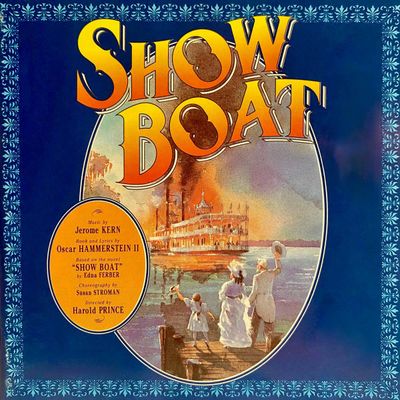
[1:59] David Armstrong: So let's go back now to her film career, because probably the thing that is most accessible to all of us to get as close to Helen Morgan as we can is the film A Showboat. And that comes out, what, in 1936?
[2:12] Christopher S. Connelly: 1936, yes.
[2:14] David Armstrong: And again, it's sort of a remarkable capture of, if not the original cast, of past members of either the original Broadway cast or the touring productions or other productions of Showboat. Almost all of the stars of that movie appeared in it on stage.
[2:31] Christopher S. Connelly: Yes. Queenie Smith, I don't think she ever did it. I don't think Alan Jones did it before he made the film.
[2:37] Christopher S. Connelly: He certainly did it on stage after the movie.
[2:39] Christopher S. Connelly: Yes. Helen Wesley. She was a replacement. They wanted Edna May Oliver, but she was unavailable.
[2:44] Christopher S. Connelly: But even Hattie McDaniel, I learned from your book, had appeared in it on stage prior to the movie.
[2:49] Christopher S. Connelly: And Irene Dine got her start leading the national company.
[2:53] Christopher S. Connelly: Just prior to that, there's the silent movie version of Showboat. The musical had become so famous by that point that they felt obligated to include a little preamble to it of various performers singing songs from Showboat, even though you were then going to see a silent movie version of it, which included, I think, a staggering performance by Helen Morgan singing Bill. That clip is phenomenal.
[3:17] Christopher S. Connelly: Yes. I should probably point out that Universal filmed the novel as a silent movie. And by the time it was ready, talkies had come in and the stage musical had just become such a monster hit that they could not release it. And they knew it wouldn't make any money. And originally, the idea was that in New York, the film would run with a stage show to accompany it. So they brought in an actual Showboat troupe who were going to do one of those old melodramas. And that was going to be the preamble to the film. And then they would show the film.
[3:47] Christopher S. Connelly: They finally got a better idea. Now just do a prologue and then they can play it everywhere. So they did that and they filmed half a dozen numbers or so.
[3:53] David Armstrong: And does all of that exist? I've never seen that full prologue.
[3:56] Christopher S. Connelly: I don't believe Helen singing Can't Help Loving That Man exists and some of the connecting material. I think some of the audio exists, but I'm not sure if all the film elements exist or at least have not been stitched back together anyway. The reason why Bill and Old Man River survives is that Universal, after the fact, put those two numbers together into a short of its own independent of the Showboat movie. And that's why we can still see them.
[4:20] David Armstrong: So then that takes us a few years later to the full film of the musical. In all your investigation with this, tell us your take on that movie. How do you view it in the history of Showboat, more specifically in the history of Helen Morgan's life and career?
[4:39] Christopher S. Connelly: It's one of the most faithful adaptations of a stage musical up to that point, really up until Annie Get Your Gun, 13 years later. And the amazing thing is, I think every single word of dialogue that Helen uttered on stage and a few more are in that film and both of her songs in total. So you see her entire performance. I don't think until you get to Yul Brynner doing The King and I do you get something that close. Why was Helen Morgan so spectacular in Showboat? Here you go. Watch this movie. You will see. It's the last film she made. And by that point, she's really comfortable in front of the camera. Very, again, very natural. Her voice has gone down a little bit. She's actually getting towards that contralto thing. That may be part of why that tradition started. But the singing in a slightly lower tessitura, it translates beautifully onto film. Sometimes a soprano, particularly in those early films, they can sound a little screechy. She doesn't.
[7:01] Christopher S. Connelly: And this movie is a big hit. The huge hit. Why did that not catapult her into a major film career? She had made a film version of Frankie and Johnny in 1934, just before the production code came in. It sat on the shelf. It didn't get out in time. The producers kept on trying to get it past Joe Breen and the production code office. They did retakes and all that. It probably wasn't a very good film to begin with. But by the time it was approved, it was cut to ribbons. And it's just, it's not good. A friend of mine remarked, I think it's the only film from the 1930s that Leonard Martin gives a bomb review to. It was approved in 1935. The public agreed to put it out. But again, they had no hook.
Showboat was their hook. A week after Showboat landed in the theaters, they released Frankie and Johnny, which made money, but again, it did not get good reviews. And I think the powers that be at that point started to think that the only thing that Helen Morgan could do was Showboat. We have it now. It's preserved. So we don't really need her. That was pretty much the end of her screen career.
[8:11] David Armstrong: Yeah, that's so frustrating in a way. We didn't get the chance to see her do too many other things. Your description of Frankie and Johnny in the book and the trials and tribulations it goes through is really interesting, especially the battle against the production code in having to jettison practically the entire original version of it in order to make the censors happy. I've never seen that movie. I will be on the lookout for that just for curiosity's sake. But her songs get cut. She just has such bad luck outside of Showboat with her films. Hollywood never really knew what to do with her. That was part of the problem. She made two films. She was briefly under contract with Warner Brothers, and she looks great, particularly in Going to Your Dance, the film she did with Jolson and Ruby Keeler.
She looks great in that, and she plays the bad guy or the bad gal. It's completely against type. It's very convincing. But even there, they cut one of her songs, right? She only ends up with very little screen time.
[9:06] Christopher S. Connelly: Yeah, I think it was Warren, the songwriter. He became ill while they were writing the score, so they fell behind schedule. The cue is still in the film. Her gangster husband is having a powwow, and somebody says, oh, you know, they're broadcasting from this nightclub. So turn on the radio, and you turn on the radio, and then we're supposed to go back to the nightclub, and then there would be Helen doing this new number. And they get audio of her singing the first song she sang, and that's all we get. Again, frustrating.
[9:50] Christopher S. Connelly: What wouldn't I do for that man?
[9:54] Christopher S. Connelly: He's not an angel or saint, but what's the odds if he ain't?
[10:00] Christopher S. Connelly: With all his faults, I know we'll get by.
[10:06] Christopher S. Connelly: I'll be so true to him, he'll never doubt me.
[10:12] Christopher S. Connelly: What wouldn't I do for that man?
[10:18] Christopher S. Connelly: What wouldn't I do?
[10:22] David Armstrong: Let's talk a little bit about Helen's personal life, which you cover really well and interestingly in the book. She has several husbands, but there's one particular love of her life who she never marries. Just tell us a little bit about that relationship and her personal life in general, complicated all the way along by her relationship with her mother, who she lives with her whole life, basically, and is very close to and doesn't get married because her mother doesn't like the man she's in love with. As I said previously, her mother married seven times, I think, just over and over and over and over again. One in particular was just very abusive, and Helen knew that and became protective of her mother.
And when she became a success, she sent to Chicago for her mother to come and live with her because she knew if she didn't, her mother would just go out and marry more men, and they would all end up the same way. She did that to protect her mother. And what choice did women have other than that, except for Helen, who could circumvent that by making her own living?
[11:27] Christopher S. Connelly: Right, exactly. As you alluded to, the lover of her life was Arthur Lowe, one of the sons of Marcus Lowe, the founder of Lowe's Incorporated, the money behind MGM. Fabulously, fabulously wealthy and a playboy. He was a flyer, and Helen loved to fly, so they had that in common. He would literally, a globetrotter. Before there was a jet set, she'd be in Miami, you know, playing at a nightclub or whatever, and he would just show up unannounced, and they would spend the weekend together. She just felt like Cinderella at the ball. He just swept her off her feet, but he was not faithful to her. She was not entirely faithful to him either. It was very much a long-distance relationship, lasted five years.
When they were together, they were together. When they were apart, it was a little bit more open. Her mother, you know, hated him and felt that he could have been a little bit more circumspect in how he was doing with other women. We weren't there. We don't know what happened behind closed doors. After the 1932 production of Showboat, when that tour ended, Helen went on a vacation. She took a cruise to Europe with Arthur Lowe and with her mother. When they came back, the relationship was over. I suspect what happened is that Arthur asked her to sign a prenuptial agreement, and Helen couldn't do that because if she stopped working, she could not look after her mother. It would not have cost Lowe anything to set up a trust fund for her, but there was enough red blood there. He refused to do that. That was the end of their relationship. One of the reasons you suspect that is because with the woman he did marry after that, he asked to have a prenuptial agreement.
[12:54] David Armstrong: Yeah, that's what actually happened, yes. Then on the rebound, Helen gets married a couple of times. She marries a much younger man. He's only five years younger, but feels like a kid compared to her, a college kid. He's 20 and she's 25. It's so interesting that all the way through the book, I keep thinking she's older than she actually is because, of course, she starts so young and there's so much crammed into just a relatively short time period. Most sources claim that she was born in 1900. She was actually born in 1902. That also plays a little time warp with the ages. She was 25 when she was in Showboat. Even when she's making the movie, she's still in her early 30s. When she made the 1936 version, she was 33.
[13:38] Christopher S. Connelly: Yeah, that's not quite 34. I love that description because she's lived a hard life to a great extent, at least in terms of her drinking. You talk about how James Whale, who's the director of Showboat, pulls in for that close-up in the second half of Bill and tells a whole story about Julie, but through Helen Morgan's face. Talk a little bit about that because I thought that was beautifully done, beautifully written in your book.
[14:00] David Armstrong: Thank you. Yes, extreme close-ups were very rare in the 30s, but Whale did it before. He did it in Frankenstein. If you remember when we first see Karloff in the make-up, he enters the room backwards, which is very odd, but you realize why. Then he turns around to the camera, and then we see that make-up, and then we go into a huge close-up. He did the same thing when he did Showboat when he was filming Bill. Hammerstein advised Whale, in no uncertain terms, do not shoot the whole number. It's too long. It stops the film dead. It's going to stop the film dead. Just do one verse, one chorus, get out. And Whale said no. And so what he did when we get to the second chorus, then he goes into that close-up.
And Helen was 33 at the time, but it had been a hard 33 years. We see every wrinkle. She's a little bit bloated at that time, and we just see all the dissipation. She's broken, and that's what gives that number that power. And we know that shortly after she finishes singing that song is when she's going to, we assume, go off on another bender. She's only going to go down from there. That's all that we know. She doesn't get the redeeming moment they tacked on to the 1950s version, where Julie comes out of the shadows and blows Magnolia a kiss at the end of the movie, which is clearly one of the differences between why one is such a gripping movie and the other is entertaining, but not really Showboat.
[15:30] Christopher S. Connelly: I will say this about the 1951 version, the ending is very satisfactory.
[15:36] David Armstrong: I agree. It's very effective, and it does work. I will say that, yeah. It does, and it's the most believable way of getting Magnolia and Ravenel back together at the end. But they did it at a tremendous cost because in the novel, Edna Ferber was all about these multi-generational American sagas where you have this very strong woman married or in love with a very weak man. Things go wrong, and she finds a way of building a life and building a fortune and becoming a success. Same thing happens in Showboat. Ravenel leaves Magnolia, she becomes a star on the stage, and then, you know, has a 20-year career on the stage before she retires. For the 1951 film, Magnolia is pregnant. It's the childhood she had with Ravenel, and he doesn't know about it.
And so she ends up going back to the showboat and having the baby there, and so they're brought back together. Ravenel learns his lesson. They're not separated that long, but again, it robs Magnolia of her agency, robs her of her story.
[16:23] Christopher S. Connelly: Absolutely, because it doesn't take us into the 1920s. It doesn't cover nearly as much time.
[16:28] David Armstrong: Well, and not only that, it's very much a post-war musical. It's very much in the vein of Vanity Kitchen. Yes, we know you can do it. We appreciate all the work that you did during the war, but the men are back, so please step aside and go back into the kitchen where you belong. That was the message, and they did the same message there.
[16:46] Christopher S. Connelly: Don't go away. Christopher and I will be back with more Broadway Nation right after this quick break.
[17:06] David Armstrong: So, talk us through a little bit. I don't want to dwell on it, although it's a fascinating part of your book, but the decline of Helen Morgan, what are the elements that set her career and ultimately her life on, I wouldn't say a downward spiral. I feel like it moves forward and then it just sort of stops. How do you categorize it?
[17:22] Christopher S. Connelly: After the Showboat tour in 1933, I mean, you could really argue going back to the stock market crash, her career started to very, very slowly but steadily unravel. You know, one nail in the coffin at a time. She was in the follies of 1931 that last for Ziegfeld, and she could not get a hit song. Both Ziegfeld and Helen wanted that big, baffo torch song, but without a dramatic moment around it, it was just a ballad. She sang many, many songs in that show, and they're all pleasant, but again, it didn't catch fire because you didn't have that subtext going on. That was what she could do. She started in a radio show that was very popular, very unwisely, and I think her immature husband, and to be fair to Buddy Mashke, I mean, he later grew up, had a very successful career. He was a mansion in many ways, but he was very immature at the time that he was married to Helen Morgan.
[18:15] David Armstrong: That's the young husband.
[18:15] Christopher S. Connelly: That's the young husband, yes. So she had this radio program. She abandoned it to do the straight play that she always wanted. That did not go well. She was kind of done with radio after that. She spent a year in Hollywood. She went under contract with Warner Brothers. That ended, and again, after the Showboat film came out, Hollywood figured they'd gotten pretty much everything they needed out of her. She went to London in 1937 for the coronation. That did not go well. When she came back, that was when her career really started to slow down. She worked. She worked a lot, but not as heavily as she did before. It was primarily a combination of vaudeville and nightclub work. She tried a couple of stage shows on the road.
They didn't go anywhere. In 1940, she did another production of Showboat out in LA, and she was fired. It was in a huge theater. She was becoming sickly. She couldn't fill it. She was fine when she sang Bill, but the early scenes, the dialogue scenes, she couldn't be heard very well. She hardly worked for about six months, and then went back to work, met Lloyd Johnson. He took over her career, and she later married him. Unlike Buddy Mashke at the time that they were married, Lloyd Johnson was an adult. Would that marriage have lasted long-term? Had she lived? That I don't know, but he was very good for her at that time.
[19:27] David Armstrong: I kept thinking if she'd married him instead of when she married Mashke, her career seemed to be good at managing her career and helping her move forward. It just was too little, too late by the time he got involved, it seemed like.
[19:38] Christopher S. Connelly: Yes. Ultimately, show business is a business. Helen was an artist, wonderful, and again, very smart, but she did not know the business side of the business.
[19:49] David Armstrong: Well, and to be fair, also, she made millions of dollars and ended up with nothing because she gave it all away to a great extent.
[19:55] Christopher S. Connelly: Yes, but she also wasn't good at that, partly because she had this devil-may-care attitude. She came from nothing, she'll go back to nothing. She'll play the hand for as long as she can, but her mother was even worse at the business than she was, and Johnson came in, and he was able to right the boat. One of the final oh-if-only moments, do you know what soundies are?
[20:19] David Armstrong: Oh, sure.
[20:19] Christopher S. Connelly: In the summer of 1941, she received a standing invitation, next time you're in New York, come in and film some soundies for us. She never got back to New York.
[20:29] David Armstrong: Oh, yeah, it's devastating just to not have that opportunity to see her, hear her.
[20:34] Christopher S. Connelly: And one of the last songs that she had in her act was, because it was the beginning of the war, was the last time I saw Paris. Also, Cunningham resigned.
[20:44] Christopher S. Connelly: She died in October 1941. She was 39. She had liver cancer, liver diseases of various kinds.
[21:00] David Armstrong: Cirrhosis of the liver. Yeah, that's heartbreaking, too. Talk a little bit about her legacy. She was not forgotten, obviously. Strangely, there were two concurrent, there was a movie bio of her and a TV biography of her. And the movie one, you give us a great rendition of how that starts almost like the year after she's dead with multiple stars considered to play her. It was not quite the hunt for Scarlett O'Hara, but it was pretty close.
[21:25] Christopher S. Connelly: Yeah, there's a short list in the Warner Brothers file. It was basically every singing actress. I mean, Julie Andrews was considered for it.
[21:35] David Armstrong: Which is just crazy in a way, I guess.
[21:35] Christopher S. Connelly: Which is crazy, yeah, yeah, yeah. Everybody wanted to be in it. But ultimately, what are the two renditions that we do get? What are the two versions of her life that exist? The TV version was the final live Playhouse 90 production. There's a kinescope of that. It's out there. To my knowledge, it's not been commercially released, but if you go to Google, you can probably find it. I think it's on YouTube.
[22:01] David Armstrong: Yeah, I think I watched it a few years ago.
[22:01] Christopher S. Connelly: Polly Bergen played Helen. She won an Emmy for it. Very, very good. Again, very much in that mezzo voice, but it works very well.
[22:35] ♪ Musical number ♪
[23:39] Christopher S. Connelly: Sylvia Sidney plays Lulu, her mother, who's also very, very good in it. It's mostly factual, but because of the television format, you go sort of from one thing to another to another. This act, it talks about being arrested with the Texas gunman, and this one talks about the relationship with the young man. The names of the men are changed. The characterizations are tweaked just enough to avoid liable charges. But what it doesn't do, it doesn't show Helen off the stage. Or when it shows Helen off the stage, she's the tragic figure. Late in her life, around the time that she met Johnson, her last husband, she started a home recording where she would record a song for you on a 78 and would dedicate it to you.
And so it was a gift that you could buy when you were at one of her nightclubs. But she also did it sort of like what Hawkeye did on M.A.S.H. She would cut records sort of as letters, and she sent a couple to her mother, and a couple of them survived. She giggles. I mean, this is at the lowest point in her career, and she's just such a bubbly, warm, joyous figure, which to me makes the end even more tragic.
[24:40] David Armstrong: But that's not captured in the television production.
[24:44] Christopher S. Connelly: In either film, in the television version or in the Warner Brothers film. It's printed legend, and the legend is that she was as tragic off the piano as she was on it.
[24:54] David Armstrong: And what are the names of those two? The TV version is The Helen Morgan Story.
[24:58] Christopher S. Connelly: And the Warner Brothers film is The Helen Morgan Story.
[25:02] David Armstrong: And they come out the same year?
[25:04] Christopher S. Connelly: The same year.
[25:04] David Armstrong: Yeah, that is just strange. And talk a little bit about Ann Blythe seems like the least likely person to play Helen Morgan. But as you said, her real voice was probably more like Helen Morgan's than Goge Grant's was.
[25:17] ♪ Musical number ♪
[26:19] David Armstrong: What's your assessment of that movie?
[26:21] Christopher S. Connelly: There's almost no truth to it at all. But as a musical melodrama, it's fine. Paul Newman is her gangster boyfriend. There's some sparks between them. But again, it doesn't ring true. And Blythe, you know, she's God bless her. She's still with us. She's a pro. Sadly, I think it killed her career. I think it was the last film that she starred in. But she gives it her all. She does what she's asked to do.
[26:42] David Armstrong: But famously, she ends up sort of in delirium tremens at the end of the movie in a sort of overwrought 1950s style, as I remember.
[26:51] Christopher S. Connelly: Yes, yes. Absolutely, yes. I think I say it's more Neil A. O'Hara than Helen Morgan.
[26:57] David Armstrong: Yeah, I remember almost nothing about that movie. But I do remember that.
[27:01] Christopher S. Connelly: Yes.
[27:02] David Armstrong: Well, it just goes to show that if anyone wants to get as close as you possibly can to the real Helen Morgan, you have to read Helen Morgan, the Original Torch Singer and Ziegfeld's Last Star by Christopher Connelly.
[27:14] Christopher S. Connelly: Thank you.
[27:15] David Armstrong: It has been such a pleasure to have you on Broadway Nation to talk about this, to talk about Helen Morgan, to help us understand this almost sort of missing link. She's not the only one. I think of people like Marilyn Miller. There are other giant Broadway stars who just have almost no profile today that we just don't talk about or think about and yet are in that same league again with Cantor and Fanny Bryce and people like that who do live on in our sort of received memory for some reason. So I just am so appreciative of having the opportunity to include her in this firmament of stars.
[27:54] Christopher S. Connelly: She was one of the biggest. And as I said earlier, looking at her life, she's the best way into that era because she was everywhere. Think of a Bette Davis biography, you're going to get, you know, Hollywood in the 30s and great detail. Not so much Broadway, not so much radio, not so much records, not so much everything else. Helen Morgan was everywhere.
[28:13] David Armstrong: Again, thank you, Christopher Connelly. It has been a pleasure to talk to you today.
[28:17] Christopher S. Connelly: Thank you. Thank you for having me. This was a pleasure.
[29:09] David Armstrong: If you love this podcast and want to delve even deeper into the world of Broadway musicals, I invite you to become a patron of Broadway Nation. For as little as $7 a month, you can receive exclusive access to never-before-heard, unedited versions of many of the interviews featured on this podcast. I often record twice as much conversation as ends up in the edited, public episodes. And you also have the exclusive opportunity to hear additional, in-depth conversations with my frequent co-host, Albert Evans. And all patrons will receive special on-air shout-outs and acknowledgments of your vital support. To join, simply go to broadwaynationpodcast.supercast.tech. That's all one word, broadwaynationpodcast.supercast.tech. Or simply click the link in the show notes to this episode.
[30:16] David Armstrong: Broadway Nation is written and produced by me, David Armstrong. Special thanks to Powell's Mox for his help with editing this episode, and to the entire team at the Broadway Podcast Network.
© Broadway Podcast Network, All Rights Reserved