

My guest this week is the three-time Tony award-winning Broadway orchestrator Doug Besterman, whose 31 Broadway musicals include The Producers, Fosse, Thoroughly Modern Millie, and his very first show, the 1991 revival of Damn Yankees, to name only a few... Read More
From the show: BROADWAY NATION
Featured Shows
About
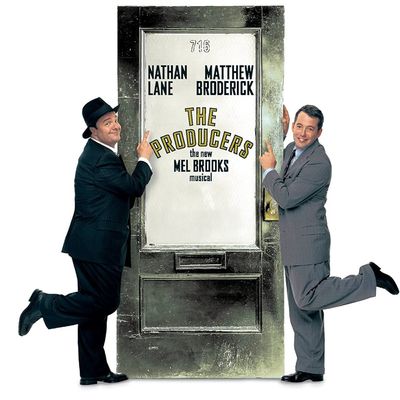
My guest this week is the three-time Tony award-winning Broadway orchestrator Doug Besterman, whose 31 Broadway musicals include The Producers, Fosse, Thoroughly Modern Millie, and his very first show, the 1991 revival of Damn Yankees, to name only a few.
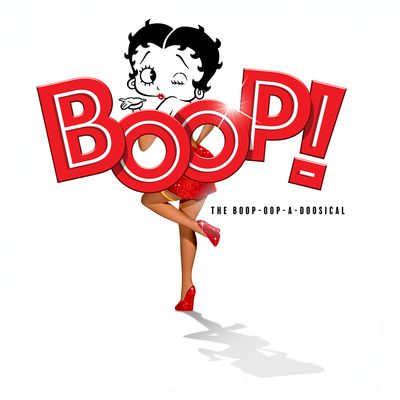
During this current Broadway season, Besterman will achieve something unheard of in his field: he will have three big musicals — Death Becomes Her, Boop!, and Smash — all running simultaneously on Broadway. Making it even more remarkable, two of those shows began previews on the same night and now open on Broadway in the same week.
Besterman’s film credits include the live-action version of Beauty and The Beast and Frozen. TV credits include the Marc Shaiman/Scott Witman compositions for Smash, ABC’s version of Annie, The Sound of Music Live, and Peter Pan Live.
As Tony Award-winning choreographer Susan Stroman’s orchestrator of choice, his work has been heard on Little Dancer (co-orchestrator with Larry Hochman) at The 5th Avenue Theatre and the Kennedy Center and Crazy for You at Chichester Festival and on the West End. His most recent regional work was the World Premiere of Schmigadoon at the Kennedy Center and Midnight in The Garden of Good and Evil at the Goodman Theatre.
Become A PATRON of Broadway Nation!
This episode is made possible in part through the generous support of our Patron Club Members such as Andy Wigginton.
If you are a fan of Broadway Nation, I invite you to become a PATRON!
For as little as $7.00 a month you can receive exclusive access to never-before-heard, unedited versions of many of the discussion that I have with my guests — in fact I often record nearly twice as much conversation as ends up in the edited versions. And you will also have access to additional in-depth conversations with my frequent co-host Albert Evans that have not been featured on the podcast. And all patrons receive special “on-air” shout-outs and acknowledgement of your vital support of this podcast.
And If you are very enthusiastic about Broadway Nation there are additional PATRON levels that come with even more benefits.
If you would like to support the work of Broadway Nation and receive these exclusive member benefits, please just click on this link:
https://broadwaynationpodcast.supercast.tech/
Thank you in advance for your support!
Transcript
This transcript was automatically generated and might contain errors.
[0:00] David Armstrong: Welcome to Broadway Nation, the podcast that explores the remarkable history of the Broadway musical with a particular focus on the immigrant, Jewish, queer, and black artist who invented it.
[0:20] David Armstrong: My name is David Armstrong, and my guest today is the three-time Tony Award-winning Broadway orchestrator Doug Besterman, whose 31 Broadway musicals include The Producers, Fosse, Thoroughly Modern Millie, and his very first show, the 1991 revival of Damn Yankees, to name only a few. During this current Broadway season, Besterman will achieve something unheard of in his field. He will have three big musicals running simultaneously on Broadway, and making it even more remarkable, two of those shows began previews on the same night, and now open on Broadway in the same week.
[1:05] David Armstrong: Broadway Nation is made possible in part through the generous support of our patron club members, and this week I want to give a special shout-out to longtime patron Andy Wigington. If you would like to help support the work of this podcast, there'll be more information at the end of the episode about how you, too, can become a patron.
[1:24] David Armstrong: Now let's explore the art and craft of Broadway orchestration. Doug Besterman, it is my great pleasure to have you today as a guest on Broadway Nation. Thank you so much for joining us.
[1:34] Doug Besterman: Thanks, David. I'm really happy to be here.
[1:37] David Armstrong: You, of course, are one of Broadway's renowned orchestrators. This season, you are doing something that I don't believe any orchestrator has done before. Is it fair to say that, or maybe back in the golden age?
[1:49] Doug Besterman: It's possible. I haven't actually looked back to see if anyone has attempted this, but it certainly would be unusual.
[1:55] David Armstrong: And what we're talking about is that you have three Broadway musicals opening in the same season. And to me, the most incredible part of that is if two of them are in previews at the exact same time.
[2:05] Doug Besterman: That's the sort of wild part of it. And I have had two shows open in the same season before, very close together, Charlie and the Chocolate Factory and Anastasia. So that was not that long ago, 2016, maybe? But they were offset by about two weeks. So one of them, I forget which one, I think Anastasia was two weeks ahead of Charlie, which meant that things weren't happening at the exact same time. This season, it's Boop and Smash, and they started previews on the same day. So that's definitely been challenging, but kind of exhilarating, too.
[2:34] David Armstrong: And amazing that you're here talking to us and not trying to sleep.
[2:37] Doug Besterman: Although I do have an assignment waiting for me when I get off the phone, but it's good. They'll wait.
[2:41] David Armstrong: Well, I want to dig into that process of how you're managing that. But let's start. I have a very sophisticated, educated audience, but I still think we should start with the question you probably get asked most often in your life is, what does an orchestrator do?
[2:54] Doug Besterman: Yes. And it's a very good question. What I do on a musical is I take the score that has been written by the composer or composers and arranged by, and we can talk about what arranging is, various people in the music team who have been tasked with doing various things such as dance arrangements, vocal arrangements, writing underscoring or transitions, you know, those sorts of things that are routinely done on a score during the rehearsal process. So I take that music, which is, generally speaking, and it's been 100% of the time in my experience, written for the piano. So it looks like music you would put in front of you when you sat down at a piano to play. And I flesh that out for whatever the ensemble is for that production.
[3:41] Doug Besterman: So I'm very fortunate this season. I'm working with two 18-piece ensembles and one 15-piece ensemble, but it can be anywhere on Broadway from nine, I've written for as few as six, to back in the day, it was 24, 25, 26 musicians, which we don't see as often anymore on a new musical, although many revivals these days like to go back and use the full orchestrations, such as Gypsy, which is next door to Boop right now.
[4:05] David Armstrong: How much leverage do you have in the number of musicians that will end up in that pit?
[4:11] Doug Besterman: I have zero leverage, but that's only because it's really a producer decision. The decision is arrived at based on, first of all, your listeners may or may not know this, every theater has a minimum number of musicians that has been agreed to between the American Federation of Musicians, which is the union that represents Broadway musicians, and the League of Broadway Theaters. And it's a balancing act between artistic integrity, obviously, the musicians union not only wants to employ as many of their members as possible, but also has a stake in the music sounding as good as it can. On the one hand, they would like more people. And then of course, the financial realities of how many seats are available to sell in a theater and the running costs of a show, and musician salaries are part of the running costs.
So just like actor and crew member salaries, the show has to support the musicians that are on its payroll. So every theater then is designated a minimum number of musicians. And like I said, that could be anywhere from nine to I think 19 is the biggest you'll see on Broadway. Now, there's nothing to prevent a production from using more than the minimum. And I have had that in fact, Boop is using more than the minimum, the minimum in the Broadhurst is 12. So we're using 15. But they can't go under the minimum number of musicians unless there is what's called a special situation. And the example I like to give is if you're doing the Beatles, the musical on stage, the story of the four Beatles in Hamburg, and how they became a huge success, and it's for musicians on stage, well, then it would be ridiculous to ask the production to support nine or 15 or 18 musicians when there's only four needed.
So that would be an example of a special situation where the producers might have a legitimate request. But generally speaking, the minimum is the minimum. And that's what ends up in the pit. To answer the next part of your question, which you haven't asked yet is I do have discretion over which musicians in other words, I can determine usually with the rest of the music team, which 15 or 19 or 18 musicians will have how many woodwinds, how many brass, how many strings, that sort of thing.
[6:10] Doug Besterman: The instrumentation you determine, presumably with the composer consulting with you?
[6:14] Doug Besterman: Yes, I will make a suggestion. And then the music team will look it over. And we might discuss one or two things and we'll arrive at a kind of a consensus. And then that's what we do. I learned from Jonathan Tunick, who mentioned this at one point and has talked about it in interviews as well, that really the most important decision you make as an orchestrator is what ensemble you're writing for. If you don't get that right, the entire process becomes a headache from beginning to end because you don't have the right people to do what you need to do. So it is a very important part of the process to think about what the instrumentation is so that it's really suited to what you're going to be asked to do in terms of the orchestrations.
[6:52] David Armstrong: Can you give us an example of when that's gone wrong, when that has created problems by making the wrong choice?
[6:58] Doug Besterman: There have been a couple of smaller shows that I've done. And it's usually when I don't know a score that well to begin with, or I'll have an idea of what something is and then I get into the writing and I realize it's not that. Or, for example, I did a small musical in a regional theater and I had a little rhythm section and strings. And I realized partway through the writing that I really could have used a guitar. If I could go back and reorchestrate that show, I would do it for one less string and add a guitar. It's that sort of thing. But that hasn't happened to me that often, thank goodness.
[7:30] David Armstrong: You mentioned Jonathan Tunick just a moment ago. And one of the themes of my podcast and my book that's coming out is this sort of, one of the amazing things about Broadway in my opinion, is this handed down from one artist to the next legacy. I call them legacy chains. It's like a medieval craft in that regard. It really is one-on-one to the next. Can you talk a little bit about that? Who were your mentors? Who did you learn from? How has that affected your career?
[7:56] Doug Besterman: I never really had a mentor. And in fact, I said this to a friend of mine not long ago and she said, well, what's stopping you now? Why don't you go out and find one? So maybe I will. And if anyone wants to volunteer to be my mentor, that would be great. I did have champions. And then, of course, I had people that I looked up to or whose work was instrumental, I guess, pardon the pun, to the development of, I guess, what you could say is my style of orchestrating. Although to me, I just write the things that I'd like to hear. And I think that's what all orchestrators do. And then you kind of develop, as my friend Danny Trube says, a bag of tricks that becomes your bag and we all have our own bag.
But there were probably two or three people that were really champions for me. One was James Raitt. I don't know if your listeners are familiar with that name, but he was a fantastic arranger, music director. He was responsible for the music in the off-Broadway show Forever Plaid, those incredible vocal arrangements. I met James in the early 90s. I was not yet 30 years old. He really took me and a couple of my colleagues under his wing. We did Damn Yankees together, which was my first Broadway show, and he championed me for that show. I had no real Broadway arranging experience. I had done some off-Broadway shows. In fact, my first off-Broadway show was, well, my first real off-Broadway show, but I'd done a couple of little things where I'd written my own keyboard part or that sort of thing.
But Weird Romance, which was an Alan Menken, little Alan Menken off-Broadway musical. I was referred to Alan by Danny Trube, who I met. I was a pianist on a show and Danny was the orchestrator. He took a liking to me and offered me to do some relief orchestration work for him. We sometimes refer to it as ghost writing. I appreciated the work that I did. There was a moment where Alan needed someone and none of his regular orchestrators were available, and so Danny recommended me. That started my career as an orchestrator. That was in 1992. But just a year and a half later, James Raitt really pushed for me to do Damn Yankees. The deal was I would do it out of town at a kind of reduced price. If they didn't like it, we would part ways and they would get somebody with more experience for Broadway.
If they did, I'd get to go along and do the Broadway show. It worked out. They liked what I did, and so that was my first Broadway show with 24 musicians. James was really a champion in that way. It was more just talking about the things that we loved in Broadway orchestrations, and we happened to have similar tastes, and that was really fun. He was somebody who encouraged me to just write the things that I liked because they happened to be things that he liked. He wanted me to surprise him with little treats and things in those orchestrations. He was just a great person to do my first show with because he was so supportive and just wanted me to succeed.
[10:38] Doug Besterman: I think another champion would be Gordon Harrell, who was also a renowned dance arranger, musical director. I worked with him on a couple of regional shows where he was dance arranging, but then he called me to do Fosse and paired me with Ralph Burns. Some people think, oh, Ralph must have been a mentor, but he wasn't, just in that he treated us as two colleagues doing a show together. I did my numbers, he did his numbers, but I learned so much from Ralph just because I got to sit in the rehearsal room with him and look at his scores and listen to how he participated in the process in the rehearsal room. So I learned a lot about being an orchestrator, being a professional orchestrator with decades of experience.
I was able to emulate what I saw Ralph do, which is great. That is the kind of thing that a mentor will do for you, even though he never said, I am your mentor and you are my mentee. We didn't have that kind of relationship. Being in the room is perhaps the most important part of it, is that hands-on experience.
[11:38] David Armstrong: You mentioned ghost orchestrations, and I think this is one of the most fascinating aspects of your profession. I don't know if most is the right thing, but many shows, many Broadway shows are attributed to one orchestrator, but actually have orchestrations by more than one orchestrator, primarily because it's just such a big job, and sometimes it's happening so fast and furiously that one person just can't get it done. Is that why it happens that way?
[12:00] Doug Besterman: Yes, and the thing to understand about being an orchestrator on a Broadway show is you're more or less the last person to do your work. The composer, the authors will spend years writing the show. There will be workshops, there will be readings, they might make demos of the show. Oftentimes, I'm given a demo to listen to that I had nothing to do with. There maybe was another arranger or orchestrator, often a friend of the composer, something like that, or maybe someone they hired. For whatever reason, they wanted me to do the show, so I'll be coming into the process at the very end, meaning I'll know that I'm doing the show by the time the show goes into rehearsals for a Broadway show. I'll have been hired by that point, but I won't have really, generally speaking, written any orchestrations.
Sometimes, if the production is very organized, or if they've done a lot of readings or workshops, and they feel like things are solid going into the rehearsal period, there might be a week or two of work for me to do either before rehearsals start or right at the beginning of rehearsals. But if you think about it, they go into rehearsal, the very first thing they do is teach the music, because you can't do the musical numbers until you know what notes to sing, and they determine which keys, and then they go into rehearsal for those numbers, and they figure out what the intro is, and then there's dance music, and there's a process there. Maybe they need more music. Maybe they need less music.
Maybe they don't like how a particular section transitions into another section. Whatever it is, there's a process. Or they throw out a whole song and write a new one during the process. Sure, sure. A lot of songs get written during rehearsals, or they've come in knowing they need a new song, and the authors just haven't delivered it yet, or they're waiting to have more conversation about it in the room, or there's so many reasons why. So we're the last people. We're the last individuals to do our work, and a Broadway rehearsal...
[13:42] David Armstrong: Welcome back to Broadway Nation. I'm your host, David Armstrong, and today we have a very special guest. He is a three-time Tony Award-winning orchestrator whose work has graced 31 Broadway musicals, including classics like The Producers, Fosse, and Thoroughly Modern Millie. Please welcome Doug Besterman.
[14:05] Doug Besterman: Thank you, David! It's great to be here.
[14:08] David Armstrong: So, Doug, you have an incredible career in orchestration. Can you tell us a little bit about how you got started in this field?
[14:15] Doug Besterman: Absolutely! I started out as a musician, playing in orchestras and bands. I was always fascinated by how music could tell a story and enhance the theatrical experience. Eventually, I began to study orchestration more seriously, and I was fortunate enough to get my first big break with the revival of Damn Yankees in 1991.
[14:38] David Armstrong: That's a fantastic show to start with! What was that experience like for you?
[14:42] Doug Besterman: It was exhilarating! I was working with some incredible talent, and it was a great learning experience. I learned so much about the collaborative process of creating a musical and how important orchestration is to the overall sound and feel of a show.
[15:02] David Armstrong: You've mentioned collaboration, which is a huge part of the theater world. How do you approach working with composers and directors?
[15:09] Doug Besterman: Collaboration is key. I always try to understand the vision of the composer and director. It's about finding the right sound that complements their vision while also bringing my own ideas to the table. Communication is essential, and I love bouncing ideas around to see what works best.
[15:30] David Armstrong: Speaking of collaboration, you have three shows running simultaneously on Broadway this season. That's quite an achievement! Can you tell us about those shows?
[15:39] Doug Besterman: Yes, it's a bit surreal! I have Death Becomes Her, Boop!, and Smash all running at the same time. It's a unique situation, and I'm thrilled to be a part of it. Each show has its own distinct style and sound, which keeps things exciting for me as an orchestrator.
[16:05] David Armstrong: That sounds amazing! How do you manage the workload with so many projects at once?
[16:11] Doug Besterman: It definitely requires good time management and organization. I try to prioritize my tasks and stay focused on each project as it comes. It's a balancing act, but I thrive on the energy of working on multiple shows.
[16:30] David Armstrong: And what can audiences expect from the music in these new shows?
[16:35] Doug Besterman: Each show has its own unique musical identity. Death Becomes Her has a lush, cinematic quality, while Boop! is more playful and whimsical. Smash, on the other hand, has a contemporary sound that reflects the modern Broadway landscape. I think audiences will really enjoy the variety.
[17:00] David Armstrong: It sounds like there's something for everyone! Now, you've worked on both Broadway and film projects. How does orchestrating for film differ from orchestrating for the stage?
[17:10] Doug Besterman: The main difference is the way the music is used. In film, the score often serves to underscore the action and emotions on screen, while in theater, the music is more integrated into the storytelling. The live aspect of theater also adds a different energy, as you’re working with performers in real-time.
[17:35] David Armstrong: That's a great distinction. You've also collaborated with some incredible directors and choreographers. How do those relationships influence your work?
[17:42] Doug Besterman: They have a huge impact! Working with directors and choreographers like Susan Stroman has taught me so much about how music interacts with movement and storytelling. Their insights help shape the orchestration and ensure that it enhances the overall production.
[18:05] David Armstrong: It's fascinating to hear how interconnected everything is in the theater. As we wrap up, what advice would you give to aspiring orchestrators looking to break into the industry?
[18:12] Doug Besterman: My advice would be to stay curious and keep learning. Study different styles of music, collaborate with others, and don't be afraid to take risks. The more you expose yourself to different experiences, the more you'll grow as an artist.
[18:35] David Armstrong: Wise words, Doug! Thank you so much for joining us today and sharing your insights into the art and craft of Broadway orchestration.
[18:42] Doug Besterman: Thank you for having me, David! It's been a pleasure.
[27:26] Doug Besterman: I couldn't be in two places at once. I had to decide which rehearsal needed me more that day. And so when I couldn't be at Boop, Chris was there and has been there, still is. And everybody accepted that he was my representative. That's just gone great. And I have so much gratitude to he and Stu. So this season, you have Death Becomes Her, which opened in the fall. Yes. And it's a big hit. And your job is done basically on that show. You've recorded the cast album. I assume that's probably the last time you need to do anything on that. That was January. Yep. Yeah. So then just this past week, we have both Boop and Smash previewing on the same day. Both of them had their first preview the same day.
Yes. Talk about what happens in any show between the first preview and opening night for The Orchestrator. So the first preview is just that. I have friends who will sometimes write to me and say, Oh, congratulations. I saw your shows opened yesterday. Well, they started performances, but they didn't open. So opening night is when we say this is the show moving forward. Generally speaking, that's it. In musical theater parlance, we have frozen the show maybe a week to 10 days before opening to allow the actors to perform that final version of the show multiple times in preparation for reviews and opening. But up until the point that you freeze the show, they make changes. And it really could be anything.
It's whatever the creative team, the director, choreographer, authors, composer, lyricist, whatever anyone thinks isn't working. Well, of course, they want to improve. If there's a slow moment in the show, if they feel cuts need to be made, if a transition isn't working or it needs different music, they may be miscalculated or tried something that didn't work, whatever it might be to tell the story of the show better and to make it musically and dramatically more perfect. That will happen on a daily basis during previews. Maybe I'll attend one or the other show during previews and there'll be a production meeting afterwards where some things will be discussed. So I might have a heads up in terms of what's coming the next day, or there might be a conversation that happens after that meeting and I'll wake up in the morning and there'll be some emails saying, here's what we're doing today.
We're going to rewrite this transition and we want to put in these four bars from an earlier version and this ending is going to change. That's happening today. Then the music team springs into action. There's a copying team who will prepare scores for me with this new material. So the piano parts are in place correctly in the score and then I will go in and I'll write the changes, making any adjustments that have to be made in terms of the instrumentation. Maybe we're transitioning from one piece of music into a new piece of music that has different requirements than what was there. We have woodwind players that play multiple instruments. I might have to switch instruments or certainly different keyboard sounds or whatever it might be.
It's a little problems that have to be solved and we do this every day. Every day that we can, put it that way. On a two show day, maybe we can't make a change, but if they're rehearsing on a Thursday, we can put in changes on Thursday night and we'll call the orchestra in an hour before the show, rehearse the new changes with them and then they will play it that night for the first time, a slightly different version than what we had the night before. So now you imagine I'm doing this on two shows. In fact, last night we had a rehearsal at 6:30 p.m. on both shows. So now what do you do? I can't do two plays at once as much as I would like to. So I went to one of them for the first half of the rehearsal and then went to the other for the second half.
Chris Yonke was there on Boop, so he covered for me and we just make it work and everybody's been very understanding and terrific about it. But again, this is why it takes a team. There's no way an individual could do this job by themselves. And of course, when you get engaged to do these shows, nobody knows when these shows will open exactly on Broadway. And the idea that these two shows would be happening at the same time. When did that first become clear to you even? Last fall. Yeah, I began to catch wind of it. I could see them circling the same dates and then suddenly it was they both start previews on the same day. And it's not like anybody, you know, I'm the tail wagging the dog. They're not going to.
Oh, well, we can't start on the same day because the orchestrator has a conflict. It's actually not just me. It's Bob Martin, the book writer as well. He has written the book to both shows. So on Smash, it's Bob Martin and Rick Ellis co-writing the book. So there's a team there. But on Boop, it's just Bob. Obviously, he's equally important to both shows. So he's been in the same boat as me. I tell him I just I'm going to hide behind him wherever he goes. I'll go and they can't get mad. Oh, I'm with Bob. He's in the same boat. I'm sure if you had him on your podcast, he would tell a similar story. We're just doing our best. Absolutely. So how many more days, how many more weeks of previews are there before you freeze the show?
I guess about two more weeks, something like that. Two and a half weeks. Both shows open in April. Boop opens first about a week before and then Smash. I would say generally speaking, when a show is frozen, you don't change the music. Having worked with Mark Shaman before, he will sometimes want to make little musical changes even after the show is frozen as long as they don't affect the performers drastically. He likes to try things. He just wants the show to be as good as it can be. So that's his process. So I'm expecting whenever Mark says we're done, we're done. Certainly by opening night, but somewhere in there. But we're all prepared to just do whatever we need to do to make it right. Well, it's that frustrating part of a show where on the creative team, you're no longer allowed to make any changes and you can feel very frustrated by that.
But the orchestration is something you still could affect and it won't get in the way of the frozen aspect of the show because the musicians are reading the music anyway. Right, exactly. As long as it's the same number of measures, takes the same amount of time, if you want to change a transition or improve a modulation or something like that, there's no reason not to. Yeah. I mean, I feel let's get it right. Because if you think about it, what lives on with a show after the Broadway run? So when you go to MTI or Concord and rent a show, you're renting the script, the piano, vocal and the orchestrations. You don't rent the lighting design, set design, costume design, sound design as integral as those things are to the success of a Broadway show.
They unfortunately don't live on with the show. It's the music and the libretto that are preserved for posterity. You can understand a composer wanting to make sure that everything is just how they want it, because it's not just for now. It's for later, too. It's for 100 years from now, presumably, although I guess we'll be down to three musicians in the pit by that point. Don't even say it. I hope not. I hope not either. I do think that is something that and obviously technology has helped orchestrators with this, but I do think it's creativity for the most part. You and Jonathan Tunick and everybody else have had to do more with less consistently over the past 20 years and continue having to do that.
Just emotionally, how do you respond to that? Is that just a challenge? You just go, okay, this is what I have to do when I do it? Or is there some feeling like we're reducing to the point of not as good? It's a good question. If you've worked in theater for a long time, you understand that the financial considerations are real. Shows will close because they can't support themselves. And you don't want a show to close. I mean, obviously, if somehow the pieces didn't come together and the show isn't appealing to audiences, shows may run their course for that reason. But sometimes it's just a matter of a show being a really terrific show that just hasn't had the time to find its audience. And the running cost is oftentimes the deciding factor.
The less expensive a show is to run on a weekly basis, the longer they can sustain it through the audience building phase. And I don't want to point to any shows in particular, but I have been heartbroken both at shows that I've worked on and other shows that I haven't worked on, seeing them close because they just couldn't build an audience. So that being said, I certainly understand, and it's expensive. But on the other hand, is something lost when you reduce the number of musicians? Absolutely. If you look at revivals, so now we're talking about a show that already has proven itself over time. Let's take the current revival of Gypsy. This is an iconic score with iconic orchestrations, and they did not cut the orchestra down.
Why? Because they knew that delivering that sound was going to be part of what the audience was going to want and expect and hope for when they came to see the production. You would probably not, in a big full-scale revival, want to see Gypsy with eight musicians. Not that it couldn't be done and couldn't be done well. It has been done well. But that's not what Broadway audiences are going to want to hear because it does sound different. I understand why new musicals aren't given that same treatment. They're a risk. Nothing is guaranteed. But there are times that I wish that I could have those 24 or 26 musicians for a particular score, and I understand why I can't. But I do think something is lost.
We do our best. We try to deliver the same experience. This is all for the audience. We want to tell the story. We want to tell it in a beautiful way. But yes, I mourn the loss of those extra strings and of the real harp and the bigger brass section. It's one of the reasons why I enjoy doing film also, because we do get to have big orchestras. I can have 60, 70, 80 musicians on a film, and then you get to really explore what that sounds like, which is wonderful. The harp, I think, is one of the biggest losses we have. It just adds such sparkle to a show. Again, I also understand the economics of it. I produced theater for many, many years, and you're always making those hard choices. But I do feel like the essence of large-scale performing arts is what it is.
I often use this example. A symphony orchestra needs 80 musicians or close to that, because if you reduce it too far from that, it's no longer a symphony orchestra. It's now a chamber orchestra, which is a different thing. So you have to have those people there every night to fulfill the art form that you have. Theater, we find a lot of workarounds. We've reduced the cast sizes. We've reduced the orchestra sizes. We've reduced so many things over the years, some of them for artistic reasons. But it disturbs me to see the reduction of what I think the power of a Broadway musical could be and should be.
[37:33] Doug Besterman: Agreed. It does, of course, depend on the style of music.
[37:37] Doug Besterman: Of course. If you're writing a show that has more of a pop, rock, indie feel to it, you maybe don't need 18 people to put that over. It might be perfect with six or eight or nine or 10 people. That's right for that style of music. But I tend to get asked to do scores that are either in a kind of Golden Age Broadway style or evoking, it might be even R&B. There were big string sections and big brass sections on R&B records. Or a cinematic style. Death Becomes Her, I would say, is very much cinematic. And that would require larger forces. So we had to find workarounds for that. And we did. Would it have been nicer with strings? Sure. But it still sounds good.
[38:17] Doug Besterman: One of the things that amazes me about orchestrators is the ability to write in different styles, to find different flavors. Talk about just these three shows this season. They're very, very different sounds, I think.
[38:29] Doug Besterman: Very much so. Yeah, Death Becomes Her, definitely cinematic, almost in a way cartoonish. Although cartoonish in the way The Simpsons is a cartoon. Kind of wry. There's a kind of a wry humor to it. And I love the taste of that composer-lyricist team. We have very similar tastes. So we drew very heavily on a kind of cinematic palette with a lot of humor in the orchestra, but humor in the sense that we were drawing on material that will be sonically familiar to audiences. And the context of those references will be familiar to audiences. And the humor is applying that sound to the context of the show. That juxtaposition, we hoped, would be funny. And I think it is.
[39:25] ♪ Musical number: "Welcome to Your Grand Escape" — performed by Doug Besterman ♪
[40:52] If you want perfection. Take a sip and drink it in. Kill your old complexion. Welcome to your grand escape.
[41:08] Doug Besterman: So, sort of overblown, lush movie style orchestrations with a comic bent to them.
[41:26] Doug Besterman: With a comic bent to them. Yeah, exactly. And there's a lot of kind of classic rock influence that is in it as well. And just we just had a lot of fun, good humor and musical theater kind of humor to it. Just drawing on sounds and clichés from the musical theater vocabulary as well, which, again, we just wanted it to be a wonderful experience for the audience to tell the story in such a way that the music really was as overblown as the characters, you know, does it make sense? Absolutely. So that was one style. And then Boop and Smash are kind of in similar veins. In some ways, they both have kind of big band bones to them. Smash is maybe more of in a sort of classic Broadway, big band style.
And the folks that are familiar with the TV show will understand it's sort of a golden age of Broadway with a contemporary feel to it also. Whereas Boop is a little more 30s, big band, more specifically in a period, more specifically in a period and yet also not because David Foster is a contemporary composer and the story takes place in present day. Much of the story takes place in present day. I don't want to give anything away. It's kind of hard to explain. It takes place in multiple timelines. But the present day part of the story is in 2025. We did want it to feel relevant to 2025. Imagine people who are fans of that music in 2025. How might they like to hear that music played, giving a nod to the sounds and textures from present day as well?
[43:10] Doug Besterman: So you had to do the same thing the writers are doing, which is basically transport Betty Boop, a character from the 1930s into today. Yes, exactly.
[43:43] Doug Besterman: I know from experience working with Mark Shaiman that he delivers very detailed demos.
[44:01] Doug Besterman: Yes. I think he does himself or largely does himself. Yes. Talk just a little bit about that process. You received the demos for a show. Do you start thinking about the orchestration right from there? How does that define the orchestration? Yeah, well, my job is to deliver the music in such a way that when the composer or composers hear it, they say, that's what I would have done if I had sat down to do this. Or hopefully, that's even better than I would have done. I would never have thought of that. That's exactly what I wanted. That's what I'm trying to do. So you're measuring with someone else's yardstick as an orchestrator. You're trying to get inside of someone else's head and figure out what is it that they were trying to do?
And how can I help? How can I make it better, support it, bring it to life, whatever it happens to be? Now, in the case of Mark Shaiman, he gives me a lot of clues. He'll do a great mock-up, a great demo, and sometimes a lot of the material that ends up in the orchestration is in that mock-up. But I have free reign. I've worked with Mark long enough. And again, he might say humorously, if I like it better, great. But if I don't like it as much as what I did, we're going to go back to that. So it's that. It's almost like the challenge of can I make Mark like this even more? That sort of thing. And then, of course, we're all pleasing maybe the director or choreographer in a certain area of the show.
So in that case, Mark and I are a team trying to get T.S. from someone else. Someone else's, yes. And David Foster, too. David, obviously, being the legendary recording producer that he is, makes wonderful demos. He loves to make demos because that's how he gets his songs across. When people listen to early versions of his songs, he wants them to get very excited about them. So he'll make demos. And Boop was interesting because it had a very long gestation period, 15 or so years. So along the way, David performed some of that material in his live shows and with his wife, Catherine McPhee Foster. So there were some existing orchestrations done before I ever became involved with Boop. In those instances, David gave me those orchestrations and said, I like this.
Use whatever you want from it. And then it was my job to say, well, maybe this string line works. But this approach, maybe because it wasn't in a theatrical context, isn't as specific as it needs to be to match what Jerry Mitchell has put on stage, that sort of thing. So, again, I had free reign most of the time. Ninety-five percent of the time, David said, hey, that's great. I love how you developed this or what you thought of there, that sort of thing. And then five percent of the time, David will say, what is that? Let's go back to what I had. Or can you think of something else? But again, that's just all part of the process. You expect it as an orchestrator. And obviously, we aim to please.
But it was a similar process with both David and Mark. And it's just epitomizes the collaborative aspect of a Broadway musical, which is part of what makes it so hard to do. You have all these different, incredibly talented, creative artists having to find a way to work together and make it seem like it was just the vision of one person. Yes. But it can't be when it works. It looks like every single person had the same vision. And when it doesn't work, it looks like maybe everybody had a different vision. And that's what you're trying to do, is to unify so that we're all telling the same story in the same way, in the way that each department contributes to that story.
[47:07] Doug Besterman: So looking back over your career, what would you say are the highlights from your perspective? What are the things that stand out as you would hold up as examples of what you consider to be your best work? It's like talking about your children. Which child do you like better? Don't tell the others, but you're my favorite. I think just in terms of the fun of having a big commercial hit, I think The Producers was probably a highlight. And it was such a fun process. It was a joyful process from beginning to end. And the score was so well received, and we just had so much fun doing it. So that was certainly a highlight. But there were some other shows that I felt were creatively very successful, or I really liked my work, or just how the music came together.
One of those is Seussical, which, although it wasn't a huge success on Broadway, has had a very, very successful life in licensing, stock and amateur, and high schools, various productions all around the world. And the album is just beloved by a generation of kids who grew up listening to it. And so very, very proud of that show. And it was fun because we had to create the sound of a world that didn't exist. Where does Seussical take place? What time period? Who knows? It takes place in Dr. Seuss's head. So Steve Flaherty and I and other members of the creative team really endeavored to find a sound for that show. And we just had great fun doing it. Sister Act is another show, the Alan Menken musical.
I just love that score. I don't think on Broadway it certainly didn't get the love that I felt it deserved. It has done very well around the world. Many revivals, U.K. production tours, U.S. tours, international productions. Germany, Italy, everywhere that show's been done. Great score. Incredible lyrics. Glenn Slater. And we just, again, had so much fun doing it, and I really was so proud of my work on that. Charlie and the Chocolate Factory, another show. Gorgeous Mark Shaiman score. Just a treasure chest of gems. We had great fun with it in the U.K. We made a lot of changes in the United States. I'm very, very fond of that U.K. version. When Sam Mendes directed it in the U.K., the directive was, please make the show sound like it looks.
And it looked like Charlie Bucket's house was like a junkyard. There was crazy stuff on that stage. So we just had a ball trying to make the orchestration sound like a crazy conglomeration of stuff like the set looked. It was super fun. I would have to say that the three shows I've worked on this season, I'm really, really proud of my work on all three shows. You know, one hopes as an artist that you just get better and better at your craft. I mean, that certainly is the goal. I'm never satisfied with my work. I'm always looking towards what I can do better, differently, make it sound more like it sounded in my head, that sort of thing. And I would say these three shows I am particularly proud of and feel that they not only sound like what the composers wanted, but they sound like how I wanted them to sound.
And that's also a testament to the incredible musicians in New York, the great sound departments, the team of people in these music departments that deliver this material, a real group effort. But I'm very, very proud of and pleased by these three shows. And I hope the audiences will be, too.
[50:08] David Armstrong: Well, you've made me want to go back now and listen to the albums of Seussical and Charlie and the Chocolate Factory. The album of Death Becomes Her is out already. Is that correct?
[50:14] Doug Besterman: Yes. Has it been released? Well, it's certainly been recorded in a mix. I'm not sure it's been released. Maybe it has. Maybe there are a few songs that were released. Maybe that's what I've heard the songs, but it's at least. And when do you think we can expect original cast recordings of Boop and Smash?
[50:34] Doug Besterman: We have already recorded both of those shows. Boop, we just recorded the orchestra. The cast comes in, I think, after opening. Smash has been largely recorded. They rolled the dice and recorded that score early in the preview process, and there were a few songs that just weren't finished yet. So we're going to go back and do one more session in April. So I'd imagine we'll see those albums in May, end of May, beginning of June, somewhere around then.
[50:54] David Armstrong: Fantastic. I so look forward to that. I know Mark Shaiman's very smart about that. We did the album of Hairspray between the Seattle tryout and the opening on Broadway. That was a really smart decision, because I think they had the albums in hand opening night on Broadway or very close to it.
[51:14] Doug Besterman: Yes. Well, it's Tony season, so of course they want to have something in the hands of Tony voters so that you can listen to the score outside of the show and remember what it sounded like, that sort of thing. But it's hard. You know, we have to finish the show in order to be able to record it. And everybody is very savvy, and it's almost a thankless task paying for and producing cast recordings. Albums don't make money the way they used to, but there are a group of people in this world who are just saints. They are willing for their companies to put money into these cast recordings because obviously they're a calling card for the show, but they're also, it's important for this legacy to be preserved. And so thank you, thank you to those people who are continuing to produce these cast recordings, and they're all very smart about doing it. So yes, hopefully all these shows will have cast albums in hand very, very soon.
[51:56] David Armstrong: Amazing. It's been so great to talk to you. Thank you, Doug Besterman, for joining us today on Broadway Nation to talk about not only your career, but your three musicals in one season, Death Becomes Her, Boop, and Smash.
[52:07] Doug Besterman: Thank you, David.
[52:37] David Armstrong: If you love this podcast and want to delve even deeper into the world of Broadway musicals, I invite you to become a patron of Broadway Nation. For as little as $7 a month, you can receive exclusive access to never-before-heard, unedited versions of many of the interviews featured on this podcast. I often record twice as much conversation as ends up in the edited, public episodes. And you also have the exclusive opportunity to hear additional, in-depth conversations with my frequent co-host, Albert Evans. And all patrons will receive special on-air shout-outs and acknowledgments of your vital support. To join, simply go to broadwaynationpodcast.supercast.tech. That's all one word, broadwaynationpodcast.supercast.tech. Or simply click the link in the show notes to this episode. Broadway Nation is written and produced by me, David Armstrong. Special thanks to Pals Mox for his help with editing this episode, and to the entire team at the Broadway Podcast Network.
[54:20] ♪ Musical number ♪
© Broadway Podcast Network, All Rights Reserved