

My guest again this week is RICHARD SCHOCH, author of the much-acclaimed recent book, HOW SONDHEIM CAN CHANGE YOUR LIFE. In the first two episodes of this series, Richard took us deep inside the inner workings and underlying meanings of Gypsy, Company, Follies, and A Little Night Music, and the fascinating characters who inhabit them... Read More
From the show: BROADWAY NATION
Guests

Featured Shows
About
My guest again this week is RICHARD SCHOCH, author of the much-acclaimed recent book, HOW SONDHEIM CAN CHANGE YOUR LIFE.
In the first two episodes of this series, Richard took us deep inside the inner workings and underlying meanings of Gypsy, Company, Follies, and A Little Night Music, and the fascinating characters who inhabit them.
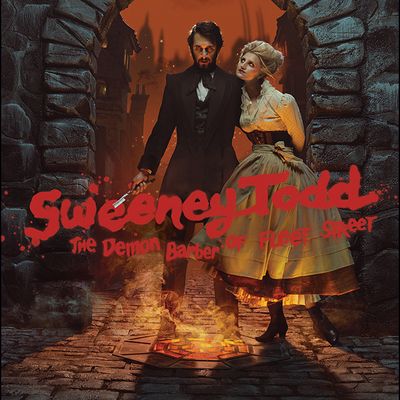
This week, we explore two of Sondheim’s most challenging and brilliant works, Pacific Overtures and Sweeney Todd —The Demon Barber of Fleet Street.
If you missed the first episode in this series, you may want to catch up with that before embarking on this one.
Richard Schoch is a Professor of Drama at Queen’s University Belfast in Northern Ireland. He is the author of eight books, both popular and academic, on topics ranging from musical theatre to Shakespeare to Queen Victoria. Become A PATRON of Broadway Nation!
This episode is made possible in part through the generous support of our Patron Club Members.
If you are a fan of Broadway Nation, I invite you to become a PATRON! For as little as $7.00 a month, you can receive exclusive access to never-before-heard, unedited versions of many of the discussions that I have with my guests — in fact, I often record nearly twice as much conversation as ends up in the edited versions. You will also have access to additional, in-depth conversations with my frequent co-host, Albert Evans, that have not been featured on the podcast. And all patrons receive special “on-air” shout-outs and acknowledgement of your vital support of this podcast.
And if you are very enthusiastic about Broadway Nation, there are additional PATRON levels that come with even more benefits.
If you would like to support the work of Broadway Nation and receive these exclusive member benefits, please click on this link:
https://broadwaynationpodcast.supercast.tech/
Thank you in advance for your support!
Transcript
This transcript was automatically generated and might contain errors.
[0:01] David Armstrong: Welcome to Broadway Nation. I'm David Armstrong, and my guest again this week is Richard Schoch.
[0:29] Richard Schoch: Richard Schoch, who is the author of the much-acclaimed book, How Sondheim Can Change Your Life. I have to say that one of the great privileges and pleasures of creating and hosting this podcast over the past five years has been the opportunity to meet and interact and become friends with so many brilliant musical theater authors and historians. And I owe them so much because they inspired me to take the concept and themes of this podcast and of the course that I teach at the University of Washington School of Drama and expand them into my own first book, which is titled Broadway Nation, How Immigrant, Jewish, Queer, and Black Artists Invented the Broadway Musical. As many of you know, it was published just weeks ago by Methuen Drama, which is an imprint of Bloomsbury Publishing.
And so far, I'm thrilled to report that the response has been terrific. Professor Stacey Wolfe of Princeton University and the author of the amazing book, Changed for Good, A Feminist History of the Broadway Musical, writes that David Armstrong's Broadway Nation is a lively, engaging, and fascinating journey through the vibrant history of the Broadway Musical. Whether you're a historian, a theater maker, or a passionate fan, Broadway Nation is an important and impossible-to-put-down tribute to the diverse voices behind the Great White Way. Wow, thank you, Stacey. I'm especially pleased that the publishers have released the book both in hardcover and paperback simultaneously and have priced the paperback at only $34.95.
You can find it everywhere books are sold, but I recommend that you go to the publisher's website, bloomsbury.com, where you'll receive a 10% discount. If you enjoy this podcast, I know that you will love the book. Now let's talk about one of those Jewish and queer inventors of the Broadway Musical, Stephen Sondheim. Here we go. Welcome, Richard Schoch. It is so great to have you back again on Broadway Nation to continue our conversation about your really amazing book, How Sondheim Can Change Your Life. Let's jump right into the conversation without further ado and pick it up with Pacific Overtures.
[2:34] Richard Schoch: David, it's great to be back with you. Thanks for this new opportunity, and hello to all your listeners. I love Pacific Overtures for at least two reasons. One is that, you know, I'm kind of a sucker for lesser-known Sondheim, and let's face it, Pacific Overtures is not one of his most well-known shows, even though a lot of people might recognize the one song, Someone in a Tree. The second reason I really love Pacific Overtures is that I am a theatre historian. I study the past, including how we can know the past, what we can know of the past, what are rival interpretations of the past. So I sort of, I earn my bread thinking about the past and how the past relates to the present and how the past is perceived differently by different people.
And this is the topic of Pacific Overtures. It is a history musical in a great tradition from 1776, of course, is a history musical. And then there's Pacific Overtures and, of course, Hamilton was probably, you know, the most recent serious history musical. So for people who say musical theatre, you know, is sort of a schlocky, shallow type of theatre, au contraire. You can think deeply about the past and your engagement with the past in the form of musical theatre. And Sondheim did it so impressively. And what's even more impressive is that it's a non-Western history that's being recounted in Pacific Overtures, which, just to remind your listeners, is about the expedition of Commodore Perry to Japan in 1853.
And the treaty signing essentially forced gunboat diplomacy. Treaty signing done at Kanagawa in 1853 and how Japan responded to that immediately and then over the long term. So Sondheim as historian, who knew? A piece of history that is not necessarily like one of the top 10 historic moments that we think about, at least from our American point of view. Although certainly we've all studied that, at least we did. I don't know what they study today, because I think there's so much more history that you have to cover. But that's something I remember from probably high school history at some point. But it's interesting that Sondheim and Weidman would choose that particular moment. What we forget is the dynamic presence of Japan looming over American culture in the 1970s. That's right.
The 1970s were sort of the apex of Japan's kind of global superpower status. And we still know these brands, Sony, Seiko, Toyota, Mitsubishi. You know, there's this kind of cool Japan manga Pokemon. But in the 1970s, when there was rampant inflation in the U.S., Japan was kind of leading the way. And then the sort of coup de grace is that Pacific Overtures was staged in 1976, America's bicentennial year. So lots of red, white and blue flag waving in that year. And here comes Pacific Overtures saying, yeah, maybe you were taught about Commodore Perry in your high school civics class. And you probably were, but also probably part of a very large thesis or narrative about America's manifest destiny and the gift that America gave to the world was opening up all these trade ports.
That's sort of the dominant, she's a fancy word, ideology of American history, outward expansion, including economic expansion, not just territorial expansion. And Pacific Overtures says, well, hang on a minute. Maybe it looks that way from the American point of view. But how does it look from the Japanese point of view? How does it look from the perspective of the floating island kingdom that was essentially invaded in 1853 by Americans? You know, it didn't look to them like a great beginning of economic prosperity. It looked to them like the end of the world. And Sondheim uses that lyric in the wonderful song Four Black Dragons. What are the four black dragons? They are not dragons. They are Perry's ships, the iron steam ships that to the Japanese who had never really seen such a thing, they looked like four black dragons breathing fire, steam coming at them over the water.
And that really does seem to herald the end of the world. And the wonderful, I'm going to flash forward to the end of the show, the song Next, in which in its very final minutes, the show jumps forward to the present day, present day, meaning 1976, and shows us, David, what you've just said, which is the number one economic country is Japan, not the United States. And there's that wonderful lyric, what is it? Who's the smarter? Who's the faster? Let the pupil teach the master. So Japan is now teaching America lessons in America's own traditional game of trade surplus. So it's not that Pacific Overtures is anti-American in no way at all. But it's flipping the script. And it's saying there are two sides to every historical event, at least.
And it's reflecting exactly what was going on in American culture at that moment, this great fear that we were losing to Japan, that Japan was going to become the dominant culture in the world, which really felt again, it's hard for I think people today because Japan has retreated to a certain extent from that standpoint to appreciate that moment in our cultural history.
[8:03] David Armstrong: I love the lyric that rhymes with the lyrics you just quoted, never mind a small disaster.
[8:19] Richard Schoch: That's a good one. Yes. I actually use that as a chapter headline in my book. So that's very interesting for the current moment on Broadway, actually. Yes. You start this chapter talking about and most of the chapter is focused on the song Someone in a Tree. Why is that song? And I know it's Sondheim's favorite, possibly his favorite song he ever wrote. He's talked about that at various times, although I think that would be hard to pin down. But why is that song so central to the show and so central to your interpretation of it?
[9:04] Richard Schoch: I just want to point out that your subtitle for this particular chapter is How to Be a Part of the Whole. Right. Sondheim is on the record in several places as saying that it's his favorite song. Now, of course, there are times when he's saying this and there are still songs that were yet to be written. But in the Studio Three documentary hosted by Frank Rich, where he plays Someone in a Tree in his apartment with the original cast, and he's interviewed and he says it's his favorite song. So that's 1976. So Sweeney and all the others hadn't come yet. But this is not just apocrypha. Sondheim is on the record as saying Someone in a Tree is his favorite song. And you know, the first time he played it for John Weidman, he broke down into tears.
The song was so meaningful for him. And I think I have a sense of why, at least artistically, that song was so meaningful for him and why I think it's the central song in the show. Because we've just discussed, as Sondheim said, the show is about history, the past, what you can know of the past, what you can never know of the past, how perceptions of the past change. It seems the most impossible, but also most enticing challenge for a musical theater composer and librettist to put the project of history, the sweep of history into music and into lyric. And how do you do that? Well, first, you're going to need a very long song. Again, I'm doing my internal rhyming. To convey to the audience the sweep of history, the song has to have duration, you have to have a sense that the song, like the river, is like the river of time is flowing on and on and on.
So we all know the AABA traditional musical theater song of 32 bars. Someone in a Tree has 302 bars. It is nearly 10 regular musical theater songs not stitched together because it's the so that's point one, the length I'm getting very professorial now, forgive me. The second point about the sound of history is that the sound of the song doesn't change very much. And there's this five beat vamp, which is repeated entirely throughout the song that sort of that sort of basic rhythm and sound underneath the singing the beat of history, perhaps the beat of his the beat goes on. But this is it because day to day, it doesn't feel like we're in history. There's a yesterday today, there's a tomorrow.
Only rarely do those days feel dramatically different from each other. But more or less, we just feel oh, it's another day. It's another year. It's another month, whatever. It's that regularity of time going on and on that is expressed musically. And then on top of that, there's the wonderful lyric, which comes from the scenario of how to understand what's happening in the treaty house. Now we have to bring John Weidman into this because this whole scene really, really began with him so that the treaty signing takes place in a treaty house that nobody can see into because they wanted the event at Kanagawa to be hidden so the Japanese could pretend that in fact, it never happened to erase it from the historical record.
So they all go inside the Shogun's counselors and Perry go inside the treaty house, and then it all happens but nobody can see it or hear it except a little boy who climbs up into a tree, someone in a tree, it's a little boy, he can look down into the treaty house and he can see a bit but he cannot hear.
[13:53] Richard Schoch: A grown-up, who's now 70 or 80 years old, and he can't really remember exactly what happened. And then underneath the floorboards of the treaty house, there's a samurai warrior with his sword at the ready, just in case things go wrong. They didn't. But he's under the floorboards, there above him, signing the treaty. He can hear, but he can't see. If you please, I am here. You are where? In the treaty house. The treaty house. Or very near. Can you hear? I'm below. So I'm going. Underneath the floor, and so I can't see anything. I can hear them, but I can't see anything. But you can hear. But I can hear. Shall I listen? If you please. So we have memory, we have sight, we have hearing, we have the old man, the boy, the samurai warrior, and the reciter, who's saying, tell us what happened.
Were you there? Tell us, if you please. And they go round and round and disagree at times and agree at times. But the song is very, very happy. Someone reads a list from a box. Someone talks of laws. Then they fan a bit. Someone bangs a fist. Someone knocks. Now there was a pause. Then they argue it. It's not a mournful song. It's certainly not a dirge, even though it doesn't accomplish anything. Nobody can actually give a full or fair account of the treaty signing. And yet everybody is singing in a very jubilant way. I was there. If it happened, I was there. I'm the part that's underneath. I'm a fragment of the day. And I thought, well, this is a very, very strange song. It's very jubilant. It is a very buoyant, upbeat number throughout for 302 bars. And yet, as you say, it's a song about failure that seems so jubilant.
[16:07] David Armstrong: Right. It's a jubilant song about not really understanding the past. So where does the jubilation and the joy come from? And again, Sondheim gives us the perfect lyric. I think it comes from the sense of knowing that everybody is a fragment of the day and nobody is ever more than a fragment of the day. And Sondheim gives these wonderful, almost haiku series of images. There's the stone and the ripple, the beam and the building. Or rather, it's the stone in the garden, the pebble and the ripple, the beam in the building. So the part and the whole. And the sense that it's enough to know that we are a part of the world. We are a part of history. We can never grasp the totality of it. But the parts are necessary.
If there was no beam in the building, there'd be no building. If there was no pebble dropped into the lake, there'd be no ripple. So this wonderful sense that, yeah, we can't really grasp the totality of everything, including the past, but we're part of it. And that sense, if you will, of knowing that you belong, even though you can't know everything, is a wonderful source, I believe, and I think Sondheim believed, of joy and contentment in life. How to be a part of the whole. The scene that is happening. Not the building, but the beam. Not the garden, but the stone.
[18:10] Richard Schoch: So let me ask you this, and I find that fascinating. I also find that Pacific Overtures is an acquired taste for many people.
[18:15] David Armstrong: Definitely. For myself, I was 17 when I got the album. I lived in Cincinnati, so I didn't see the show, couldn't see the show, and wouldn't see the show for many, many years after that. But I remember putting that album on and playing it for the first time and thinking, oh, I hate this. And it took me a long, took me years and multiple playings, forcing myself to listen, to start to appreciate and understand and be drawn into a show that now I think is totally brilliant. And I am totally captivated by.
[18:47] Richard Schoch: What you've described, David, and I appreciate your honesty about that, as I'm sure your listeners do. It speaks to the point we return to time and again, that Sondheim's works reveal themselves gradually. If they were, I'll mix metaphors, if they were fully comprehensible or fully digestible or fully transparent the first time out, I think that would actually be a sign that there isn't much substance to them. But they demand and have always demanded a great deal from their audience. So in a way, it's ironic that they were written for the theater, which is you see at one time. You have to absorb it in that moment.
[19:27] David Armstrong: Yeah, you have to absorb it in that moment. And yet you don't have to absorb it just in that moment. So thank God for LPs. And I remember I, of course, listened to the LP for years and years and never saw Pacific Overtures until a year and a half ago in London, at the Menier Chocolate Factory in an amazing, amazing production. But Sondheim's works are complex and challenging. And particularly with Pacific Overtures, we're used to musicals like South Pacific and The King and I, written from the perspective of Westerners and even with South Pacific, with its message of racial tolerance and the evils of bigotry. Even in South Pacific, the perspective of the musical is not the perspective of the indigenous people, the Pacific Islanders.
So when you get something like Pacific Overtures, in which the Americans and the Europeans, who are all spoofed in the song, Please Hello, you get a musical in which the Americans and the Europeans are the outsiders in the story. You get a musical that tonally doesn't sound like a traditional Broadway musical. And we're not sure what to do with it. But I think as always with Sondheim, we have to surrender ourselves to the work and allow ourselves to be receptive to it and to be surprised. And while Pacific Overtures is never going to be, I don't think, everybody's favorite Sondheim, I think it's one of his profoundest shows and one whose meaning, if you will, or the cluster of issues that it raises seems only more relevant as the decades go by.
[21:06] Richard Schoch: Do you think from our perspective today in 2025, are we challenged by this work being written from the Japanese perspective by people who were entirely not Japanese?
[21:19] David Armstrong: That's an interesting point. And of course, the show cannot go back in its own history and be rewritten. It is true. Hal Prince, John Weidman, Stephen Sondheim, Prince, the original director, this show was created by three white male Americans. But it has always been diverse in its casting. The production I saw at the Menier was a co-production with a Japanese theater company and the Menier in London. So I think the profession itself, and at the Kennedy Center, this was probably 20 years ago at the Kennedy Center, it was a production that originated in Japan and that was performed at the Kennedy Center in Washington, D.C. And then I saw that production on Broadway when they retooled it for Broadway a bit, which I love that production.
[22:07] Richard Schoch: Right. Yeah. And apparently so did Sondheim. So I think the profession itself is now aware of the responsibility of the profession to attend to these very issues in how theater is made. And in a sense, and it's a beautiful irony, if you will, returning the production to the culture from which the idea came. And I think that's a sign of healthy awareness in the theatrical profession of where ethical responsibilities lie in how we tell the story.
[22:40] David Armstrong: I've often wondered if this show was in some way a response. And of course, we know very well that Sondheim is mentored by Oscar Hammerstein. Is this show a response in any way to The King and I? Was there any conscious idea in Sondheim's mind? I've never found anything where he talked about that.
[22:59] Richard Schoch: That's an intriguing question. I would say that tension between The King and I, and I would also add South Pacific into that and Pacific Overtures, is for us. For Sondheim, of course, the idea was presented to him. His first reaction was, I cannot write a musical about Commodore Perry in Japan in the 1850s. What would I be doing? I don't know Japanese music. So his first response was not, aha, now I can get back as if he would ever get back at Oscar Hammerstein. But now he can somehow have a repose to Hammerstein. I don't think at least consciously that was what he was intending. And of course, he revered that body of work. He was not interested in picking fights with it. And yet for anybody who knows musical theater, it's impossible to think about Pacific Overtures without thinking of South Pacific and The King and I. That history itself, the history within the history, is always going to be there, and is something that is going to be on the minds, certainly, of musical theater fans. And I think somehow must have been in Sondheim and Hal Prince's awareness at the time, just as obvious as it is to us today, it had to be obvious at the time that they were working on it.
[24:13] David Armstrong: I think, too, even if not a motivating factor.
[24:16] Richard Schoch: Yes, I think that's a judicious way of putting it. They were certainly aware this was not your grandfather's King and I, but it was not done out of vengeance or out of a desire to somehow invalidate those musicals. It was done from a position of this is the world we live in. Let's be honest about that. And of course, one of the challenges of writing about history, and especially this particular subject matter, is musicals thrive on emotion and finding the emotion in what could be a very dry historical account was probably the biggest challenge of the show, which brings us back to Someone in a Tree, which, as you say, has such joy in it and such.
[25:01] David Armstrong: I meant to warn you about this before we started, but would you mind reading the paragraph on page 107 in your book for us? This is when the tears flow.
[25:11] Richard Schoch: I write from grateful experience because this is when the music heals. Heals not by hiding how fragmented we feel, but by exposing the value of that very feeling, daunting though it is. The almost Zen minimalism of Someone in a Tree, its endless vamping, its precise elemental metaphors, its resistance to finality, makes us aware that we are all but fragments of the day. How could it be otherwise? All we can do, all we ever can do, is to stay mindfully in the moment, alert to the lack that shapes our perception of the whole, and yet we gain something from that same lack. We gain the self-possession of the beam that holds the building up, knowing all the while that its test of strength must be shared. We gain the calmness of the ripple that knows no matter how far it extends, the surrounding sea extends yet farther. And were it not for that wider sea, there would be no rippling, none at all. That's a wisdom for all the seasons of a lifetime.
[26:14] David Armstrong: Wonderful. Thank you so much.
[26:16] Richard Schoch: Thank you.
[26:17] David Armstrong: Let's move on to Sweeney Todd.
[27:10] Richard Schoch: Okay. Yeah, and for this, your subtitle is How Not to Deal with Injustice, or How to Deal with Injustice. You have it both ways in your subtitle, because you put not in parentheses.
[27:22] Richard Schoch: I do, and that was deliberate, and it's not just... I'm not trying to show off by putting not in parentheses, but I think it's to show that Sweeney Todd holds both sides of those issues. In a way, it's a little bit like Pacific Overtures, in which it holds different versions, different interpretations of the past. Sweeney Todd holds different approaches, if you will.
[27:46] Richard Schoch: To injustice. We might say one is right, one is wrong, but it shows different paths for how to respond to injustice. And I have to say, I have a soft spot for Sweeney Todd because it was the first Sondheim that I saw. I think so for me, it's always going to be a tremendously important work. But that aside, it touches something that everybody knows in a deep and familiar way, which is the urge, the irresistible urge to hurt those who have hurt us. Revenge. Nobody gets through life, not even Mother Teresa, I'm sure, nobody gets through life without wanting to inflict pain on people who have inflicted it on us. That is human nature. And that's the reason I start the chapter by talking about this very strange Swiss neuroscience experiment in Zurich, at the University of Zurich, about the psychology of revenge.
And what the experiment showed was that revenge lights up the pleasure receptors in our brain in the same way that doing a line of coke does, or to use some nicer scenarios, thinking about your paycheck at the end of the month, or looking at a photograph of your lover. In the brain's chemistry, those are all experiences that give us pleasure. But as the scientists showed, so does revenge. And that is why we are so attached to it. And it is especially revenge gives us anticipatory pleasure. For me, that was the surprise. But on the other hand, I shouldn't have been so surprised. That was the surprise of the experiment, which is that we like to luxuriate in our revenge plots, because just, I'm going to get you one day.
And then we think all the scenarios about how we're going to inflict this damage. That is an incredible source of pleasure just in itself. And so you get this almost perverse logic that the act of inflicting revenge, of getting revenge, can be ultimately very unsatisfying, because then there's no more pleasure. This is what the brain chemistry shows. It's the pleasure of plotting the revenge that can just deliver pleasure time and time again, as long as you plot it. But once you've had your vengeance, that's it, you're done. When I read this in the experiment, I thought, my God, that is Sweeney Todd. And that is how we explain this bizarre dilemma that he's in, where first he plots and plans, and we get this beautiful song, Pretty Women.
You know, Judge Turpin is in the barber's chair, the man he wants to kill, because Turpin was responsible for sending Sweeney Todd on a false charge, sending him to Australia. So he thinks, for his wife killing herself, and now, of course, the judge has Sweeney's daughter, Joanna, you know, sort of locked up in his house and intends to marry her. So this is the guy who has ruined Sweeney Todd's life. He has to go. And there's a kind of rough justice validation of that. This is a truly horrible human being who has inflicted pain and death on three innocent people. So Sweeney has some justice on his side. Turpin's in the barber's chair, Sweeney's got the razor in his hand, he could do it at a stroke, in a flash, boom, Turpin's dead, show is over.
Twenty-five minutes in, Sweeney Todd is over. But he doesn't. He and the judge sing this beautiful song, Pretty Women, which of course has an ironic edge all the way throughout, at least. He's dropping his razor, and he waits too long. He defers and defers and defers and defers the revenge until it's too late. Anthony bursts in, the sailor reveals that he's going to steal Joanna, and the judge runs out. So no revenge. And you think, well, why doesn't Sweeney just go in for the kill? Why does he say, patience, enjoy it? That's the lyric. Those are sometimes words. Patience, enjoy it. Because the pleasure lies in the expectancy. And then he waits too long. And then the situation, I think, gets more morally complex.
And Sweeney's tragedy is not that he can't deliver justice, he doesn't kill Judge Turpin in the chair. His tragedy is that he cannot stop delivering justice. Because in Epiphany, he goes from wanting to kill one person, Judge Turpin, to killing everybody. Anybody, not one man, nor 10 men, nor 100, can assuage me. This is this terrible, awful, catastrophic leap from an isolated case of justified vengeance, justified revenge, to indiscriminate, mass murder, carnage, killing. So Sweeney no longer has justice on his side, which is why the subtitle is How Not to Deal with Injustice. He lets the revenge impulse become so extreme that it colours everything he does in his life, and ultimately is his own ruin.
Sweeney's mistake is to think that he can liberate the world from evil by doing evil himself, which is why Sweeney is a truly, says me, is a truly tragic hero. And that is his fatal flaw, that he exceeds the limits of moral justification to inhabit a world of immorality that is in some ways even worse than that of Judge Turpin and the Beatle.
[33:44] David Tenenbaum: What's so fascinating about that and about Sweeney Todd's character is that throughout all of that, we stay on Sweeney's side. We root for Sweeney Todd. And when I teach this to my students, we have discussed that because they are often amazed that they also were on Sweeney's side in spite of everything he does. And I think it's because of what you identified here, is this inherent human need for wanting to experience what you call one of life's tastiest treats, which is revenge, sweet revenge. And that's so human that we identify with it. Of course he feels that way. You know, the authors do a great job of presenting this injustice that's been done to him as being so horrible that he's the moral centre of the story, even though he becomes a mass murderer, the rest of the world is still so horrible, we still stay on his side.
[34:36] Richard Schoch: That's such an interesting point you raise, David, about who the audience is rooting for. And as you probably know, Hal Prince, the original director, wanted the audience to root for Anthony and Joanna, the quote-unquote innocent characters, and sometimes said, no, they have to root for Sweeney. If the audience is not behind Sweeney, there is no show. It's not attend the tale of Anthony and Joanna, it's attend the tale of Sweeney Todd. Now, to root for Sweeney, and to be on his side, is not the same thing as wishing to live his life, or wishing to imitate him. Or even approve of it. It's a little bit like Frank Shepard in Merrily, the next show, which is, here is somebody who has gone off track, you know, and is kind of a son of a bitch in his own way, and we want him to get back on track. That's Frank Shepard.
[35:34] David Tenenbaum: Or Rose and Gypsy.
[35:35] Richard Schoch: Or Rose and Gypsy, yeah. The people that we understand their predicament, and are therefore all the more moved when they fall into a trap, right? So we wish Sweeney behaved differently. We don't want to live exactly as he does. We certainly hope we would make different choices, we wouldn't resort to carnage. But we understand how he got there. And just as in, you know, Greek tragedies, tragedies of old, we are moved by the hero's death and tragic heroes, tragic heroes must die. In a sense, that's the punishment for their fatal flaws. So we are deeply moved by the tragedy of Sweeney Todd. And ultimately, as you say, because we realize that's our predicament to the nth degree, and exaggerated and in a major scale, but who's to say, you know, how did Benjamin Barker, nice guy around Fleet Street become this monster?
[36:36] David Tenenbaum: We could all go there.
[36:37] Richard Schoch: We could all go there.
[36:38] David Tenenbaum: Yeah, I also love, it sometimes says it in the final line of the show, to seek revenge may lead to hell, and everyone does it, but seldom as well. And I think that admiration that we have for the way he did it, even if we're appalled by it.
[36:53] Richard Schoch: Right. And that's the double-edged thrill of the performance. You never know exactly what you're feeling or what you should be feeling at any particular time. And that's the richness of Sondheim. And I'm going to look back to Pacific Overtures and seeing but not hearing, hearing but not seeing the multiple perspectives. So in one way or another, Sondheim is always giving us multiple perspectives, multiple experiences, which is, of course, true to life.
[37:19] David Tenenbaum: Talk about that dichotomy, which I think is exemplified by the back-to-back impact of Epiphany and then A Little Priest, which sort of exemplifies not only how Sondheim will tell the story and how we will not know how to feel about the story as we're experiencing it.
[37:36] Richard Schoch: I think everybody's familiar with, you know, the two masks of the theatre, which we've inherited from ancient Greece, the mask of tragedy and the mask of comedy. And, you know, the little emoji on all social media platforms, if you want to do theatre, it's those two masks, the frown and the smile. And I think in Sweeney, he puts two songs back-to-back, the tragic song and the comic song. And the tragic song is Epiphany. And that is, and I just quoted that little lyric from there, not one man, nor ten men, nor a hundred can assuage me. That's where he really embraces the darkness and says, that's it. I'm just going to slash throats indiscriminately. We all deserve to die. That's Sondheim's lyric.
And then he goes, tell you why, Mrs. Lovett, tell you why. And that is a tragic song. And we are meant to be shocked that someone we had some sympathy for has now turned into a killing machine. A crazed psychopath. Crazed psychopath. Exactly. I mean, it should be a kind of jaw-dropping, oh my God, what happened moment. But central to that is that there be no applause, because we should not be applauding someone who decides that they are going to become a mass murderer. No matter how beautifully it's an aria, that song is delivered. And musically, Sondheim has a series of chords and shadow chords at the end of the song. But the important thing to note is that the sequencing of those chords makes it very difficult for the audience to applaud.
So he sort of solved the problem of the audience not applauding. Although I will say, having directed that show several times, it's still hard to keep the audience from, he doesn't quite succeed most of the time. I think because in the original production, it succeeded because we didn't know what we were watching. We didn't have this experience of it. We didn't know that was the moment that we were just experiencing in real time, as opposed to now we go into the show, many Sondheim, certainly anyone who knows the show, will know this is that actor's big moment. So we're going to applaud anyway, because we want to celebrate the actor, if not the character.
[39:47] David Tenenbaum: That's such an interesting perspective. And of course, I'm immediately thinking of Rose's turn, but what are we applying? So I don't want to let myself get distracted, although that is such an interesting thing to talk about. But even if the audience is applauding at Epiphany, there's then still the shocker that comes next, which is A Little Priest, which is the list song to end all list songs. Finishes Act One. It's when Sweeney and Mrs. Lovett basically go through all the people they're going to kill. I can't even remember them. Fop, grocer, vicar, locksmith, one after another. And of course, the Beatle and the judge are in there as well. And the Beatle and the judge. I'll come again when you have judge on the menu.
And it's just a very playful, tuneful, hilarious body with incredible wordplay. I mean, the audience is laughing throughout. And if you listen, I think it's on YouTube. It's an audio recording of the opening night of Sweeney Todd. And listen to A Little Priest and just the thunder. It's the thundering roar of laughter that occurs throughout A Little Priest in the song numerous times, not just at the end. At the end, the roof of the theater blows off, but the song is stopped with applause in the middle of itself. So it's just, you know, almost an actor-proof comic song. So this is where Sondheim wanted the applause. He got a storm of it. But dramatically speaking, there's no difference between Epiphany, which is, I'm going to kill everyone, and A Little Priest, which is, I'm going to kill everyone. Ha ha ha. And eat them. And eat them. Yes, that's right. So it's even worse. So you're laughing up.
[41:40] Richard Schoch: Roriously at least sort of imagine people being killed and then put into meat pies and some are good and some are bad and then you have to say and maybe it's even better if you did applaud at epiphany because at least it was serious and intense and dramatic and then you realize you're going, uh, what am I applauding in "A Little Priest"? I'm applauding serial murder and cannibalism. Where has some time taken me and how am I supposed to think about this? So it's a brilliant end to act one, so it leaves you in the intermission going, what side am I on? How am I supposed to feel about this? Because this is the most devilishly charming couple, Lovett and Sweeney, but what they are proposing is the gravest of evils, but somehow it's kind of enjoyable.
God, that's good. This is how he opens act two. It is an amazing piece of writing and an amazing response that we have to it. And I've always been amazed by the transition they accomplished between those two songs, which is with one line. We've just had this most devastating, horrible fall into the depths of evil, and Mrs. Lovett says, well, that's all very well and good, but what are we going to do about the Italian? The Italian, exactly, the Italian who's in the trunk and gets a big laugh with that line right after this incredibly dramatic aria. And that is just sheer theatrical genius to have us leap to that new place immediately and then take us, which sets us up for this, you know, bravura comedy number.
It's wonderful. And I'm not going to draw a direct line from Sondheim from Sweeney Todd to Greek tragedy, but in Greek tragedies, a tragedy would be followed by a comic short comic play because people need to release. They need to vent that intense emotion needs to go somewhere. Now I'm not sure that was so officially conscious for Sondheim, but there is the theatrical intuition that a dark moment can be followed by a bright moment, a comic moment, and in some ways should be followed by such a moment. The audience needs to switch gears. You cannot live in the moment of epiphany. And this is also this wonderful sense that, you know, Mrs. Lovett is all of us. She's the grounded practical just trying to run a business here so I can retire by the seaside.
Isn't that too much to ask, really? You know, she's pinching the pennies when she's not stealing them. We've all been there, so she speaks for us and she escorts us from epiphany into "A Little Priest." She takes us by the hand, but then where she leads us, my God, it's insane.
[44:26] David Armstrong: Well, and she's just very practical. She's a survivor, and I think we all want to have a piece of that. And she's amoral, which we also want to have a piece of because life would be so much simpler if we didn't have morals. We would just do what we needed to do to survive.
[44:44] Richard Schoch: Yes, indeed. I also think it's very human. Gallows humor is a very human inherent part of our DNA, our makeup. So the idea that you're going to follow tragedy with comedy that comes from about the tragedy, I think is also inherently why we identify with these characters, especially in that song.
[45:03] David Armstrong: I could not say it any better than that. Thank you, Richard. You ultimately say that what Sweeney Todd, the show, asks us to do is ask what is our response to injustice? How do we respond to injustice is what the point of the show really is.
[45:18] Richard Schoch: I think so. And I have to say not everybody who's read my chapter on Sweeney Todd agrees with me on this. And of course, this is my perspective, it's an angle, an interpretation of the show, but I think Sweeney Todd is inviting us to say, well, what can we do when we are faced with a world in which injustice seems to be how things go? You know, systemic injustice or structural injustice, to use a bit some trendier words. And this is why I think the character Anthony is important. It's not "Attend the Tale of Anthony," but he's an important character, and it's important that of the few people who are still alive at the end of Sweeney Todd, Anthony is the only one who has not killed anybody. Joanna and Toby have, and he hasn't. We talked a little bit about Mrs. Lovett being a stand-in for us in her earthy amoral pragmatism, and I think the show was also saying, you know, who could be a better stand-in for you? Anthony, when you point out that his name is Anthony Hope.
[46:29] David Armstrong: Yeah, and maybe that's, you know, too fine a point. Maybe the character's name is too much, though I think it's treated in a subtle way in the show. And it's like that's the response. Anthony is a character who confronts all kinds of injustice: the beggar woman, Sweeney being in prison, Joanna, the woman he instantly falls in love with, is being locked up by the judge. Anthony has this beautiful, beautiful line, and he says, is there no justice in the city? So he feels the injustice just like Sweeney does, but he has a different approach to it. And his approach is not to seek indiscriminate vengeance. His approach—and this will sound, because I'm not Stephen Sondheim, it's going to sound a little bit banal and corny—but his approach is to do the good in the world that he can do.
He rescues Sweeney, he tries to rescue or liberate Joanna, he's sympathetic to the beggar woman until it's too much, right? Because we all have limits. And for me, that's a beautiful moment. It becomes too much even for someone as kind-hearted as Anthony. So this is why how not to deal with injustice when we are confronted with injustice. And the show throws that question back at us by saying that is Sweeney next to you in the audience? Sweeney Todd, as a production, returns the story to us in that last metatheatrical moment where the audience is encouraged to start looking at each other. My view was that actually instead of looking for, is that Sweeney there beside you, why not look to see if Anthony Hope is beside you? Or even better, why not be Anthony Hope and do the good that you can do? Maybe that's too sentimental reading, I don't know, but I think it's there in the show.
[48:09] David Armstrong: I agree with you, although I will push back a little bit in that challenges with that is Anthony when he tries to save Joanna chickens out, basically cannot fire that gun, cannot kill the people who are going to kill him and Joanna. And of course, she grabs the gun and shoots them, which, as you say, makes her a killer, but it also, you know, where is that line between where we have to sometimes, you have to fight back. Your only other choice is just let them kill you. So that self-defense, he's not able to go there, maybe because he's too good and too innocent and too pure, but I find that our reaction to that is not a positive toward him, it's a negative toward him.
[49:01] Richard Schoch: Yeah, I think that's a fair point, David, and I'm glad you raised that. And I remember thinking the same thing when I saw it. It's like, for God's sake, pull that trigger! Why are you wimping out at this moment? And you're right in saying Joanna, nevermore, her father's daughter finishes the job. That is absolutely a fair point. But again, I think with all complex works of art—and sometimes musicals certainly count as that—tensions can be held, opposites can be held at the same time. So there is, we might say, the plot limitations of Anthony, but at the same time, there is also a moral consciousness that he has that Sweeney does not. But as always with Sondheim, he never makes it too easy even to think, oh, Anthony, we must be like Anthony. Well, not always.
[50:08] David Armstrong: Exactly. And this is why I love returning to Sondheim shows because they provoke so many thoughts or reflections in me. But it's not as if those thoughts, reflections, responses are all reconcilable in some grand strategy. It's not, because that's not true to life. It's the paradox, it's the puzzle, it's the thicket, it's the tension, it's the problem that never goes away. So I really appreciate your comment on Anthony because it's just reminded us once again that Sondheim, you know, doesn't serve it up to us, if you will, in an easy or easily digestible way.
[50:41] Richard Schoch: And even more to that point, in that final scene after Toby has killed Sweeney Todd and Mrs. Lovett is in the oven, Anthony and Joanna come rushing in to sort of discover and witness all of that but have virtually nothing to say. And I think it's to your point, they're standing center stage in most productions seeing all this, so we are seeing it through their eyes in a way. But as you say, we don't know what to think about it. Are they going to ever recover from this? Are they going to be traumatized for the rest of their life? Especially Joanna, is she just, she may be released from the insane asylum, but is she insane by this point? And what is Anthony's response? And I think that is so fascinating. And you pointed out to us, Anthony Hope is standing center stage. Is there any hope? Is then the question that hangs over the show.
[51:17] David Armstrong: It does, and it hangs over us as well. And we find ourselves once again returning to the motif that Sondheim does not solve it for us. As I say, he asks the question, he takes the problem apart, he shows us the problem from multiple perspectives, but eventually it's sort of over to you to solve it, which is why for me the works are so profound because they deny us the pleasure of immediate resolution, of a nice tidy red ribbon around the whole thing. It's nope, it's messy, it's not clear what the way forward is, which makes it fascinating. I often say I could direct Sweeney Todd once a year for the rest of my life because it's inexhaustible in its nuances. It will mean something slightly different every time you do it, and the moments will mean something different every time you investigate them and approach them.
[52:14] Richard Schoch: I hope you get the chance to direct it every year.
[52:20] David Armstrong: Well, I'm happy just to have had the opportunity to do it several times, so that's great. Let's now jump to another challenging character, a character that audiences often don't know how to feel about, and that is George in Sunday in the Park with George. And that's where we'll pick up the conversation on the next episode of Broadway Nation when Richard Schoch returns with more fascinating insights from his recent book, How Sondheim Can Change Your Life.
[52:44] ♪ Musical number: "Attend the Tale of Sweeney Todd" — performed by the cast ♪
[53:00] David Armstrong: If you love this podcast and want to delve even deeper into the world of Broadway musicals, I invite you to become a patron of Broadway Nation. For as little as seven dollars a month, you can receive exclusive access to never-before-heard unedited versions of many of the interviews featured on this podcast. I often record twice as much conversation as ends up in the edited public episodes, and you also have the exclusive opportunity to hear additional in-depth conversations with my frequent co-host Albert Evans. And all patrons will receive special on-air shoutouts and acknowledgments of your vital support. To join, simply go to broadwaynationpodcast.supercast.tech. That's all one word, broadwaynationpodcast.s-u-p-e-r-c-a-s-t.tech, or simply click the link in the show notes to this episode. Broadway Nation is written and produced by me, David Armstrong. Special thanks to Pals Mox for his help with editing this episode and to the entire team at the Broadway Podcast Network.
© Broadway Podcast Network, All Rights Reserved